



















Human development begins with a single zygote that undergoes cleavage to form blastomeres, then develops into a morula and blastocyst before implanting in the uterus; the placenta forms to facilitate nutrient and waste exchange between mother and fetus, while maternal hormonal changes including estrogen, progesterone, relaxin, and hPL support pregnancy, and labor is initiated by declining progesterone and rising estrogen, oxytocin, and prostaglandins that trigger uterine contractions and cervical dilation.
Pregnancy & Development Explained: Crash Course Anatomy
Added:Anatomy of the Male and Female Reproductive Systems: Familiarity with structures such as the uterus, ovaries, fallopian tubes, and testes.
Gamete Formation and Fertilization: Understanding the processes of meiosis, oogenesis, spermatogenesis, and how a diploid zygote is formed.
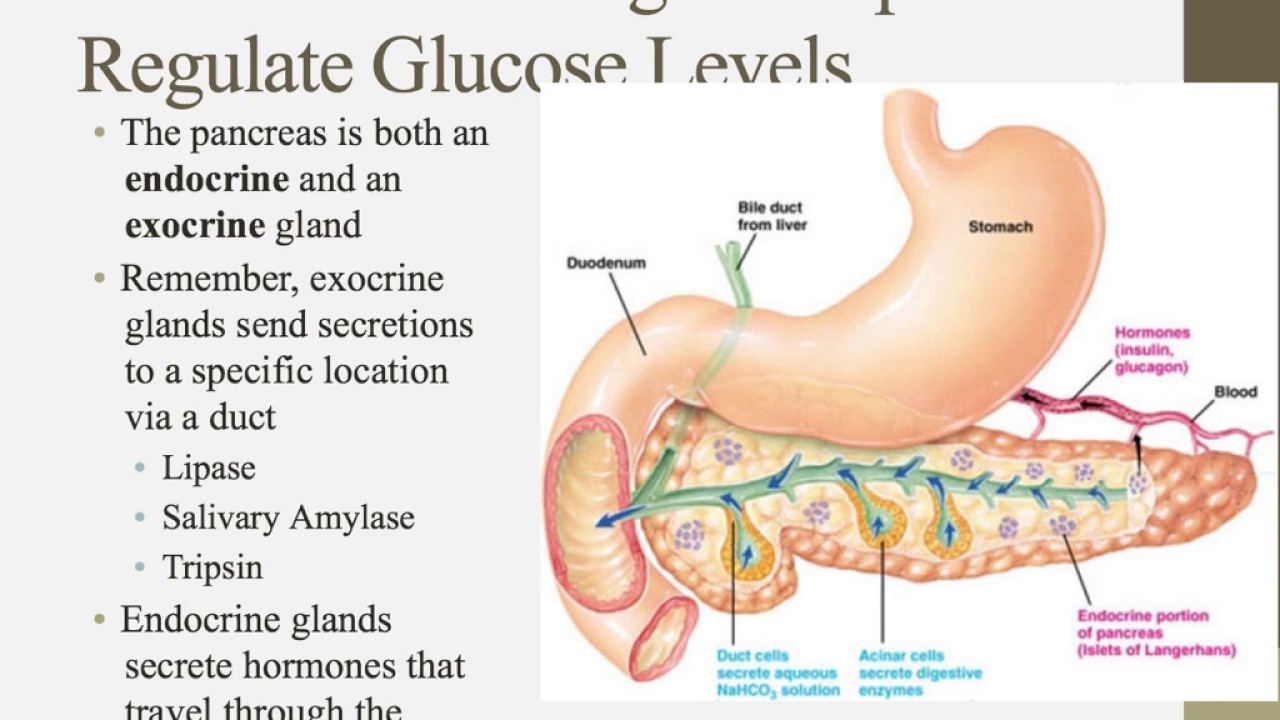
The Endocrine System and Hormone Action: Basic knowledge of how hormones travel through the bloodstream and bind to receptors, specifically the roles of estrogen and progesterone in the menstrual cycle.
Cellular Division and Differentiation: Conceptual understanding of mitosis and how stem cells begin to specialize into distinct tissue layers (ectoderm, mesoderm, endoderm).
Lactation Physiology and Neonatal Transition: Exploring how the maternal body produces milk (via prolactin and oxytocin) and how the newborn's respiratory and cardiovascular systems adapt immediately after birth.
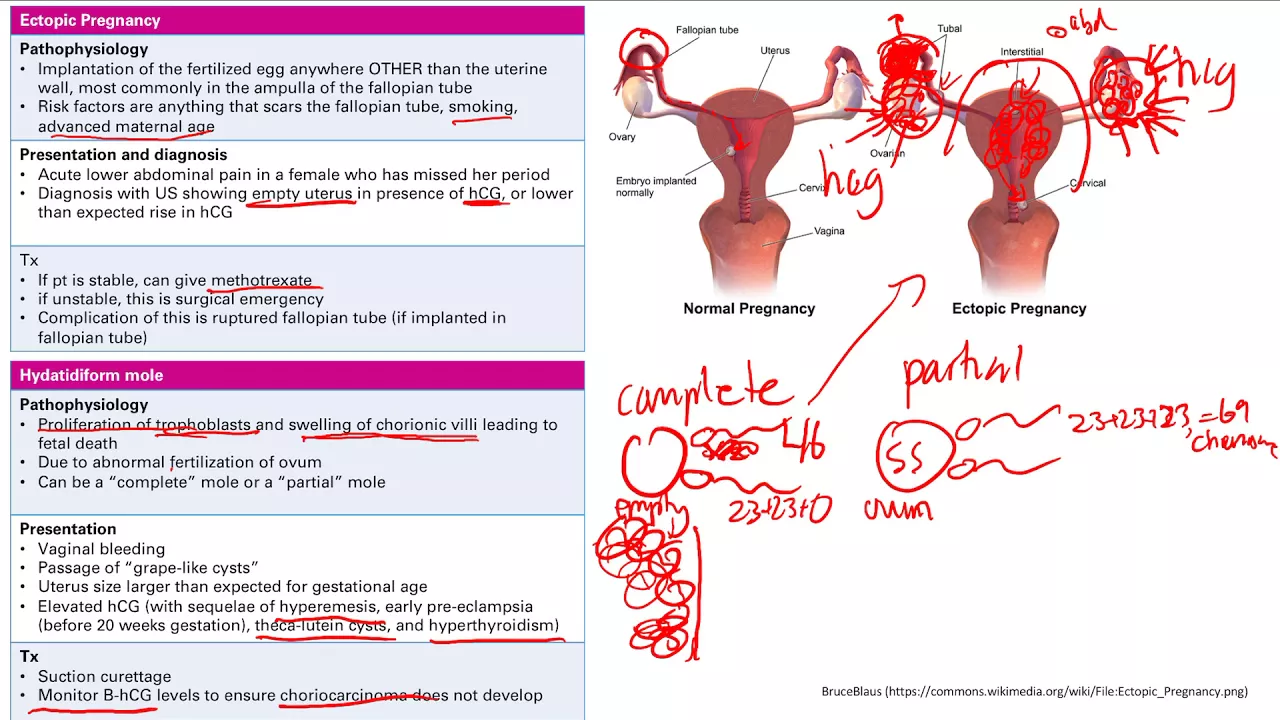
Pathologies of Pregnancy and Gestation: Investigating clinical complications such as preeclampsia, gestational diabetes, ectopic pregnancies, and placenta previa.
Teratology and Developmental Anomalies: Studying the effects of environmental hazards, drugs, and viruses (teratogens) on embryonic and fetal development.
Assisted Reproductive Technologies (ART): Exploring the science of in vitro fertilization (IVF), intracytoplasmic sperm injection (ICSI), and the ethical and physiological considerations of fertility treatments.
2M views21Klikes10:44Original Release: 2015-11-23
You were once the size of the head of a pin. Let’s just start out with that.
Two millimeters. At the most.
And today -- I don’t know you, but I’m assuming that you’re a lot larger than that.
Many, many pin-heads from head to toe.
Assuming the average human is about 1.7 meters, it’s safe to say that you’re about 850 times taller than when you started out, as a zygote.
I think we all deserve a round of applause. I’m very proud of us. But how did it happen?
How does a single cell eventually grow into the fully-formed, several-trillion-celled body we’ve spent all year discussing?
And for that matter, how the heck does a female body nurture, protect, and generally tolerate growing a whole new person inside of it -- with all the mood swings, sore and swollen parts, increased blood volume, constant pee breaks, and general body weirdness?
On an emotional level, I have no idea how the mothers -- or the zygotes, for that matter -- endure all of that.
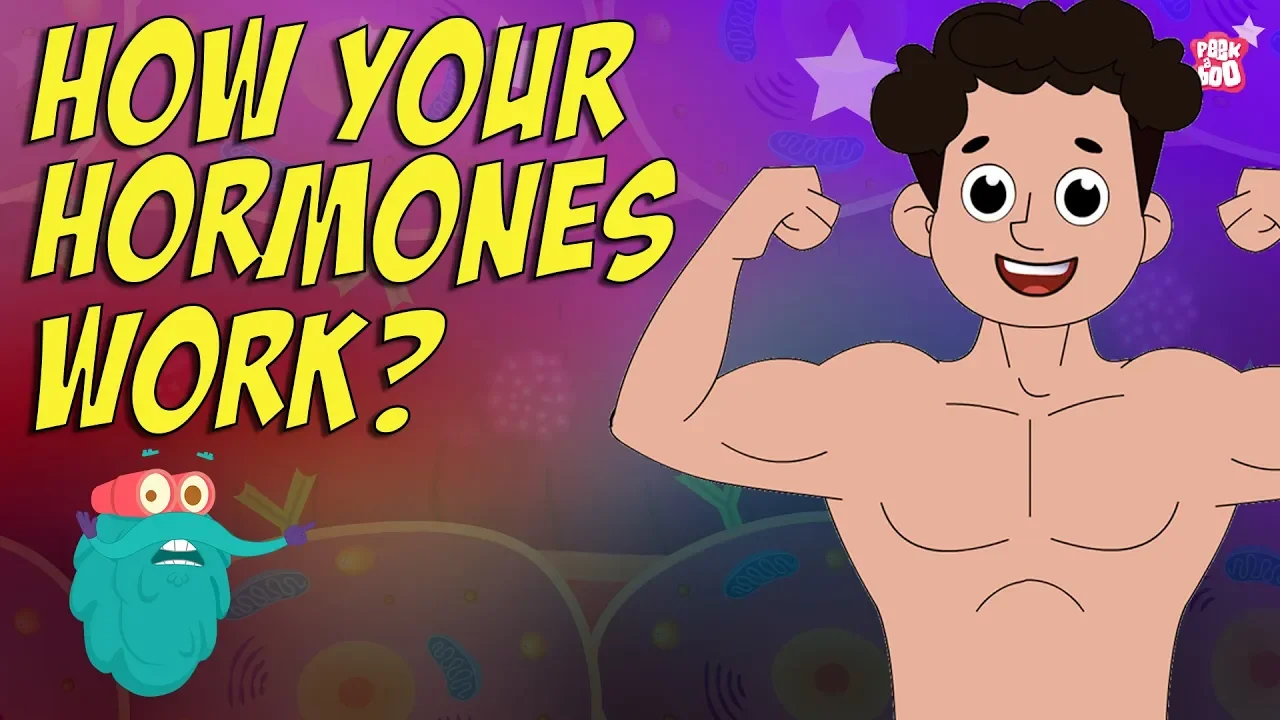
But on a physiological level, like so many aspects of our body’s functions, pregnancy begins and ends with the same thing: Hormones.
Last week we left off with a sperm and an egg, against all odds, finally getting together to make a zygote.
Now, how that tiny head of a pin gets to be even a fraction of the size you are now -- a newborn human that’s, say, 50 centimeters long, is complex.
It involves a system of hormonal signals that -- as sophisticated as they are -- get interpreted by the very earliest human cells into three simple instructions: Divide. Differentiate. Develop.
The first step, dividing, begins in what’s known as the cleavage phase, when cells cleave, or split in two, over and over.
It starts about 24 hours after fertilization, when a little zygote turns from 1 cell into 16 cells -- called blastomeres.
The cells divide so quickly that they don’t actually grow between divisions -- they just create more smaller cells.
This allows each little cell to have more surface area, which helps them take in the oxygen and nutrients they need from their environment.
And, of course, it also creates more raw materials for building an even larger zygote, and, eventually, an embryonic human.
Like, you don’t make a car by carving it from a single chunk of metal. You put together lots of smaller components, each with its own form and function. That’s what these cells are during cleavage.
About three days after fertilization, these divisions have formed a little berry-shaped cluster of cells that looks different and complex enough to get a whole new name -- a morula, from the Latin for “mulberry.” It’s one of the cuter terms you’ll come across in human physiology, and it also marks the end of the cleavage stage.
Because: The little cells that make up the morula don’t stay together as a solid mass -- instead, they start to form a hollow sphere filled with fluid -- a blastocyst.
A blastocyst contains a single outer layer of large, flat trophoblast cells, and inside a cluster of smaller cells forms, called the inner cell mass.
This mass is what’s going to turn into the embryo, eventually, while the trophoblasts will go on to form the placenta and blood vessels that will nourish it.
But, keep in mind: During all of these early divisions, the zygote, and then the morula, are on the move -- they’re headed down the fallopian tube toward the uterus.
So, in addition to manufacturing a ton of tiny pieces and assembling them into something that’s getting increasingly complex, the whole operation is mobile. It’s kind of like you’re building a car while you’re driving it.
When the blastocyst reaches the uterus, it just floats around for a few days, soaking up secretions that are full of vitamins and glycoproteins, looking for a place to call home.
But soon, it’s gonna need permanent nutritional support. So, about a week after ovulation, it snuggles up to the endometrial layer and starts the process of implantation.
Now, up to this point, we’ve just been talking about the zygote itself, and the changes it’s been undergoing. And we’re all very proud of it.
But from here on, the changes are best understood not just in terms of the budding, soon-to-be embryo, but in terms of the whole environment where its changes are taking place.
That environment being: the mother’s body.
Implantation is only possible, after all, thanks to surges of estrogen and progesterone from the corpus luteum -- the ruptured follicle that we talked about last time.
And together, they prepare the endometrium to receive the blastocyst, allowing the uterine lining to bind to little proteins on the trophoblasts, holding onto them for the duration of the pregnancy.
If all goes according to plan, implantation takes about five days and finishes up around twelve days after ovulation, right around when menstruation would otherwise kick in and slough off the endometrium.
If that happened it would be bad, so the trophoblasts secrete a luteinizing-like hormone called human chorionic gonadotropin, or hCG.
This hormone bypasses the whole hypothalamic-pituitary-ovarian axis -- if you remember that -- and talks directly to the corpus luteum, telling it to keep pumping out estrogen and progesterone.
So, the first thing to notice here is that, from this point on, most of what happens to this little clump of cells is happening because: Hormones.
hCG is basically calling all the shots, triggering the release of other hormones that are crucial to the blastocyst’s development.
But while hormones are doing the grunt work, you might also notice that the blastocyst is really in charge now. Essentially, it has taken over hormonal control of the whole uterus.
The release of hormones is that powerful.
In fact, a whole new -- albeit temporary -- organ is forming at this point, too, which is going to take over the hormone-controlling job -- that’s the placenta.
The placenta is one of the defining and most amazing structures in the mammalian class.
It’s an organ that only appears during pregnancy, and is created by the melding of both maternal and embryonic tissues.
Together with the umbilical cord, it provides for the direct transfer of nutrients, hormones, and wastes between mother and offspring.
These elements start to really take shape after implantation is complete, and we enter the embryonic stage. This is where the blastocyst differentiates into various cell types and develops into a legit embryo, surrounded by an amniotic sac, and hooked up to the placenta.
And around the end of week eight, this tiny thing is now officially a fetus.
Over the next several months, it rapidly develops organ systems and bones, and grows into what you see in the delivery room.
But rather than focus on those changes, I want to look more at what profound, and frankly sometimes bizarre, adaptations the mother is going through.
The most obvious changes are of course the anatomical changes.
Basically, everything’s getting huge.
Her breasts swell and engorge with blood, and her baby bump gains dimension as the normally fist-sized uterus expands, pushing organs out of the way until it pretty much takes up the entire abdominal cavity from the diaphragm to the bladder.
The growing placenta is still secreting estrogen and progesterone, but it’s also pumping out relaxin, a hormone that loosens joints and ligaments to increase flexibility, and it also releases human placental lactogen, or hPL.
This hormone cocktail does helpful stuff like tell the fetus to grow, and get the breasts ready to lactate, and it also causes the mother’s body to start hoarding glucose for the fetus to use.
This increase in metabolism, combined with the fact that the kidneys also have to process waste from the fetus, leads to greater urine production, which every expectant mother is familiar with.
It also has a huge effect on the cardiovascular system, because a pregnant woman’s blood volume can increase by as much as 40 percent.
40 PERCENT!
Imagine walking around with an extra 2 liter bottle’s worth of blood in your body, and how much harder your heart would have to work to move it all around.
This increased blood flow and pressure can actually make your gums swell and bleed, and fluid retention can literally change the shape of your corneas, potentially blurring your vision.
Not only that, but the expanded uterus compresses pelvic blood vessels, affecting veins’ ability to bring blood up from the lower limbs, resulting in swelling, varicose veins, and if all that weren’t bad enough, hemorrhoids.
Fortunately, every pregnancy eventually comes to an end, usually about 38 to 40 weeks after fertilization, if all goes as planned.
But unfortunately, the process of getting the baby out is pretty much a painful mess.
Ask any mother -- giving birth is not for the faint of heart.
The process of preparing the body for labor, and then actually initiating it, begins -- AGAIN!
-- with a change in hormones.
Up until the last few weeks before birth, the placenta has been kicking out equally high amounts of both progesterone and estrogen.
One of progesterone’s main jobs has been to keep the smooth muscles in the uterus relaxed, so they can’t contract and stimulate labor too early.
But as the due date nears, the mother undergoes a sudden decline in progesterone.
Now, estrogen takes over. This is partially because the fetus itself is ready to go, and it starts releasing hormones like cortisol, that tell the placenta to release even more estrogen to get the uterus ready for birth.
Just like hCG calls the shots around the time of implantation, here estrogen is barking out all kinds of orders.
For one thing, it prepares the uterus to start receiving new chemical signals, by triggering its myometrial cells to start making receptors for the hormone oxytocin.
It also triggers the formation of gap junctions between smooth muscle cells in the uterus -- this will let individual muscle cells contract simultaneously when the time comes.
Then, as labor nears, special cells in the fetus itself start secreting oxytocin, which binds to all the newly-minted receptors and tells the placenta to release prostaglandins.
Together, both of these hormones -- oxytocin and prostaglandins -- stimulate the uterine muscles to start contracting.
When the contractions get strong enough to distend the cervix, it stimulates the release of even more oxytocin and prostaglandins, which keep the contractions rolling in one big positive feedback loop, initiating labor.
The earliest stage of labor, dilation, is the period from when the first contractions begin, to when the cervix becomes fully dilated, to about 10 centimeters.
During this time, each new contraction pushes the infant’s head against the cervix, causing the cervix to thin and dilate.
Once the cervix is fully dilated, the mother should feel urge to push. The resulting expulsion stage lasts from full dilation through crowning and actual delivery, as the infant is pushed head-first through the cervix and out the vagina.
But even after the baby is out, the mother still has a placenta to get out. Within about 30 minutes of delivery, strong contractions carry out the placental stage of labor, dislodging the placenta from the uterine wall to deliver the so-called afterbirth.
Then, finally, the mother can rest, and marvel at how her body just built another tiny body inside it -- complete with all the complex systems we’ve spent the last year talking about.
And maybe someday that little baby will grow up and get a twinkle in its eye, and combine alleles with somebody else, and start the whole process over again.
And that is how the human race continues to exist.
Today you learned about the stages of pregnancy, beginning with how a zygote develops into blastomeres to a morula to a blastocyst and finally to an embryo and a fetus. You also learned about the amazing anatomical changes that take place in the mother, and the hormonal sequence of events that lead to labor. After that, all you have to worry about is how you’re gonna put the little thing through college.
Thank you to our Headmaster of Learning, Linnea Boyev, and thanks to all of our Patreon patrons whose monthly contributions help make Crash Course possible, not only for themselves, but for everyone, everywhere. If you like Crash Course and want to help us keep making videos like this one, you can go to patreon.com/crashcourse.
This episode was filmed in the Doctor Cheryl C. Kinney Crash Course Studio, it was written by Kathleen Yale, the script was edited by Blake de Pastino, and our consultant is Dr. Brandon Jackson. It was directed by Nicholas Jenkins, edited by Nicole Sweeney, our sound designer is Michael Aranda, and the Graphics team is Thought Cafe.
Up Next

18:07
Small Intestine Structure: Digestion & Absorption Explained
@RajaNarayan
325.2K views•2013-08-05
50:12
Bacterial Communication: Quorum Sensing and Biofilm Formation Explained
@JHUAAP
12.6K views•2011-06-28

11:04
Population Genetics: Darwin Meets Mendel | HHMI BioInteractive
@crashcourse
1.8M views•2012-05-28
7:08
Bacteriophages: Earth's Deadliest Killers and Future Antibiotics
@kurzgesagt
34.6M views•2018-05-13
Related Study Plans & Knowledge Roadmaps
Structured learning paths in Biology
biology
RNAi: Biogenesis, RISC & Gene Silencing
01Molecular Biology Foundations: DNA to Protein
02Introduction to RNA Interference (RNAi)
03Molecular Biogenesis of miRNA and siRNA
+ 2 more learning modules
10h5 modules
Explore Roadmap
biology
Mycorrhizae: Signaling, Biophysics & Ecology
01Foundations of Mycorrhizal Symbiosis
02Molecular Signaling and Root Colonization
03Biophysics and Bioenergetics of Nutrient Exchange
+ 1 more learning modules
11h4 modules
Explore Roadmap
biology
Circadian Clocks: TTFL, SCN & Periphery
01Foundations of Molecular Biology & Gene Expression
02Introduction to Chronobiology and Actograms
03The Core TTFL: Molecular Architecture of the Clock
+ 3 more learning modules
14h6 modules
Explore Roadmap
biology
Population Genetics: Math, Drift & Selection
01Genetic & Probability Foundations
02The Hardy-Weinberg Principle and Baseline Models
03Mathematical Modeling of Natural Selection
+ 3 more learning modules
18h6 modules
Explore Roadmap