
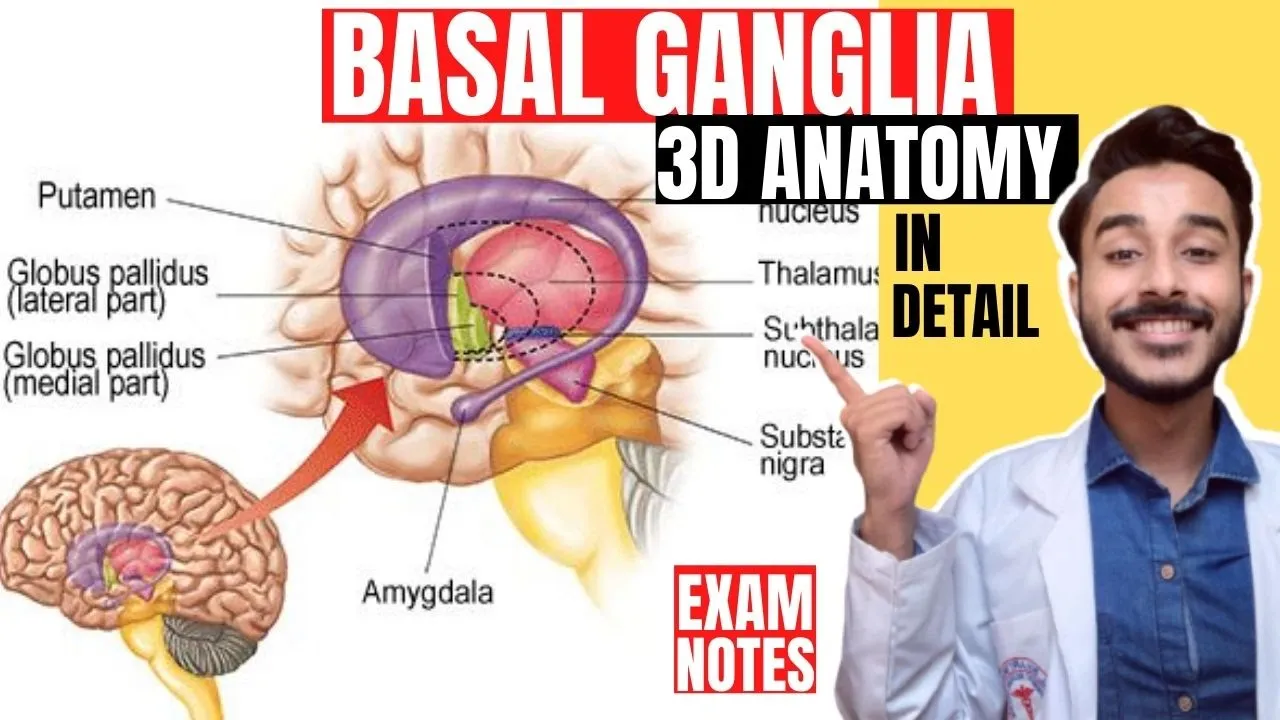













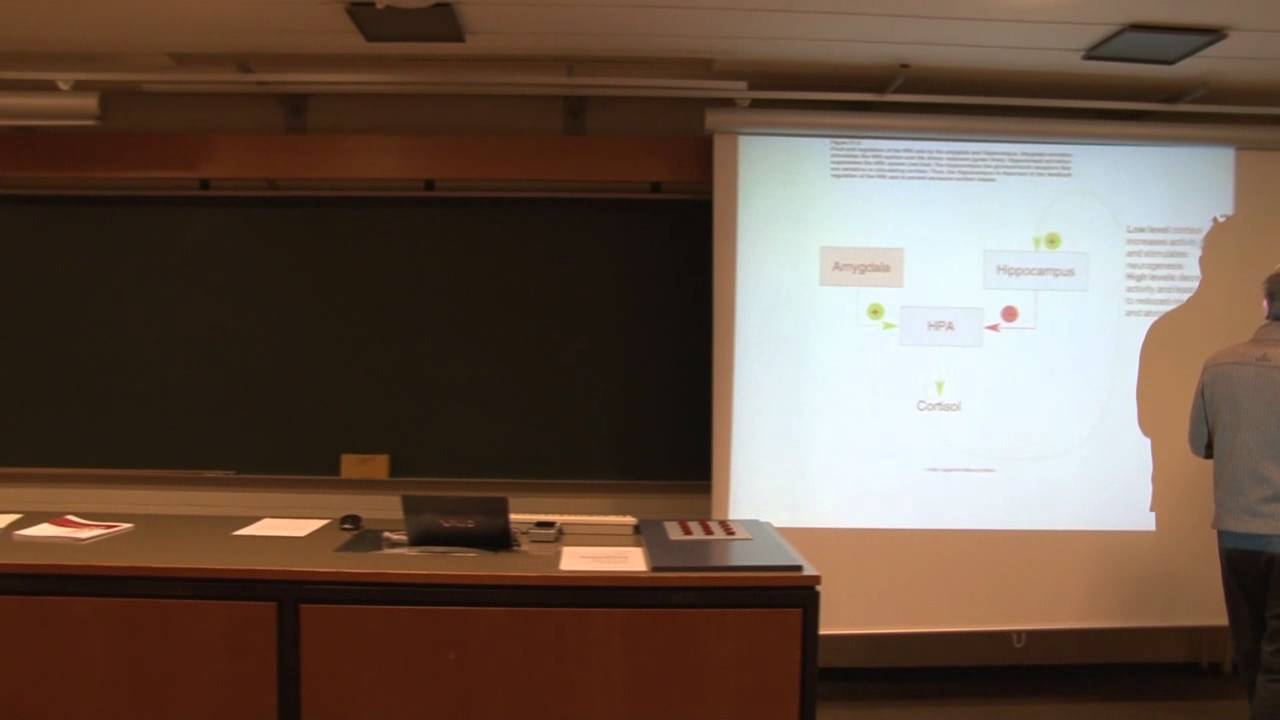







The limbic system is the brain's central hub for emotion, motivation, and memory, comprising interconnected structures including the amygdala (fear and aggression), hippocampus (learning and memory), septum, mammillary bodies, thalamus, and prefrontal cortex. This system influences hypothalamic function to regulate hormones and autonomic responses, creating bidirectional feedback loops where bodily states influence emotional experience (James-Lange theory). The limbic system is not a single center but a network where different subregions work in opposition (e.g., amygdala promotes aggression while septum inhibits it), and its plasticity allows structures like the amygdala to enlarge in PTSD and the hippocampus to shrink in depression, demonstrating how emotional experiences physically reshape brain anatomy.
Limbic System: Emotional Anatomy and Function Explained
Added:[Music] Stanford University okay and is this audible it's really quiet really quiet something's wrong with the sound system today how's that how's that Placebo maybe that would have worked okay well I guess I will just have to shout out but all right help all right where am I clipping where this falling off is that doing it that's fine okay good so let's see that is an event you probably should check out and I'm still irrit you didn't want to sign football for me but nonetheless okay so starting off as uh the large numbers of empty seats imply not only is Monday the midterm but today is not a topic that will be covered on the midterm so in case you want to flee right now here's your chance I won't be upset but what we do here is look at our last topic of our buckets in this case our neurobiology one and the whole premise for this one is to cover the most wonderful interesting parts of the brain which you're going to hear squat about when you wind up in medical school again from the other day what they will teach you about endlessly is stuff that goes wrong with your spinal cord or stuff that goes wrong with parts of your brain that regulate your bladder and your balance and motoric stuff how come because yes you can't hear a thing no um going to try to find this out okay somebody's off to get sound but in the meantime I will pantomime bladder problems so what you've got I will try maybe in the back just start waving each time I start hypoventilating and run out of volume but what you got here is not the part of the nervous system that's easy to find out about because it's right on the surface not the part that people focus on because there's a lot of spinal cord injuries and you can tell exactly which is what's wrong by which toe is no longer moving this is instead focusing on the part of the brain most centrally involved in Emotion the lyic system now obvious why that should be of interest to us more so than spinal Pathways controlling movement and in terms of making sense of the lyic system this is going to be the most horribly multi- very very logical things going on very logical strategies okay originally the limic system was not known as the limic system but instead had a name reflecting the fact that people started off studying it in rats and you take a rat brain which looks sort of kind of like this from the side and you got your spinal cord and cerebellum and cortex and what is this thing at the way front there this is the old factory Bowl this is the old factory system of a rodent brain and this is drawn exactly to scale down to the millimeter this is huge this thing is huge the olfactory bulb and its projections are 40% of the brain of a rodent and when people began to understand where the neurons in the olfactory bulb were sending their projections it was an area of the brain the underside of the brain which people very quickly to call this region the rhin and sephylon the nose brain because obviously this is what was processing all this swamping great amount of old factory information coming in and this area that we now know and love is the lyic system at the time was called the Ry and sephylon this dominated early on with the neuroanatomists which is to say the people who just sat there and said g whiz that's an awfully large part of the brain there and where does it send its projections as people instead in the 30s and 40s began to understand the function of this part of the brain what emerged was a very different Viewpoint from a different school which is it's doing all sorts of stuff with emotion and this picture of this region of the brain as having that role for reasons I don't completely understand somehow the people who liked the it's all about emotion started calling at the lyic system and thus you had one of the most Central conflicts of the 20th century which was whether this thing should be called the Ry and sephylon or the lindic system and thousands of innocent people were slaughtered before it was all over with brother pitted against brother savagery and what we've got much of Picasso's paintings were about some of the atrocities committed by the Ry and sethlon people but what wound up ultimately happening was a completely logical resolution Ry and sephylon lyic system is it about odor is it about emotion and all you have to do always think like an ethologist and you got your answer which is if you're a rat there's not an emotion on Earth that's not intertwined with olfaction the rat's the rat's emotional world is utterly driven by olfactory information and thus for a rat the Rin and sephylon the nose brain is the part of the brain getting all the information coming in that has any relevance to the good interesting emotional stuff going on in a rat's life so this massive resolution peace in their time suddenly this recognition that of course a Ry and sethlon is going to be sending projections is going to be all a part of the part of the brain that's doing emotion for you now of course as well-trained ethologists you should immediately be having a relevant thought already which is well so what's up with the uh Ry and sephylon fame nose brain lyic system in a species that's not some smelly rodent thing in a species for example that's paying attention to enormous amount of say auditory stuff how about all those birds with the bird song business going on or auditory displays of territoriality or things of that sort and you look in those brains and the limpic system is not the Ry and sephylon in terms of what part of the brain is disproportionately enlarged and what part of the brain is sending projections into the lyic system look at a bird brain and it is not a L enlon it's a ear in sephylon or something or other and you got to think like an ethologist and suddenly you're in a world where something is bizarre as electric fish who communicate socially through electricity have Electro receptors which are sending a lot of information to this part of the brain it is not the nose brain it is the among other things getting whatever sensory information is most pertinent to my emotional life part of the brain so the lyic system initially utterly viewed as intertwined with old faction now instead recognizing as good neuro ethologists what it's really about okay so as an introduction to it we need to start off with a very simplified quick overview of large parts of the nervous system you got bits of this last week but just to give an initial overview here just to orient what's happening and what we see here and again a very accurate technically drawn diagram you see the brain comes in three different pieces and each one has a different color and this reflects the work of a guy named Paul mle one of the Giants in the field and everyone is required to say his name at this point and this model that he came up with in the 1950s or so the Triune brain the thre layer model of what brain function is about so what you have is the most Central ancient archaic most phenetically conserved which is a fancy way of saying that all sorts of vertebrates out there this part of the brain is basically the same this is the hypothalamus talking to the pituitary this is the pathways going from the hypothalamus down the spinal cord area is called brain stem midbrain this is what uh McAn call The Reptilian part of the brain reflecting the fact that our section here is a whole lot L like the F Type you would find in a reptile this is the ancient stuff that does the purely automatic regulatory things you've got neurons here that have to tell you something about temperature regulation ooh back to that neuroendocrinology stuff let's see what's a hormone that's got something to do with metabolism body temperature thyroid hormone so you remember the hypothalamus being part of that casket the hypothalamus us has a relevant hormone for the pituitary which then tells your thyroid gland all of that so how does the hypothalamus need to know what's going on that same feedback information stuff from the other day there's got to be neurons in the hypothalamus that can tell your temperature and too cold let's get some more thyroid hormone out great that makes complete sense in terms of regulatory Loops totally boring okay so this is a part of the brain that keeps your body temperature right it keeps your blood glucose levels sort of modulated in some ways it talks a lot to the pancreas it does stuff like it's monitoring your blood pressure in various places it's remembering that you're running hard so let's tell the heart to beat a little bit faster completely boring stuff just robotic regulatory circuitry and Loops there so this is this ancient reptilian part of the brain totally boring part of the brain until you get something wrong with that part of the brain and suddenly it seems Mighty interesting remind me how many of you were in biocore okay lots of folks people in there will remember I told you about one of the alltime creepy diseases that you do not want to get which is called Odin's curse which is where you get some lesion some stroke damage to one of these mid-brain areas this part of the brain that does something very boring until it doesn't do it for you anymore odine was apparently some Greek nymph or something that Zeus was hitting on unsuccessfully at some point and greatly frustrated he put this Olympian curse on her which was that she had Odin's curse or maybe Odin's curse was what she had to say about him in return but what this was about is she lost the capacity to do automatic breathing whoa that's a drag automatic breathing and that you're just sort of going along there breathing now and then and we do that pretty eply as opposed to ineptly and what you don't have to do is stop and say well this would be a good time to expand my diaphragm or whatever it is you do there but you've got a lesion in this part of the brain and you lose the capacity for automatic breathing okay somebody who's not in biocore tell me what do you die of if you have Odin's curse who just mumbled that exi xixi good good okay and at what particular time when you fall asleep yeah or you actually don't die of exfix when you're falling asleep how come because you keep waking up you fall asleep and 30 seconds later you wake up because you're on the edge of asfixiation you die of sleep deprivation how's that for one creepy thing to have happened to you so you can start obsessing over that as an eventual problem here's the boring part of the brain this reptilian stuff we do this part of the brain exactly the same way that lizards do sitting on top of it is the area that we now put all of our attention and love upon which is the lyic system this emotional part of the brain which we will soon see in sickening detail the lyic system is mostly a mamalian invention birds reptiles fish do not have especially complex emotional lives uh oh there's people from Rus file's lab in here do not tell him I just said that but yeah not a word about it okay but it is mostly a Maman invention greatly expanding the lyic system emotional complexity stay tuned the next hour and a half is about what is much more subtle than saying ooh this does emotions for you sitting on top is the cortex the gleaming analytical machine of cortical function and cognitive expertise that we have this is is something that all sorts of species out there fish and birds and not bees but birds and almost bees and what you got there is one that nonetheless is greatly expanded in vertebrates and mammals and greatly expanded even more so in primates and even more so than us and as we will see one area of the cortex which is really very uniquely human and very intertwined with the lyic system as we'll see what is critical in making sense of the cortex with respect to all this stuff this limic emotion Behavior stuff and everything coming for the rest of the course is the rumors of the cortex being this rational independent analytical part of the brain that goes about its business while all this hormonal emotional muck is going on south of it is completely wrong all sorts of aspects of cortical function are being influenced by hormones and thus indirect under the regulation of here all sorts of aspects of cortical function are being influenced by the lyic system and all you have to do to appreciate that is think back on times with extreme emotional duress and arousal where you made some incredibly stupid decision that seemed like a brilliant idea at the time therein is proof that your lyic system is able to influence decision making going on up in the cortex and as we will see of great relevance to us as a fancy species the cortex has vast ability to influence stuff going on below there and all you need to do to prove that is sit and think about the fact that you are not going to live forever and suddenly this part of the brain is going to be kicking out CR and things like that and you've just done it with thought this bir directionality that completely does in the notion that here's the emotional part of the brain here's the cognitive part and that's completely completely wrong that they're separable major figure in the field a guy named Antonio damasio who's probably the best thinker about any of this stuff had a book a number of years ago called day cart's error dayart who saw that there was this great potential separation between thought and emotion and that's complete nonsense so starting off nearly on an anatomical level which is to say which neurons where are sending axonal projections where else tons and tons of cross talk between the lyic system and the cortex okay so we now have this utterly undefined mass of lyic system and we also have a tulara there but here it is okay but what you've got is of course subparts of the lyic system subparts out the Wazoo there are people who spend their entire lives arguing about whether this sub subnuclei of this part of the brain should logically be considered as having seven subp parts or eight subp parts extremely complicated part of the brain and what would be looking at here is the circuitry the circuitry and what each individual sub region of the lyic system does all of this got sorted out in the 1930s or so by a neurologist named James papes and I think there remains enormous controversy over whether his name is pronounced papes or papz but probably neither is correct but what you w up getting as a result of his work was the first person to begin to think in a systematic way of hey all of these structures in that old Ry and sephylon part of the brain all of these structures are sending projections to each other this seems to be some organized module of interconnected function and it was around that time that people began to be seeing what some of the effects were what some of the roles of these were behavior and suddenly outcomes the this is the emotional part of the brain and the circuitry that's since been delineated is known as the Pape circuit or the pz circuit or the whatever the guy's name was circuit and we will see that shortly he was the first person to begin to see just on the level of connections that this is an area that seems to be doing a lot of interrelated functions quick definition what do we mean by doing connections again back to last week's introductory stuff a connection a projection neurons in this part of the brain are sending their axons to that part of the brain and forming synapses there this area projects to that area so where are the projections where are the connections to translate this neuroanatomy concept into sort of the most accessible level what parts of the brain are talking to this region and what parts of the brain is this region talking to where are the axons coming from and where are these neurons axons coming heading off to so circuitry in that regard so this is going to be an enormously complicated circuit but at the end of the day there is one way to think about it which is unifying which clarifies everything which is the thing that every single nucleus and subnucleus and subs subnucleus in the lyic system the thing that everything in the lyic system wants to do is tell the hypothalamus what to do the entire lyic system is structured around trying to influence hypothalamic function there's all those connections going to the cortex and other areas as well but for first pass the way to conceptualize the lyic system is it tries to influence what the hypothalamus is up to why would that be interesting you know that from last week hypothalamus is the central hub for all of that neuroendocrine stuff and thus the entire world of your brain wanting to influence behavior and emotion in any sort of endocrine context you're going to have to be talking down here from earlier last week hypothalamus also playing a pivotal role in the autonomic nervous system coming down the spine The Whole World In which emotions change how your body works is all about the lyic system telling the hypothalamus what to do and th what you see is all the circuitry in here is built around trying to influence hypothalamic function in a certain way as follows which will make perfect sense which is what every single area of the lyic system wants to do is tell the hypothalamus what to do and in addition the other thing that it really wants to do is make sure no other part of the lyic system is telling the hypothalamus what to do and thus you've got all sorts of areas with means of stimulating regions of the hypothalamus and and inhibiting the activity of other limbic regions so you've got all these patterns here of stimulating down there inhibiting here all built around these different regions wanting to influence hypothalamic function so emitted being a total complete mess of circuitry one rule helps you begin to sort out the details which is okay so you've got this area of the lyic system and it wants to influence the hypothalamus at the end of the day how many synapses away is the hypothalamus how many neurons are intervening between this part of the lyic system having something to say getting Action potentials and influencing something the hypothalamus this winds up being a pretty good rule of thumb in terms of looking at influence you send a projection straight into the hypothalamus in other words you are one synapse away and you're going to be having a lot more control over what's going on there then if you have to send a projection here which sends one there and there and bouncing around and 14 synapses later you're influencing hypothalamic function how come well for one thing one synapse away you're going to be a lot faster and the other reason being if there's 14 synapses in between everybody Downstream of you is going to have their own opinion about things and it turns into a game of telephone the most direct way of influencing hypothalamic function is to have as few synapses in your projection as possible and thus what you see is most limic regions have a number of different ways of getting information down to the hypothalamus and they differ in the number of synapses and thus they differ in their power and what we'll see is just one example here ah we'll do that later okay so lots of examples of that just to give you a sense about something interesting in Us in terms of this rule of how many synapses away so we've got this limic part of the brain and back to that Ry and sephylon business that's you know rodents are super old factory old factory and fish do whatever they do and again don't tell fernal and all these other species have there and we're not a particularly old factory species here's something interesting every single one of your sensory modalities has to go through a minimum of three or four synapses to First LK down any influence in the lyic system except for our old factory systems which are one synapse away from the lyic system so even us we are not terribly olfactory and we've got atrophied olfactory bulbs that's a rat our olfactory system takes up less than 5% of our brain nonetheless olfaction is one synapse away from the lyic system telling you something about that whole world that visual information can tell you a lot about calculus equations olfaction is the thing that flashes us back to some emotional setting that's the reason for it great example of this counting the number of synapses strategies the fewer synapses the more influence so what are the structures of the lyic system first pass unfortunately it is going to make sense to learn all the details of these different sub regions because you will be hearing about all of them again you won't be hearing about them Monday night but you'll be hearing about them all in the next month or so and so learn this stuff okay so what's going on in the lyic system what is inside here what we've got are the major structures of the lyic system sitting in there you recognize the pituitary and thus sitting right on top of that is the hypothalamus and here we have all these other regions first off the amydala the amydala I have already mentioned it a number of times in class we will hear details soon about what it does you've already heard some in intimations of it so the amydala is this cluster of neurons beginning to get another anatomical concept here you've got nuclei clusters of neuronal cell bodies and you have projections areas of lots of axons so you will have a whole lot of cell bodies here and sending their projections off there you will wind up seeing this as a densely packed area of cell bodies each one of these areas I will be mentioning now are areas where the cell bodies are nuclei interesting elaboration as you also learned last week one of the things that makes Action potentials go really fast is that business about myin myelination these are very membranous wrappings around membrane very very fatty membrane lipid stuff which happens to be white in color cell bodies tend to be gray in color and this is where the dichotomy comes in brain science between gray matter and white matter parts of the brain gray matter are nuclei cell bodies packed in there white matter are cables of axons going from one place to another wrapped in myin so just translating that into sort of terms that we're familiar with okay so starting off the first nucleus of the lyic system the amydala the amydala if you study neuroanatomy most of these places come with some terms derived from Latin or Greek or something or other and the amydala amydala means almond it means almond a number of years ago I reported that it means peach pit and that turned out to be wrong and I was also wrong as to whether it was Greek or Latin I probably should have written that down from 2 years ago but from some stupid old classic language this means almond and it looks like an almond okay next we have in front of it the hippocampus hippocampus which we will hear lots about as well and you will see the hippocampus is a big structure spanning over there relevant to its function hippocampus Latin for seahorse but if you look at the hippocampus it doesn't look at all like a seahorse suggesting neuron anatomist don't go out to the Beach anywhere near as often as would be a good idea it actually looks like a jelly roll but people who spoke Latin didn't know about jelly rolls and thus they had to see horses so you got the hippocampus here we will shortly be seeing how these two communicate with each other where the axons are going between these nuclei next an area called the septum and there's a number of septums in the body septum is a term for a midline structure you have a septum separating the two nostr parts of your nose the center of the four chambers of your heart is a septum septum here is a structure that's right at the midbrain at the midline of the brain then we have just tucked behind the hippocampus something called the malary bodies yeah you got to know these terms you will eventually be so so grateful for having all this stupid terminology under your belt it will make the rest of your life far far are richer okay so you got mammary body here sitting on top of that is a remarkable structure that you probably could have intuited was there because you know about the hypothalamus hypothalamus what does that mean it means it's the thing that's under the thalamus I bet you there's something a little bit north of there called the thalamus and here it is which is possibly also known as the hyper suah hypothalamus but instead it's known as the thalamus and we will see some stuff that it does next are two very interesting areas which we will hear tons about and lectures to come in particular the lectures on depression a region called the ventral tegmental area and a region called the nucleus accumbent every one of these is in the handouts don't freak out about trying to get down the terms at this point just at least get the abbreviations here are the major players in the Olympic system with one addition and this is one that bedeviled the field for a long time and reflected a very very great piece of insight a neuroanatomist back who sort of was in his prime in the latter part of the last century a guy named VY NAA a Dutch guy who was arguably the best neuroanatomist of sort of the last half of the 20th century and in the 1950s studying neural connectiveness what he came up with was a totally nutty idea because at that point we were about 20 we we're about 10 20 years into the lyic concept these are sub cortical areas involved in emotion and they all send projections to each other and Nowa based on looking at the anatomy what parts of the brain were sending projections where what parts were getting projections from where NAA said one part of the cortex should actually be classified as part of the lyic system oh this was heresy he was he was driven out of the neuroanatomy club and he was insisting that this made sense anatomically and predicted it would make sense eventually functionally and he was totally right the most interesting area of the cortex a region called The frontal cortex also known as the prefrontal cortex and obviously real distinction there we will ignore that distinction an area the frontal cortex including a sub area called the anterior singulate this is a part of the cortex which is intimately interconnected with all these subcortical regions it is arguably the cortical component of the lyic system why is that the case we will see amid lots of Cortex doing stuff like telling you is it here that you were just stimulated or was it there did somebody just play an A or an A flat which limb do I want to move right now all sorts of nuts and bolts stuff how do I do long division all those things the frontal cortex has this world of utterly UNC cortex like things that it's interested in emotional regulation impulse control long-term planning gratification postponement it is without question the most interesting part of the brain and I say that as someone who's just spent like the 30 years last 30 years of my life just obsessing over the hippocampus and I was wrong I the hippocampus this is done well by me I have been faithful to it but nonetheless it has struck me more and more that this is where I should have been sitting because this is oh so much more interesting part of the brain than some dumb old area that remembers stuff for you frontal cortex is what makes us most defined human it is proportionately larger in humans than in any other species it is the most recently evolved something that we will hear about in coming weeks is it's the last part of the brain to fully mature most of you in here do not yet have a frontal cortex which is fully online which is an amazing thing frontal cortex isn't fully melinated until in your mid-20s on the average this is not oh you were born with all these neuro connections this is a part of the brain that does impulse control for you and it is not working yet very well in most of you guys for a while to come I don't know what this explains but it no doubt explains a great deal this is incredibly interesting part of the brain which has nothing to do with oh let's turn that sensory information into a three-dimensional map and I could recognize whose face it is and this instead is a cortical area utterly intertwined with what's going on in the lyic system one interesting measure of it which is looking at this frontal part of the cortical brain and an interesting measure worked on by a guy named Ian Dunbar some years ago looking at by now about 150 different primate species and in each one asking what percentage of the brain is made up by this prefrontal cortex how much of the brain is devoted to it and what he showed across 150 different primate species the single best predictor of how big the frontal cortex was going to be was how large is the average social group for this species in other words you sitting around in some species where you've got to keep track of three other people in there or you live in a species where there's 150 individuals in your troop and the latter species is going to have proportionately a far bigger frontal cortex what this suggests on a certain level is this utterly defining part of the brain evolved for gossip and social relations and appropriate behavior and social intelligence and all sorts of stuff like that truly interesting part of the brain utterly intertwined with a traditional Lim region so this now guy was completely correct okay so now adding in the next layer of miserable factoids you need to have which will show sort of the same principles I've been talking about which is how these areas connect with each other at this point it has basically been shown that every limic region projects to sends axons to some other lyic region I'm just going to put in some of the main Pathways here first one called the amygdalofugal pathway which carries information back and forth between the amydala and hippoc capus amygdaloid neurons projecting to ampus hample neurons projecting back and as we will see an awful lot of what the igdal is involved with I think I've mentioned already fear anxiety learning to be afraid of particular stimuli a lot of what the hippocampus does is help you remember stuff this connection between them is critical when you are learning that every time the guy the Russian guy with the beard puts the light on you're going to get a shock and then you're going to have to salivate when he tells you there's food coming what the amydala is doing there is hijacking the hippocampus at that time to have hippocampus do some memory formation for you about a fearful stimulus so interconnections there that are extremely important next we've got the hippoc capus needing to talk to the septum and it does so with a series of projections bidirectional again called the thria fornex fornex here's showing just how much fun neuroanatomy can be fornex is from Latin or Greek or whatever for Arch and apparently it comes from referring to the Roman Coliseum and supposedly this is the origins of another word that during classical Roman times this is where prostitutes would be so people who would say they were going off there would be going off to the Arches off to fornicate that's the origins of that so isn't this such a cool subject so here we got the fornex there completing this Arch hiicap is talking to septum septum then sending a huge projection coming down to the hypothalamus back onto the mammary bodies and projections going back this way as well a major major lyic pathway called the medial forbrain bundle okay just to make things more complicated now we now have another projection from the amydala that goes straight to the hypothalamus and this is a total pain this is a pathway called the stria terminalis and by all logic what it should do is go from here to there no that's not what it does here's what the stria terminalis does it starts in the amydala and it goes looping just on the outside of the hippocampus around this way and lands back there what's up with that that is ridiculous what you here see here is a principle about a lot of these neurobiological wiring stuff which is you get totally nutty inefficient you know going out through left field projections how did that happen what that tells you is at some point embryologically these two structures were not so close to each other and part of embryotic development involved flipping over like this and suddenly the amydala is right next door long after it made the most efficient possible connection by way of this and now you got this completely nutty way to get around there so often you see really inefficient pieces of wiring here telling you something about embryonic development some of the time you also see nutty pieces of wiring telling you something about the evolutionary history of this nervous system here's one example and this is one outside of the lyic system great demonstration of this having to do with some motor systems in the brain okay you're here and you decide what you would like to do is Bend this one finger what would be the logical thing some part of the cortex up here involved in motor control that we're not interested in should send a a message down to this finger saying Bend no that's not what happens one part of this motor system called the paramal nervous system sends a message to all five of your fingers saying do this meanwhile there's another motor system called the extra parameter system that quickly sends down a signal and says if you happen to hear the paramal system tell Fingers 1 3 4 and five to bend don't pay attention to it and suddenly you got this going on like what is this a committee that came up with this this is totally crazy inefficient wiring until you think about the evolution of the system as follows there's not a whole lot of species out there that have a need in terms of reproductive success to play trills on the piano there's not a whole lot of species that have to do independent movement of fingers the basic wiring of this motor system is one of this crude parameter system of just sending messages down the line there extend claws retract all that sort of thing and Along come primates and raccoons and a few other things that suddenly get in their heads to move fingers independently so you got a choice at that point you can either renovate the entire parameter system and rip it out and rewire so that each finger is controlled independently and that's never going to work because you know the contractor doesn't show up and it's been a million years or what you do is you have to come up with a second newer system that's superimposed on top totally ass backwards inefficient W of it what is that tell you the extra parameter system is more recently evolved it is more of a primate system system and that's where you get the fine control what you often see is bits of really clunky wiring and regulation tells you things about embryonic life and it tells you about Evolution back to this classic quote which is evolution is not an inventor evolution is a tinkerer it is just playing with what's already there and trying to come up with something better that was the idea from lectures ago which all things considered squid do not swim anywhere near as fast as Barracuda but for something that used to be a barnacle they're pretty good swimmers you have to realize where things started and where the adaptations came from okay so more wiring now we've got the mammary bodies talking to the thalamus the mamic tract and then you've got the thalamus talking bidirectionally with the frontal cortex so you begin to see the Starts Here of kind of a looping circuit and going biod directionally all of that two additional areas this ventral tegmental area and this nucleus accumbens ventral tegmentum sends a lot of information here and from on there it goes to every single place and we will eventually see great relevance of that bidirectionally okay so horrible circuitry what you should already see is one example of what I was telling you about before counting number of synapses so you're the amydala and you want to tell the hypothalamus what to do you got a choice you can do it by way of this stria terminalis thing which is one synapse away or you could do it by talking to the hippocampus which talks to the septum which talks to the hypothalamus where's the most important stuff coming out of the amig of the hypothalamus by way of this stria terminalis what's this communication about a lot of the time it's the amydala trying to get the hippocampus to shut up so the amydala can dominate hypothalamic events that begins to show this principle of how many synapses away so we have all of this incredible wiring here and again every single one of these there's other minor ones there as well and they all interconnect with each other but these are some of the major ones does this make sense how about now okay so that's the lyic system in terms of basic wiring so what everyone needs to do now is uh spend the next 5 minutes filling in what those uh abbreviations were and then we will finally get past the stupid a send to B and begin to look at function okay so 5 minutes okay so pushing on good question that just came up relevant to biocore people so what I just said that business about the old factory system is one synapse away from the limic system isn't totally amazing remember bio cor stuff that business the visual cortex the first layer that does dots the second layer does lines at certain angles all that that's where you're getting all the synapses coming in which delay you from getting information into there auditory system has the same multi-layer processing tactile all of those are like that except for ol faction that drops its first signaling right off into the amydala so very very different circuitry okay so now finally getting to function so how do you figure out this is the function of the lyic system a bunch of different techniques bunch of different experimental techniques first you have the greatest thing that has been most helpful in all of the history of Neuroscience and understanding how different parts of the brain work which is endless Warfare because what that gives you are people who have had parts of their brain blown out of the water there you have uh nice jargon missile wounds so after every big good fun energetic War all sorts of neuro Anonymous get their careers like jump started for years afterward studying people who have had parts of the brain lesioned damaged destroyed by circumstances like that but you know any oldtime neuroanatomists are delighted to get a hold of somebody who's had a brain region damage there's one guy in fact everybody has heard of hm I suspect anybody not heard of hm okay so you've all heard of hm there's another guy na na has his septum taken out and what happened to na all that it ever says in the literature was that he was at a wedding and his septum was destroyed by a miniature fencing foil that's it that's the literature and what happened to na so na you know was a draft Dodger in Endless different Moors and then he gets done in by his like sister-in-law's wedding kind of thing but lesions lesions are critical so human studies where you have had accidental damage to brain regions or the rare horrifying world where there was Damage Done to human brains intentionally back to class one the frontal labotomy business just to clarify frontal labotomy in its classic form was not lesioning the prefrontal cortex it was just put in a big old cut somewhere through there that took out limic structures given the fact that most frontal labotomy were being done I kid you not with an ice axe that was the tool of choice for the neurosurgeons this was not a very precise surgical technique but it was taken out all sorts of lyic structures so the rare world of intentional lesions in humans hm being the rare version of that where it was done for valid clinical reason much more often in the lesion world is taking experimental animals where you go in and you selectively destroy some region and the strategy whether in humans or animals is absolutely obvious which is okay if we destroy this part of the brain what doesn't work right anymore o we've just found out something about what that part of the brain does next strategy classic one now instead of lesioning a brain region you put down an electrode where you stimulate that region you artificially generate Action potentials there this is a brain region that gets projections from here and this region is not saying anything whatsoever there are no activity here to send action potentials there nothing's happening and what you're doing instead is by sticking an electrode in there and stimulating you are simulating an input there stimulate and now see what happens o we've just learned something about that part of the brain rarely done with humans except for epileptics with severe types of intractable epilepsy where a certain type of neurosurgery is done to correct it and it's often quite effective on the way down the electrodes going down often the nurse search and stimulate on the way down to be assured that they're in the right place okay next version now instead you put down an electrode and that one's a recording electrode what that one is telling you is so you're down in here when are these neurons getting electrically excited or putting it in here when our action potential is pulsing through this part of the brain picking up what's going on and what really winds up being fancy are people who for example can put a stimulating electrode down here and a recording electrode there that sort of thing there's a whole world of incredibly Adept people who could record from one single neuron at a time or how's about this back to those neurotransmitter receptors coupled to an ion Channel an ion channel that opens up and stuff goes in or out there is a technique called patch clamping where people can rep record from one single ION channel at a time which is just Madness that people could do this but in terms of the resolution all of these techniques artificially get neurons excited electrically see what happens next put in a recording device to tell you what's happening and thus you begin to do things like ooh every time I do this with my hand these neurons get Action potentials we've just learned something pertinent there what else another realm of techniques you've already heard about which is this plain old boring Anatomy which part of the brain sends axons to this part of the brain how many synapses away all the means of deriving information that we heard about before so that's the whole world of just looking at the circuitry telling you about function from that then of course there's a a world of biochemical stuff you are measuring levels of things you are measuring levels of neurotransmitters molecular biology seeing where different genes are being expressed if you see genes that are only expressed in this part of the lyic system under some circumstance you've just learned something about its function all that sort of thing finally a world where you could do really interesting trendy stuff with humans in terms of seeing what's up in the lyic system where what you do is you can image brain regions and this is now a whole world of instead of sitting around waiting for somebody to die and slice their brain up afterward instead you could do imaging CAT scans CT scans MRI where you see the areas of different parts of the brain how big or small they are you can look at the metabolic rate in certain areas of the brain which is sort of the equivalent of recording stick in an electrode and you can tell what's Happening Here by when there's electrical excitation use functional brain Imaging and you can tell what's Happening Here by when suddenly there's more oxygen or glucose being consumed here same sort of information with the Imaging you're getting a picture of the entire brain all at once and one of the cool things that come out of those studies is showing that some regions of the brain particularly the lyic system will change their size over time one example which I think we've heard about already which is that the amydala gets bigger in people with post-traumatic stress disorder severe severe traumatic history and this part of the brain expands people with PTSD amygdalas are larger you look at the metabolic rate in the amydala people with PTSD it is more metabolically reactive than other areas of the brain or then in people who don't have PTSD so that's just told you something interesting nice cellular basis of that periods of severe stress cause neurons in the amydala to grow more dendritic processes that's probably why the amydala gets bigger so that's the sort of thing that gets picked up on humans with brain Imaging another version over in the hippocampus just as pertinent to some of the stuff we will hear about people with long-term major depression their hippocampus gets smaller their hippoc capus atrophies a bit and the same sort of information being picked up you see an area of the brain that is plastic enough that is malleable enough that its size will change in response to certain types of experiences or emotional states you just learn something about what that part of the brain does so that winds up being extremely informative when there's differences in the size of different brain regions in response to experience okay so that's generally the set of tools that are available to people trying to figure out what's going on in the lyic system and all of these tools come with some important limitations these are limitations if what you're trying to do is figure out what this part of the spinal column does instead of that part because you need to figure out all sorts of AV in there if that's hard it is gazillion times harder to use some of these techniques to make sense of emotion an emotional memories and things of that sort what are some of the difficulties in interpreting data from all the results we just heard about here is one problem okay every day unbeknownst to you guys there are two to three dozen huge tractor trailer trucks that start a dawn from Gilroy and bring us our garlic that is used in all of the dorm dining rooms every single morning that happens thousands of pounds that are consumed in the dorm and you are trying to understand where in California is the Garlic generating Center the garlic nucleus and what you've been selectively doing is carpet bombing certain areas in Northern California and as a result of a direct hit on 101 no more garlic shows up at Leland Stanford Jr University so what have you just concluded 101 somewhere right around Laser Quest is exactly where the is for producing garlic in Northern California and that's the only plausible scientific conclusion you can reach what we have here is the problem of centers versus fibers of Passage have you just in a lesion study found out something about a region you've destroyed it and something doesn't work normally is that because you've taken out the neurons the cell bodies in a true Center or have you inadvertently cut a fiber Passage have you blown out 101 and endless mistakes made over the years early on in neuroanatomy people failing to distinguish between lesions of nuclei versus lesions of Pathways what really winds up being hard is when you have nuclei with cell bodies and at the same time fibers passing through from someplace else that's what this medial forbrain bundle is about cell nuclei all over the place but at the same time fiber passing through when you do a lesion in a place like that you can't tell whether it's the cell bodies the nucleus aspects the center that you're taking out or whether you have just taken out a fiber of Passage enormously difficult stuff to do okay so that's one constraint once you get through that and you figured out o this really is a center this really is the cell bodies rather than just the axons then you deal with this issue of what does a center mean in the brain yeah this may be the center the part of the brain that moves this finger instead of this one that may be a pertinent concept ooh this is the center of the brain for feeling depressed toit a Bittersweet gratitude for the unexpected pleasures of life which are felt in a poignant context making you smell memories of the kindergarten classroom you were in oh that's the center of the lyic system for that by the time you're getting to a part of the brain that's doing all this emotional stuff intermixed with sensory information intermixed with memories even the concept of oh this is the part of the brain that does fear for you this is the part of the brain that does aggression so we'll see these are some pretty flimsy Concepts okay more qualifiers the next thing you need to be in order to be a good neuroanatomist and make use of the information from these techniques is to also be an ethologist we already heard a version of that the Ry and Fon that's what's going on in a species that's all about old faction you can't understand the wiring going to the lyic system unless you have interviewed an animal in its own language classic need for ethology okay so here would be another demonstration you have found a part of the brain which you think is interesting it's a lyic structure nobody quite knows what it does and you have now just stuck a stimulating electrode down in there and the strategy is you're going to mildly stimulate there and you see what happens in the organism so your first study subject is a lion and you've stuck your stimulating electrode down in there and you mildly stimulate this part of the brain and what the lion does is it does this it extends its claws now your next subject is a human so you sit down you plunk down your stimulating electrode and you stimulate mildly in that same part of the brain and the human says so what part of the brain have we just found here we have found a part of the brain that plays a role in expressing a certain degree of irritation and if you're a lion you're sort of extending your claws there you probably want to stop messing with me because look what I'm doing right now and look how sharp they are with the human another ver you got to know your species another example of this so here's a part of the brain and you're wondering what's up with this you do the same strategy you stick in the stimulating electrodes and you do this to a rat and what she does is proceed to run around her cage like crazy and take pieces of newspaper rip them to little pieces and stuff them in the corner okay that's an interesting center of the brain then you do the exact same thing to aesus monkey and what she does is grab any sort of cylindrical object around and hold it in her arms by her nipples oh maternal Behavior first case you got a rat making a nest second case you were stimulating nursing Behavior ah okay you got to translate it into what it looks like in the species and here's one domain where that went utterly utterly wrong part of the hypothalamus which people used to think had everything to do with aggression because for example here you would take a stimulating electrode in a rat and you put a mouse in the same cage as the rat and you stimulate that part of the brain of the Rat and the rat leaps on the mouse trying to rip it to shreds now you take a human and you stimulate that same part of the brain and they leap up and run over to the cereal box and rip it open and start eating what's up with oh rats eat mice that's what they that was not a rat being angry that was a rat getting something to snack on and you had to recognize the difference between what does aggression look like in that species versus what does food acquisition and if it's a predatory species it could pass for looking mighty aggressive and not actually be a whole generation of people thinking they were understanding the neurobiology of aggression inadvertently made this mistake in W up studying the neurobiology of predatory behavior so you got to know your species ethological principles next you got to know your individual so here now you've got two lions and you stick in your stimulating electrode into the first one that same region again and you stimulate and he does the same deal again or suppose you even stimulate it more and he does this a bunch of times and then he Roars savagely meanwhile you stimulate the same area in the second lion and nothing happens at all you take two baboons you stimulate that region in the first one and he gives this big threat ywn displaying his canines you stimulated in the second individual and nothing changes in his behavior what's the difference difference any speculations dominance yes dominance here in the second case in the first case you're doing it to a dominant individual and they do their fixed action pattern for their species of expressing aggression dominance whatever but you do it to some subordinate guy and that's not part of his repertoire right now and even though that's the part of the brain that does that behavior it is tightly inhibited in that individual because that's not an individual who goes around displaying his canines to a whole lot of his buddies you have to know the individual as well so given all of those constraints that tells you if you're going to understand what's up with this part of the brain the difference between fibers and nuclei and don't get overly impressed with the notion of centers of function but you got to do the ethology stuff hear more than any time that we've seen you got to understand the species and the individual that you are inter viewing with your electrodes okay so given all of that what do some of the lyic system structures do this is a first insanely simplifying pass because every one of these areas you're going to hear about oh so much more but a very first pass and you notice as part of the first pass I'm going to be violating the caveat that I just gave two minutes ago and that on this first pass here I'm going to be presenting these as the center this is the part of the brain that does this we're going to see how totally wrong that is nonetheless on a first path amydala amydala is centrally involved in fear and anxiety you know this already of tremendous significance telling us something about why this world is such a messed up place the amydala also plays a central role in aggression not messed up just because ooh this is the part of the brain that generates aggression but what it tells you is you cannot understand the neurobiology of being violent without understanding the neurobiology of being afraid and being anxious and the fact that this is the same part of the brain that does both of those functions suggesting on a certain neurobiological level in a world in which no neurons need be afraid you're not going to be generating a whole lot of aggression also very interestingly what we will hear about is the amydala also plays a role in male sexual motivation what's that doing going through the amydala not sure whatsoever but what that may begin to explain is the subset of individuals who will confuse aspects of aggressive behavior and sexual behavior in all sorts of pathological ways first passive what the igdal is about meanwhile next door we've got okay not next door but two synapses away we've got the septum showing a first important example of this theme in the Olympic system amygdala mediates aggression caveats all of that we got the fine print now the septum inhibits aggression it does exactly the opposite beginning to present a theme throughout the lyic system of different sub areas working in opposition what would you be logically betting the farm on right now when the amydala is activated it tries to silence the septum when the septum is activated it tries to silence the amydala cross inhibitory projections so what would these things look like you destroy the amydala of an animal you never get aggressive behavior again you record from it when it's smelling some scary rival the amydala activates you stimulate and it does an aggressive behavior you could begin to see how you figure this out next hippocampus hippocampus famous for being involved in learning and memory important for us as well hippoc capus plays a role in turning off the stress response you remember that negative feedback stuff from two days ago every endocrine system there's got to be a part of the brain that measures the hormone in the bloodstream to figure out what should the hypothalamus be doing the hippocampus measures the levels of glucocorticoids why should a part of the brain that does memory be so intertwined with stress very logical in two ways number one here's a stressful horrifying scary circumstance remember what you did to get out of this if you do manage to get out of this file this away very very emphatically second thing that it's good for is stressful circumstance coming up what did I do last time to get out of the circumstance so an intertwining between a memory part of the brain and a relationship with stress hormone regulation next mammary bodies has aspects relevant to maternal Behavior and that's not why I was called the mammary bodies but they're shaped by like mamory glands if you once again don't spend a whole lot of time or look too much at seahorses but the mammary bodies next prefrontal cortex you've heard all about and we are going to hear tons more about it because it is incredibly interesting in terms of maturation and learning appropriate sexual behavior a learning not how to be aggressive but when to be aggressive the notion that there is a problem with this part the anterior singulate in people with clinical depression anterior singulate I think I may have referred to this already sit somebody down poke their finger with a needle and areas here are going to light up and spinal Pathways telling you it was this finger and not that one and areas making you breathe faster and all of that and in addition the anterior singulate is going to activate take somebody now and have them watch their loved one get their finger poked with a needle and nothing's happening down here but the anterior singulate activates it's doing something along the lines of empathy and feeling somebody else's pain and suddenly it becomes real interesting that there's stuff going wrong in it in clinical depression easily translated into that that is a disease of pathological hypers sensitivity to the Pains of life and the world okay so frontal cortex finally lurking around in here the vental tegmental area and the nucleus accumbens really pertinent to depression as well this is the part of the brain that has all the neurons that release dopamine having to do with pleasure this is the part of the brain that cocaine works on that indirectly all addictive drugs work on this is the part stimulates dopamine release here stimulates dopamine release at all the interesting places frontal cortex amydala hippocampus Central to understanding everything about appetitive Behavior Behavior driven by an appetite for something that tells us an elaboration we'll be learning about in terms of what the dopamine system here does people used to think this is the system that activates when you are feeling pleasure turns out it does something much more interesting this is the part of the brain that activates when you're anticipating feeling pleasure it's not about getting the reward it's about anticipating that you will get a reward and what it's most about is not only anticipating that you may get a reward but powering the behavior you need to do in order to get the reward standard Paradigm showing this you take a monkey that's been trained every time a light comes on at that point if it presses a lever 10 times 5-second delay and out comes some food that rewards system initially the very first time it stumbles into just happening to hit this at a boredom 10 times and out comes some food ooh up go dopamine levels when the food comes out but pretty soon what you get instead is the dopamine levels go up when the light first comes on this is not ooh I just got some pleasurable food this is I know this one I'm on top of this I'm all over this one this one's easy this is one of those 10 lever press deals this is going to be great I got this under control elevated dopamine you go hit the lever and Along Comes the food now instead you flash on the signal telling you we're entering one of those press the lever 10 times you get food sessions you turn that on and you block the rise and dopamine and the animal doesn't press the lever what this pathway is about is giving you the energy the motivation the depolarization of neurons for carrying out the pursuit of pleasure and that's really informative as we'll see because stimulating the pursuit of pleasure is far more of an addictive process than the pleasure itself in terms of making sense of some of the circuitry okay so all of this eventually plunks us down into the hypothalamus the hypothalamus has a gazillion sub areas all these separate little nucle ey that have a variety of functions all of which have boring vegetative just keeping track of body temperature type functions all of which are also profoundly affected by the whole world of emotion and thought and memory first area ventromedial hypothalamus we're going to hear tons about that starting next week along with a cognate area the medial preoptic area these terms will become familiar do not freak out these areas are very per to sexual behavior and what we will see is that one of them is more involved in male sexual behavior one more in female sexual behavior on the average there are gender differences in the size of these areas there is one Landmark study that everybody learned about about 15 years ago showing that there's a difference in the size of one of these regions depending on your sexual orientation there is an amazing study that was shown that people who are transgender have differences in the size of some of these regions as a function not of what their sexual phenotype is but of what they've always said I have always felt like or whatever they have the region the size of the what I always felt like I was rather than what they actually are bringing in this possibility that what transgender is about is not somebody thinking that they have the wrong sex but it's somebody who's gotten the wrong body body so these areas we're going to hear lots about next week next region scn supermatic nucleus and once Julie Andrew says that as loud and fast as possible the supermatic nucleus is about circadian rhythms we're mostly going to ignore that and anybody who has anything to do with Craig hel's lab don't tell him that I said that either but like stupid circadian rhythms and fish sort of do in two of my colleagues at once next moving on another part of the hypothalamus pvn paraventricular nucleus what's made in there CR that's the part of the brain that initiates the backbone and the stress response and what areas are sending projections to it everything everything ranging from Pathways that tell you that you've just burned your toe to Pathways telling you you are very very hungry to Pathways telling you that you have just smelled a terrifying ter torial rival to Pathways telling you you have just thought about oh my God only 4 days till the midterm or whatever it is by the time you get to species that can be stressed by very abstract cognitive states by thinking about the suffering of somebody on the other side of the planet what do we know about the neuroanatomy pvn is getting projections from all over the place next aru nucleus aru nucleus is the bottom of the hypothalamic funnel that's the part where all of the hypothalamic hormones come out and get into the circulatory system there there's actually another area on top of that I will not mention it but that's its function lateral hypothalamus has something to do with hunger and that's the area that people Wasted Years on thinking they were studying aggression when they were instead studying predatory behavior lateral hypothalamus has to do with Hunger boring version of it it does things like measure your blood glucose levels and your insulin levels all sorts of logical things really interesting level evidence that the lateral hypothalamus has something to do with hungers in the broader sense hungers for types of information hungers for other rewards other than food it's an area having to do with Hunger okay so this very very F fast pass here over all of it one additional component to think about which is everything I've just said has been oriented around all this lyic system stuff built around eventually influencing the hypothalamus and thus eventually increase influencing the entire world of hormones or of the autonomic nervous system this is this unidirectional picture stuff starts in the brain and you have outcomes throughout the body what is just as important is all the ways in which stuff going on in the body will influence lyic function completing the Sur Circle and an awful lot of that information is the autonomic nervous system not going in this direction but going in this direction now what this brings up is a classic Theory that's been in Psychology since around 1900 or so called the James Lang theory of emotion named for William James and Lang whoever that was that may have been his puppy but the James Lang theory of emotion goes as follows here's how you feel in motion it is not the case that your brain decides it's feeling and emotion based on sensory information coming in memory whatever the brain decides it's feeling and emotion and tells the body let's speed up the heart let's breathe faster let's sweat whatever it is that's not how emotion Works here's how emotion Works stimulus comes into your brain and before you consciously process it your body is already responding with heart rate with blood pressure with pupilary contractions whatever how do you figure out what emotion you were feeling you were getting information back from the periphery telling you what's going on down there in other words how do you figure out you're excited whoa if I'm suddenly breathing real fast and my heart's beating fast it must be because I feel EXC oh I feel excited now ridiculous totally absurd way in which you could process stuff completely inefficient and over the years after Decades of being wildly discredited more and more evidence that that is some of how emotion is based your brain being influenced by your bodily state to decide what emotions it's feeling number of examples first one one of those hormones that just has emotion written all over it adrenaline adrenaline epinephrine epinephrine associated with arousal of the sympathetic nervous system so what happens when you dump some epinephrine into the nervous system what does it do to the brain what does it do to the oympic system what does it do to the sort of behaviors influenced by it and greatest demonstration this was a classic study in the 60s guy named Stanley shacker doing a study that you could not do again on humans with current rules but here's what he did he gave people epinephrine adrenaline without them knowing it okay less paperwork in those days but here's what the one version of the classic experiment was somebody comes in and they believe what they're doing is some study of you take this vitamin and does it change the way you do sidoku or something and like that was just the teaser that was the distractor we've taken this pill which actually con contained long acting epinephrine then you're going to go into the study where you're going to get tested or whatever the task is and please sit down in the waiting room for a while and the actual experiment took place in the waiting room sitting there in the waiting room was another individual a Confederate of shacker somebody working on the experiment and half the cases what the person sitting there was supposed to do was say I can't believe it I was supposed to go and they said I would have a 1:00 appointment for this it is 1:30 already I'm going to miss my class my car is going to get towed I'm totally pissed off I can't believe these people are doing it meanwhile half the time the other person is sitting there saying God I love these psych studies you do a lot of them I love doing ones I had such a cool one last week which dorm are you in let's off it goes and the Very the key thing being totally different emotional state in each case being exposed to someone in a very emotionally aroused agitated expressive State and what did chakor show does epinephrine make you get more Angry does epinephrine make you get more friendly it doesn't do either it's modulatory what epinephrine does is it kicks up the Fe Ed level of whatever emotion you were socially being brought into and thus what you got was the subject sitting there soaked in epinephrine while somebody is like going on about how late it is in these people before you know it they're up there banging on the counter at the receptionist and saying this is an outrage and this is unfair and all of that getting caught up in it meanwhile the other one within like five minutes he's singing frat songs with this person and there and they're going to get together for dinner and they're hugging each other and what does epinephrine do it does not cause a behavior it exaggerates it magnifies emotional states that have been provoked for other reasons it modulates the exact same concept as the other day what does Gaba do to that Neuron a it does nothing whatsoever what Gaba does is it modulates the ability of this glutamatergic neuron to talk to a what does epinephrine do does it create any emotions not at all what it does is Jack up the intensity of whatever emotions your social circumstances have generated another example of James langing sort of stuff okay so you were sitting around and you were terribly anxious and you go to a clinician and the person decides to give you what class of drugs do we know endlessly by now benzo diazines they give you some Valium to decrease your anxiety meanwhile across town there's somebody who has a big gymnastics competition on Sunday whatever and they've pulled a muscle they've been having muscle spasms and this is really a problem so they go to their clinician who gives them a muscle relaxant benzo diazines the exact same dose so wait a second here's somebody taking Valium for anxiety and here's somebody taking Valium to relax their muscles what's up with that it's the exact same thing and it is a very James Lang moment what's part of anxiety about it's monitoring the level of tension in your body it's getting feedback from muscle tone and that's one of the ways in which anti-anxiety drugs like benzo aspin's work because you're sitting there and you're saying things are just as horrible as they were an hour ago but I am so relaxed I'm like dripping out of this chair here it must not be so bad part of you deciding is monitoring the muscle tone in your body coming back with autonomic information that's where you break the cycle that's why the same drug decreases anxiety and is a muscle relaxant more examples of this one is what's going on with meditation that's what biof feedback Taps into so you're sitting there and you're suffering from high blood pressure translated into our terms something here is driving blood pressure to be increased too much it's not necessarily that it could also be blood vessels but we'll put it on a brain basis here for the moment so you got a choice between taking drugs or doing some meditational something that you want to hook up to biof feedback to make it more effective here's what you do they sit you down and they wire you up so that they can monitor your blood pressure and you sit there and they say okay I want you to relax and focus and focus on the best day of your life let's see what happens to blood pressure nothing much okay focus on your favorite piece of music nothing much okay focus on your favorite piece of music that's kind of slow and dreamy what and suddenly the monitor goes this way the person's blood dress pressure is just drop 10 points and then you say stop wait a second what did you just think about think about it again and it does it again and what the person begins to learn at this point is what aspects of meditative States what aspects of memory whatever suddenly allow the brain to be regulating blood pressure what's going on there you're using this machine to send the signal up there part of what's also going on is feedback that way so another version of one of these Loops more versions of Loops here is one that probably accounts for 90% of the arguments between significant others on this planet okay so you and your significant other are behaving interacting in a primate social biological way and one of you does something that totally outrages the other one and they're furious at you he says personifying and they're Furious and what's going on and they convince you readily that you're at fault and in fact this was a horrible thing you did and they're all agitated and you apologize and you make it sound like you really mean it because you really mean it and you apologize and great and they finally say Okay Okay I accept your apology don't do it again it's all sorted out it's over with it's done and then you begin to think okay great we're out the other end of the woods there things are just fine now things are and suddenly they remember something miserable you did to them in 1968 and they suddenly remembered in every possible detail and want to argue about it all over again what's going on there what we have is another James Lang moment when you get into an aroused angry State and then it's all over with afterward that's great because the person is apologized so cognitively you have just adjusted things yes they recognize they did the wrong thing good I'm Vindicated that's great it's settled now it's perfect and you could do that in a second the trouble is it takes a long time it takes minutes now for your sympathetic nervous system and its consequences to completely Coast back to Baseline so you're sitting there and the problem has been solved but your heart is still racing and what do you have a James Lang moment there sitting there saying okay well I was really upset about that but that's just sorted out and that's all taken care of except I'm still feeling totally agitated it must be for some reason ah it's what that person did to me in the second Roosevelt administration and suddenly out it comes out it's this James Lang Loop there of the physiological information coming back there prompting one into trying to find a cognitive explanation for it there must be a reason why I am still hypervent oh this must be the reason this thing we need to go over also okay I'm going to give one factoid here and you can do with it what you will but there is a pronounced gender difference in how long it takes after strong sympathetic arousal for things to go back to Baseline okay let's just get a show of hands here uh who guesses that it takes longer to get back to Baseline in males okay well unless there's a lot of uh abstainers here I think we're okay females yeah yes there is a pronounced gender difference in that and there's another realm in which you have that same pronounced gender difference which is after orgasm males go back to Baseline a lot faster than females do and that explains a whole world of like you know he wants to go out and get noodles and peanut sauce and she wants to cuddle and talk and all that sort of thing why can't exp and it's James Lang's damn fault that that sort of thing goes on okay so we there have another example of these feedback loops a couple more here's an amazing thing you take somebody with a clinical depression and you force them mechanically to take a sematic state that mediates different emotions and signifies other emotions what am I talking about you take the person with depression and you say you are going to mechanically go through the process with your facial muscles of smiling again and again and again and you force somebody to do that for a half hour or so intermittently and they feel better afterward the world is just as depressing as it was 30 minutes before but there's something going on here saying if I am getting feedback saying I'm doing this thing with my muscles here and I'm doing it a lot it must not be so bad other studies showing you take somebody and either they are slumped in a chair or you have them sitting up erect and you tell them the score that they got on a test that you just gave them before that and it's a very good score and what you see is the more straight upright the person is sitting afterward the more they will assess themselves as being made Happy by the result they got and being made to feel proud what's up with that the posture of your spine is doing something up here what this shows us is amid this whole orientation the brain controlling hormones the brain controlling spinal autonomic stuff the lyic system telling you all of this outflow from there completing this big circle back to the very first class that business of think about something really emotionally Laden and suddenly Your Body Works differently think about the people who have committed murders in the context of a brain tumor a period their hormone levels their nutritional history here junk food murders and all of that twinky defenses what that is is the other half of this Loop okay so now you should sit straight up and be proud of yourself because you now have all of the buckets necessary under your belt so that's the first piece of good news and that now transitions us to the latter half of the course which will now be to use all of these approaches and looking at specific behaviors here is a sexual behavior first off as a good ethologist do we actually understand what we've just observed for this species this individual Etc what went on in the brain 1 second before that caused that behavior to occur what's up with the neurobiology what sensory stimuli caused those neurons to generate the world of ethological releasing stimuli what hormones in the bloodstream in the last minute in the last hour made the individual more or less sensitive to that sensory information blah blah all the way back to understanding The evolutionary Legacy of the species of which this individual is a member that's going to be our strategy in each one of these now working our way back in time so there's that great news that you are in that position now to take it on the other piece of good news is we're not going to do it on Monday we won't have class on Monday so you can all get all James langy and freaked out for the exam Monday night but quick survey among the T so what do you guys think should we have a review session then should we show a David atenor movie Goen okay David atenor so which one are you going to bring in we'll watch Life um the BBC version with David aten um I don't think it's really available in the US very much yet so it's kind of a cool opport for more please visit us at stanford.edu
Up Next

Neuroscientist Moriel Zelikowsky: Effects of Fear, Isolation, and Anxiety on the Brain
@TomBilyeu
125.1K views•2020-08-11
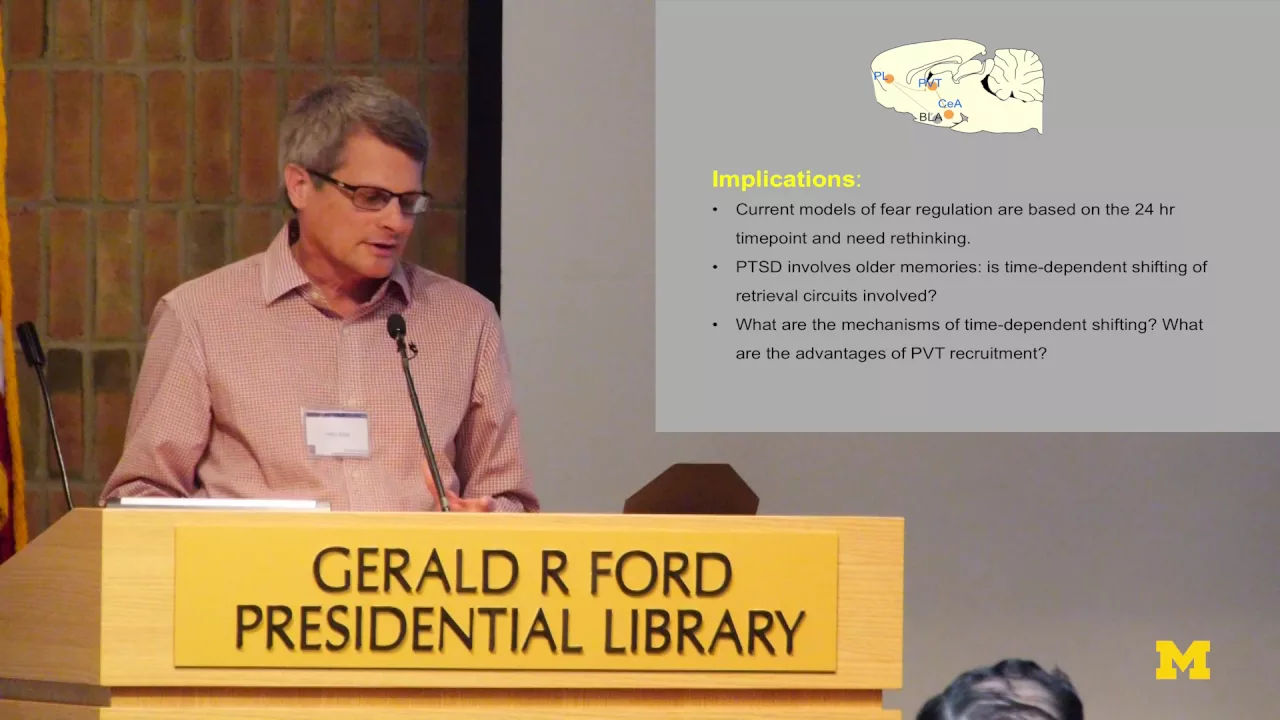
Investigating Circuits of Conditioned Fear | Greg Quirk
@MichiganEngineering
1.9K views•2016-06-20

Introduction to Neuroscience I | Brain Structure & Neurons
@stanford
1.3M views•2011-02-02
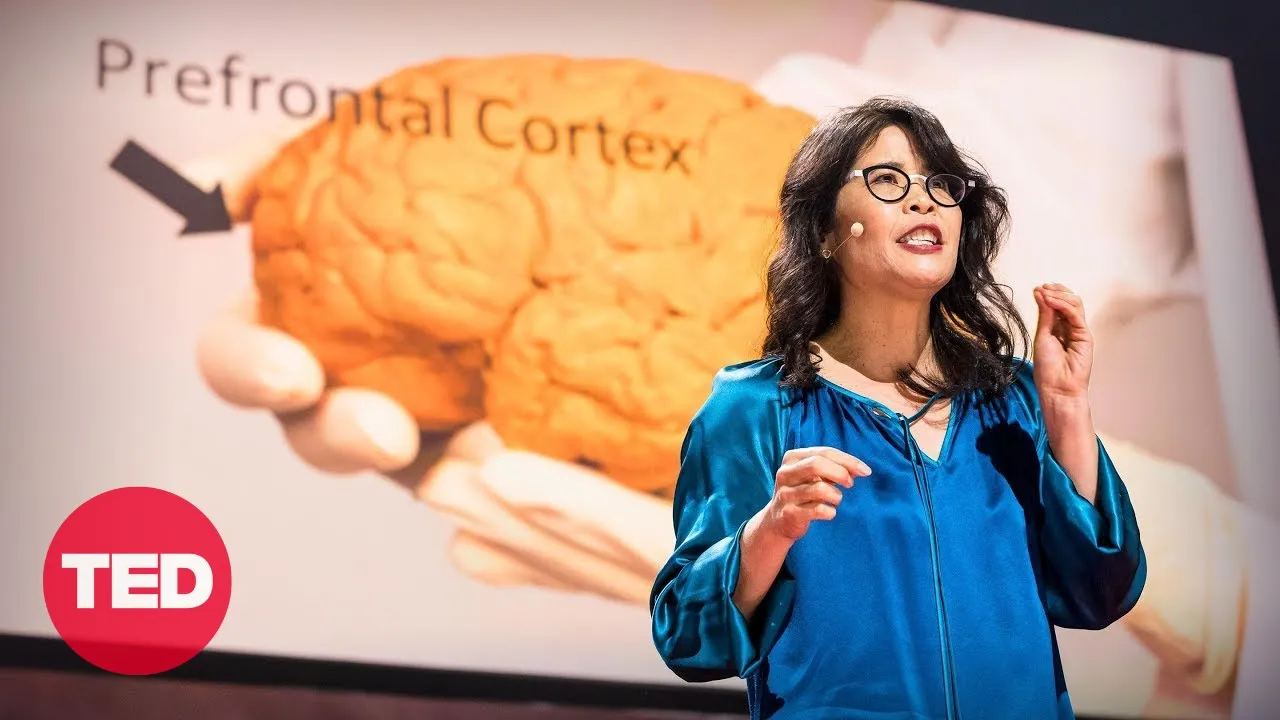
How Exercise Benefits Your Brain: Science Explained
@TED
11.4M views•2018-03-21
Related Study Plans & Knowledge Roadmaps
Structured learning paths in Neuroscience