







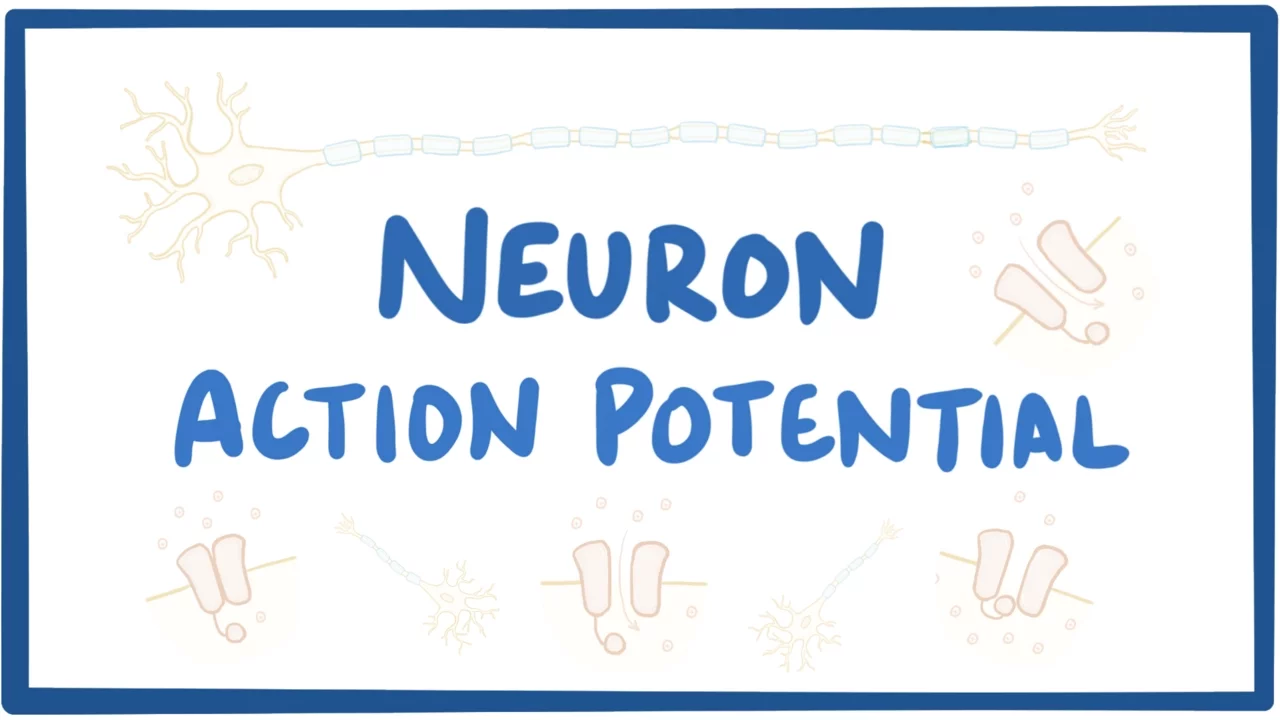


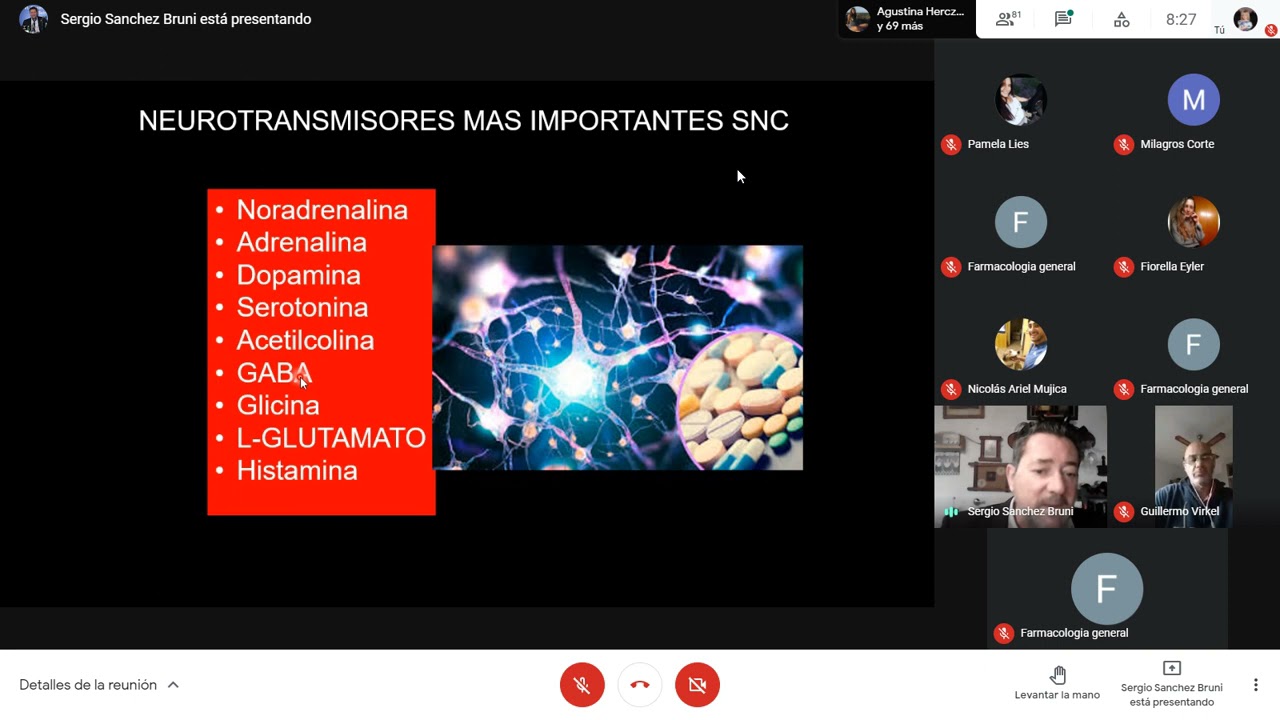






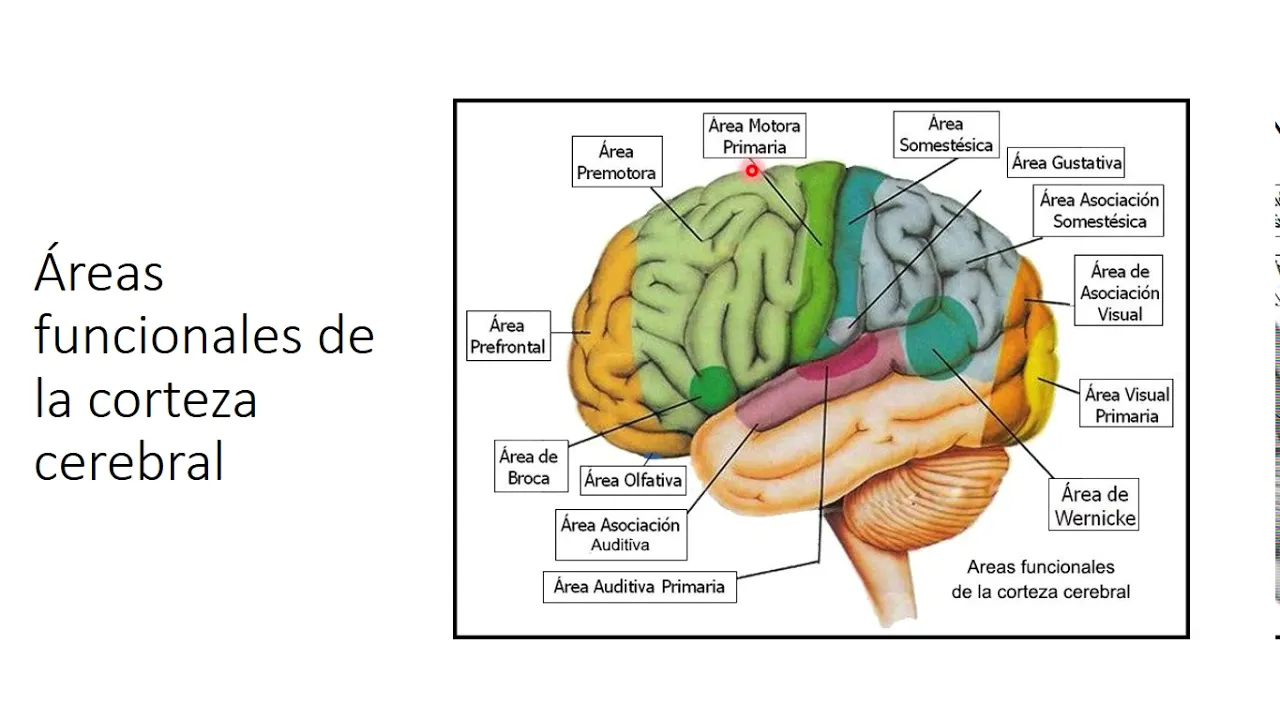



Neuroscience studies how the brain processes information through specialized brain regions and neural cells. The brain is organized into distinct regions with specialized functions: the frontal lobe controls movement and planning, the parietal lobe processes sensory touch, the temporal lobe handles hearing and memory, and the occipital lobe processes visual information. Key structures include the hippocampus (critical for forming new memories, as demonstrated by patient HM) and the amygdala (involved in fear and anxiety). The nervous system comprises neurons (about 100 billion in the human brain) and glial cells (90% of brain cells). Neurons communicate through action potentials—electrical signals that travel along axons and trigger neurotransmitter release at synapses. Neurotransmitters can be excitatory or inhibitory, and their effects can be manipulated pharmacologically through reuptake inhibition or degradation prevention. The brain's compartmentalization means the same neurotransmitter can serve different functions in different brain regions.
Introduction to Neuroscience I | Brain Structure & Neurons
Added:[Music] Stanford University by now I am not Dr spolski you probably got some cues from the uh the beard and other things my name is Nathan I'm a graduate student I'm a fourth year PhD student in the Neuroscience program and I'm going to be giving you the introductory lecture today on basically how the brain works and just to get a sense of who is here before I get started how many of you are either biology major or hum bio majors and decide to come today that's a lot of people okay how many in other hard Sciences or engineering a few okay how many in the social sciences few and Humanities all right Humanities anybody else in anything other okay we've got a few others as well okay great so for some of you this is going to be a review you and hopefully you'll still learn something new for some of you this is going to be the first time that you're hearing these terms and hopefully this will give you just a very general background so that when you hear Dr spolski give lectures on Neuroscience later you have a better understanding of what he's talking about so we started out this whole course talking about the Everlasting question of why did the chicken cross the road yes that's supposed to be a chicken my major is not art but the chicken is crossing the road and we started the course basically saying that this whole course is going to teach us why the chicken crossed the road and specifically the first half of this course is talking about the ways that different Sciences have approached this question so we started out with Evolution which would ask how did this behavior of crossing the road evolve over many many many millions of years why was it adaptive why did chickens who cross the road produce more offspring all of that it was studied by old men going around in boats to the galopagos to see how chickens on different Islands cross the road and then figured out how it happened over millions of years the next week we went into molecular genetics and there we talked about the actual genes that controlled this Evolution and how it happened and there we were talking about people thinking about how genes change in the genome over time how they hop around if we're thinking about women in corn fields looking at this and how those individual genes led to Evolution then the next week we went into Behavior genetics and this specifically was asking about what individual genes are accounting for the variation in the ways that chicken cross the road so some chickens cross the road really fast some of them do it slowly some of them don't do it at all how does the variation in the way that the genomes are structured for these different chickens account for that so that was Behavior genetics and then on Monday you heard about ethology which really talked about studying this behavior in nature and we talked about the fixed action pattern and we talked about all the old men in field boots going out into nature to observe that fixed action pattern and talked about the stimulus the chicken would receive why it would cross the road after that how it does it again looking at that out nature and that was ethology so today we're going to talk about yet another bucket yet another way to think about this which is neuroscience and Neuroscience is going to focus specifically on this black box that we talked about on Monday where the you get the input coming in of some stimulus that makes the chicken cross the road and Neuroscience is about that black box in the middle and why it is that the chicken is doing this what was going on in the chicken's brain a few milliseconds before it crossed the road why is it that the specific cells in the brain are doing this and how are they doing it so that's the overall background of why we're thinking about neuroscience and the goal for today is really to give you an overview of the brain and the nervous system get to know some different parts of it not so that you memorize a list of different parts of the brain but so that you get a general overview that different parts of the brain are specialized for different behaviors and also we're going to zoom in a little bit on the actual cells in the brain how they communicate again not so that you can sit there memorizing lists of different things but that so when it comes up in future lectures you will have a better understanding of what we're talking about and just as a caveat before we start I as a neuroscientist think this is the coolest discipline out there better than all the others and you'll see I put in a quote from Thomas Edison that says the chief function of the body is to carry the brain around which is a very brain Centric way of thinking about the world and there are a lot of people who look at neuroscience and think of it that way yes Neuroscience has its limitations want to put that out there from the beginning it can be very brain Centric it can be thinking about how different parts of the brain control different behaviors without considering the bigger evolutionary aspects or any of the other aspects so it does have its limitations but I think it's really cool so that's I'm going to tell you about it today so let's start out you have a brain actually this is my brain I volunteered for a psych study back in college and uh got to look at some pictures in a scanner and they gave me this print out of my brain afterwards and the Brain I think is an absolutely amazing amazing thing and one thing that uh people love about the brain is that it starts working and keeps working but just as a reminder from this quote it never stops working until you stand up in front of public to speak so during this lecture there may be things that are confusing if you don't understand them because I'm not explaining them in a way that makes them understandable to you I've put my email address up there it's also in the hand out and it was at the beginning of the presentation so definitely email me if you have any questions or come to see me after class and um I'll be giving this first 45 minutes or so introduction to the brain and the nervous system then Anthony is going to come up afterwards and tell you a little bit more about how neurons communicate with each other so let's think about the brain and the nervous system and to give you a really broad overview the nervous system is divided into two really broad classes the central nervous system and the peripheral nervous system and we'll start with the central nervous system which is what most people think about when they think about Neuroscience which is the brain and spinal cord so you have this brain sitting up there in your head you have the spinal cord going down communicating to and from the brain and this is the central nervous system and I'm going to go through some different parts of the central nervous system just to give you an idea that there are different parts and that they do different things again don't worry about memorizing them this is really just to get you familiar with what's going on up there so if we look at the brain more carefully and look at different parts of the brain we've got these different parts that people neuroscientists specifically have divided up for us and if we start at the bottom down there with the brain stem the brain stem sits at the bottom of the brain at the top of the spinal cord and it's what ends up relaying the information to and from the spinal cord and to and from the brain so if your brain up here doing all the processing spinal cord down there sending out all the signals to make you move or to send up sensory information the brain stem sits in the middle and helps regulate what goes through then you have the cerebellum sitting at the very back of the brain up there and the cerebellum is a really cool part of the brain it's really really wrinkled it has lots of different cells packed into it and what it does is it helps control your motor movement and specifically helps when you have to learn something new so when you have to learn how to play piano for the first time or when you have to play basketball for the first time you're going to make mistakes and what the sarabellum does is it helps correct for those mistakes so when you are shooting a hoop for the first time and it goes off to the left then you have to learn okay I need to move it over to the right a little bit next time the cerebellum is what does that and when I teach this to middle schoolers or high schoolers one fun thing I do with them is I bring along these specialized glasses which have prisms on them so when you wear them it skews your view of the world a few degrees to one side so if I'm looking say at this marker here when I put on the prisms it's going to look like it's over here so I do this to the kids and the kids look out at the marker and I tell them to quickly reach for it they see it over here so they start out reaching this way thinking that the marker is over there but what happens over time is that they do this over a few minutes and eventually they correct for it so even though their vision is out here they've corrected for it by moving their arm over here to where the marker is and that's learning that happens in the cerebellum then the really cool thing is they take off the glass and because the cerebellum has taught them that they need to reach the left of where the visual field is they look out at this marker they start reaching over here to try to get it so the cerebellum corrects for that and again after a few minutes they do that a little bit longer and they eventually reach for the marker so that's learning that's happening in the cerebellum really cool part of the brain then above the brain stem in the cerebellum you have this wrinkled outer layer of the brain called the cortex and the cortex we can broadly think of in four different loes and again broad theme for this lecture different loes different parts of the brain are specialized for different functions so you have the frontal lobe up as you would expect at the front of the brain and the frontal lobe among many other things plans your actions and controls your movement so this is the part of your brain that's going to be sending a lot of connections down through the spinal cord to make you move your arms move your legs move the other part of your body and that's all happening because of the neurons that are up there in the spinal cord in the uh frontal lob and again broad themed different parts of the brain are specialized for different functions different parts of the frontal lobe different parts of that part of the cortex that control movement control different parts of your body so you've got a part of that frontal cortex that controls your foot and your left foot and your right foot and your left hand and your right hand and they're all in specific places in the cortex and they line up the way you would expect them to in the body so if your foot cortex is down here then your leg and your knee are going to be up here and then your trunk and then your arms and then the parts of the cortex that control facial movements up at the top so it's organized according to function so that's one thing that happens in the frontal L then you have behind it the parietal lobe and right next to the part that controls your movement in the frontal lobe is the part of the parietal lobe that senses the sensory touch information from the outside world and again form follows functions so different parts of the parietal lobe are specialized for different parts of the body different parts of your touch information and not only are there different parts of it but the sizes of the cortex that receive that information are also different sizes so you've got your fingertips that are really sensitive have lots of nerve endings have lots of sensory information coming from them your fingertips have a big part of Cortex represented in the parietal so again different parts different functions different sizes below the parietal lobe you have the temporal lobe which is sitting here next to your temples as you might expect and the temporal lobe among other things receives the audit auditory information your hearing information comes into that part of the cortex and also as you'll hear later deep inside that lobe are the parts of the brain that help for memory formation so the temporal lobe receives auditory information and also has a really important part for memory formation then finally at the back of the brain you have the occipital lobe and all the way at the back of the brain here this occipital lobe is where you're receiving visual information so visual information comes into your eyes travels all the way to the back of the brain to the occipital lobe and that's where it gets processed so different parts of the brain are doing different things and this is just a really broad way of thinking about that so I'm next going to go over some specific parts of the brain that you're going to hear a lot about in the coming lectures for now it's just an introduction but hopefully when you hear them again later you'll be able to say ah I remember that so the lyic system you're going to hear about again and again and again it's the series of structures that are underneath the cortex but sort of above the brain stem and in general the lyic system controls a lot of things that we associate with emotion with learning memory really important things that an animal has to do to behave and two structures we're going to hear a lot about time and time again are the hippocampus and the amydala so the hippocampus up there in blue is well the hippocampus word itself means seahorse and supposedly when neuroanatomists were looking at this they thought it looked like a seahorse I don't see it but let me know if you do and this part of the brain is really important for memory and forming new memories and the way that scientists first found this out in humans anyway was by a bit of an accident the hippocampus they found out is this place where new memories are made but they didn't do it by any sort of experimental approach that you would suspect them to that what happened is there was this patient one of the most famous patients in all of Neuroscience named hm uh for privacy reasons his name up until he died was known just as hm and this patient had really terrible seizures really bad epilepsy that could not be controlled and was debilitated by these seizures so when he was a young man they tried all sorts of different techniques to try to control these seizures and in the end what they had to do was actually figure out where these seizures started in the brain and surgically remove that part and it turned out that that part in this patient included the hippocampus so they took out the hippocampus on both sides of the brain and after the surgery patient hm didn't have seizures anymore great wonderful but what they found out is that this patient afterwards couldn't form any new memories when he had nurses come in to visit him who visited him every day after the surgery every time he met them it was like he was meeting them for the first time he couldn't store that memory but the really interesting thing was when they asked him about events from his childhood he could still remember those he could remember who the president of the United States was in his childhood so the memories were stored somewhere else in the brain but the ability to make the new memories was dependent on the hippocampus so that's how they discovered by accident that the hippocampus is the part of the brain forming new memories another part of the brain you're going to hear about a lot a lot a lot is the amydala and the amydala are those two yellow almond shap shaped things sitting up in the front of the hippocampus and as you've already heard these are parts of the brain that are really involved in fear and anxiety so if you remember the example that Dr zapolski gave on Monday when he was talking about scared sweat versus exercise sweat and how we can actually tell whether we're smelling scared sweat or exercise sweat one way that they see that difference is when they look at the brains of people who are smelling sweat from a scared person the amydala like up but when you're smelling sweat that was given off by somebody who is exercising it doesn't light up as much so the amydala is really important for sensing fear and uh it's important for forming anxiety as well so when you look at an angry face or a fearful face the amydala will light up but when you look at a happy face it won't so that's the amydala you'll hear a lot more about it later really important part of the brain for fear and anxiety other parts the brain you're sure to hear tons and tons and tons about later on are the hypothalamus and pituitary gland and these are you can think of them as hormone Central these are the parts of the brain that control how hormones are released to the rest of the body control a lot of different behaviors so the hypothalamus sits in the center of the brain right at the very bottom and the pituitary is underneath it and secretes a lot of those hormones out into the bloodstream and it's an old joke but uh one that gets it over and over again you can think of the different types of behaviors that the hypothalamus controls as four FS you've got fight you've got flight you've got feeding behavior and reproductive Behavior so you've got those four FS of what the hypothalamus controls yes now you get it yes so you're going to hear tons and tons more about this for now just know it they sit at the bottom of the brain and help control a lot of these behaviors so what else do we have in in the nervous system we've got all these different parts of the brain but we've also got the spinal cord coming down from the brain and just like in the brain itself the spinal cord is specialized you have parts of the spinal cord that send out information and you've got parts of the spinal cord that receive the information so you've got motor nerves and you've got sensory nerves in different parts of the spinal cord you've got different parts of the spinal cord of course for your arms and your legs basically what you need to know for now about the spinal cord your also going to be hearing a lot more in future lectures about the peripheral nervous system and the peripheral nervous system has all of the motor nerves and sensory nerves that are outside of the spinal cord so a lot of the things that sense touch information or heat or anything else out in the periphery are part of the peripheral nervous system and then you've also got a whole part of the peripheral nervous system that happens pretty much automatically you don't have to think about it so you've got nerves that are controlling your heartbeat your digestion your breathing and normally you don't have to think about keeping those going so those are another part that you'll hear a lot more from Dana later on so that's really a broad overview of the different parts of the nervous system and what they do so now we're going to think a little bit more closely about what's actually inside a brain what the individual cells are what they're doing how they make you behave and again this is not list for you to remember it's just to let you know that there are different cell types and they have different functions and I'm going to tell you first about uh something that came up while I was looking online and trying to figure out what to say for this lecture and I realized that it's illegal in seven states to give an introductory Neuroscience lecture and not mention the name Santiago ramoni kahal so Santiago Ramon kahal why is he this God figure in Neuroscience what did he do so when Santiago Ramon kahal was doing most of his scientific work at the end of the 1800s mostly in the 1890s he the general theory about the way the brain worked was that it wasn't individual cells that were performing their functions instead the brain was thought of as this web this interconnected web of mush basically that did all of its computational work to make you behave people knew that the brain was where behaviors started and where it was controlled but they didn't really know what it was inside the brain that did that so the prevailing theory was that you had this web and rather than just take that at face value ramonica Hall decided to experimentally figure out if that was the case so we found this really cool technique invented by a different guy named GOI and this technique allowed him to take small slices of the brain and turn about 1% of the cells in that slice black we still don't know how it works but he was able to do it and then he drew these really really detailed pictures of what that looked like in the microscope and these images are just absolutely gorgeous there's a whole class of people that when they see these images the tears of joy stream down their face they fall to their knees weeping praising the gods of Neuroscience these are the people who become Neuroscience graduate students so these cells and these pictures that he drew showed us that there actually are individual cell cell in the brain that are doing this work it's not a complete mess it's not a complete web it's actually individual cells and so he drew out these beautiful pictures of neurons and also all of the other cells that are in the brain and I have a good friend who studies all these other cells in the brain that are not the neurons not the ones that are actually doing the computational work and I promised her I'd never give an introductory lecture without mentioning these so first I'll start out with with those cells so 90% of the cells in your brain and spinal cord are not actually neurons they're called Gia and Gia basically by definition is anything in the brain or spinal cord that is not a neuron and Gia the word means glue because people saw these cells in there and thought they were just glue sticking the neurons together but it turns out they actually do a lot more than that you've got cells called astrocytes which are these star-shaped cells and they in a very general sense Supply nutrients to the neurons and help regulate how they fire then you've also got these cells called oligodendrocytes or Schwan cells again long names you don't need to memorize but they wrap around the wires of neurons and make their firing go faster then you've got microa which are yet another gal cell that are in the brain and they're basically the brain's immune system they move around the brain they send out little processes out into parts of the brain to figure out if the brain's getting infected by viruses or bacteria or if there any dead cells that need to be cleared up and they do all of that work so 90% of your brain is actually all of these other cells doing this work but what they're doing this work for is so that you can have your neurons working and the neurons are what we're going to focus on for the next 10 15 minutes or so and these are the complicated but wonderful computational units of the brain and in an average human brain you've got about a 100 billion neurons and each of those has about 10,000 connections to other neurons and those connections are called synapses so if you think about that you've got roughly a quadrillion synapses in your brain a quadrillion connections between neurons and just to give you some perspective the number of stars in the Milky Way the number of stars that you can see out there in our own Galaxy is about 300 billion so you've got a quadrillion synapses just sitting there in your brain which is already more than a thousand time more than the number of stars that are out there in the Milky Way galaxy so you've got all of these connections packed in there in their brain doing all of this computational work so how does it actually work so here I'm actually going to switch over if I can great so here we're going to talk about the neuron itself and what the different parts of it are what the different parts of it do and how it works how it communicates so this is a very bad very badly drawn picture of a neuron but it will give you an idea of what a neuron is and how it functions so you've got different parts of it you've got out here dendrites and these are what receive the information on a neuron they get the information from the cell before it and pass it on down into the cell down here you've got the Soma or the cell body of the neuron and importantly you have the nucleus just like you do in any other cell that has all the DNA in it and then there's an important part down here so you're getting all of this input from the dendrites from the cells before giving you information at the dendrites that goes into the cell and somehow the cell has to decide whether to pass that information on to the next cell or not and that happens at this specialized part of the cell called the axon hilic I guess it's like a hill but not quite as big so you have the axon hilic there and then down here you have the axon which you can think of as the wire that's sending the information on to the next cell and then down here you have the terminal and this is where the cell will send on information onto the next neuron so these are the general parts of a neuron that you'll need to think about in terms of how neurons communicate and information is generally going to flow from D writes down to the cell body get summed up at the axon hilock the cell will decide whether to fire or not and send that on down to the terminal so that's a basic overview of a neuron and how those different parts work so how does it actually work how does it send that signal and this is just going to give you a really broad overview of how a neuron does this so if you think about a neuron sitting there in the middle of the brain there's lots of electrical activity lots of things going on somehow a neuron if it sends a signal has to get heard above all that noise so the way a neuron solves this problem is it is either on or completely off completely quiet it's not a system where you have a Continuum where you have where the cell is kind of on little bit more on little bit more on and then totally on it's not that way because that wouldn't really get heard above all of the noise so what you have is a cell that's either on or off and a neuron really wants to make sure that it stays off until it's ready to send a signal so that's how the neuron stays quiet and when we talk about that in biology we talk about the neuron keeping a resting potential a resting quiet level of activity so how does a neuron do that so the way that neurons communicate and the way that they send on electrical signals is going to be through the movement of these chemicals called ions for those of you who are not science people just think of them as charged chemicals we're just going to talk about General ions for today which are charged atoms so they can have a positive charge or a negative charge and we're going to talk about mostly positive charges today so the neuron has to keep quiet and the way it does that is by keeping positive charges positive ions outside of the neuron so you have all of these positive ions sitting there outside of the neuron and this is how it stays quiet because the flow of these ions is going to be what communicates the signal so how does it do that it keeps these ions out of the cell by using these pumps so it has pumps that will pump out positive charges from the inside of the cell to the outside of the cell so by using those pumps the neuron is keeping all the positive charges all of the positive ions mostly on the outside of the cell rather than on the inside so that means that the net charge on the inside of the cell is going to be negative so you've got this imbalance and this is how the neuron stays quiet how it makes sure that is not firing so you've got this cell sitting there trying to figure out if it's going to fire or not right now it's quiet how does the whole process get started to make it fire so if you have another neuron up here and you'll hear a lot more about this from Anthony sending out a chemical signal that chemical signal is going to get received at the dendrites and when that chemical called a neurotransmitter hits a particular receptor out on the dendrite that receptor is going to open up a channel and that channel is going to let some of these positive ions in just like receiving email it's receiving a signal so you get these positive ions going into the dendrite and you get a change in charge the neuron is now getting more positive on the inside before it was really negative now it's getting a little less negative it's another way to say that is it was really uh it was really polarized before it had a big negative charge on the inside and now it's getting a little bit depolarized it's getting some positive charge going into it great so you've got a little bit of charge coming in you've got a little bit of signal but somehow the neuron has to decide am I going to fire or am I not it's All or Nothing one or the other so you get the signal coming in from this dendrite and you're going to get some positive charge going in flowing into the neuron and you'll get a little bit out in the cell body but from one signal sent you might not get a lot but let's say you're getting really really frequent chemical messages from here getting lots of positive charge into the cell or you're getting several different messages at the same time getting lots of positive charge into the cell then you can end up with enough positive charge down here at the axon hilic to make the neuron decide to fire so what is it that makes it decide there are more channels down here that can open up to let more positive ions in and the way they make that decision is whether there's enough positive charge if there's enough positive charge they open up and they allow lots more of this positive ion to go in and once that happens it's going to feed forward right you're going to get more positive ion going in you're going to get more of these channels opening because the positive ions are going in and it's going to keep going and feed forward and you're going to get the neuron sending a signal and the way it does that is it keeps having positive ions Go in all the way down the Axon all the way down to the terminal and then when you get positive ions going into the terminal it's going to tell that to go ahead and send a chemical message onto the next cell and start the whole process over again but the big message from all of this is that this decision that's made here is all or nothing you've got positive ions that are traveling in if they don't get to the threshold here if they don't get enough them here to make the axon hilic decide to let more of them in the cell's going to stay quiet if they do get enough in to reach threshold then you're going to get lots more pouring in and the cell is going to fire there's no turning back it's going to send the signal down its axon to the terminal and you're going to get the message sent on and that's called an action potential and what happens here is you get all this positive charge going in you get the cell getting to a really positive level of charge and then somehow it has to stop so how does it stop you have a number of other positive ions on the inside and right after this opens and you get all these ones pouring in you can get the cell opening up these other channels to let the positive ions a different kind of them flow out and then you get restoration of the balance in charge and remember you have these pumps that continue to send the positive ions out of the cell so you get the cell being restored to the quiet State afterwards where it's negative on the inside compared to the outside so there you have it you have an All or Nothing action potential you have the cell deciding at the axon hilic whether it's going to fire it or not and then sending the message on to the next cell so that's a really basic understanding of how a neuron fires hopefully that was basic enough that everybody could understand it you're going to hear more about it later in other lectures but for now that should give you a really basic overview of what's going on so take-home messages from this first part of the lecture different parts of the brain do different things as we talked about when we were looking at the brain and spinal cord you've got the different parts that function for different behaviors you'll hear a lot more about that in the future as we talk about specific behaviors and what parts of the brain have to do with them you've also got different cells that are doing different functions within the brain you you got neurons you've got glea you've got different types of neurons as well you'll hear a lot more about how some neurons send one type of chemical signal some send another and how that's going to be really important to different behaviors later on uh you also learned that neurons are individual cells making this decision they're the functional unit of the nervous system as we learned from rmon cahal and finally when they do decide to send that signal it's an all or nothing process it's an all or nothing action potential that makes the cell send on the message to the next one so hopefully if you understood all of that you have a really basic understanding of Neuroscience we're going to take a five minute break and then we'll move on to Anthony's lecture which we'll talk more about what actually happens at the synapse as we think about applying this to behavior thanks all right so my name is Anthony I am a first year biology student student uh graduate student and PhD program uh right now I'm just wandering from Lab to lab trying to figure out what are what I want to do research in um again like Nathan uh there's going to be some topics in here that uh might confuse you and if it is confusing let me know stop me ask questions um I my email is on the handout that you can download from courseworks and after the lecture I'll actually write it down on the bulletin board right there but feel free to send me or Nathan an email anytime if you have any questions over the lectures today um I'm going to start by recapping a little bit about what Nathan talked about the neuron Doctrine so up until the late 1800s neurons were all thought to be connected by cytoplasm and really the concept of a neuron as an individual will sell that was it was difficult to conceptualize because all people were really able to observe was this meshlike network of interconnecting fibers and processes and it wasn't until the advance of uh microscopy and staining that people were able to suspect that something else was going on here that maybe the story was a little bit different in 1891 a German anatomist named Heinrich vilim gried Von vire hars I practiced that um propose what is uh what is now referred to as a neuron Doctrine which is basically that uh this this network was made up of individual cells he wasn't able to propose this without work done by many others including Santiago Ramon eahal God of Neuroscience um so if you have these separate neurons that are separate cells if one is to communicate to another it cannot happen by electrical means only all right if you think about it if this communication is to happen it must happen by chemical means and so before the events at the synapse can really take place I have to introduce you sort of back up and and and go back to the action potential which if you remember starts here at the axon hillock so this is where the decision to fire or not fire an action potential will be made and once the action potential is fired it will travel along the length of the axon and reach a dead end that is conveniently called the axon terminal now the axon terminal is a structure at the end of the Exxon that stores large amounts of neurotransmitters and these neurotransmitters aren't just freely floating or or diffusing around the the inside the cell they're actually packaged in these discrete quantities in these membranous spherical structures called vesicles and so you'll see those balls uh housing these black dots the balls are the vesicles and the black dots are the neurotransmitters okay so when the axon potential reaches this axon terminal it will trigger an influx of positive charge which will then trigger the release of neurotransmitter from these vesicles so the vesicles will move to the edge of the axon terminal and they'll dump their neurotransmitter out so I have to sort of dive into a little bit of terminology here we try to avoid that with this class but uh the the signaling neuron is is called the Press synaptic neuron the neuron that receives the signal is called the post synaptic neuron and The Junction at which these two neurons connect and communicate is called the synapse so once this neuron is bound to the receptor it can trigger one of two uh temporal effects one can be an immediate effect which is the opening of a channel which will allow ions to to jump in which Nathan Illustrated earlier right here this these ions could either be positively charged or negatively charged uh if they're positively charged they will persuade an action potential to happen if there are enough of these charges if it's a negative charge it might act to dissuade an action potential to be initiated at the axon hillock so that's the immediate effect but uh an effect that might uh last a little bit longer is uh is when an a genomic effect is induced so a neurotransmitter might be released and it might bind into a receptor and this event might influence the activation of a transcription factor and this transcription Factor might induce the production of more uh receptor channels that might find its way onto um the dend right here so if you think about it if you produce more channels or more receptors is you can make this synapse more responsive to the same amount of neurotransmitter so that's strengthening the synapse and you'll hear definitely more about that later in in in in future lectures so not only can a single neuron respond to many different types of neurotransmitters could be inhibitory could be excitatory uh it is also possible for a single neurotransmitter to have an effect on multiple neuron types located in different areas of the brain with different functions and so you might ask yourself how is this possible so we have like a 100 billion neurons in our brain why is it that we don't have a 100 billion unique neurotransmitters for each brain or sorry for each neuron and and and the concept can be sort of related to the the concept of the alphabet so we only have 26 letters in our alphabet yet we can create an infinite number of messages um the the idea of the brain having different functions in different areas each of these functions are going to be uh they're they're going to have different functions because different neural networks different networks of neurons are going to be responsible with these functions and they're actually going to for the most part have a physical separation between different areas different neural networks of the brain with different functions and so it is possible to use a single type of neurotransmitter in in many areas of the brain with different functions because of this physical separation sorry I was supposed to put this slide up so we're we're so we call this compartmentalization of the brain many different functions in many different physical areas and so because of this redundant use of neurotransmitter you really don't need more than a few hundred that's where the current estimate lies not all of them have been discovered quite quite a few have been but there are still a lot out there that have yet to be discovered and so this brings me to uh sort of a exercise that we could do to help hammer in certain uh these properties of a neurotransmitter say you are a scientist and say you are in the business of identifying novel neurotransmitters and you have this putative molecule and you want to prove to the scientific community that this molecule is a neurotransmitter what pieces of evidence might you need to provide to prove that your molecule is a neurotransmitter the first thing that you sort of have to do is you have to sort of ask yourself where are neurotransmitters located right they aren't just located anywhere in the brain they're located in specific areas they're located in the axon terminal so you have to prove that it localizes in the axon terminal another thing that you might want to ask is what triggers the action of a neurotransmitter right so you're going to also have to demonstrate its release following an action potential so if you remember an action potential will hit the axon terminal and through a series of events trigger the release of neurotransmitter and lastly this is not good enough so you have two pieces of evidence so far but you need one more to make a pretty strong case for why you have a neurotransmitter and this is you have to ask the question what is the effect of a neurotransmitter and so you also have to prove that after a neurotransmitter is released and it binds to the receptor that it induces some sort of influx of charge in the post synaptic dendro and I just missed another slide no I didn't so fortunately for us a lot of this work identifying neurotransmitters has already been done and there are a few uh notable transmitters neurotransmitter that I kind of want to get you guys familiarized with and so right now you don't have to memorize any of the functions that I'm going to talk about the whole purpose is to sort of to introduce you uh to to some neurotransmitters so if you hear about them in later in later lectures it won't be the first time you hear about them uh so one type of neurotransmitter is called dopamine and it's most commonly associated with the reward system with pleasure but dopamine like many other neurotransmitters has a very diverse array of functions it's not just involved in reward or pleasure and so just a quick recap how could it have many different functions well if the brain is compartmentalized if these networks are physically for the most part physically separated you can have one type of neurotransmitter uh with uh an effect in these different areas of the brain therefore one type of neurotransmitter in an organism may have many different functions and dopamine is no exception to that you have another type of neurotransmitter called epinephrine and I know everyone in this room has heard about it in one form or another another word another way to way to another word for epinephrine is adrenaline and so adrenaline is involved in the fight or flight response so if you're uh Nathan also talked about this earlier if you come across a risky situation or you're feeling threatened you can either uh fight off and Vanquish your foe or you can flee um NE either of which are bad ideas um and nor epinephrine which you may hear about later on in the course is pretty much interchangeable with epinephrine they share a very similar structure and you don't really need to do much to to change epinephrine to norepinephrine and vice versa so another neurotransmitter that you might hear about later on is serotonin and serotonin again is one of those neurotransmitter that that has a lot of functions and few of them are involved in the regulation of sleep appetite and mood um but certainly that's not limited to those acetyl Coline I know you'll hear about in on Friday um and so I'll leave you uh I'll leave that for Friday for you to discover um Gaba is and you really can't talk about neurotransmitters without without talking about Gaba and glutamate so these are the two most common neurotransmitters in the brain Gaba is the most common inhibitory neurotransmitter and glutamate is the most common excitatory neurotransmitter and again these two have very diverse functions and are involved in many different areas so I'm going to for a brief moment dive into a tangent and tell you about the neuromuscular Junction uh you cannot have animal behavior in fact you can't even behave unless you are able to move and the basis behind movement lies in the muscle in the contraction of muscles so what you're going to see here is a similar Motif you you're going to see a synapse you're going to see a neurotransmitter the synapse is going to occur on the nerve that signals to the muscle it's going to release the neurotransmitter which is actually going to be often times a cetal Coline and it's going to bind two receptors on the muscle which is going to trigger contraction and so unlike many neurons in the brain which respond to multiple different neurotransmitters uh in general neuromuscular Junctions only use one type so with that out of the way I'm sort of going to dive into neuropharmacology so what is neuropharmacology it is the external manipulation of synaptic events um why would people want to manipulate a synaptic event well you could do it for research purposes you could uh you could manipulate the neurotransmitter the receptor to figure out more about what their functions are or you could do it to correct for disease States right we are as humans are very interested in trying to help people who have certain illnesses so the general purpose is to increase or decrease the strength of communication across a synapse so sometimes you can do this by fa faking out the post synaptic neuron you can give it a compound an artificial compound that's not seen naturally in the body that closely resembles something that is seen naturally embod and you'll see a lot of hallucinogenics that utilize this principle so hallucinogenics such as masculine LSD and psybin these interact with the serotonin receptors because they have very similar structure to serotonin and so there are Vari of ways that you can strengthen the synaptic response uh one of which is to increase the release of neurotransmitter from the pr synaptic neuron um how might you go about doing this you could increase the synthesis of neurotransmitter you could force the release you could force the released neurotransmitter to linger in the synapse and there are a variety of ways to do this you could block uh wow I just skip something oh don't worry about it okay so you can block re-uptake or degradation I can talk about it now so in a neurotransmitter has done its job has bound to the receptor has used up um you can't just leave it in the synapse you've got to get rid of it somehow otherwise it's going to keep signaling to the receptor one of one one way to do this is a process called reuptake This is essentially the reinsertion of a used up neurotransmitter back into the preap preseptic neuron on okay and so there are a variety of proteins that mediate this process you can have protein pumps that pump the neurotransmitter back into the pre snaps you can have you know you're going to have proteins that are required to repackage the neurotransmitters in the vesicles and you're going to be able to you're going to have to uh reform these vesicles and so this is called reuptake you can also degrade used up neurotransmitters and when you do so the these degradation products can be detected in certain fluids in your body such as cerebral spinal fluid or blood or urine and so this is important for when you want to detect levels of neurotransmitter when you're trying to diagnose diseases um so right so if you can force the release neurotransmitter to linger in the synapse by blocking either reuptake or degradation you can increase neurotransmitter receptor activity so if the recept on the the post synapse has a certain amount of affinity to the neurotransmitter if you are able to find some way to make it bind more efficiently to the neurotransmitter you're able to amplify the neurotransmitter signal and essentially strengthen that synaptic response so conversely if you would like to weaken synaptic response you could just block any of the processes that are required to release neurotransmitter that are required to for the neurotransmitter to bind the receptor and and Trigger this influx of charge and the dendrite so you can do that by blocking neurotransmitter receptors blocking neurotransmitter release um you can block or you can decrease the receptor Affinity so and again we don't really want you to focus on on memorizing really the the many mechanisms of doing this if if you do need to know it will come up later on in the course but what this really is the whole point of this is to get you thinking about the many ways in which you can manipulate events that take place at the synapse okay so there are a lot of ways people can manipulate it so how would you find out more about some neuropathology if somebody has something wrong with them and it's going on in their brain it's really difficult to make direct measurements of neurotransmitters or neurotransmitter levels in their brain especially in a live patient these measurements are often done in Breakdown products uh breakdown products of neurotransmitters in the urine and the blood or cerebral spinal fluid and these are often uh serving as Clues these can often serve as Clues so if you were to if you had a patient with Parkinson's and you would like to treat that patient and alleviate that person's symptoms you might find it pretty difficult uh so Parkinson's people with Parkinson's have an insufficient or decreased level of dopamine in a certain area of their brain that controls motor movement and if you were to increase globally increase dopamine levels in the brain you might fix you might alleviate the symptoms of Parkinson's but you're going to be increasing it everywhere else that dopamine has it has has an action in has a function in and so you might uh change levels in the mesolimbic pathway from normal to too high and induce symptoms that are uh that resemble schizophrenia and so this really harks back on the on the theme that we've been trying to tell you that the brain is compartmentalized it's got different functions in different areas it can have the same neurotransmitter in these different areas functioning and if you were to to to treat uh some sort of effect uh that you that you that you want to fix you might see add adverse or delaria side effects in other areas um yeah so that's pretty much uh all I have so there are a few take-home message and important points you have to know that uh this this process of Aon the process of action potential moving along the axon and how it influences the influx of positive ions at the axon terminal which will release neurotransmitter so you have to be familiar with that concept you have to understand that neurotransmitters after they're used up can be degraded or recycled in a process called re-uptake and that degraded products can be detected in blood urine and cerebral spinal fluid you also have to understand this this idea again of compartmentalization it's very important and that phac pharmacological manipulations you have to be careful because things could happen that you uh are not expecting especially when something is wrong in only one area of the brain and with that uh you guys are free to leave and or ask questions one more thing we wanted to oh yes show uh one of the other in our class last year made an absolutely wonderful video about the syapse and about the synaptic CL in particular and we wanted to share this with you I'm bio kids put your books down put your books down and report to the cliff the synaptic Cliff I be Bobby vage introducing the glue tank Clan check out thetic but thanks to V traff signal be electric and again hot and turn to the land of the nerve with firing and baring will occur will occur OCC follow me neurons got to be ready to fire at any opportunity dritic input make it hot some it up in the action H lock the potential will rise to a conscious size sh for Action potentials ain't no surprise snap back to the focus of the rap tiny little SP AKA synaps it to the end like a broom calcium R in vesicles go boomy is so exciting ACS B light it up like lightning snap Fanatics SC around questions about the story do the transmitters always excit now they can be in hiatory depending on whether they do the ions of K out positive charge gone only one synapse what if there's more the will sum it up like I said before the synapse is the location for ner r around communication remember what r f said mindes from the [Music] [Applause] brain the where things act like chicals that make you relax or collapse the synaptic CL has recepts the box of the synthetic Li get by clinics that mimic chemical condition that's small problem for medicine 100 trillion synapses drug screaming medicine for disease is only one part of the brain is not a sniper it's a hand grenade it'll act wherever there reside defs plus everywhere else come side defs want to sound like a cynic we've all got a protein they call nicotinic it's a receptor they can't tell the differ between a and nicotine get a GP but nicotine Le to Too Much binding a receptors get to hide neuromuscular Junction it can't quite function cuz receptors without now dopamine on for but it's down regulating and getting addicted fixing the kick the habit with busted synapsis TR synaptic receptors getting abducted Heth synap ain't nothing to I hope this rap has been instructive cuz Health synap Ain nothing to with open open open open open open are open open close close open open close close open open close close a game of chess is like a Sol fight you must think first before you [Music] move for more please visit us at stanford.edu
Up Next

Neuroscience of Fear Learning: Amygdala Circuits & PTSD
@HarvardBrainSci
5.5K views•2021-04-22

Neuroscience and Genetics of PTSD: A Precision Medicine Approach
@UWPBSCI
221 views•2024-05-09

Vision and the Brain | Stanford Mini Med School
@stanford
84.4K views•2010-05-13
How Exercise Benefits Your Brain: Science Explained
@TED
11.4M views•2018-03-21
Related Study Plans & Knowledge Roadmaps
Structured learning paths in Neuroscience