


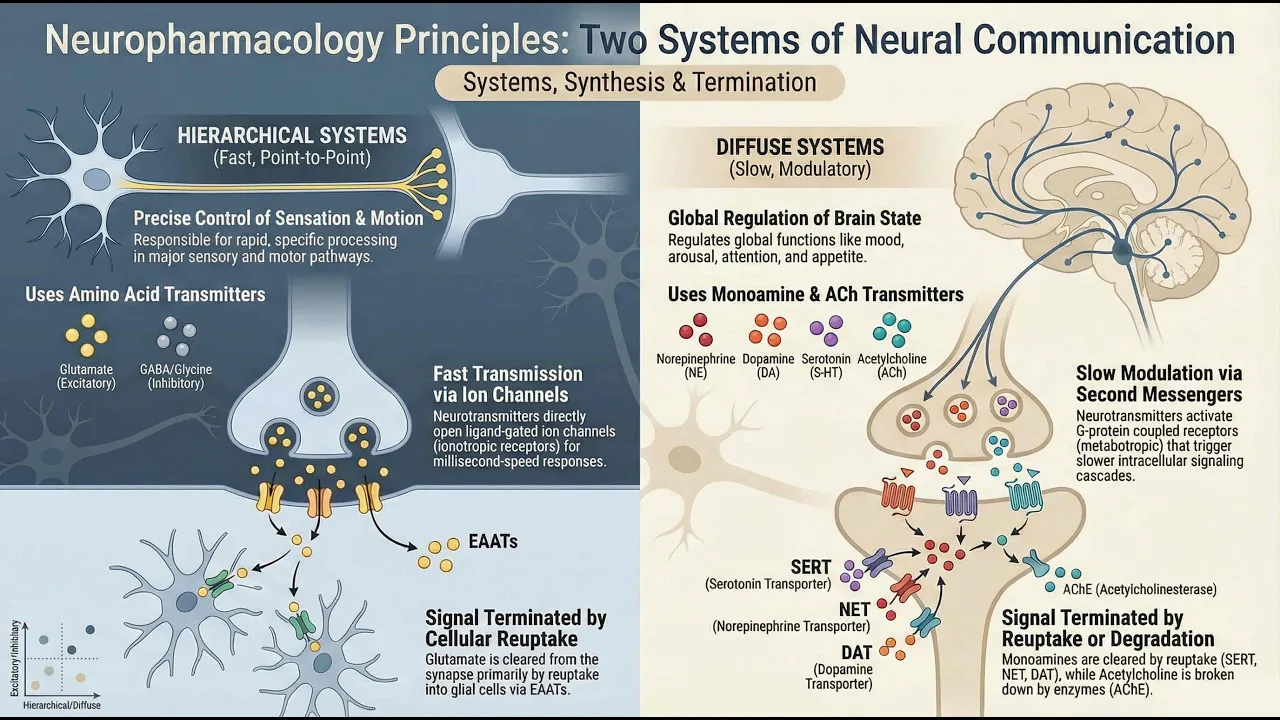
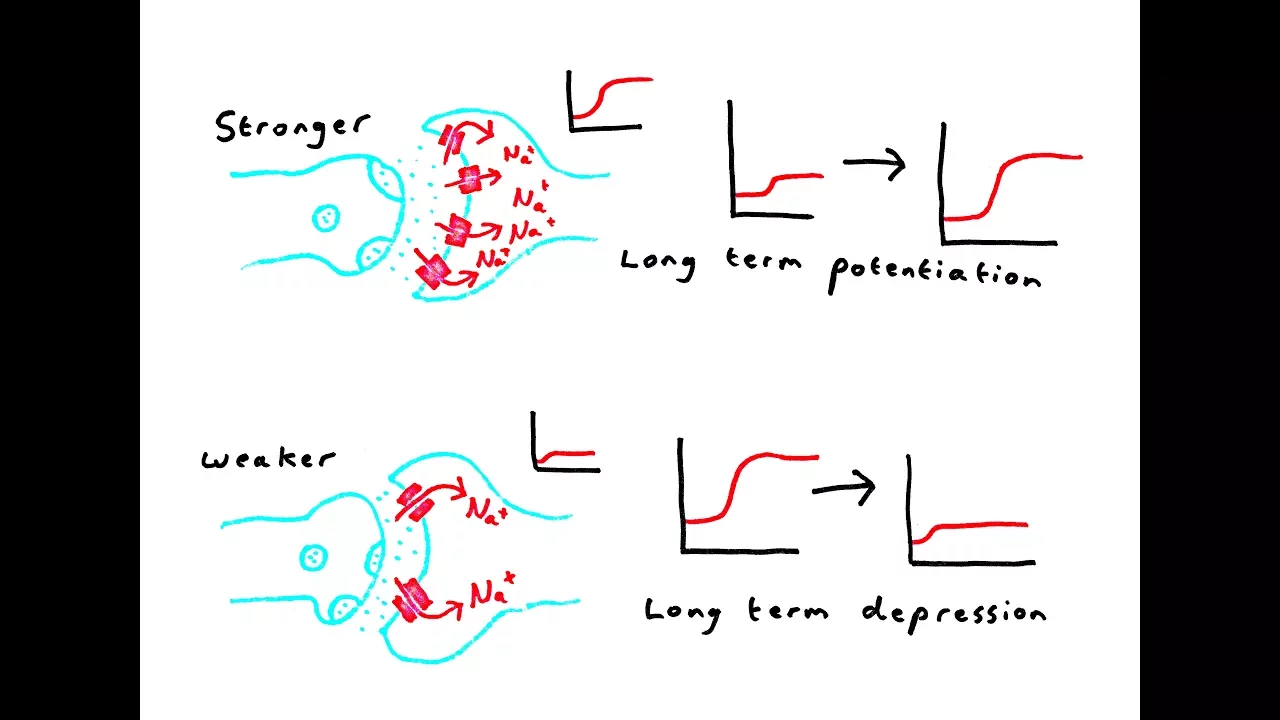


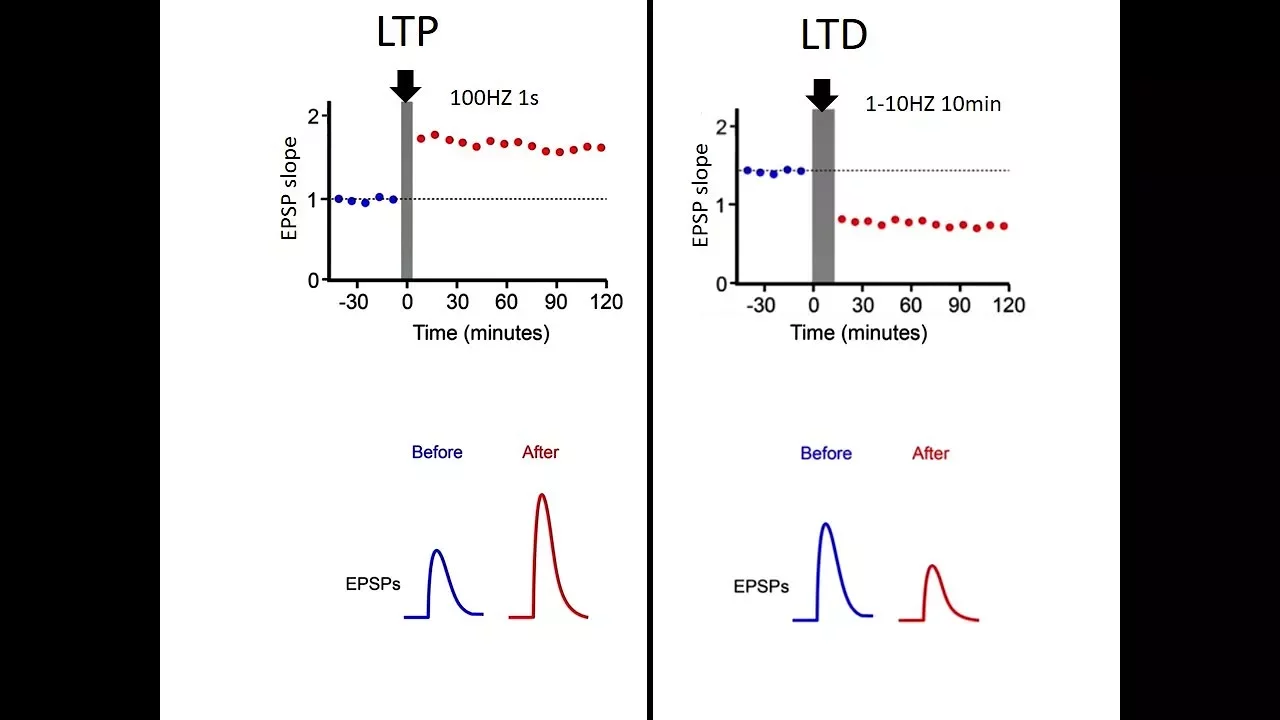






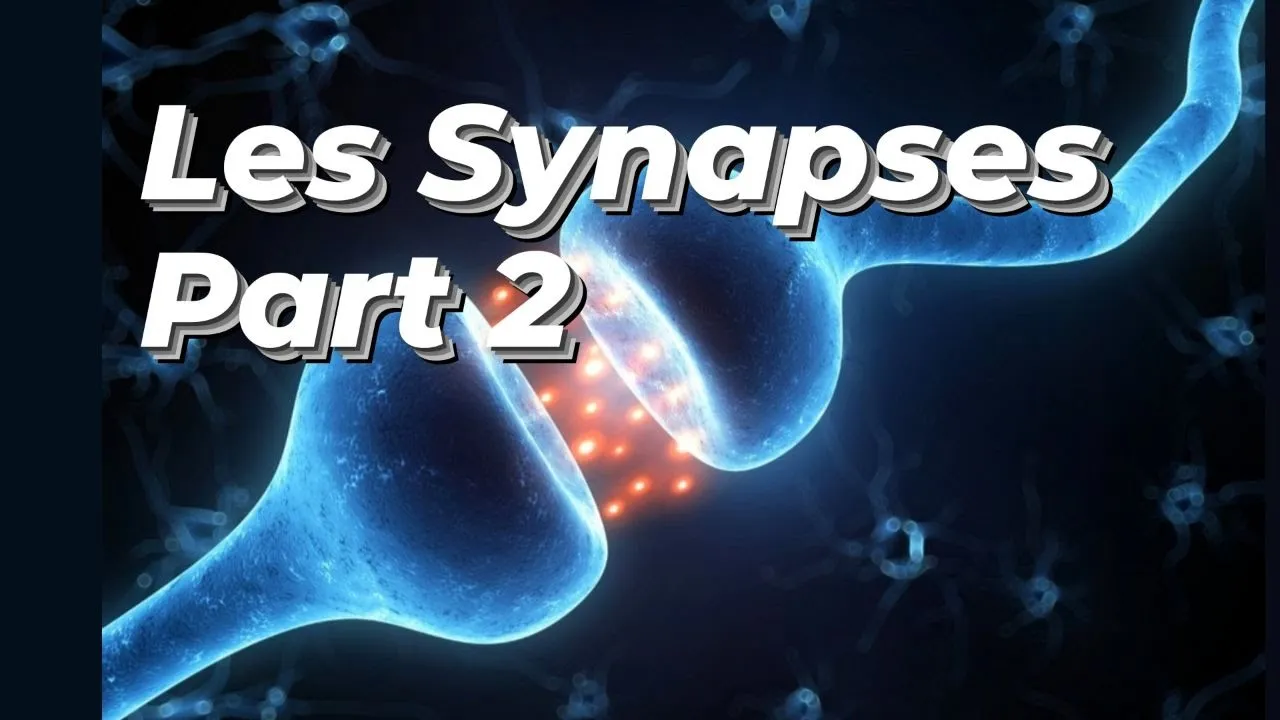



Long-term potentiation (LTP) and long-term depression (LTD) are fundamental mechanisms of synaptic plasticity that underlie learning and memory, occurring primarily in the hippocampus; LTP strengthens synapses through calcium influx via NMDA receptors, which activates kinases that phosphorylate AMPA receptors to increase sodium influx efficiency, while LTD weakens synapses when phosphatases remove phosphate groups from AMPA receptors at lower calcium concentrations, demonstrating how repeated stimulation patterns can permanently alter neural circuit connectivity.
Long-Term Potentiation & Depression Explained
Added:Basic anatomy of a neuron, including the pre-synaptic axon terminal, synaptic cleft, and post-synaptic dendritic spine.
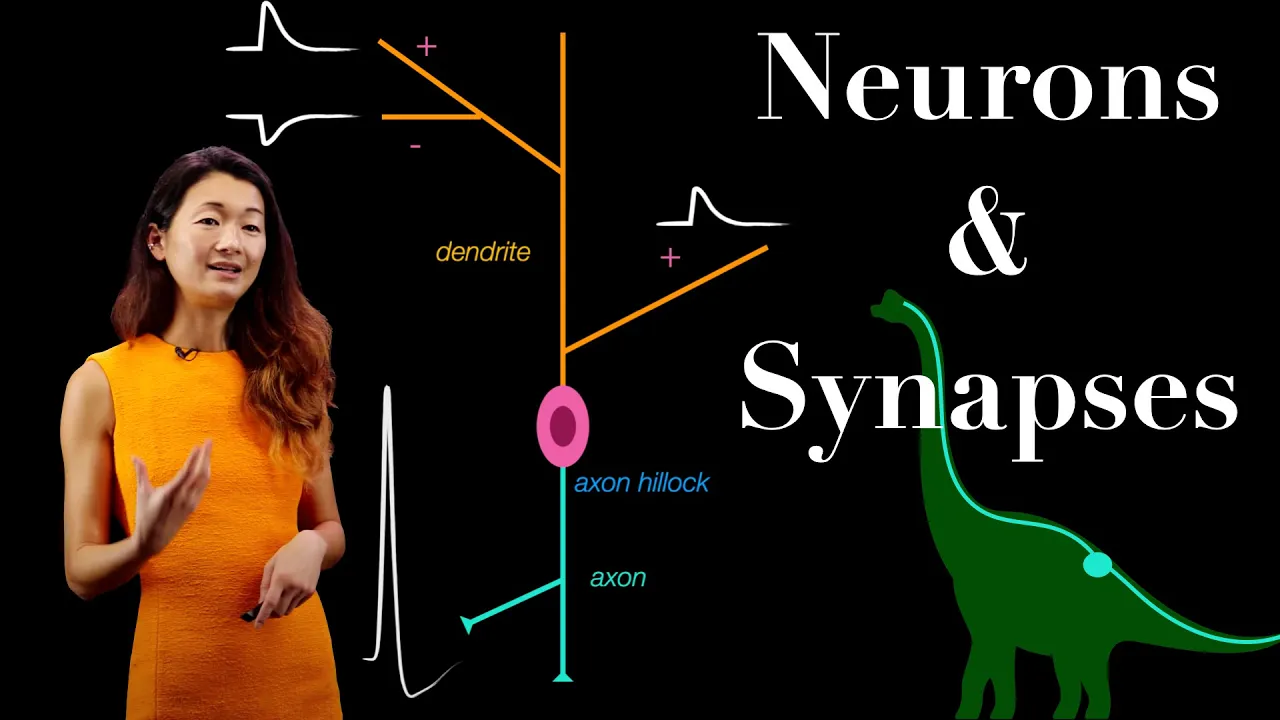
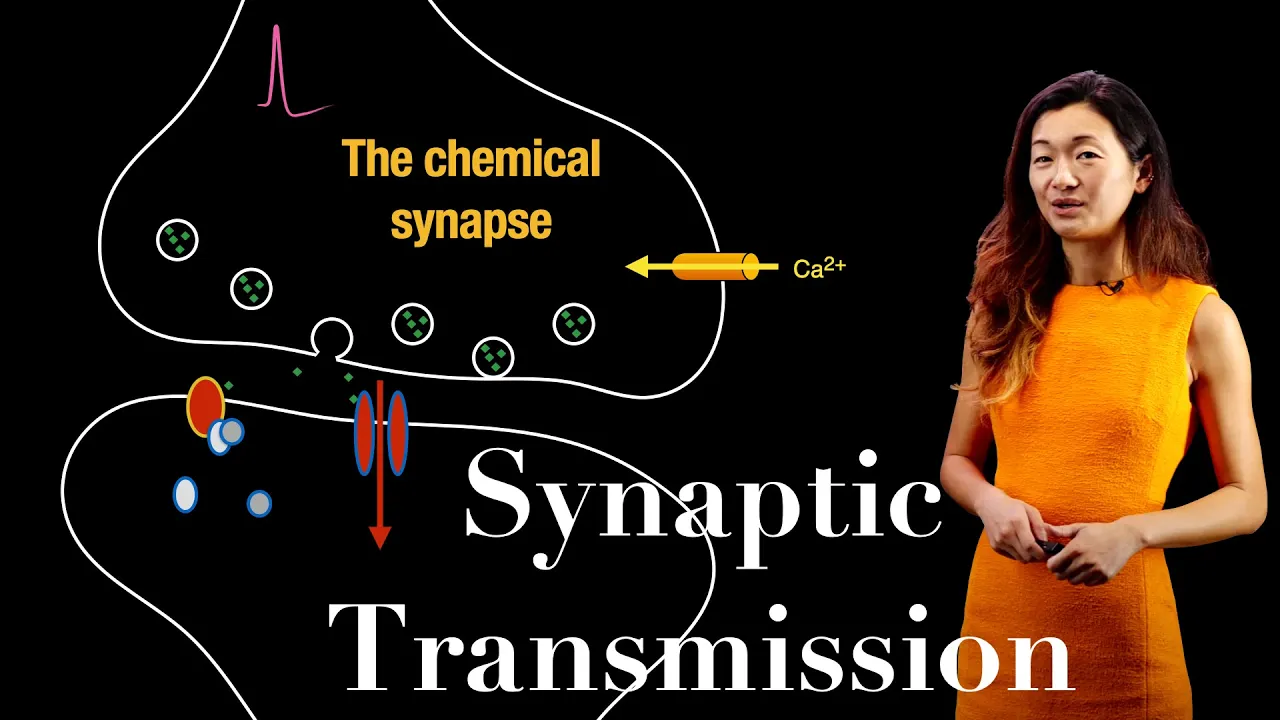
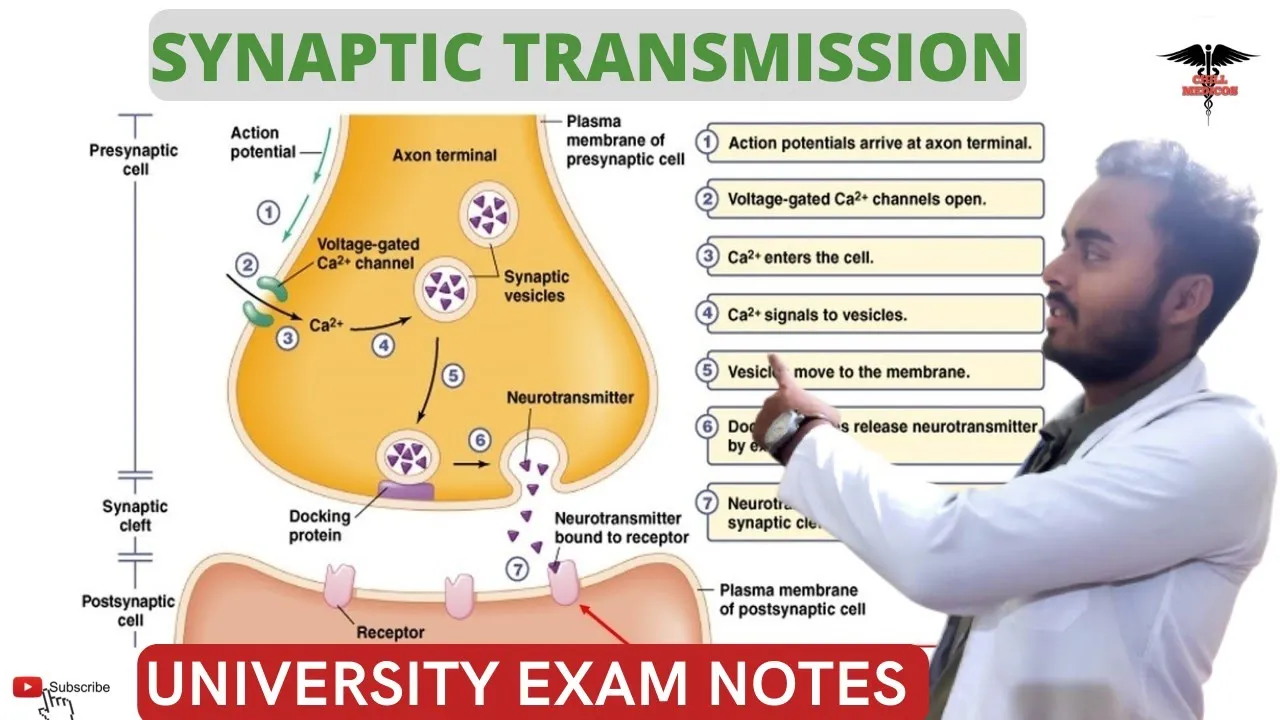
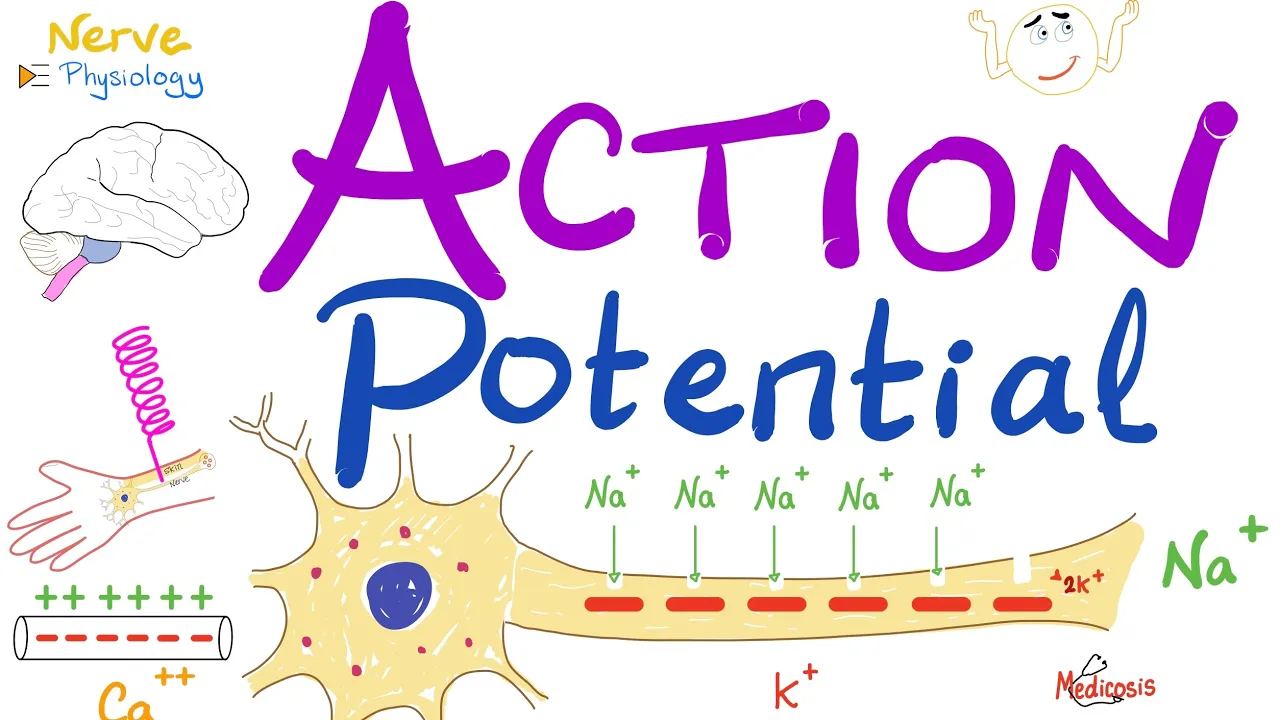
The fundamental mechanism of chemical synaptic transmission, particularly how neurotransmitters cross the synaptic cleft.
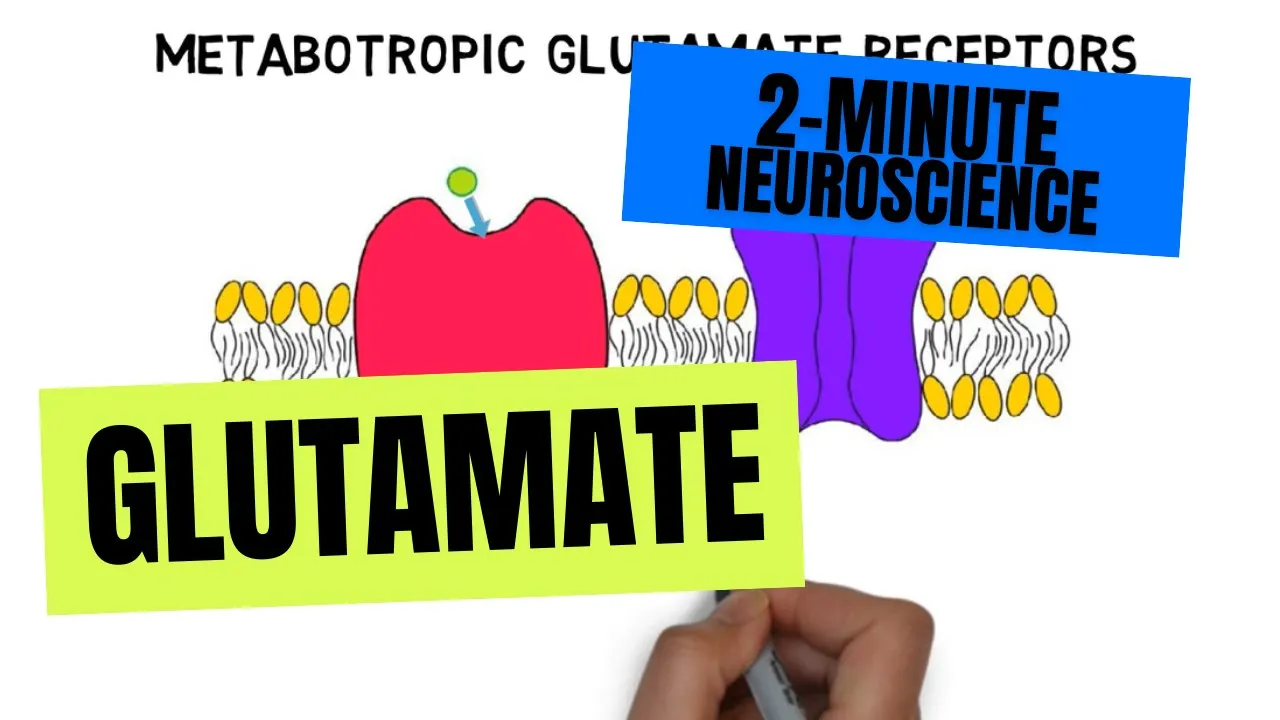
The role of glutamate as the primary excitatory neurotransmitter and the basic function of AMPA and NMDA receptors.
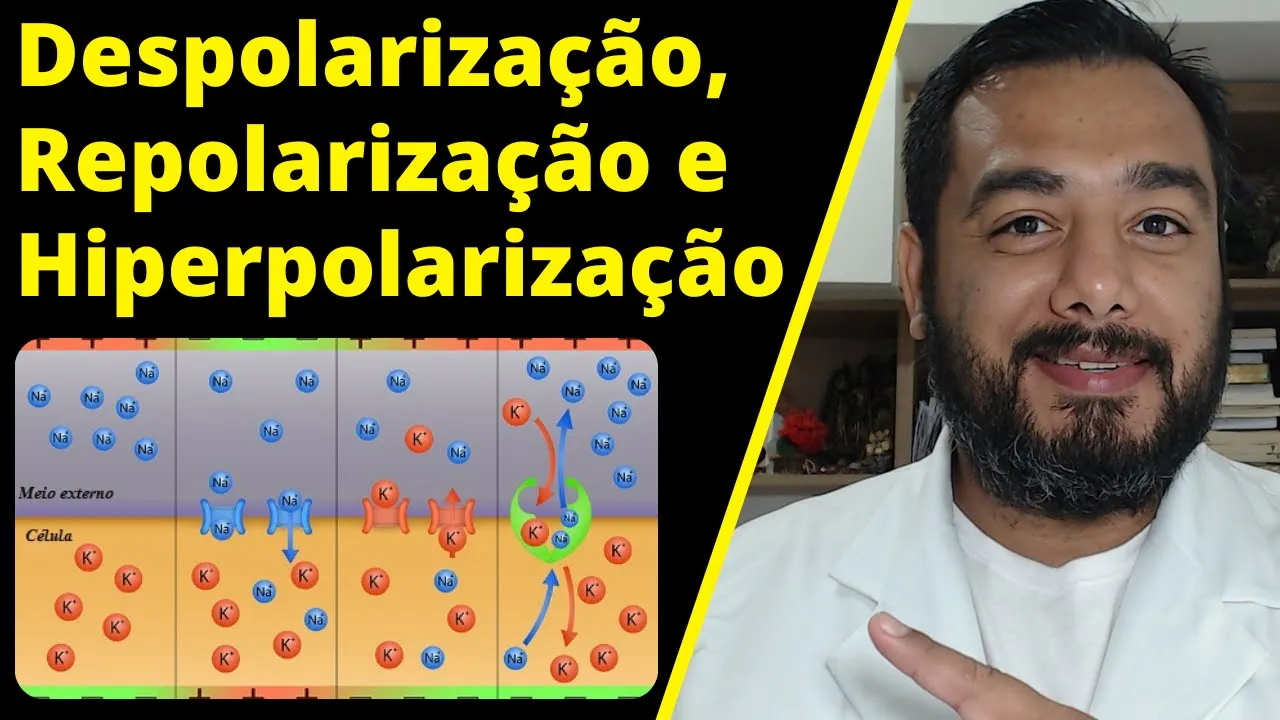
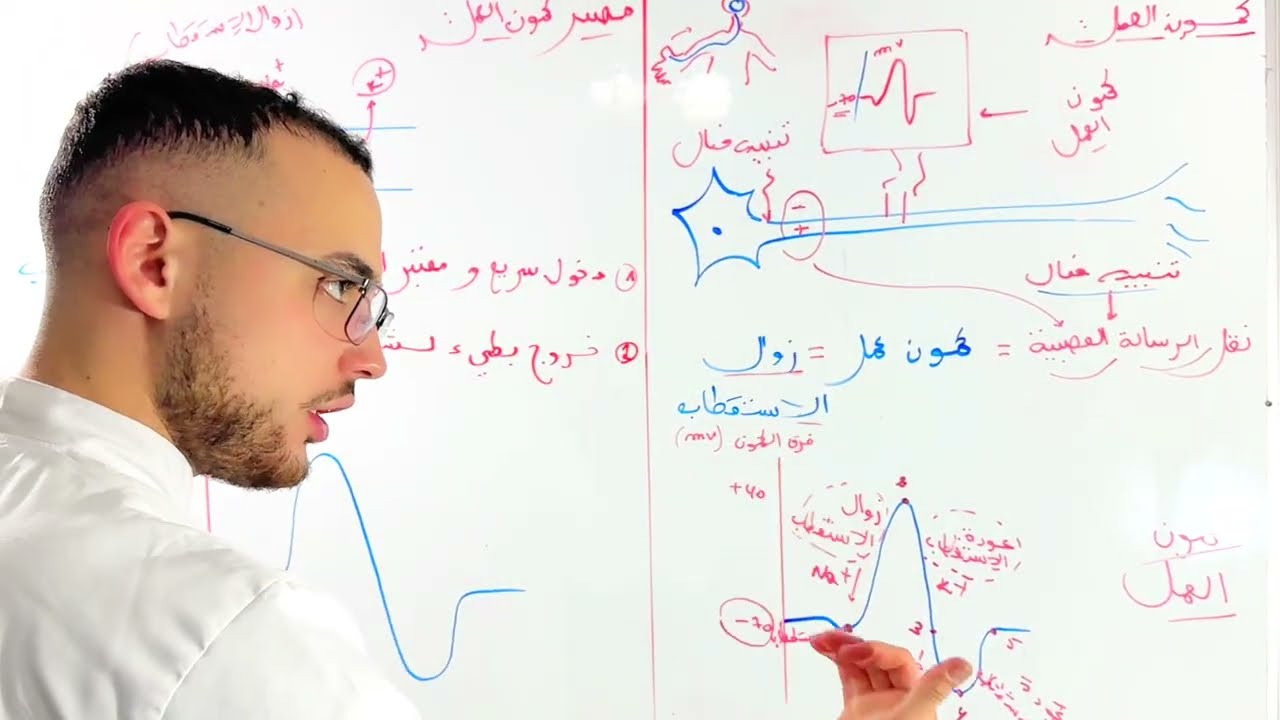
The concept of membrane potential, including depolarization, hyperpolarization, and the threshold for action potentials.
The intracellular molecular signaling cascades of LTP/LTD, including the roles of calcium ions, kinases (like CaMKII), and phosphatases.
Structural plasticity, including dendritic spine remodeling, receptor trafficking, and local protein synthesis.
Systems-level consolidation, exploring how synaptic changes in the hippocampus transition to permanent memory storage in the neocortex.
Clinical applications, such as how impairments in LTP/LTD relate to neurodegenerative disorders like Alzheimer's disease, or psychiatric conditions like PTSD.
84.1K views676likes14:37Original Release: 2014-05-14
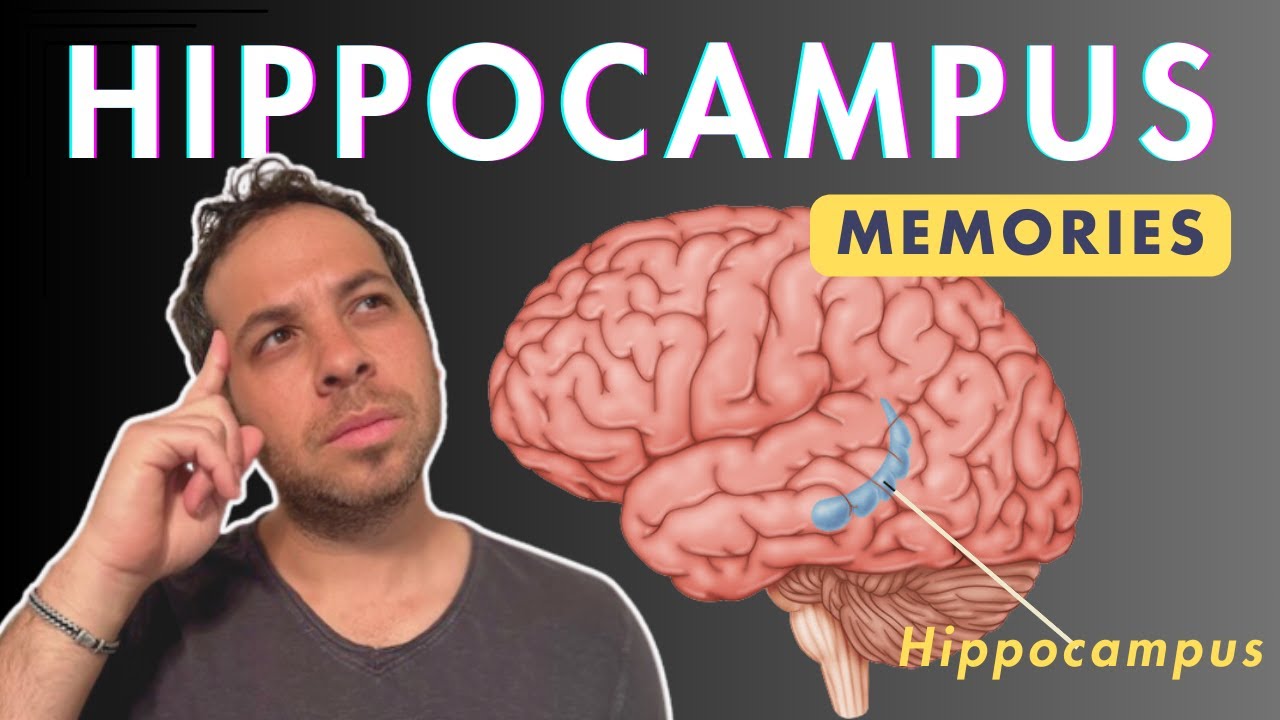
hey guys today I'm going to talk about long-term potentiation and long-term depression and I'm going to talk about them in the context of learning and memory especially as it relates to the hippocampus which is this part of the brain here where long-term potentiation or ltp has been best studied so first we're going to do a quick review of the basic way in which an action potential is transmitted down a preoptic neuron to a dritic spine and uh causes an action potential first we have the depolarization of the preoptic neuron and that's going to be the inflow that's going to be caused by the inflow of sodium ions represented by Pink here these pink dots which are higher in the extracellular solution than inside the cell they're going to flow in and cause an Impulse that travels down going to just represent the impulse in yellow here that impulse or depolarization of the pratic neuron is going to lead to the opening of new channels these are going to be our calcium voltage gated channels and these channels are going to LD in calcium once the signal arrives so there's high calcium outside the signal arrives in the form of a depolarization which opens these calcium channels as depicted in silver that's going to allow for calcium to flow in and in the preoptic neuron there's going to be uh vesicles filled with glutamate because we're focusing on glutamate um synapses in this particular uh discussion and so the GL is going to be released from the presynaptic neuron into the synapse and they're going to bind with receptors on the post synaptic neuron in particular we have ampa which I'm going to depict in red and we have nmda receptors so it's going to bind to these receptors and cause a depolarization of the post synaptic of this D dtic spine the post synaptic dck spine to get a close look at this we're going to zoom in and see what happens okay so there are a lot of players on the field so let's make sure we get them all well labeled these little pink dots are going to be our sodium ions the larger green dots are going to represent calcium ions we've got some glutamate containing vesicles here this is our calcium gated Channel calcium voltage GED Channel this is going to be our ampa glutamate Channel ampa and this is going to be our nmda channel so the amp a and nmda channels empa and nmda channels are two glutaminergic ion channels that are named for the other agonists other than GL glutamate that cause ions to flow through um the and open the channels uh in the case of nmda it's n methyl de aspartic acid so that's where the name nmda comes from and in the case of AA it's a mouthful it's Alpha Amino three hydroxy five methyl four ISO zionic acid so of course no one really everybody just calls it ampa and N MDA and so these channels when when glutamate is released it will bind to these receptors and in the case of the Amper re receptor that will allow for the sodium ions in the extracellular space so these are going to be our sodium ions sodium ions are going to pass through and depolarize the post synaptic membrane so post synaptic membrane is going to be at a uh at a less negative voltage so this is going to be as a result of the prevalence of the sodium ions on the other hand the nmda Channel even though it has bound even though it has bound a glutamate ion it can't open because it's blocked by an m a magnesium ion so here we have the mg2+ ion representing the magnesium ion blocking this channel from fully opening instead in order for the nmda channel to properly open there has to be enough positive charge enough of the positive charge from the sodium ions that are let in by the ampa channel to allow for a strong positive charge to develop around the nmda channel in the postoptic membrane and force the magnesium ion out so it's just a simple case of like charge is repelling and the magnesium ion is going to be ejected because of the prevalence of sodium ions in the post synaptic neuron membrane what's special about the nmda recept uh ION channel is that as soon as it's open in addition to the sodium ions that's a little bit too big we're going to represent the sodium ions as a little bit smaller so sodium ions flowing through the nmda channel so it's going to be further depolarized the the um post synaptic neuron dendrite is going to be further depolarized um as a result of the influx of sodium ions so in addition to sodium ions there's also going to be some calcium ions that will flow through this channel so the nmda channel would is uh allows both sodium and calcium ions to flow in calcium represented by Green here and the calcium as in many other uh cells will cause um because it's so reactive will cause a Cascade of events that will lead to a permanent or a long-term change in the post synaptic um dendr so just to make it a little bit more easily visible we have a little bit of the other stuff cleared away but we have the calcium ions entering through the now open nmda channel and what happens now is they will go and ahead and bind to this kise which is depicted in blue here so we have calcium binding to the cise and that leads to the kise phosphor lating phosphor lating adding a phosphate group to the ampa channels this is going to be our ampa channel here and that actually makes the ampa channels much more efficient at letting in sodium channels so when they're open they'll be a little bit wider open and more more sodium will flow in also the the koses will also phosphorate other ion channels that are um in the assol so other ampa channels this will be an ampa channel here and once that's phosphorated the ampa channel is much more likely to go up to the surface where it will be also able to allow more sodium ions in further depolarizing the membrane on the other hand because phos there are also phosphatases present this is going to be our phosphatase present in the cytool of these dendrites these dend expands um the phosphatases have a slightly higher affinity for calcium than the kinases and they are actually more likely to bind calcium than the kinases so at lower concentrations of the calcium they will actually cause the opposite effect of the kinases and they will uh lead to the removal of phosphatases of phosphate groups from the ampa chanels and that will actually decrease the inflow of sodium leading to depression this is the mechanism for long-term depression therefore if you have uh many small um many small stimulus stimuli coming down so small stimuli leading to just a very small release of glutamate and a small influx of calcium it will actually activate the phosphatases rather than the kinases but if there's enough calcium the the kinases will have enough to take over and because they are more active they'll overpower the phosphatases leading to longterm longterm potentiation the end result is that whereas before it would take a very large signal and a very large release of glutamate to activate a lot of receptors to cause a full depolarization to travel down the the postseptic neuron now only a small signal is needed and a very small release of glutamate is needed to activate a fully sized a full action potential in the post synaptic uh neuron so what does this all have to do with learning on memory well if you're familiar with the pavlovian dog experiment where a a dog is fed and each time it's fed a bell is rung eventually the dog Associates food with the sound of the bell and even with just the bell ringing the dog will salivate even though before it would only salivate when food was offered to it so in a similar fashion we have we can have long-term potentiation of of the food let's we can simplify this situation so this is going to represent our food um a neuron from that's associated with good food with tasty food this is going to be a neuron associated with the sound of a bell and this is going to be a neuron that causes salvation so just as an oversimplification just to get the idea of long-term potentiation and Association of memory uh when the dog is offered food it will receive a signal that causes it to salivate let's make it a little bit bigger so it's clear so it will receive Food and that will lead it to Sal salivate that happens enough there will be uh long-term potentiation in the dendritic spine associated with the food so there'll be calcium flowing in and the entire Cascade that leads to increased flow of sodium ions and depolarization and when this happens sometimes the nearby dtic spins can be affected by the depolarization so if the original if this D if this synapse is um it under goes long-term potentiation and a bell is rung at the same time even though the Bell is not normally associated with food because there's long-term potentiation in the food synapse there will be a little bit of leakage and even though a smaller a small uh signal May pass down the Bell um neuron it will lead to the firing of an action potential because it's been partially depolarized by the food synapse when the food is removed when so that there's only a bell being rung only a bell is being rung then because it's been potentiated it will still fire and the the dog will salivate just from hearing the Bell okay well I hope you learned a little bit about long-term potentiation and long-term depression in the context of learning and memory thank you for watching
Up Next
2:02
Corticospinal Tract | Upper Motor Neuron Pathway Explained
@neurochallenged
592K views•2015-12-06
21:55
Deciphering Neural Circuits Controlling Anorexia in Mice | Richard Palmiter
@AllenInstitute
2.3K views•2011-10-10

4:10
Vagus Nerve (CN X): Anatomy, Nuclei & Functions Explained
@Alilamedicalmedia
305.2K views•2022-10-31
13:03
How Exercise Benefits Your Brain: Science Explained
@TED
11.4M views•2018-03-21
Related Study Plans & Knowledge Roadmaps
Structured learning paths in Neuroscience
neuroscience
Appetite Regulation: Brain Circuits & Hormones
01Foundations of Endocrinology and Brain Anatomy
02Introduction to Energy Homeostasis
03Peripheral Signals: Leptin, Ghrelin, and Insulin
+ 2 more learning modules
14h5 modules
Explore Roadmap
neuroscience
Neuroeconomics: Value, Risk & Brain Mechanisms
01Foundations of Neuroscience and Brain Anatomy
02Introduction to Neuroeconomics and Subjective Value
03Dopaminergic Prediction Errors & Reinforcement Learning
+ 3 more learning modules
18h6 modules
Explore Roadmap
neuroscience
Spatial Navigation: Cells, Grids & Brain Maps
01Foundations of Brain Anatomy and Memory
02Place Cells and Head-Direction Cells
03Grid Cells: The Brain's Coordinate System
+ 2 more learning modules
12h5 modules
Explore Roadmap
neuroscience
BCIs: Neural Decoding & Prosthetic Control
01Neuroscience Foundations: How the Brain Signals Intent
02Signal Acquisition: Recording the Brain's Activity
03Neural Decoding: Translating Brain Waves into Data
+ 2 more learning modules
25h5 modules
Explore Roadmap