





















A neuron action potential is an electrical signal that propagates along the axon when sufficient excitatory postsynaptic potentials (EPSPs) depolarize the membrane to reach the threshold (-55mV), triggering voltage-gated sodium channels to open and cause rapid depolarization to +40mV, followed by potassium efflux and repolarization; myelination enables faster saltatory conduction by allowing the signal to jump between nodes of Ranvier.
Neuron Action Potential Explained: Physiology of Nerve Signals
Added:Basic anatomy of a neuron, including the dendrites, cell body (soma), axon, and myelin sheath.
The concept of cell membrane permeability, passive diffusion, and active transport mechanisms.
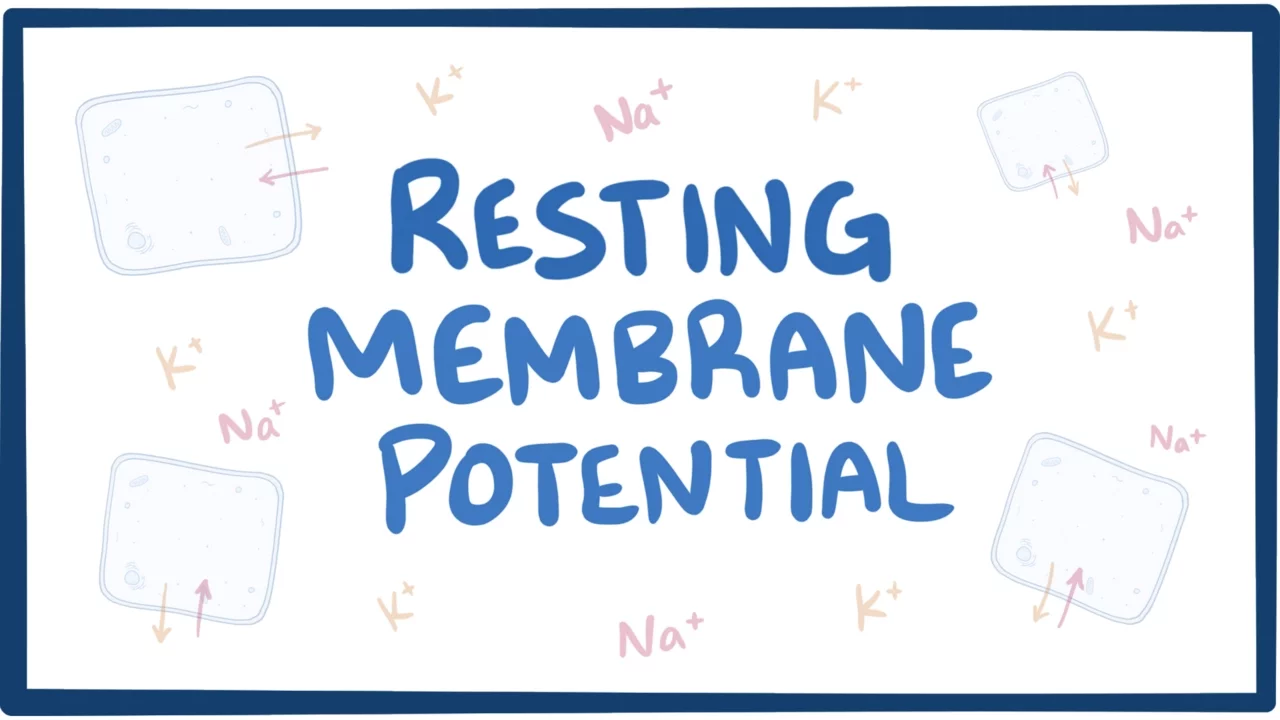
The resting membrane potential, specifically how the sodium-potassium pump (Na+/K+ ATPase) establishes chemical gradients.
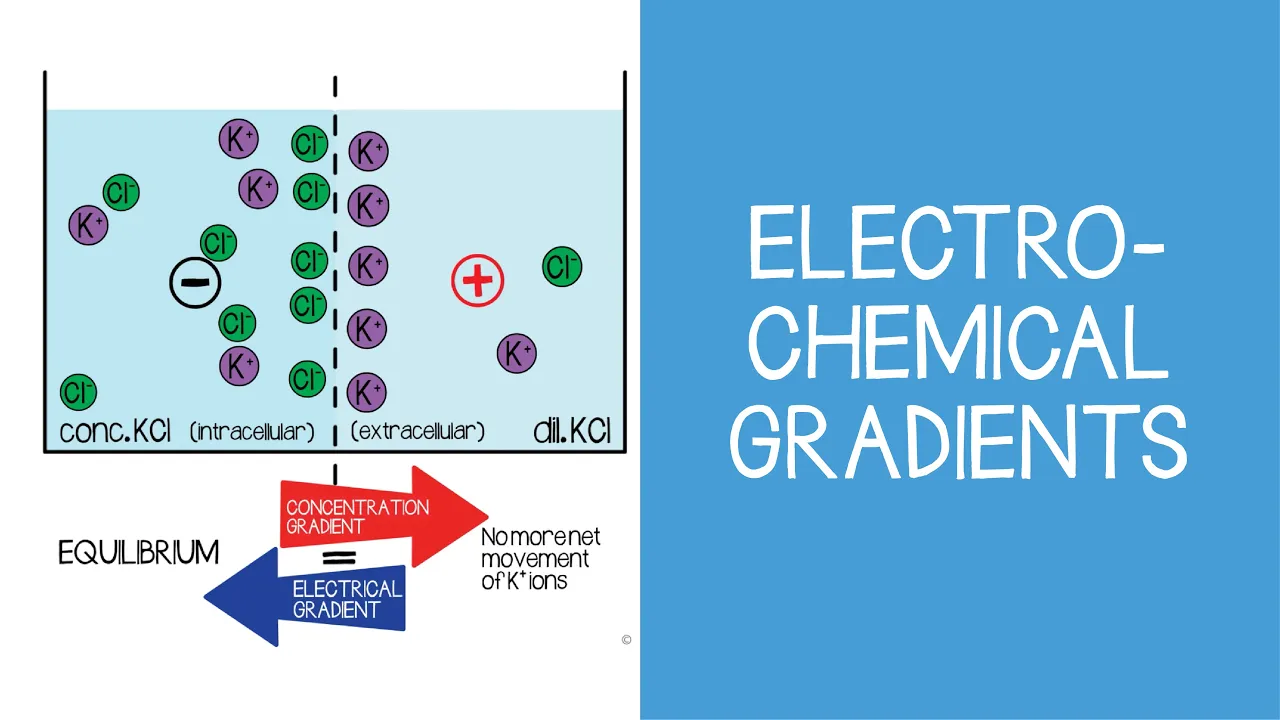
Fundamentals of electrochemical gradients and how differences in ion concentrations create biological voltage.
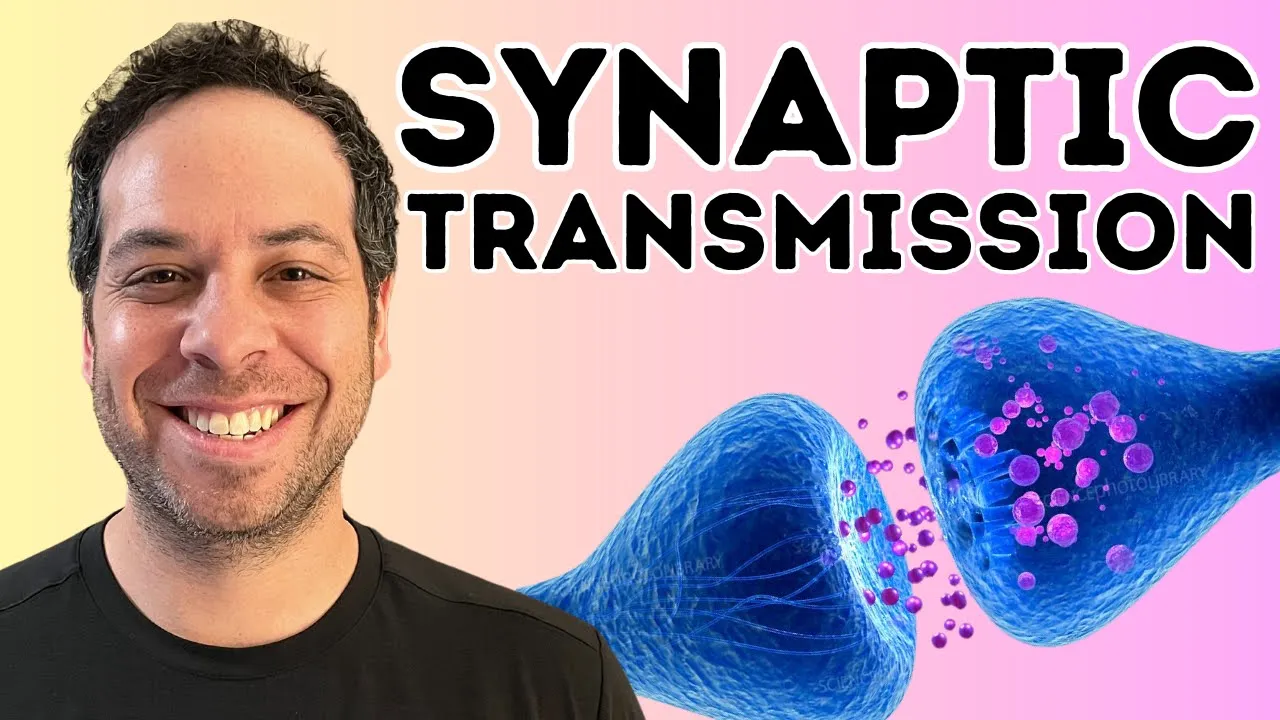
Synaptic transmission, focusing on how an action potential triggers the release of neurotransmitters into the synaptic cleft.
The process of synaptic integration, including the summation of Excitatory and Inhibitory Postsynaptic Potentials (EPSPs and IPSPs).
The physiological impact of demyelinating diseases, such as Multiple Sclerosis, on saltatory conduction and signal propagation speed.
How neurotoxins (e.g., tetrodotoxin) and local anesthetics (e.g., lidocaine) medically target and block voltage-gated ion channels.
1.2M views26.4Klikes10:24Original Release: 2016-12-26
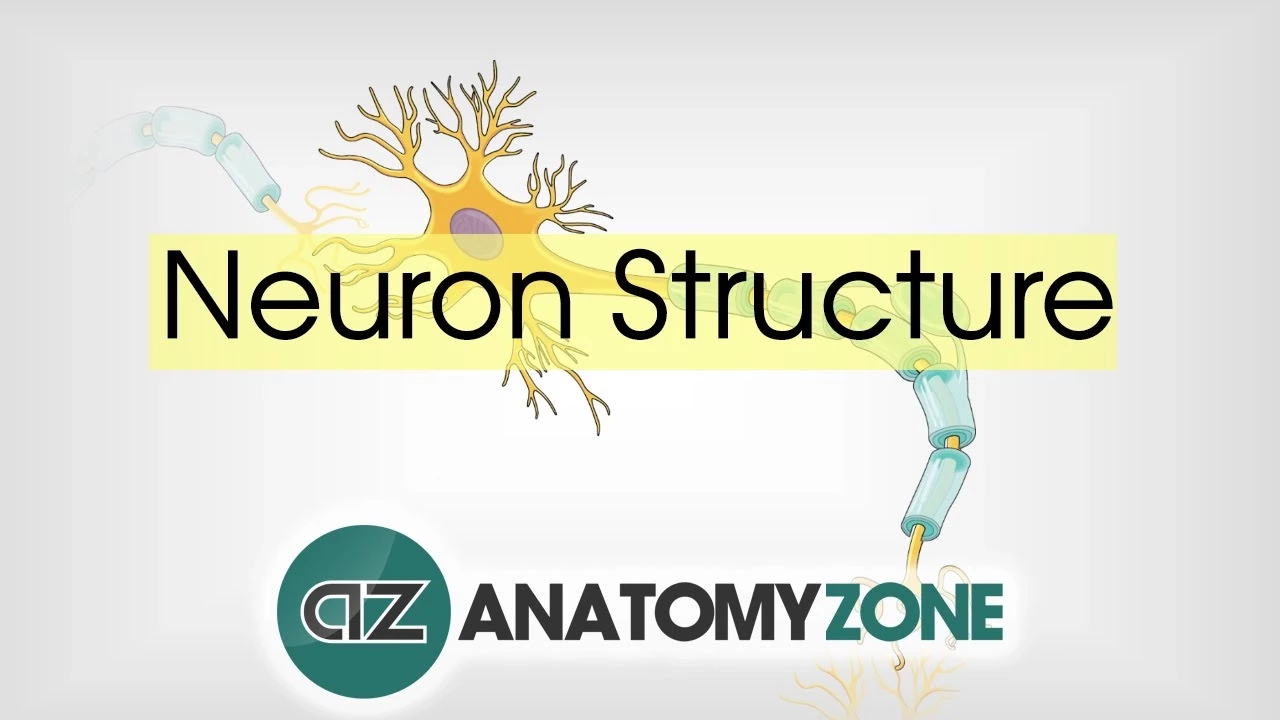
Neurons are the cells that make up our nervous system, and they’re made up of three main parts.
The dendrites, which are little branches off of the neuron that receive signals from other neurons, the soma, or cell body, which has all of the neuron’s main organelles like the nucleus, and the axon which is intermittently wrapped in fatty myelin.
Those dendrites receive signals from other neurons via neurotransmitters, which when they bind to receptors on the dendrite act as a chemical signal.
That binding opens ion channels that allow charged ions to flow in and out of the cell, converting the chemical signal into an electrical signal.
Since a single neuron can have a ton of dendrites receiving input, if the combined effect of multiple dendrites changes the overall charge of the cell enough, then it triggers an action potential- which is an electrical signal that races down the axon up to 100 meters per second, triggering the release of neurotransmitter on the other end and further relaying the signal.
So neurons use neurotransmitters as a signal to communicate with each other, but they use the action potential to propagate that signal within the cell.
Some of these neurons can be very long, especially ones that go from the spinal cord to the toes, so the movement of this electrical signal is super important!
But why does the cell have an electric charge in the first place?
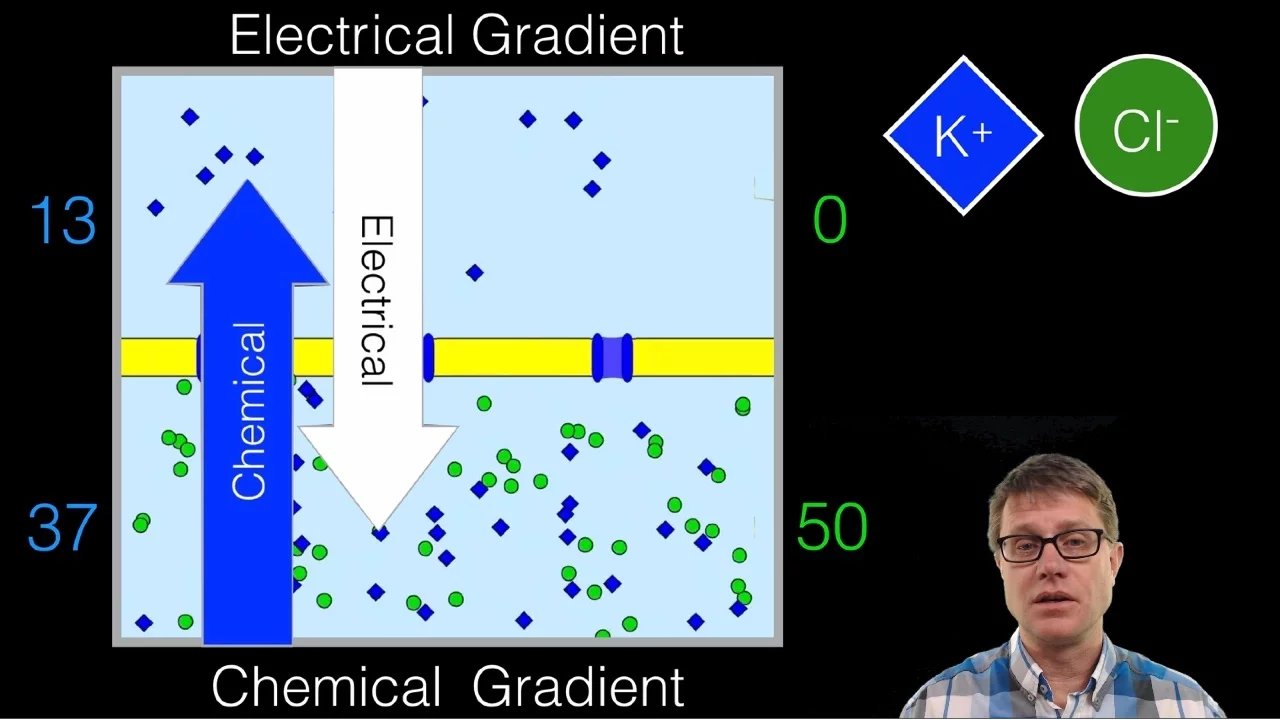
Well, it’s based on the different concentrations of ions on the inside versus outside of the cell.
Generally speaking, there are more Na+ or sodium ions, Cl- or chloride ions, and Ca2+ or calcium ions on the outside, and more K+ or potassium ion and A- which we just use for negatively charged anions, on the inside.
Overall, the distribution of these ions gives the cell a net negative charge of close to -65 millivolts relative to the outside environment - this is called the neuron’s resting membrane potential.
When a neurotransmitter binds to a receptor on the dendrite, a ligand-gated ion channel opens up to allow certain ions to flow in, depending on the channel.
Ligand-gated literally means that the gate responds to a ligand, which in this case is a neurotransmitter.
So if we take the example of a ligand-gated Na+ ion channel, which, when it opens, lets Na+ flow into the cell.
The extra positive charge that flows in makes the cell less negative (since remember it’s usually -65mV), and therefore less “polar” - so that’s why gaining positive charge is called depolarization.
Neurotransmitters typically open various ligand-gated ion channels all at once, so ions like sodium and calcium, may flow in, while other ions like potassium, may flow out, which would actually mean some positive charge leaves the cell.
In the end though - when it’s all added up - if there is a net influx of positive charge, then it’s called an excitatory postsynaptic potential (EPSP).
In contrast, the opening of only ligand-gated Cl- ion channels would cause a net influx of negative charge, creating an inhibitory postsynaptic potential (IPSP), making the cell potential more negative or repolarizing it.
Now, a single EPSP or IPSP causes only a small change on the resting membrane potential, but, if there are enough EPSPs across multiple sites on the dendrites then collectively they can push the membrane potential to a specific threshold value- typically about -55mV, although this can vary by tissue.
When this occurs, it triggers the opening of voltage-gated Na+ channels at the start of the axon - the axon hillock, voltage-gated channels open in response to a change in voltage, and when these open sodium to rush into the cell.
The influx of sodium ions and the resulting change in membrane potential causes nearby voltage-gated sodium channels to open up as well - setting off a chain reaction that continues down the entire length of the axon—which is our action potential, and when this happens, we say that the neuron has ‘fired.’ Once a lot of sodium has rushed across the neuronal membrane, the call actually becomes positively charged relative to the external environment - up to about +40mV.
The depolarization process ends when the sodium channel stops allowing sodium to flow into the cells- a process known as inactivation.
But this state is different than when the channel’s closed, or open for that matter, which is what most of the other channels have.
The voltage-gated sodium channel, though, is unique in that it has what’s known as the inactivation gate, which blocks sodium influx shortly after depolarization, until the cell repolarizes and the channel enters the closed state again and the inactivation gate stops blocking influx, although even though the inactivation gate’s not blocking, the channel’s still closed so no sodium enters the cell.
This middle open state therefore is the only state where sodium gets let into the cell through the channel, and this is a very short window of time.
Now in addition to these sodium voltage-gated channels, we’ve also got potassium voltage-gated channels, which are slow to respond and don’t open until the sodium channels have already opened and become inactivated.
The result is that after the initial sodium rush into the cell, potassium flows out of the cell down its own electrochemical gradient- removing some positive charge and blunting the effect of the sodium depolarization.
The potassium channels, do not have a separate inactivation gate and therefore remain open for slightly longer, which means that there is a period of time when there is a net movement of positive ions out of the cell, causing the membrane potential to become more negative, or repolarize.
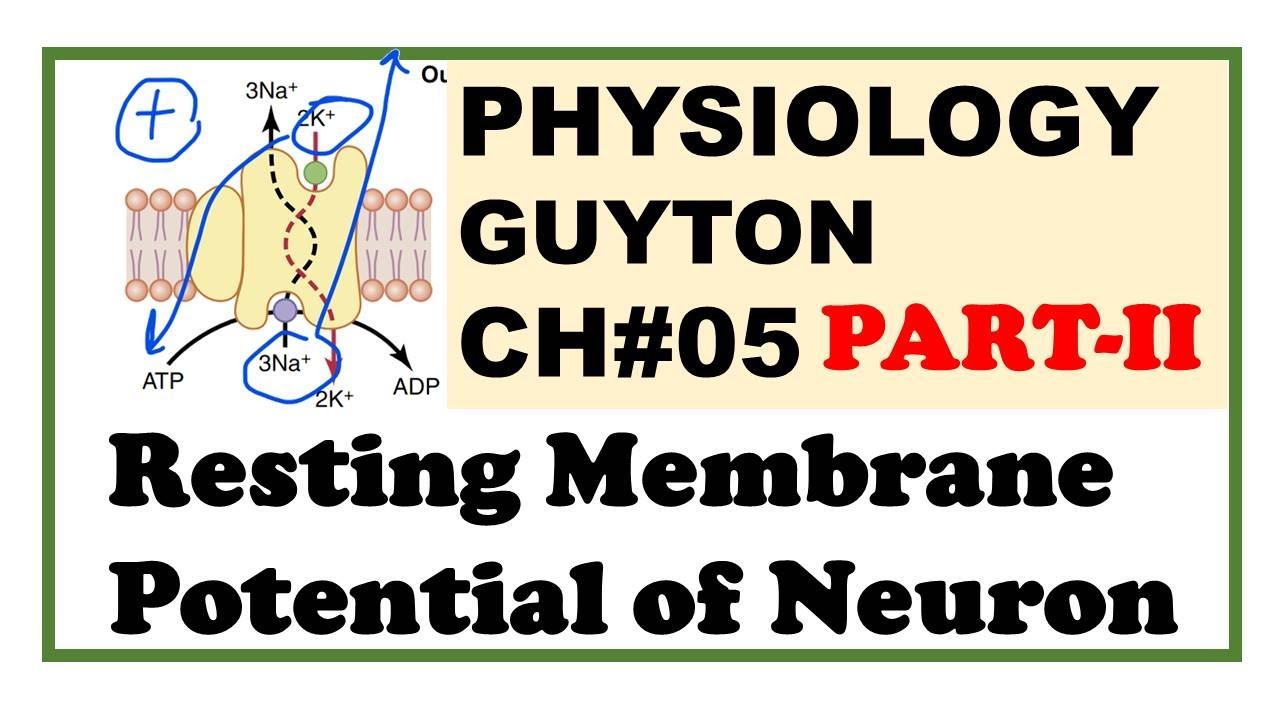
During this repolarization phase, the cell also relies on the sodium-potassium pump, an active transporter that moves three sodiums out of the cell and two potassiums into it.
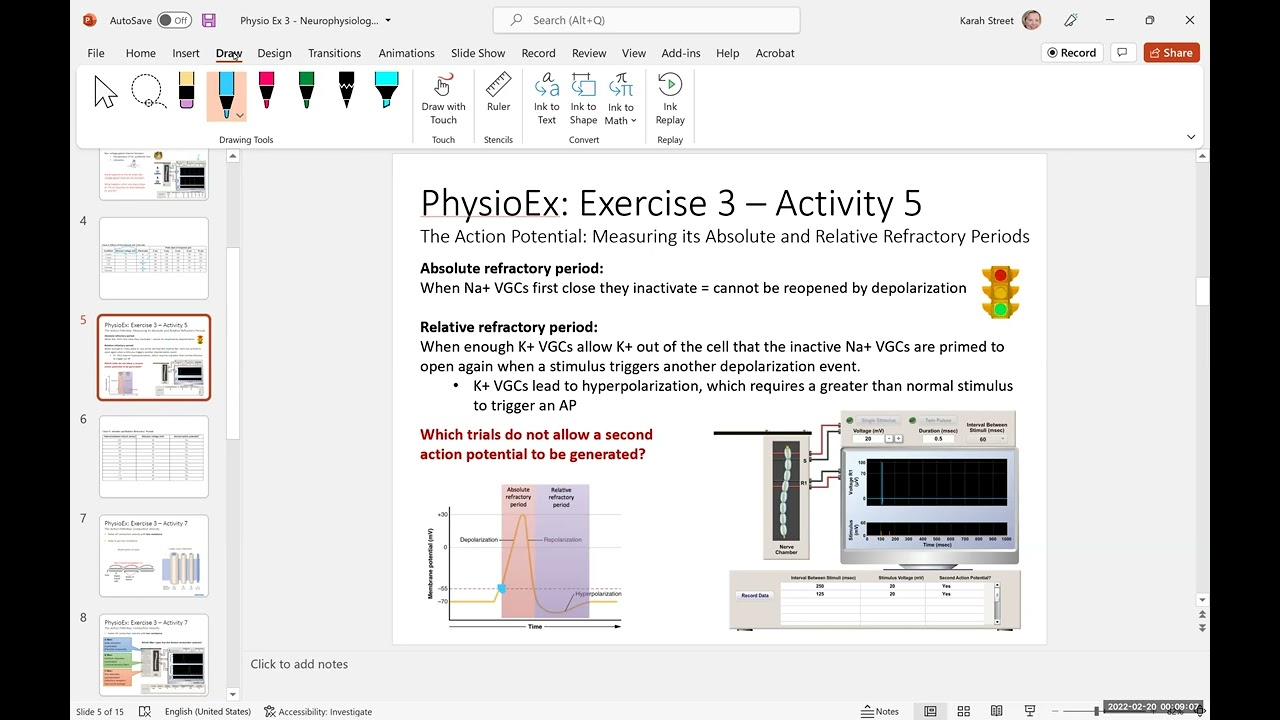
It’s during this repolarization phase that the cell’s in its absolute refractory period, since the sodium channels are inactivated and won’t respond to any amount of stimuli.
This absolute refractory period keeps the action potentials from happening too close together in time, but also keeps the action potential moving in one direction.
The combined efforts of this pump and the extended opening of the potassium channels results in a small period of overcorrection where the neuron becomes hyperpolarized relative to the resting potential, and at this point the sodium channels go back to their initial closed state, and for a short period the potassium channels stay open.
Now we’re in the relative refractory period since the sodium channels are closed but can be activated, but because the potassium channels are still open and we’re in a hyperpolarized state, so it’s takes a strong stimulus to do so.
Finally, as the potassium channels close, the neuron returns to it’s resting membrane potential.
Alright, as a quick graphical recap, with membrane potential on the y and time on the x.
First we start at resting potential of around -65 mV and voltage-gated sodium and potassium channels are closed, we receive EPSPs enough to hit threshold at about -55 mV, voltage-gated sodium channels open and we reach a peak of about +40 mV, at which point the sodium channels become inactivated and we’re in the absolute refractory period.
Voltage-gated potassium channels open, and along with the sodium-potassium pump, start to repolarize the cell, so much so that it overshoots and hyperpolarizes the cell.
Next the sodium channels enter their closed resting state as potassium channels start to close we’re in the relative refractory period, until finally they all close and we reach our resting membrane potential.
Alright, so this process of positive sodium ions moving in and depolarizing the cell transmits the electrical signal down the length of the axon.
Great.
But really, this process isn’t that fast.
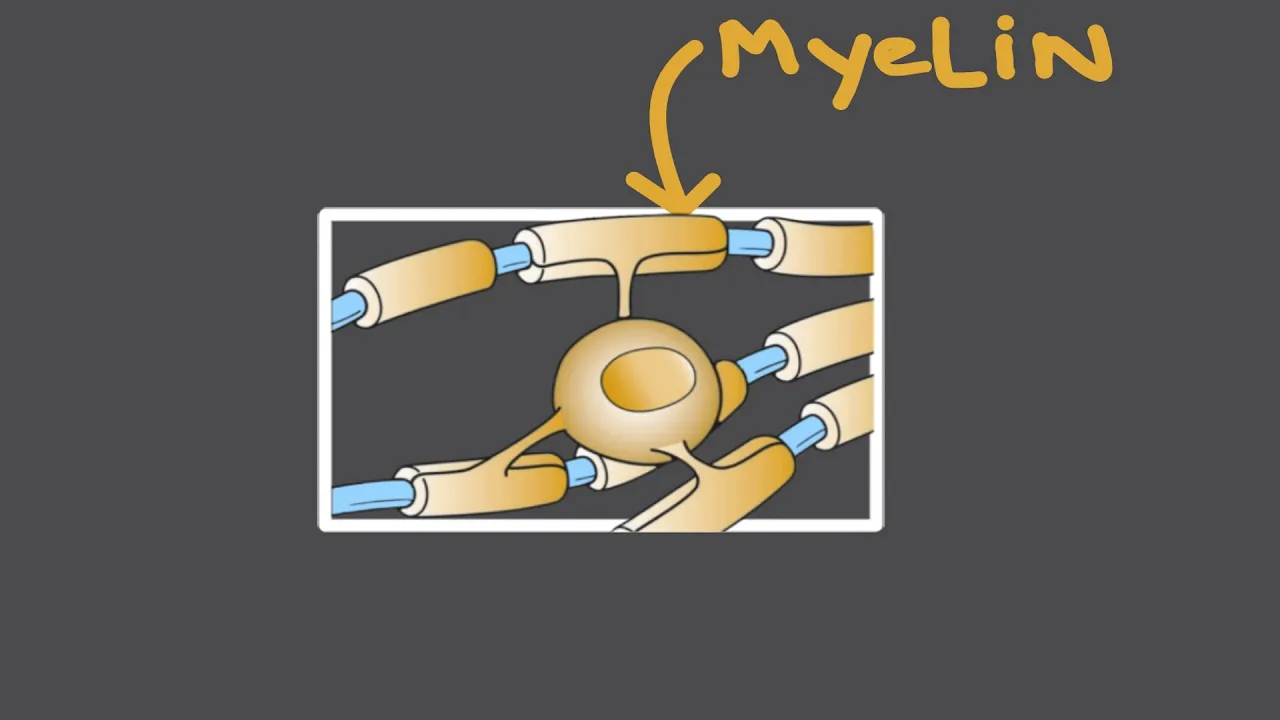
So that’s where the fatty myelin comes in, which comes from glial cells like Schwann cells or oligodendrocytes.
These myelinated areas don’t have voltage-gated ion channels spanning the membrane, so ions can’t simply flow into the cell, that only happens in the spots between the myelin, called nodes of Ranvier.
So instead of propagating via channels, the charge essentially jumps from node to node.
That said though, these ions aren’t just diffusing down the length of the myelin to the other side...that’d be way to slow.
What actually happens is more like the sodium ions rushing in bumps other positive sodium ions already inside the cell, which bumps another one, and so on until it reaches the next node.
The charge moving in this way with the myelinated areas moves really fast, and is called saltatory conduction, which makes it look like the action potential “jumps” from one one node to the next.
Okay extremely quick recap - neuron action potentials happen when dendrites receive enough EPSPs to open voltage-gated sodium channels, which cause rapid depolarization of the neuronal membrane and propagation of an electrical charge from node to node down the length of the axon.
Thanks for watching, you can help support us by donating on patreon, or subscribing to our channel, or telling your friends about us on social media
Up Next
55:57
Using the Therapeutic Relationship in Chronic Pain Care
@PainbcCa
108 views•2019-10-11

48:47
Graphic Medicine: Comics for Collaborative Healthcare Communication
@nationalpatientadvocate
189 views•2023-12-04
11:10
Understanding Systemic Lupus Erythematosus: Causes, Symptoms, and Diagnosis
@osmosis
2.7M views•2016-05-23
3:05
Stages of Labor and Vaginal Birth | Childbirth Animation
@nucleusmedicalmedia
52.1M views•2017-08-18
Related Study Plans & Knowledge Roadmaps
Structured learning paths in Medicine
medicine
Abnormal LFTs: Diagnostic Workup & Pathology
01Liver Anatomy and Basic Physiology
02Introduction to Liver Function Tests (LFTs)
03Hepatocellular vs. Cholestatic Patterns
+ 3 more learning modules
12h6 modules
Explore Roadmap
medicine
Analyzing Blood Smears: RBC, WBC & Platelets
01Introduction to Blood Components & Smear Preparation
02Normal Morphology of Blood Cells
03Erythrocyte Pathologies & Morphological Variants
+ 2 more learning modules
12h5 modules
Explore Roadmap
medicine
Mechanical Ventilation: Waveforms & Alarms
01Anatomy and Physiology of Breathing
02Introduction to Mechanical Ventilation & Core Modes
03Ventilator Settings and Waveform Interpretation
+ 2 more learning modules
12h5 modules
Explore Roadmap
medicine
Neuro Exam: Localization & Stroke Syndromes
01Foundations of Neuroanatomy and Vascular Supply
02The Neurological Examination: Step-by-Step
03Principles of Neurological Localization
+ 3 more learning modules
18h6 modules
Explore Roadmap