








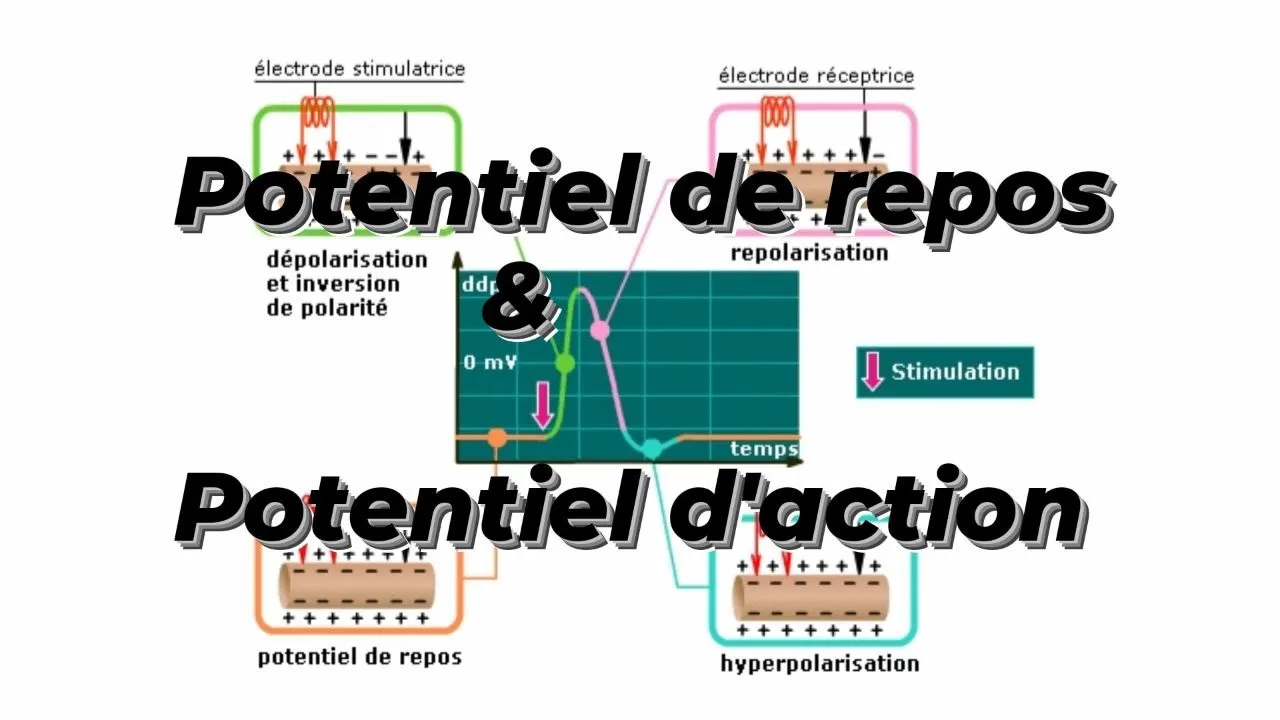
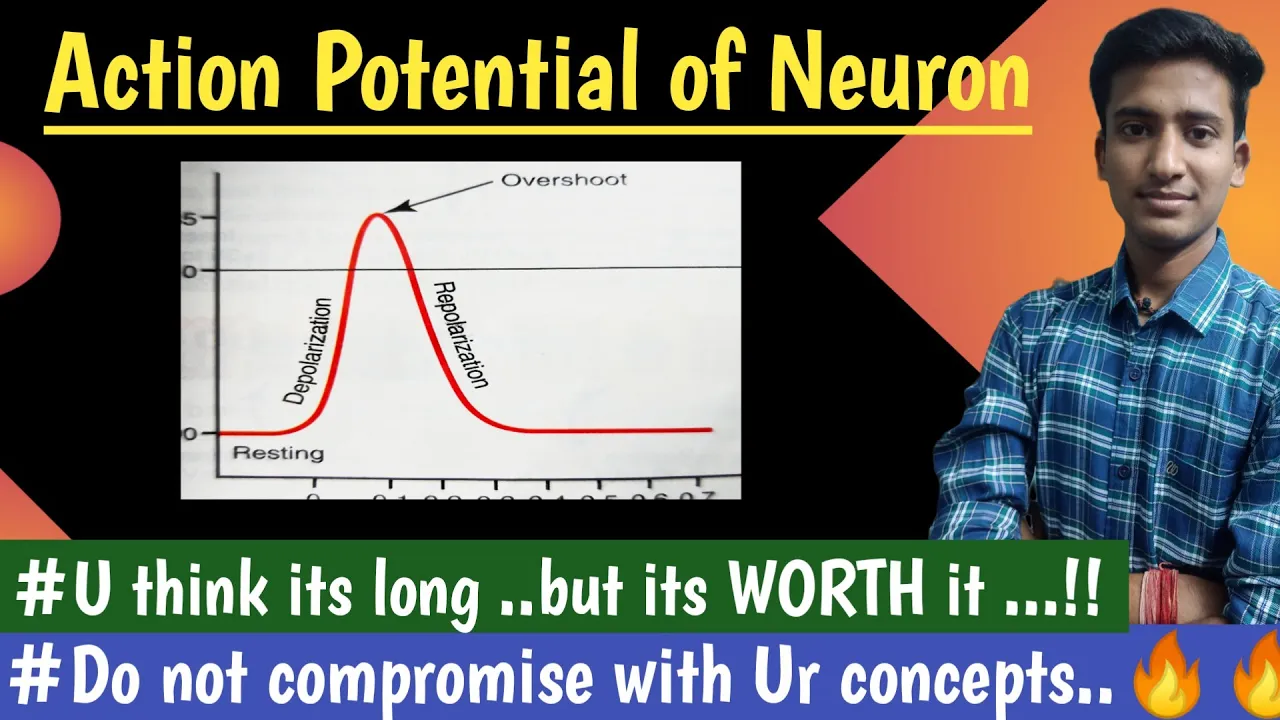









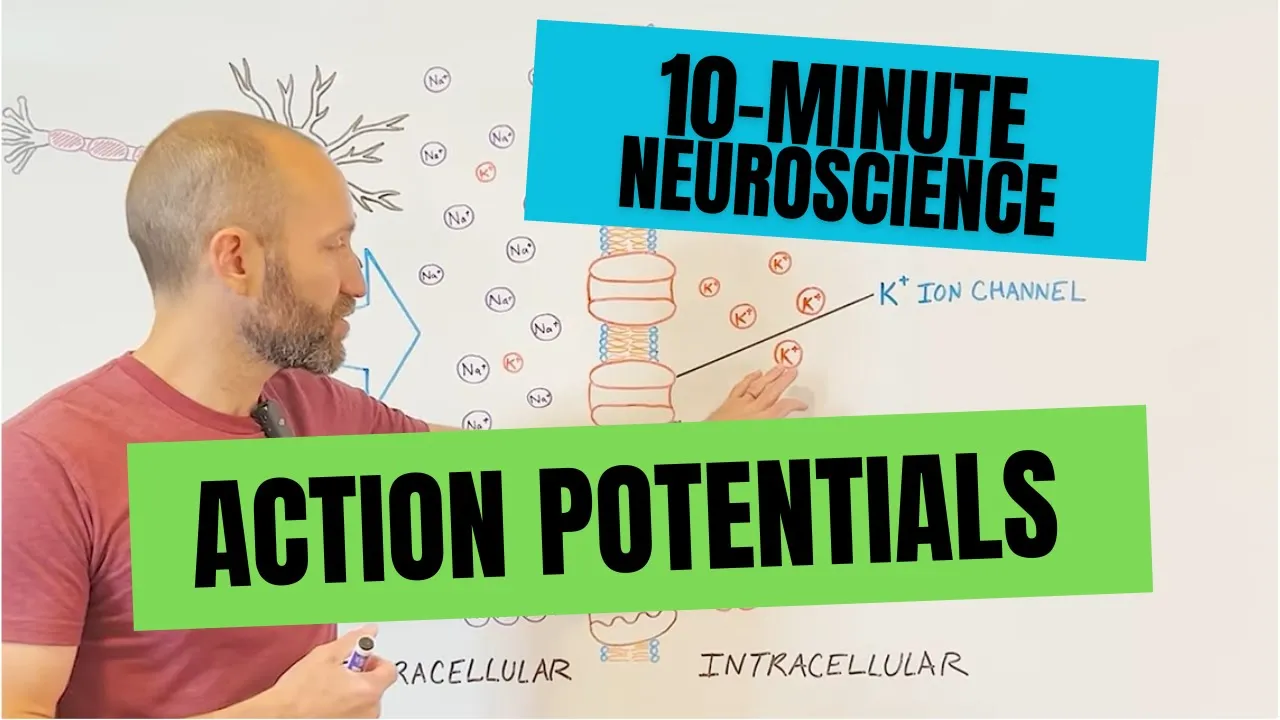






Resting membrane potential (approximately -70 to -90 mV) is primarily generated by potassium leak channels allowing potassium to diffuse out of the cell, creating a diffusion potential that develops until it reaches potassium's equilibrium potential (-85 mV); the sodium-potassium pump indirectly supports this by maintaining high intracellular potassium and low extracellular potassium concentrations, though it contributes minimally directly to resting potential (-4 to -5 mV).
Resting Membrane Potential Explained: Physiology & Action Potential
Added:Basic cell biology concepts, including the structure of the lipid bilayer and the selective permeability of cell membranes.
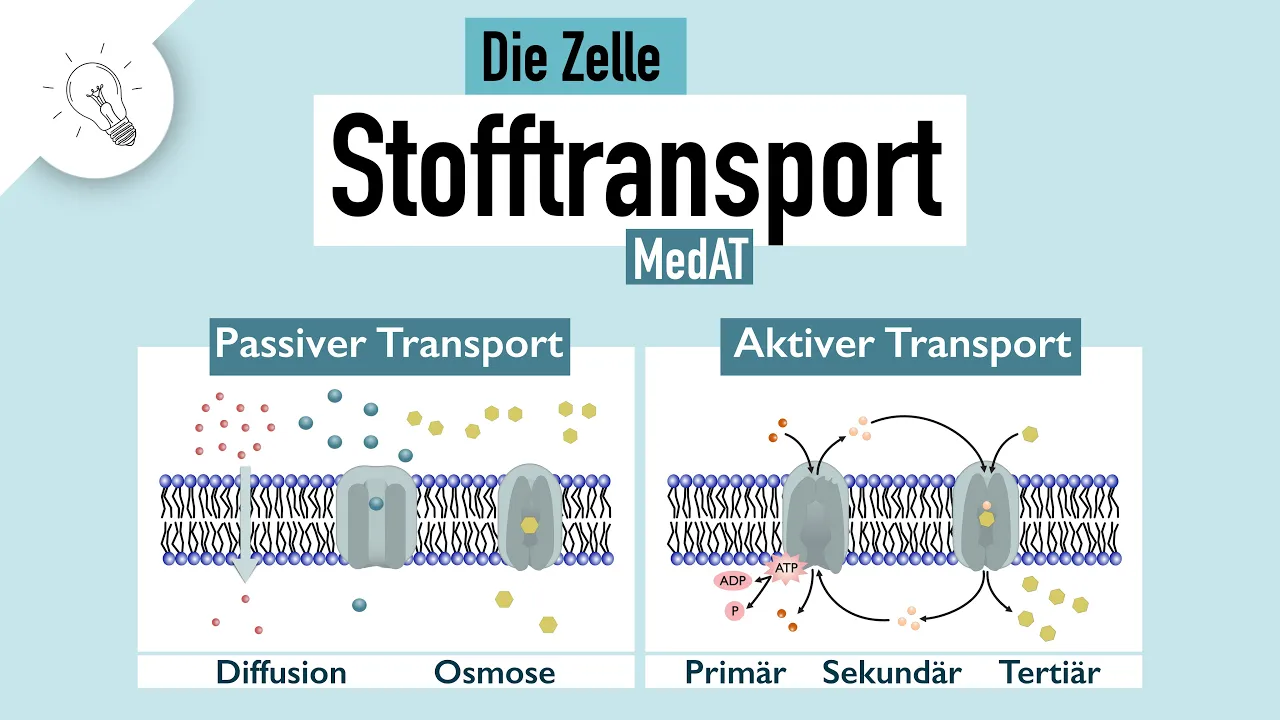
The principles of passive transport (diffusion along concentration gradients) versus active transport (requiring ATP).
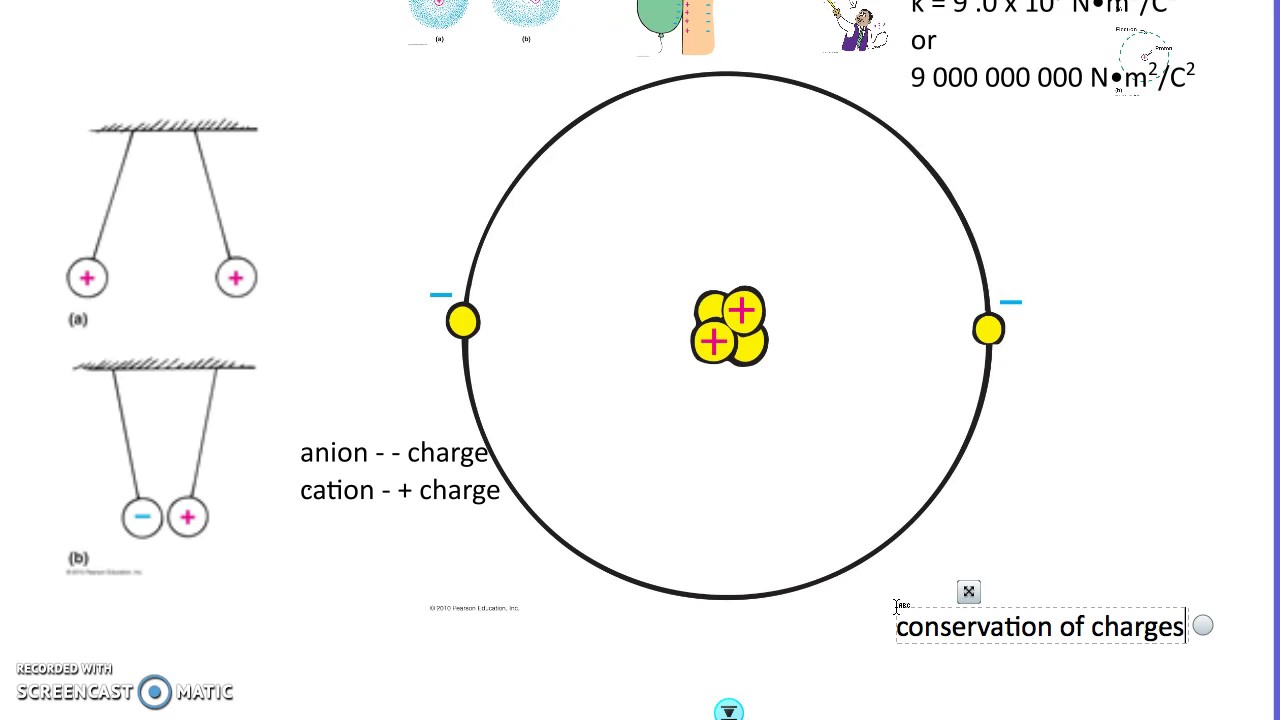
Fundamental concepts of electricity, such as ions (cations and anions), electrical charges, voltage, and electrostatic forces of attraction and repulsion.
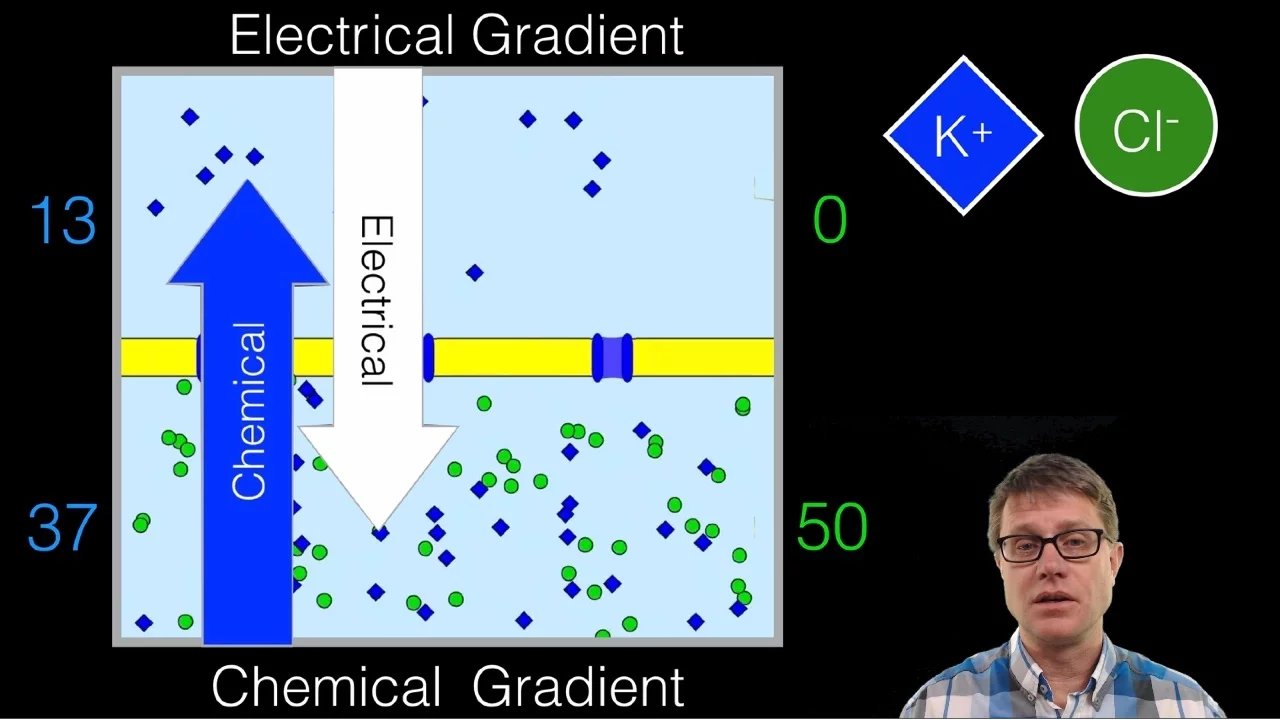
The concept of electrochemical equilibrium and how chemical and electrical gradients interact to move ions.
The mechanics of the Action Potential, specifically how depolarization, repolarization, and hyperpolarization occur via voltage-gated ion channels.
Synaptic transmission and graded potentials, including Excitatory and Inhibitory Postsynaptic Potentials (EPSPs and IPSPs).
Action potential propagation along axons, focusing on the role of myelin sheaths, Nodes of Ranvier, and saltatory conduction.
Clinical applications and pathologies, such as channelopathies, cardiac arrhythmias, and the mechanism of local anesthetics like lidocaine.
147K views2.8Klikes2:15:48Original Release: 2023-03-19
uh today we are starting a lecture on the restroom membrane potentials and the action potentials right uh someone has answered the resting management potential is present in all the cells right and action potentials are present in all the cells or some of the cells yes maybe Mustafa can tell us what about Action potentials okay anyone from this area someone has said that resting membrane potential is present in almost all cells and this statement is true almost all cells of course we'll go into detail that what is the restroom membrane potential and how it is produced then there is there is another term action potential right which cells in the body can have action potential yes please because these two things we have to have very clear concept number one recipient potential and number two is action potential right yes which cells in the body can have action potential Dr esma is going to answer so everyone should listen respectfully yes please oh we should not go anywhere Dr isma is saying that action potential is present in all the cells uh it is absolutely wrong right put a big cross on this answer yeah the sofa is eventually right action potential is present in neurons and muscles right action potential is produced in the neurons and muscle cells this may be smooth muscle or it may be cardiac muscle or it may be skeletal muscle there's a hell of the difference in resting membrane potential and action potential resting membrane potential is a transmembrane potential present in almost every cell when it is not excited almost every cell in our body has resting membrane potential I will explain what it is and how it is produced but you have to have a very clear concept that action potential is fluctuating electrochemical changes across the cell membranes which are produced only in neuromuscular system cell s in the neuronal system neuronal cells and muscular cells they develop electrochemical fluctuations across the membrane which propagate these are the potential differences across the membrane which are in action this is what you have to remember there's the difference in restroom management potential and action potential resting membrane potential is a potential difference across the membrane which is resting not fluctuating when cells are not electrically excited they still have some trans membrane potential difference and that is resting magnet potential but new neurons and muscle cells have a very unique capacity we will talk about that later why they have that unique capacity the unique capacity is that if neurons or muscle cells are elect stimulated appropriately they develop transmembrane potentials which are propagating on the membrane surface and if there are potentials which are moving on the membrane surface they are called action potential right now today's lecture will be about rust remembrance potential and the next session we'll discuss in detail about action potential right so let's talk about from where the resting membrane potential comes in every cell let's start with a very very simple example right we have a hypothetical cell here let's suppose we have a hypothetical cell here right and of course like it's a nucleated cell so it must have a nucleus and you must be knowing in the nucleus there are chromosomes and in the chromosome there's genetic material let's suppose this is representing genetic material will start very simple so don't be stressed out just relax mentally right so what we are talking about very simple thing we have a hypothetical cell with a nucleus with genetic material and we'll see how the membrane develops certain electrical potentials look first of all you know life started in Ocean isn't it according to the evolution Theory life started from where from water isn't it and they say that basically life the first cell or the real life started from the oceans see sea water is salty see water is salty you must be knowing hesitant right actually our cells when in the evolution when the life started as a right and when it reached to the level of unicellular organism it was in salty water right because our mechanisms are evolved in the base of salt salty water around so every cell in human body is keeping a salty water outside it and living its own private unique type of c not Caribbean Sea unique type of everything your every cell has salty water around it that water is called extracellular water extracellular fluid all the fluid in the body can be divided into two types of fluid fluid inside the cell and fluid outside the cell isn't it so there's an intracellular fluid there is extracellular fluid as I told you life evolved from the sea from the salty water so every cell is trying its best to keep the more and more sodium outer n out is that right this is logical isn't it so for this purpose this is a very special type of Gene here right and this Gene when it expresses and this Gene Expresses in every cell this Gene Expresses in every human cell and when this Gene expresses you know what it is doing it is making a protein and that protein get planted into membranes this protein is planted into membrane this protein is a special type of sodium and potassium transporter right the only the major purpose of this protein is that keep on throwing the sodium out of cell right and keep on concentrating the potassium into the cell and this protein keep on throwing sodium out of the cell in spite of the fact that there's already lot of sodium outside it means it is pumping the sodium against the concentration gradient is that right and it is constantly bringing potassium into cell and cells are already rich in potassium but still it brings more potassium and so again it is pumping potassium inside the cell against the concentration gradient so it means it is doing upheld task it is concentrating the sodium outside the cell and it is concentrating the potassium into the cell so it is sodium potassium pump and because it is working against the concentration gradient and it is doing uphill task this protein needs energy and it uses as a fuel ATP what it is uses ATP whenever it is working right it will use the one molecule of ATP and break it down into ADP plus phosphate and when terminal phosphate is broken right it gets energy and with that energy it will pump the sodium out and potassium in and because this protein this protein is now called sodium potassium pump or because you use it has a special component which can utilize the ATP and break down the ATP so this protein is also called sodium potassium 80 phase sodium potassium 80 base so every cell has sodium potassium 80 pages in its membrane and these 80 pieces are all the time throwing the sodium out and concentrating the potassium and so that cells are just like bags of potassium floating into the sea of sodium so now on what you have to remember the cells are the bags of the potassium of course there are many other things also but in our presence discussion sell the very rich in potassium floating into the sea of extracellular fluid rich in sodium is that right no problem in understanding this and of course this process is utilizing ATP energy can you believe it that out of the most of the energy which you is yourself are using right now the chemical energy right now all your cells are using 25 percentage used only by these proteins it's a great amount of energy right now in your body 25 percent of the cellular energy is utilized just to keep the potassium in and just to keep the sodium out now as you know everything in the world is not fair uh this pump is also not fair it's bit unfair how it is unfair even though it's charging the energy but it is doing a little bit trick that it takes three sodium out but it brings only to potassium n so it means if this pump work 1000 time it will bring 3000 sodium out and it will take 2000 potassium n so in spite of the fact that it is concentrating the sodium out and concentrating the potassium n but still if you look at the according to the charges it is if it worked this pump work 1000 time it means it is pump out pump out 3000 cations outward cations are positively charged ions so it is bringing 3000 cations out and it is bringing two thousand K times n so this pump while it is working it is unfair because it is leading to net loss of cations it is throwing with every Revolution it is throwing three cations out and bringing two cations n so it as it works more and more right the total amount of cations lost from the cells are more and total amount of time cations gained into seller relatively little less so it means practically when these cells are these pumps are operative cell is practically losing cations outward so when more cations are lost from the cell and less cations are going into the cell it means cell is gradually getting Electro negative because remember these cations are having with them for example potassium has potassium is a cation it does have some anions with it is that right you don't know cations okay listen write it down for today onward all your body fluids are physiologically not all but most of your body fluids are electrically neutral where there are cations they are always having some anions for example there are some proteins in the cytoplasm and those proteins are negatively charged you know you must be knowing proteins they have amino acids and many amino acids that body pH are negatively charged is that right so the cytoplasmic proteins are negatively charged so then they also act as anion then in the cell there are a lot of phosphates and phosphates are also negatively charged so these are just few examples so I'm saying cell is having cations n a ions and their number is normal but what is happening here that it is pumping the more cations out and bringing less cations n so actually as it keep on working there's net loss of cations from the cell and of course when some cations are lost and anions are there so cell become Electro negative it means when the sodium potassium 80 pieces work they make cell interior slightly Electro negative now that electronegativity okay because this pump is producing electronegativity we call them electrogenic pumps write it down what are electrogenic pump any pump which work across the membrane and during its function it produces some electrical imbalance we say that pump is electrogenic pump sodium potassium 80 phases are electrogenic pump because they do some electrical imbalance what is the electrical imbalance as I said many time they lead to more loss of cations and less gain of cation to the cell so this is a net loss of cations and cell interior because it is losing progressively more contents so it become Electro negative this electronegativity which is now established in the cell due to actions of sodium potassium 80 Pages this electronegativity is called yes please this electronegativity is called Dr suffice saying that this electron activity is called best thing what you say just say something anyone please don't say it I'm trying to ignore and you say wrong thing this is not resting membrane potential this is what I want to put in your mind look by the function of sodium potassium 80 phase as interior of the cell become electronegative as compared to the exterior only minus 5 millivolt you know what is the value of resting management potential suppose in cardiac health it is minus 90 millivolt so resting membrane potential in the cells is somewhere about minus 90 millivolt is that right what I mean by this that if you put some voltmeter here and put neutral electron outside and put another electrode inside this will move to the minus 90 millivolt is that right so inside of the membrane cell membranes are electrically negative approximately minus 90 millivolt as compared to the outside is that right it varies from cell to cell a little bit sum or minus 80 some or minus 70 but this sodium potassium 80 Pages produces electronegativity of only minus five it may be a little contribution to resting membrane potential you get it if you want to create resting menu potential you have to produce electronegativity inside the membrane how much minus 90 and how much this pump has helped us only minus Pi so directly this pump does not help much to create the rest amount of potential there must be some other mechanism as well if you agree or not there must be some other mechanism now let's go to the very basics of Life sodiums are like let's suppose like boys and potassiums are Like Girls we Just pause for a while now look at this nasty pump it is throwing the boys out and concentrating the girls then eventually what will happen I think all of you know now what will happen eventually look here the sodium right okay Mr sodium very sad why it is very sad it's concentrated outside and it wants to go it's very logical isn't it and this nasty pump taking those sodiums and throwing the boys out throwing the sodium out and for every three wires thrown in It Takes Two Girls in for every three boys thrown out it takes two girls in right and now even she's not very happy or will she be happy a girl surrounded by the girls everywhere a little bit sad is that right they are sad there she sat there sodium is concentrated outward it want to go in potassium is being concentrated out inside it wants to go out and hold this pump has produced only electronegativity of minus 5 or minus 4 millivolt which is not enough so what really happens this was our first Gene in our discussion of course there are many genes in the cell this was our first Gene which was sodium potassium atps Gene okay let's suppose this cell expresses one more Gene it has one more Gene rather two more Gene which I'm drawing here let's suppose this Gene also expresses when this Gene expresses it makes proteins and those proteins also get stuck into membranes and most of the cells this Gene Express a lot and when this Gene makes the proteins those proteins get embedded into cell membrane let me make this protein and this protein of course this what is this this is made of peptide chains let me tell you exactly how it is you get it what is happening these are peptide one two three four five whatever their number what I'm saying that this Gene is making some peptides and those peptide Clump together and they make a pore and this pore is embedded in the cell membrane and it is aqueous pore if this pore is inside lined by electronegativity so it will attract cations this pores specially allow or this channel especially allow the movement of potassium is that right but they don't allow the sodium to move across if we want sodium to move move we can make special sodium channels also right but in this cell which we are studying hypothetical cell let's suppose sodium Channel making Gene is not working but potassium Channel forming genes are working now these proteins which are now potassium channels they are planted into cell membrane so these are the gates for boys or girls and look at it nature is so good to them they want to go out they are allowed to go out look at now yeah they are allowed to go out if they want to but look at it you cannot this is for girls it's first potassium sodium cannot use it it's very angry you know look at it right there now sodium is trapped outside even if somehow it gets in it will be again thrown out potassium is concentrated n but it is also allowed to move out or it is allowed to move across the membrane because this channel does not determine in which direction potassium will move they just allow the potassium to come or move through this channel it's up to potassium in which direction it wants to move we'll see what are the factors we determine the movement of the potassium but right now you trust me what I'm saying what happened up to that sodium potassium 80 pages are planted into membrane cell started throwing the sodium out concentrating the potassium in food sodium is concentrated outward it loves to go n along its concentration gradient you know things move from high concentration to low concentration you studied in high school still at whole crew so sodium is trying to come in and potassium has been concentrated in so concentration gradient determines potassium should move out but this cell is having potassium channels but it does not have sodium channels these special type of potassium channels which I have expressed here these are potassium leaky Channel they are ungrated channels they are unregulated channels they are open all the time right because there are many types of channels which cell may have I will discuss it later that channels which may be present in the cell they may be ungrated channels ungated channels uncutted channels mean channels which are working all the time regardless of the situations so we call them simply leaky channels leaky channels then there are some other channels which have special Gates which are special Gates these Gates only open at a particular voltage we call these channels voltage gated channels we'll discuss them later and then there's another group of channels right and these channels are having a special type of arrangement where a particular substance bind if a particular substance bind only then they open or close so it means they are ligand gated Channel ligand mean a special substance specific substance which can bind to this and changes activity so ligand gated channels for a while you just trust me that yourself have cell membranes have many types of channels but broadly they can be categorized into three types of Channel their ungated channels all the time open some channels which are only operative with at a specific voltage and there are other channels which are only operated when a specific substance activate them for example they may be activated by neurotransmitter or they may be activated by a hormone or they may be activated by some second messenger so such channels which are activated by specific substance we call them ligand gated channels right now we're talking about these potassium channels these are ungrated channels they are all the time we will look again how what a big favor they are having the special Pathways that whenever they love they can love to exit out easily there are special channels no need of special substance to open these channels no need of special voltage to open these channels so these are potassium ungrated potassium channels or potassium leaky channels which are expressing in this cell now let's see the behavior of this potassium that what is happening a lot of potassium present in the cell and cell membrane is now permeable to the potassium lot of sodium present outside the cell but cell membrane is not permeable to sodium now we'll see what really happens to the cell and how this potassium behaves right it's ready to rush out isn't it so let's suppose this is the potassium right and very happy and it is willing to go out now why it should go out because concentration gradient is a force which is taking it out because concentration of potassium is more inside the cell concentration of potassium is less outside the cell due to the activity of sodium potassium 80 phases so of course potassium will love to move from high concentration to the low concentration if there is a pathway available and luckily this cell has lot of potassium channels so potassium has a option to leak out now what will be the driving force for the potassium to move out the driving forces concentration gradient is that right now let's suppose we see what really happened I will make a big channel here so you really see what happened now this potassium has very strong concentration gradient yes please concentration gradient outward but remember one thing the spawn path produce how much electronegativity minus five cell interior is how much electronegative minus 5 millivolt now potassium is K9 or A9 cation it is positively charged now when positive charges are trying to move out this electronegativity will try to hold it n right because electronegativity are try to hold the positive cations but concentration gradient is checking the potassium out so it means what is the force inward a very small Force minus 5 millivolt and this minus 5 millivolt can be called what there is concentration gradient to taking it driving it out and this is electrical gradient electrical force electrostatic force electrical gradient so what's really happening there this is just like a girl who have to make the CN along the concentration gradient she knows our future is good if she moves out they're already locked in and why they're not coming in but there is something in the heart which is holding it back but she's not much confused concentration gradient outward is very strong but electrical gradient invert is very weak so net Electro chemical Force which is driving this potassium ion is outward so it will start leaking outward as more and more potassium is going out through this potassium leaky channels inside will become more and more Electro negative again as potassium has high concentration n and low concentration out due to the activity of sodium potassium 80 phases right so along strong concentration gradient right with very little Electro gradient electrical gradient holding the potassium in and Powerful concentration gradient pushing the potassium out so this potassium start diffusing outward as potassium start diffusing out as potassium start diffusing out cell become more and more Electro negative progressively cell is becoming more and more Electro negative am I clear because this potassium is going out but leaving its canine sorry not canine girls don't have canines as potassium is moving out it is leaving its A9 anions behind because the anions are very big like phosphates or like proteins which cannot move out so what is really happening that potassium is moving out or diffusing out under the influence of very powerful concentration gradient right and leaving its anions behind so inside become progressively more and more Electro negative now cell was minus 5 millivolt then it became minus 15 then more potassium diffuse out minus 25 more potassium diffuse out minus 50 it means potassium has been diffusing out and potential in the membrane is changing and this potential is changing due to diffusion of it's very easy to understand that because potassium concentration across the membrane was different and membrane was permeable to potassium so potassium was moving and when it was moving out this iron was moving out then electric you can say the potential in the membrane is changing it is changing now this potential which is growing this electrical potential which is building or which is developing due to diffusion of the potassium is called diffusion potential what is it called diffusion potential is that right so as more and more potassium diffuses out cell will develop more and more diffusion potential due to potassium am I right so the fusion potential is developing what is diffusion potential now this is electronegativity developing in the cell due to diffusion of potassium outward as cell is losing the cations and retaining the anions so cell become more and more electro negativity so when it becomes more and more electronegative what will happen gradually concentration gradient does not change much because total potassium is too much but still as cell become more and more electronegative due to loss of potassium the Electro electrical gradient will progressively growing a cell is becoming more and more electronegative as potassium is diffusing out inside is becoming more and more Electro negative so it means that as potassium is moving out for remaining potassium to leave the cell is becoming easier or difficult difficult is that right as more and more girls leave they are making rest of the girls difficult to live is that right again what happened first of all sodium potassium 80 bases through all the sodium out outside sodium Rich area and concentrated the potassium and cell becomes potassium rate along the concentration gradient sodium want to come in but this cell membrane is not permeable to sodium is that right so even though sodium is very frustrated I mean but it is unable to come in because there are no channels available potassium is concentrated and it will love to go out and luckily potassium leaky channels are also available in the membrane so we'll say concentration gradient for the potassium is outward but luckily membrane is also permeable to potassium so potassium start diffusing out as potentials start diffusing out along the concentration gradient right cell become more and more interior of the cell become more and more Electro negative so due to diffusion out of the potassium membrane is developing an electrical potential this electrical potential which is developing due to diffusion of the potassium is called potassium diffusion potential is that right as time passes by and this time is very short but anyway as time pass passes by it is a little bit confused right but still let's suppose concentration gradient is 4 pushing it out and electrical gradient is three in the beginning concentration gradient was four electrical gradient was only one remember out of the total potassium very little shift very little depiano potassium occurs to produce significant diffusion potential now so it will also slip out but this this slipped out very rapidly and this slipped out relatively slowly now look at another situation now lot of some significant amount of potassium is diffused out producing more and more electronegativity in the cell and more and more diffusion potential a time comes a time comes that electronegativity in the cell becomes so much that this girl become confused why she's confused she doesn't know what to do why because okay it should be really made here there's a potassium in the channel and really confused why because concentration gradient outward and electrical gradient inward have become absolutely equal now what will happen will there be any net movement of potassium no now in spite of the fact that membrane is still permeable to potassium there will be no net movement of potassium across the membrane to be very true statement the real statement should be that now amount a number of ions of potassium going out under the concentration gradient are absolutely equal to the number of ions of potassium coming in under the electrical gradient so this chemical gradient or concentration gradient moving potassium out an electrical gradient holding the potassium n has become absolutely equal so at this potential at which diffusion potential has developed so much again listen production started going out and developed electronegativity inside the cell because this electronegativity was developed due to diffusion of potassium so we say this is potassium diffusion potential is that right as more and more potassium goes out electronegative potassium diffusion potential inside the cell become more and more in its value at times come that diffusion potential of potassium becomes equal to the concentration gradient is that right diffusion potential of the potassium become strong enough to oppose exactly the concentration of chemical gradient when diffusion potential becomes strong enough when diffusion potential of the potassium becomes strong enough to stop the net movement of the potassium we say potassium has achieved a equilibrium between its concentration gradient and electrical gradient and that potential at which equilibrium is achieved that potential is simply called it will that is called equilibrium potential learn in easy way don't jump around I know kangaroos are around now listen this is equilibrium potential step by step it's so simple potassium is trapped in and then allowed to diffuse it is diffusing out as it diffuse more and more self develop diffusion potential a Time come diffusion potential becomes strong enough to oppose and balance the concentration gradient or chemical concentration gradient so when electrical gradient become equal to concentration gradient we say the equilibrium between them so when diffusion potential becomes strong enough to oppose the concentration gradient so much that there is no net movement of the ion across the membrane in spite of the fact that membrane is still permeable to we say that membrane membrane has achieved the potential which is developing electrochemical equilibrium for for potassium is that right so that will be called potassium equilibrium potential normally listen now normally concentration of potassium outside is 4 milli what is that concentration cannot be in millivolt concentration is four millimole per liter and normally in human cell concentration of potassium inside is about 140 millimole per liter again listen normally in the human cell concentration of potassium inside is about about 140 millimole per liter and outside is about 4 millimole per liter is that right at these concentration differences when potassium slips out even a very small amount of potassium slips out it keeps on developing what you keep on developing electronegativity in the cell keep on developing diffusion potential until different potential becomes strong enough to oppose the concentration gradient and that's the moment when in spite of the fact that membrane is permeable to potassium concentration gradient for the potassium outward and electrical invert become absolutely equal and potassium achieves electrochemical balance or equilibrium and that potential at which this equilibrium is achieved that is called equilibrium potential for what for potassium you know what is the another name for equilibrium potential this girl is going to impress all of you what is the other name look I can bet you have heard the other name of equilibrium potential okay that girl yes she is very impressive you know she will tell us I will not mention her name okay you have to give Coke me later on after the class offer me a good cook I will not take your name so that should not be recorded right but you can tell me what is the other name for equilibrium potential you have heard of it yes this young man anyone just please anyone okay let me tell you that is called naranced potential what is potential oh my God naran's potential for potassium is equilibrium potential for potassium you gotta pronounce in many different ways and have my private pronunciation but I hope you understand it so what is naran's potential for the potassium narranged potential for the potassium is equilibrium potential for the potassium what is the equilibrium potential equilibrium potential is the diffusion potential of the potassium at which net movement of the potassium is zero in spite of the fact that membrane is fully permeable to just please you have a question yeah yeah same same yeah why you have so doubt actually you people think it should be made someone difficult and we should look like this then we think we are studying orange potential you can study it easily that any iron has a concentration difference across the membrane and membrane is permeable to that iron only and when that iron moves it produces potential and when movement of iron produces enough potential diffusion of the iron produces enough diffusion potential that net movements the iron eventually stop due to balance opposing factors of electrical gradient and concentration gradient we say that membrane has achieved equilibrium potential for that specific ion or Dr neurons foundate and we are still in trouble so sometimes the stamp is named that membrane has achieved neurons potential for what for that that is so simple I hope it's clear right okay now actually potential for potassium is at these concentration gradient when inside is 140 and outside is 40 millimole the nerves potential is about minus 85 millivolt what does it mean equilibrium potential or neurons potential for what potassium so it means that in a Cell which is having intracellular concentration of potassium about 140 millimole per liter and extracellular concentration of potassium of about and if its membrane is significantly permeable to potassium then potassium will start diffusing out from high concentration to low concentration as cations are going out right and leaving the anions behind inside the cell become more and more electronegative right and this due to diffusion out of the potassium the potential which is developing inside the cell is called diffusion potential and a diffusion potential eventually will reach at a value right at which concentration gradient outward an electrical gradient inward become equal and we say that membrane has achieved diffusion potential right at which potassium is in electrochemical equilibrium so that diffusion potential at which electrochemical forces come into balance which say that is equilibrium potential for potassium and that is also called nuns potential foreign so if this cell is minus 90 millivolt resting membrane potential what we have made for minus 5 millivolt may be due to electrogenic sodium potassium 80 pages and minus 85 millivolt has been generated by the diffusion out of potassium is it clear now we take another example will you just forget the voice very bad let's talk about sodium this sodium should be given a chance and you know whenever sodium gets a chance membrane becomes permeable to sodium that desperately come in we'll talk about that later right that I will talk about in action potential when the re-election start right now your minds are working in very specious ways I feel right now this is another cell this is the second cell this was our first cell which was having lot of potassium and a lot of sodium out due to sodium potassium 80 phases and this first cell membrane was permeable to potassium only so potassium diffusion out produced enough diffusion potential that eventually potassium developed membrane developed equilibrium potential for the potassium and in spite of the fact membrane is still permeable to potassium net movement of potassium stop am I clear now we see another situation start with the same thing first of all what is this Gene starting sodium potassium 80 phases so this cell has also sodium potassium 80 pages and if the cell has lot of sodium potassium 80 Pages story will be same sodium is constantly coming out so exercise fluid is becoming rich and sodium right and of course they're also taking potassium n and making X intracellular fluid rich in potassium and already you know for every three sodium expelled two potassiums are brought in with it right so again this is electrogenic pump because cations lost or more than cations gained and inside become about minus millivolt due to electrogenic activity of sodium potassium it pays am I clear there's no problem thank you this part was same as this but this time we'll give a chance to the boys what we do this Gene which makes which channels potassium channels suppose we make it off and by some magic we activate the genes in the cell which can make what special channel for the sodium so lot of sodium channels that this Gene expresses of course you know at messenger RNA and translation and protein and membrane has lot of what sodium okay let me make some big way this I think some of you are happy especially boys now this membrane in second cell is different than the membrane first cell and the first cell membrane was permeable to potassium and second cell we have made the membrane permeable to sodium and let's see what happened you already know that sodium is well concentrated outside and less concentrated inside so what really happens that sodium will love to move and now look at it very happy right this membrane is permeable to sodium now in the beginning the concentration gradient for sodium is in because sodium is more outside and less inside all this is done by this nasty sodium potassium atps because keeping more sodium out right so sodium was well concentrated outside so it will if membrane is permeable to sodium the sodium will love to move in the concentration gradient for the sodium is Inward and what about electrical gradient in the beginning if it is -5 a little electrical gradient is also inward so initially concentration gradient and electrical gradient both help at electromotive forces to move in so this happily comes n when it comes in what it does electronegativity is neutralized you know when cell is now gaining a time they're losing cations so cell is gaining cations sodium under its powerful concentration gradient will move in the cell then this electronegativity is lost so what we say it will become zero right now once it is 0 do you think any more sodium will be coming in under the influence of Electric electrical gradient no but don't be sad right still sodium will come in you know it's very determined and why it will come in yes because concentration gradient is powerful even though there is no more electrical gradient now but still it has powerful concentration gradient it drives the sodium n so more sodiums come in now inside will become Electro positive may be plus 10.
so sodium will keep on coming in under concentration gradient power sodium will keep on coming in under concentration gradient power and inside will become progressively more and more Electro positive so what will really happen that here now this sodium man is a little bit thoughtful he doesn't know where to go it should go here or there why because concentration gradient is pushing it n but because inside is becoming progressively Electro positive so electrical gradient is pushing it out but this man will keep on coming in and inside will become progressively more and more Electro positive so we say diffusion in of the sodium ions is producing the fusion potential for sodium membrane is now developing a diffusion potential for what ion sodium because what is diffusing across the membrane sodium so we say when membrane is made permeable to the sodium due to its concentration radium sodium Rush n and as sodium progressively diffuses inside the cell interior of the cell become progressively more and more Electro positive so now for sodium concentration gradient is inward but electrical gradient is outward this electropositivity which is developing inside the cell due to diffusion in of sodium this is called diffusion potential for sodium so now membrane is developing diffusion potential for Which ion for sodium is that right and until a time will come that diffusion potential become of sodium diffusion potential for sodium across the membrane becomes strong enough to oppose the balance of the concentration gradient and when this is achieved right then the concentration gradient inward an electrical gradient outward become absolutely equal and when they become absolutely equal in spite of the fact that membrane are still permeable to sodium at that particular potential when diffusion potential of the membrane for sodium become strong enough that it does not allow any more sodium to come in in spite of the concentration gradient then we say membrane has achieved equilibrium potential for sodium membrane is achieved equilibrium potential for sodium normally the sodium concentration outside and inside the ratio is like this that equilibrium potential should be somewhere around plus 60 millivolt or 65 millivolt what what does it mean that when sodium started coming in under the concentration gradient inside became progressively more and more electropositive and membranes started developing diffusion potential for sodium right until different potential of sodium becomes plus 65 millivolt inside and this is strong enough right that in spite of the concentration gradient of sodium inside the electrical gradient or different potential of sodium does not allow further influx of the sodium and we say at plus 65 millivolt sodium can the net movement of sodium across the membrane becomes zero in spite of the fact that membrane is still permeable to sodium this is a behavior which is different than boys the doors are open but they say okay we have achieved a equilibrium they are very sensible so we say the membrane achieved which potential equilibrium potential for sodium our membrane is achieved potential for the sodium is that clear so it means ah membrane of a cell membrane will be at a particular moment having naran's potential of potassium or nervous potential of sodium depends on that membrane at a particular time is permeable to potassium or permeable to sodium is that right let's make it very simple this is a room it's supposed full of girls and then a lot of boys outside if only girls are allowed to diffuse out the potential changes are oh yeah he thinks negatively he says if girls are allowed to move out they're more negative and you think boys make things positively I understand you don't look you're not so simple as you do all right so but he's right right somehow he figured out if potassium moves out it will sell interior of the cell become cell membrane become progressively negative and if potassium moves in interior of the cell become progressively positive is that right now listen if all human cells are all the time permeable to potassium then cells will be having potential all the time cells will have their membrane potential near the potassium equilibrium near the potassium equilibrium potential but if all the cells in the body are freely permeable to sodium then all the cells will have their membrane potential near the equilibrium potential of sodium right now listen carefully what is the difference in cell number one and cell number two cell number one is minus 85 millivolt and cell number two is Plus 65 millivolt uh this has this cell is freely permeable to potassium so it has achieved nerves potential or equilibrium potential for potassium this cell was freely permeable to sodium this cell was freely permeable to sodium and so this cell membrane has achieved equilibrium potential for sodium so any cell membrane which achieves equilibrium potential for sodium the potential in the cell will be plus 65 or near that and any cell which is at any moment freely permeable to potassium its potential should be minus 85 millivolt is that clear cell number one and two hypothetical cells you understand from where they develop the certain types of potentials across the membrane good now one scientist the researchers when they studied the potential in this normal human cells and most of the cell they found when they put electrode one electrode inside the cell right and outside the neutral electrode in most of the cell human cells are found that when cells are not electrically stimulated when cells are resting comfortably scientists found that the membrane potential was somewhere between minus my 70 2 minus 90 millivolt they called that potential as resting membrane potential so what is the resting window potential restroom minimum potential is present in almost all cells and this is a potential difference across the cell membranes right of somewhere around 80 millivolt with negative inside right so most of the cells which are resting cells electrically when cells are not electrically stimulated right most of the cells have restroom management potential of about minus 80 minus 90 minus 70. is that right you tell me this resting membrane potential this is a resting manual potential which is present in almost every cell this is more near to the equilibrium potential of potassium or it is more near to the equilibrium potential of sodium oh he could figure out so he says that if most of the cells have estimated potential of somewhere around minus 80 so of course they are having if they are having restive mineral potential which is more near to the equilibrium potential of potassium and rest in cells human resting cells have restroom amount of potential Which is far away from equilibrium potential of sodium so can you figure out from where the cells develop their restroom membrane potential they are behaving like type cell number one or they're behaving like type cell number two cell number one it means that our most of the cells which are having rescue menu potential near minus 80 or minus 90 millivolt their cell membranes are freely permeable to potassium and they are not freely permeable to sodium that is why most of the normal human cells has all the time electrical potential with a negative polarity inside the cell near the potassium equilibrium potential am I clear now if someone asks you what is the Genesis of resting membrane potential why residential potential is there how it is produced answer is very simple we can sum it up in all the human cells number one they have lot of sodium potassium 80 Pages they're concentrating the sodium out in potassium n so it means all the cells are very rich in potassium step number two resting cells are not permeable to sodium but they are very very permeable to potassium so resting cells all human resting cells they lose a little bit potassium and this diffuse every cell diffuses a little bit potassium they have a lot of potassium in they diffuse a little bit potassium to develop enough diffusion potential of the potassium the further potassium will not leak out and that happens to be around minus 80 millivolt so human resting cells are allowed to achieve potential for potassium when they are resting is that right and this potassium diffusion out or potassium e flux which normally occurs in all resting cells right is responsible mainly for the Genesis of resting membrane potential that's so simple now this is a very tricky question which sometimes is ask what is the role of sodium potassium 80 Pages industry membrane potential already we have given a statement the resting mineral potential is mainly produced mainly mainly produced by diffusion out of you see some of you are sleeping we just made a statement that most of the cells have restroom minimum potential because their cell membranes are permeable to potassium so this is diffusion out of the potassium from the resting membrane which is responsible to generate mainly resting membrane potential is that right now you know why your every cell has the estimated potential because simply cells are leaky to potassium that's it this is the main reason but what is the role of sodium potassium 80 phases you can say the direct role of sodium potassium 80 pages or direct contribution of sodium potassium 80 phases in restroom amount of potential is very little out of minus 90 only minus five the direct contribution of sodium potassium 80 pages to the restroom mineral potential is very little that even though sodium potassium 80 pages are electrogenic pump and they throw more protections out and bring less cation and they do produce some electronegativity inside the cell but it is usually minus 4 minus 5 millivolt right so it's a very small contribution to the total estimator potential in a healthy cell is that right but they have a very powerful indirect rule what is that indirect rule indirect rule is that these why potassium was diffusing out because there was lot of potassium and why potassium was diffusing out because there was a lot of potassium in who brought so much potassium in sodium potassium 80 phases so this is their real role that the real role of sodium potassium 80 pages is to maintain High concentration of potassium n and low high concentration of sodium out and because they keep very high sodium proximity pages are responsible to keep High concentration of potassium in low concentration of potassium out so they give a chance to the potassium to leak out so that membrane achieves equilibrium potential for potassium and that is the main contribution to resting membrane potential am I clear no problem up to this now look when cells are resting the membranes that have potential this potential which is inside the membrane normally in a resting cell is Electro positive inside or electronegative inside electronegative inside is that right because the restrooms are the membrane which are freely permeable to potassium and potassium escape from inside to outside produces electronegativity inside so we say the resting minor potential which is present in almost every cell have a negative polarity inside or we say inner side of the cell membrane is polarized negatively the resting cell right now in most of yourself their membranes electrical potential inside is polarized negatively is it right so the negative polarization of the potential to the inner lamina of the cell membranes is it clear now let's come to this thing sometimes in some cells which are excitable cells excitable cells are neurons and muscle cells that we'll discuss in next lectures in detail but for a while you just trust me I'm right that there are neurons and muscle cells and neurons and muscle cell have special type of sodium channels they're very special type of sodium channels and these sodium channels can be activated if by any means you activate the sodium channels in the what cell membrane of a neuron now listen carefully if by any means you activate the sodium channels and cell membrane of a neuron a cell membrane of a muscle and suddenly a lot of sodium channels open suddenly membrane change from potassium permeable to sodium permeable membranes of the neurons the potassium to sodium permeable membranes of muscle cells so again listen what we have done we have a trek to convert cell number one into cell number two what is the trick this trick can only be played in neurons and muscle cell other cells refuse to follow this trick why other cells cannot be prickly converted from type first cell to Second cell because others other than the neurons and other than the muscle cells the rest of the cells in the body do not have significant number of special sodium channeled they don't have special sodium channels we'll talk about those sodium channels later on but neurons and the muscles Health a very special type of sodium and calcium channels okay tinic channels which can be stimulated so if this cell is a suppose neuron cell listen now suppose this is a neuron cell and it is resting happily so what will be its resting minor potential minus 90 millivolt so it means its membranes are highly permeable to potassium but if you stimulate it appropriately suddenly millions and millions of sodium channels open into its membrane which were previously closed and when lot of sodium channels are activated briskly suddenly membrane becomes sodium permeable sodium gets a chance what sodium will try to do it will ration why why should it will go in because of course chemical gradient is concentration gradient push the sodium but sodium will now try for a very short time listen carefully for a very short time when you stimulated this cell membrane for a very short time it became extremely permeable to sodium so sodium has a chance to permeate the membrane and sodium will pass through the membrane it will try Us best it will try its valid frustrated sodium it was outside for a long time it will try its best to bring the membrane potential to its own equilibrium potential sodium will try its best to bring the potential of the membrane towards its own equilibrium potassium what is its own equilibrium potential minus plus 65 but what was originally restroom and potential minus 90 millivolt so originally when this cell was resting like this it was minus 90 millivolts that's human Prudential it was potassium leaky cell by appropriate stimulation suddenly we made cell membranes highly permeable to sodium lot of sodium jump in and the sodium will do its best to take this resume potential towards what to the sodium neurons potential or sodium equilibrium potential so a lot of sodium will come in and it will progressively lose its negative polarity minus 90 minus 60 minus 30 oh my God zero maybe Plus but before it could reach to plus 65 doors close word is harder man isn't it door closed they're just shut off these channels are designed in such a way that when they are okay let me tell you this is a very funny door they are having a door like this and one door like that double double doors on these channels right these are not wooden doors they're peptide chains at a particular voltage when you stimulate one dose door start opening but these doors are linked with each other when this door is activating when this door is activating it is opening its start closing and for a very brief time membrane becomes somewhat this channel becomes somewhat like this that activation gate is activated in activation gate is still not closed for this very short time the frustrated sodium is a chance to come in and try to bring the restroom amount of potential towards its own equilibrium potential but before it could really come in enough amount when oh my God that's very sad what really happens before it really come up it is close from there so what happens the sodium cannot come in enough but still it is so naughty it comes enough amount of sodium come in that restroom manual potential which was electronegative it take it towards zero first it becomes less negative less negative and then 0 it means and it may become somewhat positive also so it means that influx of sodium created a situation in which a resting manual potential was rapidly neutralized electronegative has more and more sodium jumps in electronegativity is neutralized so we say that as more and more sodium was coming in negatively polarized membrane is progressively losing its polarity we say cell membrane is becoming depolarized what is happening it is becoming depolarized and girls will take you know in the calm what is in the calm Revenge a lot of as soon as they shut off Rod off they go back and make it again minus 90. we say oh membrane has again become repolarized it has become repolarized about this depolarization and repolarization and how they run after each other will talk in the next lecture is that right so today we just talked about that whenever there is a there is a concentration gradient difference across a membrane is that right and membrane is permeable to one ion due to concentration gradient difference that ion will move across the membrane and produce electrical potential and that electrical potential is produced by diffusion of the ion so that electrical potential should be called diffusion potential a time comes that diffusion potential becomes so strong that it opposes the and balances the concentration gradient which was produced due to imbalance of the concentrations so when diffusion potential balances out the concentration gradient then net movement of the iron stop in spite of the fact that membrane is permeable we say the membrane has achieved the equilibrium potential for that particular ion is the right the same potential is also called naranced potential so what we can say when cell is highly permeable cell membrane is highly permeable to sodium membrane potential will become near to the sorry when cell membrane is highly permeable to potassium then membrane potential will become more near to equilibrium potential of potassium when cell membranes are highly permeable to sodium then membrane potentials will become near to nearest potential of sodium is that right because right because potassium is concentrated in the cell so whenever a membrane the permeable to potassium potassium moves out right and make the cell membrane negatively polarized but because sodium is too much outside so whenever membrane becomes permeable freely permeable to sodium sodium moves in and negative fluid is lost and we say membrane is devolorized is that right we mentioned the most of the resting cells have residual potential minus 90 minus 80 or minus somewhere between minus 70 to minus 90 millivolt so it means most of the resting cells have their estimated potential more near to the equilibrium potential of potassium so this is what what we can infer from it most of the resting cells have the membranes which are highly permeable to potassium and this is diffusion out of potassium through potassium leaky channels or through potassium unheated channels which is responsible mainly to create resting membrane potential right the little contribution is done directly by the sodium potassium 80 pages but sodium potassium 80 phases do play a major role because this diffusion potentials are only created when there is concentration gradient differences across the membrane and sodium potassium 80 phases are responsible to maintain the concentration gradient across the membrane by maintaining higher concentrations of potassium end and by maintaining higher concentration of sodium out that's all for today we'll discuss rest of the thing next time now we will continue our discussion about the resting membrane potential and last time we were discussing that neurons equation uh is very relevant when we discuss about the resting membrane potential right so let me write what is neurons equation and then I will explain how it is relevant with our discussion of resting membrane potential here e stands for equilibrium potential right for example we take a cell over here and there's a concentration of any ion let's suppose it's potassium this is a concentration of potassium inside and here's concentration of potassium outside right we have to see that of course if the if the concentration inside and outside is equal do you think there will be any flow no but because this concentration difference that is why ions will move and you know ions are charged particles so when they will move they will produce potential and we want to know let's suppose that this iron suppose potassium and it has a concentration difference between inside the cell and outside the cell number one number two there is some degree of permeability in the membrane present for the diffusion of the sign then naturally as you know that Iron Will diffuse down its concentration and electrical gradient and produce diffusion potential and diffusion will continue until different potential reaches the value of the equilibrium potential also called nuanced potential I think this is something very simple you already know right we'll just put it in some mathematical way just to make our life difficult some mathematician have calculated it and made a formula right not a very good thing but anyway they say to minus 2.3 multiplied by r t now you must be thinking what is r and what is T of course I will tell you right divided by z f right and log of 10 log of 10 and concentration of the substance like potassium inside divided by concentration outside the cell right that will depend tell us what is the basic equilibrium potential for a given ion which is concentration difference in and out difference but what are these things there what they are doing there right actually we are converting concentration difference which is determining the concentration gradient as well as electrical gradient for the movement of the ion right so for that purpose you know temperature affects the movements so you have put the t is standing for temperature absolute temperature and R is standing for what gas constant right and F is standing for the person well known for is our electrical foreign charge for example it is sodium or potassium it is plus one if it is chloride it's minus one it's calcium it is plus two is that right so you understand from where all these things came right that it is not even though intuitively you can think very clearly that let's go to our back discussion because I really want that conceptually if you understand why neurons equation is there not only for you assembly step one exam but it make some sense and what is the sense that inside the cell as you remember their potassium concentration is High and outside the cell potassium concentration is low and then we said the cell membrane is permeable to potassium due to their region potassium keep on moving from end to out under its concentration gradient right until it develops enough electronegativity inside uh which will prevent the further diffusion out of the iron is that right now first we think intuitively let's suppose if we increase the concentration of potassium inside too much diffusion will be more or less okay let's okay just a minute first of all in the last lecture last lecture we said that equilibrium potential equilibrium potential for the potassium normally in the cell is minus 85 millivolt that was our last discussion is that right in normal situations where intracellular potassium levels and external potassium levels are absolutely normal and uh cell membrane is sufficiently permeable to potassium then enough potassium will diffuse out until it reaches equilibrium potential of minus 85 millivolt only then net movement of production will stop in spite of the membrane permeability for the potassium is that clear now what neural circulation is meant for neurons equation tells you that what should be equilibrium potential at which a particular ion movement will stop in spite of the fact that membrane is still permeable to that iron is that right so naturally equilibrium potential depends on the ratio of ion inside and outside this is the right that is why this component is there right for example if I too much increase the potassium concentration inside then a concentration gradient we drive the potassium out will be more or less when that concentration gradient will become more more potassium well the fuse out so equilibrium potential will not be achieved at minus 85 with high levels of intracellular potassium this may be achieved at minus maybe minus 95 and so so it means that changing the potassium concentration inside changes the equilibrium potential is that right if you do opposite keep the potassium concentration inside normal but outside if we increase the potassium concentration now concentration gradient outward will be less so diffusion out will be less and it will reach equilibrium potential at lower level of millivolt so maybe then equilibrium potential will be minus 75 millivolt by this simple discretion what I am trying to put in your mind I'm trying to tell you that if more girls are inside the more chances they will come outside and develop higher electrical situations if there are very few inside there will be less coming out is that right now this discussion is relevant with this then whenever we we are looking for the what should be the equilibrium potential for an ion across the membrane it depends on the ratio between the concentration of an iron inside divided by the outside so this thing is very clear and remaining things that of course movements of many things depends on temperature and then it is gas constant and then what is this ferret is constant and this is value of the ion and now what is this funny to 2.3 as if they have calculated with hard work uh what is that why it's standing there actually the purpose of this whole thing multiplying by 2.3 is converting the natural log into log 10.
what this minus 2.3 is doing that all the result is converted from natural log to log of 10. you must be thinking that I will explain further I will not take the risk because I am not a very good mathematician is that right so I will just give this statement which some of the very big author has written in his book and after that I will jump back to my situation to explain other things right so this makes some sense to you but I'm very happy with Mr Guyton he has made our life as usual somewhat easy please say he has resolved all these things into single value according to Mr Guyton he say a question can be resolved into all this thing except this iron value that is equal to 60 millivolt according to him let me tell you 2.3 this RT by z f it will change with the iron this concentration changes for a particular ion and this thing also changes for a particular ion but ferritic constant remain constant so according to Mr Guyton this is not changing this thing is not changing this absolute temperature uh when you calculate is occurring at human body temperature 37 you adjusted with that and ferrid is constant is constant so he resolved all these things made the calculation and he said at all this situation is equal to 60 millivolt what does it mean the all this equation can be simplified into make it this part disappear this part disappears this part disappear and this part disappear so it will become with the minus of course minus 60 millivolt by Z into right into log of 10 and then you can say concentration Inside by concentration outside of any iron for which we are looking for if membrane is permeable for that I hope this is making some sense to make the more sense out of it we'll do an experimental calculation right so that we really see that what is there let's count everything for sodium let's do a sample calculation that this is a cell right this is a cell and concentration of concentration of sodium inside is more or outside is more the side of business normally concentration sodium is outside more right let's suppose in the sample calculation we are going to do if someone tells you the concentration of sodium outside is 150 Milli more per liter and concentration of sodium inside is let's suppose 15 Milli mole per liter now if someone say that if this is a concentration of sodium ion outside and this is a concentration of sodium ion inside and if membrane is permeable to sodium normally memories are not permeable to sodium under resting condition but in excitable cells like neurons and muscles when Cellar cell membranes are appropriately excited suddenly sodium channels open and membranes suddenly become permeable to sodium then sodium is allowed to move down its electrochemical gradients and then membrane will develop equilibrium potential depending upon the values related with sodium so let's suppose that we are going to find ah equilibrium potential or electromotive Force for the sodium same calculation minus 60 millivolt by ZZ here will be one sodium is monovalent is that right log 10 by what is the concentration n 15 divided by concentration this 1 50 and you can resolve it like this that minus 60 millivolt by plus 1 log of point one and then those mathematicians say it will resolve total thin something like 60 millivolt because the log will disappear with this value is that right so what does it mean yeah yeah So eventually where it will resolve D though 60 is here my friend all this resolve into one [Music] no what is our log base look this thing will resolve into what value that would be like one yeah all this thing is near one log of 0.1 right I'm not good mathematician next time I will try to see Einstein somewhere around if I catch him right so but I don't want to die so soon to meet him I just remember he is in some High Heavens and right now I'm enjoying the Earthly Heavens right so this thing all resolve into one all these calculations rather minus one it will dissolve to minus one minus one divided by one it should become and of course 60 don't forget it is there so it will resolve into 60 millivolt what does this mean that when concentration inside is 15 Milli mole outside is 150 millimole and if membrane is permeable to sodium then what will be the equilibrium potential for sodium if sodium is allowed to move down its electrochemical the radiant is 60 millivolt what does it mean in our discussion our discussion means instead of membrane is permeable to sodium right and more sodium is outside less sodium inside sodium will ration and it will keep on going and until inside become enough positive to repel the further sodium incoming is it right under the concentration gradient because concentration gradient is inward sodium outside is 10 times more than the inside but it this under the concentration gradient it will keep on coming n until inside becomes sufficiently positive only this equation has had to that sufficiently positive value should be somewhere near plus 60 millivolt so inside has to become plus 60 millivolt only then further incoming a influx of sodium will be stopped even if membrane is still permeable is that right Amic layer actually a phenomenon like this occurs when membranes are stimulated because when membranes are stimulated then what really happens the excitable membranes of the muscles and neurons when they are appropriately stimulated they become permeable to sodium so sodium rushes in and when sodium and flux occurs then restroom membrane potential which was previously near the potassium equilibrium potential it start rushing towards sodium equilibrium potential which is plus 60 millivolt or plus 65 millivolt am I color but actually those voltage gated sodium Channel closed before it could approach reaches equilibrium potential because membrane does not remain permeable long enough to allow the sodium ions to bring the membrane to the plus 60 or 65 millivolt is the right inside am I clear so here Mustafa I think you are new here I will talk to you later because it's being recorded and I don't want to record your interview right now I charge extra for that all right all right after this very simple discussion you understand that in the neurons equation what is there there is some constant with ratio of concentration of ion in and out and as that ratio changes of course this other things remain constant for a given ion as ratio changes equilibrium potential will change any question after this okay now one more question have you heard of Goldman equation actually cell membrane may be under the effect of multiple ions in their movements look if we make a cell here interesting condition of course potassium is very important isn't it potassium in and potassium out outside it is less but sodium can also play a role if significant role if membrane becomes sufficiently permeable to sodium even chloride can play a role right out and chloride n right now normally you know that membranes are permeable to sufficiently permeable to potassium and that is why normally potassium keep on leaking out and resting condition and inside become minus 85 millivolt is that right about sodium we said that in resting conditions membranes are not permeable to sodium that is why sodium does not play any significant role in determination of resting membrane potential let's talk about chloride chloride channels are also present in the cell membranes and chloride does not play any major role the reason being that equilibrium potential for chloride again the same equation neurons equation if you calculate for chloride and you put all those funny things what was that 2.0 simply put minus 60 millivolt by z f and Z here only Z and Z is 1 here and then chloride concentration n and out if you calculate all these things for a real normal cell it will turn out to be minus 85 millivolt it means equilibrium potential for the chloride is also minus 85 millivolt it means if membrane cell membrane has res right has reached to the potential of minus 85 millivolt then chloride ions will not move in and out in spite of the fact that that membrane is permeable to chloride now actually potassium diffusion out establishes the recipient potential near minus 85 millivolt which by chance happens to be the equilibrium potential for the ride as well so will right left to move in the resting cells significantly no do you understand it or I should make it more clear not bad then I'll properly explain listen first thing we discussed in the last lecture that potassium is too much inside the cell and outside is less and membranes are permeable to potassium so lot of potassium diffuses out and as it keeps on diffusing out this diffusion potential develops because when potassium diffuses out anions are not dragged with it so anions are left behind so they contribute to the electronegativity inside the cell membranes is that right then we talked about the potassium will keep on diffusing out until it reaches its equilibrium potential then net movement of potassium will not be there usually equilibrium potential for the potassium is minus 55 millivolt when there are normal production values inside and outside Amic layer so this what we have discussed right now then in most of the normal cell the potassium is allowed to diffuse out but it is right then most other cells have restroom manual potential near minus 85 millivolt claro now we talk about chloride chloride is more outside chloride concentration more accessibility and less intracellularly if you put the chloride concentration here as well as here right and calculate for nuanced equation the result will be minus 85. it means that chloride's equilibrium potential is minus 35 millivolt what does it really mean it means if the membrane has electrical potential of minus 85 inside the cell the net movement of the right will not be there because equilibrium potential is the potential difference in and out when net movement so ion is not there in spite of the fact that membrane is permeable to that particular ion is that right now you see resting cells are having the resting membrane potential determined by the equilibrium a diffusion out of the potassium now this restroom potential which is normally established in most of the cells due to diffuse out of the potassium this resting membrane potential value is very near almost near same ah the value for the equilibrium potential for chloride then do you think all right will love to move so even though chloride concentration out is more and N is less but still it will not go and why yeah he is becoming Scholars you know I'm impressed he is saying that it is negative anion right is an iron isn't it and inside is already minus 85.
under the concentration gradient let's suppose here is a confused potassium stranding here this is a confused potassium right sorry colonide confused chloride is concentration gradient is telling that your concentration is more outside less inside Russian but electronegativity inside is not allowing it to come end is that right due to this reason practically speaking chloride ions do not play any significant role in the restaurant menu potential in spite of the fact they have concentration gradient differential across the membrane in spite of the fact the membrane is permeable to them because membrane potential is already at the equilibrium potential of chloride am I clear did I say chloride or potassium sure okay okay so that is what you have to remember Claire thank you after but again when we talk about a membrane which may have multiple ions with differential concentrations in and out for example potassium and sodium and chloride sometimes you need to calculate what will be the sum of what will be the exact equilibrium potential or electromotive Force across the membrane or what will be the voltage across them across the membrane when the multiple ions with slightly different permeabilities it means we have to add the neurons equation of potassium plus neurons equation of sodium plus neurons equation of chloride you have to sum them up your understanding when you sum all of them what will happen the equation will be called Goldman equation that's so simple your understanding what is Goldman equation Goldman equation is the mathematical expression to somehow find that if there are multiple ions with concentration differential across the membrane with different permeabilities or what is the sum effect of all those ions and their movement to produce the voltage in the membrane is that right no problem okay now let's see how this gold man equation should go right if we talk about this Goldman equation what it will be that electromotive forces are equally sum of the equilibrium potentials determined by all multiple ions what it will be minus 60 millivolt you remember that value the all constant put together right plus what you will do all those ions for example start with the potassium which is potassium concentration and divided by potassium concentration out into permeability of potassium right all this should be added whatever the results are coming should be added to the sodium concentration is it difficult or it's easy isn't it the same thing equation of potassium plus rhodium plus chloride if these three and sodium out right of course you have to multiply by it by permeability permeability of sodium of course in resting situation permeability of sodium is zero so this part of the Goldman equation disappears so you must be knowing that if 0 added to something doesn't bring any change sure so permeability of sodium for sodium then it should be added to what values coming for chloride and now you see very easily we have understood I hope what thing the concentration of chloride n and concentration of chloride out multiplied by permeability for chloride right yes you have a question [Music] like do everything like on top and then you divide everything the result will be the same I mean uh it is your choice that you add the individual things or you want to do it as a sum but because in the book they write Goldman equations don't think A New Concept has come but actually there's nothing new but some of us don't drive new Concepts out of that so is it right it's just like that if its value suppose uh 85 potassium this value is 0 why we know the concentration of individual ions and put them into equation multiply by that constant value is the right and get the result is that right but result will be the same even if you determine the null value for this and this and this separately and then add them together is that right so what is basically neurons equation tell you what will be the equilibrium potential across a membrane if membrane is permeable to one ion the answer equation is concerned with a 1 ion it is far away from the reality as a woman expect her husband to be Royal to one men believe more in Goldman equation is that right and the multiply everything with constant and that is what women never understand probably they're not good mathematician so that is ideal that the one membrane is permeable to one ion and you are calculating the thanks and then you say equilibrium will develop women never find that equilibrium with their husbands why because the multiple things affecting man's life is that right that is why we have to go for the Goldman equation right but don't forget to give gold to your own wife right then you are free for so many things you know if you keep on supplying your wife with good amount of gold or if you're clever with golden words only she will not believe anyone right so you know about a gold man equation and nonsense equation right the neurons equation is just that there is one what will be the equilibrium potential determined on the membrane when there is there is one ion across the membrane which is able to move is that right and other ions are hypothetically not there but actually they are practically they are there so we have to think of wordman equation but let me tell you the real track you can do this thing that in one situation you apply one nearest potential at other situations you apply no other situation to keep the things into balance for example when cell membrane is resting neurons equation is really applicable to potassium for example we apply the whole Goldman situation to potassium in resting membrane restroom membrane is allowing only the movement of potassium so net movement is potassium so this result will come there this result is not there and this result is not there interesting membrane am I clear no problem but when membrane is appropriately stimulated suddenly it becomes permeable to sodium especially in excitable cells then ah this value will be the result and these and these are canceled so basically practically speaking Goldman situation reduces to neurons situation when membrane is resting then it is like naran's situation for potassium membrane loves to be near the narranged potential of potassium and when membrane is appropriately excited then what happens membrane is dragged because now sodium is in action towards the neurons situation of sodium is that right you understand it vessel hopefully right so even Goldman equation can be resolved to single situation but time to time it changes that is why that when membrane is resting restaurant potential is approximately minus 85 because it is driven mainly by potassium but when membrane is stimulated and become highly permeable to sodium then it runs away from potassium equilibrium and approaches the sodium near that right then this component of the equation is dominating the situation anyone has a question about it no now we come to the most important thing of all this discussion no we'll talk about that in clinical situations one day all of you will be doctors that if your patient develop hyperkalemia or hypokalemia what happens to resting membrane potential or if there are sodium fluctuation in the blood what happens or what does not happen to the resting membrane potential am I right so that is what I am going to discuss about it because on clinical side there are so many situations which produce hyperkalemia and there's so many clinical situations which produce hypokalemia right and that affects the Restylane potential and that may have very very dangerous you can say implications clinically for example first of all let me tell you let's suppose here's the cell right and here is your circulatory system this is the normal high potassium concentration inside the cell an extracellular potassium concentration is low let's suppose inside it is 140 millimole and outside it is just four millimole four millimole and here is also four millimole listen now one thing very carefully actually potassium potassium or sodium or calcium or chloride they freely move between the blood and interstitial fluid this is blood this is interstitial fluid because they freely move so whatever is the concentration of these ions in the blood it is the same in the interstitial fluid now Blood Plus interstitial fluid together is called extracellular fluid plasma plus what is this interstitial fluid together called extracellular fluid now concentration of fine in the excess of fluid can be determined by concentration of that iron from the blood sample because in the blood concern in my blood potassium concentration will be same what is present in my interstitial fluid but ions don't move freely the movement of ions across the membrane is well regulated is that right now when let's suppose if this normal concentration difference with normal potassium permeability we have already inferred that what will be the recipient potential minus 85 millivolt or minus 90 millivolt it varies little bit from cell to cell some cells have estimated potential of minus 70. why because there is a slight leakage of sodium in them right now industrial conditions now let's suppose this is the normal situation we have developed dashem here is four millimole here's four millimole mole here it is 140 millimole and potassium diffusing out until and membranes are allowing in the resting conditions the movement of potassium so receiving potential is minus 85 millivolt now listen let's suppose this is resting membrane potential and this is how much minus 85 Milli volt is that right now let's suppose here is threshold potential I will explain in action potential that and especially in excitable style like neurons and muscles when the stream and potential touch the threshold potential suddenly voltage-gated cationic channels open like sodium channels open or calcium channels open lot of cations come into cell are you understanding me math you're not understanding again I will explain look let's suppose this is an excitable cell and normally the interesting condition it is very very leaky to liquid potassium it does have voltage gated what are these sodium channels these are OK voltage-gated sodium channels but at minus 85 these channels are closed they are not working they are closed is that right so at minus 85 millivolt are addressable potential potassium leakage channels are open but at this particular voltage voltage grated sodium channels are close so sodium want to come in but cannot come in you understand that thing Thank God now listen when the voltage-gated sodium channels open they open let's suppose they open at minus 70 millivolt for minus 65 millivolt any okay we put it minus 70 millivolt now until SM manufacturing is minus 85 will be open no we have to take the assuming potential up to minus 70 only that millions of sodium channels will open and lot of sodium will come in sodium will come n then internal electronegativity will be neutralized as sodium is positive charge is coming in and when internal electronegativity will be neutralized we say due to in flux heavy influx of sodium internal part of the membrane which was negatively polarized now it has lost its negative polarity or we say membrane is depolarized now you understand that it's clear look at it here I put minus 70 millivolt let's suppose what is it this is a threshold potential what is threshold potential the potential at which foreign channels open like sodium channels open am I clear now if you want to cite the cell right if you want to stimulate the cell it means you want to depolarize the cell if you want to depolarize the cell somehow you should take the recipient of potential up to threshold later on in the lecture of action potential I will tell you how you can take the recipient potential up to threshold so if you stimulate and bring some cations in so that resting manual potential approaches threshold suddenly massive amount of sodium will come in a membrane will depolarize membrane will be excited let's suppose to we stimulate here and due to the stimulation some cations come in and take the restroom potential up to threshold add threshold have you amount of sodium will come in and it become let's suppose zero it means negative polarity is lost so membrane is depolarized is that right now when you produce depolarization it means you produce stimulation am I right you excite now listen we'll see what happens to the relationship of resume and potential and threshold potential with changes in the potassium concentration in the blood that is the clinical concept which we really need this is threshold potential fluoro now lesson let's suppose what we were saying that potassium level outside is 4. is that right let's suppose due to some reason uh let's suppose from your kidneys you are giving some drugs like thiazide drugs and some special diuretics some diuretics are potassium wasting diuretic and someone is taking some drugs which are throwing the potassium into your hand and if you keep on taking those drugs long enough potassium concentration will start falling when potassium concentration will start falling outside the cell then concentration gradient which derive the potassium from inside to the outside will become less or more so potassium will move from inside to out more or less so it means whenever you have hypokalemia then from the excitable cells excessive amount of potassium is diffusing out this extra amount of production will diffuse out make the internal side of the membrane excessively negative because if extra amount of in hypoglymia when extra amount of potassium shift out it means extra amount of anions are left behind is that right and that make the membrane very very negative so to become more polarized or we call it membrane has become hyperpolarized right so actually under those circumstances if potassium is leaking too much and assuming of potential which was here that will shift here minus suppose 90 millivolt is that right so whenever this hypokalemia membranes of the excitable cells become hyper polarized now for membrane testimonial potential become more negative due to excessive Escape of potassium now to stimulate the cell and take the resting member potential to threshold is easy or difficult difficult everyone is you are like doctors isn't it yes so you know at that when uh you take the restroom minimum potential away from the threshold for example in hypokalemia cells lose excessive amount of potassium to the extracellular fluid and loss of excessive potassium diffusion of excessive amount of potassium from the cell to the outside produces hyperpolarized membranes and when cell membranes become hyperpolarized or assuming potential become more negative than normal for example minus 90 millivolt the assignment pressure moves down is it difficult to stimulate the seller so electrical excitability properties of the cells are altered that produce lot of clinical problems which will discuss later in clinical side am I clear right now we do another experiment someone develop hyperkalemia hyperkalemia in when then potassium in the blood it is not referring to the potassium in the cell because we take the blood sample hypokalemia mean the potassium is less in the blood less than normal hyperkalemia mean potassium is more than normal what is the normal value of potassium anyway in the cell 3.52 not in the cell in the blood 3.5 to 5.5 Milli equivalent to millimole per liter this value you should know as you know the names of your very close friends because many patients in your life will die if you don't take care of their potassium levels if potassium levels become very low membranes become hyperpolarized they become more electrically negative and stimulation of the membranes and nerve and muscle become difficult is that right so it's a good news or bad news all the electrical properties of our Central Processing Unit brain will be disturbed is that right and even heart also depends on electrical activity muscles also depends on skeletal muscle smooth muscle so there's a lot of problem am I clear now we'll talk about opposite if someone develop hyperkalemia what could be the cause of hyperkalemia there's so many causes but some very simple cause Dr Safa is going to impress everyone from the simplest cause of hyperkalemia which should be known to everyone who is becoming doctor pardon you eat okay she has an idea that she we eat a lot of banana right if you eat lot of banana even though I think this is she's trying to prove that we have something to do with Evolution all right monkeys take a lot of bananas anyway if somehow use get interested in a lot of bananas maybe you have a bet with someone that I can eat hundred bananas right but usually if you take two or three bananas what happens more potassium go into the git but potassium level in the blood does not go up if you are a normal person biologically speaking why because when there's more pressure in git git do absor does absorb more potassium but potassium level in the blood is regulated at kidney level kidneys so Master regulator of potassium you put more potassium in the blood it will exerted it will increase its loss of production within physiological limits if you slightly increase input of potassium in the blood kidney will expel out the potassium if you slightly decrease potassium supply to the blood it never retain potassium so kidneys play a very major role in regulation of potassium so we say potassium is normally not regulated at entry point of course j8 is the entry point for potassium it is regulated at exact point I mean through the kidney system but there are some situations in which massive amount of potassium come into blood and kidney is doing its best but still for a while potassium level in the blood may go high can you tell me some conditions it's very easy to understand cells are the bags of potassium if massive amount of cells rupture in your body where the potassium will go into blood that is what every doctor should know a massive tissue damage cells are the bags of potassium so whenever there's massive tissue damage you get burned or you get Crush injuries right so easy to understand the bags of potassium will rupture and massive amount of potassium will come into blood and you will develop hyperkalemia if you have functioning kidney they will try to get rid of potassium but when there is so much Crush injuries even many other substances which are toxic to the kidney to stop the kidney function also am I clear so next time in your life whenever you see a patient with massive tissue damage you must think that there is a risk of hyperemia and no need to remember it's so simple that the cells are the back of the potassium and massive tissue damage what is happening cells are rupturing so a patient comes with massive Burns there's a risk of hyperkalemia apart with other problems if a patient comes with Crush injury right and still alive there's a risk of hyperkalemia you have done very extensive surgery and surgery in a very ruthless way maybe you damage many tissues then again hyperkalemia yes please even if you have septicemia and heavy infections in the body which are damaging many tissues you have a risk of hyperkalemia this does not need to be memorized if someone asked a doctor why a patient may develop hyperkalemia one of the simplest causes massive tissue damage other simplest cause must be exit gate is not working renal failure you know the most dangerous point it is little bit clinical so I'll concentrate on Dr Safa if someone has sudden renal failure we call it acute renal failure kidney fail to perform its function acutely that's there's a progressively Rising urea level the progressively Rising creatinine level and the progressively Rising potassium level in the blood which is the most dangerous she should never think it's potassium Yuri and Korea teen are just markers of kidney dysfunction right but what really killed the patient if you don't when you will become doctor and if you become a very good doctor which I'm expecting from her she's a very hard working student she will be knowing if someone comes with a children or failure is not worried to bring the urine creatinine down they don't they are not as toxic she will immediately take a sample and think about what is the report of potassium is that right anyway so what I was talking about that either hyperkalemia occurred due to renal shutdown or hyperkalemia occur because your tissues are massively injured and potassium level in the blood is going up how it really disturb patient remember and hypokalemia we have talked about that excessive potassium come out and cell membranes become too negative hyperpolarized your kidneys uh where you give some ah cause of hypokalemia is such diuretic drug which are potassium wasting digestive drugs you will learn in next semester there's so many examples I will not mentioned right now right so will have lectures on fluid electrolyte balance or imbalance but right now I just want to concentrate how fluctuation in the potassium in the blood alter the rest amount of potential and what could be the deleterious consequences for that we have already learned that when hypokalemias they are more potassium comes out member cell membrane becomes excessively negative hyper polarized and it is more far away from the threshold and it is difficult to cite the neurons and muscle cell of course that is not a good news for our biological system now we should concentrate that once there is hyperkalemia either by Massive tissue damage or by the certain Regional shutdown if potassium level is high what will happen to restroom and potential of course the potassium level become High outside the cell then do you think potassium can easily it will normally come out or it will diffuse out less diffuse Outlets gradient will reduce when it will diffuse out less then it will be more potassium retained in the cell so it will be more negative or less negative less negative so resume potential in hyperkalemia will move to the side it is moved up when potassium goes down estimated price will become more negative and potassium in the blood goes output resume and operation become less negative is that right Emma Claire one of the simplest way to remember is write down potassium on the bar of the similar potential what does this potassium is telling you that potassium diffusion out of the cell is mainly responsible for restroom and potential then potassium is going down then estimated potential will go down in the blood a potassium level in the blood is going up rest amount of potential will go up is it difficult to understand these things they are too easy I think dangerously easy now question is yeah I mean something that's so easy just wouldn't start catching their doctors professors now listen now what I'm talking about that patient has hyperkalemia potassium level has gone up when potassium level in the blood is high it means potassium is higher in the interstitial fluid extracellular fluid so potassium find it difficult to diffuse out enough so residual potential will become less negative so membrane is hypopolarized when such pressure become more negative membrane is hyperpolarized and when resuming potential is less negative we say it is less polarized or hyperpolarized or it is slightly depolarized simply it is slightly slightly different is not fully depolarized anyway what will happen membrane will become now more excitable or less excitable yes who will tell me if recipe potential is not 85 due to hyperkalemia estimated potentials all the time supposed 67.
membranes will become more excitable or less excitable you are wrong no if Medical Science was so easy and human designing is by God you know the master engineer of everything intuitively you think it should become more excitable because you are thinking now let's let me tell you what you're thinking and then let me tell you why you're wrong uh first of all you are thinking that when potassium is more outside then less potassium is coming in right so residual potential is moving towards threshold so actually now uh you can very easily stimulate the receiving potential with little stimulation to threshold and action potentials should start this is what you are thinking is that right now let me tell you what really happens actually the trick is that that you should have very clear concept that excitable you know sodium channels have activation gate as well as this is activation gate and they have inactivation gate you know that and last lecture I mentioned a little bit about that they have activation gate and they have inactivation when Rusty manuf potential is at near normal values then activation gates are close and activation gates are open when when you take less treatment of potential acutely rapidly from resting value to threshold then what happens that activation Gateway open let me tell you about this little bit molecular thing which is clinically very very important these are the channels in three form first of all if you take resumes potential rapidly to the threshold then what really happens activation gets suddenly open they have they are more fast to open when they open at the same time what happens almost at the same time inactivation gets start closing but these are more fast in action and their action is a little bit delayed so during that fraction of the millisecond when activation gate is open open but inactivation gate is yet not closed lot of sodium will come in a membrane will depolarize right and then you also know that once depolarization is done activation gate will be open but inactivation is closed is that right once in sodium Channel inactivation gate is closed can you bring sodium in no no is that right now when this inactivation gate will again open and this will go back to this situation which is excitable channels when membrane will go back to its normal restroom and potential then it will again close and this will open this is what normally happens which every student should know I'll tell you which every student should know also is that if you take the resting menu potential rapidly to the threshold then then activation gate open and inactivation gate are closing but the polarization occur is that right but if you keep if you keep resting minimum potential very near to the threshold all the time you know what you are doing wrongly giving a wrong message to these channels these channels are supposed to work for a Brisk millionth of a second and then shut down as if you are having a servant and very efficient servant and whenever you really want to stimulate you give a message do this he briskly goes and does work but did you all the time keep on saying do it do it do it do it what he will do he will become resistant you don't have this experience if someone is very good to you and working according to your orders but if you over demand what happened the person become least bothered about your commands and demands have you seen this in life it happens about channels also if you keep keep the resume and potential chronically near the threshold sodium channels become angry they say what are you doing I bought a proper stimulation fast stimulation from here to here so what really happens when you're keeping restroom and potential most of the time very near to the threshold sodium channels permanently close there inactivation gate now what happens activation gate is already closed and inactivation is also closed so what when Channel go to this pathological situation when rescue minimum potential is chronically kept very near to threshold is that right then inactivation gate become chronically closed now even you reach to the threshold even if activation gate open up can depolarization occur no that is exactly what happens to the voltage-gated sodium channels that when patient has hyperkalemia when patient has hyperkalemia then potassium cannot diffuse out enough retained potassium take the rest of potential chronically very near to threshold and in excitable tissues like heart and the in the central nervous system and other neurons there most of the sodium channels may be trapped into closed state of inactivation Gates is that right then whatever you do stimulation membrane is hyper stimulative or hypostimulatable can you stimulate easily or difficult stimuli you are not understanding yeah let me explain it to her what is happening there that when potassium level here is high potassium is the skipping less potential is chronically High it means receivable potential no more minus 85 it is less suppose minus 65. when residential potential is chronically here maybe sodium channels fire for a while after that then trap into inactive State and when they are trapped into inactive State can they go back to normal state to return to the normal state right we have to have minus 35 millivolt is that right so what really happens when an excitable cells receive manure potential become very near to threshold potential most of the sodium channels become dysfunctional right because their inactivation gates are chronically closed is that right then whatever stimulation you do appropriate or inappropriate stimulation uh sodium channels are not going to open up you're not not going to depolarizations you are not going to get depolarizations so membranes become more excitable or less excitable less excitable so that will increase muscle the muscles function cardiac functions and neuronal function or decrease the function what I really wanted to tell you that is severe hypokalemia electrical properties of hard and neurons are disrupted whenever potassium is very low it is difficult to excite excitable cells and whenever potassium is very high still it becomes difficult to excite the excitable cells but mechanisms are different that when potassium is very low right then it is difficult to cite the excitable cells because estimated potential is far away from the threshold and it takes extra effort extra stimulation to take the hyperpolarized cell membrane from hyperpolarized voltage to the threshold this is the problem in hypokalemia what is the problem in hyperkalemia and hyperkalemia what happens that there's more potassium outside less potassium coming out rescue minimum potential becomes chronically near to threshold and most of the sodium channels will be trapped into inactive State and again membrane become more difficult to excite and again neuromuscular functions and cardiac functions and central nervous system functions are disrupted is that right what does all this mean that your patient can die due to cardiacmia because patient has severe hypokalemia and another patient can die because he has sphere hyperkalemia it means hypokalemia kill the person so we are hyper quickly hypokalemia can kill the person and sphere hyperkalemia can also kill a person I think this is one of the best example moderation is good in life and in everything is that right that is why I say my source should know the potassium levels normal are 3.5 to 5.5 millivolt when they start going down then this you should become concerned and very concerned and it will start going up again you should be very much concerned am I clear now one more question these were the fluctuations of potassium in the blood which can produce disturbances in restroom and potential and that eventually disturbs the excitability of the excitable yourself is that right now we talk about sodium if someone has a hypernatremia or hyponatremia natrium means sodium don't tell a hyper sodaemia and hyposodimia there's no time like this right so there's hypernatremia and hyponatremia what will happen to restroom and potential in hypernatremia sodium level is higher than normal in the blood I'm about to be impressed by someone yes if your sphere hyponatremia what will happen to resting manual potential of the restroom cells yeah what will be prolonged cell will be prolonged no oh my God you are talking about the algebraic sum of ECG that is a different concept right now we are talking about if you have hypernatremia honestly you said QRS complex and QT interval will be prolonged that is a clinical finding and hypocalcemia which we are not discussing now yes of the sodium concentration is so you feel there will be more deep organizations maybe my own mission okay someone uh there's a young man here who is saying that if the sodium more outside then when membranes are depolarized when membrane the depolarized he thinks that more sodium will go into the cell yes maybe but it one section potential is there it is there a little larger or smaller doesn't matter and later on we'll discuss in action potential that Julie in a given cell just stereotype so this is not the right answer because I was talking about restroom and potential what will be the changes of rest in the resting and potential of excitable cell if sodium level go little upper little down yeah why do you think that there's nothing happening there well okay significant change if they're significant sodium normal value of sodium should be known 145 Milli equivalent per liter to 135 millimolar Milli equivalent per liter this is a normal value of sodium right for example it goes 155.
or it goes to 1 30.
hypernatremia hyponatremia or 125 what will happen to excitability of the cells look don't answer me anything nothing happens whatever you say that excitability will increase or decrease you will be anywhere wrong you know why you know why no no no you know why because resting manual potential does not depend on sodium resting when cells cells are resting they are not permeable to sodium so sodium goes up or down it doesn't matter to the restroom potential that's so simple you know resume when cells are resting membranes are not permeable to sodium diffusion is not I drive influencing the restroom management potential normally is that true or not are you understanding so sodium is Norm is normally physiologically does not influencing the estimated potential of the excitable cells because excitable cells resting membranes are not permeable to sodium when those membranes are resting so as you increase the sodium or you decrease the sodium at their least bothered that is why I say to my students please be more worried about potassium channels potassium levels in the blood then to the and I don't know what's the reason all over the world somehow medical students are more interested to remember the values of the sodium and less interested to remember the values of potassium but what really kills your patient is severe potassium fluctuations not severe sodium fluctuations is that clear
Up Next

11:06
Myelination and Saltatory Conduction in Neurons Explained
@AKLECTURES
68.8K views•2014-09-19
21:55
Deciphering Neural Circuits Controlling Anorexia in Mice | Richard Palmiter
@AllenInstitute
2.3K views•2011-10-10

28:49
Hypothalamus Structure & Function | Neuroanatomy Lecture
@DoctorNajeeb
335K views•2017-09-27

13:03
How Exercise Benefits Your Brain: Science Explained
@TED
11.4M views•2018-03-21
Related Study Plans & Knowledge Roadmaps
Structured learning paths in Neuroscience
neuroscience
Appetite Regulation: Brain Circuits & Hormones
01Foundations of Endocrinology and Brain Anatomy
02Introduction to Energy Homeostasis
03Peripheral Signals: Leptin, Ghrelin, and Insulin
+ 2 more learning modules
14h5 modules
Explore Roadmap
neuroscience
Neuroeconomics: Value, Risk & Brain Mechanisms
01Foundations of Neuroscience and Brain Anatomy
02Introduction to Neuroeconomics and Subjective Value
03Dopaminergic Prediction Errors & Reinforcement Learning
+ 3 more learning modules
18h6 modules
Explore Roadmap
neuroscience
Spatial Navigation: Cells, Grids & Brain Maps
01Foundations of Brain Anatomy and Memory
02Place Cells and Head-Direction Cells
03Grid Cells: The Brain's Coordinate System
+ 2 more learning modules
12h5 modules
Explore Roadmap
neuroscience
BCIs: Neural Decoding & Prosthetic Control
01Neuroscience Foundations: How the Brain Signals Intent
02Signal Acquisition: Recording the Brain's Activity
03Neural Decoding: Translating Brain Waves into Data
+ 2 more learning modules
25h5 modules
Explore Roadmap