


















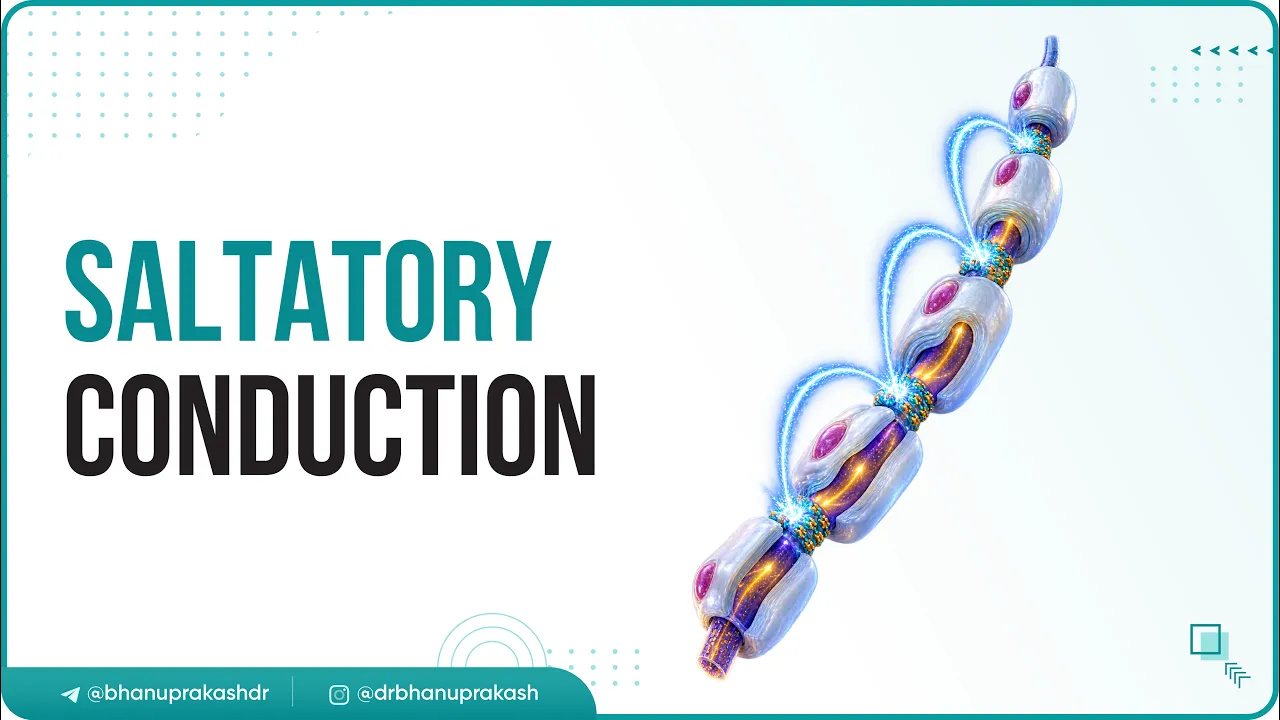
The speed of action potential propagation along axons is determined by axon diameter (larger diameters reduce resistance and increase speed) and myelination; myelin sheaths created by Schwann cells in the peripheral nervous system and oligodendrocytes in the central nervous system insulate axons, forcing action potentials to 'jump' between nodes of Ranvier (gaps containing voltage-gated sodium channels), a process called saltatory conduction that dramatically increases conduction velocity compared to unmyelinated axons.
Myelination and Saltatory Conduction in Neurons Explained
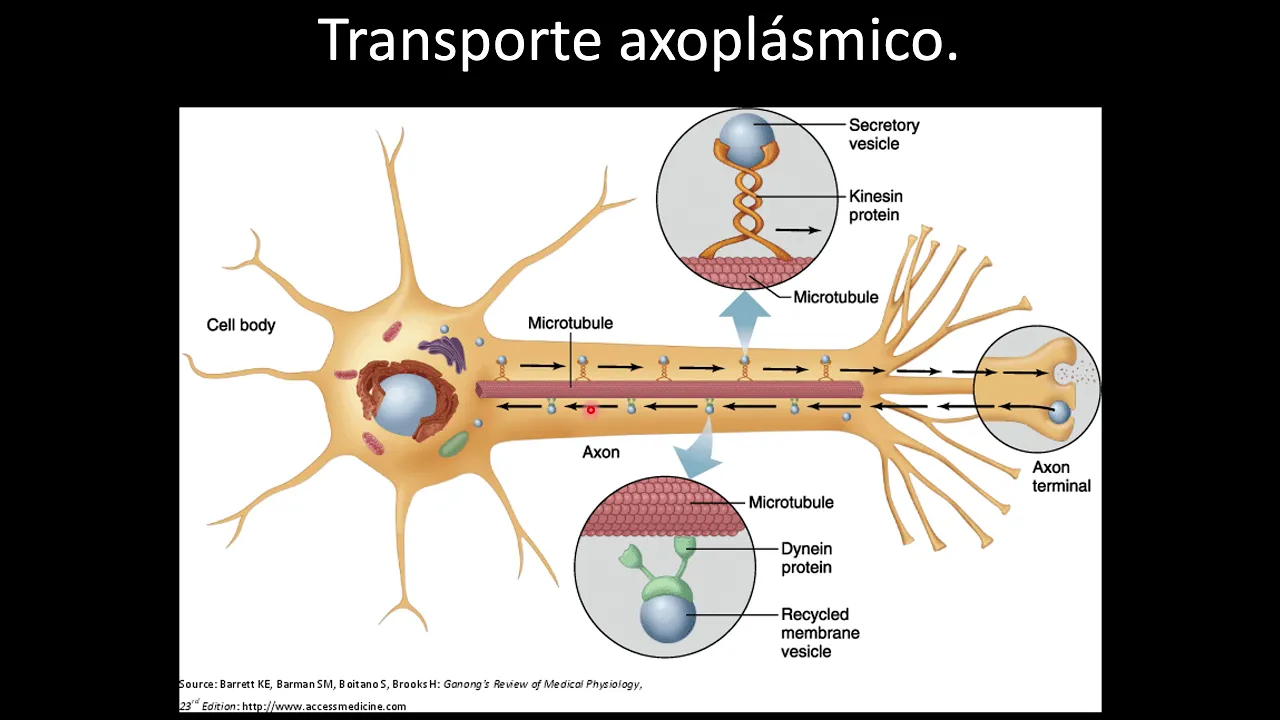
Added:The basic anatomical structure of a neuron, particularly the axon, soma, and the presence of myelin sheath and Nodes of Ranvier.
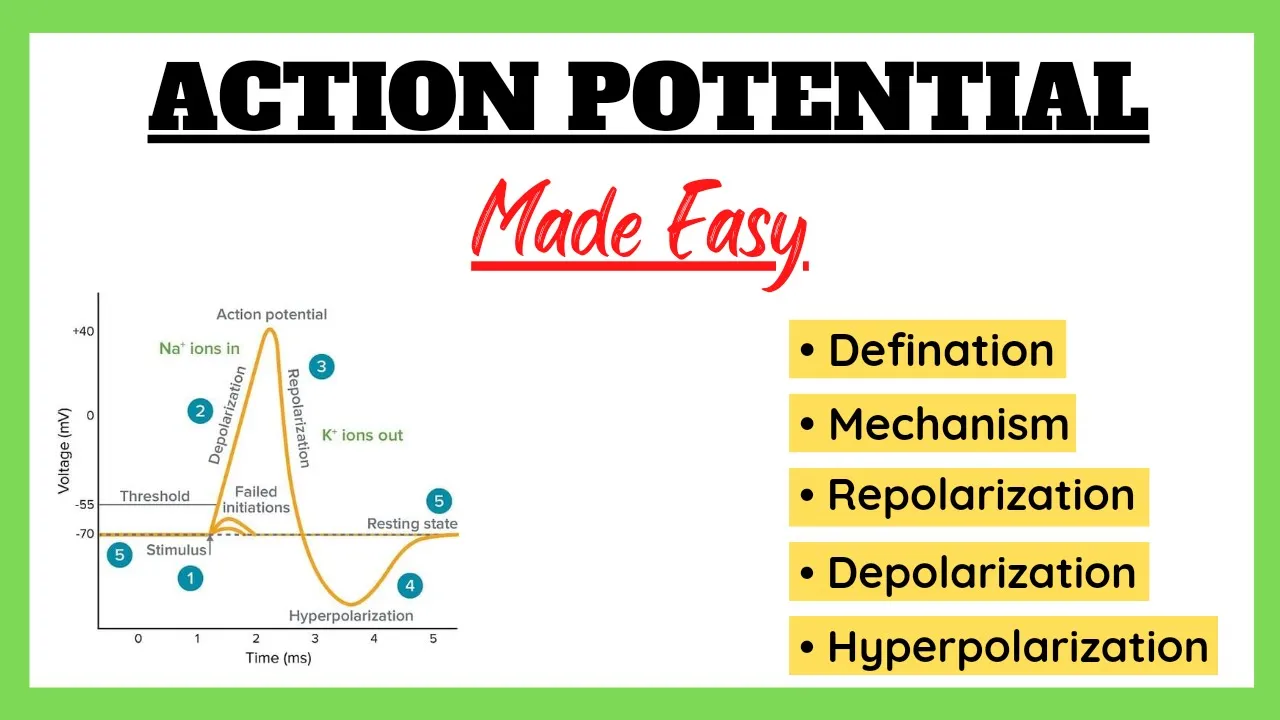
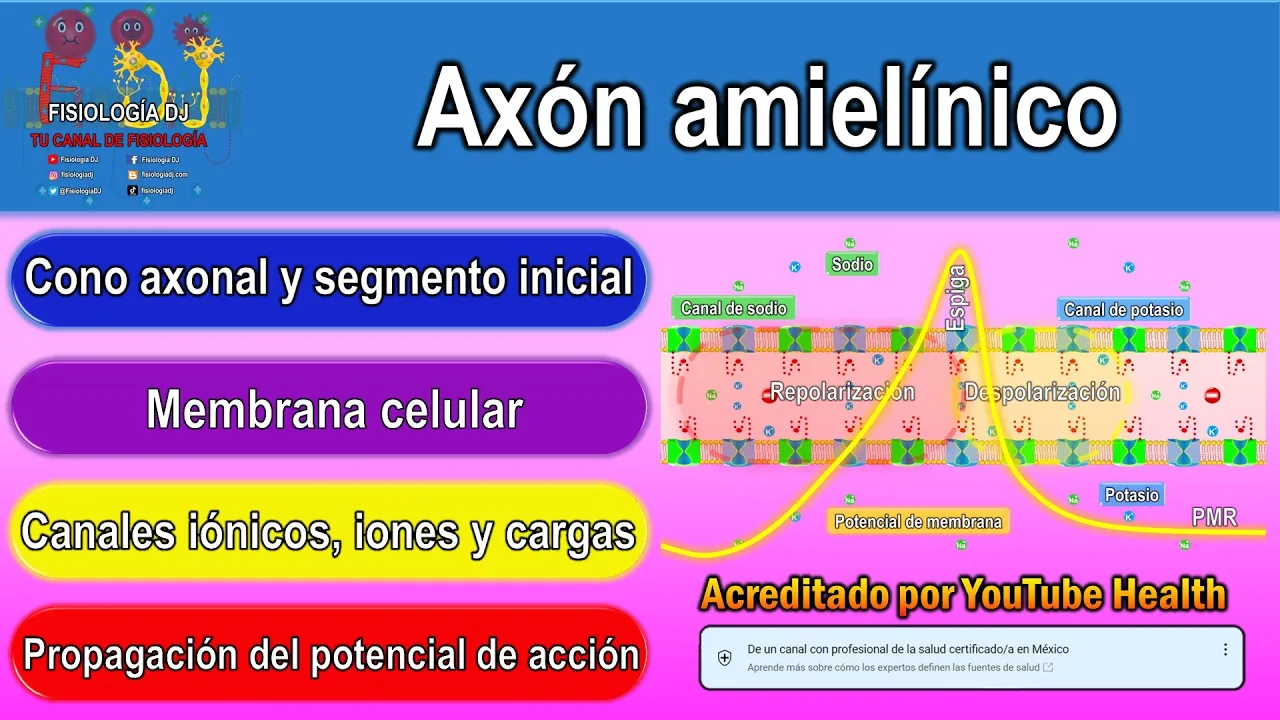
The mechanism of an action potential, including resting membrane potential, depolarization, repolarization, and the function of voltage-gated sodium and potassium channels.
The process of continuous conduction, which is how action potentials propagate along unmyelinated axons.
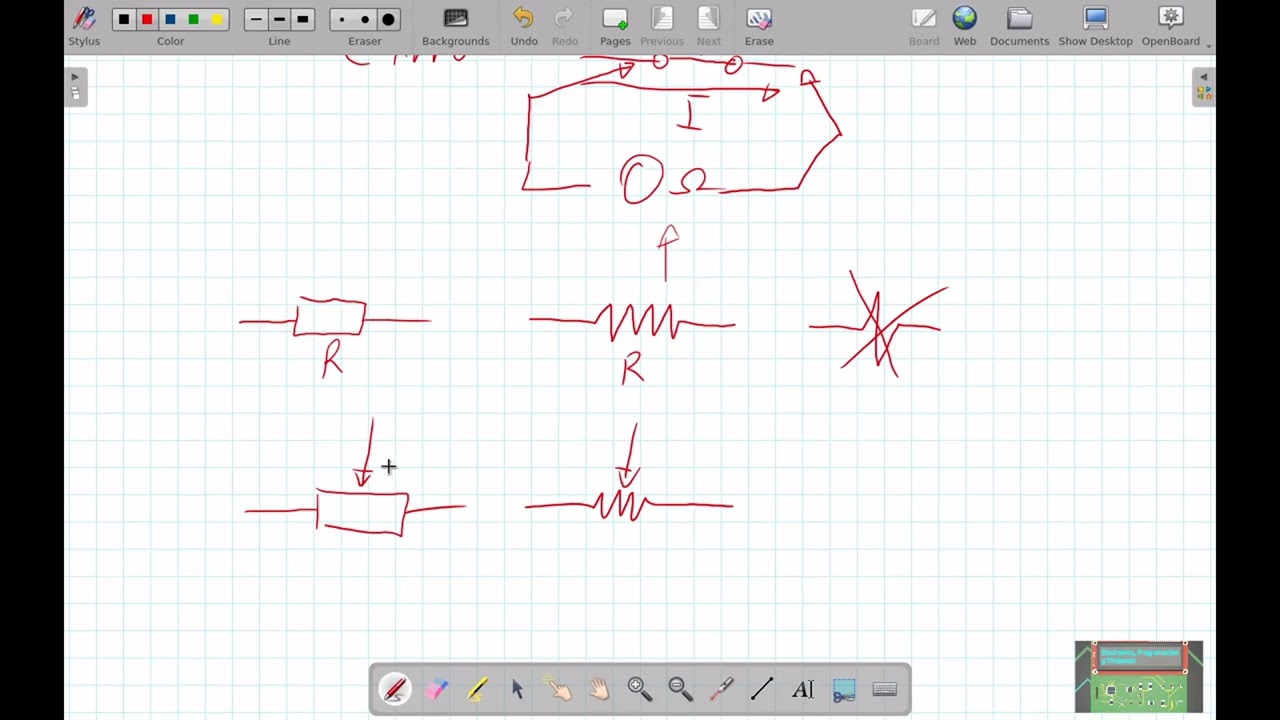
Fundamental physics concepts of electricity, specifically electrical resistance, capacitance, and current flow within a biological conductor.
The pathophysiology of demyelinating diseases, such as Multiple Sclerosis and Guillain-Barré syndrome, to understand how structural damage impairs neural communication.
Cable Theory in neurobiology, which provides a mathematical framework for analyzing how electrical currents decay and propagate along passive neuronal fibers.
An evolutionary comparison of nerve conduction velocity, contrasting vertebrate myelination with invertebrate strategies like the giant axons of squids.
Computational neuroscience modeling, specifically adapting the Hodgkin-Huxley equations to simulate saltatory conduction in myelinated nerve fibers.
68.8K views983likes11:06Original Release: 2014-09-19
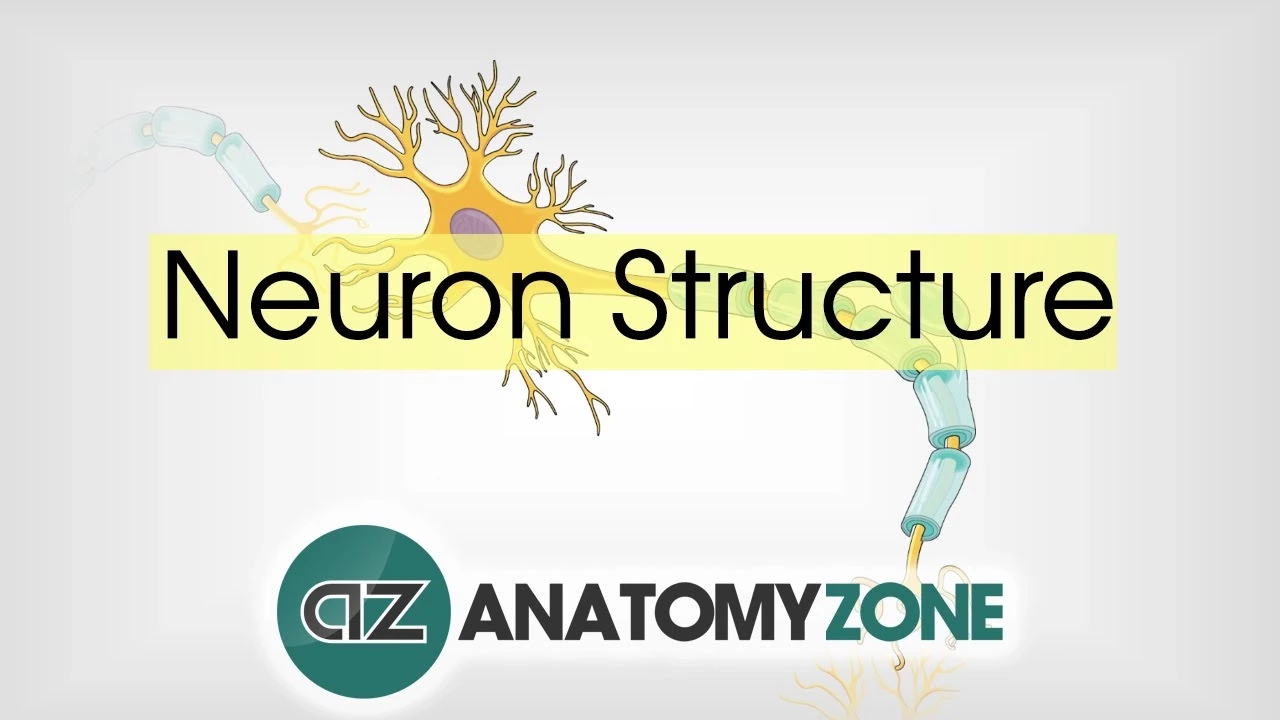
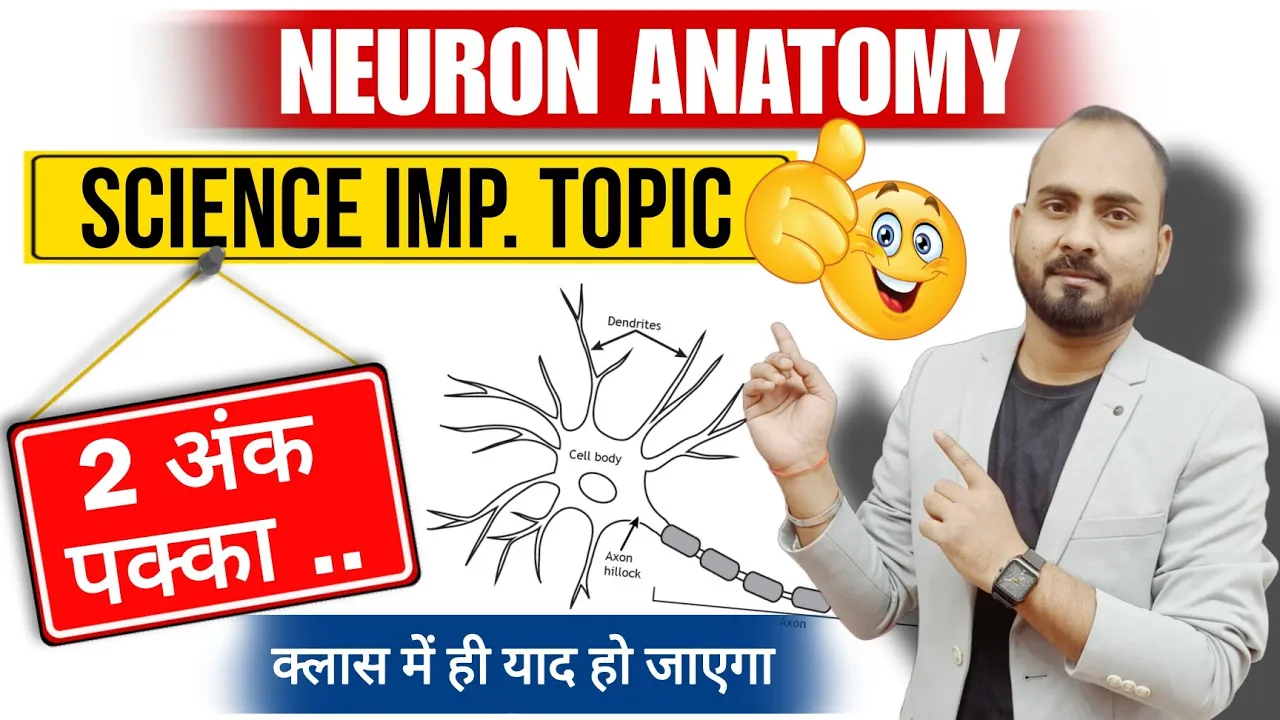
within our body there's a great number of different types of neurons that are found within the nervous system now these neurons differ from one another not only in their size and shape but they also differ in the speed at which they move the action potential along the axon of that neuron now some of these neurons in our body are capable of moving Action potentials at speeds over 100 m/s while other neurons are capable of moving Action potentials at speeds of only 1 m/s the question is what exactly determines the speed at which that action potential moves along the axon of the neuron within our body now let's begin by recalling some Physics now if we study the movement of the action potential along the axon from a physics perspective we see that the action potential is nothing more than a moving electric current and the axon is nothing more than a biological wire so recall that what determines the velocity with which the current moves inside the wire is the resistance of that wire to the flow of that current now resistance itself uh depends on three important factors so recall that the resistance of an electric current moving inside a wire depends on the crosssectional area area of that wire its thickness it depends on the length of that wire and it also depends on an internal property known as the resistivity which basically depends on the type of material that that wire is made of so this equation basically summarizes what we just said so this equation describes the relationship between the resistance as well as the length the area and our resistivity so the resistance of The Wire is equal to the product of our resistivity row multiplied by L the length divided by a it's crosssectional area and from this from this equation we see that if we increase the length we increase the numerator and so we increase our resistance and because the resistance is high that means the velocity will be low on the other hand if we increase the area the denominator will increase and that will decrease the resistance and so it will increase the velocity of that current inside that wire so this equation tells us that a wire that is thick and which is short will propagate the current at a higher velocity because the resistance will be lower now we can actually treat the axon as if it was that wire and we can treat the action potential as if it was that moving electric current in fact an action potential is a moving electric current so from this same equation we can see that an axon with a larger diameter will propagate that action potential much quicker because the larger diameter means we have a larger area and a thicker area and so that means a lower resistance at the same exact time if we decrease the length of that axon we decrease the L and so we decrease our resistance and we increase the speed of the movement of that action potential inside our axon and this is summarized in these two diagrams so in diagram a we have an axon that is thick and that is short in diagram 2 in diagram B we have a long axon that is very thin now from our disc from our discussion above we see that diagram be describes the axon that would ultimately propagate that action potential at a much greater rate than diagram B because in a we have a large area and a small length and that would decrease the resistance inside that axon now of course because the size of our body is limited that means the length and the thickness of that axon is also limited that is we can cannot actually make our axon too thick or Too Short or too long now instead of actually increasing the area or or um increasing the area or decreasing the length of the axon the way that our body uh increases the speed at which our action potential moves along the axon is by using a special type of insulating material so special types of cells known as gal cells found inside the nervous system cover the axon of the neuron with a special insulating material known as the milein and this myin or melin sheath basically increases the speed at which our neuron propagates that action potential as we'll see in just a moment so basically our nervous system can be broken down into two categories we have the central nervous system so that's the brain and the spinal cord and we also have our peripheral nervous system and both of these categories contain their own gal cells so Schwan cells are the cells found in the peripheral nervous system while a liod dentrites are those gal cells found in the central nervous system and what these cells do is they move around the axon of the neuron and they basically cover that neuron at specific sections with a layer of insulating myin now because the myin is insulating what that means is no action potential can actually be generated on the cell membrane where it is covered with that myin material now just because the cell membrane is actually covered with that myin material that does not mean that no electric signal can travel through that axon in fact even though this section let's say this section of the axon is covered with the myin our electric current can still travel through the cytoplasm through the cytool of our cell and that's exactly how that signal will get from one Noe to the next note as we'll see in just a moment so instead the current moves through the side of so of the axon until it reaches a part of the membrane that is not my mated and these gaps where we do not have any myelination as shown on this diagram and this diagram so these are the gaps and these are the gaps here these are known as nodes of Rania so basically at the nodes of Rania we do not have any myelination in fact we have a great number of sodium voltage gated channels and because we have such a great number of voltage gated channels sodium voltage gated channels at the nodes of Rania that will greatly increase our sensitivity to depolarization so to see what we mean by this let's take a look at the following diagram so this diagram basically describes how our action potential moves along an axon that is melinated as shown in this diagram so this is our cell body these are the ddes and this is our o um axon if we take a cross-section of this axon we basically get the following diagram so let's suppose we stimulate our axon hilock as shown and an action potential is generated at the axon hilock as it begins to move along eventually it gets to the cell membrane that contains the myelinated sheet and so as soon as it gets to that sheath no more action potential can actually track through the cell membrane instead that electric signal will propagate at a much quicker rate through the cop plasm of the cell so this is the cytoplasm this is the outside region these are the melinated sheets and these are the nodes of Rania remember the nodes of Ranier are gaps that occur at regular intervals between the segments of the milein sheath and these gaps contain a great number of sodium channels so as this electric current moves into this node what happens is this signals the depolarization process and the voltage gated sodium channels open up and our flux influx of sodium ions goes into our cell and that depolarize the cell and creates the action potential now that basically amplifies our electric signal and sends it through the cytoplasm because the action potential cannot travel through this melinated cell membrane and so it really quickly travels to the next node creates that depolarization creates that action potential once again that action potential cannot actually travel through the cell membrane and so the signal travels through the cytoplasm until it gets to the third node and this continues and this jumping proc process in which our action potential jumps from one node to the next node to the third node this process is known as saltatory conduction and saltatory conduction greatly speeds up the movement of our action potential because instead of the action potential actually moving through the entire membrane which would slow it down it basically moves only through these certain sections known as as Den note of Rania and this greatly speeds up the process of the of the propagation of that action potential so on top of increasing the thickness of our axon and decreasing the length of that axon another way that our body can speed up the propagation of that action potential is by using these cells gal cells to myelinate or insulate certain sections of the aile and that leads to this propagation mechanism known as saltatory conduction
Up Next

48:17
Neurotransmitter Release and Synthesis Explained
@jasonpitt6503
270 views•2023-09-06
21:55
Deciphering Neural Circuits Controlling Anorexia in Mice | Richard Palmiter
@AllenInstitute
2.3K views•2011-10-10

7:45
Types of Neuroglia (Glial Cells) | CNS & PNS Support Cells Explained
@AKLECTURES
76.8K views•2014-09-20

13:03
How Exercise Benefits Your Brain: Science Explained
@TED
11.4M views•2018-03-21
Related Study Plans & Knowledge Roadmaps
Structured learning paths in Neuroscience
neuroscience
Appetite Regulation: Brain Circuits & Hormones
01Foundations of Endocrinology and Brain Anatomy
02Introduction to Energy Homeostasis
03Peripheral Signals: Leptin, Ghrelin, and Insulin
+ 2 more learning modules
14h5 modules
Explore Roadmap
neuroscience
Neuroeconomics: Value, Risk & Brain Mechanisms
01Foundations of Neuroscience and Brain Anatomy
02Introduction to Neuroeconomics and Subjective Value
03Dopaminergic Prediction Errors & Reinforcement Learning
+ 3 more learning modules
18h6 modules
Explore Roadmap
neuroscience
Spatial Navigation: Cells, Grids & Brain Maps
01Foundations of Brain Anatomy and Memory
02Place Cells and Head-Direction Cells
03Grid Cells: The Brain's Coordinate System
+ 2 more learning modules
12h5 modules
Explore Roadmap
neuroscience
BCIs: Neural Decoding & Prosthetic Control
01Neuroscience Foundations: How the Brain Signals Intent
02Signal Acquisition: Recording the Brain's Activity
03Neural Decoding: Translating Brain Waves into Data
+ 2 more learning modules
25h5 modules
Explore Roadmap