

![Erregungsweiterleitung an der Synapse / Chemische Synapse [Neurobiologie, Oberstufe]](https://i.ytimg.com/vi/g2vKt1zT6tM/sddefault.jpg)

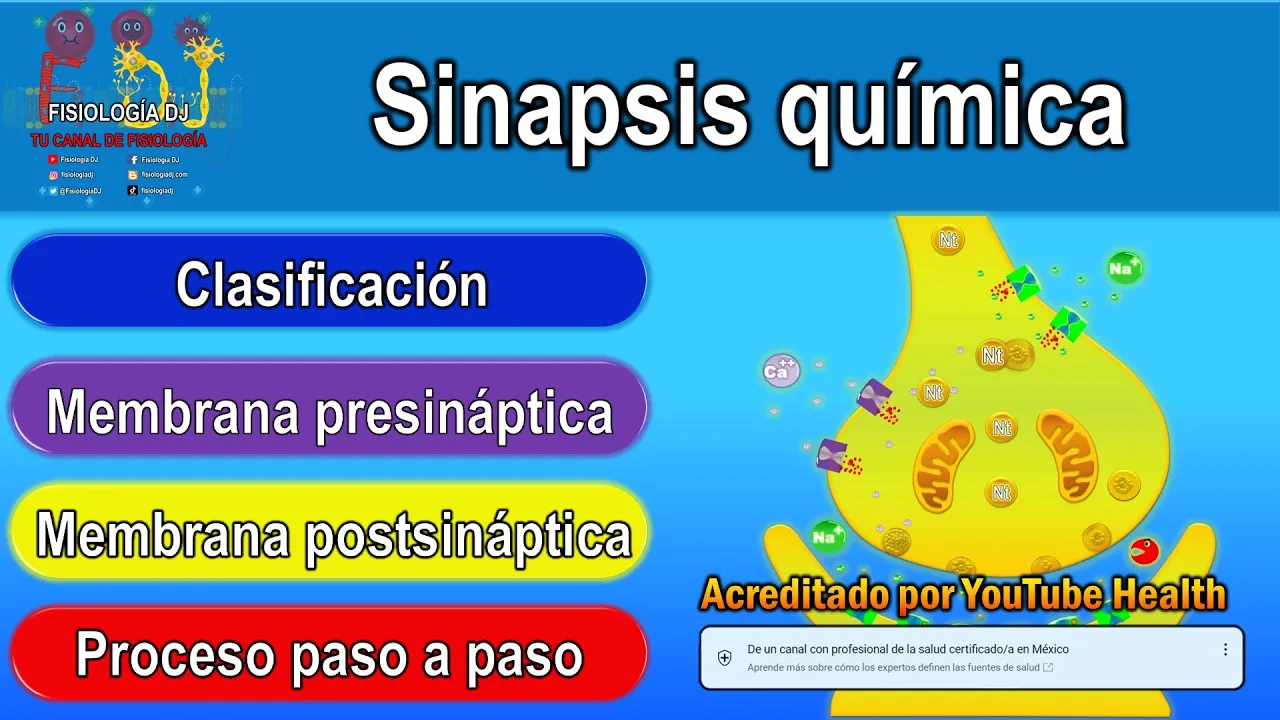

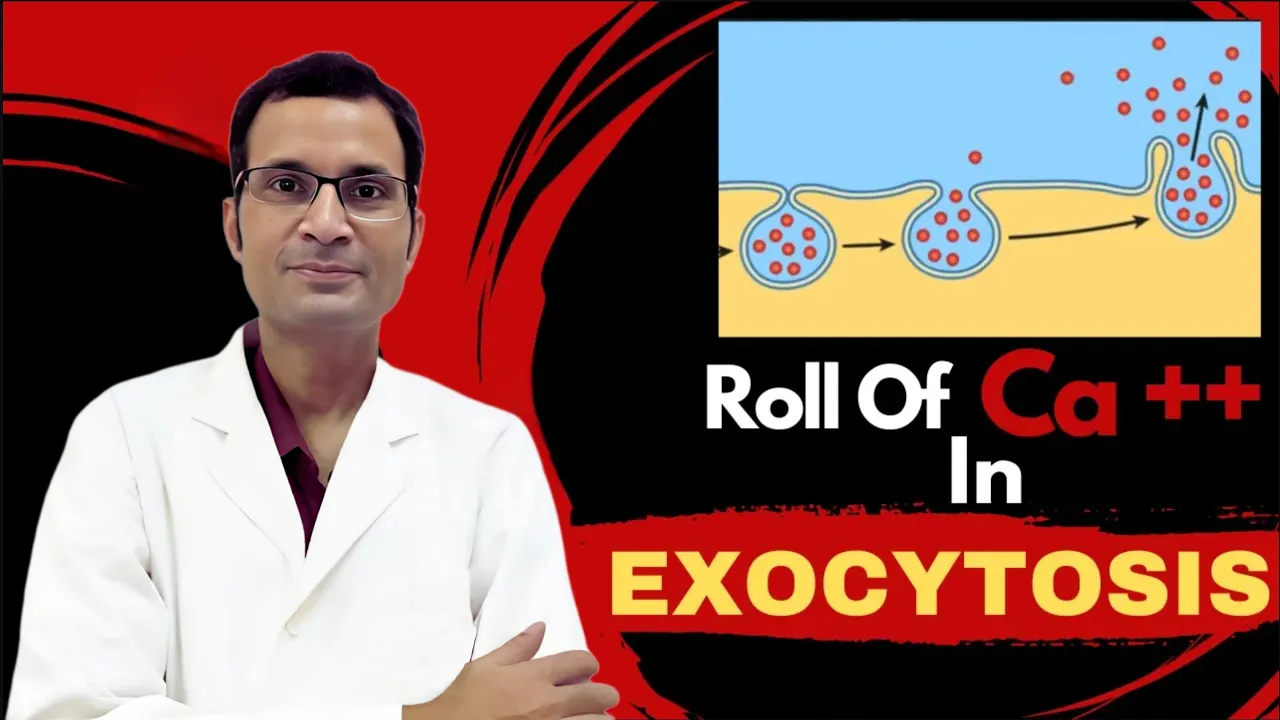
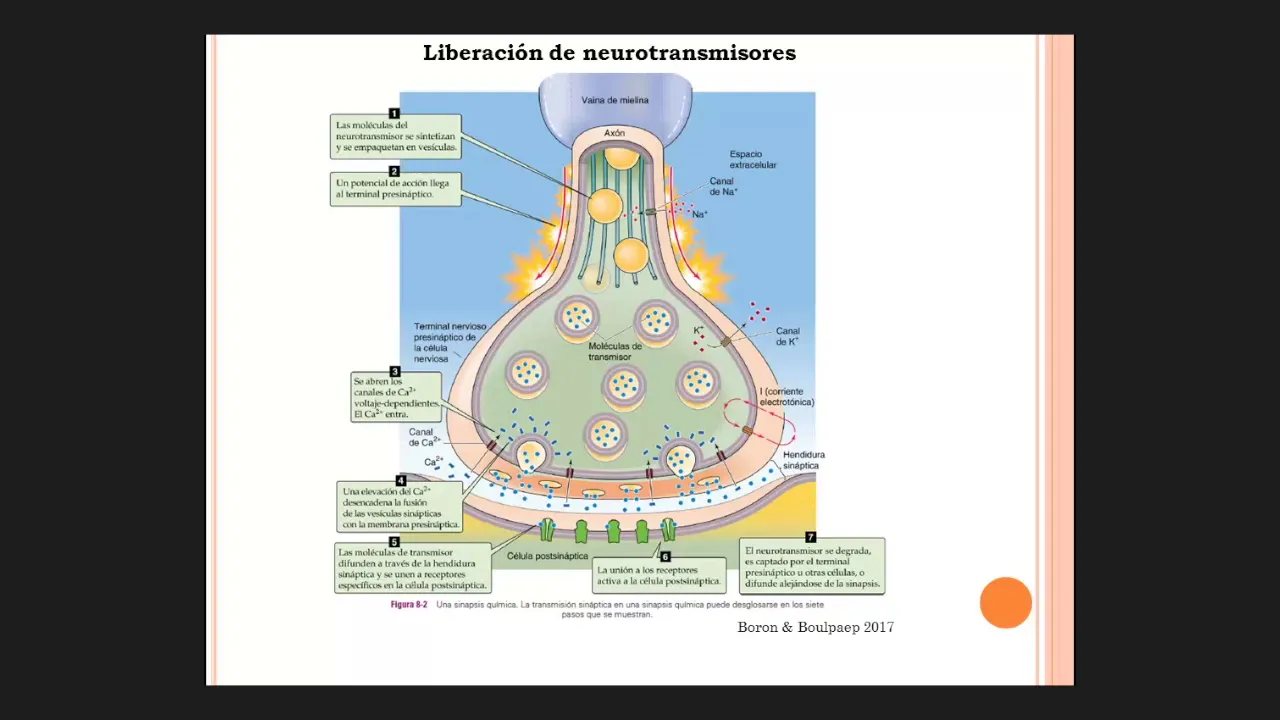















Neurotransmitter release is triggered by calcium influx through voltage-gated calcium channels at the active zone, which activates synaptotagmin to destabilize membranes and stabilize the SNARE complex for vesicle fusion; classical neurotransmitters (glutamate, GABA, glycine, acetylcholine, monoamines) are synthesized from amino acids or metabolic precursors and cleared via transporter proteins or enzymatic degradation, while unconventional neurotransmitters (neuropeptides, adenosine, endocannabinoids, nitric oxide) use alternative release mechanisms and have distinct signaling properties.
Neurotransmitter Release and Synthesis Explained
Added:Basic anatomy of a neuron, including the axon terminal, synaptic cleft, and postsynaptic membrane.
The mechanism of the action potential, specifically how depolarization reaches the axon terminal.
The role of voltage-gated calcium channels in intracellular signaling and vesicle fusion.
Fundamental cellular transport mechanisms, including endocytosis, exocytosis, and active transport.
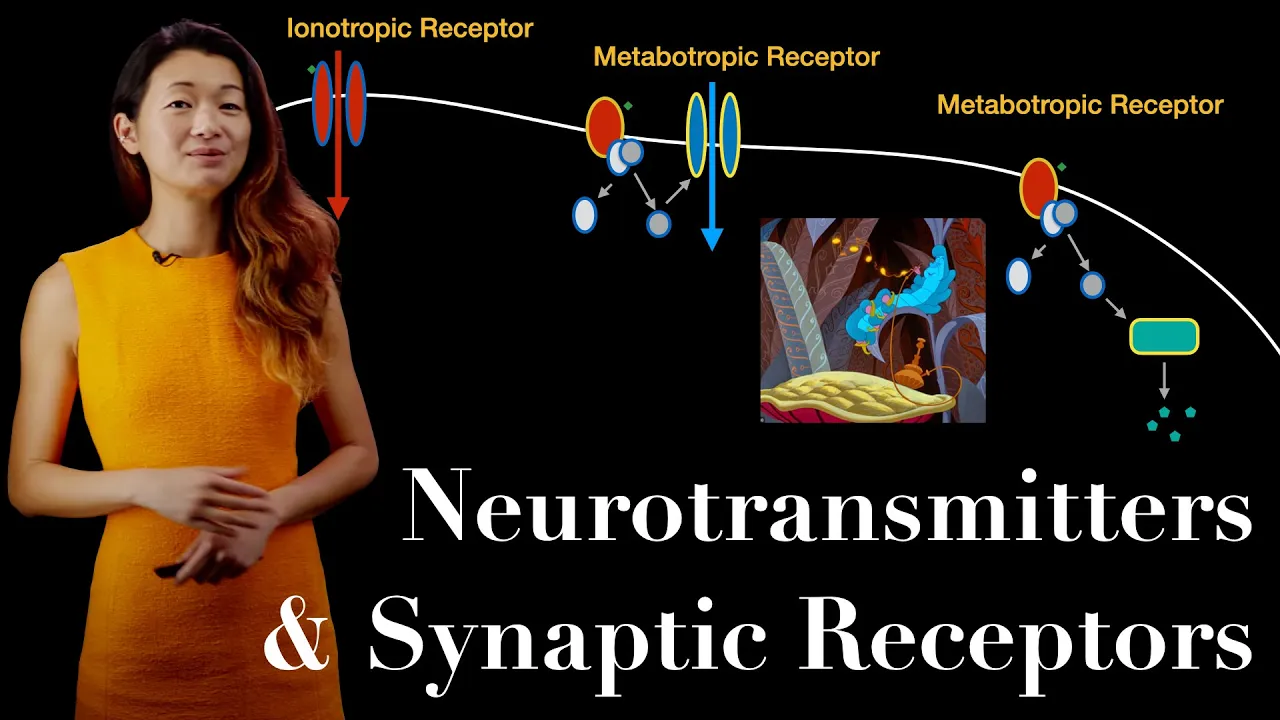
Postsynaptic receptor activation, comparing ionotropic (ligand-gated) and metabotropic (G-protein coupled) receptors.
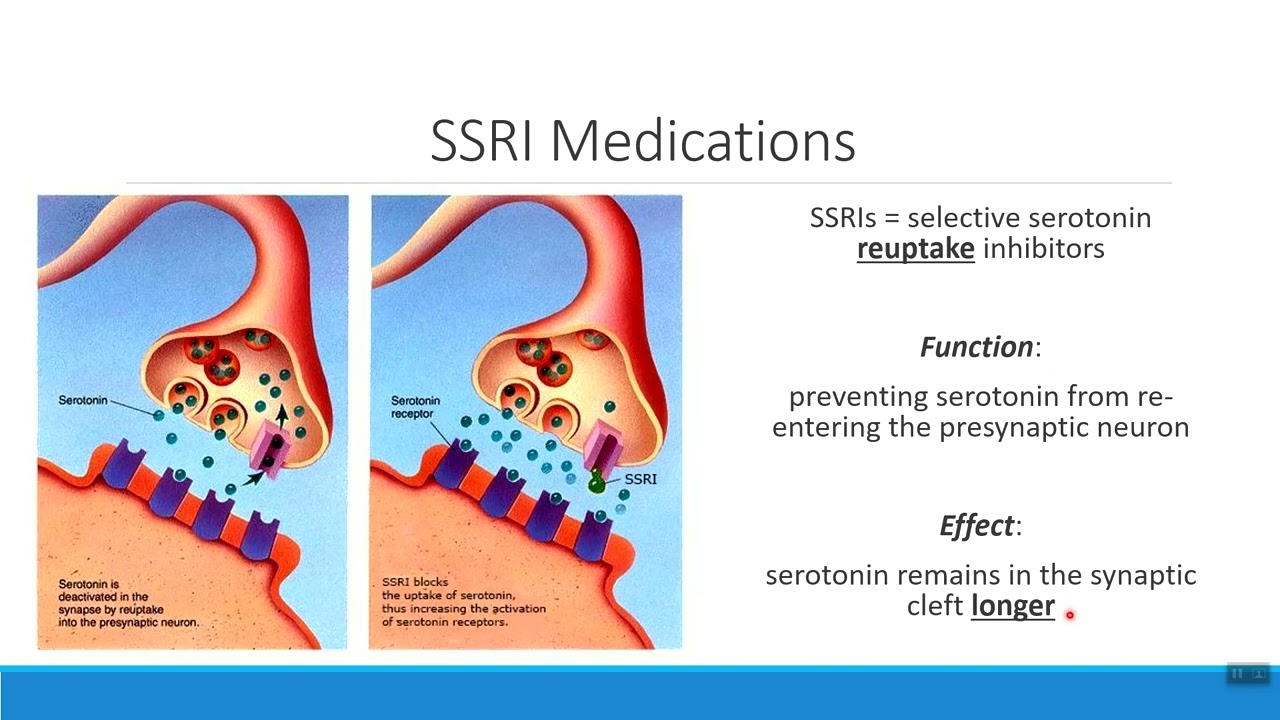
Neuropharmacology and drug mechanisms, such as how selective serotonin reuptake inhibitors (SSRIs) or cholinesterase inhibitors affect cleanup pathways.
The cellular basis of synaptic plasticity, including Long-Term Potentiation (LTP) and Long-Term Depression (LTD).
Pathophysiology of neuropsychiatric disorders linked to neurotransmitter dysregulation, such as Parkinson's disease, depression, and schizophrenia.
270 views0likes48:17Original Release: 2023-09-06
this lecture is about neurotransmitter release we're going to cover how an action potential leads to the release of neurotransmitter we'll review the major classical neurotransmitters that is the ones that you'll typically encounter and then we'll go through a few unconventional transmitters the discovery of these unconventional transmitters caused us to change the way that we think about neurotransmitters as a whole and in general what defines a neurotransmitter so the whole purpose of bringing our membrane potential from negative to positive and conducting that action potential down the axon is to trigger the release of neurotransmitter so the action potential is mostly about sodium and potassium but neurotransmitter release is all about calcium now first let's consider what is a neurotransmitter and what constitutes a neurotransmitter has changed to some degree over the years uh again with discovery of unconventional transmitters what seems to be pretty good criteria for me would be that neurons make it so it can't be much of a neurotransmitter if neurons don't make it neurons release it in an activity dependent manner um that doesn't mean that they all use the same calcium coming into an axon but there should be some activity that triggers release finally it needs to bind to some Target it could be on a membrane classically that's what happens it could be inside of a membrane in the case of hormones and it should cause some kind of an effect on that cell now there are some older ideas that we had to kind of kick out of the window um for example we used to think that neurotransmitters had to be stored in vesicles like they are in this cartoon and that's true for classical neurotransmitters but not all neurotransmitters get stored in a vesicle some are hydrophobic in that case you can't put them in a vesicle we used to think that the neurotransmitter has to diffuse across the synaptic cleft and bind to some protein on the surface of the postsynaptic site about 20 nanometers away well we know that hormones can go through the membrane and then bind to intracellular targets there's also volume transmission where neurotransmitters can diffuse away so again this rule had to be thrown out and then finally there needs to be some clearance mechanism well nitric oxide kind of broke that one because it just spontaneously degrades classical neurotransmitters have a transporter protein to clear it up some enzyme to break it down or both not all neurotransmitters do though but we'll hang out in the world of classical neurotransmission because that's mostly what the brain uses in that case we're going to need to put our neurotransmitter into vesicles and those vesicles exist in two sites they're exactly what they sound like there's the readily releasable pool these are found very much near the active Zone so the readily releasable pool is a pool of vesicles that can be released readily hence the name so these are at what we call the active Zone or the active site and this is the area where the activity takes place no surprise there there's only a handful of vesicles in the readily releasable pool I guess they should have some neurotransmitter in them the other pool that we have is what we call the reserve pool this is the pool of vesicles that are held in reserve so at some point at some site a little bit away from the active Zone because we're not trying to release these we got a couple hundred of vesicles in the Reserve pool so we got a pool that's readily releasable and we got a reserve pool this is a place for vesicles to go to right after they're born that is recycled get filled up with some neurotransmitter and then once we deplete our readily releasable pool as we start fusing some of these we can then pull new vesicles so this is our backup we have a handful that we've readily released and we got a few hundred that we can then replenish that handful with this way we always have a few vesicles docked and ready at the Active Zone to spit out some neurotransmitter now what causes neurotransmitter release is the entry of calcium that's what makes the Actos own active it has voltage gated calcium channels so not only do we have our readily releasable pool we also have voltage-gated calcium channels that are exactly what they sound like voltage-gated that means what causes them to open it's a change in membrane potential in this case it's depolarization from the action potential so what turns them on the action potential where do they move calcium now you probably remember the calcium reverses at like a positive 125 millivolts or something like that which is well above the spike of the acting potential so when the action potential arrives that Peak is somewhere about positive 30 millivolts something like that that means we have a full 75 millivolts of driving force to push calcium into the cell and that is exactly what happens when we depolarize those voltage-gated calcium channels present at the Active Zone open up and calcium Flows In too many arrows giving us a brief increase in intracellular calcium that's what it's all about if we bring in calcium we release neurotransmitters if we don't we probably don't calcium is critical and we can see that on the bottom in these data so have a look at this what it's showing you is the excitatory postsynaptic current generated by stimulating a bunch of axons and recording it from a postsynaptic cell that dotted line there is not the reference line that's showing you the size of the excitatory postsynaptic occurrence if you block voltage-gated calcium channels in this case with cadmium so this is a little cation that's going to just stick into the calcium channel and prevent calcium from entering when you do that that normal postsynaptic depolarization that they're measuring goes away and you get nothing so no calcium no neurotransmitter release no postsynaptic response alternatively you can do some really Nifty stuff like just deliver calcium here let's get around all the calcium channels and just dump calcium into the presynaptic site when you do that you trigger neurotransmitter release in the absence of action potentials so it's all about calcium but hey let's not forget calcium can kill you so the way that we get around this is by concentrating our calcium channels at the Active zone so it's not that the whole cell fills up the calcium is then we get these little calcium micro domains little spikes and that's shown on top in this illustration the pinkness is showing you the amount of calcium and what you'll notice is that it's really concentrated and those little little dots that they have those are their calcium channels they're showing you that not all of them open up everything's probabilistic so a lot of them open up and you get these little pink domes so little areas where the calcium concentration goes from like 0.1 micromolar to like 100 micromolar so about a thousand fold increase but just right here at the Active Zone so this is where I get my burst of calcium not so much up here right at the Active Zone outside of the active Zone you see a very small increase it goes from 0.1 micro molar to 2.11 so not a big change definitely a change ten percent change but that's not going to get you anywhere so it's not that the whole terminal is filling it with calcium if we want to do that and we will later we need many Action potentials to overwhelm the calcium buffering system like all the mitochondria that are present here and allow calcium to get to extra synaptic sites but a good old classical neural transmission all of the action is at the Active Zone so what's this calcium doing for us besides potentially killing us if we don't clean it up well it's triggering the release of neurotransmitters it is doing that by affecting something called The Snare complex okay so let's get in a little bit more detail here what's really going on at the Active Zone okay here's our active Zone we got ourselves a vesicle right here and it's held in place by a few proteins there's what we call V snares these are snares on the vesicles hence the name synaptobrev fin with a v in it is the V snares that's how I remember that one so it says an alpha Helix going through the membrane and then another one that it's going to contribute to the snare complex then we have tea snares it is Target snares and those are embedded in the Target membrane one of these has a good T sound in it so it's syntaxin and again one alpha Helix for this membrane and one alpha Helix for the snare complex and then to snap all this together we've got snap 25.
25 because it's 25 kilodaltons inside but this is another t-snare and again snaptube red Vin or the v-snare so collectively we have these four Alpha helices and I want you to think of this as an inter molecular handshake so they're holding hands but in this case Alpha helices good enough for our proteins there so that forms our snare complex but the snare complex isn't really that tight yet this is a loosey-goosey limp handshake but we're going to tighten this up now the reason that it's a little Loosey Goosey and Limp is that there are other proteins here other accessory proteins kind of like we have accessories on our fingers think of these as big gaudy rings that get in the way so if you shake someone's hand they have a big gold ring on there or something it kind of hurts so that's why we have such a weak handshake it's not that we can't grab strongly it's that we don't want to because we have these weird little nasty accessory proteins like complexion that one's going to come up in just a little bit so step one we got to get an action potential so that we get calcium influx so we've covered that now what well one of two things maybe both the first thing that calcium does is bind to synapotagments so this is always true so we'll say calcium activates synapto tag men tag you're it so we're tagging the synapse to release neurotransmitters Santa tagman is another protein stuck into the vesicle so let's give us a synaptotagment again tag your it okay what's going on here well one option stab the membrane so once it's bound to calcium what synaptotagment can do is wiggle its way into the membrane this does a couple of things it pulls the vesicle closer and it destabilizes the membrane let me just get a quick snare complex up here so we have that but what happens is calcium bound calcium right there calcium balance synaptagmin stabs the membrane this destabilizes the membrane making it much easier to break apart when the snare complex zippers up so the membrane is incredibly stable because there's a limited bilayer it has a hydrophobic core that we cannot expose to water unless we dump a bunch of energy in to break apart the membrane that's why it's a lipid bilayer so if we're going to fuse two lipid bilayers together we've got to break the bilayer apart and that is not thermodynamically favorable so what we do is stab the membrane and weaken it this facilitates Fusion between my synaptic vesicle membrane and my pre-synaptic terminals membrane because what we're trying to do is break both of these apart and snap them together making one continuous sheet of membrane so neurotransmitters diffuse away it's a lot easier to fuse your membranes if you destabilize them so that's the first thing snaptagmin does stab insert into the membrane to destabilize it the next thing so we're going to stab the membrane and then we're going to stabilize the snare complex okay so we destabilize the membrane what else do we have to do we need to get rid of our big body rings snap to tagman to the rescue so not only will it cut the membrane open for us once it binds calcium keep in mind there's many copies of synapticmin it comes over and kicks out the accessory proteins so step five here stabilize the snare complex in this case we're going to remove complexion good it's written on this slide okay so we fire an action potential that depolarizes us activate our voltage getting calcium channels to give us the calcium influx calcium then binds to synaptotagment turning it on Snapchat tagman stabs the membrane making it easier for the two membranes to fuse then it stabilizes the snare complex once the snare complex zippers up tightly that's going to release a whole lot of free energy there's my lightning bolt there to drive this thermodynamically unfavorable process of fusing two membranes both of them have that hydrophobic core at some point this will be exposed to water we have to organize the water around it water doesn't like to do that that's where the snare complex comes in pull the vesicle closer and deliver enough free energy so we can make sure water stays heavy while we break and remake our membranes there and lo and behold within about oh 200 microseconds or so of that action potential firing we have step six vesicle Fusion neurotransmitter release once fused that neurotransmitter can diffuse out and bind to some receptor and cause something to happen now it may be all about membrane moving around there might be some little transitional pore where actually the snare complex creates a hole in the membrane essentially a neurotransmitter Channel where neurotransmitter can flow out we don't know again this only takes 200 microseconds so it's kind of hard to catch this in action now of course we're going to have to recycle look we just fused this vesicle with the membrane two things are happening the membrane's getting bigger and we're running out of vesicles we can fix both of those problems by pinching off some new membrane that's shown in the cartoon on the bottom there pinch off some little bits of membrane new vesicles and fill them back up just that simple and we gotta do it because we only have a finite number of vesicles let's say about in this case 270 vesicles is on the slide we release one or two of them every time we fire an action potential it's not going to take long to run out if we fire at 10 Hertz which is absolutely typical for neurons we've got about 20 seconds of life and that's just not long enough in my opinion this is why we recycle ladies and gentlemen so that we don't run out of vesicles and our neurons can continue to communicate we won't worry about the neurobiology of vesicle recycling but if you really care you know where I sit okay so there's how neurotransmitter release occurs it's all about calcium coming in turning on Snap to tagmin and then tag we stab the membrane and get rid of the accessory proteins so the snare complex can form now normally we're going to be dealing with the neurotransmitters that we're going to cover here the classical neurotransmitters and almost all of them are derived from an amino acid others are a couple steps away from an amino acid your bread and butter neurotransmitters in the central nervous system are glutamate for excitation and then Gaba or glycine for inhibition Gaba is more used in the forebrain so like the cortex where the magic happens thalamus down the brain stem and spinal cord glycine predominates but they're both used to some degree everywhere glutamate is the one and only the greatest excitatory neurotransmitter in the central nervous system now glutamate is itself an amino acid so is glycine Gaba just one step away you can turn glutamate into Gaba it's a single process I drew the the structures out for you over there in case you care about that so we got glutamate to excite us what do we use to make glutamate well we can use another neurotransmitter glutamine or we can use a component of the TCA cycle Alpha Keto glutarate so either we're robbing the cell of amino acids or we're robbing the cell of the substrates to make EDB what we should be getting here is that neurotransmitters ain't cheap so the brain is going to use an awful lot of energy as a result Gaba glutamate they exist in equilibrium so you can make Gaba from glutamate one-step process you can also replenish glutamate from Gaba there's something called the gabuchant I've shown that's the thing down on the bottom I think you have a transaminase does don't worry about the details but know that these two neurotransmitters exist in equilibrium now do you make Gaba it depends do you have glutamic acid decarboxylase if so you do and you're in inhibitory neuron if you don't express Gad you don't make Gaba and you're excitatory the bread and butter neurotransmitters because they are either amino acids or very close derivatives are cleaned up through transporter proteins we don't see enzymatic degradation for the bread and butter neurotransmitters we're just going to recycle these because we use these all the time don't break them pick them up give them a little massage you know form glutamine and then send them back over here we're looking at a little cartoon representation of this process so we release neurotransmitter this probably deserves its own little cartoon so we now know how we release neurotransmitter now what do we do to clean it up we've made a mess so we'll get our good old synapse up here got to get our readily releasable pool and who's the lucky winner this one right here has fused because we fired an action potential and now we've released a bunch of glutamate or Gaba I don't care which one doesn't matter it's going to go over here and do something on the postsynaptic side of things we don't care about that today but we will very soon we need to clean this up um heck let's call it Gaba this way we have an extra step here I think I might have Gabby there there you go look at that okay Gaba Transporters are going to come to the rescue here and one of the major players in Gaba cleanup would be Astro sites so they have a transporters tax uh maybe get three or something like that doesn't matter they got Gaba Transporters so what that's going to do is clean the Gap up by bringing it into the astrocythe removing it then from the synapse okay once we're in there as Gaba well if we just tried to send this back over to the neuron it's still gabum it's still an inhibitory neurotransmitter and I'm not trying to inhibit this neuron I want it to do its own thing I want to be happy you know follow its dream so what I'm going to do is use my good old Gaba shunt and I'll have Gaba trans aminase gravity uh turn Gaba into now glutamate okay let's make it a square so it's a different shape we'll then convert that glutamate to glutamine using good old glutamine synthetase and now we've got a different amino acid in this case glutamine but guess what we don't use glutamine as a neurotransmitter so we can spit that out all day so let's get another transporter so we've got this uh amino acid transporter here that spits glutamine out and then another transporter on the neuron to take it back in okay we've got glutamine floating around here what can we do now well let's turn it into glutamate and then back into Gaba and look at that we've recycled Gaba without running the risk of stimulating any Gaba receptors this is what we call the Gaba glutamate glutamine cycle it's really Nifty aside from bread and butter let's put a little meat or cheese or fruit or something like that in the meal can't just have carbs and fats as much as we'd like another commonly used neurotransmitter is acetylcholine now this is the bread and butter transmitter if you were to be an insect and since none of you are it's not your bread and butter but we still use it we use it in the peripheral nervous system um as well as Central it's widely used in the peripheral nervous system to control our muscles and in the autonomic nervous system in the brain we have a few populations of cholinergic neurons that are pretty darned important for learning and memory keeping us awake so how do we make acetylcholine well this thing isn't a neuroism I'm sorry isn't an amino acid but it is derived from acetyl COA which is used in making ADP so it's still expensive even though it's not an amino acid it's still expensive so how to make good old acetylcholine it does begin with an A but I want it over here so we start with an acetate get a choline slap them together with chat choline acetyl transferase but this is an equilibrium so acetylcholine can be broken down and that's accomplished by colonoster races so now we actually have enzymatic regulation and in fact that's all we have for acetylcholine colonester raises typically found at the postsynaptic membrane are there to rapidly degrade acetylcholine back into an acetate and a choline we'll pick that choline up back into the neuron as the cartoon showing us here and we'll let astrocytes clean up the acetate no big deal cholinergic neurons are found in a few places in the brain as opposed to gabaergic glutamatergly Synergy they're pretty much everywhere cholinergic neurons are pretty big in the periphery absolutely so any lower motor neuron uses acetylcholine preganglionic neurons and then the postganglionic parasympathetic neurons so on the periphery acetylcholine is where it's at in the central nervous system we do find some cholinergic neurons but they're in select places for example in the ponds the pons has a big collection of cholinergic neurons that help wake us up so they're part of the reticular activating system we also find cholinergic neurons in the forebrain so an area called the basal forebrain that's at the bottom of it these are really important for learning these die off in Alzheimer's disease as you likely remember from last semester speaking of learning we also have memory so in the septal nucleus or the medium medial septum that's what's written over there this releases acetylcholine into the hippocampus exciting it and making it easier for us to learn and remember things monoamines are a little rarer um kind of like acetylcholine this is a broad class of neurotransmitters two big distinctions we have would be the catecholamines that includes dopamine norepinephrine and epinephrine and then serotonin as you can see from this cartoon schematic their synthesis is pretty similar um at least until we get to you know something like once we get into norepinephrine epinephrine but both of these start with an amino acid in the case of catecholamines tyrosine in the case of Serotonin tryptophan that amino acid is then hydroxylated that is we had a hydroxyl group onto it so tyrosine hydroxylase hydroxylase tyrosine tryptophan hydroxylase hydroxylase tryptophan okay we haven't made a neurotransmitter yet we've made the precursor so either dopa or 5-hydroxy tryptophan now we're going to start making neurotransmitters and it's the same enzyme in both of those Pathways how nice what we need to do now is remove a carboxylic acid so the enzyme aromatic L amino acid decarboxylase removes that carboxylic acid giving us dopamine from dopa and serotonin from five hydroxytryptophan we're all done with serotonin with the catecholamines we got a little bit to do and it's a little bit strange here foreign so if you want to make norepinephrine you got to make dopamine first and you have to then put that dopamine into a vesicle because it's only in vesicles that we find dopamine beta hydroxylase that's the enzyme that makes norepinephrine so that's all done inside of vesicles that's not so bad though it is kind of bad if you want to make epinephrine because unfortunately the synthetic enzyme phenylethanolamine and methyl transferase it's unfortunate it has that name but it's also unfortunate that it's in the cytoplasm it's back out here ah that means if I want to go from norepinephrine to epinephrine I have to first release norepinephrine and then take it back up through some transporter all before it gets degraded so a little tricky making norepinephrine and epinephrine the good news is very few neurons use epinephrine because it's kind of a hassle why do that epinephrine norepinephrine they bonded the same receptors pretty much just use norepinephrine so that's mostly what we'll see in the central nervous system of course we do find a little bit of adrenergic neurons in the periphery particularly in the adrenal glands okay so dopamine even more restrictive than acetylcholine in terms of what neurons make it you find only a couple of nuclei that have dopaminergic neurons and they're both in the midbrain so there's the substantia that creates the Nitro striatal system as shown over here it goes from substantia to the basal ganglia really important if you want to move dopamine is not only there to make us move it also affects our mood so that's the mesolimbic system that goes from the ventral tegmental area to the limbic system so structures like the nucleus accumbens determine reward the amygdala that plays a role in our emotion particularly negative emotion and the hippocampus for memory so dopamine has all some really big non-conscious effects changing how we feel how driven we are to do something it also impacts the cortex as well in this case the meso cortical so meso in both cases is the ventral to mental area the mesolimbic targets the limbic system mesocortical system targets the cortex here primarily prefrontal cortex is dealing with some short-term memory and planning and problem solving so it regulates our Behavior very simply in that Nigro striatal system do you do something or not but it also regulates what you choose to do via the mesocortical and mesolymmic systems as well the noradrenergic neurons are again confined to the brain stem but in this case um mostly in the pons so there's a couple different nuclei in the ponds there's the locus ceruleus and the lateral take mental area lateral Tech mental area also extends into the medulla but down there in the brainstem that's where all of our noradrenergic neurons live in the brain we also find a population outside of the brain right that's listed there postgame Valley sympathetic but if you want to get norepinephrine anywhere in the brain it's got to come likely from the pons and these neurons project all over and it has similar functions to serotonin that's why these are grouped together serotonin neurons are again found in the brain stem so very much like nor adrenergic neurons in the ponds but also in the midbrain and medulla they're in this nucleus called the graphene nucleus and this is an enormous nucleus that extends from midbrain to bonds to medulla norepinephrine and serotonin have similar functions in that they regulate our mood and whether we're awake or not they also regulate pain that's going to be a pain for you but we will learn that yeah monoamines have both regulatory mechanisms they have both Transporters and enzymatic degradation well obviously we're going to have Transporters if we're going to make epinephrine okay so monoamine Transporters we have either um dopamine Transporters or norepinephrine transporters for the catecholamines and don't let the name fool you they transport both dopamine Transporters still transport norepinephrine norepinephrine transporters still transport dopamine what's in a name I suppose now these are targets of several drugs some of these drugs we use on are prescribed I should say and others are drugs of recreation cocaine inhibits dopamine and organism transporters this increases dopamine concentration and remember dopamine regulates your behavior and mood and so uh you know this is probably not a surprise but cocaine makes people feel good and it's highly addictive it creates a very strong drive to seek it out and we can see that over here um so what we're looking at over here is cocaine addiction and rodents so the time is on the x-axis the number of times they press a little lever to get an injection of cocaine is on the y-axis so the higher the line goes the more they want cocaine if you'll look on top these are normal rats you go pick up any old rat off the street it'll look just like the ones on top uh if you have a means of delivering them cocaine they're going to want it and they'll want it more than most other things so you'll notice they keep pressing that lever repeatedly over time because cocaine makes them feel good bottom the bottom is showing us dopamine transporter Knockouts that is we got rid of dopamine Transporters in these rodents notice there's still that upward Trend they still press the lever cocaine still makes them feel good so of course cocaine targets both dopamine and norepinephrine transporters serotonin Transporters are also targets of drugs ssris are selected serotonin reuptake Inhibitors so they block serotonin transporters monoamines are also degraded so aside from having Transporters they are also broken down by monoamine oxidase and a o and this is mostly intracellular but not all of it is it breaks down all monoamines whether you're a catecholamine or serotonin doesn't care it'll break it down methyl transferase breaks down catecholamines that's found outside in either case we enzymatically modify the neurotransmitter so it becomes something else and can't bind to its receptor finally let's talk about a few unconventional transmitters and what makes them unconventional is um how they get released so neuropeptides are found at extra synaptic sites rather than being at the Active Zone the neuropeptides are kind of over here on the side and they're in dense core vesicles because they're peptides not single amino acids but chains of multiple amino acids and that makes them appear darker in an electron microscope okay notice we're far away from the active Zone so if we want calcium to get here you know one action potential will give us calcium here and two action potentials here three here so we're going to need to burst of action potentials one action potential will give you your classical neurotransmitters but if we want peptide we need to see a burst we'll still get classical so let's do but will also start to release neuropeptides this is one way that neurons can communicate differences in intensity so there's a difference between a little bit of pain and a whole lot of pain a whole lot of pain is going to give us a burst of activity causing the release of neuropeptides what these neuropeptides do is bind to their receptor and cause some change to happen what change Devil's in the details and those will come up later but they always bind to G protein coupled receptors that means they have slow and long-lived effects on the cell now adenosine is a little strange in that it is co-released with other transmitters like it doesn't work on its own there's no just just spitting out adenosine there's no adenosine vesicles it gets co-released with other neurotransmitters so it kind of just piggybacks along for the ride adenosine has a couple different types of receptors one is inhibitory the A1 receptor and this is what you find in the CNS so in the cortex for example where the magic happens if you'll look over here what adenosine does is inhibit those neurons panel H probably tells enough of a story so control here they're injecting some current as you inject positive current you get a higher firing rate as shown on the y-axis if you bathe the neurons in adenosine you'll notice you don't fire as quickly because adenosine is inhibitory in the central nervous system completely different in the peripheral nervous system that's because it has different receptors The a2a receptors are excitatory I've listed GI GS coupled more on that in the next lecture that's some coming attractions so caffeine is a commonly used adenosine receptor antagonist meaning it prevents adenosine from stimulating its receptor so when you drink coffee or anything with caffeine it prevents inhibition of the cortex that's how it wakes us up makes our cortex a little more excitable let's change gears a little bit and move on to something that's purely inhibitory and goes in the wrong direction endocannabinoids are what we call retrograde Messengers retrograde because typically neurotransmitters communicate from pre to post endocannabinoids go from the postsynaptic neuron to the presynaptic neuron usually in response to some strong input this is just good old homeostasis ladies and gentlemen so endocannabinoids are derived from lipids so we're going to cut up a little bit of the membrane you can look at the name over there I don't care um we just need to know that endocannabinoids are derived from lipids that means they're a little bit hydrophobic and so you can't put them in a vesicle this is why we had to kind of throw out that whole vesicular release thing we're not going to have little vesicles of of endocannabinoids in the dendrites or anything like that no when the dendrites are strongly stimulated that causes them to activate the enzymes needed to create endocannabinoids and when we do that endocannabinoids being a little hydrophobic can move right through the membrane and we'll go to the presynaptic site stimulating their cannabinoid receptors and these are inhibitory meaning they're going to inhibit release from the presynaptic site that's their job so if you get strongly excited tell the presynaptic site to tone it down a little bit what's shown on top here is the effect of a synthetic cannabinoid so something that stimulates cannabinoid receptors presumably and we're looking at the amplitude of the postsynaptic current in other words about how much neurotransmitter is spat out and what you'll notice is that over time those little dots start to Coast downward meaning the postsynaptic current weakens and that's because we're just not spitting out enough neurotransmitter but hey on the bottom if you inhibit the cannabinoid receptor the cpu1 receptor in this case um that can happen only doesn't do anything anymore this is just a little control to tell us hey this is acting through the cannabinoid receptors when you stimulate cannabinoid receptors you are less likely to release neurotransmitter now remember fire together wire together that's how we learn if you're the presynaptic neuron firing a bunch but not spitting out a whole lot of neurotransmitter you're not likely to fire together with the postsynaptic neuron and this is probably how endocannabinoids interfere with memory so I've heard nitric oxide okay let's change gears again and go back to excitation so nitric oxide is kind of like endocannabinoids except it's excitatory not inhibitory but you can't store it in a vesicle and it's made on demand and it's also a little hydrophobic so it can go right through membranes what's a little different here is that there's no enzymatic degradation like with endocannabinoids we can break them down nitric oxide just spontaneously falls apart in about 30 seconds so when a neuron is excited it gets a lot of calcium influx that stimulates neuronal nitric oxide synthase and it spits out nitric oxide in all directions affecting any cell in the area for the next roughly 30 seconds or so the effect of nitric oxide is to promote pre-synaptic release so whereas endocannabinoids decrease release nitric oxide increases it and we can see here so control the no treatment on top they're just showing you that their acetylcholine measurements are pretty stable over time so they're looking at two and a half ish hours and they're just measuring how much acetylcholine is there if you don't give any drugs it doesn't change that much what's more interesting are the filled circles when you decrease the production of nitric oxide by using that nitric oxide synthase antagonist nla notice what happens black dots kind of creep downward we're releasing less acetylcholine because we don't have as much nitric oxide around on the other hand put on a nitric oxide donor so if you put something in the bath that increases nitric oxide levels that's that sin one notice black dots Peak and we're releasing now hey almost twice as much acetylcholine as normal remove the drug and it comes back down closer to normal levels now what's the effect of these neurotransmitters well that's the story for next lecture for now if you have any questions about how we release neurotransmitters or kind of the general how do we make them how do we break them down you know what to do fill out that questions box and I'll get back to you when I can see you later
Up Next

4:19
Neurotransmitter Release: Voltage-Gated Calcium Channels
@khanacademymedicine
256.8K views•2014-02-03
21:55
Deciphering Neural Circuits Controlling Anorexia in Mice | Richard Palmiter
@AllenInstitute
2.3K views•2011-10-10

4:10
Vagus Nerve (CN X): Anatomy, Nuclei & Functions Explained
@Alilamedicalmedia
305.2K views•2022-10-31
13:03
How Exercise Benefits Your Brain: Science Explained
@TED
11.4M views•2018-03-21
Related Study Plans & Knowledge Roadmaps
Structured learning paths in Neuroscience
neuroscience
Appetite Regulation: Brain Circuits & Hormones
01Foundations of Endocrinology and Brain Anatomy
02Introduction to Energy Homeostasis
03Peripheral Signals: Leptin, Ghrelin, and Insulin
+ 2 more learning modules
14h5 modules
Explore Roadmap
neuroscience
Neuroeconomics: Value, Risk & Brain Mechanisms
01Foundations of Neuroscience and Brain Anatomy
02Introduction to Neuroeconomics and Subjective Value
03Dopaminergic Prediction Errors & Reinforcement Learning
+ 3 more learning modules
18h6 modules
Explore Roadmap
neuroscience
Spatial Navigation: Cells, Grids & Brain Maps
01Foundations of Brain Anatomy and Memory
02Place Cells and Head-Direction Cells
03Grid Cells: The Brain's Coordinate System
+ 2 more learning modules
12h5 modules
Explore Roadmap
neuroscience
BCIs: Neural Decoding & Prosthetic Control
01Neuroscience Foundations: How the Brain Signals Intent
02Signal Acquisition: Recording the Brain's Activity
03Neural Decoding: Translating Brain Waves into Data
+ 2 more learning modules
25h5 modules
Explore Roadmap