









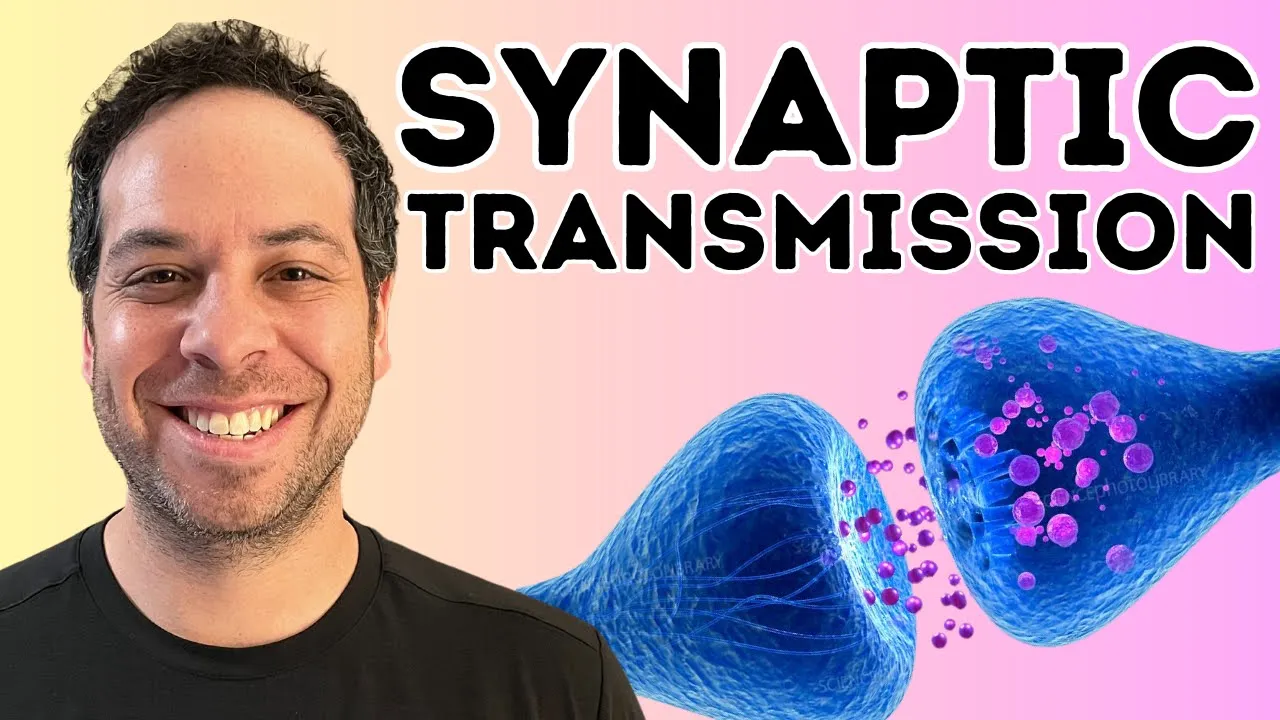










Synaptic transmission is the process by which a neuron communicates with excitable tissue (another neuron, muscle, or gland) through a series of steps: an action potential travels down the axon to the synaptic terminal, triggering voltage-gated calcium channels to open; calcium influx causes neurotransmitter-filled vesicles to fuse with the cell membrane and release their contents into the synaptic cleft; these neurotransmitters diffuse across the gap and bind to specific receptors on the postsynaptic cell, where excitatory neurotransmitters open sodium or calcium channels causing depolarization and potentially triggering a new action potential, while inhibitory neurotransmitters open potassium or chloride channels causing hyperpolarization and preventing signal transmission.
Synaptic Transmission: How Neurons Communicate (Step-by-Step)
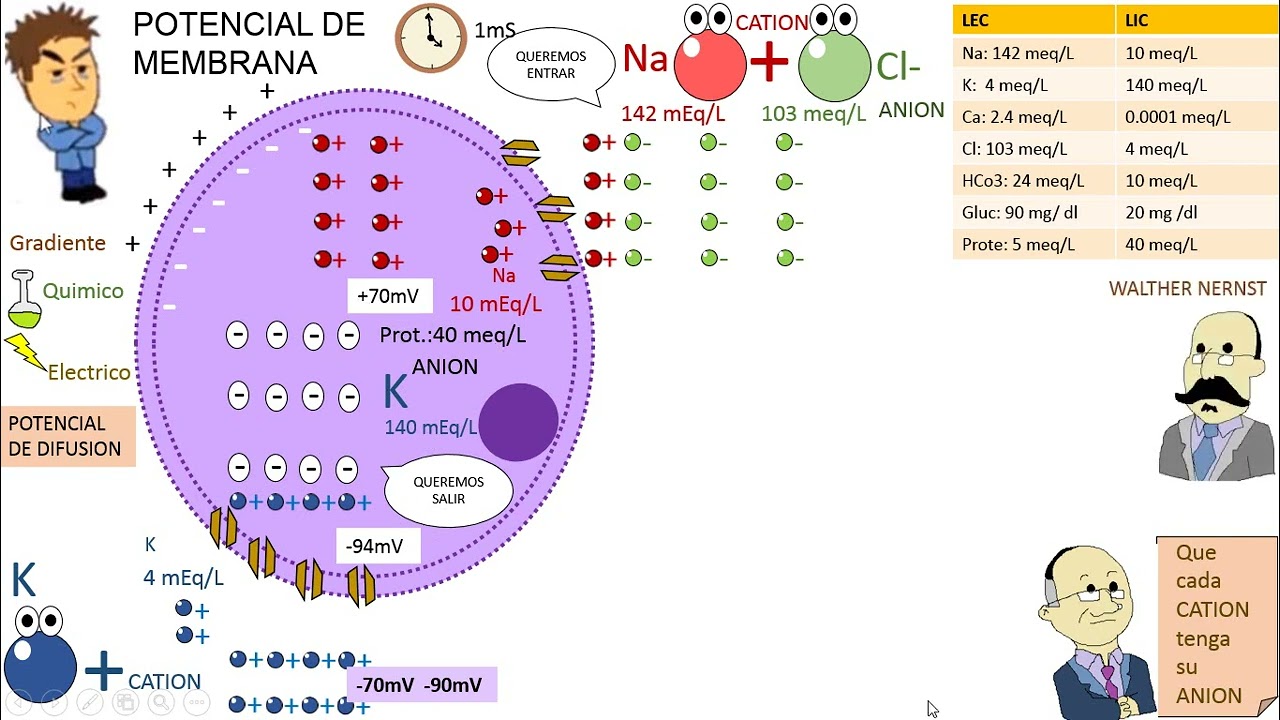
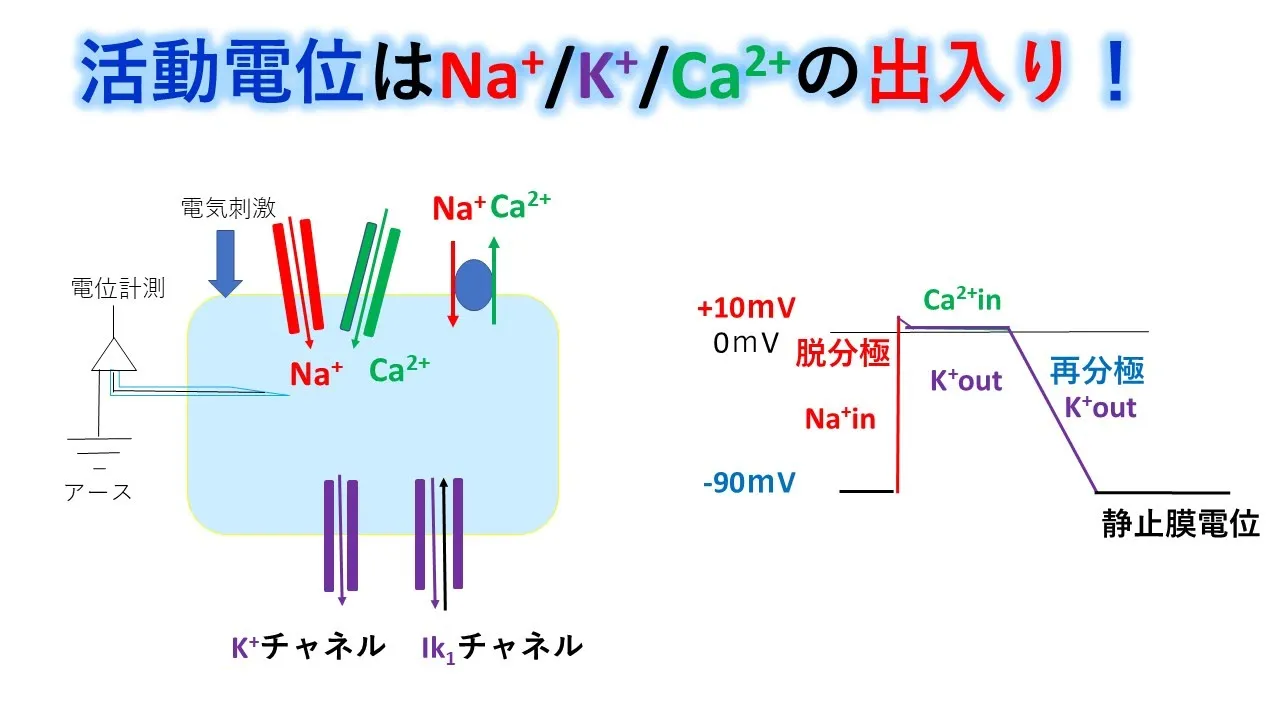
Added:hi everybody dr mike here in this video we're taking a look at synaptic transmission so briefly synaptic transmission is when one neuron needs to speak to some sort of excitable tissue this tissue may be another neuron it may be a muscle it may be a gland they're all different types of excitable tissue now excitable tissue means that the tissue has the capacity to do something so if it's a neuron it's send a signal if it's a muscle it contracts if it's a gland it's going to secrete some sort of substance right now synaptic transmission is referring to going from part a or point a being the neuron crossing this gap to point b or part b which is going to be that excitable tissue and so we need to orientate ourselves here here's the first neuron here's whatever that secondary excitable tissue is remember that all excitable tissue has a resting membrane potential that simply means that inside the cell it is negative compared to outside the cell where it is positive that's the resting membrane potential and that's going to be the same for all excitable tissue not just neurons muscles glands as well so let's write it here it's going to be negative inside and slightly positive outside all right now with synaptic transmission this first neuron will be sending its action potential so i assume you already understand action potentials if not go back and watch my action potential video i explain it all in detail as this action potential moves down what's happening well we know that because of a sodium ion or a couple of sodium ions that's moved in it's become slightly positive inside the membrane this positive charge or voltage change is the key to open up a channel so we call this a voltage-gated channel so it's a channel so things can go through it's gated so and gates can be open or closed and the key is a charge or a volt so once it's hit negative 55 in this particular area this is the key it's going to open up this voltage-gated sodium channel and we all know that sodium predominantly sits outside the cell and so this sodium diffuses down its concentration gradient to go inside the neuron taking that positive charge with it making this area of the neuron slightly positive hitting negative 55 millivolts which is the key to open up the next voltage-gated sodium channel and again this is simply what an action potential is this happens all the way down the neuron until we hit the point that we've hit now which is we're now at the axon terminal or axon bulb or axon knob whatever the terminal doesn't matter we're right at the end basically and it's made this particular area slightly positive now we no longer are opening voltage-gated sodium channels we now start to open voltage-gated calcium channels this is once we've hit the terminal the calcium channel opens flips its lid the calcium so the calcium predominantly sits outside the cell as well so it diffuses down its concentration gradient and goes in and there's a whole bunch of voltage-gated calcium channels at the synaptic terminal a whole bunch and so you get huge amounts of calcium now coming in now what does calcium do well importantly in this scenario calcium triggers these vesicles which look like little bubbles that are carrying neurotransmitters and it might carry excitatory neurotransmitters or maybe it carries inhibitory neurotransmitters let's first say that it's carrying excitatory neurotransmitters what happens is the calcium gives these vesicles a little bit of a push and tells them to start to move their way towards the cell membrane where it tells them to merge with the cell membrane because the vesicles are made up of phospholipids just like the membranes of our cells and so they merge and when they merge they release their substances and like i said it might be excitatory neurotransmitters or it might be inhibitory now again diffusion comes into play here it's now just released chemicals into a gap between two cells so we went from an electrical chemical signal because of the charging chemicals to simply just a chemical signal and this chemical signal needs to diffuse across this synaptic cleft that's what it's called and as it defuses it goes from its area of high concentration to its area of low concentration it will diffuse across the cleft until it binds to a receptor that is specific for it now if it's an excitatory neurotransmitter it will bind either to receptors that are associated with sodium channels or it will bind to receptors that are associated with calcium channels and if so it will tell either or both to flip their lid open up and trigger the influx of these positive ions the point i'm getting across here is that excitatory neurotransmitters tell positive ion channels to open up if those positive ions sit predominantly outside because that means they will diffuse inside carrying their positive charge with it therefore making it positive inside whatever this excitatory tissue is right carrying that positive charge with it the inside now becomes positive you've now just triggered another action potential now whether it's a neuron that action potential tells it to send another signal if it's a muscle tissue it's just triggered it to tell it to contract if it's a gland it's just triggered it to tell it to secrete substances whatever that substance may be an enzyme may be now here if it's an inhibitory neurotransmitter it's either going to bind to potassium channels or chloride channels now why is that the case well think about this most of our positive potassium sits inside the cell if you open a potassium channel that potassium will want to go down its concentration gradient and go outside carrying that positive charge with it making it even more negative inside the cell now if it's even more negative inside the cell it's definitely not sending a signal what if it opens or tells chloride channels to open up well most of our chloride is sitting outside the cell so it will diffuse in carrying its negative charge with it making it even more negative inside telling it not to send its signal so if we take a look at synaptic transmission the steps are an action potential travels down the axon until it hits the synaptic terminal here it triggers voltage-gated calcium channels to open up the calcium will diffuse in down its concentration gradient and once inside the calcium tells these vesicles filled with neurotransmitters to bind with the cell membrane releasing all the neurotransmitters inside and they will diffuse across the synaptic cleft they will then bind to receptors often coupled with specific channels that are specific to that neurotransmitter if it's excitatory like we've got on this side this is excitatory it's going to bind to sodium channels or calcium channels resulting in the influx of positive ions triggering an action potential if it's an inhibitory neurotransmitter now maybe your question is what is an inhibitory neurotransmitter or an excitatory excitatory can include glutamate or if it's muscle tissue acetylcholine and inhibitory can be gaba for example now if it's inhibitory it's either going to open potassium channels and that potassium goes out carrying the positive charge with it and it becomes negative inside or it's going to trigger chloride channels to open up telling negative chloride to move in the cell making it negative inside stopping any signal from being sent and this is a quick summary of synaptic transmission hi everyone dr mike here if you enjoyed this video please hit like and subscribe we've got hundreds of others just like this if you want to contact us please do so on social media we are on instagram twitter and tick tock at dr mike tadovich at d-r-m-i-k-e-t-o-d-o-r-o-v-i-c speak to you soon
Up Next
Drug Mechanisms and Brain Chemistry: University of Utah Mouse Party Explained
@chriswalsweer2599
180 views•2020-04-20
Deciphering Neural Circuits Controlling Anorexia in Mice | Richard Palmiter
@AllenInstitute
2.3K views•2011-10-10

Vagus Nerve (CN X): Anatomy, Nuclei & Functions Explained
@Alilamedicalmedia
305.2K views•2022-10-31
How Exercise Benefits Your Brain: Science Explained
@TED
11.4M views•2018-03-21
Related Study Plans & Knowledge Roadmaps
Structured learning paths in Neuroscience