

























Systemic lupus erythematosus (SLE) is a systemic autoimmune disease where genetic susceptibility combined with environmental triggers like UV radiation causes immune cells to attack the body's own tissues; the disease mechanism involves apoptosis releasing nuclear antigens, impaired clearance leading to accumulation, B cell production of antinuclear antibodies forming immune complexes that deposit in organs causing inflammation and tissue damage through type III hypersensitivity reactions, with clinical manifestations including skin rashes, joint pain, kidney involvement, and neurological symptoms, diagnosed when 4 or more of 11 criteria are met and managed through avoiding triggers, corticosteroids, and immunosuppressive drugs.
Understanding Systemic Lupus Erythematosus: Causes, Symptoms, and Diagnosis
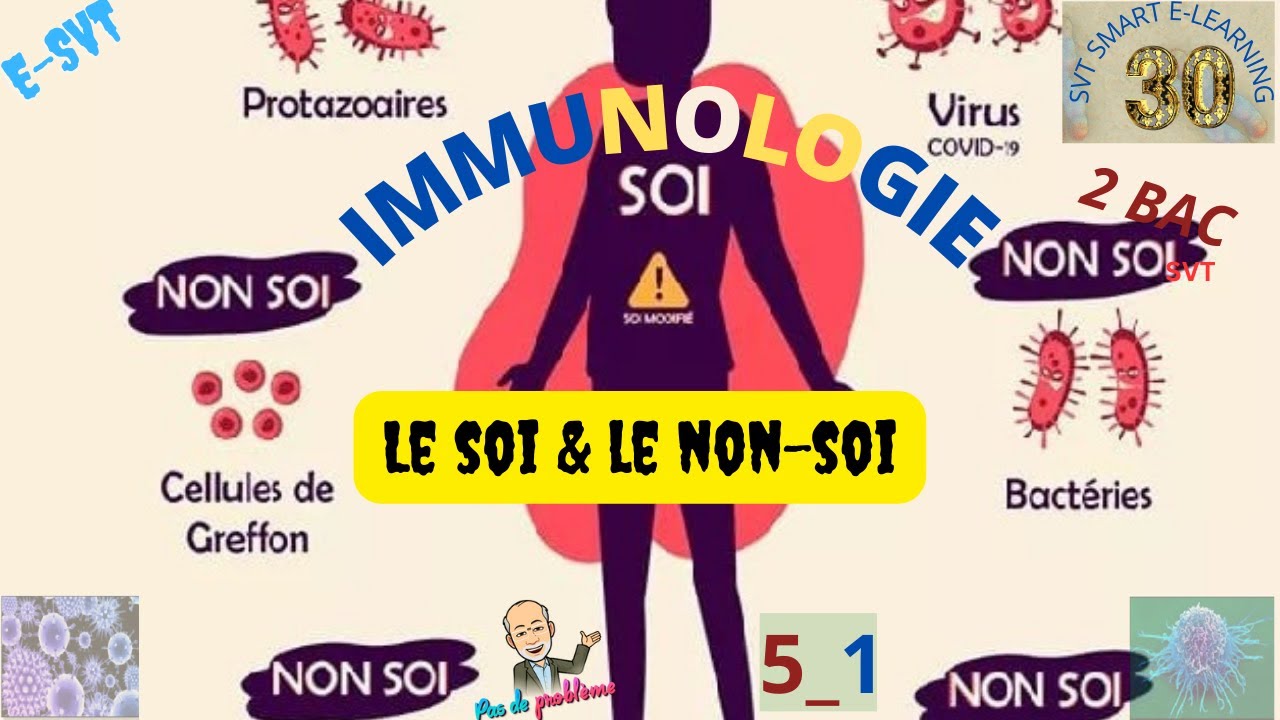
Added:Fundamental principles of immunology, including the distinction between self and non-self antigens.
The concept of autoimmunity and the general mechanisms of hypersensitivity reactions, particularly Type III (immune complex-mediated).
Basic anatomy and physiology of connective tissues, skin, joints, and the renal system.
An introductory understanding of laboratory diagnostic tools, such as antibody titers, CBC (complete blood count), and inflammatory markers (ESR, CRP).
Pharmacological management of SLE, including the use of NSAIDs, antimalarials, corticosteroids, and biologic therapies (e.g., Belimumab).
Pathophysiology and management of specific organ complications, such as Lupus Nephritis and neuropsychiatric SLE.
The clinical presentation and implications of SLE during pregnancy, including neonatal lupus and management of flare-ups.
Differential diagnosis of systemic autoimmune diseases, distinguishing SLE from Rheumatoid Arthritis, Sjogren's Syndrome, and Mixed Connective Tissue Disease (MCTD).
2.7M views47Klikes11:10Original Release: 2016-05-23
Alright, “systemic lupus erythematosus,” k we totally got this.
“Systemic” is easy, and refers to affecting multiple organs in the body.
“Erythematosus” means reddening of the skin, alright alright.
“Lupus” is latin for “wolf”.
So affects multiple organs wolf...reddening of the skin?
Not exactly, the modern use of lupus usually refers to a variety of diseases that affect the skin...which was possibly originally used since these diseases resemble a wolf bite on the patients’ skin.
Is that true?
Who knows.
At any rate, systemic lupus erythematosus, or SLE, sometimes just lupus, is a disease that’s systemic, and affects a wide variety of organs, but notably often causes red lesions on the skin.
But how does lupus affect all these organs?
Well usually the immune system protects the body’s tissues from invaders, but lupus is an autoimmune disease, which means that immune cells start attacking the very tissues their supposed to protect.
With lupus, essentially any tissue or organ can be targeted.
And just like a ton of other autoimmune diseases though, it’s not completely clear why it develops, and like most diseases it’s the result of both genetics and the environment.
Alright so let’s go over a specific scenario to show how this plays out.
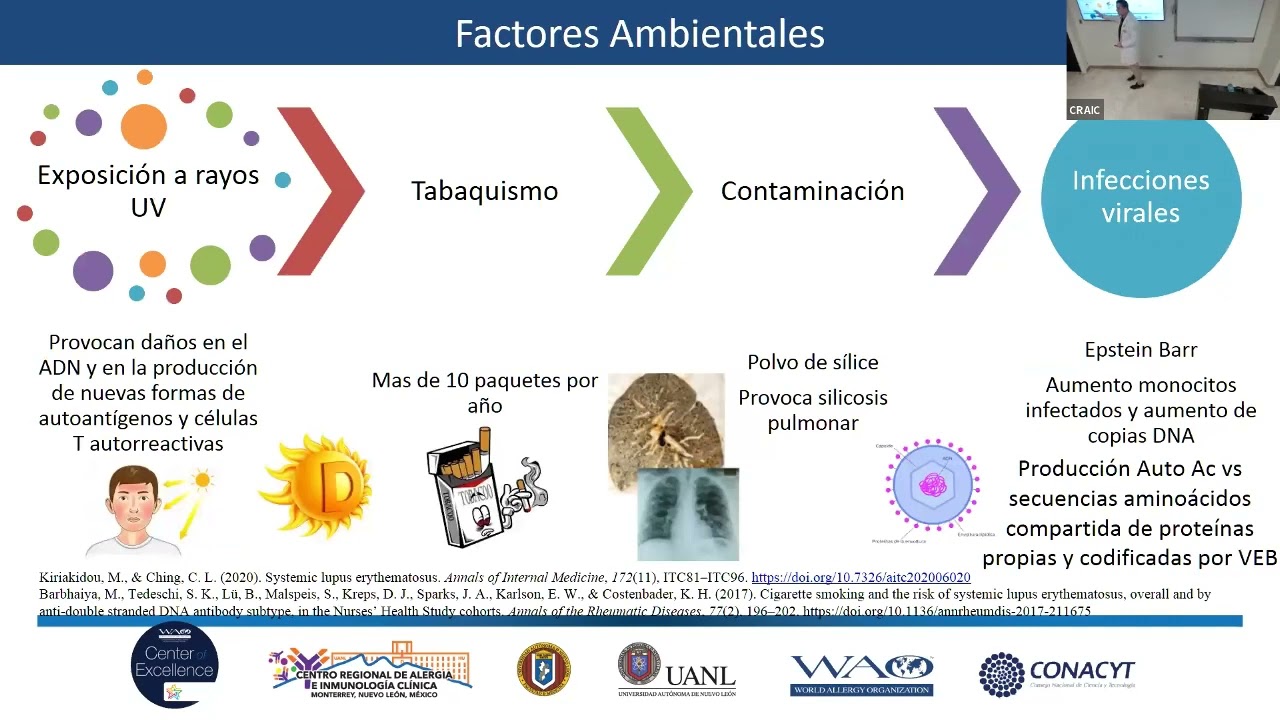
Let’s say this guy has susceptibility genes—genes that make him susceptible to getting lupus, and he’s exposed to UV radiation in sunlight, which we know is an environmental risk factor for lupus.
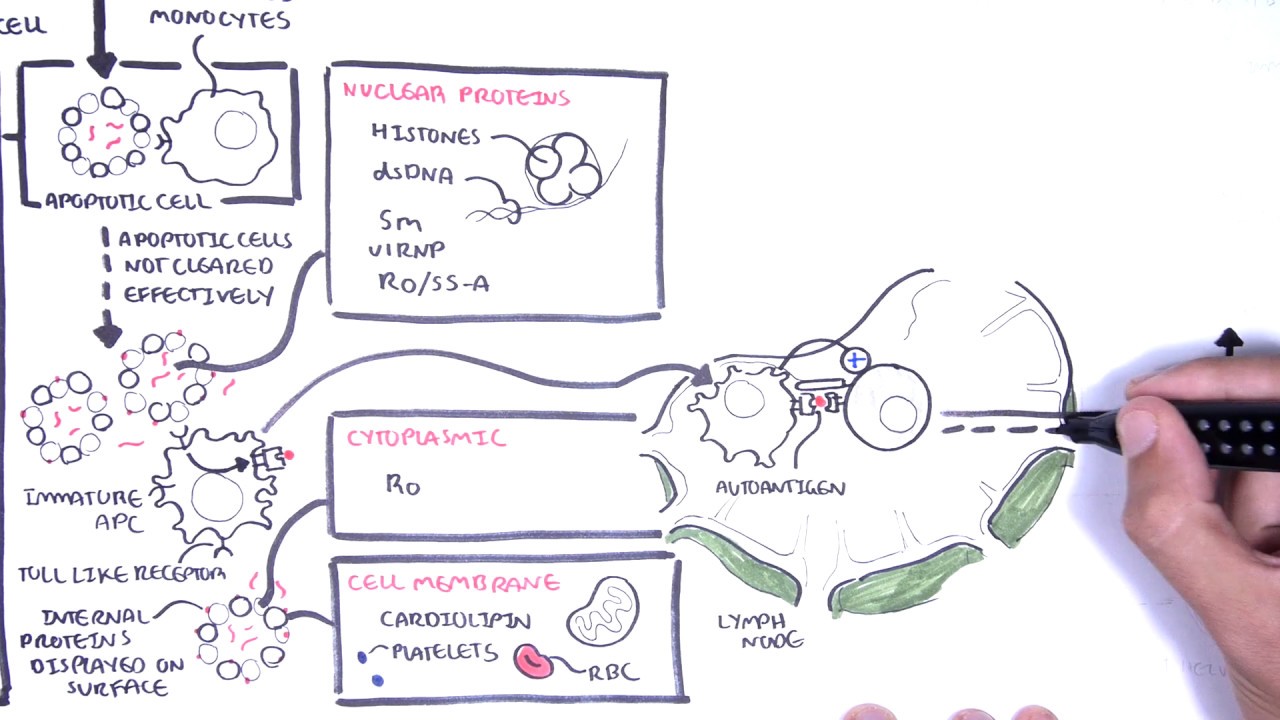
Well, given enough UV rays, think like sunburn, the cell’s DNA can become so badly damaged, that the cell undergoes programmed cell death, or apoptosis, and it dies.
This produces all these little apoptotic bodies, and exposes the insides of the cell, including parts of the nucleus, like DNA, histones, and other proteins, to the rest of the body.
Well those susceptibility genes specifically have an effect on this person’s immune system such that their immune cells are more likely to think that these are foreign, or antigens, and since they’re from the nucleus, we call them nuclear antigens, and immune cells try to attack them.
Not only that though, susceptibility genes also cause this person to have less effective clearance, essentially they aren’t as good at getting rid of the apoptotic bodies and so they end up having more nuclear antigens floating around.
This means that B cells might swing by, see them, and start the production of antibodies against these pieces of nucleus, which are called antinuclear antibodies, and these guys are present in almost all cases of lupus.
Alright so those antinuclear antibodies bind to the nuclear antigens, forming antigen-antibody complexes.
These complexes can get into the blood and then drift away and deposit or stick to the vessel wall in all sorts of different organs and tissues like the kidneys, skin, joints, heart.
Deposited complexes then initiate a local inflammatory reaction, which causes damage through the activation of the complement system, which, after a huge cascade of enzyme activation, leaves cell membranes with channels that let fluid and molecules go in and out all willy nilly, causing the cell to burst and die, usually though you’d want this to happen to foreign cell or an infected cell, not healthy cells.
When tissues become damaged as a result of these immune complexes, it’s known as a type III hypersensitivity reaction.
UV radiation isn’t the only way to damage cells, though, right?
It therefore isn’t the only trigger that’s thought to be associated with lupus—other potential triggers that have been associated with SLE include cigarette smoking, viruses, bacteria, use of certain medications like procainamide, hydralazine, and isoniazid, as well as sex hormones, particularly estrogen, which might be partly why lupus is more common in women, especially considering it’s about 10 times more common in women than men during reproductive years, but only about 2 or 3 times more common in childhood or past the age of 65.
Okay okay, as a quick recap, the model that’s generally thought to be what leads to SLE starts with some environmental trigger, which damages cells, and causes apoptosis and the release of nuclear antigens.
At this point, the genetic components come in, and the person likely has certain genes that make them not so good at clearing these apoptotic bodies and nuclear antigens, so you end up with a lot of nuclear antigens floating around.
In combination, they probably also have genes that cause their immune cells to recognize these nuclear antigens as foreign, which initiates an immune response, creates antinuclear antibodies that bind to antigens and then float around and deposit in various tissues, which causes inflammation.
These deposits and inflammation seem to be the cause of most of the symptoms of lupus, which remember is a type III hypersensitivity reaction.
Many patients, though, also develop antibodies targeting other cells like red and white blood cells, and molecules like various phospholipids, which can mark them for phagocytosis and destruction, leading to additional symptoms.
This is considered a type II hypersensitivity reaction, although it isn’t fully understood why some of these antibodies targeting specific cells and molecules develop.
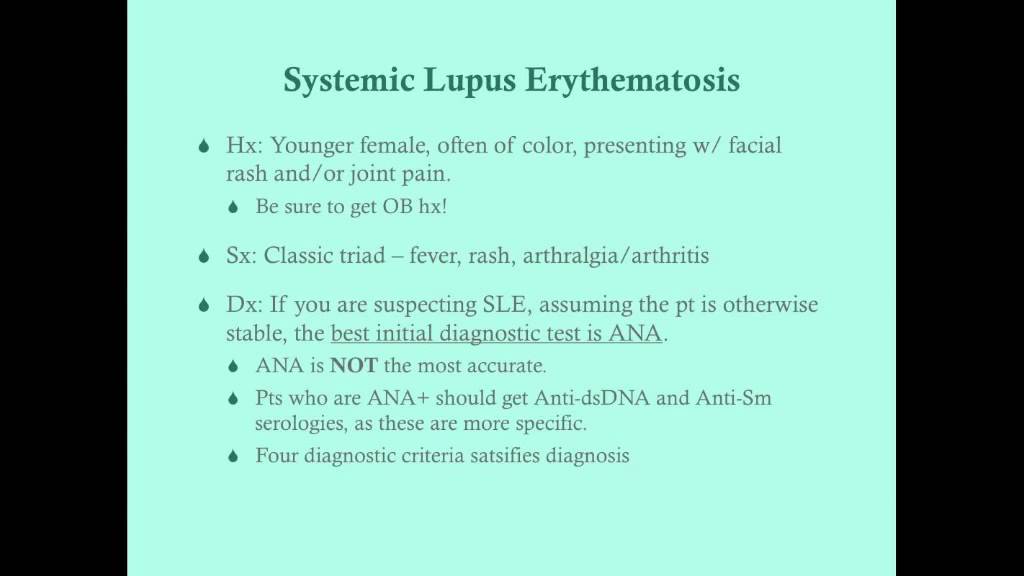
So the classic presentation of lupus is fever, joint pain, and a rash in a woman of childbearing age, but the actual diagnosis is difficult because it can affect a variety of people of different genders and ages, and there’re also a wide variety of symptoms.
There are general symptoms like fever and weight loss, as well as specific symptoms depending on the specific organ system being affected and damaged.
In fact, it’s so unpredictable that a diagnosis is given only when 4 or more out of eleven diagnostic criteria are met.
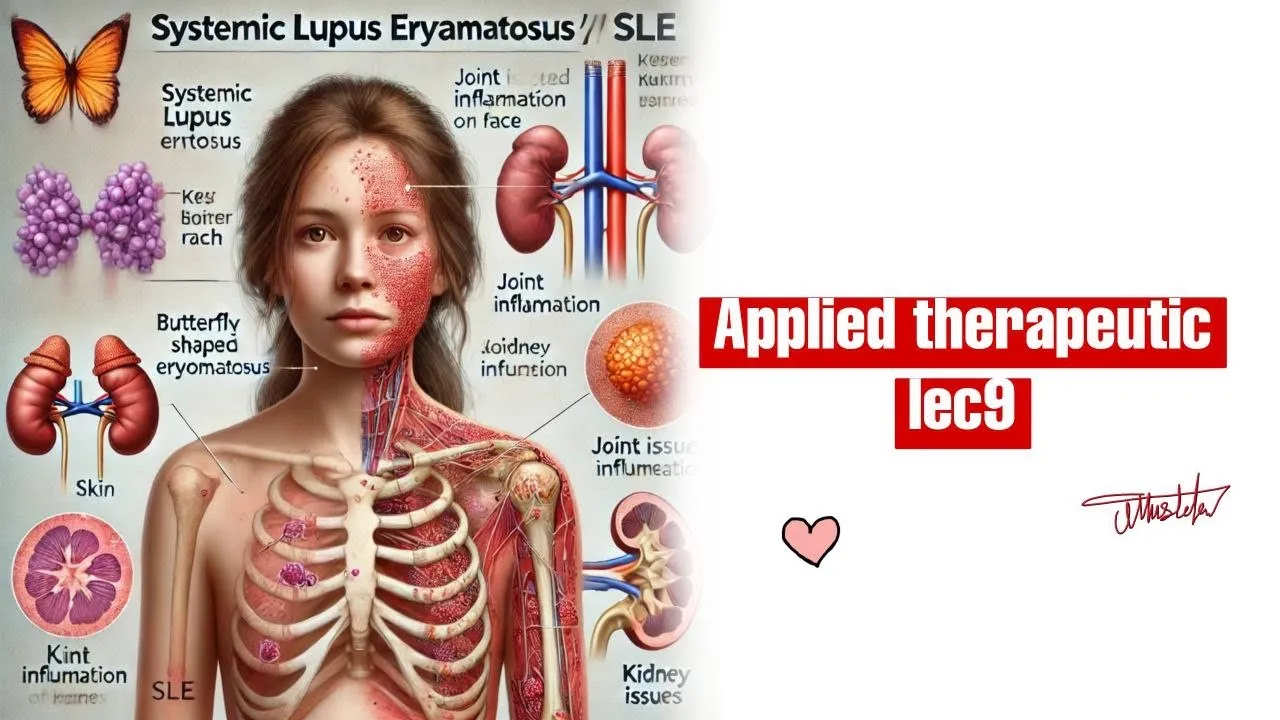
The first few have to do with the skin and often happen to sun-exposed areas; the first is a Malar rash, meaning a rash over the cheeks that spares the nasolabial folds, sometimes just called a “butterfly rash” and this appears after sun exposure.
Second is a discoid rash, which is chronic rash in sun-exposed areas that are plaque-like or forms a sort of patchy redness and can scar.
Finally, a general photosensitivity of the skin—essentially a catch-all category for other rashes that happen to sun-exposed areas—typically only lasting a couple of days.
Another type of tissue that can be damaged is the mucosa, or the the inner membrane of various tissues can become damaged as well, so the fourth criteria is ulcers in the mucus membrane of the mouth or the nose.
Lupus can also affect the serosa, which is like the outer membrane of an organ or tissue, so if it gets inflamed, people get get serositis, which could manifest as something like pleuritis, which is inflammation of the lining around the lungs and chest cavity, or as pericarditis, inflammation of the lining of the heart.
Although this isn’t strictly a criteria, it’s worth noting that lupus can affect any layer of the heart—meaning in addition to inflammation of the pericardium, they might also have inflammation of the endocardium and myocardium, leading to endocarditis and myocarditis, of which the former presents as Libman-Sacks endocarditis, where vegetations form, which are essentially clumps of fibrin, a blood-clotting protein and immune cells, around the mitral valve.
Next, if the joints get inflamed, patients may also develop arthritis, specifically two or more joints to meet the criteria.
If the kidneys are affected, patients might develop renal disorders, like abnormal amounts of urine protein or diffuse proliferative glomerulonephritis, inflammation of the glomeruli.
For reasons that aren’t completely understood, some autoantibodies that target receptors in the brain have been implicated as well, and this can cause neurologic disorders like seizures and psychosis.
Sort of along the same lines, patients can have autoantibodies against components of the blood, causing various hematologic disorders, for example they’ll get anemia if red blood cells are targeted, thrombocytopenia if platelets are targeted, and leukopenia if white blood cells or immune cells are targeted.
That last one is really a mind-bender because it means that your immune system is attacking your immune system.
Alright so the last two have to do with specific antibodies being found in the blood, the first one being antinuclear antibody, which we already went through.
Now a large proportion of patients with lupus have these, meaning this test is very sensitive, but this test isn’t very specific, since these are seen in other autoimmune diseases.
Finally, they can have some other self-directed antibody that isn’t antinuclear antibody, which can be one of three types.
It could be anti-Smith, which is an antibody against small ribonucleoproteins, or it could be anti-dsDNA which is against double stranded DNA and is often seen more during periods of active disease.
These two are relatively specific for lupus.
A third type of antibody though is anti-phospholipid which is actually against proteins that are bound to the phospholipids, and is less specific for lupus, meaning that it can pop up in other situations.
There are three types of antiphospholipid antibodies - anticardiolipin, which can cause a false-positive test for syphilis since anticardiolipin antibodies are also sometimes involved in syphilis, the other two are lupus anticoagulant also known as lupus antibody, and anti-beta2 glycoprotein I. Sometimes, because of these, patients with lupus develop an antiphospholipid syndrome, where the antiphospholipid antibodies cause a hypercoagulable state, meaning they’re more prone to developing clots and having complications like deep vein thrombosis, hepatic vein thrombosis, and stroke.
These patients often end up needing lifelong anticoagulation therapy.
So lupus is characterized by periods of flare-ups and periods of remittance, so treatment is often aimed at preventing flares or limiting how severe they are when they do happen.
To help prevent flares, some patients may have to avoid sunlight exposure with hats and long-sleeved clothes.
To reduce severity of flares, corticosteroids may be used to help limit the immune response, and finally, if symptoms are really severe, certain immunosuppressive drugs might be used.
Up Next

3:15
Sjögren's Syndrome Symptoms: Dry Eyes, Mouth & More | Johns Hopkins
@JohnsHopkinsRheumatology
241.3K views•2018-07-17

48:47
Graphic Medicine: Comics for Collaborative Healthcare Communication
@nationalpatientadvocate
189 views•2023-12-04
10:24
Neuron Action Potential Explained: Physiology of Nerve Signals
@osmosis
1.2M views•2016-12-26

3:05
Stages of Labor and Vaginal Birth | Childbirth Animation
@nucleusmedicalmedia
52.1M views•2017-08-18
Related Study Plans & Knowledge Roadmaps
Structured learning paths in Medicine
medicine
Abnormal LFTs: Diagnostic Workup & Pathology
01Liver Anatomy and Basic Physiology
02Introduction to Liver Function Tests (LFTs)
03Hepatocellular vs. Cholestatic Patterns
+ 3 more learning modules
12h6 modules
Explore Roadmap
medicine
Analyzing Blood Smears: RBC, WBC & Platelets
01Introduction to Blood Components & Smear Preparation
02Normal Morphology of Blood Cells
03Erythrocyte Pathologies & Morphological Variants
+ 2 more learning modules
12h5 modules
Explore Roadmap
medicine
Mechanical Ventilation: Waveforms & Alarms
01Anatomy and Physiology of Breathing
02Introduction to Mechanical Ventilation & Core Modes
03Ventilator Settings and Waveform Interpretation
+ 2 more learning modules
12h5 modules
Explore Roadmap
medicine
Neuro Exam: Localization & Stroke Syndromes
01Foundations of Neuroanatomy and Vascular Supply
02The Neurological Examination: Step-by-Step
03Principles of Neurological Localization
+ 3 more learning modules
18h6 modules
Explore Roadmap