


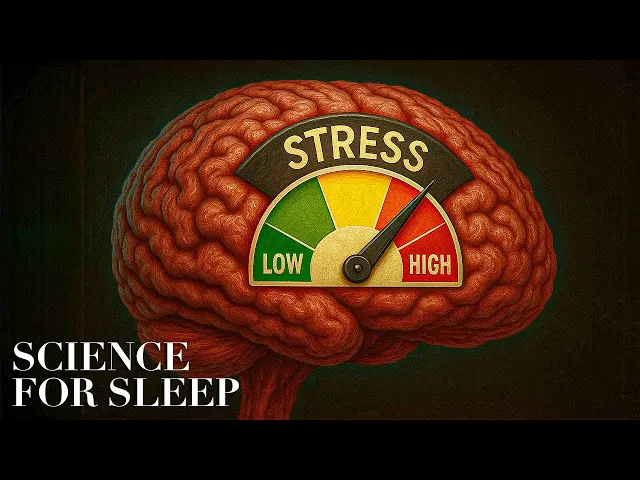



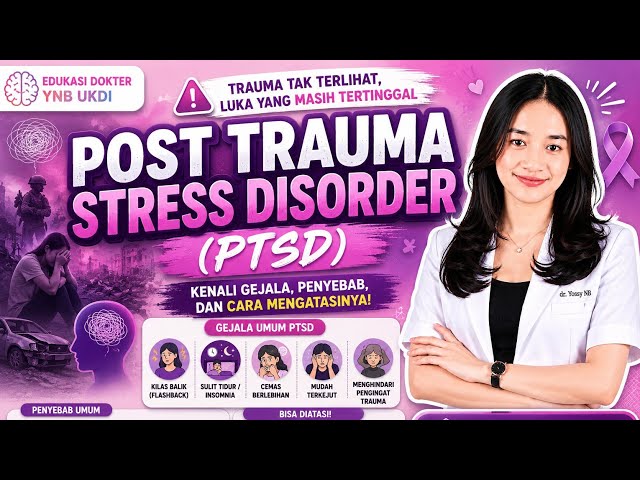











PTSD involves dysregulation of the amygdala-prefrontal cortex circuit, where the amygdala becomes hyperactive and cannot be properly regulated by the prefrontal cortex, leading to persistent fear responses; however, this makes PTSD one of the most tractable psychiatric disorders because we understand when it begins (at trauma), the neural circuitry is well-understood across mammals, and learning/memory mechanisms are among the best-understood areas in neuroscience, enabling the development of targeted interventions such as enhancing plasticity during exposure therapy with drugs like D-cycloserine or targeting specific cell populations like neurotensin-expressing 'fear-off' cells in the amygdala.
Neuroscience and Genetics of PTSD: A Precision Medicine Approach
Added:Basic neuroanatomy of the stress response, specifically the roles of the amygdala, hippocampus, and prefrontal cortex.
Fundamental concepts of genetics and epigenetics, including gene expression, genetic variation (such as SNPs), and environmental interactions.
The clinical definition, diagnostic criteria, and psychological symptoms of Post-Traumatic Stress Disorder (PTSD).
The foundational concept of precision medicine, which involves tailoring medical treatment to the individual genetic, environmental, and lifestyle characteristics of each patient.
Pharmacogenomics in psychiatry, focusing on how genetic variations affect individual patient responses to specific PTSD medications.
The identification and clinical validation of biological markers (biomarkers) for predicting PTSD susceptibility and treatment efficacy.
Advanced neurotherapeutic treatments guided by neuroimaging, such as Transcranial Magnetic Stimulation (TMS) and neurofeedback.
The ethical, legal, and social implications (ELSI) of using genetic profiling and predictive algorithms in mental healthcare.
221 views8likes59:49Original Release: 2024-05-09
hello I'm John new um welcome to the Grand rounds for the Department of Psychiatry and Behavioral Sciences I'm I'm filling in for Dr Joseph surelly today he couldn't be here today and our grand rones program is uh sponsored by a group of uh our staff who uh have done a wonderful job of organizing um a hybrid today where we're both in person and um presenting on the web and so I want to thank uh sehar uh for working on the communications aspect and analie Ana and rosemary for working on the uh presentation today uh this this uh program today is being sponsored by the Garvey Institute for brain health Solutions and and next would like to introduce our speaker Dr Carrie westler um I'm only going to uh describe his uh achievements briefly because it would take the full time of of the presentation otherwise uh but Carrie graduated from MIT uh and then he attended the U medical scientist training program at Harvard and he did his PhD dissertation work with Dr Linda Buck who later became a Nobel laurate and also a ww faculty member currently um and then he began his career in Psychiatry as a resident at Amory and uh did his fellowship with Michael Davis who's had a great impact on me over the years and then Carrie as well has done so he's had over 500 Publications and his H index is 130 which is U almost three times mine um he's very active in professional societies he's the past uh president of of the acmp the American College of neuropsychop pharmacology and the society for biological Psychiatry he's also a member of the National Academy of Medicine uh he's also the James and oh he's after Rising through the ranks at at Amry he returned to Harvard and he's now the uh currently the chief scientific officer at mlan hospital and he also occupies the James and Patricia pitus end Shar in Psychiatry um we've worked together a little bit in the past uh at the neuropsychop pharmacology reviews when he was a guest editor uh for one of the issues which is a tremendous amount of work and he was able to do that really efficiently on top of everything else I think that characterizes his his Effectiveness and his Outreach to many different audiences and his research uh spans genetics basic and clinical Neuroscience of fear and also the public health impact of trauma uh he's contributing to our understanding of the effects of trauma focusing both on the internal uh the individual biological and psychological processes that occur but also the impact of external factors induced by society and environment uh his work envisions improvements in existing treatments and development of new therapies so Carrie thank you very much for presenting today thank you thanks so much John um really appreciate the kind introduction and in addition to all of your great science um you're also a great comedian so thank all right so um thanks um to everybody who made this possible today I'm delighted to be here and I look forward to um talking with the residents afterwards as well so I'm going to tell you about um spend about the next 40 45 minutes walking you through a variety of approaches to how we understand post-traumatic stress disorder both from the epidemiological scale of the disorder the symptoms of the disorder um how it's comorbid with many of our other um disorders but also try to make the argument that understanding trauma is is tractable and feasible and um there may be some very exciting um future approaches not that far away from our understanding of the neurobiological mechanisms of threat and fear um to novel interventions and preventions so with that I will jump right in um so first of all um in um preaching to the converted here we um you all know that serious mental illness um including PTSD are the major causes of disability worldwide um both in terms of um both it's even worse now this was 201 11 World economic Forum that mental illness globally will cause more than cancer diabetes and chronic respiratory diseases combined um and in terms of um lost individual lives um daily lives um Sandra Goa of the be public self stated tra is a foundational driver of the health of the public um and that mental disorders broadly and Trauma um also broadly are two two of the top three um components um that are the 10 medical conditions with highest estimated spending on that note I think as we all appreciate the amount of federal spinning and I8 spinning Etc in mental disorders is much less than many of these others together and the points that I'm going to try to make is one from an epidemiological perspective we have to do more but these are also solvable disorders if we put the money into the research we can have really powerful novel approaches just like cancer was transformed over a 30-year period in Infectious Disease by by putting money money into understanding the biology this is sort of my Clin um DSM slide all in one place so so we'll start with just reminding you that DS that post-traumatic stress disorder PTSD um is clinically important it affects about 5 to 10% of the population as I talk through this the round number you can have in your head is about 10% of people after a very severe trauma may go on to develop PTSD however after multiple traumas or multiple amounts of trauma loading if it will those numbers increase and we see combat veterans and at risk populations a lot of our work um has been in in City Atlanta in minoritized populations with chronic stress chronic structural racism and lots of exposure to violence and in our atrisk community populations and our at risis soldar populations we can see rates of PTSD as high as 25% um so it it it is it is um prevalent um it is one of the highest risk factors for suicide amongst our disorders it is one of the most common I'll show a comorbidity slide um up to a third to a half of people with PTSD have coover depression or substance abuse um and so there's many reasons why we need to to to focus on this more as in terms of diagnosis um what you'll remember is that the first month after a severe trauma we don't call it PTSD we call it acute stress disorder and the reason that is is that most people those first days and weeks after trauma are very upset have difficulty sleeping or easily startled can't stop thinking about it you have many of these same symptoms but most people will recover over time and we'll talk about the natural recovery so we um generally and by cons us the diagnosis of PTSD requires a month of symptoms following trauma and then chronic PTSD with more than three months my um as a as a medical student you know we like we like um pneumonic so I'll leave you with pneumonic today for what what are the criteria so errands um Criterion a is the event B is reexperiencing C is avoidance D is negative alterations and decreased mood and and E is sympathetic arousal so again for a um while we live in sort of a tick tock World in which everybody's been stressed or traumatized at some level and certainly there's a lot of distress in the world when we talk about PTSD clinically we really talk about very severe trauma exposure people who um either themselves were um nearly lost their life or saw somebody else lose their life um or um being assaulted or sexually assaulted and importantly this response involves extremely intense fear and helplessness um in terms of the symptoms again that you one needs to have for up to a month to three months um afterwards is um the first is reexperiencing this is the classic nightmares and flashbacks um this is interesting and and in terms of trying to separate when you're when you're diagnosing people you know depression with stress versus real PTSD um Criterion B is probably the most specific are these people being haunted by a trauma memory that they can't get out of their head they essentially feel that um you know this is a black hole of emotion kind of pulling them down um and then in terms of the Sleep disruption much of that's driven by the hyperarousal but also with the nightmares um of reexperiencing this and even with severe PT just like severe depression you can see um pretty significant psych psychotic symptoms and a critical thing to ask about is the same way if you're looking at affective psychosis is it mood congruent with PTSD and psychotic symptoms is it essentially are they being haunted by these memories are the voices they're hearing somebody of their attacker Etc and then Criterion C is avoidance symptoms and with all anxiety disorders we see people avoid um and of course you avoid because you don't want to be doing the thing that scares you but that also tends to make the disease worse and prevents recovery and it also um is part of what really gets in the way of functioning um whether it's not being able to leave their house keep a job have a relationship Etc um negative alterations in cognition and mood this was added from DS sm4 to dsm5 and it's really trying to capture both the um the deficits in executive functioning um the inability to co cognitively be flexible and cognitively have executive functioning when all of your brain is focused on survival um as well as sort of the numbing and anhedonia that we see that looks very much like depression but with people with chronic trauma and then finally the sympathetic hyperactivation the decreased sleep the startle hypervigilance is the other component of PTSD that is relatively specific it's a great if you want to hear more stories the VA has put a really good um um um um site together called make the connection.com I'm not going to have time today but literally hundreds of videos of people telling their stories you can type in any symptom cluster and you can he hear somebody's stories of of that startle we reexperiencing our nightmares or recovery and it's it's very useful for patients as well in terms of the comorbidity again trauma as as Sandra Goa said is one of the foundational drivers of mental of of public health and mental health again almost 50% comorbidity with depression um about 30 to 40% comorbidity with substance abuse and of course the whole range of anxiety disorders in addition to um this to psychiatric disorders what we see with PTSD is really a lot of physical and sematic symptoms and this brings us back to the point that historically we did not Define PTSD as a disorder until the really the70s after the um Vietnam War um for the military component and then really after the women's rights movement and appreciation of the rates of sexual trauma in the 70s but the concept of PTSD exists as long as there has been written history um the ancient Greeks and Romans talked about people who were forever changed after a fire or a war and some of the terms after the Revolutionary War and the Civil War and World War I in in the America are things like soldiers heart irritable heart shell shock combat exhaustion battle fatigue um nervous shock these are all symptoms that when you read about them essentially exactly PTSD and we know PTSD like depression and other severe mental illnesses have much higher rates of cardiovascular illness cancer Etc we can are starting to understand mechanisms of this certainly the the the circulatory cardiovascular um and and sympathetic and parasympathetic alterations of trauma are associated with um cardiovascular risk we've recently shown in about a 100,000 person um polyenic risk or study that there's shared genetic risk of PTSD and cardiovascular risk um and then we think that the inflammatory and redox effects that you see and metabolic dysfunction you see in PTSD are also associated with increased cancer risk importantly um PTSA think of as sort of the the perfect um illness of Gene by environment we know that everything in Psychiatry and many things in medicine are really nature and nurture or Gene and environment um but rarely is there a place in Psychiatry rule we understand the environmental component as much by definition with PTSD it is that trauma and everybody who has studied PTSD since we first started talking about ppsd has studied partly what that trauma is so that gives us a handle on that environmental component that is easier to study than perhaps other areas where we know there's a component but it's harder to to to break that down and I'll be talking more later about the genetic component that's made a lot of progress in the last 10 or 15 years I also just wanted to um talk a little bit about civilian trauma so um while I'm going to sort of go back and forth between um PTSD military trauma civilian trauma and animal models of threat and fear the area for which um um I've most been involved and contributed to in the area of Civilian trauma is what we call the Grady trauma project from our um my um 18 years in Atlanta so in about 2000 we started this um project it was I was a um with Beck Bradley and um um Tanya yanovich and others in the early 2000s we were um either res res or shortly out of the residency and we recognized in in Grady Hospital which is one of the largest remaining charity hospitals in the country that everybody coming into our psychiatric emergency room or our um County Mental Health Center um they every first of all as a resident as many of you may know nobody seemed to perfectly match DSM I felt like I was a horrible diagnostician because everybody seemed to have everything um and that may partly be true as we all understand and they're trying to under you know deconstruct nosology to some extent now but what I also saw was that everybody seemed to have trauma and that it was a component that we really weren't asking about in the 90s um and when so we started studying this first in our Mental Health Center and then we started um working with undergraduates and volunteers and doing interviews in the general pediatrics clinic and General Medical Clinic and waiting rooms and and um every other part of the hospital we could um for people who are not seeking Psychiatry and over the course of about 15 years we interviewed 13,000 people um um it was about 95% African-American because that's where Grady is located in a in an impoverished part of Atlanta um and it takes um you know you don't have to pay anything to go there it takes Medicaid whatever so essentially everybody who is in the Grady population that don't come for um for trauma to the TR to the emergency department is often under um the poverty line and so it was extreme poverty um but the rates of trauma were just enormous um as we you know gathered more epidemiological data almost 50% of the people in inner city Atlanta know somebody personally who's been murdered um almost half of been personally attacked themselves almost a third of experienced sexual assault or childhood maltreatment and while these numbers are horrible they're not unique to a land we see the same thing in poor parts of New York and Detroit and Chicago and La I know Portland has you know components of it so it's really epidemic problems of impoverished America and often highly minoritized aspects of America and what we've also increasingly appreciated is that high levels of experienced discrimination um for decades and generations also contributes to the chronic stress that increase risk so when we think about what are the things that increase risk they're trauma exposure they're low resources but it's also chronic stress and we increasingly appreciate that chronic um structural racism as part of this so um there's been over about the last decade a lot of studies now that sort of have grown out of the gr trauma project led by um these three colleagues on the right narani at Emory Nate harned at mlan and Sierra Carter at Georgia State and they've really done um some terrific work in um this primarily minoritized population to understand structural inequities psychological inequities neurophysiological components neuroimaging components and then also working with um cohorts like the ABCD um consortia for um developmental brain effects to understand the roles of structural racism so um I'm really proud of the gr trauma project both for helping us better to understand the the quantification and impact of trauma um to help us with the biology that I'll be telling you about it was one of the founding cohorts in the psychiatric genomic Consortium for large scale genetics as well as large scale Imaging but also is really helping us to better understand the effects of structural racism and risk in um trauma I'm G to have not talk a lot about current treatments today this is my main slide but very happy during the discussion to talk about how how to treat patients or how to deal with difficult situations I am a psychiatrist and treat patients as well as do research um as with most things in Psychiatry we have two paths to follow we have medications and we have therapy um psychotherapies the psychotherapies in PTSD have the best evidence um and you can basically think of this as the medications that we use first of all start start on the bottom we currently have um only two FDA approved drugs for for ppsd and that's caline or all often peroxin or paxel so again old anti-depressants are all we have that the FDA is currently approved which is just very sad you know it's i' said all the reasons why this is an important disorder um what we what we now know is that the broad range of drugs that we use for depression and anxiety work for PTSD as well um ssris snris tricyclics um benzo diazines we try to use very sparingly for several reasons first of all because of the tolerance issues because of the comorbidity issues with substance abuse with PTSD but also there's evidence that this can interfere with the exposure component of recovery that I'll tell more about um I won't talk much about praisin but it's probably one of the most interesting drugs that we have and again that came from the the Seattle and UB system with Marie Rasin and um it's a very interesting drug it blocks the adrenergic Alpha One adrenergic system it seems to when used properly for the right patient really help with nightmares and help with hyperarousal so of our drugs it's probably the only one that's really targeting one specifically targeting one of the systems we know is dis regulated the problem with praisin is the therapeutic window between when you actually get orthostatic and with low blood pressure versus when it really helps with nightmares is very short so you really have to do titrate it very specifically in every individual's different um but um but it's potentially a very good um at least initial treatment in that space um but again there's no currently FDA approved treatments based on our understanding of the neurobiology so that's what I'll spend a lot of the rest of the time today talking about is how our neurobiology can lead us to new treatments in terms of the therapies all of the welldefined Expo um therapies with really good effect sizes are based on exposure ideas the idea of trump trauma exposure and prolonged exposure is the one that's really the best understood um dialectical behavior therapy that is again another product of of udub um um now has a dbtp component and they're using DBT for a lot of skills training and emotion regulation before doing the prolonged exposure there's arguments in the field about how much um you can go straight into prolonged exposure people like edfa would say you can go straight into it with everyone many people would say you're much more likely to see dissociation or avoidance or a lot of emotional disregulation if you don't have skills training and emotion regulation first um and then there's things like EMDR that can be very helpful EI movement desensitization and reprocessing is essentially a form of exposure therapy that has a very strong grounding component whether you're watching something and moving your eyes or tapping and um I think the this preponderance of evidence suggests that there's probably not anything particularly powerful about the intrahemispheric component with EMDR but more the externalized grounding that keeps somebody very grounded and focused and not and prevents them from dissociating I'm not going to talk much about dissociation today but whenever you're thinking about subtypes of PTSD probably the very first thing to look at is sort of complex PTSD with dissociation versus more classic PTSD without dissociation they seem to have very different neural circuits and probably different ways of responding to some of these treatments so happy to talk more about that but I want to talk for the rest of today about where we are as a field for the future and the first point is that in addition to PTSD being um important um clinically and epidemiologically I think PTSD May maybe one of the most tractable disorders that we have and I would argue from a neuros circuit perspective The Addictive disorders addiction and and Trauma and fear disorders are two of the ones for which we have the best understanding of the neural circuitry of these behaviors um and importantly the circuitry that is shared really across mammals and even vertebrates in terms of the threat and fear system that we can think of is disregulated second PTSD we know when it starts it's it's relatively unique in Psychiatry by definition we know when it starts at the time of the trauma that gives aot us a lot of power for both studying it but also for identifying people right after trauma and maybe intervening and preventing it and as I talk about future directions one of the real sort of Visions is in the same way that right now if you have arm pain or chest pain um or Arm numbness you go to the emergency department and with an EKG or with an EEG or with a CAT scan and with blood chemistries you can say yes you're within X number of hours of having a myio cardio infarction we can do this intervention and we can prevent the long-term sequel of a heart attack if we knew right now that you were 95% likely PTSD after this trauma we could apply some of these new interventions in those first hours or first night of sleep and prevent the PTSD from ever developing in the first place we have the knowledge now to start to be able to do that how do we refine that and implement it for the Emergency Department or the battlefield and then finally um PTSD really is built on this concept of learning and memory we often think of learning disorders as dementia for example or cognitive dysfunction but PTSD is really a disorder where we've overlearned over encoded that initial trauma memory um and you now can't modulate that memory as well but learning in memory is one of the areas in Neuroscience that's made the most progress in in the last decades and how do we Implement that so our goal then is to have a molecular neurobiology of PTSD based on neural circuitry for predictive biomarkers and novel interventions so before I go into some of the new experiments just one more bit of background for thinking about the neural circuitry of PTSD so I like to use Joe Leo's classic I guess it's like a 30-year-old figure now and it CHS a guy walking through the woods and I guess the North Pacific Northwest may have some snakes where I lived in Atlanta there were lots of snakes and my wife's deathly afraid of snakes so I always like to talk about going through we'd go for a walk down the road we'd be having a nice conversation and then Betsy would be jump behind and like what's going on Betsy and she say it's a snake I'm like where she says there it was a stick it was always a stick and so Betsy's amigdala was prepared for the snakes of the world to come and get her right so we can all kind of laugh about that and everybody's got their own story but that's the way the figh ORF flight system works right and so what's real what's happening at the next level is all of our sensory systems are constantly online tuned into the world around us and in terms of the visual system the eyes the ganglion cells from the eyes send in one synapse to the visual Thalamus the lateral geniculate and then that sends projection to the primary visual cortex the secondary visual cortex V4 Mt higher order association areas and eventually prefrontal cortex well that takes about 500 millisecs half a second for us to essentially be consciously aware of what our sensory system saw 500 mill seconds ago which by itself is kind of a a philosophically strange idea we're never really living in the moment we're always living a second or two ago right in terms of what we're aware of where the amydala receives this pre-processed information and in about a 100 milliseconds fires off the reflexive figh ORF flight system the amigdala is constantly comparing this pre-processed sensory information in real time to memory ingrams if you will of Prior threat information so now we live in the system where the amydala has led us to survive it's led us to run away from the lion to be afraid of the snake or whatever activate a whole set of fight ORF flight or freeze responses and then we only afterwards we realized that we were overly upset well people with anxiety and threat disorders are living with this all the time and they can't shut it off um so it's it's we can see why it's a primary driver of survival and again the amydala as we know it is essentially the same in non-human primates very similar in rodents and still quite similar in vestigal in reptile um so it's a primary driver of survival and yet we didn't evolve for a world with 247 you know trauma news Cycles um with social media trauma and news cycles and see you know why we have sort of such an anxious world right now because we evolved for a different world than we're currently living in but with people with PTSD they're constantly in on the Feer system and they can't turn it off so at the next level um we can think of the amydala as constantly receiving the the sensory information from the condition stimuli maybe the color of a car or someone's face um that was previously neutral but after the trauma the car crash or the assault that now is encoded in the brain in which now the neutral stimuli activate all the same hardwired systems as the prev as the trauma itself did the uncondition stimulus and we know that this learning occurs very rapidly um involves mechanisms like long-term potentiation synaptic plasticity it's nmda dependent it's bdnf dependent a lot of that's been worked out over several decades what is also known and was figured out really in the 70 and 80s was the amydala has hardwired projections to a whole host of brain stem and subcortical regions that activate all the symptoms that we see with the panic attack so if you activate the amydala chemically or electrically you get the downstream effects of increased heart rate GI distress respiratory distress arousal startle and then the cortico steroid release from the hypothalamic ptary adrenal axis so almost no place else in Psychiatry do we really have this behavioral reflex that we understand at a neural level really through these specific synapses that come from this very rapid information and it's constantly being modulated by the cortex and hippocampus but for those with PTSD they can't turn it off so it's I think it's helpful to break down the concept of PTSD um as as not one thing but multiple things at multiple different time points so again if we think of a single trauma um one has about a 5 to 10% chance of developing PTSD versus about a 90% chance of Rec covering so what's different between those two well first of all there's the idea of pre-existing sensitivity this is where Gene by environment comes in and I'll show you data in a minute that we know now about 30 to 40% of the risk is genetically heritable um and we're making progress on what those pathways are but we also know that prior existing environment so childhood trauma we know is one of the biggest risk factors in all of Psychiatry but um we also know that particularly in PTSD childhood trauma likely um sensitizes these amydala systems so that later adult exposure to trauma is built upon an already sensitized threat pathway the event itself matters um we know the interpersonal trauma is a higher risk factor for PTSD the not interpersonal trauma we know that having things like social support having Maslow's Tri out of um you know Financial Resources food resources all these sorts of things and and and social support are all components that help protect people as well as emotion regulation we know that a history of anxiety disorders and other psychiatric disorders increases risk and probably increas ing stress sensitization then there's the concept of consolidation that memories aren't formed immediately but formed over minutes to hours to days and we that there's very likely biological and psychological and environmental components that are different there but we think that's a critical point for intervening to prevent long-term PTSD and then in these first weeks after trauma that that period where you have normative stress or acute stress that you transition from acute stress the PTSD versus recovery a lot of these symptoms can further exacerbate systems for example the intrusive Memories the nightmares the flashbacks the avoidance behaviors the sympathetic response they can drive different cognitive responding that then leads to recovery or ppst so for example General concept of threat generalization someone will say I was attacked down a dark alley by this person at night and at first I was just afraid of that situation then I didn't really want to go out at night anymore I was kind of afraid of men after that and then I didn't want to go to that part of town now I'd rather kind of stay in my house I'd rather just be in my bedroom the world become more and more more dangerous and less able to carve out safety spaces those who who recover are more likely to discriminate I know there's dangerous places and safe places but I can just the whole world is not fear is not dangerous concept of sensitization isn't interesting this is where people will say you know doc every time I have I talk about it or I have a nightmare it gets worse and worse why would I want to talk about my trauma um and and about 1990 I guess um um joeo group um restarted studying a process called reconsolidation and the idea there was anytime a memory is reactivated that it becomes labile and can be strengthened again and we think what is happening and I'll show you in some of our studies if I can move a little bit faster is that um anytime a memory is reactivated it can either be go down these opponent process of either be strengthened or reconsolidated or sensitized or it can be inhibited and extinguished and Extinction is really the process of exposure therapy okay so I'm going to talk about some of the large scale genetic studies contributing to Gene by environment um as well as some of our understanding of fear consolidation processes and then how understanding of exposure and Extinction may lead us to new approaches to making treatments better for people who already have ppsd so how can we understand those at risk and maybe intervene early after trauma or if you already have trauma how can we understand the neurobiology for improvement so related to consolidation again memories aren't made permanent immediately rather they go through a period of short-term memory that isn't Consolidated to long-term memory and this is goes from transient molecular changes through new Gene transcription to new protein to new synapses to new structural changes in the brain and then anytime a memory is reactivated it can be reconsolidated versus extinguished so I want to talk first about this concept of consolidation so Jim Mah who's at your Vine for decades really was one of the first in the threat memory field to talk about memory consolidation both at the hipocampal and amydala level with the idea that any short-term event over the goes from seconds to hour short-term memories to long-term memories to long lasting memories and many of these things things were replicated even in apesia with Eric kandell showing the early components of memory in Michael Davis's group we showed in the early 2000s that with amydala um fear conditioning and threat memories you could see these same timelines of patterns in amydala um and could find genes that came up very early after fear conditioning others that came up later and stayed later including growth factors and structural proteins and others including gabaergic genes that were would Transit decrease consistent with the transient excitability um so how do we study this in humans um so about um 15 years ago we started a study at Emory and Miami um in emergency departments identifying people right after trauma collecting blood um and then um collecting a whole component of physiological measures and then the data from that led to a large scale U1 project led by Sam mlan U um emergency department doc out of UNC and kison Conan and Ron keser myself at Harvard and this in ruled about 14 or 15 emergency department sites and about 55,000 people and we essentially in addition to the immediate um blood-based biomarkers and emergency department measures we were able to um do wearable um experimental watches for actigraphy for sympathetic and parasympathetic measurements for sleep as well as um active and passive phone data as well as bringing people back from Imaging so I'm not going to talk about all that today a lot of but a number of papers have come out I'm happy to talk about what we're starting to learning about different way of predicting the trajectories of PTSD um one of the things we found early on was that the pathways that we know were involved in in the systems processing of threat consolidation are can be seen very early on in PTSD so again on the left we're seeing the trajectories of PTSD symptoms a lot of this is using the PTSD symptom scale or the pcl5 the PTSD checklist and what we find is that many people don't have many symptoms and stay relatively low that's part of that 90% you know recovery some people start very high but over the course of a few few weeks recover very quickly but some people start high and say high others are middling and some even get worse but importantly looking at amydala activation for example to fearful faces in an MRI task even two weeks after trauma long before we diagnosed PTSD is already well correlated with PTSD symptoms three months and 12 months later so we're already able to see the hyperactive fear and threat systems early after trauma consistent with a long-term chronic PTSD in contrast the hippocampus as I've talked about one of the areas that dampens the amydala provides the context for safety Memories the context for extinction and generally we see in chronic PTSD less hipocampal activation and um people like Doug brimner have shown that both PTSD and childhood trauma are associated with smaller hippocampal volume and decreased hipocampal function similarly after in about two weeks after trauma um on the y- axis I'm looking at level of hippocampal activation to an inhibitory task in the scanner and we see that high levels of hippocampal activation are associated with very low PTSD symptoms at 3 months in 6 months and low levels of hippocampal activation or can be associated with much higher levels of PTSD symptoms so the basic sort of circuit Triad of amigdala hippocampus and PFC are all starting to play their roles of Inc too much amydala activation and too little top- down regulation early after trauma some of the areas we're most excited about are new biomarkers and this one was quite exciting early on it didn't quite replicate for reason I'll tell you an aurora and so we're trying to figure it out but in our first study of about 50 people we looked at galvanic skin response in the emergency department right after they've been traumatized often people would still be like on a body board waiting for their NE sepine to be recovered and they were bored and were willing to be in our study and we would put a galvanic skin response on their fingers and say what brought you into the hospital and that simple question the the the GSR which measures sympathetic response before and after that question was highly correlated with PTSD six months later and seems to be a highly predicted biomarker in Aurora um for a number of reasons they didn't want us to ask too much in the emergency department about the itself so we did the ganet skin response while doing the demographics that's kind of boring and we didn't see much signal so we're waiting to replicate this but we think early um adrenergic activation is also consistent with early trauma consolidation okay so what about genetics risk so again I said about 30 to 40% of the risk and just in the last few weeks we've been able to show you this the nature genetics paper came out um this week um and so the Grady trauma project along with the nur's health study and the Marine resiliency study in around 2008 and 10 started the original psychiatric genomic Consortium PTSD working group and 10 years later we have over a million people um combining UK biobank um the millions veterans pro project and a bunch of other studies around the world and so it's very exciting we now have a genetic architecture of PTSD and so what we're looking at is a genom Association study here with o over a million people in about 200,000 cases each dot is a single acgt common variant and again the large Peaks are highly significant Gene loai associated with ppsd so we have over 1220 genes over 95 loai I'm not going to go through them all um but one I'll focus on in particular in a minute um chromosome 17 is the corticotropin releasing hormone stress axis Gene but we also find genes associated with synaptic plasticity like here's in cm1 we found a number of gabaergic genes a number of glutamatergic genes so we find aot a number of Pathways that make sense and quite a few of them lie in the in classic stress path Pathways or classic synaptic plasticity Pathways so it's exciting that um both there's validation of molecular components that we understand as well as a lot of new targets um my own personal bias on this it's a joke that I don't think anybody thinks is funny but me but with schizophrenia which of course was about 5 to 10 years ahead in terms of those size of the samples it took them about 150 um genes till they got to the dopamine receptor drd2 was um sort of the first Gene and gwos that was associated with our current treatments um in um in PTSD the CR receptor was in the top 10 so you know it's validating that those who of us who studied the stress pathway we're onto something in terms of large scale genetics so why am I excited about this particular Gene um so when I so The crhr1 receptors in chromosome 17 it's the receptor for corticotropin releasing hormone and the the amydala and the bnst are two of these classic threat Pathways I talk about they cause sorry CR to be released from the hypothalamus all right my ability to go backwards oh there we go um so they cause CR to be released from the hypothalamus causing act to be released from pituitary causing cortisol be released in that feeds back we've known for a long time and here are a couple examples from our own group from the last two decades that if you overexpress CRF in the amydala um in this case it was with lint viral vectors um you would see increased startle in Mouse models again our classic um measures as well as a number of other anxiety like behaviors if you overactivate the CRF neurons in this case it's a little more genetically um difficult we basically knock out the primary Gaba receptor Gaba alpha 1 in the CRF neuron so they fire more rapidly those animals have show increased CRF expression increased corticosterone so increased HP axis but importantly they show increased fear and decreas Extinction so on tone shock pairing in this case showing Mouse fear learning we see no significant differences in learning to be afraid but then after they've learned this fear and Consolidated it the top line is the mice who um knocked out Gaba and have an overactive CRF system they're more afraid and they don't extinguish fear like the controls so just two of probably hundreds of studies showing CRF effects in this one of John and Ma's favorite genes is called fkbp5 and I'm not this is my only fkbp5 story but it's just to remind you that there's this whole other story about this Gene that is involved in the H hypothalamic pituitary Dr feedback system the fkbp5 gene modulates glucocorticoid receptor regulation but it's critical in the whole HPA story and Elizabeth Bender who's now um the director at Max plun in Munich and and our group and others showed a while ago that there are different genetic versions of fkbp5 which are associated with increased risk versus relative resilience even in the presence of child abuse for PTSD and the risk Al of fkbp5 which is associated with a more sensitive glucocorticoid response is associated with more am activation less hipocampal activation and epigenetic Association of increased PTSD risk so again just two of the pathways um genetically and physiologically associated with stress responding and PTSD so um this again lots of work I've only touched on a little bit but I want to leave you with the following model in terms of thinking about the gene by environment effects a risk for PTSD that the amydala is constantly online comparing the external world with internal memories and this you know might be in part through these rapid sensory systems and in you know in in in activating these hardwired Pathways faster than we can be consciously aware it activates the fighter flight or freeze system or it doesn't care as relatively resilient or even may say go towards that thing right um and that's being modulated by the hippocampus and prefrontal cortex but a whole host of risk factors childhood maltreatment poverty violence exposure and genetic risk um together seem to to Prime this system and one example as we know through Regina Sullivan's work that developmental cortisol early in um postmortem I mean postnatal mamalian development leads to a more rapid amydala maturation and sensitization we know that fkbp5 and crhr1 are two of the genes that can be differentially expressed leading to increased sensitivity of the cortisol system and that that genetic risk for increased sensitivity to early trauma May then lead to amydala that is more sensitized always prepared for stress and fear as an adult again this is only some ways of thinking about it but at least is a way of thinking about combining these stories so in my last five or eight minutes I want to shift years I've I've told you about how we think about development overall how we think about the genetic components the environmental components but what about if you already have PTSD and need to inhibit fear so this is a figure I showed during prolonged exposure at the beginning and the basic idea is with all of our prolonged exposures for any anxiety related disorder the basic idea is you talk to the patient and it at the time you might ask them on a 100 point scale how anxious are you zero I'm falling asleep 100 I'm having a panic attack and have to leave the room and as a good therapist you want to take people whether it's inv Vio exposure I'm afraid of spiders and I'm G to hold this spider or it's in imaginal exposure tell me about your trauma I want you to be able to get as close to that 100 as you can I want you to be upset but I don't want you to be panicked and we're going to hold you there and we're going to talk about it and you're going to talk about it again and you're going to talk about it again and the goal is after you know 30 60 Minutes of talking about that trauma it doesn't have so much power over you it's maybe a little boring and then you but and so it settles down over time you come back the next time it's still upsetting but not as bad you do it again you do it again when that one becomes boring you go to the next hot spot that's what the that's what the ideal therapist with prolonged exposure therapist does what we know doesn't help is if you activate that memory you get upset and you leave I walk out I'm not going to talk about it anymore I'm going to shut down I'm going to dissociate so we'll come back to that in a minute when we talk about resensitization or versus Extinction but this basic process of exposing an a mammal to something they're afraid of and not having the unconditioned stimulus occur is Pavlov called Extinction over a hundred years ago and when you do that the animal or the person then shows less fear the next time and we know Extinction depends on the nmd um receptor this is one of the main plasticity glutamate receptors the amydala is chalk full of it and Mike Davis's group had shown in the early n9s that when you extinguish fear you're learning a new memory on top of an old memory that's a safety memory so he trained rats to be afraid or David Walker or Bill Falls who's now the dean of of of um of University of Vermont um they trained rats to be afraid of lights they would take rats they' put in a dark room they would every time a light came on they'd foot shocked them when you do that it doesn't take very long for now the rats when every time the light comes on to be afraid if you give a startle CU they shot they startle more so the red line showing the rats after startle after to light shock fear conditioning then they extinguish them they gave them 60 lights on on on off on off on off but no shocks and then they brought them back now the animals aren't afraid of Lights anymore that's the extinction curve those that's they did Psychotherapy for the rats they're no longer afraid but now they gave a drug a drug that the nmda receptor only at the time of exposure and then they tested them again they were just as afraid as they ever were they did not have plasticity during exposure therapy they prevent them from learning the safety so one of the early ways of modulating nmda receptors was through the sering glycine modulatory site with a drug called decy sering and it makes the nmda receptor work better and so a decade later we showed that if you gave rats a partial um Extinction they would show some decrease in fear but if you gave them that partial Extinction with the drug that enhanced an MDA function dcy serion they showed much increase in fear decrease in fear so we could biologically enhan plasticity as the brain was relearning so the reason we used decy Serene was because in the 60s it was used for an anti-tuberculosis agent the same cyclic moroc Serene blocked um bacterial modification so it was a safe drug and had' been shown to enhance plasticity at a dose lower than than um its antimicrobial function so we were able to show that if we in this case with acrophobia as the first study that if we took people with fears of heights and put them in a virtual reality for for um for virtual fear of heights acrophobia with only two pills in a double blind Placebo controlled study over two weeks they would get much better be much less afraid of fear of heights than the than the people who just got therapy alone normally it would take six or eight weeks of exposure therapy to have this level of improvement and we could do it in just a week with two pills and so with humans we could make exposure therapy worked better just like we could in rats and that was a very exciting time for the psychology field and there were a bunch of studies about 8 to 10 overall that were positive in about a fiveyear period the Stefan Hoffman sewing social anxiety improvements with the psychoan Adam gella um in Australia Sabine Wilhelm um in Boston for obsessive compulsive disorder with exposure and response prevention um Decline and others um in Europe with PTSD and Michael Otto with panic so it was a very exciting time however as more people tried it and different people were using different compounds and using different doses Etc as with so many other drugs that are too good to be true and pay attention to how good these effect sizes look in a minute it stopped working and so what was going on were we wrong were these all um file drawer effects were they were they um false positives well there was two things that came out of this one in Adam gella study what they found is people who got the drug but did not get better within session well so so other way around if they had good within session Extinction and they got the drug they got much better if they did not get have within session Extinction and they had the drug they either got worse or got no better and then um Barry Everett one of the leaders in preclinical models of learning memory explicitly tested this they said well perhaps reconsolidation is also nmda dependent um and they explicitly test it they found that decycling potentiated both the extinction and the reconsolidation of fear depending on the length of the extinction memory reactivation session so the take-home message is now we think that every time a new memory comes up different memory traces get activated if it comes up briefly and you leave it it activates that memory Trace in MDA activation and that is strengthened if you come up and you stay there for a long time that's enough time for essentially the error signal to come back through work back through the system and start to retrain the brain that Extinction will occur and so as that has been taken into account there's been a number of positive studies depending on how you dose it when you dose it and how you're sure that there's exposure therapy the important point for me is we're all excited about ketamine and psilocybin and plasticity me mediated moderators which again have these amazing effect sizes that look a little too good to be true and My worry is and this is you know just an with adri feder who's done great work showing exposure therapy plus ketamine but that if we're not careful that all of these plasticity mediating agents can likely both increase reconsolidation or increase Extinction if we're not controlling for the exposure so I want to end then on a clinical ways that maybe we could even do better in the future and the question is instead of enhancing plasticity but having no control really over whether we're enhancing reconsolidation versus enhancing Extinction if these are truly different circuits that mediate Extinction could we only enhance plasticity on the extinction circuit and not the reconsolidation circuit and it might be possible so Andreas luthy showed us about decade 15 years ago that there are different cell micro circuits in the amydala that mediate fear on or reconsolidation versus Extinction so they they recorded with single units in Mouse amigdala during tone shock pairing and Extinction and they found found that about 30% of the cells didn't respond to the tone Baseline but after tone shock fear conditioning did respond to the tone but then after Extinction they didn't care about the tone anymore so those mimic the behavior then they found these that they called Extinction or fear off neurons they didn't care about the tone Baseline they didn't care about the tone with fear conditioning but after fear Extinction now they cared about the tone as if they were holding that tone fear memory inhibition I've talked about the amydala we really know there's about 15 subnuclei and now we know there's hundreds of different cells in microcircuits but now starting to have molecular control over this and I just want to end on one story of a set of neurons in the amical marked by the thi1 marker and it turns out the Camy positive basil lateral neurons that project out of the bla are made up of different subtypes and about 30% of those subtypes are marked by the thi1 which come from a cortical development population interestingly the canonical theory is that the basa lateral mdala projects to the central and that leads to the hardwired figh or flight response but none of these green cells are projecting to the central amydala in fact these thy1 cells project preferentially to the nucleus accumbens and to the infralimbic more than the prelimbic and um if you now do invivo physiology and this was with tigy at Emory if you activate the lateral amydala circuit coming from sensory systems and measure Central amydala outputs and you optogenetically activate these basil lateral mlin you actually block the flow through of the canonical Fier circuit behaviorally if you activate these um opt with genetics um activate these Fe what putative fear off cells you acquire fear just fine and you completely block what we think is the consolidation of fear or if you activate them during Extinction you get a robust enhancement of Extinction if you use chemogenetics you can do the exact same thing in this case we're activating the fear off cells and in red we block fear if we do a GI we get more fear so Ken Mulla in our group wanted to say well could we have markers of these specific thy1 fur off cells so he did um fact sorting of the of the th1 mark cells and found a bunch of genes some of which like rspo2 sumona lab it also shown might be involved differentially in the amula to aumb projection and the important point is we found a number of new Targets in this case neurotensin 2 receptor was preferentially expressed in these fear off cells compared to the neighboring cells neurotensin 2 receptor is a GS coupled stimulatory receptor we knew nothing about it but we we got an Agonist for it and sure enough when we use an Agonist that activates the fear off cells we got this amazing blockade of fear expression and enhancement of Extinction um so it's proof of concept that we're now oh and and then this work was um K Tai's group and we collaborated with a recent nature paper showing um that neurotensin modulates positive and negative veence in the Ula so the take-home message is I think the field is far enough along in understanding the cell type molecular mechanisms of some of these fearon versus fear off Pathways we can start to have a targeted pharmacology of fear so in summary I think we're to the point that we're starting to have a number of new Pathways based on the neurobiology that we might be able to give at the time of Extinction or even at the time of trauma exposure to block fear consolidation leading to a novel neuroscienc driven intervention the second summary is I reminded you of of we can break down the development of PTSD to multiple different compartments and to remember that it's got genetic and environmental components of early risk and consolidation is something we can manipulate but by understanding processes of Extinction and discrimination instead of generalization and sensitization it can lead to novel targets the most simple summary is PTSD is essentially the amydala has gone off the rails it's responding in a fearful way all the time and the the the breaks of the amigdala prefrontal cortex have fallen off our trauma informed um cbts increased top- down regulation through essentially training the brain our current treatments essentially just sort of dampen the symptoms of anxiety and depression but they're not getting at the underlying course we hope that future medications based on neurobiology will allow us to Target these circuits and I'm not going to go through all of this but we believe that based on a whole bunch of approaches that PTSD and fear and anxiety are a tractable set of disorders and that they may lead to a Precision medicine approach to trauma and psychiatric disorders based on an understanding of your genetics so I'll thank I try to thank everybody as we win it's been a huge team um that I've worked with over the decades um and um thank my funding source is primarily ni and thank you for your attention we have some time for questions and I'm hoping that people will write them in and as you enter your questions online I'm wondering if anybody in the room has any specific questions I know I have one I'll ask right now um I was planning to ask you about synergy synergy between medications or biological interventions and therapy and and I didn't have to ask because you addressed it so well but let me ask you do you think there's any role for transcom magnetic stimulation which can have the temporal Precision perhaps that we that we might be lacking with medications and then is anybody studying that yeah so there's um interesting studies saying with TMS you know are you essentially um summary thank you Lydia that slide too um that with TMS you're enhancing plasticity but perhaps you're enhancing plasticity in relatively specific circuit and the most common is dlpfc um and we think that so I me deon's work suggests that dlpfc activation actually inhibits aiga Activation so there are studies looking using written exposure therapy combined with TMS um we actually had a study that we were very excited about that was a very robust negative in which we used um the brains way H coil to Target what we thought was the infralimbic by um or the or the um subgenual cortex by having a medal um Target and the thought was that would enhance the extinction circuit um while giving written exposure therapy in fact people who got written exposure therapy alone did better those who got and with Sham those who got the TMS actually got Mar not markedly worse but not nearly as well as those who got the Sham so it was a true negative result and what we think happened is either a that the coil activation didn't go deep enough when we were actually activating the dorsal anterior singulate which generally goes with the amigdala as opposed to the subgenual or that we were getting more of an inhibitory TMS burst than an excitatory TMS burst so it remains to be seen But it suggests that all TMS is not equal we kind of know that where you hit the circuit is going to matter but as we have a better understanding of these circuits and combine them with learning processes we might be able to really do better not only is rapid and slow TMS potentially going to discriminate some of those but what about Theta verst Wonder yeah so um I think that's the that is the question question and I think I think it's partly of do we understand enough about Theta burst and accelerated TMS and plasticity if if it's doing what we're thinking it's doing we should be able to have the temporal component of enhanced plasticity with Theta burst with exposure therapy and Extinction but we probably still have this caveat of making we need to make sure when you're doing the exposure that it's a full exposure and that we're not potentially getting a reconsolidation event right than it looks like we do have a couple questions um so cat hey cat leang out there in the in the web World um cat says folks have been studying cortisol and mental health for a long time but it hasn't done much with our current treatments the work with fkbp5 may lead to a new renewed enthusiasm with gluc corticoid it's wondering if we can comment on where we envision the future of this area going and strategies to overcome it so um John and I were had this exact conversation I guess an hour and a half ago and one of the things um I wonder about and I think we need to be thoughtful about is I think we all know who've been around for a while that Ty dirty drugs work better than clean drugs right our tricyclics and our Mo MOA seems more powerful as well as our clauser reals than our very specific anti psychotics right we know in other areas of medicine be it oncology or infectious disease rarely does monotherapy work the systems are generally smart and they come up with um compensatory and they overcome the drugs whether it's resistance or whatever well the brain is the most plastic thing in the universe as far as we understand is it a wonder that as we better understand specific neurobiology circuits and we're targeting them very specifically that the brain doesn't have a way around this so I do wonder if we need to be and then I think you could take the same question about cortisol modulation with the can with the CR antagonists which were one of the first drugs that were safe and could be targeted these peptides and yet it was pretty negative but maybe we need to take the CR antagonist plus fkbp5 antagonist Etc maybe we need to be really using our understanding of neurobiology to hit these circuits at more than one place to maximize their effect so that's where I hope the future is going C but I think we have to do more research to figure that out but I think it's it's think it's a combination of precision medicine we're not we're treating everybody with depression or PTSD the same and we know there's biological differences so we have to get those biological subtypes but we probably also have to hit these circuits more than one way um another question can you please share the study or reference of the nmda study in which nmda activated Extinction and reconsolidation U I will just back up and leave it on the screen for a minute it's very Everett it's right here was J Neuroscience um if you search this I can if you want to send me an email I'll send you the specific reference I don't remember the exact year um any thoughts on why chronic PTSA would make memory poorer in aging people um I think hey Eric um good to see you your name up there um the simplest answer is that is that PTSD makes cognition worse for everybody because essentially you're driving your limic system survival reflects over your higher cortical and a hip aample declarative memory systems think we have to remember we're all the time of multiple memory systems in parallel and we generally think of memory when we say memory we think of hip aample declarative memory in facts and places but emotional memory systems are probably more like motor memory systems um we don't have as much conscious awareness of them but they're happening in parallel and they're stronger and when they take over the rest of the system doesn't work as well so that's one example in aging we know that chronic PTSD increases risk for dementia it increases inflammation it increases um oxidative stress so for all the reasons that we see probably also decreased memory in any of our chronic psychiatric disorders I think we're also going to see it with chronic PTSD I have one so it seems like the symptoms of PTSD have kind of this intermittent component with like the reexperiencing and that's what you're kind of targeting with the memories right it's like having the memory of the bad it we want to kind of extinct that sort of um right thing that happens intermittently but then there's also kind of these symptoms that occur more kind of continuously where like someone's just on edge or anxious and so I'm wondering about like are are there have you thought about the different sort of are are those the same neural circuitry being targeted in both cases or do you feel like there's uh because I know a lot of your work is on like General fear and anxiety in general as well so the simplest answer which may or may not be right but but at least there's some day data is that and what Mike Davis would say probably is that the bnst bqu of the stre terminal is so when I when I say the amigdala simplified it as the basil lateral of course there's lots of regions and now we talk about the extended amigdala and the bnst is a region slightly anterior and and Central to the amydala which has very many of the same inputs and very many of the same outputs um and so um David um Walker and Mike Davis's lab showed in the early 90s or early 2000s that bnst seemed to moderate more distal fears and distal threats and unpredictable threats and the basil lateral more direct immediate cues and so the thoughts really been that these two are kind of working in parallel but the more generalized anxiety or unpredictable stuff may be more bnst driven and the more direct th threat and triggers is more amydala driven um and um there's some of the human bnst Imaging is consistent with that as well I think I'm GNA take this pause to thank Carrie for his presentation today and to emphasize for our trainees how uh how inspiring it is to you see you uh learning from the patients that you were taking care of and then turning that into research that hopefully will drive forward new treatments and that that's something we should all keep in mind as as a a paradigm that we should pursue so thank you very much Carrie wonderful career thank you so much thanks for your attending bye everyone
Up Next

74:23
How Fear Works in the Brain | Elizabeth Phelps | Waterloo Brain Day 2014
@CTNWaterloo
1.4K views•2014-05-29
101:28
Neuronal Circuits Controlling Fear Behavior: Optogenetics Research
@LeadingStrand
854 views•2014-08-13

4:10
Vagus Nerve (CN X): Anatomy, Nuclei & Functions Explained
@Alilamedicalmedia
305.2K views•2022-10-31
13:03
How Exercise Benefits Your Brain: Science Explained
@TED
11.4M views•2018-03-21
Related Study Plans & Knowledge Roadmaps
Structured learning paths in Neuroscience
neuroscience
Appetite Regulation: Brain Circuits & Hormones
01Foundations of Endocrinology and Brain Anatomy
02Introduction to Energy Homeostasis
03Peripheral Signals: Leptin, Ghrelin, and Insulin
+ 2 more learning modules
14h5 modules
Explore Roadmap
neuroscience
Neuroeconomics: Value, Risk & Brain Mechanisms
01Foundations of Neuroscience and Brain Anatomy
02Introduction to Neuroeconomics and Subjective Value
03Dopaminergic Prediction Errors & Reinforcement Learning
+ 3 more learning modules
18h6 modules
Explore Roadmap
neuroscience
Spatial Navigation: Cells, Grids & Brain Maps
01Foundations of Brain Anatomy and Memory
02Place Cells and Head-Direction Cells
03Grid Cells: The Brain's Coordinate System
+ 2 more learning modules
12h5 modules
Explore Roadmap
neuroscience
BCIs: Neural Decoding & Prosthetic Control
01Neuroscience Foundations: How the Brain Signals Intent
02Signal Acquisition: Recording the Brain's Activity
03Neural Decoding: Translating Brain Waves into Data
+ 2 more learning modules
25h5 modules
Explore Roadmap