





















Successful startups often require founders to make strategic timing bets and focus on large market opportunities rather than simply following customer feedback. Founders should work backwards from their desired outcome (e.g., $1B revenue) to evaluate market size, recognizing that horizontal SaaS companies targeting broad categories can achieve significantly larger market potential than vertical solutions. The key is to identify when emerging trends become mature enough to support new ventures, rather than being discouraged by early market skepticism.
From YC Rejection to $51M: Pylon's Founder on Scaling Success
Added:Fundamentals of the startup ecosystem, specifically the role of startup accelerators like Y Combinator (YC) and their evaluation processes.
Basic venture capital (VC) mechanics, including funding stages (Seed, Series A, Series B) and how equity dilution works.
Key performance indicators (KPIs) for software startups, such as Annual Recurring Revenue (ARR), Customer Acquisition Cost (CAC), and Lifetime Value (LTV).
The concept of Product-Market Fit (PMF) and the distinction between the validation phase and the scaling phase of a business.
Advanced Go-To-Market (GTM) strategies, including how to transition from founder-led sales to structured enterprise sales teams.
Post-funding corporate governance, including managing board dynamics and allocating large capital pools ($50M+) for strategic growth.
Organizational scaling frameworks, focusing on maintaining company culture, hiring executive leadership, and managing operational complexity during hyper-growth.
Risk management and decision theory, analyzing how high-growth startups structure and evaluate high-stakes 'strategic bets'.
61.2K views33likes33:49Original Release: 2026-01-29
YC hated our idea.
>> That's amazing.
>> We have like 40 something million dollars in the bank.
>> You guys burned for a million.
>> I just want to build something. It's going to be fun. Chat GPT had to come out. We have to keep going.
>> That's a real match.
>> We're all working really hard.
>> It's [music] not fun anymore.
>> That's a cool story.
[music] >> Hi everyone, you're watching Sense of O, a channel where I host all inspiring builders to talk real business. And today we have Ramen Talks, a format for you, dear listener, to learn over lunch with us from real builders how they achieved ramen profitability and beyond.
And today I have a guest who is much much beyond that point but still staying true to hustle. Happy to welcome Marty Kaus and co-founder of Pylon. Hi Marty.
>> Hi. Thanks for having me. This is a really fun format. I've never done an interview with Ramen. Um, so this is going to be really fun.
Let's start with lightning round. Some short questions with short answers.
Should we?
>> Great. Let's do it.
>> Let's do it.
>> Thank you. We appreciate it.
>> Let's start with describing piling in numbers.
>> Okay. So, we've been around for 3 years.
We're 69 people all based in San Francisco. Um, we've raised $51 million from investors like Y Combinator, General Catalyst, Andre Horowitz, Bane Capital. Um, we uh are growing. We're eight figures in revenue. I can't share the exact number, but in the past 12 months, we 5.75xed uh in terms of net revenue growth.
>> Um, so yeah, really, really fast. And then next year, we're targeting 3 to 4x uh growth as well.
>> What is the one number that you stock daily? Um, so I'm looking at our annual recurring revenue every single day. Um, we run on a monthly system, so lots of companies go at quarters. We have higher urgency and so we basically want to make sure that every single month we're on track and we can um, pivot any decisions that might, you know, slow basically make sure we don't slow down. So every month we're trying to move fast and and close as much as we can.
>> So hardcore culture is back, >> right? Yes.
>> What is one rule that makes it work well for you and pylon? The thing is it's just fun. Uh if you ask myself or my co-founders Adith and Robert about why we started the company, it's really about fun and adventure. So um a lot of people they'll say, "Oh, you know, starting a company for money or maybe there's like an ego thing where they want to be a founder or CEO. For us, it's purely just it's exciting and fun and that's the primary motivator." Um so the way we think about the company is kind of like a board game where the win conditions of the game are get you a billion dollars in revenue in 10 years.
And so, you know, that's we're playing this game. We're trying to win the game and that's what pushes us forward.
>> You grow so fast and I imagine you receive a lot of advice how to grow in faster. What's the most overrated one?
>> Overrated advice. Let's see. Um, probably listen to your customers.
>> Really?
>> Um, that's one piece of advice that maybe people do too much of because it may lead you astray. I think actually what I've learned is you really need especially early on really good taste in product and that is just going to be based on the founders and like hey they happen to already have good taste or there's a reason that they are uh building a company and that type of person. You basically have to have good intuition on what's actually important to customers and you know take the feedback but then like really like filter through what's important. Um so that's one. Another piece of overrated advice is um like build self-s serve. A lot of people these days really want to build self-s served products but and they try to skip talking to customers.
So this is almost like the opposite now.
Um and so especially a lot of YC companies will try to build something, never talk to anyone, be like I want to make it as efficient as possible, never talk to them. Actually, they should be talking to them a lot more and at least hearing what they're saying.
>> Let's start eating because I already feel we're moving into main part. your replies get longer and they're more and more interesting and you already open the topic that meanwhile you are chewing I will do the intro for listeners. So you guys are going backwards from the win of the game which is a billion dollar company and then into big market and you have your big market but then you're applying to YC and they're telling you oh there are 12 other companies in the big market. We've seen them they're failing and that's not the right idea. We never seen it working.
What was different about you guys? And what were your immediate actions after that feedback to be like, "No, we're not the 13th one. We're not another one. We are the one."
>> Yeah, YC hated our idea. They told us that it was a terrible idea and as you said, they had seen it a million times.
They're like, "What's different? What's changed?" And so, yeah, we we basically, you know, said that, hey, it's a timing thing. Actually, all the other people who tried this idea, it was too early.
And specifically that early trend that we had spotted was hey a lot of people are moving away from email for their B2B communication to offering shared slack channels. Microsoft teams like you guys for example for us offer a shared slack channel. Um that's just a new way of communicating. Um and turns out all these other systems don't plug into it.
And so the bet we had to make was hey omni channel support for B2B is a it's small now but it's a growing trend and it's mature enough now to build a company that can grow with that trend.
So if you had started it like maybe 1 or 2 years before it would have been too early because for example Slack hadn't released shared Slack channels.
Microsoft Teams didn't exist. Um you know what maybe was popular in the rest of the world but wasn't as popular in the US. And so yeah that's uh that's kind of how we thought about it. It was really a timing bet um for that initial like omni channel uh value prop.
>> That's amazing. So for listeners, the guys after being refused um from respected VCs hearing their idea is terrible decided to reverse engineer why they thought this way and understood the core of the problem understood the core of timing what makes a difference for them where market moved. But I think of another point and you mentioned that in your post part of the questions are repeating echoing some of the things you're writing. you're a consistent writer uh but I want broader audience to hear that and in the post about what makes your team special about pylon it's also about co-founders so you mentioned some of the other teams and we know that it's the most popular death reason for startups the 70% die from co-founders breakup >> and you guys are staying strong during very intense period and on top of that layering personal dynamics of living closely of grinding together what makes your relationship special in those Yeah. So, first I can give some context when we I've I spent um two years pivoting with or a year and a half pivoting with different sets of co-founders to start. So, one was a guy who had a lot of business background in health tech and he was like very specific to one idea. And so, I actually first worked with him. He was much more experienced kind of like later in his career. And once we realized that idea wasn't going to work out, it didn't make sense to continue with him. And so, we spent a whole year working on this like health tech idea. wasn't going to work out. Had to pivot. Then that relationship was not going to continue.
So I learned one thing that I'll get to there. Um the second is then I worked with someone who was still working at a larger company. Um he wasn't ready to leave his job yet. And so I said, "Hey, let's you it's the pandemic. You're working remotely anyway. Just work with me part-time to start. So, you know, build the product. I'll go out and sell it. We'll kind of work together and and be as human. Eventually, you'll leave."
Unfortunately, I couldn't convince him to leave.
>> Yeah.
>> And so there were a couple learnings there. on for the first co-founder. Um, don't choose a co-founder that's very specific to an industry or idea because it's likely that the idea is not going to work out and you're going to have to pivot. Um, two, for the second co-founder, he basically was just not as willing to take risk at that stage in his career. And so, he just wasn't like on the same wavelength as me. Now, when it came to Adith and Robert, what we basically said was when I I went to them, I was basically like, "Look, I don't care what we work on. I just want to build something. it's going to be fun and exciting and they felt the same way.
They just wanted to build for fun and adventure and so we were very aligned on the motivation for starting the company.
We then aligned on the what so you know getting to public company status and getting to a billion dollars in revenue effectively $10 billion market cap. And so we kind of saw the outcome that we wanted and we were very aligned on that.
And then the last piece is like the how you get there. And so that's where it's like okay do you want to have kind of like maybe more slow growth and sustainable kind of like uh live work balance or do you want to be more grindy, live in the office together, um you know, kind of build that type of team and energy. And so for us, we were aligned on the why, so fun. We were aligned on the what, which is get to a billion dollars in revenue and go public. And then the how, which is kind of more grindy uh type culture, um which was exciting and fun for us. And then I'll also say like I think a lot of the reasons other co-founders pairings don't work out is they are not aligned on one of those dimensions. So, for example, you know, they start fighting because they're like, "Oh, we should go in this direction or that direction or that direction." For us, we don't care what industry we're in. We don't care what product we build. We just think it's fun to build something that grows quickly and gets big. And so, for us, it's just like tactically how do we align on getting to that big outcome. Um, we're also aligned on, hey, it's doesn't feel like any of us are working harder than the other. We're all working really hard because we aligned on, hey, we're trying to build kind of like that grindy style of startup as well. Um, and then the last thing I'll say is generally the among the three of us were a very low ego. Uh, I'd say Robert Nabbath especially and there's never been like any conflict on like hey I want to be CEO or I want to be CTO or whatever it is. We've never had arguments about that. Even from the very beginning there wasn't a strong opinion on from from either of them to be honest that like they wanted to have a certain role. So it's just been like hey we're all trying to build this together. We know what the outcome is. We know how we want to do it and there's never been like a questioning of authority or like you know job title or anything like that.
>> It will be unprompted question. Please treat yourself. really interesting in a way that you Marty and Pylon you're going controversial and a lot of people could doubt you at the beginning like what are you saying like fun is the main denominator is a common thing between co-ounders but you guys are successful enough fast enough like hungry enough to prove your principles to the world like it works no matter what you think of that it works for us >> here I wonder so you guys grinded through hardships >> yes >> I I'd say that fun as common denminite might be a bit controversial like what's happening beyond fun? What's happening when it's not fun anymore? What do you think of that?
>> Well, it's like what is a stronger motivator? Like is it is like money a strong motivator for me? like I want to make money but I also don't think I will grind for 10 years and like go through those hardships and and like what if for example hey suddenly um it seems like the idea is not going to work out or like we need to pivot like and then it's like oh it's not like we're obviously going to make money anytime soon like for you'll give up right or hey if you're like really passionate about an idea I think or a space but you realize that your initial idea isn't going to work out then it might actually prevent you from building a big business because you're optimizing for like passion or like interest in a category versus building something really big. And so for us again like we kind of treat it like a game. Um and maybe if you're like playing Monopoly or something and you're not doing well, you might still be having fun. Maybe Monopoly is a bad example because once you start losing it's it's over. But um there are lots of games where you can recover and um you know it it can be fun in that way. So >> my co-founder loves risk for that analogy and he's like having grandmaster rank at risk. If you know there is a board game for risk and there is digital game and you're kind of conquering the world, right? And there there is a point in that that the main philosophy and strategy is like save people right >> and no matter the situation if you're careful right >> and just not too bold too early you can save the people reposition and then like attack again I really love your approach especially while common wisdom is fall in love with the problem be passionate about the problem that's what we've been taught right it's like all around YC and now you're talking now you're saying oh talking to customer might be overrated >> yeah yeah and and You should definitely 100% talk to your customers, but I just think it's probably if you listen to that advice, you might take it to an extreme where you just do everything your customers tell you. You should absolutely talk to your customers a lot, but you shouldn't implement everything they say. And I think a lot of people might lean in that direction. And they don't and they also the other thing they don't do is they don't look at where the business needs to go long term and work backwards from that. So a lot of people will be like, "Okay, I'm just going to optimize for >> building something people want and then like that's it. Once we find that we're good to go, let's just scale it. We're looking at okay, how big is the market that we can actually go after and work backwards from there. So that piece is incredibly important and you won't build a big company unless um and and the worst outcome for us actually that we like played through the scenario. We're like what if we have an idea, we work on it for 10 years and we realize that hey like you know the the market just wasn't big enough, right? We scaled to 50 million in revenue but we capped out there.
>> Yeah. Like that happens to many companies and so and then you're stuck like what do you do? Do you like leave that $50 million company? Do you like try to sell it?
>> It's a it's very hard and so for us it's just we since we are aligned on the end outcome of get to a billion dollars in revenue. It makes decision-m much easier and it also means that you should probably take it slower in the beginning to make sure that you're on the right path to get there. So if you want to get to billion dollars in revenue just make sure that like the broader category you're in has companies of that size.
And if it doesn't then you're pro. Yeah.
Some maybe like some AI thing will unlock more revenue potential or something like that. But you know big markets are big.
>> Yeah.
>> And I can give you an example like when advith Robert and I came together I had one idea that I was working on. They had one idea they were working on. So we were forced to evaluate these ideas against each other. And so we one of them those dimensions was market size.
How big can this business become? And so we made a Google sheet. Tab one was like, "Okay, idea one, it was some like financial like B2B like fintech thing."
And we realized that business, even if we maxed it out, could only get to high tens of millions in revenue if we' like captured the entire market.
>> Then there was another idea that was a logistics idea that they were working on and that idea could get to maybe like hundreds of millions in revenue.
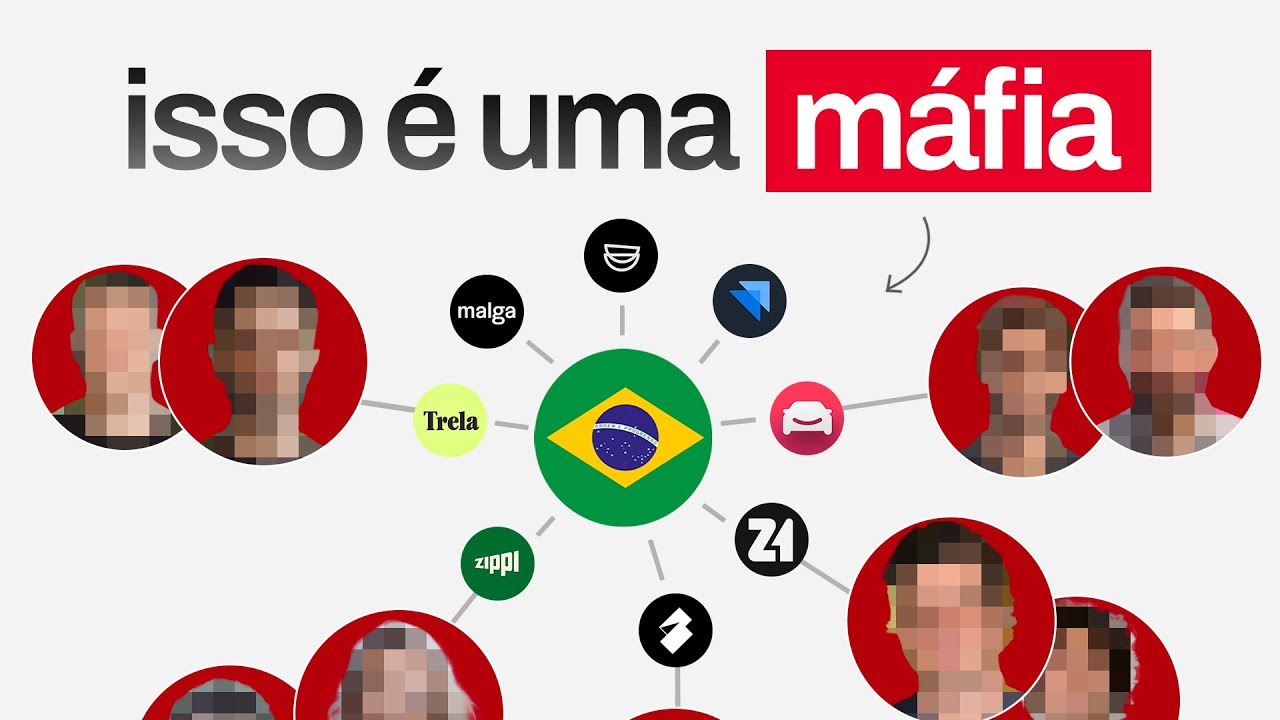
>> Then finally, we took, you know, we had heard, okay, B2B SAS companies um are, you know, the way to go. um they're everyone like gives up on the vertical SAS ideas and goes there and that usually ends up working out for them. So we took Ripling as like a great example of a horizontal SAS company.
>> Yeah.
>> And they can just sell their product to everyone who has runs payroll, right? So like literally take everyone who gets paid in the world and multiply that number by let's say $9 per month or whatever it is and boom, your market is orders of magnitude larger. So 10x, 100x, a thousandx bigger than all these other ideas. And so once you look at that, you're like, "Oh my god, okay, clearly like there's a massive difference in in markets here." Um, and then you also have to ask yourself these other questions. So for example, hey, like aren't the bigger markets more competitive? And it's like yes, they are more competitive, but they're so big that it doesn't matter. Salesforce as an example owns 24% of the CRM market and that's it. And they're the biggest CRM company in the world. You could be like the 10th biggest CRM company in the world and still be a billion dollar company. Meanwhile, if you go after one of these smaller markets, they're still going to be competitive and you're fighting over pie that's just going to get sliced up and there's nothing left >> and it's really growing.
>> Yeah. And then the other parts are like, is it e any easier to build like the $10 million per year revenue business than the like hundred billion dollar revenue business in terms of like your effort and your time? And we decided no, we're still going to go like really hard on whatever we do. So, still one life.
[laughter] >> Yeah. You may as well just like go after the most ambitious thing that you can come up with.
>> I love this. And while you're eating, I will be doing a few interruptions here to testify that I'm all in on Maria's approach. Uh don't think I'm having anything against because I'm all into fun. The first naming of assomic was actually like this data which meant literally [ __ ] amazing. It was beeped on radio and TV shows, but we chose an idea based on markets how how it grew, but also having drive from it. We were just so passionate. It started to pick up so quickly. things were falling into place and that energy that is surrounding something so new. It's very important especially for founders to feed from that and then to transfer to the team. It also sounds like you're very logical and rational and you understand your goals and it all sounds so perfect. You chose an idea being so rational. Um were you ever on the verge of like existential crisis as co-ounders any emotional crisis >> all the time? Um I think like >> I'm glad you're saying that because everyone just sees such a grounded gathered person and it's like yeah behind the scenes.
>> Well the thing is like um there's like constant paranoia about what we have and whether it's going to work. So even like you know our idea was not obvious and we actually our initial concept for Pylon was not what it is today.
>> Mhm.
>> So when we started we basically were like okay let's find a really big market because eventually we can like grow into that market and there's a lot of money to be made in the broader space. So like let's just like make sure we are in a big market to start with. And so we looked at horizontal categories that of products everyone needs to buy. Customer support being a massive category. Um and then you know we saw this trend and we're like okay like is this like too small of a trend? Like a lot of people have tried this already. There are a couple players who are like early stage startups who are doing it. And you asked the question like why aren't the incumbents doing it? Like the big companies already um why aren't these other smaller companies big already? So yeah, we had constant doubt to be honest and it was also like you know YC doubted it as well like they said hey we think your idea is terrible but like come interview anyway because we like you guys and YC expects you to pivot anyway so they're like we're betting on the founders here. So even during YC you know halfway like like 2 weeks in we're asking what um Dave Lee one of our YC partners were like hey you know we think that like are we too early and he gave us some confidence. He was like, "Well, you know, like it seems like this type of company, you're actually really betting on a trend." And so, yeah, like it's a if I were in your place, that's like a fair fair bet to make. Um, and then even a year into the company, hey, you know, we uh we are first just like this integration between products like Zenesk, ticketing systems, and like Slack. And so, we're just in integration at that point and still unclear like how do we become a huge company?
>> And so, only a year in did we really decide, okay, let's evolve into a full support platform. And that was only possible because incumbents in our space like Zenas were kind of on the downhill.
They had been acquired by private equity. Um it seemed like they were cutting their team. It seemed like they were innovating less. So hey, here's an opportunity to and like people were feeling that the their customers and so okay here's an opportunity to actually come in and kind of be this next generation platform that people choose as an alternative. So that had to happen. Uh chat GPT had to come out. Um, and so yeah, timing wise, like a lot of things had to go right. And so there was constant doubt and it makes sense in hindsight, but it was not obvious on on the way there, but the core tenants build in a really big market and just like iterate a lot and try to find some sort of growing trend. Those did end up being being the right bets to make.
>> I'll get back to to that topic. I'd like to move forward with the numbers. As you mentioned, Marty, not convincing one of earlier co-ounders to leave his stable job, and I don't think it's on you.
Yeah, >> but you managed to convince someone else very quickly and very high level. I'm talking about fundraising, outstanding fundraising that you and Pylon executed.
So for the audience, just sharing some numbers, you guys raised 3.2 million seed round in 6 days.
>> Then 17 million Sirius A in 14 days >> and now we are at Sirius B stage 31 million raised in 7 days in a week.
>> Right.
>> Excuse me.
how and and why >> in terms of I know that you guys were raising well not needing money and saying you don't need money which is [clears throat] the best point >> but how and why >> it's cuz we're just focused on building a big company >> honestly I think like it's you know so many people are just trying to come up with some sort of like story about how hey I'm going to come in and pitch an investor how I'm like so passionate about this idea and this category and like here's how I felt the problem before and that's why I'm the best person to work on it But to be honest, like I think oftentimes it comes off as inauthentic because the true motivations for people that are building a company might be something else. And so for us, it's just like look, like we're just having fun. We're trying to build a big company. Here's how we thought about it.
Here's the market. We [snorts] worked backwards from that. Here's the logic.
And it'll it all just like makes sense, >> right? So I think one, we're very aligned with how investors actually think about companies as well. So I've been told that sometimes that like we think like investors actually not uh as much as founders sometimes. Um and so yeah that's one really important piece.
Um there is a component of of course like great storytelling. You want to like be able to be like extrapolate okay here's where we are now and extrapolate out towards the vision. But really at the end of the day it's like are you building a a great business or not? So the thing is we basically don't think about investors at all. So like you know coming into our series A we were not thinking about investors. Coming to our series B we were not thinking about investors.
>> So highlight to other founders no prime networking where you spend weeks meeting people up front so then you close faster. It's not how it happened. It happened backwards from your growth and leverage and numbers and clear vision where you're going and supporting with results. Am I correct with how it worked?
>> Exactly. Yeah. And so like you know um to give you a sense like the way our series A went was we uh we basically had some angel investors who were on our investor update email. So every month we sent an update. Here's how the business is doing whatever. Um that person got really excited, wanted to lead our next round and so proactively reached out >> right and so we weren't thinking about it. In fact we had been cash flow positive for the 3 months prior. So we were actually making money. Um >> that's when they come.
>> Yeah. Exactly. Exactly. So they'll come when things are good. Um and so yeah I like I will say this makes it sound like two. So first off depending on howworked you are in investor ecosystem of course like for us we had at least worked in San Francisco kind of worked in [music] tech like gone we did do like some of the mingling before we started pylon. So like especially Adith and Robert um would go to like lots of meetups just to like learn and try to understand okay like what are the the components of building companies. Um, and so yeah, we were probably more plugged in than than everyone who's listening, but at the core it still ends up being like, do you have a great business or not?
>> So, let's highlight to the audience that you guys were disciplined into sending monthly investors updates and that what engaged the person to come and do the next round. Yep.
>> Am I right? Is it internal or external as well? Investor updates. So, like for broader audience.
>> Yeah, external. Well, it's it's for anyone who's an investor in Pylon already.
>> Okay.
>> And so it was, you know, there were some investors on our cap table who were also partners at firms. Yeah.
>> And so they kind of saw the context and saw the journey. And another thing I'll point out that worked really well is we're very known on LinkedIn. So like as part of our go to market strategy and marketing, we post a lot about how we're building the company, how we think about the company, how we think about the market, what's going well, what's going wrong. And so, yeah, we build in like very publicly. And so, a lot of people, it's just like sales where if they already have context or have heard of you before, of course, they're going to be much more interested and be like, "Oh, yeah, of course, Pylon." Right?
Like, I know about Pylon. That's of course. So, yeah, I think the LinkedIn marketing also helped a lot.
>> Mhm.
>> What a flex. the San San Francisco.
>> Yeah, >> I want to move to numbers a bit and share what you shared about. You posted that you guys burned 4 million um have 16 million in cash and 11 years runway, >> right?
>> So, actually we we have much more than that now because we raised our series B.
Um >> you've been shy.
>> Yeah. And so now it's we have like 40 something million dollars in the bank.
Um I should probably know exactly how much. Uh and yeah, we definitely burn a lot more now. Um so the thing is especially from series A to series B, >> you know, we have enough product market fit now where we can be like, okay, it's like time to go capture market, right?
Like we have a product that is very sellable. When we're in deals against Zenesk, against Salesforce ServiceCloud, against intercom, we win. And so we just need to get in front of the right people. And so we went, you know, two quarters ago, we were uh three account executives, so sales people. We had zero STRs doing outbound. Now we are 10 AES.
We have a head of sales. Um we have six STRs. Uh increased marketing team from you know let's say it was probably like one person to four people now. Um looking for a head of marketing as well.
We have RevOps now. Um our customer success team went from maybe like 1 to 7. Our support team went from maybe like two to five. Um we have a solutions team that went from 0 to three. Um and so all of these functions are growing and it's it's just time to go win market. Like we have a great product. We know people love it. We know generally how to sell it. And of course, we can get better, but it's working. And so now it's like how do we scale the thing that's working to get to like the next rung of revenue.
Yeah.
>> You kind of go up front with even answering the question that is still unasked. But that's exactly where I was uh leading in terms of two parts of the question. How does your current capital allocation looks like? And with all those numbers and feeling safe, what is number one thing that you as Marty would still reject as a spend? Like no, that's ridiculous. That's we're not doing that anyway.
>> Yeah. I think there are things that we've had we've gotten like some requests for for in the spirit of like culture building that I think are just not worth money. So, for example, there's like one vendor who was trying to pitch us on like oh every week do like you know coffee have a barista in the office and I'm like we are not at the scale of company where we should just like pay a barista to come and like make coffee for everyone. it's like way too like safe like we shouldn't be spending money on those things and like we shouldn't feel that comfortable um most importantly. So like the mindset it should not shift from hey like we need to be scrappy we need to move fast where like you know we should be moving we should invest heavily into um like people instead of like you know coffee in the office. So I think that's one thing where it's like complete waste of money. If it's something to experiment on revenue for example our growth marketer Audi he came up to me he was like hey like you know I was asking them like where can we get more pipeline from? And he was like look well I there's some low hanging fruit potentially in our Google ad spend. You know I could probably 3x that and we can see what happens. And so he 3xed it and you know we two to 3xed our pipeline that was being generated from that channel. It's like boom. Okay. And that to and to be fair, that was like a big high like number decision. He was like, "Are you sure this is gonna be like $4 million per year?" I was like, "No, we need the pipeline. Like, go do it. Try it. Like, go see what works." Um, and then if in in a month it's not working, let's cut it off, right? U that is one thing that capital allows you to do is just move way faster. And so, um, that was our mindset coming into the series B, hey, we're going to raise this $30 extra million. We're going to spend it, right? Like spend it to grow as quickly as we can, um, so we can capture as much market as we can. So you guys are already well raised.
>> Yeah.
>> But still thinking scrappy.
>> Yes.
>> I remember you posting starting with $8 per hour rate then transitioning skipping vacations as founders and talking culture and it being expensive and abstract expense.
>> Um >> what really what what is really building the culture is how founders role model >> and you guys like literally role model.
Where is the line not to push too hard was as you sharing like 92 hours weeks long >> right >> can you guys say to each other that's enough or how do you feel how do you resonate how do you listen to yourself and like I need to balance in between that role modeling and actually be a human and like feel well >> the thing is like we don't really think about it in the sense of like I mean the company just needs work to get done right so it's not like oh like I can pull back and do less like we have to keep going. Like the reason I don't sleep that much, the reason I work 92 hours is not because it's like, oh, like I need to like be in the office until this hour. It's like, no, there's a lot of [ __ ] to do. And so, we're just trying to get as much work done as possible.
And we're not thinking about any of like the optics of that at all. We're just trying to build a successful company.
And so, you know, if someone feels like, oh, they're going to feel bad because like the founders are working harder than they are, um, maybe it's not the right company to be at, right? like the founder should work as hard as possible and that hope that should be for the right person motivating and exciting because it's like hey if they're putting that much in like I also want to put a lot in and like I see how hard they're working like I also want to work hard so yeah if if you if someone's like feels like that's not for them or it's going to make them feel uncomfortable because hey we try to not take vacations or or do anything like probably not the right company. You do make a lot of people mad with those quotes [laughter] like it is controversial right but I'd like to highlight and what you guys highlighting all the time that it is for us as founders that it's three of us living in the office putting those weeks it's not expectation for the team but it sets the tone in terms of how much you put on the table how much your skin is in the game and you could have done differently already with the funding delegate so much more be like I need to put my strategic hat now and just delegate. Why aren't you going this road and just allowing yourself good vacation around Christmas instead of being back to back right now with me on meetings?
>> Well, because the top priority is build a company, >> okay?
>> Like build a successful company. That's it. Like there's nothing else. Um and so for you know when we started the company is like what are the high priority things happening in our life? Um so you know I at the time had I actually had started dating someone a few months before he started the company. Um, Robert, my co-founder, was also dating someone. Um, Advith was not. Um, but there was nothing about like strong commitments we had in terms of like family or like kids or anything like that. So, it's like hey, you know, we're in our like mid20s at that point like who like it's just us like let's just go do like whatever we need to do. And so, it's everyone can't do the like live in the office, pay yourself nothing. But if you're in your mid20s like why not?
>> Yeah.
>> Right. Like why not? That's it's fun.
It's exciting. like that's just how we want to spend our time. To give people a sense like what we did, we were extremely frugal in the beginning. We didn't want to spend any money. We were like try to like be boots on the ground and like yeah, spend absolutely nothing.
So we would eat like McDonald's all the time. Probably in hindsight not the best idea. Um we paid ourselves uh $35,000 per year after we got our YC money. And even to start when we got that 500k, we didn't want to touch it. We're like, "Okay, that's like >> we need to protect that money. We need to like not spend it." And eventually we're like, "Okay, we should probably pay ourselves at least minimum wage." So we and we even felt bad about that. So we started paying ourselves $35,000 per year. Um that sounds like not a lot, but actually when you don't have much going on in your life, it's we were saving money every month.
>> Yeah.
>> I actually it's like there was money going into my bank account. It wasn't we were like cash flow positive even even in San or like net net negative. Um even in San Francisco, $35,000 is actually enough if you are single and don't spend a lot of money. So we started there.
Then we raised our salaries as revenue increased. So we raised it to 50k eventually, then 75k, then 100k, then 115k and so on.
>> How are you defining those revenue milestones? One of the things everyone asks about like how do we understand that it's worth it to do?
>> I mean it's just like set a goal for yourself and be like hey like as a reward for hitting this like we'll bump our salaries, right? I think when we bumped our salaries to 50K, we were probably at like 500K in revenue or like 755 750K or like 100K a million, something like that. And so just like align it with the company, right? And so it's like okay, you probably can pay yourself more. If you are like making way more as a company, then it feels lower risk. And it also just aligns the founders with the outcome of the business. when we're recruiting our early employees, of course, like, you know, it should say something that the founders are like all in on equity and they make basically no money >> and we could be making a lot of money going and working at some big tech company, which is what we were doing before.
>> So, I think yeah, it should be motivating for the right person that hey, the leaders of the company are all bought in. Um, they have to make this company successful and that aligns also with the employee as well who wants their equity to be worth something.
>> Yeah. Yeah.
So Marty, thank you. It was a pleasure to have this talk with you, to learn from you. It's an honor to work with your company with a stomach and I'm happy to showcase your example being fun, open, authentic, real human, not robotic person in LinkedIn preaching what they're not doing, but as an example of real person with conviction and optimizing for success. So I'm sure that it makes people uncomfortable how much you're optimizing for that. But I wish you to win the game.
>> Cool. Thank you very much. Thank you.
>> Thank you, man.
>> Yay. Have a bite.
>> Okay. Awesome. Let's do it. Yeah.
[music]
Up Next
22:55
Jim Rogers Summer Update: Gold, Silver, and Debt Risks
@SoarFinancially
16.9K views•2025-07-18
46:36
Retention Habits of Top DTC Ecommerce Brands Revealed
@SendItPodcast
44K views•2026-03-03

15:23
Decoy Effect: How Pricing Psychology Influences Consumer Spending
@bobinvestsUS
90K views•2026-01-05

17:30
The Planned Obsolescence of Light Bulbs and Tech
@veritasium
25.3M views•2021-03-26
Related Study Plans & Knowledge Roadmaps
Structured learning paths in Business
business
Pop-Up Retail: Strategy, Design & Execution
01Introduction to Pop-Up Retail & Strategic Goal Setting
02Budgeting, Site Selection, and Legal Essentials
03Experiential Retail Design & Visual Merchandising
+ 2 more learning modules
15h5 modules
Explore Roadmap
business
Reg CF: Startup Funding, Marketing & Launch
01Introduction to Equity Crowdfunding & Reg CF
02Platform Selection & Legal Preparation
03Crafting High-Converting Campaign Assets
+ 2 more learning modules
14h5 modules
Explore Roadmap
business
Productized Services: Scaling Solo Freelance
01Foundations of Productized Services
02Packaging and Scope Definition
03Pricing and Subscription Models
+ 2 more learning modules
15h5 modules
Explore Roadmap
business
Gov Procurement: Find, Bid & Win Contracts
01Introduction to Government Procurement & Business Setup
02Small Business Certifications & Set-Asides
03Finding and Analyzing Contract Opportunities
+ 2 more learning modules
14h5 modules
Explore Roadmap