IT due diligence examines a company's technology infrastructure including systems, processes, hardware, network security, data management, and software efficiency to assess integration potential with an acquirer's systems, while production technology due diligence evaluates manufacturing or service delivery processes, equipment, and expertise to analyze operational efficiency, capacity, sustainability, and future adaptability; combined IT and PT due diligence is essential when technology infrastructure is heavily integrated with production processes, requiring systematic assessment of IT teams, compatibility analysis between systems, and development of integration action plans to identify gaps, overlaps, and opportunities for technological advancement.
IT & Production Technology Due Diligence in M&A
Added:Fundamental concepts of Mergers & Acquisitions (M&A), including the phases of the deal lifecycle and the general purpose of due diligence.

Mergers and acquisitions (M&A) are fundamental business processes involving the purchase of shares or assets of a company. The two main types are Share Acquisition (purchasing shares) and Asset Acquisition (purchasing assets). M&A is called an 'acquisition transaction' because it passes through multiple complex stages, some lasting up to one or two years. Due diligence is the 'soul' of M&A, revealing all risks and determining transaction terms. Share acquisition can be Full (100%) or Partial (less than 100%), with the percentage determining control level. The process requires careful attention at every stage, as errors can lead to inaccurate results.
The complete M&A deal lifecycle consists of several sequential phases: (1) Sourcing - identifying targets based on strategic growth objectives, (2) Due Diligence - typically lasting 3-5 weeks where IT assesses the target, (3) Sign to Close - preparing for formal ownership transfer, (4) Day One - when the company is formally owned and keys are taken over, and (5) Long-term Integration - preparing for sustained post-merger operations. Understanding this lifecycle is essential for IT teams to know when to engage and what activities to deliver at each stage.
The M&A deal cycle consists of three main phases: (1) Deal Strategy and Target Screening - identifying assets that fulfill strategic growth rationale; (2) Due Diligence - validating historical financial performance and confirming strategic rationale; (3) Deal Closing - where operational components are handed off to business stakeholders.
The M&A process requires understanding the complete framework before proceeding. The process is divided into two main phases: initial negotiations where the seller presents conditions, and detailed due diligence leading to closing. The intermediate point where the seller presents conditions serves as a critical decision point. Due diligence involves significant costs ranging from 1 million to 70 million yen. The seller must present conditions first to create security before the buyer invests. Exclusive Negotiation Rights protects the seller while giving the buyer confidence. Documentation requirements include general ledger records and all contracts. Basic Agreement may have partial legal binding force, establishing the framework for further negotiations.

Mergers and acquisitions (M&A) involve complex business transactions where companies either buy or sell their operations, requiring careful planning, professional advisors (including investment bankers, M&A attorneys, tax professionals, and accountants), and understanding of valuation methods like EBITDA multiples; the process typically takes four to six months and involves key stages including confidentiality agreements, letters of intent, due diligence, and closing, with strategic buyers focusing on synergies and private equity buyers on future returns, while earn-outs can bridge valuation gaps between parties.
Basic enterprise IT architecture principles, including cloud vs. on-premises infrastructure, database management, and enterprise software systems (e.g., ERP, CRM).

This section contrasts cloud and on-premises infrastructure: On-premises requires high upfront capital investment, offers less flexibility for scaling, and has longer time-to-value. Cloud eliminates upfront costs through pay-as-you-go pricing, provides built-in security integrations, enables rapid experimentation, and supports business-oriented resource consumption. Cloud architecture principles include starting with minimal resources and scaling based on actual usage, testing performance requirements through load testing, leveraging infrastructure-as-code for automation, designing for evolutionary architecture, implementing horizontal and cross-region scaling, and conducting architectural reviews for continuous improvement.

ERP systems consist of interconnected core modules including Finance, Human Resources, Inventory Management, and Procurement/Production. Cloud ERP infrastructure is hosted on remote servers maintained by vendors, with third-party cloud service providers managing the technical aspects. The system maintains constant connectivity, automatically updating all connected accounts. ERP depends on robust database management systems to handle large volumes of business data, offering scalability, reliability, and accessibility. The architecture enables seamless data flow across all business processes, supporting organizations in managing complex operations efficiently.

Enterprise architecture principles are organized into four domains—business, data, applications, and technology—totaling 21 principles that guide enterprise organization. Key principles include maximizing enterprise benefits, universal information management where all employees participate in data handling, technology independence for applications, and responsive change management to adapt to market requirements. These principles serve as foundational guidelines before building enterprise architecture, ensuring systems are designed for flexibility, security, and business value maximization.

Cloud architects must understand enterprise architecture principles including server virtualization, container orchestration, storage area networks, block storage, object storage, file storage, relational databases (Oracle, MySQL, MariaDB), NoSQL databases (Apache Cassandra, MongoDB), unified communications, ERP systems, CRM systems, and how these components optimize business performance. The goal is designing solutions that solve specific business problems rather than simply deploying technology.
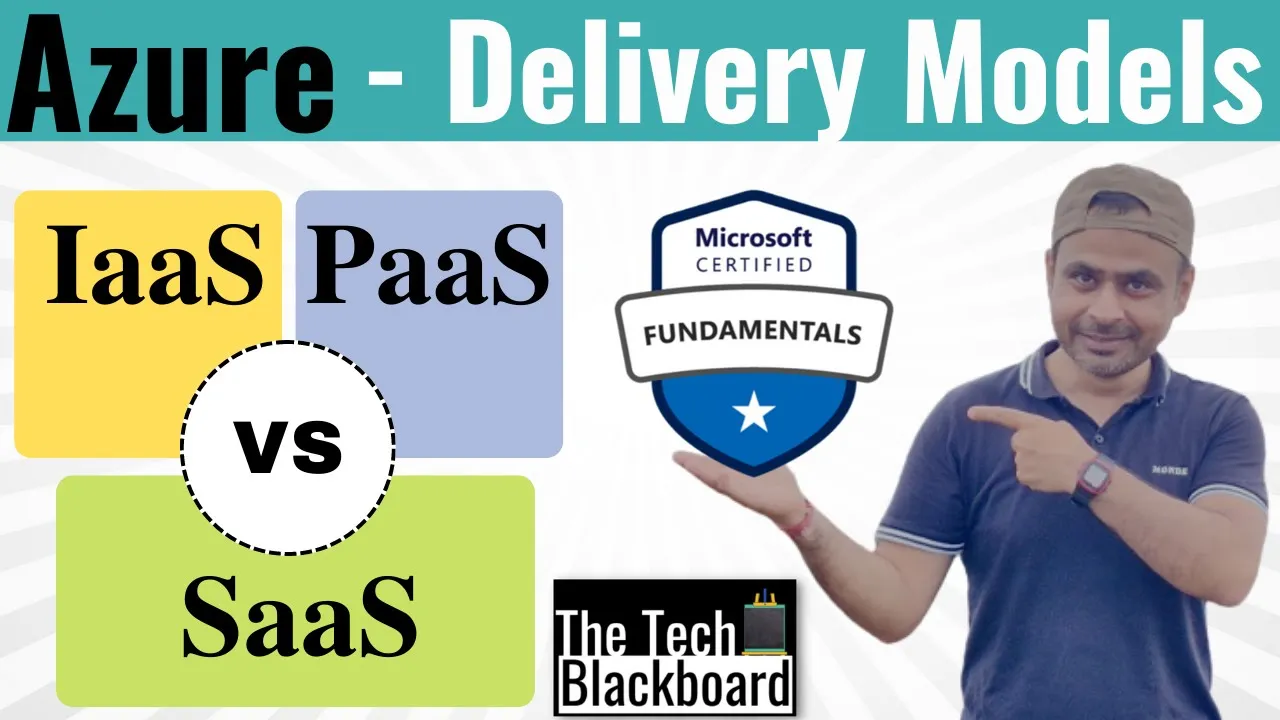
On-premises IT infrastructure involves building physical servers, networking, storage (HDD/SSD), virtualization, operating systems (Windows/Linux), middleware, and runtimes. This three-tier architecture (infrastructure, platform, service) requires enterprise ownership and maintenance. While offering security, offline operation, and hardware control, on-premises suffers from high CAPEX costs and poor scalability during business surges. Cloud delivery models address these limitations by shifting infrastructure management responsibility to cloud providers, enabling flexible scaling and reduced capital investment.
Fundamentals of Production Technology (PT) and Operational Technology (OT), such as automated manufacturing systems, Industrial IoT (IIoT), and Supply Chain Management technology.
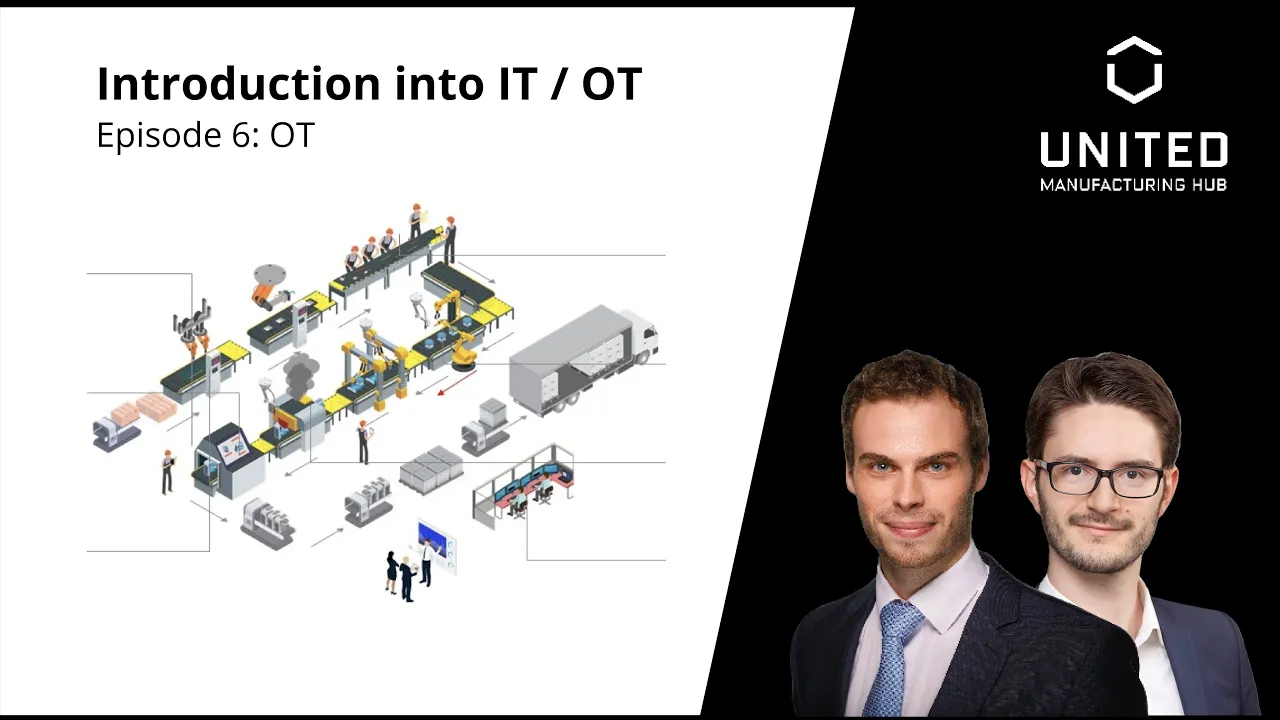
Operational Technology (OT) refers to the hardware and software used to manage, monitor, and control industrial operations such as production lines, robots, and machines, differing fundamentally from Information Technology (IT) in that OT prioritizes reliability, safety, and maintainability over user experience and quick development cycles; OT systems typically run for 20-50+ years with legally required certifications for safety, use specialized industrial vendors like Schneider Electric and Siemens instead of general IT companies, and require extensive procedures like Failure Mode and Effects Analysis (FMEA) to prevent safety failures, making them inherently slower and more conservative than IT approaches.

Operational Technology (OT) and Industrial Internet of Things (IIoT) represent the evolution of industrial automation where machines are increasingly networked and connected. These terms are essentially interchangeable, with OT referring to technology controlling industrial processes and IIoT applying internet connectivity to industrial systems. This progression is driven by the need to reduce labor forces and minimize facility footprint. OT networks integrate with enterprise IT networks through systems like SCADA and ethernet-driven cameras. Modern applications include satellite-controlled vessels with skeleton crews, demonstrating how networked OT enables global operations with minimal physical presence. Key security standards are established by organizations like NIST and the Department of Defense.
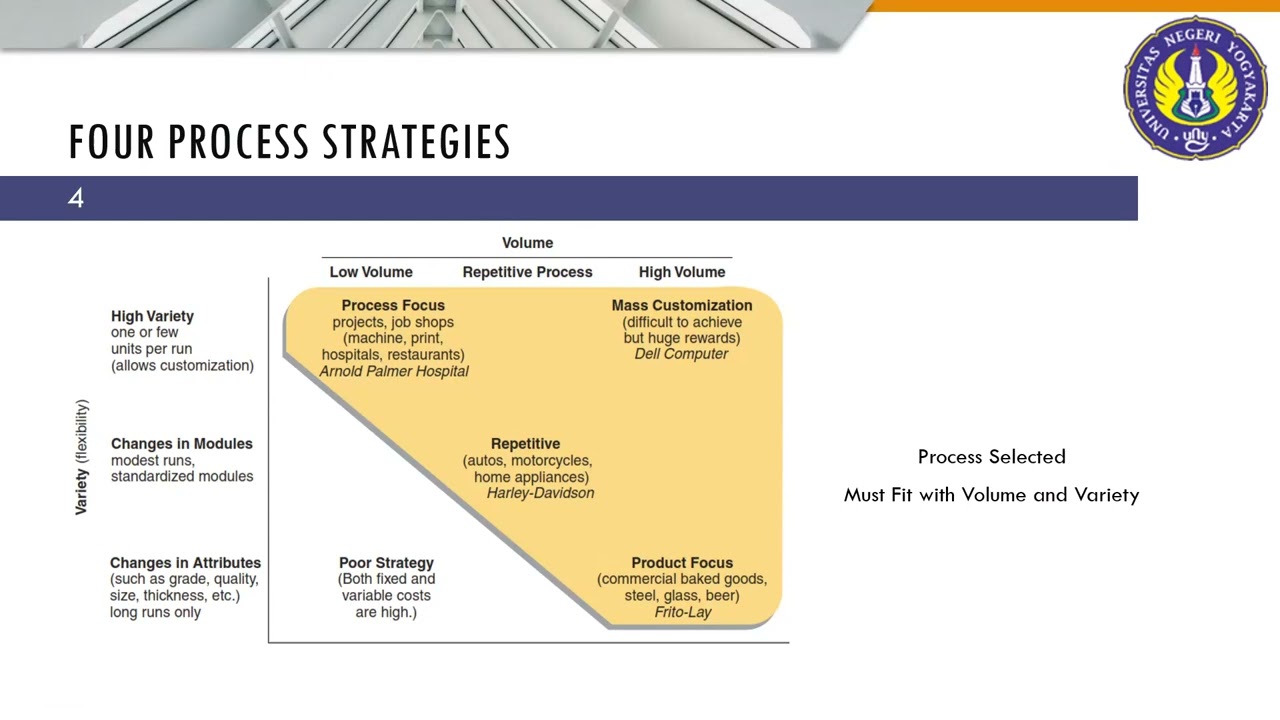
Nine production technologies enhance operations: CNC machines provide computer-controlled precision manufacturing; Additive Manufacturing (3D printing) enables custom production and rapid prototyping; Automatic Identification Systems (barcodes, RFID) enable tracking and data efficiency; Process Control uses IT for real-time monitoring and quality control; Vision Systems use cameras for automatic inspection; Robotics replace repetitive tasks with flexible automation; Automated Storage and Retrieval Systems (ASRS) enable computer-controlled warehouse operations; Automated Guided Vehicles (AGV) transport materials autonomously; Flexible Manufacturing Systems (FMS) adjust to various products; Computer Integrated Manufacturing (CIM) integrates all production processes and data. Higher technology levels increase integration, efficiency, and complexity while requiring greater investment and skilled personnel.

Operational Technology (OT) refers to dedicated electronic devices with specific industrial purposes, such as Siemens or Allen Bradley equipment, featuring proprietary hardware and software designed to control physical processes like automation and production. Internet of Things (IoT) encompasses lightweight, scalable electronic devices like cameras, access controls, and temperature sensors that use proprietary protocols. Industrial IoT (IIoT) represents a specialized derivative of IoT designed for harsh industrial environments, requiring greater temperature tolerance, durability, and resistance to extreme conditions.
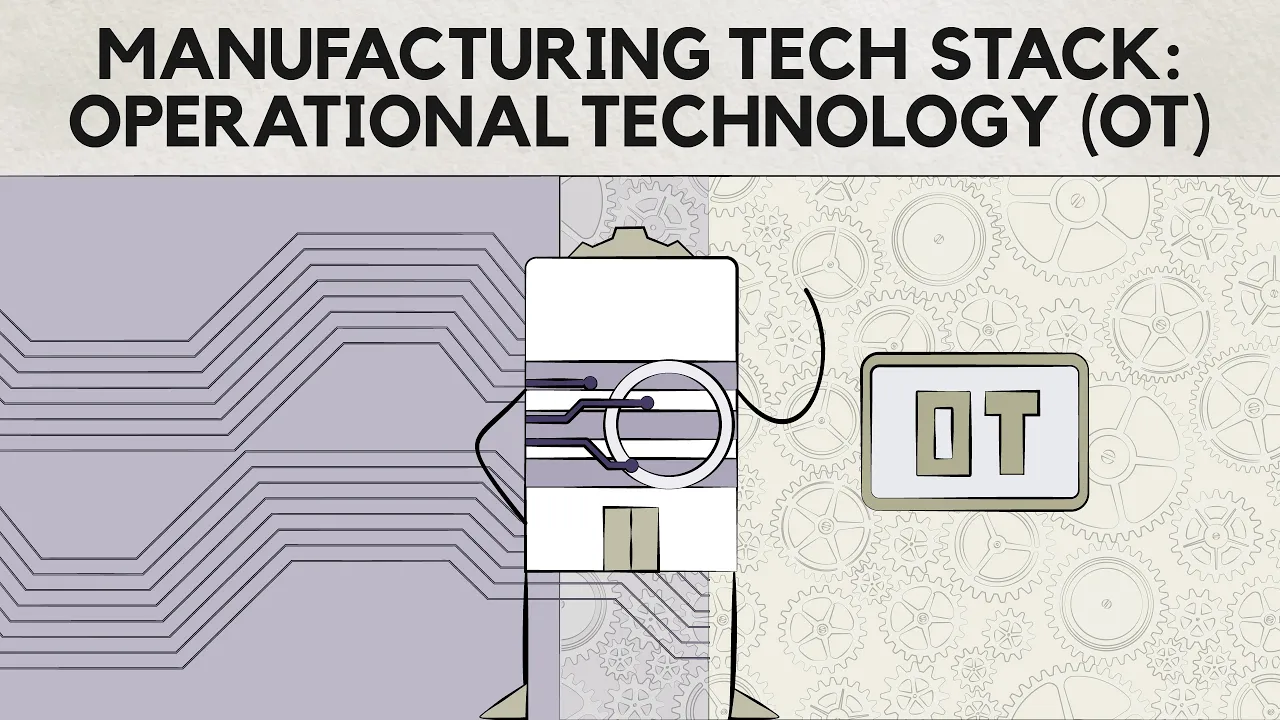
The manufacturing technology stack is divided into two broad parts: IT (Information Technology) and OT (Operational Technology). IT runs business processes in office buildings, handling administrative and data management functions. OT runs the physical processes of producing goods in manufacturing facilities themselves. This distinction helps organize the various technologies used in modern smart factories.
Basic principles of IT governance, data privacy regulations (e.g., GDPR, CCPA), and cybersecurity risk assessment frameworks.
Key IT Governance frameworks include COBIT (Control Objectives for Information and Related Technology) by ISACA, providing comprehensive measurement tools for IT governance. ITIL (Information Technology Infrastructure Library) focuses on IT service management with five practices: service strategy, design, transition, operation, and continual improvement. COSO addresses enterprise risk management. Core principles include: IT should support business processes, involve all management levels, become a strategic asset rather than expense, and provide competitive advantage through professional management.

Data processors handle personal data on behalf of controllers following their instructions, with obligations including processing only according to controller directions, maintaining confidentiality, implementing appropriate security measures, and assisting controllers in meeting compliance requirements. Organizations must maintain detailed records of all processing activities as a common denominator across global data protection frameworks. Risk assessment forms the foundation of effective cybersecurity, requiring identification of assets, categorization of data types, and evaluation of sensitivity before implementing security measures. The six core principles of data protection include lawfulness, legitimacy, adequacy, accuracy, retention limitation, and security, serving as universal requirements across global regimes.

COBIT provides comprehensive IT governance guidance through nine domains covering the complete IT management cycle. ITIL focuses on IT Service Management with five lifecycle stages: strategy, design, transition, operation, and continual improvement. ISO/IEC 38500 offers executive-level governance principles emphasizing leadership, responsibility, strategy, acquisition, performance, compliance, and human behavior. ISO 31000 defines risk as uncertainty effects on objectives with principles of integration, structure, tailoring, inclusivity, dynamism, and continual improvement. ISO 27005 addresses information security risk using confidentiality, integrity, and availability principles. NIST provides a seven-step risk management framework.

Effective IT governance systems must adhere to seven fundamental principles: provide value to business and stakeholders, maintain holistic interconnected components, be dynamic and adaptable to organizational changes, clearly distinguish governance from management functions, be tailored to organizational characteristics, apply integrity across the entire organization, and be based on a conceptual model. Framework design requires three principles: conceptual model foundation, openness and flexibility for continuous improvement, and alignment with industry standards. These principles ensure governance systems are effective, sustainable, and aligned with organizational needs.

LGPD requires clear communication about data purposes and specific consent for third-party sharing. Digital certificates use asymmetric cryptography with public-private key pairs for authentication. COBIT 2019 provides IT governance frameworks with design factors enabling tailoring to organizational contexts. The Balance Scorecard distributes objectives across four dimensions: Financial (revenue, costs), Customer (satisfaction), Internal Processes (efficiency), and Learning & Growth (improvement). The PDCA cycle (Plan-Do-Check-Act) provides continuous improvement methodology for IT projects, ensuring systematic management and organizational learning.
Prerequisite Knowledge
- Concept 01Fundamental concepts of Mergers & Acquisitions (M&A), including the phases of the deal lifecycle and the general purpose of due diligence.
- Concept 02Basic enterprise IT architecture principles, including cloud vs. on-premises infrastructure, database management, and enterprise software systems (e.g., ERP, CRM).
- Concept 03Fundamentals of Production Technology (PT) and Operational Technology (OT), such as automated manufacturing systems, Industrial IoT (IIoT), and Supply Chain Management technology.
- Concept 04Basic principles of IT governance, data privacy regulations (e.g., GDPR, CCPA), and cybersecurity risk assessment frameworks.
Subsequent Learning
- Step 01Post-Merger Integration (PMI) execution methodologies, focusing on the technical consolidation and migration of IT and PT systems.
- Step 02Techniques for identifying, quantifying, and mitigating 'technical debt' and cyber risks discovered during the due diligence phase.
- Step 03Technology asset valuation models, detailing how IT/PT capabilities directly impact target valuation and final transaction terms.
- Step 04Organizational change management strategies, specifically designed for aligning disparate tech cultures and engineering teams post-acquisition.
IT & PT Due Diligence
0:02- 1
Examines IT infrastructure, network security, and data management for compatibility.
- 2
Evaluates production assets and operational efficiency to identify cost reduction opportunities.
- 3
Checks readiness for market shifts and future capital needs.
The Agile and Culture-First Counterpoint to Static Tech Due Diligence
While traditional IT and Production Technology (PT) due diligence relies on exhaustive, checklist-driven audits of assets, codebases, and infrastructure, critics argue this static approach is fundamentally flawed. This counterpoint—often rooted in agile management and human-centric organizational theory—posits that rigid technical audits create a false sense of security while ignoring the dynamic drivers of M&A success: cultural compatibility, team adaptability, and the target's capacity for continuous innovation. Standard due diligence often treats technology as a depreciating, static asset rather than a living system sustained by human capital. Overly bureaucratic technical assessments can alienate the target’s key engineering talent, leading to post-acquisition brain drain—the very individuals who understand the systems. Furthermore, in fast-evolving industries, the findings of a months-long IT audit may be obsolete by the time integration begins. Proponents of this counterpoint advocate for 'dynamic capability due diligence,' which prioritizes evaluating the target team's problem-solving velocity, alignment of engineering culture, and post-merger adaptability over rigid software and hardware inventories.
Post-Merger Integration (PMI) execution methodologies, focusing on the technical consolidation and migration of IT and PT systems.
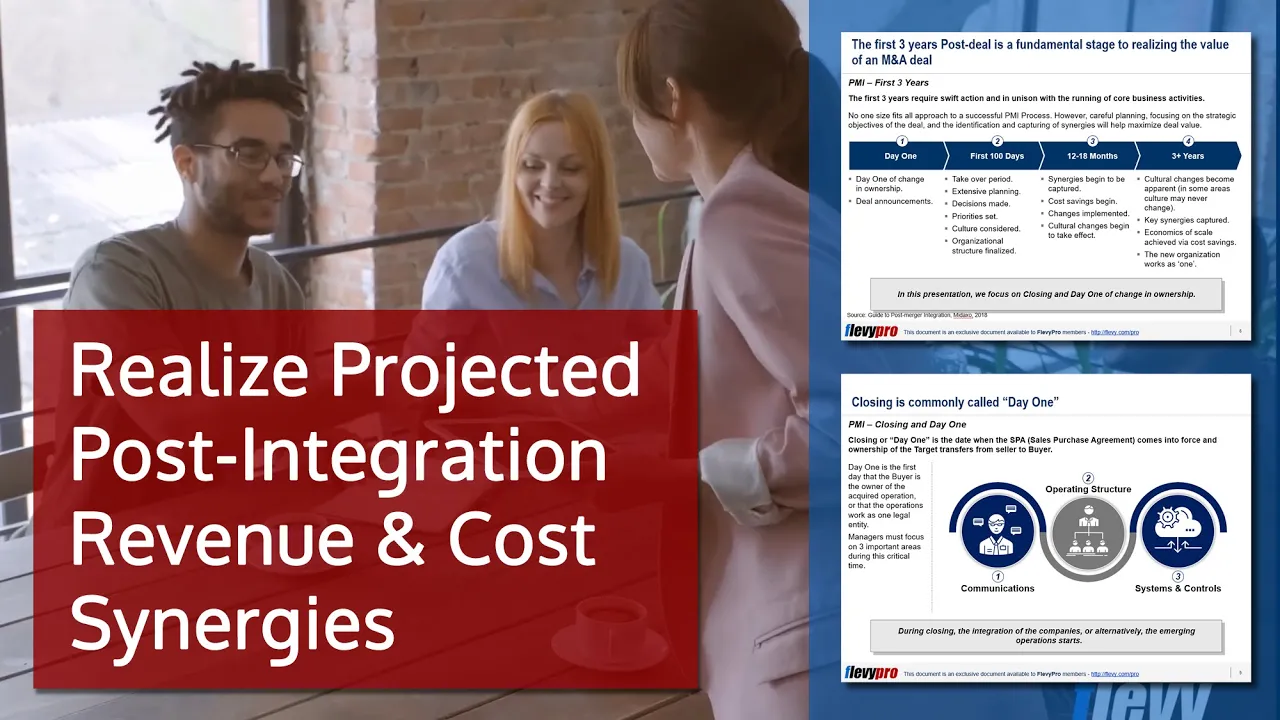
Post-merger integration (PMI) is the complex process of combining operations, processes, systems, and cultures of merged or acquired organizations to create a unified entity that leverages combined strengths for efficiency and value creation; successful PMI requires addressing key challenges including cultural alignment, rationalizing overlapping functions, integrating disparate systems, and managing employee resistance, and follows four critical steps: defining organizational structure, collecting data to confirm synergies, planning integration execution, and executing the PMI plan from the beginning of the deal.

When Broadcom acquired VMware, the integration strategy focused on three key priorities: consolidating data to create a single source of truth, simplifying the environment and end-to-end processes, and streamlining the number of SKUs and go-to-market strategies. The primary challenge was managing parallel applications in both organizations. The solution involved consolidating ITSM and case management into a unified platform, which enabled easier coordination of customer and partner information, simplified onboarding/offboarding processes, and allowed seamless transition between case management and traditional ITSM workflows. This unified approach reduced complexity and enabled the organization to scale 10x in volume while managing increased data complexity.

The M&A process requires: 1) Clear deal structure that satisfies both parties, 2) LOI (Letter of Intent) that establishes terms, 3) Negotiation of key terms, 4) Due diligence confirmation. Due diligence includes: 1) Commercial due diligence (market understanding), 2) Legal due diligence (contracts, IP, compliance), 3) Tax due diligence (historical tax issues), 4) Financial due diligence (commercial factors, customer contracts). Each type addresses different risk categories. The closing process involves: 1) Notarization of agreements, 2) Contract signing, 3) Registration in commercial register, 4) Communication to stakeholders. Post-merger integration involves: 1) Cultural integration (building relationships), 2) Financial harmonization (reporting standards), 3) System implementation (CRM, HR tools), 4) Share services setup. Cultural integration is the most important factor - trust between partners is essential.

Post-merger integration is the most critical and time-consuming phase of M&A. Successful integration requires: establishing clear single-line objectives for the integration phase; creating joint steering committees with members from both organizations; setting artificial milestones for achieving key integration goals; defining value propositions for each organizational unit; and aligning all advisors toward integration objectives. Without proper planning, integration failures can undermine the entire transaction's value. Regular evaluation every 90 days against established metrics ensures continuous course correction.

Post-merger integration (PMI) is a critical strategic process that determines whether mergers and acquisitions achieve their intended value creation; success requires treating PMI as a deliberate strategic initiative rather than a matter of luck, with key elements including clear governance structures, dedicated project management offices, comprehensive communication programs, cultural alignment, and systematic synergy realization, while financial due diligence must address transaction structures, working capital, funding facilities, and accounting treatments including the new FRS 102 framework for UK unlisted entities.
Techniques for identifying, quantifying, and mitigating 'technical debt' and cyber risks discovered during the due diligence phase.

Technology discovery maps infrastructure components (servers, containers, databases) to software installations through normalized discovery models. These models generate TPM discovered technology records with cached lifecycle information for performance. Risk scoring calculates values from 0-100 for technologies, application services, and business applications based on proximity to support lifecycle end dates. Technologies 90+ days from end of support receive higher scores indicating urgent action needed. Technical debt emerges when discovered technologies don't match TRM standards, generating actionable records for SMEs to resolve. This systematic approach enables prioritization of remediation efforts based on risk severity and organizational impact.

Technical debt, defined as the result of taking shortcuts to meet short-term objectives at the expense of long-term flexibility and security, significantly impacts cybersecurity by reducing the confidentiality, integrity, and availability of data; organizations can manage this risk through accountability, transparent culture, effective planning, automation, and risk-based prioritization strategies.
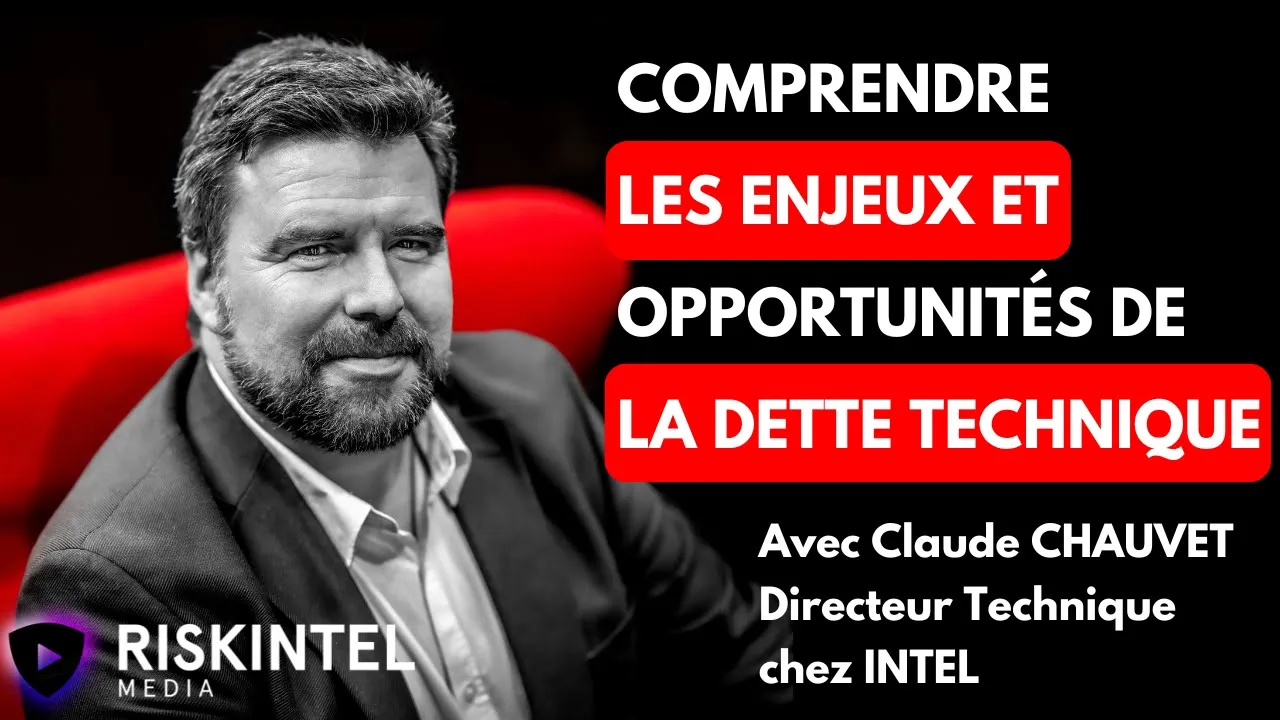
Technical debt creates significant organizational risks that must be communicated to leadership. Statistics indicate that 69% of IT directors identify security risks caused by technical debt as their biggest concern. When technical debt leads to security vulnerabilities, attackers may gain access to sensitive data including client information, with consequences extending beyond immediate financial losses to include reputational damage. Research indicates that 80-85% of cyberattacks result from human error, but organizations with accumulated technical debt are more vulnerable because their systems contain unpatched vulnerabilities. Effective technical debt management requires first identifying where debt exists within the organization - in software, hardware, processes, and working practices. Once identified, organizations must quantify the benefits of addressing debt, including time savings, cost reductions, and security improvements. Technical debt grows exponentially rather than linearly over time, meaning early intervention is far more effective than attempting to address accumulated debt later.

Technical debt refers to the housekeeping activities across IT operations that fall to the wayside as other initiatives become priorities, resulting from task saturation and finite personnel/time trade-offs; it is typically not addressed until financial incentives arise, such as security compromises or audit findings, and effective management requires setting realistic expectations, defending resource allocation, and being intentional about addressing debt while considering downstream effects.

Technical debt refers to business decisions that defer technical upgrades of infrastructure, such as running deprecated hardware and software or failing to complete IT integration after acquisitions. Boards should evaluate whether compensating controls have been built for areas with known risks, such as operating in countries with higher corruption indices. Third-party risk management involves understanding not just customers and suppliers, but also third parties doing business on behalf of or with the company, as these relationships can create significant cyber vulnerabilities.
Technology asset valuation models, detailing how IT/PT capabilities directly impact target valuation and final transaction terms.

Technology value assessment is a critical indicator for decision-making in innovation programs and consortia, measuring value captured from technological assets and linked to return on public investment. A technology consortium is a 'factory of technology' developing applied technologies for specific sectors, while a program acts as an 'architect' facilitating ecosystem-wide technology transfer. A technological asset combines financial accounting concepts with technological origin, requiring demonstrable ownership and benefit generation capability. Types include intellectual property (patents, utility models, copyrights), functional prototypes, technology platforms, codified knowledge, software, algorithms, improved plant varieties, validated data, and business models. The valuation matrix uses two axes: impact potential on market and society, and maturity/commercialization readiness. Three key metrics assess technology readiness: TRL (Technology Readiness Level) measures technical maturity from 1 (basic idea) to 9 (proven system); MRL (Manufacturability Readiness Level) measures scalable production capability; AR (Adoption Readiness) measures market acceptance. Lower TRL (1-3) has less than 1% market probability, while TRL 5-9 shows exponential probability growth. IP protection strategies must be planned early, as 60-70% of global transfers use trade secrets rather than patents. Valuation quality depends entirely on information quality, including development costs, IP strategy, target market identification, and potential products/services.
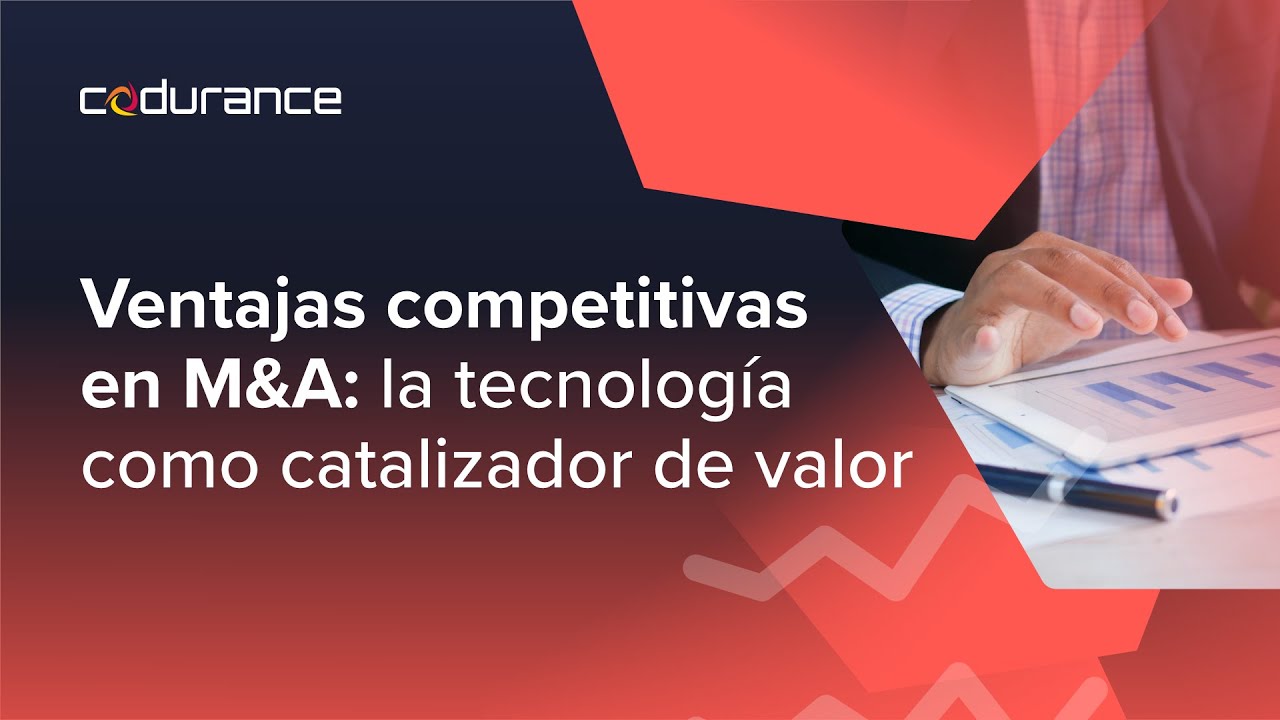
Technology valuation requires understanding how technology creates value for buyers, with strategic fit often determining transaction success more than pure financial metrics. Successful technology M&A requires compelling storytelling connecting technical capabilities to business value, though stories must ultimately be grounded in reality as buyers test validity during due diligence. Key technology metrics driving valuation include cross-sell rates, net retention rates, logo retention rates, and ARR growth, which can cause valuations to range from 4x to 10x revenue. The quality of growth matters significantly—growth achieved through efficient operations commands higher valuations than growth through heavy marketing spend. Customer retention rates are closely tied to technology quality and product value, creating a virtuous cycle where better technology leads to better retention, which supports higher valuations. Technology that cannot be linked to measurable business outcomes fails to justify premium valuations.
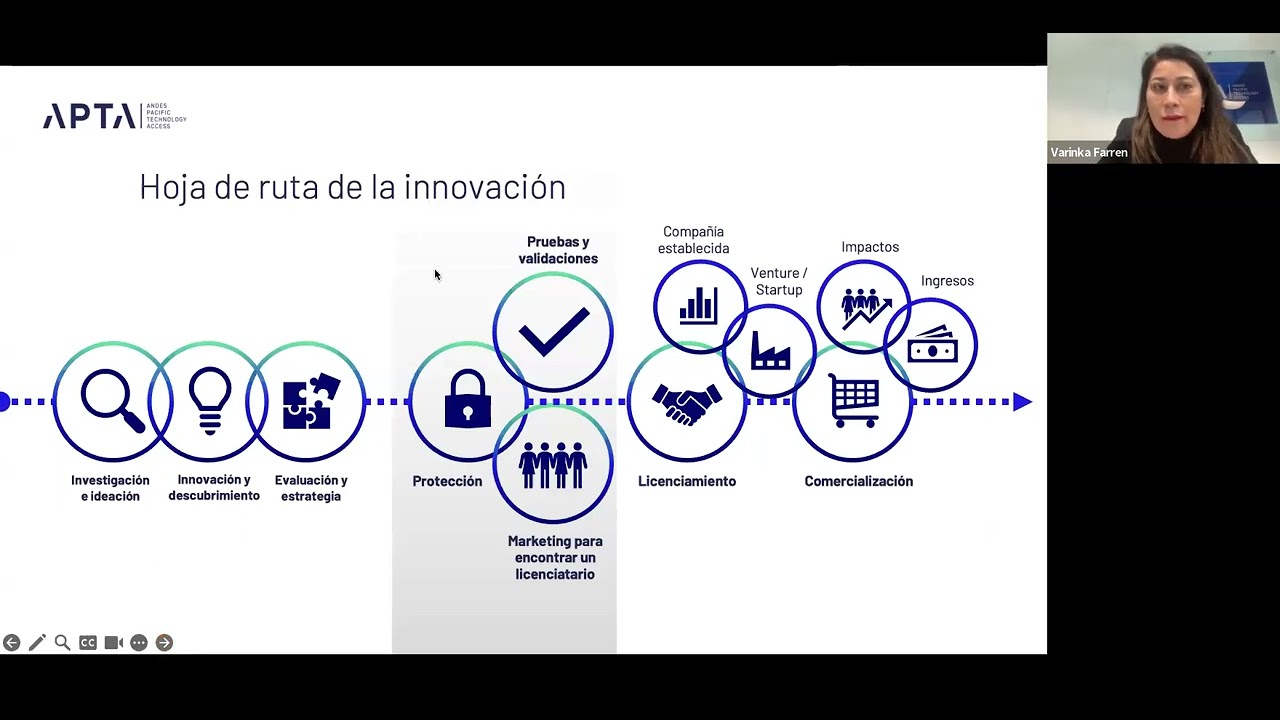
This segment provides comprehensive coverage of technology valuation methods and frameworks. Technology valuation involves both qualitative and quantitative approaches. Quantitative methods assign monetary values based on costs, cash flows, and market comparisons. Qualitative methods assess strengths and weaknesses of technology assets without assigning specific dollar values. Three main approaches to technology valuation exist: (1) evaluation of entrepreneurial projects or spin-off companies, (2) assessment of innovative knowledge and capabilities, and (3) evaluation of patent portfolios. The Technology Readiness Level and value relationship shows that technology value increases as TRL advances because higher TRL levels indicate lower technical uncertainty and greater commercial potential. Market size assessment is critical, with different scoring systems providing different benchmarks. Innovation potential assessment considers state of the art, competitive advantages, cost advantages, implementation complexity, and required industry investment.
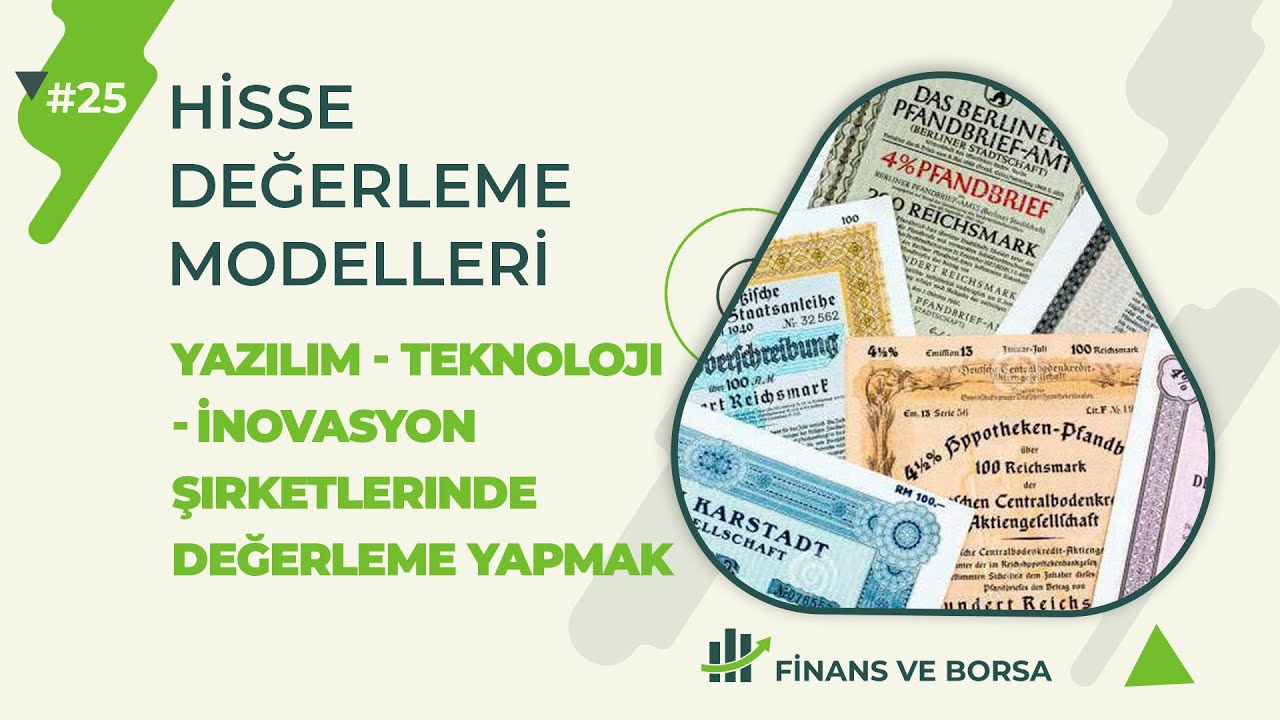
Technology companies differ fundamentally from traditional companies in asset composition. Unlike Ford Otomotiv where tangible assets exceed intangible assets 4:1, technology companies like Logo Yazılım have intangible assets 10 times larger than tangible assets. This category of companies continues to grow primarily through intangible assets, making this line item essential for valuation. Intangible assets growth rate is accepted as the basis for valuation, used to calculate future equity values. Since intangible assets constitute a major portion of technology companies' equity, using this growth rate instead of overall equity growth rate provides more accurate valuation.

Technology valuation requires selecting appropriate methods based on project maturity: income approach for advanced-stage technologies with revenue potential, and royalty rate method for IP collateral loans. The income approach calculates present value of expected cash flows multiplied by technology contribution degree, involving four core variables: economic life span, cash flow estimates, discount rate, and technology contribution degree. Fair market value principles require that willing buyers and sellers with reasonable knowledge would agree to exchange assets. Evaluators must ensure reports are understandable without additional materials, as they serve as reference documents for fair transactions. Sales revenue estimation has the greatest impact on final valuation, requiring consideration of market size, growth rates, and achievable sales volumes based on business capabilities. The royalty rate method estimates value by calculating royalty savings avoided, adjusting for taxes, and discounting to present value. Both methods require careful variable selection and professional judgment, with particular attention to methodology selection based on project maturity and market conditions.
Organizational change management strategies, specifically designed for aligning disparate tech cultures and engineering teams post-acquisition.

Many acquisitions fail to achieve expected synergies because acquired companies remain as separate entities. Quality Guard addresses this by conducting strategic workshops before closing, analyzing software capabilities, and identifying which functions should be retained. The company uses a phased brand integration approach, initially using the acquired company's brand with 'by Quality Guard' appended, then gradually migrating customers over four years.

Successful post-M&A integration requires clear vision-setting, empowering teams with autonomy while maintaining alignment, and balancing speed with quality through iterative experimentation; leaders must prioritize human factors by fostering collaboration between teams from both companies, establishing shared cultural values, and creating lightweight governance structures that enable rapid decision-making while keeping the team focused on the common goal.

This segment covers the critical phase of integrating acquired companies. Companies must decide whether to impose their culture or maintain the acquired company's existing culture, often retaining key employees and leaders. The true value lies in cultural diversity creating richer organizational environments. Successful integration requires combining organizational strengths (1+1=3) rather than simply adding them. Change management involves phased implementation: initial announcement, adjustment period, understanding phase, and execution. Leaders must be trained to introduce new concepts and guide teams through transitions.
Successful defense tech M&A requires a deliberate phased integration approach rather than rapid consolidation. Phase 1: Integrate technology that validates the combination rationale immediately (e.g., combining modules to demonstrate enhanced capabilities). Phase 2: Support existing pipeline opportunities and ensure teams can execute independently. Phase 3: Combine capabilities across hardware engineering, software engineering, and go-to-market strategy after teams have built relationships. This approach preserves team culture while achieving integration objectives.
Successful acquisitions require rigorous attention to cultural fit and people integration. Alliance learned that even technically sound acquisitions fail when cultural alignment is ignored. The company evaluates whether target employees will integrate well with existing culture, recognizing that people relationships determine service business success. Key integration practices include maintaining legacy employee recognition, promoting from within, investing in learning and development, and ensuring all team members share core values. When acquisitions lack proper cultural integration, they undermine the entire purpose regardless of financial or operational success.
IT & PT Due Diligence
0:02- 1
Examines IT infrastructure, network security, and data management for compatibility.
- 2
Evaluates production assets and operational efficiency to identify cost reduction opportunities.
- 3
Checks readiness for market shifts and future capital needs.
The Agile and Culture-First Counterpoint to Static Tech Due Diligence
While traditional IT and Production Technology (PT) due diligence relies on exhaustive, checklist-driven audits of assets, codebases, and infrastructure, critics argue this static approach is fundamentally flawed. This counterpoint—often rooted in agile management and human-centric organizational theory—posits that rigid technical audits create a false sense of security while ignoring the dynamic drivers of M&A success: cultural compatibility, team adaptability, and the target's capacity for continuous innovation. Standard due diligence often treats technology as a depreciating, static asset rather than a living system sustained by human capital. Overly bureaucratic technical assessments can alienate the target’s key engineering talent, leading to post-acquisition brain drain—the very individuals who understand the systems. Furthermore, in fast-evolving industries, the findings of a months-long IT audit may be obsolete by the time integration begins. Proponents of this counterpoint advocate for 'dynamic capability due diligence,' which prioritizes evaluating the target team's problem-solving velocity, alignment of engineering culture, and post-merger adaptability over rigid software and hardware inventories.
[Music] in today's lesson we'll be exploring it and production technology due diligence it due diligence it due diligence scrutinizes a company's it infrastructure focusing on systems processes and Hardware this examination includes network security data management and software efficiency assessing integration potential with an acquirer systems key objectives are identifying compatibility assessing performance and pinpointing opportunities for cost reduction and necessary Investments the process aims to determine how the targets it can enhance and fit into the acquirer's technological framework production technology due diligence PT due diligence evaluates the processes equipment and expertise in product Manufacturing or Service delivery it examines physical assets such as production facilities and Machinery analyzing operational efficiency and capacity the focus is on understanding operational strengths and limitations while also considering sustainability and future adaptability this includes assessing Readiness for Market changes and technology advancements and projecting future Capital expenditures for facility maintenance or upgrades when to conduct combined it and PT due diligence a combined it and PT due diligence is particularly relevant in scenarios where the target company's product or service is heavily reliant on its technology infrastructure this is often the case in tech-driven Industries or where production processes are highly integrated with it systems in such cases understanding how the it and Production Technologies work together is crucial for assessing the overall value and potential of the acquisition assessment of systems it Team Management evaluating the IT team involves scrutinizing their qualifications experience and organizational fit the process starts by assessing the team's technical skills and certifications ensuring they align with the current and projected needs of the business this includes examining their roles within the company and their contribution to IT projects and operations the assessment extends to how the IT team aligns with the company's strategic objectives you should understand the leadership within the IT department their approach to new technologies and their ability to drive Innovation additionally assessing the team's project management experience and their problem solving capabilities is crucial this phase provides insight into the IT team's capacity to support operational requirements growth initiatives and their potential for integration with the acquirer's team these insights will help make informed decisions about any changes or Investments needed in the IT department postacquisition action plan for integration developing integration involves a systematic approach to merging the it systems of the Target and acquiring companies first conduct a compatibility analysis to identify the technological gaps and overlaps between the two entities this includes assessing the differences in Hardware platforms software applications and network architectures the analysis should highlight the areas where integration and technological advancements thank you for studying with Mna Institute
Up Next

Understanding the 100-Day Plan in M&A Integration
@GlobalPMIPartners
2.9K views•2020-02-13

Retention Habits of Top DTC Ecommerce Brands Revealed
@SendItPodcast
44K views•2026-03-03

Decoy Effect: How Pricing Psychology Influences Consumer Spending
@bobinvestsUS
90K views•2026-01-05

The Planned Obsolescence of Light Bulbs and Tech
@veritasium
25.3M views•2021-03-26
Related Study Plans & Knowledge Roadmaps
Structured learning paths in Business