A 100-Day Plan is a strategic project plan used in mergers and acquisitions that outlines critical integration or separation tasks to be completed within the first 100 days of ownership, ensuring these essential activities are executed well within the initial post-closing period to set the pace for successful integration.
Understanding the 100-Day Plan in M&A Integration
Added:Deep Dive
Fundamentals of the Mergers & Acquisitions (M&A) lifecycle, particularly the transition from signing to closing a deal.

Private M&A | Investing in India
425
The most common reasons for changes between signing and closing are usually cumulative: approvals take longer than initially envisaged, internal restructuring steps become cumbersome, third-party consents that on paper look easy turn out to be operationally difficult to procure, and diligence findings continue to evolve. If there's a financing condition, financing timing may shift, or farmer alignment may weaken once the legal consequences of the transaction become real. This phase between signing and closing is so delicate because by this point the transaction has already built momentum, time cost and expectation have already been invested, so slippage becomes commercially significant. Once delay enters a transaction, the commercial psychology changes completely: founders become more sensitive to restrictions, buyers become sharper on conditions and protections, and management teams become nervous. Sophisticated buyers increasingly underwrite this path from signing to closing almost as carefully as a target from day one, having enough leverage and contractual leeway to modify the deal appropriately if needed.
Click to watch →

The One and Two-Step Acquisition Close | Mergers and Acquisitions (M&A)
5.6K
M&A deals use two primary closing structures: one-step and two-step sign and close. In one-step closings, parties negotiate the purchase agreement, conduct due diligence, and complete all transactions (signing, money transfer, asset transfer) on the same day. This approach is standard for lower-middle market deals under $10 million. Two-step closings involve signing a fully binding purchase agreement first, followed by a later closing date. This structure includes detailed conditions and seller covenants requiring the business to be maintained in ordinary course between signing and closing. The two-step approach provides more control and protection for both parties in complex transactions.
Click to watch →

Inside the M&A Process: An Investment Banker Explains the Steps
44.8K
A Merger and Acquisition (M&A) transaction follows a structured multi-phase process: Phase 1 involves creating a teaser (10-20 pages) to test market interest, followed by developing a financial model and Information Memorandum (100+ pages) that covers operational details, market analysis, financial projections, and business plans; Phase 2 includes due diligence through a Virtual Data Room, management presentations, and receiving non-binding offers; Phase 3 involves negotiating the equity bridge to determine the final price, signing the Sales Purchase Agreement, obtaining regulatory approvals, and finally closing the deal. Throughout, investment bankers coordinate with various advisors including commercial advisors, Big Four firms for due diligence, and legal counsel, while managing different types of bidders including strategic buyers (industry peers seeking synergies) and financial buyers (private equity funds focused on returns).
Click to watch →

Mergers and Acquisitions Explained: M&A Process Secrets Revealed! (Step by Step)
121.8K
Closing occurs when principals sign all documents, lawyers approve, and consideration transfers (cash payment or share issuance). Post-deal implementation involves executing a pre-planned integration strategy covering employee announcements, operational changes, and strategic initiatives over days, weeks, and months following the transaction. While post-deal implementation is technically outside the M&A process itself, thorough preparation during the acquisition phase ensures smooth transition and successful integration.
Click to watch →
Process M&A - Explications et définitions
573
The Signing phase involves executing the Share Purchase Agreement (SPA), which outlines transaction modalities including price, payment structure, and conditions precedent. Conditions precedent (regulatory approvals, antitrust clearance) must be satisfied before closing. The Closing phase occurs after all conditions are met, where final documents are executed and funds transferred, completing the transaction. Ownership legally transfers to the buyer.
Click to watch →
Deep Dive
The concept of business synergies (cost, revenue, and operational) and how they drive the strategic rationale of an acquisition.
CIMA F3 Mergers and acquisitions (1)
14.1K
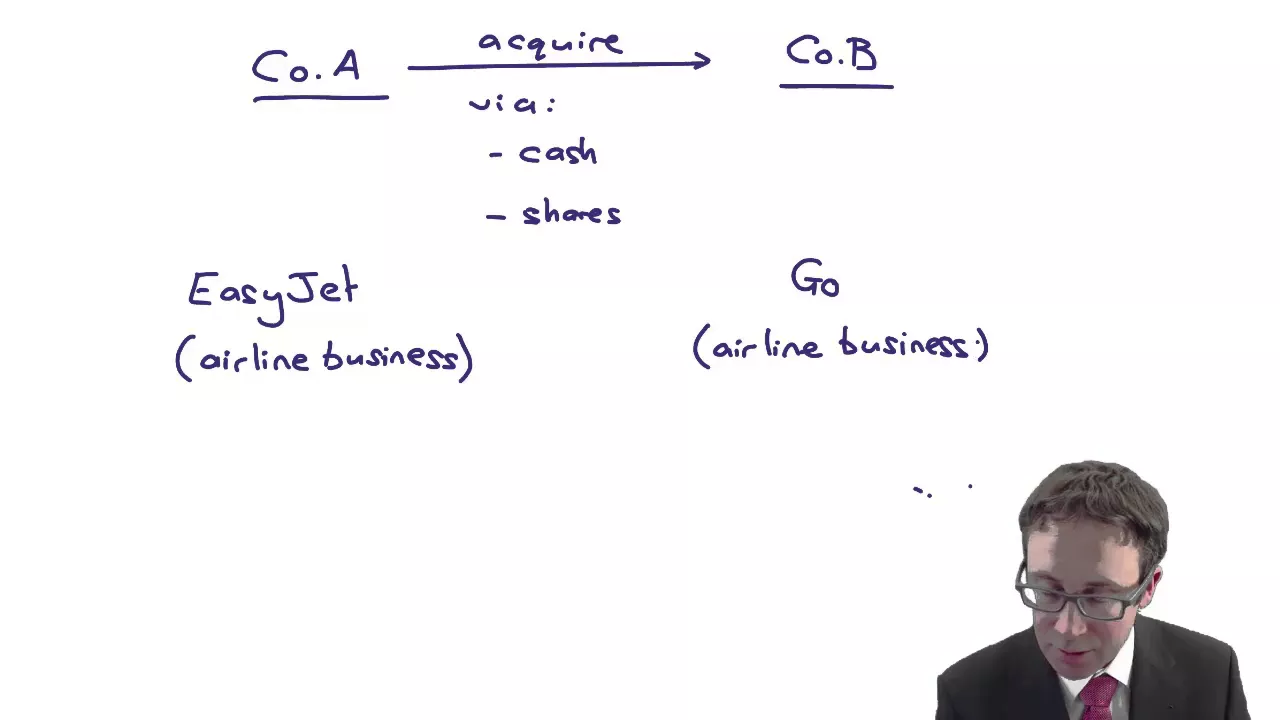
This section explains why companies pursue acquisitions. The primary objective is increasing shareholder wealth through two mechanisms: purchasing undervalued targets at prices below intrinsic value, and generating synergies exceeding simple addition of company values. Synergies manifest as cost reductions (eliminating duplicate departments), revenue increases (cross-selling opportunities), tax benefits (utilizing losses across the group), and financial advantages (accessing cheaper capital). These combined benefits drive the fundamental financial management goal of maximizing shareholder value.
Click to watch →

How to Discuss the Strategic Rationale for an M&A Deal
504
When analyzing M&A deals, structure your response by explaining the strategic rationale from both the buyer's and seller's perspectives, using a three-point framework that covers revenue synergies (cross-selling/up-selling opportunities), cost synergies (operational efficiencies and cost avoidance), and strategic fit (complementary capabilities or market expansion); for example, in a Costco-Box deal, Costco gains access to Box's last-mile delivery network and expanded inventory capacity (from 2,000 to 10,000 SKUs) to boost e-commerce sales from 7%, while Box gains exposure to Costco's premium private label brands and broader customer demographics.
Click to watch →

John Malone: The Cable Cowboy's Billion-Dollar Business Strategy | M&A, Tax, and Leverage Secrets
3.8K
Synergies are the primary justification for mergers and acquisitions, but not all synergies are equally valid or achievable. Operating synergies occur when combining businesses reduces costs through elimination of redundancies—such as consolidating office spaces, eliminating duplicate management positions, and streamlining operations. These are relatively easy to calculate by comparing line items like employee counts. Financial synergies arise from improved access to capital and better financing terms after consolidation, with tax-driven synergies being particularly powerful. For example, a profitable company acquiring a loss-making subsidiary can consolidate for tax purposes, using losses to offset profits. Revenue synergies occur when acquisitions immediately expand the buyer's revenue base, such as when a cable company acquires a programming network and instantly increases advertising revenue across all subscribers. The key principle is that operating and financial synergies are generally calculable and real, while vertical synergies are harder to justify. Due diligence must verify whether announced synergies will actually materialize.
Click to watch →

Mergers and Acquisitions (M&As) | Defenses against Takeovers | CMA (US)-PART 2 Lec 54
1.1K
Synergy exists when the combined firm's value exceeds the sum of separate values, representing the extra benefit from working together. Operational synergy arises from efficiencies like shared IT departments, reduced costs through economies of scale, and combined distribution networks. Financial synergy reduces cost of capital as larger firms have lower debt and equity issuance costs, plus increased debt capacity lowers overall capital expenses. Synergy explains why companies pursue M&A despite transaction costs, though achieving predicted synergies requires successful post-merger integration.
Click to watch →

How Can You Create Synergies Through an Acquisition?
707
In business acquisitions, synergies are created when combining two companies results in value greater than the sum of their individual parts (1+1=3), rather than simply adding their separate values; successful acquisitions require careful evaluation of complementary factors such as additional product lines, new customer sources, expanded geographic reach, and process efficiencies, with research indicating that 70-80% of shareholder value is typically generated through top-line growth rather than cost-cutting measures.
Click to watch →
Deep Dive
Basic principles of organizational change management and the impact of corporate transitions on employee morale and culture.

HDNW Board of Health Meeting, July 7, 2026
439
Organizational changes require careful management to succeed. When changes are implemented, organizations should work toward making transitions smooth. Organizations should encourage leadership to take responsibility for making changes work. Organizational anxiety and animosity can develop during transitions and create long-term problems. Organizations should address these emotions proactively through clear communication and appropriate support. Unaddressed animosity can damage organizational culture.
Click to watch →

Gestão de Pessoas e Relacionamento Institucional | Como Fazer Gestão na Saúde
2.1K
Successful organizational change requires respecting existing cultural elements while introducing new capabilities. Organizations with long histories (such as 82 years) have deeply embedded cultures that cannot be easily changed. The key is to identify what makes the acquired organization successful and preserve those elements while introducing beneficial changes from the acquiring organization. This approach minimizes resistance and maintains employee morale during transitions. Human capital represents the most valuable organizational asset, and losing key personnel results in irreplaceable knowledge loss.
Click to watch →

Bold and Beautiful 6865
43.3K
This segment explores workplace culture and employee relations during organizational transitions. Key elements include: (1) Changes to employee benefits including cafeteria policies and meal arrangements; (2) Employee morale and satisfaction during leadership changes; (3) The impact of policy changes on workforce dynamics; (4) Communication strategies during organizational restructuring. The dialogue reveals how corporate decisions affect employee morale and how organizations navigate the balance between operational efficiency and maintaining positive workplace culture during challenging transitions.
Click to watch →

Change Management ICS Class 11| Business Studies Class 11 ISC | @star_commerce
24.7K
The ADKAR model, developed by Jeff Hiatt (founder of Prosci), is a change management framework based on lessons learned from implementing change globally. ADKAR stands for: (1) Awareness - making employees aware of the need for change; (2) Desire - generating support and commitment from employees; (3) Knowledge - providing skills and information needed to implement change; (4) Reinforcement - strengthening the change over time. There are three types of organizational change: (1) Developmental Change - incremental improvements like providing new laptops; (2) Transitional Change - replacing existing processes with new ones like replacing manual tools with mechanical tools; (3) Transformational Change - the most radical change involving a complete shift in how work is done, such as the shift from traditional retail to online shopping.
Click to watch →

#36 - Random Conversations with the Wild Eye Mara Camp Staff
229
Organizations undergo transformation through personnel changes and management transitions. When a bottleneck of people is removed, organizational mood can improve dramatically. Management changes that were overdue can bring positive cultural shifts, allowing employees to become more relaxed and enjoy their work. This transformation demonstrates how organizational culture significantly impacts employee morale and productivity, and how leadership transitions can create opportunities for organizational improvement.
Click to watch →
Deep Dive
Understanding the role of key stakeholders in a business, including executives, board members, employees, and customers.

ගිණුම්කරණය | ආරම්භක පළමු දිනය | 2028 A/L | AL.LK
648
Stakeholders are parties who have an interest in a business and are affected by its operations. Key stakeholders include: Owners (අයිතිකරුවන්) - who own the business and make major decisions; Managers (කළමනාකරුවන්) - who manage daily operations; Employees (සේවකයින්) - who work for the business; Customers (ගනුදනුකරුවන්) - who purchase goods and services; Suppliers (සැපයුම්කරුවන්) - who provide raw materials and services; Government (රජය) - which regulates business and collects taxes; and Competitors (තරඟකරුවන්) - who compete for market share. Each stakeholder has different interests and expectations from the business.
Click to watch →
Peranan Stakeholder dan Stockholder
132
Key stakeholder roles include: (1) Shareholders/owners who provide capital for company operations; (2) Employees who are directly involved in production processes; (3) Suppliers who provide raw materials for production; (4) Consumers who use and evaluate company products; (5) Banks or creditors who provide loans to entrepreneurs; (6) Competitors who help companies succeed by defining target markets; (7) Government agencies that have authority to issue business permits.
Click to watch →

CXC-CSEC Principles of Business Paper 2 Question 1 - January 2022
28.8K
Two key stakeholders in a business and their respective roles: (1) Employees - their role is to carry out their duties to the best of their ability, ensuring the business operations run smoothly; (2) Suppliers - their role is to provide goods and materials to the business, ensuring the supply chain operates with quality products and on-time delivery to prevent business disruption. Other stakeholders include consumers, government, and communities.
Click to watch →
Stakeholders | VCE Business Management
9.7K
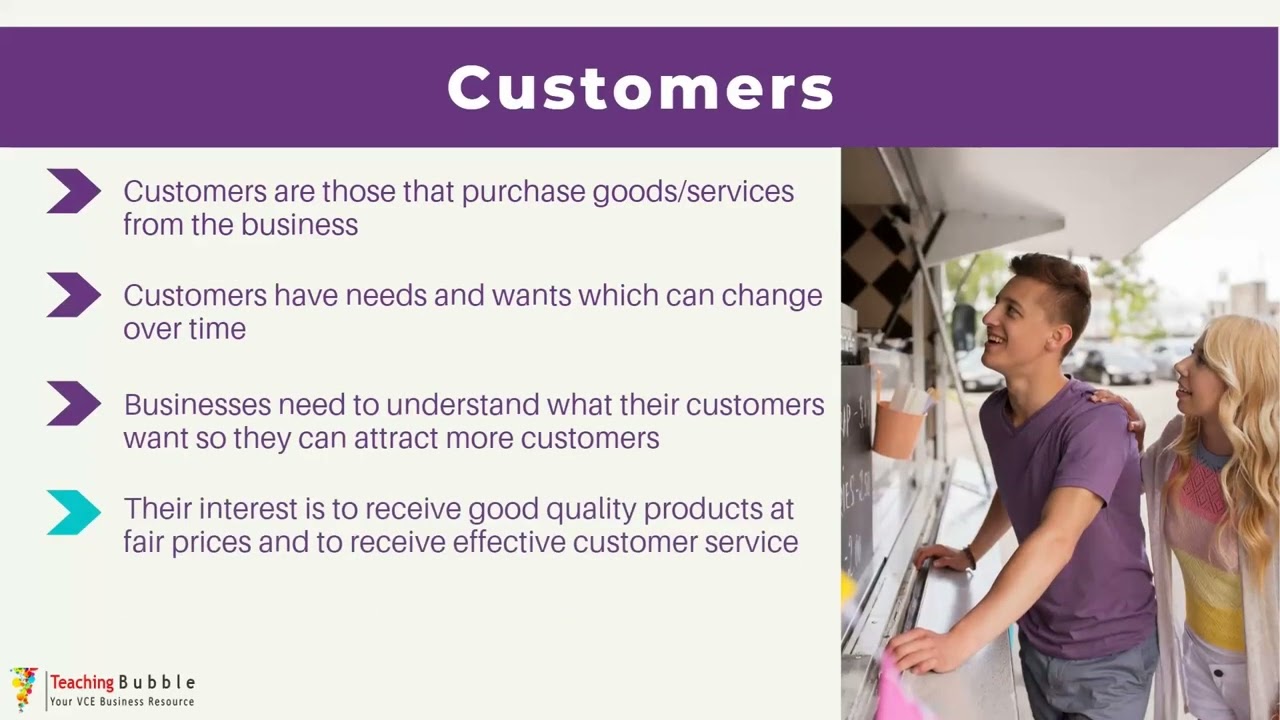
A stakeholder is a person or group with a vested interest in a business, meaning the business's success or failure significantly impacts them. The six key stakeholders are: owners (who own assets and seek profit through return on investment), managers (who make key decisions and lead employees toward objectives), employees (who perform tasks in exchange for wages and seek fair pay, good conditions, and career advancement), customers (who purchase goods/services and expect quality products at fair prices with good service), suppliers (who provide resources like materials and equipment and seek prompt, fair payment), and the general community (who expect businesses to offer employment opportunities, behave ethically, and support local events). Managers must consider all stakeholders' interests when making decisions, as conflicts can arise—for example, when employees demand higher wages (increasing costs) and businesses respond by raising prices, which conflicts with customers' interest in fair prices.
Click to watch →

SEC POB 2026 PREPARATION Paper 2
2.6K
Stakeholders are any persons or organizations affected by business activities and success. Key stakeholders include customers (who receive goods and services), workers (who receive jobs and income), and managers (who receive compensation). Managers have roles such as treating customers well to encourage repeat visits, maximizing profitability, and ensuring comfortable working environments. Understanding stakeholder relationships is fundamental to business success.
Click to watch →
Prerequisite Knowledge
- Concept 01Fundamentals of the Mergers & Acquisitions (M&A) lifecycle, particularly the transition from signing to closing a deal.
- Concept 02The concept of business synergies (cost, revenue, and operational) and how they drive the strategic rationale of an acquisition.
- Concept 03Basic principles of organizational change management and the impact of corporate transitions on employee morale and culture.
- Concept 04Understanding the role of key stakeholders in a business, including executives, board members, employees, and customers.
Subsequent Learning
- Step 01Establishing and structuring an Integration Management Office (IMO) to govern and execute the 100-day plan.
- Step 02Developing specific key performance indicators (KPIs) and dashboards to measure integration progress and synergy realization.
- Step 03Deep-dives into functional integration strategies, such as IT systems consolidation, HR/benefits alignment, and brand migration.
- Step 04Analyzing real-world M&A case studies to identify common pitfalls in 100-day plan execution and how they were resolved.
- Step 05Designing long-term operating models and transitioning from the integration phase back to 'business as usual' (BAU) operations.
Plan Basics
Plan Basics
0:00Playing Section
- 1
defines the 100-day plan concept
- 2
it covers divestiture or integration planning
- 3
starts on day one of ownership
Agile Integration and the Fallacy of Arbitrary Timelines
While the 100-day plan is a staple of post-merger integration (PMI) designed to capture quick wins, critics argue that this arbitrary timeframe often leads to long-term failure. Opponents of the rigid 100-day model advocate for an 'Agile and People-Centric Integration' approach. This perspective highlights that forcing complex integrations—such as culture, IT systems, and regulatory compliance—into an artificial 100-day window creates immense pressure, leading to employee burnout, cultural friction, and critical talent loss. Instead of adhering to a political construct (originally popularized by FDR), modern M&A experts suggest that successful integration should be milestone-driven rather than calendar-driven. A slower, highly flexible, and continuous integration model prioritizes cultural alignment and systemic stability over speed. By focusing on long-term value creation and organizational health rather than meeting artificial short-term deadlines, companies can prevent the post-merger culture clash and operational disruption that frequently derail traditional integrations.
Deep Dive
Establishing and structuring an Integration Management Office (IMO) to govern and execute the 100-day plan.
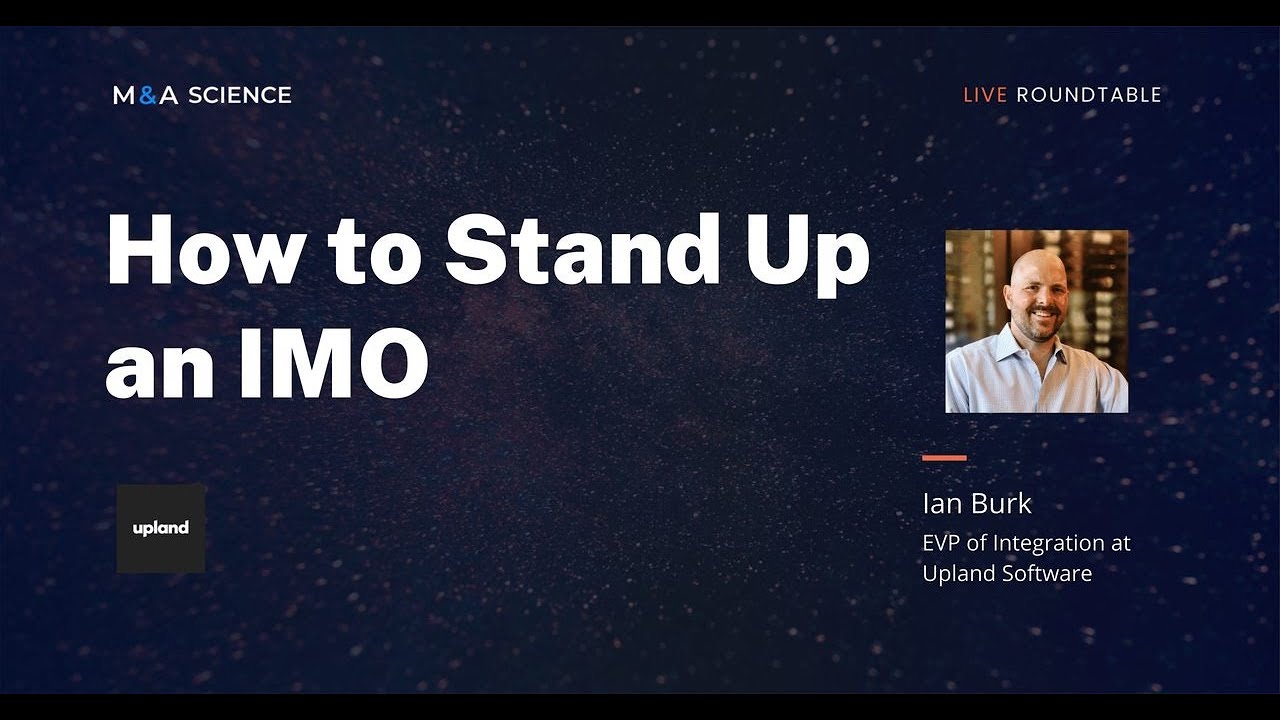
How to Stand Up an IMO | Ian Burk w/ Kison Patel
215
An Integration Management Office (IMO) is a dedicated function that protects M&A investments through governance, exception management, and alignment between strategy and execution; it should be established when M&A becomes a core strategic pillar, starting with a small core team of passionate, detail-oriented leaders who can scale by leveraging distributed talent and third-party partners, using playbooks, two-in-a-box pairing, and continuous feedback loops to drive successful integration outcomes.
Click to watch →
Linking integration and financial metrics around synergy targets in M&A
1.1K
The formation of an Integration Management Office (IMO) requires careful governance structure. Key elements include: having an executive with credibility to serve as the face of the integration effort, reporting to the CEO; a close-knit leadership group focused on problem-solving rather than administration; a coordinator to oversee all activities; bringing experts progressively as needed; establishing regular cadence meetings; and ensuring functional leads report status updates. The IMO should include representatives from both acquiring and target companies to ensure buy-in. Senior-level ownership is critical, with someone taken off their regular duties to focus entirely on integration success. The IMO should protect against legacy strategic initiatives that could conflict during the critical post-close period by identifying key personnel upfront and leveraging existing centers of excellence.
Click to watch →
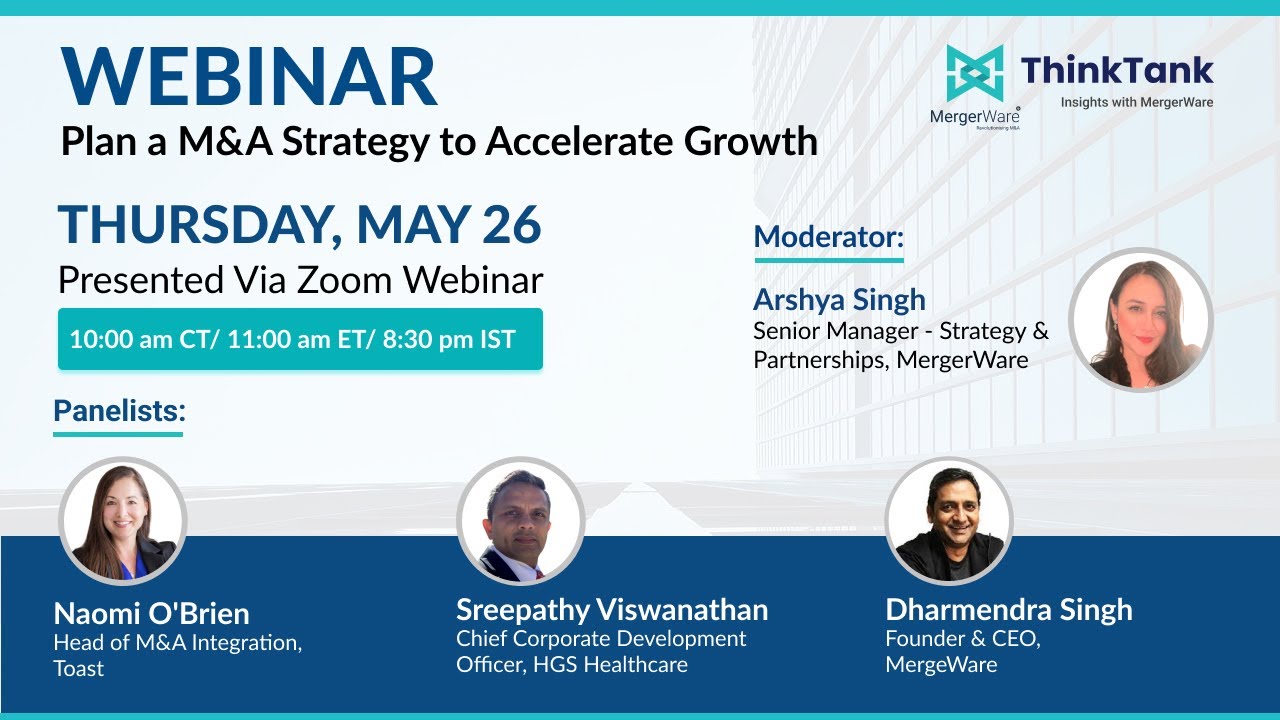
Plan a m&a strategy to accelerate growth
132
Culture can 'eat strategy for breakfast' - companies must be realistic about whether cultural differences can be bridged. On deal close day, expectations must be set for both organizations. Early involvement of key people from both organizations in the integration process is critical. The first 100 days are critical because this is when concerns about unnecessary things arise. Effective integration planning uses a 30-60-90 day framework: Day 1 readiness, end of 30 days reflection measuring accomplishments against OKRs, and adjusting for issues discovered. A change management leader should be defined from the beginning to drive exchanges across all streams.
Click to watch →
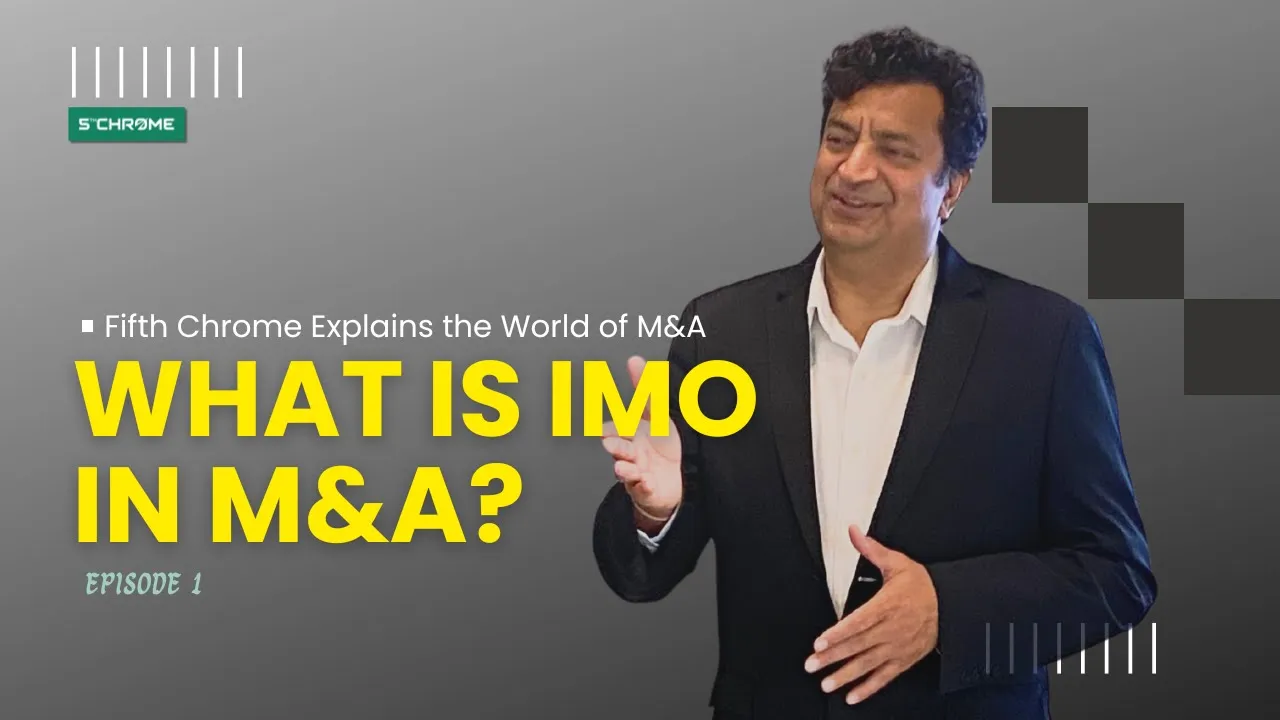
Fifth Chrome Explains: What is an Integration Management Office (IMO) in M&A? | Anirvan Sen
365
The Integration Management Office (IMO) is a central coordination team in mergers and acquisitions that operates at the organizational level, unlike the Project Management Office (PMO), which is typically subordinated. The IMO serves as the main facilitation function, coordinating with all work streams including communication, legal, and IT teams, while managing governance through weekly calendars, risk mechanisms, and issue tracking. It provides essential tools, templates, and documentation, tracks project progress, delivers updates to senior leadership and steering committees, manages resourcing, and resolves conflicts across all integration projects and sub-projects. The typical IMO team includes an Integration Director, IMO Coordinator, Finance specialist, HR representative, Legal advisor, and Communications expert.
Click to watch →

How to Stand Up an IMO Function | Joshua Zatkin-Steres w/ Kison Patel
191
Companies should establish an Integration Management Office (IMO) when expecting multiple acquisitions annually, typically two or more deals per year. The IMO provides necessary muscle to continuously improve M&A processes and de-risk deals to justify investment. Companies should establish an IMO sooner rather than later once recognizing it as strategic, as waiting until after closing several deals wastes resources. The IMO serves as a central coordination point connecting corporate development pipeline insights with overall business strategy, significantly increasing likelihood of hitting strategic rationales and reducing disruption. Integration teams typically report within or directly to the Head of Corporate Development, with structures varying by company size and maturity. The key principle is aligning incentives and ensuring openness for frank feedback. Companies must balance capital allocation between deal-side hires and integration capabilities, investing in an IMO when building a maturing M&A function that continues to grow. The IMO is the right place to house lessons learned processes and ensure consistency in integration execution across deals. When standing up an IMO, companies should bring someone on board whether in-house or from outside the company, combining internal knowledge with external expertise to accelerate learning.
Click to watch →
Deep Dive
Developing specific key performance indicators (KPIs) and dashboards to measure integration progress and synergy realization.

Investeringspodcasten 309: Danske regnskaber fra Novo og DSV, Bitcoin, sølvprisen
8.2K
Mergers and acquisitions typically require extended integration periods before full synergies can be realized, averaging approximately 20 months from acquisition to full synergy realization. Companies that achieve integration faster than expected may surprise the market positively. The market reaction to guidance announcements depends on whether expectations are met, exceeded, or missed, with guidance bombs (negative surprises) causing significant stock price declines.
Click to watch →

Dashboard Reporting with SharePoint
47.1K
KPIs track progress through actual versus target comparisons with customizable thresholds and indicator types. Scorecards organize multiple KPIs across dimensional hierarchies, displaying actuals, targets, and variances. Dashboard interactivity links components: scorecard selections filter analytic charts, enabling drill-down exploration. Unlike analytic grids, scorecards and charts support bidirectional driving of related components. This integration creates cohesive data exploration experiences where user selections propagate across all dashboard visualizations.
Click to watch →
Bootcamp: Part 3 "A day in the life of an integration manager"
1.7K
KPIs are measurable values used to track whether integration objectives are being achieved. Common KPIs include revenue, EBITDA, and gross margin. By comparing actual performance against baseline projections across multiple quarters, integration managers can determine if the deal is delivering expected benefits and identify when corrective action may be needed.
Click to watch →

Excel PowerPivot Tutorial for Beginners: How to Use PowerPivot in Excel & Office 365
20.6K
This section demonstrates creating Key Performance Indicators (KPIs) for visual performance tracking. Go to PowerPivot > New KPI, select a measure as the basis, and set target values and thresholds. For example, values below $5,000 can be red, $5,000-$10,000 yellow, and above $10,000 green. KPIs can have multiple ranges (up to 8) for detailed performance analysis. When combined with slicers and timelines, KPIs create comprehensive dashboards that provide instant, visual feedback on performance metrics. This transforms Excel into a powerful business intelligence tool.
Click to watch →
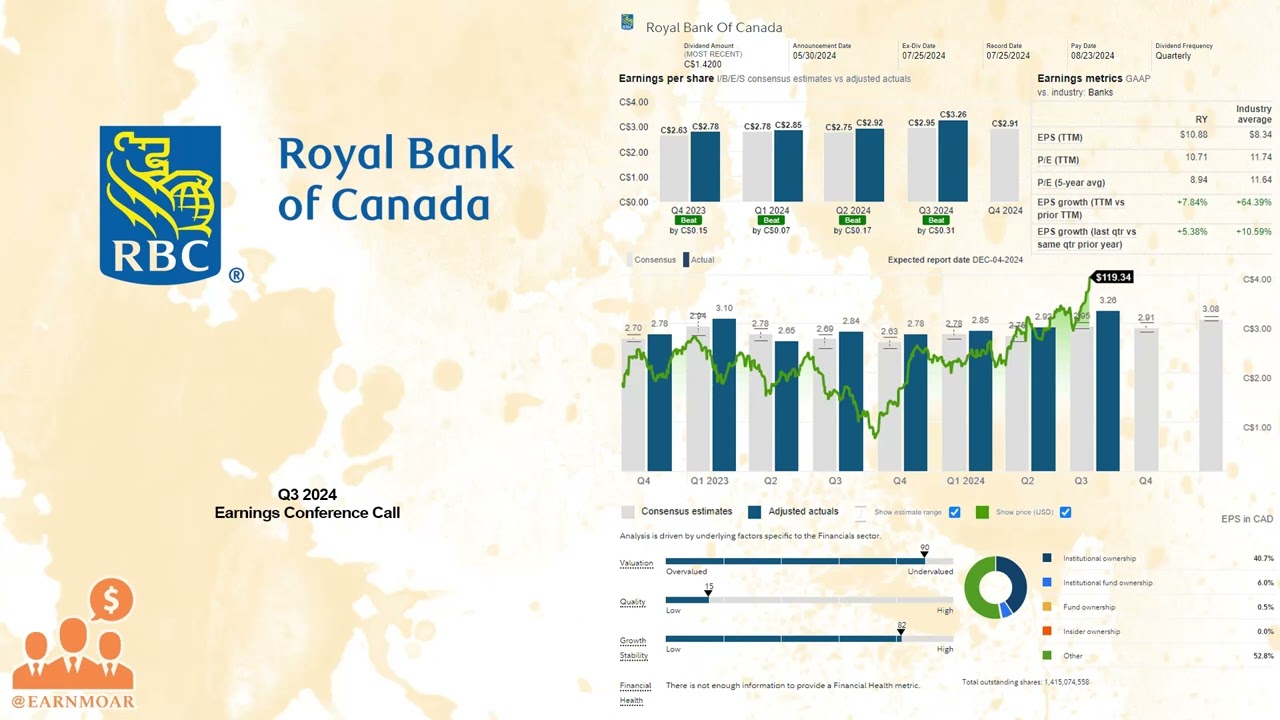
$RY Royal Bank of Canada Q3 2024 Earnings Conference Call
138
Post-HSBC Canada integration showed positive early indicators within expected ranges. Client attrition remained well-controlled, with cross-selling to HSBC clients already generating over $100M in AUM flows to wealth management. Three revenue synergy buckets were identified: cross-selling RBC products to HSBC clients, selling new products built for HSBC into legacy portfolios, and acquiring new clients from previous HSBC sales forces. The bank emphasized that pipelines were building well despite slower-than-hoped pre-close growth.
Click to watch →
Deep Dive
Deep-dives into functional integration strategies, such as IT systems consolidation, HR/benefits alignment, and brand migration.
HR Policies, Procedures and Information System
171
Integration of HR systems with other systems in a wider organization allows them to communicate with one another. Benefits include: annual human capital reporting; complying with supply chain partner requirements; improving profitability; reducing headcount; and delivering against economic criteria. However, many HR functional systems remain standalone because they believe integration will compromise their own system potential, lack of confidentiality, and costs, and the risks involved.
Click to watch →

M&A Integration Success: Pre & Post-Merger Best Practices
13.5K
Each functional area requires specific attention: Purchasing involves supplier prioritization; Production requires site optimization and potential consolidation; Marketing/Sales requires branding decisions that can halt operations; Supply Chain needs process harmonization; HR handles compensation, severance, retention, and compliance. Branding decisions require putting ego aside and adopting the better-performing organizational design based on performance indicators. HR integration checklists span 15+ pages with tasks scheduled by phase. The PMI manager holds everyone accountable for daily tasks while addressing roadblocks requiring executive strategy decisions.
Click to watch →

Break Free B2B Series: Maliha Aqeel Discusses How to Get an A in Company Culture
144
In the next five years, successful brands will integrate marketing, HR, and communications functions to eliminate silos. No single department owns brand experience—it is owned by everyone. Each function will be expected to partner effectively and will be held accountable for collaboration. This integration is necessary because brands that don't adapt will not survive in the long term.
Click to watch →

ITシステム全体最適化の決定版!Salesforce連携で成功する組織改革と徹底活用事例【第一部】
4.3K
Organizations implement system integration for three key strategic reasons: (1) Profit pursuit - maximizing revenue and margins while minimizing waste; (2) Human capability focus - concentrating human effort on tasks requiring human intelligence while delegating routine tasks to systems; (3) Research-to-business conversion - transforming internal research and development into marketable business solutions.
Click to watch →

The Economic Times Iconic Brands 2021 - Virtual Summit & Felicitation
212
Bank of Baroda communicated that the amalgamation was the best of the three that had come together, and they had done cherry-picking in terms of HR integration, IT integration, and everything else. This enabled them to evolve as a brand that was much mightier, much better, much more efficient, and more elegant. This demonstrates that strategic integration of best practices from multiple organizations can create superior brand value.
Click to watch →
Deep Dive
Analyzing real-world M&A case studies to identify common pitfalls in 100-day plan execution and how they were resolved.

5: M&A - successes and failures
10.1K
M&A deals have low success rates, with 60-70% failing across studies. Success is measured through multiple dimensions: shareholder returns, revenue growth, margin improvements, balance sheet changes, and cultural integration. Common failure reasons include unrealistic seller expectations, insufficient buyer due diligence, and contractual disagreements. Critically, deals fail post-closing during integration, not due to price or strategy. Many companies mistakenly believe closing marks the end, neglecting sustained integration planning beyond the first 100 days. Effective due diligence requires understanding advisor roles, timeline adequacy, and clear integration ownership.
Click to watch →

M&A 일정계획, M&A 일정표, M&A 일정관리, M&A, M&A Schedule, 인수합병 일정표, 인수합병, 인수합병 일정표 프로그램, M&A 일정표 작성 프로그램
264
Successful M&A execution requires understanding due diligence processes, common pitfalls, and timeline management. Due diligence verifies document accuracy and identifies hidden risks. Practitioners must consider security requirements and avoid 10 common pitfalls and 10 mistakes. The timeline planning tool offers three approaches: start date-centered, target date-centered, and customized timelines. Standard M&A duration is typically 246 days based on statistical data. Users can adjust durations based on company circumstances and select working day calculation methods.
Click to watch →
Setting Up Day One for Success | Chris Evans w/ Kison Patel
122
Common pitfalls include using phrases like 'We will do no harm' or 'Nothing is going to change,' which are unrealistic and undermine credibility. Employees at smaller companies expect constant change, so denying change feels disingenuous. Consistency across all representatives from the acquiring company is essential. Best practices include avoiding rigid adherence to playbooks, maintaining flexibility to adjust based on new information, and having clear plans to handle inevitable curveballs. The biggest challenge on day one is managing complexity and surprises, which requires thorough advance planning.
Click to watch →

Mergers & Acquisitions for Dummies (w/ special guest Bill Snow)
563
In mergers and acquisitions, sellers must carefully evaluate offers by understanding whether a buyer has a strategic imperative (must-have) or if the deal is optional (nice-to-have), as this determines negotiation leverage; they should thoroughly understand how the buyer is financing the deal (cash at close, notes, earnouts, or stock) rather than accepting offers based solely on total value; they must distinguish between stock deals (taxed as capital gains) and asset deals (potentially taxed differently); and they should ensure proper working capital adjustments are in place to avoid disputes at closing.
Click to watch →

How a Public Equity Analyst Evolves to Executing M&A | Greg Stein w/ Kison Patel
185
Integration planning must begin immediately upon identifying targets, not after LOI signing. This includes establishing reporting structures, defining go-to-market strategies, identifying synergies and KPIs, developing day-one plans, and outlining timelines for 6-month, 12-month, and beyond milestones. Common pitfalls include cultural misalignment causing irreversible attrition, poor communication creating confusion, inadequate HR attention during payroll transitions, and technology migrations disrupting operations. Proactive identification and mitigation during diligence is essential.
Click to watch →
Deep Dive
Designing long-term operating models and transitioning from the integration phase back to 'business as usual' (BAU) operations.

How to Transition to Business as Usual - BAU
6.1K
Effective project transitions require two key leadership roles: a project manager and an integration manager (also called an operational manager). The project manager leads the project side of the transition, while the integration manager leads the business as usual or operational side. The transition occurs at the interface between these two roles, where the project manager hands over project assets to the integration manager. This dual leadership structure ensures proper coordination between the temporary project environment and the ongoing operational environment.
Click to watch →

APM PFQ (Bok7) Principles of Project Management
3.9K
Projects follow a lifecycle that begins with nothing and builds something new, such as rebranding a bank. This lifecycle includes phases from initial idea through concept development to delivery. Once a project is complete and transitions to BAU, it continues to deliver benefits until it eventually ends. For example, a cashless society initiative would transition from project to BAU operations until the goal is achieved.
Click to watch →

Records Management Network August 2023
263
Successful transition from project to business as usual requires overlap between project and BAU teams. At the University of Melbourne, records and information staff were seconded to the project team, which helped them feel informed and across the solution before handover. In the first month of handover, two project team members remained on board, allowing BAU questions to be answered with project context. This strategy ensures continuity and reduces the learning curve for BAU staff.
Click to watch →

Allan Kelly on how to create & deliver objectives & key results for teams
135
Teams must include operational/business-as-usual (BAU) work in their OKRs rather than treating it separately. Excluding maintenance and support work creates blind spots where critical infrastructure issues go unaddressed. A recommended approach is to create 'OKR Zero' explicitly acknowledging BAU responsibilities as a service-level agreement. Without this transparency, teams risk appearing to fail on strategic objectives while secretly diverting resources to keep systems running, which undermines OKRs as a feedback mechanism.
Click to watch →

How to Practically Move from Shared Services to TRUE Global Business Services
390
To design the target operating model: (1) First consider the catalysts for redesign, which may include all or some of various factors; (2) Once understanding these catalysts, undertake the major transformation elements covering strategic, operating, and re-engineering elements; (3) This leads ultimately to the characteristics of the operating model for the future. Organizations should not be too proud or shy in asking for help in considering this journey, as their world will change and there are growing numbers of players in the market who have done this before.
Click to watch →
Plan Basics
Plan Basics
0:00- 1
defines the 100-day plan concept
- 2
it covers divestiture or integration planning
- 3
starts on day one of ownership
Agile Integration and the Fallacy of Arbitrary Timelines
While the 100-day plan is a staple of post-merger integration (PMI) designed to capture quick wins, critics argue that this arbitrary timeframe often leads to long-term failure. Opponents of the rigid 100-day model advocate for an 'Agile and People-Centric Integration' approach. This perspective highlights that forcing complex integrations—such as culture, IT systems, and regulatory compliance—into an artificial 100-day window creates immense pressure, leading to employee burnout, cultural friction, and critical talent loss. Instead of adhering to a political construct (originally popularized by FDR), modern M&A experts suggest that successful integration should be milestone-driven rather than calendar-driven. A slower, highly flexible, and continuous integration model prioritizes cultural alignment and systemic stability over speed. By focusing on long-term value creation and organizational health rather than meeting artificial short-term deadlines, companies can prevent the post-merger culture clash and operational disruption that frequently derail traditional integrations.
Fundamentals of the Mergers & Acquisitions (M&A) lifecycle, particularly the transition from signing to closing a deal.
The concept of business synergies (cost, revenue, and operational) and how they drive the strategic rationale of an acquisition.
Basic principles of organizational change management and the impact of corporate transitions on employee morale and culture.
Understanding the role of key stakeholders in a business, including executives, board members, employees, and customers.
Establishing and structuring an Integration Management Office (IMO) to govern and execute the 100-day plan.
Developing specific key performance indicators (KPIs) and dashboards to measure integration progress and synergy realization.
Deep-dives into functional integration strategies, such as IT systems consolidation, HR/benefits alignment, and brand migration.
Analyzing real-world M&A case studies to identify common pitfalls in 100-day plan execution and how they were resolved.
Designing long-term operating models and transitioning from the integration phase back to 'business as usual' (BAU) operations.
2.9K views6likes0:35@GlobalPMIPartnersOriginal Release: 2020-02-13
a hundred a plan so let's talk about what that means 100-day plan is the planning of a divestiture or integration starting on day one and for the first hundred days of ownership in that time there's a lot of critical activity to be completed and it's important to ensure that those integration tasks or separation tasks are completed extremely well within that time
Up Next
58:45
SaaS Portfolio Strategy: A Swiss Holding Company Case Study
@BuyersAndBuildersPodcast
521 views•2024-09-20

46:36
Retention Habits of Top DTC Ecommerce Brands Revealed
@SendItPodcast
44K views•2026-03-03

57:41
Post-Merger Integration Best Practices for Synergy Realization
@GlobalPMIPartners
8.5K views•2014-02-24

17:30
The Planned Obsolescence of Light Bulbs and Tech
@veritasium
25.3M views•2021-03-26
Related Study Plans & Knowledge Roadmaps
Structured learning paths in Business
business
Pop-Up Retail: Strategy, Design & Execution
01Introduction to Pop-Up Retail & Strategic Goal Setting
02Budgeting, Site Selection, and Legal Essentials
03Experiential Retail Design & Visual Merchandising
+ 2 more learning modules
15h5 modules
Explore Roadmap
business
Reg CF: Startup Funding, Marketing & Launch
01Introduction to Equity Crowdfunding & Reg CF
02Platform Selection & Legal Preparation
03Crafting High-Converting Campaign Assets
+ 2 more learning modules
14h5 modules
Explore Roadmap
business
Productized Services: Scaling Solo Freelance
01Foundations of Productized Services
02Packaging and Scope Definition
03Pricing and Subscription Models
+ 2 more learning modules
15h5 modules
Explore Roadmap
business
Gov Procurement: Find, Bid & Win Contracts
01Introduction to Government Procurement & Business Setup
02Small Business Certifications & Set-Asides
03Finding and Analyzing Contract Opportunities
+ 2 more learning modules
14h5 modules
Explore Roadmap