





















Dung beetles, despite having brains smaller than a rice grain, use multiple celestial compass systems—including the sun, polarized moonlight, and even the Milky Way—to navigate in straight lines while rolling dung balls, with their compass center located in a specific brain region that processes polarized light signals.
Dung Beetle Navigation: Milky Way Compass | Marie Dacke | TEDx
Added:The physical concept of polarized light, including how light waves vibrate in specific planes and how polarization occurs in nature through atmospheric scattering.
Basic principles of animal navigation, specifically the difference between landmark-based piloting and compass-based orientation.
The anatomy of insect vision, particularly how compound eyes and specialized photoreceptors detect light intensity and direction.
An elementary understanding of astronomy, specifically what the Milky Way is and how its starry band appears as a visual cue in the night sky.
Biomimetic navigation systems: how engineers apply dung beetle celestial navigation principles to design GPS-independent guidance systems for autonomous vehicles and drones.
The ecological effects of light pollution, exploring how artificial light at night (ALAN) disrupts nocturnal insects that rely on stars and the Milky Way to navigate.
The comparative neurobiology of insect brains, specifically investigating how the 'central complex' integrates celestial signals into a unified spatial compass.
Advanced sensory ecology, exploring how other nocturnal and diurnal organisms utilize overlapping compass systems (such as magnetic fields, wind, and polarized moonlight).
8.4K views114likes16:41Original Release: 2013-05-07
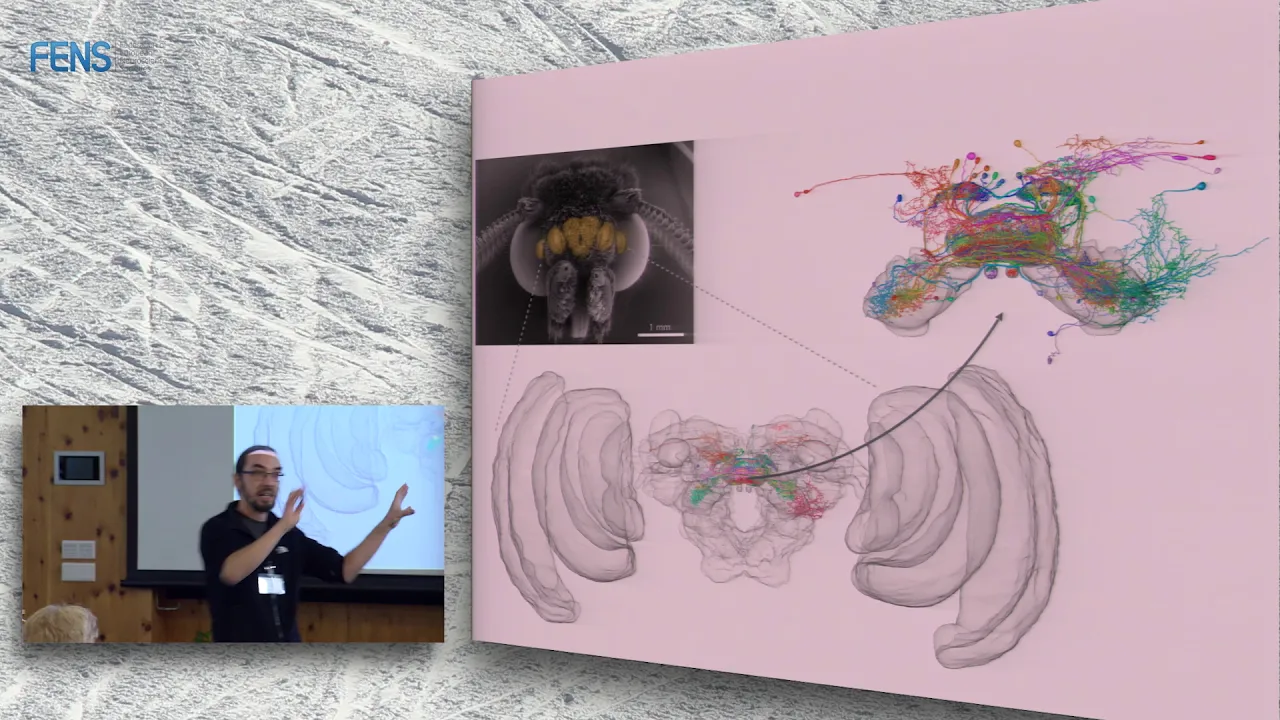
thank you each year me and my colleagues we travel 10,000 kilometers to South Africa we pack a whole trailer full of equipment and we drive another 600 kilm into the kalahar Sands with this a pile of d as our end destination and we have come here for the last 15 years or so trying to understand how an organism with a brain smaller than a rice grain can still manage to run not only one but several compasses in parallel of course we don't come here alone our study animals also come here Guided by a keen sense of smell and an absolutely unconditional love for dang this here is a South African dang Beetle one once it has found dung it digs into it start sculpting a ball the size of a golf ball and start to roll it away it rolls it for some 10 to 40 m before it digs itself and the ball down and consume it in the safety of the ground but as it is about to leave the dunk pile this is when trouble might strike G other dang beaters are still flying in and these newly arriving Beatles they don't really know the difference between yours and mine and we rather try to steal a ball than to make one of their own here you see one of our experimental Beatles number F3 attacking a wild beetle in the field and even if we don't really see the animals getting hurt by these vicious fights it does cost a lot of energy they spend more time out in the sun they risk being eaten and ultimately of course they risk losing losing their lunch so here it might look like the wild beats will eventually won the fight but F3 attacked again and one minute later he was the winner of this fight so what then can a little animal do to try to avoid having its possession stolen if we imagine that this hair is is a dung pile then it's kind of here that all the happens because this is where we have the dung this is where all the other beaters are flying in so this is where they are fighting a beater with a ball now wants to get away from this position in space and it does so by moving in a straight line because by moving in a straight line it makes sure it gets away from the dunk pile with every step and also it's 100% guarantee that you will not accidentally ever end up there again the problem is though that no animals no humans no Beatles can move in a straight line without a compass and we want to understand how a beetle compass works in the process of trying to understand this we have become fashion designers and I dare to say that we are the only people that have ever designed a hat for a beetle this is rather difficult well partly because a beetle don't really have a h have a head made for wearing a hat but mostly because our Target group doesn't really want to wear our design and this film here will show you why this is a beetle rolling with a hat and very soon you realize this animal cannot move in a straight line actually it comes back to the very point where it started and this is all because we've added a hat because this totally upsets the orientation system of the beetle cuz their compass works by reading information from the sky and when the hat is there they can no longer see it see if we put hats on all the Beetles over here total chaos breaks out cuz no one can get away from the dunk pile and they just keep on fighting and there are balls being thrown and so on but the question is of course what are these animals looking for in the sky a common compass for many insects or rather other animals as well is to use a sun Compass basically if I am a dang Beetle and we imagine that you are the sun Thea can then move straight by just keeping the sun on its left side but then if I as a researcher stand here with a mirror I can trick this system I can mirror the sun back from this side instead then the beta comes rolling sun on the left suddenly now the sun is on the right the compass system of Beatles has not evolved to cope with researchers with mirrors in the field so now from the perspective of the beetle it thinks it's 180° of course and need the correct for that by turning 180° and this is what that looks like in the field and when they see the normal sun again they will turn back to where they came from we can continue doing this for as long as we find it fruitful because as far as the beetle is concerned they might have a crap day when it comes to orientation but they try their best to move in a straight line these are day active beetles as the sun goes down these Beatles go to bed and the night shift moves in dung restaurants are open 24/7 and nocturnal Beatles also need to move poo in a straight line so they have a compass as well of course the Moon is there we can reflect the moon with a mirror we see the Beatles rolling and only every second less than every second of out of these beetles will now turn the one they just keep on rolling as if we were not there at all this is because these animals are using something called a nocturnal polarized light compass and to explain that we have to start with the moon as a ray of moonlight travels towards Earth it vibrates like this in every possible Direction then it hits the atmosphere and upon reflection against all the small particles in the atmosphere it gets polarized this means it vibrates more in One Direction than in the others so this here would be vertically polarized light and this here would be horizontally polarized light to us it makes no no difference we can't see the difference between these different types of light to the beetle it makes all of the difference because formed in the sky is a pattern of polarized light this here is a photograph taken from the perspective of a beetle you see the moon at the Horizon and the white arrows is the pattern of polarized light that now at this time of the night we find that all the light is polarized in one single Direction the beetle can see this and Orient to it so now if they if they turn by 90° they come of course they find themselves now being positioned orthogonal to direction of polycation instead and then they need to rotate by 90° to find their way back again in the same way as we can trick an animal using a Sun Compass we can also trick these animals as the beetle is rolling let's say it's rolling uh parallel to direction of pulation we then insert a filter over the beetle that rotates that pattern then the animal will also rotate by 90° this is what that looks like in the field here am I with a filter and the Beetle turns we don't see see any difference in what this filter is doing but it's obvious to the animal and then comes out under the night sky and turns back again this is the first film ever taken of an animal using a nocturnal polarized light compass and these animals are still the only creatures that we know can use this type of compass lots of them can use a polarized light Compass at day but these are the only ones that use it at night so it seems to have evolved with the soul purpose of moving in a straight line now you can of course ask yourself where is all this information taken care of where is the actual compass center of these animals for that we have to look at the brain this white thing here is a dung beet brain as you see several times smaller than the head of a match we have now started to identify the different sections of this brain and and the little green P that you see where the Green Arrow points that is the compass center how do we know this we know this because we can insert an electrode into this area of the brain and measure the electrical activity as the beetle rotates under the polarized Sky we imagine a beetle standing here under the polarized light pattern we have an electrode and we can listen and measure the activity of the neurons here the activity has been then transformed into sound so you can listen to it or look at it whatever you prefer this neuron that you will see the recordings from here has its highest activity when animal is oriented parallel to the direction of polarization this is what it sounds like and looks like high activity no activity High activity no activity and again hi no hi and no so as the beel stands there under the night sky and then if it it it will get different signals from its neurons as it is root ating it's kind of like high activity small activity no activity High activity High activity small activity no activity High activity High activity so if they want to roll in let's say high activity if they didn't come of course they just have to rotate back to find its high activity and it's back on track again this kind of rotational movements we can kind of also do when we are using magnetic compass and we find them Among The Beatles we call it a dang Beetle dance this is an animal day active animals they dance both day and night they dance if we were flect to Sun they dance every now and then when they roll on a hockey pitch falling down an obstacle makes them dance to find their bearing hot beetles also dance this is filmed with a thermal camera and the best dances of them all are the guys in caps cuz they don't know where to go what happens then if the Sun is well the Moon is well below the Horizon there is no polarized light left in the sky only the Stars remain and on these dark nights we find our Beatles to be lost they can no longer roll in straight lines and I guess on these dark nights they do Best by just staying underground so by that I reached the end of the beetle Compass thank you actually this is this is where I would have stopped this talk few years ago but then we found something that first confused us and then amazed us cuz when we repeated these experiments s years later they were no longer lost we could see our animals moving out in straight Parts obviously 7 years is nothing under evolutionary scale of a beetle they couldn't have evolved a new type of compass we must have done something wrong we came back again the next year they could still roll straight the only thing they had to look at now was the star Sky traditionally insects are not known to be able to see stars they're just too small for their little eyes to perceive so we were greatly confused we decided to take our Beatles on a city trip we put a them in a trailer and drove them back to Johannesburg and let them roll in the Johannesburg planetarium again they were doing just fine so we took out all the lights in the planetarium including the emergency signs and the Beatles were lost they were obviously using something in a sky they couldn't see so seeing from the perspective of a Beatle that have a less detailed view of the world compared to ours the star sky in South Africa might look something like this the white fussy band you see here is the Milky Way that is very obvious in the southern hemisphere so even if they can't see the Their Stars themselves maybe they could still see this band of light and Orient to it and find their bearing using this band of light turns out it was exactly like that we could show them the Milky Way in the planetarium and they were doing just fine why did we miss this 7 years earlier this was because D we did our experiments in October when a Milky Way is close to the Horizon then we repeated the experiments in February when a Milky Way was high up in the Sith so in a way we had done the perfect control experiment seven years before we did actual test Beatles the our dung beatles are still the only insects in the world that are known to be able to use stars for their orientation it's the only animals in the world that we know can use the Milky Way for the orientation but I am sure there are many more animals out there that can do similar things finally I will have to admit that what I've told you so far is not completely true cuz there are animals that can move in a straight line without a compass and they are all women cuz when a male Beetle gets Amorous he makes a really large dong ball then he attracts the female and if she likes what she sees she jump up onto the ball and just sits there he gets through all the pushing all the orienting all the dancing while she just sits there absolutely motionless moving in a straight line so obviously if you just lazy and clever enough there are alternative solutions to all problems even from the perspective of a beetle thank you
Up Next

25:57
The Magic School Bus Goes Upstream: Salmon Migration Science
@VictorNelvanaShows
345.3K views•2021-08-14

50:12
Bacterial Communication: Quorum Sensing and Biofilm Formation Explained
@JHUAAP
12.6K views•2011-06-28

19:33
How Trees Talk to Each Other in a Healthy Forest | Suzanne Simard
@TEDx
190.8K views•2017-02-02
7:08
Bacteriophages: Earth's Deadliest Killers and Future Antibiotics
@kurzgesagt
34.6M views•2018-05-13
Related Study Plans & Knowledge Roadmaps
Structured learning paths in Biology
biology
RNAi: Biogenesis, RISC & Gene Silencing
01Molecular Biology Foundations: DNA to Protein
02Introduction to RNA Interference (RNAi)
03Molecular Biogenesis of miRNA and siRNA
+ 2 more learning modules
10h5 modules
Explore Roadmap
biology
Mycorrhizae: Signaling, Biophysics & Ecology
01Foundations of Mycorrhizal Symbiosis
02Molecular Signaling and Root Colonization
03Biophysics and Bioenergetics of Nutrient Exchange
+ 1 more learning modules
11h4 modules
Explore Roadmap
biology
Circadian Clocks: TTFL, SCN & Periphery
01Foundations of Molecular Biology & Gene Expression
02Introduction to Chronobiology and Actograms
03The Core TTFL: Molecular Architecture of the Clock
+ 3 more learning modules
14h6 modules
Explore Roadmap
biology
Population Genetics: Math, Drift & Selection
01Genetic & Probability Foundations
02The Hardy-Weinberg Principle and Baseline Models
03Mathematical Modeling of Natural Selection
+ 3 more learning modules
18h6 modules
Explore Roadmap