









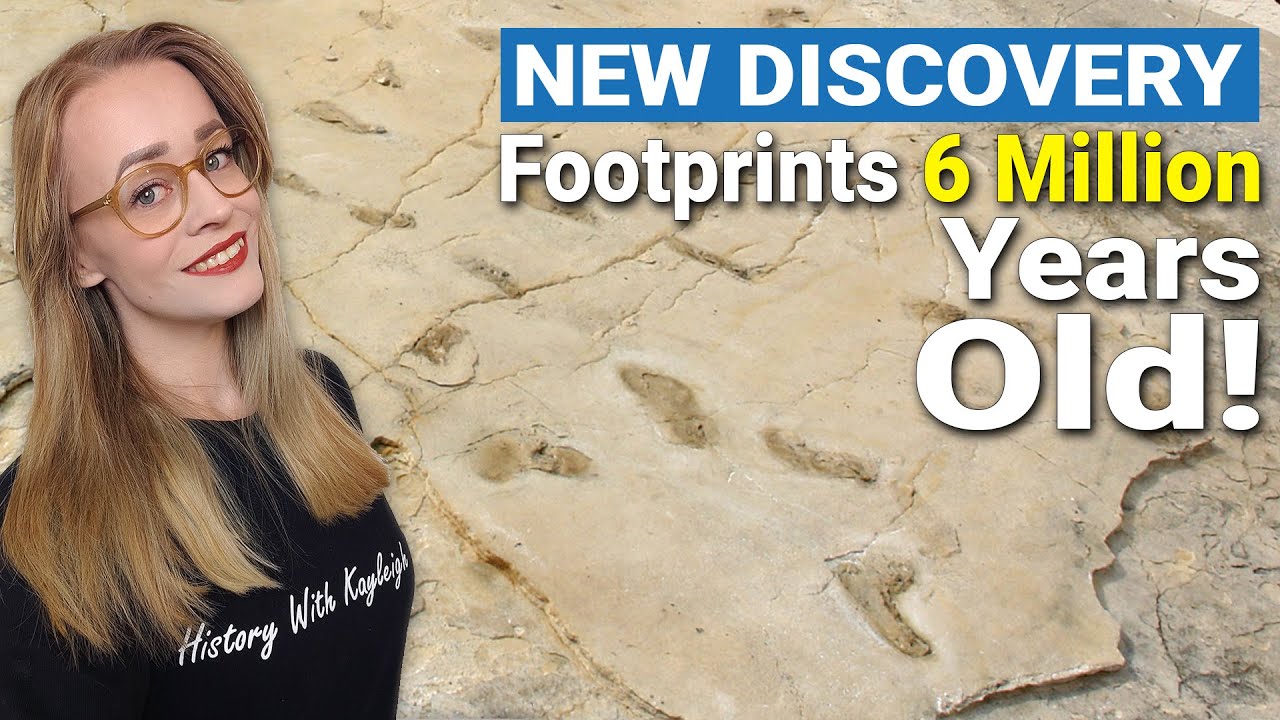







Footprint evidence from Kenya (1.5 million years ago) reveals that Homo erectus and Paranthropus boisei coexisted and exhibited different bipedal locomotion patterns, with Homo erectus showing more human-like footprints and Paranthropus displaying a more abducted hallux (big toe) similar to Australopithecus afarensis, demonstrating that locomotor diversity existed among early hominins long before the emergence of modern humans.
1.5-Million-Year-Old Footprints Reveal Hominin Encounters
Added:Understanding the basic lineage of human evolution, specifically the distinction between the genus Homo (e.g., Homo erectus) and robust australopithecines (e.g., Paranthropus boisei).
The fundamentals of bipedalism, including the skeletal and muscular adaptations required for upright walking compared to quadrupedal locomotion.
The concept of trace fossils (ichnology), specifically how footprints are formed, preserved over millions of years, and interpreted by scientists.
An introduction to geological dating methods, such as stratigraphy and radiometric dating, used to establish the 1.5-million-year timeline in East Africa.
Exploring the concept of ecological niche partitioning, examining how Homo erectus and Paranthropus boisei coexisted by utilizing different dietary resources and habitats.
Advanced biomechanical analysis of hominin footprints to study gait evolution, weight distribution, and the transition to modern human-like running and walking.
Comparing the Kenyan footprint findings with older trace fossil sites, such as the 3.6-million-year-old Laetoli footprints in Tanzania.
Investigating the behavioral and social implications of multi-species hominin encounters and how these interactions shaped early human prehistory.
51.2K views4.2Klikes31:42Original Release: 2024-12-21
hello my gentle and of course very modern Apes today we're talking about foot stuff specifically non-human hinin foot stuff in the form of footprints pervert welcome to gut Gibbon this is a place where we discuss the latest finds with regard to paleoanthropology so human evolution we talk about primatology we talk about biology generally lots of evolution discussions really just things that I find interesting within the natural world and we also bust a lot of pseudoscience but today we're discussing the discovery of a brand new set of footprints that has some pretty serious implications for how certain hominins may have interacted with one another let's step into the story like comment and subscribe for more content [Music] like Footprints are a type of ikof fossil or the preservation of the past organisms Behavior as opposed to like its body its bones its teeth something along those lines other ichnofossils might include things like Burrows or nests or coprolites fossilized poop but within paleontology Footprints are some of the most important igno fossils or trace fossils because they record the evolution of how organisms move which are some pretty big transitions along the evolutionary history of lots of different organisms that we care a lot about like for instance humans when we think about human evolution two major changes tend to come to mind for the average person the first is the evolution of big brains from small brains and the second is the emergence of our unique form of locomotion bipedalism walking on two legs from some earlier form of locomotion seen in Meine Apes this makes sense because humans are the only extant primate that is an obligate biped on the ground which means that we walk bipedally on the ground all the time as our primary means of getting around this is why it's depicted in perhaps the most famous Evolution image of all time the march of progress and it means the investigation of the evolution of bipedalism is pretty Central to investigating our evolution in general if human evolution is true then we should see the emergence of human style bipedalism emerg slowly over geologic time along with the accompanying morphologic sues of characteristics from a more basil form of locomotion scene in some myene ape easy and I'm just tickled pink to inform you that that's exactly what we see from a morphologic perspective we see the characteristics that necessitate and indeed demand bipedalism and obligate bipedalism at that emerge slowly through geologic time from basil hominins like ardipithecus ramus up through the ostop and into early genus homo and when I say demand obligate bipedalism and I should specify when on the ground because some of these guys were still spending some time in the tree trees in their day-to-day lives to do things like forage and escape from predators and so on and so forth I do mean demand obligate bipedalism when on the ground the morphology that is to say the physical characteristics of some of these hominins prevent preclude any other type of obligate locomoter style for example Lucy or ostr opius afarensis could not have been a knuckle Walker or any other type of quadraped as demanded by the physical constraints of her own bones she literally could not have moved around that way without accumulating pathologies and dying young those characteristics include things like an anterior or forwardly placed for ramond Magnum that's the hole at the base of the skull that allows the skull to sit on top of the vertebral column chimpanzees like this individual here in my right hand tend to have a Fram and Magnum that is intermediate as compared to quadrupeds so it sticks sort of off to the back posteriorly and that's because chimpanze knuckle walk so the orientation of their skull when they're moving around is kind of like this this is the vertebral column coming off at a at an angle here to hold their head sort of at an angle as they move around on all fours compare that to Mrs pleas here a member of ostapius africanis whose frame and Magnum is far more anterior like what we see in humans it's even angled forward and that's because their skulls sat directly on top of their vertebra column like this in an orthograde or upright posture if you Tred to make Mrs ple here this ostralegus Africanus a quadruped all of a sudden she's forced looking down all of the time it's not anatomically feasible bipedal hominins also tend to have an inline halix or big toe their big toe is in line with the rest of their toes and they tend to have three arches as well so that they can heal strike roll their weight through that foot and then toe off push off and Propel themselves forward as they walk on two feet instead of four bipeds and homens also T to have bull-shaped pelvis with the Ilia or Blades of the pelvis in the sagittal plane of the body as compared to the coronal plane so they can anchor powerful glutalight and also strengthen the pelvic floor and they tend to have a valgus knee or a knee that sort of comes in at an angle so that they can hold their weight sort of in this singular column they also tend to have s-shaped spines this is in addition to countless minutia like small muscle attachment sites that allow for the fortification the types of musculature that we see emphasized in humans as opposed to chimps so they both have the same types of muscles but in humans they might be bigger or in chimps they might be smaller or vice versa in order to facilitate the type of locomotion that that animal has and indeed we find all of the prerequisites for obligate bipedalism On The Ground by the time we reach ostapius or Lucy's genus but just because a homin is bipedal doesn't mean that it's walking the same way as every other hominin that has this Suite of characteristics because the site can be slightly different in one homin as opposed to another so both are bipedal but they're walking in different ways this makes sense intuitively because within our own species humans Homo sapiens people will walk differently and you can notice it without the need for any expensive equipment some people have longer strides or wonkier Gates where they swing their weight from to side some people walk with their toes pointed outward some people walk with their toes pointed inward some people have high arches some people have flat feet and all of this impacts the way that they actually move meaning if you were to Landmark 10 different people and have them walk in the sand you could then take casts of those Footprints and measure the spacing between those Footprints and you could figure out precisely how they differ and how they move and if humans vary within a species and indeed they do and chimpanzees vary within chimp pz and Maxs vary within maacs it serves to reason that hominins also varied in how they moved around both within their species and between their species and that's actually important outside of just the fact that it's fascinating to think about because it actually does have an influence on which hominin we might point to and say that's an ancestor of humans rather than a side branch so it's important to investigate the minutia of not just the more morphology of a homin but how that morphology actually played out and how they took their steps take ostapius afarensis for example or Lucy species and the homon thought to be responsible for making the most famous trackway perhaps of all time the Lei Footprints the Lei Footprints are fascinating because they look super familiar they've got the inline big toe they've got the three arches but when you take a cast of these Footprints and compare it to human trackways and then chimpanzee trackways as some researchers experimentally did you find that they are somewhere in between the two far more similar to humans than they are to chimpanzees but not quite anatomically modern and given their date is around 3.6 million years ago they are of course associated with the hominin that lived in that place at that time Lucy species ostapius afarensis that species ostapius afarensis is often pinned as the common ancestor of our genus genus home and our sister genus genus paranthropus that rarely gets talked about outside of specifically topics within biological anthropology because they're weird and hard to parse both genus homo and genus paranthropus retain a lot of characteristics that we see show up in genus epicus and temporally they show up after genus epicus so it serves to reason that epicus is the parent genus to paranthropus and to genus homo but these two Genera split off in very different directions whereas genus homo our genus continued this generalist tool using Trend that we see in ostapius before us paranthropus is almost like if you took a homin and tried to make it into a cow these guys are big with enormous molers and massive chewing muscles so that they can sit and just eat grass and leaves all day long they're super interesting and super weird and they were also super bipedal which we know because they have the suite of characteristics that we use to define a biped the suite of characteristics that makes an animal bipedal and prevents it from being anything else that anterior frame and Magnum does not lie but obviously there's an interesting question to ask here because if ostr opius afarensis didn't move identically to anatomically modern humans or even later genus homo and it's the parent Gene to homo and paranthropus how did paranthropus move in comparison to homo as a Genus Homo sapiens in particular and the ancestor of us both Australopithecus afarensis a new paper by hatala and colleagues out of the T Basin may help elucidate this question a little bit for us titled footprint evidence for locomotive diversity and shared habitats among early Pline hominins this paper reports the discovery of a new set actually two new sets of footprints at kuora in Kenya that belong to two different hominin from 1.5 million years ago and they Peg the track makers as being homoerectus and paranthropus Boise ey now this is not an Open Access paper so we'll start with the abstract and then I'll show you some of the specific bits that I think are important for talking about this paper and its implications and then we're going to Pivot really quickly to one other paper that actually came out a little while ago that I think complement this one well so with the abstract here they say for most of the plyo and pine multiple homin and species coexisted in the same regions of eastern and southern Africa due to the limitations of the skeletal fossil record questions regarding their interspecific interactions remain unanswered so we have a whole lot of hominins in the plyo and Pine and really earlier than that especially deep into the Meine for hominoids in general that are contemporaneous and what that means is that you've just got two Apes that are living in the same place at the same time and are probably interacting but the bones aren't telling us how or why they're interacting they're not giving us any details there and they're hoping that these Footprints and I think they make a decent case for it uh help tell us a little bit more about the nature of these interactions they say we report the discovery of footprints 1.5 million years old from KUB for Kenya that provide the first evidence of two different patterns of pine homin bipedalism appearing on the same footprint surface new analyses show that this is observed repeated L across multiple contemporaneous sites in the Eastern Tura Basin these data include a sympatric relationship between homoerectus and paranthropus Boise ey suggesting that Lake margin habitats were important to both species and highlighting the possible influence of varying levels of coexistence competition and Niche partitioning in human evolution hom and contemporaneity has been a contentious subject within po anthropology for quite some time and the reason for this is just because it's long been thought that anytime you have a hominin within any eological Community it's going to be so ecologically dominant or at least take up so much ecological space that it's going to be difficult to have more than one of that type of organism in an ecosystem like that one would essentially push the other to Extinction or push it out of the region that that competition would be too high and that you're sort of looking at a this towy big enough for the two of us situation but more and more we've been finding that it's not just two hominin living in a location but in some places we're having even like three or or more than that perhaps hominins living in an ecological community and eing out different types of living so that they don't end up bumping up against one another and competing for the same resources now the figure that you can see on your screen now shows the the site the at KU before that they're looking at here and you can see that you've got this primary trackway here in blue of a hominin walking across the substrate and then you have two separate like individual prints here and the reason they're colored differently is because the authors think that they belong to two different individuals and this little individual cluster of tracks here is going to belong to one species of homin and one genus of homin as we'll see in a minute whereas this primary trackway is going to belong to another genus of homin and there's a third one here in pink so this is the cartoon version of it so you can see it a little bit more clearly and then here's the topological look at it where you can see the scan of the site itself and then down here at the bottom we've got our bird tracks here in E uh and then C and D are depicting um a couple the tracks like individually like the actual picture of the track of an individual well-preserved track a part of the main trackway and then the isolated trackway here in D and then you have uh the the sort of heat map that shows the Topography of the print next to it in figure two here specifically C is one of the tracks in this primary trackway here in blue and the cartoon and then labeled ht11 ht12 H etc etc moving down uh the line here in the topographic like heat map of the site and then D is this singular specific Oddball track here highlighted by my cursor that may belong to a different individual of the same species as this primary Track Way um as opposed to these individual tracks so this track here in green this track in sort of orange and this track in pink these guys would be a single species in three different individuals and then potentially you have this primary Track Way belonging to one individual of a separate species and then this other isolated different ly oriented track belonging to the same species but not the same individual here and then of course the birds hopefully the birds are very clear to you as non hominin now I know what you're wondering you're thinking to yourself how do we know which one belongs toore rectus and which one belongs to perthus Boi or at least which is suggested to belong to each and perinthus and Homo have similar feet but we don't know the details as to how each individual species differs so the best way to sort of parse this out out is to just look at the morphology of the tracks and then compare that to trackways made by other known species and sort of see where they fall so we other we have other trackways that do belong to Homo erectus um namely the illet track way which you can see is is here on this figure but let me walk you through what we're looking at here first so on the y- axis here in figure three this is the RV this is the relative Arch volume and on the x-axis we're looking at relative depth so this little graph here is just characterizing the morphology of each individual print now the prints in question for today are going to be that primary track way that we already saw TS2 ht1 so that ht1 trackway is here in blue and depicted by Blue squares uh and there's a bunch of them cuz remember it was a full track way then in Orange we have the singular print up here uh H2 and then in pink we have another of the singular prints um there it is in B and then it's labeled here B and C because that's what's being depicted over here on the side so you can see what the individual prints in particular look like so there's B in the middle and then there's B on the side and then there's C here way off to the side and then C over here indicated by my cursor so you can immediately see hopefully by looking at this um at this figure that whatever made track B uh here in the pink and whatever made track C they're different guys right these these are two different gener now the question is which gener do they belong to so what we're looking at here on the sample over here on the key is a bunch of different other types of Footprints right so we have anatomically modern Homo sapiens depicted by this best fit line here in the middle and then we're also looking at a bunch of different other known trackway so illet here with the green triangle that's Homo rectus and then we have the loli G1 S1 trackway that's athus afarensis um and then the wall of a spay trackway and so on and so forth and so what I hope is immediately clear is that track B is very similar to anatomically modern Homo sapiens Footprints track B then is probably Homo erectus homoerectus is really really similar to modern humans at least in the feet and definitely compared to paranthropus and so it serves to reason that b and then probably this other isolated trackway up here which is much more similar to modern humans than it is to anything else these are probably the Homo rectus prints that means that c or the HT trackway that really long trackway probably is the one that belongs to paranthropus and this makes sense right paranthropus is similar to to modern humans but it's still like way off to the side in its own cluster it's moving in a different way the reason why I'm implying that it's still more humanlike is cuz there were no chimpanzee trackways in that figure that's coming next it's still more humanlike than chimpanzees are it's just not more human like than other members of genus homo which virtually all of those other tracks that it was being compared to were now in this figure here which is uh figure four in the first section here we're looking at the morphology of the prince specific specifically with relation to the HX angle the angle of the hoex or the big toe as compared to the rest of the toes now hopefully this is intuitive but a chimpanzee's foot looks a lot like its hand so the hoix or the big toe the equivalent in the hand being the thumb is like way off to the side so that they can use their feet to grip and it serves to reason that if the common ancestor of humans and chimpanzees had a foot that looked more like chimps which is reasonable because most my Meine Apes have feet like that because most Meine apes are to some degree arboreal then we should expect that that toe that big toe should start to become more in line as we move more derived in the homin and lineage and in fact that's what we see here in figure a or in figure 4 a I should say we're looking at the HX adduction angle or abduction angle excuse me um here on the Y AIS and then a bunch of different individual Footprints here on the x- axis belonging to experimental humans uh the loli trackway so ostapius afarensis this presumed paranthropus trackway here the wall of a spade trackway one the walis bay trackway 2 and then chimpanzees here now abduction means pulled away so the more abducted the H the more out to the side the big toe that's all that that's saying and indeed what we see here is that chimpanzees have really highly abducted heles they're their big toes are way off to the side they all track way up here the humans meanwhile have very adducted or very inline toes and what we see is that the Lei trackway is way more similar to humans than it is to chimpanze but they still have a more abducted big toe than modern humans and that paranthropus Maps really roughly with Australopithecus afarensis that's fair we would expect that if parius descends from Australopithecus and it doesn't become as derived as Gus homo it's not a surprise to see that their feet virtually look the same then the walis bay which are you know members of genus homo they are in with the experimental humans and then chimpanzees as I said are like way off on their own now this other Dot Plot is specifically looking at the variation Within sample so like how much does the abduction angle vary within the variation that's already captured above here right so like are the trackways consistent or is there a lot of variation humans don't vary that much right um Australopithecus varies a lot panthus varies a lot both of these guys have more variation in their track ways than humans do um wvis Bay these are just humans so of course they check with with humans and then the chimpanzees are like sort of in between so it almost looks like australicus and paranthropus vary more than both extant humans and extant chimpanzees uh which is interesting I I guess I guess that's not unexpected given they're sort of a species in transition so we would you know perhaps not be surprised that they they have a little bit more variation than something that's established like chimps and uh Homo sapiens who don't seem to be undergoing any directional selection with regard to Locomotion um and this foot morphology but I think it's weird another really important part of this paper that I want to point out is that they also compared the trackways to the morphology of known hominin feet so they didn't just compare the trackways to other trackways they also compared the trackways to like what do we actually know about what paranthropus feet look like from fossils of paranthropus foot elements right uh so I want to cover that paragraph here because I think it's good they say directly relevant to our analysis the first metatarsal B morphology in presumed paranthropus fossils has been linked to Greater hallucal abduction than observed in modern humans so what they're saying here is that um the metatarsal base the metatarsals are sort of like the the palmy fleshy part of your foot or pedal fleshy part of your foot like not including the actual Toes that you can see but the the Rays that are beneath them that are more proximal to them um and the bases of those metatarsals like have been linked to Greater abduction or a more um chimpy looking big toe that's all that this sentence is saying dorsal narrowing so dorsal means on the top so the narrowing on the top of those metatarsals specifically at the heads of the metatarsals have been found to differentiate parus first metatarsals from those of fossil and modern members of genus homo dorsal narrowing is also observed in the first metatarsals of ostapius afarensis so that makes a ton of sense right thinking back to what we just saw of that variation how the variation of afarensis looks more like paranthropus or of australicus afarensis I should say looks more like that of these proposed paranthropus boisei Footprints than either does to genus homo and that's because this dorsal narrowing shows up in ostr opius afarensis disappears in homo and is maintained in paranthropus so it's another thing that they're sharing the commonly presumed uh maker of the LOL G1 tracks these Studies have inferred that this morphology would cause a different pattern of toe off than observed in modern humans that makes sense too if that dorsal narrowing is related to a more abducted or sort of um Divergent big toe of course that's going to impact how you tow off right the the angle of the toe should impact the way that you tow off we hypothesize that the morphologies of paranthropus and ostr opius afarensis first metatarsals are linked to a more abducted and variable position of the hoex during ground contact and that this kinematic position is evident in the TSH ht1 and Le toi G1 track so they're basically saying we can see this shared halex morphology the shared big toe morphology reflected in these trackways proposed to be made by paranthropus here and Australopithecus afarensis at Le toi based on this we hypothesized that the ht1 trackway was created by parthis boisei and that the isolated TS2 trackways were created by Homo erectus the fact that they have linked the morphology of the tracks to the morphology of like known paranthropus foot bones is like suppor enough to say that these belong to paranthropus but it's important to remember as well that the tracks also are just substantially different from the proposed homoerectus tracks that are extremely human looking at the same site so we know for a fact that at this site you have a humanish looking thing making humanish looking tracks and then you have something that is not quite humanish making not quite humanish looking tracks but that both track makers are absolutely 100% bads which is really really cool and it's not the first time that this has happened so this paper is actually open access it came out in 2021 and it says footprint evidence of early homant locomoter diversity at Le toi Tanzania by mcnut and colleagues and this paper is really cool because this paper basically shows the same exact thing that we just saw happening at kuora but atly toly with Australopithecus afarensis or Lucy and someone else we do not know who that someone is so um I'm going to show you just a little bit of this uh I've talked about it like briefly in other videos but here in figure one you can see some of the tracks they are extremely primitive looking but they're definitely made by someone walking upright which is really really weird and really really interesting uh these trackways were made approximately 3.6 million years ago and like the kooby for tracks that we just looked like that we just looked at they were made like right around the same time like within hours or within days of one another you can see here the location of the a trackway in comparison to the G trackway so G and S belong to AAL G afarensis and a belongs to someone else but again we're we're not quite sure who and from the footprint you can see that it's like a very flat-footed hominin that made these right with a more abducted or off to the side more Divergent chimpy looking foot but not nearly as chimpy looking as like you know a chimp so what this is telling us here is that this hominin like local motor diversity has been H like happening for a very very very long time time from at least 3.6 million years ago to 1.5 million years ago now the maker of these tracks is again completely unknown and they don't even speculate as to who that track maker might be they they say which homin is generally accepted that asopus afarensis produce the footprints at S G and S it is tempting to assign the tracks um at a to ostapius afarensis but this premise requires an examination of foot ontogeny and interp specific morphologic variation that takes into account the M mounting fossil evidence of locomoter diversity among Pine hominins so they point out that these trackways are like way smaller than the ones that we find at Lei they say it's possible they could be made by a juvenile Australopithecus afarensis but it's undermined by a distinct footprint morphology from those that site G or S so they just look super different and they're not really sure who they belong to they belong to a mystery homant so here's a comparison of a here on top so this is our mystery homant and then this is the loli Footprints one of the loli Footprints belonging to Australopithecus afarensis um and then they compare 4ot width here on the Y AIS a figure 2B to footprint length and you have anatomically modern humans wearing shoes here in purple um not wearing shoes here in Gray the Angar cot tracks here in red and then modern chimps here in yellow and the latly footprints in blue as you can see by my cursor are over here like belong to austral afarensis um and then we have in green A3 this is the at track the one that you're seeing over here the mystery hominin and it's somewhere in between chimps and modern humans but it's less derived than Australopithecus afarensis now I have some thoughts on who I think the a track maker is but I'm going to put a pin in it for now because I'm I'm kind of including it in this larger video of one of my favorite hin Mysteries and like biggest standing mysteries in poo anthropology that involves this paper actually in particular so I'm going to save it for then but what I will say is do we know of any hominin with weird foot morphology that are more primitive than ostr opius afarensis and also were contemporaneous in all likelihood with genus ostr opius earlier than when these tracks were made yes we do and it's called Arius ramidus but is Arius ramus a good candidate for these Footprints the answer to that is I don't know maybe but one thing is for certain hominin of different walks of life have been chering the planet and running into each other for a very very long time they've been doing it since the late mayene and they've been doing it all the way up into the extremely recent past I'll leave you with this when you look at this image the topographic map of these Footprints of paranthropus and Homo erectus this 1.5 milliony old trackway surface from kubor you can't help but imagine what it must have been like for Homo erectus to see paranthropus on the landscape to see this really odd imposing strange and yet somehow familiar Critter like just strolling along much like you do do you think they looked each other in the eyes what did they make of one another I don't know I just think it's really cool I I love paleoanthropology human evolution just I love it I think it's so cool and if you think it's so cool too and you like what I do here on the channel please consider supporting me in the freeway by liking commenting and subscribing tell me what you think about the trackway in the comments below what do you think Homo rectus would have thought in its mind as it saw paranthropus and if you want to support the channel more financially you can join my patreon patrons get early access to videos when I'm on the ball and when I'm not they at the very least get their names at the end of almost every video here on this channel so you know consider it consider supporting science communication uh and me directly but from the bottom of my gentl of course very modern heart I want to thank you for being such a curious primate and joining me here today and uh I'll see you next time [Music] you [Music] all [Music]
Up Next

50:00
Homo Habilis: The Handy Human Ancestor and First Toolmaker
@NORTH02
2.9M views•2022-01-29

38:41
Astrobiology Through an Anthropological Lens: Field Insights
@georgiatechastrobiology
128 views•2021-04-14

4:45
Proxemics Explained: The Study of Personal Space
@Vox
536K views•2016-07-05
10:38
Psychology of Internet Trolling and Pranks Explained
@AzzyLand
10.7M views•2017-12-20
Related Study Plans & Knowledge Roadmaps
Structured learning paths in Anthropology
anthropology
Space Anthropology: Analogs, Culture & Habitats
01Foundations of Space Anthropology & Cosmic Imaginaries
02Extreme Isolation & Micro-Societies in Orbit
03Space Analog Habitats & Earth-Based Simulations
+ 2 more learning modules
15h5 modules
Explore Roadmap
anthropology
Legal Anthropology: Customary Law & Pluralism
01Foundations of Legal Anthropology and Social Justice
02Legal Pluralism: Coexisting Legal Systems
03Customary Law and Indigenous Dispute Resolution
+ 2 more learning modules
15h5 modules
Explore Roadmap
anthropology
Global Tourism: Gaze, Authenticity & Heritage
01Introduction to the Sociology of Tourism
02The 'Tourist Gaze' (John Urry)
03Staged Authenticity in Tourism
+ 3 more learning modules
14h6 modules
Explore Roadmap
anthropology
Modern Kinship (ART, Adoption & Chosen Family)
01Foundations of Kinship and Family
02Assisted Reproductive Technologies (ART) & Relatedness
03Transnational Adoption and Global Kinship
+ 2 more learning modules
12h5 modules
Explore Roadmap