![The ENLIGHTENMENT, Explained [AP World History Review—Unit 5 Topic 1]](https://i.ytimg.com/vi_webp/teTYdvjpSoM/maxresdefault.webp)













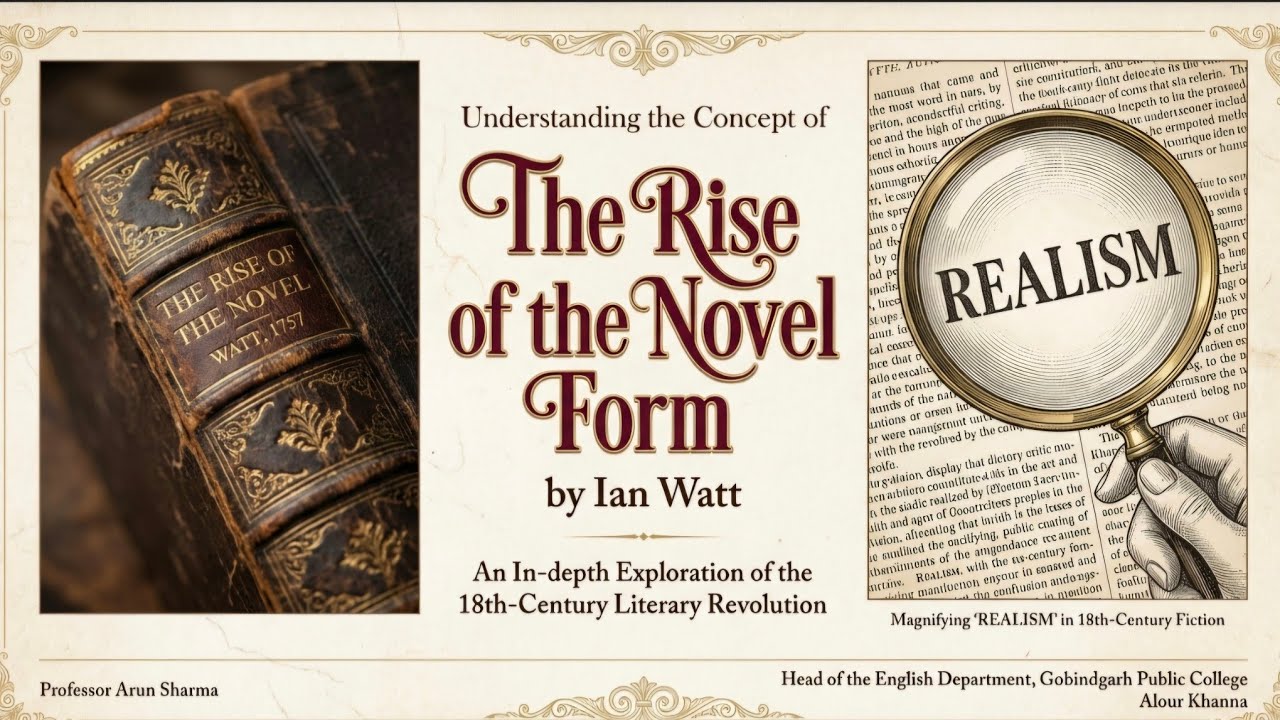




The novel emerged as the dominant literary genre in 18th century England due to the convergence of Enlightenment rationalism, rising middle-class readership, technological advances in printing, and growing literacy; Samuel Richardson is considered the father of the English novel, with his epistolary work 'Pamela' (1740) marking the first proper novel that shifted focus from fantastical romance to realistic portrayal of ordinary domestic life, establishing foundational elements of realism, individual consciousness, and contemporary social commentary that would define the novel form.
The Rise of the Novel in 18th Century English Literature
Added:The core philosophical tenets of the Enlightenment, particularly empiricism, rationalism, and the shift toward secular thought.
The socio-economic landscape of 18th-century Britain, including the growth of the middle class, urbanization, and rising literacy rates.
The dominant literary genres preceding the novel, such as epic poetry, courtly romance, and drama, to understand what the novel was reacting against.
A basic definition of literary 'realism' and how it differs from allegorical or mythological storytelling.
In-depth analysis of foundational 18th-century novels and authors, such as Daniel Defoe's 'Robinson Crusoe', Samuel Richardson's 'Pamela', and Henry Fielding's 'Tom Jones'.
The study of Ian Watt's seminal literary theory in 'The Rise of the Novel' and his definition of 'formal realism'.
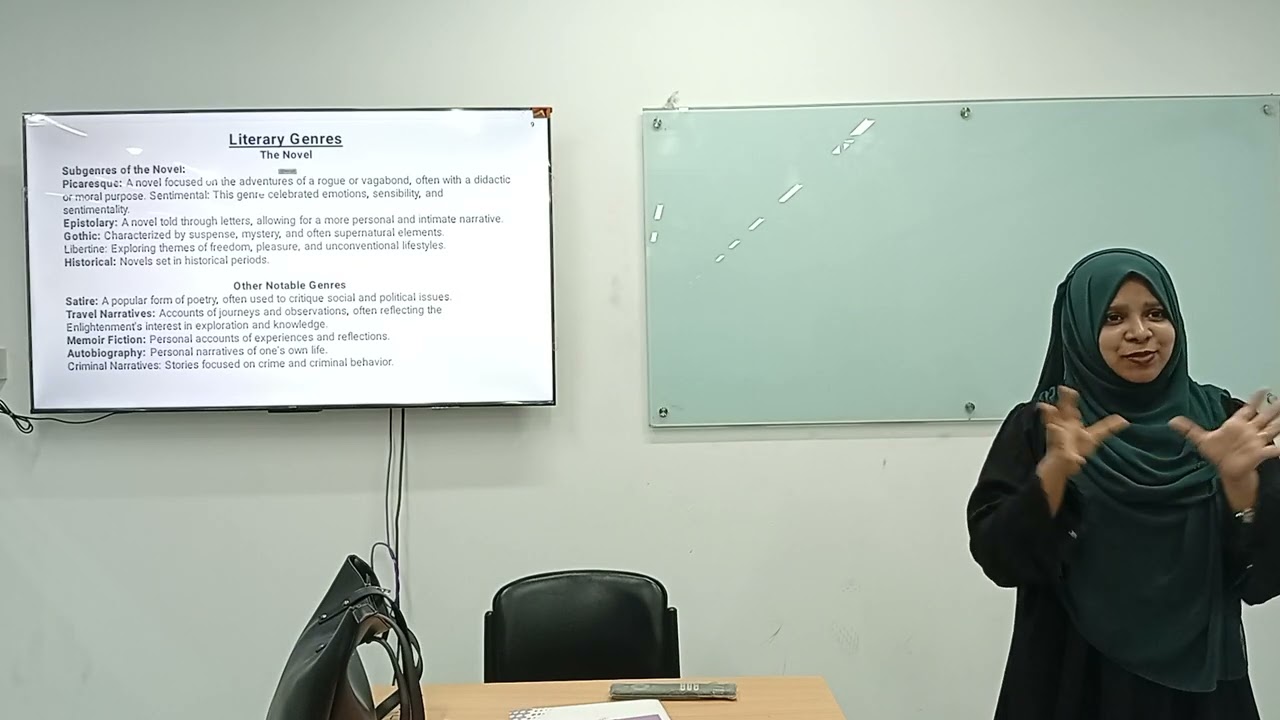
The evolution of the novel into late 18th-century subgenres, specifically the rise of the Gothic novel and the Epistolary novel.
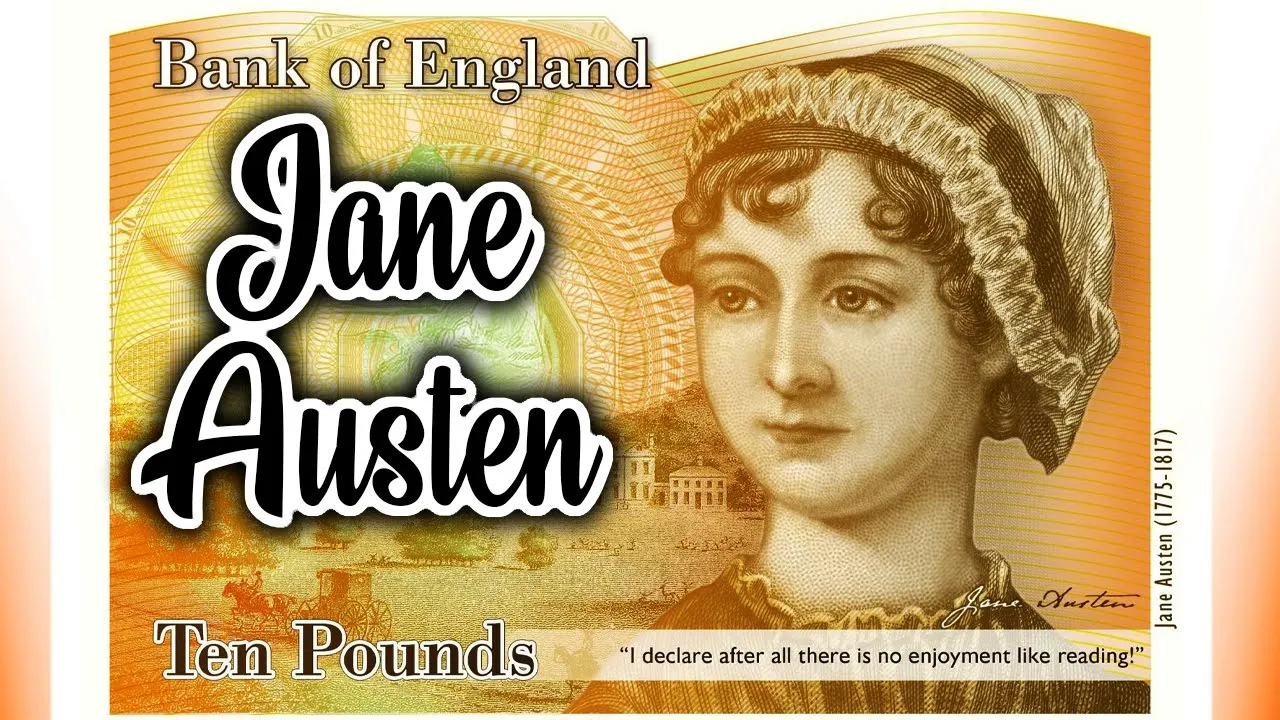
How the 18th-century realist novel laid the structural and thematic groundwork for 19th-century Victorian literature and the psychological realism of Jane Austen.
49.5K views959likes36:00Original Release: 2017-09-11
[Music] hello and welcome again to the NPTEL course the history of English language and literature in today's session we look at the rise of the novel in continuation with the various literary and non-literary events that had been dominating the 18th century we began to see in one of the earlier sessions that the 18th century rule is the long eighteenth century also known as the Augustine age the age of formalism and as the Age of Enlightenment had produced a number of new genres and given rise to a number of new trends in literary and non-literary writings so this our this session on the novel and this emergent of the novel also needs to be seen in continuation with your various set of events that were dominating the 18th century we had noted multiple times that the 18th century was dominated by the Enlightenment vision which was not restricted to a written word had swept across Europe and also certain other parts of the world so if you begin to look at how this enlightenment vision had been shaped had been shaping and defining the ways in which the world began to be rican seed from the 18th century onwards it's important to look at some of the early influences and some of these are things we've already taken a look at we began to notice that from the end of the 17th century onwards our tendency towards a new kind of rationality and the significance of reason and rationality in the understanding of all things connected with with human beings we're getting full around and sick by getting foregrounded significantly so accordingly we see that the late 17th century influences by bacon dekat Locke had given rise to two different strands of progress and development so one was a primarily in the field of science which had then branched out to various things such as engineering medicine are the aspects related to material goods aspects related to health etc and on the other hand there was also a rising individual individualism at stake which had led to the emergence of liberalism the notions of freedom liberty equality etcetera and also to the rise of our capitalist and the new definitions of wealth so overall we also begin to notice that the significance of the Enlightenment vision it was in contributing towards the progress or the pursuit of happiness of mankind in general so we also find that some of these major influences of these times we've already taken a look at we've seen they have the writing is a vacant of Locke and also the works of Adam Smith and also the various revolutions which were happening in front in the United States the newer kinds of things being invented in the scientific Garfield's except for how all of them were together contributing to be a various ways in which enlightenment was shaping and reshaping the world in the 18th century and some of those are things where you have to take a look at the Industrial Revolution how all of these things are together culminated in the rise of the middle class and how it influenced the reading habits so on and so forth as well so when we discuss the rise of the novel it's imperative to keep this vision in mind because we also begin to see how all the loose ends are come together and how they all eventually tie up to the inevitable emergence of a newer new kind of genre which also in multiple ways enables the reading faculties of the arising middle class so when we look at the reflection of the Enlightenment in the illiterate prints are we also began to notice that the in literature of the Enlightenment period could be divided into three different periods when we talk about the literary output of the Enlightenment period we also began to notice that this could be broadly divided into three different puris and some of which we have already taken a look at so accordingly we had noticed the set of events that had led to the Glorious Revolution of 1688 89 and also the resulting literary tendencies which had led to the age of Pope in the 1730's and mostly the early 1700 onward we had taken a look at the works of Alexander Pope of Daniel Defoe and Jonathan Swift we also notice how these two writers primarily had laid the foundations of a new kind of writing which was also to become the most for most dominant genre in the coming decades so in the second phase is this enlightenment period of the long eighteenth century in the second phase of this enlightenment literature we notice that this literature was primarily produced in the forties and fifties of the 18th century there's also uh characterizes the major fundamentals of the novel writing in English literature and all of these writers we are yet to take a look at so but we've already taken a look at the last decades of 18th century primarily for reasons of the division of convenience so in the last decades it was dominated by writers such as William Gottesman William are by writers it is william goldsmith of whom we have already taken a look at and in both these ages from the mid 18th century towards the end of the 18th century are we notice that these this was the period which primarily laid the foundations of the emergence of novel as a proper Jonah and for reasons of classification and convenience we have already taken a look at the other major genres of this period and now we resort to take a look at only the novel form and how it emerged in the 18th century we also begin to notice that just like our in many other ages there are a lot of overlaps in terms of the ages we also find it be a birth of the novel and the emergence of the novel is spread across all these different literary ages which you've already taken a look at in terms of the age of Pope and also as the age of Johnston we notice that it's very difficult to particularly attach one name to be rise of the novel to be age of the novel because it's spread across the 18th century in varying degrees and through a through varying influential our forces when we talks about the beginnings of the novel or the origins of the novel it is very difficult to a highlight a particular date or a text or an exactor or an exact form through which it evolved so many of these things are much disputed and a lot of works have already come out arguing and debating about the different possibilities of novel emerging at different points of time however we need to we need to also keep in mind the fact that there is a general consensus about novel emerging in the 18th century and also certain our particular authors laying the foundations of this new genre of 18th century we also had notice in one of the earlier sessions that this Jana since it did not have any literary bank interests like poetry or other kinds of writing it was easy to experiment and the form was also more flexible for the writers to to use it in many different forms there was no model like the classical model available for imitation accordingly there was a very little pronouncement of judgment of the novel's which were coming out especially during the earlier times and Hudson talks about a novel in a particular way when he begins to identify certain kinds of writings which could also be called as earlier forms of novel he talks about them as the particular kind of prose affection which we now call the novel so accordingly even while we agree that novel is the greatest achievement of the 18th century we begin addressing this question by taking a look at some of the earlier works which could be broadly classified under the term prose fiction it's important to keep in mind that when we talk about prose fiction before novel it's mostly away a technical nomenclature thing that we are talking about because the novel aspirants definitions it had not begun to emerge until the end of the 18th century and it's also important to highlight right at the outset that the Samuel Richardson is considered as the father of English novel so in that sense when we talk about the predecessors we are not talking about early novelist but we are talking about certain set of writers and certain set of writings who had uh who and which had paved the way towards the emergence of novel proper there is a general consensus that we are particular kind of prose fiction had begun to emerge even from the age of Shakespeare because he was one of the master storytellers and though it was in verse a certain kind of background for a storytelling was already being late from the time of worships beyond words and some of her in most of herself a place we also noticed that much of it was an pros in order to cater to the interest of the common public soon after that we had a couple of works which we're then described as prospection and now also seen as a forerunners of normal proper are the recipe is Arcadia and a couple of prose romances written by Lord and green we also find a didactic kind of prose affections are being produced by Thomas More Lily and bacon though they were not really seen as a different kind of writing or be or as markers of a newer form of Jonah on hindsight in the 18th century they were all looking at they were all seeming to look like a forerunners of our novel so they were also certain realist in picaresque productions picaresque prose fiction writing is produced by Nash around the same time owing to be a compelling influences from France especially in literary trace and also in terms of fashion and in terms of the other cultural trends of the times we find a certain kind of heroic romance getting increasingly imitated from the 16th century onwards and also the sort of writing getting dominated in the 17th century but this was heavily critiqued as promoting a form of a sham chivalry or sham pastoralism and ER through the form of history and we also find that this did not gain much popularity since that was also the time when the English writers and the English writings were are trying to trying to focus more on the native influences ban on the borrowed literary traditions and at this point is also worthwhile to note that absorbance or Orinoco Richa Chadda or which was published in 1688 was also a terrible reaction against the colic City and absolute unreality of the earlier crucifixion so in that sense it's also important to keep in mind that the earlier forms of fiction the earlier forms of prose fiction where are mostly unrealistic and not really related to real life in any way from the end of the 17th century and early eighteen century onwards will also find a certain form of writing later which has come to known as the character writing promoted by Addison and Steele through their periodical SS and John Vernon's use of fiction as allegory in his work pilgrims process in his work pilgrims progress was also seen as a significant contribution to be imaginative the novel and around this time were also noted that there was an increasing popularity for biography and many were writing biographies and it was also getting consumed in large numbers so in this certain way when we talk about the craft and technique of writing many historians and literary critics also feel that it was easy to carry over the method from the historical narrative - these are fictitious negatives of the novel form when we talk about Daniel deeper and his works it's also difficult to resist the argument whether he is one of the first novel writers or not but however his place in the evolution of fiction remains undisputed and since he had rejected the conventions of prose romance which had which was a prevalent thing and also had adopted the manner of a man tone of actual biography one can say that he had come very near to the genuine novel or the normal proper of the 18th century but however Hudson is of the opinion that he just missed his way because of the way in which novel later emerged as a more genuine and a more proper form and according to Hudson he argues that deepest tales which originally he intended to be are consumed as a proper biographies rather than fiction they were far removed from normal life in character and also had dealt with a strange adventure and crimes and romances so his work could be at best seen as a work of fantasy and as a work of romance rather than as a novel so there are also various critics were of the opinion that d4 could be considered as one of the earliest normal writers and needs to be considered as the founding father of the novel form in English however there are multiple debates in varying opinions about this by the mid 18th century and towards the end of the 18th century it would be possible to state that though they were many kinds of prose fiction available for popular consumption 18th century was yet to witness a novel of contemporary social and domestic life and and this this sort of gap was filled by Samuel Richardson's of Pamela Richardson incidentally as we are noted is also considered as the father of the modern novel and his normal formula was quite different from the earlier romances and the in the sense that it tried to reflect the doings of ordinary people in their familiar setting and not focused on a distant on a land of fantasy or a distant land of adventure which we'll come back to talk about Samuel Richardson and pumila in a short while and meanwhile it's very important to locate the various factors which led to the rise of the novel in the 18th century it's important to highlight the fact that we rise with the novel in the 18th century coincide with the rise of the middle classes and also printing has contributed enormously to be to the consolidation of this new form of writing and alongside printing the new forms of distribution of the printed material the growth of literacy in England all of this had contributed much to the new form of writing and also it's all noticeable that the literacy and dissemination of writing material was also cutting across a class and gender no longer limited to the abstracted class or to learn and men alone and around this time we also see a significant change in the way we authors and writers begin to be perfect in a letter in an earlier line in the early ages we noticed that the writers were heavily dependent on the patronage of the wealthy Nobles but around this time the writers popularity and the writers claim to fame or claim to success also depends heavily on the on the sales of books so in a certain we also see that a middle-class readership which was going steadily also contribute to a certain kind of market for literary goods so we begin to see that the newer forms of economics and the newer trends in our market we're also influencing the ways in which literary works by getting produced disseminated and also how particular literary works commanded and led to particular forms of success so during this time we also find the emergence of the author as a more independent figure no longer dependent on the state or on particular individuals it's again not to say that the normal form was completely free from criticism there were a lot of objections against the rise of this new form it was identified with the French romance and hence many thinkers of those times felt that this needs to be rejected by hemily since it did not contribute much to the development of the native our literary traditions it was also derided as a sensationalism put and it was said to corrupt the models of the of the youth in England and it was also considered antithetical to the English values so because of this perhaps at least in the earlier time there existed a certain selective legitimation of novels the displayed non romantic features in terms of the novels the dominator be 18th century it's important to note that the predominant factors which characterize most of the novels in the early period where realism and individual consciousness and keeping in tune with the spirit of the Enlightenment and the spirit of the new forms of rational thinking we also find that the experience of the individual hat was given more weight which than any other element of fantasy or any other kind of spectacle so we also find the emergence of middle class a protagonist and the antagonist or the hero is no longer a a famous person or even not a replica of one of the earlier heroes but he could be just an ordinary man who had a very middle-class origin and we need to talk a little more about the aspect of realism the realist novel was perhaps the most most common and the most fundamental kind of novel that emerged because it was seen as being synonymous with veracity it had moved the script of elements and hence it was closer to real life there was also a photographic attention to detail they were given by most of the authors they also rejected we are the aspects of fab fabulous imaginings and idealism of the romances altogether there was a I love fiction loyalty and it was get moving closer to real life in multiple ways so in that sense it also required a certain probability in character setting and even accordingly the events were also set in the specific land and not in a any way imaginary land we also find that the writers of this time rejecting the traditional plots in favor of something which was closer to real-life setting while the later critics of normal he has compiled these three major elements as being quite a foundation and significant to be to the aspect of novel contemporaneity believability and familiarity so even today is to begin to distinguish novel from other forms of writing we begin to know that these are some of the fundamental aspects that are being to play a significant role and the classification and in the distinction but that's one of the most important changes during this time was the way in which it was becoming possible to build a literate career upon this new genre it was quite unlike any other kind of genre which was prevalent in England and also be able to note that this Jahna stayed on for quite a while and it also brought a lot of success of Fame and money to whoever was willing to write for the arm for the common public so we also see a transition from the dependent writer to an independent writer who could also in many ways dictate his own life and writing destiny by by catering to the interests of the common man so if we are trying to sum up the rise of the novel in the 18th century we begin to notice that all of these influences had a begin to shape from the 16th and 17th century onward and in the 18th century due to several reasons including the effects that we had discussed much earlier about a Puritanism about to be evolved about the emulation of Methodism the various forms of philosophical rationalism the influence of French and Italian books and all of these things together contributing to the emergence and rise of the novel we also find it certain certain newer forms of writing the dissemination of the newspaper or the expire or expansion of the reading public also contributing much to this newer much to this new phenomenon known as the novel it's now time for us to take a look at who the early major novelist way so I've listed some of the major normals of the 18th century and these are also the lists of knowledge who find their place and most of the canonical texts as the founding fathers of early English novel Daniel people we have already taken a look at his life and his works and we've also seen how his work was quite different from that of Jonathan Swift and how in multiple ways it's seen as a prototype of the novel rather than a we've also seen how T force fields were seen more like a prototype of the novel rather than the novel form in proper then we have Samuel Richardson who is considered as a founding father of the English literary novel Henry Fielding Laurence Sterne and Henry Mackin seen out of these writers Richardson fielding and Stern are of supreme importance to our understanding of the English novel however in cause for discussion we should also be taking a look at some of the other writers also who had contributed to this field if we try to understand the writings of these various writers in a very broad sense it's important to note that a swift one of the earlier writers who wrote more of an experimental form of novel if we begin to look at be the early influences that these writers had on this particular genre it's important take a look at the various ways in which they experimented and try to come up with different forms of knowledge so here we also notice that Jonathan Swift who had primarily produced a few satires he can also be considered as one of the forerunners of the Novus but a lot of debates about whether he could be included as one of the major novels or not we also have as noted Samuel Richardson who produced mostly Bua and sentimental novels we have annual d4 who is said to have good with the first realist proton over Henry Fielding with the first comic novel and Laurence Sterne with the first experimental model I understand we also find it since most of these early writers were experimenting in this newer form of writing it was very difficult to form any kind of principle or any particular way of writing and say that this constitutes a novel and this does not so this also has led to a lot of disputes for our at least for a few decades from the 18th century onwards do not - exactly try and understand what constituted the the novel form of writing and what did not and since here we are not since we're not here to mount any kind of judgment on the early kinds of writings it would be safe to assume that all of them had played almost an equal role in laying the foundations of this genre in the 18th century so if you are if we try to take a look at the different types of novel which was prevalent in the 18th century it's important to note that Robinson Crusoe's it's important to know the deepest Robinson Crusoe could be considered as a realist novel verted since our family as an epistolary novel which is a novel in the form of letters Swift's Gulliver's Travels as a philosophic and satiric noble Fielding's Tom Jones as an epic novel tristram shandy by Stern as an experimental novel and Robinson Crusoe and pomelo also of they could be classified as a bildungsroman which is something that we shall come back to take a look at in one of the later sessions in in today's session we are in terms of the individuals particularly focus on Samuel Richardson who lived from 1689 till 1761 he was a prosperous and a well known printer in London but he had worked his way from poverty and that also had given him a lot of life experiences to begin with he however realized certification for writing only at the age of 50 there is no known evidence of him having produced any literary work before this appearance what became a turning point in in Richardson's career was was we was at a time when two of his publisher friends contacted helps to with a request to prepare a little volume of letter in a common style for country readers who were unable to indict for themselves we also noted in one peer Lia sessions that letter writing was also a favorite pastime and art so since many country readers the readers who were residing mostly in the non urban areas were not very well versed in the art of writing it was seen as a good it was seen as a good proposition to come up with a series of sample letters for them to consume Richardson was quite excited by this prospect and he set out to do this particular thing and he also thought that it would be interesting to strand to string all these letters in a common of it a common thread so he decided to base his base this entire set of letters upon a true story that he had heard how many years before so this in fact was quite a turning point in the way in which this this series of letters were going to be composed and it was later noted about this work that came out from this original intention while he set out to compose this set of letters he decided that it would be quite appropriate if it is strung together with a common thread so he decided to base these set of letters upon a true story that he had heard many years before and he also wanted to make it more accessible to the common public and not make it too ornament door to deck Lemaitre in his own words he wanted to come up with such a book which if written in an easy and natural manner suitable to the simplicity of it might possibly introduce a new species of writing turn young people into a course of reading different from the pomp and parade of romance writing and think to promote the cause of religion and virtue so here we see that the original intention of Samuel Richardson saw work these series of letters was to promote a sense of religion a sense of virtue and also to correct the young people from being corrupted by the evil influences of the romance writings which were prevalent during those times and the resultant work was not just a series of letters b-but the novel Pamela which had an alternate title or virtue rewarded so this was published in 1740 in instead of becoming a series of letters for the readers from the countryside it it rose to fame as the first novel and that to an epistolary novel a novel written in the form of letters or in the form of journal entries so what originally began as a project of ready letter-writing it became the it became the first novel applause it became the first proper novel in English language when we talk about the plot of Pamela it includes the story of a young girl who was a ladies are made in waiting and after the death of her mistress she is forced to read the advances of the libertine son of her mistress who eventually is who eventually is quite impressed by the virtue of this young woman Pamela and he also decides to reward her through marriage so this young girl whom he was pursuing eventually becomes his wife so the structure of the the structure of the novel is in such a way that all these electors or the journal entries are by de Huen as we can see here in the title itself at Pamela on virtue rewarded in a series of familiar letters from beautiful young damsel to her parents so as as Richardson's original intention was to give some kind of a moral teaching to be young men and women of England he also intended this as a as a contact book so in a certain weight even earned many praises from the church pulpit itself but at the same day which was also seen as quite a hypocritical but at the same time it was also seen as quite hypocritical for various reasons and one of the most important reasons are it also was a source of but discomfort for the readers of those times and as well as the readers of the later times was that it in some form of the other underscored the role distinctions between sexes so we find that this novel in certain way it operated with common pattern of the dominant as the provider bandmaster and the female as the victim preserving her virtue interest submitting to what could be considered as affection and inevitability of the man's dominance so in a certain way it also set or inaugurated our discourse on sexual roles in multiple ways it is also set of inaugurated a certain a particular studio typical discourse on sexual roles Richardson's Pamela was primarily written as a model code it was we also also find the predominance of a moral tone throughout the novel and but at the same time in spite of the many limitations that the novel could have percept it's important to give it the Elven since it is one of the earliest works and sends up Richardson not being a trained writer or reticent having not conceived this originally as a form of novel the techniques and craft of which we're yet unknown it's very important to understand and appreciate be various efforts which were put into the conception of this work and also to see the various criticisms in the light of the times as formula was a huge sensational hit in success it also prompted Richardson to come up with a few more primarily Clara or The Adventures of a young lady this also was commonly titled as Clarissa Harlowe this was a this came out in 1747 48 this work is considered as Richardson's masterpiece and he also owned a lot of the reputation across Europe for this work this was also in the form of an epistolary novel it was in the form of letters there are four major letter writers in this work Lanza holo unlike Pamela well the only character who was writing letters was Pamela herself and Clarissa was also important in having produced a newer kind of character study in the character of scoundrel character named Ann Lovelace he also became a prototype for many many similar characters in the 18th century which were also part of many other novels however the criticisms were also given that the normal were still in the form of infancy Clara was critiqued vehemently for the extremely long and dragging narratives there was a series of endless repetition a mass of unimportant detail and the structure all together was quite clumsy and not coherently put together and this novel since this was written in the form of a series of letters which pass all my characters are Hudson also finds that it leaves us with a disturbing sense of extreme artificiality of the whole fabrication nevertheless many critics also felt that his genius was rather feminine rather than masculine family because he had an attention to details they were in finite details in his writings he also paid attention to small and trivial things was seen as more of a feminine character than a masculine character then and also because perhaps his female characters were a better portray than his male characters and also if we notice our being the earliest novel it was quite it was quite unlikely of those times to have a female protagonist and also have a character a full fully developed a female character during the 18th century he also produced another noble is a Charles Grandison in 1753 this along with the other novels that he produced was mostly see when he published and we also know we also get to know from history that was quite a popular and people used to wait for the next series to be written and published so one of the original intentions of Richardson in writing the novel was to purify the society and manners of those times he thought that through this he could even bring in a moral revival but nevertheless it's just another I just know that I will need that the Richardson's a name is more associated with novel which is perhaps the most secular form of writing that eighteen century produced as we begin to wrap up this lecture is very important to leave a note about the epistolary novels the epistolary novel was perhaps the most common kind of novel that the 18th century produced though it was a very novel form it caught the fancy of the GAR of the reading public primarily because it sought to give several correspondents the opportunity to set forth a point of view so this multiple tea also created the impression of diversity in a narrative this was quite unlike the other forms of writings where only a single point of view could be disseminated and we also find it in spite of these some multiple points of view and the multiple our characters we're allowed to allow to speak in right we also find that one character domination that also had brought in some coherence and structure to the form of the novel and in one of the Richardson's work he also went an extra mile to accommodate the views and suggestions of the readers also so in that sense it was also an interactive form are given that we it was also an interactive form in the 18th century and this episode with a form of writing novels it we cannot say that Sango Richardson inaugurated respond because we also have a flaw vents worth published in 1683 title love letters between a nobleman and his sister but for various technical reasons it's not seen as a novel proper just like Depot's works are not and Richardson gets the credit for publishing the first English novel and the first epistolary novel in the 18th century having noticed and highlighted how Richardson produced the first novel in the 18th century it also prompts us to take a look at the other major writers of the period who laid the foundations to this particular genre and in the next session we should be continuing to look at the rise of the novel and how vedas novelists and the various writings of those times in many ways cemented the possibility of this genre becoming the most popular genre in becoming a decades and centuries that's all we have for today's lecture thank you for listening and we look forward to see you in the next session [Music] you [Music]
Up Next

17:59
Pamela by Samuel Richardson | Analysis of 18th Century Novel Revolution
@DrOctaviaCox
38.8K views•2020-12-04

13:43
Formalism in Literary Criticism: An Academic Lecture Overview
@mattalberhasky9952
39.1K views•2015-08-05

6:08
Point of View in Fiction: First Person vs. Third Person
@magicalthriftyteacher
153.8K views•2014-03-31

15:25
1984: Orwell's Dystopian World and the Mechanisms of Totalitarianism
@AlternateHistoryHub
7M views•2017-03-04
Related Study Plans & Knowledge Roadmaps
Structured learning paths in Literature
literature
Graphic Memoirs: Visual Art, Trauma & History
01Foundations of Sequential Art and Visual Language
02Autographics and Processing Historical Trauma
03Visualizing Personal Trauma, Grief, and Graphic Medicine
+ 2 more learning modules
14h5 modules
Explore Roadmap
literature
Campus Novels: Evolution, Themes & Critique
01Introduction to the Campus Novel Genre
02Mid-Century Satire and the Post-War Academy
03Dark Academia and the Critique of Privilege
+ 2 more learning modules
14h5 modules
Explore Roadmap
literature
Theater of the Absurd: Philosophy & Plays
01Postwar Existentialism & Historical Roots
02Dismantling Narrative: Esslin & Absurdist Conventions
03Samuel Beckett and Tragicomic Existentialism
+ 2 more learning modules
12h5 modules
Explore Roadmap
literature
Revenge Tragedy: Justice, Madness & State
01Foundations of Early Modern English Theatre
02Anatomy of Revenge: Structural Conventions
03Psychological Complexity: Madness and Melancholy
+ 2 more learning modules
15h5 modules
Explore Roadmap