






















A diffraction grating, consisting of thousands of closely spaced parallel slits, produces sharply defined bright and dark interference fringes because when light passes through multiple slits, waves from different slits interfere constructively at specific angles (where path difference equals integer multiples of wavelength) and destructively at intermediate angles, creating distinct bright spots separated by darkness; this is described by the equation d sin(θ) = mλ, where d is the slit spacing, θ is the angle, m is an integer, and λ is the wavelength.
What is a Diffraction Grating? Physics Tutorial
Added:Understanding the wave nature of light, including concepts such as wavelength, frequency, and phase.
The principles of wave interference, specifically the conditions for constructive and destructive interference.
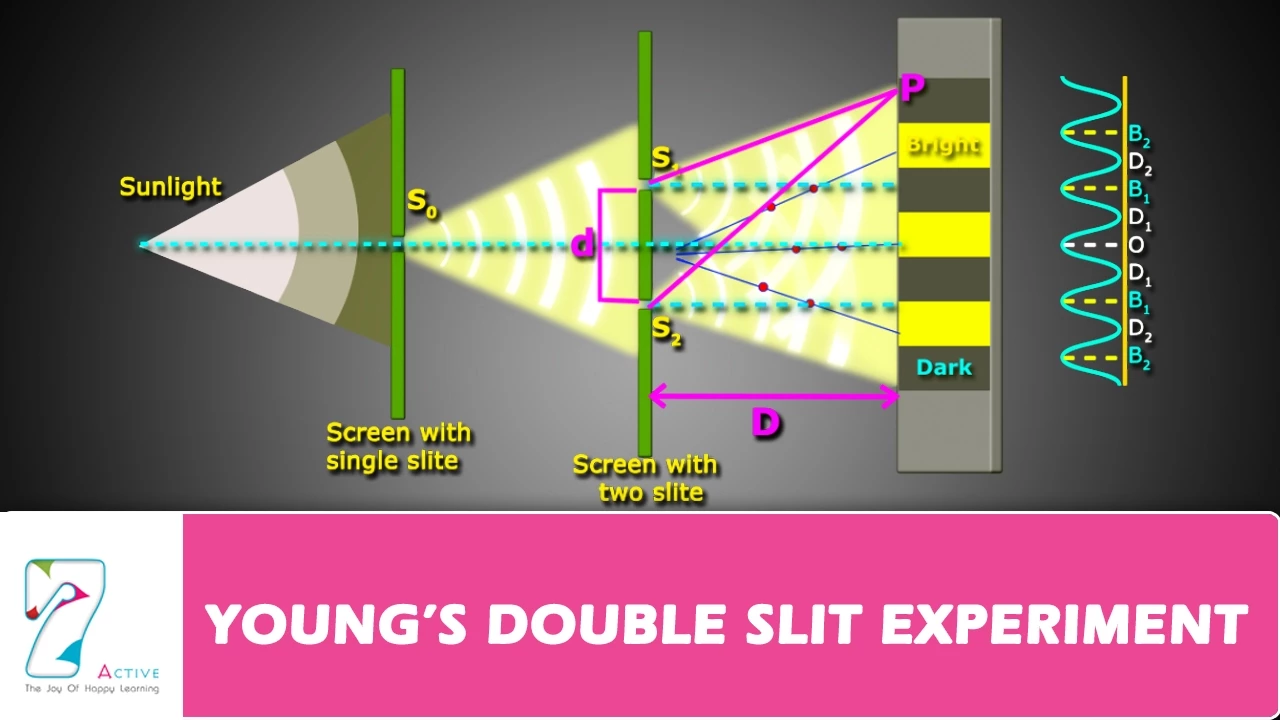
Familiarity with Young's Double-Slit Experiment and how path difference creates interference fringes.
The basic concept of wave diffraction, explaining how waves bend when passing through narrow openings.
Applying the diffraction grating equation (d * sin(theta) = m * lambda) to solve quantitative physics problems.
Exploring the concept of resolving power (chromatic resolution) and how it limits or enhances spectral analysis.
Studying the practical applications of diffraction gratings in optical spectroscopy for analyzing chemical compositions and stellar light.
Investigating advanced diffraction phenomena, such as reflection gratings, blazed gratings, and X-ray crystallography.
993.8K views8.9Klikes14:21Original Release: 2014-07-07
- Double slits are cool because they show definitively that light can have wave like interference patterns and if you shine a green laser through here what you'd see on the screen would be something like this.
You'd have these bright spots but they'd kind of blend in to dark spots which blend into bright spots which is why when we draw a graphical representation of this, it kind of looks like this, where these spots are blending into each other which is cool but it also kind of sucks because if you were to go actually try to do this experiment, you'd want to measure some angles and that means that you'd have to measure some distances.
I'd measure distance from the screen to the wall.
That would give me this side of the triangle and then I would also probably want to measure distance between two of these bright spots because that's what I can see but because they're smudgy, it's like is that the center?
Is this the center?
Sometimes the lights not so strong and it's hard to tell and what's worse is these kind of die off and so there's another problem.
These die off pretty quick.
Sometimes you're lucky to even see the 5th or 6th bright spot down the line.
So, my question is, is there a better way?
Is there a way to make these spots more defined and so you can see more of them so they're brighter and the answer is definitively yes and we figured out how to do it and the way you do it, is you just make more holes.
So you come over to here and if these are spaced to distance D, I'm just going to make another hole at distance D and then I'm going to make another hole at distance D and then I'm going to make another hole at distance D.
I'm going to make 1,000's of these holes extremely close together as long as they're all at distance D apart, something magical happens.
So if these are all D apart, what happens is on the wall over here, instead of getting this smudgy pattern, you'll get, you really will just get, a dot right there and then darkness and then another dot and then darkness and another dot and you'll see this continue out much further than you could previously.
Why?
Well let's talk about why.
So let's talk about this.
How can you see this pattern over here like this?
So, the 1st wave from this 1st hole.
Let's imagine this 1st wave from this 1st hole, it's going to travel a certain distance to the wall.
Let's say we look at a point over here where it is constructive.
Let's say we just had these two holes to start off with right?
Two holes, double slit, disregard all this stuff for a minute.
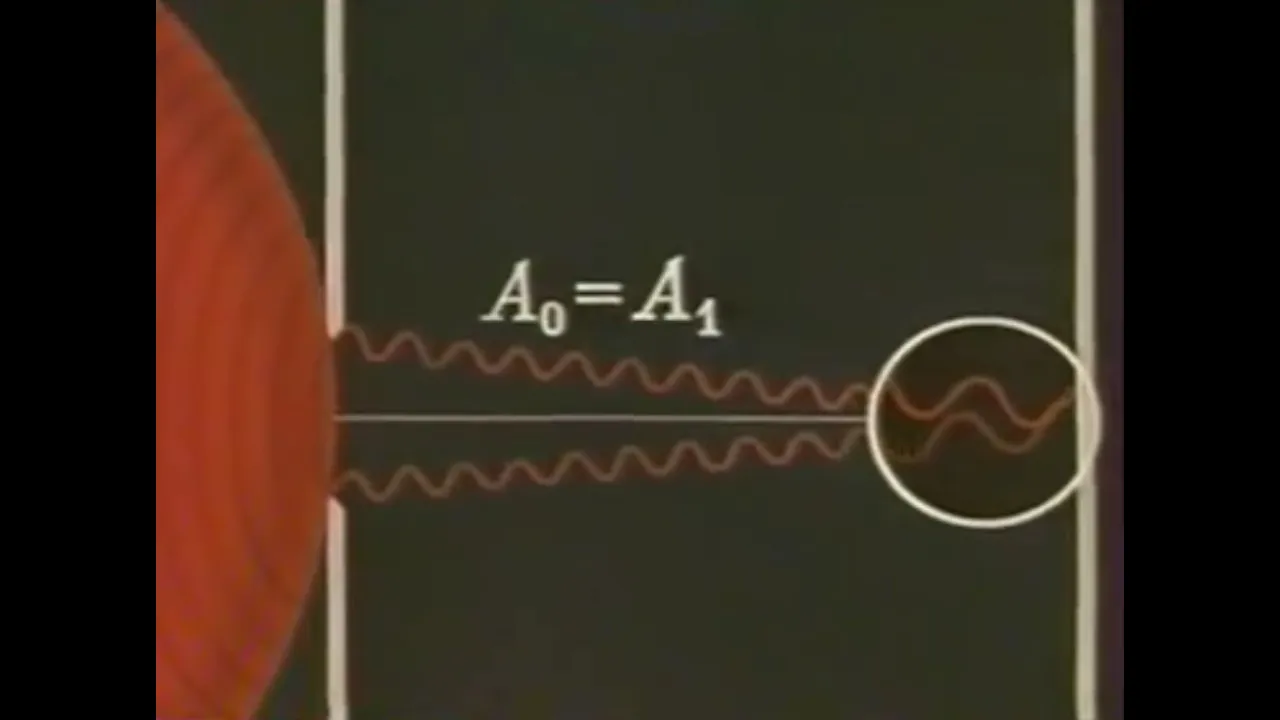
Two waves coming in from two holes get over to here.
Let's say this is a bright spot but say it's the bright spot that corresponds to, delta x equals one wavelength.
In other words, this would be the constructive point where the 2nd wave from the 2nd hole travels one wavelength further than the wave from the 1st hole and again what that means is if I were to carefully draw a line from here at a right angle right there, that means that this wave, from the 2nd hole, this is the extra part so that would be one extra wavelength and because this 2nd wave is traveling one extra wavelength, it's going to be constructive because if I draw my wave, they're going to match up perfectly there so if I draw my wave, let's say the wave from the 1st hole happened to be at this particular point on it's cycle.
It doesn't have to be but let's just say it was there.
The 1st wave hit that point at this point in it's cycle.
Well, the 2nd wave, since it's traveling one wavelength further, is going to hit at this point in it's cycle so it would be here.
Now these are both hitting there at the same point so the 1st wave gets there hitting right here.
The 2nd wave get there hitting right here.
These overlap because these are two different waves overlapping at this point it's going to be constructive because if a peak matches a peak, constructive.
If a valley matches a valley, constructive.
How about the 3rd hole?
Here's where it gets interesting.
This 3rd hole, the wave from the 3rd hole is going to have to travel this far to get there.
Well, let's see.
From the 2nd, how much further does it travel compared to the 2nd hole?
I'm going to do the same game I did just a minute ago.
It travels this much further which again, since these are the same angle, this is going to be the same distance here.
This is a also going to be one wavelength.
Remember we derived at this.
That d sin theta, is the path length difference and the theta is the same for all of them and so I could just look at these two consider these two as the double slit.
This one travels one wavelength further than the 2nd.
How much further does it travel than the 1st?
Well I'm going to continue that line down.
It's just going to travel two wavelengths farther than the 1st.
So the wave coming out of the 3rd hole travels two wavelengths farther than the 1st hole.
The 2nd and the 3rd are going to be constructive because they're one wavelength apart and the 3rd and the 1st are going to be constructive because they're two wavelengths apart.
That's okay, two wavelengths doesn't matter.
Look at, if the 1st wavelength hits here, the wave from the 2nd one hits here, the wave from the 3rd hole travels two extra wavelengths.
When that 3rd wave gets to this point it will be at this point on it's cycle there all going to by overlapping at the same point on their cycle, it's going to be constructive.
You can keep doing this.
You can come down to this hole and it will also be constructive interference.
In other words, this 4th hole travels one wavelength further than the 3rd, two wavelengths further than the 2nd hole, three wavelengths further than the 1st hole but there still all going to overlap perfectly.
You will get an extremely bright spot here because you have even more light overlapping and it's all perfectly constructive bright spot.
Now here's where it gets strange so you've got to be careful.
This is the part of the explanation I hated as a student.
I thought this made no sense whatsoever so pay close attention at this point.
Here's the weird thing.
If you deviate slightly from this constructive point if I go up just a little bit over here to some point right here.
Let's just see what happens.
This wave from the 1st hole would travel that far to get there okay and the wave from the 2nd hole travels that far to get there.
The path length difference isn't going to be one wavelength.
Let's say the path length difference happens to be 1.1 wavelengths.
So let's say the wave from the 2nd hole happened to be traveling not one wavelength further anymore, it's not traveling one wavelength further, it's going to be traveling 1 and.1 wavelengths further.
So if the 1st wave happened to hit at this point, the 2nd wave would be hitting at not exactly one wavelength but 1.1.
Now if I keep drawing them over here I'm going to run out of room.
So since they're all the same points on the cycle, the cycle's the same over and over.
One wavelength.1, I'm just going to draw that right here.
So the 2nd wave would hit right there.
Those would overlap you know, that's partially constructive.
I mean, just looking at these, you'd think you'd get a bright spot but if you keep going let's see what happens.
The wave from the 3rd hole also travels to get there.
How much farther does it travel?
Well, it travels 1.1 wavelengths further than the 2nd hole but it travels 1.1 plus 1.1 wavelengths further than the 1st hole, so it travels 2.2 wavelengths further than the 1st hole.
So to make this clear, let me just be clear here.
So if I do the same trick right?
I draw this down to a right angle.
It's a little farther so I have to draw the line a little further out.
1st wave travels one wavelength and.1 wavelengths further.
How about this one here?
Well, the wave from the 3rd hole travels one wavelength.1, 1.1 wavelengths further than the wave from the 2nd hole but it's going to travel 1.1 plus 1.1 wavelengths further than the 1st hole.
So it's going to be 2.2.
This wave from the 3rd hole is going to travel 2.2 wavelengths further than the wave from the 1st hole.
Where would that be?
So, one, two wavelengths.2 would be even further down the line here.
Not completely at the bottom but further down the line.
So it would be, at this point over here and you can keep doing this and let's just see what happens.
Let's just do a couple more.
This wavelength has to travel this far.
Now you can probably see the pattern.
This wave through the 4th hole has to travel 1.1 wavelengths further than the wave from the 3rd.
It travels 2.2 wavelengths further than the wave from the 2nd.
It travels 3.3 wavelengths further than the wave from the 1st.
So if I compare this wavelength where this wave is on it's cycle compared to the 1st, then I'm going to be 3.3 wavelengths.
So if I go one, two, three and then.3 would be down here somewhere.
I'd get one that's at.4, I'd get one that at.5, I'd get one that's at.6, one at.7, one at.8, one at.9, one at, well.10, which is back to a whole wavelength again, a whole wavelengths difference.
What is this going to be?
If all of these waves are overlapping like this at this point that's only slightly deviated from this other point.
What am I going to see there?
Well, look at you could pair these off.
This point and this point are going to interfere completely destructively.
One's at a maximum, one's at a minimum, one's at the peak, one's at the trough, so you get zero and you can keep pairing these off.
This one here and that one there completely annihilate each other, completely destructive.
You keep doing this, this one here and this one there completely destructive and you can keep finding points that completely destruct each other and that means that you're going to get no intensity at all, even slightly off from this magical point, this magical integer wavelength point.
What that means is instead of getting a blur, instead of getting this, instead of getting this smudgy pattern.
You're going to get, at the bright spots, a dot and then another dot at the bright spot and in between these bright spots, you will get darkness.
Which is great, it's great because it's easier to measure so that's one good thing and it relies on this fact that if you've got multiple holes, 100's even 1,000's of holes, if you go off even slightly because this isn't going to always match up perfectly, you keep going down the line one of these are going to interfere constructively with another and you can keep pairing these off and then the 2nd would interfere destructively with a different one and the 3rd with a different one and the 4th with a different one and they're always going to match up so you can destroy them all and you get destructive point in between.
That's why it's dark.
Now at first I didn't like that argument.
I had to go back over that and make sure that made sense to me.
If it doesn't make sense to you go through, you've got to hammer it out, try it out, draw it out.
I've tried my best to explain it here but I have to admit, it's a difficult one to comprehend but that's the idea.
So this is great actually.
These multiple holes here are giving us points that are points that are spaced out and clearly delineated.
Now I can clearly see, okay if I wanted to measure this distance I don't have to guess.
There's no guesswork, one dot's here one dot's there, bright, bright, no smudginess.
That's one great thing about this.
The other great thing is because I've got more holes, this brightness lasts longer.
These bright spots will keep going further, I can see this travel further down the line then I would with the smudginess because I've got multiple holes interacting and I'll have more intense dots, it's brighter.
The dots are more delineated and they're typically brighter, they're more intense.
So we give this a special name because this is so useful, these multiple holes instead of a double slit, these multiple holes are more useful.
We call this a diffraction grating.
So this is a diffraction grating and it's more useful than a double slit in many ways because it gives you clearly delineated dots and it let's you see them more clearly.
How many holes are there in a diffraction grating?
Well typically, these are rated in lines per centimeter.
In other words, if you took a diffraction grating and you asked, how many holes are there?
The lines or the holes.
How many holes are there per centimeter?
Well, the lines could be the blocked parts and the holes could be the parts where there's no blocked part but regardless, there will be as many lines as there are holes.
How many holes are there per centimeter?
There's typically 1,000's of lines per centimeter in a diffraction grating.
That's how small these are spaced together.
You might worry though, isn't the math going to be complicated here?
We've got all these holes here.
It turns out no.
This is the best part.
By far the best part.
This relationship still holds.
All that math we did, still fine and because these all line up for the good points, the magic points.
These points where they all overlap in such a way that they're one wavelength further.
Those line up perfectly so that no matter how many holes you go down the line, they're all perfectly constructively interfering and so you get this equation.
It's the same equation that we had before where d sin theta equals m lambda gives you the constructive points for a diffraction grating interference pattern on the wall.
Up Next
43:45
Edexcel IAL Physics: Waves & Particle Nature of Light
@PhysicsOnline
94.7K views•2021-10-25

12:53
21cm Hyperfine Transition in Neutral Hydrogen: Radio Astronomy Basics
@AaronRobertParsons
12.4K views•2011-10-13
12:56
Lens Power, Diopters & Eye Aberrations | Optics | Khan Academy
@khanacademymedicine
218.3K views•2014-07-06

27:14
Entropy and the Second Law of Thermodynamics Explained
@veritasium
27.5M views•2023-07-01
Related Study Plans & Knowledge Roadmaps
Structured learning paths in Physics
physics
Nuclear Physics (Decay, Fission & Reactors)
01Atomic Structure and the Binding Force
02Radioactive Decay and Half-Life
03Nuclear Fission Mechanics and Chain Reactions
+ 2 more learning modules
12h5 modules
Explore Roadmap
physics
Soft Matter (Polymers, Colloids & Rheology)
01Foundations of Soft Matter & Thermal Forces
02Polymer Physics and Macromolecules
03Colloids, Surfactants, and Self-Assembly
+ 2 more learning modules
38h5 modules
Explore Roadmap
physics
Analytical Mechanics: Lagrangian & Hamiltonian
01Mathematical Foundations: Calculus of Variations
02From Newtonian Mechanics to Constraint Dynamics
03The Principle of Least Action & Lagrangian Mechanics
+ 3 more learning modules
28h6 modules
Explore Roadmap
physics
General Relativity (Spacetime & Cosmology)
01Foundations of Relativity: Special Relativity
02The Geometry of Spacetime: Equivalence Principle & Curvature
03Einstein's Field Equations: The Mathematics of Gravity
+ 2 more learning modules
55h5 modules
Explore Roadmap