

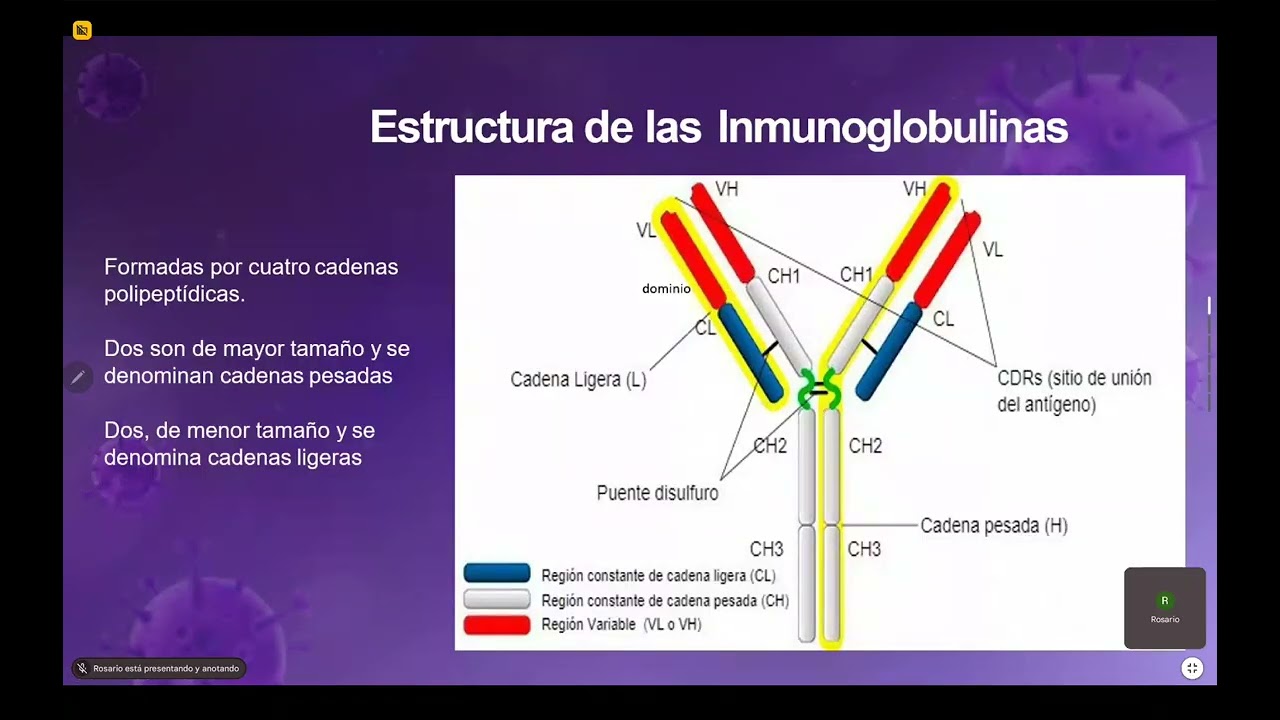













Antibodies are Y-shaped proteins composed of two heavy chains (~50,000 Da) and two light chains (~25,000 Da), each containing variable regions that form hyper-variable loops creating the antigen-binding groove; they function in immune defense through complement activation, antibody-dependent cell-mediated cytotoxicity, and allergic responses, while also serving as essential tools in biomedical research and therapeutic applications such as monoclonal antibody treatments for cancer and autoimmune diseases.
Antibody Structure & Function: Immune Response Explained
Added:Basic understanding of the adaptive immune system, specifically the distinction between B cells and T cells.
Fundamentals of protein structure, including polypeptide chains, disulfide bonds, and constant vs. variable domains.
The concept of antigens and how they trigger immune recognition.
The general division between cell-mediated and humoral immunity.
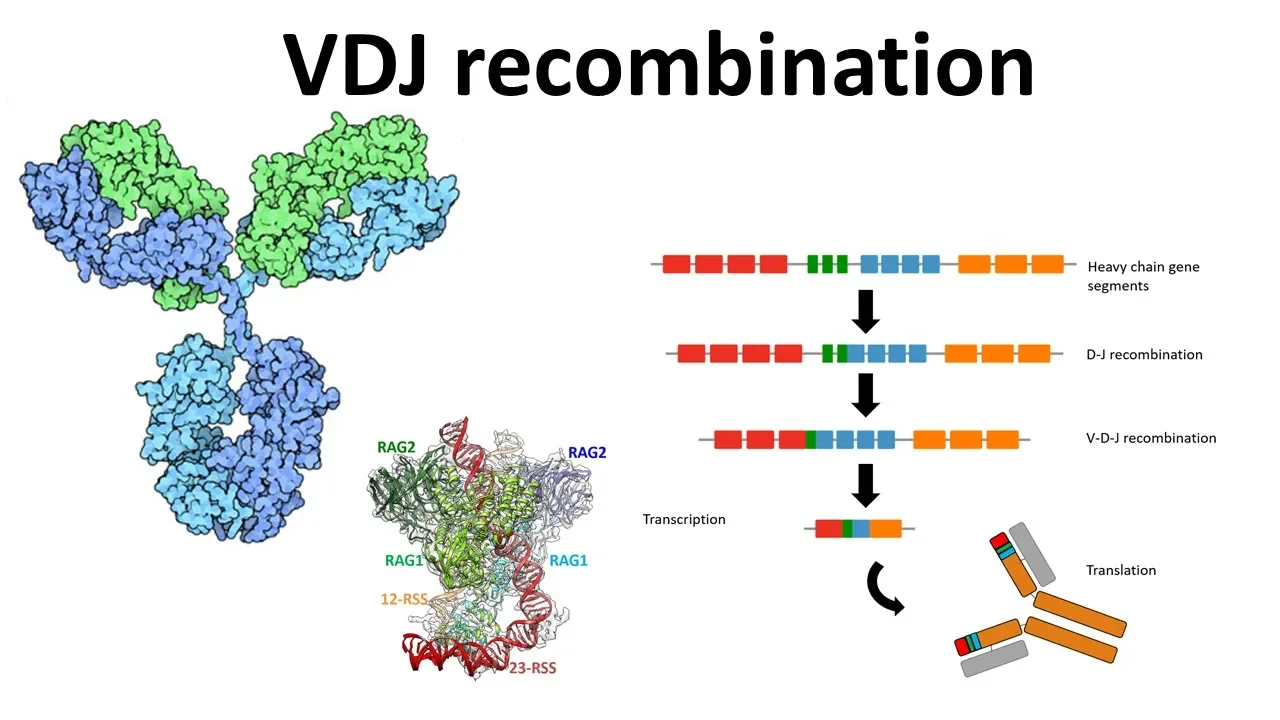
The genetic mechanisms of antibody diversity, specifically V(D)J recombination and somatic hypermutation.
The clinical production and therapeutic applications of monoclonal antibodies (mAbs) in oncology and rheumatology.
Diagnostic laboratory techniques utilizing antigen-antibody specificity, such as ELISA, Western Blotting, and flow cytometry.
Pathologies related to antibody dysfunction, including autoimmune diseases, immunodeficiencies, and IgE-mediated hypersensitivity (allergies).
18.6K views289likes10:44Original Release: 2018-06-09
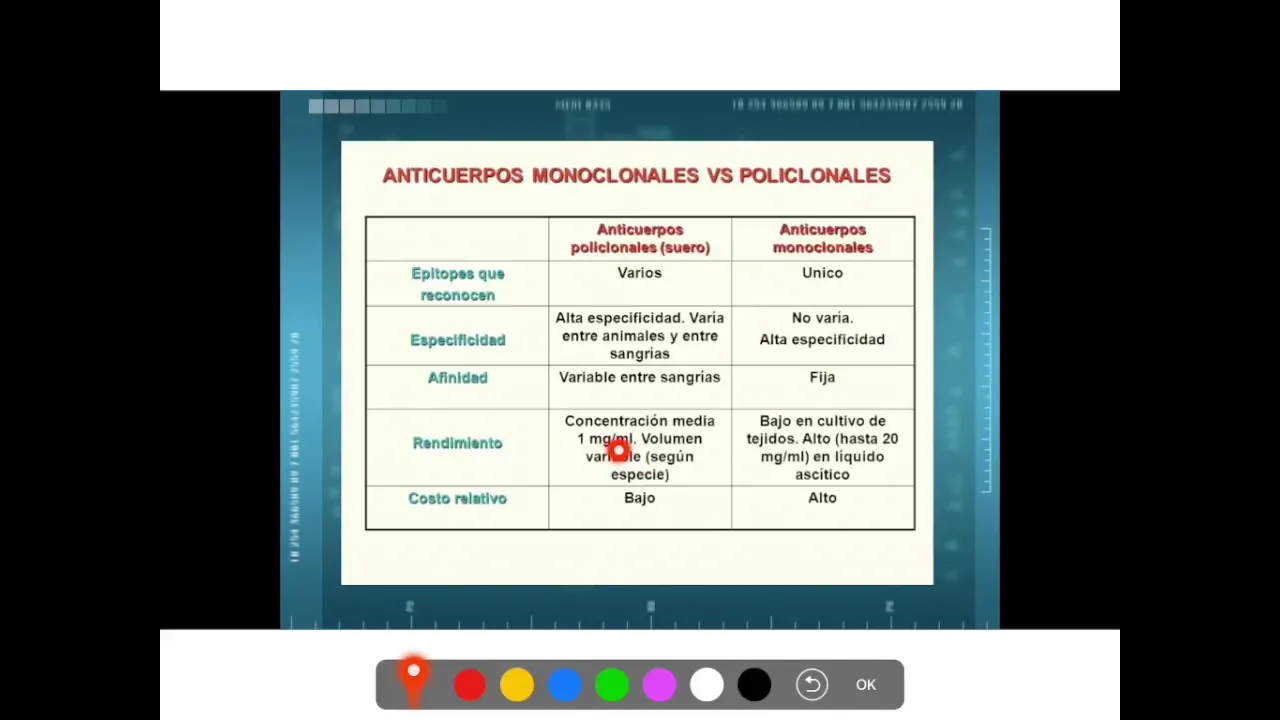
hi today I would talk about antibody structure and function our body produce antibodies against any external antigen so let's just look at where does antibody come from and what is the structure of it and how does an antibody functions and what is the use of antibody ei kabah at 1930 nineteen and wonderful experiment when they have injected the rabbit with over albumin then they extracted the blood from crappy centrifuge state as a result they could get the pellet out of it they could get the pennant of clumped RBC's and WBC's and whatever is rest is the plasma is the serum so they took the serum and ran it on a chip and after that they found characteristics band pattern and they have characterized those band and named those bands as alpha beta gamma etc now antibodies are present in this gamma globulin fraction of serum now antibody definitely binds to antigen so let us just look at the interaction between antigen and antibody so antigen antibody binding it's not ultra strong so there are no covalent interaction between antigen and antibody so there are non covalent interactions between antigen and antibody which includes first of all hydrogen bonds ionic bonds hydrophobic interactions and vanderwal interactions now here is an antibody so if you look at it would say there are two basic chains one is a heavy chain which is heavier in molecular weight roughly 50,000 KT or 50,000 patents and another is like a light chain which is around 25,000 so there are two basic kind of chain now in each chain they in each chain there is a variable region which varies from antibody 20 body and this variable region is true for both heavy chain and light chain both the light chain and heavy chain have has this variable region other region in both the light chain and in the heavy chain or constant that means their sequence and their functionality kind of remains constant throughout multiple species and different antibodies so now antibodies could be broadly cucas classified depending upon what type of antigen do they hurt do they recognize so anti-poaching antibodies may not be recognizing the whole antigen it might recognize a part of the antigen known as the epitope for example this is the big antigen whose part is recognized this by this antibody now if this antibody is recognizing only one particular type of epitope then this antibody is known as monochrome otherwise if that antibody same antibody is recognizing multiple different epitope of the same antigen then it is known as polyclonal antibodies now there could be of different types of antibody and it depends upon what type of light chain and heavy chain does this antibody got for example IgG got a high lambda heavy chain and IG got a gamma heavy chain whereas Kappa or lambda light chain so using these subclasses of heavy chain and light chain a whole antibody could generate a lot of diversity so this is how antibody diversity could one of the way by which antibody diversity could be generated now antibody are the receptors for the b-cell now in that situation it is known as membrane bound IgM or membrane bound igt in that case you have an antibody along with that you have a IG alpha an IGBT domain which has immune receptor tyrosine kinase activity which give rise to further further B cell signaling now B cells has an antibody which is membrane bound upon activation B cell sometimes can transform into plasma cell or plasma cells our secretory cells which secretes antibody so definitely what is different between a membrane mount and our secretory antibody in a secretory antibody you don't have the transmembrane alpha helical domain which tether is the antibody to the membrane that is why secreted antibody could be easily secreted now antibodies could be digested by several enzymes and that can produce several fragments for example if you do a harsh digestion like pepsin digestion you only get a fragment which is known as if a pea another fragment which is known as fragment crystallizable FC region it's totally gone whereas pepperin digestion would produce 2a if every fragments and one FC fragment whereas my digestion is like beta mercaptoethanol reduction which would reduce that disulfide bond would produce two heavy chains and two light chains now there are several different antigens is there several different antibodies for all the antigens are all the antibodies that are produced against different different antigens are totally different or they are different into some specific regions it turns out there's specifically different in specific regions otherwise the overall structure of the antibody and overall amino acid sequence is pretty similar it has been seen that only three region in the heavy chain and in the light chain there is high variability of the amino acids so which amino acid is present in this region are highly variable so these regions are known as hyper variable loops in this antibody structure in this heavy chain and this light chain you see and hear only depicted here is the heavy chain in the heavy chain you can see there are three loops and these loops are site for polymorphism and there is a lot of diversity of amino acids in these loops so these are known as hyper variable loop and mostly these hyper variable loops of heavy chain and light chain create the antibody binding groove of a antibody antigen binding group groove of an antibody now what is the function of antibodies first of all antibody could give rise to complement activation so antibodies bind onto the surface antigens let's say of a bacteria and they can bring in complement proteins such as c1 Q and thereby activating the whole complement cascade and they are by optimizing and killing the bacteria antibody can also also bring about antibody dependent cell-mediated cytotoxicity so antibody could coat the surface antigens of a bacteria or another pathogen so there are many cells of our immune system which has receptors against antibodies MC region so these cells are used in the field macrophages neutrophils NK cells etc etc so all of these has one thing common which is FC receptor FC receptor bind to the FC region of the antibody and thereby engaging all these immune cells against these bacteria and thereby killing the pathogen now also antibodies specially IgE class of antibodies are involved in allergic response now marcelles like other cells also have FC receptors which can bind to IgE antibody and make the muscle are sensitized myself and a sensitize mark cell where encounters an allergen for the second time it would t granulate and the degranulation from the mast cell would produce bunch of phenotypes like smooth muscle contraction passo dilation striction and glandular secretions etcetera etcetera also antibodies are heavily used in biomedical researchers for example in Eliza antibodies are used Western blotting immunofluorescence and also in chromatin immunoprecipitation all these processes involves usage of antibodies not only these antibodies are also used as medicines so one antibody known as trust - Ximena which is sold under the brand name of her captain is used as a monoclonal antibody to treat breast cancer now rituximab which is another monoclonal antibody is used to treat several autoimmune diseases and also sometimes some certain types of cancer another important antibody which is used as an anti-allergic agent or to bring down that color bring down that allergic responses is known as O'Malley zoo map now O'Malley's new map binds to the FC region of the IgE antibody now IgE antibody normally binds to the master and help it's 2d granule it and thereby producing a huge allergic and inflammatory based response now Hamas will do map actually bound bind to the FC region of IgE preventing it from binding to the mast cell and thereby reducing the allergic inflammation response so that was overall about antibody structure function and their utilities so if you liked my video give it a quick thumbs up please comment to give your suggestions your suggestions would be very valuable for me and please share the video among your friends thank you
Up Next
10:02
Viral Structure and Replication: Molecular Hijackers Explained
@ProfessorDaveExplains
1.7M views•2017-10-19
50:12
Bacterial Communication: Quorum Sensing and Biofilm Formation Explained
@JHUAAP
12.6K views•2011-06-28
17:50
Neurulation and Neurogenesis: Neural Tube Formation Explained
@animatedbiologywitharpan
52.4K views•2023-10-18
7:08
Bacteriophages: Earth's Deadliest Killers and Future Antibiotics
@kurzgesagt
34.6M views•2018-05-13
Related Study Plans & Knowledge Roadmaps
Structured learning paths in Biology
biology
RNAi: Biogenesis, RISC & Gene Silencing
01Molecular Biology Foundations: DNA to Protein
02Introduction to RNA Interference (RNAi)
03Molecular Biogenesis of miRNA and siRNA
+ 2 more learning modules
10h5 modules
Explore Roadmap
biology
Mycorrhizae: Signaling, Biophysics & Ecology
01Foundations of Mycorrhizal Symbiosis
02Molecular Signaling and Root Colonization
03Biophysics and Bioenergetics of Nutrient Exchange
+ 1 more learning modules
11h4 modules
Explore Roadmap
biology
Circadian Clocks: TTFL, SCN & Periphery
01Foundations of Molecular Biology & Gene Expression
02Introduction to Chronobiology and Actograms
03The Core TTFL: Molecular Architecture of the Clock
+ 3 more learning modules
14h6 modules
Explore Roadmap
biology
Population Genetics: Math, Drift & Selection
01Genetic & Probability Foundations
02The Hardy-Weinberg Principle and Baseline Models
03Mathematical Modeling of Natural Selection
+ 3 more learning modules
18h6 modules
Explore Roadmap