




























Metcalfe's Law states that the value of a network is proportional to the square of the number of connected nodes (users), meaning each new user adds exponentially more value by creating additional connections; this principle explains why social networks, internet platforms, and digital services become increasingly valuable as their user base grows, creating powerful competitive advantages that make replication difficult.
Metcalfe's Law Explained: Network Effects in the Digital Economy
Added:Basic graph theory concepts, specifically nodes (users) and edges (connections) in a network.
The difference between linear, exponential, and quadratic mathematical growth rates.
Fundamental principles of the digital economy, such as zero marginal cost and digital scalability.
An introductory understanding of how digital platforms like social media networks or telecommunication systems operate.
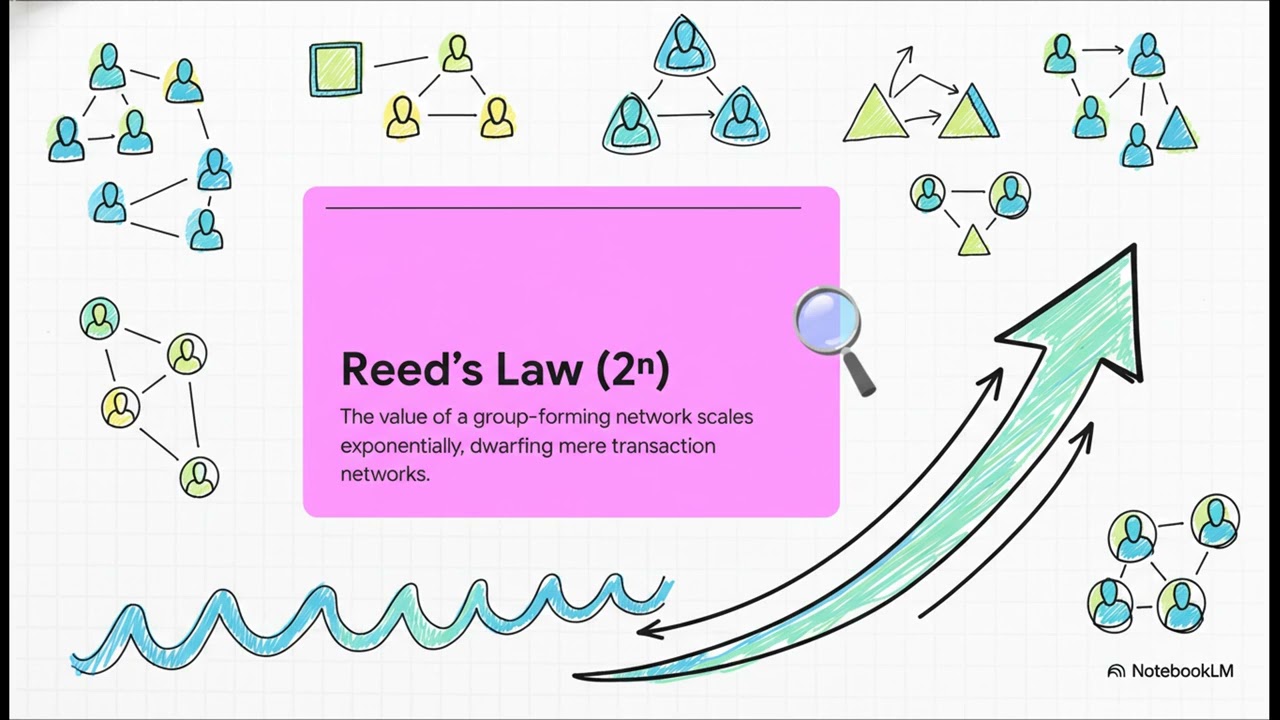
Reed's Law and Beckstrom's Law, which explore exponential group-forming networks and the utility of transactions.
The economics of two-sided markets, including cross-side network effects and platform business models (e.g., Uber, Airbnb).
The 'critical mass' concept and the tipping point theory in network adoption and market dominance.
Application of Metcalfe's Law in blockchain technology, tokenomics, and cryptocurrency valuation models.
Negative network effects, such as network congestion, spam, and the diminishing marginal utility of new users.
7.6K views454likes3:41Original Release: 2022-03-25
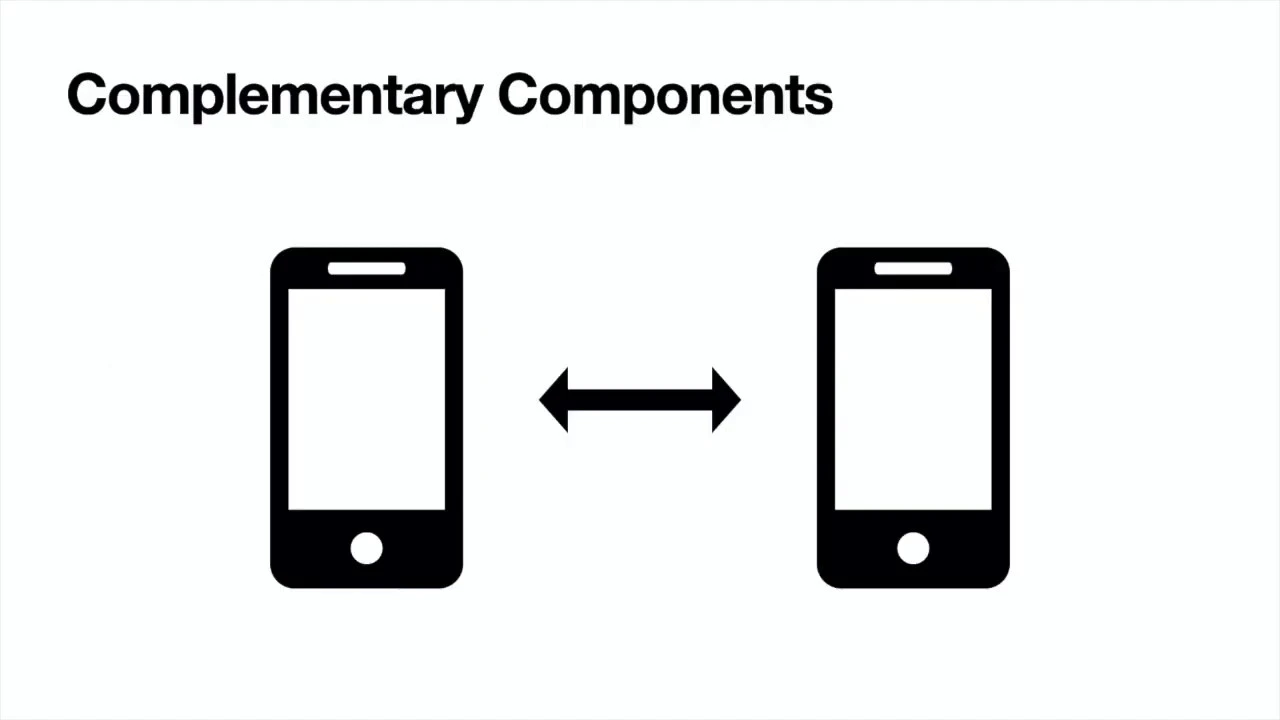
imagine if you were the only person with a phone in your city what would you even need it for today we are going to talk about metcalfe's law and network effects this is all part of building our fundamental knowledge of how technology is changing the world and us as a society and it will tie in with the conversations we've been having around blockchain crypto internet of things and more so let's take a look at metcalf's law i'm somi aryan i'm a tech philosopher and the founder of the fanpeek platform where visionary individuals come to stay in nano and ahead of the curve in business and technology i'm super passionate about getting more people on board with web3 investing and financial empowerment please just remember nothing i say here is financial advice and i'm not a financial advisor so if you are on board let's dive right in metcalf's law is a concept used in computer networks and telecommunication to represent the value of a network it says that a network's impact is the square of the number of nodes in that network for example if a network has 10 nodes its inherent value is a hundred that is 10 times 10 equals 100. the endnote can be computers servers or simply connecting users that's how the value of social networks is calculated the value increases each time a new user joins a platform the network its users and the data that they bring to the mix becomes a powerful asset they bring tangible and intangible value to the network what good would it be to be the only user on tick tock right now the value of networks grows exponentially with the number of people using that network metcalf's law says that every time you add a new user to a network the number of connections increases in proportion to the square of the number of users if you look at these pictures you will see that the first network only has two users which creates one connection the second network has five participants which creates ten connections and the last one has eight participants and 28 unique connections after understanding metcalf's law it's interesting to think about the effects on digital business and how successful these businesses can be depending on their network this is what makes the internet so much more powerful network effects are a huge intensifier of scalability as it becomes less expensive to create platforms to connect users the users are also incentivized to invite their family and friends to join those networks and that attracts the masses which helps the networks gain a competitive advantage we also call this network effect for example ebay may or may not have had the best auction website but they clearly had the most users because this is so difficult to replicate the power of network drove out other competition over time metcalf's law was linked with the internet's substantial growth and how it worked in line with moore's law which i talked about in my last video be sure to watch that if you haven't there are a few more of these laws and we will learn about them in this series as we go deeper into our understanding of why and how the world is changing these guiding principles will come to our aid if you enjoyed this video be sure to subscribe to the channel and press that like button this will help more people discover these videos also be sure to ping that notification bell so you're alerted when i release the next video and let me know in the comments what other topics you would like me to cover finally if you like what you see here join the fmpeak platform where we have live mentoring sessions with industry experts and you can network with other visionaries like yourself
Up Next

79:35
Principles of Digital Communications I: Lecture 1 - Introduction & Layering (MIT OpenCourseWare)
@mitocw
398K views•2009-04-29

87:26
Introduction to Secure Multiparty Computation with Yehuda Lindell
@fhe_org
7.7K views•2021-02-04

4:55
HTTP Requests Explained: GET, POST, PUT, DELETE
@codecademy
103.1K views•2021-10-07

19:25
Enigma Machine Mechanics: WWII Encryption Explained
@JaredOwen
13.2M views•2021-12-11
Related Study Plans & Knowledge Roadmaps
Structured learning paths in Computer Science
computer-science
Container Runtimes: Namespaces, Cgroups & Go
01Linux Systems & Go Programming Foundations
02The Core of Isolation: Chroot and Filesystems
03Linux Namespaces: Process Isolation
+ 3 more learning modules
32h6 modules
Explore Roadmap
computer-science
Building a CHIP-8 Emulator: Rust & CPU Basics
01Computer Architecture Foundations (Bits & Bytes)
02Rust Programming for Systems Development
03CHIP-8 Virtual Hardware Specifications
+ 2 more learning modules
32h5 modules
Explore Roadmap
computer-science
Building BitTorrent: Go, P2P & Concurrency
01Go Fundamentals & Concurrency
02Networking Foundations & P2P Architecture
03Bencode Parsing & Torrent Metadata
+ 3 more learning modules
26h6 modules
Explore Roadmap
computer-science
Actor Models (C++ Concurrency & Lock-Free)
01C++ Multi-Threading Foundations
02Thread Pools and Task Scheduling
03Atomics and Lock-Free Queue Design
+ 3 more learning modules
45h6 modules
Explore Roadmap