McDonaldization, a sociological theory developed by George Ritzer, describes how the principles of fast-food restaurants—efficiency (finding the best route to goals), predictability (consistency across time and place), calculability (emphasizing quantity over quality), and nonhuman technology (replacing human skills with technology)—are increasingly dominating various sectors of society including education, healthcare, and entertainment.
McDonaldization Theory by George Ritzer Explained
Added:Deep Dive
Max Weber's theory of rationalization and his model of bureaucracy

Kenapa Hidup Terasa Begitu-Begitu Saja?
122.2K
Max Weber analyzed how modern society creates individuals who perform assigned roles within rational systems without questioning meaning. In his analysis of rationalization and bureaucracy, Weber showed that education, work, and institutions operate through established rules, procedures, and predefined roles. As long as individuals fulfill their functions properly—graduating, working productively, obeying—they are considered normal and acceptable. This system prioritizes functional compliance over existential reflection, creating lives that are orderly yet spiritually empty.
Click to watch →
Max Weber & Modernity: Crash Course Sociology #9
1.1M
Max Weber argued that the defining feature of modernity is rationalization—a shift from traditional thinking (accepting the world's order as given) to modern thinking characterized by calculability, methodical behavior, and reflexivity. Weber traced this transformation to the Protestant Reformation, particularly Calvinist ideas that linked worldly success to divine election, which fostered capitalist work ethics. He identified bureaucracy as a key manifestation of rationalization, featuring hierarchical structures, specialized roles, formal rules, and impersonal efficiency. Weber also developed a multi-dimensional theory of social stratification encompassing class, power, and status, arguing these elements operate independently. Most significantly, Weber feared that rationalization would create an 'iron cage' of meaningless bureaucratic systems that trap individuals in unthinking routines, losing the reflective purpose that originally drove modernization.
Click to watch →

سلسلة نظريات التنظيم الحلقة 4 : ماكس فيبر و عقلنة التنظيم. Théorie des organisations
7.7K
Max Weber, a German sociologist, developed the theory of rationalization which explains how modern organizations evolved from traditional and charismatic forms of authority to rational-legal authority through bureaucracy. Weber identified three types of authority: traditional (based on custom and heritage), charismatic (based on personal qualities of a leader), and rational-legal (based on impersonal rules and procedures). He argued that bureaucracy represents the most efficient and rational form of organization, characterized by hierarchical structure, formal rules, specialized roles, and impersonal relationships. This rationalization process, driven by the Protestant ethic and capitalism, transformed social and economic life by replacing personal relationships with systematic, rule-based administration.
Click to watch →
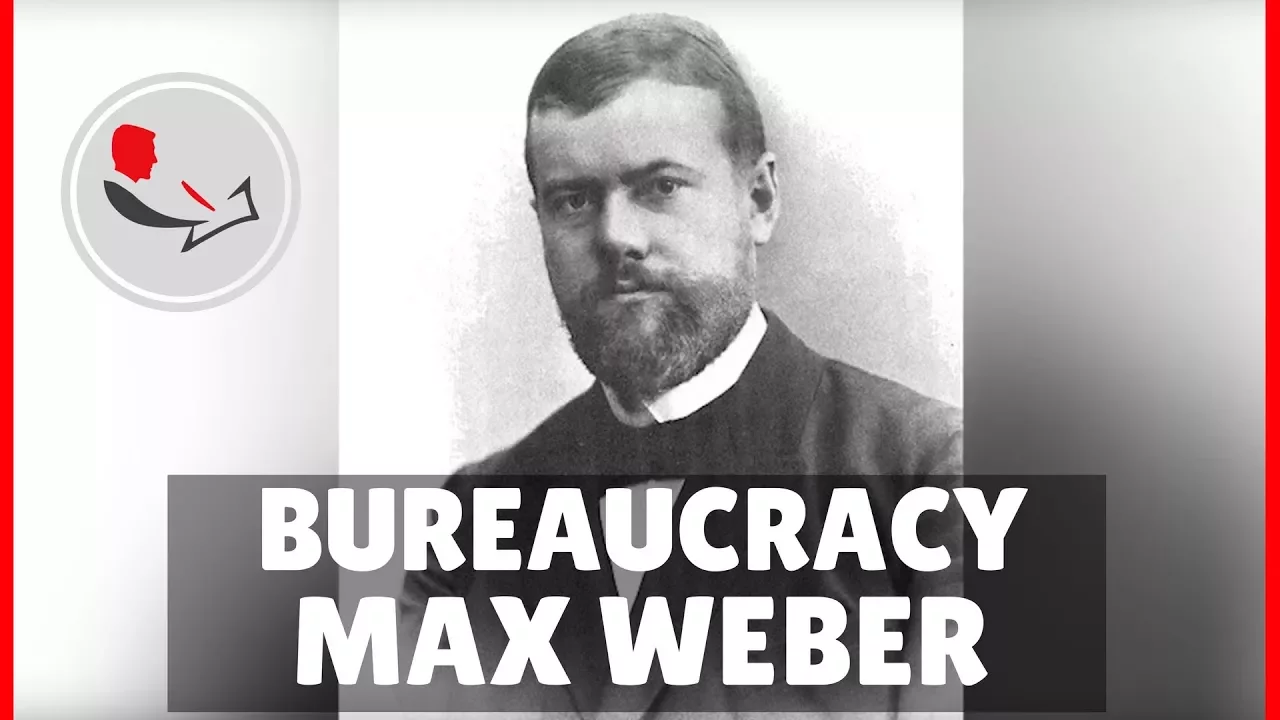
Max Weber Bureaucracy
651.7K
Max Weber's bureaucracy theory proposes a legal-rational approach to organizing large groups of people, characterized by six key elements: division of labor, hierarchy of offices, general rules governing performance, rigid separation of personal life from work life, personnel selection based on technical qualifications, and employment viewed as a career with tenure protection; this rationalized structure was designed to guard against particularism (favoritism based on religion, race, sex, or family connections) and provide more efficient, predictable organizational management compared to traditional authority systems.
Click to watch →

Por que a burocracia pega mal. E por que ela é importante | Podcast #59
8.6K
Max Weber developed the modern theoretical framework for bureaucracy in the late 19th and early 20th centuries. He argued bureaucracy emerged from industrialization and capitalism's rationalization process. Weber identified bureaucracy as a new form of power based on rules and procedures, contrasting it with traditional patrimonial power exercised by families, churches, and feudal lords. The 'separation of spheres' concept describes how modern society developed distinct systems for work, home, and religious activities, replacing the mixed pre-modern arrangements.
Click to watch →
Deep Dive
The distinction between instrumental rationality (efficiency-focused) and value-oriented rationality
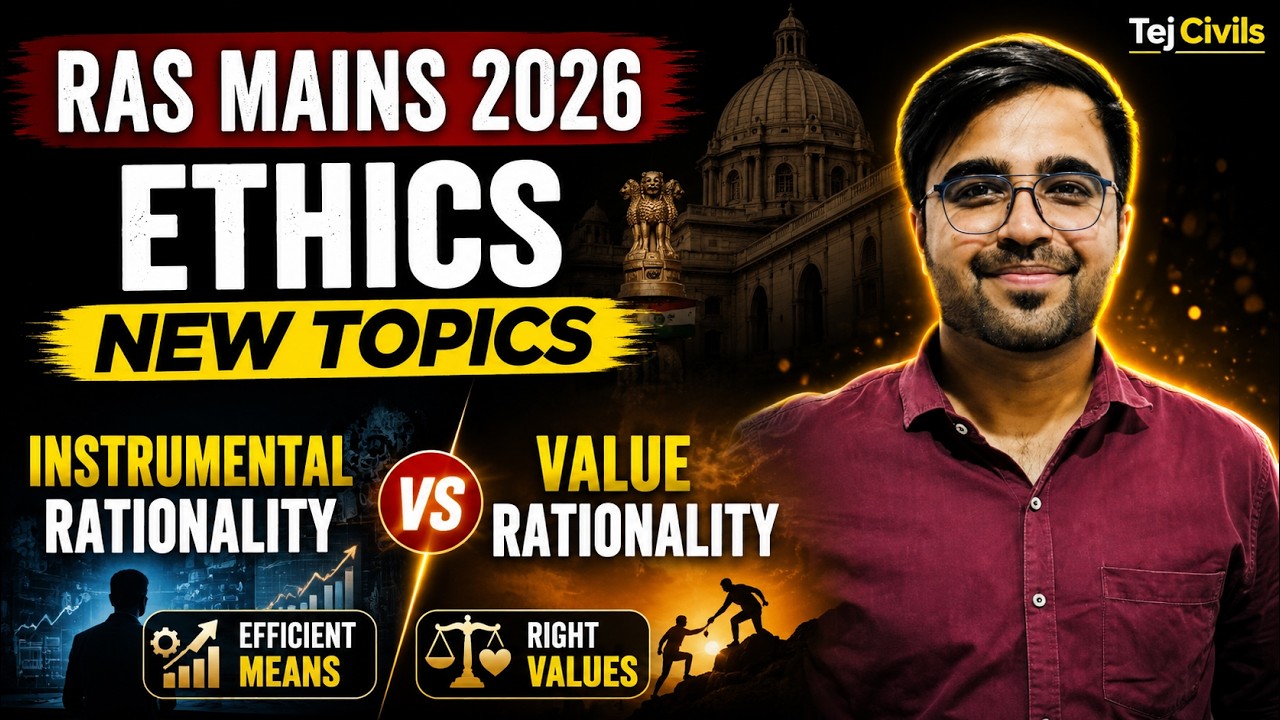
Instrumental Rationality vs Value Rationality 🔥 | RAS Ethics 2026 | RAS New Vacancy Coming Soon |
153
Instrumental rationality (Zweckrationalität) focuses on achieving goals through the most efficient means, prioritizing results over ethical considerations, while value rationality (Wertrationalität) emphasizes acting according to ethical principles, values, and moral obligations regardless of the outcome; Max Weber's framework distinguishes these two approaches, where instrumental rationality treats humans as means to ends and ignores side effects, whereas value rationality considers human dignity, social welfare, and ethical implications as integral to decision-making.
Click to watch →

What is "rationality"?
141K
Instrumental rationality refers to acting in accordance with one's goals, whatever those goals may be. This concept is not about determining what one should care about or value, but rather about how one should behave if they want to optimize what they actually do care about. People who behave self-destructively, counterproductively, or neglect actions they know would help them achieve their goals demonstrate a lack of instrumental rationality.
Click to watch →

The End of Rainbow Capitalism
607.4K
Jurgen Habermas calls the advanced capitalist way of thinking instrumental rationality—calculating actions as efficiently as possible to achieve specific goals. This is baked into capitalism as governments and economies need to calculate how to best achieve goals when resources are limited. Instrumental rationality motivates action to the question of which actions will accomplish goals most efficiently. Meanwhile, communicative rationality motivates action through the question of which actions are supported by the consensus of other social actors.
Click to watch →

Jürgen Habermas | Rationality and Society | Sociology & Philosophy
309
Jürgen Habermas distinguishes between instrumental rationality (goal-oriented efficiency) and communicative rationality (understanding and consensus through dialogue), arguing that healthy societies require balancing these approaches; while systems like economies and governments operate through instrumental rationality, the 'life world' of everyday human relationships must be protected from 'colonization' by efficiency-driven systems to maintain democratic participation, social cohesion, and meaningful human connection.
Click to watch →

RESUMO SOBRE A ESCOLA DE FRANKFURT | PROFESSOR CRISTIANO
127.4K
Jürgen Habermas, a second-generation Frankfurt School thinker, developed the concept of communicative rationality. He distinguished between instrumental action (goal-oriented, rule-based, focused on success and effectiveness in work contexts where value is money, power, or efficiency) and communicative action (based on sociability rules, seeking consensus, mutual understanding, dialogue, and expressing feelings and expectations in personal and social spheres like family, communities, and organizations).
Click to watch →
Deep Dive
Basic sociological concepts of industrialization, capitalism, and consumer culture

FicaDicaEnem - Sociologia: Cultura Popular x Cultura de Massa
38.1K
Industrial culture, also known as mass culture, emerged alongside capitalism and industrialization. The concept was developed as a critical analysis of how cultural production became standardized and commodified. This cultural form is designed to be passive and serves the interests of the capitalist system by creating standardized cultural products for mass consumption.
Click to watch →

Homem Cultura e Sociedade | Aula 1 (Anhanguera)
8.4K
This unit introduces the construction of modern society and capitalism, covering the transition from feudalism to capitalism, the French Revolution, the Industrial Revolution, class society, and the emergence of sociology. Capitalism emerged with the end of feudalism, characterized by artisanal production without series manufacturing. The Industrial Revolution in England (late 18th century) introduced machinery, accelerating production and creating new social divisions. Capitalism evolved through two phases: early 19th-century liberal capitalism with free trade and industrial growth, and late 19th-century capitalism with the Great Depression, technological changes, and increased state intervention. Consumer society emerged through propaganda stimulating purchasing, creating demands that didn't previously exist and fostering an individualist, consumist culture.
Click to watch →

Nihilisme, mal de vivre et crise de la modernité, Thibault Isabel
35.3K
During the era of industrial capitalism in the 19th century, society encouraged individuals to adopt a mentality of hardworking, diligent producers—people who were provident and turned toward the future. It encouraged people to work without respite, with a sense of responsibility, and most often without thinking about enjoying the fruits of their labor. Since the entry into the consumer society, roughly in the mid-20th century, things have changed. The capitalism understood that to stimulate growth and profit, it was better to push the mass of citizens to consume. To consume, one must spend, enjoy for oneself in the present without caring about tomorrow. The capitalism of the late 20th century favors the ideology of relaxation, leisure, consumption, and letting go. The contemporary capitalism favors enjoyment in the present. We do not save for the future, for our children and grandchildren, but for ourselves. The invention of credit played a very important role in the 20th century because previously, to buy, one had to first save. With a credit card, one can now immediately satisfy desires.
Click to watch →

BLACK CAPITALISM VS BLACK SOCIALISM
8K
Industrial capitalism developed first in 19th century Britain, driven by steam power technology and the rise of managerial elites. The key cultural shift was viewing people as consumers as well as producers, which spurred economic growth. Agricultural productivity increases in the 16th century made it profitable for farmers to invest in technologies, lowering food prices and increasing workers' disposable income. This encouraged consumer goods production. By 1850, only 25% of the English population worked in agriculture, compared to 80% in 1520, providing workers for factories.
Click to watch →

वासना से छुटकारा कैसे पाएं | ब्रह्मचर्य का रास्ता | Path of brahmcharya | Monk Stories
33.7K
Industrialization and capitalism have brought the world to new heights but also created a major problem. Previously, life was based on simplicity, needs were limited, and satisfaction was relatively easy. But as capitalism took hold, the culture of indulgence was born. Everything became part of the market, and even happiness began to be sold as a product. The German philosopher Karl Marx stated that capitalism turns humans into objects and transforms all relationships into market language.
Click to watch →
Deep Dive
How modern social institutions structure and constrain individual human behavior

TĘCZOWA UNIA CZY ŚWIĘTA KOMUNIA?
21.9K
Institutions exist precisely because humans are not angels and have inherent tendencies toward self-interest and abuse of power. Institutional frameworks constrain individual behavior and create predictable rules that protect against arbitrary action. The belief that replacing individuals with more ideologically aligned people will improve institutional performance ignores the fundamental purpose of institutions as structural constraints on human nature.
Click to watch →

NCERT Sociology Class-11| समाज का बोध-2 | Chapter-1 | (Part-1)
42K
Social structure constrains human action systematically. Like physical structures that limit movement, social structures limit what individuals can do. This constraint operates in all social institutions including family, school, and community, shaping behavior and limiting choices.
Click to watch →

Complete M Laxmikanth Indian Polity for HPSC HCS | Nation - State | By Ved Sir | Haryana StudyIQ
348
Society is controlled by multiple institutions beyond the state government: (1) Family - controls behavior from birth through teaching proper conduct, (2) Religious institutions (temples, mosques, gurudwaras) - provide moral guidance and regulate conduct, (3) Educational institutions (schools, colleges, universities) - teach discipline and social norms, (4) Hospitals - change behavior through institutional expectations. These institutions collectively shape human behavior in society.
Click to watch →

Theory Week 10 video 2 -- Rational Choice
461
Social institutions are defined as patterned ways of meeting human needs—established norms and procedures that society has developed to fulfill essential requirements. Examples include the economy (for obtaining food and shelter) and government (for maintaining social order). These institutions constrain individual behavior by establishing rules about acceptable conduct. When individuals follow institutional patterns, they receive positive rewards; when they violate these patterns, they face negative sanctions such as arrest or imprisonment. This creates a structured framework within which all social interactions occur.
Click to watch →

Soci 1101: Social Institutions
110
Social institutions are durable, recurring features of society that shape human behavior through formal rules (explicit, written regulations enforced by designated authorities) and informal expectations (unwritten norms learned through socialization), creating both constraints on some behaviors and opportunities for others while establishing hierarchies of power within society.
Click to watch →
Prerequisite Knowledge
- Concept 01Max Weber's theory of rationalization and his model of bureaucracy
- Concept 02The distinction between instrumental rationality (efficiency-focused) and value-oriented rationality
- Concept 03Basic sociological concepts of industrialization, capitalism, and consumer culture
- Concept 04How modern social institutions structure and constrain individual human behavior
Subsequent Learning
- Step 01The 'Irrationality of Rationality'—the paradoxes, dehumanization, and ecological consequences of hyper-efficient systems
- Step 02Application of McDonaldization to other sectors, such as higher education ('McUniversity'), healthcare, and online dating
- Step 03George Ritzer's concepts of 'Grobalization' and 'Glocalization' regarding global cultural homogenization
- Step 04Counter-movements and resistances to rationalization, such as the Slow Food Movement and the rise of artisanal/customized goods
Core Concepts
Impact Assessment
Core Concepts
0:08Playing Section
- 1
Defines McDonaldization as fast-food principles dominating society.
- 2
Lists four principles: efficiency, predictability, calculability, and nonhuman technology.
- 3
Notes expansion into exercise, shopping, education, and church services.
Glocalization and Cultural Hybridity
While Ritzer's McDonaldization theory highlights the spread of standardization, homogenization, and efficiency, the counterpoint of 'glocalization'—popularized by sociologist Roland Robertson—argues that global forces do not simply erase local cultures. Instead, global corporate models must adapt to local tastes, traditions, and values to succeed, resulting in unique cultural hybrids rather than uniform standardization. For example, McDonald's itself offers vastly different menus worldwide, such as serving McSpicy Paneer in India or Teriyaki Burgers in Japan. Additionally, critics of McDonaldization emphasize consumer agency, arguing that individuals are not passive participants in rationalized systems; they actively resist, re-interpret, and subvert standardized environments to create personalized meaning. This perspective reframes globalization as a complex, bidirectional process of hybridization and adaptation, rather than a one-way imposition of rigid, nonhuman control.
Deep Dive
The 'Irrationality of Rationality'—the paradoxes, dehumanization, and ecological consequences of hyper-efficient systems
#10 McDonaldization Thesis by George Ritzer | Globalization Theoretical Perspectives
3.5K
The irrationality of rationality represents the fifth dimension where rational systems produce irrational consequences. Drawing from Max Weber's theory of rationalization, extreme efficiency creates unreasonable outcomes. Bureaucratic systems become inhuman 'iron cages' denying human reason. Environmental degradation results from standardized production requiring uniform inputs—chemical-dependent farming for predictable french fries contaminates water supplies. Dehumanization affects both workers (assembly-line preparation without autonomy) and customers (mechanical interactions). This critique reveals how pursuit of efficiency can undermine human dignity, environmental sustainability, and genuine human connection despite apparent organizational success.
Click to watch →

Kurzgesagt and the art of climate greenwashing
1.9M
Max Weber's rationalization describes how efficiency, calculability, and standardization improve systems but eventually create rigid bureaucratic structures. George Ritzer's McDonaldization shows applying fast-food principles to all society creates dehumanizing outcomes. Adorno and Horkheimer argued that Enlightenment reason became so effective at solving problems that people stopped questioning assumptions, prioritizing efficiency over ethics. This instrumental reason became compatible with barbaric outcomes like the Holocaust while appearing rational at every step. The myth of infinite growth on a finite planet is fundamentally incompatible with ecological reality. GDP measures only monetary transactions, counting medical treatments positively while ignoring unpaid work and environmental degradation. Donella Meadows asked fundamental questions that remain unanswered: growth of what and why? For whom? Who pays the cost? How long can it last? New optimists like Hans Rosling and Steven Pinker use statistical data to argue the world is improving, but their methodology involves careful selection of indicators and presentation.
Click to watch →

Lec 29 | Authority,Power and Bureaucracy in Sociology | Max Weber | Sociological Thinkers | UPSC
234
The Irrationality of Rationality (George Ritzer) describes how rational systems designed for efficiency ultimately produce unwanted and harmful results. When systems become too focused on efficiency and control, they create unintended negative consequences. Examples include: standardized education focusing on rote learning over critical thinking, degrees awarded but jobs unavailable, and systems designed for efficiency producing opposite results. This concept shows how rationalization can defeat its own purpose.
Click to watch →
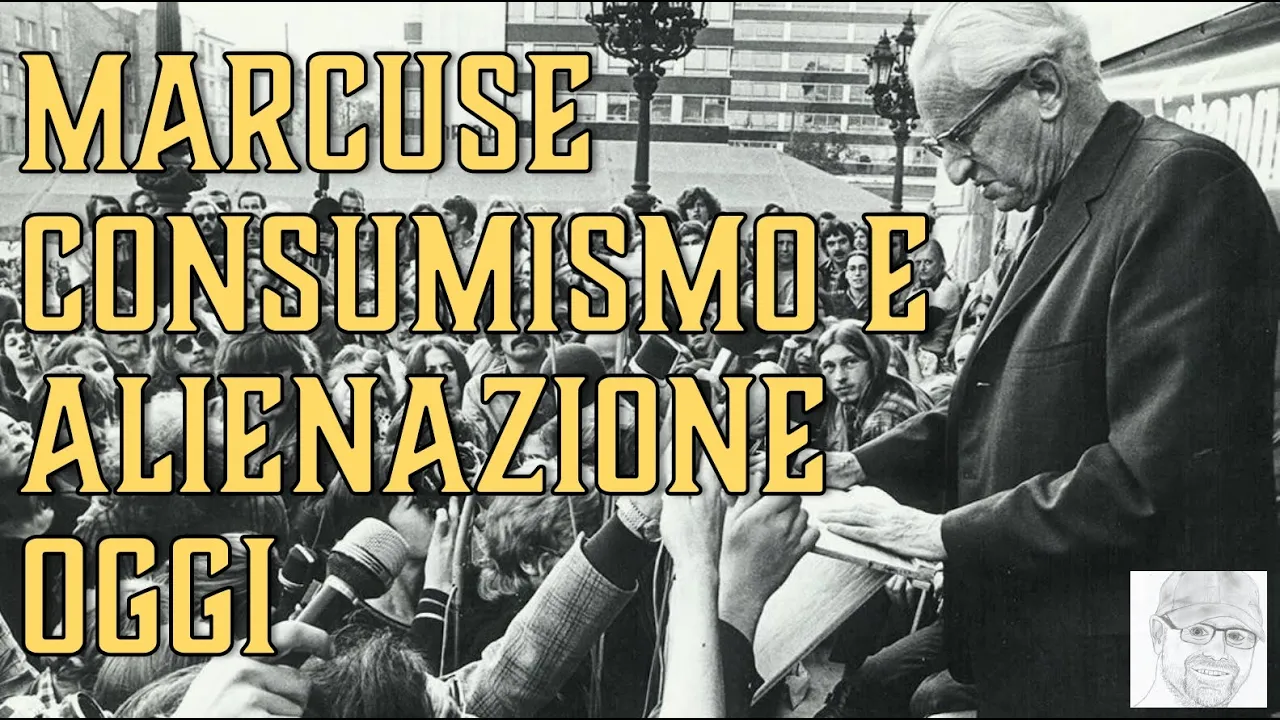
Herbert Marcuse - Il Grande Inganno del Benessere: come la Tecnologia ha silenziato la Libertà
20.7K
Marcuse identifies a paradox: the rationality of advanced industrial society lies in its irrationality. The system's productivity and efficiency transform waste into needs and destruction into construction, making alienation questionable. People find their soul in commodities—automobiles, record players, home equipment. Social control has changed, rooted in new needs the system produces. Technological controls appear as reason benefiting all groups, making contradictions seem irrational. Internalization no longer describes how individuals perpetuate external controls; it implies an inner dimension antagonistic to external demands. This private space for selfhood has been invaded by technological reality.
Click to watch →

The Importance of McDonaldization to students
93.5K
Sociologist George Ritzer explains that McDonaldization—the process of applying fast-food restaurant principles to various sectors—is paradoxically irrational because it produces harmful outcomes despite being designed for efficiency; this includes dehumanizing environments, environmental destruction, and severe health consequences like obesity and high cholesterol, while also spreading to institutions such as universities, churches, and police forces.
Click to watch →
Deep Dive
Application of McDonaldization to other sectors, such as higher education ('McUniversity'), healthcare, and online dating

Макдональдизация общества: социальная теория Джорджа Ритцера | Александр Ходыкин
732
George Ritzer identified four core principles that characterize McDonaldization: efficiency (achieving maximum results with minimum effort), calculability (emphasis on quantifiable outcomes and standardized measurements), predictability (ensuring consistent results across different locations), and nonhuman efficiency (using technology and automation to minimize human involvement). These principles manifest across diverse domains: online dating platforms use standardized profiles and matching algorithms; religious practices like papal blessings via television adopt standardized formats; healthcare emphasizes standardized procedures and quick diagnostic tests; education has adopted standardized testing and uniform curricula; housing development uses prefabricated construction for rapid, standardized building; entertainment follows formulaic structures; and tourism has evolved into standardized packages with predetermined itineraries.
Click to watch →
The Importance of McDonaldization to students
93.5K
Sociologist George Ritzer explains that McDonaldization—the process of applying fast-food restaurant principles to various sectors—is paradoxically irrational because it produces harmful outcomes despite being designed for efficiency; this includes dehumanizing environments, environmental destruction, and severe health consequences like obesity and high cholesterol, while also spreading to institutions such as universities, churches, and police forces.
Click to watch →
Formal Organizations: Crash Course Sociology #17
380.1K
Sociologist George Ritzer coined the term 'McDonaldization' to describe how fast food restaurant principles are spreading to dominate society. These principles include efficiency (doing things quickly), predictability (consistent results), uniformity (standardized products), and control (precise management). Ritzer argues these rationalization principles increasingly influence various aspects of society, such as education showing more emphasis on standardized tests and tightly controlled curricula that process students uniformly through four-year programs.
Click to watch →
What is McDonaldization of Society? | Introduction to Sociology | Rationalization & Bureaucracies |
1.8K
McDonaldization of Society, a concept coined by sociologist George Ritzer, describes how modern society increasingly adopts the efficiency, calculability, predictability, and control principles of fast-food restaurant operations like McDonald's across various sectors including healthcare, education, and entertainment, leading to standardized, impersonal experiences that prioritize speed and cost-effectiveness over quality and personal connection.
Click to watch →

HEC11 - Conference Synthesis by Professor Michael Samuel & Closing remark by Dr Rubby Dhunpath
148
Higher education faces persistent tensions between immediate practice concerns and broader systemic issues. Three interconnected agendas pull scholarship in different directions: practice-led (best practices, ICT, languages, curriculum debates), policy-layered (student access, funding, academic literacy, diverse populations), and philosophical (internationalization, differentiation, African scholarship). These agendas compete for scholarly attention and resources. Funding debates began long before Fees Must Fall brought them to national prominence, revealing how structural financial issues constrain pedagogical innovation. Higher education studies cannot align with only one side of debates but must embrace all competing agendas simultaneously.
Click to watch →
Deep Dive
George Ritzer's concepts of 'Grobalization' and 'Glocalization' regarding global cultural homogenization

Pourquoi les USA contrôlent le monde ?
43.3K
Cultural production has become increasingly globalized, with companies like Sony (Japanese) producing American films. Roland Robertson's 'glocalization' concept describes combining globalization with localization, as seen in films adapting to local markets. Critics argue American cultural dominance leads to homogenization, where local cultural specificities are replaced by American-style content. Disney has been criticized for creating generic blockbusters like 'Mulan' that remove cultural specificities. However, cultural diversity persists through Japanese manga, anime, and K-pop. Jean-François Durand argues that cultural globalization creates conditions for microcultures to proliferate through social media, challenging the notion of simple uniformization.
Click to watch →
Globalization/Glocalization
4.5K
Globalization refers to the free movement of capital, culture, human resources, and ideas across national borders, facilitated by technology and media, which has led to cultural homogenization and threats of Westernization; however, glocalization emerges as a response that combines global and local elements, allowing multinational corporations to adapt products to local cultures (such as McDonald's offering vegetarian options in India) while maintaining their global brand identity, thereby creating a hybrid cultural phenomenon that bridges universal and particular tendencies.
Click to watch →

Sosiologi Ekonomi || GLOBALISASI, MCDONALISASI, & GLOKALISASI #5
970
Globalization is a process of worldwide interconnection across economic, political, and socio-cultural dimensions, driven by information technology and multinational corporations. McDonaldization, as defined by George Ritzer, describes how fast-food restaurant principles—efficiency, convenience, predictability, and non-human control—spread globally, often paradoxically creating irrationality. Glocalization, coined by sociologist Roland Robertson, represents the hybridization of global and local cultures, where global values are adapted to local contexts rather than replacing them entirely.
Click to watch →

UGC NET Sociology | UGC NET Sociology Unit 1 Sociological Theory By Prabha Ma'am
5.9K
Robert Robertson developed key concepts to analyze globalization: (1) Differentiation with Similarity - the same cultural elements appear different depending on whether viewed locally or globally; (2) Glocalization - combination of global and local elements in cultural exchange; (3) McDonaldization - spread of standardized fast-food systems and mass production; (4) Ethnogenesis - formation of ethnic identities; (5) Homogenization versus Heterogenization - tension between cultural uniformity and diversity in the global context.
Click to watch →
BPCG 172 Unit 5 युवा संस्कृति मीडिया और वैश्वीकरण का प्रभाव Unit 5 Youth Culture Influence of media
7.6K
Globalization spreads global images, practices, and cultural elements worldwide through fashion, music, sports, entertainment, and food. Hip-hop culture, McDonald's, and other global brands demonstrate how cultural elements spread internationally, with youth typically leading adoption of global cultural practices. However, globalization is not merely homogenization—it involves complex interactions between global and local values. Glocalization represents the combination of global and local cultural elements, such as Indo-Western clothing and fusion music like Bhangra-Pop. Societies employ three strategies to manage globalization: assimilation, rejection (adopting nationalist sentiments), and negotiation (balancing global integration with local identity preservation).
Click to watch →
Deep Dive
Counter-movements and resistances to rationalization, such as the Slow Food Movement and the rise of artisanal/customized goods

SOS podcast #2 British gastronomy, terroir, and much more
2.4K
The Slow Food movement is a non-profit organization that focuses on authentic artisanal food producers, mainly smaller food producers. This movement reflects a global trend where people, particularly Millennials, are increasingly aware of problems with mass production (such as loss of quality, animal suffering, and antibiotic use in meat) and are seeking quality products from known origins.
Click to watch →

NOVO | TERRA MADRE BRASIL 2020, TURISMO E ANCESTRALIDADE NO QUILOMBO DO TERERÉ
985
The Slow Food movement is an international movement that originated in Italy in the mid-1980s. It emerged as a counter-movement to fast food, processed foods, monoculture, industrialization of agriculture, and standardization of eating. The movement advocates for the universal right to food that is good, clean, and fair for all.
Click to watch →

Leituras - Affonso Romano de SantAnna - 2013
481
In response to the culture of speed and fast food, there are counter-movements promoting slowness and careful cultivation. These movements encourage people to produce their own food with fewer chemicals, create things locally near their homes, and slow down consumption patterns. This represents a deliberate attempt to resist the overwhelming pace of modern life.
Click to watch →

Grant McCracken on Anthropology in Business with Matt Artz
607
The artisanal movement has transformed American consumer culture from post-WWII industrial mass production toward handmade, personalized goods. Beginning with Alice Waters' restaurant in 1971, this movement spread across the country, influencing food, production, transportation, and retail practices. The transformation represents a fundamental shift from artificial, homogeneous consumer products to goods with human scale, personal connection, and community significance.
Click to watch →

Rachel Laudan on the History of Food and Cuisine 08/17/2015
502
The slow food movement emerged in the 1960s-70s when people began questioning the achievements of culinary modernism. Influenced by cookbook authors like Elizabeth David and Alice Waters, and reacting against industrialized food, proponents sought alternatives to the Republican/Democratic philosophy of providing middling cuisine for everyone. They turned to Rousseau's romantic philosophy emphasizing foods close to nature—fresh fruits, vegetables, milk, and unprocessed foods. This movement gained traction because it fit environmentalist ethics and concerns about industrialization, offering an alternative vision of food that rejected corporate food production.
Click to watch →
Core Concepts
Impact Assessment
Core Concepts
0:08- 1
Defines McDonaldization as fast-food principles dominating society.
- 2
Lists four principles: efficiency, predictability, calculability, and nonhuman technology.
- 3
Notes expansion into exercise, shopping, education, and church services.
Glocalization and Cultural Hybridity
While Ritzer's McDonaldization theory highlights the spread of standardization, homogenization, and efficiency, the counterpoint of 'glocalization'—popularized by sociologist Roland Robertson—argues that global forces do not simply erase local cultures. Instead, global corporate models must adapt to local tastes, traditions, and values to succeed, resulting in unique cultural hybrids rather than uniform standardization. For example, McDonald's itself offers vastly different menus worldwide, such as serving McSpicy Paneer in India or Teriyaki Burgers in Japan. Additionally, critics of McDonaldization emphasize consumer agency, arguing that individuals are not passive participants in rationalized systems; they actively resist, re-interpret, and subvert standardized environments to create personalized meaning. This perspective reframes globalization as a complex, bidirectional process of hybridization and adaptation, rather than a one-way imposition of rigid, nonhuman control.
Max Weber's theory of rationalization and his model of bureaucracy
The distinction between instrumental rationality (efficiency-focused) and value-oriented rationality
Basic sociological concepts of industrialization, capitalism, and consumer culture
How modern social institutions structure and constrain individual human behavior
The 'Irrationality of Rationality'—the paradoxes, dehumanization, and ecological consequences of hyper-efficient systems
Application of McDonaldization to other sectors, such as higher education ('McUniversity'), healthcare, and online dating
George Ritzer's concepts of 'Grobalization' and 'Glocalization' regarding global cultural homogenization
Counter-movements and resistances to rationalization, such as the Slow Food Movement and the rise of artisanal/customized goods
308.4K views681likes2:41@hillvalleylabsOriginal Release: 2007-10-24
during the 19th century sociologist Max vber developed the rationality principle which is the acceptance of rules efficiency and practical results as an important aspect of formal organizations and bureaucracies at the end of the 20th century sociologist George ritzer found a new model for the rationality principle the golden arches vber argued that the bureaucracy was the model of the rationalization process but it seemed to me when I thought about rationalization at the end of the uh 20th century that really the fast food restaurant was a better model for his process and so that led me to focus on McDonald's and mcdonaldization mcdonaldization uh is defined as the process by which the principles that lie at the base of the fast food restaurant are coming to dominate uh more and more sectors of society and more and more parts of the world there are four basic principles of mcdonaldization the first is efficiency which means that you look for the best route to whatever goal it is that you have in mind the second is predictability that things are the same from one time to another time or one place to another another place the third is uh calculability or an emphasis on quantity rather than quality and the fourth is an emphasis on nonhuman technology rather than human technology and so what we see is the taking of skills away from people and building them into these Technologies these principles have expanded into other segments of Our Lives exercise shopping video rentals reading education and even church services have all been modified to fit our mcdonaldized society McDonald's ation would not have spread throughout society and throughout the world if it did not have a variety of positive consequences we want some efficiency we want some predictability it's just that when those become so predominant that they drive everything else out that everything becomes predictable it's not that I'm aru uing that we shouldn't have any mcdonaldization it's just I think what we've seen in the last 50 years or so is mcdonaldization gone wild
Up Next

4:59
Understanding Linguistic Profiling and Code-Switching in America
@Insider
826.1K views•2018-06-20

54:57
Contemporary Sociological Theory: Micro, Macro, Integrative
@NaSESYNC
45.7K views•2016-02-17

19:23
How to Analyze Conversations Scientifically | Elizabeth Stokoe | TEDx
@TEDx
1M views•2014-12-04
9:41
What is Sociology? The Sociological Perspective Explained
@crashcourse
4.6M views•2017-03-13
Related Study Plans & Knowledge Roadmaps
Structured learning paths in Sociology
sociology
Celebrity Culture: From Hollywood to TikTok
01Foundations of Celebrity Sociology
02The Rise of Micro-Celebrity & Digital Platforms
03Parasocial Relationships & Algorithmic Intimacy
+ 2 more learning modules
12h5 modules
Explore Roadmap
sociology
Hostile Architecture: Space, Power & Control
01Introduction to the Sociology of Space
02Social Control and Surveillance in the City
03Hostile Architecture and Defensive Design
+ 2 more learning modules
12h5 modules
Explore Roadmap
sociology
Loneliness Epidemic: Third Places & Isolation
01Foundations of Social Capital and Community Cohesion
02The Death of Third Places and Urban Space Erosion
03The Privatization of Leisure and Atomization
+ 2 more learning modules
12h5 modules
Explore Roadmap
sociology
Sociology of Tourism: Gaze, Power & Heritage
01Foundations of the Sociology of Travel and Leisure
02John Urry and the 'Tourist Gaze'
03Staged Authenticity and Cultural Commodification
+ 2 more learning modules
14h5 modules
Explore Roadmap