


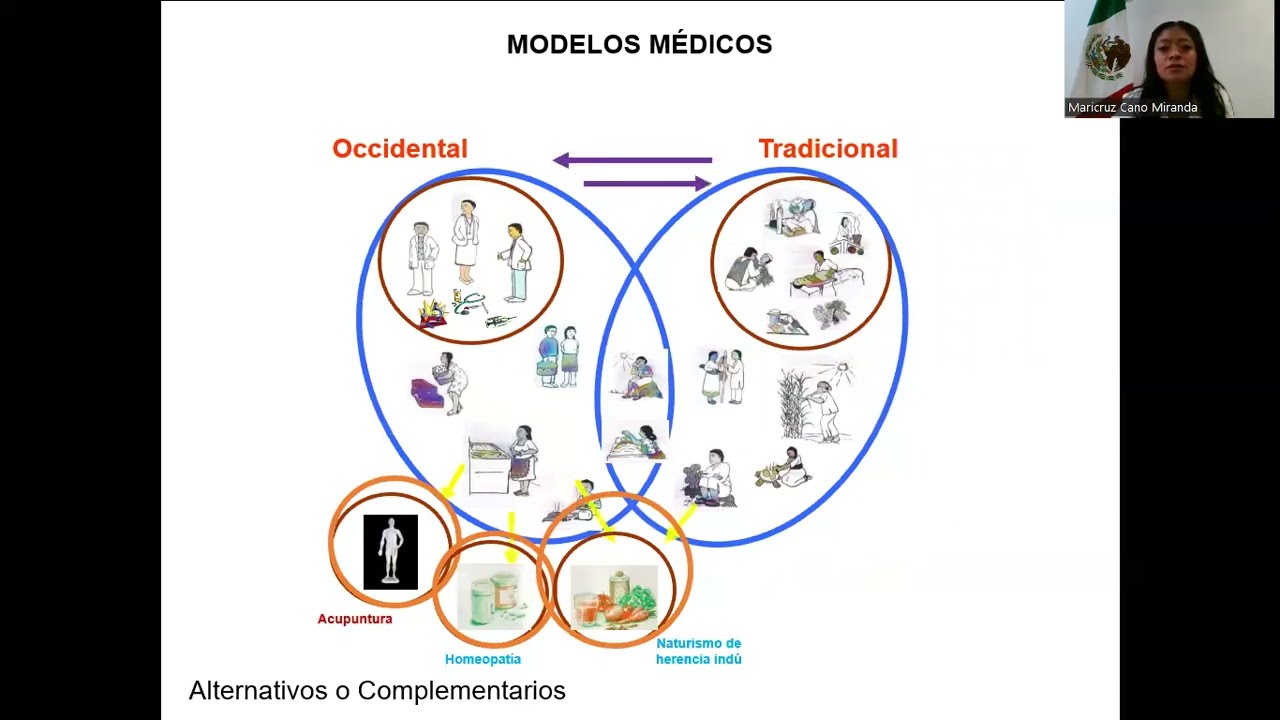




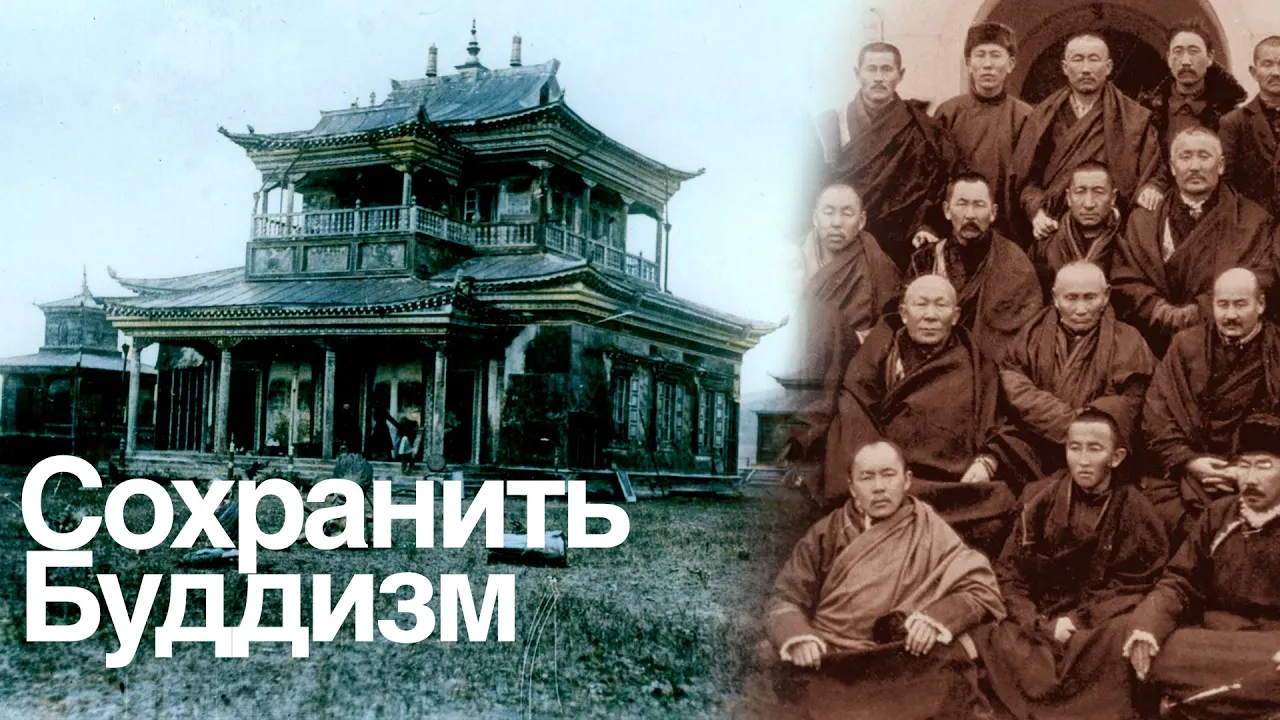










Dr. Tatiana Chudakova's ethnographic research in Buryatia reveals that Tibetan medicine operates through a complex multi-species ecology where plants, minerals, and non-human entities are considered 'botanical beings' with their own agency and interests, fundamentally challenging the traditional doctor-patient dyad in medical anthropology. Her work demonstrates that traditional medicine practices in Russia are not merely 'alternative' or 'resistant' to biomedicine but exist in intricate, interconnected relationships with both state structures and local ecologies, requiring researchers to attend to the periphery and recognize the non-human participants in healing practices.
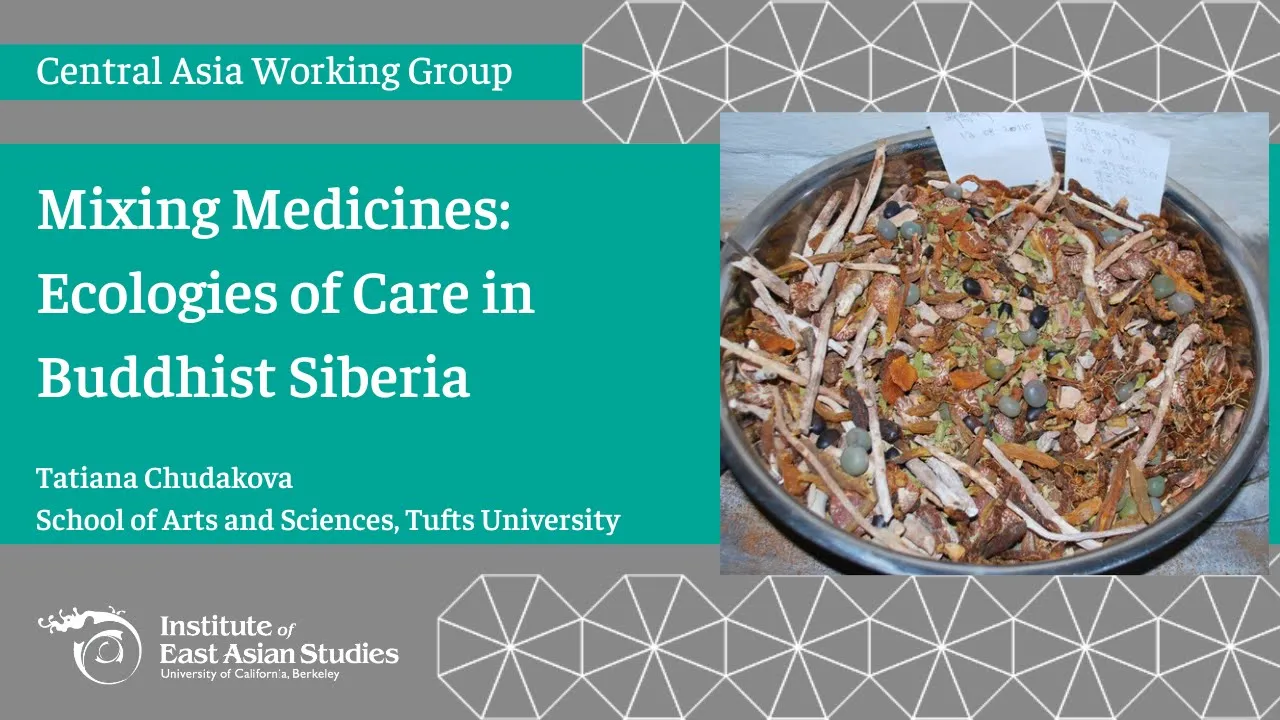
Mixing Medicines: Ecologies of Care in Buddhist Siberia
Added:Fundamentals of Tibetan Medicine (Sowa Rigpa), including its focus on bodily humors, holistic health, and plant-based pharmacopoeia.
The definition of the Western biomedical model and how it contrasts with ethnomedicine and traditional healing systems.
The historical and cultural context of Vajrayana Buddhism in Siberia, particularly in regions like Buryatia, and its relationship with the Russian state.
The concept of 'ecologies of care' or the political ecology of health, which looks at how environment, politics, and healthcare practices intersect.
Advanced studies in medical pluralism, examining how patients practically navigate and combine traditional healing and modern pharmaceuticals.
The ethics of bioprospecting, conservation, and the ecological sustainability of harvesting wild medicinal plants in the Siberian taiga.
The post-Soviet revitalization of indigenous and religious practices, specifically how traditional medicine serves as a vehicle for cultural identity and political sovereignty.
Critical analysis of global health policies and how incorporating localized 'ecologies of care' can decolonize and improve standard health interventions.
145 views2likes57:44Original Release: 2022-02-09
Well let's just get started with our conversation. So I'm just going to say some introductory remarks and welcome everyone. I think people will continue to trickle in a little bit. But for those who don't know, my name is Frances Garrett and I teach Buddhism and Tibetan Studies at the University of Toronto and I'm really happy to introduce today the first event in our series on New Books in Buddhism and Healing. Our featured guest today is Dr. Tatiana Chudakova, who's assistant professor... associate professor? assistant professor of anthropology at Tufts University in Massachusetts, and she's also the co-director of Science, Technology, and Society, a program there. Dr. Chudakova has a PhD in cultural anthropology from the University of Chicago and she works in the areas of medical anthropology, science and technology, ethnicity and indigeneity, nationalism, post-socialism, with a geographic focus on Russia and North Asia.
So today we're going to talk about her recent book published in 2021 by Fordham University Press which is called "Mixing Medicines: Ecologies of Care in Buddhist Siberia". Let's see if I can find my camera... right here... that's it.
So I really love this book, it's an ethnographic account of traditional medicine in Russia that focuses in particular on the practice of Tibetan medicine in Buryatia which is a semi-autonomous indigenous republic in southeastern Siberia that's had a long and really fascinating connection to Buddhism and Tibetan medicine. So just briefly, this series is sponsored by the University of Toronto's Buddhism, Psychology, and Mental Health program, and it's co-sponsored by the Robert H.N Ho Family Foundation Center for Buddhist Studies here. This series is also associated with a graduate level course that I'm teaching this semester on Buddhism and healing, so we're doing this in a zoom webinar format and you can only see the two of us here but the students in the course are here and we're going to go through some of the questions that they have shared for Dr. Chudakova. So this event is being recorded and it'll be made available online soon, and if you're okay with that Dr. Chudakova, I think we'll just get started with some questions from the students. Of course, thank you so much for your generous introduction and I really thank you all for engaging with my work and I look forward to doing my best to answer your questions.
Great, so I thought we'd start with a topic addressed by two students, both Yuvina and Erica who have asked you to say a little bit more about how traditional Buddhist medicine or Tibetan medicine has been integrated into Russian culture beyond Buryatia and this could serve, I think, as an introduction. It's a kind of a tricky one to answer in an elevator pitch, so it's kind of like the answer is a long one and part of what the book strives to do. But in brief, I think there are sort of different Tibetan medicines within Russia that have very little to do with each other, have very minimal conversation with each other, and it's easy to kind of mistake one for the other because from a certain angle it can all look quite isomorphic. Tibetan medicine is Tibetan medicine is Tibetan medicine sort of deal, but of course that's not quite the case. So whereas in Buryatia and other kind of "traditionally", although I use that word in cautious brackets, traditionally Buddhist regions like Kalmykia and Tuva, etc. and to some extent Altai, I think... although shamanism is stronger there. Tibetan medicine has entered the kind of regional or local or armamentarium, therapeutic armamentarium pretty much around the same time as Buddhism entered the religious landscape. In other places, and especially in sort of the metropolitan places, that appearance is linked to other... The appearance of Tibetan medicine, especially its appearance in the public imaginary, is linked to other processes, but they are not entirely divorced from each other either. So in the book there's a story of Pyotr Badmayev who arguably opened the first Tibetan medicine pharmacy in kind of Europe, that part of Eurasia, his pharmacy was in Saint Petersburg and then his practice was developed and continued by his nephew. That was until the Soviet government came into power, it had a very rocky relationship, and I'm happy to go into that with non-biomedical traditions that in any way invoked either religious or non-modern therapeutic forms, and we can talk about why that is, how that logic operates. But he had a very rocky relationship with the Soviet government and arguably had a very rocky relationship with sort of both a medical profession before, during the Imperial Russia period, had a very rocky relationship with both the medical profession and with various state officials, and was very much a political person who was trying to advocate for his land rights, essentially.
But that form, that kind of strand of Tibetan medicine or Buddhist medicine more broadly was in conversation with say biomedicine and European medicine much more openly and from the very start, and antagonistically. Whereas in places like Buryatia you had a kind of classic case, and you still do to some extent, a classic case, although that has changed of course, a classic case of a kind of plural therapeutic landscape where people went to different practitioners depending on needs and also depending on what was available and et cetera. There's another kind of part of the story, and I'm simplifying this a lot, but there's another part of the story that I think resonates with the ways in which non-biomedical therapies are taken up in various Euro-American contexts, which is a kind of like the oppositional story, the biomedical modernity and its discontents kind of story, whereby people are looking for alternatives because it gives them a way to articulate, not just sort of remedy the problems that they might encounter with their concrete medical systems, but also articulate certain things that cannot be articulated otherwise, or whereby this medicine is a place, or healing offers a terrain for articulating other kinds of stakes and politics and critiques. To some extent I think that is the case as well, and very much was the case in the 1990s where people were turning in Russia to all kinds of alternative... again, I use the term alternative with a lot of reticence because I think it sort of sets up a binary that I think, at least in medical anthropology, a lot of people really try to deconstruct because it creates biomedicine or presents biomedicine as a kind of un-interrogated default. So part of the project of the book probably is that we can't tell the story, we can't tell the story of alternative therapy as a mode of resistance or as a mode of flight, kind of what I've sort of talked about when I talk about this centrifugal model, but I think it doesn't tell us the whole story and I think it's such a seductive model, it can sort of obscure other more fine-grained and arguably more interesting ways of reading it. So I guess sort of going back to the question, there are kind of multiple paths through which Tibetan medicine ended up in Russia and it signifies different things for quite different people. So it sort of depends on like which one we're talking about. But of course they're all interconnected too because people are, in a way, both locally and globally, so they're always already in conversation and sort of looking at each other and trying to evaluate each other based on various kinds of metrics, and those metrics can be quite different as well. That's so interesting, that brings up a lot of themes that are like central to your book, one of which is that center and periphery kind of model where you're trying to like destabilize our sort of uncritical sense of what is at the center and these other so-called alternative practices are at the margins. So I love how you did that and say... I think you call your methodology then like "attending to the periphery"? The peripheral vision kind of, yeah. Yeah, I think I got this feeling when we were just chatting about kind of the realm of Tibetan medicine, but part of where I got this feeling is from this frustration with the sense that outside of Buryatia where Tibetan medicine is quite routine in many ways, I mean it's not entirely routine in the state, there is a long history of this state's medical kind of asymptotic or aspirational modernization, and again I use that term as an emic term, what people say about where the medical system ought to go and what that might look like.
But I'm not making any claims whatsoever that biomedicine is modern and this is all kind of ideological narratives, but people do use these terms. But I think that the center-periphery stuff and where the methodology comes from is from this frustration that it's invisible unless you look at it in a certain way, and it's invisible at multiple scales, whereas you encounter patients who have been using it for years, you have people who devote their lives to it, to very kind of difficult and often legally tricky and often emotionally difficult practice, but as that practice scales up it becomes erased, and it becomes erased in academic circles in a certain way where it's like "well it's not real Tibetan medicine", "It's not real Buddhism" etc, you probably hear these kinds of narratives. Then it also of course in Russia itself it becomes sort of erased at different levels until it's useful to somebody. So part of that kind of idea if we look for it in a certain way without parachuting certain kinds of categories onto it then suddenly you can see that it's kind of everywhere. That's so interesting and also reminds me of another kind of key point that really kind of inspired me, which is when you said that in medical anthropology or anthropology often we pay attention to like flows and continuities but you were also then looking at how hard it is actually to keep something fixed, and so to think of that, to look at the work involved in fixing a tradition is also important.
Yeah, and maybe that can segue into a few of the questions that I saw that you sent me from the students, but I think there's been kind of, at least in anthropology, there's been kind of these two models for thinking about non-biomedical therapies' relationship to the state, and one model which has some really beautiful ethnographies written about it, I'm thinking of Mei Zhan's work on traditional Chinese medicine, and sort of Volker Scheid's work also on TCM, Judy Farquhar, so it's this kind of really sophisticated way of showing how, for example in this case of TCM, where traditional Chinese medicine becomes at one point mid 20th century a kind of national project and it's a national project that's like very carefully kind of choreographed and therefore the tradition isn't textualized it's sort of enshrined in all kinds of ways. Then I think one of the questions I saw was drawing a parallel to India, between Russia and India and that's the other... well you also have the model of sort of biomedicine and it's satellites, that like alternative therapy satellites, but that's not necessarily the case here. Then the other model where you have a kind of nation state that can't claim a single tradition because of its own internal kind of structure. This is where Russia and India kind of are very similar. A really wonderful word by a historian of medicine, science and technology and medicine, Projit Mukharji, coins the term "subaltern therapeutics" to think about this relationship between the state, his work is in India, between the state and those therapeutic practices that aren't exactly enshrined, like they're kind of incorporated in some ways but they're not enshrined as the like official national medicine, traditional medicine, or national medical tradition, and so what might be then their relationship to this? It's sort of a similar, obviously very different kind of context still, but you see some of the echoes, I think, with what's happening in Russia as well with specifically that. So people that I was working with were very very savvy and very aware of this and there was a lot of jokes going on of going, like "look Mongolia has managed to..." I mean it's really Tibetan medicine, it's not national Mongolian medicine, we all know it's Tibetan medicine, "but they did such a great job at nationalizing it... why can't we do it?" and there's a lot of kind of laughter around it because everybody knows why they can't do it. Huh, yeah that question was from Sumeet, I think, and so we could move to a little bit more of his questions, he was also asking about whether you could say a bit about what impact traditional medicine so-called has had on biomedicine. Sometimes we think of the other direction, but what about the impact on biomedicine that these other forms of healing might have? I think this is another one of those there's no short answer, and a lot of those, at least a lot of what I try to do in the book is exactly kind of speak to that question, so there's a couple of chapters if you're interested, probably a kind of case by case, a very science studies sort of chapter is the false diagnostics chapter and the relationship between sort of these physicists trying to nail down what it is that's happening with Tibetan pulse palpation and to try to mechanize it in some ways, and of course there's an interesting kind of background to this of the sort of charisma of the machine and the charisma of imaging and the possibility of creating images that can circulate as opposed to this very situated practice of diagnosis that amchi is engaged in normally. But yeah I think the impact is interesting, I would be curious, and this is changing in North America, but I think a good place to start answering that question and maybe this is also where the parallel was, a lot of places that are not North America are helpful... I mean at least in Russia, biomedicine as we understand, first of all I think there's really an argument to be made that biomedicine is not universal, there's many multiple incarnations of biomedicine and so this umbrella term under which we kind of lump a certain set of practices at greater granularity ends up looking really weirdly different depending on where you land. So that's kind of one element of it. So it's really the ideology of biomedicine that we're looking at.
Right, and then we can ask so what is it that we mean?
I got constantly challenged by my interlocutors in the field when I invoked biomedicine and they would sort of get... some just kind of laughed at me, others just kind of like really challenged. So I think I have some of this in the book where a lot of what we ended up doing is kind of trying to come to terms with are we actually speaking about the same thing, and what can we assume as universals to constitute this contrasted set of biomedicine to something else? I think that question is incredibly productive and something that I learned from my informants rather than the other way around. That's interesting because we think of that as a science studies question, but your informants were also grappling with it. Oh yeah, totally. They were totally on board not only in word but sort of articulating it in ways that I think sometimes science studies doesn't quite land. It's all very abstract.
But they were very sophisticated about this. But I think the impact... I think one of the big differences with Russia is that biomedicine does not really have a monopoly on people's therapeutic imaginaries in the way that it certainly I think does... I don't know about Canada, maybe Canada is a little bit more inclusive or whatever you want to call or experimental whatever it is in its relation, but certainly in the United States I think the sense of monopoly, biomedical monopoly, which is to say it's permeation not just through sort of the kind of infrastructure, medical infrastructure and its economic kind of weave, as it were, but also people's kind of imaginaries, like common imaginaries. That grip is much more powerful, and partly there's historical reasons for it. I think partly because Soviet medicine was constructing itself as an opponent alternative to "fill in the blank", kind of like counter current to imperialist bourgeois medicine. So it was, at times, extremely dogmatic, but at times really trying to formulate other kinds of ideologies. So as a result of that, as a result of other processes too, it was quite willing to incorporate, for example, acupuncture, really absolutely rebranding it, rebranding it in the terms of neurology to make it kind of palatable, but nonetheless claiming it for itself without too many problems with like epistemic friction there. Yeah, so I think there are and there's a lot of these instances with specifically Soviet biomedicine and then sort of its inheritor. Yeah, aren't they really kind of leaders in the scientific study of energy fields? Like your pulse analysis chapter is an example of that but I had the impression that that was also quite of interest... It was, and it was interesting... I don't know if you've read, there's a really amazing book by Alaina lemon called... oh my god I can't... It's her most recent book. Anyway, if you're interested in like energy field research both this particular period on energy field research in the Soviet Union and kind of in a mirror image by the CIA, she writes about the extra sensory sort of research done. It's a great science studies book, it's also really good linguistic anthropology.
Like if you're interested I really highly recommend it. It's a really fun read too.
But again, I'm happy to share those book references if anybody's interested.
The energy stuff was very popular and a lot of people were involved in it around sort of starting with the late 70s but mostly throughout the 80s. The interesting thing about it is that it was less on the clinic side of things and much more on the physics side of the kind of science and medicine spectrum. We can talk about the role of physicists and sort of the incredible social prestige of physicists that allowed all kinds of projects to be undertaken.
But yeah, no there was quite a bit of research. Part of that same period connects to a lot of kind of weird experimental research around nuclear impacts on the human body or radiation impacts on the human body, and part of it also connects to space medicine. So the idea or this question of our organisms in extreme conditions preoccupied quite a few clusters of the medical profession right around that same time. So you can sort of see the strands of these different preoccupations weaving together and kind of skirting around or glancing or speaking to things like Tibetan medicine in this kind of like weird relationship of appropriational translation, I guess. Yeah, I'm not sure if in anyone's else's mind that would be a good segue to this next question, but in my mind it sounds related, because one of the really exciting contributions that your book makes I think is in your emphasis on what you call the "densely collective mingling of human and non-human worlds" so I was thinking of outer space, that was my connection. So you say a therapeutic experience involves not only doctors and patients but also machines, botanicals, minerals, texts, and non-human others. So one of our students, Thinley, asked if you could tell us a little bit more about what brought you to that interest and how you came to observe that?
So why the multi-species orientation or more other than human orientation... Yeah, I think I came to later answer your question kind of more ethnographically. I came at it through the plants because one of the first things I was really struck by, and this was way back when in 2006 when I was sort of a fledgling grad student and first went to Buryatia in a kind of research capacity and started interfacing with the practitioners, amchi practitioners of Tibetan medicine there, I was struck by how much plants and specifically like the labor of making medicines was at the center of both their ethical stance, their professional identity, the ways through which they distinguished themselves from other practitioners, the ways in which patients distinguish Tibetan medicine from pretty much everything else, including Russian herbalism which I was really surprised by because to me very early on right the two seemed to be in conversation. So this primacy of plants which then became the Tibetan sort of medicine cannon in the Materia Medica it's very clear it's not just plants, it's many, many, many things. But this sort of specificity of Buryatia is that some of the complicated ingredients, let's put it this way, including animal derived ingredients, some mineral derived ingredients that are difficult to obtain have been substituted by local plants and that's kind of what my informants, especially in the sort of religious side of things, because of course it's not a purely religious practice... I mean it is of course but you know what I mean, it straddles that divide between lay and temple based. They were really emphasizing this idea that yes Buryat lamas did not make their own like theoretical interventions into the Tibetan medicine cannon like some Mongolian lamas did, although there's enormous translational work so that really depends on how you estimate translation and whether you think of translation as theory, which I think it is. But they were very much focused on creating a compendium of substitutions for various sorts of ingredients.
So this this stuff on kind of this relationship with plants and I can go on about that for a long time because I really like that side of it, but that relationship with kind of botanical beings and an accounting for the interests of botanical beings relative to right the practice of making medicines and sort of for the benefit of etc., was very much at the center of everybody's sort of ethics who was seriously in this, and in fact the hinge across which or the boundary across which a lot of people distinguished ethical real Tibetan medicine from sort of the fakes, the knock-offs, the kind of unscrupulous practitioners, so that was really my entry point, and then I sort of started with the plants with sort of just the pragmatics of like how do you get this ingredient if you need that ingredient for the specific formulas and formulas cannot really be modified unless the substitution is sort of approved, like recognized as valid in some way.
How do you get the ingredients needed for this formula in a situation of dearth, and that dearth has many reasons, and after that it mushroomed. That was the kind of point of entry and then that mushroomed into a whole kind of expansive non-human world of relations between people and all sorts of other stuff which made health and therapy and healing etc. far more complicated than this sort of classic dyad of the doctor-patient encounter. Yeah for sure, and does that bring you then also to the healing role of certain deities or spirits? Land spirits or of ritual practice of other kinds?
Yes I think that is a really interesting and again complicated question because in many ways the practitioner, at least the amchi that I worked with, everybody's practicing this sort of like... I don't know what to call it exactly, kind of routine Buddhism, like it's not something that one calls necessarily attention to all that much. But most of the time the ways in which sort of health and healing and disease, illnesses, were talked about or explained within that domain was very much in these logic of "nyepa", like the culprits, or humors, sometimes it's translated as humors. We don't like that term but some people listening might understand. Yes exactly, the humors or what in Russian gets translated from Tibetan as culprits or "vinovniki". But the humoral logic and that's also the side that's been popularized in the sort of pop-y version of Tibetan medicine in Russia because people like to identify "I'm a this" and there's lots of sort of debates about how epistemically valid that is but lots of people like to identify as "I'm a wind" so they hang that little identity card on themselves and get excited about this. But nonetheless because a lot of the time, and I'm sure that's not a surprise, the stuff that's being dealt with through Tibetan medicine is usually chronic illness that might come with a biomedical diagnosis and the patient will bring their biomedical diagnosis into the kind of encounter with the amchi and the amchi's might look at it, might not, and say "yeah that's just the surface manifestation. We need to get to the root cause", but then the rest is sort of managed within that kind of lexus. However, there are definitely cases where the amchi might say "look, that's beyond my purview". So there's kind of a fairly strict division between a kind of medical therapeutic domain and the kind of work of spirits or land entities, or what gets translated in Russian as land owners, or gods, or other deities, or karma, or ancestors, and this also slides into sort of Buryat shamanism. So people's trajectories, they pass through the amchi and they might settle there if it's working, if it's helping them, or they can move. They might move on, the amchi might say "in addition to this you might need something else" and so they kind of keep going, it's a stop and go itinerary, I guess. For some that's their destination, and for many it isn't. It doesn't stop there. I loved how you played with that metaphor just starting out the book even, with the bus ride to the end of the line and then you kind of complicated that very quickly. That was very nice, very skillfully written. Oh, thanks.
So Jonathan asks whether you'd be willing to share a bit about how you approach your own healthcare and he's wondering about in particular how your research work might relate to your subjective experience? Partly I think for him this is a question grounded in indigenous research methodologies and how you're positioning yourself as a researcher. Yeah for sure. So I am Russian, I am not from that region, so just in terms of my own positionality... although I purportedly have family from there but it's lost to time.
When I went in... yeah, I don't mind answering the question. When I went in I was absolutely sort of open. I was sort of look, I don't know what the medical system here is, but I was open to using it for my own sort of problems etc. Interestingly enough sort of my first encounter with the amchi they very quickly could tell me what it is that was wrong with me and there's a beautiful kind of discursive practice around it because they can nail like the symptoms to the T, and then you have this beautiful explanation. I had terrible, terrible insomnia at the time and so I was kind of like I'll try anything if I can sleep more than three hours a night. So yeah that was a kind of life changer for me but it was also not in any way... and maybe this is very much a difference for different patients, and I've heard different patients articulate this in different ways, but it is not a big deal in a way that I think there's a more complicated relationship to indigenous medicine here in North America for very good reasons, because of a very kind of different history, which isn't just to dismiss Russia's own sort of settler-colonial ambitions, but that history is quite different, including the sort of period of the Soviet kind of complicated, and very messed up in many ways, promotion of "orchestrated diversity" as it were, which is to say that soviet ideology believed of course a post- imperialism, but at the same believed that national identities would eventually disappear, be subsumed into class antagonism, and so it's okay to kind of leave them for now as long as everybody's sort of recognizably standardized... different in standardized ways, and that really did impact my informants because that meant that there's a kind of imposition from the top of what it means to be this or that, and that has an impact for medicine. So that's kind of the genesis story, but the book end of that story or the other sort of side of that story is that as I got more and more involved or kind of sucked into understanding what underpins that practice, which is to say that relationship to local environments and local ecologies which are constantly predated by various sorts of forces, and most of those forces from the outside, from outside that region, my kind of originally very naïve sense that "oh my god this is amazing" really gave way to a sense... and this is something that my informants were articulating and I was a little thick-headed at first because I didn't hear it, but I hope I did eventually. There's simply not enough, there's simply not enough resources to make these medicines at mass scale, whatever other kind of claims might be made. There's not enough to heal everybody and so then it really becomes a question... there's also kind of really weird extractive relationships with European pharmaceutical companies, currently with China that some of my colleagues still working on this topic are noting that there's a lot of just poaching off various... and this was going on at the time when I was doing research too but it has accelerated, of poaching off all kinds of both botanical and animal resources happening across the border, the border's right there. There's just not enough and so if this cannot be made at mass scale, and should not be made at mass scale, then it really does become a question of what are the ethics of sort of promoting or making visible. Oh yeah, that's interesting.
So I have one last question and then maybe we'll ask our attendees if they'd like to speak a question or type something in the question or the chat. So Carl was wondering whether you have some comparative ideas on how Buddhist medicine or healing works in a North American context, and I think he's thinking about whether the state's medical apparatus here might play a role in extracting practices like mindfulness from this wider Buddhist ecology of identity and practice, and whether your experience in Russia just kind of generally gives you some insights into this North American circumstance? I think that's a super interesting question and I don't have a really great answer for it I'm afraid, so prefacing with that.
There's been a lot of wonderful anthropological literature including in anthropology of Buddhism and I think just like Buddhist studies as well about the perils of translation, and so what does it mean, as Carl was saying, like what does it mean to extract something often out of context, leaning onto all kinds of isomorphisms that may or may not signify the same sorts of things, and then you get kind of stuck with this question of like, but what if it works? So it's kind of the Stengersian, Isabel Stenger's question of like "what if it works for the wrong reasons?" which I really love that piece, it's called "The Doctor and the Charlatan", it's a really beautiful articulation of kind of the genesis of western biomedicine in a certain way, relative to the figure of the charlatan. But I think one of the main differences that struck me and that stuck with me is that it's very difficult to compare, and maybe this is not quite the same in Canada, but at least with the US it's very difficult to compare a system that's at least partially, and this has changed a lot in Russia and I'm happy to answer questions if anybody's interested in the granularity of like the ways in which the healthcare system is organized relative to its economy, but by and large it has a relatively robust non-profit sector, or a non-profit branch, public health sort of branch which in the United States is not the case. I think that has extremely far-reaching effects for any sort of effort at cultural translation or religious translation, I use that again with brackets, with kind of like scare quotes or pincers. Now it is entirely possible that eventually the Russian healthcare system will become increasingly commercialized, commercial based, sort of driven by capital to put it very simply. It hasn't happened yet, it's a bifurcated system, there's a private side of it, private medicine side of it, and there's a public medicine side of it, and the public medicine side, for all its flaws, is relatively robust and it's sort of logics are different from the very get-go for why people go into medicine.
To put it very crassly, you don't go into medicine in Russia to make money.
So from there I think that has a lot of ramifications for what doctor's imagine it is they're doing. So again, those comparisons are difficult. I think where I could compare and I think where maybe the book is trying to intervene, at least for us as like researchers, social scientists looking at this, I think it's really important to pay attention to why people get passionate about stuff, including medical professionals, why do they pursue something that seems to be counter narrative, the counter current, whatever it might be? So I think we do need a better analytic and this is where maybe Buddhism can help. We do need a better analytic of professional passions because that helps understand why certain translations can be done and how they can be done. Does that make sense? That was a very vague way of saying... Yeah, that's so interesting.
I've never thought of it. That's really fascinating. I'm going to ask if anyone in our audience here, or any of our students wants to follow up on anything or ask a question?
I guess some you can raise your hand and I can unmute you or even render you visible.
Oh, let's see. I somehow can't see the chat... oh there I see it.
Well I have another question. I wanted to go back to something that you said earlier which is you use the phrase "botanical beings", to refer to plants I guess, and I'm just wondering where that phrase comes from or what you're thinking is. I kind of love it, it reminds me a little bit of Natasha Myers' work on plants.
I'm pretty sure I was reading Natasha Myers when I was writing this chapter way back when. Yeah it really was me trying to do justice in a kind of very compact... you only have 40000 words for a chapter or 20000 words or however many words for a chapter, to do justice to the ways in which my interlocutors in Buryatia, both who were involved on the medicine making side, and there's divisions between people who gather, who collect ingredients, and people who make the medicines, and there's kind of all different kinds of experts on plants right that come together and weave together in all sorts of complicated ways, including kind of pharmacists who are on that side of things as opposed to the pharmaceutical kind of side of stuff.
I really wanted to kind of do justice to the ways in which they were attending to these botanical lives which had very different rhythms, obviously have totally different ontologies from human lives in a way that did not reduce them, plants that is, to purely human interests, if that makes sense. So kind of highlighting, I was also probably reading Michael Marder's work at the time, "Plant-Thinking" which is sort of philosophy, it was gonna be in that environmental humanities vein, I think Natasha Myers might be quoting him as well. But anyway, I was engaging with this literature right and really trying to kind of put the two things in conversation, put in conversation this really dense and careful attention to plants I was seeing on the one hand, and the sort of other side of it was like what does it mean to flip the anthropological lens here or rather the anthropocentric lens here. What does it mean to kind of privilege... not only privilege the relation but privilege that mutual... well at least the humans acknowledgement of the plants as something other than a raw resource, because that opens them up in a different way and therefore also impacts plant lives not just human lives. Yeah I find that so interesting, and could you maybe expand on kind of other places that people could learn more about this way of thinking, about plants? What comes to mind for me is writing, like you've described, Natasha Myers, but in sort of how would you call that sort of environmental studies? Environmental humanities, and then I'm also thinking of indigenous studies like Robin Wall Kimmerer... Yes, yes yes!
"Braiding Sweet Grass", absolutely. That's very foundational to this. I actually teach that book and that one is like such a good starting point. I think it should be on every syllabus. But yeah, definitely environmental humanities... sorry I'm losing my mic, sorry for the really loud noise there. I think Natasha Myers definitely is wonderful on this.
There's an anthropologist, Stacy Langwick's work is really, really... so I know the anthropology of that kind of thinking, Stacy Langwick's work, Julia Charlebois' work, I think she's also somewhere in Canada, Toronto maybe as well, no? Maybe McGill, not sure, but also on kind of plant-human relations. The interesting thing about it I think is that there has been such a wonderfully rich literature on multi-species stuff in and for both anthropology and STS but that focuses on animals. I mean it's so beautiful and rich and like expansive and then us plant people are... Yeah right, or it's maybe indigenous studies and like even global indigenous studies too, like if you think of plant medicines in all different parts of the world like this is where plants have a real agency and humans kind of come second even in the medical tradition or the healing tradition where that sort of plant is used, and so those are like really good examples of that type of work. Yeah absolutely, and I'm really hoping that we'll see more of it, again, the side that I'm more familiar with is the kind of multi-species anthro-plant correction side of things or correcting towards more plant side, but I think there's definitely other literatures as well. So Braiding Sweet Grass comes to mind. Studying indigenous medicine like even Siberian medicine or Tibetan medicine too, Amazonian medicine, like the plant healing focus is so interesting and I know there's several students in my class who have an interest in that.
For sure. I think it's also really interesting, I don't know at least this is what I worry about a lot, is how that gets... There's really fascinating literature on the kind of tourism around ayahuasca in the Amazon and the kind of like co-optation of ayahuasca into all kinds of sort of western appetites as it were, which what I appreciate about that literature is that it raises the question of to what extent does the kind of moral imperative of healing provide enough of a justification for circulation, but broadly? Of human healing you mean, at the expense of the plants. Yes, at the expense of the plants and at the expense of other humans. Like whose bodies are allowed to be healed or can be healed because a lot of the time, not always, but a lot of the time it is a question of limited, if not scarce, then limited potentials, limited resources. Yes, I know Sienna Craig whose book we're reading coming up in our class also has talked a lot about some of these issues, especially the issue of efficacy which we didn't get to but that's very powerful in your book, but then also this plant scarcity topic which is a very big concern in Himalayan regions.
Yes exactly, and Sienna Craig's book is wonderful and I'm excited that you're reading it. I'm also in conversation with that book. Yeah, great. Well I feel like we should start wrapping up and if you don't mind my asking one final question I'd love to know what you are working on going forward, and what kind of interests like where this is going? Yeah for sure I would love to answer and thank you so much all of you for these wonderful, wonderful questions. I had a really wonderful time talking to you all although so sorry I can't see you. I, like everybody else in this room and probably yourself, I was sidelined, my projects were completely kind of like sidelined by the pandemic.
It is quite difficult for me to travel back. I would like to eventually go back to both Russia, I haven't been in a few years. Since the epidemic started haven't been back. But my current project which kind of allows me the luxury, at least the way that it is formulated, allows me some of the luxury of not having to leave my my office or leave it virtually only, but I'm working on the concept of self-experimentality, and nd that's a very STS-y sort of focus, a very STS-y kind of question, but I'm looking at the ways in which different groups or communities are formed around pharmaceutical and other kinds of experimentations. So it's kind of a continuation of what I was concerned with in the first book but it's also sort of going into it, and just to give you a quick example one side of it or one chapter of the book is about cognitive enhancement drugs and their circulation. So a study of the biohacking community is what you're doing? Yes.
Oh, interesting. Yeah that's kind of one part of that story, I'm also writing a chapter on the sort of the polio vaccine history, the sort of Soviet- US connection around polio vaccines, so it has this kind of multi-sided stuff but yes biohacking is one example of what I'm currently interested in. Great can you give me one or two other examples, I'm so curious.
Yes well one of them also involves the use of the lions mane mushroom if you what that is? Yes, I'm a user of all these things. Well there you go! But it has sort of interesting contested uses both sort of in terms of its circulation and like what it has been translated what is it supposed to do to put it very simply, and how does it work as a sort of single ingredient versus when it is part of formulas, like multi-ingredient formulas which is a question we can spend hours on because it's really complicated, it gets really complicated. I'm also interested in the growers side, so who and what and where and why are they growing this and for what sorts of markets and how are they putting it in circulation. So that's another thing. Wow, fantastic. Well thank you so much!
Yeah, I think we should wrap up because it's time and so thank you for being here with us and for your answers and for writing that book. That was an amazing book, I was so pleased to read it and I can't wait for that next one. I'm very eager to learn more about that. Thank you so much, and thank you so much for inviting me. It was really a pleasure to talk to you all.
Okay thanks. Bye. Bye, see you soon I hope. Have a good rest of your day. Bye
Up Next
8:34
Critical Medical Anthropology | Structural Violence & Illness Models
@Anthroguy
2.1K views•2017-02-05

38:41
Astrobiology Through an Anthropological Lens: Field Insights
@georgiatechastrobiology
128 views•2021-04-14
4:45
Proxemics Explained: The Study of Personal Space
@Vox
536K views•2016-07-05
10:38
Psychology of Internet Trolling and Pranks Explained
@AzzyLand
10.7M views•2017-12-20
Related Study Plans & Knowledge Roadmaps
Structured learning paths in Anthropology
anthropology
Space Anthropology: Analogs, Culture & Habitats
01Foundations of Space Anthropology & Cosmic Imaginaries
02Extreme Isolation & Micro-Societies in Orbit
03Space Analog Habitats & Earth-Based Simulations
+ 2 more learning modules
15h5 modules
Explore Roadmap
anthropology
Legal Anthropology: Customary Law & Pluralism
01Foundations of Legal Anthropology and Social Justice
02Legal Pluralism: Coexisting Legal Systems
03Customary Law and Indigenous Dispute Resolution
+ 2 more learning modules
15h5 modules
Explore Roadmap
anthropology
Global Tourism: Gaze, Authenticity & Heritage
01Introduction to the Sociology of Tourism
02The 'Tourist Gaze' (John Urry)
03Staged Authenticity in Tourism
+ 3 more learning modules
14h6 modules
Explore Roadmap
anthropology
Modern Kinship (ART, Adoption & Chosen Family)
01Foundations of Kinship and Family
02Assisted Reproductive Technologies (ART) & Relatedness
03Transnational Adoption and Global Kinship
+ 2 more learning modules
12h5 modules
Explore Roadmap