





















Critical medical anthropology examines how social structures create systemic health inequalities through structural violence, where marginalized populations face barriers to healthcare access due to economic, political, and social forces rather than individual choices; this framework analyzes how competing explanatory models of illness operate in pluralistic medical settings, where patients navigate complex hierarchies of resort and therapy management groups defined by cultural, gender, and age dynamics, often leading to misdiagnosis and inadequate care when different medical systems fail to communicate effectively.
Critical Medical Anthropology | Structural Violence & Illness Models
Added:Fundamental concepts of medical anthropology, including the distinction between 'disease' (biological pathology) and 'illness' (the cultural and subjective experience of sickness).
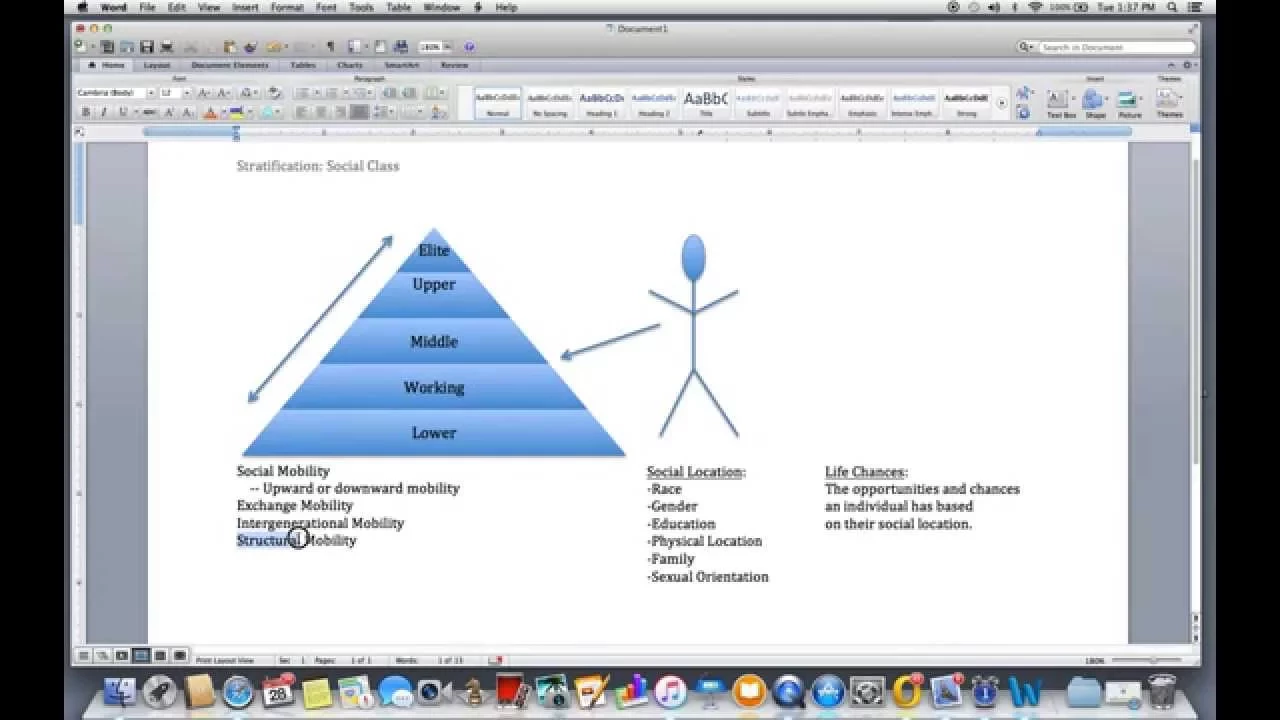
An introductory understanding of social stratification, inequality, and how socioeconomic status, race, and gender shape life chances.
The concept of medical pluralism, which refers to the coexistence of distinct medical subsystems (such as biomedicine, traditional medicine, and faith healing) within a society.
A basic definition of structural violence, specifically how societal-level political and economic forces cause systematic harm to vulnerable populations.
Practical applications of Arthur Kleinman's Explanatory Models in clinical settings to foster cultural humility and improve patient-provider communication.
Biosocial approaches to global health, analyzing case studies where health interventions successfully addressed structural barriers to care (e.g., the work of Partners In Health).
The process of medicalization, examining how non-medical social problems become defined and treated as medical conditions.
Advanced theories of biopolitics and political economy of health, exploring how state power and global capitalism regulate human biology and healthcare access.
2.1K views30likes8:34Original Release: 2017-02-05
okay good afternoon I hope this technology works okay and you can hear me since I'm travelling this week for the session on February 8th I wanted to actually do this video or attempt to do it because I thought that some of this material is important and I wanted to ensure there's some continuity in the class so what I do want to do is start just very quickly reviewing a few of the things that we started to talk about in the last session and then move forward with what we refer to as critical medical anthropology and structural violence and talk about what what that means when we talk about structural violence for example so last time we had addressed the issue of explanatory models of illness we had talked about this concept in medical anthropology and explained that it's partly derived from psychological approaches to schema that we have in our minds that are culturally learned about how to behave in particular scenarios and medical anthropologists have borrowed this concept and used it to talk about how we learn culturally within our respective societies about how to address the five different elements that explanatory models of illness tend to address which is the etiology pathophysiology diagnosis and treatment of an illness event I think a lot of this is review but we had made comparisons to for example diagnostic categories like Monday Ojo or the evil eye and ask the question of what happens in a pluralistic medical setting so one in which there's multiple explanatory models that be competing because there's different kinds of cultural backgrounds that are combined in a pluralistic or cosmopolitan environment which a lot of us live in in an event like that where would people go first in a hierarchy of resort approach so people would tend to if they're diagnosed with Minnillo they're not likely to go to Western biomedicine and report that concern they would go to a local healer or some sort of practitioner that is culturally understandable within their context I think that's obvious perhaps but what we're trying to do is to say that we exist in pluralistic medical settings that have competing and sometimes you might say contradictory medical systems in which people are navigating and they navigate through those in somewhat complex ways so drawing on that or moving moving a little bit further with that idea non-western local ethno medical systems often are the initial default for illness management I think we had mentioned that last time that in many parts of the world often people are stopped starting with local and no medical responses to an illness event medical anthropologists have also sort of then looked at how it's culturally defined to to navigate oneself through a complex hierarchy of resort in in the event of an illness event and talked about therapy management groups which are culturally defined individuals that are supposed to be in charge of managing an illness event for a family structure for example or for a community depending on the context so this management group is also culturally defined by issues such as gender and age so for example it may be appropriate in many societies for a husband or a male member of the family to make particular decisions even when it involves women women's personal health decisions and in those cases we would say that the therapy management group is culturally defined by particular dynamics of gender that are important to understand in that context so Western medicine is has often sought for certain ailments but less so when diagnosis and treatment are unclear or ineffective so that's another interesting point that maybe some of this is common sensical if you think through it examples but when you're unable to get a clear diagnosis or when Western biomedicine is less capable of treating something that you perceive as an illness people also are much more likely to go outside of Western biomedicine to seek some sort of cure in those kinds of cases so explanatory models may be diametrically opposed as we mentioned in pluralistic contexts one example that is sometimes raised is the contrast between the use of the flu in the West the idea of the flu which some anthropologists have analyzed as the folk flu because it contradicts with how epidemiologists tend to understand the flu in many cases the symptom ology of what we culturally often describe as the flu for example when people are referring to the stomach flu contradicts with the ways that epidemiologists who are trained to understand flu the flu according to particular categories of disease simply don't understand or just they said that those two approaches simply don't mesh with one another so that can also contribute in some cases to issues of misdiagnosis mismanagement or failure of epidemiological surveillance in cases where you have these conflicting models that are at work environment so and some lay models may also function to manage stigma of more severe or socially unacceptable illnesses so this is another thing that sometimes medical anthropologists have talked about that the ways that non-western diagnostic categories allow people to label themselves in particular ways that allow them to sidestep to some degree the social stigma that can come with certain categories like hiv/aids cancer other kinds of clinical diagnosis so if you have something that is available to you as a category to explain it such as possession or someone cast a spell on me or it was a source or those kinds of explanations which do exist more often than one would imagine those offer alternative explanations for people to manage the stigma that might be associated with alternative definitions so just as one example of that that I think is an eloquent example of the conflicts of explanatory models of illness and pluralistic environments there's this book called the spirit catches you and you fall down I think the author is an Fadiman and she takes a very ethnic Rafic or a very anthropological approach to looking at what happened in the case of a specific Chinese Hmong immigrant child who I think is around five years old during most of the book how she ends up falling through the cracks and dying as a result of very treatable epileptic condition that she had that because there were such very different explanations and explanatory models being used to understand what was wrong with this girl she simply fell through the cracks the doctor the Western doctors were unable to communicate with the the immigrant family and vice-versa the family was unable to really understand or assimilate the different kinds of information that they were receiving about the girl's condition and then the girl ends up tragically passing away as a result of that conflict of explanatory models so so that is review and at this point I'm going to pause the recording to make sure that we are technically sound and then I'll move on with introducing critical medical anthropology
Up Next

10:38
Applied Medical Anthropology UCL Module Overview
@uclanthropology
2.9K views•2021-06-01

38:41
Astrobiology Through an Anthropological Lens: Field Insights
@georgiatechastrobiology
128 views•2021-04-14
4:45
Proxemics Explained: The Study of Personal Space
@Vox
536K views•2016-07-05
10:38
Psychology of Internet Trolling and Pranks Explained
@AzzyLand
10.7M views•2017-12-20
Related Study Plans & Knowledge Roadmaps
Structured learning paths in Anthropology
anthropology
Space Anthropology: Analogs, Culture & Habitats
01Foundations of Space Anthropology & Cosmic Imaginaries
02Extreme Isolation & Micro-Societies in Orbit
03Space Analog Habitats & Earth-Based Simulations
+ 2 more learning modules
15h5 modules
Explore Roadmap
anthropology
Legal Anthropology: Customary Law & Pluralism
01Foundations of Legal Anthropology and Social Justice
02Legal Pluralism: Coexisting Legal Systems
03Customary Law and Indigenous Dispute Resolution
+ 2 more learning modules
15h5 modules
Explore Roadmap
anthropology
Global Tourism: Gaze, Authenticity & Heritage
01Introduction to the Sociology of Tourism
02The 'Tourist Gaze' (John Urry)
03Staged Authenticity in Tourism
+ 3 more learning modules
14h6 modules
Explore Roadmap
anthropology
Modern Kinship (ART, Adoption & Chosen Family)
01Foundations of Kinship and Family
02Assisted Reproductive Technologies (ART) & Relatedness
03Transnational Adoption and Global Kinship
+ 2 more learning modules
12h5 modules
Explore Roadmap