











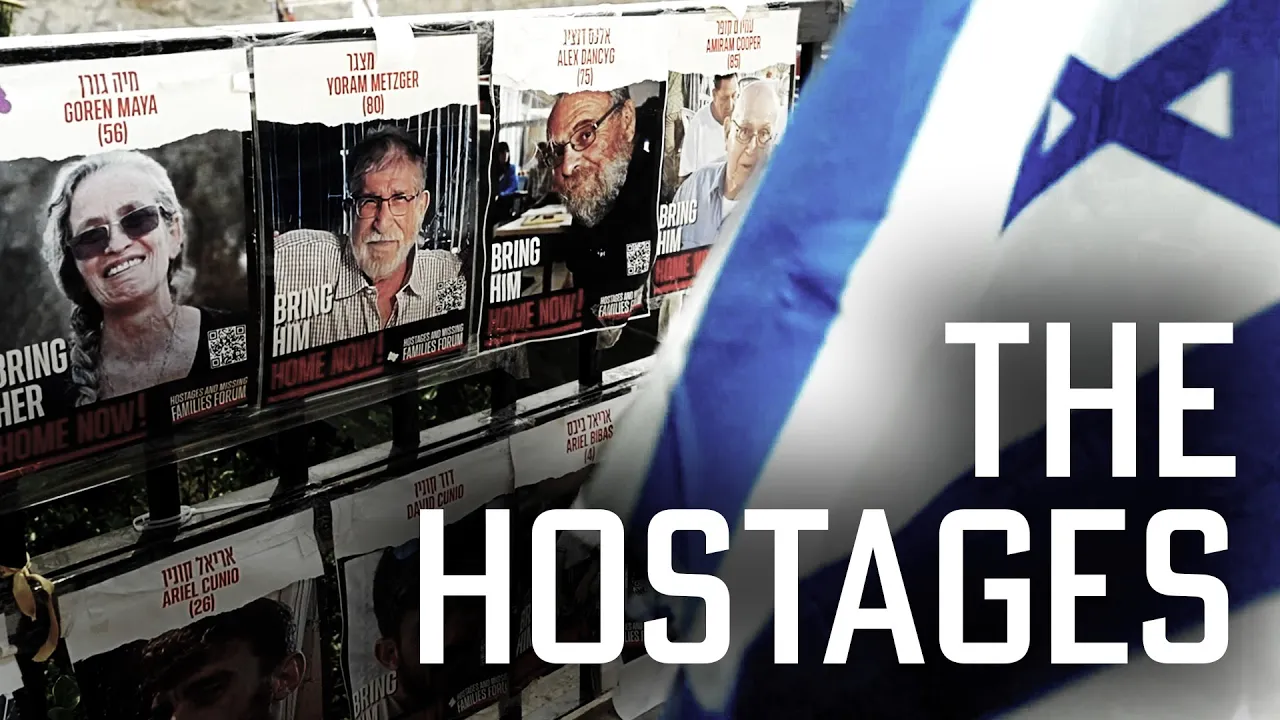

















Governments can apply diplomatic pressure on terrorist organizations through executive actions and public statements to compel them to release hostages, as demonstrated by President Trump's 'last warning' to Hamas demanding the release of remaining captives while simultaneously pursuing diplomatic negotiations.
US-Hamas Showdown: Trump's Ultimatum & Middle East Fallout Analysis
Added:The historical context of the Israel-Hamas conflict, including the origins of the Gaza blockade and the geopolitical dynamics of the region.
The role of the United States as a primary strategic ally of Israel and a major broker in Middle Eastern diplomacy.
The concept of 'coercive diplomacy' and how state actors use ultimatums and leverage to influence non-state actors.
The involvement of regional intermediaries, such as Qatar and Egypt, in facilitating hostage negotiations and ceasefires.
Analyzing the domestic and international political consequences of unilateral presidential ultimatums in high-stakes crises.
Evaluating the strategic responses of Hamas and its regional backers, such as Iran, to direct US threats.
Investigating the role of international humanitarian law regarding hostage-taking, conflict mediation, and state responsibility.
Comparing the foreign policy doctrines of different US presidential administrations regarding Middle East peace processes and counter-terrorism.
66.1K views1.9Klikes22:30Original Release: 2025-03-07
[Music] this is CBN newsat thank you for joining us for CBN Newswatch I'm E from Graham We Begin this half hour with President Trump issuing a turning up the pressure on Hamas issuing what he calls a last warning for the militant group to release all remaining hostages his special Envoy to the Middle East says Hamas has been not cooperative and is running out of time meanwhile Israel is signal signaling growing frustration over the US approach to the issue CBN culton has the latest officials say negotiations Center on the safe return of 24 hostages still believe to be alive particularly Israeli American Adon Alexander along with the bodies of at least 35 others we feel that Hamas has not been forthright with us and it's time for them to be forthright with us the president has issued a statement about what's acceptable to him and what's not while the US pursues diplomatic talks Israeli Prime Minister Benjamin Netanyahu is reportedly unhappy about the effort sources close to his office say he fears it could undercut Israel's war effort and pressure to force Hamas surrender they have 59 hostages of which many of them are killed and those 24 that are living they said they're in very bad shap meanwhile Hamas has issued a threat saying it'll execute hostages if Israel resumes its military offensive in Gaza but the Trump Administration is adamant and some form of joint US military involvement with Israel may not me off the table I think it's it's fairly clear he was saying I've had enough I wouldn't test president Trump witkoff says the brutality hostages endured has only strengthened Trump's resolve there's a lot of conversation among these hostages about the deprivation that they went through about murders that they saw and I think that the president listened to it absorbed it and said it's unacceptable I'm not going to tolerate this type of behavior the Administration has not disclosed what action it may take next but Trump has determined the US will not back down we want to see these hostages come home we're not going to sit here do nothing and tolerate these inhumane conditions they've lived in a in a terrible situation by the way who keeps dead bodies who does that who keeps people chained up downstairs who murders in front of other hostages what what's happened here is intolerable the administration says Hamas cannot remain in power in Gaza with time running out and no breakthrough yet the next move belongs to Hamas and the world is watching Chuck Holton CBN News Jerusalem president Trump signed an executive order to delay tariffs on products for Canada and Mexico for another month he signed it Thursday and it's only for goods covered by the North American Free Trade Agreement earlier in the week the Trump Administration announced 25% tariffs on goods from Mexico and Canada as well as a 10% tariff on imports from China the admin Administration is also looking at enacting reciprocal tariffs on foreign Nations importing taxes on us Goods beginning April 2 a Houston boy capturing the president's heart and honoring him during his joint session of Congress this week 13-year-old dvar Daniel DJ for short is battling brain and spinal cancer but that has not stopped him from pursuing his dream becoming an honorary officer in law enforcement agencies across the country and now the president has bestowed what he calls the best honor yet cbn's Terror imersion are caught up with him in Washington with more on his Incredible Journey DJ's Journey began several years ago when doctors gave him only five months to live since then he's been sworn in by more than 900 departments and holds a title that even he never imagined and tonight DJ we're going to do you the biggest honor of them all I am asking our new secret service director Sean Curran to officially make you an agent of the United States Secret Service that's such a moment how did that make you feel great but I was an ex I was not expecting him to give me an actual badge for secret Services I'm going up my draw dropped all the way to the ground late last week president Trump called DJ's dad with a personal invitation you don't even have much notice oh we didn't need I mean president Trump want us come no excuse why we couldn't get there for the 13-year-old a visit to the White House to meet the president and key officials is the culmination of a remarkable Journey that began with his cancer diagnosis in 2018 I couldn't walk or talk but I used the stuff animal Turtle just to talk did not in the head and everything 7 years later he's still fighting he's got cancer cells all over the place this is where the original tumor was now he has original another tumor in the original spot he has one here and another one here he's got it down all down his uh his uh C3 C4 C5 all those bound his back his neck down to spinal Court even facing those health challenges they travel the country with DJ receiving recognition from law enforcement in 16 States I Daniel do solemnly swear though this week serves as the Pinnacle he felt troubled by how some Tuesday night didn't show respect for the honores or president Trump and I did not appreciate that what they was doing to Mr Trump if it if it was up to myself I would go back there go down there and take all their signs from them and tell them to get the heck out it bothered you all that was going on they was making all that noise I could barely even hear still the Daniels say they remained focused on the mission getting law enforcement recognition in all 5050 States while hoping for a cure that's the worst thing for me to tell you is uh daddy can't fix it and I said but you know what we're not going to we're not going to accept that we do not have bad days and uh we just what the country folks will say we just get her done do you pray a lot singing that one song that got you through it goes like this inside out inside out you must serve my Jesus from the inside out in Washington Tara merger CBN News some positive news on the faith front a Pew Research Center study shows America's slide in Christianity may be stabilizing the religious landscape study shows between 2007 and 2024 those who identify as Christians dropped 16 points from 78% to 62% but in the past 5 years the number has remained relatively steady but between 60 and 64% suggesting a long-term decline may be halting Nicole Shanahan the billionaire and former vice presidential running mate for Robert F Kennedy Jr now says she is a Jew for Jesus Shanahan telling her story on act formerly known as Twitter in a post called my baptism story she says after facing a heart-wrenching personal loss and intense spiritual warfare on the campaign Trail the only place she found Refuge was In the Arms of Jesus Shanahan met a woman named Diane through her masseuse and Diane led her to the Lord it wasn't an accident as the Mur had been praying for Shanahan's salvation for years coming up Frozen orphanages more than 1.6 million unborn babies are in cold storage units Across America see how see how couples are giving these children a second chance at life through snowflake adoptions we got the story for you coming up next [Music] download the CBN News app 24/7 news from a Christian perspective at home or on the road one place for all of your news breaking news alerts set daily prayer goals and pray for news stories read the most important news and watch CBN News Channel live CBN News news because truth matters go to cbnnews.com to get the app today when couples conceive a child through invitro fertilization the unused embryos are frozen indefinitely the storage facilities are sometimes called Frozen orphanages a new documentary shows these embryos can get a second chance at life through adoption CBN medical reporter Lori Johnson has the story you'd never know by looking at this beautiful little girl that she spent 10 years as a frozen embryo until Ally and Derek adopted her after being implanted in alley she was born 9 months later I had no idea that people had embos that they were knowingly putting up for adoption for couples like us to use many years ago this child was conceived along with 13 others when Tara and Travis went through invitro fertilization they implanted three of those embryos and as a result Tara gave birth to their three children unable to implant their remaining embryos however the couple wasn't sure what to do with them the way we felt we wanted to give them a chance at life because they could be sitting there in a freezer or you could give them the potental potential to have a life so they put them up for adoption it was hard to let go cuz they were yours you know it took it took us about 3 and 1/2 years to fill out the paperwork because I would start it and then I I was just like I can't do this I'm not ready for it they chose to give them to Ally and Derek who wanted no contact after the transfer we were very open about we do not wish to have a relationship with the placing family very yeah we're for the closed closed adoption but God had a different plan we had gotten an email asking if they can pray for us over FaceTime and when we opened our little you know our little rectangle phone and it was the parents and all three kids sitting there and we prayed together and we cried together and from that moment the FaceTime turned into a group chat and the group chat turned into family vacations and we we tell people we were probably the exception and not the rule but we did not just adopt the embryos we adopted their whole family and extended scientists say embryos can be frozen for up to a 100 years and still be born so far the longest has been about 20 years Frozen embryos who are adopted implanted and born are often called snowflake babies more couples are doing this but it's still rare even though 1.6 million unborn babies remain in Cold Storage in the us alone only a few thousand are adopted each year these couples hope that number will increase which is why they participated in the new documentary spares Second Chance stories of Frozen embryos before I started this project I I just prayed Lord this is your story bring me some uh some people that to tell your story well and he provided these four amazing couples who can speak to millions of others one out of seven couples go through some infertility and so this is an incred incredible uh painful thing and everybody is looking for for options and and options that uh that honor the Lord those who choose IVF sometimes feel surprised when they discover the unintended consequences for my wife and I when we went through this years ago we were going to church in New York City and met with Tim Keller our pastor and we asked him you know what are the moral implications of this and he said you guys are the first people to ask me this question turns out IVF usually involves extracting up to 30 eggs from the woman placing them in a Petri dish then fertilizing them with the man's sperm with the goal of creating as many embryos as possible for those who believe life begins at conception these are children then last year the Alabama Supreme Court ruled that's exactly what they are IVF has to be taken very very seriously these doctors and the people that decide to pursue it have to take it so seriously and I think sometimes they just create and create and create these embryos without any thought of what's going to happen to the rest of them that don't get used after The Unborn children are created they're then tested they actually rank them and they determine which ones are viable and which ones are not viable in our case we had 14 and the doctors came to us and said uh we believe seven of them are viable and seven of them are not viable and that that leads to some huge questions as well and and you say okay are they really not viable you know is this what is this process generally not viable means the child would have special needs minimizing these lives is one of the reasons Caleb and Paige decided against going through IVF even have this idea about eradicating a type of person because you don't view them as enough yeah um to me is a form of evil concern about the treatment of embryos conceived through IVF is one of the reasons the Southern Baptist convention voted last year to oppose it I would really hope that um as this kind of the Fallout of this happens that there is more and more embryo adoption especially among Christians who even might even might agree with the SBC about that IVF is not the path that Christian should take but then okay these babies still exist it's still happening let's be part of the solution as the controversy surrounding I BF increases many Faith leaders say it can be a good choice for couples who want their own biological children as long as it's done within certain boundaries that usually involves creating a lot fewer embryos and using every one of them Lori Johnson CBN News more information on snowflake adoptions go to our website that's cbnnews.com still ahead the steel tough linebacker Pittsburgh's Alex Alex heith find out why he says intensity and passion are forms of worship for him you're watching CBN News [Music] watch the Steel Curtain is famous in NFL history Pittsburgh's hard-nosed defense has won the team multiple Super Bowls Tom buing sat down with the spiritual leader of the team's defense Alex heith and the linebacker shared how he sets the tone on the grid iron and in the locker room Alex heith is a Pittsburgh Steeler playing for a traditional steel tff defense in a steel built City the veteran linebacker utilizes his skill stature and Leadership to disrupt opposing offenses Alex also disrupts the predictable with a steel Foundation to willingly Embrace A Soulful transformation that ongoingly impact his life his game and what he brings for others Iron City Steel Foundation laid crucibles fire turning metal into liquid shaping and reshaping how critical for you Alex has that transformation in your life become yeah I mean it's it's huge I just thank God that I'm not where I was before and I just think this the process of sanctification is is an ongoing thing it's just an ongoing process of wanting to become more like Christ just like the word says you know if we draw near to God he'll he'll draw near to us and when I start my day in the word and com into work I have a Heavenly perspective in a way to imp back somebody's life to to serve him to serve the Kingdom from Soul your game mindset on the field is there a correlation and a connection yeah I mean I think absolutely just having the perspective that my work is my worship and going out there it's just a reminder to me that he's blessed me with the talents and the abilities that I I have and the way that I play um the intensity the passion the effort that I play with That's My Worship back to God so um just having that perspective I think is key when you express that intimacy to him how do you feel his intimacy back to you when adversity hits and it strikes in a game it's easy to you know you can freak out and could be something going wrong or something like that but he really keeps me calm and steady throughout the game and he's intimate with me just the game is there a deep Soul satisfaction that mirrors winning ultimately nothing can truly satisfy us like the love of Christ it is awesome and and satisfying to to win games in the NFL and have the goal of the Super Bowl we want to get to it and we and we want to win but I think ultimately knowing as a follower of Christ that our ultimate satisfaction uh comes from Christ football is is is an amazing game but it's a it's a terrible God if we put all our identity in it it'll let us down as times and so continue to R on him through the ups and downs of this game what matters most is I know that I'm a Child of God because of we're followers of Christ he gives us that drive and that passion to want to do great things on the field go out there and make plays to help the team win Alex what do you think is most valued in contagiously bridging relationship with others in being present with them unconditionally in both their struggle and their success just being intentional uh with others just the way that this business is guys are in and out there's new teams every year and so in some cases you only have a six-month window with some guys uh to be able to build a relationship with them share Christ with them and so I think just being really intentional with the time that you have especially your locker mates the ones to your left and to your right I think God places those people beside us for a reason and building relationships is huge and especially to to be a great team you you got to be tight the locker cubicle on your left and your right that's like loving your neighbor absolutely uh and my every single day just knowing that I have a chance to impact them not just in a football way um and help them in that way but also from a spiritual way as well God has made us to to to be in relationship we're not you know the devil thrives in isolation and so I think God going before us and knowing that he's already there what is it about being a professional football player that has uncommonly rushed you forward for both a need and desire for a Divine relationship yeah I know that I've been given this platform I've been blessed with this platform to be a blessing to others and not for our own personal gain something that I always try to keep in mind and I feel like God is revealing to me um day in and day out that that's the reason you're here is to impact souls for the kingdom and to be a blessing to others and when you say God revealing who has Jesus Christ become for you he's everything he's he's my savior he's Lord I'm not perfect I mess up daily but like I said thank God that I'm not where I was that he continues to work in me and refine me and so but I just know that if it wasn't for Jesus I wouldn't be where I am or doing what I'm doing today I know that he's laid every step for me I love how we always meet after the game and pray on the 50 yard line we get the opportunity to go out to the field out the guys that we just battled against and just went to war against we get to come together and deflect That Glory back to God what does that look like being bold and in our faith is is so important one of my favorite verses is Romans 1:16 you know for I'm unashamed of the Gospel knowing that especially in this business in this platform that it's not the popular thing to to to follow Christ but you know we know that it's that's the best thing to do it's the best way it's the best road is through Jesus that's just the mindset that we have to have is just to be unashamed especially when trial and tribulations come our way um just be unashamed indeed stay with us your Friday Faithful is coming up next we be right back hi I'm John stoles host of the CBN News podcast DC debrief I'd love for you to join me each Friday morning for the inside scoop on Washington politics we will talk to experts lawmakers newsmakers and analysts to help us take a deep dive into the important stories you might not hear anywhere else don't miss this unique CBN News perspective coming to you straight from the nation's capital because truth matters time now for your Friday faithful and today I want to leave you with this word Christianity is a death sentence and a life sentence you must die to self daily and in doing so you then live the Abundant Life Christ lived died and Rose to give you it's not always easy but it is always worth it with that word make this a fabulous Friday and have yourself a wonderful weekend well that will do it for this edition of CBN News watch remember you can always find more of our news programs on the CBN News Channel at anytime you can also find them online at cbnnews.com take a moment and let us know what you think about the stories you've seen here today you can email us Newswatch cbn.com you can also reach out and touch us on Facebook Instagram and X formerly known as Twitter we look forward to seeing you right back here same time come Monday goodbye God bless and thank you for watching [Music]
Up Next

17:11
UPSC Mains Answer Writing: How to Approach & Structure
@CSBIASACADEMYOFFICIAL
147 views•2026-08-05

26:22
Walking in the City: Urban Rituals and the Flâneur in Contemporary India
@PSBTIndia
1.9K views•2016-08-02

9:49
FastAPI vs Flask vs Django: Choosing the Right Python Web Framework
@TechWithTim
302.5K views•2024-05-26

1:42
Game of Thrones Opening Credits: A Cinematic Analysis
@gameofthrones
46.3M views•2011-04-18
Related Study Plans & Knowledge Roadmaps
Structured learning paths in General & Interdisciplinary Studies
general-studies
Artificial Light: History, Tech & Human Impact
01The Pre-Electric Era: Fire, Oil, and Gas Lighting
02The Incandescent Revolution and Grid Electrification
03Gas Discharge and Fluorescent Illumination
+ 3 more learning modules
14h6 modules
Explore Roadmap
general-studies
Elevator Engineering: History, Physics & Cities
01From Hoists to Safety Brakes: The Dawn of Vertical Lift
02Hydraulic vs. Traction: The Engineering Physics of Elevators
03Modern Speed, Safety, and Algorithms
+ 2 more learning modules
12h5 modules
Explore Roadmap
general-studies
Rubber: Material Science, History & Geopolitics
01Origins of Natural Rubber & Mesoamerican History
02The Chemistry of Natural Rubber & Vulcanization
03The Geopolitics of the Rubber Boom & Colonization
+ 2 more learning modules
12h5 modules
Explore Roadmap
general-studies
Containerization: Evolution, Logistics & Trade
01Ancient Trade & Bulk Cargo: Amphorae to Barrels
02The Industrial Revolution & Cardboard Packaging
03The Containerization Revolution: Malcom McLean
+ 2 more learning modules
12h5 modules
Explore Roadmap