Human bodies age due to nine interconnected physiological traits: genetic damage accumulation (DNA lesions), mitochondrial dysfunction, epigenetic alterations, declining cellular regeneration, telomere shortening, cellular senescence, reduced stem cell function, impaired protein quality control, and diminished intercellular communication; these processes collectively drive the deterioration of body structures and functions over time.
The Biology of Aging: Key Physiological Changes in Humans
Added:Deep Dive
Fundamental concepts of cell biology, including organelle functions (especially mitochondria) and cellular division (mitosis and meiosis).

UP LT Grade Zoology Class | Zoology For UP LT Grade 2025-26 | UP LT Grade Zoology By Sarika Mam #8
8.7K
This comprehensive segment covers fundamental cell biology concepts including cell organelle functions and characteristics: Golgi bodies (protein packaging and glycosylation), DNA replication and protein synthesis sites (nucleus and ribosomes), endoplasmic reticulum roles in detoxification, mitochondrial DNA characteristics (naked, circular, double-stranded), glycolipid and glycoprotein synthesis in Golgi bodies, F1 particles in mitochondria, ribosomes as protein factories discovered by Palade, smooth endoplasmic reticulum functions (lipid synthesis, glycogenolysis, steroid metabolism, detoxification), aerobic respiration in mitochondria, ribosome as the smallest organelle, sperm acrosome origin from Golgi bodies, nucleosome composition (DNA and histone proteins), mRNA binding to ribosome F2 subunits, centriole duplication without DNA, centriole role in spindle fiber formation, cell plate formation by Golgi apparatus, single membrane organelles (lysosomes), cartwheel structure of centrioles, sperm midpiece organelles (mitochondria and centrioles), contractile vacuole function in osmoregulation, cell secretion by Golgi complex, organelle continuity with nuclear membrane (endoplasmic reticulum), DNA absence in ribosomes, ribosome subunit assembly (40s and 60s form 80s), vacuole membrane called tonoplast, oxidative enzymes in mitochondria, endoplasmic reticulum functions (mechanical support, protein synthesis, enzyme transport). The segment also covers cell division types: amitosis (prokaryotic cells, nuclear elongation without spindle formation), mitosis (proposed by Walter Flemming in 1882, indirect division), and meiosis (reduction division). Cell division is controlled by the karyoplasmic ratio. The cell cycle consists of interphase (G1, S, G2 phases) and mitotic phase. Interphase has three subphases: G1 (cell growth and RNA/protein synthesis), S (DNA replication and histone synthesis), and G2 (mitosis preparation and spindle protein synthesis). G0 phase is when cells withdraw from the cycle to perform specialized functions. During interphase, chromosomes appear as chromatin. Mitotic phase consists of karyokinesis (nuclear division) and cytokinesis (cytoplasmic division), with four stages: prophase (chromosome condensation, nuclear membrane disappearance, spindle fiber formation), metaphase, anaphase, and telophase.
Click to watch →
![TEAS Test Study Guide - [Version 6 Science]](https://i.ytimg.com/vi_webp/iCXU7JQIrCM/maxresdefault.webp)
TEAS Test Study Guide - [Version 6 Science]
862.2K
Meiosis is the cell division process producing gametes for sexual reproduction in eukaryotes, involving two consecutive divisions starting from a diploid germ cell containing genetic material from both parents. During meiosis I, homologous chromosomes pair up and undergo crossing over (recombination), exchanging genetic segments to create genetic diversity. The cell divides into two haploid daughter cells. Meiosis II separates sister chromatids, producing four haploid gametes. Mitosis is the process by which eukaryotic cells reproduce asexually, dividing into two genetically identical daughter cells. The process begins with interphase (cell growth and DNA replication), followed by prophase (chromatin condensation, nuclear membrane breakdown, centrosome migration), metaphase (chromosome alignment at equatorial plate), anaphase (sister chromatid separation), telophase (cytoplasm division, chromosome decondensation, nuclear membrane reform), and cytokinesis (complete cell division). Cellular organelles include the nucleus (DNA storage, chromatin, nucleolus, nuclear pores, nuclear envelope), plasma membrane (cell boundary, substance control), endoplasmic reticulum (transport network, rough ER with ribosomes for protein synthesis, smooth ER without ribosomes), mitochondria (ATP generation, cell growth/death participation), ribosomes (protein synthesis), Golgi apparatus (protein modification, sorting, packaging), vacuoles (storage, digestion, waste removal), vesicles (material transport), cytoskeleton (structural support via microtubules), centrioles (cell division organization), lysosomes (macromolecule digestion), cilia (cell movement), and flagella (whip-like propulsion).
Click to watch →

JET 2026 Biology Most Important Questions | Selection वाली तैयारी | JET 2026 Biology MCQ #jet2026
967
This comprehensive section covers the fundamental concepts of cell division. Cell inclusions are non-living substances like starch granules and glycogen stored in the cytoplasm. Key organelle functions include lysosomes for digestion, ribosomes for protein synthesis, Golgi bodies for cell wall formation, and cilia/flagella for movement. Vacuoles are membrane-bound sacs, with plant cells having larger vacuoles (up to 90% of cell volume) bounded by the tonoplast membrane. Centrioles are cylindrical structures found in animal cells but absent in mature plant cells. Mitosis is equational division where a diploid (2n) cell produces two genetically identical diploid daughter cells through four stages: prophase, metaphase, anaphase, and telophase. Meiosis is reductional division where a diploid cell undergoes two successive divisions to produce four haploid (n) daughter cells. Mitosis occurs in somatic cells for growth and repair, while meiosis occurs in reproductive cells for sexual reproduction.
Click to watch →

CELL (कोशिका) | Biology For SSC Exams 2025 | Biology By Radhika Ma'am #SSC2025
49.5K
Mitochondria converts nutrients into energy (ATP production). Chloroplasts are found only in plant cells and perform photosynthesis. Fungi do not have chloroplasts. The nucleus is the control center, discovered by Robert Brown. Each typical cell contains one nucleus with a double membrane and nuclear pores. Chromatin consists of DNA and histone proteins. DNA wraps around histones to form nucleosomes, which coil to form chromosomes. Meiosis (reduction division) reduces chromosome number by half (2n to n), essential for sexual reproduction. Mitosis (equational division) maintains chromosome number (2n to 2n) for growth and repair.
Click to watch →
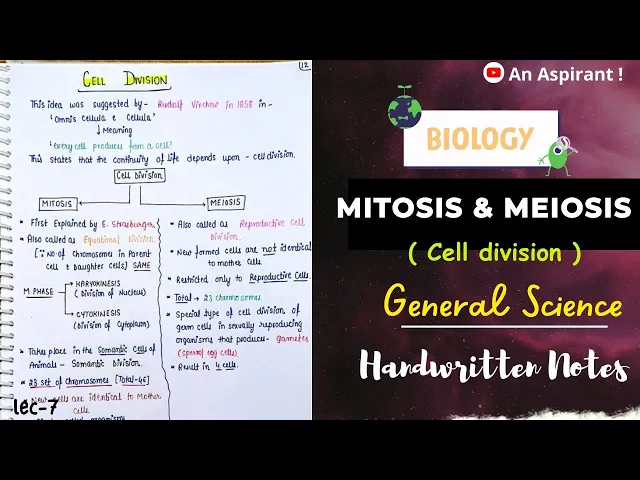
Mitosis & Meiosis--Cell Division || Biology || General Science || Lec.7 || An Aspirant !
15K
Cell division is essential for life's continuity. There are two main types: mitosis (equational division) and meiosis (reduction division). Mitosis occurs in somatic cells of asexual organisms, producing identical daughter cells with the same chromosome number (46 in humans, 23 pairs). It involves karyokinesis (nuclear division) followed by cytokinesis (cytoplasmic division). Meiosis occurs in sexually reproducing organisms, producing haploid gametes (sperm and egg cells) with half the chromosome number (23 in humans). This reduction ensures that when gametes fuse during fertilization, the original diploid number is restored.
Click to watch →
Deep Dive
Basic genetics and molecular biology, including DNA replication, transcription, translation, and the structure/function of chromosomes and telomeres.

جزيئي وزاري محاظره5 تحليلات مرحله 2
5.6K
DNA replication is the fundamental process by which genetic material is copied before cell division. In 1958, Meselson and Stahl demonstrated that DNA replication is semi-conservative, meaning each new DNA molecule contains one original strand and one newly synthesized strand. DNA is a double helix composed of two strands held together by nitrogenous base pairs: adenine-thymine and guanine-cytosine. The process occurs in three stages: initiation (unwinding the double helix), elongation (synthesizing new strands), and termination (completing replication). Chromosomes are DNA-containing structures with centromeres and telomeres. Telomeres are protective caps at chromosome ends that do not replicate during cell division, leading to progressive shortening with each division. This shortening is associated with cellular aging. Telomerase counteracts telomere shortening by adding telomeric DNA sequences to chromosome ends, protecting chromosomes from degradation and maintaining genomic stability.
Click to watch →
حل كتاب الامتحان احياء 3ث 2026 DNA فى أوليات وحقيقيات النواه •الطفرات •المحتوى الچينى | الدرس الثالث
61K
DNA replication begins at multiple origins along each chromosome in eukaryotic cells, allowing simultaneous replication of different chromosome segments. Chromosomes consist of DNA wrapped around histone proteins, with telomeres (terminal regions) at the ends. Telomeres do not contain coding sequences but are essential for maintaining chromosome structure and stability. Without telomeres, chromosomes would lose genetic material during cell division, leading to loss of important genetic information.
Click to watch →

AP Jumpstart Session 3: Unit 6 & 7 Review (w/ MarcoLearning)
553
This comprehensive section covers the central dogma of molecular biology: DNA replication, transcription, and translation. DNA structure includes purines (adenine/guanine) and pyrimidines (cytosine/thymine) with specific base pairing rules (A-T with 2 bonds, C-G with 3 bonds). DNA replication occurs at the replication fork with helicase unwinding DNA, primase synthesizing RNA primers, and DNA polymerase extending strands continuously on the leading strand and discontinuously on the lagging strand (Okazaki fragments). Transcription occurs in the nucleus where RNA polymerase reads the template strand and synthesizes mRNA. Post-transcriptional modifications include the 5' cap, intron removal, and poly-A tail addition. Translation occurs in ribosomes where tRNAs bring amino acids according to the genetic code, with initiation at AUG and termination at stop codons.
Click to watch →

Bacterial Genetics DNA Replication, Trascription and Translation
491
DNA serves two fundamental functions in all living organisms: autocatalytic (directing its own synthesis through replication) and heterocatalytic (directing RNA and protein synthesis). The central dogma describes how genetic information flows from DNA to RNA to protein through transcription and translation. DNA and RNA are nucleotide polymers with phosphate groups, sugar molecules, and nitrogenous bases. DNA contains deoxyribose sugar and thymine, while RNA contains ribose sugar and uracil. DNA strands are anti-parallel (5' to 3' and 3' to 5') and connected by hydrogen bonds following specific base pairing rules (A-T, G-C).
Click to watch →
L12,13: DNA replication; Molecular biology 2,3
748
Telomeres are repetitive nucleotide sequences (TTAGGG repeats) at chromosome ends, consisting of double-stranded repeats followed by a single-stranded G-rich overhang. They protect chromosome ends from degradation and prevent recognition as DNA damage. Telomerase is a ribonucleoprotein enzyme that adds TTAGGG repeats to chromosome ends using its own RNA component as a template.
Click to watch →
Deep Dive
The concept of homeostasis and how physiological systems coordinate to maintain internal stability.

Homeostasis & Feed Back | Focus Prof 1 & Prof 2: Physiology | Unacademy Future Doctors | Dr.Shital
36.4K
Homeostasis is the maintenance of constant and stable internal environment within the body, encompassing fluid composition, electrolyte balance, temperature, and waste removal. Multiple interconnected body systems work together: cardiovascular transports blood; respiratory facilitates gas exchange and acid-base balance; gastrointestinal handles digestion; urinary regulates fluids; endocrine controls hormones; musculoskeletal provides structure; nervous coordinates responses. Each system performs specialized functions—circulation delivers oxygen and nutrients, kidneys filter waste, temperature regulation involves hypothalamic control with responses like sweating and shivering. This integrated approach demonstrates how different systems collectively maintain internal stability.
Click to watch →
Homeostasis Chap#2 | Anatomy and physiology-I | Feedback mechanism | Homeostasis MCQS Pattern KMU.
39.9K
Homeostasis is the state of stable internal environment maintained despite external changes. The body maintains constant conditions like 37°C temperature regardless of external fluctuations. All 11 body systems contribute: circulatory system transports materials, digestive system processes nutrients, respiratory system manages gas exchange, urinary system regulates electrolytes, skeletal system provides protection, lymphatic system defends against infections, and muscular system maintains consistency. The internal environment consists of tissue fluid that must remain constant for cell survival. Communication between systems through nervous and endocrine coordination enables responses to changes.
Click to watch →
【生物基礎】 体内環境の維持37 自律神経:交感神経・副交感神経 (18分)
513.9K
The body maintains homeostasis to ensure stable chemical reactions for life. This requires detecting environmental changes and responding appropriately. The hypothalamus, located between the brain hemispheres, serves as the primary sensor for internal and external changes. The autonomic nervous system, originating from the hypothalamus, coordinates involuntary responses through two branches: the sympathetic nervous system (activated during stress and excitement) and the parasympathetic nervous system (activated during relaxation). These systems work together to maintain internal stability by regulating organ functions.
Click to watch →

Chapter 1 Introduction to Anatomy and Physiology.wmv
464.6K
Homeostasis maintains stable internal environment through dynamic equilibrium around specific set points. The nervous system monitors conditions and coordinates responses. Negative feedback loops have three components: receptors detect changes, control centers develop response plans, and effectors execute corrective actions. Once normal is restored, all components shut off to prevent overcorrection. This mechanism maintains physiological balance.
Click to watch →
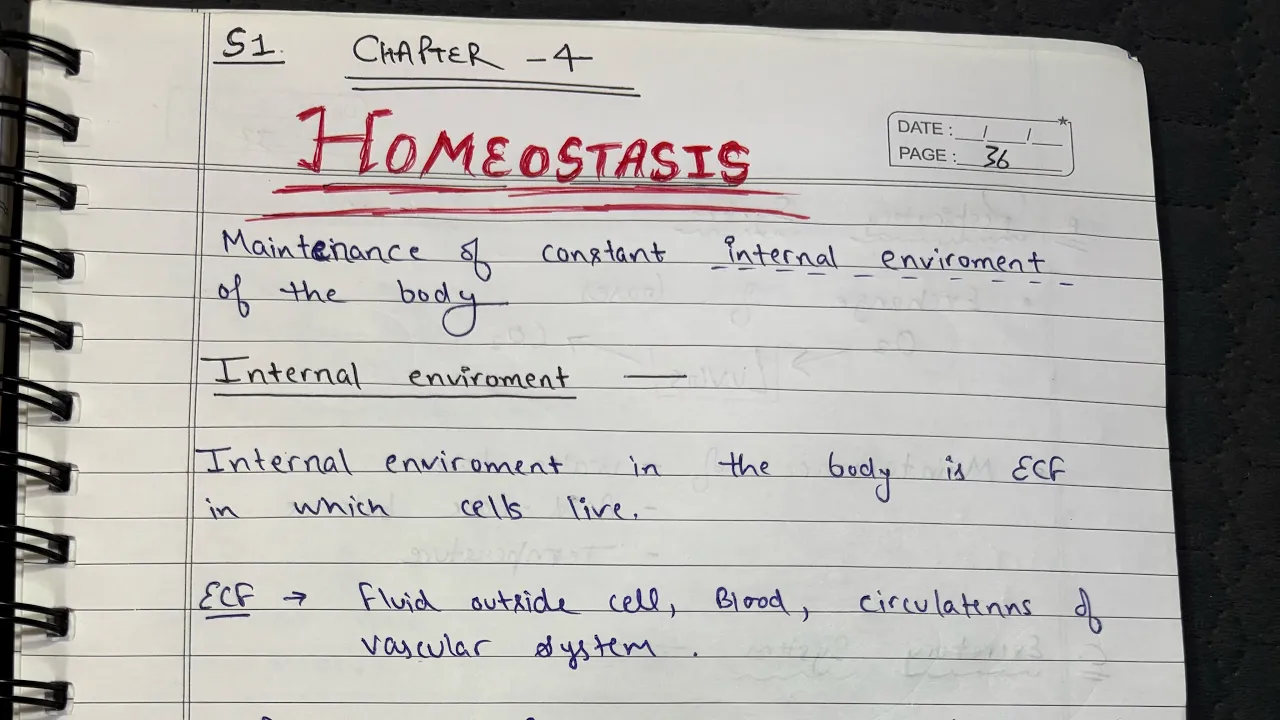
Homeostasis Ch 4 Sec1 of Essentials of Medical Physiology
485
Homeostasis is the maintenance of a constant internal environment within specific physiological limits. The internal environment consists of extracellular fluid (ECF) including blood, plasma, and lymph. When this environment deviates, the body suffers malfunctions. Multiple body systems contribute to homeostasis: the digestive system digests and absorbs nutrients for cellular delivery; the respiratory system handles gas exchange and indirectly maintains water, acid-base, and temperature balance; the excretory system eliminates waste products and regulates water and electrolyte balance; the skin provides protection, temperature regulation, and waste excretion; the circulatory system ensures blood flow to all body parts; the lymphatic system returns proteins to blood and provides immune defense; the endocrine system releases hormones in appropriate quantities; the skeletal system enables movement and protects internal organs; the nervous system regulates body functions as a control system.
Click to watch →
Deep Dive
An understanding of cellular metabolism and how cells convert nutrients into energy (ATP) via aerobic respiration.

10th Science 2 Free One Shot Revision | Ch-2 Life Process in Living Organism (P-1)| Udaan Batch 2023
101.8K
Aerobic respiration occurs in three stages: Glycolysis (breakdown of glucose in cytoplasm producing 2 ATP, 2 NADH, and 2 pyruvate), Krebs Cycle (Citric Acid Cycle in mitochondria producing 6 NADH, 2 FADH2, 2 ATP, and 2 CO2), and Electron Transport Chain (producing 34 ATP from NADH and FADH2). Complete aerobic respiration produces 38 ATP total. The connecting link between glycolysis and Krebs Cycle converts pyruvate to acetyl-CoA, producing 2 NADH and 2 CO2. ATP (Adenosine Triphosphate) consists of adenine, ribose sugar, and three phosphate groups, with high-energy bonds storing cellular energy.
Click to watch →

احياء السادس العلمي || الفصل الاول || المحاضرة العاشرة
617.3K
Cellular metabolism (الأيض الخلوي) is a collection of chemical transformations occurring in cells with enzyme assistance, encompassing catabolism (breakdown) and anabolism (building). Glycolysis (التحلل السكري) is the first stage of cellular respiration where glucose is broken down into two pyruvic acid molecules in the cytoplasm, consuming 2 ATP and producing 4 ATP (net gain of 2 ATP) along with 4 hydrogen atoms. When oxygen is available, pyruvic acid enters the Krebs cycle (دورة كربس) in the mitochondria, producing additional energy. Complete aerobic respiration of one glucose molecule yields a total of 38 ATP molecules: 2 from glycolysis, 6 from pyruvic acid conversion to acetyl-CoA, and 24 from two turns of the Krebs cycle.
Click to watch →

Nutrition (पोषण) Carbohydrates, Proteins, Vitamins, Minerals | BPSC TRE 4.0 | Class -3 | Deepak Sir
9.4K
This segment covers cellular respiration and ATP production. The electron transport chain produces the largest number of ATP molecules (32-34 ATP) in aerobic respiration. Glycolysis produces 2 ATP, and the Krebs cycle produces 2 ATP. The electron transport chain occurs in the inner mitochondrial membrane. Total aerobic respiration produces 38 ATP per glucose molecule.
Click to watch →
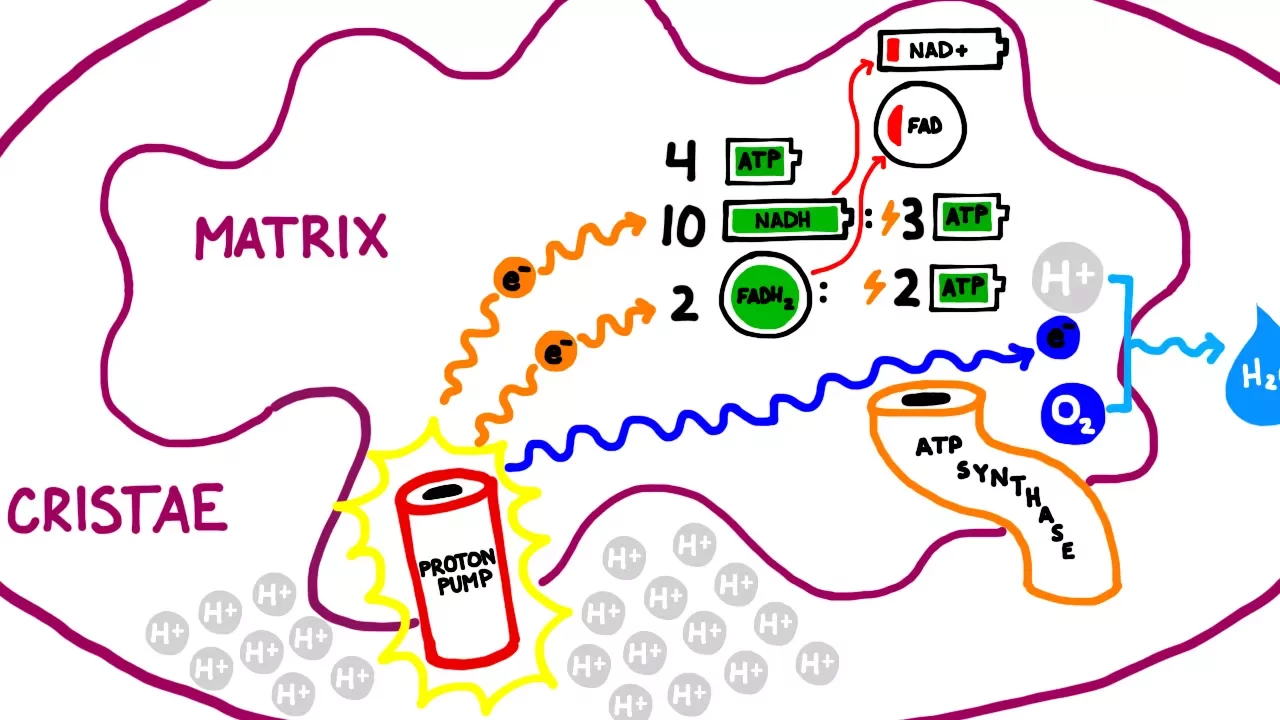
Aerobic Cellular Respiration, the Kreb's Cycle, Electron Transport Chain
66.2K
Aerobic cellular respiration converts glucose to ATP through three main stages: glycolysis (producing 2 ATP, 2 NADH), the Krebs cycle (producing 2 ATP, 6 NADH, 2 FADH2 per glucose molecule), and the electron transport chain (producing approximately 34 ATP through chemiosmosis using high-energy electrons from NADH and FADH2 to create an electrochemical gradient that drives ATP synthesis, with oxygen serving as the terminal electron acceptor).
Click to watch →

Hücresel Solunum #biyoloji #aytbiyoloji #fermantasyon #oksijenlisolunum #enerjidönüşümleri
24.1K
Aerobic respiration begins with glycolysis in the cytoplasm, producing 2 pyruvic acid molecules. Pyruvic acid enters mitochondria and undergoes oxidation: loses one carbon as CO2, transfers electrons to NAD+ forming NADH, and combines with coenzyme A to form acetyl-CoA. The Krebs cycle then breaks down acetyl-CoA: 2 carbons lost as CO2, 6 NAD+ reduced to NADH, 2 FAD reduced to FADH2, and 2 ATP produced. The electron transport chain uses energy from NADH and FADH2 to pump protons from matrix to intermembrane space, creating a gradient. Protons flow back through ATP synthase, driving ATP synthesis (oxidative phosphorylation). Each NADH produces ~3 ATP, each FADH2 produces ~2 ATP. Oxygen is the final electron acceptor, combining with electrons and protons to form water. Total ATP yield per glucose is ~30-32 ATP.
Click to watch →
Prerequisite Knowledge
- Concept 01Fundamental concepts of cell biology, including organelle functions (especially mitochondria) and cellular division (mitosis and meiosis).
- Concept 02Basic genetics and molecular biology, including DNA replication, transcription, translation, and the structure/function of chromosomes and telomeres.
- Concept 03The concept of homeostasis and how physiological systems coordinate to maintain internal stability.
- Concept 04An understanding of cellular metabolism and how cells convert nutrients into energy (ATP) via aerobic respiration.
Subsequent Learning
- Step 01The emerging field of Geroscience and experimental longevity interventions, such as senolytics, telomerase activation, and NAD+ restoration.
- Step 02The molecular pathology of age-related diseases, including Alzheimer's disease, cardiovascular disease, type 2 diabetes, and cancer.
- Step 03Epigenetic clocks and other biomarkers used in clinical settings to measure biological age versus chronological age.
- Step 04The impact of lifestyle interventions (such as caloric restriction, intermittent fasting, and exercise) on nutrient-sensing pathways like mTOR and AMPK.
- Step 05The societal, ethical, and demographic implications of significantly extending human healthspan and lifespan.
Aging's Origins
Cellular Decay
Future Unknowns
Aging's Origins
0:06Playing Section
- 1
Aging stems from molecular and cellular changes driven by intrinsic processes and environmental factors.
- 2
Nine key physiological traits, from DNA damage to regenerative decline, underpin the aging mechanism.
- 3
Maximum human lifespan is naturally capped around 90 years, despite rare outliers.
The Hyperfunction Theory of Aging
While the traditional 'Hallmarks of Aging' framework attributes aging to the accumulation of cellular damage and passive wear-and-tear, the Hyperfunction Theory offers a contrasting paradigm. First conceptualized by Mikhail Blagosklonny, this theory posits that aging is driven by the continued, hyperactive run of developmental and growth programs (such as the nutrient-sensing mTOR pathway) into adulthood. Because evolutionary pressure declines after reproduction, these crucial early-life programs are never switched off, leading to cellular overactivation, systemic inflammation, and organ decline. Rather than being a consequence of random molecular decay or entropy, aging is viewed as a continuation of developmental processes running in 'hyperdrive.' This perspective shifts the scientific and therapeutic focus from trying to repair random, diverse cellular damage to actively slowing down these overactive, genetically programmed signaling pathways using geroprotectors like rapamycin.
Deep Dive
The emerging field of Geroscience and experimental longevity interventions, such as senolytics, telomerase activation, and NAD+ restoration.

The Longevity Bracket Finals: The Winner Might Surprise You
8.7K
This section covers pharmaceutical and biological aging interventions. In the medicine bracket, blood pressure optimization is more important than B vitamin status, metformin has broader effects than PCSK9 inhibitors, oral health has broader systemic benefits than bisphosphonates, and GLP1 agonists are more effective than low dose aspirin. The winners are oral health, metformin, and proactive healthcare. In the geroscience bracket, calorie restriction has more evidence than experimental mTOR inhibitors, epigenetic reprogramming is more promising than spermidine, glycine has more consistent evidence than alpha-ketoglutarate, and senolytics target broader aspects of aging than thymus rejuvenation. The winners are calorie restriction, glycine, and senolytics.
Click to watch →
LAS 4 TERAPIAS MÁS PUNTERAS QUE QUIEREN RETRASAR EL ENVEJECIMIENTO - Experto las explica
81K
Three promising anti-aging therapies are emerging: telomerase therapy (which extends telomeres to prevent cellular aging and has shown safety in human trials), stem cell therapy (which enables tissue regeneration and has been used for injuries like bone fractures), and senolytics (which eliminate senescent 'zombie' cells that accumulate with age and damage surrounding tissues). These therapies, currently in experimental phases, aim to extend healthy lifespan, with the goal of achieving indefinite life by around 2030.
Click to watch →

Cellular Senescence and Senolytics in Aging: Path to Translation
20.4K
Early human trials show decreased senescent cell abundance, inflammation, and fibrosis in adipose tissue. The Translational Geroscience Network conducts 27 parallel clinical trials across U.S. institutions, measuring 110+ blood and 34+ urine parameters. Key challenges include developing reliable biomarkers for regulatory approval. The unitary hypothesis suggests interventions like rapamycin and metformin likely target multiple aging pillars simultaneously. Combinations may be synergistic or antagonistic. Only 10% of phase 2a trials succeed despite promising mouse data. Senolytics represent a paradigm shift from treating individual diseases to targeting fundamental aging processes.
Click to watch →

AGING is a disease we can REVERSE: David Sinclair, Ph.D. | mbg Podcast
185.1K
NAD+ (nicotinamide adenine dinucleotide) is a critical molecule used by approximately 500 different enzymes in cellular metabolism. It cycles throughout the day and is responsible for sleep-wake cycles. NAD+ levels decrease by about half between ages 20 and 50 in tissues, weakening the body's ability to repair DNA and maintain the epigenome. There are three main longevity pathways that work together: SIRT1 and related sirtuins (which repair DNA and stabilize the epigenome), AMPK (which senses low energy and activates protective responses), and mTOR (which senses amino acid levels and regulates cell growth). These pathways communicate with each other, and interventions that activate one often affect the others. The challenge is determining the optimal way to activate these pathways in the right order and combination.
Click to watch →

How to live longer? Harvard expert Dr. Sinclair explains at #HTLS2020
25.5K
Several supplements and interventions show promise for longevity: resveratrol from red wine activates longevity pathways, though the amount in wine is small; NAD+ boosters can activate sirtuins, the body's natural longevity proteins; and metformin, a diabetes drug, shows protective effects against frailty, cancer, and Alzheimer's. Emerging therapies include senolytics (drugs that eliminate senescent 'zombie' cells) and cold senolytics. Anti-aging interventions can potentially be repeated multiple times throughout life using engineered systems activated by molecules like doxycycline, allowing for periodic rejuvenation rather than a single intervention.
Click to watch →
Deep Dive
The molecular pathology of age-related diseases, including Alzheimer's disease, cardiovascular disease, type 2 diabetes, and cancer.

Anti-âge de nouvelle génération (2 de 4) : article scientifique – DeVito et al, 2022.
287
The aging process leads to the development of multiple age-related diseases including Parkinson's disease, cardiovascular diseases, hypertension, stroke, Alzheimer's disease, kidney disease, type 2 diabetes, and cancer. These diseases are favored by the progression of aging. By targeting primary cellular aging mechanisms, it becomes possible to simultaneously delay the onset of multiple age-related diseases, which is more effective than targeting individual diseases separately.
Click to watch →
Anti-âge de nouvelle génération (2 de 4) : article scientifique – DeVito et al, 2022.
184
The aging process leads to the development of multiple age-related diseases including Parkinson's disease, cardiovascular diseases, hypertension, Alzheimer's disease, diabetes type 2, and cancer. By targeting primary aging mechanisms, it is possible to simultaneously prevent multiple age-related diseases.
Click to watch →

Seeking immortality: Aubrey de Grey at TEDxSalford
284.2K
Different age-related diseases correspond to specific patterns of cellular and molecular damage. For example, cancer corresponds directly to division obsession (cells dividing uncontrollably). Heart disease involves multiple damage types: cell loss (pacemaker cells dying), extracellular aggregates (atherosclerosis), intracellular aggregates (amyloidosis), and extracellular matrix changes (arteriosclerosis). Alzheimer's disease involves intracellular tangles and extracellular plaques. Understanding these relationships allows researchers to target specific damage categories to prevent or treat particular diseases, demonstrating that age-related pathologies are not random but predictable consequences of accumulated damage.
Click to watch →

Trojan Talks Ep. 5: President Beong-Soo Kim with Eileen Crimmins
795
Modern aging research has shifted focus to identifying molecular and cellular changes—called biological hallmarks—that underlie all age-related diseases. These include genomic changes, cellular senescence, and telomere shortening. Unlike previous views that treated different diseases separately, current understanding recognizes these same molecular processes contribute to heart disease, cognitive decline, and physical deterioration. These changes begin early in life, with some showing fastest progression in early childhood. This paradigm shift enables researchers to identify common mechanisms underlying diverse age-related conditions.
Click to watch →

Episodio 32. Bases biológicas del envejecimiento.
119
This extensive segment explores the molecular mechanisms underlying cellular aging and their manifestation in major age-related diseases. It begins with the free radical theory, explaining how reactive oxygen species generated during cellular respiration cause oxidative damage to DNA, proteins, and lipids. Cells have enzymatic defenses (superoxide dismutase, catalase) that neutralize these radicals, though experiments show that simply reducing ROS does not necessarily extend lifespan. Apoptosis (programmed cell death) is presented as a protective mechanism that removes damaged cells, with the balance between apoptosis and cellular regeneration being critical—excessive apoptosis leads to neurodegenerative diseases, while insufficient apoptosis leads to cancer. The segment then examines Alzheimer's disease, characterized by amyloid plaque formation from misfolded proteins that trigger neuronal apoptosis. Prevalence increases dramatically with age: 0.05% at 40-65, 1% at 65-69, 6.9% at 70-74, 12.1% at 75-79, 20.1% at 80-84, and 39.2% over 90. Cancer is discussed through the lens of p53, the 'guardian of the genome' tumor suppressor protein mutated in approximately 50% of cancers. The segment explains that diploid organisms require both p53 copies to be mutated for function loss, and having three copies can extend lifespan by 15% while reducing tumor development.
Click to watch →
Deep Dive
Epigenetic clocks and other biomarkers used in clinical settings to measure biological age versus chronological age.
Dr. Steve Horvath: Epigenetic Clocks, PhenoAge & GrimAge for Healthspan Prediction
122.1K
Epigenetic clocks, such as the Horvath pan-tissue clock and GrimAge, measure biological age by analyzing DNA methylation patterns across hundreds of genomic loci, providing more accurate predictions of lifespan and disease risk than traditional clinical biomarkers like telomere length or simple chronological age; these clocks reveal that individuals age at different rates genetically determined (approximately 40% heritability), with lifestyle factors having only weak effects, and they can predict mortality and disease onset years before clinical symptoms appear, though interventions like vitamin D supplementation and omega-3 fatty acids have shown modest effects on slowing epigenetic aging.
Click to watch →

Как остановить старение? Секреты молодости и долголетия. Генетик Александр Коляда | Ходят слухи 133
2.9M
Epigenetic clocks are biomarkers that measure biological age based on DNA methylation patterns (chemical modifications to DNA that don't change the genetic code). These clocks can accurately predict chronological age and have been used to measure how interventions (like diet changes) affect biological aging. For example, a person who becomes vegetarian might show a slower epigenetic aging rate, indicating that the diet change may have slowed their biological aging. This is currently a research tool rather than a clinical test.
Click to watch →
Эпигенетические часы — Вадим Гладышев / ПостНаука
22.7K
Chronological age (actual years lived) doesn't always match biological age (physiological age), as some people appear older or younger than their actual age. Before 2011, no reliable biomarkers existed to measure biological age. Researchers then discovered that DNA methylation patterns—stable modifications to cytosine nucleotides across millions of genomic sites—could predict biological age. By analyzing these methylation sites mathematically, scientists created epigenetic clocks that work consistently across different tissues (brain, liver, blood), revolutionizing aging research by providing a measurable indicator of cellular aging independent of chronological time.
Click to watch →
Reconsidering Aging, Muscle Growth, Niacin Supplementation, Your Questions, and More
72.4K
Epigenetic clocks measure biological age by analyzing patterns of gene expression (epigenetic tags) compared to chronological age. These clocks are developed by comparing epigenome data from people of different ages to create reference maps. A person's epigenetic age can differ from their chronological age, indicating accelerated or decelerated aging at the cellular level.
Click to watch →

Старіння та довголіття. Олександр Коляда. Чому ми старіємо і чи можна це зупинити? | Простими словам
25.3K
This segment explains the distinction between biological age (how old cells and organs actually are based on accumulated damage) and chronological age (years since birth). The hosts describe how biological age can differ significantly from chronological age—a 40-year-old might have a biological age of 45 or 50 due to lifestyle factors. The segment covers the evolution of biological age measurement from simple physical tests in the 1980s to biochemical markers in the 2000s, and finally to epigenetic clocks based on DNA methylation patterns in the 2010s. The hosts explain that epigenetic clocks provide better predictions of longevity than chronological age and are now widely used in aging research to test interventions.
Click to watch →
Deep Dive
The impact of lifestyle interventions (such as caloric restriction, intermittent fasting, and exercise) on nutrient-sensing pathways like mTOR and AMPK.

Alimentos que ayudan a vivir más tiempo y mejor Dr. Mark Hyman
7.1K
Nutrient sensing pathways are central to longevity interventions. The mTOR pathway detects excess protein and sugar, and when overstimulated accelerates aging; periodic fasting inhibits it. The insulin signaling pathway regulates blood sugar, but constant starch/sugar consumption leads to cancer, heart disease, dementia, and inflammation. AMPK and sirtuin pathways detect nutrient scarcity and activate repair mechanisms. AMPK activates DNA repair, new mitochondria production, anti-inflammatory responses, and antioxidant systems. Sirtuins, activated by resveratrol (in red wine), can extend lifespan in model organisms. These pathways demonstrate that longevity interventions work by modulating cellular nutrient sensing rather than simply adding nutrients.
Click to watch →

12 Dấu Hiệu Lão Hóa - Hallmarks of Aging | Tiến Sĩ Carlos López-Otín
3.1K
Each cell has sophisticated nutrient sensing systems that monitor glucose, amino acids, and lipids to regulate energy use, growth, and repair. The three main pathways are mTOR (promotes growth when nutrients are abundant), AMPK (energy sensor that activates repair when energy is low), and insulin/IGF-1 (promotes growth and storage). In the modern world of constant food access, these systems are often overactivated, promoting aging. The key to managing nutrient sensing is balance - enough nutrition for health but not so much that it continuously activates aging-promoting pathways. Moderate calorie restriction (20-30% reduction) is the most extensively studied intervention, shown across species from yeast to primates to extend lifespan through reduced mTOR and insulin activity and increased AMPK activity. Intermittent fasting provides similar benefits by creating periods without food. Exercise naturally activates AMPK, making it the 'miracle drug' that affects multiple hallmarks simultaneously. A crucial insight is that all six hallmarks discussed are interconnected - no single intervention solves all problems, but many interventions (exercise, intermittent fasting, stress management) affect multiple hallmarks at once.
Click to watch →

La signalisation mTOR : quand le moteur de la vie devient accélérateur du vieillissement
439
Several factors strongly activate the mTOR pathway: branched-chain amino acids (especially leucine, where just 3 grams can significantly stimulate mTOR), insulin and IGF-1 hormones, high-calorie meals, hyperinsulinemia, and environmental pollutants including air particulates, microplastics, plastics, and heavy metals. Natural inhibitors include intermittent fasting (16:8 schedule), caloric restriction (20-30%), phytochemicals (resveratrol, curcumin, green tea extract, pterostilbene), and high-intensity interval training. The AMPK-mTOR balance controls metabolic health—AMPK acts as the cellular 'alarm' that activates when energy levels drop, triggering catabolic processes like fat burning and autophagy. Caloric restriction, intermittent fasting, and physical exercise all stimulate AMPK, which suppresses mTOR activity.
Click to watch →

The 12 Hallmarks of aging: Longevity Science shows what you can do
358
Key nutrient sensing pathways control cellular behavior: mTOR acts as a growth signal while AMPK signals energy scarcity. In our constantly fed modern state, we're often on growth overdrive. Fasting reduces mTOR and increases AMPK, shifting balance from growth to repair. Research shows reducing IGF-1 signaling extends lifespan in worms, flies, and mice. Metformin activates AMPK and is being studied in the TAME trial—the first FDA-approved trial targeting aging as a condition. Rapamycin inhibits mTOR and is the most robust pharmacological lifespan extender in animal models. Evidence-based interventions: don't overconsume protein (excessive leucine chronically activates mTOR); practice caloric restriction or fasting; maintain insulin sensitivity through exercise and avoiding refined carbohydrates.
Click to watch →
How Daily Choices Affect Aging - with Dr. Frank Lipman | The Empowering Neurologist EP. 106
3.6K
Two key longevity pathways regulate cellular aging: mTOR (which should be inhibited) and AMPK (which should be stimulated). Lifestyle interventions—including fasting, low-carb diets, exercise, and specific nutrients like curcumin and quercetin—consistently affect both pathways. These same interventions improve multiple longevity markers simultaneously, demonstrating interconnected biological systems.
Click to watch →
Deep Dive
The societal, ethical, and demographic implications of significantly extending human healthspan and lifespan.
REVERSE AGING: What To Eat & When To Eat To INCREASE LONGEVITY | Dr. David Sinclair
362K
The goal of aging research should focus on extending healthspan (years lived vibrantly) rather than just lifespan. Many people fear living to 100 because they imagine being sick and dependent, but if one could remain healthy and active at 100, most would welcome it. Research shows that keeping people healthy longer benefits society economically.
Click to watch →

Tesla Stock to go VERTICAL! w/Steven Mark Ryan
69K
Longevity escape velocity occurs when medical and technological advances extend human lifespan by more than one year per year, enabling indefinite healthy living. Evidence suggests aging can already be slowed below one year per year through various interventions. The focus should shift from maximizing lifespan to maximizing healthspan—the period of life spent in good health. Simultaneously, demographic transitions in developing nations show declining birth rates as economic development progresses, raising questions about population sustainability. Humanoid robots could potentially offset demographic declines by providing labor and care functions, addressing concerns about population sustainability and economic productivity.
Click to watch →

特番『2019年を科学的に振り返る!過去30年とこれからの30年』ゲスト:工学博士 武田邦彦氏
365.6K
健康寿命を非常に大きく設定する必要がある。総理ね普通の人は非常に素直で、交流21たらえええええ立でもねーなージョーブーブ。根本的に社会構造を変える必要がある。
Click to watch →

311 ‒ Longevity 101: a foundational guide to Peter's frameworks for longevity
160.8K
Longevity is defined as a function of two vectors: lifespan (binary, objective measure of being alive or dead) and healthspan (subjective, analog measure of quality of life). Healthspan comprises three components: physical health (strength, endurance, balance), cognitive health (processing speed, working memory), and emotional health (happiness, relationships). Physical and cognitive health inevitably decline with age, while emotional health follows a U-shaped curve. The key insight is that pursuing better healthspan captures approximately 75% of lifespan benefits, making healthspan optimization more impactful than direct lifespan extension efforts. Medicine 1.0 dominated for 250,000 years with life expectancy in the 30s-40s. Medicine 2.0 emerged in the late 19th century, doubling lifespan through germ theory and sanitation. However, it failed to extend lifespan beyond gains from eradicating communicable diseases, leading to the need for Medicine 3.0.
Click to watch →

From Vampires to Stem Cells and Exosomes: The Human Quest for Longevity | Tunc Tiryaki | TEDxAthens
1.3M
Human lifespan has dramatically increased from approximately 30 years in the early 1800s to 76 years today due to antibiotics, vaccines, and medical care. However, this longevity gain did not extend healthspan—the average person experiences only about 64 years of disease-free living, leaving approximately 12 years of pain and suffering before death. This creates a fundamental disconnect between how long we live and how healthy we feel during those years. Throughout history, cultures have sought solutions to this problem through myths like the Knights Templar searching for the Grail, Spanish explorers seeking the Fountain of Youth, and vampire legends of eternal youth. These stories represent humanity's persistent desire to extend not just lifespan but healthy, productive years.
Click to watch →
Aging's Origins
Cellular Decay
Future Unknowns
Aging's Origins
0:06- 1
Aging stems from molecular and cellular changes driven by intrinsic processes and environmental factors.
- 2
Nine key physiological traits, from DNA damage to regenerative decline, underpin the aging mechanism.
- 3
Maximum human lifespan is naturally capped around 90 years, despite rare outliers.
The Hyperfunction Theory of Aging
While the traditional 'Hallmarks of Aging' framework attributes aging to the accumulation of cellular damage and passive wear-and-tear, the Hyperfunction Theory offers a contrasting paradigm. First conceptualized by Mikhail Blagosklonny, this theory posits that aging is driven by the continued, hyperactive run of developmental and growth programs (such as the nutrient-sensing mTOR pathway) into adulthood. Because evolutionary pressure declines after reproduction, these crucial early-life programs are never switched off, leading to cellular overactivation, systemic inflammation, and organ decline. Rather than being a consequence of random molecular decay or entropy, aging is viewed as a continuation of developmental processes running in 'hyperdrive.' This perspective shifts the scientific and therapeutic focus from trying to repair random, diverse cellular damage to actively slowing down these overactive, genetically programmed signaling pathways using geroprotectors like rapamycin.
Fundamental concepts of cell biology, including organelle functions (especially mitochondria) and cellular division (mitosis and meiosis).
Basic genetics and molecular biology, including DNA replication, transcription, translation, and the structure/function of chromosomes and telomeres.
The concept of homeostasis and how physiological systems coordinate to maintain internal stability.
An understanding of cellular metabolism and how cells convert nutrients into energy (ATP) via aerobic respiration.
The emerging field of Geroscience and experimental longevity interventions, such as senolytics, telomerase activation, and NAD+ restoration.
The molecular pathology of age-related diseases, including Alzheimer's disease, cardiovascular disease, type 2 diabetes, and cancer.
Epigenetic clocks and other biomarkers used in clinical settings to measure biological age versus chronological age.
The impact of lifestyle interventions (such as caloric restriction, intermittent fasting, and exercise) on nutrient-sensing pathways like mTOR and AMPK.
The societal, ethical, and demographic implications of significantly extending human healthspan and lifespan.
3.1M views57.2Klikes5:09@TEDEdOriginal Release: 2016-06-09
In 1997, a French woman named Jeanne Calment passed away after 122 years and 164 days on this Earth, making her the oldest known person in history.
Her age was so astounding that a millionaire pledged $1 million to anyone who could break her record.
But in reality, living to this age or beyond is a feat that very few, maybe even no humans, are likely to accomplish.
Human bodies just aren't built for extreme aging.
Our capacity is set at about 90 years.
But what does aging really mean and how does it counteract the body's efforts to stay alive?
We know intuitively what it means to age.
For some, it means growing up, while for others, it's growing old.
Yet finding a strict scientific definition of aging is a challenge.
What we can say is that aging occurs when intrinsic processes and interactions with the environment, like sunlight, and toxins in the air, water, and our diets, cause changes in the structure and function of the body's molecules and cells.
Those changes in turn drive their decline, and subsequently, the failure of the whole organism.
The exact mechanisms of aging are poorly understood.
But recently, scientists have identified nine physiological traits, ranging from genetic changes to alterations in a cell's regenerative ability that play a central role.
Firstly, as the years pass, our bodies accumulate genetic damage in the form of DNA lesions.
These occur naturally when the body's DNA replicates, but also in non-dividing cells.
Organelles called mitochondria are especially prone to this damage.
Mitochondria produce adenosine triphosphate, or ATP, the main energy source for all cellular processes, plus mitochondria regulate many different cell activities and play an important role in programmed cell death.
If mitochondrial function declines, then cells and, later on, whole organs, deteriorate, too.
Other changes are known to occur in the expression patterns of genes, also known as epigenetic alterations, that affect the body's tissues and cells.
Genes silenced or expressed only at low levels in newborns become prominent in older people, leading to the development of degenerative diseases, like Alzheimer's, which accelerate aging.
Even if we could avoid all these harmful genetic alterations, not even our own cells could save us.
The fact remains that cellular regeneration, the very stuff of life, declines as we age.
The DNA in our cells is packaged within chromosomes, each of which has two protective regions at the extremities called telomeres.
Those shorten every time cells replicate.
When telomeres become too short, cells stop replicating and die, slowing the body's ability to renew itself.
With age, cells increasingly grow senescent, too, a process that halts the cell cycle in times of risk, like when cancer cells are proliferating.
But the response also kicks in more as we age, halting cell growth and cutting short their ability to replicate.
Aging also involves stem cells that reside in many tissues and have the property of dividing without limits to replenish other cells.
As we get older, stem cells decrease in number and tend to lose their regenerative potential, affecting tissue renewal and maintenance of our organs original functions.
Other changes revolve around cells' ability to function properly.
As they age, they stop being able to do quality control on proteins, causing the accumulation of damaged and potentially toxic nutrients, leading to excessive metabolic activity that could be fatal for them.
Intercellular communication also slows, ultimately undermining the body's functional ability.
There's a lot we don't yet understand about aging.
Ultimately, does longer life as we know it come down to diet, exercise, medicine, or something else?
Will future technologies, like cell-repairing nanobots, or gene therapy, artificially extend our years?
And do we want to live longer than we already do?
Starting with 122 years as inspiration, there's no telling where our curiosity might take us.
Up Next

103:46
Food Systems and Global Health: The Double Burden of Malnutrition and Obesity
@EdibleschoolyardOrg
515 views•2018-03-15
50:12
Bacterial Communication: Quorum Sensing and Biofilm Formation Explained
@JHUAAP
12.6K views•2011-06-28

18:11
How Bacteria Talk: Quorum Sensing Communication | Bonnie Bassler TED
@TEDEd
707.9K views•2013-02-09
7:08
Bacteriophages: Earth's Deadliest Killers and Future Antibiotics
@kurzgesagt
34.6M views•2018-05-13
Related Study Plans & Knowledge Roadmaps
Structured learning paths in Biology
biology
RNAi: Biogenesis, RISC & Gene Silencing
01Molecular Biology Foundations: DNA to Protein
02Introduction to RNA Interference (RNAi)
03Molecular Biogenesis of miRNA and siRNA
+ 2 more learning modules
10h5 modules
Explore Roadmap
biology
Mycorrhizae: Signaling, Biophysics & Ecology
01Foundations of Mycorrhizal Symbiosis
02Molecular Signaling and Root Colonization
03Biophysics and Bioenergetics of Nutrient Exchange
+ 1 more learning modules
11h4 modules
Explore Roadmap
biology
Circadian Clocks: TTFL, SCN & Periphery
01Foundations of Molecular Biology & Gene Expression
02Introduction to Chronobiology and Actograms
03The Core TTFL: Molecular Architecture of the Clock
+ 3 more learning modules
14h6 modules
Explore Roadmap
biology
Population Genetics: Math, Drift & Selection
01Genetic & Probability Foundations
02The Hardy-Weinberg Principle and Baseline Models
03Mathematical Modeling of Natural Selection
+ 3 more learning modules
18h6 modules
Explore Roadmap