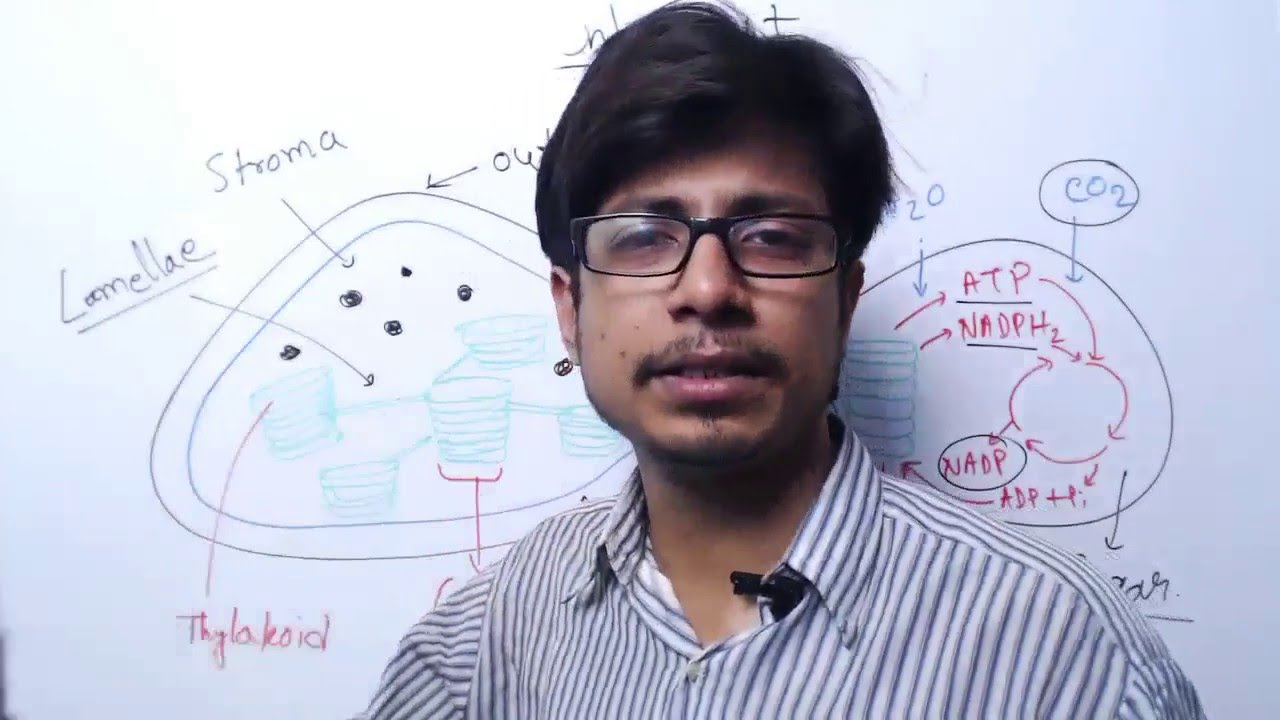










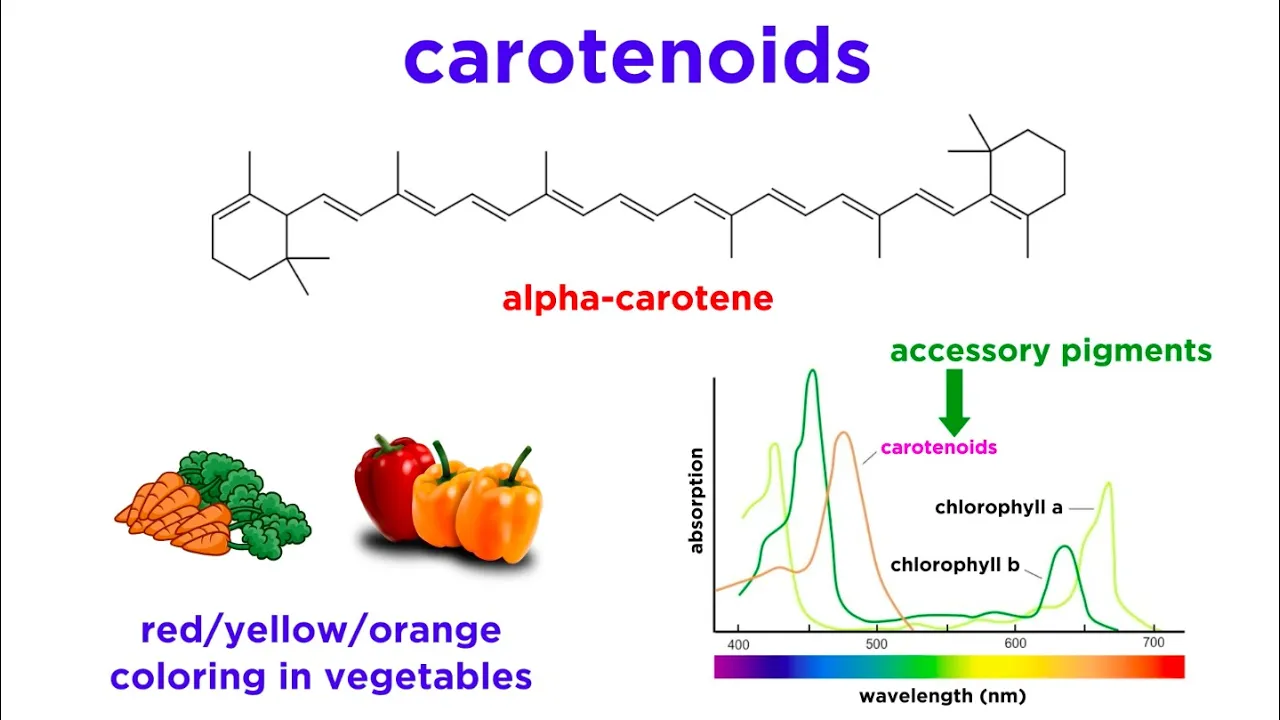











A quantosome is a photosynthetic unit consisting of one reaction center chlorophyll a surrounded by accessory pigments (chlorophyll b, c, d, e and carotenoids) that absorb various wavelengths of light and transfer energy to the main chlorophyll a; when light strikes these pigments, the absorbed photons are passed along until reaching the reaction center, where a pair of electrons gets excited and is accepted by an electron acceptor, forming the basis of photosystems I and II which absorb light at 700 nm and 680 nm respectively.
Photosynthesis NEET: Photosystems & Quantosome Explained
Added:Understanding of chloroplast anatomy, specifically the structure of thylakoids, grana, and stroma.
Basic knowledge of the overall chemical equation of photosynthesis and the distinction between light-dependent and light-independent reactions.
Familiarity with the electromagnetic spectrum, particularly visible light wavelengths and the concept of photon absorption.
Introduction to plant pigments, including the basic role of chlorophyll and accessory pigments like carotenoids.
Detailed study of Non-Cyclic and Cyclic Photophosphorylation (the Z-scheme) to see how PS1 and PS2 work together to generate ATP and NADPH.
The Chemiosmotic Hypothesis, explaining the establishment of a proton gradient across the thylakoid membrane to drive ATP synthesis.
The Calvin Cycle (C3 pathway), which utilizes the assimilatory power (ATP and NADPH) generated by the photosystems to fix carbon.
An exploration of Photorespiration and alternative photosynthetic pathways, such as C4 and CAM, as evolutionary adaptations to dry environments.
263.3K views4Klikes14:02Original Release: 2016-07-15
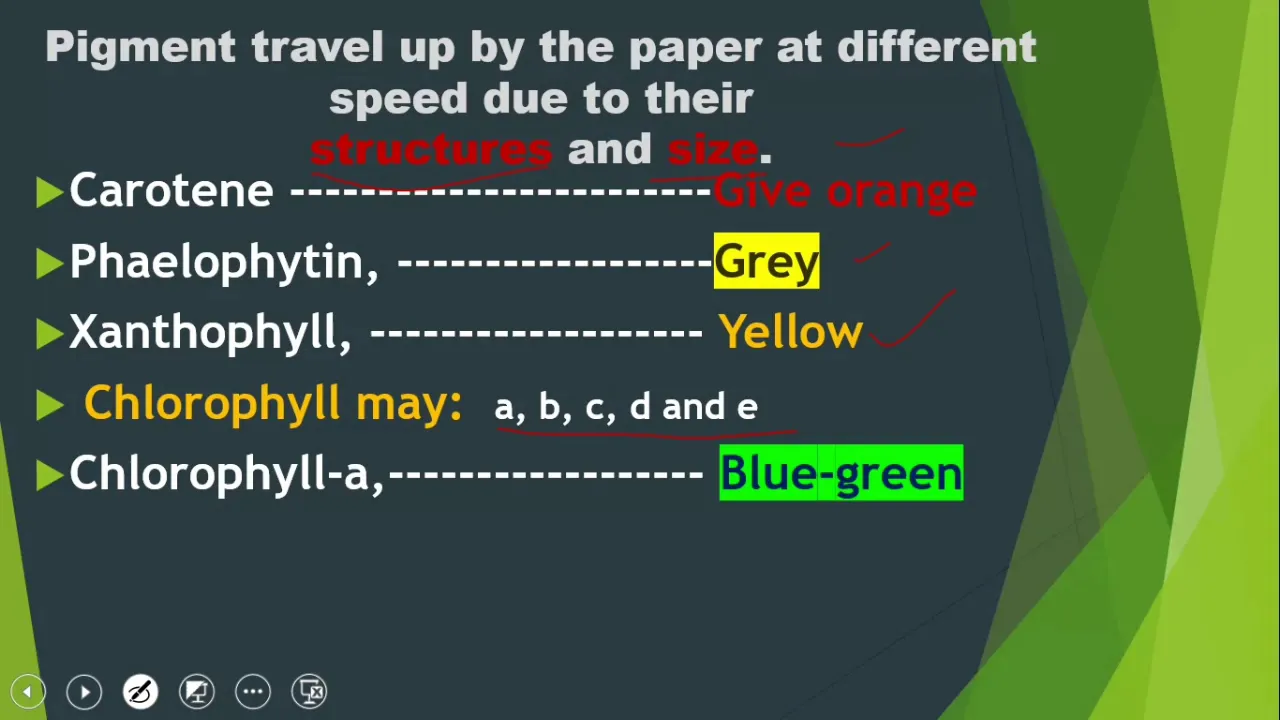
before starting the photo systems that is PS1 and PS2 let us understand what is a quantos quantos is actually collection of pigment molecules which help in the process of photosynthesis in photosynthesis we can also call it a collection of just pigments which are responsible for this photosynthetic process now when we are talking of this quantos or photosynthetic unit photo synthetic unit this unit has one chlorophyll main that is chlorophyll a and around it there are many other pigments which we call the accessory pigments these accessory pigments can be catenoids other type of chlorophylls that is Chlorophyll B C D E or any other pigment so this main uh pigment which is chlorophyll a this is the reaction Center chlorophyll and all other pigments they are called accessory pigments this collection this whole thing is also termed as antena complex now here we need to understand one more important thing that when light falls on all these pigments when sunl Falls here we know that different pigments absorb different wavelengths and this light which is absorbed is in the form of photons so photons are absorbed depending upon their capacity to absorb wavelength all these particles pigments they will absorb photons say this pigment it is going to absorb some photons and pass on that energy to the next from here it will be passed on to the main chlorophyll similarly this pigment will pass on the photons to the next and then to chlorophyll ultimately the complete energy will be passed on to chlorophyll a molecule and this is where the reaction is going to start and that is why we are calling this reaction Center chlorophyll so now now we know what is the significance of all these accessory pigments which we talked of we talked of various types of chlorops we talked of catenoids we talked of xanthophyll ficoin all those things so these pigments depending upon their nature they absorb various wavelengths that Photon which they absorb is passed on to the reaction Center chlorophyll and reaction is going to start from here and that is why all other pigments are known as accessory or helping pigments if chlorophyll a is isolated chlorophyll a is separated and then light energy is uh allowed to fall on this chlorophyll molecule or if chlorophyll molecule chlorophyll a molecule absorbs those photons independently then what is going to happen and we are talking about this in an isolated system that means we have extracted chlorophyll a molecule what happens outside the body or outside the cell and this is what is going to happen inside the cell let us see what happens here when chlorophyll a gains sufficient photons then a pair of electron would get excited because of that extra energy which chlorophyll a has received now when this electron gets excited it leaves the energy shell and it comes out of the shell if it is happening in the living system that is in the cell here when the electron gets ex excited there is going to be a receptor which is going to receive these electrons in an experimental condition if we doing it in a test tube then there is no electron acceptor these electrons they would come back to their normal energy level so from lower energy level the electron has reached two electrons they have reached to higher level and as they have a tendency to come back to their normal energy level they would tend to come back here but during this time they are going to emit that extra energy because of which they left the chlorophyll molecule and that wavelength would be seen in form of some other color so this wavelength would be emitted this process is known as floresent but this is seen only only in experimental condition one quick recap of this what exactly is present in the thil coils is this system where there is a reaction Center chlorophyll which is surrounded by accessory pigments job of accessory pigment is to absorb various wavelengths and pass on those photons to the main chlorophyll if main chlorophyll gets sufficient energy a pair of electrons would leave that chlorophyll and in the living system there is an acceptor which is going to accept it but if we extract this chlorophyll in a test tube and then expose it to sunlight it still absorbs those phons and same a pair of electron would get excited as in the artificial medium or experimental condition there is no electron acceptor here so this electron would tend to come back to its normal energy level and while returning it is going to emit that particular wavelength here and depending upon whatever wavelength is emitted that color would be seen when we expose chlorophyll to sunlight in a test tube this process is known as Florence but it is seen only sorry in experiment m al conditions now let us talk about the photo systems that is photo system one and two now we have understood what a quantos is uh like what is the structure and how chlorophyll molecule behaves so now let us talk about PS1 that is photo system one and we will also talk of PS2 that is photo system 2 in every photo system there is going to be this chlorophyll a which we call the reaction Center chlorop and surrounding this reaction Center chlorophyll are going to be the accessory pigments so it is basically that quantos that we are talking about or the photosynthe IC unit this is PS1 and in PS one chlorophyll a which is the reaction Center chlorophyll absorbs 700 nanom this is very very important because this is the only difference between photos system 1 and photo system 2 both have reaction Center chlorophyll a but one absorbs 700 and here it's going to absorb a different number or different bav when sunlight falls on these pigments as we have discussed all pigments are going to absorb photons and those photons will be passed on to the reaction Center chlorophyll once the reaction Center chlorophyll absorbs sufficient energy then a pair of electron would get excited and this pair of electron would be accepted by an electron acceptor because this is the first electron acceptor it is known as primary electron acceptor this entire unit is known as photosystem syst so what all things are there in a photo system we have antena complex this antena complex is made up of two things the reaction Center chlorophyll a and accessory pigments plus there is this primary electron acceptor also this complete unit is known as photo system 1 in photos system 1 the reaction Center chlorophyll is always a and it absorbs 700 nanom let us draw PS2 now same thing it also has a reaction Center chlorophyll a so reaction Center chlorophyll is always chlorophyll a it is also surrounded by same accessory pigments and these accessory pigments also have the same job that means they would absorb photons and pass on to the main chlorophyll so this chlorophyll receives photons from all accessory pigments one so sunlight falls on this also and once it has received sufficient energy same a pair of electrons gets excited and here also there is this primary [Music] electron acceptor so this is PS2 PS2 here also the reaction Center chlorophyll is chlorophyll a this is reaction Center chlorophyll and it absorbs 680 nanom so chlorophyll a in both the situation is reaction Center chlorophyll but the difference is the wavelength which it absorbs in case of PS1 it absorbs 700 nanom and in case of this that is PS2 it absorbs 680 nanom so many of times we simply write it as PS1 PS2 sometimes it can also be written as simple p and 700 P is for photo system and 700 is the wavelength which we are talking about here it can be written as P 680 so meaning is same whether we write PS1 or PS2 or p700 and p680 these two are the photo systems PS1 and two the difference between the two is only one that in one PS1 the wavelength which is absorbed by the reaction Center chlorophyll is 700 nanometers and in case of two the wavelength absorbed is 680 nanometers so now whenever photosynthesis starts it is going to start with chlorophyll a whether it is PS1 or PS2 and this conclusion that there are two photos systems that exist was was given by immersion after the experiment when he exposed the plants to two different wavelengths and the rate of photosynthesis was enhanced so now after understanding this we will start with the actual process of photosynthesis
Up Next
4:17
Light Reactions of Photosynthesis: ATP & NADPH Explained
@Ricochetscience
968.2K views•2017-03-02
50:12
Bacterial Communication: Quorum Sensing and Biofilm Formation Explained
@JHUAAP
12.6K views•2011-06-28
11:47
Neural Control & Coordination: Synapse Explained | NEET Biology
@NeelaBakoreTutorials
78.3K views•2017-03-24
7:08
Bacteriophages: Earth's Deadliest Killers and Future Antibiotics
@kurzgesagt
34.6M views•2018-05-13
Related Study Plans & Knowledge Roadmaps
Structured learning paths in Biology
biology
RNAi: Biogenesis, RISC & Gene Silencing
01Molecular Biology Foundations: DNA to Protein
02Introduction to RNA Interference (RNAi)
03Molecular Biogenesis of miRNA and siRNA
+ 2 more learning modules
10h5 modules
Explore Roadmap
biology
Mycorrhizae: Signaling, Biophysics & Ecology
01Foundations of Mycorrhizal Symbiosis
02Molecular Signaling and Root Colonization
03Biophysics and Bioenergetics of Nutrient Exchange
+ 1 more learning modules
11h4 modules
Explore Roadmap
biology
Circadian Clocks: TTFL, SCN & Periphery
01Foundations of Molecular Biology & Gene Expression
02Introduction to Chronobiology and Actograms
03The Core TTFL: Molecular Architecture of the Clock
+ 3 more learning modules
14h6 modules
Explore Roadmap
biology
Population Genetics: Math, Drift & Selection
01Genetic & Probability Foundations
02The Hardy-Weinberg Principle and Baseline Models
03Mathematical Modeling of Natural Selection
+ 3 more learning modules
18h6 modules
Explore Roadmap