
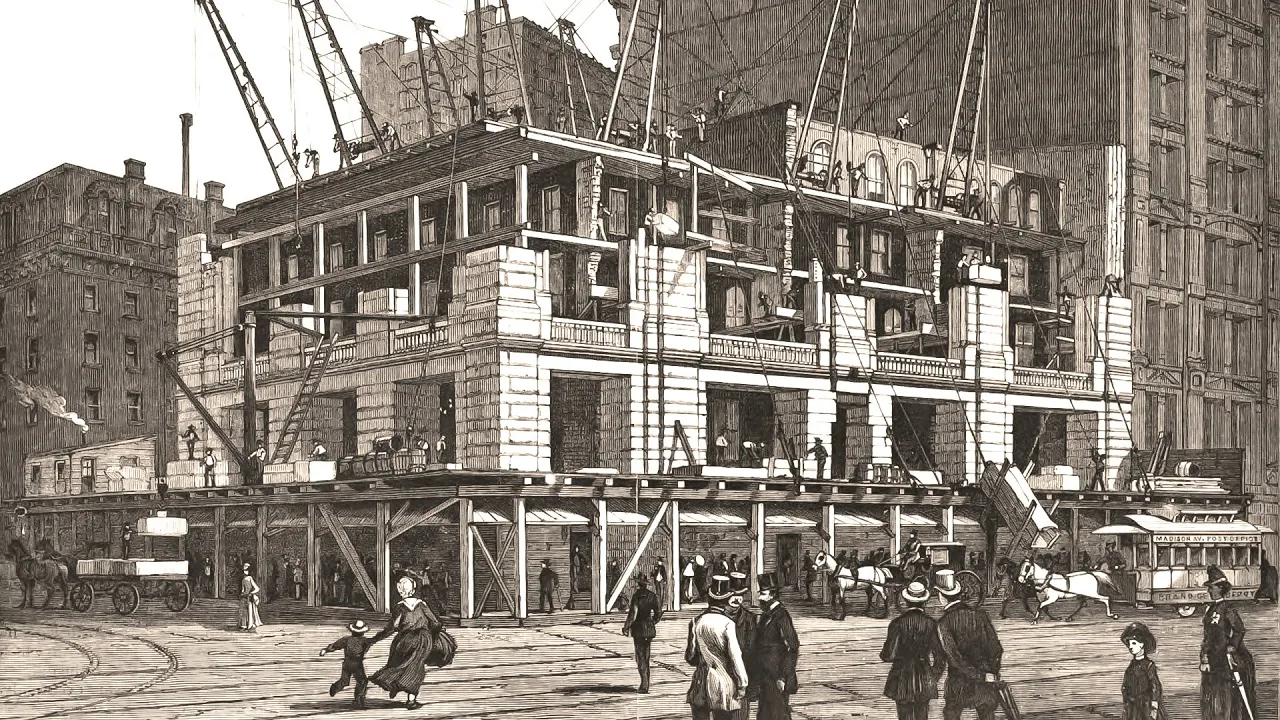





















SoHo NYC's distinctive cast iron architecture emerged in the 1860s-1870s as an innovative building material that enabled rapid, cost-effective construction of commercial buildings with elaborate stone-mimicking details; however, cast iron fell out of favor after the 1871 Chicago fires exposed its vulnerability to high temperatures, leading to its transition from structural material to decorative element, and ultimately inspiring contemporary architects to reinterpret its language using modern materials like glass.
SoHo Cast Iron District: Architectural Walking Tour NYC
Added:The Industrial Revolution's impact on building materials, specifically the transition from traditional masonry to structural metals in the 19th century.
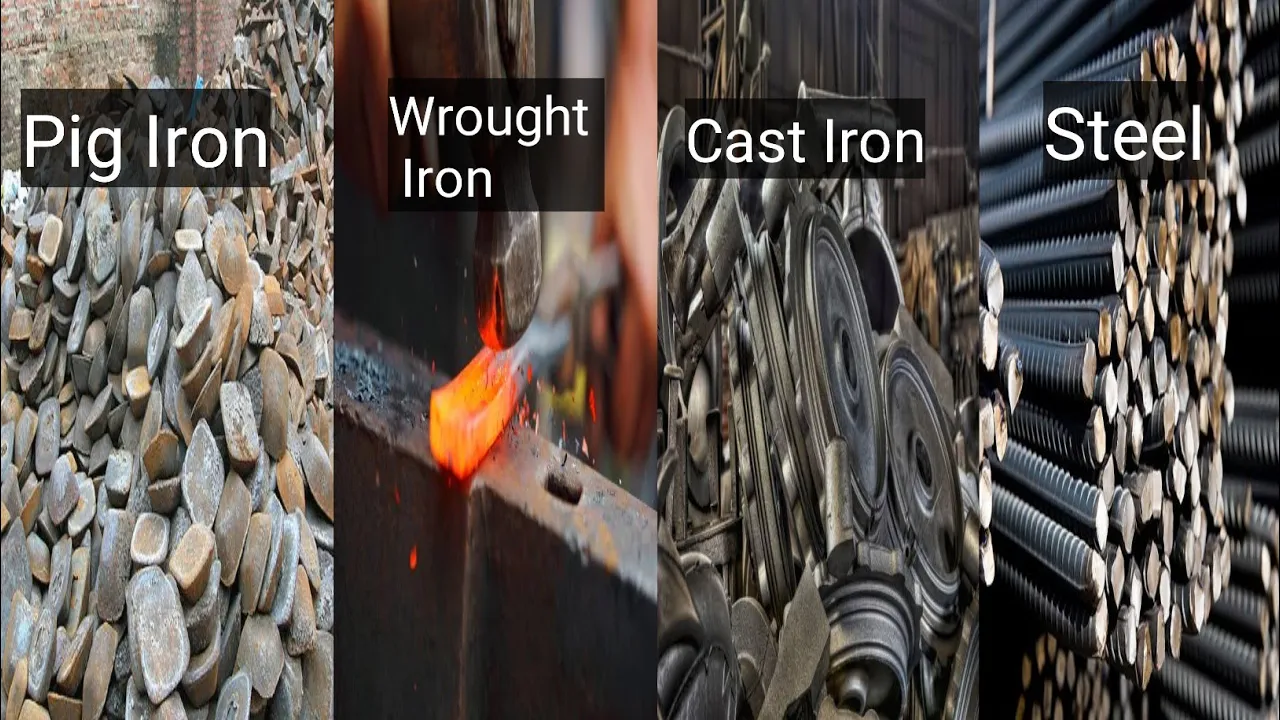
The metallurgical differences between cast iron, wrought iron, and steel, including their respective strengths in tension and compression.
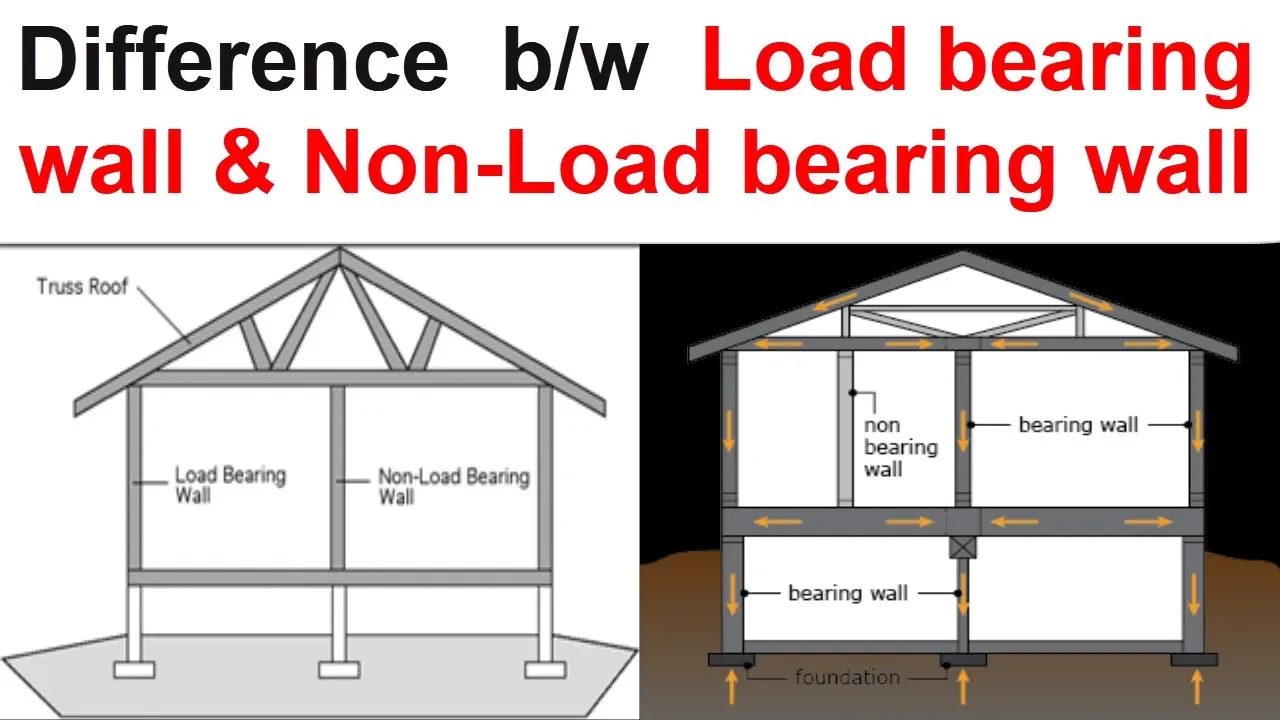
Basic architectural terminology, particularly concepts related to building facades, ornamentation, and load-bearing vs. non-load-bearing walls.
The historical context of 19th-century Manhattan's rapid commercial expansion and the spatial organization of its early manufacturing districts.
The technological transition from cast-iron framing to steel-frame skyscraper construction, which enabled the development of the modern high-rise.
The history of urban preservation and landmark zoning laws, specifically focusing on how community activism saved SoHo from urban renewal highway projects in the mid-20th century.
The concept of adaptive reuse in architecture, studying how SoHo's industrial warehouses evolved into artist lofts and high-end retail spaces.
The technical challenges and engineering methods involved in the conservation and restoration of historic metal facades.
390.5K views8.5Klikes13:20Original Release: 2023-03-16
- I'm Nick Potts.
I'm an architect.
Today we are in SoHo's-Cast Iron District, and we're going to be doing an architectural welcome tour of the neighborhood.
[upbeat music] So the word SoHo, to describe this neighborhood, is actually a fairly recent invention from the 1960s, where the real estate industry was looking to rebrand this neighborhood, to describe an area that's south of Houston Street, to create a new identity for as a luxury, residential neighborhood.
Before that, it was, actually, a much more industrial neighborhood.
And what you see here, these cast iron buildings, are really the result of an exploration of a new building type.
SoHo has the largest concentration of cast iron buildings, really, in the world.
A lot of that is the result of the rapid industrialization that happened here in the 1860s and the 1870s, and also the fact that the material, and these cast iron buildings were invented and fabricated just several blocks further south, in what's currently Tribeca.
[upbeat music] So behind me is the Constable Store, at the corner of Mercer and Howard Streets.
It's a very early cast iron building.
Cast iron became popular because it could, very cheaply and efficiently, replicate stone.
And so what you see in the detailing of the podium of the Constable Store, is really iron imitating stone.
And on the corner you can see, right at the lintel level, this kind of bumpy, warmy texture, which in the Renaissance, it would've been a carved stone.
It's called vermiculate.
It's almost meant to imitate wood.
This has been eaten away by worm.
So here we have something that interpreted wood, reinterpreted in iron.
With cast iron, you make the mold once, and then you can kind of quickly replicate and create multiple pieces.
So for a commercial building like this, which was not an expensive building, but it needed to communicate luxury and the stone carving.
And so you could do this out of iron, and do it cheaply, and make 30 of them, as opposed to making one.
And what do you see on the Constable Store, is the camp of it being treated as a detail.
The cast iron is really the first floor of the building, where it was shop windows.
This building is also a new building type.
It was a dry goods emporium or an apartment store, which really didn't have Houston as a building type.
And the architects felt that they had some freedom to be inventive.
What's the proper language for a department store?
The top parts of the building with these segmented arches, are more French, the lower floor with the full arches, are more Italian, and then the base of the building is almost more classical, pulling motifs from palaces and temples, and assembling them almost at random, as a piece of cut and paste.
[upbeat music] So behind me is 488 Broadway, also known as the Haughwout's Building, which is named after the original occupant of the building.
It was a department store.
The building is really one of the most important cast iron buildings in this district, if not all of New York.
If we were talking about whether cast iron is a detail or a whole building, here's an entire building.
And it looks superficially like a Renaissance Plato.
It's almost a dead ringer in the window bay for the Marciana Library in Venice, obviously, at a very different scale and a very different context.
And it's kind of a great exhibit of the struggle of these buildings to find an appropriate language.
It looks like unserviced building, but really, this building it's all about technology, and embracing newness, and fabrication, and manufacturing.
So cast iron, in a building of this scale, it was really a modular building type.
Each window bay, each component, would've been made in a factory offsite, and assembled offsite, and then just stuck on the side of the building like a curtain wall building or a skyscraper is today.
So it's really a very modern, contemporary way of building.
The components themselves would've been designed by an architect, but the building itself, really, isn't the kind of thing that an architect would design.
So this struggle between history and technology, is really at the heart of the 19th century, and at the heart of a building like this.
The reason why Venice was used here, obviously, the buildings that it was based on were built out of stone, but they had a huge amount of glass.
This was before fluorescent light, this is before air conditioning, this is before any sort of the building technologies that we use to make our buildings comfortable.
So having huge windows, which, to cast iron, because it can be built very skinny, lets you do, but also means that there's a lot of light inside the building.
This was a place for work, and it was a place for selling wear.
So being able to see the product inside the building without being surrounded by heavy stone walls, was a huge benefit.
[upbeat music] Now we're standing in front of 502 to 504 Broadway, from 1860.
Unlike the Haughwout's Building, this building really doesn't have an historic style.
In fact, full disclosure, is actually not a cast iron building, it's a stone building.
But it's appropriating a language that was developed in cast iron buildings, several years earlier, just a few blocks further south.
That's what people call the sperm-candle style, and that's really meant to describe the columns on the second and third floor, these very slender columns that kind of end in a flame.
People thought it looked like the sperm whale candles that were used to light buildings at the time.
And this was a style that was developed a few years earlier on White Street.
There are quite a few examples.
And it was a purely cast iron sort of expression.
So what we have here is a stone building mimicking a cast iron style that emerged due to the technology and the thinness of cast iron, which is ironic, concerning that cast iron, originally, was developed as a building material because it could mimic stone.
So because the labor of having a stone mason be on site is so much more than what can be produced in a factory, there's an inventiveness to the detail, and a simplification, and a reduction ornateness, compared with what you could do in cast iron.
What you can see is both an inventiveness, because they couldn't afford to do full Corinthian capitals.
The capitals of the columns are pretty flat, and almost two-dimensional.
And the same thing with the corners.
It's just this simple profile, almost as if it's been extruded, that repeats across the entire length of the corners, as opposed to something that could be cast, like an egg-and-dart molding, which would be repeated, and would be much more expensive to have someone carve.
[upbeat music] So behind me is 478 Broadway.
And if a lot of the cast iron buildings in SoHo, were designed without architects, this is really one of the few of that period, that was designed by an architect.
So the architect of this, Richard Morris Hunt, studied in Paris.
He was actually the first American architect to be trained at the Ecole des Beaux-Arts, which was the major architecture school at the time.
He was really trying to push and define the language for this new building type, taking the material of cast iron and exploiting its potential.
The way that you work with metal is, it can be melted, it can be stretched, it can be pulled and made much taller and skinnier, than what you could do in stone.
And what he's doing here with these pilasters and columns, is exploiting the skinniness and the potential of the material, to be thin and lightweight in a way that stone, which would've been the building material you would've used before that, can never do.
He was exploiting the decorative potential of the material, and the castings that you can do in a molded material, and created these perforated decorative elements over the tops of the windows.
One other interesting thing about this building, is it brings up a whole conversation about paint in a proper stone building, which would've preceded this, the idea of paint just wasn't an element.
Cast iron, obviously, unexposed, it'll rust.
And the whole idea of, you need to take the material that the building is made of and put a coating over it to protect it, brings up, really, a whole set of issues that really hadn't been thought of in proper architecture before.
And this building, originally, would've been painted out in a polychrome, which is multiple colors, to call out different pieces of the building, in blues and reds.
And so this was a moment in architecture where there's a lot of maximalism, and the paint scheme would've been something that the architect would've explored as part of the building.
It's also fairly late in the cast iron game.
Cast iron was really only popular for about 20 years, late 1850s until the 1870s, before it fell out a favor.
Because it's taller, and skinnier, and more stretched, it's kind of taking its material to the other degree.
[upbeat music] All right, right now we're outside of 513 to 519 Broadway.
This is a very late building, and it's actually the kind of building that happened after cast iron had fallen out of favor.
Cast iron was originally marketed as something that was fireproof.
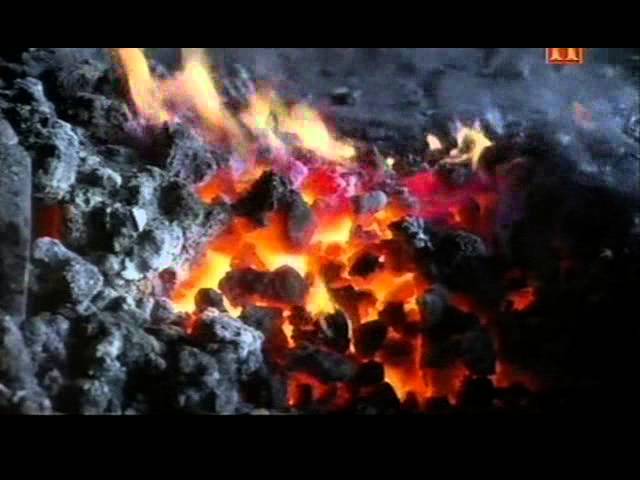
There were several huge fires in 1871 in Chicago, and Boston had really brought that into question, and people realized that iron had a very high temperature, would buckle and melt.
So the whole fireproofing, build your whole building out of cast iron, our fireproofness kind of fell out a favor, and you can see a reemergence of masonry which is fireproofed and can protect metals, which don't perform so well in heat, as we found out.
If cast iron started as a detail, became a building, here it's kind of going back into the shadows, and going back to being a detail.
That said, if you look at the components, they're the same sort of cast iron columns, the architect design components that would've been used on a whole cast iron building.
But here they inserted in a masonry frame, and the style of the building, because of that, is much more eclectic, and it's a Queen Anne building, really.
So Queen Anne style, really, it's a catch-all for a lot of late 19th century exploration.
It's not really historically proper, aside from Corinthian columns, but they're not in a proper order.
It's just an eclectic, almost kind of kitchen soup sort of style.
If you look at the polychrome masonry, the use of terracotta, kind of the mixture of renaissance forms, and more arts and crafts shapes.
Everything is still manufactured.
The terracotta panels that you see are cast in a mold, which is a... There's not someone out carving stone, it still it's a machine made product, but bring back masonry as part of the language.
So cast iron became less and less relevant as buildings became more mature.
I mean, steel, when it became popular, kind of took over cast iron because it's more lightweight, it's more replicable, it's less brittle.
Now if you're doing a steel building, it has to be fireproof, because we've realized that you can't build a metal building without fireproofing the metal.
So whenever steel is used, you never actually see it.
It's always hidden behind a shroud of other elements.
A lot of that originally started with wrapping cast iron in terracotta.
So this building has both elements of what would actually become a more kind of hidden technical sort of system.
[upbeat music] Right now we're outside of 40 Bond, in NoHo.
So even though we're outside of SoHo proper, this is a really great example of a more contemporary building, that takes a lot of the language that was developed just a few blocks further south, and reinterprets it in fully contemporary materials.
So if cast iron was really the experimental material in the middle of the 19th century, tell you that material is really glass.
Here there's a lot of different glass.
You have the plate glass of the windows, and frame inter on the windows are a slump glass.
So it's been heated and molded on a form, to get that curved shaped.
And here, Herzog & de Meuron, who designed this building, used glass in a lot of the same ways that cast iron was being experimented with and played with here.
If we think about the cast iron columns, and those punched openings, and the depth of the facades, SoHo also shows up here, in that, it's the repetition of elements.
If you look across the building, you'll see the windows are different widths, but the pieces framing them are all the same component.
It's exactly the same shape repeated, over, and over, and over.
So they only need to make the mold once, and repeat it across the building.
It's really a very direct sort of relationship to the cast iron columns of polyesters in SoHo.
You also notice the base of the building, looks like cast metals.
So here it's a cast aluminum, but it's looking at this whole casting process and doing something decorative with it.
Here it's a graffiti motif.
So thinking about New York in the '80s and '90s, and the whole language of street art and tagging, here the ornament in the cast metal isn't classical, but it's thrifting on contemporary street art.
[upbeat music] So behind me is the Little Singer Building.
This was designed by Ernest Flagg, in 1903.
He was also the architect of the other Singer Building, down on Broadway, which, at one time, was the tallest building in the world.
This is long after cast iron has fallen of favor and become decoration again.
But what's really fascinating here, is how the materials kind of become purely decorative.
If you look at these filigrees and these arches, and the way that it's being really exploited to all of its sculptural, and lightweight, and perforated potential.
So notably, this building is the Singer Building, so after the Singer Sewing Machine Company.
If you think about the base of the iconic Singer Sewing Machine, there's cast iron pedal and base.
Here, though the building is wrought iron, it's using the material, and using some of the language of the filigree and the base of the product, to advertise the product through the architecture of the building.
So there's some affinity between the other cast iron that's used on this building, and the product that was sold and manufactured in this building.
So this is the closest thing to an Art Nouveau building that we see in the cast iron language.
And you can see components of a little bit of everything.
There's the terracotta that was introduced much later.
There are cast iron elements with the columns, in between the windows.
There's also wrought iron, which is the same material, but with a different sort of fabrication process, as the filigree at the balconies, and the arch at the top of the building.
If you look at a lot of the iconic Art Nouveau projects that were going on around the same time of this building, things like what Victor Horta was doing in Belgium, or Hector Guimard, in Paris, it's all about exploiting the tantalite character of the iron, and really stretching and curving, and particularly with wrought iron, the way that it's hammered out, and it creates these curves.
So you see a lot of that in this building.
The wrought iron, particular, wants to be curved.
The cast iron wants to be stamped, or very tall and slender.
So the Art Nouveau style is really taking the language of metal to its ultimate expression.
This part of Broadway, when it was first developed, it was a shopping street.
There were department stores.
Haughwout was a department store that sold things like crystal and chandeliers.
When this became primarily manufacturing, in the middle of the 20th century, that all went away.
But you'll notice, right now it's almost like a mall.
Retail has come back in, people have rediscovered these buildings.
And people like shopping among all these ornate buildings, and so it's been a very natural thing to bring retail back to the first floor of these buildings, for the same reasons they were built.
The light is great, the ceilings are very high, the sidewalks are wide.
It's really the perfect kind of environment for mass retail.
Up Next
23:27
Antiques Roadshow: Rare Rings Appraisal Guide (2000-2009) | BBC
@BBCAntiquesRoadshow
88.1K views•2024-07-19

12:54
Triumph of Orthodoxy Icon: Byzantine Art & History Explained
@BenCallan
2.1K views•2024-08-06

9:49
FastAPI vs Flask vs Django: Choosing the Right Python Web Framework
@TechWithTim
302.5K views•2024-05-26

1:42
Game of Thrones Opening Credits: A Cinematic Analysis
@gameofthrones
46.3M views•2011-04-18
Related Study Plans & Knowledge Roadmaps
Structured learning paths in General & Interdisciplinary Studies
general-studies
Elevator Engineering: History, Physics & Cities
01From Hoists to Safety Brakes: The Dawn of Vertical Lift
02Hydraulic vs. Traction: The Engineering Physics of Elevators
03Modern Speed, Safety, and Algorithms
+ 2 more learning modules
12h5 modules
Explore Roadmap
general-studies
Rubber: Material Science, History & Geopolitics
01Origins of Natural Rubber & Mesoamerican History
02The Chemistry of Natural Rubber & Vulcanization
03The Geopolitics of the Rubber Boom & Colonization
+ 2 more learning modules
12h5 modules
Explore Roadmap
general-studies
Containerization: Evolution, Logistics & Trade
01Ancient Trade & Bulk Cargo: Amphorae to Barrels
02The Industrial Revolution & Cardboard Packaging
03The Containerization Revolution: Malcom McLean
+ 2 more learning modules
12h5 modules
Explore Roadmap
general-studies
Textile Tech: Evolution, Labor & Global Impact
01Pre-Industrial Textiles: Handloom & Cottage Industry
02Mechanization: The Spinning Jenny to the Power Loom
03The Factory System & Global Labor Transformation
+ 2 more learning modules
10h5 modules
Explore Roadmap