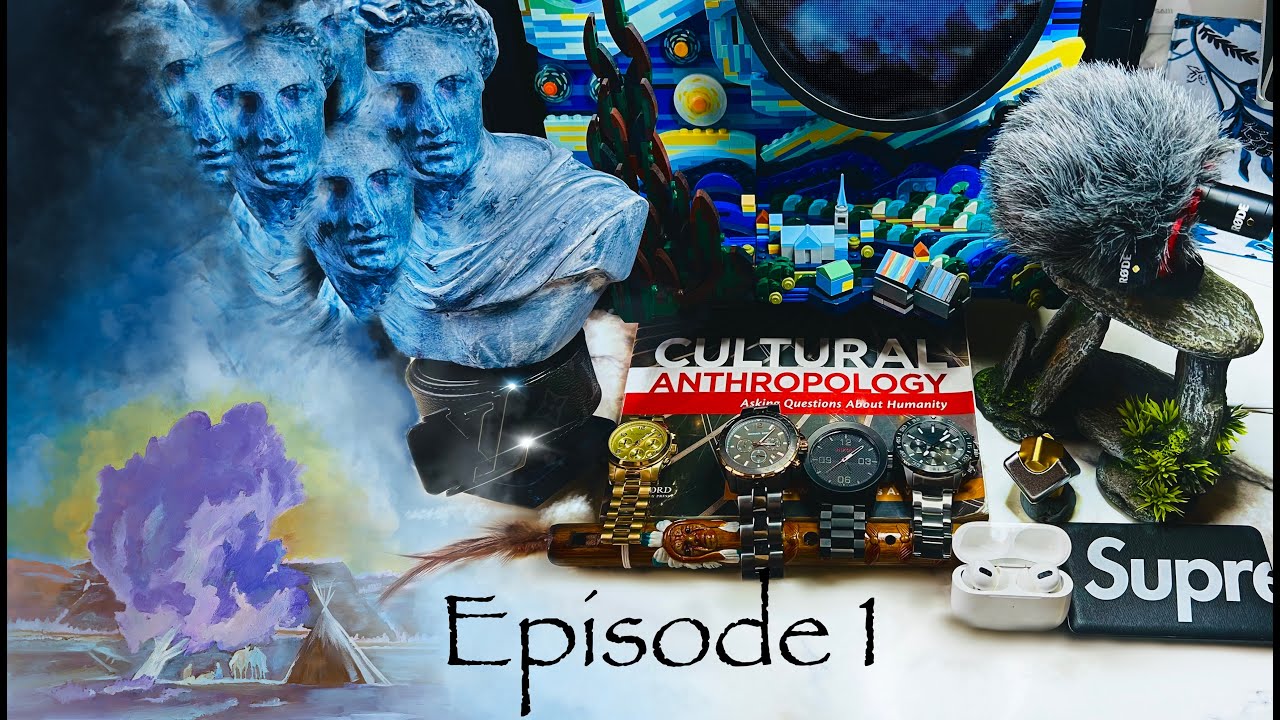


















Material culture refers to the physical objects and architecture that surround people, encompassing their usage, consumption, creation, and trade, as well as the behaviors, norms, and rituals they create or participate in; it is a core concept in archaeology (a subfield of anthropology) that shifted from mere quantitative artifact counting in the 1960s to recognizing that objects possess inherent power and meaning within societies, existing in opposition to symbolic culture (non-material traditions and stories).
Material Culture in Anthropology: Definition, Theory, and Archaeology
Added:A foundational understanding of the four-field approach to anthropology, particularly the relationship between cultural anthropology and archaeology.
The basic anthropological definition of 'culture' as a system of shared, learned, and symbolic human behaviors and beliefs.
Basic familiarity with archaeological terminology, such as artifacts, ecofacts, features, and site formation processes.
An in-depth study of Processual (New Archaeology) and Post-Processual theoretical frameworks regarding artifact interpretation.
The advanced social theory of 'materiality' and 'object agency'—exploring how physical objects actively shape human social systems and identity.
Ethnoarchaeology and experimental archaeology: using observations of contemporary societies and replication of ancient technologies to interpret past material remains.
The ethical, legal, and political aspects of material culture, including Cultural Resource Management (CRM), museum curation, and repatriation acts like NAGPRA.
13.2K views398likes5:54Original Release: 2021-11-07
hello everyone welcome back to my channel or if you're new here hello my name is olivia brown and i am currently a fourth year undergraduate student at ucla studying anthropology normally on this channel you guys know i talk all things anthropology but it's been brought to my attention that i've been neglecting all my archaeologists so if that's you i apologize and obviously if you guys saw the title of this video which you did we're gonna be talking about material culture today so without further ado let's just get into it all right as usual we are going to be starting off with the technical definition which i have written down right here on my laptop so i'll read that to you and then we'll break it down and i'll give you everything that you need to know so material culture is the aspect of social reality grounded in the objects and architecture that surround people it includes the usage consumption creation and trade of objects as well as the behaviors norms and rituals that the objects create or take part in now there's a lot happening in this definition it's quite long and quite meaty but i'm going to tell you exactly what you need to know and what you should remember about material culture right here right now now material culture is strongly associated with anthropology as a field and more specifically associated with archaeology for anyone who doesn't know archaeology is actually a subfield of anthropology that is the relationship between those two things so if you're thinking about material culture it is directly related to archaeology and anthropology now let's start with the term material cultural all right you guys know what a culture is it has a lot to do with the social organization the political organization the economic organization of a particular group of people or a community now material culture is looking at the physical representation of these things so it's literally an object that you find and understanding what exactly not only the function of that object is but also the meaning of that object in a particular culture i think it's really easy to assume that let's say you found an arrowhead right what was the function of that arrowhead that's like the first thing that you're going to think of but you also have to think about the meaning that that arrowhead had for the people who used it so maybe certain arrowheads are actually associated with higher status or lower status i mean there's so many things and so many different ways that you could take this example that has more to do with the physical function of that arrowhead now let's back up a little bit when you think about archaeology or when you think about anthropology i think it's really easy to assume that there's someone out there in the field with their shovel digging things up and then there's this quantitative tally of exactly what's happening how many bowls you found how many pots you found how many plates you found and the list goes on and then eventually all these items get transferred to a museum or elsewhere and that's where inquiry stops right but in reality that's not actually a good strategy if you're just thinking about how many items you found or what items you found you're not actually gaining a lot about the function and the purpose and the meaning of those items in a given culture and that's really where material culture and the concepts that defend material culture really come to play now the reason that these items get transferred to a museum is because not only do they mean something to us but they mean something to the people who used them and i think that's a really important thing to remember as you move forward with this term and i really do want to note that throughout the history of archaeology the significance of the items that were found was highly neglected it was very much like i said a quantitative tally of what exactly is being found however archaeology actually underwent this huge shift in the 1960s where it went from this field of archaeology to a field of new archaeology and if you guys want to hear about new archaeology in another video let me know but basically just a lot of the concepts and assumptions and methods that people were using underwent a lot of change now as a modern field archaeologists and anthropologists really acknowledge that objects actually live lives of their own rather than existing in this objective space and basically what i mean by this is objects have a lot of power in a society if you are wearing a crown for example that probably means that you hold a lot of power and the object that you're wearing actually represents that if you have a bunch of hundred dollar bills in your pocket then you're probably doing pretty well and that is an object the biggest thing here is every object has a story there's a who of what a where a when and a why who created this object why was this object created how does this artifact impact the people who used it and i just think it's incredibly important to understand an object and the meaning and its function and its purpose now the final thing that i want to leave you guys with is that material culture actually exists in opposition to something called symbolic culture and symbolic culture is the non-material culture that we often think of so this is traditions that get passed down over many generations or stories that get passed down over many generations anything that you can think of that gets passed down that isn't a physical item is definitely something that probably falls in the realm of symbolic culture all this is to say items have a lot of power whether this is your iphone or this is your water bottle or this is your backpack i mean whatever it is each of these objects does something for you and you do something for that object and at the end of the day anthropologists and archaeologists are looking to understand the meaning that gets conveyed through items all around the world both presently and historically so i think that is actually all i have to say today about material culture if you guys have any questions about it this was definitely a basic definition i know i didn't get into the nitty gritty uh leave all your questions in the comment section down below and i will of course have all my sources linked in the description box down below and yes i think that is everything i hope you guys are having a fantastic sunday and i will see you all next week alright you guys bye [Music] you
Up Next
14:24
Pitt Rivers Museum Stories with Josie Long: Hidden Objects and Colonial Legacies
@ArtFundUK
75.2K views•2021-02-25

38:41
Astrobiology Through an Anthropological Lens: Field Insights
@georgiatechastrobiology
128 views•2021-04-14

8:17
Anthropology Research Methods: Participant Observation & Interviews
@AliviaBrown
14K views•2022-02-06
10:38
Psychology of Internet Trolling and Pranks Explained
@AzzyLand
10.7M views•2017-12-20
Related Study Plans & Knowledge Roadmaps
Structured learning paths in Anthropology
anthropology
Space Anthropology: Analogs, Culture & Habitats
01Foundations of Space Anthropology & Cosmic Imaginaries
02Extreme Isolation & Micro-Societies in Orbit
03Space Analog Habitats & Earth-Based Simulations
+ 2 more learning modules
15h5 modules
Explore Roadmap
anthropology
Legal Anthropology: Customary Law & Pluralism
01Foundations of Legal Anthropology and Social Justice
02Legal Pluralism: Coexisting Legal Systems
03Customary Law and Indigenous Dispute Resolution
+ 2 more learning modules
15h5 modules
Explore Roadmap
anthropology
Global Tourism: Gaze, Authenticity & Heritage
01Introduction to the Sociology of Tourism
02The 'Tourist Gaze' (John Urry)
03Staged Authenticity in Tourism
+ 3 more learning modules
14h6 modules
Explore Roadmap
anthropology
Modern Kinship (ART, Adoption & Chosen Family)
01Foundations of Kinship and Family
02Assisted Reproductive Technologies (ART) & Relatedness
03Transnational Adoption and Global Kinship
+ 2 more learning modules
12h5 modules
Explore Roadmap