
















The Pitt Rivers Museum in Oxford is undergoing a transformative shift in how it presents its global collection, moving from Eurocentric, colonial narratives toward community-led interpretation that honors indigenous perspectives and the living significance of cultural objects. Staff and volunteers share stories about objects like a Tahitian warner's costume, Ainu salmon skin boots, and witch bottles, revealing how these items carry complex histories involving colonial complicity, indigenous knowledge systems, and the need for respectful dialogue between museums and source communities. The museum is actively working to amplify voices of knowledge keepers, recognizing that objects from diverse cultures require different approaches to preservation, display, and interpretation that go beyond traditional Western museum practices.
Pitt Rivers Museum Stories with Josie Long: Hidden Objects and Colonial Legacies
Added:[Music] hello i'm josie lum writer stand up comedian and museum enthusiast we're currently hovering 12 feet above the ground at the pit rivers museum in oxford it's a truly unique place which brings together an unfathomably large number of objects from around the world everyone with a story to tell and that's what we're here to discover through the staff and volunteers who make this place tick day in day out as they share their favorite objects personal picks and hidden gems so join us as we delve deep into this incredible collection and explore stories from the pitt rivers museum it's like no other museum that you will ever have been to there's like layers of objects so many layers it's like stratigraphy of objects and this is where a lot of the hidden gems have come out because they've been buried underneath other objects for so long [Music] i'm ashley cutie and i'm a research fellow at the pit rivers museum this is a salt cellar and it is carved from elephant ivory it's one of these objects that i do feel people miss in the case so because it's at you know knee height i thought it was a great object to highlight i love the idea that there's like different museums there's the child height museum and there's the adult hype museum and then there's the rooting through the drawers museum and there's just so many different ways to interact with it this would have been a tooth of an elephant for 70 years or so and then it gets carved at the end of the elephant's life into this masterful work in many ways for me it's much more interesting to take an object like this and talk to children about endangered species and and talk to them about how they're kind of snapshots of a very specific relationship of these communities with elephant ivory that's very different than what we see later on when elephant ivory gets really exploited it's more controversial now as a material and rightly so obviously absolutely i know that part of your work is about researching the elephants themselves how do you go about that from an object like this so all of the molecules the biomolecules are essentially preserved in this carving because it is a tooth so looking at things like trace elements and dna we can learn about the life of that animal i'm laura from brookhoven and i'm the director of the pit rivers museum when people come into the pit rivers museum you have that sort of overwhelmed feeling which for some people feels like oh wow i can now just sort of go into and rummage around well for other people it makes them really uncomfortable especially for indigenous communities many of them actually they will come in and they say okay i need to leave i can't be here it takes my breath away i can't breathe and so i think that is where we're sort of trying to be more conscious of how the museum has different effects on different people wow that's so interesting because i'm somebody for whom it's just such a thrill and it's because it works for me and of course this is how lots of mindsets work because it works for me i was like well it's a good thing then isn't it universally but no of course one of the reasons i love the pit river so much is there's so many quirks in it of humanity and belief and things that you feel also have a little bit of fun to them mischievousness as well i'd like to sort of now talk about something a little bit different which is a bottle that's got a witch in it i'm here with mara gold who is a research assistant as part of the beyond the binary project so the old lady living in a village near hove sussex by whom it was obtained about 1915 remarked they do say there be a witch in it and if you let him out there'll be a peck of trouble there's this kind of thought that a lot of the people prosecuted for witchcraft were actually part of the lgbtq community my role was to look at the existing collections and see maybe what which objects we could bring lgbtqia stories out of so a lot of the other witch bottles that exist were to ward away witches and witchcraft and often they were supposedly filled with the the urine of the victims and that supposedly would cause harm to the witch until she lifted the curse so one i find it interesting that a lot of these anti-witch measures were actually spells and kind of witchy things themselves so i find that quite ironic but secondly this bottle is different in that it supposedly contained the actual ghost of a witch in england the tradition was that you know it was mainly these women that were being kind of accused of being witches so it's interesting that this one contains um a male witch so you know maybe he's a gay witch who knows you could see the pit rivers museum as a place that really has a world of stories within it but right now it's very much sort of through the euro-centric nail patriarchal i one could say and i think that has a lot to do with you know what the history is of the museum you'll see in the labels written on the objects but also in the stories that were collected with the object was mostly the people who went out to collect them they felt they were entitled to speak about them it's one of the things that we're trying to undo today [Music] my name is rebecca and i'm doing an 18-month cloth workers funded internship at the pete rivers museum so i'm looking at a collection of objects that we hold in drawers in the court space with all the cabinets my project is to redisplay and curate and sort of reinterpret those spaces so we opened up this drawer and we kind of looked at it and went is it is it one of those fish and we're like it's a magic fish if you think back to christmas day and you pull the cracker and like a red cellophane fish would fall out of it so it's basically a very old version of one of those so the ones that tell you if you're fickle or you're guilty they used to scare me lots when i was small it wasn't being supported in the best way it was laid on like this like very soft warding so i was like oh we're gonna have to do something about that because it could move around well yeah that's it's raison d'etre yeah magic fish which undergoes contortions and the influence of warmth and moisture of the hand used by dona's father circa 1818 to detect culprits among his children through its behavior on the palm of the hand they greatly dreaded its power of detecting the guilty done firmly in feisha and it was mrs d o hill 1898. i mean what a label firstly this completely blows my mind because it's not the sort of object that i would imagine to be something that was around 200 years ago it seemed modern and frivolous there's quite a long sort of deeply rooted history of folklore in this country it's amazing like so rich this is like a perfect object that sort of captures that it was owned by someone called thomas nelson annandale a well-known scottish surgeon so a man of science and he had this amazing fish it really shocks me that this person was a prominent surgeon and yet what has lasted of them is a little fortune telling fish that they use to terrify their children [Music] i'm speaking with jem odin who is the head of conservation at the pit rivers museum one of my main areas of research is on to pesticide residues on objects as many were sprayed with different types of pesticide in an effort to preserve them you know actually that may be why quite a lot of these objects are still here because they're still toxic to moth they still have mercury and arsenic and ddt residues on them and it's kind of the more recent acquisitions that weren't given those treatments that are more badly affected we check our moss traps once a week and we have them all in a grid around the museum so we can triangulate when off numbers are increasing and work out what's infested so we can freeze it immediately to prevent damage that's heartbreaking it could survive a voyage around the entire world it could survive centuries and wars and then moths go it's a banquet i've never been more angry at moths what is this incredible object this is a tahitian warner's costume i spent probably about three or four hundred hours all together actually stabilizing this costume and making it possible to display it in the way that it's displayed now we're not restorers we're not trying to make these things look like new water would remove the tissue that i've used to repair the bark cloth and it would be back to how it was before i found it and that's also quite important what do we know about the ceremony well we know that the chief mourner was armed with a sword that had shark's teeth he was allowed to kill anyone he came across people were afraid of him they would run away from him so he represented i think this really powerful figure sort of supernatural well exactly yeah i mean you were actually looking at the divine you know you were looking at a god [Music] today we're seeking to bring in communities who are knowledge keepers to bring more meaningful understanding into the museum and what they will say is that these objects for them have life they need to be danced too they need to be given food and water and which obviously are all the things that you know museums and and conservatives will try to keep out i'd not even thought prior to this that the mindset of well look they're in a case they're all very safe you know it's not the same as respecting something in a different culture it's like for so long this museum was hiding in plain sight like the real stories of the objects were all just there and instead it was this person found this in this place aren't they brilliant hi everyone i'm marinka thompson-olla my research associate at the pitt rivers museum and i work on the labeling masters project what are we looking at at the moment a pair of salmon skin boots exactly what they sound like and they're made by the ainu people who are indigenous um people of japan on the label of these you can see that it says purchased in 1900 this is like one of the few times within the like rivers collection that we actually have like in the indigenous terms and you can see here it says uh shepker which literally means boot made out of salmon we are very much kind of tied into a box of interpretation through text right because that's what we privilege in our society right you go to school you learn from books you go to university you learn from more books we have to think of various ways to really you know speak to speak up and speak about these objects so one of the ways is short film and i met a japanese artist and researcher named eko soga and a few years ago she'd done a video on the making of these salmon skin shoes just like for an example of how i think video can even like take you further into these boots is that within it there's this one fly and so there's like a little unexpected thing jolt you out of the museum case and into the actual making and setting of these things and so i grew up in the caribbean and a small island in lucia surrounded by water right so fish a big part of my diet so it was just interesting because it really like put me like back into that like fish market or even any of like the fishermen selling the fish on the side of the road because just fish and flies just go hand in hand that fly although unexpected is familiar and so it just made the whole the whole process familiar to me you know we're a museum that has objects from so many cultures so then why are we trying to talk about these objects in a way that may not even be like conducive or compatible with like their creation in the first place there's so many different ways of being and knowing and how do we unlock those stories for a long time those stories were told from one perspective and i think that is really the challenge that we see for curating the betrayers museum there's this sort of colonial complicity almost in the contemporary of us as museums and that is where when we are entering into those relationships with indigenous communities or people living in diaspora here in the uk or elsewhere it you might need to really sort of be very open and to the fact that there will be a lot of pain in that conversation and that there might be a consequence of that some objects might need to go back yes it's so wonderful to think that with further understanding and as museums themselves evolve that actually they can get better and better by truly connecting with the people behind the things and asking for understanding as opposed to sort of deciding on knowledge you
Up Next
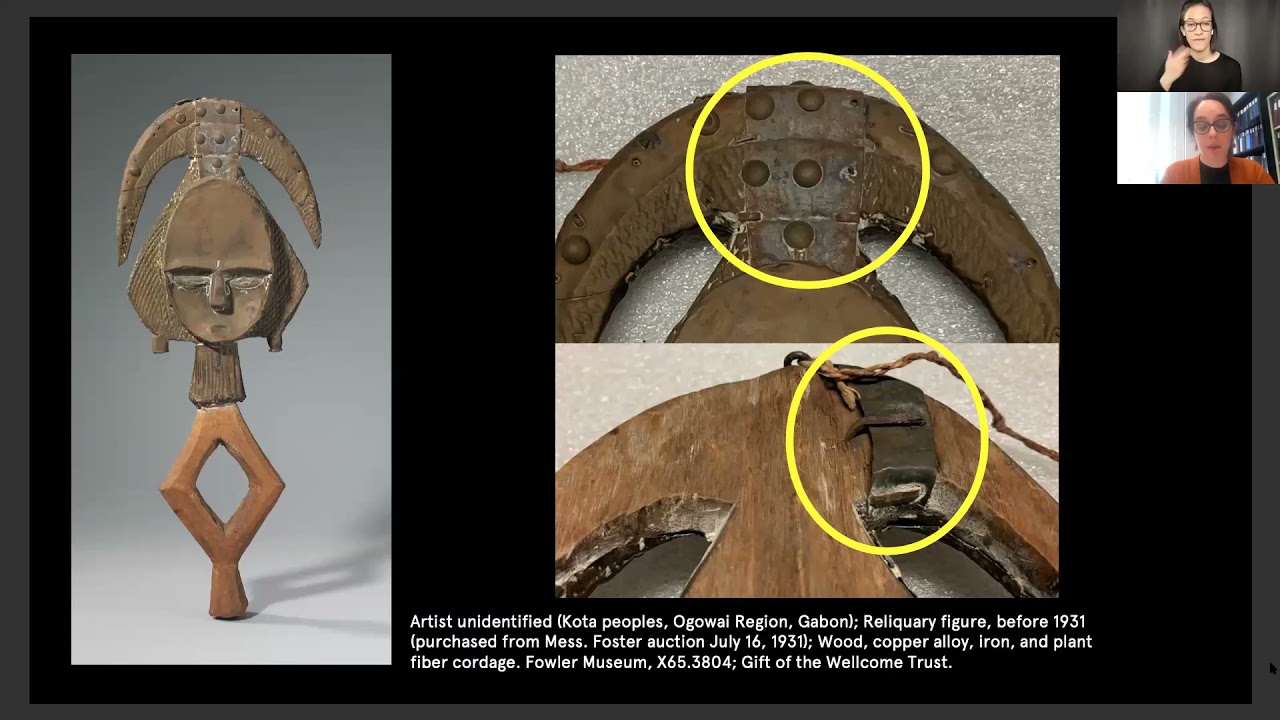
Decolonizing an African Museum: Conservation Strategies in Rwanda & Belgium
@fowler-museum
184 views•2021-05-13
Astrobiology Through an Anthropological Lens: Field Insights
@georgiatechastrobiology
128 views•2021-04-14
Proxemics Explained: The Study of Personal Space
@Vox
536K views•2016-07-05
Psychology of Internet Trolling and Pranks Explained
@AzzyLand
10.7M views•2017-12-20
Related Study Plans & Knowledge Roadmaps
Structured learning paths in Anthropology