














Social media has the potential to unite people for positive change, as demonstrated by the Arab Spring revolution, but it also amplifies human tendencies toward polarization, misinformation, and hostility through echo chambers and instant communication, suggesting that technology alone cannot drive societal progress without intentional design choices that promote civility, thoughtful engagement, and mutual understanding.
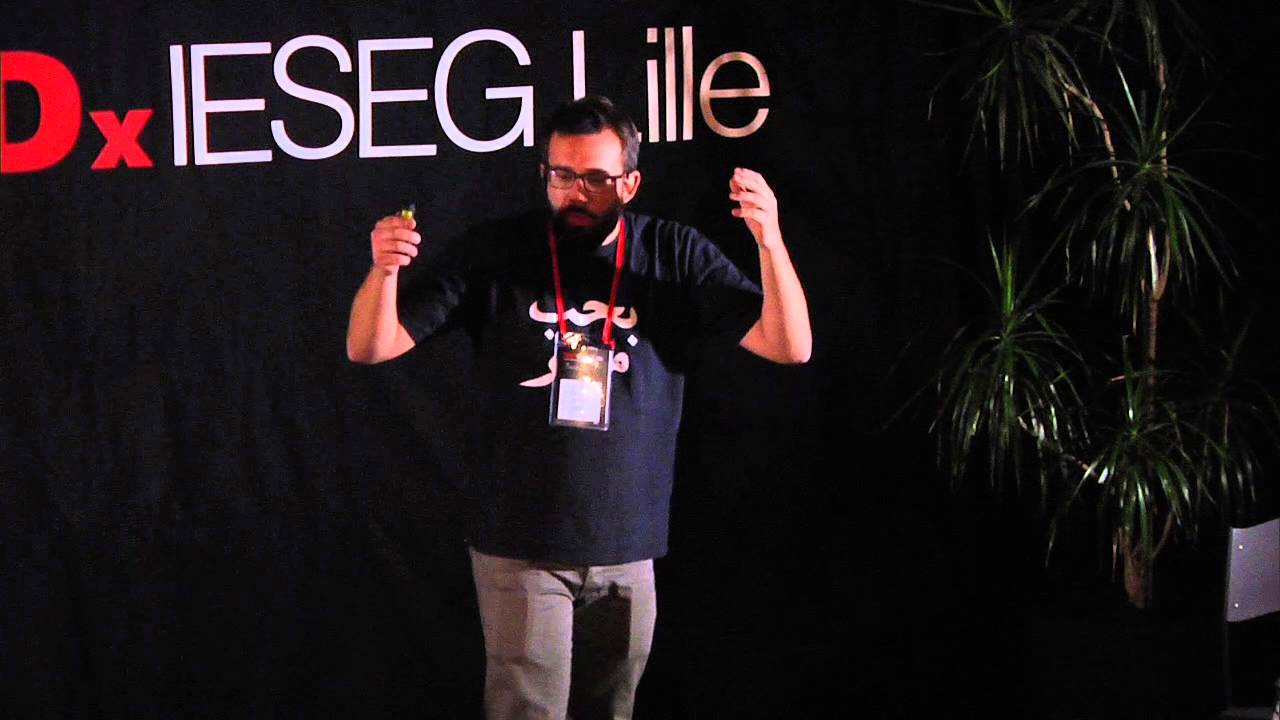
Social Media's Role in Political Change: Wael Ghonim's TED Talk
Added:An overview of the 2011 Arab Spring, particularly the Egyptian Revolution, and how activists initially utilized platforms like Facebook to organize.
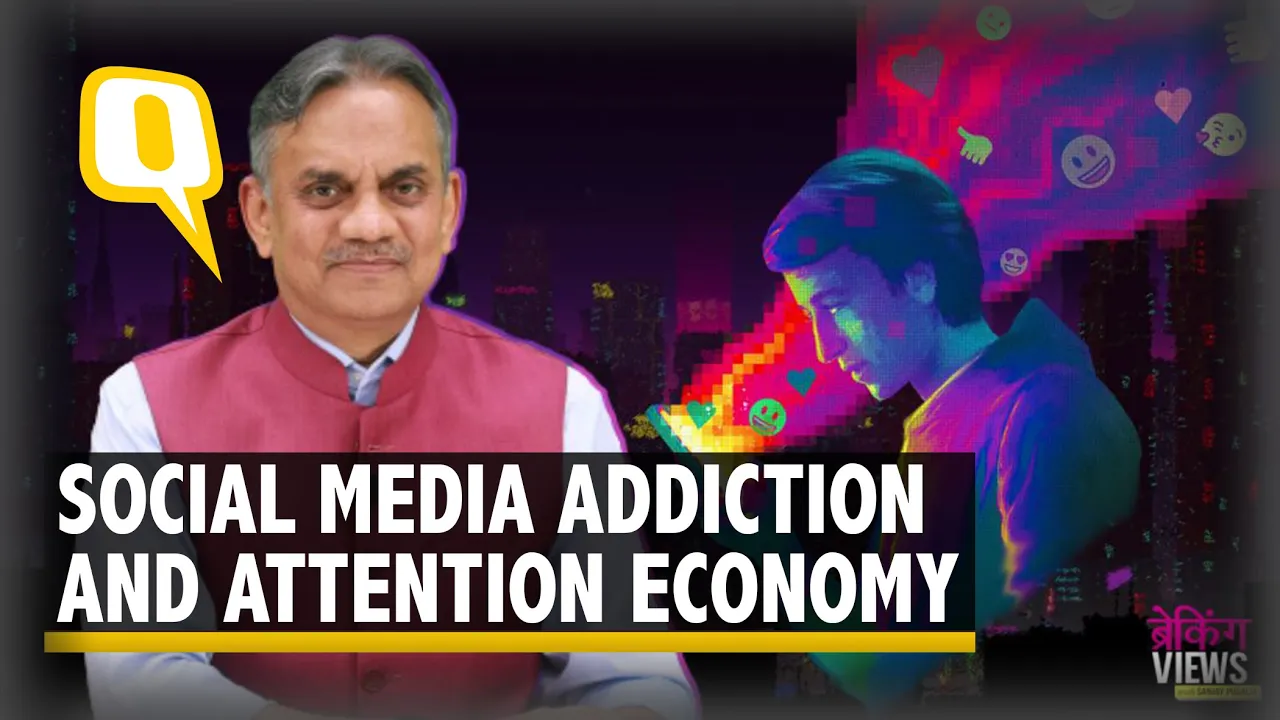
The concept of the 'attention economy' and how social media business models prioritize user engagement over constructive dialogue.
Basic psychological and sociological concepts of online polarization, confirmation bias, and the formation of digital 'echo chambers'.
The difference between mobilization (sparking rapid, short-term protests) and institutionalization (building long-term political structures).
Prosocial design and civic technology: How to engineer digital spaces that incentivize empathy, constructive debate, and consensus-building.
Policy and regulatory frameworks governing internet platforms, such as algorithmic transparency, data privacy, and antitrust laws.
The study of affective polarization and its impact on democratic institutions, electoral processes, and social cohesion.
Alternative, decentralized social network architectures (e.g., the Fediverse, protocol-based networks) and their potential to mitigate corporate platform monopolies.
454.6K views8.4Klikes13:34Original Release: 2016-02-04
I once said, "If you want to liberate a society, all you need is the Internet."
I was wrong.
I said those words back in 2011, when a Facebook page I anonymously created helped spark the Egyptian revolution.
The Arab Spring revealed social media's greatest potential, but it also exposed its greatest shortcomings.
The same tool that united us to topple dictators eventually tore us apart.
I would like to share my own experience in using social media for activism, and talk about some of the challenges I have personally faced and what we could do about them.
In the early 2000s, Arabs were flooding the web.
Thirsty for knowledge, for opportunities, for connecting with the rest of the people around the globe, we escaped our frustrating political realities and lived a virtual, alternative life.
Just like many of them, I was completely apolitical until 2009.
At the time, when I logged into social media, I started seeing more and more Egyptians aspiring for political change in the country.
It felt like I was not alone.
In June 2010, Internet changed my life forever.
While browsing Facebook, I saw a photo, a terrifying photo, of a tortured, dead body of a young Egyptian guy.
His name was Khaled Said.
Khaled was a 29-year-old Alexandrian who was killed by police.
I saw myself in his picture.
I thought, "I could be Khaled."
I could not sleep that night, and I decided to do something.
I anonymously created a Facebook page and called it "We are all Khaled Said."
In just three days, the page had over 100,000 people, fellow Egyptians who shared the same concern.
Whatever was happening had to stop.
I recruited my co-admin, AbdelRahman Mansour.
We worked together for hours and hours.
We were crowdsourcing ideas from the people.
We were engaging them.
We were calling collectively for actions, and sharing news that the regime did not want Egyptians to know.
The page became the most followed page in the Arab world.
It had more fans than established media organizations and even top celebrities.
On January 14, 2011, Ben Ali fled out of Tunisia after mounting protests against his regime.
I saw a spark of hope.
Egyptians on social media were wondering, "If Tunisia did it, why can't we?"
I posted an event on Facebook and called it "A Revolution against Corruption, Injustice and Dictatorship."
I posed a question to the 300,000 users of the page at the time: "Today is the 14th of January.
The 25th of January is Police Day.
It's a national holiday.
If 100,000 of us take to the streets of Cairo, no one is going to stop us.
I wonder if we could do it."
In just a few days, the invitation reached over a million people, and over 100,000 people confirmed attendance.
Social media was crucial for this campaign.
It helped a decentralized movement arise.
It made people realize that they were not alone.
And it made it impossible for the regime to stop it.
At the time, they didn't even understand it.
And on January 25th, Egyptians flooded the streets of Cairo and other cities, calling for change, breaking the barrier of fear and announcing a new era.
Then came the consequences.
A few hours before the regime cut off the Internet and telecommunications, I was walking in a dark street in Cairo, around midnight.
I had just tweeted, "Pray for Egypt.
The government must be planning a massacre tomorrow."
I was hit hard on my head.
I lost my balance and fell down, to find four armed men surrounding me.
One covered my mouth and the others paralyzed me.
I knew I was being kidnapped by state security.
I found myself in a cell, handcuffed, blindfolded.
I was terrified.
So was my family, who started looking for me in hospitals, police stations and even morgues.
After my disappearance, a few of my fellow colleagues who knew I was the admin of the page told the media about my connection with that page, and that I was likely arrested by state security.
My colleagues at Google started a search campaign trying to find me, and the fellow protesters in the square demanded my release.
After 11 days of complete darkness, I was set free.
And three days later, Mubarak was forced to step down.
It was the most inspiring and empowering moment of my life.
It was a time of great hope.
Egyptians lived a utopia for 18 days during the revolution.
They all shared the belief that we could actually live together despite our differences, that Egypt after Mubarak would be for all.
But unfortunately, the post-revolution events were like a punch in the gut.
The euphoria faded, we failed to build consensus, and the political struggle led to intense polarization.
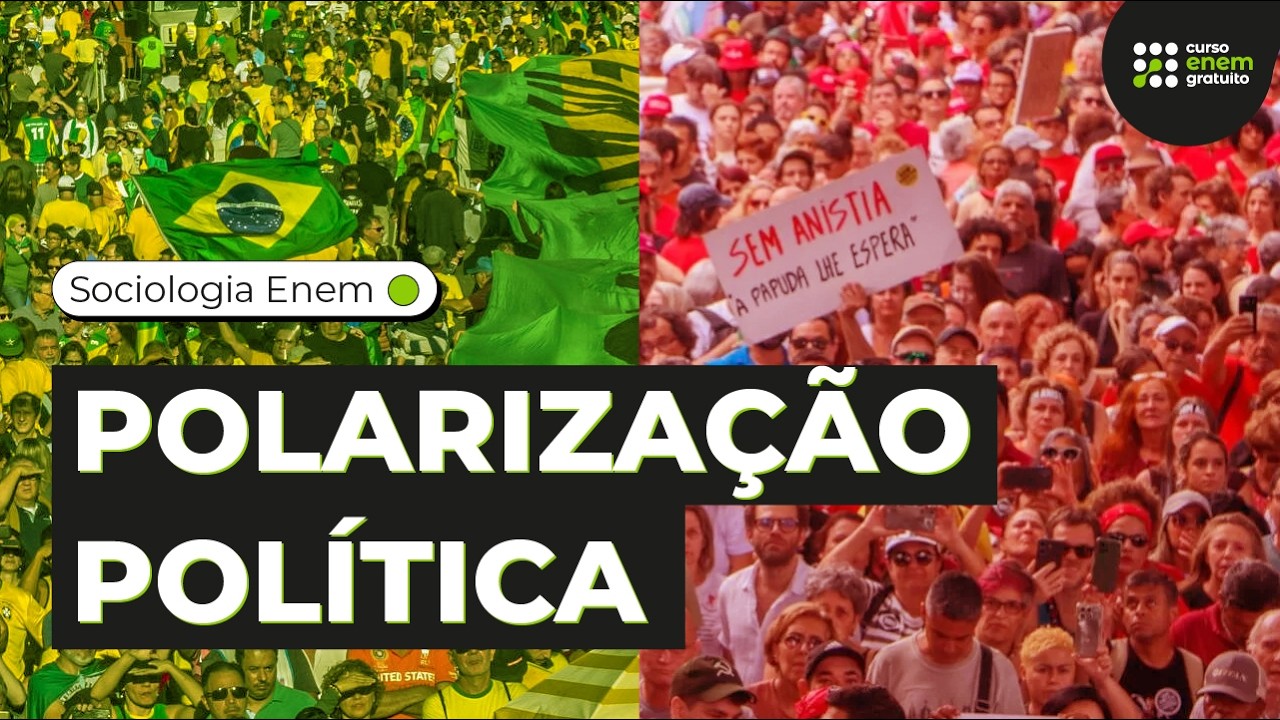
Social media only amplified that state, by facilitating the spread of misinformation, rumors, echo chambers and hate speech.
The environment was purely toxic.
My online world became a battleground filled with trolls, lies, hate speech.
I started to worry about the safety of my family.
But of course, this wasn't just about me.
The polarization reached its peak between the two main powers -- the army supporters and the Islamists.
People in the center, like me, started feeling helpless.
Both groups wanted you to side with them; you were either with them or against them.
And on the 3rd of July 2013, the army ousted Egypt's first democratically elected president, after three days of popular protest that demanded his resignation.
That day I made a very hard decision.
I decided to go silent, completely silent.
It was a moment of defeat.
I stayed silent for more than two years, and I used the time to reflect on everything that happened, trying to understand why did it happen.
It became clear to me that while it's true that polarization is primarily driven by our human behavior, social media shapes this behavior and magnifies its impact.
Say you want to say something that is not based on a fact, pick a fight or ignore someone that you don't like.
These are all natural human impulses, but because of technology, acting on these impulses is only one click away.
In my view, there are five critical challenges facing today's social media.
First, we don't know how to deal with rumors.
Rumors that confirm people's biases are now believed and spread among millions of people.
Second, we create our own echo chambers.
We tend to only communicate with people that we agree with, and thanks to social media, we can mute, un-follow and block everybody else.
Third, online discussions quickly descend into angry mobs.
All of us probably know that.
It's as if we forget that the people behind screens are actually real people and not just avatars.
And fourth, it became really hard to change our opinions.
Because of the speed and brevity of social media, we are forced to jump to conclusions and write sharp opinions in 140 characters about complex world affairs.
And once we do that, it lives forever on the Internet, and we are less motivated to change these views, even when new evidence arises.
Fifth -- and in my point of view, this is the most critical -- today, our social media experiences are designed in a way that favors broadcasting over engagements, posts over discussions, shallow comments over deep conversations.
It's as if we agreed that we are here to talk at each other instead of talking with each other.
I witnessed how these critical challenges contributed to an already polarized Egyptian society, but this is not just about Egypt.
Polarization is on the rise in the whole world.
We need to work hard on figuring out how technology could be part of the solution, rather than part of the problem.
There's a lot of debate today on how to combat online harassment and fight trolls.
This is so important.
No one could argue against that.
But we need to also think about how to design social media experiences that promote civility and reward thoughtfulness.
I know for a fact if I write a post that is more sensational, more one-sided, sometimes angry and aggressive, I get to have more people see that post.
I will get more attention.
But what if we put more focus on quality?
What is more important: the total number of readers of a post you write, or who are the people who have impact that read what you write?
Couldn't we just give people more incentives to engage in conversations, rather than just broadcasting opinions all the time?
Or reward people for reading and responding to views that they disagree with?
And also, make it socially acceptable that we change our minds, or probably even reward that?
What if we have a matrix that says how many people changed their minds, and that becomes part of our social media experience?
If I could track how many people are changing their minds, I'd probably write more thoughtfully, trying to do that, rather than appealing to the people who already agree with me and "liking" because I just confirmed their biases.
We also need to think about effective crowdsourcing mechanisms, to fact-check widely spread online information, and reward people who take part in that.
In essence, we need to rethink today's social media ecosystem and redesign its experiences to reward thoughtfulness, civility and mutual understanding.
As a believer in the Internet, I teamed up with a few friends, started a new project, trying to find answers and explore possibilities.
Our first product is a new media platform for conversations.
We're hosting conversations that promote mutual understanding and hopefully change minds.
We don't claim to have the answers, but we started experimenting with different discussions about very divisive issues, such as race, gun control, the refugee debate, relationship between Islam and terrorism.
These are conversations that matter.
Today, at least one out of three people on the planet have access to the Internet.
But part of this Internet is being held captive by the less noble aspects of our human behavior.
Five years ago, I said, "If you want to liberate society, all you need is the Internet."
Today, I believe if we want to liberate society, we first need to liberate the Internet.
Thank you very much.
(Applause)
Up Next
42:09
Clojure for Data Science and Democracy: A Case Study
@ClojureTV
3.7K views•2018-11-29

12:54
Triumph of Orthodoxy Icon: Byzantine Art & History Explained
@BenCallan
2.1K views•2024-08-06

17:40
Visual Storytelling & Future Media: Scott McCloud’s Comic Theory
@TED
332.3K views•2009-01-15

1:42
Game of Thrones Opening Credits: A Cinematic Analysis
@gameofthrones
46.3M views•2011-04-18
Related Study Plans & Knowledge Roadmaps
Structured learning paths in General & Interdisciplinary Studies
general-studies
Elevator Engineering: History, Physics & Cities
01From Hoists to Safety Brakes: The Dawn of Vertical Lift
02Hydraulic vs. Traction: The Engineering Physics of Elevators
03Modern Speed, Safety, and Algorithms
+ 2 more learning modules
12h5 modules
Explore Roadmap
general-studies
Rubber: Material Science, History & Geopolitics
01Origins of Natural Rubber & Mesoamerican History
02The Chemistry of Natural Rubber & Vulcanization
03The Geopolitics of the Rubber Boom & Colonization
+ 2 more learning modules
12h5 modules
Explore Roadmap
general-studies
Containerization: Evolution, Logistics & Trade
01Ancient Trade & Bulk Cargo: Amphorae to Barrels
02The Industrial Revolution & Cardboard Packaging
03The Containerization Revolution: Malcom McLean
+ 2 more learning modules
12h5 modules
Explore Roadmap
general-studies
Textile Tech: Evolution, Labor & Global Impact
01Pre-Industrial Textiles: Handloom & Cottage Industry
02Mechanization: The Spinning Jenny to the Power Loom
03The Factory System & Global Labor Transformation
+ 2 more learning modules
10h5 modules
Explore Roadmap