

















Digital democracy can heal societal polarization and restore trust by transforming adversarial online spaces into collaborative platforms through pro-social design, where imperfect human participation becomes the foundation for collective intelligence rather than passive consumption; this requires moving from 'human-in-the-loop' AI (where humans serve as hamsters in algorithmic wheels) to 'AI-in-the-loop of humanity' (where AI serves as assistive intelligence helping people listen to each other), combined with civic education that develops citizens' capacity for peer-to-peer collaboration, fact-checking, and deliberation.
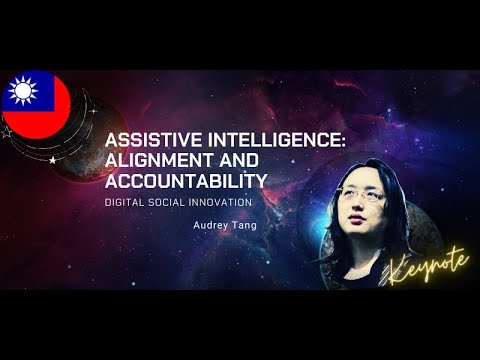
Audrey Tang: Digital Democracy, AI Ethics & Polarization Solutions
Added:Basic principles of deliberative democracy and how they contrast with traditional representative governance.
The concept of 'Civic Tech' (Civic Technology) and how digital infrastructure can be leveraged to facilitate public participation.
The mechanics of online polarization, including how social media algorithms, echo chambers, and filter bubbles amplify division.
Fundamental ethical issues in Artificial Intelligence, particularly surrounding algorithmic bias, transparency, and societal impact.
Practical applications of consensus-building software, such as Pol.is, and how to design platforms that highlight common ground over division.
Advanced studies in open-source governance and the 'g0v' (gov-zero) decentralized civic tech community in Taiwan.
Proactive counter-disinformation methodologies, such as Taiwan's 'Humor over Rumor' approach, which combat infodemics without censorship.
The emerging field of 'Democratic AI' and collective alignment, exploring how AI systems can be steered using democratic inputs from citizens.
194 views9likes1:22:55Original Release: 2025-12-10
Dear guest of honor livelihood, managing director right livelihood centers here under UNIT.
Right livelihood.
A warm welcome from me too. I'm delighted that our 18th lecture can take place today.
one of the many activities organized by our center which has itself the goal of bringing together the public the university and the right livelihood laurates. If you are interested in our activities such as the lecture series sustainability now, please sign up the lists provided here too. You will regularly meet Lauritz next in spring term. But first, let us listen to the dean's welcome address. Katarina Mikallova is dean of the faculty of arts and social sciences and professor of political economy and development and she's a great friend and supporter of right livelihood center. We are great very grateful for this. Thank you so much for coming and the floor is yours.
dear colleagues, dear students, dear guests, um dear Audre Tongue, of course, as the dean of the faculty of arts and social sciences of the University of Zurich that hosts the right livelihood center at our university. I am happy to welcome you to this very special evening at our university.
We are privileged to have with us today Audre Tang, the winner of the 2025 Right Liihood Award, also referred to as the alternative Nobel Prize for achievements relating to practical solutions to global problems.
We are honored and excited that she has accepted to be the speaker of our right livelihood lecture today.
Audrey Tungita is overwhelming and we will hear about it later. Let me say only one thing in this respect.
While she developed her extraordinary innovative capacity widely outside the formal system of education, her successful approach to combine scientific excellence with the art of politics and a deep civic motivation for people's empowerment and a strengthening of democracy is exemplary for what we would also love our students to take away from their studies at our university.
Of course, we do not expect every student now to graduate at the age of 14 like Audrey Tong starting her own firm at the age of 19 and becoming a minister at the age of 41 on top of that for a totally no new portfolio whose relevance she previously demonstrated to the existing government.
Now Audrey Tong works at the faculty of philos philosophy at Oxford. How fitting I'm also representing a faculty of philosophy um in the field of ethics in AI um and at our university and also within our faculty many of us with different perspectives for instance from history from computing from arts from political science from languages or communication and media sciences and many more and also ethics of course um are highly interested in what we are going to hear from you um today. And I guess you see that in how full the room is and we've just discussed that many others would have liked to come and unfortunately couldn't fit in anymore.
I think here at the university um we also have a number of people uh researchers and students alike who who are struggling to find new solutions making technology work in favor of rather than against democracy and more broadly in favor of rather than against humankind.
And we hope that some of this engagement and some of the aspiration to improve the world, be it by little steps, will not just remain at the level of researchers and professors, but also trickle down through the studies to our students.
For them as well as for our research community, Audrey Tong can be a great inspiration.
Seeing how she succeeded raises hopes that such things can also work elsewhere and in the future.
Andre Tang, we thank you very much for honoring us today with your lecture and thank you also to the right livelihood center at our university for making this possible and of course as well for the ongoing activities such as the lecture series sustainability now that help us not to overlook the broader social perspectives if not to say the broader the purpose of all our work and studies. Thank you.
Fore.
Before I hand over to the screening and the lecture, I would like to say a few words about Audre Tang as well. I'm delighted that you are here with us this evening because not only is your work extremely important, but you are also a very positive and humorous person.
Humor instead of rumors is one of your moti. In an interview, you said, "Think of something that is funny, spreads quickly, and takes the o oxygen out of polarization."
And I think in a world characterized by general fear, doomsday scenarios and dystopias, humor has taken on enormous political significance.
This also applies to the field of new technologies, which are often perceived only as threatening.
I'm now very much looking forward to your presentation and will give you the floor after the film. Without further ado, thank you.
Where do we want it?
Courage is choosing to fight even when all the odds against you.
>> A willingness to take on cases that you know you might lose but that need to be fought.
the strength to speak truth to power and the resolve to turn fear into action which the people of Myamar embody daily.
>> The ability to exercise civic care even in adversarial situations where isolation seems to be the norm.
>> Courage is to never give up.
Choosing to stay with your community when it's easier to run away, >> a world that is safe and that my children get to experience the same childhood that I experienced and get to live on the ancestral lands of their choosing.
>> A world that is more verdant, just and joyful.
A peaceful federal democratic Myammar free from tyranny and the grip of the military cartel.
>> A world where technology leaves no one behind and is shaped by everyone that is affected by it.
>> A Sudan where the war stops.
>> A world where solidarity isn't the front.
Gloss Zurich.
It is a great honor to be speaking with you as the 2025 right livelihood laurates.
First let me reflect on what brings us together today. Uh right livelihood it's not a list of permitted professions uh or some bound moral rule. It is a dynamic practice, a way of engaging with the world as we have seen um in the short clip that makes us um working on the field bound by curiosity, by collaboration and civic care.
Um his holiness the Dalama wrote and I quote, "In order to carry a positive action, we must develop here a positive vision. It is under the greatest adversity that there exists the greatest potential for doing good both for oneself and the others.
Now we're arriving at a age in time of intense pressure. We have seen climate crisis, social polarization, democracy backsliding around the globe. So it can feel really that the adversity, the darkness is closing in. But as the Dalai Lama teaches us, right livelihood thrives on adversity, offering hope in the form of light.
Light that shine through the cracks.
Light that illuminates opportunities for real change and lasting change.
And this brings me to a personal story about a crack.
When I was 5 years old, doctor told me and my parents that this child only have a 50/50 chance to survive until surgery, which I got when I was 12. But for the first few years of my life, every night uh before lights out felt like a coin toss.
So this instilled in me a urgency that I call publish before I perish.
Uh essentially, uh I recorded everything that I learned uh during the day. First on cassette tapes. Many of you don't know what that is anymore. Uh uh floppy discs.
Okay, a few more. Um and then finally, the internet. The internet is still around. And along the way, uh I discovered something profound. If you publish something perfect on the internet, people just click like and then they scroll away. But if you publish something imperfect on the internet, everybody comes out and argue with you.
But it's uh actually a blessing. I made uh my friends this way. Something rich in vulnerabilities, in half-formed thoughts. Uh those cracks uh are invitations for participation. So people correct me of course but they also engage and co-create as the late great Leona Cohen uh wrote ring the bells that still can ring.
Forget your perfect offering. There's a crack a crack in everything and that's how the light gets in.
For democracies this really is key. We must see the cracks in our societies.
broken trust, polarization, environmental cracks, not as reasons for despair, but as invitations for collaboration, those opening for light.
We must treat these fractures not with cynicism, but with solves of goodness and this is the treatment prescribed by right livelihood.
So, um let me talk about the max OS.
Um this is uh one of the cracks in our world that is felt very much here. The dominant logic of our digital age is that of utilitarianism uh consequentialism optimization maximization. Find a number any number and make a number the biggest number in the world. So for example uh on social media we see algorithm trying to maximize the time we spend on touchscreens. So when this maxos is applied to the real of human relationships it leads to catastrophic results.
Around 10 years ago, many social media platforms switched from simple feeds where we saw the content of the people we commonly follow and then we see the same world into what's called a parasitic recommendation engine.
It feeds uh our divisions, our differences and then maximize engagement through enragement.
And the outrage brought a very high ppm environment.
Um, I don't mean parts per million CO2 as you see. Um, I mean polarization per minute because if you see a content online that builds relationship, we can reflect on it. We go offline. We have a real conversation, a flesh and blood discussion. So we won't stay glued to the screen. But if we see something that attacks our values, views division, amplify extreme, then it sparks outrage, and then we're hooked, addicted to the screen, and ready to fight. And that environment of very high PPM makes the authoritarianism very easy to exploit our differences. It used to be that we can take collective action against tyranny, against authoritarianism, but in a very high ppm environment, we're fractured into hundreds of small differences, making collective action very, very difficult.
And that is the opposite of right livelihood. We may call it wrong livelihood. It strips people of agency.
It erodess our attentiveness, our relationality, our embodied life and widens the crack not to let any light in but deepen division.
So how to fix this kind of malign parasitic AI systems?
Uh right now many people talk about human in the loop. Uh but to me human in the loop of AI has the feeling of a hamster in a wheel.
The hamster just keeps running faster and exercising.
illusion of engagement, but actually the hamster has zero control over where the hamster wheel is heading. And in fact, it's not heading anywhere.
And so this human in the loop of AI, I think, poses the critical question. It's not about whether we should accelerate AI or whe should we pause AI, control AI, uh stop AI. The critical question is how should we steer AI? I believe we must take control of the steering wheel and move from human in the loop of AI into AI in the loop of humanity.
Thank you.
So in a nutshell, it means switching away from using AI as addictive intelligence to keep us doom scrolling and start using it as assistive intelligence designed to help us listen to one another. And this is right livelihood for the technological age.
engaging responsibly with the tech ecosystem, discerning how our work shape the future minds, cultures and institutions and ensure technology supports not erodess human dignity.
Now in Taiwan, we have a very unique array of environmental, geopolitical and social pressures uh to make us very good listeners and overcoming polarization because we enjoy for the past 12 years the top in the world polarization attacks uh from foreign interference. Uh we enjoy uh two million cyber attack attempt uh every day. here you have to pay for penetration testing. In Taiwan, we get that for free.
And so we adapted uh and then we evolved into what I call a geothermal way of facing conflicts.
Um as some of you know, Taiwan is the youngest tectonic island in the world, only 4 million years old. And we see the conflicts not as volcano from which to retreat but rather uh listening deeply to the earth in a social fabric sense.
We can convert the heat into powerful co-creative energy for renewal. And so the antisocial corner of social media can be built into pro-social architecture.
And so instead of a destructive fire to be extinguished, we can transform the plate against plate collision so that Taiwan rises ever skyward and starward.
So the main algorithm uh here is called uncommon ground. It goes like this. 10 years ago uh as a example, right sharing services like Uber came to Taiwan as it did elsewhere in the world and it triggered intense conflict between taxi drivers and um Uber drivers, the unions, uh the sharing economy endorses, the protesters against uh extractive gig economy, uh the whole spectrum. So the online debate was very toxic uh because you see people arguing and then you see a quote tweet or call a dunk uh and then people start attacking each other and another dunk and then people become very very polarized.
So instead of getting people lost their minds on antisocial media we built a pro-social media and the technology is called Polus P L I S. is a digital space designed to listen and see each other's feelings.
And crucially, there is no retweet button and no reply button either. So there's no room for trolls to grow.
There's no way to dunk on someone just to get some points. And as you participate, you see one feeling from a fellow citizen. For example, they feel that undercutting meters is not fair, but um making the search pricing higher is quite fair. Maybe you agree, maybe you disagree and you press like or unlike or pass. And as you do so, you see your avatar moving toward a cluster of people who feel similarly to you. But then the other feature we have a scoreboard that shows the leaders that can propose the bridging statements that make the two uh cluster of people who otherwise never agree start agreeing.
And so people start competing to build longer and longer bridges.
So not the left wing, not the right wing, the upwing began to form after three weeks of online conversation. And then we mapped where people do agree and turn out we do agree on most of the things. The polarization was just a illusion. The real issue was just the high ppm make it very difficult for us to see through. So we transformed that very intense conflict into a coherent set of law that the majority can live with. And this uncommon ground system is now in wide use globally. If you have used uh community notes on x.com, on YouTube, on Facebook and so on. Uh this is the same idea, the bridging instance.
And then we can also use this uh to solve issues that are more recent and even more insidious. Another example, last year Taiwan faced a wave of AI powered deep fake scam. You would open Facebook or YouTube social media and see advertisement featuring the famous CEO like Jensen Huang of Nvidia offering uh free investment advice or free cryptocurrency. Um you click and it look just like him uh and he talks to you. It sounds just like him. It's most definitely not him. It's a deep fake clone of him running on Nvidia GPU. Um and so we need a solution to that. But being the most free country in Asia when it comes to internet freedom also means if you ask people they say we cannot censor speech what to do. So we turned to the people. We sent 200,000 text messages to random numbers around Taiwan asking only how can we solve this issue together. and they gave us many good ideas and thousands volunteered. We chose a statistically representative microcosen representing the population and the mini public met online in an alignment assembly using AI as assistive intelligence in rooms of 10. Each person looking at nine other people, 45 rooms, the ideas start getting weaved by small language models. a process usually would take human facilitator a week. They came up with brilliant brilliant solutions. For example, one room says um look at each advertisement and on social media by default display a prominent label that says probably scam to every advertisement like cigarette uh you know labels and then if somebody uh like Jensen Hong digitally signs off on it become accountable to it then you take that label off. Very good idea. Another room says uh if uh a social media push a unsolicited advertisement on investment scam to me, I didn't subscribe and then I lose $7 million to that uh unsigned advertisement. Then the social media needs to be liable for the full $7 million damage because after all did not subscribe to it. Another very good idea.
And another room says there's certain uh foreign um I'll just say the name Tik Tok at the time uh that did not have a legal office in Taiwan. And so if we uh assign liability, they could just ignore us uh what to do. And this room says for every day they ignore us, they slow down connection to their video by 1%.
uh throttling uh not censoring and it's just to make sure that they pay attention uh to our legal system. And so uh within a day the same day a small language model wo all those ideas together into a coherent bundle and then we put it to a vote at the end of the day more than 85% of people at microen voted yes this is a very good package and the other 15% said at least we can live with it we consider this legitimate and so we did not just read the air or try to guess what the social norms are around. We wrote the air together ensuring everybody share the common knowledge that everybody else all their neighbors are all okay with this bundle of proportionate response. And so that was last March and by May uh we push out the two laws crowdsourced by July it's all passed and so throughout this year it's been an entire year um there's just no deep fake scams anymore uh on social media advertisement and so this is the geothermal engine in action. It demonstrate that we can use AI as assist.
It demonstrate we can use AI as assistive intelligence so that the collective intelligence can draw the red lines around AI as addictive intelligence.
So for this vision to thrive, the system that I just described requires to be open and also locally governed, we cannot build those societal bridges on closed proprietary colonizing infrastructure. So we must resist digital colonialism and this requires what I call freedom architecture.
The current digital landscape, as many of you know, do not offer freedom of movement. We're like drivers on the information superighway of social media with no off-ramp and on-ramp. So, think about it. A highway with no off and on-ramp is a hamster wheel. Once you get on, there's no way to get off. Otherwise, you lose your relationships, your connections, your communities. So we need protocols of off-ramp and on-ramp for freedom of movement. Think about how you keep your phone number when you switch from one telecom provider to the other. This called number portability. We need the same for our digital lives with social media, with AI, with all the platforms.
Now policy is catching up. Europe is leading the way. The data act give us data portability. Digital Markets Act promotes interoperability for instant messaging and so this spirit enable us to exit a platform with some of our data but when the exit is real and includes like the social graph then the platform must compete on care not on capture. So I encourage um those of you who work in engineering in law to think in terms of fundamental freedoms of movement of association and all the human rights on the digital space. And so this process of rejuvenation in Taiwan begins because we in 2019 changed our curriculum. And so all of those ideas came from the citizenry and many of them starting in schools even before they turn 18.
We see this process as like working out in a civic gym where the gyms are schools uh literally gymnasiums. Um since 2019 we changed our basic education curriculum. We switched from what's called uh literacy which is about taking information critical thinking uh into competency which is about producing information and knowledge together because the top-down journalistic factchecking does not really inoculate people against a high PPM but the ability to do peer-to-peer collaboration on factchecking verifying sources balancing coverage producing contextualized narratives making real-time corrections during presidential candidate debates. Our middle schoolers once they do that, they cut through the high PPM environment.
According to the International Civic and Citizenship Education Study, by 2022, Taiwan's 14 year olds ranked at the world's top when it comes to civic knowledge, the civic muscle, the capacity for public engagement. And so this means that the democracy of Taiwan is in very good hands because our 14 years olds already feel their hands are on the steering wheel. And when we make sure that the elderly people listen to the lesson of the civic gym, not from the government but from their grandchildren, uh they actually strengthen their civic muscle too. uh the most active segments in our public participation platform are the 17 year olds and the 70 years olds. The intergenerational unity is just awesome.
And granted, they have more time on their hands, but also they care more about the future. And so there is now a temptation uh in the research um community to automate some of that alignment assembly uh civic gym.
Specifically there are software uh called the harbor mass machine is a real software um and that can interview people individually and build digital twin of these people and then in silico that means in simulation uh these digital twins start deliberating in a discursive uh democracy it's very good it produce extremely good policies but if we just rely on delegating our deliberation to the robots It's exactly like sending our robots to the gym to lift the weights for us. I'm sure they're very impressive. They can lift a lot of weight, but what is the point?
So, we cannot delegate democracy. We need to be part of the civic gym. We need to uh ensure that our schools, the civic gyms continue to train our civic muscles. We need to ensure that we research and develop the tools for digital democracy and develop the ethical frameworks that guide our technology. We must move beyond the max OS toward the ethic of care.
So in Oxford I'm developing the six-pack of care you know muscle and also portable. Uh so this is called uh alignment uh to a process of relationship relational alignment. So the process of care as the ethics of care says should maximize not engagement but the relational health mutual trust and inclusion. And so here we return to right livelihood not as a virtue for individual but something that the cultivated society can see as the civic virtue of the entire communities. This is why I call technoccomunitarianism.
technology to foster the ability for communities to integrate their own interpretation of ethics and contemplative practice through policy that protect human and ecological well-being. And this is aligned with many wisdom traditions, those institutions that nourish compassion and engagement. And so I think the future is rooted in this attentiveness, this care, this presence where right livelihood emerge from a symbioenesis of communities with other communities.
We can build the local AI systems that take the local community norm. For example, one around climate justice for specific communities and another community can train an AI system to attend to the biblical creation care.
And we have worked to build social translation systems so that the machine can talk to this group of people and showing that that group of people is also doing God's work. And this is a amplification for the broad listening technique that have shown its practice and effectiveness in Taiwan.
Now many people are looking for super intelligence to be built in some lab somewhere. But I think uh the future of intelligence is not the machine waiting to be invented. It is us, our augmented collective intelligence. It is our capacity to coordinate with care. We the people are the true super intelligence.
And remember positive vision brings positive action. In the greatest adversity lies the greatest potential for good doing good both for oneself and the others. So the adversity is here and so is our capacity to care. AI must not divide us with outreach. It must connect us through uncommon ground. And so in closing I offer a poem, a prayer, a vision for us working together.
When I first became Taiwan's digital minister in 2016, I noted that in Taiwanese mandaring, shui means both digital and plural.
So I wrote my own job description that remains my mantra to this day. It goes like this.
When we see internet of things, let's make it an internet of beings.
When we see virtual reality, let's make it a shared reality.
When we see machine learning, let's make it collaborative learning.
When we see user experience, let's make it about human experience.
And whenever we hear that a singularity is near, let's always remember the plurality is here. Thank you so much.
Thank you.
Heat.
Heat.
>> Thank you.
After a fantastic speech by Audrey, we all now looking forward to learning more about Audrey's mind-anging work. I would like now to give the floor to Arian Fa from the Republic. Even so, I don't need to introduce Adrienne to the most of you. I would like to emphasize that the political scientist was honored a Swiss investigative journalist of the year 2020 21 2021 so and 204.
She's also the co-founder and community manager of the web startup polit which also won several awards. In 2020 she published the book does nets is politish the internet is political part one. We cannot imagine anyone better suited to conduct the interview with Audrey. Welcome Adrienne and thank you so much for being here tonight.
Now, uh yes, thank you so much for this introduction. First time here in the front, not as a student here in the row.
Also as a student from Miss Professor Kriken.
Wow. Um yeah, there's so many aspects you said in your ad admirable speech. Um I want to discuss like AI regulation, polarization attacks, cyber attacks and uh actually if I would ask them all we probably need 60 minutes which would end up in a long read piece for Republic one of the comments but we're we will focus and let's say let's see where we get but let's first start with also a personal note about the first time I heard about Taiwan and the tool police. That was in 2017 was really one of my um defining eyeopening moments um in my career as a tech journalist when I heard about police and then and also the movement go and everything what Taiwan is doing. And then I realized, wow, so digitalization of democracy can be a good thing because by now and back then when you think about digital democracy, we think about all these platforms as you said, designing maximizing attention, um, engagement, polarization, causing disinformation, deep fakes, and also contributing to the right of populism.
But then I heard about Taiwan and about police and I got a video call with someone who developed um >> police. Colin Majill, he told me about that and I also wrote then in my first book I co-authored, smartphone democracy about this case and he showed me this live demo and that was really astonishing as you said there was he showed me this example of do we want to have Uber in Taiwan or not as you said the example of ride sharing and it was really stunning. He then I saw this plurality of opinions clustering um and how this cluster how this clusters are connected and where are the bridges. So it really shows this plurality of opinions and also as you said there was no reply field to avoid the troll comments. So my conclusion was that's a long introduction. My conclusion was then it's really all about the design of technology at the end the political design.
Would you agree on that or is it too easy to say that?
>> Yes.
Uh it is uh in fact uh we've discovered um we've discovered uh again and again uh it requires uh two uh essential ingredients. Uh one uh you need a pro-social design space where people add to each other instead of uh distract uh from each other. And second, you also need air cover the pre-commitment uh from the committed listeners that if our people really do agree on like everything or at least broadly agree on everything then uh we commit to implement that particular everything and the two feed onto each other because to give no trust is to get no trust. So it's always easier to start in the gym to uh try a local issue first, a hyper local issue first and then to start building the trust by offering more pre-commitments in more larger pro-social spaces that invites more pre-commitments and air cover so on and so forth.
And you said once you brought up another example in an interview about um it was one of the topics was should Taiwan change its time zone. Did you also discuss that on police then or the platform? Um yeah, it was on the join platform which was built after the v Taiwan platform as a institutionalized national participation platform that reaches I think uh 10 million uh people uh of our 24 million uh people country.
So it's a pretty wide platform uh and anybody with 5,000 uh signatures e petition can force a conversation a response uh from a minister. But this particular case is different because it was actually two petitions. Uh one uh more than 8,000 people strong says let's change Taiwan's time zone to that of plus 9 uh the same as Japan. Um and another 8,000 people strong says let's remain in UTC plus 8. So it's actually um much more. It's 16,000 people or more. Uh and we invited the people uh who comment on join which used the same design. No reply button. You can like, you can unlike. There's two columns. One for the best supporting argument, one for the best contra argument. And then we invite the people who proposed the best of those two ideas uh to the in-person conversation. And it turned out they agreed far more than they disagreed because we show them uh on the matterof fact level how much it would cost to impose such a time zone change both one time and recurring. And then we start brainstorming. If we're about to spend this much money, are there better ways to achieve your common value? Turns out their common value is to let Taiwan be seen as more unique in the world.
But but forcing someone to change their clock. Okay, I guess it's somewhat unique, but it gets old very quickly. Um and so we brainstormed better ways and we did come up with better ways. For example, uh hosting human rights conferences like rights con uh giving uh gold card uh residency to people who contribute to open source, open science and open access. We did that too. Uh we uh advertised uh the way that we built our match equality uh by using uncommon ground so that the individual wed as individual but their family don't form kinship and we uh made sure the world learns about that first in Asia and so on. So we ended up saving uh taxpayer money uh but achieving uh the let talent to be seen which is a more common uncommon ground for both sides.
>> So good. Um so in Switzerland we think that digital democracy equals internet voting and equals eolcting the collection of signatures for initiatives and referendums. And we think that's enough and it's kind of perfect this way.
But yeah, but uh the question is we don't have this digital in infrastructure for deliberation or agenda setting to shape opinions.
Um how would you convince Swiss people like oh maybe you can improve a bit on your democracy by having less polarized opinions in the parliament or or already do the deliberation of stage before?
Well, I'm sure you already have uh surveys, that's to say polls uh and um institutional media uh that uh runs such poll results. Uh so in a sense uh our way uh the alignment assembly from one side it look like a bugat citizen assembly but on the other side it looks like a poll. So you can actually think of it not as deliberation but rather as a survey. The survey is not individual but groups of 10. It's as this simple because if you individually survey people they tend to be on extreme.
They're like ini yes in my backyard.
Nimi never in my backyard. But if you say to a group of 10 only the idea that resonate in the room has a chance to pass out of the room to go out cross-pollinate in the room everybody become mimi. uh maybe in my backyard uh if you do this if you do that right so again it's a function of the space not a function of the people but if you publish uh the result of such a deliberative poll it look exactly like a regular poll and so all the existing ways you integrate polls into your democracy still functions so the point here is not to reinvent some wild new form of digital democracy it is to ensure that we can come to see each other on overlap not on outreach using pro-social design.
>> Um but still I mean the our main digital communication infrastructure is provided here in Europe and possibly everywhere globally provided by some American big tech companies um since already 30 years where we pay with our data and so on and so on. So how can Europe be motivated or what could be the incentives to design and create a market for such technologies promoting trust and also promoting consensus on also showing the plurality of opinion as a chance of something good. Um how how can we get there to create this market in Europe?
How where should we start? Well, first of all, I I use Proton, which last I check is based here uh not uh some digital colonialism. Uh and there there are many uh platforms uh like this. Uh Proton is uh also uh Taiwanese uh found this. So I have a special um special affinity. Uh but there there are uh people uh who built such alternatives but uh really struggle to solve the problem called the code bootstrap. uh because most people are trapped uh on those large platforms already. There was a study a couple years ago um to the US average undergrad person using Tik Tok.
And if you want to convince them to quit Tik Tok, uh you have to pay them money.
Turns out on average you have to pay them $60 a month for them to quit using Tik Tok. They're that addicted. However, if there is a magic button you can press and everybody they know also move off Tik Tok together, they're willing to pay you $30 per month for that to happen.
So, it's a it's a trap uh literally a product market trap. Um because uh everybody is losing uh utility but the first one to move out because the community is held hostage, they lose even more utility. So nobody want to move out which is why we work for example through the project liberty institute uh with uh governor uh Cox in the state of Utah in the US. They passed this year the digital choices act starting next July if you're a Utah citizen and you migrate from Tik Tok to say blue sky or truth social both are open source um the old uh network is required uh to forward new like new reaction new follower to the new network just like network portability of telecom numbers and so you can think of this as the individual moving on the off-ramp but still keeping their community with it and it forces them to then compete on quality of care and I have every uh belief that it is then the open-source open participation platform that will win this race to the top not to the bottom of the brain stem but the same thing Europe is trying too no like with the digital market having interoperab interoperability sorry to and then having the possibility that a WhatsApp user can communicate with a signal user but that doesn't happen. I mean >> well I mean there are two differences.
Uh one the EU is doing another round of consultation uh to expand the instant message uh include uh group messaging uh to social networks. So that's the main difference. Uh the other is that the Utah law applies to all social media not just a very large social media. So it gives everybody uh a real incentive to build on the infrastructural layer on the protocol layer instead of on the platform layer and just um hope that you don't reach the very large operator uh status.
>> Okay. So you're a cyber ambassador promoting this model of digital democracy to the rest of the world. But I was wondering when I'm reading um your interviews and also the the book plurality I was wondering doesn't this require like um something specific like is there not a strong cultural component um in the Taiwanese digital democracy model such like it requires specific skills from citizens tax sophistication tax savviness a strong sense for the community and also requires an incredible amount as you said some young people and some older people who have free time to participate online. So I I thought like isn't it something um which is really like do you think it will work somewhere else too because the level of tech sophistication is maybe not that high in other count.
>> Yeah. Well, many countries especially the European ones uh under what the OECD called the the liberation wave, the lib wave uh already have alignment assemblies, citizen assemblies and so on on the local level. This is not unheard of in fact quite common if you talk about uh the neighborhood level uh or the district level uh of things. Uh what Taiwan did was essentially using digital tools so that it works on the national level. So for a very long time we're the largest country 24 million uh where this system is done as a infrastructure but that was uh only true till last year um because this year um many uh other polities larger than Taiwan are now building this as infrastructure. For example um I worked uh for the past couple years with governor uh Gavin Newsome of California and his first partner Jennifer uh to work on a engaged California platform at engaged.ca.
ca.gov. Initially, we built this uh to have a conversation with teenagers and even younger children on social media usage because it's a classic case of something about them without them. Uh and so we want to include them and their parents. But on the week of launch, we did not get to launch because wildfire happens in Los Angeles. So we pivoted instantly to have a uh conversation using bridging algorithm uh for the survivors of the E10 and polyate fire to talk about how to mitigate and prevent future wildfire and it produced you can check the report online very good uncommon ground surprising common ground around all the different measure that the state government can take and encouraged by this experience they're now writing it into law so that become a state level infrastructure and they're consulting also the internal state employee so that they can suggest better ways to use AI in their line of work. So it's a like a government efficiency like doch uh but the bottom up uh not top down >> the the better one.
>> So this is going to be now um performed executed in in California right now.
>> Yes. And we also have uh Japan uh joining the the ranks. Uh it used to be uh in the Tokyo metropolitan uh area. Uh I have worked for many years now uh with Governor Koi Kesan uh to run the governor's cup hackathon which is modeled after the Taiwanese presidential hackathon and one of the um very young uh people reading the plurality book Takahilo Anosang um 33 year old at the time last year uh a sci-fi writer uh AI engineer decide after reading the book to run for governor uh to put this platform uh into work but he did not have platform uh for the election and so he crowdsourced his platform saying anybody hashtagging Tokyo AI can be part of Ano's platform and so he used exactly the same tools poll talk to the city and so on and one month before the governor election he launched it and by the election day independently the think tank ranked his crowdsource platform the best even better than Koe's but of course Ko won the re-election but he on got more than 1% of vote And then Kesan invited him to do the Tokyo city consultation for Tokyo 2050. And then he formed a new party, the Tim Midai future party. And with 2.5% of rightin votes for his new party, he is now a house of councelor member, a senator in the Japanese diet and putting this digital democracy again at the national infrastructure level. So Japan and California, last I checked, are both much larger uh than Taiwan. So we are no longer the largest polity uh with digital participation infrastructure.
>> Okay. So um but I still have some doubts about like this willingness of being permanently involved like discussing this this deep level online on a permanent like from the young people for example. So I mean it's it's hard to to um imagine that the AI assemblies you mentioned that would be something very interesting also here because we have we start to do the AI regulation process policy process as well. Uh the AI act is being implemented on the EU level as well. So are young people really willing to discuss how artificial intelligence should be regulated?
>> Yeah, definitely. Uh and Finland just run one I think last uh no this September. uh and uh what do you think Finland uh when it comes to AI again using the Polish uh technology uh for sensemaking? I think young people by and large feel that the AI systems is out of their control like it is somewhere else.
So if the um tech broly gary uh decides uh to to steer the AI system towards some other future sacrificing the young people, the young people really want to take the steering wheel back. And so I think the key here again is air cover is commitment. When people know that whatever they do agree on will be treated as real red lines by the Minister of Digital Affairs at a time, yours truly, then people really pour in with the most nuanced, most considerate ideas. So again, pro-social design is the first step and then you have to offer the air cover.
>> Okay.
So right now speaking of AI regulation again, um is it how how does it look in Taiwan? Is it about um you're defining now also design principles about how this technology or large language models should be designed in in the law is it like you define it's not a technological neutral way as we say in Switzerland you also you you define the design principles.
>> Yeah. Uh our AI basic act is on its way to the final reading. Uh so fingers crossed I think it's down to the last clause. uh and um I think uh the negotiation uh throughout the AI act uh conversation in Taiwan put a emphasis uh on interoperability, data innovation, data reuse and things like that. I think because Taiwanese people really do like this vision of personal computing because we made many of those PC compatibles uh back in the 80s. uh and it it was a very different era of course but I was uh born uh in a place that basically fostered this uh countercultural thinking that you do not need to rely on a mainframe computer uh so the big state or big corporation monitor every key you press uh into your terminal uh which is a fancy way to connect to the cloud uh back then uh and uh we we want personal computing which means you can install your own spreadsheets, your own desktop publishing, you can share your fixes, your patches uh to the software called Apache uh and then form this movement uh together of free and open-source software. And so without personal computing, there's probably no foss uh movement. These two work hand in hand.
And so nowadays we're already looking at energy efficient small language model such as the ones that Taiwan National Development Fund invests in. We invest in more than 100 uh such models. Some of them so energy efficient that it's not using the transformer uh architecture.
It use a retention network power retention and so on. So that it can run on your uh Swiss watch. Uh it use a constant memory. Uh but it's still uh top of the world when it comes to performance uh on inference. Uh but this is not a tech seminar. So I will stop here. But this is a a topic that I'm deeply compassionate uh and passionate in. in another interview we're going to >> catch catch there up. Um you told me in a preparation talk like when I thought about oh what what can we learn in Switzerland you told me like okay you have the half direct democracy but you also have sometimes on public votes slight majorities of 51% or like 49% no that would be not enough in 10 you really aim for having 80% like also for the AI regulation law you're going to um which is going to pass these days it should be at the end a minimum of 80%.
>> Yeah, people can live with it, which is much easier to achieve uh than complete consensus, which only ensure that the people with the most time uh wins because it's endless negotiation. But but but if you only ask, can you live with it? You can very quickly get a snapshot like a group selfie and then you pass it. And of course, there's some unintended consequences, but that's fine. You just take another group selfie and and then if you take group selfie quick enough, it become a selfie movie.
uh and so that is how the people see themselves reflected because there's nothing that's more powerful than your few words written on polus on join platform and the next week become policy. It is actually very much empowering for people younger than 18 to see their names on the credit list for national level debates and policym and so on and then they put much more time into the steering wheel not the hamster wheel.
>> Very good.
Let's talk about some challenges you're facing of the friendly neighbor.
>> Yeah, free pentesting. You don't get that anywhere else.
>> Yeah. Well, save money there. Um, you you told me you don't like the word disinformation campaigns. You prefer this polarization attacks, which is something Switzerland and Europe and every country else is facing too, like being constantly in this hybrid war all the time. How can we achieve this digital resilience towards deep fake and disinformation? I I I will use it now.
And polarization as well because we also have some neighbors. Maybe not that close, but some friendly ones.
>> Okay. Uh they're uh widening their free service now. Uh yes, >> it's also for free. They're campaigning.
>> I mean, it's it's because of language models. It it used to be that you have to speak the target language to successfully mount an attack but now uh malicious AI sworn speak that language so well even the memes uh that's to say pictures can be translated perfectly uh into any target culture. So it does uh widen the aperture uh for the polarization and disinformation attacks.
Um, in Taiwan, uh, we basically invite these as topic for conversation, social objects. Um, we pre-bunk instead of debunk messages. Debunking is after the fact and it's bound to polarize some people if you debunk.
>> And you created a deep fake first of yourself.
>> Yes, I deep fake.
>> Show what deep fakes.
>> Yes. So, uh, around three years ago, uh, an actor played me in a deep fake. Um and it was kind of a fake deep fake because because it it took a lot of computation actually uh to calculate that. Uh but we um say that in the future this will take not 12 hours but 12 seconds uh to deep fake me completely and maybe 12 milliseconds in which case you cannot tell whether somebody having a video conference with you is human or not. And we say to uh the people this is coming and uh the deep fake Audrey Town says uh shift from the content level where you basically assume anything can be synthetic to the behavior level and the actor level uh to ensure there's digital signature to look for uh behavioral patterns uh for example disclosing uh where this message uh is coming from. Uh we embrace the idea of memity or partial anonymity. So it's not everybody signed their name on their message which is very bad for whistleblowers uh doxing them. Uh but it's also not complete anonymity because our constitution never offered uh freedom of expression and amplification for foreign robots. Uh and so at least you need to disclose that you are a human uh and the region where you connect from. Uh and so all these meonymity all this uh selective uh disclosure so you can prove uh that um Ishbin and Berlin without uh revealing your street address in Berlin for example. Um all these are fundamental infrastructures that taken together over a very strong pre-bunking infrastructure instead of debunking. And how fast should like should be this pre-bunking or when you or or debunking when you see there's something coming up. I saw something within two hours. That's Taiwan reaction time.
>> And we upgrade that to 1 hour.
>> Wow.
>> Yeah. So uh we yeah we we have this two two principle. Um whenever uh the citizens through the collaborative factchecking grassroots network Kofax uh detect that there is a viral polarization or disinformation attack then within two hours we need to roll out 2 minutes of video or two pictures of 200 uh characters or less each uh that is funnier than the disinformation.
It's called humor over rumor. Uh because if it's funny, it travel faster than outrage. And if you roll it out within the two hours, you can do a uh tenant move and pretend you're doing pre-bunking because for most people this uh pinser uh attack uh means that uh they see uh the polar the polarization after they see the humor, right? So for them, it's pre-bunking subjectively speaking.
Right. But if you act after two hours, it's too late.
>> Okay. And you said you you so you force those platforms like Facebook and YouTube to collaborate on this select like selective disclosure and in the fight against scam and fraud and everything and if they don't the sanction is slowering down >> slowly slow down their connections >> and they cooperate >> of course. Have you have you have you said that to the EU Commission for example?
>> Well, I mean >> I mean radical interoperability and throttling uh is not stifling innovation. Uh last I checked it is not censorship of content. Last I checked uh last I checked the state of Utah um is conservative. Last I checked. Uh and so this is not something that is progressive versus conservative. Not something liberal. uh versus the right.
This is something about our fundamental freedom to move across services. So the best service gets our business. I think this is a very strong argument and I have not uh heard from any MP uh here um in MEPs uh to say that oh I'm pro- fraud. Uh so I don't want this kind of measure. Right? So I think the anti-fraud angle is definitely the uncommon ground, the surprising common ground that can unite the left wing and the right wing into the upwing. Okay. So it's a way to enforce also legal framework.
Speaking of frameworks, in the EU there's this shift um in the public discourse on the narrative um about regulation like regulation is hampering innovation. Um so we need to get back our digital sovereignity. We need to build our our tech our tech companies.
We need to invest in our tech companies.
We need to have less rules. Do you think like when I hear what you're saying, it's actually not this way because it's all about protocols.
>> I prebunked that question.
>> You pre-bankked that actually. Yeah. So can take this off. So frameworks like GDBR, Digital Service Act, Digital Market Act, they're not really are they obstacles on our digital soity. I think the difference uh between a guard rail that stifle innovation and a protocol that foster uh healthy competition and innovation is that the protocol must always come with not just a guardrail against something but a guide rail a alternative. uh as we are the noble for alternatives uh I heard the right livelihood of what uh the idea is to come up with something on a small scale that actually works. So for example, I'm working with a team to build this pro-social ranking algorithm that can bridge uh truth social and blue sky uh together. The example I use on stage uh is called green earth uh because blue sky green earth right and green earth uh uses language models so you can tell it um you know I prefer biblical creation care or I prefer climate justice framework and so on and then it figure out the connective tissue uh for the ranking system to be maximally bridging and once we have that good alternative running on blue sky actually it pressure um X and other social media companies because if they don't adapt and the policy maker understand there are viable alternative then they can set um the floor at those alternatives making it impossible for the big tech not to adopt such open-source initiatives. So it's like forking the platforms into protocols and then forcing them to emerge back >> and you have this conversation with Blue Sky now to enforce this interoperability.
>> Yeah. Well, Blue Sky was designed around >> decentralized Of course, >> it's it's the AT protocol, right? So, the at protocol can federate uh with the Fediverse uh with uh Noster, Farcaster, Lens, I'm missing a few. Um but uh it's all the big interoperable web. And the lesson here is not that we need a Euro champion uh that replace uh those colonizers, but rather we need a Euro stack that is decentralized and democratic and so that we can defend democracy by saying once you're in Europe, you need to be like utilities at least offering off-ramp and on-ramp.
>> Okay. So if the pressure from the U commission is not working then at least you contribute then to this openness and plurality of technologies. The very last question in the book plurality you criticized um how western democracies have failed in the past to provide digital services and I was immediately thinking of the pandemic how European countries or the US and other countries have managed the COVID 19 monitoring by sometimes the fax machine using the fax machine. What what were you thinking when you heard that? And what should be what should be the core infrastructure from a modern government um to be prepared for the next pandemic?
>> Well, for Taiwan, COVID 19 was the second pandemic. Uh we were hit by SARS the most. Uh suffered the most of all countries uh when SARS happened. And when SARS happened, our health card was literally a piece of paper with six box on it. So you can stamp uh the date you enter a clinic. Um so it's worse than the fax machine. speaking from firsthand experience and it it really is uh the case in Taiwan that because of the SARS experience, it propelled us to adopt the central epidemic command center and the digitalization of our public health system and investing in contact tracing, vaccination, uh masquerationing and so on and so forth. And so I believe that uh in Taiwan we've had years of citizen assemblies and also online pollless conversations about exactly the boundary to draw between say public health and privacy. And we did that before the community spread in Taiwan. So when community spread did come in Taiwan, we know exactly what to do. The civic activists invented a zero knowledge, meaning it doesn't learn anything. Uh when you check in a venue using a SMS QR code, the venue owner learns nothing about you, not even your phone number, your telecom only learn a random number.
They don't know which venue it corresponds to. The states learns nothing after 14 days where it's erased.
But it does let us recursively uh notify people when they were in places uh that had community spread and it's entirely voluntary. However, it served us very well until the first wave of Omicron. So I think uh it is in these non um non- crucial times in this uh more chronic times that you have this national conversation maybe with some alignment assemblies around these very important uh boundaries the red lines to draw and once uh the pandemic or some other disaster happens then the red lines become also the bright arrows to point out the kind of solution using technology of that day and age that we already know the pre-commitment of the people the the legitimacy of the people.
>> Yeah, we should have had this famous mask app where you can see the availability of mask in all thearmacies also here maybe for the next pandemic.
Yeah, I think we need to make a point here. Uh I'm sure we could continue this uh conversation for ages. Um we you promised me to tell an advertising slogan at the end. You remember it was not humor about rumor. It was something about let's make.
>> Yes. if you want. No, it's let's let's make >> the future.
>> Let's make digital democracy great again. Yes, that was your idea.
>> Let's make digital democracy great again. Thank you.
Right. Livelihood.
Um, digital, artificial intelligence.
for um I would now like to hand over to school executive ative director of the right livelihood foundation in Stockholm for more than 15 years now. He has a background in environmental science and European studies and he is a traveler between languages, countries and worlds, always on the move and yet always very present.
There are reasons to despair about the state of the world and Olu also speaks of massive poly crisis. But if anyone seeks reasons for hope and optimism everywhere at the same time, it is him.
Thank you Ola for joining our celebration tonight.
Wow. Wow. Thank you so much Gazina for your kind words and Audrey. Really thank you very much for sharing your wisdom with all of us. Thank you for packaging it in these beautiful small apherisms.
I think for me it was probably the highest APM lecture that I've heard in the last year is the highest apherisms per minute in a lecture. And I've just I've I've been noting down some of them.
Let me just share as a bit of a mosaic of what we heard tonight that we were encouraged to take back the steering wheel so that we don't end up in the hamster wheel.
We uh learned that we should view AI not as addictive intelligence but as in assistive intelligence.
You encouraged us to compete on care rather than competing on capture and you spoke about a future rooted in attentiveness, care and presence.
Last but not least, you teach us that in order to get trust, we must give trust.
Such important lessons to take with us.
for us having been with you for 5 days now, starting in Stockholm with our award presentation with even more people than here just two days ago with countless media interviews with meetings with politicians with the amazing meetings as you can imagine in the group of laurates. You saw the videos of all of them. This is also the end of the 2025 award week. But as we always say at right livelihood, these days of the award presentation are the few days in the year when we celebrate and after that we get to work and we really look forward to working with you working with the new 2025 laurates when it comes to building connections in the whole now network of 200 laureates around the world when it comes to building connections with universities. We are very proud to be working with Zurich universities, but we have dozens of university partners also around the world and to lend support to the laurates who need support and be in solidarity side by side with you in your important transformative struggles. And in this work that we are doing year round at right livelihood, we also want to say from the from the Swedish Foundation that Switzerland has become a very very important partner. And we are very proud and grateful to have the university corporation here in Tul and also for the last 10 years now we have had an office in Geneva because we have consultative status with the United Nations and to be able to be there and make those very meaningful connections between some of the world's leading change makers and the UN processes has proven to be highly impactful.
So what remains for me to do is just to say thank you.
Thank you Audrey for teaching us that we the people are the real super intelligence.
Thank you to everyone who has made this evening possible. Thank you Dean Professor Katina Mikova for hosting us at the university. Thank you Alen Stein Brea and your team at the right livelihood center Deina Ruf Marina Matz and John Luca regulini for your incredible logistical work for weeks and months to make this evening possible.
A big thank you to our cooperation partners. Thank you for Futura Larissa Ja and Antonet Huniga and your teams.
Thank you at the rep for the Republic Adrianne for the amazing conversation Daniel Binsvanga and your team. Thank you everyone who's been working to make this such a great evening.
We would not be able to do this work if we didn't also have a collective intelligence, collective action around us of people who are supporting us to be able to support the laureates. A big big thank you to right livelihoods donors.
Some of you are in the room here. You know who you are and you mean the world to us. Thank you.
And the biggest thank you goes to the super intelligence in the room. Thank you for all of you to have come to have listened. I'm sure this generated lots of ideas and thoughts within you that you are keen to discuss to share with others. That is what's going to happen now because we're inviting all of you to join us for an appero down in the letov and to continue the conversation that started here. Thank you very much and we wish you a wonderful evening.
Up Next
2:00
First Past the Post Voting System Explained | Electoral Politics
@CoolclassProductions
752 views•2015-10-14

24:30
BRICS Pay and de-dollarization: A New Financial Order Emerges? | 55 chars
@DannyHaiphongYT
164.6K views•2024-10-22
7:33
Government Surveillance Methods: 10 Ways You May Be Watched
@BeAmazed
1.6M views•2017-04-09
10:19
Explaining the Saudi-Iranian Proxy Conflict in the Middle East
@Vox
18.2M views•2017-07-17
Related Study Plans & Knowledge Roadmaps
Structured learning paths in Political Science
political-science
Economic Statecraft: Sanctions & Chokepoints
01Foundations of Geoeconomics and Economic Statecraft
02The Mechanics of Weaponized Interdependence
03International Sanctions: Types, Implementation, and Efficacy
+ 2 more learning modules
12h5 modules
Explore Roadmap
political-science
Central Bank Independence: Politics & Policy
01Foundations of Central Banking and Monetary Policy
02The Time Inconsistency Problem & Inflation Bias
03The Delegation Model and Designing Independence
+ 2 more learning modules
12h5 modules
Explore Roadmap
political-science
Consociationalism: Power-Sharing & Stability
01Democratic Dilemmas in Divided Societies
02Introduction to Consociational Democracy
03The Four Pillars of Consociational Design
+ 2 more learning modules
12h5 modules
Explore Roadmap
political-science
Rebel Governance: Legitimacy, Economy & State
01Foundations of Rebel Governance and Statehood
02Establishing Political Legitimacy and the Rebel Social Contract
03Wartime Economies and Rebel Resource Management
+ 2 more learning modules
14h5 modules
Explore Roadmap