First Past the Post (FPTP) is an electoral system where a country is divided into electoral districts, each electing one representative to parliament; voters cast a single vote for one candidate, and the candidate with the most votes wins, regardless of whether they achieve a majority, with no reward for second or third place.
First Past the Post Voting System Explained | Electoral Politics
Added:Deep Dive
The foundational concept of a representative democracy and how citizens delegate legislative authority to elected officials.

Борис Юлин о том у кого власть
68.4K
Representative democracy is a system where the people do not exercise power directly but delegate their authority to elected representatives (deputies) who form the organs of executive and legislative power. This system exists because citizens are too busy with their work, business, and other activities to participate directly in governance.
Click to watch →

자유민주주의란 무엇인가ㅣPLI16강시리즈-9강
42.7K
Representative democracy, also called delegated democracy, is a system where citizens elect representatives who then make decisions on their behalf. In this system, elected officials act as messengers who convey the will of their constituents rather than making independent judgments. The speaker explains that in this model, citizens delegate authority to representatives and expect them to act according to the voters' wishes, rather than exercising independent judgment.
Click to watch →

MANDATO REPRESENTATIVO
460
Representative democracy is founded on the principle of popular representation. This principle assumes that sovereignty resides in the people, but since it is impossible for all members of the community to exercise it directly, sovereignty is legally transferred to representatives elected through popular vote via the representative mandate.
Click to watch →

Deputado Osmar Terra se exalta com deboche de Flávio Dino:‘Isso é uma atitude antidemocrática grave’
13.9K
The fundamental constitutional principle that all power emanates from the people and is exercised through their elected representatives establishes the bedrock of democratic governance. This principle means that the authority of the legislature derives directly from the electoral mandate of the citizens, not from any inherent power of the representatives themselves. The representative system creates a chain of legitimacy from the people to their chosen agents.
Click to watch →

Citizenship, Civil Society and Democracy (For UPSC/IAS/SOCIOLOGY)
630
Representative democracy, which developed in England, is based on the concept of indirect representation. Citizens elect politicians (representatives) who promise to represent the interests of citizens in debates and decisions that typically take place in some central national forum such as parliament or congress. Ideally, the parliament becomes a miniature of all citizens.
Click to watch →
Deep Dive
The structure of a parliamentary system, specifically the Westminster model, including the role of political parties and legislative bodies.

The laws are an abomination, the process a disgrace, the politics cynical. The ODD Cast.
10K
This segment examines the nature and evolution of political parties in democratic systems. The speaker argues that political parties are natural human organizations, similar to unions and social groups, that form organically around common purposes. The Westminster system evolved from independent candidates negotiating among themselves to organized parties making collective policy promises. The speaker contends that abolishing political parties would require convincing a majority that something better exists, which is currently impossible. The Westminster system is presented as one of the least bad democratic systems, allowing citizens to fight back politically through organizing and reform within its framework.
Click to watch →
RAS Foundation | राज्य की राजनीतिक व्यवस्था | Polity For RAS | Mahendra Sir | RAS Utkarsh
81.5K
India adopted a parliamentary system of government based on the Westminster model inherited from British colonial rule. This system was chosen because India's independence leaders had received their education in Britain and were familiar with this governance structure. The parliamentary system features responsible government where the executive is collectively responsible to the legislature. This contrasts with presidential systems like the United States, where the executive is not responsible to the legislature. The Westminster model is named after the location of the British Parliament.
Click to watch →

Complete Indian Polity for UPSC Prelims 2024 | UPSC Polity in One Shot | By Ankit Sir | Adda247 IAS
13.7K
The Westminster model of government is named after the Palace of Westminster in London, where the British Parliament sits. Key features of parliamentary form of government: (1) Dual Executive - Nominal Executive (President) and Real Executive (Prime Minister); (2) Majority Party Rule - The party with majority in the lower house forms the government; (3) Collective Responsibility - The entire Council of Ministers is collectively responsible to the lower house; (4) Political Homogeneity - All ministers come from the same political party or coalition with similar ideology; (5) Double Membership - Ministers are members of both the executive and legislature; (6) Leadership of Prime Minister - The Prime Minister is the real head of government. Parliamentary form of government typically features a bicameral legislature: (1) Lower House (Lok Sabha) - Members are directly elected and can be dissolved; (2) Upper House (Rajya Sabha) - Members are indirectly elected and is a permanent body that cannot be dissolved. The lower house can be dissolved, which triggers fresh elections.
Click to watch →

shocking Big F!GHT Mark Golding & Warmington Clash In Parliament Nickesha Burchell & Dayton Campbell
37.1K
The Westminster model is a parliamentary system of government originally developed in the United Kingdom. In this system, the executive branch (government) is drawn from the legislature (parliament). The UK has approximately 650 MPs, with 326 needed for victory, but only about 120 ministers. This creates a balance where the legislature is not overrun by the executive.
Click to watch →

Rynsan Iathir Ep-24 || Ka Jingkyntiap Seng & Coalition Politics
61.9K
The Westminster parliamentary system allows members to cross the floor, enabling bipartisan politics and individual conscience over party discipline. Winston Churchill's principle that some give up principles for party while others give up party for principles captures the fundamental tension in democratic politics. Regional parties focus on state-level politics while national parties address national concerns, reflecting the dual nature of democratic governance.
Click to watch →
Deep Dive
The definition of electoral districts, often referred to as ridings or constituencies, and how geographic boundaries define representation.
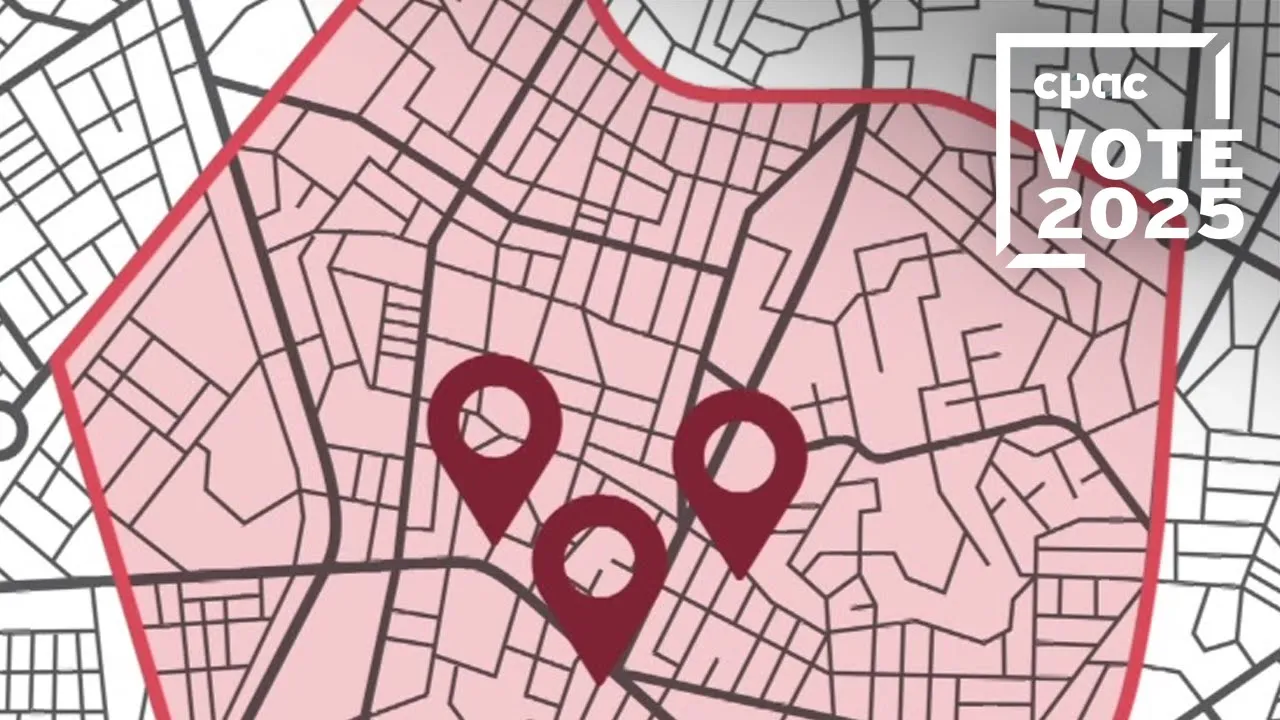
Campaign Slang: Where does the term “riding” come from?
613
An electoral district, also called a riding or constituency, is a geographic area where voters elect a representative to serve as their member of parliament; the term 'riding' derives from the old English word 'triing' meaning a subdivision within a county, and in Canada, these boundaries are determined by independent provincial commissions based on an average population of approximately 120,000 people per district.
Click to watch →

Electoral district
364
An electoral district (also known as a constituency, riding, ward, or electorate) is a territorial subdivision for holding separate elections for one or more seats in a legislative body, where only voters residing within its geographical bounds can participate; the district magnitude—the number of representatives elected from each district—fundamentally shapes electoral outcomes, with single-member districts favoring majoritarian systems and multi-member districts enabling proportional representation, while processes like apportionment, redistricting, and gerrymandering further influence how voters are represented based on population distribution and political strategy.
Click to watch →
What is an electoral riding?
473
An electoral riding (also called a constituency or district) is a geographic area in which voters elect a representative to government; in British Columbia, the province's 4.5 million people are divided into 85-87 electoral ridings, with boundaries determined every two elections by an independent Electoral Boundaries Commission, and each MLA represents the interests of their constituents, with elections often decided by very small margins of just a few hundred votes.
Click to watch →

Teaching “Geography of Elections”
394
A federal electoral district is a geographic area that elects one representative to Parliament. These districts are also known as 'ridings' or 'constituencies.' All three terms describe the same concept: a specific geographic community that sends one person to represent its residents in the federal government.
Click to watch →

【中学公民③】選挙の入試に出るポイントを解説します(中学社会・高校入試)
15.9K
An electoral district (選挙区) is a geographic area that elects one or more representatives. For example, Yamaguchi Prefecture is divided into 4 electoral districts. The key distinction between electoral systems is not about the size of the district but about how many representatives each district elects.
Click to watch →
Prerequisite Knowledge
- Concept 01The foundational concept of a representative democracy and how citizens delegate legislative authority to elected officials.
- Concept 02The structure of a parliamentary system, specifically the Westminster model, including the role of political parties and legislative bodies.
- Concept 03The definition of electoral districts, often referred to as ridings or constituencies, and how geographic boundaries define representation.
Subsequent Learning
- Step 01Alternative electoral systems, such as Proportional Representation (PR), Mixed-Member Proportional (MMP), and Ranked-Choice voting.
- Step 02Duverger's Law and the political science theory of how winner-takes-all voting methods structurally favor a two-party system.
- Step 03The math and ethics behind electoral discrepancies, such as 'wasted votes' and situations where a party wins the popular vote but loses the election.
- Step 04The historical and contemporary debates surrounding electoral reform initiatives in Canada, the United Kingdom, and other commonwealth nations.
Electoral System
Electoral System
0:01Playing Section
- 1
Canada uses first-past-the-post voting in single-member districts.
- 2
Each district elects one representative; winner takes all regardless of vote share.
- 3
The process repeats nationwide to form the national Parliament.
Proportional Representation
While the First Past the Post (FPTP) system promotes stable governments by awarding victory to the candidate with the most votes in a district, critics argue it severely distorts democratic representation. Proportional Representation (PR) is the primary alternative, asserting that a legislature should accurately reflect the popular vote. Under PR, if a political party wins 35% of the national vote, they receive approximately 35% of the legislative seats. Opponents of FPTP point out that it creates 'false majorities'—where a party wins total control of government with a minority of the popular vote—while leading to high numbers of 'wasted votes' and encouraging strategic voting. By contrast, PR systems, such as Mixed-Member Proportional (MMP) or Single Transferable Vote (STV), ensure that minority voices are represented, virtually eliminate the spoiler effect, and foster a more collaborative, coalition-based political culture where every vote directly influences the final outcome.
Deep Dive
Alternative electoral systems, such as Proportional Representation (PR), Mixed-Member Proportional (MMP), and Ranked-Choice voting.
PR048 Happy New Legislaturperiode
133
Alternative electoral systems to Germany's current model include mixed-member proportional representation (MMP), which separates direct mandates from list seats entirely. In MMP systems, half the seats are filled through direct mandates and half through party lists, with the list seats allocated to ensure overall proportionality. This system, used in New Zealand and parts of Germany, can reduce the number of wasted mandates while maintaining proportional representation. Other alternatives include the Alternative Vote (AV), used in Australia and Ireland, where voters rank candidates in order of preference and the candidate with the most first-preference votes who achieves a majority is elected. The Single Transferable Vote (STV), used in Ireland and Malta, combines elements of proportional representation with direct representation. Each system has different implications for government stability, representativeness, and voter choice, and countries choose systems based on their specific political culture and values.
Click to watch →

NCERT | Class-11 |भारत का संविधान सिद्धांत और व्यवहार|चुनाव और प्रतिनिधित्व|चुनाव की विभिन्न विधियाँ
63.9K
The Proportional Representation (PR) system is an alternative electoral method where seats are allocated to political parties in proportion to the votes they receive. There are two main forms: (1) Party List System - the entire country is treated as one constituency, parties submit priority lists of candidates, voters vote for parties, and seats are allocated based on vote percentage with candidates elected from their party's list in order of priority. (2) Multi-Member District System - the country is divided into larger districts, each electing multiple representatives, with parties submitting separate lists for each district. PR systems aim to ensure that the legislature composition reflects the distribution of votes among political parties more accurately. Israel and the Netherlands use this system.
Click to watch →
Leena Dabiru
342
Several alternative electoral systems exist beyond FPTP. The semi-proportional system, practiced by countries like Nepal, combines elements of both majoritarian and proportional systems. The Alternative Vote (AV) system, used in Australia and Fiji, allows voters to rank candidates in order of preference, with votes redistributed until a winner emerges. The Two-Round System, used in France, involves two elections where if no candidate achieves the required threshold, a second election is held between top candidates. The proportional electoral system operates on the principle that a party's share of seats should correspond to its share of votes. Countries like Germany and New Zealand have adopted proportional systems in recent decades. The party list system requires parties to prepare candidate lists submitted to the election commission before elections. There are two main types: open lists where voters can influence which candidates are elected, and closed lists where parties determine candidate order. Internal party democracy is essential for proportional systems to function effectively. The Mixed Member Proportional (MMP) system combines elements of both majoritarian and proportional systems, with 70% of seats through proportional representation and 30% through FPTP. Thresholds in proportional systems, such as 5% of votes, prevent very small parties from entering parliament but can exclude legitimate minority voices.
Click to watch →

Proportional Representation vs. Alternative Vote
725
Canada uses Single Member Plurality (First Past the Post), where the candidate with the most votes wins each riding without needing a majority. This creates artificial majorities and is unrepresentative in multi-party systems. Since the 1930s, only 2 of 23 Canadian elections saw any party clear 50% of the vote, yet 60% produced majority governments. Proportional Representation (PR) ensures vote share translates proportionally to seat share. Three main forms exist: Party List PR (Sweden, Finland, Norway) where parties receive seats proportional to vote share; Single Transferable Vote (STV) where voters rank candidates and surplus votes transfer; and Mixed Member Proportional (MMP) combining local and list seats. The Alternative Vote (AV) is a majority voting system where voters rank candidates in order of preference. The candidate with the fewest first-choice votes is eliminated, and their votes transfer to voters' next preferences until a candidate achieves 50% support. AV ensures the winner has majority support and was used in British Columbia (1951-1952) and Alberta/Manitoba (1920-1956).
Click to watch →

Election Methods - Is There a Better Way to Vote? Part 1
405
Three proportional systems exist: Open list (most common in developed countries) lets voters select individual candidates, with votes counting for both candidate and party. Closed list gives parties more power by having them assign seats based on ballot order. Mixed-member proportional combines local district representatives with party-proportional seats, used by New Zealand. Ranked choice voting can also be adapted for multi-winner districts, allowing minority voters to elect representatives in urban and rural areas.
Click to watch →
Deep Dive
Duverger's Law and the political science theory of how winner-takes-all voting methods structurally favor a two-party system.

Duverger's Law and the Two-Party System Explained
92.7K
Duverger's Law, developed by French political scientist Maurice Duverger in the 1950s, explains that the number of political parties in a country is primarily determined by its electoral system: winner-takes-all plurality voting with single-member districts encourages a two-party system because voters fear wasting their votes on third-party candidates; approval voting allows voters to support multiple candidates but still operates under winner-takes-all principles; proportional representation, which allocates seats based on total vote proportions across multi-member districts, provides the most effective mechanism for enabling smaller parties to gain representation by lowering the threshold for winning seats and encouraging honest voting for favorite candidates.
Click to watch →

Is Reform Overhyped?
106.6K
Duverger's Law is a political science theory explaining why first-past-the-post electoral systems tend to produce and perpetuate two-party systems. The law posits that single-member district plurality voting systems favor larger parties and systematically disadvantage smaller parties, creating incentives for voters to support major parties rather than risking votes for third-party candidates. Historical evidence supports this theory: in 2019, both the Brexit Party and Liberal Democrats were polling at levels comparable to the Conservatives and Labour, but following the Brexit Party's decision not to field candidates against Tory seats, polling returned to normal two-party patterns. This demonstrates how electoral system mechanics work against third-party success, even when those parties achieve strong initial polling numbers.
Click to watch →

The "lottocracy": governance by lottery | Colin Pugh & Alex Guerrero
1.8K
Duverger's Law states that in political systems where single members are elected from geographic districts through winner-take-all voting, the system will overwhelmingly result in two dominant political parties. This makes it impossible for third, fourth, or fifth parties to be viable. In contrast, proportional representation systems allow more political parties to exist. The two-party system forces voters into choosing between limited options and makes it difficult for people with mixed political views (e.g., social conservative and economic liberal) to find representation.
Click to watch →

MrBeast Wanted 10k! AOC Jealousy In Congress & The Issue w/ Democrats | BRIDGES #1 JEREMIAH JOHNSON
166.2K
Duverger's Law is a political science principle stating that first-past-the-post electoral systems tend to collapse into two-party systems. This is observed across democratic nations including the US, UK, Canada, and India. While there are exceptions like regional parties in India, the tendency toward two-party systems is strong. Coalition governments in multiparty systems have their own problems, such as small parties gaining disproportionate influence over platforms. The most successful third parties in first-past-the-post systems are almost universally regional ones, like the Bloc Québécois in Canada or the Scottish National Party in the UK.
Click to watch →

УНИЖЕНИЕ ЕВРОПЫ
50.7K
The United States has a two-party system primarily due to its electoral system operating on a 'winner-takes-all' principle. While there are dozens of political parties, including socialist and minor parties, they rarely win elections because their supporters typically vote for major parties to ensure their vote has impact. Duverger's Law explains that 'winner-takes-all' electoral systems produce two-party systems because voters are motivated to support only parties with realistic chances of winning. This system was not originally intended by Washington, who opposed political parties, but the electoral structure has made two-party dominance inevitable.
Click to watch →
Deep Dive
The math and ethics behind electoral discrepancies, such as 'wasted votes' and situations where a party wins the popular vote but loses the election.

Electoral college | American civics | US History | Khan Academy
492.2K
The winner-take-all system can create situations where a candidate wins the popular vote (more total votes nationwide) but loses the Electoral College and thus the presidency. This occurs when a candidate wins many states by large margins while losing fewer states by small margins. For instance, a candidate could win several states with 80% majorities while losing key swing states like Florida and California by narrow margins (49% vs. 51%), resulting in fewer total electoral votes despite having more popular votes.
Click to watch →

Electoral College Election 2000 - Boyer Civics KMS
201
In the 2000 election, Gore won the popular vote with approximately 500,000 more votes than Bush, yet Bush won the electoral vote. This was the only time in U.S. history that someone won the popular vote but lost the electoral vote. The winner-takes-all system in most states means that winning a state by a small margin (like Florida's 286 votes) can secure all of that state's electoral votes. This discrepancy explains why many people criticize the electoral college system as unfair.
Click to watch →

Music & Politics with Nirvana Bassist Krist Novoselic
71.1K
The U.S. electoral system can produce situations where the candidate receiving more popular votes nationwide loses the presidency or congressional seats. In 2012, Democrats received more total votes than Republicans in House elections but lost the majority of seats due to the winner-take-all district system. This occurs because each district elects only one representative regardless of vote share, meaning votes in landslide districts are effectively wasted while competitive districts determine outcomes.
Click to watch →

Christoph von Marschall – Trump oder Harris? (09.09.24)
1.4K
The Electoral College creates complex mathematical dynamics in presidential elections. In 2016, Hillary Clinton won the popular vote by over 3 million but lost the Electoral College by winning only 206 electoral votes. She needed to win Wisconsin, Michigan, and Pennsylvania (the 'Rust Belt' states) to reach 270, but lost all three by small margins (20,000, 10,000, and 60,000 votes respectively). This demonstrates how the Electoral College can produce outcomes that contradict popular vote results.
Click to watch →

Math 105 Video 5.3a Popular Vote vs Electoral College
3.8K
In the electoral college system, a candidate can win the presidency by securing a majority of electoral votes (22 out of 43 in this example) even if they lose the popular vote, because electoral votes are allocated based on state populations and fixed senatorial representation, creating a winner-take-all system where winning a state's popular vote grants all of that state's electoral votes.
Click to watch →
Deep Dive
The historical and contemporary debates surrounding electoral reform initiatives in Canada, the United Kingdom, and other commonwealth nations.

Our Democratic Futures : Proportional Representation for the US, the UK and Canada
848
Electoral reform typically occurs through political processes rather than direct citizen referendums. In the UK context, recent electoral changes happened without referendums, such as reforms to mayor elections. The key pathway involves building consensus among political parties, particularly when one major party faces declining support and recognizes that reform might be preferable to continued decline. Canada's experience shows that minority governments provide opportunities to advance reform agendas, though both major parties often resist change hoping to return to majority rule. The best approach involves understanding what voters actually want to accomplish with their votes and selecting a voting system that enables those goals. Citizens assemblies and royal commissions have proven effective methods for studying and recommending electoral reforms, as they can examine complex technical issues beyond typical public understanding.
Click to watch →

What would electoral reform look like in Canada?
30.2K
Canada's First Past the Post (FPTP) electoral system allows a party to win more seats than their share of total votes, as demonstrated when the Conservatives received more votes than the Liberals in both 2019 and 2021 elections yet lost both times; this system has sparked debate about reform, with alternatives including proportional representation (where seats reflect vote percentages), mixed member proportional (combining local FPTP with party-list allocation), and preferential ballots (ranked choice voting), though implementing such changes proves challenging due to voter apathy and complexity.
Click to watch →

Frank Graves: Voter Trust, Populism and Democracy in Canada
323
The failures of the United Kingdom and United States in responding to the pandemic provide compelling case studies for advocating electoral reform. In the UK, electoral system fragmentation prevented voters from removing the government despite clear majority opposition. In the US, the electoral college system allowed a candidate with less popular vote support to win the presidency. Research using an 'ordered-open' index reveals that the Conservative Party constituency has transformed dramatically, becoming more working-class, hostile to immigration, and anti-science compared to historical conservative constituencies, correlating strongly with opposition to electoral reform.
Click to watch →

Paige Saunders: Why the US and Canada are Trapped (and how New Zealand escaped)
238
Electoral reform fails because the parties benefiting from the current system have no incentive to change it. Politicians who gain the most from majoritarian rules will resist reform. Additionally, Canadians are largely unaware that most Western democracies have abandoned first-past-the-post, creating false confidence in the current system. Case studies show that Mongolia successfully implemented proportional representation in 2024 through parliamentary action, while Canada's repeated failures stem from politicians reneging on promises once in power. Traditional referendums fail because complex electoral systems confuse voters, leading to rejection. A better approach is binding citizens assemblies where randomly selected citizens study the issue and recommend a specific system.
Click to watch →

A Debate on Reform of the Electoral System in Canada - Visions of Canada 2042
277
Canada has debated electoral reform for nearly a century. In 1919, the Liberal Party first endorsed proportional representation at its national leadership convention. Five provinces (British Columbia, Ontario, Quebec, New Brunswick, and Prince Edward Island) have attempted reform, but none succeeded in moving away from the single member plurality system. The 2015 election saw the Liberal Party endorse the Alternative Vote method, with Prime Minister Trudeau pledging that 2015 would be the last federal election under First Past the Post. An all-party parliamentary committee was formed to review reforms, with legislation to be introduced within 18 months of forming government.
Click to watch →
Electoral System
Electoral System
0:01- 1
Canada uses first-past-the-post voting in single-member districts.
- 2
Each district elects one representative; winner takes all regardless of vote share.
- 3
The process repeats nationwide to form the national Parliament.
Proportional Representation
While the First Past the Post (FPTP) system promotes stable governments by awarding victory to the candidate with the most votes in a district, critics argue it severely distorts democratic representation. Proportional Representation (PR) is the primary alternative, asserting that a legislature should accurately reflect the popular vote. Under PR, if a political party wins 35% of the national vote, they receive approximately 35% of the legislative seats. Opponents of FPTP point out that it creates 'false majorities'—where a party wins total control of government with a minority of the popular vote—while leading to high numbers of 'wasted votes' and encouraging strategic voting. By contrast, PR systems, such as Mixed-Member Proportional (MMP) or Single Transferable Vote (STV), ensure that minority voices are represented, virtually eliminate the spoiler effect, and foster a more collaborative, coalition-based political culture where every vote directly influences the final outcome.
The foundational concept of a representative democracy and how citizens delegate legislative authority to elected officials.
The structure of a parliamentary system, specifically the Westminster model, including the role of political parties and legislative bodies.
The definition of electoral districts, often referred to as ridings or constituencies, and how geographic boundaries define representation.
Alternative electoral systems, such as Proportional Representation (PR), Mixed-Member Proportional (MMP), and Ranked-Choice voting.
Duverger's Law and the political science theory of how winner-takes-all voting methods structurally favor a two-party system.
The math and ethics behind electoral discrepancies, such as 'wasted votes' and situations where a party wins the popular vote but loses the election.
The historical and contemporary debates surrounding electoral reform initiatives in Canada, the United Kingdom, and other commonwealth nations.
752 views5likes2:00@CoolclassProductionsOriginal Release: 2015-10-14
first pass the post or win or take all elections this is the system currently used in Canada the system requires the country to be divided into several electoral districts or writings each writing corresponds with a seat in the National Parliament each writing votes independently of the others to elect a single representative to start let's focus on a single writing as with all democracies we start at the citizen level candidates come forward from the community in this example we have five candidates a candidate usually but not always has a party affiliation on Election Day all the citizens of the writing that are of voting age choose a single candidate in secret by checking the candidate's name on a ballot when the polls close at the end of the day the votes are counted the candidate with the most votes becomes the winner she is now a member of the national Parliament with the task of representing all the people in her writing as we see here the red candidate won the election with 35% of the vote this is where the names sake of winner take all comes from because there is no reward for second or third place only the winner becomes the Member of Parliament despite the proportion of votes received this process is done for all the writings Across the Nation each contributing a single member of parliament these members of parliament all joined together in the capital to create the national Parliament
Up Next
15:07
Types of Electoral Systems: Explained with Pros and Cons
@brainfriendng
11.1K views•2020-05-04

24:30
BRICS Pay and de-dollarization: A New Financial Order Emerges? | 55 chars
@DannyHaiphongYT
164.6K views•2024-10-22

7:33
Government Surveillance Methods: 10 Ways You May Be Watched
@BeAmazed
1.6M views•2017-04-09

10:19
Explaining the Saudi-Iranian Proxy Conflict in the Middle East
@Vox
18.2M views•2017-07-17
Related Study Plans & Knowledge Roadmaps
Structured learning paths in Political Science
political-science
Economic Statecraft: Sanctions & Chokepoints
01Foundations of Geoeconomics and Economic Statecraft
02The Mechanics of Weaponized Interdependence
03International Sanctions: Types, Implementation, and Efficacy
+ 2 more learning modules
12h5 modules
Explore Roadmap
political-science
Central Bank Independence: Politics & Policy
01Foundations of Central Banking and Monetary Policy
02The Time Inconsistency Problem & Inflation Bias
03The Delegation Model and Designing Independence
+ 2 more learning modules
12h5 modules
Explore Roadmap
political-science
Consociationalism: Power-Sharing & Stability
01Democratic Dilemmas in Divided Societies
02Introduction to Consociational Democracy
03The Four Pillars of Consociational Design
+ 2 more learning modules
12h5 modules
Explore Roadmap
political-science
Rebel Governance: Legitimacy, Economy & State
01Foundations of Rebel Governance and Statehood
02Establishing Political Legitimacy and the Rebel Social Contract
03Wartime Economies and Rebel Resource Management
+ 2 more learning modules
14h5 modules
Explore Roadmap