


![1시간 안에 고1 수학(상,하) 정리하기 [모든 등급 필수시청]](https://i.ytimg.com/vi_webp/d3tj1ebpegk/maxresdefault.webp)









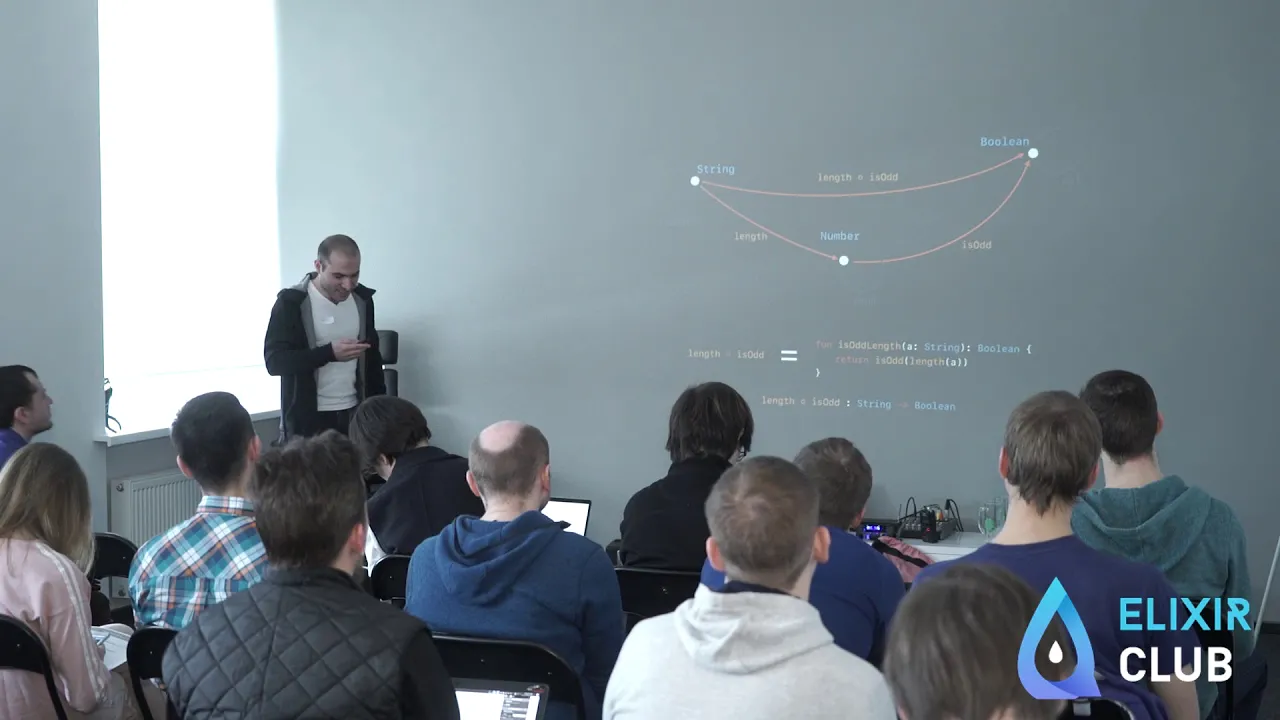
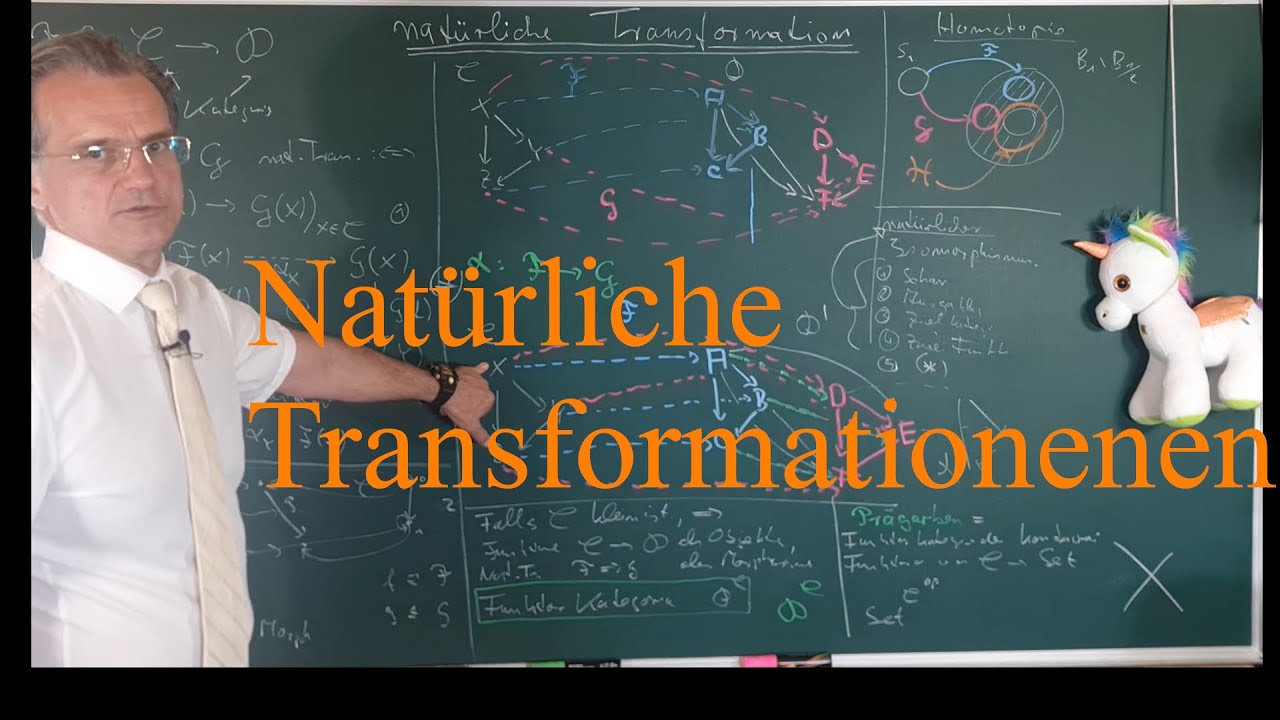
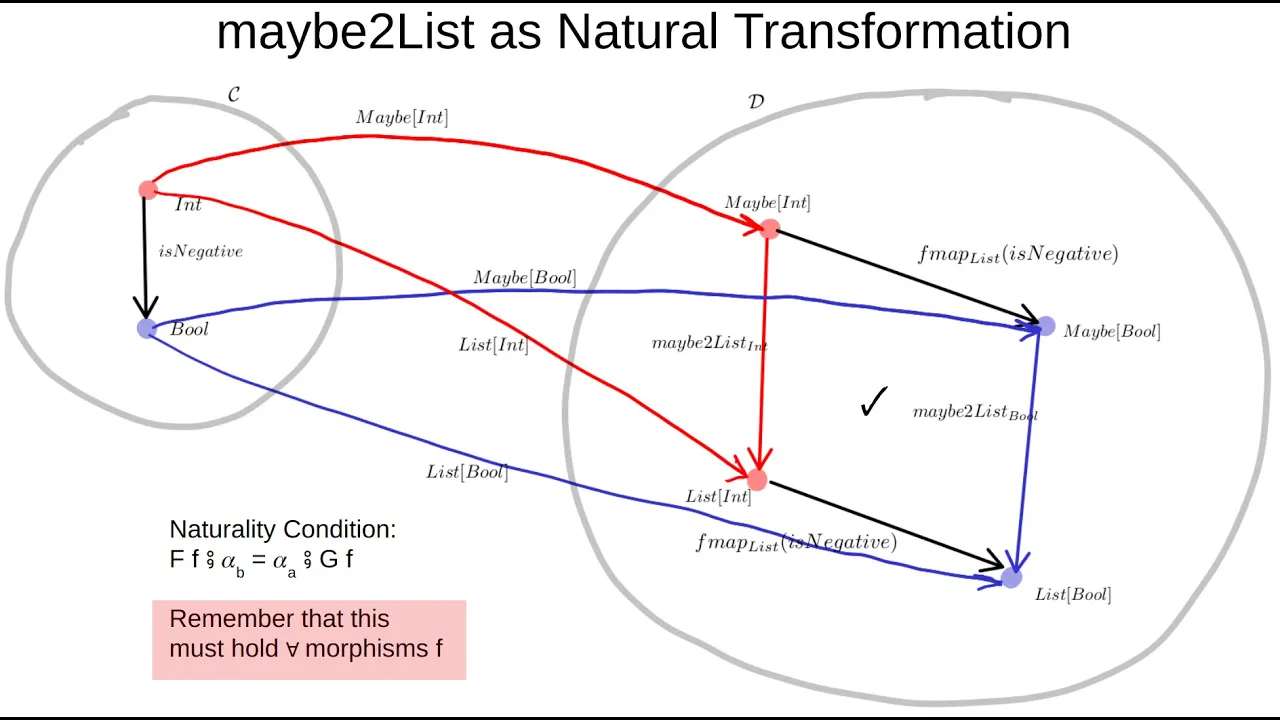
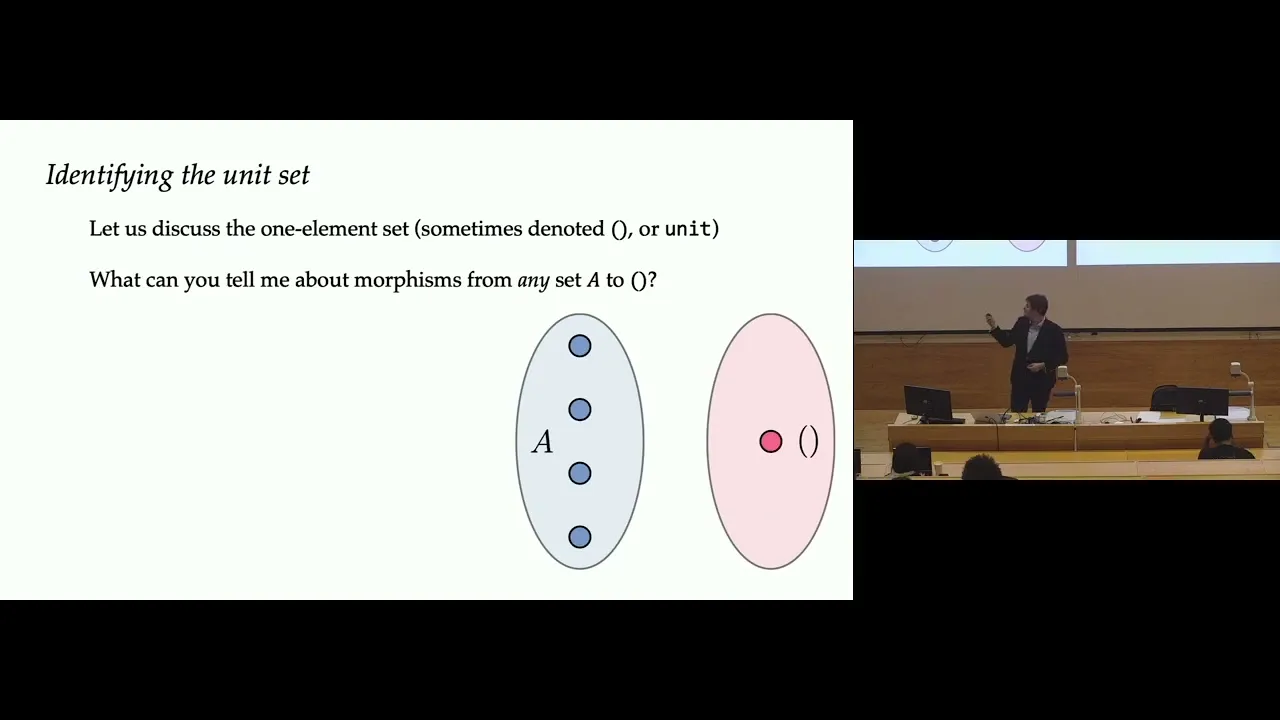



Category theory provides a high-level mathematical framework that unifies seemingly distinct areas of mathematics (geometry, algebra, topology, set theory, type theory, and logic) by revealing they share the same underlying structure at sufficiently high levels of abstraction, and it serves as a powerful tool for programmers to reason about complex systems by decomposing problems into smaller, composable components that can be abstracted and reused across different domains.
Category Theory 1.1: Motivation & Philosophy | Programming
Added:Fundamental programming concepts, particularly functional programming principles like pure functions and function composition.
Basic mathematical logic and set theory, including the concept of sets, elements, functions, and domains.
Familiarity with static type systems (such as in Haskell, Scala, or TypeScript) and how types constrain program behavior.
An understanding of software design complexity and the general purpose of abstraction in software engineering.
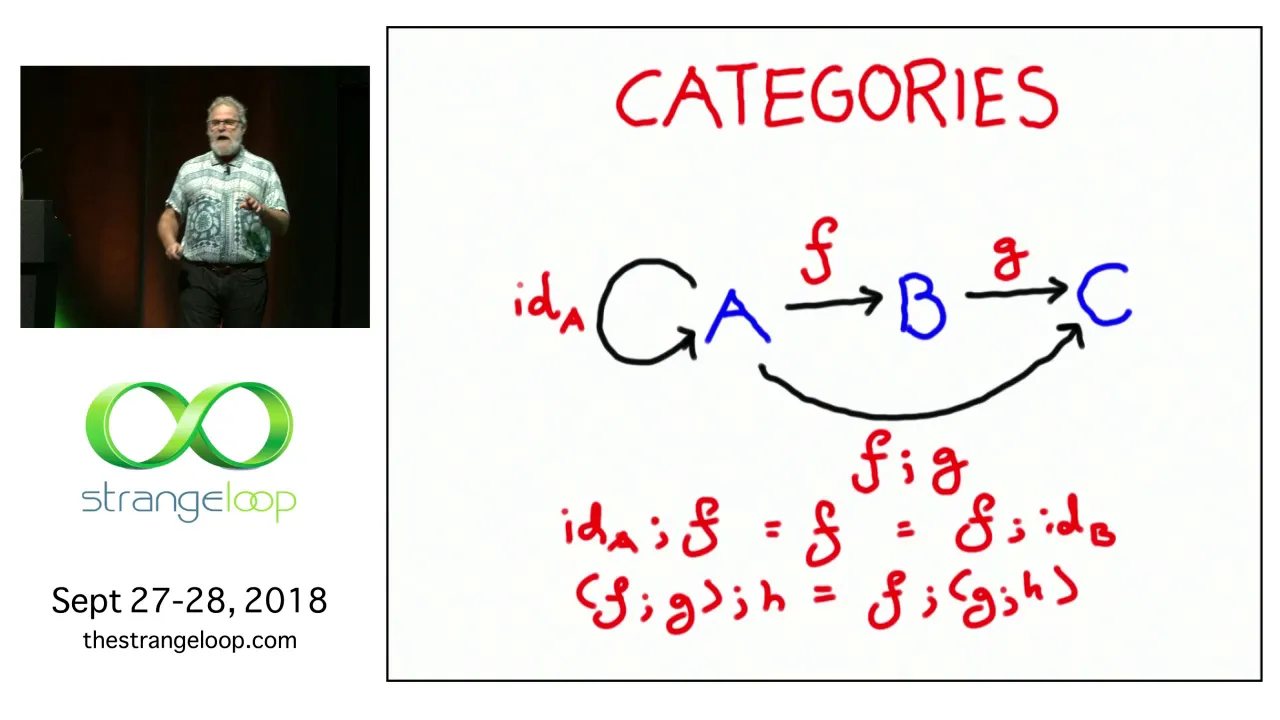
The formal mathematical definition of a Category, including objects, morphisms (arrows), identity, and associativity.
The concept of Functors as structure-preserving mappings between categories and their practical implementation in code.
Monoids and Monads, and how these algebraic structures are used to model computations and side effects.
Natural Transformations, which define systematic ways of translating one functorial process into another.
The Curry-Howard-Lambek isomorphism, which establishes the deep three-way connection between logic, type theory, and category theory.
375.9K views7.3Klikes46:46Original Release: 2016-08-25
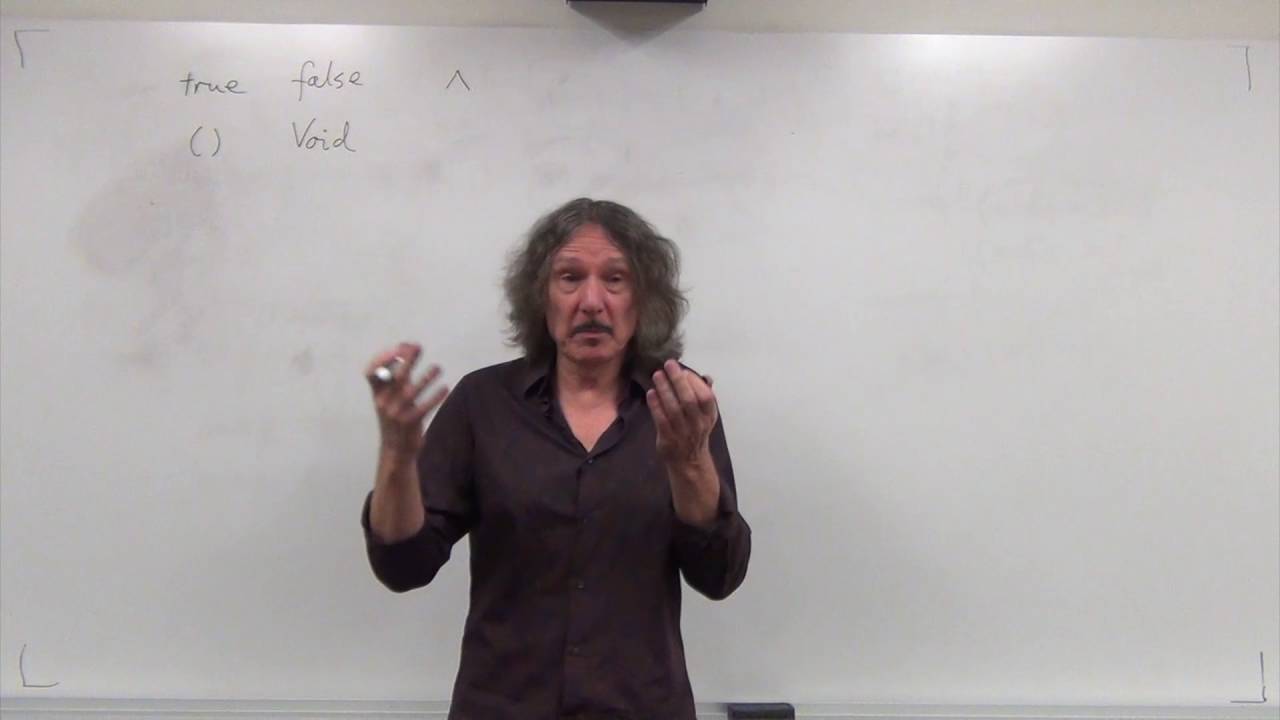
Alright, welcome to category theory lectures So, are we all programmers here?
Is everyone a programmer, or are there people who are not programmers?
If you're not a programmer, please raise your hand Okay, thats means, like, you don't write any programs? > I kind of learn as a hobby Okay well that's good enough okay and how many people here have some little bit of knowledge of Haskell, okay Oh Lots, that's, that's, excellent because I might be giving some examples mostly just like you know, declarations, functions or something like that I'll explain everything but it's it's good to have a little bit of understanding. So I'm not really teaching a programming language, it will be about category theory and category theory is like this most abstract, or well maybe almost the most abstract part of mathematics, right so the question is why are we here?
what does it have to do with programming, right?
and a lot of programmers they hate math they finished learning math at college and now they are really happy now "for the rest of my life I will not have to touch it" "I hate math" and so on, and you guys here come for, I dunno, punishment?
Why do you think category theory might be important?
What do you think, do we do functional programming?
Is category theory only relevant to functional programming or other branches of programming would maybe profit from it too?
is there something more to offer?
Have you heard of functors, who's heard of functors?
yeah, and who knows what functors are?
Uh huh, a few. That's good, that means i can actually explain stuff and you won't be totally repeating what you already know so I came to category theory through a long long twisted road ok when I started programming I started programming in assembly language the lowest possible level, right, where you actually tell the computer exactly what to do right down to "grab this thing from memory, put it into the register, use it as an "address and then jump" and so on so this is very precisely telling the computer what to do right this is this is a very imperative way of programming we start with this most imperative approach to programming and then sort of we drag this this approach to programming throughout our lives right and like we have to unlearn at some point. And this approach to programming sort of in computer science is related to Turing machines. A Turing machine is this kind of very primitive machine, it just stamps stuff on a paper tape, right there is no high-level programming there it's just like this is the assembly language "read this number, put it back on tape, erase something from the tape" and so on so this is this one approach towards programming by the way, all these approaches to programming were invented before there were even computers, right and then there's the other approach to programming this came from mathematics the lambda calculus right, Alonzo Church and these guys and that was like "what is possible to compute, right, "thinking about mathematics in terms of "how things can be actually executed in some way, transforming things", right so these approaches to programming are not very practical although people write programs in assembly language and it's possible but they don't really scale, so this is why we came out with languages that offer higher levels of abstraction, and so the next level abstraction was procedural programming what's characteristic of procedural programming is that you divide a big problem into procedures and each procedure has its name, has a certain number of arguments maybe it returns a value sometimes right not necessarily, maybe it's just for side effects and so on, but because you chop up your work into smaller pieces and you can like deal with bigger problems right so this this kind of abstracting of things really helped in in programming, right and then next people came up with this idea of object-oriented programming right and that's even more abstract now you have stuff that you are hiding inside objects and then you can compose these objects right and once you program an object you don't have to look inside the object you can forget about the implementation right and and and just look at the surface of the object which is the interface and then you can combine these objects without looking inside and you know you have the bigger picture and then you combine them into bigger objects and so you can see that there is a a certain idea there, right? and so it's a very important idea that if you want to deal with more complex problems you have to be able to chop the bigger problem into smaller problems, right, solve them separately and then combine the solutions together And there is a name for this, this is called composability, right.
So composability is something that really helps us in programming.
What else helps us in programming? Abstraction, "abstraction" that comes from from a Greek word that means more or less the same as "subtraction", right which means "getting rid of details". If you want to hide details, you don't want them or you wanna say "these things, they differ in some small details but for me they are the same" "I don't care about the details" so, an object is in object-oriented programming is something that hides the details, abstracts over some details right, and there are even these abstract data types that just expose the interface and you're not supposed to know how they are implemented right?
so when I first learned object-oriented programming I thought "this is like the best thing since sliced bread" and I was a big proponent of object-oriented programming and together with this idea of abstracting things and and and composing things comes the idea of reusabillity right so if i have these blocks that I have chopped up and implemented, right, maybe I can rearrange them in different ways so once I implemented something maybe I will use it in another problem to solve another problem I will have these building blocks, I will have lots of building blocks that hide their complexity and I will just juggle them and put them in new constellations, right? so it seemed to me like this is really the promise of object-oriented programming, I'm buying it! and I started programming object-oriented way using C++ and I became pretty good at C++ I think, you know, I wrote a lot of C++ code and well it turns out that there is something wrong with this object-oriented approach and it became more and more painfully obvious when people started writing concurrent code and parallel code, ok, so concurrency does not mix very well with object-oriented programming. Why doesn't it? Because objects hide implementation and they hide exactly the wrong thing, which makes them not composable, ok?
They hide two things that are very important: They hide mutation – they mutate some state inside, right? And we don't know about it, they hide it They don't say "I'm mutating something".
And sharing these pointers right – they share data and they often share data between each other you know between themselves they share data And mixing, sharing and mutation has a name It's called a data race, ok?
So what the objects in object-oriented programming are abstracting over is the data races and you are not supposed to abstract over data races because then when you start combining these objects you get data races for free, right.
and it turns out that for some reason we don't like data races, ok?
and so once you realize that you think "okay, I know how to avoid data races, right, I'm going I'm going to use locks "and I'm going to hide locks too because I want to abstract over it" so like in java where every object has its own lock, right?
and unfortunately locks don't compose either, right.
That's the problem with locks. I'm not going to talk about this too much because that is like a different course about concurrent programming but I'm just mentioning it that this kind of raising the levels of abstraction you have to be careful what you're abstracting over what are the things that you are subtracting, throwing away and not exposing, right?
So the next level of abstraction that came after that, well actually it came before that but people realised that, "Hey, maybe we have to dig it out "and start using this functional programming" when you abstract things into functions and especially in Haskell when, you know, in a functional language you don't have mutations so you don't have this problem of hiding data races, and then you also have ways of composing data structures into bigger data structures and that's also because everything is immutable so you can safely compose and decompose things.
Now every time I learned a new language I wanted to find where the boundaries of this language are like, "what are the hardest things to do in this language?", right?
So for instance in C++, right, what are the highest levels of abstraction that you can get?
Template metaprogramming, right? So I was really fascinated by template metaprogramming and I started reading these books about template metaprogramming and was like "Wow, I would have never come up with these ideas, they are so complex", right?
So it turns out that these are very simple ideas it's just that the language is so awkward in expressing them So I learned a little bit of Haskell and I said "Ok this huge template that was so complicated, that's one line of code in Haskell", right? So there are languages in which there was like a jump in the level of abstraction and made it much easier to program at a higher level of abstraction, right.
And in every language you know there is this group of people who are writing libraries right and they always stretch the language they always go to the highest possible abstraction level and they and they hack, right? They hack at it as much as possible. So I thought "Okay I don't like hacking, I just wanted to "use a language that allows me to express myself at a high level of "abstraction and that lets me express new ideas that are much more interesting" you know, like, with template metaprogramming right you express this idea that you might have lots of data structures that only differ by the type that they hide. Like you can a vector of integers and vector of booleans right? And there's just so much code to share, so if you abstract over the data type that you are storing there, if you forget about it, hide it, abstract over it, you can write code, abstract code, and in C++ you do this with templates right. And you get something new, you program at a higher level – a higher abstraction level because you disregard some of the details, so that was great.
Now it turns out that once I learned Haskell (I'm still learning Haskell to some extent) I found out there are things in Haskell that are at these boundaries of abstraction that, like, there are people who are working on this frontier of Haskell, right?
There are certain very abstract things that are unfortunately a little bit awkward to express in Haskell and then there is this barrier to abstraction even in Haskell right?
I mean if you've seen some libraries that were written by Edward Kmett you realise that they are extremely hard to understand what was the thought process, right?
And the secret is very simple – Category Theory.
Edward Kmett knows Category Theory, and he just takes this stuff from Category Theory, he reads these mathematical papers and he just translates them into Haskell and when you translate stuff from Category theory to Haskell you lose a lot of abstraction, you make it more concrete Haskell has one category built-in and you are restricting yourself to this particular category.
You can create other categories in Haskell and model them, but that becomes awkward and that becomes sort of like template metaprogramming you know within Haskell – not exactly the same mechanism but the the level of difficulty in expressing these ideas in Haskell is as big as template metaprogramming in C++.
So Category Theory is this higher-level language above Haskell, above functional programming, above ML, Haskell, Scala, and so on C++, assembly, it's a higher-level language, okay? It's not a practical language that we can write code in, but it's a language.
So just like people who write these horrible metaprogramming template libraries in C++ they can only do this because they learned a little bit of Haskell.
and they know what some constructs in Haskell are and how to do things – how to implement algorithms on immutable data structures right they know how to do this because they learned it from Haskell and they just translated into this horrible template programming language.
Fine right? And it works and people are using it, the same way that if you're a functional programmer you can take these ideas from category theory, these very very abstract ideas and translate it into this kind of awkward language called Haskell, right? Now from looking from from categorical perspective Haskell becomes this ugly language just like looking from Haskell C++ becomes this ugly language, right? But at least you know it's an executable language, its a language in which we can write programs. And of course these ideas when they percolate from category theory down to Haskell they can also percolate then down to C++ and even to assembly, PHP or whatever, JavaScript if you want to because these are very general ideas So we want to get to this highest possible level of abstraction to help us express ideas that later can be translated into programs. So that for me is the main practical motivation ok? But then I started also thinking about the theoretical motivation or more philosophical motivation because once you start learning Category Theory you say "Okay, Category Theory unifies lots of things".
I mean if you abstract enough, if you chop up all the unnecessary stuff and you are you know, top of Mount Everest and you're looking down and suddenly all these things start looking similar, like from that high-level all these little programming languages look like little ants and they behave same way and its like "Ok, they're all the same". At that level of abstraction all this programming stuff, it's all the same, it looks the same.
But that's not all – suddenly at this high, high level other things look the same and then mathematicians discovered this, that they've been developing separate areas of mathematics, right? So first of all they developed geometry, algebra, number theory, topology, what have you, set theory these are all completely different separate theories, they look nothing like each other, right and category theory found out similarities between all these things. So it turns out that at a certain level of abstraction, the structure of all these theories is the same. So you can describe, you know, you tweak with the structure of a category and you suddenly get topology, you tweak this structure of category, you suddenly get set theory, you tweak something else and you get algebra.
So there is this unification, this grand unification, of, essentially, all areas of mathematics in category theory. But then there is also programming, right?
Programming that deals with these computers with this memory and processor or registers, ok?
And this stuff can be described also, and then there's a programming language, this stuff can be described mathematically, yes, lambda calculus Like all these languages that essentially have roots in lambda calculus they try to get away from bits and bytes and gotos and jumps, right and loops, and they want to abstract this stuff into stuff that's more like lambda calculus, right and there are these data structures and these data structures you know, we used to look at them like "here's a bunch of bytes, "here's a bunch of bytes, here's a pointer from this bunch of bytes to this bunch "of bytes" and so on, right?
The very very low level, like plumbers working with tubes, right?
And then computer scientists say "Well actually these things, they form types" So there's type theory, there's type theory that can describe all these categories of data structures, but there's also type theory in mathematics, right, people invented types in math not to solve problems that computer scientists have, they try to solve problems like paradoxes, like there is Russell's paradox that says that you cannot construct a set of all sets, things like this, or maybe you know the Barber's Paradox: can the barber shave himself or not – every barber shaves only people who don't shave themselves so can he shave himself or not?
This kind of paradox – its a funny paradox but they're serious So this Barber's Paradox actually can be translated into Russell's Paradox which is like "the set of all sets" or "sets that don't contain themselves don't form a set" and so on stuff like this right and and Russell came up with this theory of types that to say that sets form layers upon layers, that you cannot just have all sets and put them one big set, right and then the type theory evolved from this and there's this very abstract Martin-Löf Type Theory that's very formal, right so that's that's just a branch of mathematics that was created to deal with paradoxes and then there is logic, and logic was created you know long, long time ago by the ancient Greeks right, they used logic so there are laws of logic and people have been studying logics for thousands of years, right. And at some point people suddenly realized that all these distinct areas of mathematics are exactly the same this is called the Curry-Howard-Lambek isomorphism which says that whatever you do in logic can be directly translated into whatever you do in type theory. They are exactly – it's not like they are similar – they are exactly the same there is a one to one correspondence, right? And the Lambek part of this isomorphism says that in category theory, there's certain types of categories – like the cartesian closed categories – that actually totally describe the same thing. It's just like there are these three different theories, one is about computing, one is about categories another is about types and they are all the same so like all essentially all our human activity is described by one theory ok so this is like really mind-blowing and of course mathematicians you know when they discover things like this they turn philosophical or I wouldn't say religious but at least philosophical right like "Oh my god we are discovering stuff!" it's like you're not really creating mathematics right you're discovering some deep deep truth about the universe okay like what do you think it is mathematics something that we invent or is it like built into the universe, because for physicists, this is "no", right, physicists do experiments so – "We study stuff, we throw these atoms at each other, bang bang and we observe something so we are discovering stuff that's around us" Whereas mathematicians, no, they just sit down at the desk with a pencil or walk around in a park and think.
What are they discovering? And now they are saying "Well we have independently discovered that this branch of mathematics this guy discovered and this other guy in ancient Greece he discovered logic and this guy in Sweden who discovered type theory you know, and they all discovered the same thing – there is some really really deep truth that we are discovering" so it's like there is some Platonic Ideal right I don't know if you read [Neal] Stephenson's novels about, there's this novel in which there are multiple universes and each of them is more platonic than the other, and people move from one platonic universe to another but the mathematicians think that this is really what they are doing, right?
And I was thinking about it and I thought "No this is really not – there has to be at a simpler explanation" And that goes back to the way we do mathematics or the way we discover the universe, right.
So what do we do? I mean we are human, right? We are these evolved monkeys, right now we have evolved our brains so some parts of our brain evolved you know since, I dunno, billion years of evolution, like, the image processing stuff for instance has been evolving for a very very long time right so this is a really very good system to analyse visual input. That's been involving for a very long time starting with bacteria that would just see whether it's bright or dark and change their metabolism and then they would start seeing this side is brighter than that side and so on and eventually, you know, the most important thing "Where is the predator?" "Where's the food?" distinguishing between a predator and food right this is like the most important thing that makes you survive right so we got very good at this and we have inherited the stuff from lower animals and and there's been a lot of evolutionary pressure to evolve these right and now we are trying to imitate the stuff with computers and we're finding it really hard it's a really hard problem image recognition right now, recognizing who's your foe and who's your friend and recognizing where the food is right and whether it's spoiled or not – very important things computers don't do very well ok so this is a very hard problem but we've been working on it for a billion years so our brains know how to do this stuff. But then there are there are things that evolved in the last hundred thousand years or so, I don't know, how long is human evolution? 100 million years?
No it's not. Whatever it is it's a tiny number, it's just like the last millisecond of evolution that we suddenly had these brains that that can actually think abstractly – we can count, we can communicate, we can organise stuff, and we can do math and we can do science and this is like a really fresh ability, and and we've been doing science for the last few thousand years onwards so that's that's nothing on the evolutionary scale and we're doing it with these brains, what do these brains come from, they evolved to do things like hunt mammoths, or run away from sabre-toothed tigers, they did not evolve to do programming, that's a very recent thing! They didn't evolve even to do mathematics or logic no, they evolved to do stuff like hunting, like finding food and especially organizing ourselves into groups, right? Social activities and communicating, so language right? So we have these language skills it's very fresh thing, right?
So compared to the complexity of our visual cortex this new newly acquired ability to actually think abstractly and using a language that that's like really very very fresh thing and it's very primitive, ok. It hasn't had time to evolve. It's very simple and we are using this tool that we evolved to throwing javelins or arrows, shooting arrows and communicating with with other guys like "Oh here, the mammoth is over there!"
"No don't run there!" or "Right behind you a sabre-toothed tiger!" or "A bear!" so we are now using this tool to do mathematics so there are certain things that we found useful in doing abstract thinking, in doing mathematics and the major thing is we come head-to-head with a very complex problem like how to provide food for our tribe right and we solve it, how do we solve it, we divide it into smaller problems that we can solve and then we combine the solutions ok so this is the only way we know how to deal with complex situations by decomposing these things into simpler things and then solving them, the simplest problems, and combining the solutions into bigger solutions and this is everywhere.
You find is that this permeates everything we do that we don't even notice it.
But this is how we work and because this is how we work this is how we do science as well.
So every branch of science, every branch of mathematics is "We can only see these things that can be chopped into pieces and then put together" so no wonder they look the same!
Because we can only see these problems that have this structure. If they don't have this structure, we just don't see them, we just say "We cannot solve this problem" "Let's do something else, maybe we can get a grant for solving that other "problem because that seems choppable into smaller pieces "this one doesn't, let's forget about it let's not even talk about it", right?
So one good thing, ok, so maybe the whole universe is like this maybe everything in this universe can be chopped into little pieces and then put together, maybe that's like the property of this universe and our brains are just reflecting this.
And personally I don't think so. Maybe I'm wrong, hopefully I'm wrong, but I'm a physicist also, I started as a physicist, so I saw what was happening in physics and in physics we also wanted to chop things into little pieces, right. And we were very successful at this you know – we found out that matter is built from atoms, right? So atoms are these things that we can separate and then study, find their properties and then say that the property of a rock or a piece of metal comes by combining the properties of these atoms so we can decompose a piece of rock into atoms, study them and then recompose it, and then we have the understanding of them.
But then we didn't stop at that because we wanted to see what's inside the atom right? So there are these elementary particles electrons, protons and so on. So at some level if we want to decompose things into simpler things, these simpler things have to have similar properties. For instance what's the simplest thing that we can imagine for an elementary particle? It has to be a point, right? It should be a point. I mean, if it's a ball right then maybe we can cut it, chop it into smaller pieces and and then do the decomposition, recomposition and so on. So at some level, some lowest possible level we cannot chop it anymore and we should find a point, right? So an elementary particle should be a point. That would be the end of this level of decomposition, right?
And we tried doing this, we have like the standard model of particles in which we assume that the particles are points, which is sort of a cheat because it turns out that we cannot really deal theoretically with point particles because they get to infinities like two point particles when they get very very very close together, right.
The interaction goes to infinity and everything blows up so we came up with this renormalization theory which is like a big hack you know to get rid of infinities and so on and and of course physicists were not very happy with that So they thought "ok so maybe at this lowest level things are not as choppable as we thought, maybe nature really does not follow this kind of divide and then combine" so they came up with this idea that maybe elementary particles are strings. If you've heard of of string theory right? Like, what a crazy theory this is! That this most elementary thing is not a point but it actually is a string and you cannot chop it Its like the elementary thing is not divisible, but it's not a point.
And quantum theory – and this is another non-choppable piece of knowledge that we found out – says that if you have a bigger system, maybe you can separate it into elementary particles and say "Hey I have a system of 10 particles, I know properties of these 10 particles and I call this system something bigger like an object", right, and I can find out the structure of this object by looking at these particles and it turns out in quantum mechanics that the states that it comes to – they don't add up!
A state that has two particles is not a sum or a product or a convolution of states of a single particle it's a new state which follows a different you know differential equation, and so on, so we try to separate particles And suddenly we cut the particles apart and it turns out that something weird happens in between when you are cutting, right, you are actually changing the system by separating things, ok? So maybe, maybe at the very bottom – or maybe there is no bottom – maybe at the very bottom things are not separable, maybe things are not composable. Maybe this composability that we love so much is not a property of nature, that's what I'm saying, maybe it's not a property of nature.
Maybe this is just the property of our brains, maybe our brains are such that we have to see structure everywhere and if we can't find the structure we just give up So in this way category theory is not really about mathematics or physics category theory is about our minds, how our brains work so it's more of epistemology than ontology. Epistemology is how we can reason about stuff, how we can learn about stuff, ontology is about what things are, right. Maybe we cannot learn what things are. But we can learn about how we can study, and that's what category theory tells us.
Let's take a break
Up Next

48:17
Category Theory 1.2: What Is a Category? (Definitions & Examples)
@DrBartosz
281.4K views•2016-08-30
4:43
Elliptic Curve Cryptography Explained: ECC, ECDSA, ECDH
@PracticalNetworking
28.5K views•2024-10-21
51:27
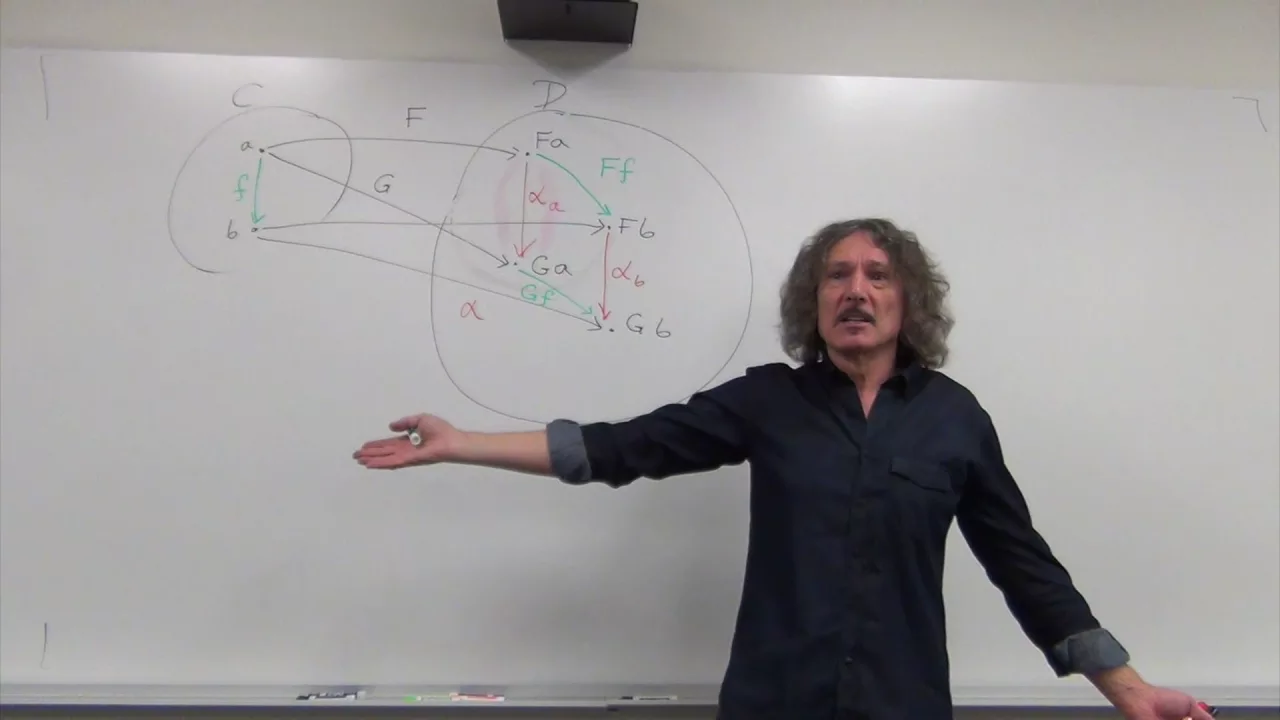
Natural Transformations in Category Theory Explained
@DrBartosz
37.7K views•2016-10-20
6:00
The Mathematical Impossibility of Accurate World Maps
@Vox
23.3M views•2016-12-02
Related Study Plans & Knowledge Roadmaps
Structured learning paths in Mathematics
mathematics
Tensor Calculus: Vectors to Riemann Curvature
01Mathematical Foundations: Linear Algebra & Calculus
02Covectors, Dual Spaces, and Tensor Basics
03The Metric Tensor and Index Gymnastics
+ 2 more learning modules
40h5 modules
Explore Roadmap
mathematics
Gödel's Incompleteness: Logic, Proofs & Limits
01Introduction to Formal Systems & Hilbert's Dream
02Set Theory, Cardinality, and Cantor's Diagonal Argument
03Arithmetization and Gödel Numbering
+ 2 more learning modules
14h5 modules
Explore Roadmap
mathematics
Galois Theory: Fields, Groups & Solvability
01Foundations of Abstract Algebra: Groups & Fields
02Polynomials & Field Extensions
03Splitting Fields & Symmetries
+ 2 more learning modules
24h5 modules
Explore Roadmap
mathematics
Non-Euclidean Geometry: Models & Geodesics
01Euclid's Fifth Postulate and the Birth of New Geometries
02Hyperbolic Space and the Poincaré Disk Model
03Geodesics: Defining Straight Lines in Curved Spaces
+ 2 more learning modules
15h5 modules
Explore Roadmap