Gödel's Incompleteness: Logic, Proofs & Limits
Learning Goal: Build a rigorous mathematical foundation of formal systems, understand the mechanics of arithmetization (Gödel numbering) and diagonal arguments, and trace the complete proofs of Gödel's First and Second Incompleteness Theorems to appreciate the absolute limits of axiomatic systems.
- Prerequisites: Basic mathematical maturity, familiarity with set-theoretic notation, and introductory exposure to symbolic logic.
- Estimated Total Study Time: 14 Hours
Module 1: Introduction to Formal Systems & Hilbert's Dream
This module introduces the historical crisis in the foundations of mathematics, David Hilbert’s ambitious formalist program, and the structure of formal languages. You will learn to rigorously separate the syntax of a formal system (manipulating symbols via axioms and rules of inference) from its semantics (assigning truth values and meaning).
Recommended Videos

Why this video: This video bridges the gap between historical axiomatic systems and modern mathematical logic. It provides a comprehensive conceptual baseline of how symbols are systematically manipulated within formal environments to generate proofs, highlighting the transition from verbal reasoning to symbolic rigor.
Why this video: This lecture segment specifically addresses the gap regarding syntactic consequence (provability). It rigorously defines a deductive system, explaining how proofs are constructed strictly using axioms (schemata) and rules of inference (like Modus Ponens) without relying on semantic truth.

Why this video: This video introduces the foundations of mathematical logic, highlighting how explicit languages, variables, and rules establish objective correctness. It emphasizes the foundational goal of creating consistent systems capable of encoding mathematics without semantic ambiguity.

Why this video: This historical overview outlines Hilbert’s massive program launched in 1920. It details his quest to establish all of mathematics on a provably consistent, complete, and decidable set of axioms, setting the exact stage for Gödel's unexpected discoveries.
Syntactic Provability vs. Semantic Truth (Core Lesson)
To master this module, you must internalize the distinction between:
- Syntactic Provability (): can be derived mechanically using a finite sequence of step-by-step applications of the rules of inference starting from the axioms. It is purely mechanical symbol-pushing.
- Semantic Truth (): is true under all possible interpretations (models) of the system.
Knowledge Checkpoint
- Define what constitutes a "formal system" (alphabet, grammar/well-formed formulas, axioms, and rules of inference).
- Differentiate between syntactic consequence () and semantic consequence ().
- Explain David Hilbert's criteria for a successful mathematical foundation: consistency, completeness, and decidability.
Module 2: Set Theory, Cardinality, and Cantor's Diagonal Argument
Before attacking Gödel's proofs, you must master the mathematical engine that inspired him: Georg Cantor’s diagonal argument. This module explores how to compare the sizes of infinite sets, proves Cantor's Theorem, and introduces the diagonal construction that Gödel later adapted to formal syntax.
Recommended Videos

Why this video: This rigorous MIT OpenCourseWare lecture provides a formal proof of Cantor's Theorem. It demonstrates that the power set of any set is strictly larger than itself () by proving there is no possible surjection from to its power set.

Why this video: This lecture models the exact mathematical proof of Cantor's theorem by contradiction. It defines the diagonal set and shows how assuming a surjection leads directly to a logical contradiction, reinforcing the core mechanic of diagonalization.

Why this video: Provides a clean blackboard demonstration of why a bijection cannot exist between a set and its power set. It shows how the diagonal construction isolates a element (or set) that "escapes" the mapping, showing the universality of the diagonal method.
Knowledge Checkpoint
- Define injection, surjection, and bijection mathematically.
- State and prove Cantor's Theorem using the formal construction of the set .
- Explain how Cantor's diagonal argument proves that the set of real numbers () is uncountable.
Module 3: Arithmetization and Gödel Numbering
This module covers the core technical breakthrough of Gödel's work: arithmetization. You will learn how Gödel created a "meta-language" within arithmetic itself by uniquely mapping symbols, formulas, and proofs to unique natural numbers. This allows numbers to describe statements about numbers.
Curriculum Note: To master the mechanical prime factorization used in traditional Gödel numbering, supplement the video materials by independently practicing how to encode a simple formula like "" using prime-power factorization (e.g., ).
Recommended Videos

Why this video: This video introduces the concept of arithmetization, explaining how characters, logical operators, and strings of a formal language are translated systematically into unique numerical representatives.

Why this video: This video provides a structured guide on how syntactic structures and rule-governed sequences of characters are mapped onto numbers. It establishes the groundwork for understanding how a formal system can "talk about itself."

Why this video: This classic lecture clip illustrates the fundamental concept of encoding composite expressions as single numbers using exponentiation (e.g., representing the pairing of and as ), showcasing the mathematical mechanics of prime factorization encoding.
The Mechanics of Prime Encoding (Example)
Let symbols in our alphabet be mapped to small integers: To encode a sequence of symbols (like a formula) , we use the sequence of prime numbers: Because of the Fundamental Theorem of Arithmetic (unique prime factorization), any Gödel number can be uniquely factored back into the original sequence of symbols, ensuring the mapping is an injection.
Knowledge Checkpoint
- Explain why the Fundamental Theorem of Arithmetic is required to guarantee unique decoding of Gödel numbers.
- Given a mock mapping (, ), compute the Gödel number of "" using prime factorization.
- Understand how a sequence of formulas (a proof) can also be assigned a single Gödel number by nesting prime factorizations.
Module 4: The First Incompleteness Theorem: Constructing the Undecidable
This module covers the construction of Gödel’s First Incompleteness Theorem. By combining arithmetization with the Diagonalization Lemma, you will analyze how a self-referential sentence is mathematically constructed. This sentence, when interpreted semantically, asserts its own syntactic unprovability.
Recommended Videos

Why this video: This advanced video addresses the critical gap regarding the Diagonal Lemma (Fixed-Point Lemma). It provides a rigorous, graduate-level logical presentation showing how, for any formula with a free variable , we can construct a sentence such that the system proves .
Why this video: This video steps through the proof mechanics of Gödel’s first theorem. It covers the logic of constructing the undecidable sentence and details how incompleteness arises under the assumption of consistency.
Why this video: Provides a formalist perspective by looking at the theorem through the Lean computer proof assistant. It demystifies the concepts of provability and unprovability by showing how the computer verifies the proof steps.
The Proof Engine: The Diagonal Lemma
To prove the First Theorem, we define a relation which means "the sequence of formulas with Gödel number is a valid proof of the formula with Gödel number ." Because this relation is primitive recursive, it can be represented inside our formal system as a formula .
Applying the Diagonal Lemma to the formula , we construct a sentence such that: Here, represents the Gödel number of . Thus, asserts: "I am not provable."
- If is provable, then is true. Since the system is sound, would be true, meaning the system proves a contradiction (inconsistent).
- If is not provable, then is true but unprovable within the system. Hence, the system is incomplete.
Knowledge Checkpoint
- State the Diagonal Lemma (Fixed-Point Lemma) and explain its role in generating self-reference without infinite regress.
- Reconstruct the proof-by-contradiction showing that if a sufficiently powerful formal system is consistent, is unprovable in .
- Explain why the truth of is a semantic deduction from outside the formal system, whereas the system itself cannot prove syntactically.
Module 5: The Second Incompleteness Theorem & Philosophical Impact
This module covers Gödel's Second Incompleteness Theorem, which states that any sufficiently strong, consistent formal system cannot prove its own consistency. We will conclude by looking at how this result affects the philosophy of mind, artificial intelligence, and the limits of human knowledge.
Recommended Videos
Why this video: A mathematically precise correction of popular misconceptions. It clarifies what the theorems actually state, defines recursive axiomatization, and details the rigorous boundary conditions of the Second Theorem.

Why this video: Renowned mathematician Vladimir Voevodsky explains the mathematical reality of inconsistency and incompleteness, addressing why the consistency of elementary arithmetic cannot be proven inside itself.
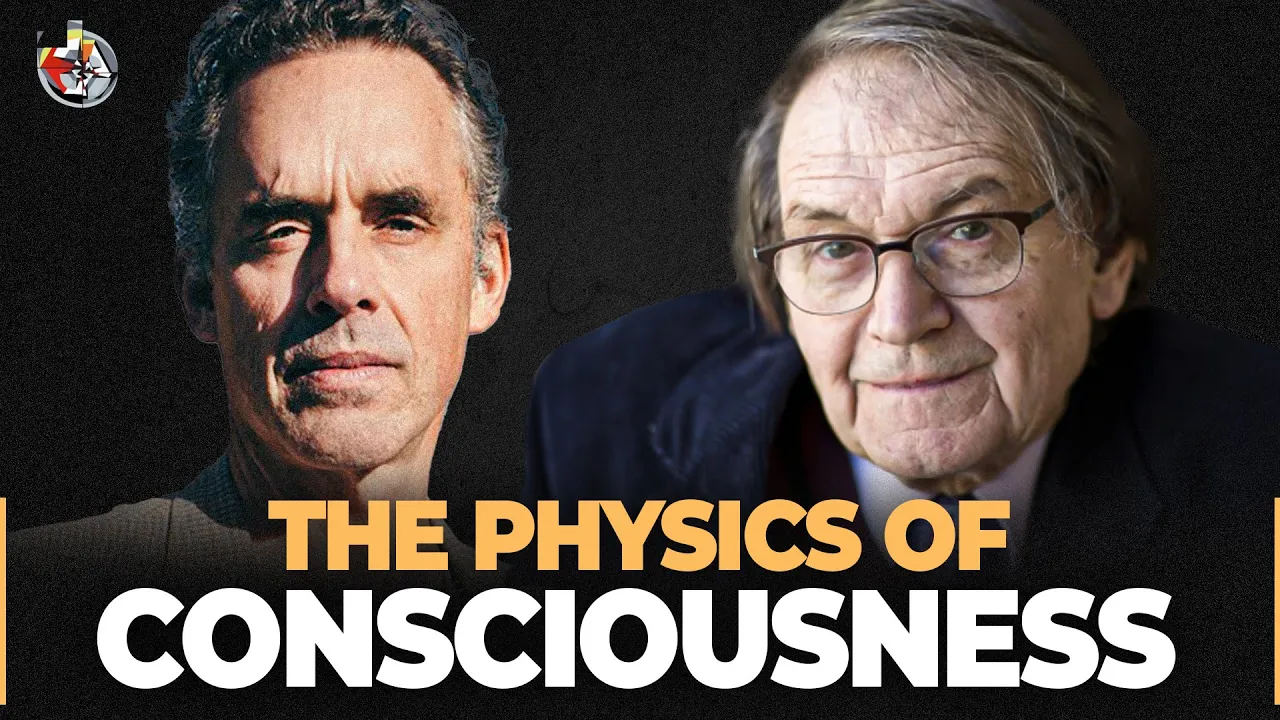
Why this video: Sir Roger Penrose discusses the philosophical implications of Gödel's theorems, arguing that human mathematical understanding transcends simple computation and suggesting there are limits to purely algorithmic models of mind.
The Second Theorem: Consis() is Unprovable
Let be the formula , asserting that a contradiction (such as ) cannot be proven in system . Gödel’s First Theorem established that if is consistent, then is unprovable (). The proof of the Second Incompleteness Theorem formalizes this logical implication inside the system itself: Since cannot prove (), it must be that cannot prove its own consistency:
Knowledge Checkpoint
- Define the consistency formula in terms of the provability predicate.
- Outline how the Second Theorem follows from formalizing the proof of the First Theorem inside the system.
- Critically evaluate the Penrose-Lucas argument: Does Gödel's Theorem prove that the human mind is not a computer/Turing machine?
Course Map
Key People Index
- David Hilbert (1862–1943): One of the most influential mathematicians of the 20th century. He proposed Hilbert's Program, which aimed to formalize all mathematics into a consistent, complete axiomatic framework.
- Georg Cantor (1845–1918): Founder of set theory. He introduced the concepts of transfinite numbers and developed the diagonal argument, showing that infinite sets can have different sizes.
- Kurt Gödel (1906–1978): Austrian logician who proved the incompleteness theorems. This work reshaped our understanding of mathematical logic, computability, and the limits of formal proof.
- Sir Roger Penrose (1931–Present): Nobel laureate in physics. He uses Gödel's incompleteness theorems to argue that human consciousness is non-algorithmic and cannot be fully simulated by a computer.
Final Self-Assessment
Test your understanding of the entire curriculum with this comprehensive checklist:
- I can explain the difference between a formal language's syntax (manipulating symbols) and its semantics (what those symbols mean).
- I can define syntactic consistency (a system cannot prove both and ).
- I can define syntactic completeness (for every closed sentence , either or ).
- I can replicate Cantor's diagonal proof showing that the power set of a set is strictly larger than the set itself.
- I can explain how Gödel numbering assigns unique integers to symbols, formulas, and proofs, and why prime factorization is used.
- I can state the Diagonal Lemma and explain how it produces the self-referential sentence .
- I can outline the key steps in proving Gödel's First Incompleteness Theorem.
- I can explain why semantic truth is not the same as syntactic provability, and why the sentence is considered "true but unprovable."
- I can write the formula for and explain the proof of Gödel's Second Incompleteness Theorem.
- I can discuss how Gödel's theorems apply to computer science, artificial intelligence, and the limits of formal mathematical systems.