
















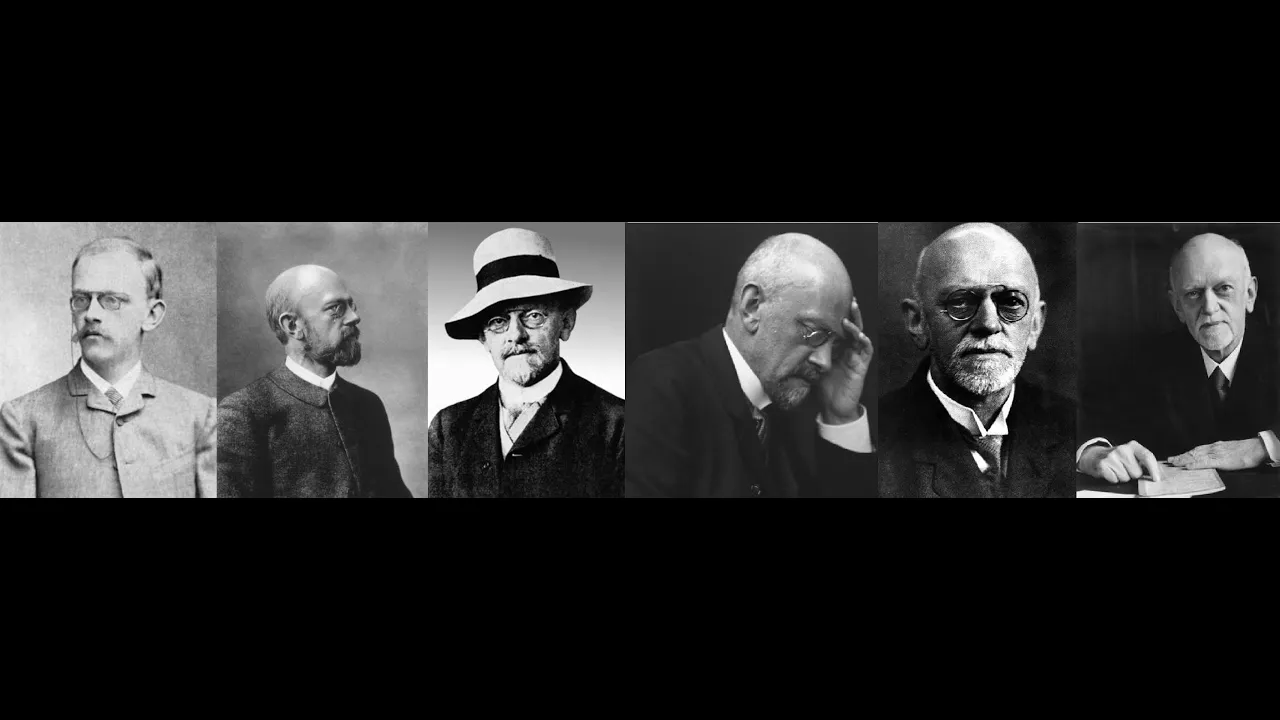
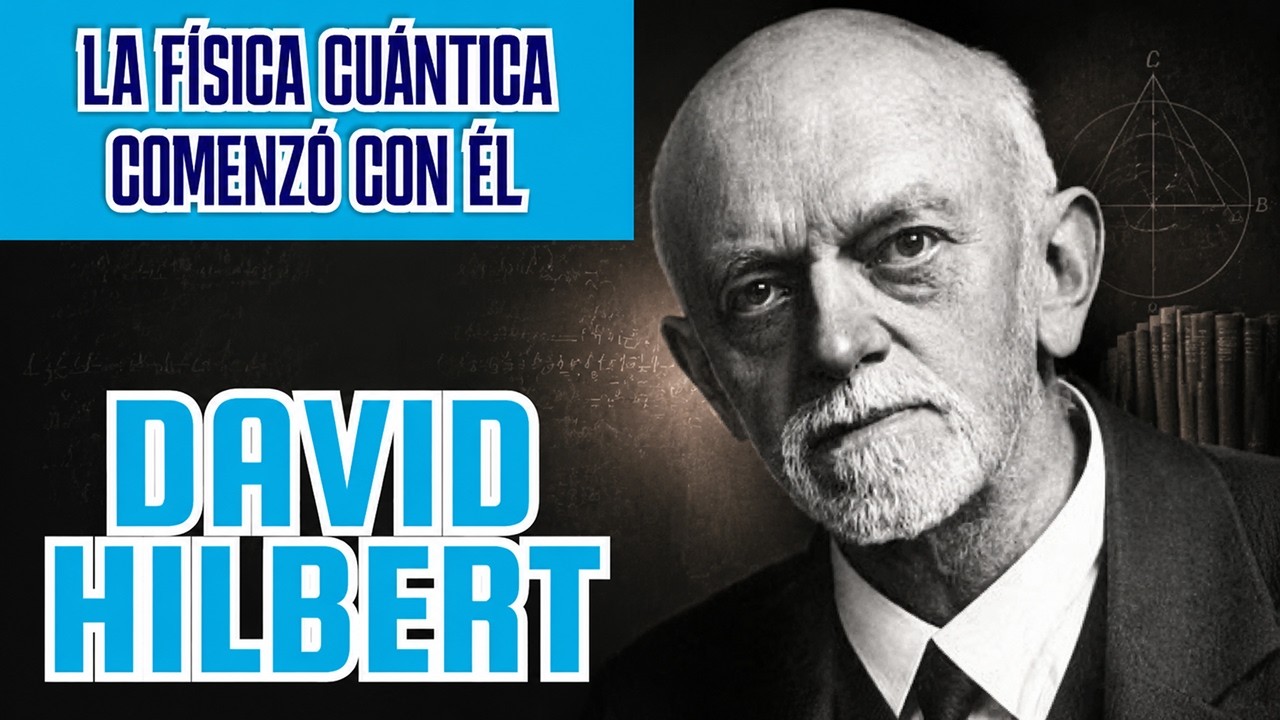
David Hilbert (1862-1943) was a German mathematician recognized as one of the most influential figures of the 19th and early 20th centuries, whose groundbreaking work spanned invariant theory, the axiomatization of geometry, and the development of Hilbert spaces as foundations of functional analysis; he famously formulated his 23 problems at the 1900 International Congress of Mathematicians, which guided much of 20th-century mathematical research, and proposed Hilbert's Program to establish mathematics on a solid logical foundation, though this was ultimately challenged by Kurt Gödel's incompleteness theorems in 1931.
David Hilbert: A Century of Mathematical Influence | Biography
Added:Fundamental concepts of mathematical logic and proof theory, including the roles of axioms, theorems, and logical consistency.
Basic linear algebra and calculus, specifically understanding vector spaces and infinite dimensions, which underpin functional analysis.
The historical transition of late 19th-century mathematics toward rigorous abstraction, particularly Georg Cantor's work on set theory.
An introductory understanding of algebraic structures, particularly polynomials and the concept of invariance under transformations.
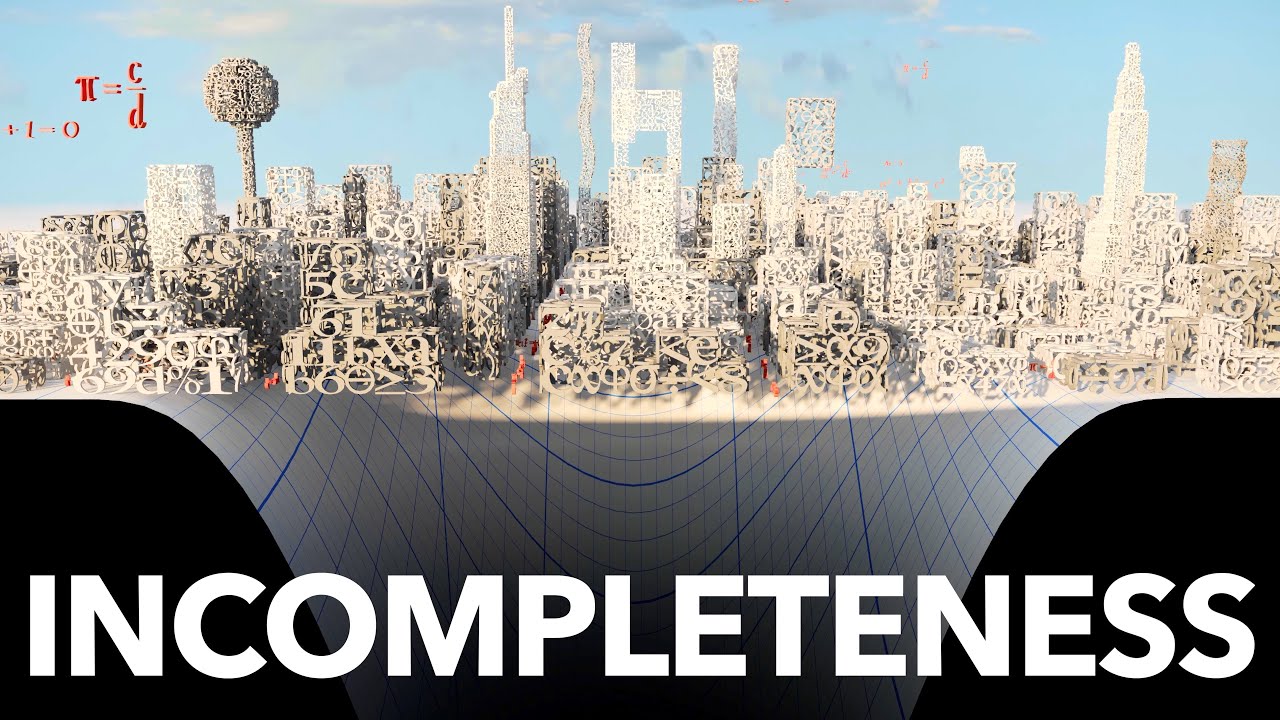
Gödel's Incompleteness Theorems, which directly responded to and limited Hilbert's Program for the formalization of mathematics.
Hilbert Spaces in Quantum Mechanics, examining how infinite-dimensional vector spaces are used to model quantum states.
An in-depth study of specific Hilbert Problems, such as the Continuum Hypothesis (1st problem) or the Riemann Hypothesis (8th problem), and their current statuses.
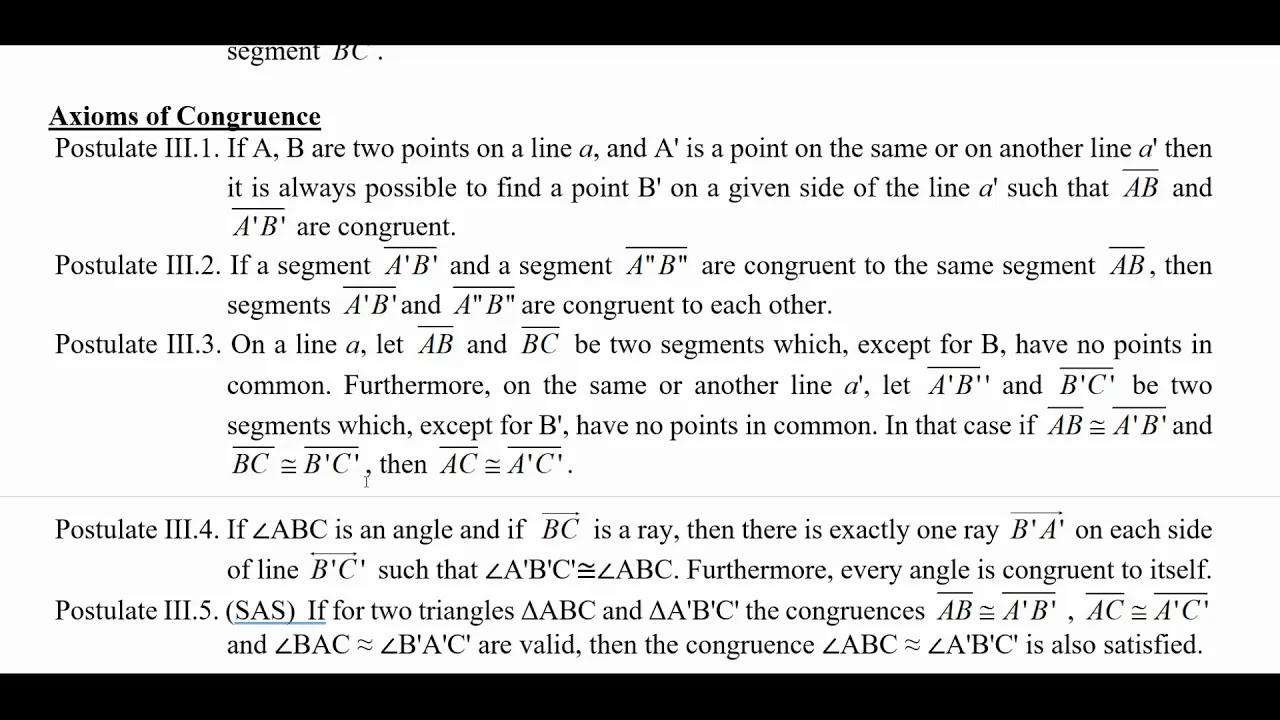
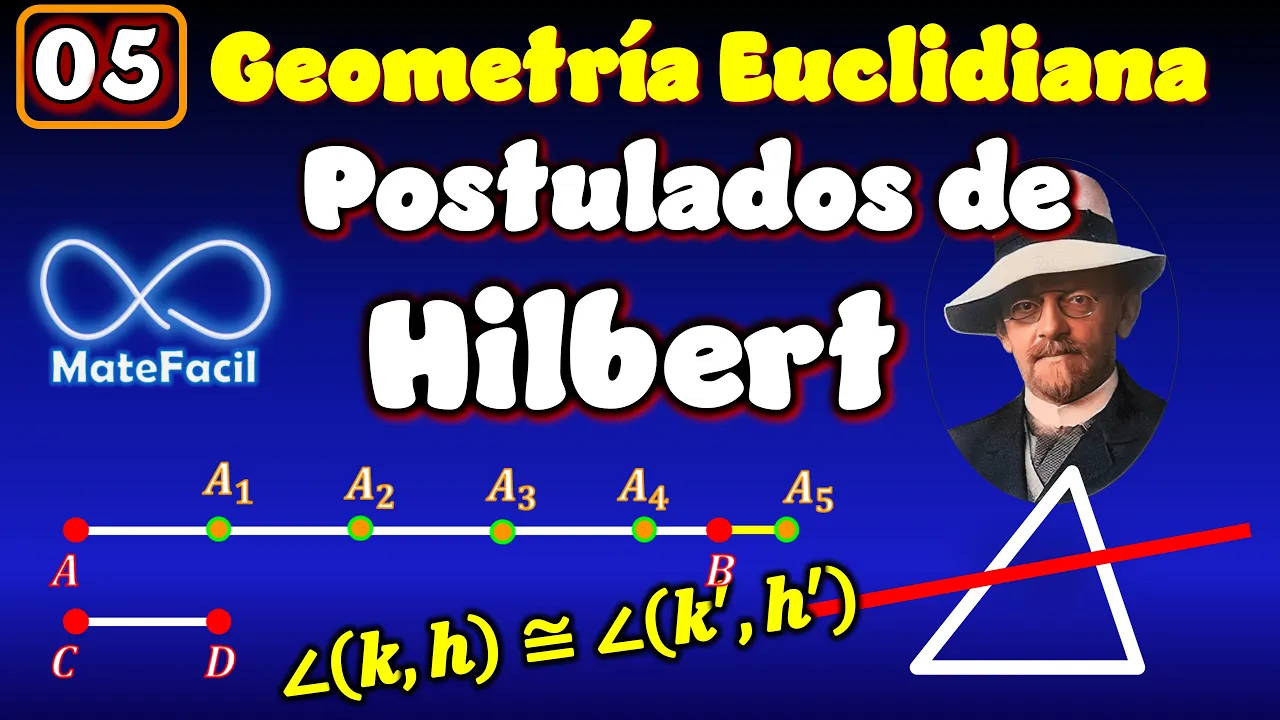
Hilbert's Axioms of Geometry, exploring how his 1899 work 'Grundlagen der Geometrie' provided a modern, rigorous foundation for Euclidean geometry.
9.7K views18likes26:59Original Release: 2015-02-09
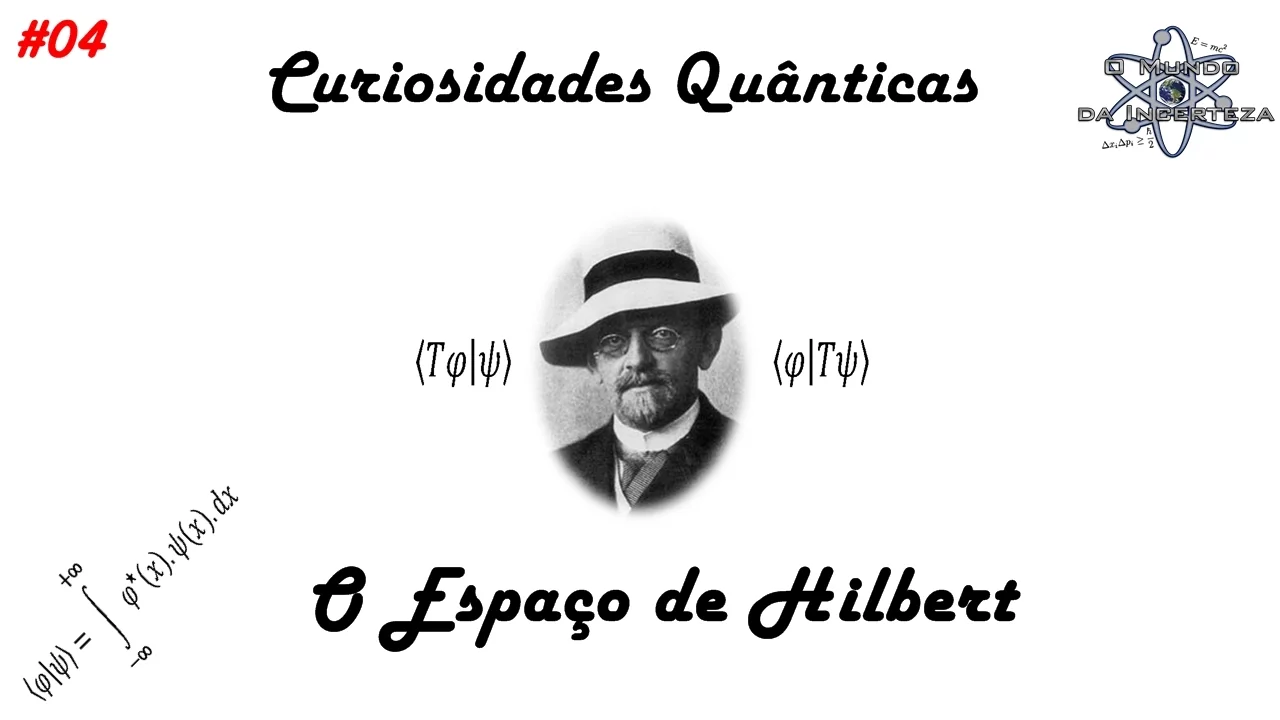
david hilbert german da Vth LBT the 23rd of January 1862 the 14th of February 1943 was a German mathematician he is recognized as one of the most influential and universal mathematicians of the 19th and early 20th centuries Hilbert discovered and developed a broad range of fundamental ideas in many areas including invariant theory and the axiomatization of geometry he also formulated the theory of Hilbert spaces one of the foundations of functional analysis Hilbert adopted and warmly defended Georg Cantor set theory and transfinite numbers a famous example of his leadership in mathematics is his 1900 presentation of a collection of problems that set the course for much of the mathematical research of the 20th century Hilbert and his students contributed significantly to establishing rigor and developed important tools used in modern mathematical physics Hilbert is known as one of the founders of proof theory and mathematical logic as well as for being among the first to distinguish between mathematics and meta mathematics early life and education Hilbert the first of two children avato Ann Maria Therese Earthman Hilbert was born in the province of Prussia either in königsberg according to Hilbert's own statement or in Wei Lao known since 1946 as naimans near konigsberg where his father worked at the time of his birth in the fall of 1872 Hilbert entered the Friedreich's College gymnasium Collegium ffred era shanem the same school that Immanuel Kant had attended 140 years before but after an unhappy period he transferred to fall 1879 and graduated from spring 1880 the more science oriented wilhelm gymnasium upon graduation in autumn 1880 Hilbert enrolled at the University of königsberg the Albertina in the spring of 1882 her minkowski two years younger than Hilbert and also a native of königsberg but so talented he had graduated early from his gymnasium and gone to Berlin for three semesters returned to königsberg and entered the university Hilbert knew his luck when he saw it in spite of his father's disapproval he soon became friends with the shy gifted Minkowski Greer in 1884 Adolph Hurwitz arrived from göttingen as an extraordinary Asst ie an associate professor an intense and fruitful scientific exchange among the three began and Minkowski and Hilbert especially would exercise a reciprocal influence over each other at various times in their scientific careers Hilbert obtained his doctorate in 1885 with a dissertation written under Ferdinand von Lindemann titled new brand Vera anti-can shaft and special urban art or foreman in space on Dierdre Camille functioning on the invariant properties of special binary forms in particular the spherical harmonic functions Hilbert remained at the university of königsberg as a private Osen senior lecturer from 1886 to 1895 the mathematical Institute in göttingen its new building constructed with funds from the Rockefeller Foundation was opened by Hilbert and Courant in 1930 the göttingen school among hybrid students were herman whale chess champion emmanuel Lasker earns Zermelo and Carl Gustav Hempel John von Neumann was his assistant at the University of göttingen Hilbert was surrounded by a social circle of some of the most important mathematicians of the 20th century such as Emmy Noether and Alonzo Church among his 69 PhD students and göttingen were many who later became famous mathematicians including with data thesis Otto Blumenthal 1898 felix bernstein 1901 herman whale 1908 richard Courant 1910 Arakaki 1910 hugo Steen house 1911 and Wilhelm Ackerman 1925 between 1902 and 1939 Hilbert was editor of the matamata channel on the leading mathematical journal of the time good he did not have enough imagination to become a mathematician Hilbert's responds upon hearing that one of his students had dropped out to study poetry later years Hilbert lived to see the Nazis purge many of the prominent faculty members at University of göttingen in 1933 those four stout included Herman whale who had taken Hilbert's chair when he retired in 1930 Emmy Netherland Edmund Landau one who had to leave Germany Paul Bernie's had collaborated with Hilbert in mathematical logic and co-authored with him the important book grundlagen der mathematic which eventually appeared in two volumes in 1934 and 1939 this was a sequel to the hilbert Ackerman book principles of mathematical logic from 1928 about a year later Hilbert attended a banquet and was seated next to the new Minister of Education Bernhard rust rust asked how his mathematics & Godding and now that the tests been freed of the Jewish influence Hilbert replied mathematics and göttingen there is really none anymore by the time Hilbert died in 1943 the Nazis had nearly completely restock their University and as much as many of the former faculty had either been Jewish or married to Jews Hilbert's funeral was attended by fewer than a dozen people only two of whom were fellow academics among them arnold sommerfeld a theoretical physicist and also a native of königsberg news of his death only became known to the wider world six months after he had died Hilbert was baptized and raised in the reformed Protestant church he later on left the church and became an agnostic he also argued that mathematical truth was independent of the existence of God or other a priori assumptions the epitaph on his tombstone in göttingen consists of the famous lines he spoke at the conclusion of his retirement address to the Society of German scientists and physicians on the 8th of September 1930 the words were given in response to the latin maxim ignoramus etic molar abba mass or we do not know we shall not know or lessen wissen were word and wissen in english we must know we will know the day before Hilbert pronounced these phrases at the 1930 annual meeting of the Society of German scientists and physicians kurt gödel in a roundtable discussion during the conference on epistemology held jointly with the Society meetings tentatively announced the first expression of his incompleteness theorem personal life in 1892 Hilbert married Kathy Irish 1864 1945 the daughter of a Koenigsberg merchant and outspoken young lady with an independence of mind that matched his own while a Konigsberg they had their one child Franz Hilbert 1893 1969 an 1895 as a result of intervention on his behalf by felix klein he obtained the position of professor of mathematics at the university of göttingen at that time the best research centre for mathematics in the world he remained there for the rest of his life Hilbert son Franz suffered throughout his life from an undiagnosed mental illness his inferior intellect was a terrible disappointment to his father and this misfortune was a matter of distress to the mathematicians and students at göttingen Minkowski Hilbert's best and truest friend died prematurely of a ruptured appendix in 1909 Hilbert solves Gordon's problem Hilbert's first work on invariant functions led him to the demonstration in 1888 of his famous finiteness theorem 20 years earlier Paul Gordon had demonstrated the theorem of the finiteness of generators for reforms using a complex computational approach attempts to generalize his method to functions with more than two variables fail because of the enormous difficulty of the calculations involved in order to solve what had become known in some circles as Gordon's problem Hilbert realized that it was necessary to take a completely different path as a result he demonstrated hilbert spaces theorem showing the existence of a finite set of generators for the invariance of Quantic s-- in any number of variables but in an abstract form that is while demonstrating the existence of such a set it was not a constructive proof that did not display an object but rather it was an existence proof and relied on use of the law of excluded middle in an infinite extension Hilbert sent his results to the Matamata Shannon Gordon the house expert on the theory of invariants for the Matamata Shannon could not appreciate the revolutionary nature of Hilbert's theorem and rejected the article criticizing the exposition because it wasn't sufficiently comprehensive his comment was das ist niche mathematic das ist theology this is not mathematics this is theology Klein on the other hand recognized the importance of the work and guaranteed that it would be published without any alterations encouraged by Klein Hilbert in a second article extended his method providing estimations on the maximum degree of the minimum set of generators and he sent it once more to the annalen after having read the manuscript Klein wrote to him saying without doubt this is the most important work on general algebra that the annalen has ever published later after the usefulness of Hilbert's method was universally recognized Gordon himself would say I have convinced myself that even theology has its merits for all his successes the nature of his proofs stirred up more trouble than Hilbert could have imagined at the time although Kronecker had conceded Hilbert would later respond to other similar criticisms at many different construction are subsumed under one fundamental idea in other words to quote read through a proof of existence Hilbert had been able to obtain a construction the proof ie the symbols on the page was the object not all were convinced while Kronecker with I soon afterwards his constructivist philosophy would continue with young Brauer and his developing intuitionists will much to Hilbert's torment in his later years indeed Hilbert would lose his gifted pupil whale to intuition ISM Hilbert was disturbed by his former students fascination with the ideas of Brower which aroused in Hilbert the memory of Kronecker Brower the intuitionist in particular opposed the use of the law of excluded middle over infinite sets as Hilbert had you slit Hilbert would respond taking the principle of the excluded middle from the mathematician is the same as prohibiting the boxer the use of his fists axiomatization of geometry the techs grunt lay gender geometry TR foundations of geometry published by Hilbert in 1899 proposes a formal set the Hilbert's axioms substituting the traditional axioms of Euclid they avoid weaknesses identified in those of Euclid whose works at the time were still used textbook fashion it is difficult to specify the axioms use by Hilbert without referring to the publication history of the grundlagen since Hilbert changed and modified them several times the original monograph was quickly followed by a french translation in which Hilbert added the point to the completeness axiom an English translation authorized by Hilbert was made by EJ Townsend and copyrighted in 1902 this translation incorporated the change is made in the French translation and so is considered to be a translation of the second edition Hilbert continued to make changes in the text and several additions appeared in German the seventh edition was the last to appear in Hilbert's lifetime new editions followed the seventh but the main text was essentially not revised Hilbert's approached sick the shift of the modern axiomatic method in this Hilbert was anticipated by Moritz passes work from 1882 axioms are not taken as self-evident truths geometry may treat things about which we have powerful intuitions but it is not necessary to assign any explicit meaning to the undefined concepts the elements such as point line plane and others could be substituted as Hilbert has reported to have said - Shane flies and Cotter buy tables chairs glasses of beer and other such objects it is their defined relationships that are discussed Hilbert first enumerates the undefined concepts point line plane lying on a relation between points and lines points and planes and lines and planes between us congruence of pairs of points line segments and congruence of angles the axioms Unified of the plane geometry and solid geometry of Euclid in a single system the 23 problems Hilbert put forth a most influential list of 23 unsolved problems at the International Congress of mathematicians in Paris in 1900 this is generally reckoned the most successful and deeply considered compilation of open problems ever to be produced by an individual mathematician after reworking the foundations of classical geometry Hilbert could have extrapolated to the rest of mathematics his approach differed however from the later foundationalist Russell Whitehead or encyclopedist Nicolas Bourbaki and from his contemporary geo sappy piano the mathematical community as a whole could enlist in problems which he had identified as crucial aspects of the areas of mathematics he took to be key the problem set was launched as a talk the problems of mathematics presented during the course of the second International Congress of mathematicians held in Paris here is the introduction of the speech that Hilbert gave who among us would not be happy to lift the veil behind which is hid in the future do at the coming developments of our science and at the secrets of its development in the centuries to come what will be the ends toward which the spirit of future generations of mathematicians will tend what methods what new facts will the new century reveal in the vast and rich field of mathematical thought he presented fewer than half the problems at the Congress which were published in the acts of the Congress in a subsequent publication he extended the panorama and arrived at the formulation of the now canonical twenty-three problems of Hilbert the full text is important since the exegesis of the question still can be a matter of inevitable debate whenever it is asked how many have been solved some of these were solved within a short time others have been discussed throughout the 20th century with a few now taken to be unsuitably open-ended to come to closure some even continue to this day to remain a challenge for mathematicians formalism in an account that had become standard by the mid century Hilbert's problem set was also a kind of manifesto that opened the way for the development of the formula school one of three major schools of mathematics of the 20th century according to the formalist mathematics manipulation of symbols according to agreed-upon formal rules it is therefore an autonomous activity of thought there is however room to doubt whether Hilbert's own views were simplistically formalist in this sense Hilbert's program in 1920 he proposed explicitly a research project in meta mathematics as it wasn't earned that became known as Hilbert's program he wanted mathematics to be formulated on a solid and complete logical foundation he believed that in principle this could be done by showing that one all of mathematics follows from a correctly chosen finite system of axioms and to that some such axiom system is provably consistent through some means such as the epsilon calculus he seems to have had both technical and philosophical reasons for formulating this proposal it affirmed his dislike of what had become known as the ignore a Bemis still an active issue in his time in German thought and traced back in that formulation to a male Dubois Raymond this program is still recognizable in the most popular philosophy of mathematics where it is usually called formalism for example the bower Vicky group adopted a watered down and selective version of it as adequate to the requirements of their twin projects of writing encyclopedic foundational works and be supporting the axiomatic method as a research tool this approach has been successful and influential in relation with Hilbert's work in algebra and functional analysis but has failed to engage in the same way with his interest in physics and logic Hilbert wrote in 1919 we are not speaking here of arbitrariness in any sense mathematics is not like a game whose tasks are determined by arbitrarily stipulated rules rather it is a conceptual system possessing internal necessity that can only be so and by no means otherwise Hilbert published his views on the foundations of mathematics in the two-volume work grundlagen der mathematic God wills work Hilbert an the mathematicians who worked with him in his enterprise were committed to the project his attempt to support hack scientists mathematics with definitive principles which could banish theoretical uncertainties was however to end in failure god--all demonstrated that any non contradictory formal system which was comprehensive enough to include at least arithmetic cannot demonstrate its completeness by way of its own axioms in 1931 his incompleteness theorems showed that Hilbert's grand plan was impossible as stated the second point cannot in any reasonable way be combined with the first point as long as the axiom system is genuinely finitary nevertheless the subsequent achievements of proof theory at the very least clarified consistency as it relates to theories of central concern to mathematicians Hilbert's work adds argued logic on this course of clarification the need to understand gödel's work and led to the development of recursion theory and the mathematical logic as an autonomous discipline in the 1930 s the basis for later theoretical computer science in Alonzo Church and Alan Turing also grew directly out of this debate functional analysis around 1909 Hilbert dedicated himself to the study of differential and integral equations his work had direct consequences for important parts of modern functional analysis in order to carry out these studies Hilbert introduced the concept of an infinite dimensional Euclidean space later called Hilbert space his work in this part of analysis provided the basis for important contributions to the mathematics of physics in the next two decades though from an unanticipated direction blade Ron Stefan Banach amplified the concept defining Banach spaces Hilbert spaces are an important class of objects in the area of functional analysis particularly of the spectral theory of self adjoint linear operators that grew up around it during the 20th century physics until 1912 Hilbert was almost exclusively a pure mathematician when planning a visit from Bonn where he was immersed in studying physics his fellow mathematician and friend Hermann Minkowski joked he had to spend 10 days in quarantine before being able to visit Hilbert in fact Minkowski seems responsible for most of Hilbert's physics investigations prior to 1912 including their joint seminar in the subject in 1905 in 1912 three years after his friend's death Hilbert turned his focus to the subject almost exclusively he arranged to have a physics tutor for himself he started studying kinetic gas theory and moved on to elementary radiation theory and the molecular theory of matter even after the war started in 1914 he continued seminars and classes where the works of Albert Einstein and others were followed mostly by 1907 Einstein had framed the fundamentals of the theory of gravity but then struggled for nearly eight years with a confounding problem of putting the theory into final form by early summer 1915 Hilbert's interest in physics had focused on general relativity and he invited Einstein to göttingen to deliver a week of lectures on the subject Einstein received an enthusiastic reception at göttingen over the summer Einstein learned that Hilbert was also working on the field equations and redoubled his own efforts during November 1915 Einstein published several papers culminating in the field equations of gravitation see Einstein field equations nearly simultaneously David Hilbert published the foundations of physics an axiomatic derivation of the field equations see Einstein Hilbert action Hilbert fully credited Einstein as the originator of the theory and no public priority dispute concerning the field equations ever arose between the two men during their lives see more at priority additionally Hilbert's work anticipated and assisted several advances in the mathematical formulation of quantum mechanics his work was a key aspect of Hermann whele and John von neumann's work on the mathematical equivalence of Werner Heisenberg's matrix mechanics and Erwin schrödinger's wave equation and his namesake Hilbert space plays an important part and quantum theory in 1926 von Neumann showed that if atomic states were understood as vectors in Hilbert space than they would correspond with both schrödinger's wave function theory and Heisenberg's matrices throughout this immersion in physics Hilbert worked on putting rigor into the mathematics of physics while highly dependent on higher math physicists tended to be sloppy with it to a pure mathematician like Hilbert this was both ugly and difficult to understand as he began to understand physics and how physicists were using mathematics he developed a coherent mathematical theory for what he found most importantly in the area of integral equation when his colleague Richard Courant wrote the now classic method under mathematician physic methods of mathematical physics including some of Hilbert's ideas he added Hilbert's name as author even though Hilbert had not directly contributed to the writing Hilbert said physics is too hard for physicists implying that the necessary mathematics was generally beyond him the Courant Hilbert book made it easier for them number theory Hilbert unify the field of algebraic number theory with his 1897 treatise all bericht literally reporting on numbers he also resolved a significant number Theory problem formulated by wearing in 1770 as with the finiteness theorem he used an existence proof that shows there must be solutions for the problem rather than providing a mechanism to produce the answers he then had little more to publish on the subject but the emergence of Hilbert modular forms in the dissertation of a student means his name is further attached to a major area he made a series of conjectures on class field theory the concepts were highly influential and his own contribution lives on in the names of the Hilbert class field and of the Hilbert symbol of local class field theory results were mostly proved by 1930 after work by Daiichi Takagi Hilbert did not work in the central areas of analytic number theory but his name has become known for the hilbert poly conjecture for reasons that are anecdotal miscellaneous talks essays and contributions Hilbert's paradox at the Grand Hotel a meditation on strange properties of the infinite is often used in popular accounts of infinite cardinal numbers he was a foreign member of the Royal Society he received the second volley a prize in 1910 his collected works jessa meld ab and london have been published several times the original versions of his papers contain many technical errors a varying degree when the collection was first published the errors were corrected and it was found that this could be without major changes in the statements of the theorems with one exception to claims proof of the Continuum Hypothesis the errors were nonetheless so numerous and significant that it took olga Tosca table three years to make the corrections
Up Next

94:45
Gödel's Incompleteness Theorems: An Informal Introduction to Formal Logic
@mathpunk6493
35.3K views•2022-08-14

4:43
Elliptic Curve Cryptography Explained: ECC, ECDSA, ECDH
@PracticalNetworking
28.5K views•2024-10-21
10:44
Fourier Series Introduction: The Big Idea Explained
@DrTrefor
387K views•2021-05-03

6:00
The Mathematical Impossibility of Accurate World Maps
@Vox
23.3M views•2016-12-02
Related Study Plans & Knowledge Roadmaps
Structured learning paths in Mathematics
mathematics
Tensor Calculus: Vectors to Riemann Curvature
01Mathematical Foundations: Linear Algebra & Calculus
02Covectors, Dual Spaces, and Tensor Basics
03The Metric Tensor and Index Gymnastics
+ 2 more learning modules
40h5 modules
Explore Roadmap
mathematics
Gödel's Incompleteness: Logic, Proofs & Limits
01Introduction to Formal Systems & Hilbert's Dream
02Set Theory, Cardinality, and Cantor's Diagonal Argument
03Arithmetization and Gödel Numbering
+ 2 more learning modules
14h5 modules
Explore Roadmap
mathematics
Galois Theory: Fields, Groups & Solvability
01Foundations of Abstract Algebra: Groups & Fields
02Polynomials & Field Extensions
03Splitting Fields & Symmetries
+ 2 more learning modules
24h5 modules
Explore Roadmap
mathematics
Non-Euclidean Geometry: Models & Geodesics
01Euclid's Fifth Postulate and the Birth of New Geometries
02Hyperbolic Space and the Poincaré Disk Model
03Geodesics: Defining Straight Lines in Curved Spaces
+ 2 more learning modules
15h5 modules
Explore Roadmap