


![[May SAT Math] Never Miss TRIG Questions Again - Everything Type in 8 minutes.](https://i.ytimg.com/vi_webp/tOFrejkAQH4/maxresdefault.webp)








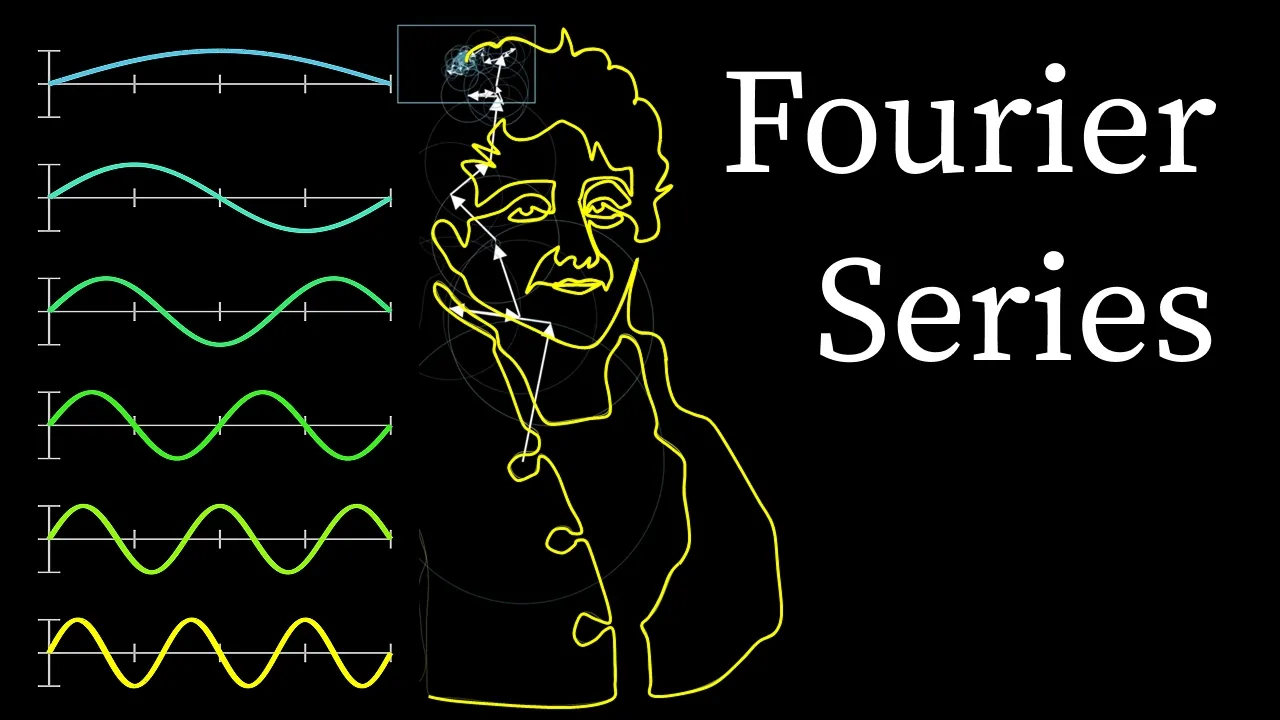
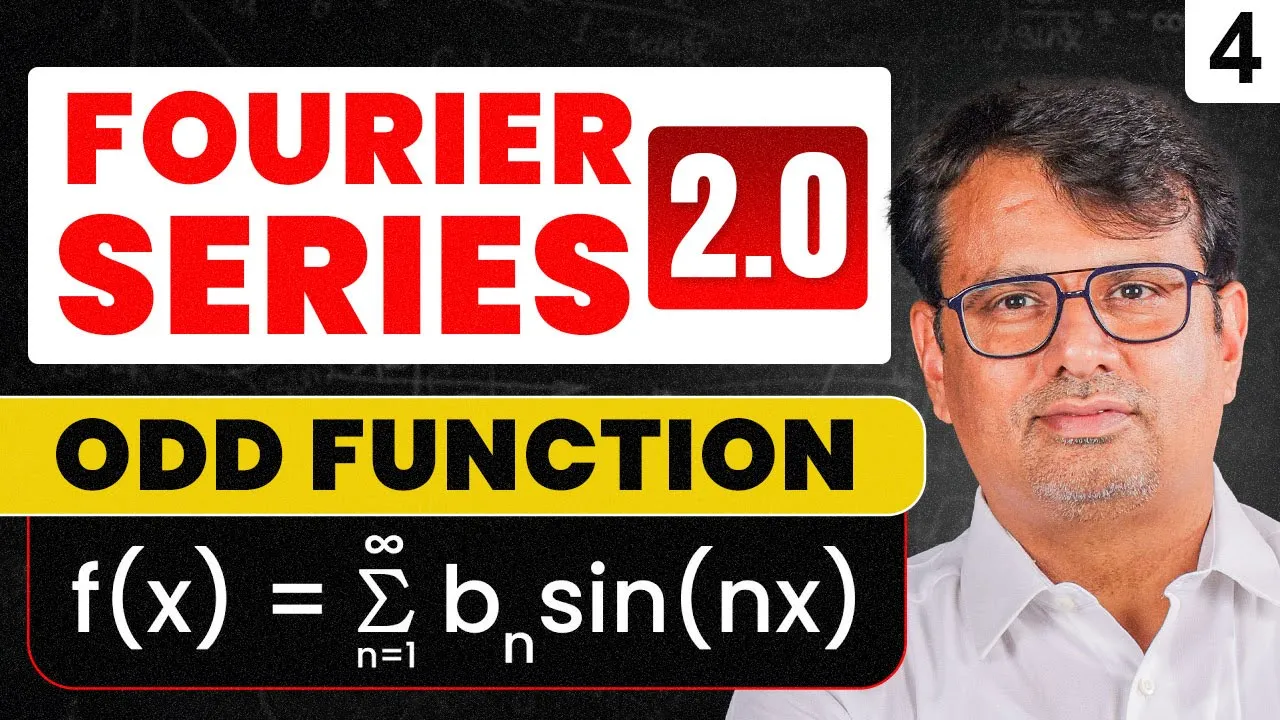










A Fourier series is a mathematical technique that represents any periodic function as an infinite sum of sine and cosine terms with different frequencies, allowing continuous trigonometric functions to approximate discontinuous periodic functions like square waves; the series converges to the original function at points of continuity but exhibits Gibbs phenomenon (overshoot near discontinuities) and always passes through the midpoint at jump discontinuities.
Fourier Series Introduction: The Big Idea Explained
Added:Fundamental Trigonometry: Understanding properties of sine and cosine functions, including amplitude, frequency, phase, and periodic behavior.
Integral Calculus: Proficiency in integration techniques, particularly definite integrals and integration by parts, which are essential for calculating coefficients.
Concept of Periodic Functions: Recognizing even and odd functions, and understanding how mathematical functions repeat over a specific interval or period.
Infinite Series and Convergence: Basic familiarity with infinite sums, sequences, and what it means for a series of functions to converge to a limit.
Computing Fourier Coefficients: Deriving and applying Euler's formulas mathematically to calculate the specific sine and cosine coefficients for standard waveforms like square and sawtooth waves.
Complex Exponential Fourier Series: Transitioning from trigonometric terms to the more compact complex exponential form using Euler's identity ($e^{ix} = \cos x + i\sin x$).
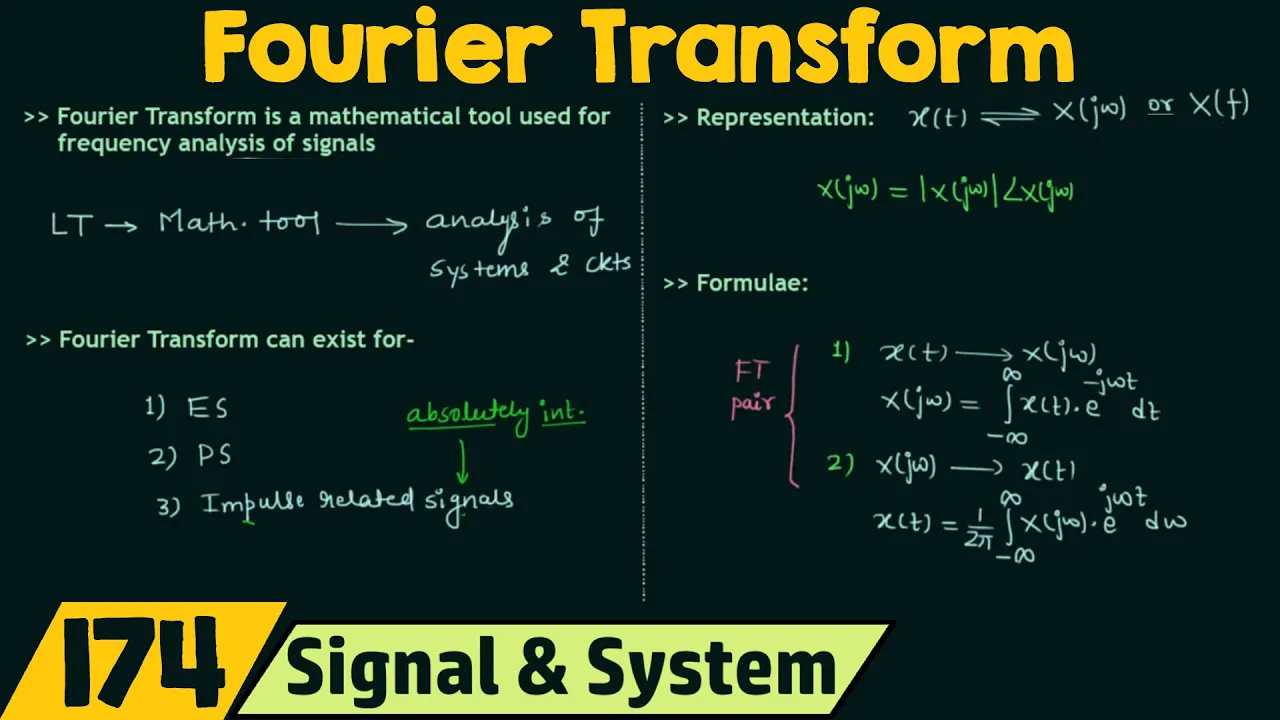
The Fourier Transform: Extending the Fourier analysis from periodic signals to non-periodic, continuous signals, shifting from a discrete to a continuous frequency spectrum.
Practical Applications in Signal Processing and PDEs: Applying Fourier analysis to solve partial differential equations (like the heat equation) and filtering noise in audio or image processing.
387K views14.9Klikes10:44Original Release: 2021-05-03
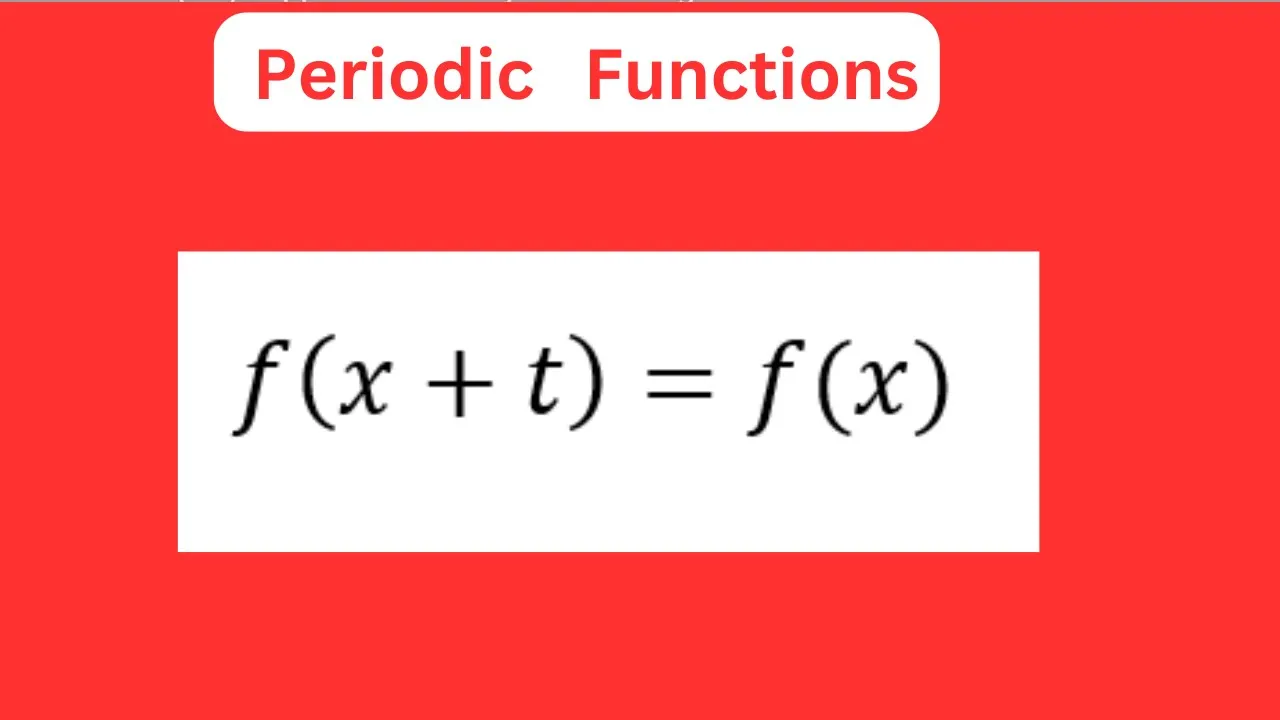
in this video i'm going to talk about fourier series which is one of the most powerful and beautiful pieces of mathematics i know with applications in differential equations physics engineering and many other places in this first video i really want to give you an overview of what is the big idea of fourier series and in the next couple of videos i can talk about some of the applications some of the theory and some specific examples so definitely hit the subscribe button if you're interested in that what's the big idea well i want to begin by thinking about the idea of a periodic function so this is an example of a periodic function goes up goes down goes up and down indeed this is just the function sine of x multiplied by some constant out the front that we're not going to worry about just yet and what i mean by a function like sine being periodic specifically being 2 pi periodic is that if i take any spot on the graph and i move over 2 pi it gives the exact same height so for instance two consecutive peaks are separated by a distance of two pi but wherever you go if you move over two pi you get to the exact same height and so we define this as an example of a periodic function which just means if you take f of t plus the period capital t you just get back exactly where you started f of t now well sine and cosine are probably are sort of quintessential examples of periodic functions there's many others so for example consider this periodic function this is what we call a square wave it's either one or minus one and it alternates back and forth as well and this square wave also has a period of two pi which means at any spot that you are you go over 2 pi and you have the exact same height exact same function value now if i think about these two different periodic functions that i have well the one very loosely could be said to approximate the other as in if i put up sine of x and the square wave the one that goes between 1 and minus 1 1 and minus 1 well they're kind of alike for example the peaks of sine of x sort of are broadly around the places where the function value is one and the troughs of sine of x are kind of where that square wave takes the value of minus one so there's a little bit of a sense in which you could say that there's a rough approximation but it's a pretty bad one in fact let me actually just zoom in here on just one period because it's periodic it doesn't really matter what happens everywhere else it's just going to be the same thing so i'm just going to zoom in between 0 and 2 pi specifically and so my claim here is that sine of x times 4 over pi don't worry about that constant just yet we will get there my claim here is that this is a bad approximation for this function that's 1 and then minus 1. so how do i do better well if i wanted a better approximation okay it depends on where you are but you kind of want the green curve to move around a little bit some spots the green curve should be a little higher if it wants to approximate the square wave and other spots it should be a little bit lower so how do i adjust sine of x to be a better approximation to my discontinuous function my square wave well kt is as follows what if i take another sine term this is the sine term which is the same four over pi again let's ignore that but this time it's sine of three times x divided out by three and there's two threes here they're both important the fact that it's sine of three x here means that it's oscillating up and down much faster and indeed it's oscillating in quite an important way because for example if i look at the highest value of the green sine of x that corresponds to the lowest value of sine of 3x so you can kind of imagine if you added these two things together there'd be sort of an appropriate cancellation and then the fact that there's a one-third of the front means that this thing that i'm introducing has a much smaller amplitude than the original okay if i add these together here's what you get so 4 over pi over the front of sine of x plus 1 3 sine of 3x is this function i think is a better approximation still not perfect still definitely a difference between the green and the yellow but better and we can keep on doing this let me add another sine term sine of 5x it oscillates even faster but it still sort of makes sense here because for example a little trough in the green curve is kind of aligned with a peak in this new curve this sine 5x curve so if i add them together well i get yet again a better approximation and this is the idea of a fourier series i'm going to keep on adding sine terms together like this i could add a few more or i could add a few more again and what this now is looking is pretty good this is a pretty good continuous approximation to the original discontinuous function this by the way is the sum well there's a 4 over pi out the front again we're going to ignore that for now but it's a sum of sine nx divided by n where n is 1 3 5 all the odd numbers i stopped programming it after 19 but you could keep on going you could write a million terms or a trillion terms or take the limit as the number of terms went to infinity of this and that is the big idea of a fourier series it's taking a function and adding up a whole bunch of trigonometric terms of different frequencies two sort of qualitative features here that i'm just going to point out maybe we'll come back later to them the first is that this sum of sine terms all those terms are continuous is continuous as well but at the discontinuity notice that it goes sort of right through the midpoint as in the square wave was one of the minus one and so zero is the midpoint and so my sum of sines actually went right through zero at the value of pi that the plot spot where this discontinuity occurs that's kind of interesting and another little kind of interesting phenomenon that i just sort of want to identify is referred to as gibbs phenomenon and this refers to the fact that the approximation was pretty good at a number like pi over two or three pi over two but at the discontinuity it kind of jumped up a little bit so this sort of overshooting right around the discontinuity that's referred to as gibbs phenomena and that's a common issue that happens with fourier series they're they're really good approximations away from a particular discontinuity but there's a little bit of a jumping around going around near the discontinuity which you might expect now here we've been using sine terms to approximate our function well one of the big advantages of using sine terms to approximate a function is that sine is periodic and so if i now zoom out i get this larger picture here so i can imagine a square wave that's one minus one one minus one and so on kind of like you're flipping a switch on and then you flip a switch off and then you flip a switch on you flip a switch off that happens all the time in electrical engineering just for example and then the fact that i've managed to have this good approximation from 0 to 2 pi because everything here is periodic it means i have a good approximation everywhere and that is one of the biggest strengths of taking a function and approximating it by a sum of trigonometric terms okay that's the big idea but now let me say a little bit more precisely so what i'm going to talk about is some function f of t that has period 2 pi then what i'm trying to do is approximate this f of t by trigonometric terms and specifically what i'm going to say is it's going to be two different sums well first of all there's a constant value that says a naught and for reasons we'll get into a little bit later it's conventional to call it a naught divided by 2.
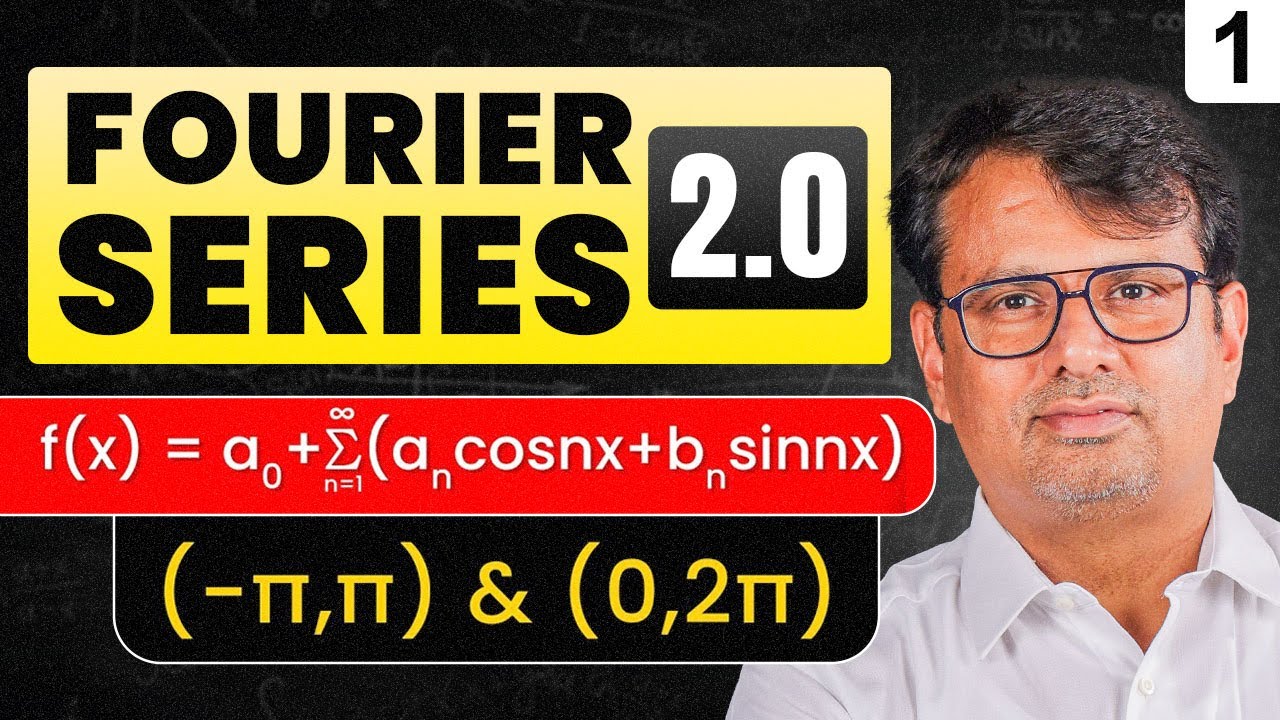
but then i have a sum of cosine terms all with coefficients a n out the front and for all possible frequencies integer frequencies from n equal to 1 all the way up to infinity so cosine of n t and then likewise a sum of sine terms with coefficients b n so for example in our case where we had talked about the square wave and i've written down i gave you the answer ahead of time of 4 divided by pi and the sum of all the odd terms sine of nx divided by n well how do i interpret this this is basically saying that all of the cosine terms are 0 because there's no sign here so that's just saying all of the ans are going to be zero likewise with including a0 being zero and then for the b n's well because my sum only had odd terms basically it was saying that if the m value was odd then you put the value of 1 over n and if the n value was even you just put 0.
so this example that i have was just an example of a fourier series we can say this with a bit more generality we start with a function defined on some interval minus l up to l kind of like minus pi up to pi in the case of a trigonometric term i could imagine extending that function periodically on and on and on to other intervals like the l to the 3l interval and then the 3l to 5l interval and so on but it's sort of base definition is on minus lbl and then i look for a 4a series it's basically the exact same thing the only difference here is that now i have a stretching factor inside of my cosine and sine terms it's a pi over l stretching factor same exact idea okay so this is all fine but it leaves me with quite a bit of questions that is what we've been doing thus far is saying look i want to take a function and i want to approximate it by adding up sine and cosine terms and that's going to be really good when everything's periodic but well hold on how did i find the example that i gave you for example i just told you what the a n and the b n are how do you actually find those i'm going to answer that in the next video additionally i've got the question of well hold on how do i know what type of functions have convergent fourier series when do they converge and do they always converge to the function like what was going on with that weird midpoint i was referring to earlier we also have to answer that question and then finally this fourier series topic is being brought up in the context of a differential equations course and so what the heck does all of this have to do with solving differential equations and so why not to make that connection clear as well so this and more is all coming up in future videos so if you enjoyed this video please do give it a like for that youtube algorithm we're all mathematicians here we like the youtube algorithm youtube likes the youtube algorithm you get the idea you have any questions leave them down in the comments below and we'll do some more math in the next video
Up Next
11:30
Complex Numbers and Euler's Formula | MIT Differential Equations
@mitocw
170.8K views•2012-01-04

4:43
Elliptic Curve Cryptography Explained: ECC, ECDSA, ECDH
@PracticalNetworking
28.5K views•2024-10-21

17:08
Introduction to Knot Theory: Understanding Invariants and Polynomials
@DrTrefor
70K views•2022-05-09

6:00
The Mathematical Impossibility of Accurate World Maps
@Vox
23.3M views•2016-12-02
Related Study Plans & Knowledge Roadmaps
Structured learning paths in Mathematics
mathematics
Tensor Calculus: Vectors to Riemann Curvature
01Mathematical Foundations: Linear Algebra & Calculus
02Covectors, Dual Spaces, and Tensor Basics
03The Metric Tensor and Index Gymnastics
+ 2 more learning modules
40h5 modules
Explore Roadmap
mathematics
Gödel's Incompleteness: Logic, Proofs & Limits
01Introduction to Formal Systems & Hilbert's Dream
02Set Theory, Cardinality, and Cantor's Diagonal Argument
03Arithmetization and Gödel Numbering
+ 2 more learning modules
14h5 modules
Explore Roadmap
mathematics
Galois Theory: Fields, Groups & Solvability
01Foundations of Abstract Algebra: Groups & Fields
02Polynomials & Field Extensions
03Splitting Fields & Symmetries
+ 2 more learning modules
24h5 modules
Explore Roadmap
mathematics
Non-Euclidean Geometry: Models & Geodesics
01Euclid's Fifth Postulate and the Birth of New Geometries
02Hyperbolic Space and the Poincaré Disk Model
03Geodesics: Defining Straight Lines in Curved Spaces
+ 2 more learning modules
15h5 modules
Explore Roadmap