
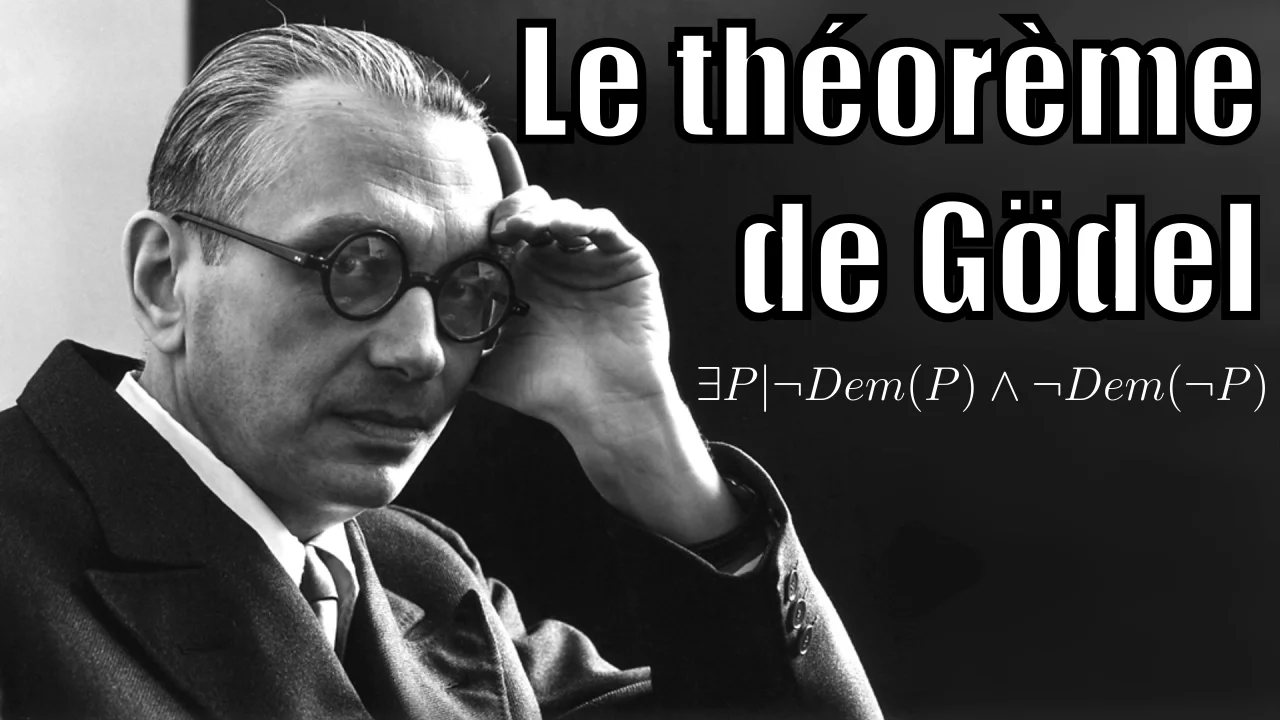







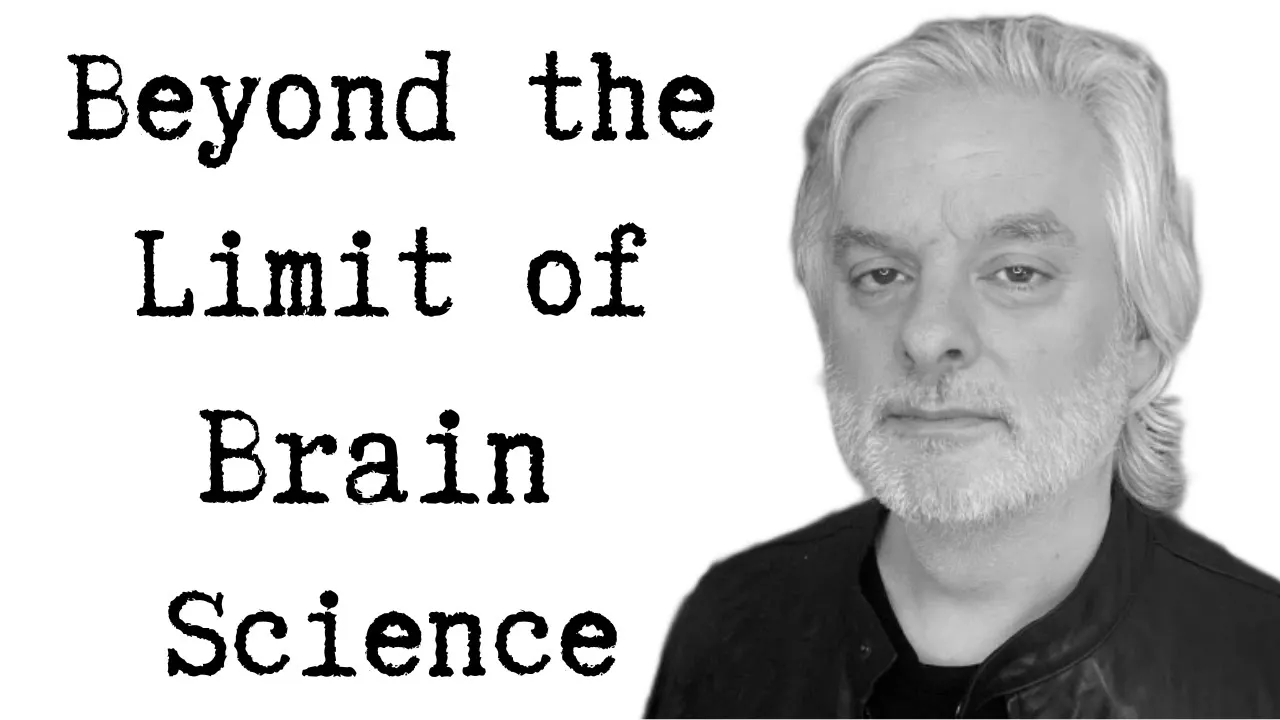




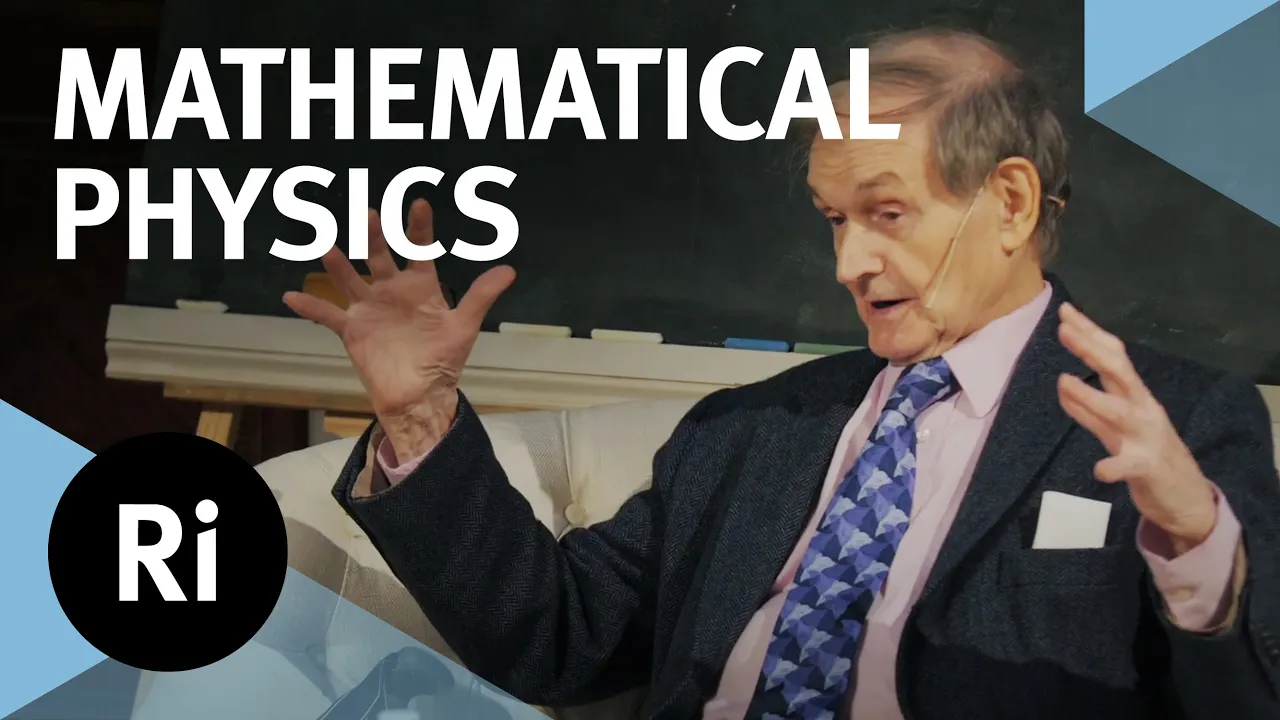







Sir Roger Penrose argues that consciousness and understanding are fundamentally non-computational processes, based on Gödel's incompleteness theorem which demonstrates that within any formal logical system, there exist truths that cannot be proven by the system's own rules; this suggests that human understanding extends beyond algorithmic computation and may involve quantum gravitational effects or other non-computational phenomena.
Roger Penrose on Consciousness & the Physics of the Mind
Added:Gödel's Incompleteness Theorems: Understanding the limits of formal mathematical systems and why certain mathematical truths cannot be proven algorithmically.
The Theory of Computation: Familiarity with Turing machines, the Church-Turing thesis, and the definition of 'computable' versus 'non-computable' processes.
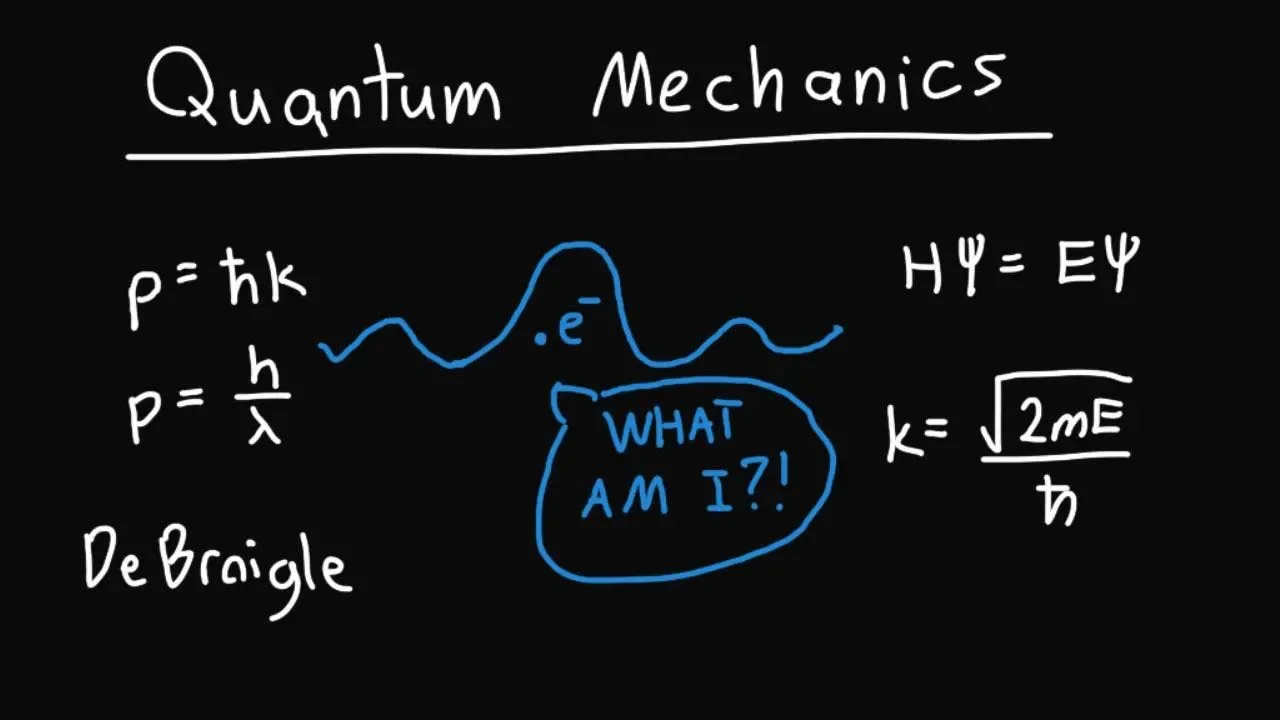
Basic Quantum Mechanics: Conceptual understanding of quantum superposition, entanglement, and the quantum measurement problem (wave function collapse).
The Hard Problem of Consciousness: Awareness of the philosophical distinction between cognitive brain functions (easy problems) and subjective experience (the hard problem).
Orchestrated Objective Reduction (Orch-OR): Exploring the specific quantum consciousness theory developed by Roger Penrose and Stuart Hameroff focusing on brain microtubules.
Quantum Biology: Investigating the emerging field that studies quantum phenomena (like coherence and tunneling) in biological systems, such as photosynthesis and enzyme catalysis.
Alternative Theories of Consciousness: Comparing Penrose's views with other major scientific models, such as Integrated Information Theory (IIT) and Global Workspace Theory (GWT).
The Limits of Artificial General Intelligence (AGI): Analyzing the philosophical and practical implications of non-computational consciousness on the future of AI development.
2.1M views47.7Klikes1:40:39Original Release: 2022-04-14
[Music] i'm stephen blackwood and i have the great honor today to be here with sir roger penrose and dr jordan peterson let's get right down to it jordan i know you have questions you're keen to pose to sir roger over to you yeah well i've wanted to talk to a theoretical physicist for about 30 years and so i'm pretty happy that you're the theoretical physicist that i get to talk to i'm probably not representative well that might be even better so i want to jump right into it um a colleague and friend of mine is a ai engineer and a computer engineer and he's built a lot of the world's great chips iphone chip first 64-bit chip the alpha back in 1985 and we were having a conversation i said i was coming to meet you and that you and i don't want to put words in your mouth believe me but that you believe that consciousness is in some fundamental sense non-computational and i asked him what he thought about that and part of the reason i asked him is because he's of all the people i've ever met and maybe of all the people in the world he's the person who's done most to build arguably brain-like algorithmic systems and so i asked him if he thought that there was a distinction between the algorithmic computation of cognition per se and whatever consciousness might be and he thought it was algorithmic all the way down and i understand that you don't believe that i also went with him a couple of times to a consciousness conference in tucson where hamlet spoke so we got familiar with that line of reasoning and i also understand i believe that part of the reason that you think that consciousness is necessarily non-computational is because of goodell's theorem and so maybe we could we could enter theirs what it i'm very curious about your proposition that consciousness per se is non-computational and i'm curious about why you came to that conclusion and if you think that's a warranted conclusion what what you think about that in relationship to these complex ai systems and and also in relationship to goodell's theorem well i've never seen the argument refuted i've just talked to people who've never really understood it as far as i know no the argument goes back to when i was a graduate student and i was doing pure mathematics algebraic geometry and i went to three courses which were nothing to do with what i was supposed to be doing one of them was a wonderful course by hermann bundy on general relativity which had a big influence on what i did later on one was a talk by the great physicist paul dirac and that taught me about quantum mechanics and their third one was of course by a logician called steen and he taught me about turing machines the notion of computability what it is and how you understand that and the girdle theorem and i had heard vaguely about the girdle theorem previously and had been rather worried because it seemed to show that there were things in mathematics that you couldn't prove what i learned was that it's not like that at all well it is like that in a sense if you lay down the rules of what you call a proof and if those rules are such that they could be checked by a computer checked whether they've been correctly applied by a computer so computation rules in that sense then you can you can construct a sentence this is what girdle did which the by the way it's constructed you can see that if you trust the rules let's say if you believe that the rules do if they say yes you've proved it tick then you believe it's correct let's say if you have trust in the rules that trust extends beyond the rules in other words you can see that a certain statement is true by virtue of your belief that the rules only give you truths yet that statement is underrivable unprovable using the rules that that statement of faith about the rules it's not a statement of faith i'm sorry i didn't understand well the faith is it's not a faith you understand the rules you check them you say yes that's okay if that rule is correctly applied i agree it does you know it's a lot it's a it it's a a rule which is within something that you believe to be appropriate and this rule it's built up out of things like this which nobody would dispute say okay if you follow those rules and it says yes that's a proof then you believe that this thing that it says yes it's a proof is actually a true statement so does a proof really mean that it's true if you believe that that that conviction that the proofs actually do what they're supposed to do gives you something beyond the rules themselves okay that that's sorry that's what i was referring to with this with the word faith is that the statement of belief well i i guess i'm wondering what what do you think it is that cons that come under constitutes that belief okay and why the word understanding specifically because that's the thing in some sense that's outside the system the understanding yes it is because you can see it is because it's the understanding that the rules give you only truths that enables you to understand that this girdle statement is actually true and so the is that belief in that truth of that proof that is one of the things that goodell pointed out would be necessarily outside any system that's both what is it formal logical and coherent what shows it shows that the i mean i i read it in this particular way i don't think he said it quite like this but i read it in the following way that understanding whatever that word means is not computational okay okay it's not that that is what it's not the following of rules it's something else okay so let me ask you a question about that so this is a three-prong question okay yes it seems to me that there's a high probability that the future is actually indeterminately different than the present and the past that it's actually unpredictably different oh this is a different question now you're talking about determinism yes yes but but i think it's i it seems to me that it's tied to this idea that computation can be complete and algorithmic i don't think it can be because if the future differs in a in a fundamental manner an unpredictable manner from the present or the past then a deterministic algorithmic system can't maintain a grip on the horizon of the future and and and i have another part of that question but it's a different question so i think we i think it's important to distinguish these things yes because up to this point i was not talking about indeterminism no no no i was talking about rules well just yes or no and i mean it's not a question of maybe or i mean it isn't even talking about the laws of physics at this stage that's the second step i feel like i was i guess i looked forward to something like the the potential necessary function of consciousness so because one of the things consciousness seems to do from a neurophysiological perspective for example we tend to become conscious of our procedural errors and so consciousness becomes alerted to the errors and then zeros in on the source of the error in some sense and corrects it and so it looks to me like it's something like a correction system for help for underlying algorithmic systems so for example if you practice a a motor routine for a long time you build specialized algorithmic machinery in your brain that runs it but maybe you you put in an error you're playing a difficult piano phrase for example and you stumble over a note you've automatized that you play it you listen and you hear the anomaly which is the error your consciousness focuses in on that a large brain area will activate as a consequence of becoming aware of that error then when you practice the new routine that's corrected the brain area will shrink and shrink and shrink until it's a small part of the brain usually in the back of the left hemisphere and now you've built another automated machine to to play out that phrase and consciousness i think it was whitehead who said that that at least the purpose of consciousness although he might have used thought was to increase the number of things that we can do without consciousness or thought but it seems to be this horizon phenomena and and the reason i was asking about the indeterminacy of the future was twofold is that if the future is deterministic then an algorithm mixed system could in principle adapt to it but i don't it doesn't seem to me that the future can be predictable and i think that that might be grounded in something like quantum indeterminacy because there isn't a fundamental determinism that propagates all the way up so well you see i mean we have to the things i was talking about up to this point but not to do they weren't even to do with the laws of physics so that's a separate question i mean it did relate to that which is my own views certainly did depend on that but um the question of determinism is a separate issue and the normal way we look at quantum mechanics is it does involve an indeterminism um which you can have a theory which does that too but that's different you see if it's just indeterministic it um it's not it's not connected but you see the the girdle argument is to do things where you have definite rules you you can check whether these rules have been followed or not and the question is whether it coincides with your understanding about what things are true or false in mathematics so that's what it's to do with now you see you can question how you you move from that into other aspects of what consciousness does and also the question you were referring to is when something's automatic and your penis can play things and obviously where the little finger goes next is not something that he or she decides to do it's all largely controlled by the cerebellum probably which as far as we know is entirely unconscious so the greater number of neurons in the brain which are in the cerebellum seem not to be acting according to conscious actions at all it's something completely unknown right yes that's a very strange thing that you know people make the case as well that there's some simple relationship between neuronal function and consciousness but as you pointed out the cerebellum does the cerebellar activity doesn't seem to be conscious at all and then you're there's a tremendous amount of neurons in your autonomic nervous system distributed throughout your body and there there may be some consciousness associated with that but it's not particularly acute and most of the time it's entirely unconscious and the autonomic nervous system is running your digestive system and your heart and all of these inner automated systems and it's interesting too because often becoming consciously aware of a highly functional unconscious system actually impairs its function rather than improving it that could be yeah sure that's i'm not quite sure what this tells us about consciousness it just tells us certain things are not conscious which are controlled by neurons in the brain and and so it's a different issue right but i might just jump in to ask you if you would say a word or two more about why it is that consciousness cannot be reduced simply to mechanistic uh processes well you see i'm very careful to say i'm not talking about consciousness in all its aspects yes for example i mean i have nothing to say about the perception of the color green for instance i mean sure there's something going on which makes green have a certain impression on one but this is not what i'm talking about and probably most of the things that we think about when we talk about consciousness are not what i'm talking about so i'm only talking about a very specific part of what consciousness does and the argument is that if if this is something which is not a computational process then it sort of sheds a question mark on the whole thing but it's only very specific to the question of understanding so i tend to make that point clear and understanding is something which in the certainly in the normal usage of the word implies conscious and you wouldn't say of a device normally that it understands something without it being aware of something and aware means being conscious of it so that's just normal usage and i'm going along with that so i don't know what most of these words mean but i would say that understanding is something which requires consciousness yes there's one way into this to speak about i mean so much of our thinking of course is calculative there's a there's a goal there we're calculating how to get to it um and so there's a huge amount of life that is that is that is like that but to then ask the question about why this is a goal or why this is worthy of being a goal or what would make it worthy of being a goal or what would make that worthy of being a justification for that to be a goal the kinds of thinking that you have to engage in in order to reflect upon the nature of the ends and purposes is distinct from the kinds of thinking you engage in to calculate your way to a goal and that seems to point towards the the realm or a kind of thinking or awareness that is clearly distinct from a simply mechanistic uh calculations yes i mean i i certainly wouldn't disagree with that it's just it's hard to know whether those things could be put into a computational system the reason for concentrating on this very specific area is that i can say something about it that's all so the particular area is is um mathematical proof i see most people don't bother themselves with mathematical proofs so and they're conscious too so i'm certainly not saying that's a an indicator of consciousness i mean i'm saying it is something which requires consciousness but i'm completely accepted there all sorts of other aspects of consciousness which are going on all the time and which are much more important i've gone along with that too but it's just that if you can find something in what consciousness seems to do which is not which is demonstrably not computational that's saying something and that's the limited little thing i'm trying to say now you you started working with hammer off as i understand it to try to provide something approximating a localization or a new neurophysiological account of what this non-deterministic process might be in ah but i didn't say that's usually non-deterministic that's different okay it's very easy to confuse it well and i am confused about them apparently now you see non-deterministic means that rules don't have a clear statement about what happens next and maybe there is a choice about what happens next and that choice might be random or maybe choice in some more personal sense that you have a reason i don't know but usually one talks about randomness there you say that the theory does not have a complete description of what it tells you happens in the future because there isn't a random element in it and the way quantitative huge random yes in the future that's what normally the way in which one talks about quantum mechanics normally i mean i have and that's a truly random feature in not predictable in current quantum mechanics that's correct yes okay so that's what i was referring to when i was referring to the in like the indeterminacy of the future horizon it was sorry it was that randomness that i was trying yes well you see i mean but this is another question you could have a random device which is otherwise computational i mean just you put in at certain points okay do something randomly the thing is that don't think an interesting question there i don't think that gives you anything in the way of establishing results which which seem to be a non-computational process like with the girdle thing okay so so okay so there's an evolutionary answer to the problem of emergent randomness and the answer is so a mosquito mosquito is a good example yeah any or fish any animal that lays a tremendous number of eggs that could conceivably march to maturity so there's genetic mutation in all so maybe let's say just for the sake of argument that a given mosquito lays a million eggs fertile eggs in its lifetime now there's variation in those mosquito patterns and at least a certain amount of that variation is random that's a consequence and it's actually a consequence i would say of events that are actually manifesting themselves in some sense at a quantum level because at least some of the mutations are caused by solar by radiation and so there's disruption at a molecular level and so evolution seems to be able to use the admixture of randomness into structure as a means of dealing with the inter determinancy of the future and to some degree it does that through death right because of those million mosquitoes on average only one managed just to propagate itself to reproduction or we'd be knee-deep in mosquitoes and like no and sam was saying yes but what i'm trying to say is that what's going on with consciousness is different from that because i don't see how this you know you're putting randomness and in the way you're suggesting and clearly that is an important aspect to evolution and so on i certainly wouldn't wouldn't deny that at all but it's not the same thing so that that consciousness isn't producing randomness in response to indigenous fantasy yes it's it's when i say non-computational i don't mean that it's random at certain times i mean something quite different so what okay let's let's zero in on that so well because i'm very curious about what you do mean i mean this is obviously a tremendously important distinction between algorithmic computate the computational algorithmic domain and something that's in some sense outside of it and and i'm struggling to understand at the most detailed level let's say what how you how you envision the the structure and function of consciousness or maybe just the function it's not producing mere random variants and i i that can't be because random is too widespread so at least at the very least so for example if you study creative people we've done a lot of this there's in some sense more randomness in their speech because imagine that with if you utter a given word there's a certain probability that another word will emerge in the in the field around that the creative people use lower probability concepts and words in their approach so there's a kind of randomness they go farther out into the word association field and that does help them generate more creative solutions but that's not if that becomes unconstrained to too great a degree you get well maybe like a manic creativity that's that's counterproductive and and too random people are jumping too much from disconnected point to disconnected point and so so consciousness doesn't seem to be creative consciousness doesn't seem to be a mere random walk so that's a psychological take on that but so what do you think is what you think i'm still struggling to understand what you think consciousness does it it does understand yes you see i think probably you're trying to make me be more specific than i can be because i don't know what what it is that how to make a device that can understand something so i'm just trying to say that whatever understanding is it's not a computational process and that's the argument okay okay it's not so you're not trying to specify what it might be you're just saying it has to be something that's known computation yes that's right yes oh is there it okay is there a fundamental link i mean when we say non-compu it's not it is not non-computational does that mean or does that not mean by definition that consciousness is some deep level is free no that's right i'm not i mean these are open questions i'm not saying that i mean maybe there is an aspect of indeterminism in it and that's could be um but that's not what i'm saying and it's the trouble is i think it's not a concept which people appreciate usually so i can give you examples of non-computational things and the one of the examples i often give is if you take you take an imagine a pattern of squares equal squares or just a normal square array and you can consider a finite shape made out of squares i think it's called a polyamino shape made out of squares and you if you're given a finite set of these polyaminos and the question is can you cover the plane with those shapes only those shapes no gaps no overlaps now that question the answer yes or no the answer is definite yes or no either you can or you can't but it's not an algorithmic process it's it's shown mathematically that there is no algorithm which can tell you yes or no whether these shapes will cover the plane okay so when i was talking to my brother-in-law i was talking to him about these ai systems that learn how to recognize let's say cats from photographs he told me there is no way of algorithmically determining the program that the machine learning systems will eventually apply to the problem of identifying cats in a photograph but if you let the ai neural networks run and then you analyze their output you often get something that resembles an algorithmic program as an output that you could have hypothetically calculated if you could have specified the search space it's something like that but there's no way of there's no way of doing that without letting the program do its walk through the domain of cat photographs with its differentially awaited neural network architecture you can't a priori predict it yeah well i still don't think it's the same thing um i mean i could certainly give it different shapes and you can say tell the machine you know which of these will tell the plan which won't now will that learn to give you correct answers well probably usually it does i suppose once it's tiled you could formalize the process by which it was tiled right because you could you could you could you could describe the the mechanisms or the order in which the tiles were located then the rotation of them you could specify it after it had all been laid down and i think that's analogous to what the ai systems seem to be doing when they're learning to perceive but the trouble is that it's not the message whereby you can tile the plane uh i mean just the theorems tell you that they you can't put you can't put them on the computer i mean you might get the thing which works most of the time right quite possibly well so in those tiling problems that you're describing yeah and so that's that is i see i guess i kind of see why you're interested in the tiling issue so that has to do in some sense with the ability to to map a surface with a certain representational form and so if you have these tiles that you described and you're trying to to completely cover a given surface that's a mapping problem i see what you're doing with that are there different ways that you could conceivably solve that problem so okay so so even if you do converge on a solution you haven't converged on the only solution oh absolutely i mean there was an earlier result which showed that if it were true that any way of tiling that plane with these shapes with say some given set of shape finite set of shapes if it tiles the plane it can do it you can do it periodically with a repeating pattern if that were true then there would be an algorithm but it's not true because there are certain ways of tiling a plane which do not have a repeating pattern repeating patterns so now that's so cool because i was wondering today i was wondering why in the world is he obsessed with tiles what's going on well the fact that you're that the tiles are they're essentially you're essentially mapping uh an an area with a with a predetermined concept in some sense that's that that's the tile shape and you said it can be non-repeating and still solvable but you see the one in front of the mass building that's an example that's an example of a tiling set only two different shapes there i mean these aren't polyominos but never mind about that those two shapes will tie right out to infinity but there is no way of doing this which is periodic and you can see in it it's almost you see this sort of piece so how do people actually do it then like because there's another way of telling you how to do it with the with the tiling so do you so you designed the tiling in front of the building so do you actually tell the workmen how to start the tile and then how do they figure out how to do it or you had a plan for the whole thing and you you devised the plan for the whole thing yes so you provided the map yes okay how in the world did you get interested do you have any idea how you initially got interested in the tiling problem yes would you say it certainly was this computability question that is the connection yeah i had learnt i think i've seen an article in the maths maths reviews this reviews mathematical papers and so on and i'd seen that there somebody had produced a set of tiles which would tile the plane only only non in a non-periodic way and i hadn't seen what they were like and there was a conversation i i think it was just just after i'd i'd been appointed to my chair here the raspberry chair but before i'd taken it up and i had a conversation with with an american mathematician um and he had told me in detail about i think there's a mathematician called raphael robinson had got the number down to six and he'd got a set of six tiles which would only tell the plane in a non-repeating way and he said that raphael robinson this was simon cochin who's an american mathematician and he said that rapha robinson was somebody who liked to get the number to the smallest number he was sort of perfectionist in this way and he said he's got this wrong it he started it started out with several thousands you see and he got it under six and you're pretty pleased with that and i said well i can do it five i happen to know i had a set with six you see but i knew that i could reduce it to five how did you know how did i know that you could reduce it to five because the way that the i mean it's just a technical point there was a certain shape for matching and this shape only fitted into one other tile so that i could glue that the ones with it's just a slight detail point let's get glued some of the tiles together to make them five and when you're when you're mapping the plane yeah do you map it to the precise borders of the plane or can there be overlap you know what i mean can it be messy on the edges or or are you trying to precisely cover let's say a rectangle it keeps on going beyond the edge and then you cut cut it along the edge yeah okay okay that's right okay yeah yeah okay so now you also had some interaction interactions at least at arm's length with with escher oh yeah yeah so what i read was that you and you and your father had been interested in escher's work and you worked out with him the ever-ascending staircase which by the way seems to me quite similar especially to the music in box third brandenburg concerto which and i talked to a musician this week about how bach managed to make this continual ascending spiral that never really goes up that's true there is a thing like that yeah yeah right yes so and then you sent the drawings of the staircase to asher well the story was a little bit longer than that because i i had been at this i was a graduate student i think in my second year i can't quite remember and i and the colleague went to amsterdam to go to the international congress of mathematicians which happened every four years and at this congress i happened to see one of my lecturers and he had a catalogue which had one of these action pictures and what on earth is that you see and he said well this exhibition in the fangoth museum by this artist m.c escher never heard of him before i went to see the exhibition i was absolutely blown over by these pictures one in particular i think was called relativity and i came away thinking gosh that's amazing i went whether i could do something a little bit different that i hadn't actually seen in in the exhibition and there so i tried to make a construction with bridges and roads going into possible ways and i simplified it down to this thing that people refer to as a tri-bar i've seen the dry bar and i showed my father i mean i didn't know that there's a swedish artist called oscar wrightsville who had done things very similar earlier but escher didn't know about him either but anyway um and there are other artists who've done things like if you look carefully in in the old there's a breakwar which which has a picture of gallows and they're it's joined up differently in the top yes i've seen that i've seen that picture so there are other people who had played with these ideas but i hadn't quite seen it in isha and so my father and i wrote an article he he developed the staircase was his actually he was designing buildings and then he produced the staircase which went round and round and we decided to write a paper on this we had no idea what the subject was what journal did we send it to so my father said well i happen to know the editor of the british journal of psychology so let's call it psychology so we sent it to them and they accepted it he said he thought he could get the attitude to accept it they did and this was we gave reference to ash's the catalogue to escha's exhibition and then my father had a con correspondence with airship with letters going backwards and forwards and then i think i was in driving in the netherlands for some other conference i think and i was curious and i when i was reasonably close to escher i phoned him up i got the phone number from my father and he was very nice and he invited me and my then wife to tea and and he i just had a chat with him and he he sat at one end of a long table i was the other end and he had two piles of prince and he said well this pile i don't have many left i'm afraid and he pushed the other part of me choose one so i sort of went through these things and i picked one out pretty hard to choose one out of all that and i chose one called fish and scales he was actually rather pleased because he said well most people don't understand that one so i felt a bit flattered by that but this i then gave him a set of little pieces of just one shape and i i gave him a set of them and said well can you tile with those and then a little while later he wrote to me and said he'd seen how to do it but he wants to know what the underlying principle was so i did i wouldn't pray that i was a very bad correspondent it took me a little while before i got back to him but i showed him the the what it was based on and on the basis of that he produced what i believe with his last watercolor maybe for this last picture as far as i know thing called ghosts which is based on on this uh it's the only tiling as far as i know that he ever did which is what's called non-isohedral you see you usually did periodic ones but they're periodic in the strong sense that if you find a shape the next time you see it it has the same relation to the pattern as a whole so you could move this one into that shape and the whole pattern goes with it into itself but the one i showed him was what's called non-isohedral that you can have different instances of the shape so this one has a different relation to the pattern as a whole from that one and so if i move this one into that i can't bring the whole pattern along with it so you have two different roles that the shape plays in the last one of his pictures showed this so i'm curious too so this about about two things now i'm interested in why you're so fascinated by the relationship of a geometric shape that can be arrayed in a variety of different manners to this underlying problem of mapping like so you're reducing you're reducing or establishing a relationship between the problem of mapping a large terrain to the utilization of like very stringently defined what would you call them representational systems or that that's a geometric form what what is the geometric form conceptually in relationship to the problem of mapping well you have a shape and then you have certain rules about which fit pieces will fit next to it but there's certain freedom in that rule you could put this one that way or another way you see and you know if it's just if it's a shape which very clearly has to fit that way next to it then it just repeats you see but if there's some freedom as to what the next one will do then you might have to make that choice and certain choices will run you into difficulties later and other choices maybe will allow you to continue is there a relationship that between that and what composers do with music because i mean there's a certain well there's a certain repeating determinancy in music but obviously a composer just doesn't take a pattern and repeat it indefinitely they take a pattern and the pattern seems to allow for some choice in movement from that pattern forward well maybe i don't know i mean it said this i mean what makes a piece of music into a good piece of music i mean i have no idea that's that's a much deeper issue well we do know we do know a bit about it we know that if it's too simple and repetitive it you your interest gets exhausted yes exactly it gets stale very rapidly and then as it moves towards purely unpredictable it becomes indistinguishable from noise so there's some place in between there and you could probably move on that place where you get some ultimately harmonious relationship of predictable form and well something like the play of novelty that seems to me to be analogous to that possibility of shifting the shapes in this tiling problem i mean i think music is tiling something yeah it's a representational form no that's probably some connection it's just that music i mean there's so much more freedom as to what you do you you see with this with these tiling shapes it's forced on you that you know either it fits or it doesn't you see it with music it's much more subtle right i would i would hate to make too much of a leap yeah yeah yeah fair enough one more question along that line now that that triangle you made yes now what's the relationship between those paradoxical forms and the tiling problem not much because they seem to be they they're i mean there's a play of of representation an image there i mean one of the things i've been wondering i looked at all your diverse contributions and i thought wow there's a lot of things happening in a lot of different places but there must be some there's something that's not random there's something at work that's kind of a uniting principle that might be i don't know it might be the problem that you're trying to solve in some in some deepest way that's uniting all these elements of exploration and interest i don't know you're asking too hard a question i don't know i mean sometimes i don't see any overriding principle i mean there's a sort of thing you know something feels right now why do you why does it feel right i mean that could be something very subtle yeah yeah maybe wrong too or maybe maybe they are wrong that yes yes it seems to me that that also is related in some important sense psychologically to that notion of understanding you know the feeling that it's right it's it's like it's interesting that it can be wrong but it's also interesting that it can be a predictor of i got a student a student she was very creative and she would come up with hypotheses that were damn good but she was more creative than the typical psychologist and i don't say that in a denigrating way i mean she was more like an artist than a researcher and then what she would do is spend like six months writing out the algorithmic pathway to that conclusion even though that is not how she derived it but she had a pretty unerring ability to jump forward to the right place with her intuition and it's something like i think it's something like a deep form of pattern recognition you know you don't need the full pattern to infer what the pattern might be you can have a sparse representation of it leap to what might be analogous to a tiling solution i suppose and that that seems to be something related to the accuracy of intuition i know when people become schizotypal for example they're they and paranoid that also happens in paranoia they have a lot of intuitions about patterns that might be there but most of them are wrong and so it's like their pattern recognition system has become well it's it's exceeded the limits of its capacity for accuracy and is starting to see pattern in in what's truly random you know prediction error yeah well may i ask there's a i think one important distinction here from what i can understand sir roger is is uh what the nature of understanding is here is not it's not to be simply reduced to belief or or intuition though it may be related to them when one understands something let's say that's the simple equation that two plus two equals four it's not a belief that that is true understanding is operating at a level that is beyond belief it has a certainty and inner certainty that is not subject to doubt fundamentally um and what i was wondering if it might be helpful just for the sake also of the people who may subsequently watch this conversation if you would be willing sir roger to to give us a a sense of your your uh the way you describe the three spheres of of of matter and mind and mathematics uh as that might give us a basis for some quite rich conversation subsequently well maybe you want me to describe the picture i mean please well this was just a way of thinking about the relationship between mathematics and the physical world and the world of conscious perception and i was regarding each of each of these was a sort of world i mean whether that's a useful way or not it was just helpful to me and there is the mathematical world and i take a very platonic view here that the mathematical world exists independently of us and so when we find a mathematical result it's it's more like a discovery than than an intervention so you it's there already and you find it so this is certainly a feeling that as far as i'm aware most mathematicians have and the truths are there and they're there independently of us and if we're lucky we can find one of these truths and and see why it is a truth now that's one thing now then there's the physical world and the physical world the more we learn about it the more we find that it operates according to very precise mathematical laws but yet it's very small you see if you look at a mathematical journal you find it's almost entirely full of things which have nothing whatsoever to do with physical world they're playing around with mathematics for its own sake that part of the mathematical world which actually does have direct relevance to the way that what physical world operates is a small part of it so i have a picture of this mathematical world and a tiny bit of that comes and imposes itself or whatever you like to explains or whatever you'd like to say the physical world so the more we learn about the physical world the more we see it is driven or acts according to these very specific tiny parts of the mathematical world and the second thing is in that physical world which seems to be operating according to mathematics there are entities which seem to be able to perceive and understand and have consciousness so the the acquisition of consciousness in whatever way is a small path you see the world consists of rocks and things like that which don't seem to have any of this quality but there are certain creatures things such as people in this room and elsewhere and probably other animals which may have less of it than humans but on the other hand i'd certainly think they have consciousness some of them so but still it's a tiny part of the physical world which seems to have access or whatever the right thing is seems to be able to be a certain sense this world of consciousness so it's again a small part of that but there's only a tiny world part of the conscious activity which is concerned with mathematics so i had this picture which is sort of meant to be slightly paradoxical that each world in a certain sense comes from a little bit bit of the world preceding it and so it's drawn in a way which is like this impossible triangle which is a looks like a paradox that's only a little joke in a way i i don't know how how much depth there is to that um and i i rather like to depict it in that way so this this this so stop me when i'm wrong okay all right so it seems to me that the mathematical reality is something like the observation of the pattern regularity between things it's not the things themselves or the the physical which which well i'm thinking about the mathematical representation of the physical world so because things there are things obviously but there are things in relationship to one another yeah and the relationships between the things like the pattern that your tiles yeah compose is just as real as the tiles right but it consists of the relationship between the tiles and is it the representation of the relationship between things that's part of that mathematical world rather than i know it could be you see powerful it's a physical thing that's just sitting in front of the last building so that's that's a physical thing but it is represent it represents a mathematical idea which only gives you the idea i could see oh these tiles fit together in such such a way and these are parts of the euclidean plane and the euclidean plane is a concept we don't actually have it physically but you can see by looking at the tiles carefully enough and see how they fit together that this is a mathematical thing you're looking at in a way and that this mathematical thing would allow you to continue if you understand what's going on indefinitely so the entire euclidean plane could be covered according to the rules of those shapes you see okay so let me ask you another question about that then so is the physical world one tiling solution to the plane of mathematical possibility i guess it in a sense i mean it's slightly you see it's not really talking about the laws of physics there you it's only in the sense that euclidean geometry is a pretty good approximation that's all it's saying i mean there's not much physics going on there you might say well what what makes these tiles some of them shine and some not shine or something like that i mean it's more like physics but the actual design that's being used there it's it's been put there by human beings according to what another human being said they should where they should lay them down and that was driven by a certain mathematical concept but it's different from the way that mathematics underlies the laws of physics and that's quite different it might be if you took one of those tiles and threw it across or how you'd be pretty hard to do because they're quite heavy but the way that would move in the air before it came down and crashed that would be a clear indication of a physical law where in which gravitation behaves and then the way the thing holds together the law that holds the makes these tiles solid be something to do with the um well quantum mechanics to do with the ways that the atoms are constructed and how they connect with other atoms and what makes them solid rather than a fluid or something like that so that would be the way that mathematics drives the physics it's it's it's general laws rather than a specific thing i think that's what it was that's what i said don't do it because in some sense and i could obviously be wrong about this but the physical reality seems to constrain the mathematical possibility because there's only some mathematical rules that govern the behavior of actual objects even though there's all sorts of possible mathematics that could govern the action of all sorts of hypothetical objects right so so it's so imagine if there's an underlying i can't help but think this is associated with this many worlds idea but if there's an underlying metaverse of mathematical possibility you get the emergence of something like a what would you say one concretized exploration of that possibility space and that now establishes a relationship between one element of that mathematical possibility space and and well in reality itself doesn't exhaust the search space but it's and it seems to me that that's analogous to this tiling problem in some sense i think it's i don't know i can't help saying i think it's really very different from what one is trying to do in mathematical physics so in mathematical physics you're looking for general laws which seem individual instances agree with those laws so that an object like one of the tiles that are being used outside maths building um and the trouble is that it depends on detailed laws about the atoms which construct the tiles and so which has nothing to do with what we're talking about here i don't think it is well i guess i was wondering partly because there's these fine-tuning arguments you know and and the question arises well there's lots of ways these phenomenon phenomena could be interrelated but in reality it turns out that there is a very finite and constrained number of ways that they are actually related and those those are the fundamental laws and then the question arises well why that set of constraints and not you know some other set of constraints that seems equally probably probable statistically you know if it was a sample of the mathematical domain yeah i guess i'm i have to understand what you're saying a bit better um i mean you could say okay there's this building well the one we're in now which has in front of it a certain tiling i mean that's if you're going to explain that i mean that's very different from what mathematical physicists do and they're just looking for general principles right and the as far as we're aware those general principles are not violated in in what's been going on in this building however that's not entirely what i would think because what's going on in this building and so on is an implication of what's going on in people's heads and this does have to do with consciousness and what's going on in consciousness in my view is not yet part of current physics so i'm trying to say that although we have very good theories about how things behave bodies behave and they're not good enough yet to tell us how the conscious human brain operates so do you allow your imagination to wander into the domain of metaphysical speculation about that i mean because you're you're you're making a case yeah i mean i i was talking some to some divinity scholars the other day and they were laughing i suppose about physicists who say with regard to the big bang and the hypothetical emergence of everything out of nothing that give us one free miracle and we'll proceed from there and so i mean there is speculation among physicists that the laws of physics don't apply to whatever the state of existence was before the universe emerged into being and you're making a case now as well that consciousness itself may not be able to be encapsulated within the realm of our current physical theories is so what do you think the metaphysical or do you or let me try and get i'd have to unpack something here because we're venturing on the different topics yes i know which is the question of the big bang yes which i have a different view on that from what you normally okay so but that's what that'd be fun we can talk about that if you want to yeah that's interesting topic to talk about but that's really different and then as far as i don't even see a connection as things stand from what i'm worrying about in consciousness both stand outside the laws of known physics in some sense let me say something else which outside the laws are known physics and this is not something that people normally even recognize as a problem i mean they do but they shove it under the carpet which is what's known as the collapse of the wave function now you see current quantum mechanics strictly speaking is an inconsistent theory that's rather brutal way of saying what einstein and schrodinger and even dirac said that quantum mechanics is incomplete and the way to explain this is okay there's a wonderful equation which tells you how things stay a state evolves in quantum mechanics called the schrodinger equation now the schrodinger equation tells you if you know what the state of a system is now the schroding equation tells you what it will be tomorrow if you like the evolution of that state is governed by this wonderful equation due to irving schroedinger the trouble is that it doesn't that's to say the way physicists usually use the schrodinger equation is to work out certain probabilities of what an observation on the system would tell you so what you have to do is you wheel out of the cupboard and a measuring device in this measuring device you set it on the the system which is evolving according to the schroding equation and it measures it and the process of measurement does not follow the schrodinger equation it gives you a probabilistic answer this or this or this that's another outside the system problem it's certainly outside the schrodinger equation right right right and schrodinger was terribly worried about this i mean he produced his cat in the box and all sorts of things you see he clearly realized there was a problem as did einstein there's no question about that some others didn't well they took a different view they said look we don't understand the theory well enough and that's more that we're saying we're schroedinger's not saying that you're saying we understand it well enough to see that that's not the way the world operates when you make a measurement on a system it does not follow the schrodinger equation and that's what people understand about quantum mechanics but it's it's a sort of vague set of rules about it doesn't tell you what constitutes a measurement right it's a problem right yeah that's a big trouble that's the big problem yeah yeah they say if you do a measurement then it just becomes probability for what this or that or the other but it doesn't say what kind of a device makes a measurement now there's one school of thought which has been going on from way back till the early days of quantum mechanics vigno in particular promoted this point of view that it's a conscious being observing the system and that means that's what wheeler believed i believe i really might have believed quite a lot of people believe that i think von neumann had a similar sort of view i'm not quite so sure about his view but certainly wigner and i talked to vigner about this yeah i got the feeling from thinking he wasn't quite as dogmatic he was made out to be on this issue he just thought this was a possibility i think but anyway that's people often refer to it as the wigner view that is a conscious being who makes a measurement that's not my view my view is that it's almost the opposite of that view that there is an objective physical process which which deviates from the schrodinger equation in which the state does collapse so that it becomes one or the other or the other with certain probabilities and that this has to do with when gravity is brought into the picture and there's reasons for believing this i don't want to go into that but there is reason i'd like i'd like you to go into it if you would be willing to because i i mean i'm very well it's a very clear mathematical calculation there's not a question about it it's quite what you do with it you see and what you do with it according to me is to say okay it tells you that this system has a lifetime and and it will in that lifetime become one or the other without a measurement it sort of that's right yes without it what's so interesting to me that that you're interested in consciousness and you see the that consciousness in this goodell theorem sort of manner and i would think the most predictable thing for you to believe as a consequence of that would be that it is conscious measurement that collapses the the the the quantum indeterminacy the waveform and yet you don't you think that that it that statistical vagueness will collapse into something that's essentially is it either or is it binary was it zero one the collapse no you mean probably no there's a probability it'll do well right right but when the probability collapses mean well if it's a two-state system you see you might have an object which is in a superposition of here and here yeah that was direct's first lecture i remember and he took out his piece of chalk and said and he was talking about atoms you see according to quantum mechanics or particles a quantum paragraph can be here or it can be here or it can be an estate which is partly here and partly here at the same time and then he took out a piece of chalk and people tell me he used to break it in two i can't quite remember because my mind was drifting away from what he was saying and i was looking out of the window and thinking about something completely different and unfortunately it only came back after he'd gone on to the next topic so i missed the explanation which was probably a good thing as i think back on it because probably the explanation was something sort of to calm you down and stop worrying about the problem i suspect it was something like that so you don't think that conscious a conscious observer per se is necessary to collapse the wave absolutely that is what i don't i mean i'm agreeing with you i don't believe that yes but you do think that if i'm not mistaken that the presence of a of an observer in the universe that is to say that or the observation of the universe by us is that true to say is fundamental to the universe not really that's that's an interesting question but it's not part of my view the world would be there quite independently of whether they were creatures yes of consciousness yes yes walking around on them yes so can i ask you a question about that so it's related to this so it's my understanding and i could be wrong about this too because i'm way afield here you know i'm out of my depth an area of specialization but my understanding is that in some sense as far as a photon is concerned that the universe is two-dimensional perpendicular to its direction of travel i don't see that now but go on well i i thought and i thought i thought that this mayan it's a consequence of the contraction of of things as the speed of light is approached and so oh i see no no no no that's that's something you're talking about the the lorentz contraction order yeah yeah yeah well i remember i thought as part of that that the that part of the reason that no amount of energy can propel something past the speed of light is because in some sense the light beam is already where it is and at its destination at the same time and you can't get flatter than flat now the the reason i asked you that though was because it pertained to this other question which was if you could imagine what the universe might be like phenomenally from the perspective of a light photon that's very unlike the universe that we perceive well i see i mean if you if you were riding on i mean einstein yes i know riding on a light the trouble is that um you can't sit on a light yes that is a problem but if you do if you were nearly going you know yeah very very fast like that the passage of time you would think it hadn't taken any time at all right except well and and and that's the same as being at the starting point and the destination yes okay okay so okay okay so that it now for us we perceive things with duration and distance and so but the photon is in the universe and we're in the universe but the universe looks very unlike each of those situational positions and so you said that there would be a reality independent of consciousness but i'm curious when you think of a reality independent of consciousness what what are the attributes of that reality like is it is a field of quantum potential is it uh i'm not quite sure i understand the question but but i mean classically there's no problem i mean this thing about the contraction and all that stuff with us going close to the speed of light and so on this is classical physics so we're not worrying really about the problems of quantum mechanics there but they're already there in classical physics but if you had a particle traveling at the speed of light let's say just less in the spring of light than if you could sit on that particle it would seem as though you got to your destination almost instantaneously that's correct but that's nothing to economic well not directly right right right that's just that's relativity right yes sure but the the phenomenal universe at that speed is radically different than the phenomenal universe at our speed yeah but the universe is there it's just a question of i'm not quite sure i understand this you see i'm true i'm trying to understand how it can be all of those things simultaneously like no it's what that means that's not a problem it's just yeah when i say it's not a problem what i mean is that there is a way of looking at relativity which means special and general relativity which is completely coherent and doesn't really worry about who measures what it's just there you have a space time which is this four-dimensional structure may be hard to understand and visualize and so on sure but it's the thing which is there people call it a block universe view well i think about it as a whole symphony at once in some sense well if you like but it's it's all there and what something measures in that system you have to go and ask the question if you had a body traveling with a great speed and there was a clock on that body you'd ask for how many ticks does it happen for one end in the other that's perfectly well defined if it was sitting stationary you would have so many ticks between starting a thing you could have one which goes out and comes back you might say only only about four ticks where's this one that had a thousand ticks well that's the answer right in time so it's susceptible to all those interpretations simultaneously yeah because each one is just it's only measuring it with it has it carries the clock with it and that clock ticks at a certain rate and that's fine there's no problem but i said there's no problem i mean it's not a philosophical problem there's a little bit of a problem getting used to the ideas sure no i agree with that yeah that's not the issue you can once you got used to the ideas and you oh yes you can see time is something which depends on how you're moving right and the clock which is moving is there any difference between that statement and rate of change depends on how fast you're moving like is there any difference between time and rate of change the rate of change is because i think of time as the average rate of change and so when you say that time slows down as you move faster you're not saying much more than as you move faster you're the that's just a question you see i think the mistake here is to think of time as a as a an objective thing yes which is attached to this model and it's not right there is no concept of when such an event happens you say you might say well is this event later than that event well if they're what's called space like separated that is to say you'd have to go faster than light to get from one to the other it's a meaningless statement because there is no universal concept of time in this model right it's just not there i think you see that goes against what we normally feel about time you think about time it's progressing and somebody on the andromeda galaxy we experienced duration so yes but you see what about when is now i often use this i think i use this example of two people crossing the street and they're walking just walking speed crossing the street and the question is according to one of these people there is a con at the same time as they cross each other there is an event on the the andromeda galaxy where space fleet is has been launched and they're going to invade the earth according to the other one the decision has not even been made yet as to whether they are going to invade the earth or not now this is only because you're trying to transfer your local notion of what you mean by time to the andromeda galaxy and this depends on what frame you're using so if you're using a one moving frame it hasn't happened yet and the other one it has you just have to get used to that idea that there is no universal notion of time ticking away independently independent frame of reference yeah that's right yeah yeah okay okay can we get you can i go sideways one more time because i'd like to ask you like i said i've been wanting to talk to a theoretical person forever i'm really curious about black holes and so i have this idea so tell me what you think about this so um when a star collapses past the neutron stage into a singularity is and let's say there's multiple black holes are they all the same singularity i don't know okay okay well i mean you can link up them somewhere but no we don't apart from saying we don't know i would say no they're different singularities well i i was i was enclosed that statement and we don't really know what we're talking about here but go on okay well well i was i thought about this partly god it was so long ago that i thought about this that i can have her to even remember what i thought but i was trying to wrestle with the fact that you get this unbelievably intense not even single point gravitational field and there are strange effects of there are strange effects of time inside the event horizon of a black hole from the perspective of an observer now if i remember correctly if you were watching someone descend into a black hole from outside don't they go slower and slower then you would you would see them hovering on the horizon and then fading away very quickly actually okay just fade yeah they would fade what what happens what happens to their sense of time once they pass the event horizon compared to the sense of time the framework well they would go right through and they wouldn't notice anything at the horizon right and what would that look and you wouldn't be able to see a very big black hole yeah there's a little one they would have been wrecked by the title forces but yeah if it's a big enough black hole you could imagine going through it you wouldn't even know you'd gone through the horizon if you could see someone descending into it how long would it take them to arrive at the surface is that forever not for them no but for you watching them but you just see them you don't ever see inside the horizon the light can't get out right right right so you never see that that's right so they could be watching their watches and thinking whoops we've gone through now and they would do that but you'd if you could see their watch from outside you'd see that the hand slowing down and getting closer and closer to the moment when they cross the horizon but fading out but it would be slowing down yes you'd see it slowing down yeah okay then if you could see inside would you see that continuing to slow no no so i'm not sure what you mean inside once they pass the event horizon you can't see them anymore but as they approach the event horizon if you were watching them you'd see their clock slowing yes so if you're outside if you're outside yeah so then i'm wondering you can't tell this but their clock is going to slow the same way as they continue moving to towards the black hole and that's the trouble you see it's the wrong way to think of it okay that their clock is is there a time which their clock registers that's going to saying there is a universal time which everybody is supposed to respect in some sense relativity says no there is no notion but i'm assuming their their clock would continue to slow relative to you i'm not trying to assume an absolute time in the question i'm just i'm wondering is that as they approach i know i know the problem that you can't detect it is the problem here but as they're moving towards the star relevant relative to someone who's watching them their clocks are slowing according to this frame of reference signals that you would receive maybe that clock it it emits a little flash of light yes yes that exactly and you see look those flashes are slowing down and getting farther apart yes that's right okay so then from the external perspective i was thinking that it would take them forever to reach the singularity and if it takes forever then that would be the same amount of time that it would take everything in the universe to collapse back into the initial singularity if the collapsing universe theory is correct and so the reason there's infinite gravitation in some sense at the point of the singularity is because that's a point at which the end of the universe is already manifest in the current universe and that seems to me that that would be what would you say in keeping with the idea in some sense of a block universe yes i'm not quite sure i see the problem you're thinking about the whole universe a collapsing model yes you could certainly yeah and i i also wondering if that's a model that you you think is no it's not my model it's not certainly a model that people can consider sure and you might have a an entire universe which is collapsing inwards yes and then you would hit the singularity before you see somebody else hitting it in those models you were you would you would find uh you're in trouble and that your curvature is getting too big and you could be killed by it as you were watching somebody else and you see no no they're happily not nearly there yet right not nearly there yet that's what you would that's what you would okay okay that's okay okay all right then your model isn't uh is it a big bang model with an initial emergence out of nothing and then eventually a collapse back to that no no so okay so how do you conceptualize that well first of all it is a big bang model otherwise there is a big bang but the big bang was not the beginning the model the treason people have trouble with this model i think is you're probably gonna have trouble with it and you're not unique in this um you see people tend to think that if you have a model in which it keeps on going in some sense and your big bang is not the beginning that you've got to collapse back so it expands and then it comes back and then you're back with but this seems simpler that way yes but this model is not like that and that's where you've got to get your mind around okay and it's people have trouble and i agree with it it's a crazy idea and i admit it's a crazy idea the trouble is it seems it's quite likely it's true from certain okay observational things but it's crazy too it can be crazy and true at the same time yeah that's like a definition of light yes but you see in this model the universe expands and it expands and this exponential expansion we seem to see the stars seem to be going starting to go away from us these very distant stars that people look at with an increasing speed right right seems to be this exponential expansion and that's what's driven the dark energy hypothesis that's what they call it's really it's well i i claim it is absolutely nothing inconsistent with einstein's 1917 was it in modification if you see that he regards his biggest mistake but he's probably actually right that's to say the introduction of a cosmological constant right right yeah he introduced it for the wrong reason that's true but he was right to introduce it even though he regards his his biggest there's a real error he needed to make things work but he didn't have any real practical reason for assuming that it was true apart from he wanted the static universe he didn't like the expansion no that he didn't no this was a time before i think hubble had already seen the expansion but he hadn't quite got through to einstein how convincing these results were so he wanted the universe was just static and stayed there forever right right and then he needed the cosmological constant to do that that's correct he would need that however he was wrong to assume when he got convinced owner of the universe is expanding sorry he said oh that was a mistake my biggest blunder he said trouble is his biggest smell that turned out to be true apparently i mean this is an argument people don't necessarily think it was people might not think it's the cosmological constant i think it was i think it's right i have recent you know internal reasons for that but let's say um that this is right it's a cosmological constant the universe expands and expands exponential expansion now you might ask who's in this universe eventually not us the black holes will all have evaporated away by walking evaporation there's swallow galactic clusters what's left in the universe pretty well photons now giving the simplified version of the theory because because there's some questions about it still but let's say it's dominated by photons which is pretty pretty well true but not let's take that okay now the trouble with photons is that they don't feel the passage of time right and more importantly the equations governing light are the wonderful equations due to james clark maxwell the maxwell equations and the maxwell equations have a very interesting property that they can't tell big from small they're what's called conformally invariant but if you have a system in which you've got some electromagnetic field and you could stretch this system to bigger or smaller it doesn't notice the difference the equations work just as well and you can squash them here and stretch them here well is that in part because space really doesn't mean anything to a photon in a sense well it's the scale you see it's what we call there's a term which i'll use here it's called conformal conformal means big and small i very much like you we talked about escher a minute ago there are these aisha pictures called circle limits where he describes what's called hyperbolic geometry but don't worry about that the most famous one is these angels and devils and you see right there's a circular boundary and they look as though they get smaller and smaller and smaller as they get to the edge yes now as far as those angels and devils are concerned the little ones are just the same as the big ones right they don't know that they're smaller towards the edge and that to them is an infinite universe but to us we can see no there's this infinity which is just sitting there and these angels and devils if they don't know big from small i'm not sure i have a bit of trouble using this to explain things because they the angels and devils do have a size in the picture but you see if they were made of massless material that wouldn't know big from small so if they were made of just electromagnetism then big and small are equivalent and so you wouldn't know when you got to the edge of this universe so that infinity is just like anywhere else that's the difficult concept of this thing that the photons reach infinity without realizing without realizing anything funny has happened if you put it like that infinity in this conformal picture is just like anywhere else it's only mass that knows the difference if you want to build a clock you need mass and this comes from the two most famous equations of 20th century physics and the two most famous equations one of them is einstein's e equals m c squared of course which tells us that energy and mass are equivalent and the earlier one was neat it was um max planck's e equals h nu or e equals hf whatever right you call the frequency which tells you the energy and frequency are equivalent put the two together that tells you mass and frequency are equivalent so that means that if you have a mass it is a clock it has a frequency simply determined by its mass and this fact is really the basis of modern clocks which are extraordinarily precise they don't directly give this because the frequency is much too high you have to scale it down but roughly it's the same idea so clock a mass is a clock but the other side of that coin is if you don't have any mass you don't have any clocks so you're not having time you don't have any time scale you don't have any distance measure so if the world is inhabited only by massless things say photons then it doesn't know big from small it doesn't know hot from cold and so the idea is and this is where you have to take a deep breath as opposed to all the other parts of this conversation the idea is that the remote future is indistinguishable from a big bang so long as there is no mass around now the remote future the reason you have no mess around is basically well listen there's a complicated part of the argument yeah let's say it's because it's mainly photons that's good enough what about the other way what about the big bang well there's lots of mass there surely but the thing is at the big bang things get so hot things are moving around so fast if you like that the energy or the mass energy mass hyphen energy the concept of mass according to einstein is almost entirely in their motion and then the mass becomes more and more irrelevant the closer you get to the big bang so again you have a situation where mass is effectively zero so are you are you is it your claim belief theory that when things ground out in a universe that only consists of electromagnetic radiation that that is now a precondition for an event like the big bang incense yes i'm saying that the physics which is going on at the very remote future is extraordinarily like the physics going on at the very beginning i'm i'm going to end them when i say beginning i only mean the big bang because it's not really the beginning yes yes well it's such a lovely place to end and we have been going for an hour and a half and i don't want to wear you to a frazzle i'm not frazzled well i i think i might be would do do you mind if i just asked go ahead and steve please one of the things that i'm um very struck by in your account of the three realms of of matter mind and mathematics roughly speaking is that is that the realm of mind or consciousness is they're not the realms are not reducible one to another so the realm of mind cannot be reduced simply to the realm of matter nor can the realm of mathematics be reduced simply to uh the realm of matter they each have their own existence well you see it's it's a picture which i've used i'm not sure whether it completely concurs with my current views but go on well what i what i wanted to ask you about is and it's a two-part question but i'll start with the the first here and that is that what is the relationship it appears as though there's a fundamental intrinsic relationship between the realm of our consciousness our thinking on the one hand and the the realm of mathematics or let's say intelligible reality um that uh i'd like to hear you comment on i mean just to to maybe see this a little bit you know the philosopher plato as you well know and you often describe this realm of mathematics as a platonic realm it had a theory of of recollection and we can regard that as a myth or whatever but it does appear at some very profound level that it's true that that we we come to we couldn't come to understand things that have an intelligible reality like mathematics if they were not already somehow in us or potentially in us in the patterns or structures of our own conscious consciousness um so i'm wondering if you if you could say a few words about the the relationship between our thinking or the realization of our thinking it's development and uh the realm of the mathematical or more broadly speaking you might call it intelligible reality or however however you might want to construe that that realm are we talking about the perception of mathematics or things let's start with that yes the possibility of understanding yes the possibility of understanding mathematics gosh so what i actually have lost the threat of the question oh so really the question is what is it do you believe there is is there an intrinsic relationship that appears to be between our thinking our the realm of uh consciousness and the realm of mathematics or intelligible reality independent of us but intrinsically are those realms intrinsically related well i think i'm trying to say that we can access the truths of mathematics with our consciousness how we do that i don't know but somehow we can access that world and of course some people find it easier than others and this is a difficulty in trying to talk about these things it's a question for richard dawkins lately yes and that that the risk of going uh going out too far uh i i want to just make it an effort at relating this question to to the to the to the work of dr dr peterson one of the things that um dr peterson has clearly shown is that there are many many people who are not it's called the for some people are the short-handed call this the meaning crisis many many people who are finding they don't they simply don't have the the resources to make sense of their lives in a way that seems to be adequate to the demands of their own self-consciousness and so you know at the heart of human life has has evolved as creatures that are evolved and self-conscious is clearly finding a way of understanding ourselves in the world that is adequate to the demands of that very self-consciousness and and life has no the what life is as meaningful is precisely to to answer that demand of ourselves as a self-conscious creature and um one of the things that it seems to me that very much that uh is at work at this at least some profound level is it is the idea that that everything is reducible simply to materiality that as it were eliminates any substantial reality to our own consciousness if that were true it would just be a epiphenomenon um but it also denies the existence of of an independent realm of spirit as some philosophers would say or of intelligible reality or simply put it in in terms of the mathematical and so what i'm what i'm wondering about and it's maybe an outrageous question to ask a physicist but you have written many and many beautiful books that are clearly related very much to this very question um that has to do with the nature of of of of human realization that is say how we come to understand ourselves um in in in in the in in the world and what i'm what i'm trying to drive to here is is whether you have thoughts on the nature of the realization of our consciousness we could call that simply human realization as a shorthand and about the question like what might constitute the fact of intelligibility right there's a there's a capacity for us to to reflect this structure that the mathematical structure the physical structure we and and that seems to be part of what you described as understanding it's like perhaps you're um formulating a question about the metaphysics of that intelligibility yes or we could simply say sir roger in your observation and and uh reflection uh what are the forms of of of life and culture that appear to facilitate that deep human realization that appears to have a intrinsic relationship between our selves as self-conscious creatures and the nature of what is independent of us and that does seem to be to be at the heart of the question of meaning that dr peterson has been working on and perhaps helped others to think about i mean i i'm not quite sure i've grasped the question here but it has to do with people's i mean this relationship between conscious beings and this this world of mathematical platonic world if you like and it's certainly something which people differ very much and how easily they make that contact if you like and i certainly have made attempts to try and explain to people who are not used to thinking about mathematics if you like to to to gain a little bit in that understanding of what's going on in mathematics so that's that's how successful or not i don't know but at least an attempt to well thank you yes as a follow-up to that question do you intuit or or think or believe that that in that realm of the mathematics as you might say intelligible reality do you think other things might also be included in that let's say um truth generally or love or or beauty are because of course the dominant view right now is that these are simply constructs of the human mind or culture it's another way of saying the human mind or material forces that are at work that have given rise to these contracts but don't actually have any independent reality themselves do you think that there is a kinship or perhaps that mathematical reality or truth is part of a realm that that exists as independently as mathematics do i think there's an i believe i have in some places that have to think where it is adorned this picture with the the platonic world being part of a bigger picture which has to do with other things than you see that's to do with truth if you like but there's a question of beauty or other qualities and i think that may be relating to the question you're raising here i don't have much to say about it but i do i do remember drawing a picture somewhere i can't even remember where now in which this platonic world was part of a larger body of things like beauty for example and qualities of virtue in fact also things qualities which are things that our consciousness is concerned with and very important but not quite what i've been talking about which is a very specific thing yes understanding mathematical truth yes so i certainly would agree that it's there's more to it than that and i think that's what you're telling me and i and i'm i'm going along with that it's just that i didn't know what to do with it i think that's that's the trouble yes well i the reason i i ask is because it it does seem to me that if these two things are connected let us say that the nature of what we are and think that we are is somehow intrinsically according to its own let's say structure or nature uh connected i mean we might even say i mean if human beings have no no nature there's sometimes which mathematics itself is not even possible i mean certainly not for us i mean it seems to be we have to we have an innate capacity uh to varying degrees as you say to think these thoughts or perceive these realities but if that realm is say the realm of mathematics is part of a larger realm in the way that you've just just said and it is related intrinsically to to what we are that our self-perception and self-consciousness has a structure such that it it calls out for in some sense an understanding of these things or an understanding of ourselves in relation to those those those those realities it does seem to me that human realization has to be thought very fundamentally through from that starting point yeah well i think all i can say here is that i have considered that in places i could probably find a transparency that i used to use to talk whether i can find a place in something i've written i'm not so sure but i certainly did consider the platonic you know truth if you like it was really more like truth beauty and morality in in that in that order that's a good question i think if i could find what i whether there wasn't a word and what there wasn't all that yeah what would and when you say morality in that sense i mean truth and beauty in some sense that's more apprehensible than morality do you have any idea why your intuition drove you to place morality at the at the outermost part of that i could not agree whether even i did or not okay so that that i'd have to rake through all the things i'd i suspect there must be an article somewhere where i did that but i do remember using it in talks yes so so this would be addressing the remarkable it's more that i don't really have anything that i can say i can say okay i like things i like ba for instance i'm very fond of that very much and it says certain i think particularly with music there are things which which i can relate to very much but in order to make it anything that i can talk in a rational way about i sort of i give up there because i'm not good enough at right talking about things right yeah oh yes we're doing this that way it was i'm so happy that you agreed to talk to me well i hope it was was of some use to you yes but um some of these things i think that's difficult to describe and clearly it's it's particularly these things with with the big bang and all that which is an idea which we do seem to see evidence for something signals you see there could be signals coming through from the previous eon as i call it and i think we see them this is my colleagues of mine you have to throw that in at the end well what do you mean oh well yeah they've been exp you see i used to go around giving talks about this stuff very often i thought this is fine i can do that nobody will ever know whether i'm wrong or not and so i can talk about this forever and i thought i wonder if that's right and i thought well first thing i thought about was collisions between supermassive black holes i mean our galaxies and collision course with the andromeda galaxy it has a black hole much bigger than ours after we collide and set things settled down a bit our poor little black hole gulp down by it and there will be enormous gravitational waves going out carrying away some proportion of the significant proportion of the mass energy in in the two objects being concerned here and maybe they could be detected by different people maybe they can be detected in the next eon gravitational waves can get through from one to the next this is clearly according to the model they can so various people try to search for these things mainly my colleague vaheguru zajan who is a armenian and some other polish people who later get on it and they had a much clearer calculation of what they regarded as the probability that these signals were really there and 99.4 percent confidence level i think they got if they are yes that they're there some people didn't believe it because they don't believe the model of course but then more importantly more recently this is a paper mainly one which came out in the monthly notices of the royal astronomical society about a year and a half ago and we claim that we see what we call hawking points that would be after one of these galactic clusters gets swallowed up by black hole there's nothing left but this black hole it evaporates away by hawking evaporation all that radiation doesn't even begin until so late that by the time it comes into the next eon it's a little tiny point that little tiny point over 380 thousand years spreads out there's a little bit of an argument about how far it spreads out but what we seem to see is it spreads out to about four degrees cross which is about eight times the diameter of the full moon and that's what we see so we see within now a bigger confidence level 99.98 there is an argument now which is to do with whether the actual size we see is consistent with expectations and there's interesting questions about that but ignoring that point we have a 99.98 confidence level that they're there the spots there's little spots of raised temperature and we see them and why are they there what are they doing there according to current theory they shouldn't be there according to the theme i put forward yes they should be there and they're the result of the remote future of a galactic cluster you're probably propagating itself into the next eon the radiation yes it's the radiation the hawking radiation probably which comes from the black hole and all this mass gets concentrated into that ray and that comes with a little tiny point which by the time you see it is spread out to about eight times the diameter of the moon and we see these spots and they've seen they're seen both in the more sophisticated planck satellite data and if you look at the like what is it now the five strongest points in the blank data and look in the earlier w map that's a different satellite completely different and you find these spots exactly the same places in the wmap data there's a sixth one in the wmap data which is just about as strong as those five look back in the planck data and that's there too so those six points i claim are genuine hawking points as i'm calling them and there's no other explanation for them that i know of they're seen and they are independently confirmed by another group who weren't claiming they don't see anything but they do see they see evidence for these spots too you just look at the data okay what's the reason for it any current current cosmology i can't see any explanation for them this model predicts them i haven't seen any response from the after a year and a half from the established cosmology community published in a very respectable journal it's probably the leading journal for astrophysical processes there is an error but in this which is rather curious but i don't want to go into that but it doesn't it doesn't uh much whether the confidence level should be reduced a bit i think that's probably a case for that but not much because the signal is pretty strong thank you very much that was a that was something man well just to bring us to a close here sir roger it's been a great honor to speak with you today i know for both me and dr peterson thank you so very much for your time it's been my pleasure [Music] you
Up Next

8:31
How Moonlets in Saturn's Rings Create Propeller Structures
@AstroPhil2000
720 views•2023-08-04

12:53
21cm Hyperfine Transition in Neutral Hydrogen: Radio Astronomy Basics
@AaronRobertParsons
12.4K views•2011-10-13

32:32
NMR Spin Physics I: Zeeman Effect, Resonance Condition & Larmor Frequency
@nptel-indianinstituteofsci8064
2.3K views•2024-01-17

27:14
Entropy and the Second Law of Thermodynamics Explained
@veritasium
27.5M views•2023-07-01
Related Study Plans & Knowledge Roadmaps
Structured learning paths in Physics
physics
Nuclear Physics (Decay, Fission & Reactors)
01Atomic Structure and the Binding Force
02Radioactive Decay and Half-Life
03Nuclear Fission Mechanics and Chain Reactions
+ 2 more learning modules
12h5 modules
Explore Roadmap
physics
Soft Matter (Polymers, Colloids & Rheology)
01Foundations of Soft Matter & Thermal Forces
02Polymer Physics and Macromolecules
03Colloids, Surfactants, and Self-Assembly
+ 2 more learning modules
38h5 modules
Explore Roadmap
physics
Analytical Mechanics: Lagrangian & Hamiltonian
01Mathematical Foundations: Calculus of Variations
02From Newtonian Mechanics to Constraint Dynamics
03The Principle of Least Action & Lagrangian Mechanics
+ 3 more learning modules
28h6 modules
Explore Roadmap
physics
General Relativity (Spacetime & Cosmology)
01Foundations of Relativity: Special Relativity
02The Geometry of Spacetime: Equivalence Principle & Curvature
03Einstein's Field Equations: The Mathematics of Gravity
+ 2 more learning modules
55h5 modules
Explore Roadmap