




















The EU's Carbon Border Adjustment Mechanism (CBAM) addresses the free rider problem in climate policy by making it economically disadvantageous for countries to avoid carbon pricing while trading with the EU. This creates a coordination game where countries benefit from implementing carbon pricing rather than free-riding on others' efforts. Research shows that countries with clean production capabilities, such as Mozambique's aluminum industry using hydroelectric power, can actually benefit from CBAM rather than being disadvantaged. A proposed climate coalition could expand this approach by implementing graduated carbon prices that recognize common but differentiated responsibilities, allowing low-income countries to join at lower price points while still creating incentives for global decarbonization.
Exploring Border Carbon Adjustments for Developing Countries
Added:upstairs. Okay. Okay.
Ladies and gentlemen, before we commence the event, we would like to remind you once again that food and drinks are not allowed in the auditorium. And please move up to the front rows so that you can get a better view and so that we can leave space for the chairs for new guests to come in. Thank you.
A warm welcome for Professor Katherine Wolram, William Barton Rogers, Professor of Energy Economics, MIT Sloan School of Management.
And a warm welcome to Baba Yuanandi, the vice chair of the board of trustee. D's CSIS Foundation Good morning ladies and gentlemen, all distinguished guests and excellencies.
It is such a pleasure to have you here and welcome you to the decarbonization for development labs lecture on the future of border carbon adjustment policy amidst global trade war. How should developing countries respond featuring professor Katherine Wolram.
Please give a round of applause for this event.
[Applause] Welcome Ibuari.
Before we commence this event, allow me to introduce myself. My name is Nadia Dalai and I will be your host for today.
To get things going, ladies and gentlemen, distinguished guests and excellencies. To start our event, please join me in welcoming Papaya Yosamuri, the executive director of CSIS Indonesia to give his remarks. Ba, you may have the floor.
[Applause] A very good morning uh to you all. Uh it is a great pleasure to welcome you at CSIS and also to DFD uh lab lectures. Uh I like also allow me to uh give my extend my special welcome actually to professor Mari El Capangestu special envoy of the president for national trade and multilateral cooperations and also Bumari is uh one of the board member of CSIS foundation here. Uh and of course I'd like to uh extend my uh warm welcome uh to our special guest today uh professor Katherine Walrram the William Barton Rogers professor of energy economics uh from MIT Sloan School of Management uh from uh Massachusetts in the United States. uh uh she traveled all the way to Jakarta uh to uh give us a chance to interact uh and to give lectures uh in our uh uh today's uh events. Well, uh perhaps I like uh to I'd like to give you some uh some uh uh brief explanations about the FD lab. The FDA lab is our initiative at CSIS here uh to examine and to follow decarbonization initiative of economic activities especially on the interlinkage between uh trade productions uh investments and also a climate actions climate initiative. uh the FD lab has conducted uh various discussions and uh if I'm not mistaken so we have already had uh three lectures uh in the past um uh one from uh professor Jeffrey Sak another one from uh professor uh Ricardo Houseman's uh and uh today we're honored we really honored to have professor Katherine Walrram uh to have uh uh to be in our lectures uh today. Uh so there are quite many activities that uh the FD lab have done uh during this the two years of uh its uh activities and we uh expect to have more and more activities uh to look at to examines the inter uh the interlinkage between uh climate actions and productions uh and economic activities in general because it's getting more and more important. uh nowadays just this morning uh we heard uh that the United States released a list of countries that will face new revised reciprocal tariff uh starting this uh next August. Uh so this uh actually uh indicate this marks a key moment in our global trend that has been building for the last uh several years.
Actually uh it also reminds us about the reality of our world today. The economic decisions are deeply connected to geopolitical interests and also a geopolitical uh tension.
At the same time uh we are facing still we are facing the urgent challenge of climate change uh which is reaping how we produce how we trade how we also uh grow uh how we also grow our economic activities.
All those issues geopolitic trade uh economic activities and climate crisis are no longer separate. they are all connected and together they are recycling our global economy today. So the big question is uh how countries developing countries especially like Indonesia stay ahead of of all of this trend. How to balance growth? how uh how to take climate responsibility and how to keep up with our uh uh uh aspirations uh to have more inclusive growth.
That's he why we are here to discuss actually and to listen to from our two very distinguished speakers uh Ibu Mari Bangu and uh professor Katherine Walflam uh they are all knowledgeable speakers on these issues and we're going to learn a lot about about uh uh uh about all those interesting and also important issues uh and even better All the speakers are women actually. Yeah. So, so we are really honored to have this these uh uh this two distinguished speaker, distinguished women's that uh will improve our our understanding uh on the issues and how we can provide uh perhaps can come up with more concrete solutions uh on this issue especially for Indonesia. So uh once again welcome uh to CSIS welcome to our DFD lectures and and enjoy the discussion today. Thank you very much.
Thank you very much Pio for your insightful remarks. Next, we are very privileged to listen to a keynote speech by Professor Mari Alcapangu, the vice chair of the National Economic Council Republic of Indonesia. Bumari, the floor is yours.
[Applause] Good morning uh everybody. Uh welcome to Katherine Wolf from MIT our distinguished speaker today. uh and welcome to everybody who's come here today uh from I think very uh many sectors government uh as well as uh international agencies uh international representatives uh and of course the decarbonization for development lab and CSIS colleagues and partners and all the experts and stakeholders and team members who have made today's workshop uh possible. I don't know whether you can put up the the slides.
Uh yes, unfortunately I do have slides.
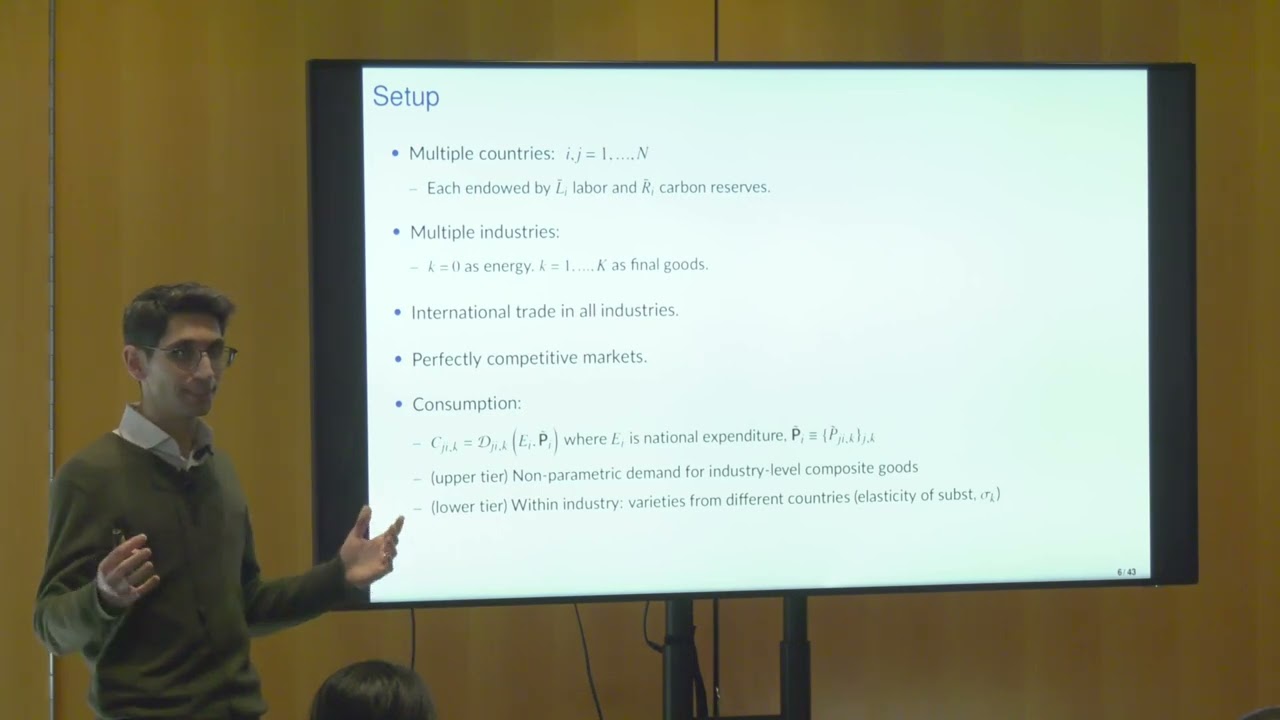
So it's not really this is not really a keynote. I I was asked to uh do the scene setting uh if that's the right right word uh for you for us to use today. So I'm I'm really uh honored to be uh here today. Uh this is another important lecture in the series of the decarbonization lab distinguished speaker series where you know it it is about uh sharing our ideas, our uh interests and an ability to have this dialogue around a very important topic uh or not just for Indonesia but I think globally. How can you have growth and development but do it in a sustainable manner? you know uh this is a long debate uh is climate and development tradeoffs or are they not necessarily tradeoffs I am in the camp that believes it doesn't have to be trade-offs if you undertake the right strategy and this is a lot of what we discuss uh in in these various meetings I think the real trade-off is between inaction today uh and action today right I think that's the real trade-off inaction today is going to cost you future growth future development in the future which is irreversible if you uh let the damage be done uh on on your resources uh and your uh sectors and so on. So I'm I'm in that camp and and the but the how to how to get there question is really what uh I think many of our meetings have been about and I I like to think that we have uh come some way in increasing our understanding how we can achieve both uh development uh and growth. uh and today uh we will hear a lot about uh what's happening internationally and unfortunately I mean I woke up this morning I mean I couldn't sleep last night watching all the breaking news and then I woke up this morning with you know the the love letter that we got uh today uh along with 12 other countries and it really kind of you know made made my head a bit explode and you know I very distract feeling very distracted this morning but we do uh face a great deal of global uncertainty uh not just in in the trade area but the fact that uh the US uh did leave again the Paris agreement uh and we have conflict in the Middle East and so on.
So there is uh kind of this perhaps backlash uh for uh green transition. Uh and this is something we should we should you know we should understand or be cognizant of as the external environment that is facing us. But it should not deter us from our goal for a uh sustainable growth. You know that is achieving growth in even higher growth.
uh maybe 8% I don't know but higher growth uh but in a sustainable way right I still think that's the the key goal for us uh in the short term medium-term and the long term uh and it it should be the defining uh objective uh for Indonesia uh so I want to do just two things in in this uh key scene setting first is the importance of decarbonization and uh this whole green growth uh uh agenda of Indonesia and then uh also say something about carbon pricing because today we are going to be talking about CBAM and how it can be actually uh be the tool to achieve our growth goals. So perhaps just just quickly if you look at this uh it's a bit small but I hope you can see it.
Uh you can see that Indonesia is still the eighth largest greenhouse gas emitter globally and you can see that uh energy it used to be forestry and agriculture that was the main contributor to our greenhouse gas emission but since we uh were able to control the forest fires the moratorium uh on uh future on on uh palm oil and other use of uh forest resources uh it has come down uh and as a result the part contribution of energy uh has gone up. Uh and this really uh really uh shows you uh the the kind of the the difference contribution of sectors uh in in our emission and it also shows you in the left graph you can see that our emissions trajectory uh closely tracks the economic growth which presents both a policy challenge and opportunity. So we've been growing but with uh increase.
So how do we now uh turn it around so that we continue to grow but the emissions uh start coming down. Uh and energy being the the biggest uh contributor uh sector means that energy transition is key. And you can see on the right side which is comparing the US ourselves with the ASEAN peers. Our industrial emissions uh and intensity is significantly higher compared to uh our ASEAN peers. And this is a structural issue which reflects our dependence on carbonintensive sectors like cement, steel and fossil fuels. Uh number of these sectors are obviously the ones uh also being uh targeted uh to uh be uh to with with CBAM. So any green growth strategy must address the emissions in these industries not just the energy sector but the uh addressing the uh emissions of these industrial sectors also means you have to you need renewable energy. So uh it's not uh separate it's it's related uh you need the energy transition so that we have uh the objective of greening these industries uh apart from the way they are producing it's the the uh supply of renewable energy and this is obviously key when we are talking about how are we going to respond to CBAM oops This uh uh graph show this uh visual shows you uh our pathway to the 2030 enhanced national determined contribution. We are actually in the process of now talking about the second NDC which was supposed to be uh submitted this year under the 20 under the COP uh commitments. uh but what we are doing is okay let's evaluate have we achieved the enhanced NDCs by 2030 in the first place uh and how do we how should we redesign and reconfigure our second NDC to make it uh having the right ambition and targets but making it realistic as well. So uh just to look at the enhanced NDCs, our emissions need to drop significantly to meet even our enhanced uh nationally determined contribution targets by 2030. Uh which is only 5 years away uh by the way. Uh and it it's it's uh has very ambitious um uh renewable energy. We have ambitious renewable en energy goals. Uh but uh can we actually uh achieve it? I think that's really uh the the challenge and this uh our NDC's is even more challenged with our ambition of sustaining economic growth of 8% by 2030 which is the government or the president's target. So we have a dual challenge uh we must carbon decarbonize uh without de-industrializing right. So uh sorry this is a very sensitive clicker okay uh to achieve this 8% GDP growth let's let's try to understand better how do we achieve growth uh and sustainability you can see this is just one sorry did I I think I missed this uh to achieve the 8% growth sustainably it's estimated that we need 200 to $250 billion of annual investments uh in between 25 to 2030 to get the cumulative US do uh dollar value of the GDP of 600 to 700 billion. So the the big question and and a lot of people who who believe in the that there's no trade-off between uh climate and uh development uh focus on this 200 to 250 billion as this is the investment opportunity. This is the growth story that you want. You want to have these investments but you want these investments in sustainable infrastructure in uh energy transition in greening your uh industries right. So if you could do that then you would achieve both right but this is of course the how-to is is something we we need all need to to think about carefully um and uh if we can really uh do green infrastructure green manufacturing renewable energy in an efficient way the other number that all of us economists talk about in Indonesia is the I core the investment capital output ratio is which is still pretty high at 6.8%. So, how do we have green and efficient and effective investments? I guess that's that's the that's the objective and then then then the how-to story, the policies, the regulations, the institutions and so on. Um, and uh really so how we we deploy this uh capital and how do we if we design it right? It's who's going to invest right?
Uh it's not it's not government investment. Maybe government, there's been numbers out there also to show that government, according to the Ministry of Finance, can probably fund about one-third to 20% of the needs uh of uh green the green investment we need for climate transition. But we're going to need much more. We're going to need private capital, blended finance, green bonds, and carbon pricing must play a role uh in all that. and sectoral pri prioritization and institutional co coordination is going to determine how effective uh this investment is.
So a little bit of sectoral pri priorit prioritization for growth. You need to kind of uh look at okay the key drivers are consumption, investment and exports and we we do want to uh focus on investments but which sectors uh to prioritize it includes green manufacturing espec including uh the downstreaming industries uh whether it's green nickel or uh EV batteries uh or renewable energy uh sustainable tourism and digital tech that box on the right hand side is prioritizing some of the industries where we could have uh competitiveness and how do we transition to green industry will be essential to maintain competitiveness and meet our climate uh commitments.
uh a little bit about CBAM the topic of today's discussion is CBAM a threat or an opportunity I think Katherine hopefully will convince us that it's an opportunity right uh it it can be a threat to our exports or a catalyst for accelerated green transformation uh it imposes a carbon price as you know on six carbonintensive commodities it's a challenge but it also incentivizes cleaner production especially if we want to retain market access in Europe and I know know that in our uh dialogue in in my role as a special envoy we are as I said talking about discussing doing a lot of discussions discussions on NDC's and revising the carbon market regulations the ministry of industry is actually very aware of this uh and uh you know figuring out how the different industries should uh respond uh and and uh the capacity building that's needed and so on uh in just the modeling done uh by uh CSIS and friends at CSIS including uh RD leading this study on the macroeconomic of CBAM is actually uh small because our export share to the U is modest and only a few products are affected for now. Uh however carbon emissions do reduce slightly more under CBAM than under our own current carbon tax and this is due not surprisingly to the higher effective carbon price uh under uh CBAM. So on the left you see the macroeconom economic indicators are slightly uh declining under both CBAM and carbon tax scenarios. On the right you can see the emission impact is more significant with CBAM. So the key takeaway is that carbon pricing works best when it finds the sweet spot where it is not too high that can jeopardize our industry but it is also high enough for industry to decarbonize and uh be and take a comprehensive approach which ours isn't. So let me just close with a few uh points on carbon price on our carbon market the progress and the gaps.
Compared to other countries like China and Korea, our compliance carbon market is still in early stages. It's got limited cover coverage, low carbon prices, and relatively few participating entities. The key is not just expanding the scope, but also enhancing market liquidity and predictability uh for uh investors.
Uh you can see the trends the the participants uh have grown but the market value remains really modest. Uh and for carbon pricing to drive drive the real behavior change that we want it must be integrated into industrial and fiscal policy and not as a standalone tool. Right? So uh uh let me uh then uh conclude by saying that oops uh we need to design uh a green resilient and inclusive green growth policy that is integrated with carbon pricing and other instruments. So you need to have the integrated picture of the green growth strategy uh which shows you that it's not uh trade-off but you need to design uh the the strategy that will bring you to the a grow 8% say 6 to 8% growth which identifies which uh sectors are contributing and how the sectors are related to each other and how the sectors contribute to growth and the macro uh development but do it in a sustainable way and I think competitiveness is an important component of the way we understand our growth strategy. If you don't uh if you don't undertake sustainability and have a green growth strategy, you're going to be uh out of the competition because today to be competitive, you have to be part of the sustainable uh supply chain and CBAM is is one component or one tool within that. So you need to identify the the clear targets. Uh you can have ambition but ambition with ambition must come uh very uh strong reforms uh and probably high carbon prices. Uh and then identify what are the reforms institutional changes that are needed.
Identify the investment and financing needs. And this should be the basis for designing our green growth strategy and carbon pricing which uh the government is currently in the midst uh of doing that. So all of you uh we hope as stakeholders can provide the input and today we will be hearing a lot more about carbon pricing and the role of CBAM uh as a as an external tool uh to to really uh help us uh move forward and uh the important thing uh just as a final conclusion concluding point when you talk about policy what's the need for policy it's one thing to design all these policies but really the the challenge The main challenge not for us but also for many other countries is coordination. Given that this is really inter agency and uh multistakeholder how how to get there. Uh we really uh need carbon pricing reform to be linked to the overall growth strategy and not just uh be targets but also how to implement.
Yeah. Uh and making sure that it's a just inclusive and actionoriented uh implementation process. So let me close there uh and hope that we will have a good discussion and it's not today is the beginning of many discussions I'm sure and we will continue to have discussions with you because this is uh climate transition is everybody's business and everybody's uh collective interest. Thank you so much.
Thank you very much Ibu Mari for the very insightful presentation and for setting the scene for our discussion today. Without further ado, uh it is now time for the main event for today which is the public lecture by Professor Katherine Wolfrram, the William Barton Rogers Professor of Energy Economics MIT Sloan School of Management. And I would like to invite Mr. Dr. Ardi Ardana, researcher at the department of economic CSIS Indonesia to moderate the session.
MRI, the floor is yours.
[Applause] All right. Thank you very much for uh your attendance today. Um, distinguished guests, colleagues, and friends, welcome to today's DFD lecture at the CSIS Indonesia.
We are honored to have the opportunity to listen to Professor Mariel Kapa Pangestu as the special presidential envoy of for the international trade and multilateral cooperation and vice chairman of the National Economic Council of Indonesia. And um also we will listen to and discuss with professor Katherine Walrram the William Button Rogers professor of energy economics from the MIT and before that role she was the Kora Jane flood professor at UC Berkeley. Aside from her academic role, between early 2021 and the end of 2022, she served as the deputy assistant secretary for climate and energy economics at the US Treasury.
Professor Waffram is one of the former scholars at the intersection of climate, energy, and trade including work on oil uh market sanctions and carbon pricing.
Please welcome Professor Wirm with enthusiastic applause.
[Applause] All right.
How are you today?
Great. Thank you for having me.
All right. Thank you very much for for coming all the way from the US and we'd love to hear from you about about the how do developing economies uh strategically respond to mechanisms like the EU uh carbon board adjustment or the UK or any other uh BCA in the world and the shifting climate policies globally and yeah I know that you are all very very excited to listen to professor Walm so without Uh without any further ado, let's begin the lecture. Uh please the podium is all you all.
Oops.
Wonderful. uh Trema Casi, I'm very glad to be here and thrilled to be talking to you about this important topic. So over the long weekend in the US, the 4th of July was on Friday. Um unfortunately, we all got news about a devastating flood in northern Texas that has probably killed more than 80 people. So, I think that's just another indication of the changing weather patterns that we're all experiencing and the the devastation that that's bringing to us. And so, the extreme importance of talking about climate and and both how we mitigate it, which we'll be talking about today, but also how we adapt to it because no matter how much uh mitigation we do, there's still going to be some changing climate impacts. And so we'll need to learn how to deal with them. So I wanted to start by explaining the background that I bring to thinking about these topics. And as already mentioned, I served as the deputy assistant secretary for climate and energy at the US Treasury in the beginning of the Biden administration under Janet Yellen. And I took this picture on my iPhone basically from right underneath my office at the time. and and I would get to my office by basically walking down this path right next to the White House. And so I have all these pictures on my phone of the White House like here in the fall colors, the White House in the freshly fallen snow, the White House in kind of the new spring greenery. So I found it very inspiring every day to to walk to work right next to to the White House.
And I raised this, you know, both as um an indication of of part of the policy angle that I'll bring to this conversation, but also as a, you know, hopefully an inspiration to people out there to pursue government um policy positions. I I really found it, you know, extremely um inspiring to to be part of the the policy discussions that we were having at the time. And you know, I think it's it's really important for conversations like the one that we'll have today where civil society, academics are helping to to try to inform policy makers. So, I took this in November of 2021, which was um kind of halfway through or or a little bit less than halfway through my tenure there, but the beginning of the work that I was doing on the the sanctions on Russia.
So, you know, the US was seeing evidence that Russia was um amassing troops on the the border of Ukraine around this time and as an energy person, we were starting to think about the potential impacts of an invasion on energy prices.
So, in the um you know, right after the invasion, I started working on what became the the price cap on Russian oil.
And actually in the summer of 2022, I took my first trip to Jakarta as part of a a um delegation from the US Treasury to to begin talking to um our counterparts in Indonesia about, you know, potential responses to the the the sanctions that we were planning at that point. Um, so I I bring this up partly because, you know, for me, this was a very influential uh piece of my career to really see kind of a policy idea go from implementation and and, you know, I I wrote one of the original memos on the price cap on Russian oil and then two and a half months later that the G7 leaders were announcing that this was something that that they were pursuing.
And so it the the idea was not mine. In fact, it was inspired by an idea from Ricardo Houseman, who I understand was a previous speaker here. And so again, I think that's an indication of of the importance of of academics and civil society kind of lobbing ideas into the the policy sphere. Um, but the second reason that I bring this up is because in my experience with the sanctions, the the US was a a leader. I mean, the the US decided that this was what we wanted to do with Russian oil, that we wanted to put a price cap. The US kind of showed up to the G7, said, "Here's what we want to do." And, you know, that the the US was able to marshall the forces and get this um get this implemented.
But unfortunately with climate, I think that President Trump has made it very very clear that the US is not going to be a leader in climate. and the US is in fact you know withdrawing from from all climate discussions and so I think that this is really going to u make it clear to countries in the rest of the world that they can't rely on on US leadership for climate although climate is this you know massive international coordination problem so they need to figure out other leaders they need to figure out other ways to to move forward without the US and so that's going to be the the topic of my talk uh what I want to start with doing is just highlighting the ways in which Trump has made it clear that the US is not a leader here. But I think that an encouraging development is that the EU has introduced this part the the policy the carbon border adjustment mechanism that I hope I will convince you really confronts one of the fundamental issues associated with climate change in a way that no previous policy has. the CBAM for that reason I think is a very you know encouraging development but the the third part of my talk will be thinking about the potential impacts of the CBAM on low and middle inome countries and I hope I'll convince you that it's not all bad for low and middle inome countries that that there are some countries that we think and our research shows could in fact benefit from the CBAM so kind of drawing on the the momentum that I think the CBAM is bringing to the climate policy discussions. is I'm going to discuss a proposal um that I have with with a working group that um Ibu Mari is part of for a heavy industry climate coalition and and I'll conclude by some thoughts on whether you know this is something that that uh President Trump's kind of chaos in in the global kind of trade global climate markets will help or or whether will hurt and so we can have a conversation about that hopefully in the Q&A. Okay. So, what's going on with US climate policy in Trump's second term? Um, Trump, you know, campaigned on the idea that he would take the US out of the Paris climate agreement on day one. He did that. He has also taken administrative steps to undo a lot of the progress that was made during the Biden administration. For instance, on regulations on methane emissions from oil and gas, on uh regulations on tailpipe emissions. So those would affect the deployment of electric vehicles on regulations that the Biden administration had proposed on power plant emissions. Trump administration has undone that. Just uh about a week ago, the US Congress passed a bill that undid much of the inflation reduction act and and many of the subsidies for solar, wind, clean energy deployments that were built into that. Um, you know, I' I've had this slide in previous conversations, in previous talks, and I didn't have done done next to all those.
I had like medium probability, but but you know, now all of these things have happened. I think that the thing that that is um worrying to a lot of my legal friends and legal scholars is that in addition to undoing the regulations that the Biden administration put that the Trump administration will try to go after what's called the endangerment finding which is is kind of the legal basis for any type of climate regulation. So, not only will he make it um you know, not only will he take away the the Biden administration regulations, but he will make it harder for any future Democratic administration to enact climate climate-based regulations. So, from a US perspective, um Trump is is very much taking the US kind of out of the climate game and and reversing a lot of the the progress that was made during the Biden administration.
What I will argue though is that I think it's it's kind of important for Trump to send this very clear, very unambiguous message that the US is not a climate leader and is not, you know, really not part of the the climate policy discussions and and is erasing all climate policy in the US, removing itself from the the international conversations because I think that the US climate policies were already very challenging. gene and and let me explain one piece of evidence for that. So here's a map from the World Bank that shows in color the countries that have some form of carbon pricing. There's kind of a glass half empty way of looking at this map and and to suggest that both there are a lot of countries that don't have carbon pricing and those countries that do the carbon prices are are quite low as as II um presented in in her conversation or her slides. But the other way to look at this is the glass half full which is to say there are a lot of countries that have some form of carbon price. And so if you look closely at this, the the countries that are colored are the ones that have a carbon price. You don't have to worry about the the different um shades of the colors. And so closely, 17 out of the 20 G20 countries or jurisdictions have a carbon price. And the three that don't are Russia, Saudi Arabia, and the US. So it kind of seems like the US is in the category of Russia and Saudi Arabia that the US is behaving and and acting like like a pro state essentially. So I would argue that already this s should suggest that the US is different that that the US climate politics were challenging even before um Trump came into office that that 17 of the other countries had had managed to pass legislation had managed to introduce carbon pricing while the US had not. Um so why might carbon pricing in particular be partic um be challenging in the US? I think there are a couple theories about this. I think this is definitely something where there there's need for more research. But on the one hand, and this is something that has changed a lot over the last 10 years. It it's worth kind of highlighting the first fact here. The US is now the largest oil and the largest gas producer in the world. We we surpassed Saudi Arabia in terms of oil production. We are a huge huge gas producer because of of the fracking revolution.
And put this together with the second point on the list that in the US money plays an important role in in politics.
So that the huge huge amounts of money that are you know supporting a large share of the US economy that the large um oil and gas producers those are influencing US politics in a way that you know Chinese politics that that Indian politics that um countries that aren't as large oil and gas producers it's it's it's not the same. Um the third point is that the US politics have become very very polarized recently. And I learned while I was in government that not only does does the right kind of not believe in climate change and and not want to do anything to address climate change, but the left even though they very fervently believe that climate change should be addressed, they hate carbon pricing. They really don't like the the idea of carbon pricing. So carbon pricing is kind of a a more centrist approach to addressing climate change and one that the left in the US is is not at all in favor of. So the more polarization we get, the the less likely we are to get carbon pricing.
Lastly, I think the fact that the US is part of um or has the the status of being the reserve currency that lets us borrow at very low interest rates that that imposes less fiscal discipline as we've seen with the the um big beautiful bill that was just passed, you know, that that increased our deficit a lot.
So things that uh require money like subsidies are more attractive than the US than uh climate policies that bring in money like like carbon pricing. So for those reasons, I think it's it's important to realize that even with democratic administrations, even without Trump, the US is different and that climate policies are are going to be different in the US. Um, so this was an article that that came out last month in the the foreign affairs. It was not necessarily about climate politics, but I think it kind of highlights this idea that the US is in the same category as as Russia and Saudi Arabia. It's calling the US a pro state and thinking about all the ways in which this um this is influencing US trade policy, kind of US thoughts about about security issues.
More than that, uh Trump has already been kind of turning his back on multilateral issues. We're we're definitely seeing this with tariffs.
Tariffs are clearly in violation of WTO principles. They're clearly invol violation of existing trade treaties that the US has. Um another example of of Trump turning his back on multilateralism is in the context of defense. Um Trump has been pretty kind of um antagonistic towards NATO and and really pushing the the European countries to invest themselves in defense and you know this whole idea of America first that that's really turning your back on on other countries and and turning your back on on thinking about multilateral approaches to problems. So as I said, I think this makes it very very clear to the the world that the US is not going to be a leader in climate policy and that that US climate policy uh you know climate politics in the US around climate have been challenging for a long time and will be challenging even if we have a a democratic administration in in the future. So I think the key question for other countries is to think about how to move forward without the US and how to move forward without um you know thinking about ways that we can eventually drive the US to get to the the right um to the right decisions for instance by incentivizing US industries to really see investing in a green transition as as part of a a growth strategy there.
So I think that this um leaves us in a situation where the European Union's carbon border adjustment mechanism is in fact particularly valuable. So I next want to talk about what the the EUBM is and how I think it will help create potentially this virtuous policy cycle.
Okay. So hopefully people in here have heard of the prisoner's dilemma. I don't know maybe raise your hand if you if you're an economist if you've heard of the the prisoner's dilemma.
Couple people there. So maybe I'll go through this a little bit slowly. The prisoner's dilemma is kind of an idea in game theory that applies to lots of different scenarios and basically emphasizes that individual actors making decisions will get us to a a point that's bad collectively. So let me let me explain why I think that climate change is not is a a kind of key example of the prisoners dilemma. So in game theory to simplify things sometimes we think about just kind of two players.
Here I have one player being the US making decisions about how much climate mitigation to do and the rest of the world making decisions about how much climate mitigation to do. And they only have two choices that the choices are that they can do a little on climate mitigation or they can do a lot. So this is just kind of trying to simplify things and and get it into the context of of um a simple prisoner's dilemma. So when I teach this to MBAs, a colleague of mine likes to use these icons to reflect kind of the the um way that that the US in this case feels about the different combinations of choices. So for instance, this red frowny face, let's see if this works. Okay. So the red frowny fla face in the bottom left there is how the US feels if it decides to do a lot of climate mitigation and the rest of the world decides to do a little. That's in in this simple 2 by two framework that's like the worst possible act the worst possible outcome where the US is like spending a lot of money in subsidies or spending a lot of political capital imposing a carbon price. it's doing a lot of work and the rest of the world's doing a little.
Since the US is only about 10% of global emissions, you know, even if it's doing a lot on climate change and the rest of the world is doing a little, it's going to incur those costs, but it's not going to be making much progress on on climate change. So, that's why we've got that big kind of red frowny face. That's that's the worst possible outcome.
Compare that to the box in the upper right. That's when the US is doing a little and the rest of the world is doing a lot. That's the best possible outcome. The US is only 10% of the the global emissions. Even if they're not doing very much and the rest of the world is doing a lot, we're we're going to, you know, experience fewer floods, things will be great or, you know, better in terms of climate and the US is not experiencing any of the the costs associated with implementing the policies. So, um, kind of second worst is to do a little while the rest of the world is doing a little because then we're not addressing climate change.
Second best is in the bottom, um, right there to have everyone doing a lot. So, people understand how I've got those those arranged will have similar payoffs. So, what I've introduced now are the payoffs for the rest of the world. Um, and they're the same. the US.
If the US is doing um a little and the rest of the world is doing a lot, that's the big red frowny face. And so now what you can do is you can think about, okay, if I'm the US and I know that the rest of the world is going to be doing a little, what's my choice? I'm deciding whether to do a lot, that's the big red frowny foot face, or do a little, you know, that's not quite as bad, but but it's better. So, I'm going to do a little.
Say I know that the rest of the world is going to do a lot. Then I'm deciding between doing a little while the rest of the world is doing a lot. That's great or doing a lot while the rest of the world is doing um a lot.
That's kind of second best. So no matter what the rest of the world is going to do, the US is deciding to do a little.
If you go through and solve out, you know, if you make the comparisons for the rest of the world, it faces the same set of comparisons. And so you end up in this equilibrium where everyone is doing a little. And part of the problem is what economists call the free rider problem. Part of the problem is these smiley faces. So remember the upper right box where the US knows that the rest of the world is doing a lot. Its choice is to do a little. Its choice in econ terms is to what's called free ride. It knows that the rest of the world is basically addressing climate change. It's kind of small relative to the rest of the world and so it can free ride on on decisions that the the rest of the world is making. And unfortunately this is an incentive that every country faces.
Every country you know even more than the US is a small part of the overall climate problem. And so why does it want to invest a lot of costs in mitigating climate? It just wants to rely on the rest of the world to do things. And so unfortunately we are seeing this play out. We're seeing that the world is not making enough progress on climate change. countries are, you know, either committing to NDC's and then not achieving those NDCs or committing to NDC's that aren't very ambitious. We are seeing this free riding play out in in real terms. And so I will, you know, argue that that a key part of that is those smiley faces, is the fact that if you're a small part of the overall climate problem, you want the rest of the world to take care of the climate problem. And if every country faces those incentives, then we're left in this bad bad equilibrium, this bad outcome where where we're not doing enough on climate change.
So I think that in ways that no other policy before it has done, the EUBAM addresses that free rider problem and basically makes it harder for a country to free ride on the rest of the world.
So let me explain why I think that's the case. first of all explain what the the CBAM is. So it's basically as the name suggests it's adjusting at the border for countries that are trying to export to thei to the European Union and it's charging them a carbon price equivalent to what the carbon price is in the European Union.
So take the little icon on the right here. Imagine that the European Union carbon price is €75 per ton. So what this is saying is that if you're say imagine that that icon is a steel producer, if you're a steel producer in the European Union, for every ton that you emit associated with making ton of CO2 you emit associated with making your steel, you're paying €75 per ton. So with the CBAM and it starts with the the five industries list listed in the box there. Now, every country that's exporting to the European Union has to pay that same border adjustment proportional to the carbon emissions that they used in in making their steel or aluminum. So, imagine that you're a steel producer in Malaysia. If it takes you two tons of of CO2 to make one ton of steel, then every time you export to the European Union or steel, you have to pay 150 euros per ton. two tons of CO2 times that 75 um 75 euros per ton unless you have already paid a carbon price domestically. So in this example, imagine that that Malaysian steel plant had already paid€ 10 per ton domestically to Malaysia. Then it only has to pay 65. It gets credited for the€ 10 euros that it that it's already paid in Malaysia.
So this component of CBAM is really kind of helping other countries think about the importance of carbon pricing. So for instance take the case of of Turkey.
Turkie exports like is there a question?
Okay. So Turkey exports about 50% of their total manufacturing to the European Union. So Turkey is kind of doing this calculation, has done this calculation and saying my industry is already paying a carbon price for that 50% that's getting exported to the European Union, but my industry is basically writing a check for 75 per ton and sending it to Brussels. If we put on a carbon price domestically, our industry isn't going to complain because they're already paying the carbon price, but we get to keep the revenue and we'll be be credited, our industry will be credited with that carbon price that they've paid domestically when they export to the European Union. And so for Turkie, it's really kind of a fiscal calculus. They get to keep the revenue and not have their industry send it to the the European Union. So that kind of logic has has kind of led to a global conversation about carbon pricing. And if you go back to my prisoners dilemma example, what that has done is changed the boxes that were particularly problematic. It's changed the free rider assump um free rider incentive. So I've left blank the the payoff that the US gets if it decides to do a little while the rest of the world does a lot. Before that was a big smiley face. The US wanted to be in that situation. But with the sebam if the US is one of the only countries that doesn't have carbon pricing imagine Canada, Mexico have carbon pricing and and sebams then the US is in the same position as Turkey.
It's kind of silly, right? It's it's industry is paying the carbon price every time it exports to the EU, the UK, Canada, Mexico, but they're sending checks to Mexico City and Ottawa and and not paying the US. And so in that case, I would say that, you know, doing a little while the rest of the world is doing a lot gives you a negative outcome. It gives you this red frowny faces. It basically kind of cuts off the incentive to free ride on other countries because if you're one of the only countries left not doing carbon pricing, every time you try to export, you're facing these carbon border adjustment mechanisms. And so that leaves us in a position. It it's called a coordination game. You know, it's we there's two equilibrium in this game, but it's a lot easier to solve a coordination game and decide to coordinate on doing a lot than it is to solve the free rider problem or to address the prisoners dilemma. And so, as I said, I think, you know, we've had climate policies, we've had 30 years of cops, we have lots of discussions, but to date, no other policies have really confronted the free rider problem in the same way that that the CBAM has. And so, I think the CBAM is this potentially really transformative climate policy and and one that can kickstart a positive feedback cycle like we discussed with with Turkey.
So some evidence um that this is happening. This is from a policy brief that I have with with some colleagues at resources for the future. This is looking at the number of other countries since the EU started talking about CBAM that have either implemented a carbon price in red or are you know at some phase of the conversation about carbon pricing. And you'll see that, you know, in in January um 19 when 2019 when the EU first started talking about the CBAM, I think there were like 57 countries that had carbon prices. But since then, there's just been this this rapid increase in the number of countries that that are either implementing or talking about carbon pricing. So we don't know that this is because of of the CBAM but some further research that we did really looks at you know exactly when the the EU started talking about the CBAM you see this explosion in the number of of mentions of carbon pricing and and carbon border adjustment mechanisms in um in newspapers around the world. So I think that you know it suggests that that this has really started a global conversation about carbon pricing.
So that's good. You know I think addressing the free rider problem undoing the prisoners dilemma and climate policy that's that's super important. But the CBAM definitely has some challenges. So let me talk about those next.
Um okay I think one of the primary t challenges that is that there are concerns about the impacts that sebam will have on on low and middle inome countries. I've highlighted here a couple of of uh headlines from the global press but basically you know every week that you look at at the global press you can find headlines like this. So for instance, South Africa is saying that they may challenge the CBAN policy before the WTO. They think that the EU carbon tax is just not not just.
Um, one of the phrases that I've heard describing the CBAM is that it's a form of regulatory colonialism. It's basically the U. EU deciding what should be done about carbon pricing or sorry about climate policy suggesting that it should be carbon pricing and not only that suggesting exactly what the carbon price should be. Um right you know even if the Malaysian steel plant in my example had a carbon price of 30 they would still have to pay that that difference and make up um to to get to the EU carbon price. So I think that part of the allegation of regulatory colonialism is assuming that the CBAM will have negative impacts on the economies of of low and middle inome countries. One example of that is this report from the center for global development where they concluded that Mosamb beek because they are a very large exporter of aluminum and because most of their aluminum goes to the European Union the the CGD concluded that about 1.6% of Mosamb beek's GDP would be at risk because of the sebam.
So I disagree with that and I hope I'll convince you that that in order to really understand what the CBAM is doing, we need places like CSIS to do kind of careful um datadriven analyses of of the CBAM.
So I think part of that assumption that the CBA is bad for low and middle inome countries is based on this idea that low and middle inome countries have kind of dirtier production that the production maybe isn't at the technological frontier and therefore they will be particularly hurt by the sebam. But in some research that I've done with um with co-authors, we've plotted we've looked at basically the emissions intensity as a function of a country's GDP per capita. And so this idea that the low and middle inome countries are particularly dirty would suggest that the the line is downward sloping. We see that a bit in aluminum, but if you look at the statistical significance, you know, it's not even statistically significantly downward sloping. So, for instance, the these are um bins of of countries, you know, kind of bin them so that they're 20 dots on on the graph, but Mosamb beek is an example of a country that that's below the line.
Mosamb beek is an example of a country that is very low income, but also quite clean in the way it produces aluminum.
We see in general with steel that the line isn't even downward sloping that on average lowincome countries are cleaner than highincome countries but again it's quite noisy and it varies it varies country by country.
Um so you know one example of how countries are getting information about what the impact of the sebam might be is this world bank product that's called the sebam exposure index. So part of the reason that I'm highlighting Mosamb beek is because they show up on this sebam exposure index as you know one of two countries Ukraine as the other countries that is particularly exposed to sebam and particularly as the world bank calculates it going to be negatively affected by sebam. The more orange colors are are more negatively affected the more green colors are positively affected. So in general, the World Bank is calculating that most other countries will be negatively affected by CBAM and Mosamb beek in particular because it's kind of bright orange will will be negatively affected.
But in the work that we've done and we've had kind of conversations ongoing conversations with the the World Bank about their data, we suspect that the data that the the World Bank is using is both kind of older, not up to date and things are changing rapidly in ter terms of the the green transition and and decarbonization of industry and they are not very granular. So they are making assumptions about Mosamb beek's production capabilities that are are are not grounded in data and are kind of reflective of of um are not grounded in very granular data and reflect averaging in in a way that in this case is makes it look like the CBAM is detrimental for Mosamb beek. So what we've done and we're working with the government of Mosamb beek here. We've collected very very detailed data on the aluminum sector. We've got 153 every primary aluminum smelter in the world. And what we've done is kind of arranged them from lowest cost to highest cost and and cumulated them up here. If if you're from an econ perspective or from an econ background, this is basically a supply curve for aluminum. And um Moselle, the primary aluminum producer in Mosamb beek, even before you account for carbon costs, Mosal is relatively cost competitive. It's it's there there's a huge hydroelect electric plant in Mosamb beek. That's basically why they they build a an aluminum smelter because they have access to this cheap power. So Mosal is is quite cost competitive.
Once you add carbon pricing, Mosal becomes even more cost competitive because yes, Mosal's costs go up. There are some carbon emissions associated with primary aluminum smelting. even if you're getting the electricity from from a completely clean producer.
So Mosal's cost will go up. That's the difference between the gray line there and and the black line. But Mosal's costs go up by a lot less than most of the other aluminum smelters in the world. And so you can see, you know, that gray line has shifted to the left to the red line. If you do it in terms of of percentiles on the on the left, before accounting for carbon costs, Mosal was cheaper than about 80% of the plants. Once you start accounting for carbon cost, Mosal becomes cheaper than 92% of the carbon of the of the um plants in the world. And so this is an indication that yes, Mosal's costs go up because they have to pay for carbon, but what really matters is how Mosal's costs compare to its competitors.
So why am I saying that?
Actually, sorry. First, you know, I think this is a a strong case for doing independent data analysis. And again, this is another plug for for organizations like CSIS. I think it's important for individual countries not to necessarily rely on on the World Bank. The World Bank state are kind of indicative, but you want to understand at a at a granular level how your industries will be affected by something like like the CBAM.
So in kind of simple economic terms, let me explain what we think is going to happen once the CBAM is is in place. So basically before the CBM was in place, you could think about the aluminum market as just being a global market.
There was one price for aluminum that was essentially consistent around the world. In some parts of the world, like the US, there were tariffs. So this is a bit of an abstraction, but but you know, aluminum is is a commodity. It's it's an element on the periodic table. Aluminum blocks made in Mozambique are the same as aluminum blocks made in China. you know, it's it's basically a commodity.
What we're doing is kind of separating the rest of the world from the European Union because once the CBAM comes into effect, they they will be different markets. But before the CBAM there was one world price and there were kind of supply and demand curves in the EU and and in the rest of the world. So once the CBAM comes into effect, what this does in the European market is adds this additional cost. And so we've reflected that by the supply curve rotating from the black curve to the green curve. And that's the same as what I showed you before with with the supply curve that we built that once you add carbon as an additional cost to making aluminum, it becomes more expensive. So what that means is that suppliers in the EU market will get what you can think of as basically a green premium to to supplying into that market while suppliers in the rest of the world will get a brown discount. So the price in the rest of the world will be a little bit lower than it is in the European Union.
What matters for Mosamb beek then is whether it gets priced out of the European market, whether its costs go up by a lot and it it's too expensive for it to supply into the European market and it now has to supply into the rest of the world with that with that brown discount or whether it can remain competitive in the EU and earn that green premium. And so what we see based on on the data that I just showed you is that Mosamb beek is actually pretty cost competitive because Mosamb beek's carbon emissions are lower than in the rest of the world. It it remains cost competitive. You know, maybe it even wants to expand production of aluminum because it's got this this nice clean source of electricity and and its aluminum is going to add that green is going to earn that green premium. So to us this suggests that once you get kind of granular data once you think through the economics of how the market might change this suggests that that Mosamb beek will benefit from this the sebam that rather than having that big orange you know color on the the world bank market or on the world bank map we think that Mosamb beek stands to benefit from from the sebam in the conversations that we're having with the Mosamb beek government we have tried to um encourage them to imple implement a carbon price on the aluminum sector.
And again, because our analysis suggests that it will be a boon to them to supply into the European market, their industry, Mosal, isn't going to object to paying the carbon price. They're going to be paying it other in any case.
And Mosambique as a very poor country exports about 99%, you know, the large share of it of its aluminum is exported.
And so basically Mosal is has this choice. Do I pay the check to um Brussels or do the I pay the check locally in in um Muto in and Mosamb beek? They're they don't care. It's it's you know money out of their pocket one way or the other. But for the Mosamb beek government it's a big it's a big source of revenue potentially just this um just this carbon tax on one supplier.
Okay. So with that in mind, we think a CBAM is solving this p prisoners dilemma problem, encouraging lots of countries to think about uh about carbon pricing and b isn't necessarily bad for countries like Mosamb beek um countries that have clean production in um in some of the sebam sectors. And so um together with a number of of thought leaders from around the world including Ibu Mari we've started thinking about is there a way to address some of the objections to CBAM but use the kind of continued using the benefits of of CBAM and and tapping into this kind of policy spillover or virtuous policy feedback cycle. So about eight days ago, we put out an interim report uh reflecting kind of the chair's perspective on the the working group conversations that we've had about a climate coalition. The working group includes uh 19 thought leaders from around the world. We have uh somebody from Canada. Canada recently elected a new prime minister who campaigned on the idea of a carbon border adjustment mechanism. It includes thought leaders from India, thought leaders from China.
Um so you know thought leaders from many parts of the world and we're trying to think about what a climate coalition might look like that both centers on carbon pricing takes advantage of that map that I showed you where a lot of countries are are already implementing carbon pricing but then tries to address some of the objections to the sebam and and tries to to do things in a in a slightly fairer way.
So, we are outlining what a coalition might look like and and trying to kind of present this to policymakers to help them think about what a coalition that centers on carbon pricing might look like. We're presenting a couple of different ways in which the coalition could implement carbon pricing. One is to have basically a uniform carbon price floor. And so basically everyone in the coalition would agree to have a carbon price floor of the way we're modeling it is say 50 euros per ton.
Another alternative is to have what we're calling a graduated carbon price where highincome countries would agree to have a carbon price floor of 75 euros per ton or $75. I think we modeled it in dollars. Upper middle inome countries um would agree to have a carbon price floor of 50 euros dollars per ton and low and low middle inome countries would agree to have a 75 sorry$25 um dollar per ton carbon price. So the way that would work is that countries low and middle inome countries would get credit when they exported to highincome countries at three times whatever they paid. So if if they had already paid a carbon price of $25 um dollars per ton, they would get no they would have no um border adjustment to pay if the EU price was at 75. And so we think that this might be a way to kind of keep the the CBAM keep the policy momentum um for carbon pricing alive, but recognize the concept of of common but differentiated responsibilities. basically let low-income countries into the coalition at a lower carbon price than than high income countries.
So with this we we've done some preliminary modeling. We think having a coalition is important for a couple of reasons. One is that you get many more carbon reductions than with just the the EUbam.
The second one and and we think that this has been kind of undervalued in the conversations about about carbon pricing is that by implementing carbon prices countries earn fiscal revenues and so the calculations that we've done suggest you know remember I was talking about Mosamb beek if Mosamb beek imposes a $50 per ton carbon price on Mosal on on this one taxable entity it's a pretty easy tax to implement um Mosal isn't going to complain about it. They earn they increase their total fiscal revenues by 1%. So that's you know a significant amount of money that Mosamb beek can then spend on health care on education could spend on climate adaptation. It's basically up to the country to decide how it can it can spend the money. Similarly, um if you look at Indonesia, its carbon price revenue from a $50 per ton carbon price on on just the sectors that are covered by the CBAM would bring in about uh $2 billion a year or again about 1% of of the the government's total revenue. So, we think that this is an important um consideration for countries to think about carbon pricing.
We think there are some additional carrots that that the coalition members might want to think about. One is to think about opportunities for technology transfer possibly through the um through the MDBs. You could think about for instance the highincome countries using a portion of their revenues and devoting it to a trust fund at the World Bank and that trust fund would fund investments in decarbonization in low and um middle inome countries related to decarbonization of steel or decarbonization of aluminum.
You might also think about the removal of trade barriers to inputs to the the clean technology developments in in these sectors. You know, things like critical minerals have have an agreement that coalition members will freely trade those um those inputs. Or you might even think about the highincome countries devoting some of their carbon price revenues to climate finance and and helping to fund um either investments in in carbon mitigation or investment in climate adaptation. And again, you know, I think recognizing that carbon pricing is a is a important source of fiscal revenue and important source of of fiscal revenue that could potentially be used for climate finance is um an important part of that conversation.
So, let me just close by thinking about, you know, will this happen? What are some of the incentives that different countries have to join such a climate coalition? We think from the perspective of the EU, it basically helps provide momentum, provide an impetus for the continuation of the CBAM, helps prevent objections that countries might bring to the CBAM at the WTO.
And I think it also helps protect some of their downstream consumers. So right now, if you're an auto producer in the EU, you're not that happy about that green premium on on aluminum because that's an increase in the cost to your production. But if there's a climate coalition, if you know, imagine Japan is part of the climate coalition, then Japanese automaters will also pay a a green premium um for their aluminum. And so that makes it more attractive for the important industrial constituents within the European Union.
Why might China join such a climate coalition? And let me just emphasize China is an extremely important part of a climate coalition in these sectors in particular. China is about 50% of the global steel production, about 60% of the global aluminum production. And so, you know, they are an extremely important part. If you look back at the fiscal revenues, you'll see that the Chinese fiscal revenues from a carbon price are are quite high reflecting that. So, why might they be interested in being part of such a climate coalition? If you go with a graduated carbon price, then China will get exemption from the EU bam at a lower price. So, this is an exemption um that might be valuable for for them. It also from a more geopolitical perspective, you know, that one conjecture is that China might be interested in in multilateralism, particularly multilateralism that excludes the US. In some of these, you know, trade conversations, my perception has been that that China kind of likes to take the position of the adult in the world, the adult that's kind of supporting multilateralism where the US is is being the the the kind of whatever toddler in the world and and um having temper tantrums around around multilateralism.
Lastly, China has invested so heavily in the clean energy transition. Um so China recently expanded its emissions trading system to cover the steel industry, the aluminum industry and the cement industry. My theory is that China has done that because they are also making heavy investments in the decarbonization of those industries. And so if they are leading in the decarbonization of those industries, they might like something that encourages other countries to, you know, want to buy electrolyers. and and if China becomes a huge producer of electrolyers, that that's a that's a good um outcome for them. So lastly, I've thought about some of the incentives for Indonesia to join such a a climate coalition. Of course, I would like to hear the conversation about this, whether this is the right set of of incentives. Again, like China, they would get exemption from the SEBAM at a lower price. This is just a reminder.
The EU SEBAM is the the EU law. it it seems like it will go into effect next year. With that in mind, thinking about ways to to incentivize cooperation that that are slightly more advantageous to countries like Indonesia might be a way to get countries to join a coalition.
Also, if the coalition adopts some of the recommendations about climate finance like the the trust fund set up at the World Bank, then Indonesia would get access to the the climate finance.
And lastly, I haven't emphasized this, but there's a lot of constrnation about the reporting requirements that will be um in enacted under the CBAM. We think if a coalition of countries gets together, they could think kind of constructively about what those reporting requirements should be. And so Indonesia as part of the coalition would would be able to participate in those discussions, would be able to help shape what the um reporting requirements could be. And I think as conversations about carbon pricing about sebams proliferate there is without a coalition there's the risk that we'll get like Australia's CBAM and there will be one set of reporting requirements for Australia's there'll be a UK CBAM another set of reporting requirements there you know there'll be just the these reporting um and administrative costs that that companies will have to face if we have a coalition we can kind of unify at the the um measurement reporting and verification standards.
So, does this make sense? You know, does multilateralism or miniateralism, we're thinking about the climate coalition eventually expanding to include most of the world, but in the beginning potentially including, you know, a small number of countries, maybe Brazil, EU, Canada, China, Indonesia. It's not many countries. It's a big share of emissions. So, a lot of emission reductions, but um do do the trade tensions that the US is creating make a coalition like this more or less uh attractive? I have a thoughts on on both sides and again curious to hear about this um in the in the question and answer. Curious to hear whether you agree. What I think makes it more likely to happen is that this coalition would provide kind of strength in numbers right now. As we're seeing, Trump would ideally like to have bilateral conversations with every single country. The US is a big consumer. If it takes on, you know, Indonesia, Vietnam separately, it can negotiate a pretty good deal. Whereas if countries band together, if they are all part of a climate coalition and the climate coalition has decided this is the way we are going to trade steel and aluminum, there's going to be a border adjustment that reflects the carbon intensity. Maybe that border adjustment will reflect a graduated carbon price.
Then it's harder for for Trump to individually negotiate separate deals with with countries. I think that this provides kind of a uh as I say kind of strength strengthen numbers and secondly as as I highlighted with the Chinese potential incentives to join the coalition. Other countries may want to protect multilateralism. Multilateralism has has a lot of benefits there. there may be countries that want to kind of step up to the plate and and counteract Trump's um you know just kind of America first blowing up the the multilateralism.
On the other hand, I do think that there's fear of rocking the boat. The US is is a very large consumer. I think countries might fear that if they join such a climate coalition that this will be yet another thing that that Trump is angry about, yet another issue to to have to deal with in these trade negotiations.
That said, this is kind of a technical issue to be honest. And so like CBAM, it's this wacky acronym that no one's ever heard about. It's kind of complicated. I think there's an opportunity for at least a technocratic discussion about this to to kind of fly under the radar to establish the the basis the intellectual underpinnings for such a climate coalition and hopefully in 2028 2029 the US will be kind of more sensitive to the importance of of such a climate coalition and and the technocrats will have done the um you know had the conversations uh to get this going. So just to conclude, I think that countries have a lot to gain from coordinating on carbon pricing approaches. When I listed the incentives for countries to join the climate coalition, notice that I didn't include what is the biggest incentive, which is we would get lots of emission reductions. So that, you know, I think that's important to to um to emphasize.
I think that this climate coalition as we said focus is initially on the heavy industries initially on the sebam sectors but it's my personal view if that if we get the finance ministries from a couple of countries like the countries I mentioned talking about climate policies talking about ways to incentivize other countries to pursue aggressive climate policies that conversation can expand to other sectors and and have benefits um beyond just the the heavy industries. That said, the heavy industries that we are going to focus on might seem like it's just like three or four sectors, but they are 20% of global emissions. Steel is an incredibly carbonintensive production process. Aluminum is very carbon intensive. So just those those sectors alone, having a conversation about them would be extremely important. And as we've emphasized with the Mosamb beek example, a world that prices carbon is not necessarily one that is bad for low and middle inome countries. It's definitely one that prioritizes clean production. to the extent countries like Indonesia have access to a lot of geothermal um production, a lot of hydro production, this is something that they can leverage as a competitive advantage and leverage as part of a a green growth strategy.
Um so hopefully I've I've said enough provocative things to get a lot of conversation going in the the discussion, but I look forward to that the the questions. Thanks so much.
[Applause] Well, thank you very much uh professor Walram for uh that sharp and thoughtprovoking I would say uh presentation and um just to sum up um you situated the CBM within the broader global geopolitical context which is very very uh a great um great conversation uh that you start with and you argue that um it the the the The CBAM could catalyze a virtuous cycle of climate cooperation, but only if low and middle inome countries are meaningfully included. And um more importantly, you also proposed a formation of multilateral uh climate coalition where developing countries uh especially Indonesia and other other developing countries can coordinate on carbon pricing and benefit from lower carbon prices uh technological transfer and access to climate finance. All right. That um just just my two cents. I I it was your your presentation reminded me when I was a student in Columbia University and I when I took a class uh from professor Scott Barrett and yeah we also talked about the the prisoner dilemma and etc. and also about the the COP 30 uh negotiation as well. And yeah uh the one that I remember from the conversation in the class was like you know um about like if we channel the the the carbonization through the the the you know the trade the trade it might it might be incentivizing others to you know to follow the to to follow the the carbonization effort. Um but on the other hand it has some trade-offs sort of the you know retaliation and trade tension and etc. I was just curious just to begin with uh first question. I was just curious about um do you think that this is a a good time you know because we know that the US also has a has a section 32 232 that includes aluminum steel if I'm not mistaken. So um we did our modeling um uh within the the center and we did that the modeling combine the the you know the CBAM and also the section 232 and yeah the intertwining impact is not really in a good shape uh I would say. So do you think that like the CBAM the EU CBM that will be implemented next year and the UK CBM that will be uh implemented the year after do you think that during this global tension this is the right time to do that or not that that might be my first question to begin with thank you very much yeah um thanks that's a great question I I do think that you know as I emphasized I I think that carbon pricing was always going to be challenging in the US, but carbon pricing is such an important part of the world answer to to climate change. Um, so I think that in some ways taking the US out of it lets other countries focus on or or think about a climate coalition that that is centered on carbon pricing. if the US had been there, we've seen already with like the OECD that they're kind of doing back flips to try to include the the US in the conversation. And so they're coming up with things like equivalent carbon price that recognizes subsidies. But with with without the US there, other countries can can kind of zero in on on carbon pricing. I think that's the that's the optimistic view. The pessimistic view as you said is that the US has introduced all this uncertainty and kind of friction in the the global trade specifically around some of these industries like aluminum and steel. So is this really a time when we want to think about you know additional changes to that market and additional changes that admittedly would antagonize um President Trump? I I think that's a really good question. I do think that there is kind of a strength in numbers argument. I think that Trump has tried with the US universities with the US law firms. He has kind of revealed this strategy of of wanting to do bilateral.
He wants every law firm to come in and make concessions. what he doesn't want is the law firms to to band together or the universities to band together and decide we are a coordinated group and we are going to like we are going to challenge some of those um some of those requests. So I think in some ways this is like the the country version like we are going to stand together as a as a set of countries and decide to have a a principled conversation about what steel and aluminum trade should look like.
part of that principled conversation is we want to reflect the carbon emissions associated with with steel and aluminum.
Um so I think that's that's the argument for why now is the right time to have that conversation. But yeah.
All right. Thank you very much. So we got a plenty of time and uh I'll open uh on the on the on the first round. I I think I'll I'll open uh three rounds um consisting of three questions. Wait a minute. Wait a minute. Yeah, I know you're excited all um consisting of three uh questions and yeah um probably let's start now.
Okay. Is there any female?
Okay. Probably start with you. Uh and yeah you and yes please in the back I I I really encourage female to talk about this too right. Okay because our our speakers today are all female. So yeah I really encourage you.
Okay thank you. Uh my name uh hello good evening. Good even good evening. Uh my name is Vidanto from atconnect.ca. I have uh thank you for from where at connect.ca IA association carbon emission expert.
[Music] Uh I have uh two question in a facing in the border carbon adjustment BCA proide through the carbon border adjustment mechanism CBM which in increasingly strict in the euro European Union and the United States. First question, what are the suggestion from professor in complying with expensive global in emission standards in maintaining the competitive on commodity export such as palm oil and still in Indonesia? And the second question, what are examples of polariz strategies that have been successfully implemented in developing countries other than Indonesia that could be adopted by Indonesia? without causing significant negative impact on economic and social growth to be able to balance the obligation to communicate it create change and the need to remain competitive in the global market. Thank you.
Thank you Pawidanto. Okay. All right. Um let let us collect three questions first. Uh next please.
Thank you very much. My name is Hiskia Tasik. I'm directing the Samagi University SD Center as well as advising APEC sustainable energy center in China.
Um, I have a question for you. Um, thank you very much for your presentation. is very interesting and I'm so interested in one of your slides uh saying the the incentives um of the of the countries such as China to join um to join the climate coalition. Um I'm just wondering though um what do you think like um are there any incentive for China to to join the the coalition um with the condition right now China actually is trying is is striving to to be the best player in in in in the world not only in um not only in consumer products but as well in energy production.
Um right now we know that China I think is the the biggest producer of solar panels and also they work hard uh adopting the uh energy from the wave from from the wind and so on and so on.
Um so I'm I'm just wondering uh I want to hear your your opinions your views.
um um right now EU um is implementing the CBM and so on and so on. Other countries as as well also they try to regulate the uh related to climate climate issues. Don't you think that uh in near future China is going to be the is going to be the the big regulator of climate maybe some some years from now I don't know um because they have like like everything um in terms of energy and so on and so on and they have for example when we talk about the EU CBM China biggest market is not is not actually countries in in EU you um if I'm not mistaken only only Germany is one of the countries that actually has the biggest market of China products uh while China's biggest market is in the United States in ter in term of electronics um um retail products consumer products plastic Indonesia is one of the biggest product of China um so um what do you think in the future if for example if China becomes the biggest regulator of climate.
Uh please be concise.
Oh yeah. Yeah. If China become the the biggest uh um regulator of of of climate issues, what do you what do you think?
How should big countries like US and middle middle countries like Indonesia to adapt and to respond to to that issue? Thank you very much.
All right. Thank you very much. His uh last one. Yes, please.
Hi. Hi. Um I'm Arya Gadu from University of Arkansas. Um so one thing that I'm wondering I mean this coalition really depends on everybody joining right and essentially a CBAM would increase prices for producers and if there are not enough players then I'm trying to think about do you have you sort of like think about implications when um productions move to non CBM countries which probably have less sort of like environment mental standards and whether you know what is there is there sort of like an optimal size of coalition which is necessary for this to actually be carbon reducing given the potential sort of reallocation of uh producers um that's thanks all right thank you very much uh for the questions all right we have three questions here um do you have do you got all sure all okay thank you um yeah thanks so much for those questions. Let me try to take them in turn. Um, first there was the question about what countries can do to maintain competitiveness in the face of CBAM and and what are some successful policies that that countries have adopted.
I mean I think the economic incentives are pretty straightforward that to maintain competitiveness countries need to reduce emissions countries need to invest in the green transition.
countries need to decarbonize these sectors.
As far as the successful policies to do those things and and and let me just reinforce that the reason is because the CBAM is the amount of emissions times the the carbon price basically. So either a country can drive down its emissions, export green steel, green aluminum and then even if it doesn't have a carbon price because its emissions are so low, it's not paying a very big border adjustment or it can you know in addition it could um implement a carbon price and then its country's um exports are credited with that carbon price. So I think the successful policies are either to implement the carbon price or and again these don't need to be mutually exclusive invest in you know subsidies kind of of strategies policies that will incentivize companies to to decarbonize. So, you know, subsidies for clean steel, clean aluminum, those are are things that um that that potentially countries are thinking about or strategies to like incentivize clean production that don't involve sub um the the subsidies. So, some of those strategies might be like clean production um or sorry, clean procurement. If the government as a big producer um sorry government as a big consumer of these industries says I'm only going to buy clean aluminum or I'm going to favor clean aluminum in my procurement strategies. Those are those are potentially policies that don't cost as much as as subsidies. Um the second question was about the incentives for China to join. So I guess the way I'm thinking about it is is there are kind of two potential paths that the world can take and just to make it like simple think about the US path or the China path. US is basically trying to ignore climate change and the US would like to go down the path where the world is consuming lots of fossil fuels, lots of oil, lots of natural gas because because the US is a big producer of those whereas China would would prefer to have the world go down the path where we recognize climate change. And to do that, there needs to be government intervention, right? there there needs to be some kind of climate policy. So as I interpreted your question, you were kind of saying why does China want other countries to adopt climate policies?
Because then China will lose its competitive advantage. I think China wants other countries to adopt climate policies because it doesn't want us to go down the US path. It doesn't want countries to ignore climate change. that that China has kind of made these investments as you suggested in becoming the largest solar producer, the largest producer of of electric vehicles, but in order for those products to be demanded, like in order for those to products to be what the world transitions to, there need to be climate policies because otherwise we are stuck in the prisoners dilemma. we're not going to do enough to address climate change and we'll go down the US path where where we're kind of turning our backs on clean energy electric vehicles, the things that China is really good at producing and and sticking to the the US um path.
Um on his second question about do you foresee your regulator?
uh implementing CBM or yeah I I mean I I I don't know if I would describe them as the big regulator but they are definitely a a big emitter.
So, and this gets to the third question about, you know, what the optimal coalition size is, especially for these industries. I think it it really does depend on China becoming part of the coalition because they are such a large such a large emitter and such a large producer in in these um in these industries.
Okay. All right. Do you already have a number like how many nad in the model?
Uh so we we are modeling it based on the thought leaders that are part of our our coalition and we have people from China, we have people from India.
Um I I guess I would say that that part of the incentive for this coalition is to think about processes to address climate change that are independent of the UN approach. That the UN approach has a lot of advantages. It gives every country a a voice. it it gives you know lowincome countries a seat at the table.
On the other hand, it requires there to be consensus between 195 countries. So there's there's this like lowest common denominator uh result that that I think comes out of UN. So what what we're trying to do is think about approaches that that don't rely on consensus with 195 countries that that might just involve five or six of the the large emitters around the world like as as I suggested you know Brazil, EU, China, Indonesia that's only five countries but but a huge share of the global emissions.
All right fantastic. All right. Uh let's open the second round. Is there any question? All right. First one. Two others. Yes, please. And okay, you all right. So, one, two, and three.
Uh hello, my name is Muti and I'm interested in getting your point of view on how you envision.
I'm sorry. From where?
Uh I'm just an independent party. I came from my friend's invitation.
All right. Okay. Okay.
Um yeah, I am I'm just interested in what you envision in United States um in a postTrump world where you mentioned where the polarizing policies that's happening now is going from one extreme to the other. So uh what do you think would happen whether the next candidate will be a Democrat or Republican? How does that affect with the climate policies and um do you think because you mentioned also that this is much more of a centrist idea that uh uh how it can flourish in in that space. So um what is the optimistic outcome and what what can we look for in the future if there's a positive change um in that aspect? Thank you.
All right. Thank you very much for the question. Next, thank you uh Yudo from Univers Islam International Indonesia. Uh thank you for really interesting and thoughtprovoking presentation.
So uh you know like given the current situation that you mentioned uh for me it's really hard to imagine the global coalitions or multilateral multilateralism without the US support.
So given that situation, I wonder whether this CBM policy will last longer. I mean like is there any possibility that let's say the US might threaten you know this this kind of policy. So I think this is really important because you know given what happens in recent weeks, recent months with the US trade policy. Thank you.
All right. Uh thank you very much mas yudo and last one.
Yeah thank you. Good morning everyone.
Uh it very uh uh inspiring uh discussion actually we have uh thank you professor.
Uh my name Alexander Ludi and uh thank you also uh founding fathers bukka. I'm actually digital transformation council from ministry of industry. I'm vice chairman and I'm uh involved in the startup ecosystem actually. Um I now remember back then when I worked for European Union Brussels through the laawa 2000 when we built uh the first harmonization in pressure equipment directive peed. I I do remember we accept uh China as the delegation at that time just to have uh to know a little bit about the European uh perspective.
I think we are coming into the era of let me say uh isol isolations now instead of globalization we have to be aware of I think you can read from John Mhammer against uh Jeffrey Sak discussion is pretty clear. Um my question will be then uh is I involve also the AI strategic national and we refer to the U AI act. Yeah.
compared to the US or compared to the China which is very restricted. So in this position Indonesia is quite open.
Yeah. So we can be with China, we can be US, with Europe. Now it's depending on how we deal with this. Of course we need to lobby the European Parliaments of uh that's my uh my experience three years in the European Union of course. But again uh how then we uh settle internally in Indonesia? We do have a very big archipelago.
uh do we have to settle in zone like this one is for uh supplying to the US uh with the other one is supplying to Europe while the other zone of industrial complex is supplying to China for instance and I close I do have experience recently uh I don't have to mention which zona industry but I have a I got a great opposition from the from that uh zona of industry uh because it's coming from uh Japanese uh industrial zone. I cannot install any kind of uh electric vehicle coming from China for instance. So it's pretty much uh uh straightforward. I think the pros I I I love this uh discussions and uh yeah the solution I think is here in Indonesia uh because we do have this open ecosystem. Thank you so much.
All right. Thank you very much, uh, Alexander. Okay, start with, uh, Mutara.
Yeah. Um, the postTrump world, I think it's clear that that I'm a Democrat and, uh, I I'm definitely counting the days until when we might get into that world. What that world looks like, I think three and a half years is a long, long time. I think that there are lot of potential scenarios that one could imagine.
I don't know if you followed, but Elon Musk is now threatening to support a third party. One might think that that third party would be more a centrist. I don't know if that third party will get any any legs. Um, you know, I think there's some chance that the that the Republicans, even in a postTrump world, the Republicans maintain control in in 2029.
I I do think that US industry will have an influence on whatever the the pro proTrump war sorry postrump world will be. So my kind of theory of change is that US industry will see that other countries especially you know trade partners are moving to a world that that rewards clean production and so US industry will put pressure on whomever is the leader at that point and and put pressure on US policy makers to to kind of encourage and support the the clean transition. I guess that that would be my theory of change. I'll mention a couple other things. I do think at some point the US is going to have a fiscal reckoning. I mean, we are driving up our deficit to unheard of levels practically and at some point the US is going to need money um and and need to implement things like like a carbon price. And I think there are ways that you could make the left comfortable with it. especially a carbon price on these heavy industries is not one that's experienced by individual consumers. You know, gas prices in the US are very very politically sensitive, but aluminum prices, they are not politically sensitive. So, I think that that you could get some support from the left.
Um, on the question of the longevity of a policy like this and and the question of of whether the US might um see it as a threat, I think there there are two ways to think about this. One, and I have an op-ed with some colleagues coming out tomorrow or today. I guess it's Tuesday.
Nice.
Um, yeah. That that makes this point that the US is actually a pretty clean producer. And so the US does benefit from a a world that produces carbon or sorry that prices carbon and so the US right now in its conversations with the EU is trying to get exemption from the CBAM but it it shouldn't be asking for that that that like it shouldn't be willing to give up anything because the the US actually benefits from from the CBAM. I mean, the US has the access has access to very cheap natural gas and so it's transitioned away from coal pretty quickly. For other reasons, the US kind of has a competitive advantage already in clean production. And so it it it should it should even if they don't agree with the climate policies and they don't really care about climate change, they they shouldn't be fighting these these policies. At a general level, I think carbon pricing has some longevity because governments like things that that bring in revenue. So once you implement a carbon price, if that carbon price is a significant source of of fiscal revenue, it's hard to get rid of it. Um you have to find other ways to to kind of fill the fill the fiscal gap.
And we've seen this um in conversations in California and in conversations in other jurisdictions. you know, there have been pressures to get rid of the carbon price, but then people realize that the the revenues are an important source of funding for whatever the policies are that they support. Um, and third, I guess I I would interpret your question as, you know, is the world trending towards a more isolationist um stance. I mean on on the one hand clearly we are trending that way and the US is encouraging that that trend but I think we start from a very high level of globalization and so you know if you look at the the trade statistics it's plateauing maybe the trade is not growing at the same level that it used to be but it's it's not declining we are not yet um you know I I don't think we are yet in in a very fractured world.
The better quality is more better quality than before hopefully and and that's why we had the idea of something like the climate coalition. We want you know whatever trade barriers they are there are to reflect principles that are important to reflect. So reflect things like like carbon um carbon emissions.
Okay. Um, I'll open I think one more uh round for Q&A.
Three questions, please. Okay. Pull on that. All right. I think we have one.
Yeah. And yeah, two. And uh Yeah. And the back one. Yes. Miss. All right.
Uh yeah. Yes. Please. See you. that the the magazine back right.
Hi Miss I'm Cynthia from Impact Sustainability Hub. We are in the process of making a carbon certifications and curriculum with the several um university in Indonesia. We are already launching the first curriculum with the University of Indonesia last April. Miss Civu, um I want to ask uh how can developing countries like us turn border carbon adjustment from a trade penalty into an engines for a credible carbon certifications and green investment.
Thank you.
Okay, thank you. Um next, thank you Ardi Professor just curious actually to to seek your views on Aumari. I'm Donna.
I'm Donna Gulam. I'm actually the assistant to the Ibumari as a special envoy for president. So sorry for taking the floor. I just curious on this CBAM while I know that Indonesia is struggling to deal with this CBM with the EU. I'm thinking of because CIBM is the approach of unilateral approach. So then I think the issues in Indonesia is with the carbon pricing. So I'm thinking whether your views on how developing countries respond to this, whether you are thinking on the the approach of green trade rather than go directly to the sebum issues. Do you suggest do you recommend that developing countries could uh respond to this kind of environmental issues with the green trade first because this cooperative approach that we know we are not somehow we you have to take it or leave it way off because the AU already have this regulation. So I I just would like to to seek your views on this issue. Thank you.
All right. Thank you. uh Bona and the last one uh my name is Rafa my name is Rafa I'm from uh bluepat lab uh actually I was like wondering about whether about the transformations between like if we want to have like uh the climate coalitions um and also the transformation is going to um there will be discussions about the risking about like how do we uh not only just to decarbonize but also to deplatform horn they're risking about and to mitigate all other um geopolitical risk. So the question is like during the transformation during the the transformation during the um during the transformation who's going to be the price taker because usually because usually during the transformation the the national governments uh creating like the green bonds and a mod and green bonds or um last year couple last years ago like uh nunian government creating like commodo bond but we haven't yet seen any like specific result from that. So how do you make sure that the climate coalitions uh will be able to um to push the trans transparency and at the same time what kind of the um what kind of the the the milestones that you will see within the near term. Thank you.
Uh let me confirm just a little bit.
It's a price taker or price maker.
Uh price taker. Who's going to be the price taker? Thank you.
All right. Okay. I think yeah we have Um yeah, thanks. Lots of lots of good questions here. Um let me try to combine the first and the second and and be a little bit quick in how um so I yes the EU has put out this kind of take it or leave it. This is the CBAM it's here you have to deal with it approach. So I think like at a fundamental level part of the the incentive for thinking about a climate coalition is can we take the good parts of CBAM and and kind of preserve the good parts of CBAM but mold the bad parts into something that's more acceptable. And so I think like the the take it or leave it parts that we would like to address are that every country will have to use the same MRV approach that whatever the technocrats or bureaucrats in the EU come up with. So can there be a slightly more inclusive approach to thinking about MRV? um or can there be approach to to addressing CBAM that as I emphasized recognizes the common but differentiated responsibilities or or that you know includes climate finance as as part of the um as part of the conversation. So I think yes I I'm sympathetic to the idea that the EU has kind of put on the table this one approach to to dealing with climate change. I think there are some some very good as I've emphasized parts of that approach and so we want to preserve those but then try to address in a constructive way some of the the critiques to to CBAM. Um I think the third question I would characterize as I don't have like the the coalition we are trying to make the coalition limited right now. We don't want the coalition necessarily to think about green bonds. We we we don't want to take on everything. We we want it to be something that policy makers see as as a you know a first but important step but not the whole step. I think that those conversations are being had. I I think they're important conversations and frankly my personal perspective is that the the COP process has kind of focused a little bit too much on the like the the departments of environment and and the ministries for environment and hasn't included the finance ministries enough. So I think it's important to have finance ministries part of the conversation. And so if the if the coalition gets the climate conversation going within the finance ministries, that will be a very important step towards progress on on green bonds. But let's not, you know, let's not make the finance ministries think that if they're joining the coalition that they're kind of signing on to policies on on green bonds, on, you know, the the taxonomies, on all these different objectives on all these different policies. Let's like make it limited and and make it a relatively easy lift for um for finance ministries in the beginning.
All right. I think we still got time for one more round um of questions.
Um is there any raise hand?
No.
One or do you want? No. Bumari or any other Bumari? Yes, please.
Just a quick question on the US.
Yeah, there were lots of questions about the US as we know even though the US left Paris uh agreement I think is that 14 states continued to stay right. So can you see that can you is it possible for these 14 states to be part of your coalition?
All right. No other one.
No.
Oh, that one. Okay. Third question.
Okay. Thank you for the excellent presentation, ma'am. Professor, my name is Jeremy from Brahaya University. I want to ask a question about the Indonesian government. We are the government is currently currently focused on downstream mining industries that you know exports raw materials to some added value to countries like China to make batteries for their electric vehicles. The question is how can the government can create a policy that benefits the environment amongst the climate change that is currently happening today. Thank you.
Okay. Thank you. And yeah, so thank you very much. Uh first of all, my name is Nabil. I'm from economics department, University of Gaja Mada. Uh I'm curious about uh the simulation from uh professor Braam regarding the cost uh because I do believe that the implementation of CBM will maybe will charge like hidden cost for the producer especially for the big players like China. So thank you.
Okay.
All right.
Please.
Yep.
Um yeah so on the US states on the one hand we want to reward those states right we want to encourage US states to take action because that's where if there's any action in the US that's that's the level that we'll get it in the next couple years on the other hand only the federal government can enact trade policy so if if the coalition is going to be reflecting border adjustments then those states can't can't enact act individual tariffs. So I think we might want to accommodate the states at at kind of an observer level like have them part of the conversation to the extent there are conversations about MRV about you know other things that that states have control over they can be part of those conversations but since they can't implement tariffs or they can't implement trade policy they can't be kind of full-fledged members of the coalition. That that's my own thinking.
Um, I'm happy to have have the conversation, but yeah, I think that that if the coalition is going to be reflecting border adjustments, then we we need federal governments. And I guess we don't want to, you know, we don't want to we don't want to devolve to the state level because then maybe China will join at the, you know, at at the province level. So we I I think we want to maintain the idea that that there are, yeah, that we're representing federal jurisdictions. Um the second question about kind of focusing on on upstream elements to the glean transition like like nickel. Yes, nickel is an important part of of batteries.
That's the nice thing about carbon pricing that that it rewards uh that it encourages production of of things like that. So I I think you know in some ways thinking through the the general equilibrium or or the the you know whole economy implications of carbon pricing will will be an important factor and an important um piece of analysis for for places like CIS that you know maybe the government doesn't actually have to do much to incentivize nickel production but think about well like if more and more countries are going through the doing transition are investing in electric vehicles that will spill back to demand for for nickel in a positive way. Um I wrote down hidden the simulation costs about the the last one. Right.
Yeah. Right. Right. Right. Okay. So I think yes there are imposing carbon prices increases the costs but that's kind of the point right that we want the market to reflect the fact that consuming goods that are produced in a way that emits a lot of carbon that that that that shouldn't be something that the world does as much.
We want those costs to be harder. we hire. We want producers to have an incentive to reduce the emissions associated with those goods. We want to be able to have clean green steel. And if if that technological innovation can't happen, we we want people to consume less steel. To be perfectly frank, if if we can't come up with a way to to make clean steel, we need to figure out how to manufacture things that use alternatives to steel.
All right. uh very very fantastic answers from you and and also questions from you all the audience. Um I think um I want to uh sincerely thank you for coming here again uh for to uh the the CSS office and also for your compiling and insightful presentations. Um this session reminds us that while the CBAM and carbon pricing present risk uh they also present opportunities to reform, innovate and align our development with sustainability. Uh again we would like also thank you uh for coming and thank uh DFD lab uh to arrange this uh very important lecture and I believe that it this is not only the last lecture that we will talk about the CBAM current pricing and sustainability but it it will be one of the one of the important uh lectures that we will have this uh probably this this year and again big applause for professor Katherine Walm [Applause] And the last message is let us continue to work together to ensure inclusive and forward-looking climate policy becomes the foundation of global cooperation.
Thank you very much again.
Thank you very much professor walrram for the very sharp discussion and presentation and thank you for masardi for moderating today's session. Before you uh leave the stage, we would like to invite also Ibu Mari and Pios for a photo up to the stage.
Yes, the one in the middle.
Okay, thank you very much for joining in on the photo and a round of applause for our event today.
Thank you.
Thank you very much. Uh once again we would like to thank the DFD lab for organizing and uh thank you once again for professor Katherine Wolfrram of MIT, Professor Mari Alcapangu of the National Economic Council Republic of Indonesia and Mas Ardi Wardana researcher of the department of economics at CSIS Indonesia.
We have concluded the public lecture for today. Uh I would like to give some information points that we will be having lunch at the pre-unction area outside and uh for our audiences that haven't known about our very recently launched report uh the sustainable trade and investment report 2025. We would like to invite you to uh take a look at the presentation by scanning the QR code or by typing in the link. You may also visit our website at dfdlab.org.
Once again, thank you very much and see you at the next DFD CSIS event.
Up Next
CBDR Explained: Climate Finance and COP29 | Common But Differentiated Responsibilities
@D2E
25.5K views•2024-11-03
Impact of Yuan in Indo-Russian Trade Amid Sanctions
@WION
261.9K views•2022-07-01
Behavioral Economics Explained: Rationality, Nudges, and Risk
@crashcourse
1.1M views•2016-03-12

The Age of Easy Money: Fed & Inflation | Full Documentary
@frontline
21.2M views•2023-03-15
Related Study Plans & Knowledge Roadmaps
Structured learning paths in Economics