






















The F-16 Fighting Falcon was intentionally designed to be aerodynamically unstable (unlike conventional stable aircraft) to achieve superior maneuverability, as stability and maneuverability are fundamentally competing design goals; this instability required the implementation of a fly-by-wire computerized flight control system to maintain controllability, representing a revolutionary approach pioneered by the US Air Force's Fighter Mafia in response to Vietnam War combat performance issues.
F-16 Fighting Falcon: Designed for Aerodynamic Instability
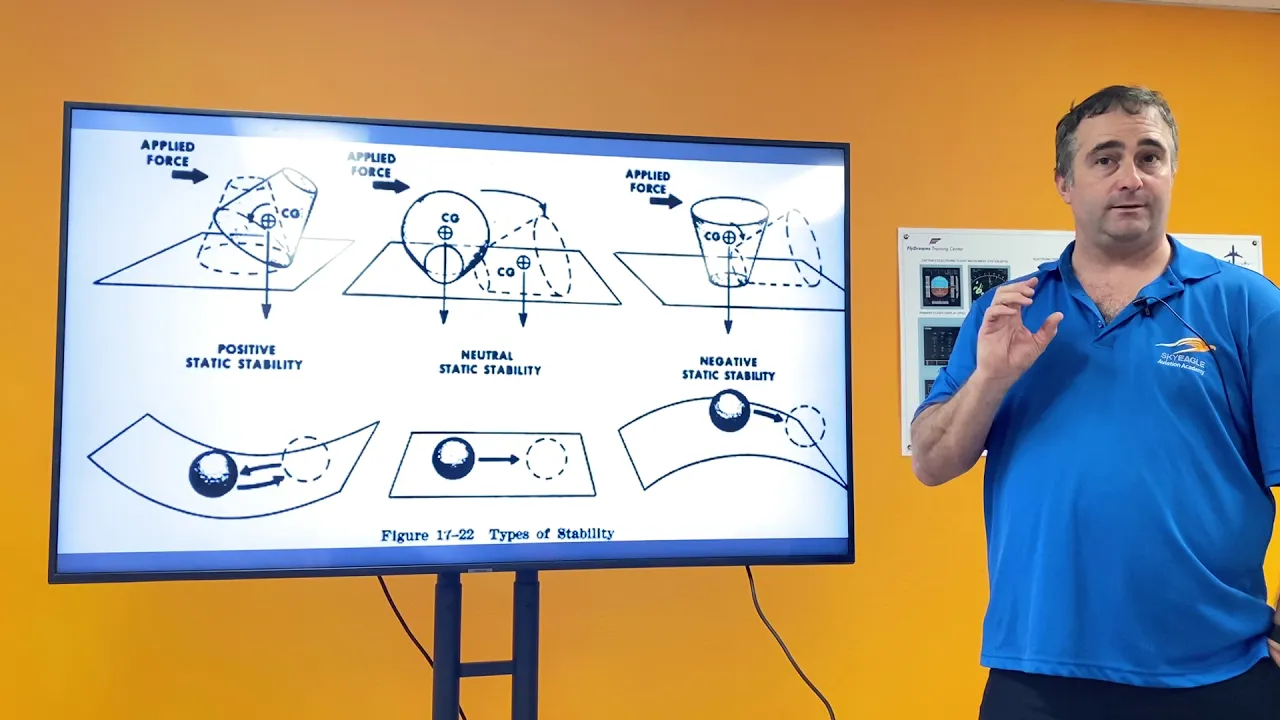
Added:Basic aerodynamic principles, specifically how the relative positions of the Center of Gravity (CG) and the Center of Lift/Pressure determine longitudinal aircraft stability.
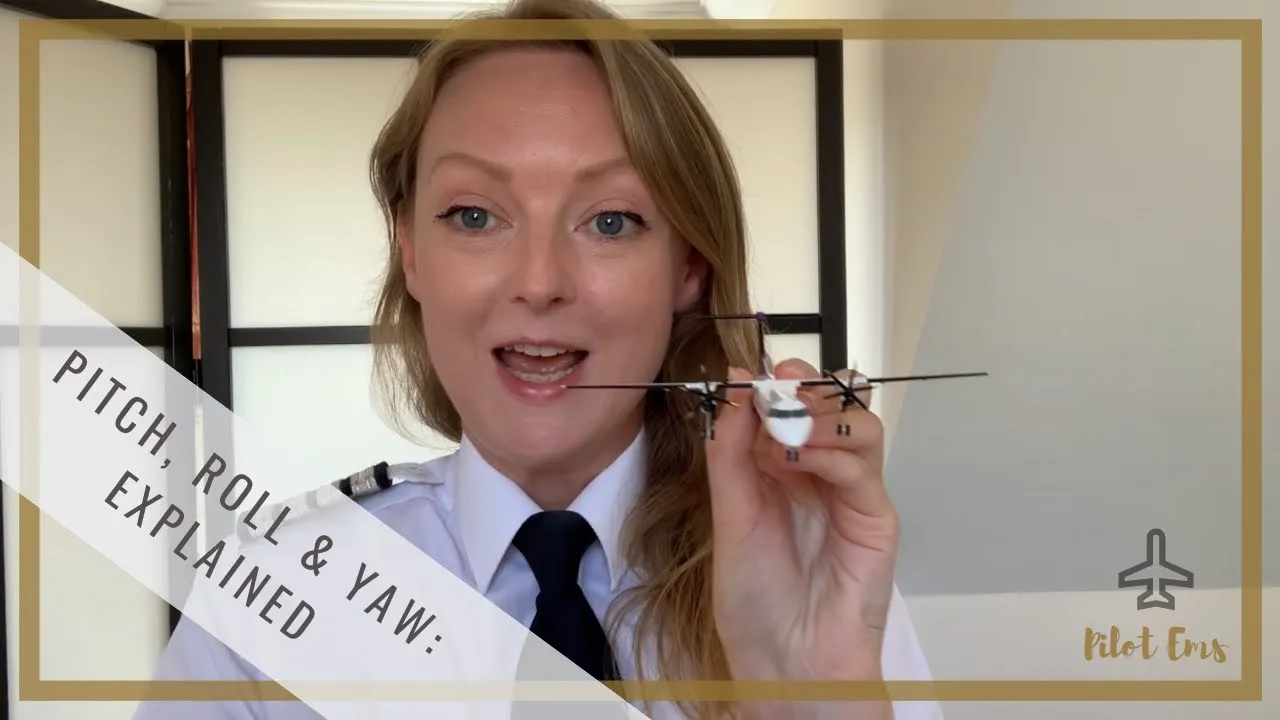
The three axes of rotation in flight (pitch, roll, and yaw) and how standard control surfaces like elevators, ailerons, and rudders manipulate them.
The fundamental concept of fly-by-wire (FBW) technology, contrasting electronic signal-based control with traditional mechanical or hydraulic linkages.
Advanced digital flight control system (DFCS) design, focusing on control laws, feedback loops, and stability augmentation algorithms.
The application of Relaxed Static Stability (RSS) in later aircraft designs, including 5th-generation stealth fighters and thrust-vectoring systems.
Safety-critical systems engineering, specifically triplex and quadruplex hardware redundancy and voting logic used to prevent catastrophic fly-by-wire failures.
Supermaneuverability and post-stall flight dynamics, exploring how modern combat aircraft safely operate beyond traditional aerodynamic limits.
1.1M views20.6Klikes14:08Original Release: 2023-04-21
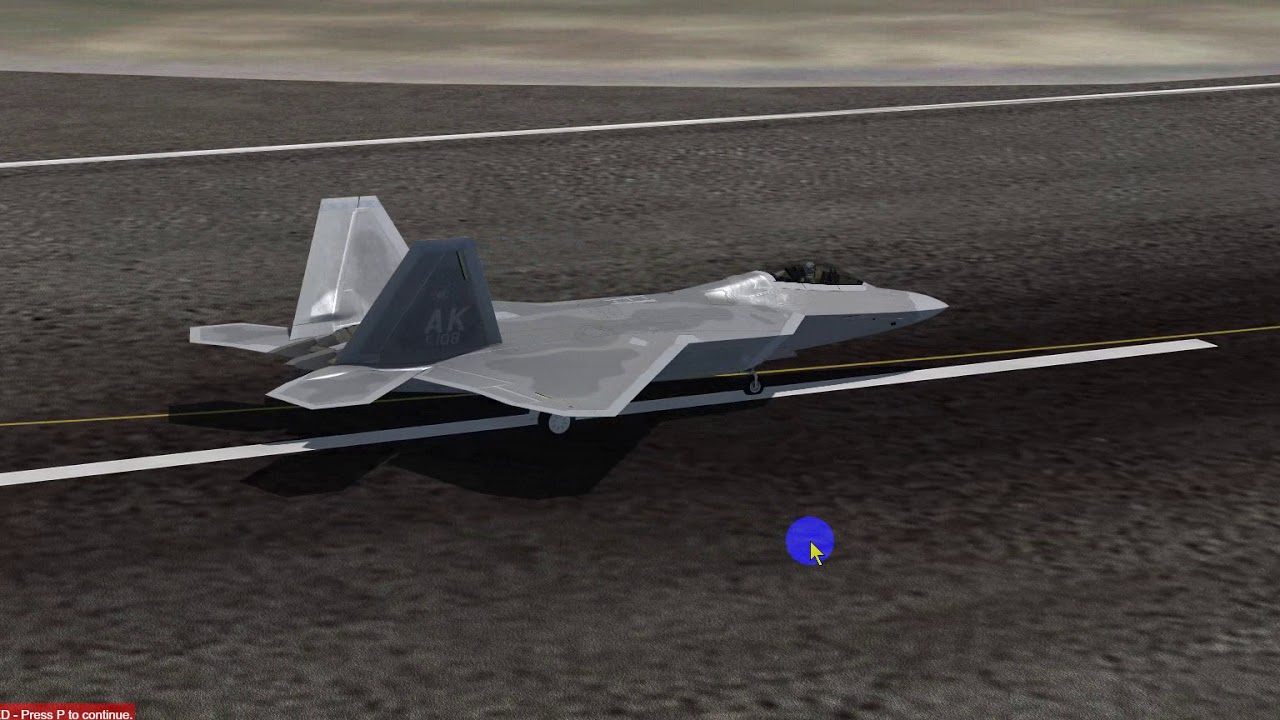
Testing a prototype aircraft could be tricky, especially when a high-speed taxi test turns into the first accidental flight of this experimental airplane.
Within seconds of taxiing, one wheel lifts off the ground. The airplane starts to roll the left and the pilot tries to correct it by rolling to the right. Before you know it, the back and forth became quite aggressive, in what’s known as a “pilot-induced oscillation”. A disaster seemed to be inevitable, until the pilot decided to power up and simply let go of control.
He avoided an imminent crash by taking off, which became the maiden flight of the YF-16, the early prototype of the infamous F-16 fighter jet.
Now here is the interesting part: that violent oscillation wasn’t the pilot’s fault. The YF-16 was designed to be unstable. But why would the US Air Force intentionally design and create a fighter jet that was unstable? Don’t be shy, say the words with me, ‘cause It’s Not What You Think!
Most of us have not flown an airplane, let alone a fighter jet, but I bet you have some experience folding sheets of paper into airplanes. It was always a bit of a lottery what you’d get, wasn’t it? Some paper planes flew straight no matter how you threw them – a smooth and long flight. We all loved those ones! But sometimes, you’d end up with utter embarrassment – a paper plane that would do all sorts of weird maneuvers, anything but straight flight, and then quickly crash.
You probably never made one of those weird crashy paper planes intentionally … but that’s exactly what the US Air Force did, or more precisely, the Fighter Mafia who was behind the idea of having an unstable design. And that’s because they were fed up with American fighter jets losing in air-to-air combat to the Soviet MIGs during Vietnam.
During the Vietnam war, the US Air Force realized the harsh truth that their fighter jets cannot win close air combat, or what’s known as “dogfights”.
American fighter jets were too big, too heavy, and not very agile, especially when compared to a MIG-21 – the flying Kalashnikov in the world of air battles.
Take the F-4 Phantom, for example. It weighed 19 tons compared to the MIG-21 at only 10 tons.
The dual engines of the Phantom allowed it to fly farther and carry heavier armament, but it made it heavy and slow to maneuver.
During the Vietnam war, the United States lost about 3,700 airplanes in combat, 382 of which were F-4 Phantoms. If it wasn’t the Soviet fighter jets, it was Viet Cong’s anti-air missiles that could target these fighter jets which had grown increasingly heavy and unmaneuverable.
The recipe for beating Soviet jets was advocated by a small yet vocal group of engineers and defense analysts, known as the Lightweight Fighter Mafia.
Their solution was to trade excess weight and heavy payloads for speed and maneuverability, to develop a simple fighter that could fly so fast and turn so quickly, that adversaries wouldn’t be able to strike it with missiles or machine guns. At the same time, the price had to be low enough so that the US military could procure them en masse.
In other words, the engineers had to work their butts off to get this one done!
After many sleepless nights … who am I kidding. They just pulled an “Apple”.
You know, how Apple makes things smaller, and removes components from its products and calls it a “feature”? That’s what happened here too, kinda!
The previous jets were bigger. The F-16 was made noticeably smaller.
The older fighter jets had 2 engines. The engineers removed one, so the F-16 only had one engine. The older jets were aerodynamically stable.
The engineers removed that too! Now the airplane was unstable! What a feature!
But kidding aside, that was in fact a feature, because stability and maneuverability are two sides of the same coin. To make the airplane more maneuverable, it had to be made less stable.
Look at passenger airliners. They’re built for a stable flight. They are meant to move in a more or less straight line for most of their journey and transport passengers to their destination, no matter how small the leg room!
A boeing 747 doesn’t need to make sharp turns, roll quickly or climb up fast. But even more importantly, if the pilot did decide to do some maneuvering, an airliner would quickly return to its level flying position – because it's designed and built for stability, not maneuverability.
This stability is achieved by having the airplane's center of gravity in front of its center of lift and center of pressure, giving it a nose-down attitude.
If the pilot let go of all control in the middle of a turn, the airplane would straighten up by itself, similar to how your car would straighten up itself when you let go of the steering wheel after a turn, or how a bicycle would go straight if you let it run free downhill.
The airliners are designed after our favorite paper planes which go straight no matter how you throw them. But that’s not the case with the F-16.
To make the F-16 more maneuverable, its center of gravity was moved backward.
Its wings were made smaller and highly swept, in order to reduce drag. This airplane also incorporated the concept of “relaxed/negative stability” – a tendency to change pitch and bank angle spontaneously. Congratulations! You got yourself a very maneuverable airplane!
But an airplane with such a design would constantly be on the verge of flipping up and down, requiring constant adjustments to its flight control surfaces just to keep moving in a straight line – practically impossible to fly, kinda like those unfavorable paper planes.
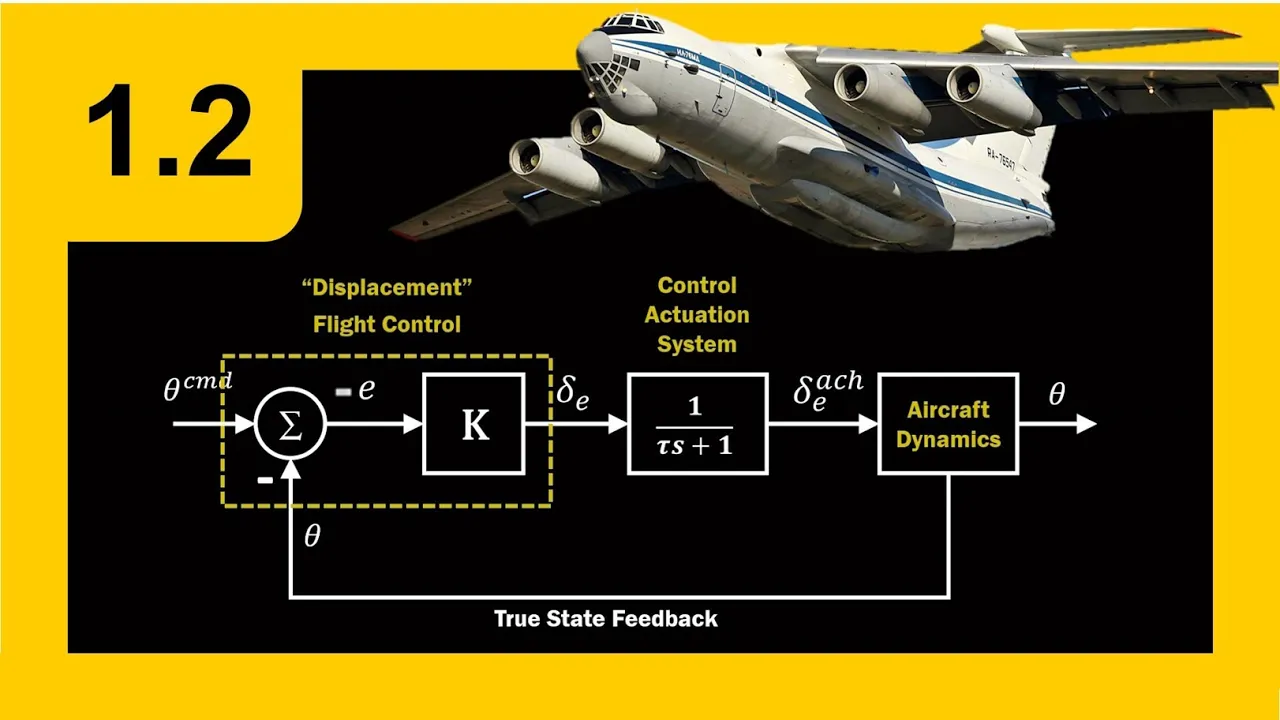
And that’s why in order to make the F-16 flyable, they put a computer in charge of making all those little but constant adjustments, or as known by its stage name, the fly-by-wire-system.
Back in the 1970s, the F-16 became one of the first fighter aircraft to use fly-by-wire technology. The system consisted of three main components: the pilot's control inputs, a computerized flight control system, and the actuators that moved the control surfaces.
It was the computerized flight control system that created artificial stability.
This was accomplished by receiving feedback from sensors about the actual position of the control surfaces, and then adjusting the commands as needed to achieve the desired flight path.
So if the pilot let go of all controls, the computerized system would do all the work needed to smoothly fly this otherwise unstable aircraft.
That said, pilots still needed to learn a lot in order to adapt to the fly-by-wire system.
This required handling lots of data, such as inertial and air data, accelerometers and gyrometers, radio altimeters, and so on … oh and with power came a lot of responsibility.
The F-16s may have one engine, but this Pratt & Whitney F-100 engine can accelerate the pilot to a point that they’d feel 9 times heavier than their regular weight. That’s what 9G would do to you, and if you’re not prepared, a G-LOC or G-force Induced Loss Of Consciousness is in order.
When the body is subjected to high levels of gravitational force, there is a sudden reduction in blood flow to the brain, and a brain deprived of oxygen will go unconscious.
To mitigate this, the F-16’s pilot seat is designed to tilt back at a specific angle during high-G maneuvers, which helps to keep the pilot's blood in their upper body.
On top of that, pilots wear G-suits. When high G forces are detected, typically above 3-4 Gs, the inflatable bladders inside the G-suit apply pressure to the lower body, pushing the blood back up into your head, where it’s badly needed! But if all that fails, this is what happens: Note the rapid decrease in altitude.
Thanks to the Automatic Ground Collision Avoidance System, an imminent ground collision was detected and a fly up maneuver to roll the F-16’s wings level and upright was initiated to give this student pilot some time to regain his consciousness.
These flying machines are equipped with some top technology.
But if you were to purchase an F-16, which is possible, but not very probable, keep in mind that these airplanes would be demilitarized before sale – stripped off of any advanced tech that could be used for military purposes. They would of course leave the canopy on … which by the way is bird-proof – made much thicker to withstand bird collisions.
Can’t say the same about the birds though — they aren’t F-16-proof … yet!
The US government must sign off on any resales of F-16 fighters.
In 2021, “Top Aces” became the first private company in the world to acquire F-16s.
But only because they provide Contracted Adversary Training to the US military.
In a nutshell, they provide realistic training scenarios, including advanced tactics and maneuvers, to help pilots improve their combat readiness and survivability.
The chances are, the government would not sell an F-16 to a person who just wants to fly it for fun. Even if they did, the owner would need to buy a two-seat version of the aircraft so he or she can be type-certified by an instructor pilot.
At a price of $12 million dollars back in the 1980s, the F-16 became the first production fighter aircraft that was designed to be aerodynamically unstable.
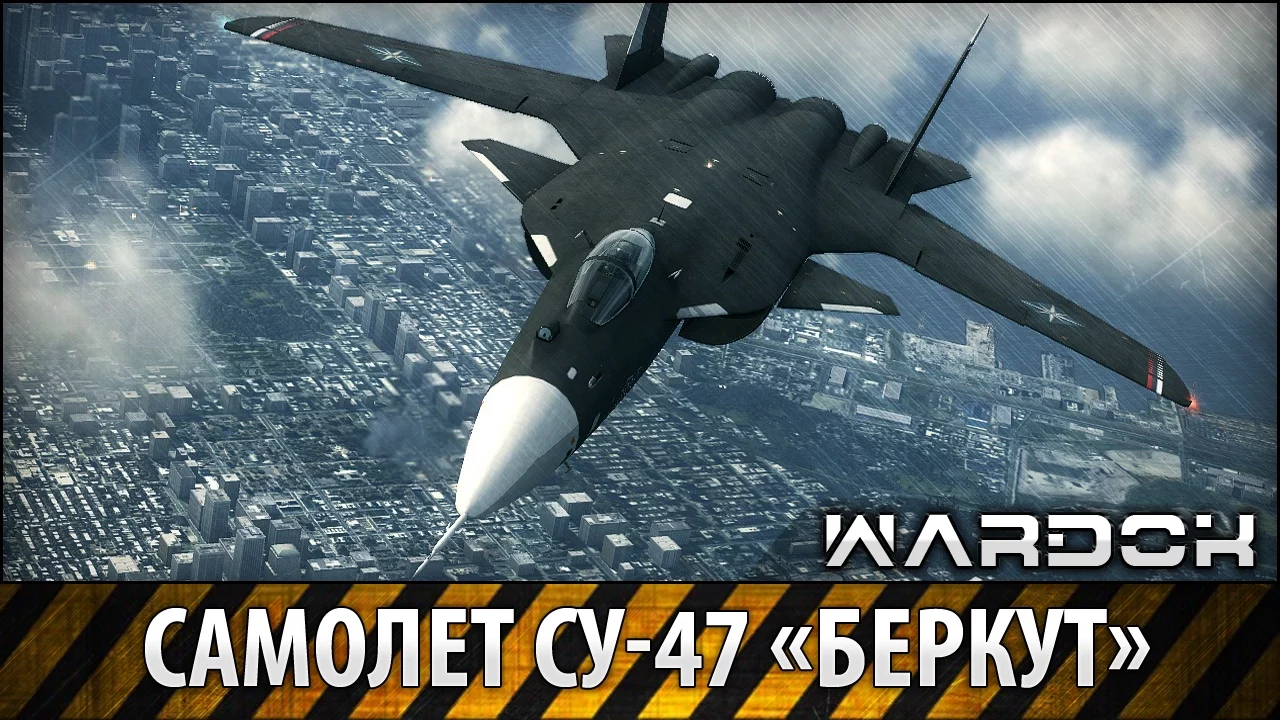
Since then, many modern military aircraft, particularly stealth designs, also exhibit instability as a result of their unconventional shape. Take the F-117 Nighthawk as an example with its flat facets, which also demand a computerized fly-by-wire system in order to properly fly.
Aside from the F-16, other successful designs like the F-14, F-15 and F/A-18 are all examples of warplanes that were influenced by the Fighter Mafia’s principles of making fighter jets lighter and more maneuverable. Although, they did mess up the nickname!
At first, the F-16 was nicknamed Viper, because it resembles a cobra as it approaches you, but generals didn’t want to name something that flies after something that crawls! So the F-16 was renamed to Fighting Falcon.
With more than 3,000 Fighting Falcons in service with the US and its allies, all parts, training, and manufacturing facilities can be pooled, items can be shared, and stockpiling is reduced.
But that said, the US Air Force is already looking for a replacement for the F-16s.
Most of these replacements, such as the F-35 or F-22, are too expensive to build and utilize, so in the meantime, F-16 is being supported until a new revolutionary airplane comes in.
When would that be? “Never” may be too loud a word for it, but it is estimated that the F-16 will remain in service until 2050.
Up Next

50:36
Introduction to Gas Dynamics and Basic Thermodynamics Review
@iit
148.2K views•2012-07-20

30:32
Ultrasonic Transducers: Resonant Frequency Measurement and Horn Design
@imajeenyus42
229.9K views•2017-02-22

54:16
Polymer Environmental Degradation: Mechanisms & Stabilization
@iit
1.8K views•2012-07-10

33:39
How a Student's Question Saved a NYC Skyscraper from Collapse
@veritasium
22.8M views•2025-04-26
Related Study Plans & Knowledge Roadmaps
Structured learning paths in Engineering
engineering
Building Acoustic Levitators: Physics & Arduino
01The Physics of Sound and Standing Waves
02Piezoelectric Transducers and H-Bridge Drivers
03Arduino Programming: Generating 40 kHz Signals
+ 2 more learning modules
14h5 modules
Explore Roadmap
engineering
Building Peltier Cloud Chambers: Particle Tracks
01Cosmic Rays & Cloud Chamber Physics
02Thermoelectric Cooling (TEC) Fundamentals
03Custom Liquid-Cooling Loop Design
+ 2 more learning modules
18h5 modules
Explore Roadmap
engineering
Yagi-Uda Antennas: Modeling, Build & VNA Test
01Introduction to RF and Antenna Fundamentals
02Yagi-Uda Antenna Design Principles
03Antenna Modeling and Simulation in 4NEC2
+ 2 more learning modules
18h5 modules
Explore Roadmap
engineering
ECG Monitor Design: Op-Amps, Filters & Noise
01Electronics & Breadboard Basics
02Op-Amps and Instrumentation Amplifiers
03Bioelectricity and ECG Fundamentals
+ 2 more learning modules
18h5 modules
Explore Roadmap