

















![[행정사1차] 행정학 숏터디 모의고사 (5) | 기출문제 + 기출변형문제 | 오답률 높은 문제 집중 분석](https://i.ytimg.com/vi/asAa72yCkTk/hqdefault.jpg?sqp=-oaymwEmCOADEOgC8quKqQMa8AEB-AHUBoAC3gOKAgwIABABGGUgZShlMA8=&rs=AOn4CLCSVQkBVhAEqhAEhGn5o0KlSzizOA)







Social capital refers to the social value and resources generated within our social networks, including information, opportunities, trust, and reciprocity; strong ties (close relationships with family and friends) provide bonding social capital that helps us get by, while weak ties (acquaintances) provide bridging social capital that helps us get ahead economically. Research shows that people living in poverty tend to have smaller, more homogenous social networks with limited access to weak ties, which can constrain their economic mobility. Organizations can help expand social capital by creating opportunities for high-quality interactions, building trust and reciprocity, and connecting individuals to diverse social circles and resources.
Understanding Social Capital: Networks, Mobility, and Anti-Poverty Insights
Added:Basic sociological concepts of capital, specifically distinguishing between financial, human, and social capital.
The fundamental differences between 'bonding' social capital (connections within a demographic group) and 'bridging' social capital (connections across different groups).
An understanding of economic mobility, including the concepts of upward, downward, and intergenerational mobility.
A baseline knowledge of structural poverty and the common barriers individuals face when seeking employment.
In-depth study of Mark Granovetter's 'Strength of Weak Ties' theory and its application to modern job acquisition and labor markets.
Analysis of public policy design and community development programs that aim to systematically build social capital in marginalized areas.
Quantitative methodologies for measuring social capital, such as the social capital metrics developed by the Opportunity Insights project.
Critical evaluation of the limits of social capital, including how exclusive networks can perpetuate nepotism, social exclusion, and inequality.
5.2K views56likes39:06Original Release: 2020-03-11
- [Damon Waters] Hello, and welcome to the Understanding Social Capital webinar series.
This is a pre-recorded webinar series provided by the Office of Family Assistance within the US Department of Health and Human Services.
This is sponsored by the IIEESS project, which is led by Public Strategies, MDRC, and EMPath.
My name is Damon Waters and I'm a Family Assistance Program Specialist and contract lead for the IIEESS project.
This webinar series is a part of the IIEESS Emerging Practices series that seeks to highlight the strategies being deployed by TANF agencies and their partners to address the needs of TANF clients seeking to gain and sustain meaningful employment.
I'm excited that you've chosen to take part in this series.
As a reminder, this is the first session of a three-part series.
Feel free to listen at your own pace, or binge watch all at once.
All staff are welcome to join, from direct service providers to administrative leads, and anyone in between.
This first session will provide the major highlights of social capital as it relates to current research.
To give you a sneak preview, Sessions Two and Three will dive deeper to provide strategies for integrating social capital into your program's day-to-day routine to improve the outcomes for individuals you serve.
Now I'm going to turn it over to my friend, Jack Myrick, at Public Strategies, who will be moderating this session.
Thank you, and enjoy.
- [Jack Myrick] Thank you, Damon, and as he mentioned, I'm Jack Myrick and I'm with Public Strategies in Oklahoma City.
And I'm a career development specialist and I helped co-develop the WorkForward program, which is a 40-hour career transition curriculum and also helped co-develop the Winning the Workplace Challenge, a relationship education curriculum that we use and others around the country use to integrate with workforce programs.
But I'm really excited because I get to introduce Jennifer Lowe, who's going to be our content expert today.
And Jennifer serves as the Vice President of Shared Learning and Member Networks at Economic Mobility Pathways, which a lot of us call EMPath, in Boston, Massachusetts.
And she leads the organization's economic mobility exchange, which is a global, member-based learning network of over 100 nonprofits and government agencies.
Jennifer has authored Social Networks as an Anti-Poverty Strategy.
That's how I first met her.
And then she's co-authored From Opportunity to Burden: Profiles of Low-Income Households Caught in the Credit Trap.
She's also co-authored Massachusetts Economic Independence Index. So welcome, Jennifer.
- [Jennifer Lowe] Thanks so much, Damon, and thanks so much, Jack.
I'm really excited to be here today to share with you a little bit more about social capital and social networks.
So I'm hoping that in today's webinar we will be able to gain an understanding of what social networks are and what social capital is, and really why they matter.
And ultimately, to learn which factors really influence our social networks and social capital, and where those disparities might exist.
- [Jack] So I think it's really kind of a prelude to this webinar is how we actually met.
We were in DC, and I didn't know you.
I just read your paper on another project, and was at a conference in DC on a completely different subject, and was really impressed by the "Social Networks" "as an Anti-Poverty Strategy" paper that you wrote.
And it was still pretty top of mind, and I'm standing at Starbucks, which is across the street from the hotel, and I happen to notice, couldn't remember who wrote the paper, but I remembered that it was written by somebody at EMPath.
And I noticed on your name tag that you had EMPath, And so I just asked.
I said, "Hey, I just read this really cool" "paper on social capital, and it's from a lady at EMPath."
"Would you happen to know who that might be?"
And Jennifer said, "Yeah, it was me."
And so what's really interesting is we had a great conversation throughout the conference about social capital, thinking nothing would ever come of it.
And then six months later, here we are doing a webinar on it.
So I think it's kind of a great example of how social networking and social capital isn't something you plan a lot.
And I think you'll probably dive into some of that.
So what are some of the goals we're going to look at today, Jennifer, as we move forward in the webinar?
- [Jennifer] Sure, yeah, so like I mentioned, one of the goals that we have it to really gain an understanding of what social networks are and what social capital is and why they matter.
And then really learn what factors influence our social networks and social capital and where disparities exist.
Yeah.
- [Jack] So can you kind of expand a little bit?
Social networks and social capital kind of sound the same.
Can you kind of expand a little bit on the difference of the two?
- [Jennifer] Yeah, I can, and actually, Jack, I'm going to use your example of how we met, if that's okay. - [Jack] Sure, sure.
- [Jennifer] 'Cause I remember that day, and I think it was a great example of how the people in our world can really help us, and how that social capital can really open up some opportunities.
And so a social network, the definition of social network, it's defined as that interconnected group or association of people and organizations.
So these are the people and the organizations in your life, and they're referred to as social ties.
So, Jack, you are a perfect example of somebody within my social network, a tie in my social network because you're a colleague that I met at that conference in DC.
And then while there are a lot of ways in which people define the term "social capital," for today's conversation, I'm going to use the definition that it really refers to the social value that's generated by and the resources that are found within our social network.
And so some examples of those are information, opportunities, trust, favor, good will, reciprocity.
And so, Jack, in our situation, that social capital that you brought into my world was you opened up a great opportunity for me to share and talk a little bit more with a larger group of people about these exact concepts, social capital and social networks.
- [Jack] Fine.
- [Jennifer] So I'm hoping that we can expand on what social capital and social networks mean by reflecting on our own personal experiences in our lives.
So I'm hoping that you all will take a moment to reflect on a time when you either helped someone or someone helped you.
And you can use any example in your life.
It could be maybe professionally or personally or academically.
And so after reflecting on your own experience, I'm going to share with you an example that took place here at EMPath a few years ago, just so we have a shared experience to draw from as well.
I'm going to share with you a story about a student in one of our workforce development programs.
Her name is Maria.
And at the time, this program recruited volunteers from the community to pair up students and provide them with career guidance and mentoring.
And the volunteer that we paired up with Maria was employed in a human resources department at a local insurance agency, and Maria actually happened to be interested in pursuing a career in the healthcare field.
So it was a really nice pairing of the two.
And after working together over the course of the program, the volunteer offered Maria an internship position, which of course she accepted and she really did great at this position.
And as a result, Maria was offered a paid, full-time job.
And so now I'd like you to reflect again on your own experience of helping someone or being helped by someone.
Was this person in your life, were they somebody that you were close to?
So did you consider this person part of your inner circle?
Or perhaps they were more of an acquaintance to you?
And so those people that we refer to, those people who are part of our inner circle or that we're really close to, we refer to those people as strong ties.
And these are the people in our lives that we really have a high level of emotional investment with, and we typically have a lot in common with these people.
So these are the people in our lives that we might consider being some of our closest confidants, our dearest friends, our family members, our partners.
But if you think about Maria's example, that volunteer who helped her, she wasn't a strong tie.
She wasn't someone that Maria was close to.
In fact, she was an acquaintance.
So she was somebody she met through EMPath and knew for maybe 12 weeks, which is the duration of the workforce development program that she participated in.
And so the people that we really aren't close with, our acquaintances, in the literature we refer to that as weak ties and those are the relationships that we form that tend to have little emotional investment and typically, we don't have as much in common with these folks as we would with maybe our strong ties.
And so thinking again back on your own experience of either helping someone or having someone help you, what type of assistance or guidance was provided?
Was this a time when you maybe helped or someone helped you to get ahead in life, like a job opportunity or career advice or school advice, something to help you move forward or become economically mobile?
If so, this type of assistance, we refer to as providing leverage, right?
It helps you get ahead.
Or maybe it was a time when you helped someone or someone helped you to just simply get by, and I don't mean just simply, but really getting by in life.
Maybe they provided emotional support.
They borrowed money from you or you lent somebody money.
They helped out with a car repair, maybe babysitting.
All these types of assistance are referred to as providing support.
So support helps us get by whereas leverage helps us get ahead, become economically mobile.
And so if you think back in Maria's case, the resource or the assistance that was provided by the volunteer that helped Maria was resource that helped her get ahead, right?
She offered her an internship that eventually led to a job.
The volunteer provided that leverage for her.
She was able to help leverage her connections to help Maria advance in her career and become economically mobile.
So now that you've reflected on your own experience, and then together we reflected on Maria's experience, you may already have an idea as to why our social networks, who you know, matters, right?
So think about all the different social circles that you're a part of, all the various people and all the different organizations who are part of your social network, right?
Our community organizations, our friends, our coworkers, our family, our neighbors, right?
So Jack was part of my social network.
The connections that we have with others have been found to influence a wide variety of aspects of our life.
They influence our health.
They influence our economic mobility, our status attainment, so much in our lives.
- [Jack] So we have all these ties, and you're talking about it in a very positive context.
Are there some negative aspects to social networks, the people in our lives that are negative?
- [Jennifer] Yeah, Jack, that's a good question.
Yes, yep, it is.
So that's another aspect of social networks, and it's a good one to talk about.
Oftentimes, we refer to that characteristic, that characteristic of a relationship where it might be a little negative, those ties in our life are called "ties that drain" or "draining ties."
And so those are the relationships that we might have in our lives that really deplete us of our resources.
And that could be a wide variety of resources.
That could be financial resources, right?
So maybe somebody's asking to borrow money a lot and maybe not paying us back, right?
Or asking a lot of favors of us but aren't reciprocating those favors.
So it really kind of depletes our financial resources.
But it also could deplete our emotional resources.
So if you think of draining ties, it could also be maybe relationships in our lives that have negative attitudes or there's a lot of emotional drama or they're complaining a lot or it's just general unsupportive behavior.
And I think it's important to note that all of us have some kind of combination of people in our lives, and many of us have both strong ties and weak ties.
And those strong ties and weak ties in our lives could also be peppered with people or relationships that are draining on us.
And so-- - [Jack] So, Jennifer, let's just pause for a second and let's say we have a caseworker that's working with a client and they feel like this client has some really positive outlooks in their future as far as employment and life in general, but they realize that there is a draining relationship in their life.
Maybe it's a mother, maybe it's a boyfriend or a neighbor, but there's somebody in their life that's really draining and holding them back.
How would you coach the coach on how to talk to that client about that relationship and setting some boundaries?
What would be some language you would use to help them have that conversation?
- [Jennifer] Yeah, Jack, that's a good question, right?
Because we know that for folks who are living in poverty who might have limited resources, those draining relationships can put a major strain on their resources that are already very strained.
And so if I were a coach or if I would give some advice to a coach on how to help someone in that situation, I would say maybe help them identify what those draining behaviors look like.
So if they're coming to you and sharing those stories and sharing that it's really becoming a problem for them, helping to support them in deciding what boundaries they want to create with people who are exhibiting those draining behaviors, because I think it's important.
I think relationships are complicated, right, and so although we might have an opinion on what maybe that person should do, really, it's important for them to decide what boundary they want to draw.
Whether it be maybe they don't want that person in their life anymore, or maybe they still want that person in their life.
Maybe it's a close family member that's draining, but maybe they put a little bit more boundaries on that person or maybe that person is still asking for resources, but the person that you're working with is saying no.
And so what a coach could so is help them in that effort.
Once they decide where they want to place boundaries, the coach can help them in that.
And I think one nice way to do this is it could even include something like role playing.
So if there's a common situation, like for example, maybe someone is concerned that their brother is always asking for money and he never pays it back, and now that person's really struggling to pay their own rent or utilities or food, and they're sharing that with you.
They're sharing that with you as a coach.
A coach can really help that person by role playing that situation.
And they can practice how they might handle it when that request comes up again.
And they can work through it together so that person, the next time the brother asks for resources or money, they feel confident in how they're going to respond and they've practiced it out with their coach.
And I think that would be helpful in doing.
- [Jack] Very good advice, I think.
- [Jennifer] Oh, thanks, Jack.
All right, so we talked a little bit about social networks, but why do they matter, right?
It's because of this concept of social capital, right?
So remember that this concept refers to the social value that's generated by and the resources found within our social network.
So examples of this could be trust, reciprocity, information, influence, support, opportunities, favors, all of that sort of resource and social value that we get just by being connected to a large group of people or organizations.
And so those people that we are close to, right, remember, our strong ties?
They provide what's called bonding social capital, the strong relationships that we have with a group of people that we're very close with, and we typically have a lot of interaction with these people.
So these people are going to be the people in our lives that we often go to provide some of that material or emotional support, all of that support that might help us get by.
So the strong ties, the people that we're closest with, help us get by, and that's called bonding social capital.
And so our acquaintances, remember that term weak ties, those are often associated with what's called bridging social capital.
They introduce us or bridge us to new social circles and the resources that are found within those new circles that we might otherwise not have access to.
And so these are often associated with helping us get ahead.
And so as you think back on your own experience, I'm wondering if this rings true for you.
Was it a weak tie or an acquaintance that provided bridging social capital or helped you get ahead?
Or perhaps when you reflected back on your experience, maybe it was a strong tie, maybe a family member or a close friend that provided bonding social capital and really helped you get by.
And I just want to point out here that these distinctions are not always black and white.
You might have a close friend, that strong tie that connected you to a job or helped you get ahead, that bridging capital.
So just be mindful that although we talk about it in distinction, there might be some blending in between.
And so when you think about Maria's situation, the volunteer that she was paired with really helped introduce her or bridge her to a new social circle by introducing Maria to her colleagues at the insurance company, which ultimately led Maria to a job offer.
And so now Maria was connected not only to her social circle at EMPath, at the workforce development program that she was participating in, but also to the people that she met through working at the insurance company.
So all of a sudden, she got bridged to this completely new world, and her social circle, or her network, has now been expanded.
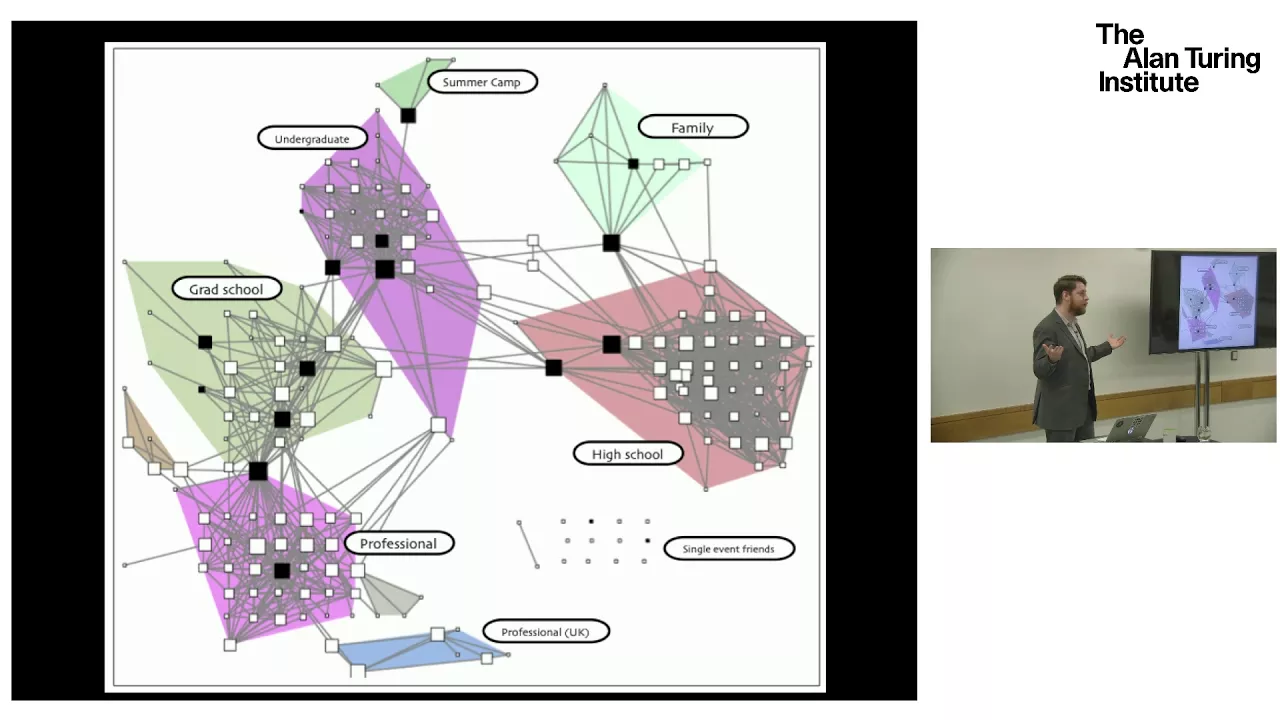
So as you can imagine, social networks that are large and diverse, so meaning that the more people that you know and the more people that you know from different social circles, the greater chances we have to actually learn of new opportunities, new information, new influences, new resources that we can really harness to make economic advancements and really get ahead.
- [Jack] So, Jennifer, how does the social media kind of factor into all of this?
I'm looking at this slide, and I'm seeing all these people, and it just kind of reminds me of Facebook.
I mean, how does the social media aspect relate to all this?
- [Jennifer] Yeah, that's a good question.
That's a good question. - [Jack] And those ties.
- [Jennifer] Yeah, I think social media, when we think of social media, whether it be Facebook or Instagram or LinkedIn, those I see as vehicles to help us communicate with our social networks, right, those relationships and people in our lives.
And some of them are really geared towards a particular type of network, right?
So for example, when I think of LinkedIn, I think of LinkedIn as a place to really build up your weak ties, right, the ties that you have with colleagues in such a wide variety of fields, and people actively use their LinkedIn accounts to be able to get ahead, right, to be able to provide those leveraging ties.
And then I might say that other social media accounts like Facebook, I think people tend to use more socially, but they might have a wide variety of people in their Facebook or in their Instagram accounts that could be a combination of strong ties and weak ties.
But I think they're both great ways of sharing information, sharing opportunities, sharing resources.
I mean, and I say great, but for the good and for the bad, potentially, yeah.
Thanks, Jack, that's a great question.
So I also wanted to point out, and Jack, you brought this up earlier about some of the negative effects of social capital or social networks.
I also wanted to point out that while we talk a lot about social capital for its positive effects as maybe helping us get by or helping us get ahead, it can sometimes have a negative aspect to it.
And so I want to just share a quick example of this.
Years ago, I had interviewed a director at a local community health organization here in Boston who shared with me that a few years back during a time when mortgages for homes were less restricted and a little bit more abundant and easier to come by. Some of the local mortgage brokers actually infiltrated some of the local churches and used their social capital, so all of the trust and reputation that they developed with other parishioners, to pitch some of these unrealistic, faulty mortgages to their fellow churchgoers, which was a very predatory practice.
But they really kind of capitalized on the social capital that are found within these communities, the trust and reputation that they were able to build up.
And so this community health organization had to step in and provide some home buyer and financial education and counseling to the community members to offset some of the misinformation and some of those predatory products that were flowing through the churches and other community institutions.
So while we talk a lot about some of the positive effects of social capital, I think just always keep in mind and remember that it can also be misused.
It might have some negative effects as well.
Okay, so we talked a lot about social capital, but how do you actually activate or mobilize all of this great social capital, all of the resources and social value that you might have within your network?
And so research has found that relationships that are high in social capital often have some level of trust, right, so the belief in and the reliance on honesty, integrity, and reliability of other people, or there's a level of reciprocity, meaning that there's some kind of mutual benefit or fairness from the relationship over time.
If you help me, I'll help you.
We kind of give it back and forth to each other.
Or there's some level of durability, right, so that we have relationships that might last over time whether we go through stressful situations or changing circumstances, we still have a relationship.
And so meaning that if someone in our life might come to us for something, chances are that we'd be more willing to help them out if we had a certain level of trust in them, or there might be an expectation that we might get a favor back or a favor might be returned, that reciprocity, or maybe it's somebody that we've known for a long time, that durability of relationship.
And so I think day to day we see this play out.
If someone's looking for a new career, they're often encouraged to reach out into their social networks to see if people would be willing to give them advice on their next steps or maybe set up an informational interview or pass along a job opening or introduce them to a hiring manager or maybe even hire them.
And this might work really well if it's a reputable person that's trusted by the people and the relationships that they have in their social network.
But research has shown that even for some people who actually do have a large social network and might have job contacts in their network, if there's not trust or there's interpersonal dynamics like reputation or skepticism or perceived lack of motivation, if that's there, it's going to inhibit their ability to really activate and mobilize the social capital within the network, right?
They might have a network that has job contacts, but if they're not a trusted person, or if they don't have a good reputation, the people in their network might not be willing to help them get ahead.
And so we saw this play out at EMPath, and I wanted to give you an example just to understand how that works.
Again, back in the same workforce development program, we had a student, her name was Luz, or it's her name for this purpose, and she had an accounting degree and she was new to the country and she was really having a hard time finding work.
And so we paired up Luz with a volunteer who worked at a financial firm here in Boston.
We thought it would be a great connection, given her accounting degree and wanting to work in that field.
And so the volunteer, she arranged a job interview with her colleagues for Luz, but Luz never showed up for the interview and didn't call.
And so as a result, that volunteer might have damaged her reputation with her colleagues by asking them to interview someone who didn't show up.
And as a result, Luz's reputation with this volunteer was tarnished, and this volunteer was no longer willing to set up more interviews for Luz.
And so in this situation, although Luz had a network that included really well-connected people in positions who could help her out and who could advance her career, those interpersonal dynamics of reputation and perhaps distrust or maybe a perceived lack of motivation really inhibited Luz from being able to take advantage of the rich social capital within her network.
So it was really sort of an unfortunate situation, but I think just to be mindful that if you can create trust or reciprocity or if you've known people for a long time, that tends to be when you can really activate that social capital.
So there's other factors that can contribute to mobilizing or activating our social ties.
And so continuing with Maria's example, Maria's network included the people that she interacted with in the workforce development program, and this included EMPath staff.
It included volunteers.
It included her own classmates.
And she had frequent contact with the teachers in the program, her fellow classmates.
They met for full days, five days a week, for 12 weeks, right, so this high level of contact and interaction.
And then further, Maria regularly interacted with a group of volunteers that came together for these monthly luncheons and connected regularly on the phone, email, and in person to be able to provide that advice and guidance.
So this characteristic of having high level of interaction, but also not just high level of interaction, but one that really very intentionally tried to include activities that were designed to connect people, connect them over their aspirations, their experiences, their shared resources.
And because of that, Maria was able to develop relationships with people that she met at the organization.
And so as these relationships developed, Maria was able to just discuss her goals, her challenges, her interests, her aspirations, and that allowed her to be able to share her experience in trying to find work in the medical field, and that she was ready to pursue a job but was having difficulty getting her foot in the door.
And so when that volunteer heard that, she was able to connect Maria to a job opening, or to that internship opening.
But she wouldn't have been able to do that unless there was that opportunity provided, unless she got connected to Maria, and unless there was that opportunity to actually have Maria share a little bit about herself and share a little bit about some of those challenges.
So I share all that just to encourage, I think, organizations to really think about what you can do, or agencies, to really think about what you can do to help bridge or connect people to different social worlds or different opportunities that they might not have access to.
And then I just wanted to cover a couple of other factors that tend to influence our social network, so influence who is in our life, and then thusly would influence the social capital that we'd be able to access.
So one of them is geography, right, just simply who are the people in your neighborhood?
Who are you surrounded by every day?
Are you isolated?
Is your neighborhood one that might be socially isolated, politically isolated?
Maybe it's hard to move around because of transportation, or maybe you live in a neighborhood where neighbors socialize a lot, and that's wonderful because then you can connect to a group of people.
Or perhaps you live in a neighborhood where people keep to themselves, and it might limit the connections that you're able to make.
Or even the streets, do they feel safe to move around and connect with others?
Another factor is education.
I think just plugging into different educational opportunities is going to introduce you to more people.
It's going to expose you to diverse subject matters, ideas, opportunities, and the same with labor market.
Are you connected to the labor market?
Are you employed?
If you're employed, then you're able to not only get connected to maybe people that you work with at your organization or your agency, but also the colleagues within your organization's network.
So in Jack's example and my example, not only am I employed here at EMPath and I know my EMPath colleagues, but because of that, because of my employment here, I was able to meet Jack over at Public Strategies.
And so just working already has exposed me to broader networks.
And then lastly, I just wanted to point out that research has shown that gender can also be a factor that influences our social networks.
So oftentimes, parenting young children, research has shown that child rearing influences the sizes, particularly, of women's social networks differently than men's.
So having a child, particularly a young child, can significantly negatively impact the size of a woman's social network, but has no effect on men's network size.
- [Jack] So how would being connected with their child's school, how would that impact their social network?
- [Jennifer] Oh yeah, Jack, that's a good question, right, because that would be maybe a school-age child.
I think for mothers of older children, or maybe school-age children, that might not necessarily be the case, but I think when you're parenting a young child, particularly in those early months, that could be really difficult.
It might limit your ability to socialize outside of the home or connect with others outside of the home.
But I think certainly when you talk about school-age children and able to plug into maybe a whole network within the school, which is perhaps a new network when you have a child who's going to school for the first time, maybe a different network of parents and teachers and other staff that you're suddenly able to broaden your relationships with.
And I just wanted to maybe point out, too, just one other example of a factor that could influence our social network.
And this is a factor that negatively impacts our social network, and that's discrimination.
So there was a case study done of employers in Brooklyn, New York, and it was a particular neighborhood that had high concentrations of poverty.
And research has found that the employers in that neighborhood use their social networks to fill jobs.
But because of some racial and place-based discrimination, local residents at the time were not connected to their employers' networks, and so it resulted in employers hiring from outside the neighborhood.
So this is a case where that factor of discrimination trumps the factor of geography.
So just want to point out both maybe positive and negative influences on our social networks.
So I want to just finish up by talking about the social networks of low-income people.
So when we think about people living in poverty, there might be some who might feel isolated.
So I interviewed a director of a program serving formerly homeless adults, and one of the main focuses of that program was to get people plugged into a community of others, since the people that they served really didn't seem to have a robust social network of close ties that they could turn to in times of need.
And the fear was that without a safety net of supportive close relationships to provide those critical resources and support to get by day to day, if a crisis came up, the people that they were serving might find themselves in a really vulnerable situation and could fall into experiencing homelessness again.
But that's, I think, more of an extreme example, but generally, the research has shown us that people living in poverty, they tend to have limited access to weak ties.
So remember weak ties are those relationships with people from other social circles who can help us get ahead.
And their networks tend to be a little bit more limited, smaller, and more homogenous than their higher-income counterparts.
And so you might have heard of this term of birds of a feather flock together.
And that's a concept referred to as homophily, which is a tendency to associate and connect with other people who are like us, other similar people.
But when you do that, when you connect with other similar people, you find that you have a network that's same sociodemographic, same behavioral, same interpersonal characteristics, and so while the research has shown that people who are living in poverty might not have access to weak ties, there was actually a researcher, Carol Stack, in her book All My Kin, she really shared that for some people living in poverty, they actually tend to have a really intricate web of strong ties, so people that they can rely on to get by day to day, so people who can pitch in and help out, babysit each other's children, provide milk, money for the bus.
And often, community and building community in this way tends to be a survival technique for many people to get those resources and support themselves to survive day to day, given the stressors of poverty.
And so just wanted to mention that because I think that's a really important concept to review.
- [Jack] So we have these people living in poverty.
I know we're about out of time, but how can they expand their social networks and grow their social capital a little bit?
Just a couple quick pointers before we wrap it up.
- [Jennifer] Sure, yes, good question, Jack.
I think just very intentionally, if you're an organization that's serving people living in poverty, create ways to help them connect with other people, whether it be peers so that they can develop a peer network of people that they can go to and help support them, but also find ways to help them get ahead and connect with people who are outside their social circle.
So whether you have community group meetings, maybe bring in some outside experts who can come in that they can talk to or outside people who they can connect to for career advice or education advice.
Or even another organization-- actually, Washington DC TANF offices do a really nice Eco mapping with people.
So when they work with folks, they'll map out all of the different people in their lives and use that to help reflect on when they're developing goals of who can you help with as a resource to be able to help you achieve your goal, which I thought was a really brilliant idea.
- [Jack] Well, thank you, Jennifer.
This has been really very informative and gave me lots of things to think about, and I'm sure the people that are listening to this also.
And I just want to encourage people to go to the next session in this series, and it's available on the site.
And we're going to be discussing, on the next one, we're going to be discussing the people, places, and practice.
People: understanding my own social capital, the personal, community, and institutional piece of it.
And then places: getting proximate to people that help us grow. And then practices: leveraging social capital to be a change maker.
And I would just like to add if you want to contact Jennifer and have any more comments or questions about it, you can contact her at jlowe. Just had to throw that in.
Didn't think I could make it to the end of the webinar without saying "J Lowe."
And she's at [email protected].
And just hope that everybody has a wonderful rest of their day.
Oh, by the way, the link to Jennifer's paper is in the description part of the webinar.
So everybody have a wonderful day.
Up Next

13:46
The Diminishment of the Third Place: A Sociological Analysis
@haikoup
3.5K views•2023-07-01
54:57
Contemporary Sociological Theory: Micro, Macro, Integrative
@NaSESYNC
45.7K views•2016-02-17
19:23
How to Analyze Conversations Scientifically | Elizabeth Stokoe | TEDx
@TEDx
1M views•2014-12-04
9:41
What is Sociology? The Sociological Perspective Explained
@crashcourse
4.6M views•2017-03-13
Related Study Plans & Knowledge Roadmaps
Structured learning paths in Sociology
sociology
Celebrity Culture: From Hollywood to TikTok
01Foundations of Celebrity Sociology
02The Rise of Micro-Celebrity & Digital Platforms
03Parasocial Relationships & Algorithmic Intimacy
+ 2 more learning modules
12h5 modules
Explore Roadmap
sociology
Hostile Architecture: Space, Power & Control
01Introduction to the Sociology of Space
02Social Control and Surveillance in the City
03Hostile Architecture and Defensive Design
+ 2 more learning modules
12h5 modules
Explore Roadmap
sociology
Loneliness Epidemic: Third Places & Isolation
01Foundations of Social Capital and Community Cohesion
02The Death of Third Places and Urban Space Erosion
03The Privatization of Leisure and Atomization
+ 2 more learning modules
12h5 modules
Explore Roadmap
sociology
Sociology of Tourism: Gaze, Power & Heritage
01Foundations of the Sociology of Travel and Leisure
02John Urry and the 'Tourist Gaze'
03Staged Authenticity and Cultural Commodification
+ 2 more learning modules
14h5 modules
Explore Roadmap