Sustainable supply chain management integrates environmental, social, and economic considerations by minimizing waste through closed-loop systems where byproducts are reused or recycled, as demonstrated by companies like Nestle (biogas from cattle waste), Coca-Cola (PET bottle recycling), and Ikea (product return programs).
Sustainable Supply Chain Management: Key Concepts Explained
Added:Deep Dive
Fundamental concepts of Supply Chain Management (SCM), including logistics, procurement, and distribution.
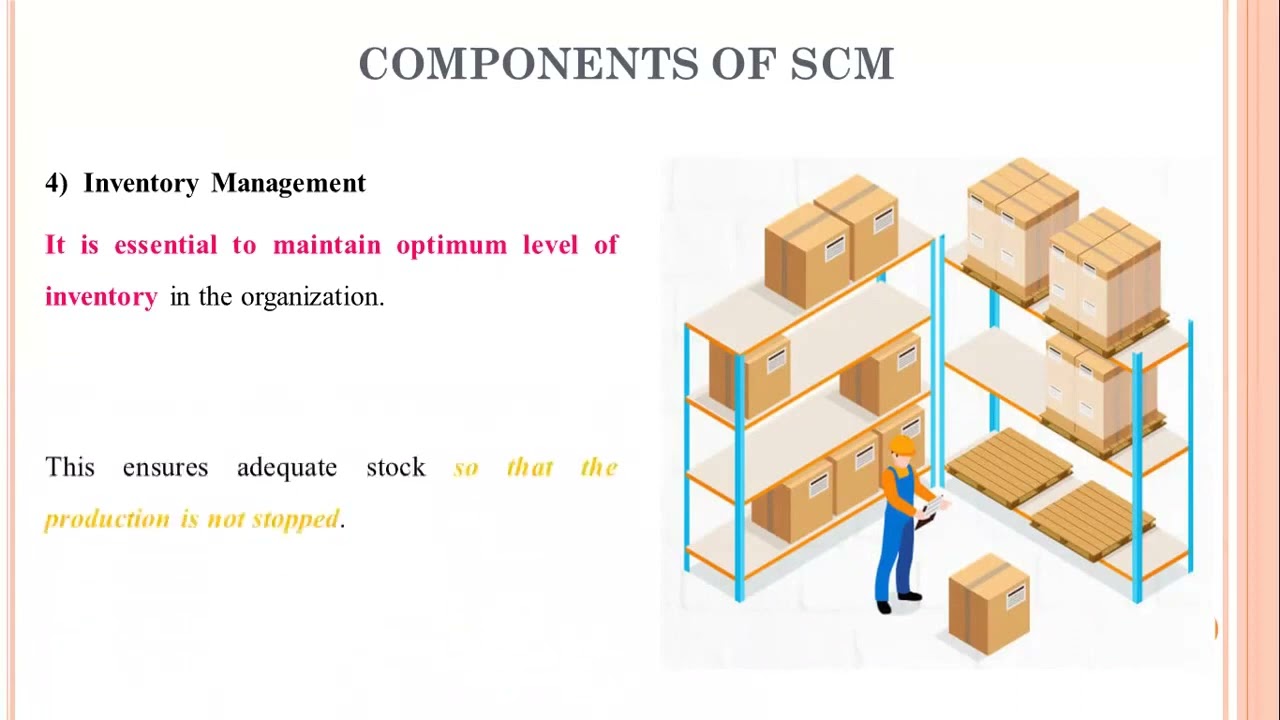
29 - Supply Chain Management (SCM) - Concept and Components
8.9K
Supply Chain Management (SCM) is the management of goods and services flow from producers to consumers. It encompasses procurement, production, inventory management, warehousing, transportation, and distribution. SCM ensures products reach customers in the right quantity at the right time. Logistics is a subset of SCM focusing specifically on transportation and movement of goods. Effective SCM requires proper planning including demand forecasting, inventory planning, and capacity planning to prevent delays and shortages.
Click to watch →

SPOM Set B | Supply Chain Management | CA Final | Most Important Topics Series | CA Manan Pujara
371
Supply Chain Management (SCM) is the management of the entire process from procuring raw materials to supplying the final product to the customer. According to ICI's case study digest, SCM consists of four key steps: Plan (determining what product to make and sourcing raw materials), Procure/Develop (selecting suppliers and procuring materials), Make (manufacturing the final product), and Deliver (distributing through distributors to retailers and customers). Three critical aspects must be managed: Logistics (movement of materials and products), Warehousing (efficient storage without excessive costs), and Seamless flow of information (communication between all supply chain elements about demand and production requirements).
Click to watch →

Supply Chain Management Explained | An Overview from Procurement to Delivery
38.3K
Supply Chain Management (SCM) is based on two core ideas: (1) Any product or service must cross through various organizations from planning to production, inventories, distributors, and finally to customers; (2) While the chain has always existed, the concept of integrating the entire chain and removing silos is a recent development. A supply chain is defined as the sequence of organizations, facilities, functions, and activities involved in producing and delivering a product or service. Materials flow from suppliers (upstream) toward customers (downstream), with transformation converting raw materials into finished products. Three flows occur simultaneously: material flow, information flow, and financial flow. Procurement has evolved through four generations: tactical, optimized sourcing, strategic procurement with category management, and value chain focus. The seven rights of SCM are: right product, right customer, right time, right place, right conditions, right quantity, and right cost. Supply chains have existed since organized business, but SCM as an integrated concept emerged in the 1980s. Modern competition is not between companies but between supply chains. SCM is broader than logistics or materials management, which cover only physical flow. Integration is the central theme of SCM, requiring removal of silos between marketing, procurement, manufacturing, logistics, and operations to work as a team.
Click to watch →

LSCM | LOGISTICS & SUPPLY CHAIN MANAGEMENT | SEM-4 OU MBA LAST-MINUTE REVISION | @shivanipallela
144
This comprehensive section covers the foundational concepts of logistics and supply chain management. Logistics is defined as the process of planning, implementing, and controlling the physical flows of material and finished goods from point of origin to point of customer requirements, ensuring the right product reaches the right place at the right time, in the right condition, and at the right cost. Competitive advantage refers to the unique strength or condition that allows a company to outperform its competitors. The section explains productivity advantage (producing more output with fewer inputs) and value advantage (customers preferring products for benefits beyond price). It covers logistics management as the process of planning, implementing, and controlling the effective and efficient flow, storage of goods and services, and related information. Key objectives include reducing expenses, ensuring timely delivery, providing best customer service, maintaining transparency, achieving optimum resource utilization, and reducing lead time. The main functions include order processing, inventory management, warehousing, transportation management, materials handling, packaging, demand forecasting, and customer service. Third Party Logistics (3PL) is explained as outsourcing logistics operations to another company for warehousing, transportation, packing, and picking. Fourth Party Logistics (4PL) is covered as a company that manages the entire supply chain for another company without owning trucks or warehouses. Key technologies include GPS, GIS, TMS, WMS, ERP, and IoT. The section covers integrated logistics management as the process of coordinating all logistics activities into one smooth system. Transportation modes include road, rail, air, sea, and pipeline. The five participants in transportation include shipper, consignee, government, carrier, and public. The section covers inbound logistics (movement of raw materials from suppliers), outbound logistics (movement of finished goods to customers), and reverse logistics (moving goods from customers back to the company for returns, repairs, recycling, or disposal). Supply Chain Management (SCM) is defined as the flow of goods, services, information, and finance from point of origin to point of consumption, involving planning, controlling, and coordinating all processes including sourcing, procurement, and logistics. The importance of SCM includes improved profits, minimized wastage, competitive advantage, proper relationships, globalization, and efficiency. The functions include planning, sourcing and procurement, production, inventory and stock management, reverse logistics, information flow, customer relationship management, financial management, payment management, and distribution management. The conceptual framework includes supply chain network structure, supply chain business process, and SCM components. Supply chain strategy is a long-term plan that manages supply chain operators and determines how the company delivers products to customers. The six supply chain drivers are facilities, inventory, transportation, information, sourcing, and pricing. The Bull Whip Effect is explained as occurring when small changes in customer demand cause progressively larger changes in orders and inventory throughout the supply chain. Causes include lack of communication between suppliers and customers, price fluctuations, and lead time delays. Solutions include sharing real-time information, reducing lead time, avoiding unnecessary discounts, building strong supply chain management, and using demand forecasting software.
Click to watch →

BPAS-184 l Top 10 Expected Concepts 🔥 | IGNOU Exam 21 July 2026 | Last Minute Revision
287
Supply Chain Management is a comprehensive umbrella concept that includes product design, raw material sourcing, factory production, forecasting, marketing, financial planning, customer relationship management, and logistics. Logistics is a focused part of SCM dealing specifically with physical movement and storage of items. SCM components include planning and forecasting, demand planning, production and inventory management, sourcing and supplier management, manufacturing and quality control, logistics and transportation, distribution, retail channel management, and returns handling. Goals include customer satisfaction, quality control, cost efficiency, agility, and risk mitigation.
Click to watch →
Deep Dive
The Triple Bottom Line framework (People, Planet, Profit) and how it redefines corporate success.

The Triple Bottom Line People, Planet, Profit in Action #FutureofBusiness #TripleBottomLine
710
The Triple Bottom Line is a business framework that measures success through three dimensions: people, planet, and profit. Coined by John Elkington in 1994, this framework argues that companies should evaluate their success not just by traditional profit metrics, but also by their impact on people and the environment.
Click to watch →
#18 Module 9 | Part 1 | Business Fundamentals For Entrepreneurs (Part 1 Internal Operation)
1.8K
The triple bottom line framework expands traditional business thinking from looking only at profits (the 'profit line') to considering three equally important dimensions: People, Planet, and Profit. Companies should not focus exclusively on financial returns but must also consider their impact on people (employees, communities) and the planet (environmental sustainability). This holistic approach ensures long-term business viability rather than short-term profit maximization that may lead to future problems.
Click to watch →
Corporate Responsibility and Environment | Sociology
104
The triple bottom line is a framework used to explain modern corporate responsibility. It means that companies should measure success in three ways: profit, people, and planet. Earning money is important, but so is protecting the environment and treating people fairly. A business that makes profit at the expense of the planet is not truly successful.
Click to watch →

Triple Bottom Line (Profit, People, Planet) | From A Business Professor
46.5K
The Triple Bottom Line (TBL) framework, developed by John Elkington, proposes that companies should focus equally on profit, people, and planet. Profit extends beyond financial returns to include ethical sourcing, fair wages, and community investment. People encompasses employees, vendors, and customers, emphasizing fair treatment and diversity. Planet addresses environmental impacts through metrics like greenhouse gas emissions and waste reduction. This framework shifts corporate focus from purely financial performance to comprehensive sustainability, requiring companies to balance economic success with social responsibility and environmental stewardship.
Click to watch →
Building the Love Economy | Greg Hemmings | TEDxUNB
1.7K
The triple bottom line framework expands traditional corporate accounting beyond financial profit to include three equally important dimensions: people, planet, and profit. Companies operating under this model measure success not just by shareholder returns but also by their social impact on communities and their environmental footprint. This approach recognizes that true business sustainability requires honoring both the planet and the people who depend on it, creating a more holistic measure of corporate responsibility and long-term viability.
Click to watch →
Deep Dive
The traditional 'linear economy' model (take-make-dispose) to provide contrast with sustainable models.

"Innovación temprana: Competencias para innovar desde lo humano para los desafíos de la sociedad"
146
The traditional linear economic model (take-make-dispose) operates on assumptions of infinite resources and ignores environmental impacts. This model has reached physical limits as resources deplete and environmental consequences become unacceptable. The circular economy proposes keeping products and materials in use for maximum duration through cascades: technical cascades (reuse, repair, remanufacture, recycle) and biological cascades (materials returning to nature without harm). Revalorization transforms waste into raw materials for other industries. The concept of 'waste' is a human construct—in natural systems, all residues are utilized. The plastic industry exemplifies linear model failures: 98% of production uses virgin petroleum materials, with only 2% successfully closing the recycling loop. Circular economy goals include reducing virgin material dependency, eliminating single-use plastics, and ensuring all products can be reused until they can no longer deliver value.
Click to watch →
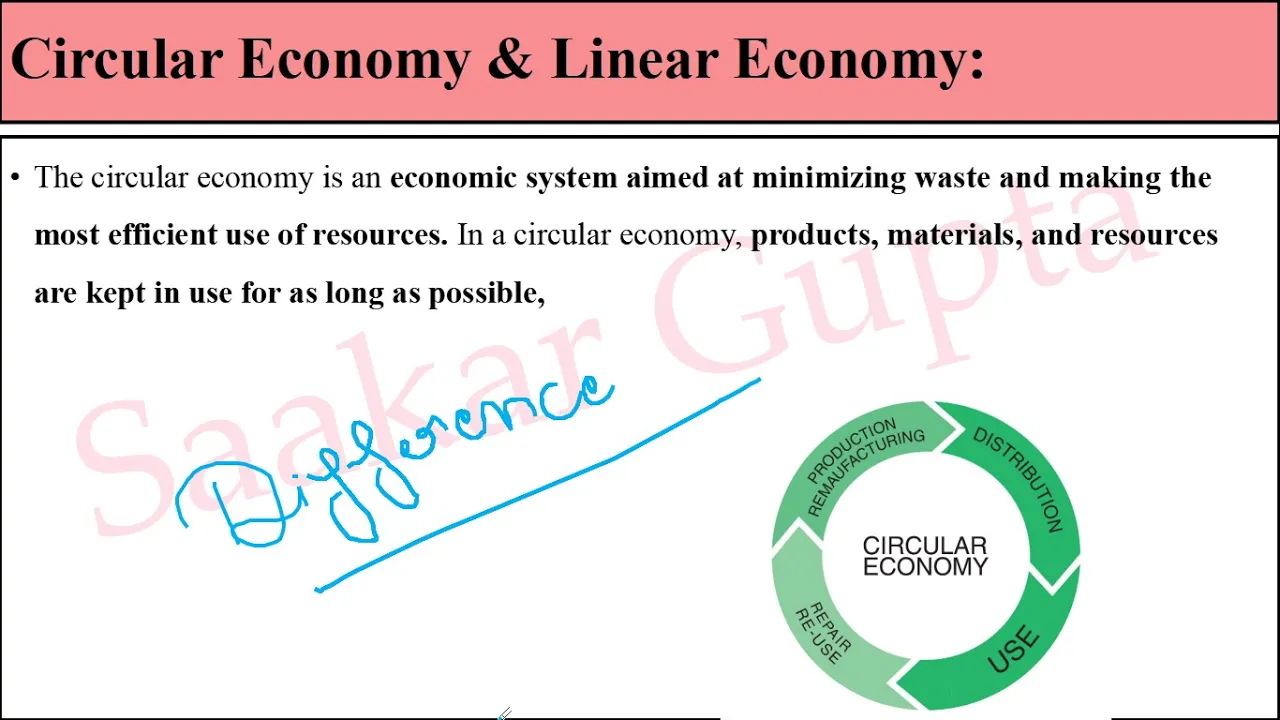
Concept of Circular Economy, Explained with example, difference between Linear and Circular Economy
374
The linear economy represents the conventional manufacturing approach that has dominated industrial production for decades. This model follows a straightforward sequence: raw materials are extracted from nature, processed through manufacturing (incurring costs), distributed to consumers who purchase and use the products, and finally discarded as waste. The video illustrates this with disposable pens - once ink depletes, they become useless and must be thrown away. This single-use mentality leads to significant environmental consequences including pollution accumulation and gradual depletion of finite natural resources. The linear model assumes unlimited resource availability and accepts waste as an inevitable byproduct of consumption.
Click to watch →

"Time is Up!" - Mark Benecke im EU-Parlament
314.1K
Linear economy (take-make-dispose) is fundamentally incompatible with ecological limits. Circular economy (reduce-reuse-recycle) aligns with natural systems where nothing is wasted. The transition to circular economy is essential for sustainability because it reduces resource extraction, waste generation, and environmental impact. In 2022, 20,000 hectares of Amazon rainforest were destroyed in just 12 months. This deforestation is irreversible because the ecosystem cannot be restored once destroyed. The loss of Amazon rainforest represents a critical tipping point in the global climate system, as it affects global carbon cycles, rainfall patterns, and biodiversity.
Click to watch →
The Circular Economy: A Simple Explanation | Cillian Lohan | TEDxYouth@EEB3
136.6K
The linear economy is an economic model that follows a straight line: raw materials are extracted from the earth, manufactured into products, used by consumers, and then discarded as waste. This model drives current consumption patterns and creates significant environmental challenges.
Click to watch →
Magazín Digital-IA | Capítulo 2: Reciclar no importa porque otros contaminan más
477.2K
The linear economy follows a 'take-make-dispose' model where products are used once and discarded. In contrast, the circular economy involves reusing, repairing, and repurposing materials to keep them in continuous use. For example, an ink cartridge can be refilled or repurposed for art projects rather than discarded.
Click to watch →
Deep Dive
Basic awareness of corporate environmental impacts, such as greenhouse gas emissions, water usage, and waste generation.
COP21 : Le bilan carbone d'Humanis équivaut à celui d'un village de 4000 habitants
204
Companies must first raise awareness among all stakeholders about their environmental impact. The first step in environmental responsibility is measuring one's environmental footprint, which includes assessing both operational activities and investment portfolios. This awareness is fundamental before any reduction efforts can be implemented.
Click to watch →
Podstawy KOBIZE | Kto i kiedy musi składać raport z emisji do powietrza?
4.8K
Every company generates multiple types of environmental impacts regardless of size or type of operation. These include: (1) Waste generation from employees' consumption activities; (2) Noise emissions from machinery operations that can disturb residents and lead to inspections; (3) Water discharge and intake requiring permits from the State Water Management Authority; (4) Air emissions from various sources including combustion engines, forklifts, lawnmowers, and volatile organic compounds from painting or fuel reloading activities.
Click to watch →

LSA Ask the Experts: Quantifying Environmental Impacts (Part I)
137
Consumer goods companies should measure greenhouse gas emissions, energy consumption, water usage, waste generation, and supply chain sustainability. Tracking methods include implementing Environmental Management Systems with ISO 14000 standards, leveraging existing utility records, using Excel spreadsheets, investing in environmental management software, and pursuing third-party certifications. Key steps involve identifying relevant metrics, establishing data ownership, and ensuring regular monitoring.
Click to watch →
ESG: What SMEs should know and how to get started
312
Environmental criteria assess an organization's environmental impact and risks from business activities. Key considerations include scheduled waste management (e.g., contaminated cloths with lubricant, fluorescent tubes with mercury) to prevent land and water pollution. Companies must measure and control air pollution from boilers/generators, water pollution from wastewater discharge, land pollution from rubbish, and noise pollution affecting neighbors. Greenhouse gases (carbon dioxide, carbon monoxide, methane, CFCs) trap solar radiation, preventing it from escaping Earth's atmosphere and causing global warming. Industrialization, deforestation, and increased vehicle/air conditioner use contribute to higher emissions. Energy consumption of non-renewable sources (petrol, diesel, electricity) should be optimized and monitored by establishing baseline values and observing trends over specified timeframes. Companies must comply with Malaysia's Environmental Quality Act, Clean Air Regulations, Industrial Emissions Regulations, and Refrigerant Management Regulations. Aspect and impact analysis should identify significant impacts requiring elimination or minimization through action plans.
Click to watch →

CGCC 2022 Lunar New Year of the Tiger Gala - Full Length
326
Companies can make significant environmental contributions through their operations. In just a few years, a company can consume over 80 million barrels of fresh water and convert that into gallons, enough to provide every person in the room and every person in the United States 10 gallons of fresh water.
Click to watch →
Prerequisite Knowledge
- Concept 01Fundamental concepts of Supply Chain Management (SCM), including logistics, procurement, and distribution.
- Concept 02The Triple Bottom Line framework (People, Planet, Profit) and how it redefines corporate success.
- Concept 03The traditional 'linear economy' model (take-make-dispose) to provide contrast with sustainable models.
- Concept 04Basic awareness of corporate environmental impacts, such as greenhouse gas emissions, water usage, and waste generation.
Subsequent Learning
- Step 01Life Cycle Assessment (LCA) methodologies used to scientifically measure a product's environmental footprint from cradle to grave.
- Step 02Design and implementation of reverse logistics networks to support circular economy practices like recycling and remanufacturing.
- Step 03Global sustainability reporting frameworks and standards, such as the Global Reporting Initiative (GRI) and ISO 14001.
- Step 04The role of emerging technologies (e.g., blockchain, IoT) in enhancing supply chain traceability and transparency.
- Step 05Regulatory and policy frameworks governing sustainable sourcing, such as the EU Corporate Sustainability Due Diligence Directive.
Core Concepts
Best Practices
Industry Cases
Core Concepts
0:00Playing Section
- 1
Defines sustainable supply chain focusing on people planet and profit.
- 2
Explains green closed-loop and circular supply chain models.
- 3
Lists key drivers like customer demand and climate change.
Greenwashing and the Limits of Corporate Voluntary Sustainability
While sustainable supply chain management (SSCM) is presented as a solution to environmental crises, critics argue that corporate-led initiatives often serve as 'greenwashing' to protect brand reputation rather than drive systemic change. Prominent multinationals like Coca-Cola, Nestlé, and IKEA frequently face accusations of using superficial sustainability metrics—such as lightweighting plastic or buying carbon offsets—to mask ongoing ecological harm, like plastic pollution and deforestation. This perspective, rooted in ecological economics and critical management studies, argues that genuine sustainability is fundamentally incompatible with the infinite-growth models of multinational corporations. Relying on voluntary corporate compliance shifts accountability away from binding state regulation and systemic economic restructuring. Furthermore, green initiatives often transfer the compliance costs and risks down the supply chain to vulnerable suppliers in the Global South, reinforcing existing global economic inequalities.
Deep Dive
Life Cycle Assessment (LCA) methodologies used to scientifically measure a product's environmental footprint from cradle to grave.

How Life Cycle Assessment is driving sustainable change | Dr Antonia Doncila (Croda) | SCItalk
236
Life Cycle Assessment (LCA) is a methodology for measuring and quantifying environmental impacts of products, processes, or services throughout their entire life cycle—from raw material extraction through manufacturing, use, and disposal. LCA considers multiple environmental indicators including carbon emissions, resource depletion, and toxicity. The methodology follows a four-stage process: setting goals and scope, inventory analysis, impact assessment, and interpretation. Two primary system boundaries exist: cradle-to-gate (focusing on direct company operations) and cradle-to-grave (covering the complete product life cycle). Cradle-to-grave LCA is preferred because it avoids burden shifting (transferring impacts between stages) and prevents trade-offs by providing comprehensive data for strategic decision-making.
Click to watch →

Life Cycle Assessment
505
LCA is a standardized methodology based on ISO standards that evaluates cradle-to-grave environmental impacts of products and systems. It consists of four sequential phases: Goal and Scope Definition establishes study objectives and boundaries; Life Cycle Inventory Analysis collects input-output data; Impact Assessment converts inventory data into environmental impact categories; and Interpretation analyzes results for decision-making. LCA has been accepted by researchers, policymakers, and manufacturers for over 50 years, with at least 12,000 scientific papers published. It serves as the core methodology for evaluating carbon footprint in the European Union and enables identification of environmental improvement opportunities.
Click to watch →

Short Description of Life Cycle Assessment (LCA)
100
Life Cycle Assessment (LCA) is an internationally standardized methodology that quantifies environmental impacts across a product's entire life cycle—from raw material extraction through manufacturing, use, and disposal—to enable fair comparisons between alternatives and identify opportunities for sustainability improvements, including measuring ecological footprint (biologically productive land/water required) and carbon footprint (greenhouse gas emissions).
Click to watch →

Life-cycle assessment of passenger cars
769
Life Cycle Assessment is a systematic approach to understanding the environmental impacts of a product throughout its entire life cycle. The methodology involves first identifying the product system (e.g., a washing machine) and then tracing all relevant life cycle phases: raw material extraction, manufacturing, transportation, use phase, maintenance, and end-of-life disposal. LCA recognizes that products are interconnected with other systems—for example, a washing machine requires electricity production, truck transportation for components, and web browsing activities that also consume energy. Only when the entire system is resolved can accurate environmental footprint calculations be performed.
Click to watch →

Ejemplo de ACV en productos
347
Life Cycle Assessment (LCA) is a methodology for evaluating environmental aspects, characterizing environmental loads, and determining potential impacts throughout a product's entire lifecycle. The scope ranges from 'cradle to grave' (raw material acquisition to final disposal) to 'cradle to cradle' (when waste is converted back into raw materials). LCA encompasses impacts from raw material acquisition, production, use, waste treatment, and final disposal. Key concepts include environmental footprint (total environmental impact) and carbon footprint (greenhouse gas emissions measurement). Companies like Toyota apply LCA to evaluate environmental impacts across products. The methodology helps minimize ecological footprint by incorporating environmental criteria in marketing and production decisions.
Click to watch →
Deep Dive
Design and implementation of reverse logistics networks to support circular economy practices like recycling and remanufacturing.
Economía circular y Logística Inversa en sistemas abiertos.
105
Reverse logistics refers to supply chains that supply raw materials to conventional supply chains using recovered products. According to Bowler, a system is defined by relationships and equilibrium processes. The circular economy is based on three fundamental axes: reduce, reuse, and recycle, with products designed for sustainability at all stages. The reverse logistics system controls flows of discarded materials from disposal points through transportation, classification, and conditioning to distribution as raw materials. Operations include disposal, collection (via garbage trucks or pepenadores), classification, reconditioning, and redistribution to sales points or secondary markets.
Click to watch →
Logística - Logística Reversa e Internacional - Parte A
1.9K
Reverse logistics operates through post-sale flows (pre-consumption returns) and post-consumption flows (recycling, remanufacturing, resale). Strategic value includes customer loyalty, enhanced corporate image, and competitive advantages through component reuse and material recycling. Brazil leads global aluminum recycling at 97% rate. Eco-industrial parks like Kalundborg demonstrate industrial symbiosis where waste becomes raw material for other companies. Law 12.305/2010 establishes waste management hierarchy: reduction, reuse, recycling, treatment, final disposal. Shared responsibility among manufacturers, importers, distributors, retailers, and consumers creates legal frameworks for circular economy implementation.
Click to watch →

Rodrigo Oliveira (Green Mining CEO) & Caren McNamara (Conscious Container CEO) - Supply Chain WS
173
Reverse logistics enables material recovery from end-of-life products, supporting circular economy goals. Companies bear major responsibility for packaging waste decisions, choosing between returnable, refillable, or one-way systems. Global recycling rates vary dramatically—Brazil recycles only 2.2% of collected material, primarily through informal workers lacking protections. The urban mining concept treats cities as material sources, extracting value from waste streams cost-effectively. Source segregation eliminates transportation costs, improves material quality, and removes middlemen. Modern reverse logistics combines waste finder systems, IoT tracking, and blockchain traceability to ensure materials reach recycling facilities. Formalizing informal workers provides dignity while improving collection reliability.
Click to watch →
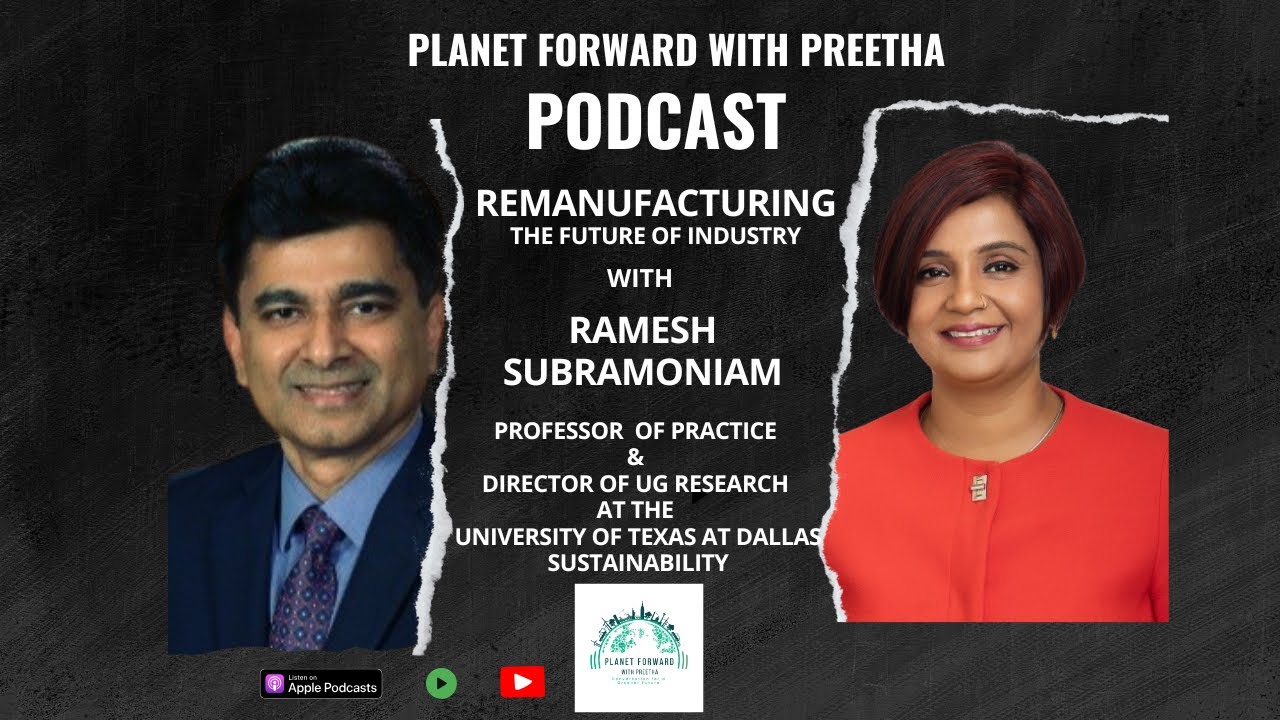
The Future of Remanufacturing & Circular Economy | Dr. Ramesh Subramoniam | Planet Forward Podcast
140
Remanufacturing is a circular economy practice that restores used products to like-new condition by disassembling, repairing, and reassembling components, offering 30-40% cost savings compared to new products while saving 85% of manufacturing energy; this sustainable business model requires strategic design considerations, effective reverse logistics networks, and core charge systems to incentivize returns, and is being enhanced by digital technologies like AI and blockchain for improved tracking and authentication.
Click to watch →
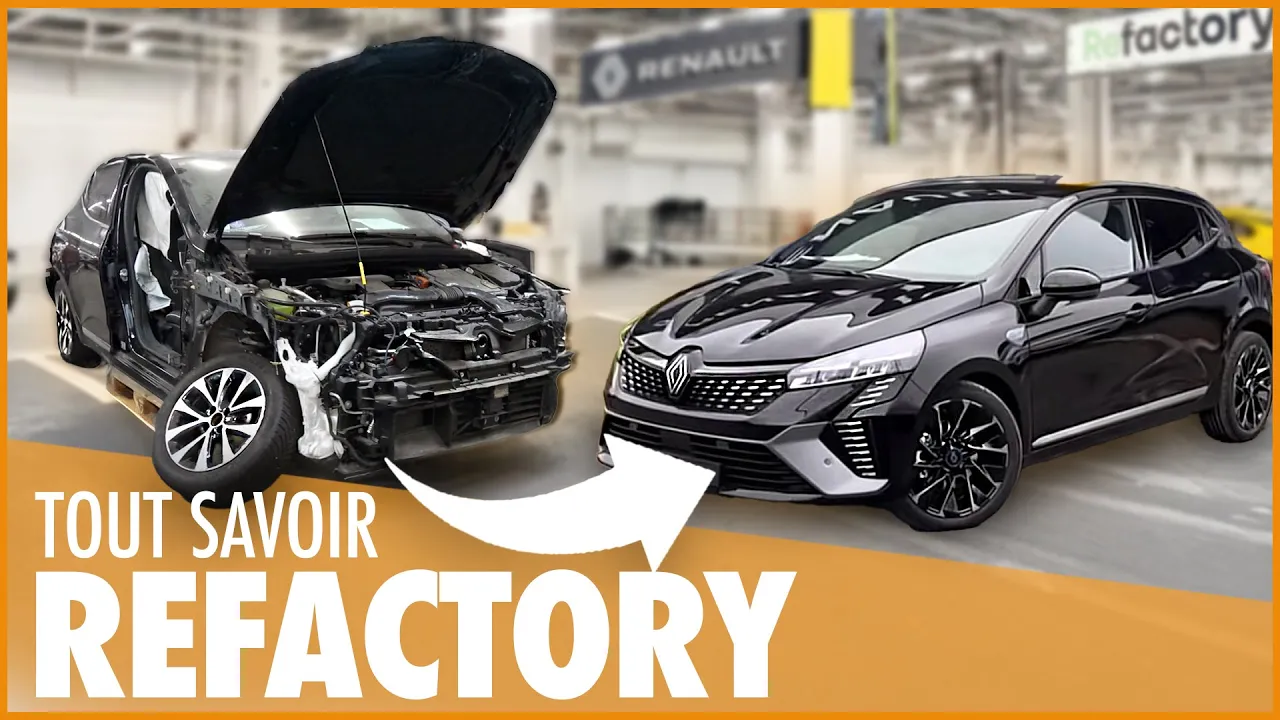
REFACTORY : l'économie circulaire à l'échelle industrielle !
53K
The remanufacturing facility operates a closed-loop system where returned parts are continuously recycled. Used engines and components are collected, remanufactured, and shipped worldwide (primarily Europe, with some exports to South America and Japan). The same shipping containers are used for both outgoing and incoming parts, creating a continuous circular economy loop. The circular economy approach requires considering recycling and reconditioning from the initial design phase of products, including ease of disassembly, material recovery, and component reusability.
Click to watch →
Deep Dive
Global sustainability reporting frameworks and standards, such as the Global Reporting Initiative (GRI) and ISO 14001.

Palestra - NBC TDS 01 e 02 na Prática: Desafios e Oportunidades para Profissionais da Contabilidade
307
Three major global sustainability reporting standards exist: (1) GRI (Global Reporting Initiative) - the most widely used framework, founded in 1997 after the Exxon Valdez spill, now covering environmental, social, and governance dimensions; (2) ESRS (European Sustainability Reporting Standards) - implements 'double materiality' for EU companies, requiring both impact and financial materiality perspectives; (3) ISSB (International Sustainability Standards Board) - focuses on financial materiality, addressing how sustainability issues affect company performance. Brazil adopted ISSB standards through Resolution CVM 193/2023, making them mandatory for listed companies and regulated financial institutions.
Click to watch →

Lec 13 | CA Final Audit FastTrack for Nov24 | SDG & ESG Assurance | CA Rishabh Jain #cafinal
2.6K
The Global Reporting Initiative (GRI) provides globally recognized guidance on sustainability reporting, covering over 93% of the world's largest 250 companies. GRI standards help organizations report on economic, environmental, and social impacts aligned with the 17 Sustainable Development Goals. The Integrated Reporting Framework combines financial and non-financial information based on six capitals. The International Accounting Standards Board (IASB) has accepted the integrated reporting approach, allowing financial and sustainability reporting to be combined in a single annual report.
Click to watch →

ESG Technical Skills in Corporate Sustainability & Consulting
49.2K
GRI (Global Reporting Initiative) is the most widely used sustainability reporting framework, with about 52% of Russell 1000 companies using it in 2020. Russell 1000 represents more than 90% of U.S. stocks. GRI provides universal standards applicable to any company, plus sector-specific standards for industries with unique sustainability considerations. This framework helps companies systematically report on their environmental, social, and governance impacts.
Click to watch →

ESG |Chapter 20 | INTEGRATED REPORTING,GRI,BRSR | Lecture-2 | CS Professional| CA Mayur Agarwal
6.6K
The Global Reporting Initiative (GRI) is an independent international organization that helps businesses and other organizations take responsibility for their impact by providing a global common language to communicate. GRI was formed in 1997 through the merger of the US-based CERES and TNC Institute. GRI provides sustainability reporting standards widely used by companies worldwide. GRI standards are divided into three categories: (1) Universal Standards - applicable to all organizations; (2) Sector Standards - specific to particular sectors like automotive, IT, manufacturing, chemical; (3) Topic Standards - specific topics like waste, occupational safety, health, taxes. Companies select relevant standards based on their operations and material topics.
Click to watch →

Introducing the GRI Standards
126.7K
The GRI Sustainability Reporting Standards represent the first global standards for sustainability reporting, evolved from the widely-used G4 guidelines through a transparent standard-setting process. These standards feature a modular structure with three universal standards (GRI 101 Foundation, GRI 102 General Disclosures, and GRI 103 Management Approach) plus 33 topic-specific standards covering economic, environmental, and social impacts. Key innovations include clearer distinctions between mandatory requirements (denoted by 'shall'), recommendations ('should'), and guidance; terminology changes such as replacing 'indicator' with 'disclosure' and removing the DMA acronym; and enhanced clarity on materiality, topic boundaries, and organizational responsibility for impacts beyond direct operations. Organizations can use the standards comprehensively or selectively, with reports published on or after July 1, 2018 required to comply with the new framework.
Click to watch →
Deep Dive
The role of emerging technologies (e.g., blockchain, IoT) in enhancing supply chain traceability and transparency.
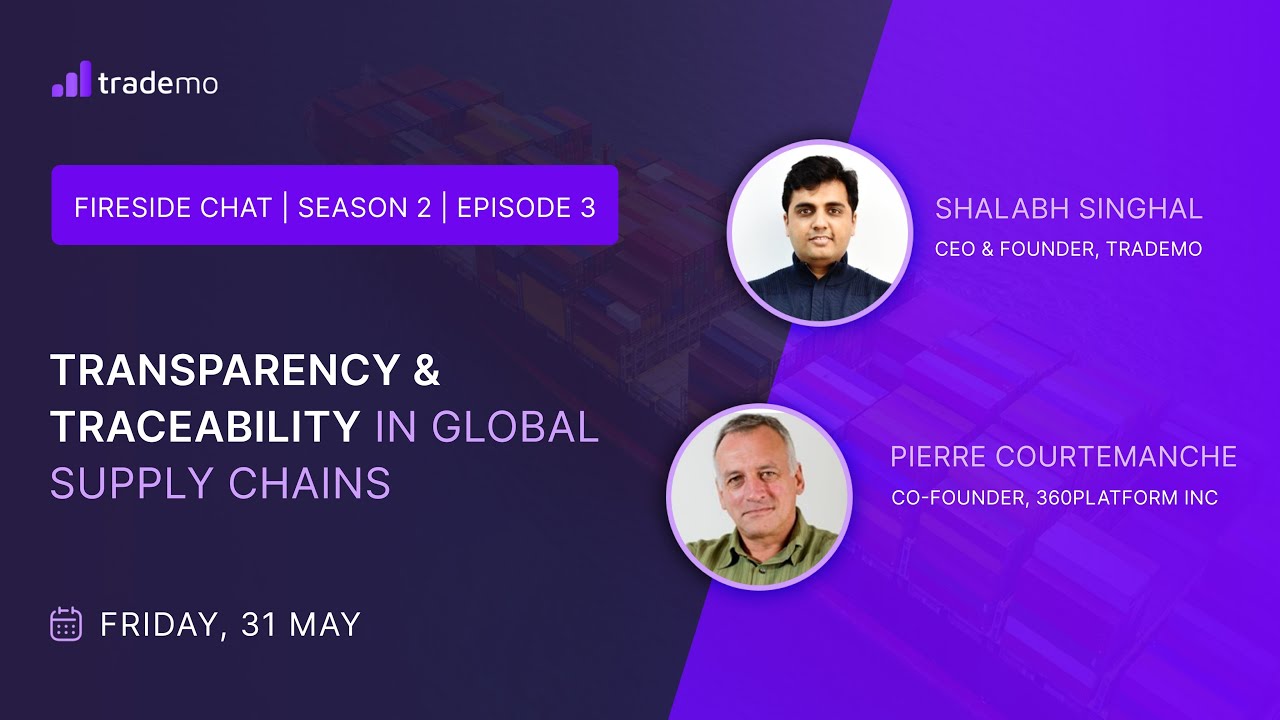
Transparency & Traceability in Global Supply Chains - Fireside S2E3
619
Technology plays a crucial role in enhancing supply chain transparency through: (1) Capturing quality and reliable data on upstream and downstream supply chains; (2) AI and machine learning for identifying linkages, risk factors, and performing predictive analytics; (3) IoT sensors, RFID, and barcode technology for tracking products at every lifecycle stage; (4) Blockchain as a decentralized ledger providing tamper-proof recordkeeping for end-to-end visibility across stakeholders. Successful implementation requires proper entity resolution, interoperable systems, and collaboration between different stakeholders within and outside the company.
Click to watch →
Desmitificando la blockchain - Dan Weinberger
605
Businesses must identify their specific pain points and collaborate with technology companies to implement emerging solutions. The Internet of Things (IoT) connects devices across the internet, enabling custom functionality from consumer to commercial applications. In manufacturing, IoT devices in CNC machines send maintenance reports and temperature readings. According to Goldman Sachs, the IoT opportunity for industrials could reach $2 trillion by 2020. IoT creates digital footprints by continuously sending sensor data to the blockchain, building complete product histories. IoT geofence triggers automatically activate supply chain processes when devices enter specific geographic areas, eliminating human intervention.
Click to watch →

UNIDO Webinar series - 4IR in Mining Assessing the Opportunities Challenges and Implications
102
Blockchain creates immutable digital records through distributed network blocks linked simultaneously, solving the garbage-in-garbage-out problem inherent in databases. Tracking technologies within IoT create physical-digital connections by feeding field data into the digital realm. These include barcodes, RFID/sensors, cellular networks, markers/tangents for material identification, and satellites/drones for real-time monitoring. Combined, they enable true traceability and transparency in supply chains, allowing verification of data authenticity and source credibility throughout the mining value chain.
Click to watch →

Fundamentos de Blockchain, más allá de la criptomoneda
470
In supply chains, blockchain enables end-to-end traceability by recording every transaction (product creation, distribution, delivery) on an immutable ledger. All participants share the same source of truth, making it impossible for any party to alter records. This enables complete transparency, automatic auditing, and instant identification of product origins and movements. IoT devices (temperature sensors, scales, cameras) can automatically record information without human intervention, creating immutable chains of custody for food safety, pharmaceuticals, and quality verification.
Click to watch →
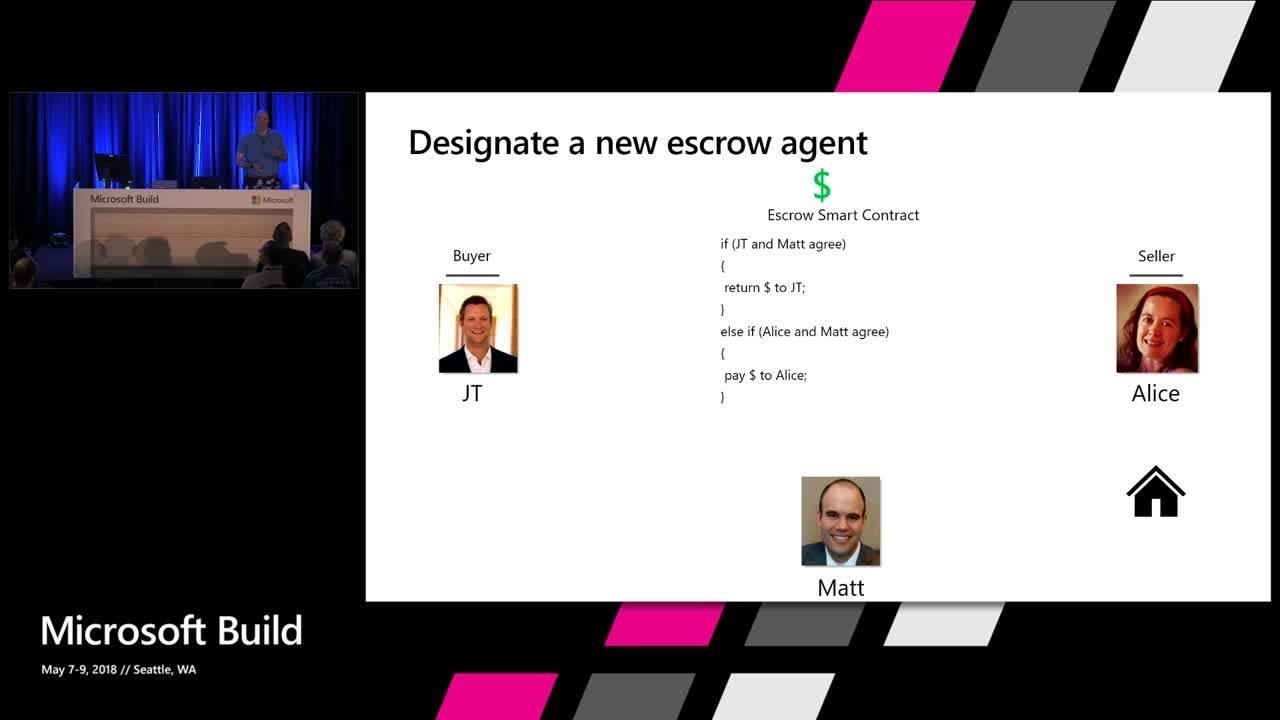
Azure Blockchain – Create and deploy multi-party applications with Workbench : Build 2018
6.2K
In supply chains, IoT data alone is insufficient because parties may dispute sensor readings or tampering. Blockchain solves this by ensuring every counterparty has synchronized infrastructure with signed updates, eliminating disputes about what happened, where it happened, and who was responsible. The state machine models business processes with states, transitions, roles with permissions, and accompanying data. Workbench enables creating applications by defining JSON configurations and Solidity smart contracts. Real-world applications include: 3M using tamper-evident labels with QR codes to track pharmaceutical supply chains and identify responsible parties for tampering; Maersk implementing dynamic ship insurance where smart contracts govern coverage levels and premiums, enabling real-time adjustments based on conditions like weather or piracy risks; Webjet creating a consortium among travel companies to track hotel rooms through the supply chain, enabling immediate discrepancy detection and automated reconciliation replacing monthly manual processes.
Click to watch →
Deep Dive
Regulatory and policy frameworks governing sustainable sourcing, such as the EU Corporate Sustainability Due Diligence Directive.

Seminario “Debida diligencia en derechos humanos para empresas con participación comunitaria” (P2)
1.6K
This section presents Silvia Obregón from the European Coalition for Corporate Justice explaining the EU Corporate Sustainability Due Diligence Directive, approved in July 2024. The directive requires all 27 EU member states to legislate at the national level and imposes harmonization on due diligence application. It establishes a transnational obligation for human rights and environmental due diligence for EU companies and companies outside the EU participating in the EU internal market. The obligation applies to the company's own operations, operations of subsidiaries, and operations of business partners related to the value chain, including upstream activities and specific downstream activities like distribution, transportation, and storage. The due diligence obligation is aligned with international standards including ILO principles and UN Guiding Principles, requiring companies to integrate due diligence into corporate management systems, identify adverse impacts, prioritize responses, prevent risks, end and mitigate adverse impacts, and provide for remediation, monitoring, and communication of results.
Click to watch →
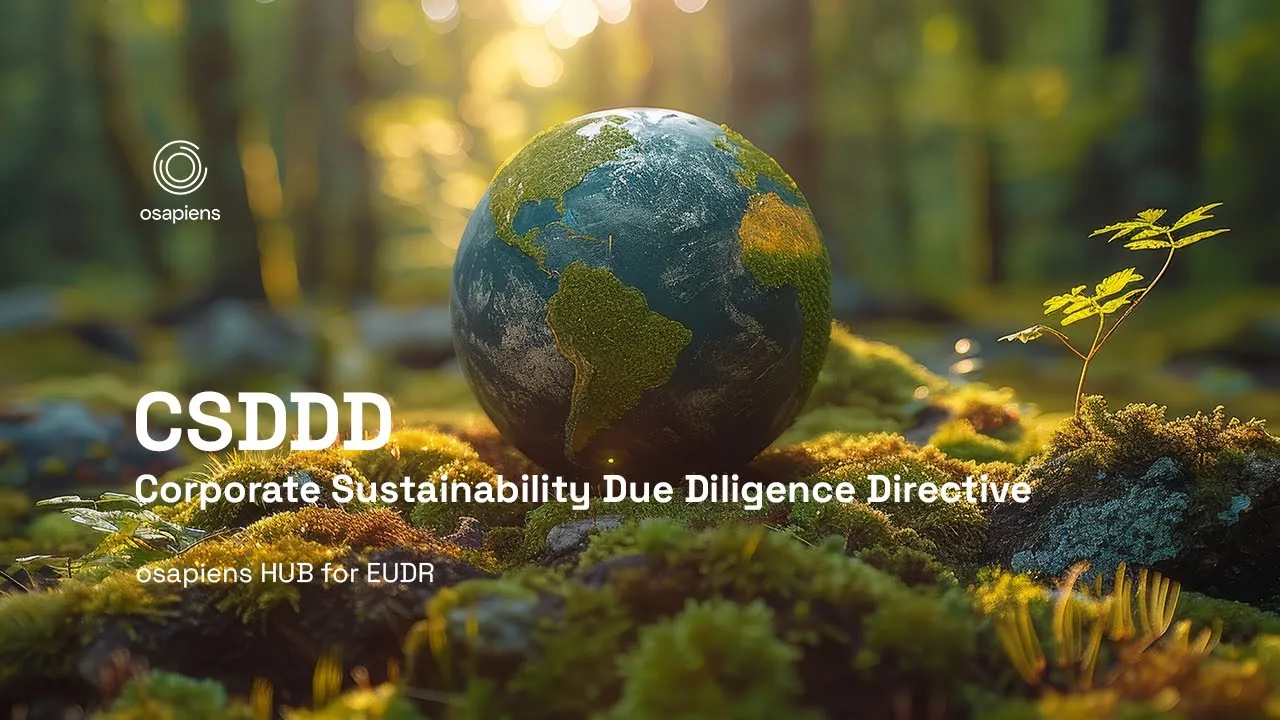
Understanding CSDDD - Corporate Sustainability Due Diligence Directive
9.8K
The Corporate Sustainability Due Diligence Directive (CSDDD) is a European Union regulation requiring approximately 5,500 large companies with over €450 million worldwide turnover and more than 1,000 employees to ensure their entire supply chain protects both the environment and human rights, applying from 2027 with gradual expansion to SMEs by 2029; compliance requires companies to understand legal requirements, their supply chain data, and implement software solutions that automate risk analysis, supplier questionnaires, and compliance reporting while guiding workforce through new sustainability processes.
Click to watch →
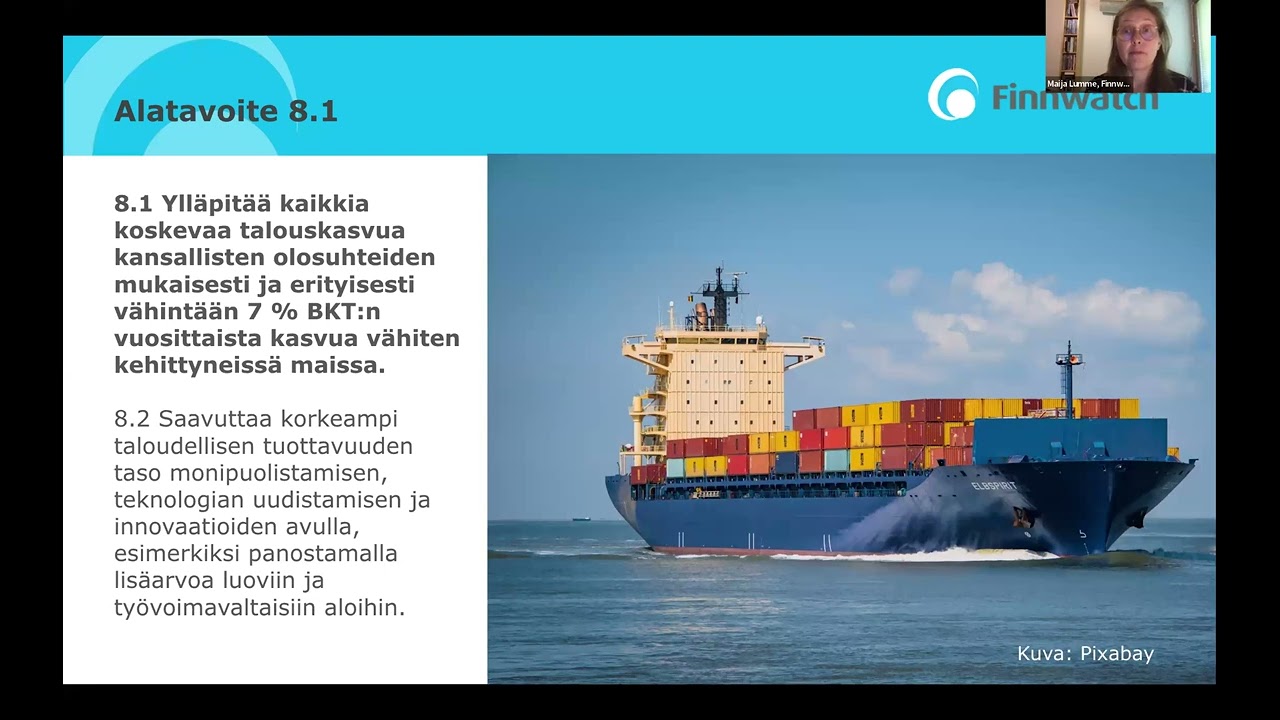
Ihmisarvoista työtä ja talouskasvua (Agenda 2030, tavoite 8)
231
The EU has developed a comprehensive regulatory framework for corporate sustainability, including the Corporate Sustainability Reporting Directive (CSRD) requiring companies to report on sustainability issues, the Non-Financial Reporting Directive (NFRD), and the Corporate Due Diligence Directive (CSDDD). The CSDDD requires large companies to identify, prevent, and mitigate human rights and environmental risks throughout their operations and supply chains, based on UN Guiding Principles for Business and Human Rights. This directive represents a significant shift from voluntary to mandatory corporate responsibility, requiring companies to conduct due diligence on their entire value chain and implement corrective actions for harmful impacts.
Click to watch →
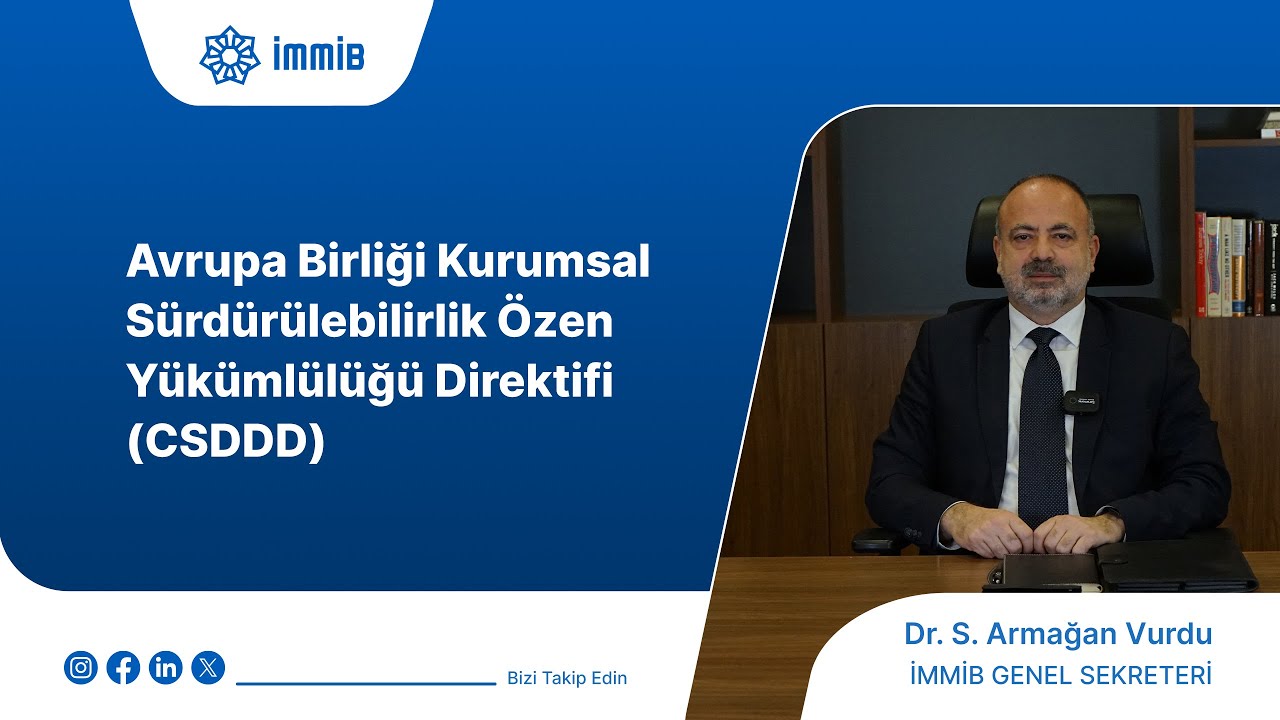
Avrupa Birliği Kurumsal Sürdürülebilirlik Özen Yükümlülüğü Direktifi (CSDDD)
196
The EU Corporate Sustainability Due Diligence Directive (CSDDD) is a proposed regulation requiring companies to conduct comprehensive due diligence on their environmental and social impacts throughout their entire value chains, including suppliers, sales, distribution, and waste management, with the goal of preventing child labor, human rights violations, deforestation, and environmental pollution; the directive applies to companies with over 500 employees and 150 million euros in net turnover, or those in high-impact sectors with over 250 employees and 40 million euros in net turnover, and includes provisions for penalties such as fines up to 5% of worldwide net turnover and exclusion from public procurement for non-compliant companies.
Click to watch →
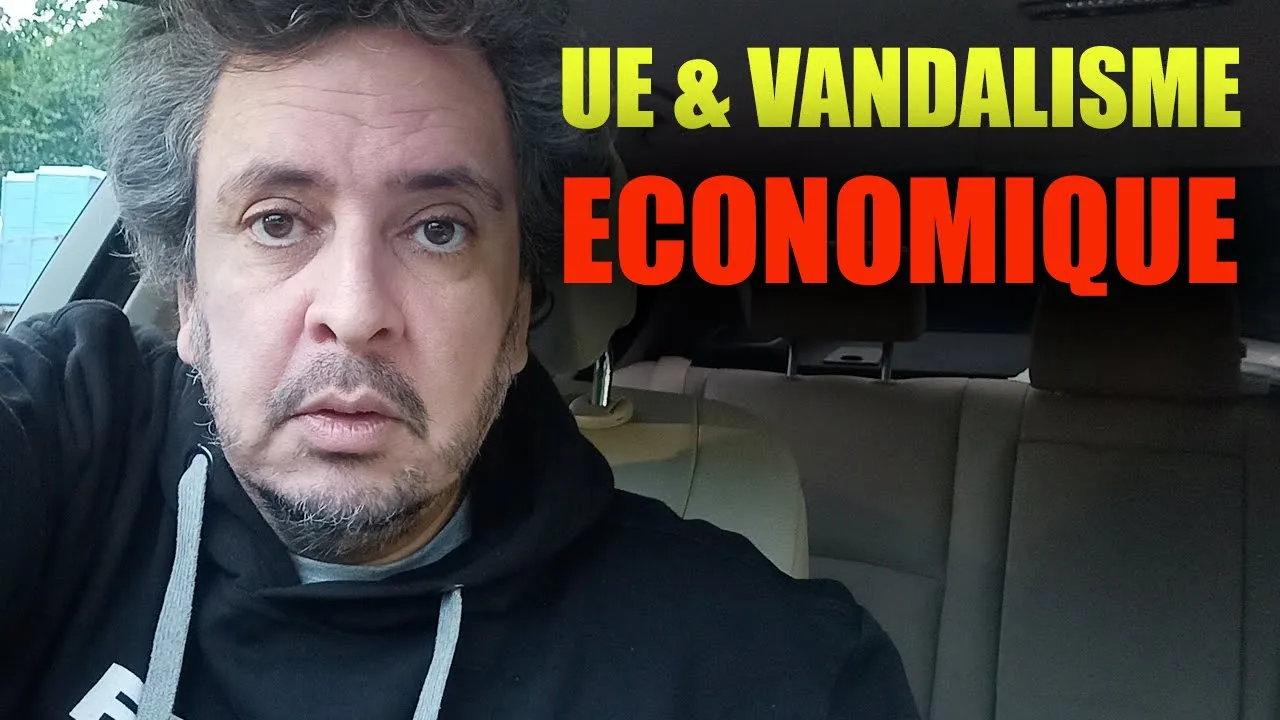
L’UE Vandalise l’Economie des pays membres : le CSDDD (CS3D)
47.1K
The EU's Corporate Sustainability Due Diligence Directive (CSDDD), effective May 24, 2024, represents a comprehensive regulatory framework that combines multiple international conventions (UN human rights, labor, environmental laws, and Paris Climate Agreement) into a single binding law, creating vague, complex obligations that apply extraterritorially to any company selling products in Europe, regardless of physical presence. This regulation imposes compliance costs on businesses through supply chain requirements, consultant fees, paperwork, and certification processes, effectively functioning as an economic tax that may drive investment away from Europe and transfer economic activity to other regions, while the EU's already stagnant economy (6% growth over 15 years compared to 82% for the US) faces further economic pressure from these bureaucratic requirements.
Click to watch →
Core Concepts
Best Practices
Industry Cases
Core Concepts
0:00- 1
Defines sustainable supply chain focusing on people planet and profit.
- 2
Explains green closed-loop and circular supply chain models.
- 3
Lists key drivers like customer demand and climate change.
Greenwashing and the Limits of Corporate Voluntary Sustainability
While sustainable supply chain management (SSCM) is presented as a solution to environmental crises, critics argue that corporate-led initiatives often serve as 'greenwashing' to protect brand reputation rather than drive systemic change. Prominent multinationals like Coca-Cola, Nestlé, and IKEA frequently face accusations of using superficial sustainability metrics—such as lightweighting plastic or buying carbon offsets—to mask ongoing ecological harm, like plastic pollution and deforestation. This perspective, rooted in ecological economics and critical management studies, argues that genuine sustainability is fundamentally incompatible with the infinite-growth models of multinational corporations. Relying on voluntary corporate compliance shifts accountability away from binding state regulation and systemic economic restructuring. Furthermore, green initiatives often transfer the compliance costs and risks down the supply chain to vulnerable suppliers in the Global South, reinforcing existing global economic inequalities.
Fundamental concepts of Supply Chain Management (SCM), including logistics, procurement, and distribution.
The Triple Bottom Line framework (People, Planet, Profit) and how it redefines corporate success.
The traditional 'linear economy' model (take-make-dispose) to provide contrast with sustainable models.
Basic awareness of corporate environmental impacts, such as greenhouse gas emissions, water usage, and waste generation.
Life Cycle Assessment (LCA) methodologies used to scientifically measure a product's environmental footprint from cradle to grave.
Design and implementation of reverse logistics networks to support circular economy practices like recycling and remanufacturing.
Global sustainability reporting frameworks and standards, such as the Global Reporting Initiative (GRI) and ISO 14001.
The role of emerging technologies (e.g., blockchain, IoT) in enhancing supply chain traceability and transparency.
Regulatory and policy frameworks governing sustainable sourcing, such as the EU Corporate Sustainability Due Diligence Directive.
124 views3likes4:50@JaipuriaInstituteofManagementOriginal Release: 2023-11-02
[Applause] hello everyone in today's session we will be discussing about sustainable supply chain which can also be interchangeably used in academic work and called by the above names these Supply chains have very minute differences as you can see that there are four terms written on the slide now we will discuss each term by definition before moving on to the above mentioned supply chain let's understand the difference between traditional and sustainable supply chain traditional Supply chains mainly focus on the activities that generate profit and they are not concerned about social and environmental impact moreover when we are talking about sustainable Supply Chain management it focuses on all the three aspects that is people planet and profit they tend to minimize their impacts on their people and Planet without compromising on profit green Supply Chain management is concerned with studying different aspects of supply chain and deriving methods to make each component of the supply chain more environmental friendly in closed loop Supply chains similar to Green Supply chains organizations focus on reducing environment that impacts by utilizing all the waste products generated during its different stages of supply chain thereby closing the loop that is no waste is being thrown out of the system in circular economy the products are designed in such a way that their waste has maximum economic value and is being utilized during the other production processes of the same supply chain sustainable Supply Chain management has many drivers in the current business world like changing customer demand mounting energy cost climate change regulatory compliances competitiveness and mounting waste there are many different ways to achieve sustainable or green supply chain however there are certain best practices which include understanding each aspect of the supply chain and identifying the environmental impact it is creating designing redesigning products and processes in such a way that minimum waste is being generated during the process the waste which is generated has economic utility and can be reused recycled and can be incorporated in the production process organizations should follow this approach in order to become yesterday will as adopting this approach will help organizations to pinpointedly address the exact situation by identifying the issues measuring the impacts and creating Solutions so let's take an example of green supply chain of nestle MOBA Nestle's Factory at Moga is in Punjab which follows principles of green supply chain and has made its supply chain a closed loop as you can see from the figure nestless Factory at Moga has worked towards closing the loop by utilizing all the byproducts in the milk production process back into the supply chain they have asked the milk producers to rear kettles the cattle waste is used in a biogas plant which is used to heat water this water is used for various aspects in the production then the waste from biogas is used as composed to grow fodder that is feeded to the cows now I would also like to take few other examples of some leading companies who have implemented closed group supply chain successfully for example Coca-Cola European partners collaborated with recyclers packaging manufacturers and other firms across the supply chain to cut cost and reuse the material the world's largest independent Coca-Cola bottle partnered with labeling and packaging company every Dimension waste management company and plastic processor pet UK to recycle waste pet liners from its smart water bottles and make new items the another example that I would like to take is of Ikea so Ikea encourage product returns by offering its consumers a discount on the new products so they offered a discount up to 50 percentage if they brought in their worn out Furniture The company took the return products and either recycled or refurbished and resolve them the initiative started small but the retailer has since expended the operation a sound production recovery system like this can reduce the time and resources and organization needs to spend during the procurement and production processes companies that effectively use recycled materials ultimately earn more thank you
Up Next
42:44
Supply Chain Risk Management Strategies | CIPS L5M2 Part 2
@ZeriteNetwork
1.5K views•2024-06-03
46:36
Retention Habits of Top DTC Ecommerce Brands Revealed
@SendItPodcast
44K views•2026-03-03

15:23
Decoy Effect: How Pricing Psychology Influences Consumer Spending
@bobinvestsUS
90K views•2026-01-05

17:30
The Planned Obsolescence of Light Bulbs and Tech
@veritasium
25.3M views•2021-03-26
Related Study Plans & Knowledge Roadmaps
Structured learning paths in Business
business
Pop-Up Retail: Strategy, Design & Execution
01Introduction to Pop-Up Retail & Strategic Goal Setting
02Budgeting, Site Selection, and Legal Essentials
03Experiential Retail Design & Visual Merchandising
+ 2 more learning modules
15h5 modules
Explore Roadmap
business
Reg CF: Startup Funding, Marketing & Launch
01Introduction to Equity Crowdfunding & Reg CF
02Platform Selection & Legal Preparation
03Crafting High-Converting Campaign Assets
+ 2 more learning modules
14h5 modules
Explore Roadmap
business
Productized Services: Scaling Solo Freelance
01Foundations of Productized Services
02Packaging and Scope Definition
03Pricing and Subscription Models
+ 2 more learning modules
15h5 modules
Explore Roadmap
business
Gov Procurement: Find, Bid & Win Contracts
01Introduction to Government Procurement & Business Setup
02Small Business Certifications & Set-Asides
03Finding and Analyzing Contract Opportunities
+ 2 more learning modules
14h5 modules
Explore Roadmap