



![Contract Law [1 of 10] - Introduction to Contract Law](https://i.ytimg.com/vi/ONqYWpPVoVA/maxresdefault.jpg)

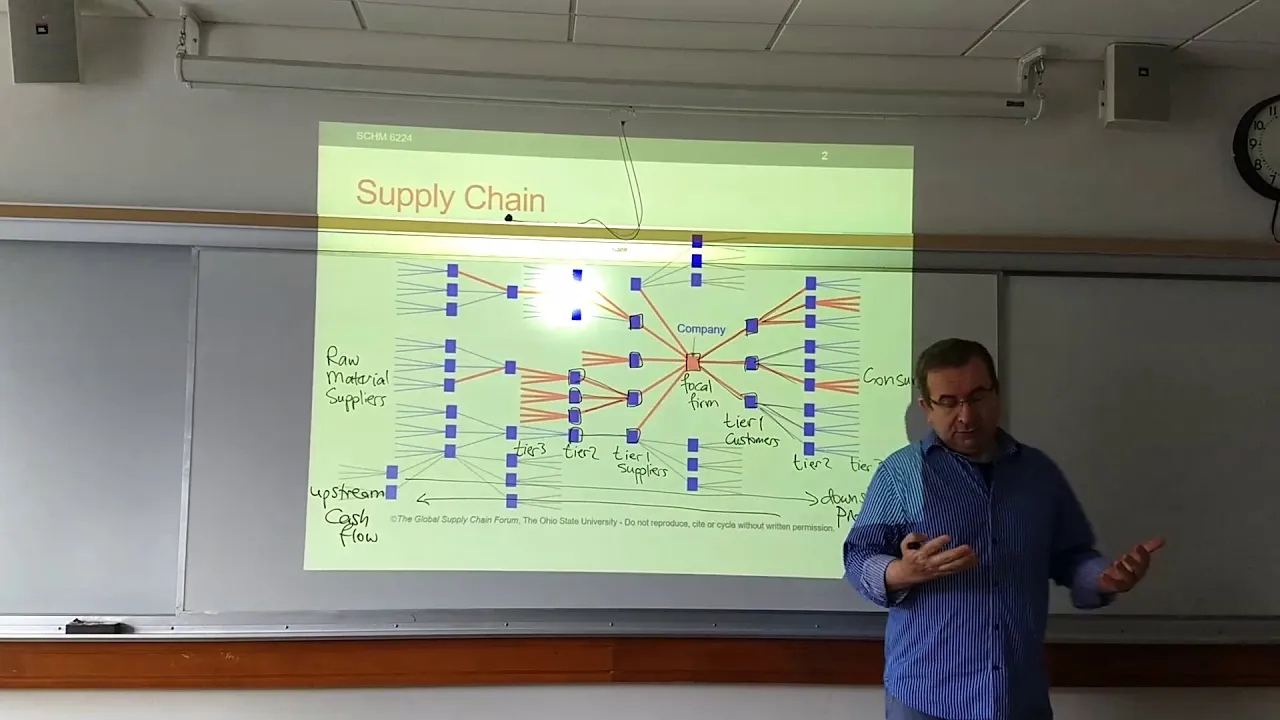



















Supply chain risk management involves multiple approaches: contractual remedies like indemnities and liabilities assign risks between parties, intellectual property clauses protect designs and knowhow, force majeure clauses allow suspension during exceptional events, and inspection clauses reduce defect risks; outsourcing third parties for credit ratings, audits, and disaster recovery helps manage complex global supply chains; insurance provides financial protection through employer liability, public liability, professional indemnity, product liability, and trade credit coverage; and contingency plans with business continuity components help organizations respond to incidents like fires, cyber attacks, and strikes through incident response, disaster recovery, and business continuity phases.
Supply Chain Risk Management Strategies | CIPS L5M2 Part 2
Added:let's talk about some of the process available to manage risk in supply chain and that means that by the time you're done with this okay you will be in a position to examine the use of contractual remedies for making risks in supply chain analyze the use of Outsource third parties in Risk Management in Supply chains assess the use of insurance for protection against risks in Supply chains as well as examine the use of contingency plans to overcome risks in supply chain and what you need to remember is that as Supply chains grow okay uh Supply chains have grown more complex over time so of the tools available to manage risks it is important that procurement and supply chain professions have a good understanding of the methods benefits and pitfalls of managing risks and so let's talk about how you go about all that and uh we're going to start with examining the use of contractual remedies for managing risks in supply chain now the good thing about contracts or the main thing about contracts okay in relation to supply chains is that it will help in assigning risks it will help in assigning liabilities as far as the parties in those contracts or the parties within that supply chain are concerned okay in sales of goods for example there are terms that will show the kind of quality expected or there could be a requirement for things like insurance but then there is still the question of of allocation of risks there is still the question of Remedies and yeah so let's see how you know you can do all these the first one that we'll start with is indemnities and liabilities now speaking of liabilities liabilities in a contract just refer to the legal responsibilities of the parties or a party in that particular contract a contractual party that has a liability is the party responsible for a specific outcome in that contract which means that all the parties in that contract remember when you talk about contract talking about a legal agreement right a legally binding agreement which means there are things you're supposed to do there are things I'm supposed to do and that is where liabilities come in for example in a contract for the supply of rocks in a construction one party is liable for supplying the S rocks in the quality and quantity defined in the contract and the other party is liable for payment of the am at the time defined in the contract and uh that is the reason why you have to be clear as far as this is concerned that is the reason why you have to be clear in a contract who's going to do what and what will happen if they fail to do whatever it is that they're supposed to do and so you're going to put in some terms that are going to help you for example you promise that the quantity quality description and specification for the deliverables will be th set out in our order apart from which then of the best standards reasonably to be expected in the market for that kind of deliverable again look when it comes to drafting these things okay you you you obviously need to seek legal advice so don't just say well I saw this video and this is what they had and that is what I'm going to write most of these things will depend on the nature of contract you're getting to and the risks you're trying to avoid so that was liabilities now let's talk about indemnities remember it was indemnities and liabilities right an Indemnity is an arrangement where one party promises to compensate another party for a trigger event and the easiest way to understand this is let's look at a simple example like if you hire a car okay so you hire a car and uh the deal could be that if you scratch that car or if you destroy something in that car you're going to pay for that okay you're going to pay for the amount that it will take for the own of that car to fix that car so you're indemnifying the own of that car that is in addition to the charges that you're going to be charged for hiring the car uh what about an example in sell Goods contract now let's say you have a contract with Supply X who supplies some electric equipment and you have an indemnity clause in that contract and that indemnity clause could be saying something like you will indemnify us and keep us indemnified immediately Upon Our written demand against any cost claim expense or liability arising from any risk for which you are responsible under this contract so that is actually from the cips standard contract the idea is um in this case you're simply saying that as a seller if you sell the buyer something and that thing malfunctions then you will have to indemnify that buyer okay basically you have you'll have to compensate them for all the cost that they will incur in relation to you know as a result of that malfunction so when they're fixing it and all that you're going to be paying for that again you know most of these things will depend on whatever it is that you want to put in a contract but the idea here is you are trying to manage risks associated with supply chain and part of that supply chain there's a seller and there is a buyer so in this case you're assuming you are the you're the buyer Indemnity is a way of moving potential cost from one party to another and if you're going to use such Clauses okay if you're going to use inity Clauses then there are things you need to understand or there things you need to have in mind and these will include things like number one details of what types of cost are covered duties of both parties when an event occurs a monetary limit and then a time limit that the indemnity will last now that is that is that is indemnity and liability as a way of trying to uh manage the risk now something else that you also need to understand okay in relation to supply chain risks will be ownership of IPR basically intellectual property rights so there are moments when the risks you're going to be dealing with in that supply chain will reled to intellectual property okay this is especially the case if you are like collaborating you're creating something and there is a supplier there is you there is whatever and then so the question becomes who owns certain rights in relation to this thing so you see there are those kind of risks intellectual property can be defined as a creation of the mind now there is obviously difference between I mean there's an obvious difference between intellectual property and physical property intellectual property is not physically divisible that is it does not get used up when people use it so for instance when you're listening to music right the fact that you're listening to music doesn't mean that now you're going to finish all the music for everybody so music in this case Okay is an example of something that that artist own okay it's an intellectual property as far as the artist is concerned so the song is an intellectual property of the artist so in our case you're dealing with supply chain and so intellectual property ownership is a way of protecting a design invention or knowhow that is shared with a supply chain in order that the members of the supply chain can carry out the work required to understand this okay imagine a company that contracts with another company so let's say it's your company right you contract with another company and they supposed to manufacture some equipment for you and in this case you've provided them with the design so then the question becomes how exactly are you going to protect yourself so that they don't just make this thing and then copy your design and then use it elsewhere so you see in this case there is the issue of intellectual property when an IPR Clause is in place the company allows the supplier to see the design so that they can make the part but the supplier cannot then take the company's design and make and sell the parts to other customers without the permission of the company but then again you have to remember that uh when you're working with um Supply okay um you know there is what you know there is what they know okay and so at some point you may end up having something called a joint IP or a joint intellectual property any IP from Goods or products jointly produced is known as AR Rising IP and that is going to lead to issues like who's going to on what and what exactly can they do with whatever it is that they own how do we know that from these arising IP this part is ours that part is theirs or if you want to say I mean all that stuff and so when you're faced with issues like those ones there are number of ways you can deal with that okay when you're collaborating with the suppliers and now you have these joint IP or arising IP so the question of how do you deal with that okay can come up and there are number of ways you can deal with that for example the customer is granted ownership of All rights and title in the rising element and all arising IP in them but it grants the supplier a broad license book so the benefit is that as a customer you will own okay all the rights in relation to that thing but then as a supplier you can still use because the customer licensed you the right to use it you can still use it although you don't own it now so that one is the first one okay the customer owns their IP but then they license the use of that IP to the supplier number two the customer gets the copyright ownership while the supplier gets the patent rights and line sense the customer to use it internally so in that case the supplier can reuse the idea okay but then they just can't make something similar to whatever the customer has so they've been granted the use but then if they make something similar to whatever it is that the customer has then you see that becomes a corporate infringement now number three another way that you can deal with something like this will be the supplier owns all the IP in the raising product and we license the IP back to the customer for their internal use and number four the rising IP could be jointly owned of course these will lead to some complication but the point is if you can figure out how you can jointly own the thing then that can work so let's sum all this up by looking at an example let's say a chemical company contracts the software company to develop a bespoke software package for running its employee training now with a software rather with softwares the code is usually the intellectual property and the company decides that they want to own the software this way any future upgrade can be done by other companies they want now how will the software company protect the intellectual property especially since the chemical company can decide to sell the software now in that case they can limit how the company is going to use that they can limit that to internal use only they can say look we've designed this thing for you you can use it but um here's a software that you've given you uh you can use it internally only you can't then say that you're going to sell it to someone else so basically they will set out such terms in the contract now something else some other remedy that you can use okay to manage risks in supply chain will be the force measure so let's talk about the use of force measure Clauses now a force measure clause in a contract effectively allows the parties to suspend or terminate the performance of the obligation if they are affected by exceptional events outside their control example of such things example of whatever it is that will can become a Force measure will include things like acts of terrorism okay war fire flood industrial strike which by is important you need to understand that industrial strike is not the same as when your company strikes when employees in your company strikes that is not industrial strike that is just an internal problem that we have with industrial St talking about let's say it's a banking sector and then all the employees in the banking sector say we are having this problem with the central bank or the federal bank or whatever it is and therefore we are striking now that becomes an industrial strike okay a good Force measure Clause will not only identify what type of occurrence make up excusable event but also what action should be taken as a result and that is the reason why if some something like that occurs you need to send a note okay so as a supplier you send that notice to the buyer within a reasonable time so that they know that you're not going to be able to supply something because of ABCD and um it is important that you understand that there is a difference between um a force measure and a frustrating event because at the end of the day they're more or less the same thing it's just that their use is a bit different with the force measure we are saying that there is this event which will make it hard for us to continue performing the contract but if you give us time because you'll State how much time you want in that contract if you give us time then we'll find a way to fix it and so you'll agree on if these events occur how much time do you need to rectify the problem because otherwise it becomes a frustrating event because a frustrating event is an event that is beyond your control and it will end the contract so there is a flood you can't Supply why because there is a flood and it has destroyed a certain bridge that you normally use and you say okay give us time to reot the the delivery otherwise the contract is over so that is something that can be used now another thing that you can use to manage risks in supply chain in this case will be closes for testing inspecting and acceptance Clauses for testing inspecting and acceptance are a method of reducing risk that a product will have a defect okay let's look at an example from one of those CS terms okay an example of these search Clause from the cips okay standard contract terms in this case we have we will be allowed to inspect any contract Goods during manufacturer and storage so long as we request an inspection by a reasonable notice if as a result of the inspection we are not satisfied that the quality of the goods or standard of their manufacture storage or handling conforms with the contract we will take such steps as necessary to ensure compliance if after that we are still not satisfied we can cancel the contract without penalty so the point with such claes is that we trying to avoid you Contracting and then they deliver and then they deliver Goods that are defective because again remember with supply chain what are we talking about Upstream Downstream you have suppliers and the suppliers have their suppliers and then you you don't want a problem where you know something's delivered to you and then it's defective that is the reason why you have such kind of closes Global sourcing consideration and ensuring compliance to standards is the next thing that we need to look at look when it comes to something like Global sourcing okay I mean that's something that companies do companies will think okay we can make this thing we can we can we can have this thing done locally or we can have it done overseas why because maybe overseas is cheap and there are a lot of risk associated with in fact one of the best way to understand the problem with Supply chains that relate to you know Global sourcing is if you look at an examp you know let's take the example of Nike okay so Nike there is a company okay the company became famous for outsourcing manufacturing to a lowcost country to produce products at a fraction of the cost that it could do in the USA now there is nothing wrong with this okay there is nothing wrong with finding a country where Manufacturing is going to be cheap in fact that's a good idea because you're going to be saving on labor cost and other things but then the problem is if you don't take your time to figure out how things are happening in that country then that can be a problem the Nike is contract okay so its contract included Nike having no liability towards labor conditions at the supplier site no labor standards were included in the contract that's a cleever way of just saying look get the job done we don't really care how you're going to do it just do it but then the problem was the media okay so media CAU wind of that and then started explaining how they are problems with those factories where these products are being done okay you know like uh labor okay so people are you know like they're just a lot of issues and Nike products became synonymous with labor exploitations and faced a backlash against Nike brand now of course the company learned their lesson and now they have strict rules when it comes to Global standards but the point here is that if you ignore such okay you just think well we are going to manufacture this things in Africa or in whatever country and then you think yeah that's that's okay the problem is that the world is not Global okay the world is not Global and uh some supply chain problem that you're trying to avoid or some supply chain cost that you're trying to avoid in your country can end up becoming a problem in another country and then you start facing you know people boycotting your product okay so what is the point here now the point is thatth when you're sourcing in different countries okay then you need to factor in a number of things you need to factor in things like the risk of currency fluctuation different ethical standards such as prevalence of Bravery or gifts as inducement different laws different business practices such as understanding of fair and transparency tender process attitudes to use migrant bonded labor EG modern day slavery okay as well as discrimination so to ensure the standards are met a contract clause that require compliance with one or more accredited standards could be inserted so don't be like we are going to legally protect ourself by just not saying anything about Labor okay or you know because things like currency fluctuations those ones are just going to affect you anyway whether you put them in a contact or not but um the point point is you really need to do your due diligence when you're dealing with global Outsourcing otherwise there are some lessons you think you'll come you know you know you learn and then you think you'll get out of an easier way or or easily but then you realize that people are now boycotting your products and then maybe they won't even you know it'll take you a lot of money to do PR and all that so sometimes you just have to do your due diligence and avoid these problems let's the use of Outsource third parties in Risk Management in supply chain so the one thing that you quickly notice when you're talking about supply chain or when looking at how most companies um sort of decide on what to go with when it comes to supply chain is they always look at Cost okay and the philosophy is actually to reduce cost and of course there are good things about that there are bad things about that as supply chain become longer more complex and more geographically spread in order order to chase lower cost there is inherently more risk okay I mean we've just looked at an example of Nike okay where they thought it would make sense for us to just manufacture elsewhere it will be make you know it will make more economic sense and they're not the only company that do that I mean where do you think iPhones are manufactured I mean they're designed in us where are they manufactured okay most of these products will be designed in one country and manufactured in another country where it's cheaper to do that but uh by doing this you still need to understand that you'll be exposed to risks such as additional transport links that cause more potential for disruption exposure to many more geographical risks exposure to reputational risk this doesn't really mean that it's just going to be bad news Okay um it just comes down to how you manage that risk okay or how you manage those risk associated with doing that and there are third parties there are third parties that can help with managing that in this case you're talking about things like credit ratings risk audit disaster recovery so let's see how they do that and the first one that we're going to start with is the use of Outsource third party providers for credit rating and other business services the first thing that you need to understand is that you really don't want to get into business with someone who's likely to default when it comes to payment or to default on the payment okay that's kind of like Common Sense credit rating is is an evaluation using public andp public information of the likelihood an organization will pay its financial obligation it's just a way of looking at where the organization is financially okay and uh this can be done by looking at things like Company accounts company filings timelines of loan payment timelines of supplier payment you know the size of the business ITC and when dealing with suppliers okay by looking at the suppliers credit rating that can actually help you to decide on which Supply you're going to award the tender to or you know if they're like two suppliers then of course that and then they all seem to be qualified then you might look at them in terms of who has a better credit score and then that's the person that you award the tender to but you also need to remember that while credit ratings are a useful tool they are not always a perfect predictor of financial demise because look all suppliers are not the same that is something else that you need to understand for example if you're looking to award you know a tender to someone to clean a window then you see the the the small company that cleans that window they may not really care so much about their credit rating they're just interested in the ability to do the job but that is not the same as if you're dealing with a strategic supplier okay so if a strategic supplier has poor credit rating that could be a concern and so in this case the question then becomes what exactly are you going to do about it because they are your strategic supplier you need them okay and so in this case there are number of things you can do for example find out what is the actual cost and see if it is something you can put up with number two resource to an alternative supplier if that option is available number three request a parent company guarantee that is PCG if your supplier is a subsidiary of a parent company with a better credit rating but then again as you've already pointed out you're not going to rely on you know you you can't rely on these things 100% you can't be like okay we are going with the credit rating because that's it the reason you can't rely on this is because of thing I mean the reason you can't rely 100% on this is because number one at time a business can become insolvent really quickly number two suppliers fail even in the absence of weak financial performance accredit rating may show the dependency that A supplier has on one or two customers ACC credit rating may not show that a portfolio of contracts that the supplier has is not Financial stable and finally much information on risks come through informal channel so having said that you're probably wondering okay in addition to that what else am I supposed to be looking out for and I supposed to be looking out for things like reduction in money spent on facilities so if you visit the suppliers premise okay uh look look for signs like those ones okay they are not inating they're not improving on the equipments so while they may be good you know at paying their suppliers or they may be good at filing returns so that they have a good credit score they are struggling financially based on what you've just seen number two reduction in uncritical activities such as training increase in staff turnover rates okay an increase in request for timely payment to accounts payable department CU that will definitely suggest that the supplier has has cash flow problems uh something else information from industry networking so for instance information like they just lost a major client okay that could tell you that they're going to have problems because that's cash flow that has just gone now let's talk about the use of outsourced third party providers for auditing risks in Supply chains and uh supply chain audits will include some or all of the following areas um health and safety Environmental Quality information security social accountability labor and business continuity and yes of course what an organization will focus on in an audit will definitely depend on that organization's priority so it's not like if all the time you're going to be doing supply chain audits you're interested in health labor whatever it depends on whatever your priority is that is what you're going to audit for example the clothing industry focuses on things like human rights and labor audits since there have been several instances in the industry or in that industry where labor malpractices has been highlighted and has caused significant brand change and uh we right now like if you if you're using any website okay you'll realize that they have to notify you about cookies basically they have to notify you about what they're going to do with your information so that becomes a thing because consumers are in increasingly worried about data privacy so that's something that can also call for an audit as far as that organization is concerned in the manufacturing Industries okay security of supply and business continuity are a focus as any disruption in the supply chain of goods can quickly have a significant effect on the organization and its and customers so auditing will actually help your stakeholders okay or in this case depending on the organization you're dealing with but as a stakeholder it will help you to know how serious that organization is when it comes to compliance with standards and because of how complex supps can be a third party who is neutral can carry out these audits now the question then can become how exactly do these third parties offer value to a company and the answer to that will include things like by sharing data and case studies to help organization build a business case for audit expenditure by helping helping to train an organization's stuff by creating customer Network so that organizations can learn from one another by creating award schemes so that organizations can highlight their achievement but then again as you're doing all these as you're doing all this audit the thing you have to understand is that okay so we did an audit here are the results between that audit and delivering results things can actually change so you don't always have to look at the same we talked about um credit scores okay you don't look at these and then think these 100% you know it's foolproof you always need to understand that things can go the other way but the idea as far as managing supply chain risk is concerned is number one conduct supply chain audit non-conformity is identified corrective action plan is put in place continued non Conformity is identified and uh remedy is implemented and when I talk about remedy the remedy in this case can just be termination of that contract all right so it can be like you guys don't comply and therefore we have no reason to continue being in business with you we are going with other suppliers okay so that's the thing and now let's assess the use of insurance for protection against risks in supply chain and the truth is that there are moments when you're not going to mitigate supply chain risks by just having terms in a contract so under that circumstance okay under such circumstance what options do you have and in this case you can rely on financial products like hedging and insurance which are ways in which you're just going to be sharing the risk with a third party so aging and insurance that's pretty much it they just saying this is a problem let's just throw it to that third party and then they can take care of it and uh let's start with the use of insurance in edging against risk edging is the use of Financial instrument to offset the risk of an adverse price movement and uh you see this instrument in things like stock options swap derivatives Futures Etc and to understand that because again this is not a financial class okay so to understand that let's use okay let's make it practical okay I mean if it is practical it's kind of easy to understand right so in this case so let's take a company that produces juice in such company has farmers who Supply raw materials in the form of fruits so in that in that scenario okay your have Farmers they plant fruits they're supposed to supply the problem with this thing is that uh the prices of these fruits can go up they can go down they can remain where they are right now as a buyer let's say you're worried about the price going up or you know something okay you are aware that that can happen so what do you do now you go to the farmer okay and uh you say look this is how much we normally buy now I want to guarantee you that at this moment okay let's say it's January and you are they're supposed to supply in I don't know April you say April will buy this amount and this is how much you're going to pay so we've guarantee you that so basically you're just buying in this case it's a future okay so the contract is this is a contract when this particular quantity okay is ready will buy them for x amount so even if the price goes down you'll still pay that x amount so if the price goes down it means you're paying more the farmer is happy if the price goes up you are paying the whatever it is that you agree to and so that's bad news to the farmer but the one thing that the reason why the farmer could actually agree to that deal is because they have a guarantee that you're going to buy the product especially if you're dealing with a market that is you know a volatile market so in that case what have you done you are hedging okay so of course that example is oversimplified hedging is used to cover things like exchange rate movement stock movement raw material cost adverse weather changes in commodity prices fluctuating interest rates ITC think of it this way like when you buy insurance what exactly are you saying you're saying look I have a car and if this car has a problem then maybe it's stolen then it's like yeah since I've already paid Insurance the insurance people are going to give you money to get a new car so you've just moved the risk to the insurance person I mean that's pretty much the thing that's the reason why you pay premium so the premium amount you're paying is because of that contract anyway the idea here is thatth you're trying you're looking at your supply chain okay from a supply chain angle there the example of the fruit you're looking at whatever is happening and then you're asking yourself how exactly can we protect ourself if this thing occurs then you say well we can protect ourself by either using a third party or by having a future okay like that kind of contract so what are the alternatives to aging an organization has an other ways of dealing with the volatile markets and uh this could include number one doing nothing okay and uh passing the price to the customers in a sales agreement and of course that won't be possible if the market is very competitive anyway number two use substitute commodity if they're available number three negotiate long-term Supply contracts that share the price risk with the supplier number four acquire the supplier so production control is now with the organization so those are some of the things that they can do if those options are available to them then we have the categories of insurance and look there are number of things that you need to know about insurance okay but uh when you talk about insurance simply saying that this is a contract in which one party called the insurer agrees that they are going to indemnify another party called insured if a certain event occurs in exchange for the insured paying some premium so you're simply saying that um I have a car okay you have a car and then the question is what if that guy is stolen well the question becomes what is your insurable interest what do you stand to lose if that guy is stolen so whatever it is that you stand to lose how much is that in terms of money and then that is what becomes the insurable interest so if the guy is Sten that is the amount of money that they're supposed to give you and then you take that money and then you go and of course there are ways of calculating this but that's the general idea okay if you are sick you don't take Medical cover so that if you're sick okay now you have money now the idea is if you sick and you don't have money that is the risk you you're taking the risk is I'm sick I don't have money I can't afford these bills and so the insurance steps in and takes care of the bill okay they they're not taking care of you being well they're simply taking care of the idea that you could be sick and you don't have money and then that's pretty that when you're paying premium that's what you're paying for that's a general idea when it comes to insurance right so from a suppl angle there are categories okay of insurance that you need to be aware of that the supplier may be required to have you know if you're getting into that contract and so these could include things like number one employer liability this one covers an employer from the cost they will incur if an employee or or ex employee makes a claim for something like an injury that happened at work against them number two we have public liability in this case the organization takes a cover if a third party not an employee is injured and makes a claim against them we have professional Indemnity okay if inadequate advice design or services are provided okay EG by by a law firm or a consultancy firm professional Indemnity insurance covers the legal cost and compensation due to the customer so that bad advice that you're given lears you in a lawsuit so now this insurance comes in to help you out number next product liability which covers cost if the company's product or service causes some injury so you sell something it affects the supplyer the customer they sue you product liability helps you there okay the insurance and finally Trade Credit which provides cover for an organization's data the thing you have to know about insurance is that there are principles that are going to be followed so it's not just the fact that you've paid and that is going to mean that now they're going to indemnify you if you valate some of those principles in insurance for example the idea of disclosure that is supposed to say the truth you know insurance contracts tend to fall under what is known as the contracts of uay FID that is the contracts that require atmost good faith in short full disclosure depending on whatever amount is a material fact in that contract that is what you're supposed to disclose failure to do that could actually mean that operating in bad faith and this is the part where you keep on paying and then when now you want to be compensated they're like no we can't why because of these they're like you guys are thieves it's like but you know you are supposed to have disclosed this material and you did not so there are principles that govern insurance and you need to understand these principles okay Indemnity Salvage um and insurable interest okay approximate cost all that stuff it is important that an organization's supply chain is properly insured for the following reasons okay so that the organization is covered for any product defects so that the supply chain is compliant with the law and the organization's requirement so that a loss does not unduly affect its performance and finally so that the organization staff who visit or work at the suppliers premise are are protected right and look as you're continuing with all these if there isn't any question that relates to any of these things you've talked about don't sit there with your question you ask okay because learning learning learning you know you have to be willing to ask a question so you can ask the question through you can you know whatever the point is ask the question okay now let's move on now let's examine the use of contingency plans to overcome risks in supply chain the one thing you have to be aware of is that as Supply chains become bigger okay then the risks of lots of things going wrong will also increase in this case we talking about risk of things like it or telecommunication failure adverse weather cyber attacks loss of talent problems with transport networks and all these okay all those risks will need a contingency plan okay you need to have a contingency plan in place so you're not just to be winging okay this isn't one of those situations where you say I'm protected by the blood of forever look you need to have a plan in place and so let's talk about the implication of a contingency plan now a contingency plan is a cause of action to help an organization to effectively respond to a serious incident and when talk about a serious incident okay that can be triggered by a number of things in this case I talking about things like fire okay natural disaster cyber attacks Financial failure ATC of course it isn't possible to protect yourself against all those things okay but uh or to prevent all those things but you can have a way to mitigate the loss okay that is going to be as a result of all that stuff that you've just mentioned how do you generally develop a contingency plan now the steps will include number one policy okay you set the policy that governs the business continuity program number two analyze meaning carry out business impact analysis that way you can highlight critical systems number three design so in this case you come up with appropriate solution in the event of an incident and you want to ensure that they mitigate the risks as best as possible and then Implement meaning create response structure for The Incident Management so that means coming up with the roles and responsibility who's going to do what and how are they going to do it all right and the next thing is test meaning periodically review and continually improve the contingency plan and that is the reason why you have all these like fire drills and and and whatever all that stuff is just part of way to see if your contingency plan is actually working so there is not a situation you just get like yeah we have a plan and we are comfortable some of these things will cost you a lot so you need to ensure that your workers or people in that organization know what will happen or how to handle themselves if a certain event occurs talk about the components of a business continuity plan and Disaster Recovery plan so the continuity plan will contain three main components in this case you're talking about the incident response the disaster recovery plan and the business continuity plan now the incident response will obviously take place during the incident and in this case we talking about the things like detection and reaction the focus being on people's safety and then the disaster recovery which comes hours after will involve getting the critical systems operation and uh that will just depend on the kind of business because when you talk about critical systems okay in an IT company then you're probably talking about things like the servers and and and you know all that stuff right and uh if it is a management company then the question can be you know where do we get the executives to start running things so it will depend on the on on the on the company okay and what the company does and then the business continuity plan will follow days after and the point will be getting business functions operational so that's the thing okay I mean it could be I mean take take an example of um a situation where you're dealing with something like a strike Okay so so in this case you might think well what can we do okay if these people go on a strike then it means we can move okay to a different location which becomes your Disaster Recovery sort of like a location and then you run the business from there while people in this area are on a strike okay so they're you know doing their you know whatever demonstrations and all that while the business is continuing from the other end so your employees know this happens don't bother showing up there go to that office start running business from there and things will continue to function so these are some of the risks that you're going to be worrying about as far as your supply chain is concerned right so if there is any question as always do let me know okay and I'll see you in the next video
Up Next
Sustainability Reporting Frameworks Explained for ESG Careers
@genSustainable
6.4K views•2025-09-20
Retention Habits of Top DTC Ecommerce Brands Revealed
@SendItPodcast
44K views•2026-03-03

Decoy Effect: How Pricing Psychology Influences Consumer Spending
@bobinvestsUS
90K views•2026-01-05

The Planned Obsolescence of Light Bulbs and Tech
@veritasium
25.3M views•2021-03-26
Related Study Plans & Knowledge Roadmaps
Structured learning paths in Business