




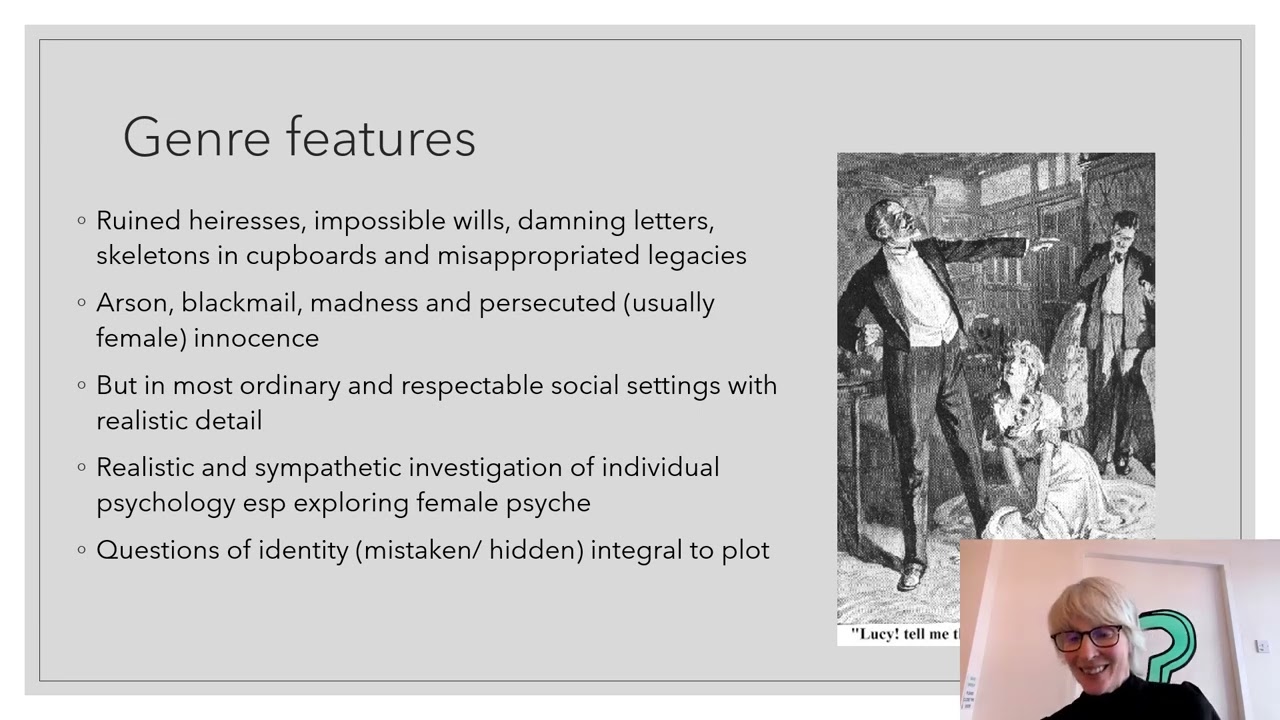







Victorian sensation novels, emerging around the 1860s, are characterized by their focus on domestic secrets and scandals, aiming to create physical and emotional impact on readers through electrifying narratives; they differ from earlier Gothic fiction by bringing mysterious events closer to readers' everyday lives rather than setting them in distant foreign lands or historical periods, featuring outspoken heroines who challenge social norms and exploring themes of class, gender, and institutional critique that resonate with contemporary concerns.
Victorian Sensation Novels with Professor Matthew Rubery
Added:An understanding of Victorian era social norms, anxieties, and the rigid domestic expectations of 19th-century Britain.
Familiarity with the characteristics of Gothic fiction, as sensation novels adapted its tropes of suspense and terror into familiar domestic settings.
Knowledge of Victorian publishing practices, particularly the serialization of novels in periodicals, which encouraged cliffhangers and dramatic pacing.
A basic grasp of Victorian realism to understand how sensation fiction departed from traditional moral and social narratives.
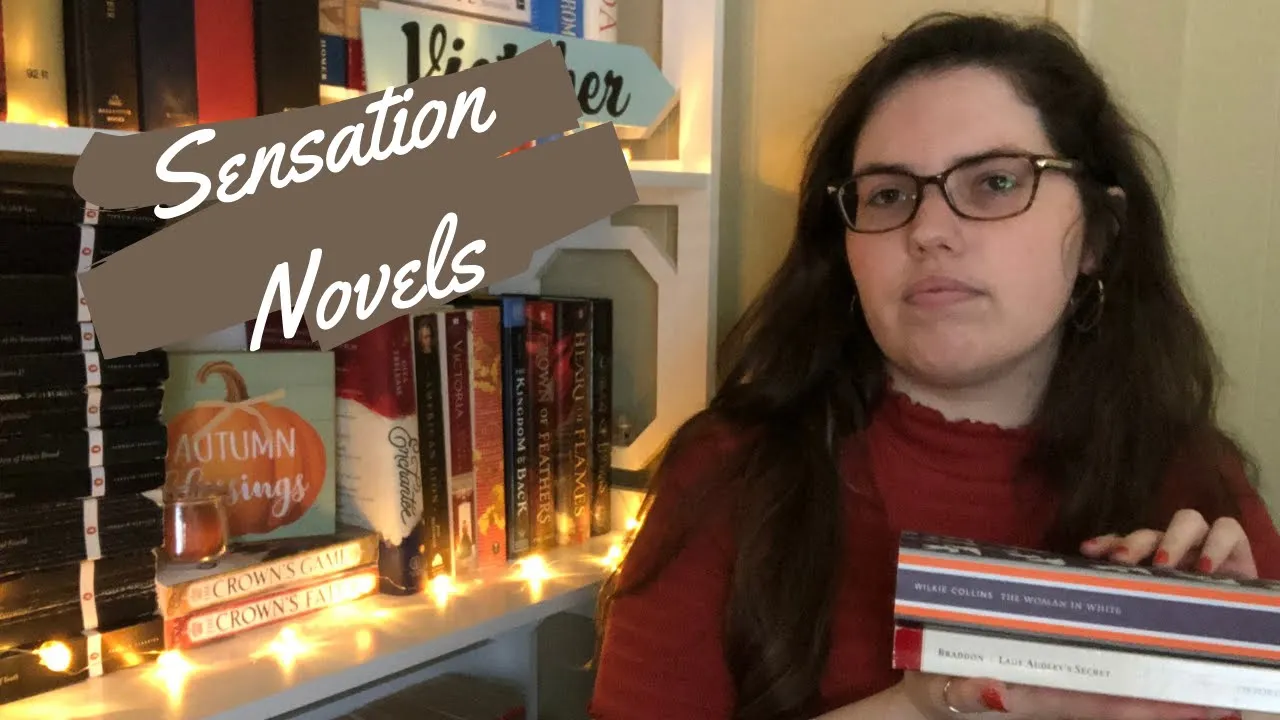
In-depth analysis of foundational sensation novels, such as Wilkie Collins' 'The Woman in White' and Mary Elizabeth Braddon's 'Lady Audley's Secret'.
Exploration of how the sensation novel evolved into and influenced modern detective fiction, thriller genres, and crime writing.
Examination of Victorian moral panics and contemporary critical reactions to the transgressive themes (such as bigamy, poisoning, and madness) in sensation fiction.
Investigation of gender representation, female agency, and the portrayal of mental illness in 19th-century popular literature.
1.2K views97likes40:52Original Release: 2022-10-28
[Music] [Applause] [Music] hi everyone and welcome back to another victober video and i'm here with an interview that i am so looking forward to you seeing and just speaking about victorian literature and sensation novels some with professor matthew rubery and he is a professor at the queen mary university of london uh so thank you matthew for taking the time to speak with me hey it's nice to be here um so i guess i like to kind of ask people what their first introduction to victorian literature was it's it's difficult for me to remember the exact moment but what i do remember is it was certainly dickens um i'm not sure whether it was oliver twist or david copperfield but in retrospect i mean the image that still stands out to me all these years later was from david cockerfield when a young david describes himself as sitting on his bed reading as if for life and i think that's one of those images that just will hit home for so many readers of being young uh feeling widely misunderstood and as if your real life was sort of happening on the page um so at some point i did become a compulsive reader victoria novels being long and sort of good at world building were just perfect for me at that age um but it does all go back to dickens that's lovely and it is funny because i i hear people use the phrase world building about fantasy but now speaking with a couple people who love victorian literature they've used that phrase and i thought it really is is its own world it's so distinct from other kinds of literature other time periods well one of the things that puts people off these novels today is just the the length of them right but for me that that immersiveness is is really what i go for so i think people are missing out if they're unwilling to dip into a thousand page novel yeah because you do you get to know those characters on so much of a deeper level than you would in a you know 300 page book yep and i i think about serial uh serial fiction a lot so novels that were published on uh say a weekly or monthly basis some of these novels i mean it took place over almost two years so your life would be changing along with these characters um you know you might get married or divorced within that time you might have kids uh you might get sick just a lot of sort of life changes that's kind of happening as you read so a lot of ways these novels are closer to me they're close to uh sort of contemporary soap operas and things like that that might be the best sort of analogy for them yes yeah waiting for the next installment um i thought it was such a fun idea so the channel who created victober books and things her name's katie and she did two different dickens read-alongs where you read the books at the pace that they would have been published um so i think that's a very different experience i love that too just because i think reading aloud is the other thing that people will miss out on these days so reading these um novels over long periods of time and hearing them write a lab so yeah listen to an audiobook and you sort of get the real dickens experience i think yeah that i i am such a huge uh you know advocate for audiobooks and particularly with victorian literature and i think that it can um make a big chunky book feel slightly less intimidating it's like well you know i'm not actually having to do the work of reading it someone's reading it to me sort of you don't have this big thick novel staring at you all the time [Laughter] yes but you know what the journey of a thousand pages starts with the first page so hopefully just you know dividing dividing them up into chunks and i think like you said just the reward that you're going to get out of a victorian novel is going to be more than you know a modern-day mystery and i love mysteries but they just don't stay with me the same way that victorian literature does um so then what was the first victorian novel that you loved was it david copperfield or oliver twist um yes but i'd say even more than those two it would have been bleak house at some point i mean that was the novel that uh really just made me think i want to spend my life studying books like this um we were just talking a moment ago about thousands of pages in a novel and starting on that first page i mean bleak house is one of the great examples of a long thousand page novel with just an arresting first page but the very first word of that novel is is london and that just sort of hits me in the chest when i read it still because it sort of evokes a whole city in a single word and then goes on a couple pages and a real tour de force of style to sort of conjure up this 19th century image of london as being both sort of modern archaic at the same time so it's kind of industrial with all the mud and pollution going on but it's also got images of dinosaurs roaming around because it's got a prehistoric feel to it so dickens is bringing all this out most famously the image of the fog that he's kind of um developing on his opening pages and he goes beyond that too because he sort of ties it in then to the novel's themes of uh interpretation or or the difficulty of interpretation because the novel goes on to be about uh a long-standing court case that ruins a bunch of people's lives this time so in some ways doesn't sound like the most exciting topic but in dickens's handily he uses that to bring all these different characters together so not only is the novel sort of opening word london but kind of tries to fit in an entire city's worth of people it must have you know 80 90 perhaps 100 characters in it and in some ways that's kind of befitting of this massive city showing all these atomized lives but the novel slowly as you get sort of hundreds of pages into it slowly starts weaving these lives together too um showing that despite everyone being separate we are connected in some ways as well so i think the novel really goes to great lengths to bring these characters in context it might just be two people falling in love for instance um or it could be the doctor characters humane touch he goes around helping out the working classes and one of the things that stands out when he touches their skin and has a noticeable effect and then you have an image of say pestilence also sort of bringing the aristocracy sort of lives off in their mansions into contact with the working classes amongst whom this uh illness is spreading so that seems very relevant to our pandemic times as well but that's a tough thing for a novel to pull off i mean dickens could write an ending he could bring all this stuff together um and in some ways it's the melodrama that people remember this novel for sort of these scenes of um the people who had affairs those affairs being revealed or parentage someone's true parent being revealed things like that and those do stick with me um there's the famous scene of spontaneous combustion where character burst into flames but in a novel like that too and this was sort of uh what stood out to me unlike some of his previous novels was just the kind of scenes of everyday life that you can have with a novel that like um so scenes of two characters having lunch on a work day in the city just kind of discussing their lives so there's just a pace there that feels like you're living along with these characters um that really stuck with me and made me start thinking critically about these novels i love that yeah they do have this kind of slice of life feel to them even in the midst of having a lot that happens over the course of a long book and i think that's something that i i feel is another way i have i get to know the characters so deeply is yes you see them in these peaks and valleys but you also see them when they're just doing their normal business um and this might seem random but that's it's an issue i have with superhero films is that i feel you get to see them do these epic you know things but then i'm like well you know what what's what's their day-to-day life like that's what i would like to see yeah you definitely get the day-to-day life um in bleakass yes yes um so then are there kind of in your experience with teaching um seeing students come through your classes are there any common misconceptions about victorian literature that you've come across um absolutely i feel like i spend my opening seminars with students kind of trying to debunk some of these misconceptions um i mean one i'll throw out is this notion of the victorian heroine being meek and passive and unwilling to speak her mind because my students i think are often put off by that um and that is true to some extent i mean there are plenty of novels where the heroine you know you wish you would be less reticent but i mean so many of the novels that i read um and sensation fiction in particular has very outspoken heroines so they don't fit this stereotype of the angel in the house uh by any means um so i'm thinking of a character let's say from uh mary elizabeth bradden's lady oddly secret i mean this it has a heroine who commits bigamy you know has is married to two men at the same time because she wants to improve her her life um she tries to murder her first husband when that second marriage comes to light she tries to murder the second husband by burning down a house and trying to poison people um and even at the end when she's caught i don't mean to give away too much but she's still making fiery speeches sort of refusing to comply with what everyone wants her to do so you do have kind of the heroines that you would want to be a bit more assertive but you also have these heroines you're sort of bordering out superheroes uh you ask me yeah yeah and also i think kind of um there's different ways that strength can be exuded and so um i feel like jane eyre has this very quiet strength about her but i do think you know she's very steadfast and um you know does not uh compromise in her convictions um yes and she doesn't have many options so um yeah she's in it she has a bad hand she's playing it best she can but yes she does get up and leave um in a rejection of the life that's offered her at one point so that to me is an act of incredible strength at the time there is kind of a formula associated with the 19th century novel what sins suffer and die so heroin makes one mistake she pays the price for hundreds of pages and that's killed off at the end and again that is true of some of these novels but there are other ones that are really defined that formula as well yes uh now in your experience with teaching have you seen a fair number of students that maybe weren't feeling that positive about a whole class dedicated to victorian literature kind of have some books take them by surprise with how much they enjoy them or is it generally the people that already loved it continue to love it and you don't have many new converts necessarily i find it's very easy to recruit students uh because just so many of these victorian novels are still known by name and a lot of students have not read them i mean it used to be we would design our reading list with the assumption that people had read let's say great expectations for instance jane eyre i don't really find that to be the case anymore which is always exciting because i can sort of be the first to expose students to these long novels it is a challenge teaching victorian novels in the short space of a semester um you do need to cram a lot in um so often my students love the novels but some of them do not finish the novels until after the semester and then they have time to read it uh during the exam period and then they'll come back and say now i get it i really love that novel thanks for uh making us read it but there is just a time constraint and that's the only thing i think these novels are just really pleasurable to read compared to a lot of other texts that we expose them to yes yeah i know um i follow a podcast called the literary life podcast and one thing that i think is so marvelous one of the hosts is a professor of literature and she teaches with i think it's graduate students a year-long seminar on uh spencer's the fairy queen and i thought what a gift to have a year to linger with the fairy queen um i'd like to do that with bleak ash so is bleakhouse possibly your favorite novel to teach i i mean i do really like teaching sensation fiction bleak house is tough because uh so i tend to save that for graduate level um coursework um just because it's challenging both in terms of length and in terms of material so the students who are ready for it i mean they respond really well but we have tried to teach it at undergraduate levels and it's more mixed success gotcha gotcha uh it's not the best dickens to start with i would say bring them in with oliver twist let's say or the chris christmas carol and then it's fine oliver twist was my first dickens and that was the one that was like whoa what is this you know all of these different plot lines that are seemingly unrelated and then they all get tied together this is amazing i want more of it yeah and dickens is a very masterful it's sort of you know writing about a london that is different is remote from my own life in a lot of ways or it was when i was growing up in texas um and i was just sort of mesmerized by the city that seemed so different than where i live but at the same time identifying with these characters and feeling like a character like oliver twist or david copperfield has a universal element to him um i was a contemporary text i really like is by the author vs knight paul a house for mr biswas and he's a writer in the west indies and he talks about reading dickens there and again couldn't be more different from his own life and yet drew him to move to london to study so he just has that sort of international impact in a way that some authors have a more national view yeah wow so then transitioning into sensation novels uh before we delve in what qualifies a victorian novel to be a sensation novel so the easiest way to think about a sensation novel is as victorian popular fiction written around the 1860s that tends to focus on domestic secrets or scandals um that fits quite a lot of novels but that's partly just because there aren't very firm boundaries between sensation fiction and other genres like the gothic or crime stories or melodrama so there is a lot of overlap there the three sort of main uh ways of thinking about that term sensation i would say is the first and most important idea is as sensation as having a physical impact on the reader's body so you read these novels and they're not kind of uh cerebral the way like a george eliot novel might be they tend to literally try to have an impact impact on your body by elevating your heart rate say or making your breathing uh pick up pace or as dickens would say make your flesh creep so that's kind of the goal and this often happens to the characters themselves and the novels and i think the goal is just almost have like an electrifying effect on the reader um in the privacy of their home so that's one meaning of sensation just that physical effect on the reader um the other is uh sensation as in sensational contents that these are just going to be scandalous stories often set middle class homes so you know not say in uh an aristocrats mansion or something like that they're really bringing these stories much closer to you um and taking a sort of sanctuary i mean the victorians really viewed the house the space of the home as a sacred space um introducing sort of elements of crime into that sacred space in a way that was quite um scandalous then the third way of thinking about sensation is just in terms of the sensational sales figures here these novels were often selling really sort of eye-popping numbers and a lot of critics found that alarming because more people were reading than ever before but they weren't reading the right things you know they weren't reading more of the improving things they were reading fiction that might give them ideas about um you know running off with a a second husband or something like that yeah um there is there's a couple sort of uh other ways of thinking about sensation novel that i have found helpful one is the novel is often thought of as a novel with a secret so that's another kind of useful definition and when you start looking into that and of course there's always a big secret that sort of makes these novels uh turns them into page turners to find out sort of what happens um but they once you start looking for secrets it turns out secrets are everywhere so really better definition should be novels with lots of secrets because everybody's sort of hiding something they don't want reveal but that all come out by the end of the novel um in the most useful way of thinking about the genre is uh the the novelist and critic henry james an american who moved to britain he was a great literary critic and he distinguished sensation fiction you know mainly from the 1860s distinguish that genre from the gothic that came earlier earlier in the century so i'm thinking here like that was like the monk or frankenstein um and whereas those stories were quite sensational and thrilling in their own in their own right they tended to be set far away in space so they were often in foreign countries like germany let's say let's say a castle in a forest uh at the top of a hill um and they were also sort of set far away in temporal terms as well so set back in time maybe medieval period so these novels as scary as they were they were kind of separate from your everyday life sensation fiction according james then brings these stories closer to us in terms of time and space so they're often set in the present and they're often set like in in london let's say or a country house in england so much closer to the reader um james has a great phrase for this he says these this genre sort of brings those most mysterious of mysteries the mysteries which are at our own doors you know he brings those to us um rather than i'm sort of insulating the reader from that experience yes um have you read uh northanger abbey by jane austen sure so one thing that it makes me think of uh you know that's when gothic novels were the thing and and one at one point when catherine morland has made assumptions about certain things that have happened you know mr tilney says no we're in england you know why would you think something like that could happen here um so that's a great transition yeah so you see yes that sort of self-consciousness or self-awareness about writing about these stories now i think sensation fiction just takes it to another extreme yes absolutely so i know this is going to be like choosing your favorite child but um any particular favorites out of the sensation novel genre so i mean i would just point any readers towards this there's kind of a big three associated with the genre so wilkie collins is the woman in white um and these are all novels published 1859 1860. um and the woman in white is uh a novel about a heroine who sort of imprisoned an uh insane asylum what was called a mad house at the time against her will and has her identity stolen and she and her sister have to spend the novel trying to um reclaim that identity and fight back against very powerful enemies so a real thriller uh and very innovative in terms of the way the story is told as well yes the multiple narrators exactly so yes sir collins was very influenced by the law and it tries to re recreate the feel of a courtroom and telling stories and letting different characters sort of add their their perspectives um the second one is uh ellen wood or which is henry woods east lynn and this is a novel about a woman who runs away from her at least behind her husband and children to run off with another man i mean you can't get much more scandalous than that especially in the victorian period um but then comes to regret the decision and sneaks back in disguise into her home to raise her kids disguised as a governess so just lots of tension about is she gonna get caught what's gonna happen with her former husband all that stuff uh that that makes it a difficult novel to put down and then i mentioned mary braden's lady oddly secret uh and this sort of one one of the bigamy novels one of the many bigamy novels at this time those are all sort of out there as the best places to start my personal favorite i would throw out there as another mary brad novel and it's called aurora floyd i love aurora floyd so like her previous novel i mean has one of those really strong-willed heroines so completely defying the stereotype of the um sort of passive heroin we talked about a little bit ago you know she runs off with uh her groom and her and her what teenage years uh you know and that leads to all sorts of uh bad results that make her parents unhappy she's very into gambling and betting on horse racing a very ladylike thing to do she's criticized by her friends and family and potential suitors for riding horses too much i think that's always like a tell of a strong-willed heroine because it shows how difficult they are to tame they're very comfortable with a large animal being kind of uh the dominant force she is certainly a sort of force of nature and throughout this book and she's often compared to uh rulers from mythology or previous eras like someone like cleopatra very authoritative strong-willed women and she kind of does that fulfills that in terms of her behavior but the climactic most sensational scene in that novel is when she uh one of the uh workers on her father's estate kicks her dog and she loses her temperature sorry this is her temper and horse whips him and her hair is falling all over everywhere it's a very sort of stunning eroticized scene that just that one page is worth reading the novel i think yeah yeah and also it's fun i have a very vivid um reading experience where my boys were playing out of the yard it's after dark and they were running around and i was using the like flashlight on my phone so i could see the book and there were bats flying around like you know just swooping by so really sealed that book vividly in my memory yeah uh i can't remember bats in my reading experience but uh yeah i do remember reading that page and again it having like a physical effect on me i think i had uh held my breath or something i was so caught up in it yeah just like wow what is this you know aspect of you that has not been revealed until now i had yeah just no idea yeah it captures one of those tensions of these novels too in that you know this was supposed to be a a naughty act a a no-no and yet it's almost impossible to read the novel and not come away full of admiration for this woman um in what she's doing um and i think reviewers really struggled with that too that the the sympathies um enlisted by these novels kind of went against the grain of the morality of them so you often find yourself rooting for these heroines despite their despicable behavior yeah yeah you do and especially because she gives you you um you have empathy with aurora aurora and um just kind of everything that she's been through yeah yeah a lot of these heroines you know they don't their mothers die young so they don't really have a pro or they're just orphans outright they don't really have sort of very good role models and they're kind of a good example of uh what happens if you know uh young women are too sheltered um then they're not kind of prepared to cope with um despicable men who are going to try to exploit them and get at them for their money or whatever else they want so in some ways it's a good argument for exposing women in an early age sensation novels so they will be ready in real life where all the uh villains are going to face yeah that made me think of kind of connecting it with the fairy tale of sleeping beauty and how that is about i've heard kind of one of the messages is you know not sheltering your children too much so our you know kind of our sensation novels do they have have a little bit of that same the same tools that fairy tales use to maybe convey certain messages yeah absolutely because in some ways i mean i'm talking about all the ways the genre is sort of almost proto-feminist in that it's uh showing women rebelling against all the restrictions constraining their lives um but in a lot of ways these novels do seem kind of conservative in their messages overall and that by the end of the novel usually these heroines have been tamed to some degree they're usually sort of uh they go from sort of being wild and carefree to just being kind of domesticated in a way and leading quite ordinary lives so there's two ways of looking at that i'd say i mean i think of them in terms of fairy tales and that fairy tales are actually quite dark when you see the original versions right and these stories do retain some of that you could read these stories as either saying you kind of ignore the beginnings and endings of these novels it's really the middle the sort of scandalous middle where everything is happening and you have to have these kind of safe endings in order to make these novels palatable to a broad audience yeah or you could say it is a way of containing them and ultimately um these women are kind of uh let's say educated um in some ways to bring them into respectability uh so either way but i i think it's worth sort of lingering and over those endings and um possibly thinking about whether you see a different one yeah i think uh really what the one that i'm thinking of uh regarding that as the doctor's wife by mary elizabeth bratton because she is very much uh you know has such uh kind of just rose-colored glasses and ideals that she's looking you know about romantic love um and then everything just comes crashing down and she is very uh much kind of a uh toned down version of herself by the end of the book yes um i've tried teaching that novel a few times um it's interesting because uh it's it comes across as so much more boring than her novels because she's trying to be serious and write like literature with a capital l um but she can't resist kind of sneaking in some sensation right towards the end so it still does turn into a sensation i want the end doesn't it it does it's so funny yeah it is it definitely feels um you know calmer um i also love how full of book love it is um yes and zombie and son is it's i think it's tied with david copperfield for my favorite dickens so i love all of the talk of daniel okay yeah i mean i would guess we could sort of compare this to uh to northanger abbey again sort of uh the doctor's wife as being the one that's self-conscious about the genre and you're almost parodying um the critics who all their fears about women reading novels getting ideas and running off to lead a much more exciting life yes yes definitely um so then kind of in academia with other uh professors of literature what is the the sense do you think that others have about sensation uh novels from the 19th century is it kind of just lower ranking or is it just it's great like other victorian literature so it hasn't the the genre sort of an interesting history and that it was kind of forgotten about for a century and even even though these novels were hugely popular in their own time i mean they were the best sellers of the 1860s um and i think that's not just that they were popular and then they sort of were ephemeral titles that no one really cared about 10 years later because they were no longer topical i think it's instead that the the genre was actively devalued by a lot of critics who saw the focus on women's lives and domesticity and concerns of that nature as not being as worthy of serious consideration as kind of some of the masculine themes that we might find let's say dickens but even you know george eliot talking about philosophy and things like that thomas hardy talking about fate this focus on domesticity was seen as not equally important i think there's been a huge sea change in attitudes towards this fiction mainly as a result of just feminist critics over the last few decades um recovering their work and showing how these novels are actively engaging with so many um issues that seem i think equally relevant today so we sort of talked a bit about all these subversive women who are challenging social norms these novels were examining class and status and ideas of respectability um they're critiquing institutions um critiquing notions of patriarchy but also ideas of marriage divorce and what possibilities that opened up at the time gender anxiety is everywhere in these novels so one phrase that's often used in relation to wilkie collins as novels is they're full of manly women womenly men so these are characters who don't fit real yeah yeah so they don't fit gender models and i think that's something i mean we're thinking about you know intensely in our present moment um there's even androgynous characters so characters who sort of defy these norms and they suddenly seem very modern in a way that some of these other novels let's say anthony trollops novels who is hugely popular in the 9th century and still a favorite of mine but he doesn't speak to the present moment anywhere near the same degree yeah i know that amongst uh kind of the the other readers of victorian literature that i know on the online community that marion halcombe from the woman in white is very well loved um and she does i think people are really surprised when they read it to find a woman who feels so contemporary so so my students have the same reaction um i tend to teach that novel first when i'm teaching sensation fiction because it just instantly sort of engages them and that she feels modern she feels uh she feels like them rather than uh one of these sort of uptight heroines that they can't identify with um and she does really defy these gender conventions and that she has sort of feminine features and masculine features and sort of combines the best of both so you know at one point um she is climbing on top of the roof of their house so she can spy on the villains of the novel in order to save her sister uh so again she's one of the superheroes of the genre in a way that i i think it's tough not to admire her i mean you'll remember from that novel too even the villains of that novel who might initially be attracted to the kind of the the the prototypical blonde hair blue-eyed beauties that you find in these novels um they're all sort of smitten with marion by the end yes yeah um i tried watching the newer or no i did i watched the whole new adaptation of the woman in white um but it it was so oppressively dark and it's not like i think the woman in white is a light-hearted comedy um but it's like it just for some reason i i'm able to much more uh kind of grapple with and just dive into uh atmospheric uh book with darker elements then it was just the the whole series was so impressive and i thought you know i think i'll just stick with the book for this one that's interesting i haven't seen that adaptation but i know exactly what you mean in terms of um it can be hit or miss getting these adaptations right uh so yes you know bleak house adaptations about 10 years ago by the bbc i thought it was wonderful because it's this long novel and it um condensed it into sort of half hour episodes um that played a couple times a week so rather than sort of the hour-long masterpiece theater type episodes on sunday evening and it really made it accessible in a way that sometimes or sherlock holmes was another great example of capturing that dark side but really making it sort of uh land with readers uh so many students come to me now because they have sort of entered victorian literature by way of sherlock holmes adaptation to study the text now that is so fun yeah that's always an upside of adaptations being made now one that i've seen that i'm i'm like this is this is pretty much a perfect adaptation is i think it was in 2017 there was an adaptation of the moon stone um and i love it because it has you know there's different narrators and so the different characters will address um you know the camera and give their side of the story and it just maybe it's also that the moonstone was very conducive to that kind of format and it worked very well well and i'd love to hear that too that they're sort of engaging with the form of these novels we mentioned a few moments ago that wilkie collins is trying to imitate a legal trial by bringing these multiple perspectives but that's often lost by adaptations which just kind of reduce these complex novels to um sort of linear stories right and they leave out that kind of experimentation so i'm glad they found a way to sort of bring that back um yes the moonstone is another i mean colin's novel that really speaks to contemporary concerns especially with empire and race and national identity um you know they have the character of ezra jennings for instance and i don't know how they portrayed him in this recent adaptation but he's uh he's a mixed race character so i think he's got one english parent and one non-english parent uh yeah they haven't i think he's supposed to be jamaican so it was a person of color played played him and he did he was one of my favorite characters in the adaptation so he's a real child of empire and uh it's sort of made vividly apparent in his hair which is supposed to be half black half white but not blended in like a salt pepper way which is like there's like a stark line between the two to sort of so you can see it's easy to read metaphorically as these two identities that are supposed to blend but aren't at the minute because they are seen as completely separate but so i think that's just something my students get really excited about now rather than thinking about this as like a a distant novel remotely remote to their present-day concerns and uh then any that we any victorian novels that we haven't addressed that you find are unfairly underrated yes um you're asking the right person because uh my colleague uh queen mary katherine maxwell and i i think we just read broadly and we try to recover novels that we think have been unjustly forgotten in the last century so one that i will throw at your audience is the reverend sabine baron gould's novel mahala this is from 1880.
have you heard of this okay so last year i read in the roar of the sea and it just it blew my mind because it had all of the atmosphere and the landscape being a character of party it had the philosophy of george eliot uh the characterization of gaskell and the humor and lightness in the midst of the darkness of dickens so i'm planning on reading mahala in october this is so exciting so my pitch for it is is basically a retelling of wuthering heights set in the essex salt marshes and it's got these it's basically what would have what would have happened if uh kathy hadn't died and that novel heathcliff and cathy had lived on would they have had one of the greatest romances of all time or would they have murdered each other i i i i'll give you a hint that this novel tends to go towards the the latter interpretation but um it's got two really strong-willed uh heroes and heroines um and mahalo the central character she's got this really fiery temperature it's attributed to her gypsy blood and she is just a force of nature um unstoppable everyone tries to put her place and just through sheer force of will she keeps just like soldiering on against one hardship after another so she's really just um mesmerizing to watch and then it builds up to you know just a really um forceful ending that is difficult to forget but i think it should have a trigger warning too just saying watch out i mean this ending is really powerful okay i will be racing myself so so i i i tend to no one's ever heard of that novel as far as i can tell so uh we're trying to spread the word about it um i would also put in a plug for a lot of victorian short fiction um elizabeth gaskell's the old nurses story is one it's a great example of just a victorian ghost story um where a child in a governess are in this mansion owned by a rich family and they come into contact with the ghost of this other small child that's locked outside the house at night and it's just sort of the back story of uh the tragedy that happened before they arrived so just a gripping read short and not a tale i i hear brought up very much um in that vein then uh vernon lee is another sort of underrated author i think there's been a lot of attempts to recover her and elevate her reputation by by literary critics although it doesn't it seems like there's a bit of a lag to her public audience sort of news getting out about her but one story i really like by her is called okavakers and it's about two aristocrats who are married and the husband is slowly losing his mind because his uh wife seems to be having an affair with a man um from like three centuries in their past so kind of supernatural kind of gender bending but but a real thriller too to sort of see what happens there um wow and in that same sort of supernatural vein but far less uh dramatic margaret oliphant's uh the library window and it's a very subtle tale about a woman who wants to be a writer and she just looks across the street from her study through the window at a man who spends every day writing and it's very ambiguous whether that man is actually there but it really explores what the act of writing means the differences between male writing women writing um and that sort of big question of uh how to spend your life so it's a great sort of example that brings out in a very quiet way some of these uh sensational same themes but uh sort of a different way of handling um and i'll throw one other story your way just because i do a lot of work on the the victorian press um george or gwm reynolds had a story called the mysteries of london and this ran at mid-century it was serialized in newspapers it was by far the most widely read narrative of the 19th century so way more than anything by dickens or anything by george elliot or any of these other authors we've been talking about uh but it's almost unheard of today and it was mainly just because it was so long it just ran every day in the newspaper it doesn't really have a plot again it was kind of like soap operas today that uh it was the dailiness that kind of people found entertaining getting a little dose of these character slides every day and just the way you wouldn't sort of watch 20 years of eastenders and in one sitting popular bbc soap opera uh that's kind of what that story is too but you could just sort of read a little chunks of it excerpts of it and get a just a flavor of what people were actually interested in the 19th century um apart from all the highbrow literature we tend to spend our time looking at well this has been so fun and interesting and i am just really looking forward to everyone seeing this thank you so much for speaking with me it's been a pleasure thanks
Up Next
3:49
Edgar Allan Poe's Life and Legacy: Master of Mystery and Horror
@Biography
1.3M views•2012-09-21

13:43
Formalism in Literary Criticism: An Academic Lecture Overview
@mattalberhasky9952
39.1K views•2015-08-05

6:08
Point of View in Fiction: First Person vs. Third Person
@magicalthriftyteacher
153.8K views•2014-03-31

15:25
1984: Orwell's Dystopian World and the Mechanisms of Totalitarianism
@AlternateHistoryHub
7M views•2017-03-04
Related Study Plans & Knowledge Roadmaps
Structured learning paths in Literature
literature
Graphic Memoirs: Visual Art, Trauma & History
01Foundations of Sequential Art and Visual Language
02Autographics and Processing Historical Trauma
03Visualizing Personal Trauma, Grief, and Graphic Medicine
+ 2 more learning modules
14h5 modules
Explore Roadmap
literature
Campus Novels: Evolution, Themes & Critique
01Introduction to the Campus Novel Genre
02Mid-Century Satire and the Post-War Academy
03Dark Academia and the Critique of Privilege
+ 2 more learning modules
14h5 modules
Explore Roadmap
literature
Theater of the Absurd: Philosophy & Plays
01Postwar Existentialism & Historical Roots
02Dismantling Narrative: Esslin & Absurdist Conventions
03Samuel Beckett and Tragicomic Existentialism
+ 2 more learning modules
12h5 modules
Explore Roadmap
literature
Revenge Tragedy: Justice, Madness & State
01Foundations of Early Modern English Theatre
02Anatomy of Revenge: Structural Conventions
03Psychological Complexity: Madness and Melancholy
+ 2 more learning modules
15h5 modules
Explore Roadmap