













![Edgar Allan Poe - kim był mistrz grozy i horroru? [TOPOWA DYCHA]](https://i.ytimg.com/vi/A3lsvcJqDG8/maxresdefault.jpg)



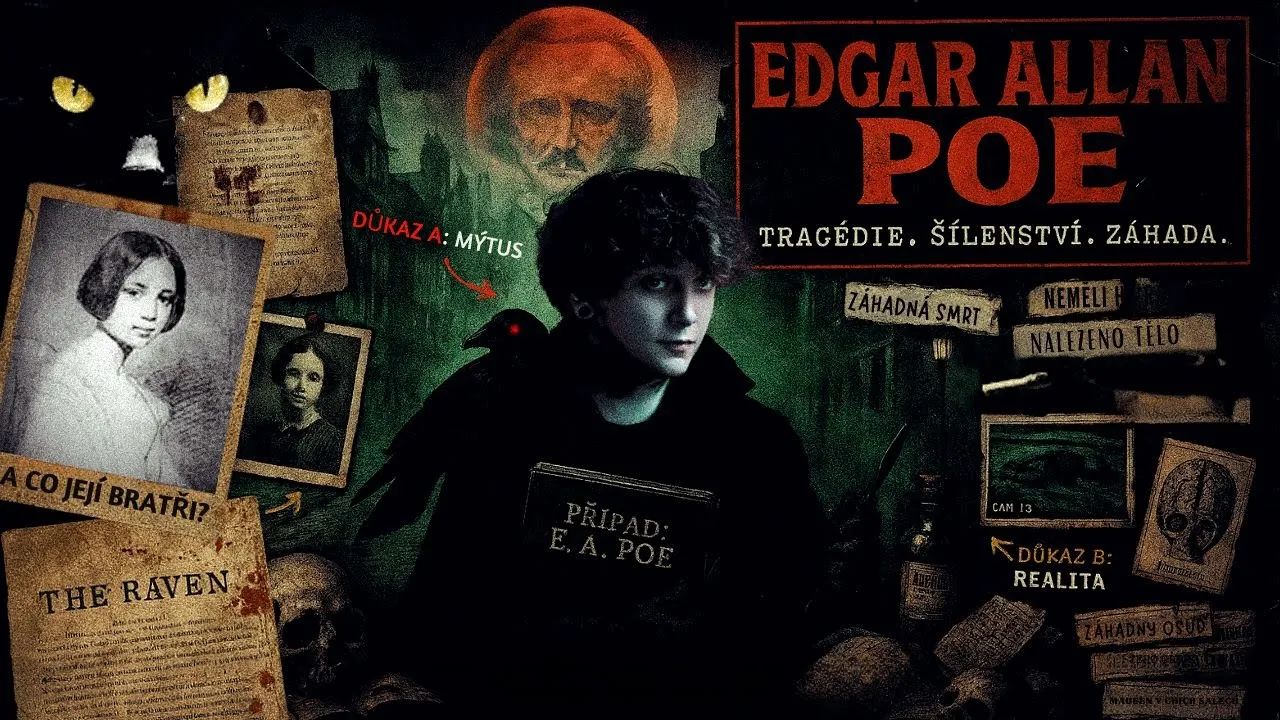
Edgar Allan Poe (1809-1849), born in Boston, Massachusetts, was an American writer, poet, and literary critic who pioneered detective fiction with his 1841 story 'The Murders in the Rue Morgue,' earning recognition as the father of the detective story; despite facing personal tragedies including his mother's death at age two, his father's abandonment, financial struggles, and the loss of his young wife Virginia Clemm to tuberculosis, Poe developed a distinctive literary style characterized by suspense, horror, and psychological depth, which profoundly influenced American literature and established enduring conventions in mystery and horror genres.
Edgar Allan Poe's Life and Legacy: Master of Mystery and Horror
Added:An understanding of the Gothic literature genre, including its key tropes of decay, dread, and the supernatural.
Familiarity with the 19th-century American literary landscape and the Dark Romanticism movement.
Basic knowledge of narrative components, specifically the roles of suspense, atmosphere, and unreliable narrators in fiction.
Detailed literary analysis of Poe's foundational works, such as 'The Murders in the Rue Morgue' and 'The Fall of the House of Usher'.
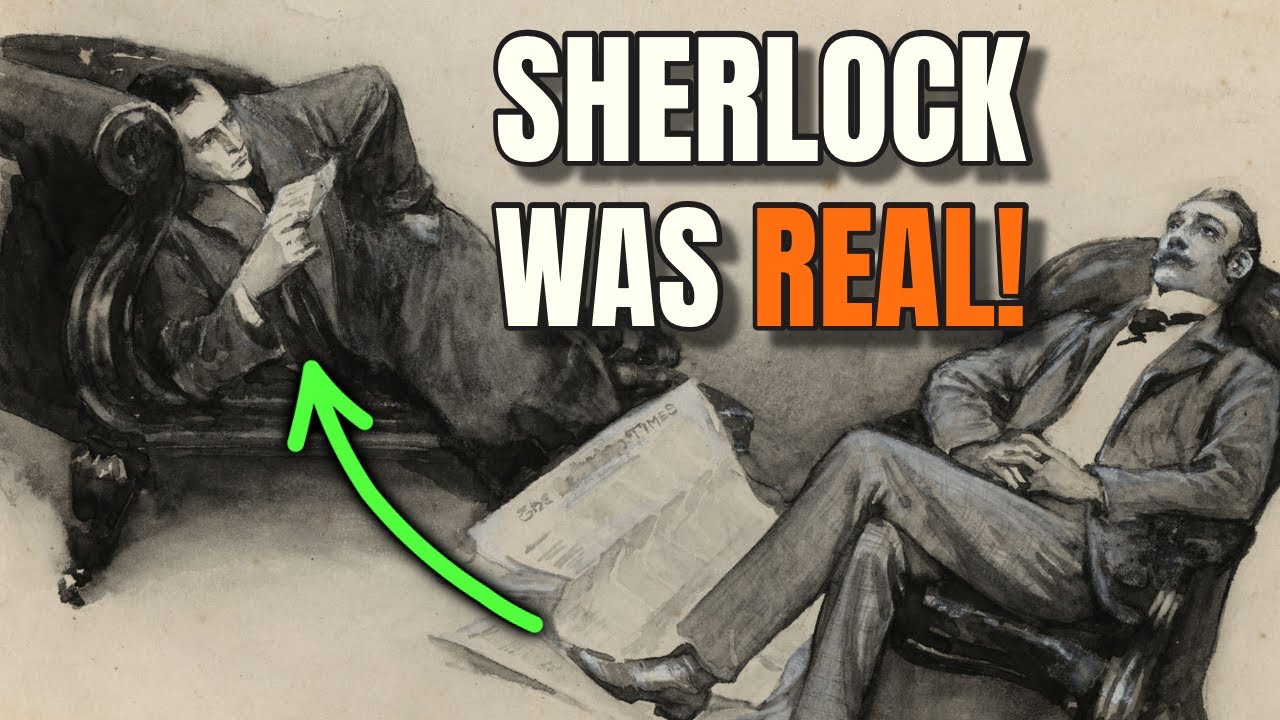
The historical evolution of the detective fiction genre from Poe's C. Auguste Dupin to Arthur Conan Doyle's Sherlock Holmes.
An exploration of Poe's influence on modern psychological horror and weird fiction (e.g., H.P. Lovecraft, Stephen King).
Investigation into 'The Philosophy of Composition' and Poe's theories on the 'unity of effect' in short story writing.
1.3M views6.2Klikes3:49Original Release: 2012-09-21
[Music] Edgar Alan Poe was a master of the macob. He wrote horror. He wrote poetry, criticism, fiction, mystery. He was a master of suspense. Edgar Alan Poe, called by many the father of the detective story, was born on January 19th, 1809 in Boston, Massachusetts.
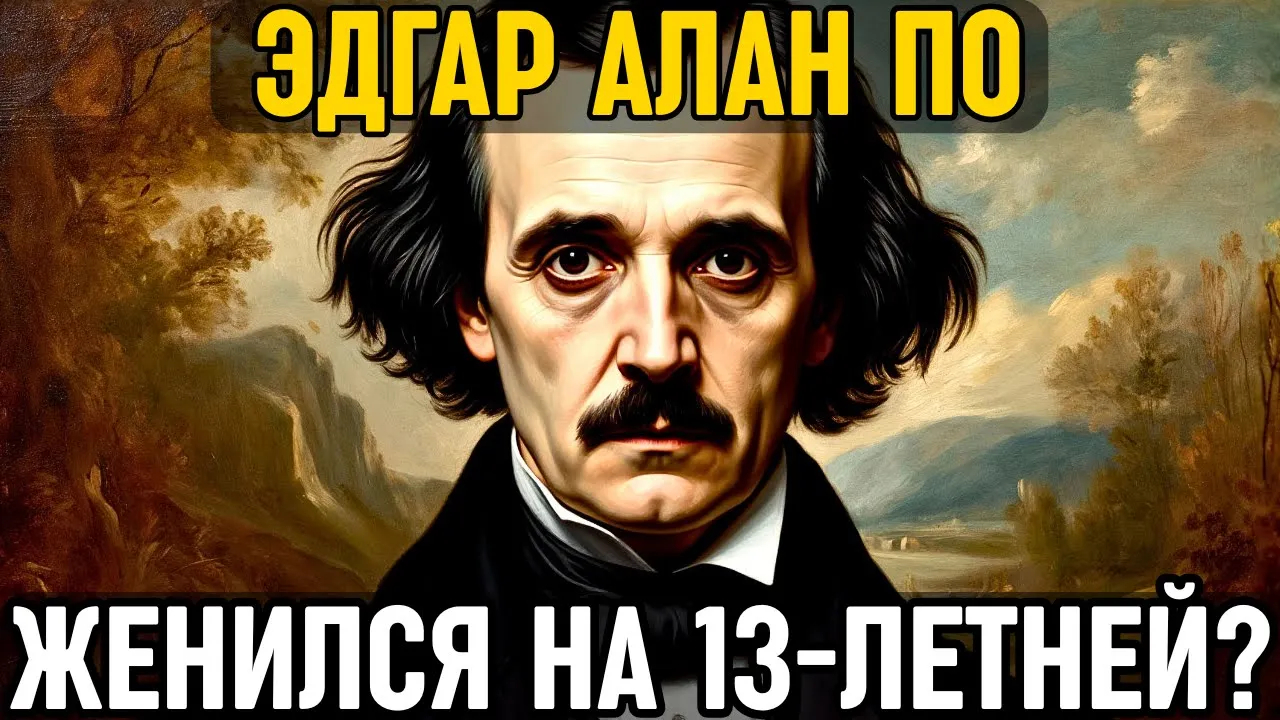
When Po is 2 years old, his mother passed away and his father had already abandoned the family. He was taken in as a foster child by the Allen family. He was writing poetry from about the time that he was 13. He kept writing all the time. He worked very, very hard at his writing and wrote constantly. In 1826, Po enrolled at the University of Virginia. He went into debt. He gambled to try to pay off those debts and found himself in even greater debt and ultimately had to withdraw from the university. In 1830, Po enrolled at West Point. After West Point, Po turned to writing full-time and lived in a number of East Coast cities before settling down in Richmond, Virginia. Edgar Alan Poe secretly married his 13-year-old cousin and then in 1836 publicly married her in a more open ceremony. He loved her very very much. They lived together always until at last she died of tuberculosis when she was I guess around 20. Po's primary occupation as a writer was as a literary critic. He worked at several newspapers and literary magazines and he had quite a reputation for being a harsh critic. One of his editors called him the tomahawk man.
During his lifetime he barely made a living from his writing. Po published some of his most famous short stories in his 1840 collection, Tales of the Grotesque and arabesque. He wrote some of his stories using the first person in talking about the use of opium. So people assumed that he dabbled in drugs.
The stories were so creepy that they were ghost stories taken to such a brilliant extreme that people thought he had to be a little strange himself. Po invented detective fiction when he wrote the murders in the room morg in 1841.
Murders in the room morg really deserves to be called the first detective story.
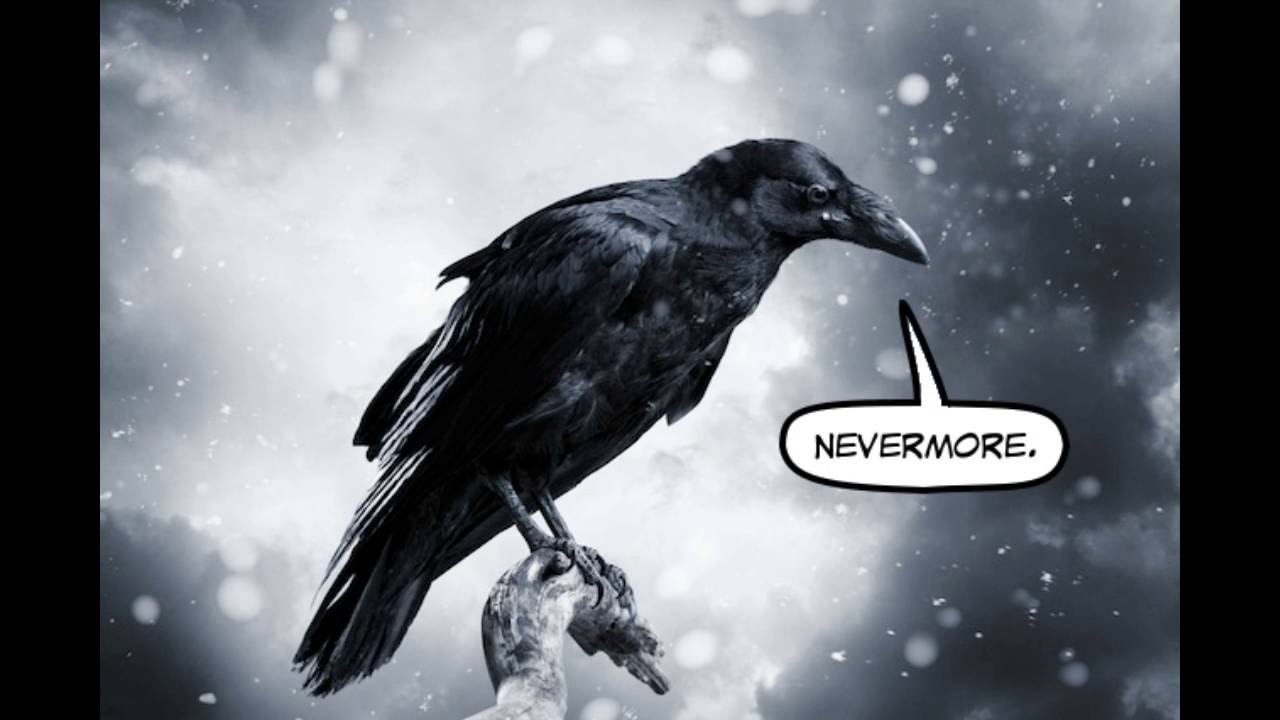
It started the whole tradition of detective fiction. The raven which was published in 1845 was his huge breakthrough. It became a big bestseller. Po's career very much went up and down until he really hit the raven. And that poem was known by you know it seems everyone in the world. It had an enormous press.
On October 7th, 1849, Edgar Allan Poe died at the age of 40 under mysterious circumstances. Po's death may be one of the most bizarre things about his life.
He left Virginia on his way to New York, disappeared. A week later, he was found on the streets of Baltimore. We don't have a single piece of information about what he was doing. At the end of that week, he was found in a tavern, ill, drunk, and was taken to a hospital. It turned out he was wearing clothes that didn't belong to him, and a couple of days later, he died in a delirium.
Nobody knows exactly what killed him.
Edgar Alen Poe's legacy in American literature is very detectable in all of the mystery dramas and stories we have and all the kind of horror and vampire work that we see that there is that trace of the sort of horror and mystery that Po really was able to harness in his writing. Po is an American icon. I think he's more than a writer. Even today, more than 150 years after he died, everybody loves Edgar Ellen Poe.
Up Next

5:32
The Purloined Letter by Edgar Allan Poe | Summary & Analysis
@LimitlessLiterature
74.5K views•2022-10-08

13:43
Formalism in Literary Criticism: An Academic Lecture Overview
@mattalberhasky9952
39.1K views•2015-08-05

6:08
Point of View in Fiction: First Person vs. Third Person
@magicalthriftyteacher
153.8K views•2014-03-31

15:25
1984: Orwell's Dystopian World and the Mechanisms of Totalitarianism
@AlternateHistoryHub
7M views•2017-03-04
Related Study Plans & Knowledge Roadmaps
Structured learning paths in Literature
literature
Graphic Memoirs: Visual Art, Trauma & History
01Foundations of Sequential Art and Visual Language
02Autographics and Processing Historical Trauma
03Visualizing Personal Trauma, Grief, and Graphic Medicine
+ 2 more learning modules
14h5 modules
Explore Roadmap
literature
Campus Novels: Evolution, Themes & Critique
01Introduction to the Campus Novel Genre
02Mid-Century Satire and the Post-War Academy
03Dark Academia and the Critique of Privilege
+ 2 more learning modules
14h5 modules
Explore Roadmap
literature
Theater of the Absurd: Philosophy & Plays
01Postwar Existentialism & Historical Roots
02Dismantling Narrative: Esslin & Absurdist Conventions
03Samuel Beckett and Tragicomic Existentialism
+ 2 more learning modules
12h5 modules
Explore Roadmap
literature
Revenge Tragedy: Justice, Madness & State
01Foundations of Early Modern English Theatre
02Anatomy of Revenge: Structural Conventions
03Psychological Complexity: Madness and Melancholy
+ 2 more learning modules
15h5 modules
Explore Roadmap