



















A political constitution relies on democratic processes, regular elections, and political accountability to uphold constitutional principles, whereas a legal constitution uses entrenched legal documents and strong judicial review to constrain government power; the political constitution is preferable because it allows democratic resolution of disagreements about rights through majority rule, ensures the rule of law through democratic legitimacy, and prevents the entrenchment of potentially oppressive principles that may not have sufficient public support.
Constitution Types: Legal vs Political Explained
Added:The fundamental concept of a constitution and its role in defining the structure of government and limiting state power.
The principle of the separation of powers among the legislative, executive, and judicial branches of government.
The concept of Parliamentary Sovereignty versus Judicial Review, specifically how laws are made and contested.
Basic democratic theory, including the mechanisms of representative democracy and how citizens hold elected officials accountable.
Case studies of legal constitutionalism in practice, such as the role of the Supreme Court of the United States in interpreting constitutional rights.
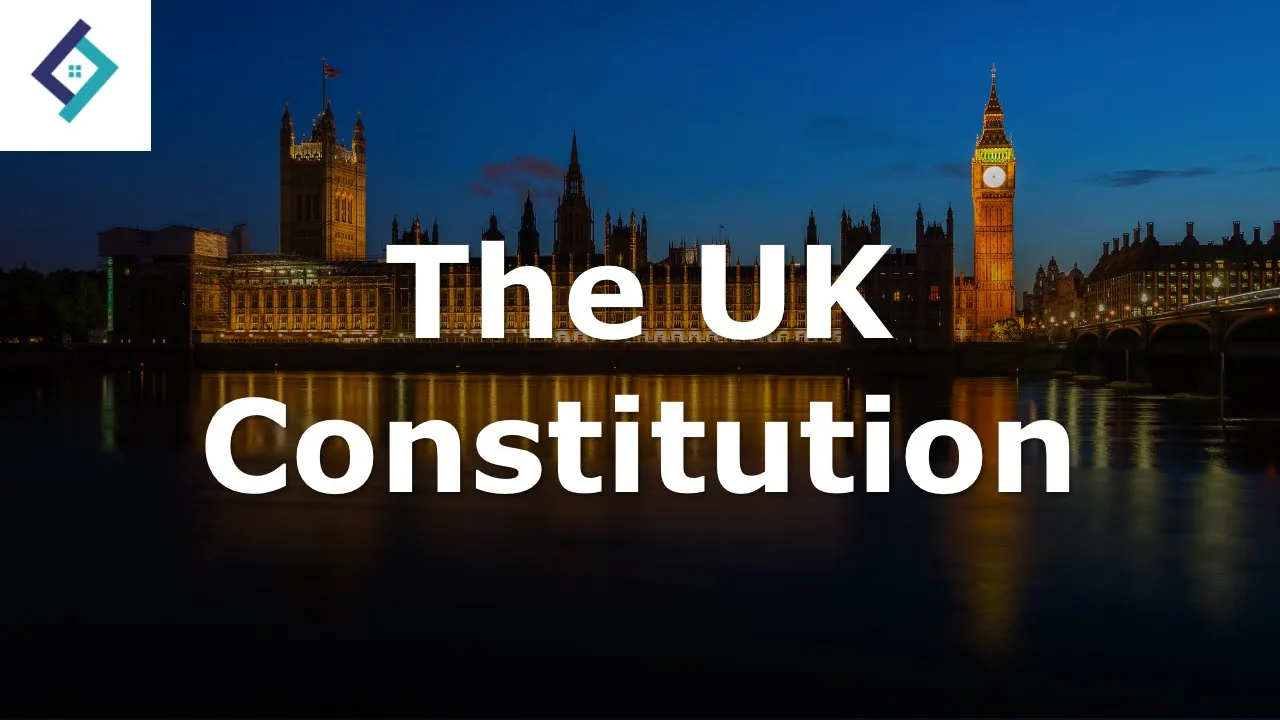
An in-depth analysis of the UK constitution as a prime example of a political constitution, focusing on the Human Rights Act 1998 and parliamentary debates.
The academic debate surrounding 'judicial activism' versus 'democratic deficit'—specifically whether unelected judges should have the power to overturn laws passed by elected representatives.
Hybrid constitutional systems, such as Canada's Charter of Rights and Freedoms, which utilizes the 'notwithstanding clause' to balance judicial and legislative supremacy.
101 views1likes46:29Original Release: 2026-03-05
Hello, this is UCL Uncovering Politics and this week we're looking at the nature of constitutions. What are legal constitutions? What are political constitutions? And why might the latter be better than the former?
Hello, my name is Alan Renick and welcome to UCL Uncovering Politics, the podcast of the School of Public Policy and Department of Political Science at University College London. Much controversy today surrounds the respective roles of judges and politicians in particular. Should constitutions empower judges to decide matters relating to human rights, or should such matters be settled by elected politicians? And should the basic rules of democracy themselves be insulated from manipulation by those in positions of power? Such debates hinge on how we think about the nature of constitutions. Are they fundamentally legal instruments, legal texts such as the Constitution of the United States or the German basic law that set out the framework within which politics must operate? Or are they themselves deeply political in nature? Perhaps the archetype of a constitution is closer to the UK model made up of a range of laws as well as conventions and practices that politicians rather than judges have to take responsibility for upholding.
This is a topic that may sound a little dry, but as I said, central it's central to some of the liveliest issues of the day. Should the European Convention on Human Rights be reformed? Should countries such as the UK leave the European Convention, as the Conservative and Reform parties now argue, if the UK elected a populist government, would the country's democratic institutions prove more robust to attack than have the institutions of US democracy under Donald Trump? Or would they be even less robust than the US institutions have been? Well, fresh light is shed on all of these matters by a newly published book called Defending the Political Constitution. The book is written by my colleague Richard Bellamy, professor of political science here in the UCL department of political science and I'm delighted that Richard joins me now.
Richard, welcome back to UCL Uncovering Politics. It's always wonderful to have you on the show and let's maybe start with some of the basics here. We have two concepts, the legal constitution and the political constitution. What do they actually mean? It might might be sensible, I guess, to start off with the the concept of the legal constitution, which maybe is a little bit more familiar to many of our listeners.
>> Yes. So uh when people think of a legal constitution, they normally think of an entrenched legal document which usually has a number of of abstract principles guiding and informing it such as a bill of rights. And this operates as higher law over normal statute law which is gets passed by the legislature and is interpreted and applied by the judiciary and they exercising what's sometimes called strong form judicial review can actually look at administrative acts and laws passed by parliament to see whether whether they're compliant with the abstract principles or not and if they deem them not to be can not only disapp but in the sense send it back to be rewritten or simply dropped by by the powers that be.
>> Yes. Okay. Okay. So that's a legal constitution and then I guess we and and so I guess I suggested in the introduction there that the United States has a legal constitution, Germany has a legal constitution. Is is that is that a reasonable thing for me to have said?
>> Yes, exactly. So, so those are systems where the operations of the main branches of government and their respective duties are set out in a legal document. And that allows the the court to decide such direct questions as is President Trump acting within his executive authority, for example, or is it possible for the particular states to pass legislation which abolishes the right to an abortion? or is uh certain methods of execution, cruel and unusual as the document puts it and such that they can't be used as humane forms of putting someone to death.
>> Yeah. Okay. So that then is a legal constitution and then we're contrasting that in this conversation with a political constitution. So what what's a political constitution? So a the purpose within liberal democracies of a constitution is so that one can say that the legal system or and the system of government are operating in manners which uphold certain basic individual interests and treat them in an equitable and consistent manner.
And a political constitution says that these kind of goals can be met through the operation of a democratic political system. So if you want to ensure that the political system is treating everybody equitably and is accountable, one of the best ways of doing it is rendering the political administration and our representatives to regular elections where every individual subject to that has a vote and just one vote.
and they can dismiss them if they fail to perform well. And that same system gives rise to lots of legislation. Of course, some of it similar to what you'd find within a codified written constitution. So, for example, the UK has the Human Rights Act, which is effectively the Bill of Rights. It has the representation of the people's act which is a far more detailed document than you find in most abstract entrenched constitutions in saying what the conduct of elections should be. And this body of legislation then forms if you like the legal constitution but it's one which is directly responsive to the political constitution which is the mechanisms through which we authorize and hold accountable our political masters.
So should I understand that from that that there are basically two kind of key institutional mechanisms if you like that are different between a legal constitution and a political constitution. On the one hand uh the one of those mechanisms is to do with the degree of kind of formal legal entrenchment of certain fundamental principles. In a legal constitution, there are principles set out in the constitution that are entrenched in the sense that they they can't just be changed by the normal process of democratic decision-making.
They're they are harder to change in a fundamental way from regular laws.
>> And then secondly also there's a difference in the role of the courts in a legal constitution. The courts have an absolute right not just to kind of um point out to the elected branches that what they have done may endanger uh some of the principles but actually to say no to the elected judges what you have done violates these principles and therefore you have not done it what you have done is not valid and does not stand as law.
Is it are those the two kind of key differences in in kind of practical terms between >> Yes. Yes. I mean I I think what's also a corollery of of that is that a legal constitution tends to be more abstract and sparse in what it determines because it's hard to think of all the rights and principles and how they they should be interpreted at one go as it were. And so legal constitutions have this more abstract sparse character which of course gives a great deal of interpretive leeway to the court.
Whereas a political constitution gives rise to to legal documents that are interpreted by courts. But these tend to be much more detailed and specific than you'd find in a legal constitution. And therefore although the courts play an important role in the political system they are operating in a somewhat different way and presumably that means that a country in in practice a country like the United States actually has a legal constitution and a political constitution. So it has the document called the constitution of the United States setting out broad principles but then it also has ordinary laws just like the UK has ordinary laws setting out the detail of how elections are run for example. So so so there's a combination of those two elements in practice.
>> That's right. So the as you say the United States has quite a complex political con constitution deriving from its form of government and its federal system and to a degree that that operates alongside the legal constitution.
Likewise in the UK uh you have the political constitution which is if you like in the driving seat but it gives rise in its term to a legal constitution which can sometimes constrain it. So for example, it's long been the case that judges will often say that certain administrative actions of ministers are ultra virus. That by which they mean that there isn't any legal warrant for what they're doing. And to get it, the government will have to go through the process of passing legislation which renders that a possible thing for a minister to do. And there what you've got is the courts in a sense reinforcing the political constitution because they're saying the executive can't just sort of think they've got a bright idea or they want to perform something arbitrarily on their own. They've got to go through a kind of consultative and deliberative process. one in a legislature that has been elected by the population as a whole and therefore hopefully bears some relationship to what people think and that in itself is a constitutional process on my view because it's a it's saying that the executive has to go through a form of consultation which hopefully is of a kind that will show equal concern and respect to individual citizens >> but fundamentally the UK remains a political constitution there kind of in its overall architecture because and crucially if I understand although you're suggesting that the UK ought to follow you know proper procedure in changing the law nevertheless it is the case that uh through ordinary law that the constitutional principles there can be shifted >> which is not the case in a legal constitution where these principles are entrenched.
>> That's right. You'll need an exceptional process. Uh I mean which varies in its exceptionality between different countries. So the US is notoriously very hard to change their constitution.
Many countries, Scandinavian countries for example, have more easily amendable constitutions. H I'm going to be interested to get further into that a little bit later in our conversation because I'm intrigued as to just where the boundaries lie actually between in practice between legal and political constitutions. But before we get there, let's so the kind of key point of your book is to argue in favor of and as the title says defend the political constitution and you have you know very detailed analysis uh of um the political theory underlying the constitution in defense of that position and we can't remotely do justice to all the richness of that analysis but can you give us a kind of snapshot of the core of your argument for the political constitution.
>> I suppose that there are two things that I I want to emphasize. um one is um that the political constitution that that I'm defending is one which involves democracy because you can have authoritarian states often have constitutions and those will be constitutions which sort of say I don't know that the furer is the supreme leader and if what he says goes and there are certain offices which can speak in his name for example. So I'm defending a political constitution of a particular kind as being the best mechanism for doing what liberal democratic written constitutions tend to claim to do. that is to ensure equality before the law and equality before laws that treat people with equal concern and respect. Now my second argument is not only is that direct way a better way of doing it because otherwise you have judges deciding what is the best way to treat people with equal concern and respect. I think citizens themselves should be involved in determining what that is.
But I also think that your legal constitution will only operate as well as your political constitution.
So you know potentially you could have an authoritarian form of government which was bound by some kind of legal constitution. But my claim would be it would be unlikely to be that bound by it by virtue of being an authoritarian political system. And so one finds I think in contemporary United States that because its political system has begun to deteriorate from the point of view of its democratic credentials. So one can see a similar effect in the operation of its legal constitution. So that for example many people expected that the executive actions of President Trump would be quite severely constrained by the Supreme Court and the principles of its written constitution. But that hasn't happened. And that's a dramatic sort of example of my argument.
>> Yeah. Now that's really interesting. So you've you've pointed towards two arguments there. One kind of a political theory argument if you like and then the second one a more kind of practical argument. And I guess the [clears throat] practical argument is one that I've always thought I mean it's difficult to argue against. It seems to me that in practice legally entrenched principles will not be defended unless people believe in them.
>> Yeah. Um and you know to some extent we do as you're suggesting see that in the United States at the moment that Trump is able to get away with things because there isn't sufficient breadth of support for the principles that he is violating and therefore you know there's just no constraint that is able to operate upon him or at least those those constraints have not yet been powerful enough to stop >> people who will see them have to >> Yeah. Maybe not.
>> Yes. Yeah. Absolutely. Um so so that kind of practical argument at least to me makes total sense.
>> Um but you also argue for a deeper theoretical argument that actually in principle we ought to prefer a political constitution over a legal constitution.
that in principle it is better to defend these kinds of principles uh through the democratic process involving the public and their representatives rather than a legal process. Can you just develop that that aspect of the overall argument a bit further?
>> Yes. Um well in a way it comes from the nature of politics itself and why why we need politics. And so I think it stems from the fact that it's possible to have disagreement about which rights we should have and how those rights should be interpreted.
After all, uh the two grand sort of political divides which have dominated democratic life since the 19th century been the division between left-wing and right-wing political parties and they have emphasized put different emphasis on different sets of rights.
there's been some agreement over some of them, but even those there's been different ways of interpreting them. So that they may agree having the right to vote and freedom of speech for example, but quite what entails is entailed by that, who should have the right to vote, at what point do you qualify, all of these have been things about which people have disagreed and and often reasonably so. After all, there are also disagreements in the academy, not just disagreements between citizens. And so we look to politics in order to resolve those disagreements. And one of the arguments I make is that a democratic system based on majority rule is a impartial way of deciding our disagreements which gives equal weight to our different views and that should be something that we have reason to agree with. So it's showing respect to everybody as somebody who is entitled to have a view on these things who should show everybody else as being entitled to have a view and subjecting themselves to a common process for resolving it. So that's the basic normative argument that underlies this. I also think that that basic normative argument also underpins a principle which is often put together with constitutionalism that is the principle of the rule of law.
So what people the rule of law is a rather abstract term and it's a har word that people use but they often don't define it very well and I think the rule of law has two elements to it. One is what you might call a processual element. So you can ruling by law is different to ruling by decree. It suggests that there's been a process to come up with a general rule rather than those in power simply deciding and determining what we should do. And so the notion is that you have these general rules and that these general rules this the second element give you a certain expectation as to how to modify your behavior.
Now of course you can have a process and a general rule the content of which is pretty heinous. So you know the effectiveness of the Nazi regime which after all ruled a large nation for six years and then conducted a war at a global scale of six years couldn't simply rule by the decree of the furer even if in some ways it did. It needed to have a certain legal system albeit a legal system which operated to to pursue something pretty awful.
Now some political philosophers or legal philosophers named the Joseph Raz sort of says maybe they pursue the rule of law even better than the democracy seen in this formal sense you know and it's a deliberately provocative statement says you know because well if you were Jewish you you you needed to hide if you like so it had because that was where the evil and ous anti-semitic rules of that regime, but it upheld them with terrible efficiency and effectiveness.
I question that view in the sense that I say that if a government is to be bound by law and feel itself to be bound by that then it needs to have that democratic aspect.
And if laws are to be really laws that can't be willy-nilly overturned by degrees, you need that sort of processual element. And so I say somewhat provocatively, the rule of law basically is the democratic rule of persons because only the democratic rule of persons will ensure that the law has the content and the the qualities of being upheld against discretion that we have associated with that term.
Fascinating. So let us imagine a situation in which the majority wishes to oppress some minority.
Um and you know I think many listeners will think well in this system that you've just described you're allowing the majority to do that uh because you're ba basing the system upon majority rule. Mhm.
>> And a lot of people would think, well, therefore you need some kind of constraint upon the majority so that it can't do that. What's your response to that?
>> Well, I have two uh responses. One is that the tyranny of the majority is a much used and abused term. And in fact, tyranny is to be associated even in democracies with often with minorities.
So it's oligarchic rule which is legitimized say by democratic processes that can often give rise to neglect of different views because I think and this has been shown by political scientists looking at where you find rights most upheld. There is something which is rights friendly with majority rule in a democracy. Um what is that?
That that it's about ensuring that the large majority of people are being treated in an equal way that considers their interests. and majoritarianism is one of the best ways of ensuring that happens. Having said that, I think there are many things which pass for majorities which aren't fully majoritarian and you find that particularly in what are technically called plurality electoral systems such as that of the United Kingdom and the United States of America. that is systems where you don't actually need to win a majority of the popular vote to get into power. You simply have to be the party which wins more votes than the alternatives.
And as we as politics ceases to be simply on a spectrum between left and right but much more multi- variant in nature and as there's greater recognition that modern societies are not that uniform. They're often quite diverse in character as from locality to locality. for example, the notion of a plurality serving as a majority is no longer seems that convincing. And so I make a case for what I call complex majorities, majorities which reflect that most majorities are built through coalitions of minorities.
And I make a case for two things. One is for proportional representation.
So that the what voters vote for in elections is reflected in who is in the legislature passing laws for them. And that is much more likely to be as I say coalitions of minorities which are therefore much more protective of minority rights than a plurality view of majority is likely to be.
And the second feature that I put forward and defend is having uh quite strong local government so that you get a diversity of forms of rule within any policy. So as is the case in the UK where you've got devolution to the minority nations but also big urban metropolitan areas with considerable local government. You can have local government in those bodies which is involves different parties with different sets of policies and goals to that of the central government. And I think that's another check and balance that you get in the system. And what of a case such as Northern Ireland, which has a political system that has been designed around the assumption that there is a majority community, the unionist community, and a minority community, nationalist community. And you know, the reality is a little bit more complex than that, but that that's the that that's how it was for quite a long period fundamentally.
And it doesn't sound to me like any of the protections that you've just mentioned there would necessarily protect the nationalist community from the kind of I mean flagrant discrimination that it experienced in the 1950s and 1960s that led to the the troubles and the outbreak of violence.
But I guess the system that has now been introduced is one that uh is fundamentally rooted in the sort of political constitution principles that you set out. But they go a little bit further in terms of entrenching power sharing so that a government there has to consist of people from both of those communities in order for it to function.
Well, I I I think that where you've got sort of polarized uh divisions then it becomes perhaps necessary to have more consociational systems as they call them which though they were originally put forward as being in contrast with majoritarian systems in Zipart's famous analysis I think he was identifying majoritarian with plurality systems And I think that these are systems which are designed to ensure that one really is consulting majority of the po population at large. And so I think that those you know PR is very good at dealing with sort of crosscutting cleavages but cleavages such as those based on religion or ethnicity which don't crosscut sometimes require a different sort of system which will ensure that that the various components of the community have to interact with each other >> and do you need to entrench PR in order to ensure that a government that gets elected under that system doesn't decide well actually we could get power for ourselves over the long term if we got rid of PR and introduced plurality electoral system as you're suggesting I mean so I guess what I'm getting at is you're so you're suggesting there that we can have a very well functioning democracy that is good at protecting rights and ensuring ing that there is good quality discourse around rights in a country. But how do we ensure that we do have that good quality democracy and actually that democratic process is not undermined by >> by very powerful interests. Yes.
>> I mean I suppose at the end end of the day all systems empower particular groups and it's for citizens to fight for these issues. However, one one democratic mechanism that I do discuss in the book is the role of of referenda here which has become a sort of convention in the UK now that when one introduces a measure which has constitutional qualities to it such as the electoral system on which we've already had a referendum of course then that something that should be put to the popular vote. And I discussed versions of it which I think are compatible as I think were both the Brexit vote and that vote on the electoral system with parliamentary sovereignty in the sense that parliament put forward the options and ultimately in the case of Brexit was the body which had to interpret what the vote practically meant. Whether or not it did a good job is a different matter. But it had that role and I see that as a democratic mechanism which ensures that the legislature are not judge in their own causes as it were which is a complaint that is made particularly about this sort of issue.
>> We're in danger of busting our time limits here and I do want to get to some of the current debates that are taking place in the UK around some of these issues. So what does your account of the political constitution imply for what we should think of membership of the European Convention on Human Rights?
>> Yes. So indeed there is a whole chapter chapter five I think which is devoted to this and rather like with the EU there's a number of people sort of say membership of this convention and hence acceptance of judicial rulings that go against the UK is incompatible with parliamentary sovereignty and I argue against this and have adopted a parallel argument with regard to the EU.
Parley I suggest that this is an arrangement which is an exercise of the parliamentary sovereignty that we took a role in drafting the convention >> as discussed I should mention on last week's episode of the podcast people listen to that they should certainly do so [laughter] >> we took exactly and I think there is ongoing political involvement in the convention because It's part of the Council of Europe. And I think sometimes I feel most journalists and perhaps an awful lot of MPs, let alone citizens aren't aware of just how much political involvement there is in how the council operates because it's not just got ministers and alters representatives of their respective governments but also huge representation from local government and from civil society organiz organizations too and these are bodies which regularly inform what the court does new elements that are brought into the convention in the form of appendices there's often extensive consultation with them about it I think the other element of it is you know why do we have such convention now it's it's often seen oh this is just something which affects our domestic constitution and how that's interpreted.
But actually a better way of saying it is that we all have a good interest in all the states that we are regularly interacting with upholding rights. We know that it makes them better trading partners for example. But even on on take an issue which is often the reason for saying that the UK should withdraw from European convention like immigration.
Here one of the big issues is are all states living up to our expectation of what they should be doing? Are they doing their fair share with regard to it? and in particular are they doing their fair share in upholding certain humanitarian aspects of this and the convention is a way in which we seek to achieve that. I think a further consideration is what applies to the European Convention applies to any form of international law that the UK is going to be involved in.
Now those who put forward case for its incompatibility with parliamentary sovereignties seem to suggest that all our agreements should be simply short-lived bilateral agreements with other countries.
But I think Mark Carney in his extraordinary speech at Russ made a very good point that medium powers of which the UK has to accept it is when they engage in such bilateral agreements particularly with the big players which are China, the US and the EU they may have the performative quality of sovereignty But that's just a dressing over the actual subordination because the reality is that they are subordinate to those bigger powers. The reason for belonging to international regimes like the council of Europe or indeed the EU is that it empowers the sovereignty of the contracting states. It it enables them to take part in mutually agreeing the terms of their interaction with each other. And so we should see this convention as a mechanism whereby we are playing an important role that we've played in the past in seeking to ensure our mutual interactions with our most common trading partners and or those partners which are likely to threaten us the most are done in just on just terms. And that's a really important thing to seek to achieve and one which in my view is compatible with what you might call the political constitution of international relations. So you're arguing there both in relation to the European Convention on Human Rights and more broadly in relation to international treaties that there [clears throat] can be an important role even under the political constitution for rules that are set down and that are adjudicated upon by judges I guess so long as the judges decisions are not absolutely final. So, so you referred much earlier on to weak form as opposed to strong form judicial review.
So, the distinction there is that in in strong form judicial review the judges decisions are final whereas in weak form judicial review they are basically an encouragement to the political branches to look at this issue and think do we really want to take this step that would seem to violate the principles that previously we have set out for ourselves.
>> Yes. I guess the question that then comes to me is well how final is final because the European convention is is very deeply entrenched. you know, in order to >> change in order to limit any of the rights within the con. So, you can you can reasonably easily add to the rights in the convention, >> but in order to limit any of the rights in the convention, as we heard in the podcast episode last week, >> you need unonymity across 46 member states of the Council of Europe, >> which is an incredibly difficult thing to do and in fact has never been done. I mean there are some there's some talk now about should we try to do it but those who are advocating for that are confronting the fact that it is very very difficult which I guess is why advocates of withdrawal say well well let's we there's just no point trying to do that >> the only option is to withdraw and so I guess their argument would be that is a degree of entrenchment of these rules from a um political control that is just not compatible actually with the political constitution.
>> Well, I mean the rights which you find in the convention are pretty conventional.
Shall we put it this way? They're the standard civil and political rights.
They're not social rights or so what's been controversial I think has not been the rights themselves but how they've been interpreted.
So the right to family life for example.
>> Exactly. So article 8 is is clearly the point. But one of the things and this has come actually from the political constitutional states the UK and Denmark in particular has been an acceptance of what I think is a very good practice within both those states which have parliamentary bills of rights which in the UK case is simply the European Convention. that is that how they're interpreted in domestic law within parliaments and the debates that that they have are now accepted by the court as being reasons for allowing such interpretations within a particular state. So the the court does not enforce a uniform understanding of each of those rights. It accepts differentially interpretation of those according to the constitutional processes of each of those states. Moreover, the decision to pursue a state in its failure to comply with an adverse judgment is left to the ministers. It's not a matter for the courts. They they can't enforce that. which is one of the reasons why, for example, the hair's case on prisoners being able to vote.
>> Yes.
>> Essentially, Britain hasn't changed anything, >> but it got him over with it because the the committee of ministers said, "Okay, fine. We'll let you >> deal with a very very minor technical change." And that that's fine. That's enough.
>> Exactly. I think all institutions being human institutions are sometimes flawed and don't work as well as they should. I think the court jumped the gun on prisoners voting on a weak legal basis in the sense that there's no right to vote in the convention. There's an appendix about holding free and fair elections. There's an interpretation of that. I think they should have done what they did when they introduced as an appendix the abolition of capital punishment which the UK only signed up to under the first Blair administration.
They they should have had a wide consultation with the political groups which are represented within the Council of Europe and come to an agreement which was I think would have been an agreement of a majority of states, possibly not the UK, but which would as capital punishment allowed states to ultimately sign up to it. And I think that would have allowed for actually much more sensible interpretations than you find coming out of courts because there are some states which appear to give prisoners to vote but then take it away again for reasons which seem quite shocking and the court seems to think that's okay. But it's both the court and states got into a muddle over this. But in part there was a model for not appreciating that this is in essence a bisceral constitution document not a legal constitution one.
And that's sort of what I feel about many of these debates that if one could only show what their real quality was then that would undermine many of the objections sort of put to them.
>> Well, Richard, we could talk about this these matters for so much longer. the the book is an incredibly rich analysis of the kind of deep underpinnings in political theory of these constitutional principles but also the practical application to so many really important live uh issues around the world today.
So thank you so much Richard. I hope we have weted our listeners appetites for reading the book further. We have been discussing the book defending the political constitution which is published was published in January by Oxford University Press written by Richard Bellamy and as usual we will put a link in the show notes for this episode. We will be back next week to make sure you don't miss out on that or other future episodes of UCL Uncovering Politics. All you need to do is subscribe. You can do so on Apple, Google Podcasts, or whatever podcast provider you use. And while you're there, we'd love it if you could take a moment of time to rate or review us, too. I'm Alan Renick. This episode was produced by Ellener Kingwell Bannham.
Our theme music is written and performed by John Man. This has been UCL Uncovering Politics. Thank you for listening.
>> [music]
Up Next

78:02
Control Judicial y Receptividad Democrática | Rosalind Dixon | Conferencia ICON-S
@scjn
2.1K views•2020-06-25

4:27
US Secondary Sanctions Impact on EU Businesses and Blocking Legislation
@Bureauvandijk
1.6K views•2019-03-20

5:27
Forensic Phonetics: Speaker Identification in Legal Cases
@nptel-nociitm9240
539 views•2025-03-19

24:42
Police Interrogation Tactics: False Confessions & Legal Reform
@LastWeekTonight
7M views•2022-04-18
Related Study Plans & Knowledge Roadmaps
Structured learning paths in Law
law
Self-Defense Law: Imminence & Castle Doctrine
01Foundations of Self-Defense Law
02Imminent Threat & Reasonable Belief
03The Principle of Proportionality
+ 3 more learning modules
12h6 modules
Explore Roadmap
law
Defamation Law: First Amendment & Actual Malice
01Introduction to civil torts and the First Amendment
02Elements of Defamation: Libel and Slander
03Public Figures vs. Private Individuals
+ 2 more learning modules
8h5 modules
Explore Roadmap
law
Hearsay Rule: Trial Evidence & Exceptions
01Introduction to Trial Evidence & Courtroom Basics
02Demystifying Hearsay: The Core Definition
03Non-Hearsay: Exclusions Under FRE 801(d)
+ 3 more learning modules
14h6 modules
Explore Roadmap
law
Medical Malpractice: Law, Liability & Care
01Foundations of Tort Law and Civil Liability
02The Four Elements of Medical Malpractice
03Defining and Proving the Standard of Care
+ 2 more learning modules
12h5 modules
Explore Roadmap