

















![[통합과학Ⅰ] Ⅲ. 시스템과 상호작용_1. 지구시스템_2. 지권의 변화와 판 구조론 (1)](https://i.ytimg.com/vi/sISsX9PW9zM/hqdefault.jpg)












Earth's interior consists of three main concentric layers—the crust (outermost, thinnest layer, 1% of Earth's mass, composed of silica and aluminum), the mantle (middle layer, extends to 2900 km depth, 68% of Earth's mass, mostly solid but with a semi-molten asthenosphere zone), and the core (innermost layer, divided into liquid outer core and solid inner core, composed primarily of iron and nickel)—with each layer separated by distinct discontinuities (Moho, Conrad, Repetti, Gutenberg, and Lehmann) and characterized by increasing temperature and pressure from surface to center, where residual heat from planetary formation drives geological activities like earthquakes, volcanoes, and plate tectonics.
Earth's Interior: Layers, Composition, and Discontinuities | UPSC Geography
Added:Basic concepts of Earth's origin and the process of planetary differentiation, which explains how heavier materials sank to the center.
Fundamental physics principles including density, pressure, temperature gradients, and gravitational force.
An introductory understanding of wave mechanics, particularly how mechanical waves travel through solid, liquid, and gaseous mediums.
General familiarity with the Earth's surface spheres (lithosphere, hydrosphere, atmosphere) and basic rock types (igneous, sedimentary, metamorphic).
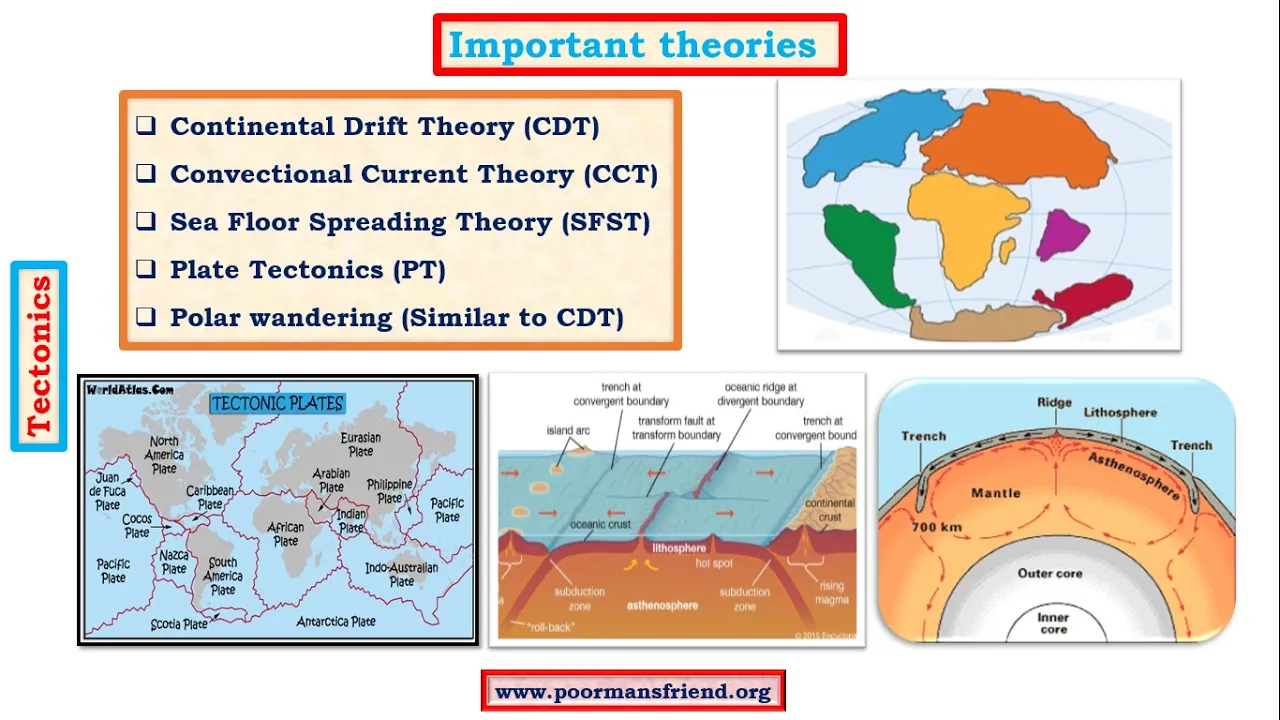
The theories of Continental Drift, Seafloor Spreading, and Plate Tectonics, which are driven by thermal convection in the mantle.
The mechanics of Earthquakes and Volcanism, analyzing how internal energy is released and how seismic waves are used to map tectonic boundaries.
The study of Paleomagnetism, geomagnetic reversals, and how Earth's magnetic field acts as a shield against solar radiation.
The classification of Earth's landforms and the distinction between internal (endogenic) and external (exogenic) geomorphic processes.
Advanced mineralogy and petrology to understand the specific chemical and mineral compositions of the crust, mantle, and core.
19.1K views718likes33:51Original Release: 2022-07-11
Hello and welcome to Baiju's exam prep.
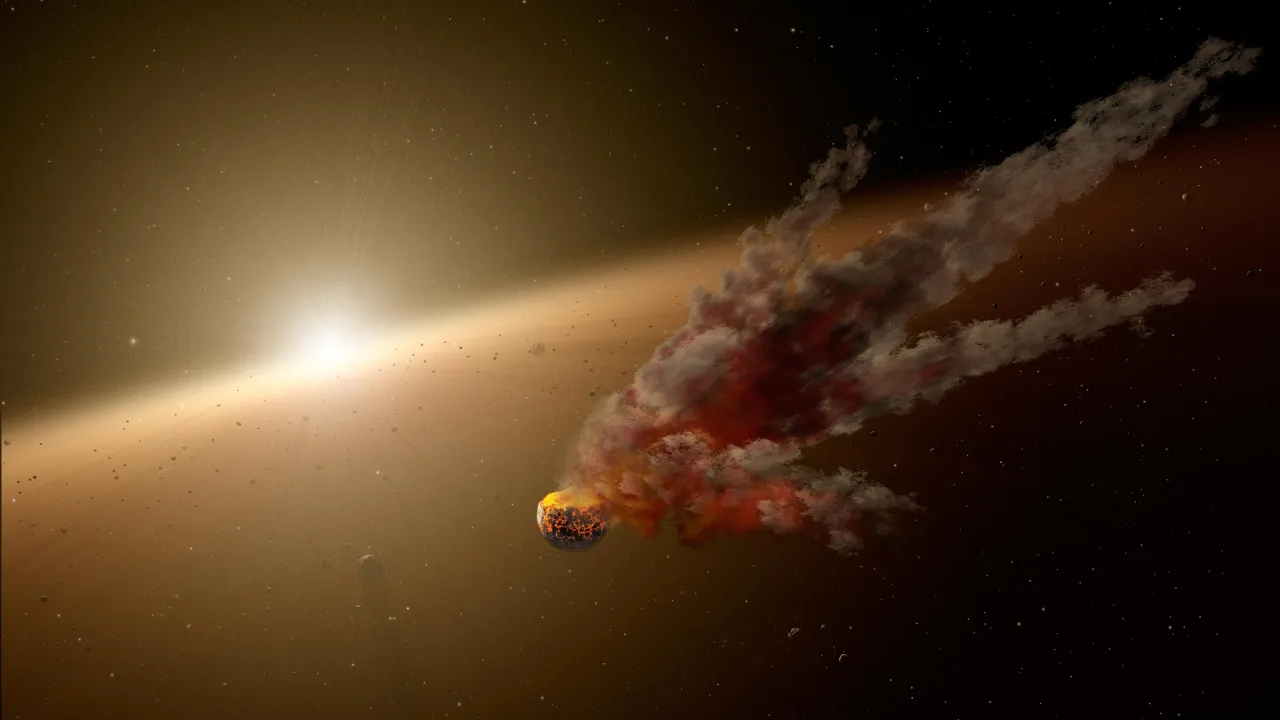
Welcome to another session in our knowledge series where we shall be talking about earth's interior. Now when we talk about earth as a planet, the planet in itself came into existence close to around 4 and a half billion years ago. And the formation of the planet was something which was associated with coming together of different particles. Different particles colliding with each other and thereby increasing the mass and the size of the planet eventually. But after each and every subsequent collision which eventually led to the formation of the planet in itself, each and every collision would lead to a rise in temperature. And around 4 and a half billion years back we had a large molten block of mass which was spherical in shape and rotating around its axis at the same time revolving around the earth what we refer to as the planet earth.
Now here when we talk about earth as a planet since that time since the time of its formation the planet has cooled down quite substantially but still when it was a molten ball of mass at that point of time the heat was pretty significant.
The cooling down of the planet was something which began from the outer surface and as a result of that still you have lot of heat which is trapped in the interior of the earth. So since a long period of time humankind has been curious to know about what is the internal structure of the planet what constitutes the interior of the planet.
So for a long time our preconceived notion was that planet is a homogeneous structure that is what we find on the surface is something very similar to what we will find when we go to the greater depth.
But then slowly and steadily with the help of the various different types of sources of information that we have which helps us understand the interior we have now come come up to an understanding regarding what constitutes the interior.
It is a different matter altogether that when you consider the entire sphere or the entire planet having a radius of close to around 6370 kilm I repeat having a radius of close to around more than 6,370 kilm. It is not possible. It is not humanly possible to go to that depth to understand what constitutes the interior. Moreover, the heat is so high in the inner portions that it is absolutely unfeasible to go there physically. So that is why when we talk about the interior of the planet, our information, our knowledge is based upon certain sources of information. So first of all we shall be taking a look at the sources of information which helps us understand the various different layers of the planet and then after that we shall be taking a look at each of these individual layers try to understand their basic properties and also understand the aspect of discontinuities between each of these layers. So first of all if we take a look at the various different sources of information that we have. So the sources of information can be broadly classified into two types.
You have a direct source as well as indirect source. Now both of these sources help us understand to a certain extent what constitutes the interior of the earth or what is present in the interior structure of the planet. So when we take a look at the direct sources, this is the firstand information that we get. So basically one of the sources is by the activity of digging and mining. So when you dig into the surface thereby upon reaching a particular depth we get an understanding about the type of rocks the amount of pressure and also the temperature which can be experienced. Mining activities in certain areas also further increase our understanding regarding what constitutes the interior of the planet. But here again our extent is very limited. Our knowledge or our information is very limited because you cannot go on digging into the surface right up till the center. In fact, the deepest hole that we have managed to dug as humankind has been in the Cola Peninsula in the northern part of Eurasian landmass where we have managed to dig up till a depth of around 12 km. Now imagine a planet having a radius of 6370 kilm. We have managed to reach only up till a depth of around 12 km. But nonetheless, even that amount of depth helps us understand the rise in temperature as we start going deeper within the earth's crust. That property of rise in temperature as we start going deeper that is something which we refer to as geothermal gradient.
Now geothermal gradient exhibits a continuous rise in temperature and by the time that you reach the level of inner core there the temperature often times exceeds thousands of degrees C. Now the other direct source of information is the volcanic eruption. Whenever we have a volcanic eruption which occurs, you have molten materials from the interior which rise to the surface and which spreads as lava. Now upon sampling these lava and also sampling the rocks which have been formed as a result of it we get an understanding that from what depth has this molten material come from. In most of the cases and in majority of the cases these molten materials that we get in the eruptions they are from the upper region of the mantle itself.
But then in certain eruptions we have also managed to find out that certain rocks which have spent a considerable amount of time at the mantle core boundary and that also helps us understand the particle formation, the amount of pressure, the amount of temperature that that rock had been subjected to and that further enhances our information regarding the interior.
So here in both of these sources of information you can basically see you can basically observe that it is a direct source. It is a firsthand source of information. When we talk about indirect sources these are basically which help us or these are the types of sources rather which helps us understand the interior layering of the planet.
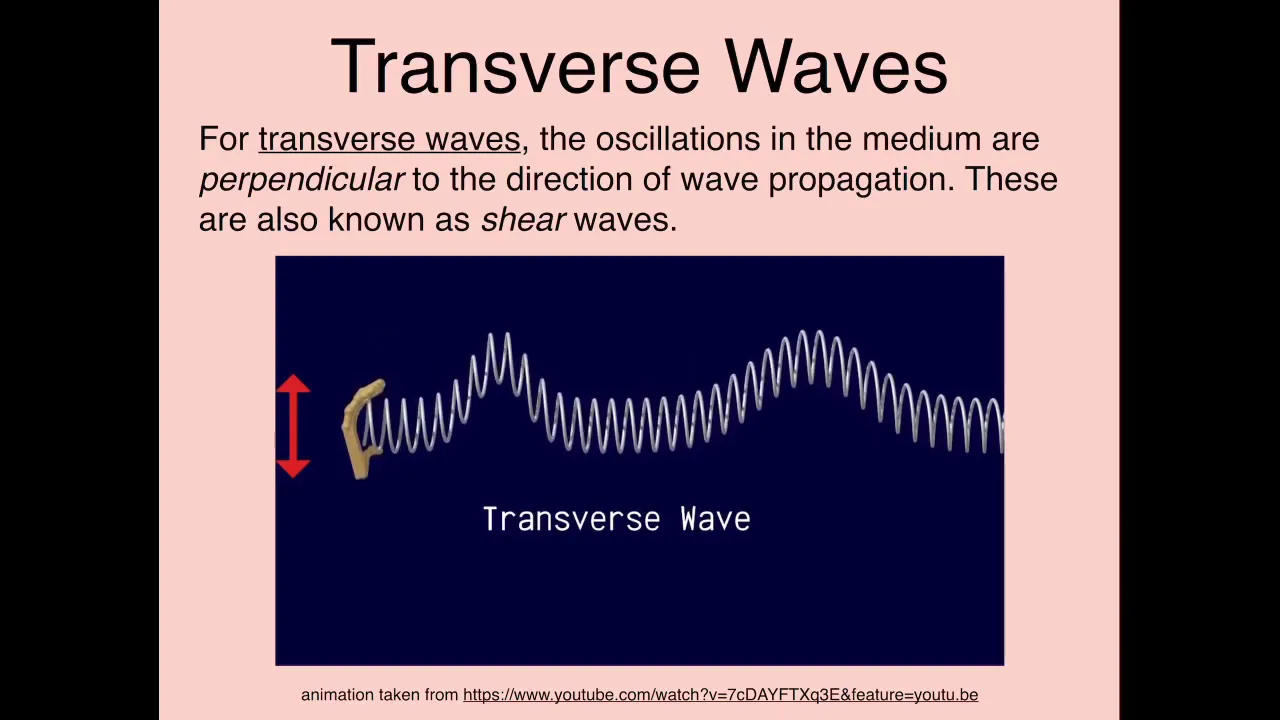
How? So if we take a look at few of the indirect sources we have for example seismic waves. What do we know and what do we mean by seismic waves? So whenever an earthquake occurs that earthquake releases massive amounts of energy. The energy which is released during these earthquakes that travels through the body of the planet itself through the interior of the earth and in the form of waves and these are the seismic waves.
Upon analysis and study of these seismic waves we can get an idea about the portions through which these seismic waves would have traveled through the regions that they would have covered.
Their increase or decrease in speed also helps us understand the state of matter which are present. For example, when you talk about or when you read about earthquakes, you come about the fact that seismic waves are again of various types. So few of the seismic waves, they are unable to travel through the molten portion. And upon analysis of those waves or the absence of those waves, we get an idea that yes, some portion in the interior might be absolutely molten whereas some portions might have a greater or a reduced density. Then other than that we have the gravitational force. Now how does the gravitational force help us understand the interior?
We have to understand that this force of gravity that is slightly different when we consider the different portions of the planet very minutely different and that is basically dependent upon not only slightly varying radius in different parts but also the composition of materials. So upon analysis we get slight idea about the curvature of the planet and the fact that planet in itself is a in a geoidical shape. It is not a perfect sphere because of variation in the gravitational force experienced in various parts. Then after that we have the study of meteorites.
Now meteorites which fall upon the planet. These meteorites are again celestial objects and it is absolutely observed and absolutely expected that the meteorites and the matter and the materials which have constituted the planet earth in itself they have had a very similar origin from the similar nebular cloud from where the solar system has had its genesis. So when these meteorites they come in they move through the atmosphere and eventually they crash to the surface of the planet there the outer part of the meteorite which is composed of certain tiny materials and lighter elements those parts are vaporized and the inner portion or the inner core of the meteorite is what strikes the interior or the surface of the planet and that gives us an idea upon study of those portions and remnants of meteorites.
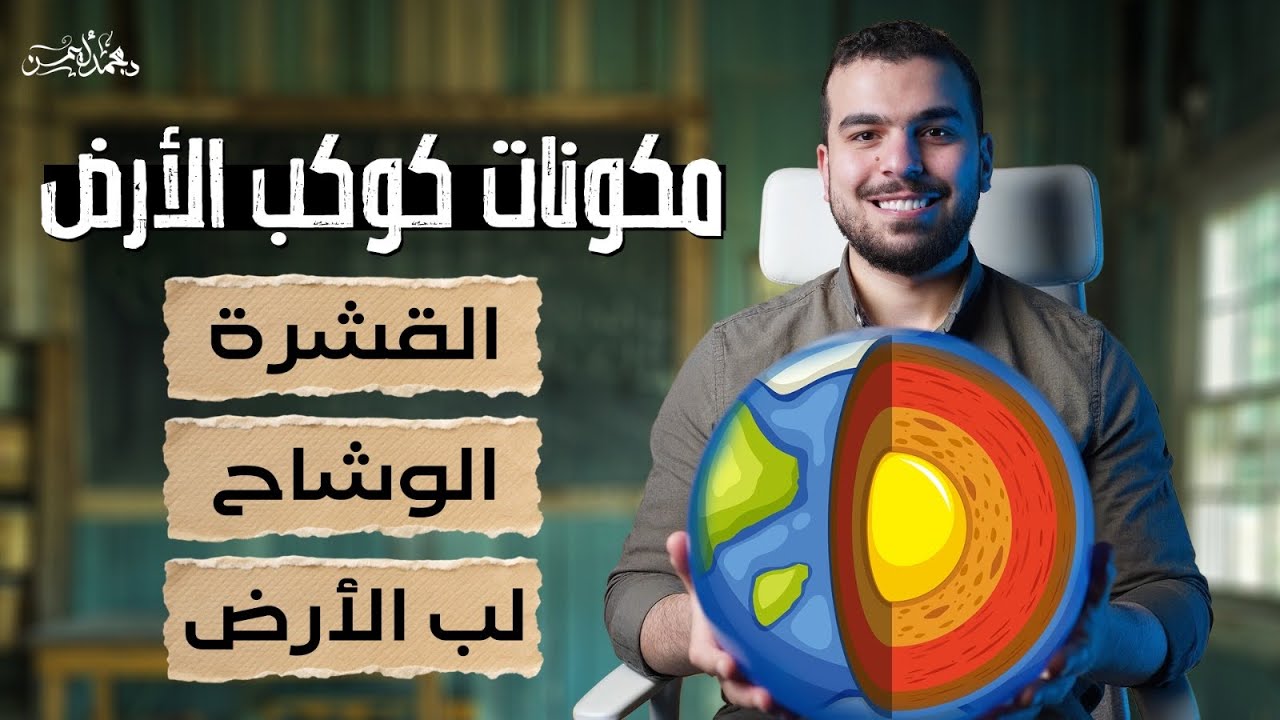
That gives us an idea about the types of materials which would have undergone collision to form the planet earth approximately 4 and a half billion years back and thereby gives us an idea about what is the present interior composition of the planet in terms of the elements which are present. Other than that we also have few of the other minor indirect sources such as magnetic field lines. The magnetic field lines which are subtended from the uh surface of the planet. So that also gives us an idea that there must be certain portions or certain elements present in interior which help subend a kind of a magnetic field of action of the planet. Now these are the sources of information which help us understand what is present in the interior and in what different proportion. Overall, if you take a look at the surface and the interior of the planet itself and the entirety of the planet, the structure, the inner structure of the planet can actually be likened or it can actually be similarized to that of an onion where you have various different layers and you peel off and you go to the lower layers or the inner layers and that is something which is quite similar in the case of planet earth as well. Here, if you take a look at it, the outer surface, which is composed of the lightest materials out there, the outer surface is what we refer to as the crust.
Crust is the thinnest portion across the entirety of the planet. It is this crust that we live upon, that we thrive upon.
Inside the crust you have the layer of mantle which is quite voluminous and has got a significant mass associated with it. And in the interior in the innermost portion that is where we have the core.
As we move from crust to mantle to the core the temperature always increases.
Here again the mantle in itself can be divided based upon the properties of the materials the density of the masses. It can be divided into upper mantle and lower mantle. Similarly the core can also be subclassified into the outer core and the inner core. The crust can also be classified into the upper crust and the inner crust. So it is not at all a homogeneous structure. It is not at all a homogeneous mass but rather the materials their densities that keeps on changing. And why is that? Because of the factor of pressure and temperature.
Now we have to understand that when we talk about pressure the pressure is actually subended is acted upon from the surface itself and as you start going into the inner portions of the planet the pressure acting from all the upper layers that keeps on increasing that increase in pressure often times also leads to a rise in temperature as well.
But then as we have talked about in the initial portion itself significant amount of uh heat which is present in the interior that is a heat which has been trapped since the formation of the planet itself and that is what gives rise to very high temperature in the region of the lower mantle and the core.
That heat which has been trapped since the formation of the planet earth in itself that is what we refer to as the residual heat.
That residual heat in fact is the one which is responsible for many of the various different geological and geographical activities that we observe on the surface. For example, earthquakes, for example, volcanoes, rising and subsidance of land masses, then folding and falting which we observe on the surface. Many of that is actually initiated because of this residual heat. Even activities and events such as plate tectonics or building up of continents that is also something which can derive its origin from this residual heat which is present. Now here one by one let us analyze the different layers and let us analyze the properties of each of these individual layers. So we start with the topmost and the thinnest layer that is the crust. The crust is the lightest portion across the planet. When you look out outside and when you observe the land masses around you and you observe the mountains, the hills and the giant rocks, the first impression that we get is how massive they are, how bulky these might be. But if you consider the whole picture and if you consider the planet in itself, you have to understand this is the lightest portion. It constitutes only about 1% of the earth's mass. Only 1% of the earth's mass is composed or is present in the region of the crust. Now this crust is dominated by materials such as silica and aluminium and also in the case of oceanic crust we also get materials such as magnesium but silica is an overall predominant element here. That is why and silica is composed of silicon and oxygen. That is why when you talk about the abundance of elements on the earth's surface, oxygen and silicon are amongst the most abundant elements present on the surface of the planet. Now crust is not very thick. If you take a look at the continental crust here, the thickness ranges in the region of roughly around 30 to 35 kilometers.
Whereas in the contin or in the oceanic areas the crust is thinner. Here the crust has got a thickness of roughly around 10 to 20 kilometers at max.
But then because of the materials which are present you have the density which is different. Here in the case of the continental crust you generally have granitic rocks granitic rocks these are present and the density of the continental crust roughly comes to be around 2.7 right whereas when we talk about the density of the oceanic crust it is around 3 g per cm cube. So the density of the oceanic crust is significantly heavier. Okay. Whereas when we talk about the continental crust, the density is lesser.
Now owing to this fact, the oceanic crust will always be heavier than the continental crust. The oceanic crust it is composed of materials which are basaltic in nature and they are composed of basaltic rocks and that is why owing to the larger and higher density as well the oceanic crust is always going to be heavier whereas the continental crust is always going to be lighter.
It is because of these reasons that we observe such a significant amount of folding to be occurring on the continental crust. In fact, in areas where this folding action unfolds itself, for example, in the region of Himalayas for that matter, the width or the depth of the continental crust in the region of the Himalayas can be as high as roughly around 70 kilometers. So the custal thickness in the areas where substantial amount of folding substantial amount of compression has taken place that can go up to as high as 70 kilometers in thickness.
Whereas in areas around mid oceanic ridges underneath the oceans and on the ocean floor the oceanic crust can get as thin as around 5 to 10 kilometers itself. So that is why we have to understand that this thickness that we are talking about this thickness is not homogeneous. It can vary in certain places. It can be more in certain places but at the same time simultaneously in certain other places it can be substantially less. Okay. So that is what we mean by or what we know about the crust and the crustal layer. Then when we take a look at the other layer in the interior of the crust and just beneath the crust that is the layer which we refer to as mantle. Now mantle is a very thick layer which extends up till a depth of around 2900 kilometers.
That is the extent up till which mantle ex actually exists. Now for most of the part mantle is in absolute solid form.
However, the temperature and the amount of pressure keeps on increasing. Here the density also increases substantially in the upper portion of mantle. You come across a density of close to around 3.4 g per cm cube. But as you go into the deeper depths of the mantle, the density can increase almost up till 6 to 7 g per cm cube. Now this mantle does represent a bulk of the mass of the planet in itself. Roughly close to around 68% of the bulk of the earth is present in the mantle and it is a very active layer. Most of the events of plate tectonics, most of the events of earthquakes, volcanic eruption that is something which originates in the region of mantle. However, the entirety of the mantle and its entirety of the structure is not an absolute solid. You have a layer in the upper portion of the mantle itself which is referred to as aosphere.
Now this aenosphere the word is derived from the term aano which refers to weak.
So this layer which is present at a depth of around 160 km to a depth of close to around 400 km below the surface that is a layer which is neither a complete solid nor a complete liquid.
This is a layer which exists in a semi molten or a kind of a semiolid plasticky state whereby it can be stretched but it is not a complete solid. It is not a complete liquid. So you cannot term this as a molten layer but it is very very weak and here you have a kind of a semi-liquid semi-olid kind of existence of materials. It is this aenosphere which has the origin of majority of the magma which ultimately appears on the surface in the form of lava and volcanic eruptions. that aosphere is the source of majority of the volcanic eruptions that we come across. Now why is it that in the region of aosphere the materials are in semiolen or a semi-olid state?
That is because of the very high temperature sudden high temperature experienced. We know that temperature increases gradually as we go into the interior. But then if that would have been the case that uh in mantle the temperature would have been so high then lower regions of mantle would also have been in existence in the case of liquid medium but that is not the situation.
The lower portion is still in a solid state whereas it is just the aenosphere which is in a semi molten state and that is because here you have a sudden spike in temperature. Why do you have that sudden spike in temperature?
That is because of presence of certain radioactive elements, certain radioactive materials.
Which are the radioactive materials which are present there in predominance?
You have materials such as uranium and potassium.
Now please don't get confused that how come potassium is radioactive. Here you have different isotopes of potassium.
Few of the isotopes which are radioactive they are present in this layer and as a result of the dominance or a predominance of these different elements there because of the large amount of pressure exerted and already because of a slightly greater temperature. These radioactive elements and materials they undergo a thermonuclear reaction and this thermonuclear reaction that is the one which is responsible for producing very high amount of heat and as a result of that high amount of heat the material or the different elements which are present in the region of aosphere they start slowly being melted.
it but not an absolute liquid a kind of a semiolid. So that is the region which is present in the upper portion of the mantle and this allows the various different custal formations to slightly move around themselves with respect to each other over this semiolen layer that we refer to as aosphere.
Okay. Now as we go to a greater depth thereby we come across the innermost portion that is referred to as the core.
Now even in this core we know that the temperature is very high but there is no homogeneity which is present. You have the outer core and the inner core. The outer core because of very high temperature the outer core is the one which is in liquid state. It is in molten state.
Whereas when we talk about the inner core, the inner core despite the high amount of temperature is still in solid state.
Why is that? The temperature is very high. high enough that the outer core gets molten out. But why is it that the inner core is in solid state? That is ooing to the phenomena that we talked about the phenomena of pressure.
So understand this thing with the help of the fact that when you exert very high amount of pressure as a result of that high amount of pressure the materials in the inner core they are unable to expand. And when you have the conversion from solid to liquid you need a slight amount of expansion to happen.
But here in the region of inner core that expansion is simply not possible.
As a result of that despite the high temperature they are still in a very hot solid structure and a very hot solid state. So we have seen that as we move from the layer of the upper crust that is from the surface to the inner core you have different types of materials at different depths. Now these different structures and these different layers they are demarcated by a zone which we refer to as discontinuity.
And between the upper crust and the inner crust, between the upper mantle and the inner mantle as well as between the outer core and the inner core we have varying different types of discontinuities which are present. For example, Conrad discontinuity it actually distinguishes the layering between the upper and the lower crust.
When we talk about the discontinuity between the crust and the mantle in itself that is what is referred to as the moho discontinuity or mohorov visich discontinuity.
Then again between the outer or rather the upper mantle and the lower mantle here again you have a discontinuity and that is what we refer to as the repetiti discontinuity.
As we go into the further depth, the discontinuity which distinguishes the region of the lower mantle and the outer core that is the Gutenberg discontinuity and eventually the one which separates the molten outer core and the solid inner core that is what we refer to as the layman discontinuity.
So that is how we have the various different layers being separated by each other by what we refer to as the discontinuity.
Now when we talk about the region of the core the outer and the inner core that is something which is predominated by materials such as iron and nickel and this iron and nickel they have concentrated around the core since the time of formation of the planet itself.
Now this iron and nickel that is what subtains the property of geomagnetism on the planet. So when we talk about the interior we have to understand that a predominance of iron and nickel in the interior in the region of the core that is what subtains a kind of a magnetic property for the planet. How is it made possible? So we know that outer core is in a molten state and outer core because it is in a molten state will have electrons and atoms and molecules freely moving in a free state as the planet is rotating around the axis. This molten outer core also ends up rotating and thereby ends up achieving a kind of a spiral movement.
this kind of spiral movement that generates a magnetic field and that magnetic field extends all around the planet. So the magnetism that you observe if let's say the planet would not have been rotating that much and let's say the outer and the inner core both would have been in a solid state and they would not be moving this magnetic field would not be experienced but because they are rotating continuously around the axis that is why you have such a strong magnetic field which is exerted. So that is all that you need to know about the interior of the earth and the various different layers and the structure of the planet.
Now let us take a few of the questions.
So seismic waves are basically the energy waves which are generated whenever you have occurrence of an earthquake. So that is what we refer to as the seismic waves. Residual heat is what do we mean by residual heat? So since the time of formation of the planet when you had the entirety of the planet as a molten material as a molten ball of mass the temperature was very high. The cooling was initiated from the surface from the outer extent. As a result of that slowly and steadily cooling went on and penetrated into the depth but heat was trapped in the interior. That is what we refer to as the residual heat.
What is the change or rate of change of temperature under geothermal gradient Ashotosh? So basically this rate changes from one region to another depending upon the composition of materials and even when you go into the lower layers again this rate changes but ideally it is said to be a change of around roughly 15 to 20° C with a change or with a depth of 1 kilometer.
uh in spite of temperature gradient why the water inside is cool when we dig out. So basically where the water that you dig out that is present at a depth only about a few meters we are talking about a planet and the increase in temperature across thousands of kilometers. So there the water is trapped between the rocks that two in the upper portion of the upper crust as well not even in the lower portion of the crust. That is why uh why is oceanic crust compositionally different from continental shelf?
Continental shelf is a different thing altogether. But I understand that you are asking about the continents. So that is because when you have volcanic eruptions initially you have the entirety of the planet covered underwater. Now few of the volcanic eruptions they gave out lighter materials and those lighter materials they accumulated and that is how land masses they arose from underneath the oceans and that is what formed the continents. So those lighter land masses they are granitic in nature. they have a lesser density and an increased thickness. Okay. So that is where we'll end the session today. I hope that you have had some about of uh some amount of understanding regarding what constitutes the interior. We meet again tomorrow when we will discuss about continental shelf and its properties. Thank you.
Up Next
32:01
Tectonics vs Plate Tectonics: Earth's Evolution Explained
@GEOGIRL
101.3K views•2024-04-07

12:54
Triumph of Orthodoxy Icon: Byzantine Art & History Explained
@BenCallan
2.1K views•2024-08-06

72:54
Hindu Analysis 22 June 2023 | UPSC Current Affairs | IAS Editorial
@BYJUSIAS
42.2K views•2023-06-22

1:42
Game of Thrones Opening Credits: A Cinematic Analysis
@gameofthrones
46.3M views•2011-04-18
Related Study Plans & Knowledge Roadmaps
Structured learning paths in General & Interdisciplinary Studies
general-studies
Elevator Engineering: History, Physics & Cities
01From Hoists to Safety Brakes: The Dawn of Vertical Lift
02Hydraulic vs. Traction: The Engineering Physics of Elevators
03Modern Speed, Safety, and Algorithms
+ 2 more learning modules
12h5 modules
Explore Roadmap
general-studies
Rubber: Material Science, History & Geopolitics
01Origins of Natural Rubber & Mesoamerican History
02The Chemistry of Natural Rubber & Vulcanization
03The Geopolitics of the Rubber Boom & Colonization
+ 2 more learning modules
12h5 modules
Explore Roadmap
general-studies
Containerization: Evolution, Logistics & Trade
01Ancient Trade & Bulk Cargo: Amphorae to Barrels
02The Industrial Revolution & Cardboard Packaging
03The Containerization Revolution: Malcom McLean
+ 2 more learning modules
12h5 modules
Explore Roadmap
general-studies
Textile Tech: Evolution, Labor & Global Impact
01Pre-Industrial Textiles: Handloom & Cottage Industry
02Mechanization: The Spinning Jenny to the Power Loom
03The Factory System & Global Labor Transformation
+ 2 more learning modules
10h5 modules
Explore Roadmap