











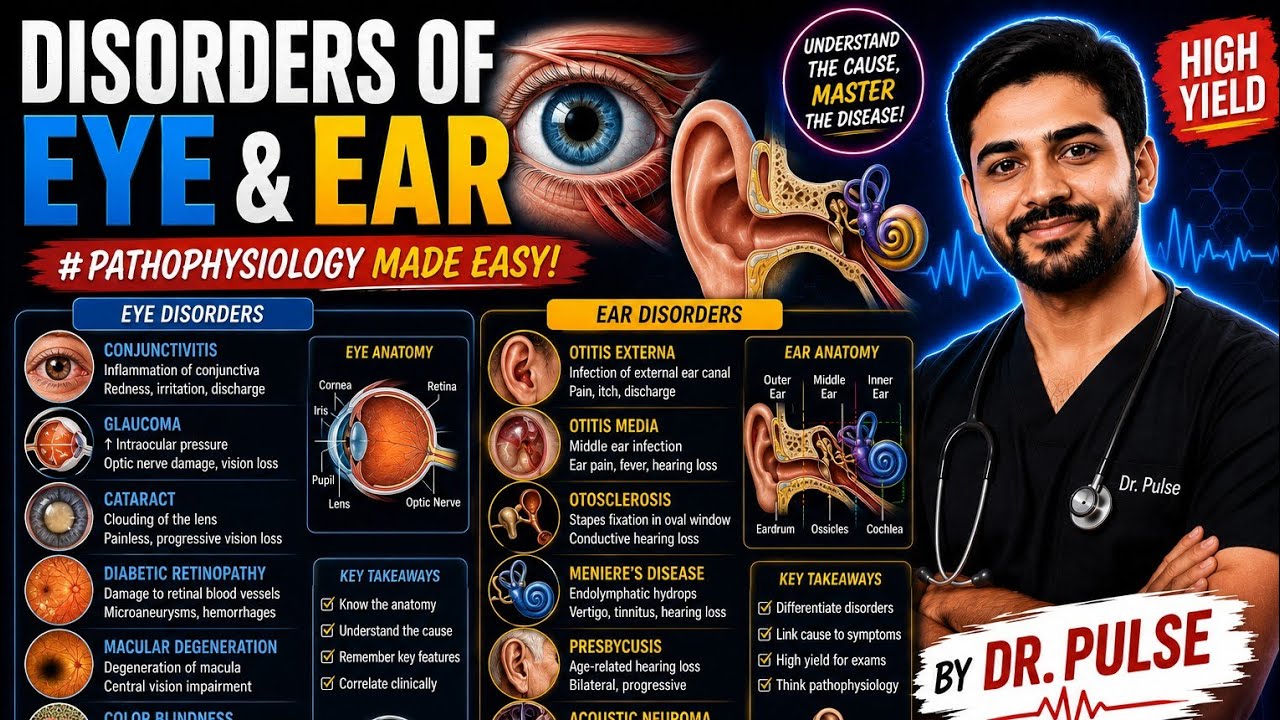
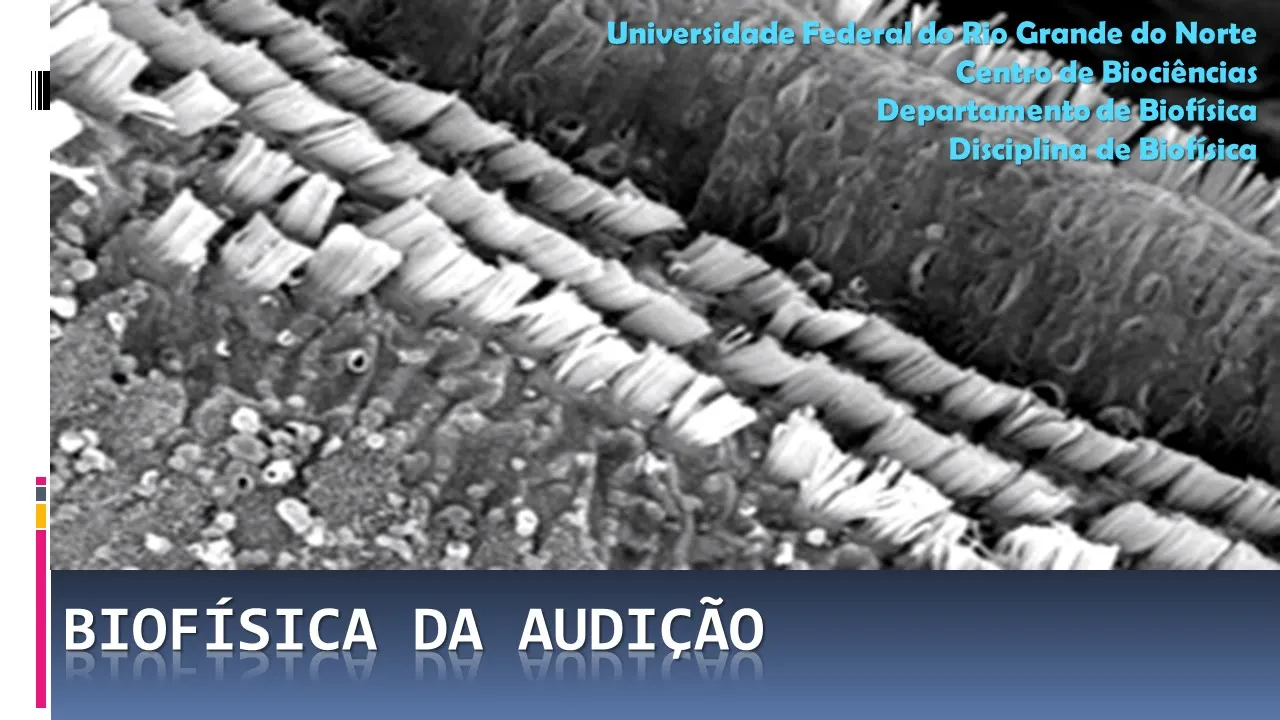

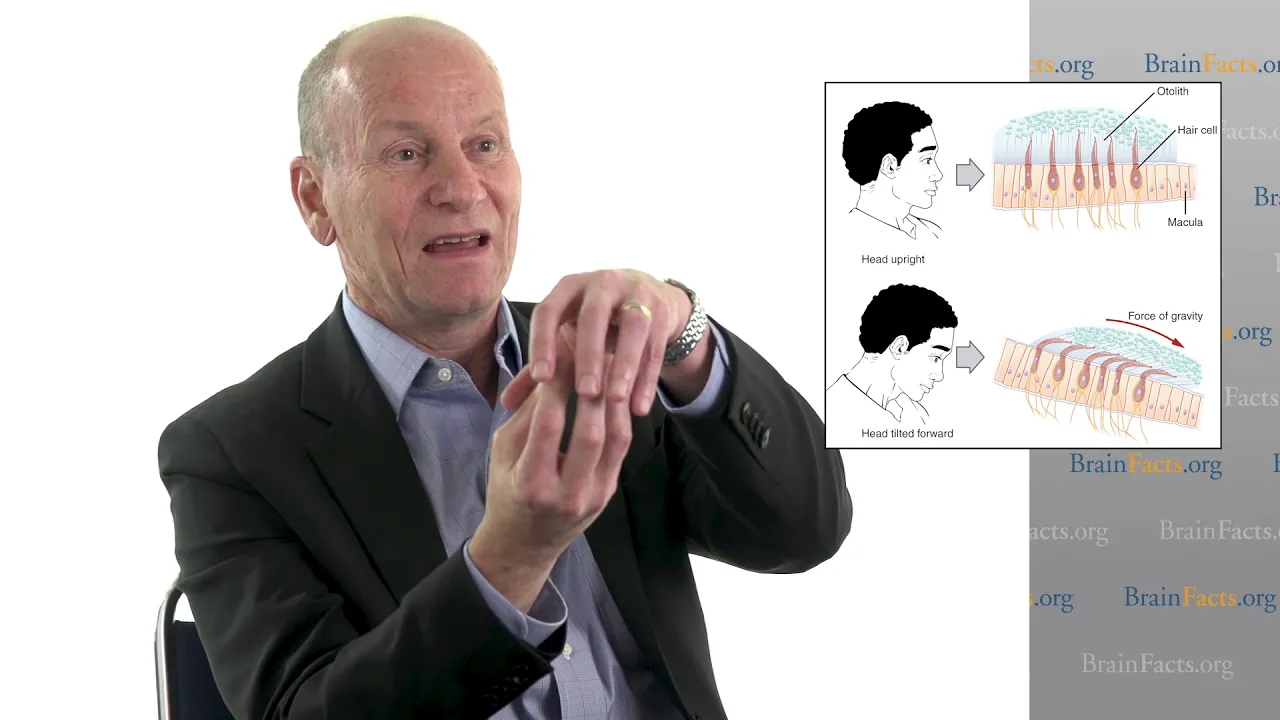




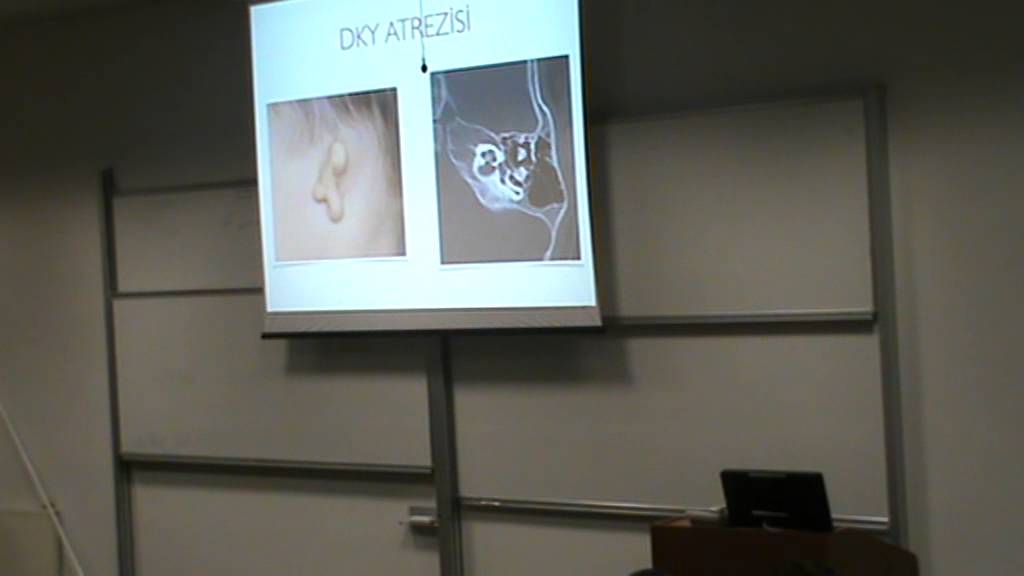
The human ear is divided into three main parts: the outer ear (consisting of the earlobe/pinna and auditory canal that gathers and transports sound), the middle ear (containing the tympanic membrane and three bones—malleus/hammer, incus/anvil, and stapes/stirrup—that transmit vibrations from the eardrum to the inner ear), and the inner ear (comprising the bony labyrinth with vestibule, semicircular canals, and cochlea, which converts sound waves into neural signals via the organ of Corti and auditory nerve). The ear not only enables hearing but also plays a crucial role in maintaining body balance and physical orientation.
Human Ear Structure & Functions 3D Anatomy Animation
Added:Basic physics of sound, including how sound waves travel as longitudinal pressure waves, and the concepts of frequency (pitch) and amplitude (volume).
Introductory human anatomy and tissue types, particularly the differences between bone, cartilage, and mucous membranes.
Fundamentals of the nervous system, specifically how sensory receptors detect environmental stimuli and transmit neural impulses to the brain.
The concept of biological transduction, which is the conversion of physical stimuli (like mechanical vibrations) into electrical signals.
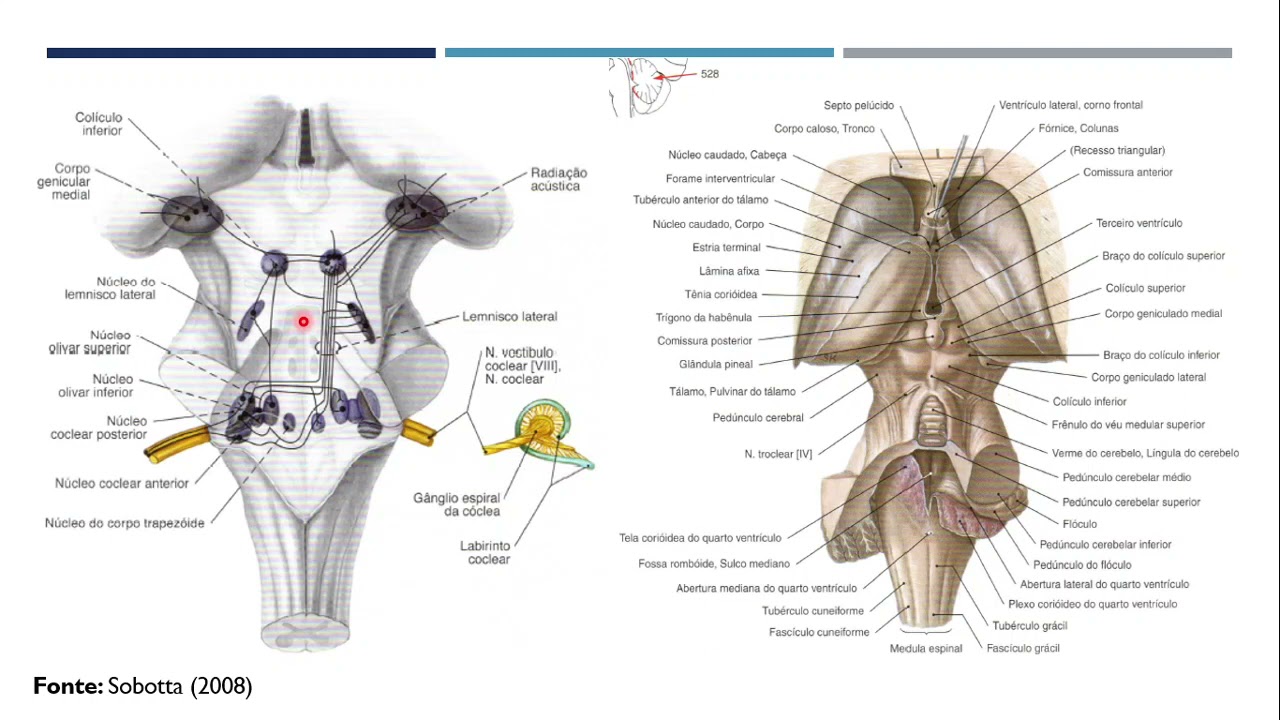
The central auditory pathway, detailing how auditory signals travel from the vestibulocochlear nerve through the brainstem to the primary auditory cortex.
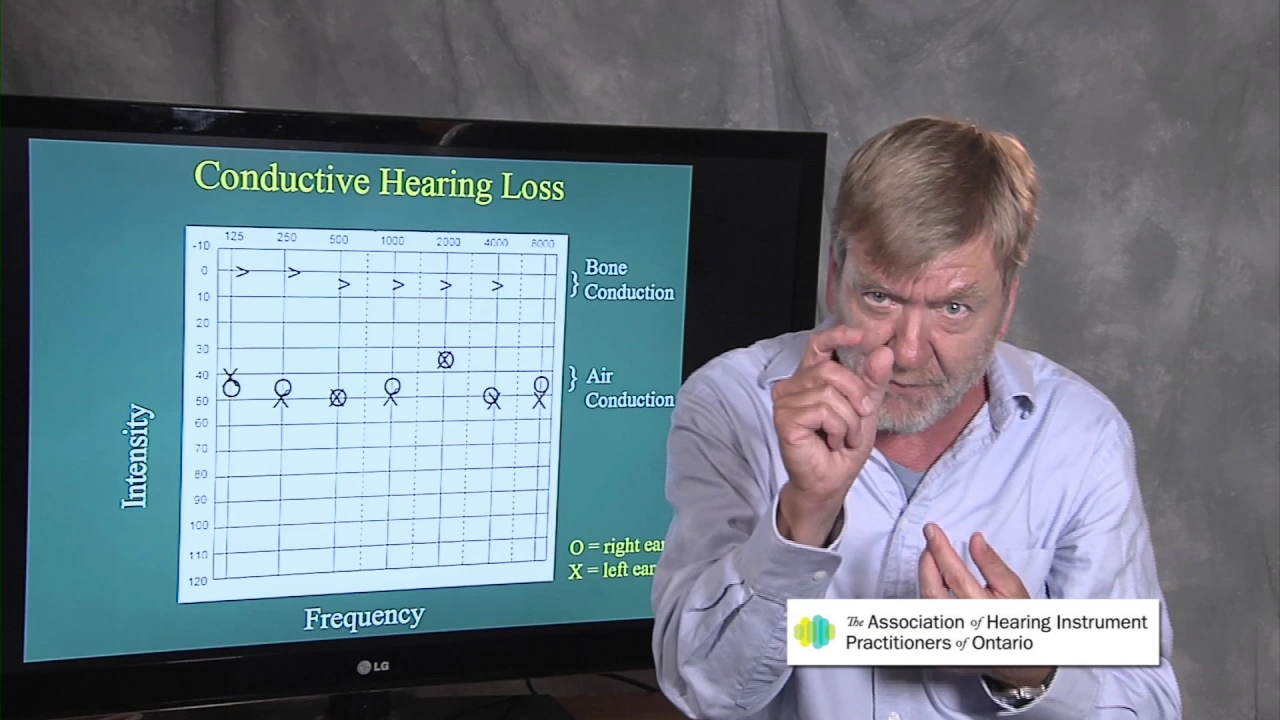
Pathophysiology of hearing disorders, including the differences between conductive hearing loss, sensorineural hearing loss, and tinnitus.
The vestibular system's role in balance, specifically how the semicircular canals and otolith organs coordinate with the eyes and musculoskeletal system (vestibulo-ocular reflex).
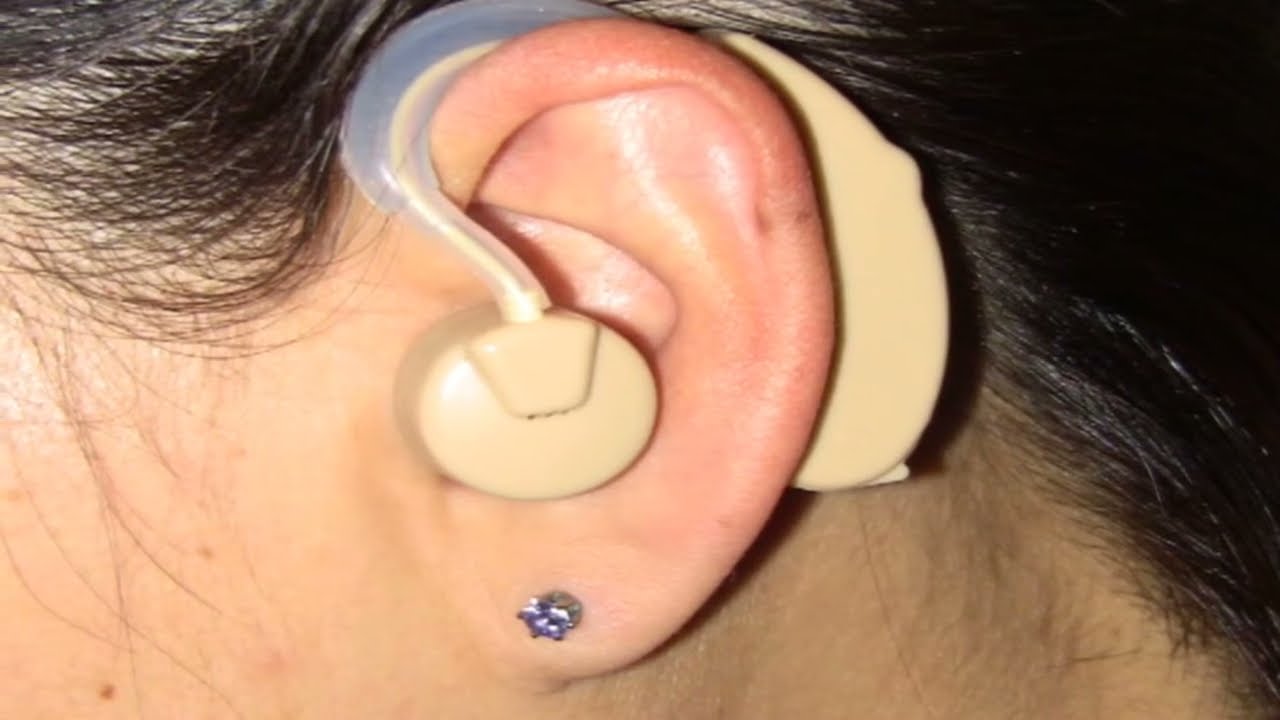
Advanced medical interventions and audiology technology, such as the mechanics and engineering behind hearing aids and cochlear implants.
311.3K views3.4Klikes6:40Original Release: 2015-08-28
the human body is an amazing creation of nature the study of which has never ceased to amaze everyone since the beginning of mankind the beauty of the world around and the innumerable Mysteries of the universe are understood felt and enjoyed by this very instrument of Wonder the five sense organs that account to much of our interactions with our surroundings are so sophisticated that each one of them deserves a better understand understanding we now study the human ear to decode the whole complicated Behavior we have broken down the ear into three broad Parts namely the outer ear the middle ear and the inner ear the outer ear physiology the outer ear consists of two parts the earlobe or Pina and the auditory canal the cartilaginous visible outer portion of the ear is called the earlobe or the Pinner the cartilage gives the outer ear its typical flexibility it helps us to gather sound and transports the sound to the inner parts of the ear the outer ear continues down into the auditory [Music] canal the dead end of the auditory canal is covered by the tanic membrane which marks the beginning of the middle a the mider physiology the mider consists of of the tanum and a group of three very small bones namely the melas the incus and the stapes functions of the Mida the tanic membrane vibrates with sound waves the meus which is in contact with the tanum receives these vibrations the movement in turn rotates the neighboring bone incur the incus is attached to the St piece that receives the vibratory movement and transfers it to the owl window or the finestra ois an interesting fact to notice that due to the physical resemblances the melus is named as the hammer the incus is called the Anvil and the stair piece is called the sterup remember these day-to-day objects and you will remember the mider the mider is connected to the throat region through a tubular passage called ustan Canal this keeps the air pressure on either sides of the eardrum equal the inner ear physiology the inner ear consists of membranous Labyrinth surrounded by the Bony Labyrinth the Bony Labyrinth consists of the vestibule the semicircular canals and the [Music] ccka the vestibule a chamber in the center of the Bony Labyrinth which communicates with both the CA and the semicircular canals the oval and the r windows are both located in the lateral wall of the vestibule the semicircular canals the semicircular canals contain the semicircular duct which have Arisen from the utricle of the vestibular Labyrinth the ca ca forms a spiral which contains the ca nerve functions of the inner ear the base plate of the stapes bone from the middle ear fits into the oval window of the Bony Labyrinth and sends pressure waves into the inner fluids [Music] these pressure waves reach the sound receptor cells present in the organ of Kai all these receptor cells are connected to form the auditory nerve which carries the sound impulse to the auditory center of the cerebrum creating the recognition of sound the pressure thus generated in the oval window reaches the end of the labyrinth and is relieved at the round window [Music] [Music] [Music] thus the ears are not just auditory sense organs of the body but have much to do with the overall balance and physical orientation of the body so next time when you get down from the marry ground and feel dizzy or off balance you know whom to blame your years
Up Next
3:54
Human Microbiome: How Bacteria Affect Health and Immunity
@besmart
230.1K views•2013-03-25
50:12
Bacterial Communication: Quorum Sensing and Biofilm Formation Explained
@JHUAAP
12.6K views•2011-06-28

5:35
Enteric Nervous System Explained: The Gut's Brain | Neurobiology Lecture
@alumniu6029
438 views•2018-09-12
7:08
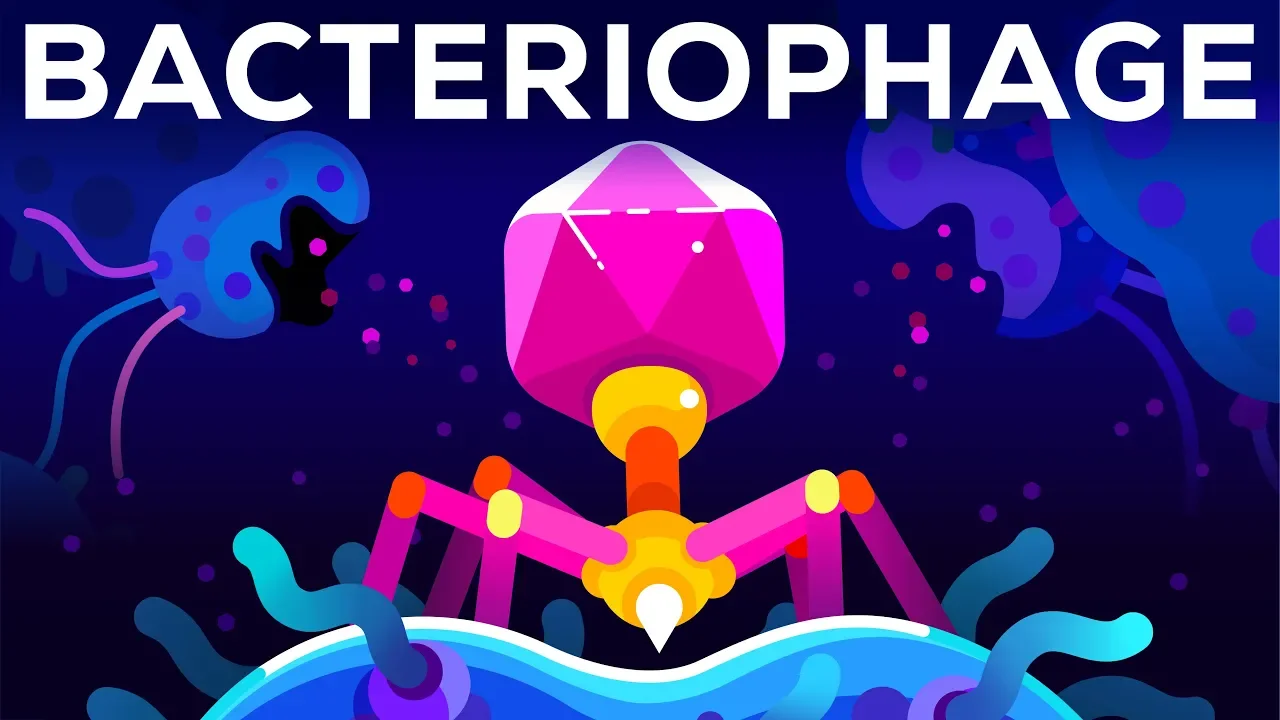
Bacteriophages: Earth's Deadliest Killers and Future Antibiotics
@kurzgesagt
34.6M views•2018-05-13
Related Study Plans & Knowledge Roadmaps
Structured learning paths in Biology
biology
RNAi: Biogenesis, RISC & Gene Silencing
01Molecular Biology Foundations: DNA to Protein
02Introduction to RNA Interference (RNAi)
03Molecular Biogenesis of miRNA and siRNA
+ 2 more learning modules
10h5 modules
Explore Roadmap
biology
Mycorrhizae: Signaling, Biophysics & Ecology
01Foundations of Mycorrhizal Symbiosis
02Molecular Signaling and Root Colonization
03Biophysics and Bioenergetics of Nutrient Exchange
+ 1 more learning modules
11h4 modules
Explore Roadmap
biology
Circadian Clocks: TTFL, SCN & Periphery
01Foundations of Molecular Biology & Gene Expression
02Introduction to Chronobiology and Actograms
03The Core TTFL: Molecular Architecture of the Clock
+ 3 more learning modules
14h6 modules
Explore Roadmap
biology
Population Genetics: Math, Drift & Selection
01Genetic & Probability Foundations
02The Hardy-Weinberg Principle and Baseline Models
03Mathematical Modeling of Natural Selection
+ 3 more learning modules
18h6 modules
Explore Roadmap