The coniferous forest biome, also called boreal forest, is the world's largest terrestrial biome characterized by cold winters, heavy snowfall, and moderate rainfall, dominated by coniferous evergreen trees that have evolved a conical shape with downward-sloping branches to prevent snow accumulation from breaking their branches; this biome supports diverse wildlife ranging from small animals like squirrels and hares to large species such as moose, elk, and grizzly bears.
Coniferous Forest Biome: Key Features and Ecology
Added:Deep Dive
The scientific definition of a biome and how factors like latitude, precipitation, and temperature determine global ecological zones.
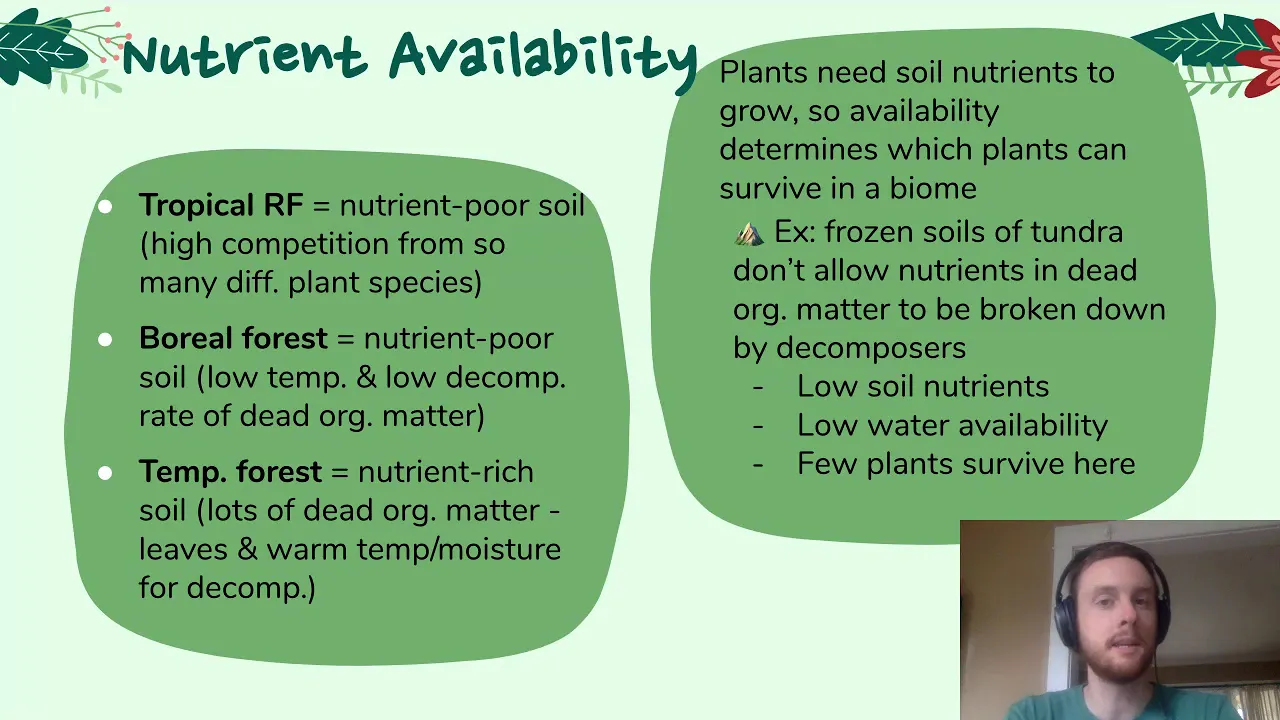
APES Video Notes 1.2 - Terrestrial Biomes
234.2K
A biome is defined as an area sharing a combination of average yearly temperature and precipitation, collectively known as climate. This climate encompasses temperature and precipitation trends over a year. Organisms within each biome are uniquely adapted to survive those specific conditions—for instance, camels store energy in humps and prevent water loss through thick coats in deserts, while shrubs develop deep roots for energy storage to regrow after wildfires. The two defining characteristics of biomes are temperature and precipitation ranges, which determine where each biome occurs globally. Tropical biomes cluster near the equator with warm temperatures and high rainfall, temperate biomes occupy middle latitudes (30-60°) with moderate conditions, and cold, dry biomes like tundra and boreal forest occur around 60° latitude. This predictable distribution results from solar radiation patterns affecting temperature and precipitation at different latitudes.
Click to watch →

GCSE unit 3 Biomes topic
5K
A biome is a large-scale ecosystem with similar temperature and rainfall patterns found across the world. Biomes are distributed from the equator northwards (due to more land in the northern hemisphere) in sequence: tropical rainforest, savannah, desert, Mediterranean climate, deciduous woodland, coniferous woodland, and tundra at the poles. An ecosystem is a community of plants and animals, while a biome is essentially a very large ecosystem. Temperature is directly related to latitude (low latitudes near equator are hot, high latitudes near poles are cold). Precipitation patterns depend on pressure zones rather than latitude alone—high pressure over tropics creates deserts, while low pressure over equator and mid-latitudes creates rainforests and deciduous woodlands.
Click to watch →

AP Environmental Science Unit 1 Review (Everything you Need to Know!)
464.4K
A biome is a region on Earth that shares a consistent yearly average temperature and precipitation pattern. Two examples are tropical rainforests (high temperature and precipitation) and tundras (very low temperature and precipitation). All characteristics of a biome ultimately derive from these temperature and precipitation patterns. If average annual temperature and precipitation patterns change, biome locations can shift—trees may migrate as conditions change. Currently, we're observing an expansion of the tropics away from the equator due to rising global temperatures.
Click to watch →
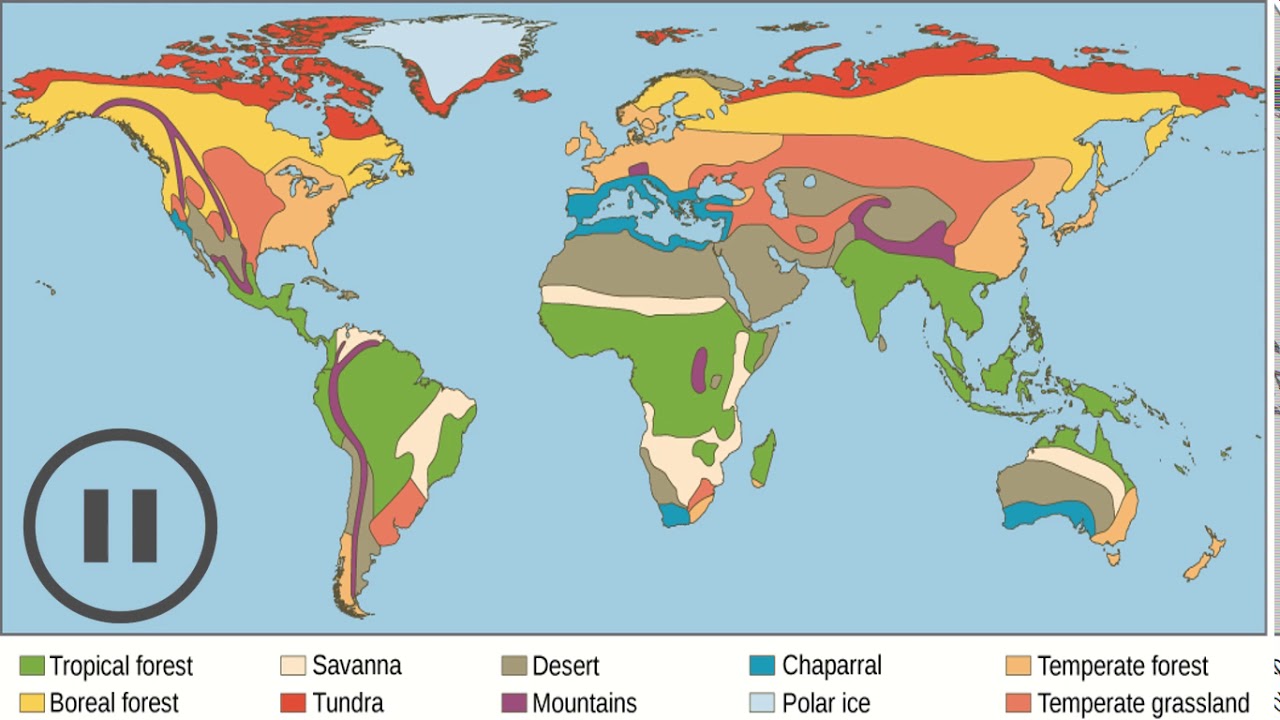
L2: Biomes
268
A biome is a large-scale ecosystem defined by dominant vegetation type. The world's major biomes include tropical rainforests (near equator, high temperature and rainfall, 6% of surface, half of species), deserts (one-fifth of land, hot and dry due to high pressure), temperate forests (deciduous trees lose leaves in winter), coniferous forests (evergreen trees with needles in northern regions), polar and tundra biomes (very cold, below freezing most of the year), and temperate grasslands. Latitude measures distance north or south of the equator in degrees from 0° to 90°. Climate at each latitude determines which biomes can exist there. Tropical forests are found along the equator where it's warm and wet, while tundra exists at high northern latitudes where it's cold and dry. Japan and the UK share similar temperate forest biomes because they are at similar latitudes, demonstrating that latitude and its climate impact matter more than geographic location in determining biome type.
Click to watch →
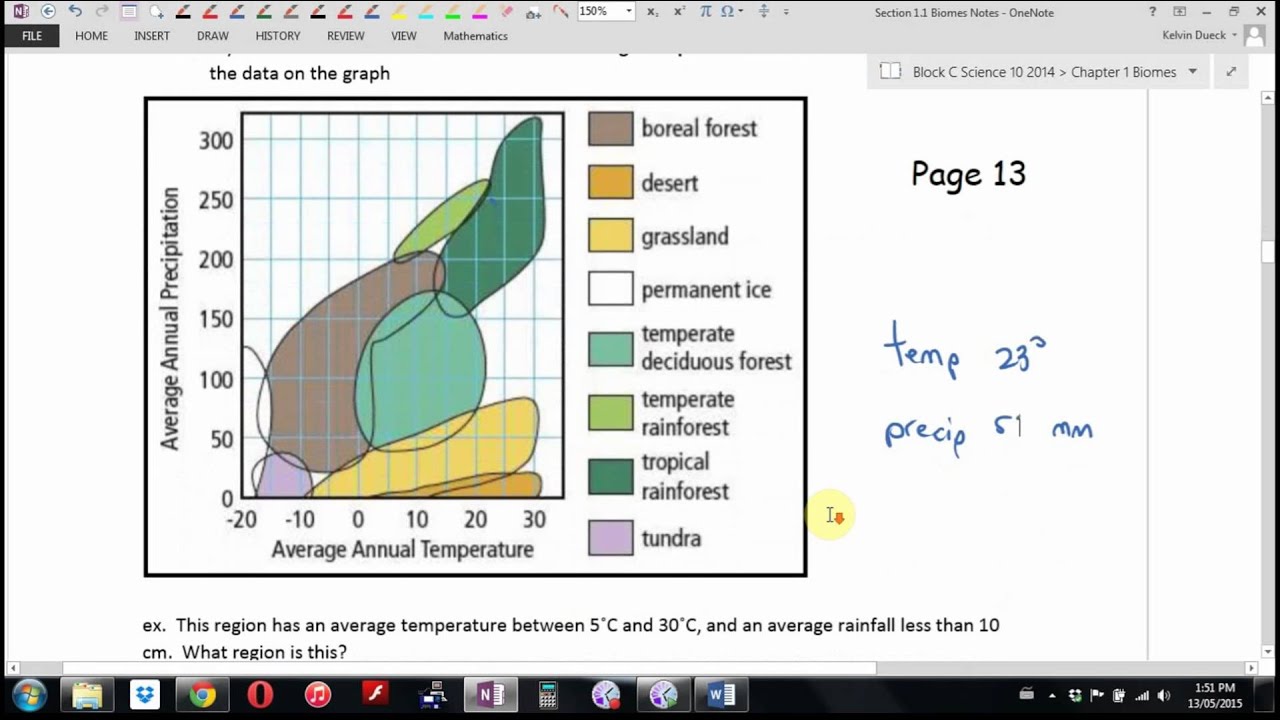
Science 10 Section 1.1 Biomes Part 1
847
Biomes are the largest divisions of the biosphere, defined by their biotic (living) and abiotic (non-living) components. The two primary abiotic factors that determine biome distribution are temperature and precipitation, which together create distinct ecological zones. Latitude significantly influences these factors by affecting the angle of sunlight and atmospheric moisture patterns, with the equator receiving the most direct sunlight and highest rainfall. Elevation also impacts biomes, as higher altitudes result in colder temperatures and altered precipitation patterns. The major biome types include boreal forests, deserts, grasslands, temperate deciduous forests, temperate rainforests, tropical rainforests, and tundra, each characterized by specific temperature and precipitation ranges that support particular plant and animal communities.
Click to watch →
Deep Dive
Basic plant taxonomy and physiology, specifically the fundamental differences between gymnosperms (conifers) and angiosperms (flowering/deciduous plants).

নগ্নবীজী ও আবৃতবীজী উদ্ভিদ One Shot MCQ | Gymnosperms & Angiosperms | HSC Biology 1st Paper
96.1K
This lecture covers the fundamental differences between Gymnosperms (naked-seeded plants like Cycas) and Angiosperms (flowering plants). Key topics include: (1) Cycas characteristics - heterosporous, diploid sporophyte-dominant, coralloid roots with dichotomous branching, transfusion tissue present, and haploid endosperm; (2) Flower morphology - complete vs incomplete flowers, perianth arrangements (valvate, twisted, imbricate, vexillary, quinquecostal), and inflorescence types (racemose vs cymose); (3) Reproductive processes - double fertilization in angiosperms producing triploid endosperm, while gymnosperms lack this process; (4) Family characteristics - Malvaceae (Hibiscus) with twisted androecium and superior ovary, Poaceae (rice) with spikelet inflorescence and caryopsis fruit.
Click to watch →

Exam Night - biology - senior 1 - دكتور مصطفي خضر
57.9K
Plants are classified into two main groups: gymnosperms and angiosperms. Gymnosperms (conifers, cycads, ginkgo, gnetophytes) have naked seeds not enclosed in fruit. Angiosperms (flowering plants) have seeds enclosed in fruit. The key difference is seed protection. Gymnosperms include conifers (pine, spruce, fir), cycads, ginkgo, and gnetophytes. Angiosperms include all flowering plants.
Click to watch →
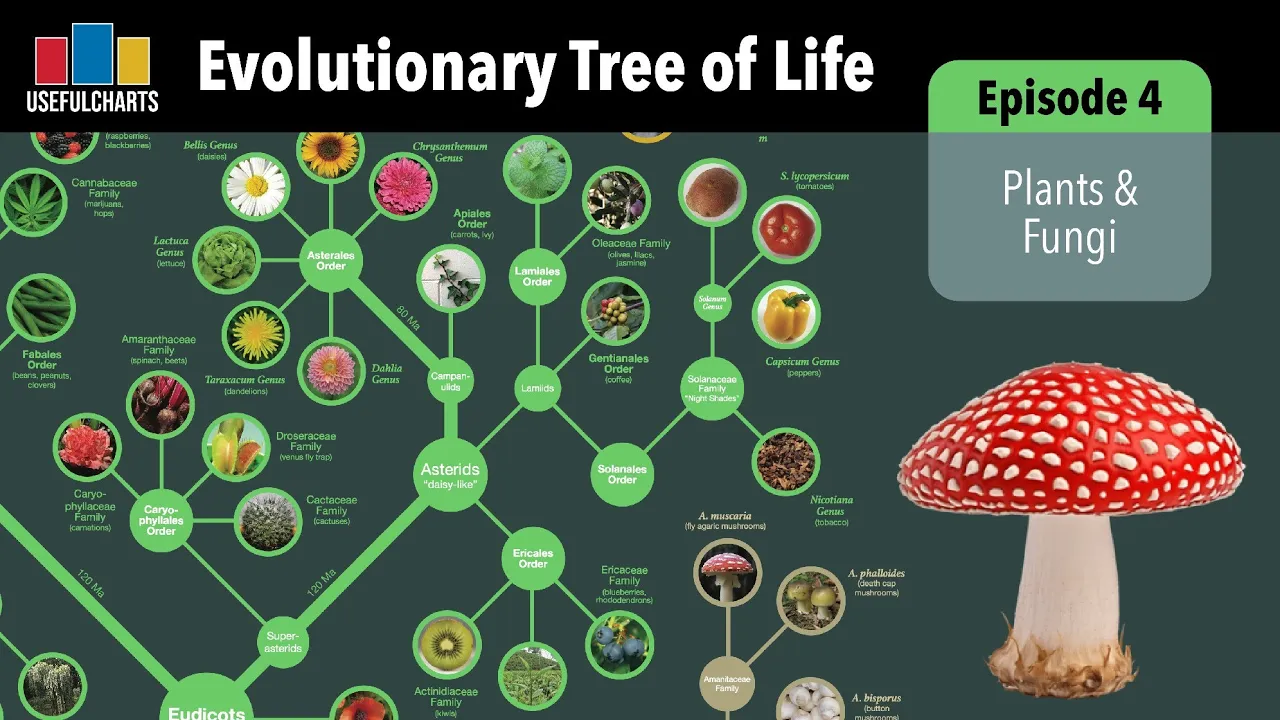
Evolutionary Tree of Life | Episode 4 - Plants & Fungi
84K
Seed-bearing plants divide into angiosperms (flowering plants enclosing seeds in fruits) and gymnosperms (naked-seed plants like conifers). Angiosperms are classified into monocots (one cotyledon, including grasses and tropical fruits) and dicots (two cotyledons, including most flowering plants). This classification reflects fundamental differences in seed structure and plant development patterns.
Click to watch →

REINO PLANTAE - FISIOLOGIA VEGETAL
77.1K
Seed plants represent the most advanced plant groups. Gymnosperms (naked-seeded plants) include long-lived trees used in forestry, with examples like conifers. Angiosperms (flowering plants) are the most diverse and modern group, appearing about 150,000 years ago, with seeds protected inside fruits. Angiosperms are further classified into monocots and dicots based on multiple characteristics: monocots have elongated leaves with parallel venation, flowers with multiples of 3 parts, scattered vascular bundles, single cotyledon, single-pored pollen, and fibrous roots; dicots have rounded leaves with reticulate venation, flowers with multiples of 4 or 5 parts, radial vascular arrangement, two cotyledons, three-pored pollen, and taproots. Examples include grasses (monocots) and apples/mangoes (dicots).
Click to watch →

SCIENCE FOR SSC CGL 2025 | BIOLOGY ( PLANT KINGDOM ) | FRB2.0 BY PARMAR SIR
163.9K
Phanerogams are seed-producing plants with visible reproductive organs. Gymnosperms have naked seeds (not enclosed in fruits) and are primitive seed plants. Examples include conifers like Pine, Cedar, and Deodar. They lack xylem vessels and phloem companion cells. Angiosperms are flowering plants with seeds enclosed in fruits. They are highly evolved with well-developed reproductive structures. The ovary develops into fruit after fertilization.
Click to watch →
Deep Dive
Fundamental ecological concepts, including adaptation, trophic levels, and how abiotic factors limit or support biotic communities.
AQA GCSE Biology in 10 Minutes! | Topic 7 - Ecology
24.9K
This section covers foundational ecological terminology including habitat (organism's living place), population (all organisms of one species in a habitat), community (all populations in a habitat), abiotic factors (non-living environment), and biotic factors (living organisms). The ecosystem concept integrates biotic and abiotic interactions. Key ecological processes include competition for resources (plants need light/water/space; animals need food/water/mates), and three types of adaptations: behavioral (migration patterns), structural (blubber for warmth, camel surface area), and functional (hibernation, reduced sweating). Food chains demonstrate biomass transfer across trophic levels, with producers at level one and decreasing biomass at each subsequent level due to energy loss during digestion and metabolic processes.
Click to watch →

Ekosistem Ekolojisi - 1 | TYT Biyoloji #Kamp2022 #tyt2022BİO15
86.7K
Abiotic factors include energy sources (sunlight for photosynthesis, chemical energy for chemosynthesis), temperature (organisms have tolerance ranges), climate (long-term atmospheric conditions), soil (formed by rock weathering, provides minerals), and water (essential for all life). Plant adaptations to water availability include leaf size and root depth variations. Trophic levels include autotrophs (producers using photosynthesis or chemosynthesis), heterotrophs (consumers: herbivores, carnivores, omnivores), and decomposers (saprophytes breaking down organic matter). Nutrient cycling requires all three groups working together.
Click to watch →

6) Ekosistem Ekolojisi FULL TEKRAR | 10. Sınıf Biyoloji | TYT Biyoloji Konu Anlatımı 6
117.4K
Ecology studies organism-environment relationships. Hierarchy: Biosphere (entire living space), Biome (large-scale ecosystems with climate), Ecosystem (community + abiotic environment), Community (multiple populations), Population (same species group), Species (interbreeding organisms). Abiotic factors: Sunlight (energy source), Temperature (affects metabolism), Climate (long-term conditions), Soil (nutrients), pH (chemical balance), Water (essential for life). Biotic factors: Producers (autotrophs - photoautotrophs and chemoautotrophs), Consumers (heterotrophs - herbivores, carnivores, omnivores), Decomposers (saprofits). Trophic levels: Producers (1st), primary consumers (2nd), secondary consumers (3rd), tertiary consumers (4th). Energy transfer is inefficient: only ~10% passes to next level, 90% lost as heat/respiration.
Click to watch →

factores bioticos & abioticos
420K
An ecosystem is a self-perpetuating system composed of biotic factors (living organisms including plants, animals, fungi, bacteria, and microorganisms that interact with each other through competition, mutualism, and predation) and abiotic factors (non-living components such as precipitation, temperature, light, wind, nutrients, pH, and salinity that determine the physical conditions for life). Biotic factors include all living organisms with defined chemical organization, metabolism, reproduction, growth, and adaptation capabilities, while abiotic factors vary significantly across locations and can be more ecologically significant than simple averages (e.g., temperature extremes matter more than average temperature, and precipitation distribution patterns affect ecosystems differently than total precipitation amounts).
Click to watch →
CSIR NET life science unit 10 ecology
24.2K
Ecology studies ecosystems composed of interacting biotic (living organisms) and abiotic (non-living) components. The ecological hierarchy progresses from individual organisms through populations, communities, ecosystems, biomes, to the biosphere (BOBEKPO mnemonic). Abiotic factors include climatic elements (temperature, water, light, gases), edaphic factors (soil type, pH, humus), and physiographic factors (slope, altitude, aspect). Biotic factors organize into trophic levels: producers (plants creating food via photosynthesis), consumers (primary, secondary, tertiary), and decomposers recycling nutrients. Shelford's Law describes organisms' ranges of tolerance for abiotic factors, while Liebig's Law states species distribution is controlled by the factor with the narrowest tolerance range.
Click to watch →
Deep Dive
The basics of soil science, specifically how cold climates and needle-leaf litter affect soil acidity and nutrient decomposition rates.

L8 | Terrestrial Ecosystem | Environment | Intense Prelims League | UPSC CSE/IAS | Anirudh Malik
46K
Coniferous forests have acidic soil with low mineral content. The slow decomposition of needle leaves (due to cold temperatures) leads to accumulation of organic matter and formation of thick organic layers. The soil is acidic because of leaching - when water washes through the soil, it carries away minerals, leaving behind acidic compounds. This soil type is characteristic of boreal forests and affects plant growth and nutrient cycling.
Click to watch →

ПРЯМАЯ ТРАНСЛЯЦИЯ. 06.12.23
40.6K
Forest soils, especially under coniferous vegetation, tend to be acidic due to slow-decomposing needle litter releasing acids. Steppe soils, with abundant grassland vegetation producing diverse organic matter, tend to be neutral. The high organic matter content in steppe soils provides calcium and other nutrients that neutralize acids. Regional soil fertility varies based on parent rock composition - the Altai region has potassium and calcium-rich soils due to local parent rock, reducing fertilizer needs. Regions with diverse parent rocks (like the Urals) have mineral-rich soils supporting complex plant communities. Limestone soils contain high calcium carbonate that blocks phosphorus availability, creating apparent phosphorus deficiency even when soil contains adequate amounts. Saline soils contain high sodium concentrations, common in arid regions with high evaporation. These soils have 'evaporation' water regimes where salts accumulate on the surface. Management requires adding gypsum (calcium sulfate) to replace sodium ions and improve structure, plus sulfur to lower pH. Climate significantly influences soil formation through weathering rates, organic matter accumulation, and water movement. High rainfall promotes leaching and acidic conditions; arid climates promote salt accumulation and alkaline conditions. Topography affects drainage and moisture distribution - upper slopes are drier, lower slopes wetter. Nitrogen is the only essential plant nutrient not obtainable from parent rock. Sources include atmospheric fixation by lightning, industrial fertilizer production, animal manure, and biological nitrogen fixation by bacteria. Legume plants (beans, peas, clover) have symbiotic relationships with nitrogen-fixing bacteria in root nodules, converting atmospheric nitrogen into plant-available forms.
Click to watch →

НЕ ТОРОПИТЕСЬ ВНОСИТЬ ДОЛОМИТОВУЮ МУКУ! Что такое кислотность почвы и как определить рН
151.4K
Coniferous forests (pine and spruce) produce highly acidic soil with pH values around 3.5-4. This occurs because coniferous vegetation produces acidic humus (pH 2-3) with low calcium content. The decomposition of coniferous needles and bark by fungi and bacteria releases significant amounts of acidic compounds that are not neutralized by the limited calcium available in sandy soils.
Click to watch →
Do Pine Needles Make Soil More Acidic? Truth or Gardening Myth?
240.2K
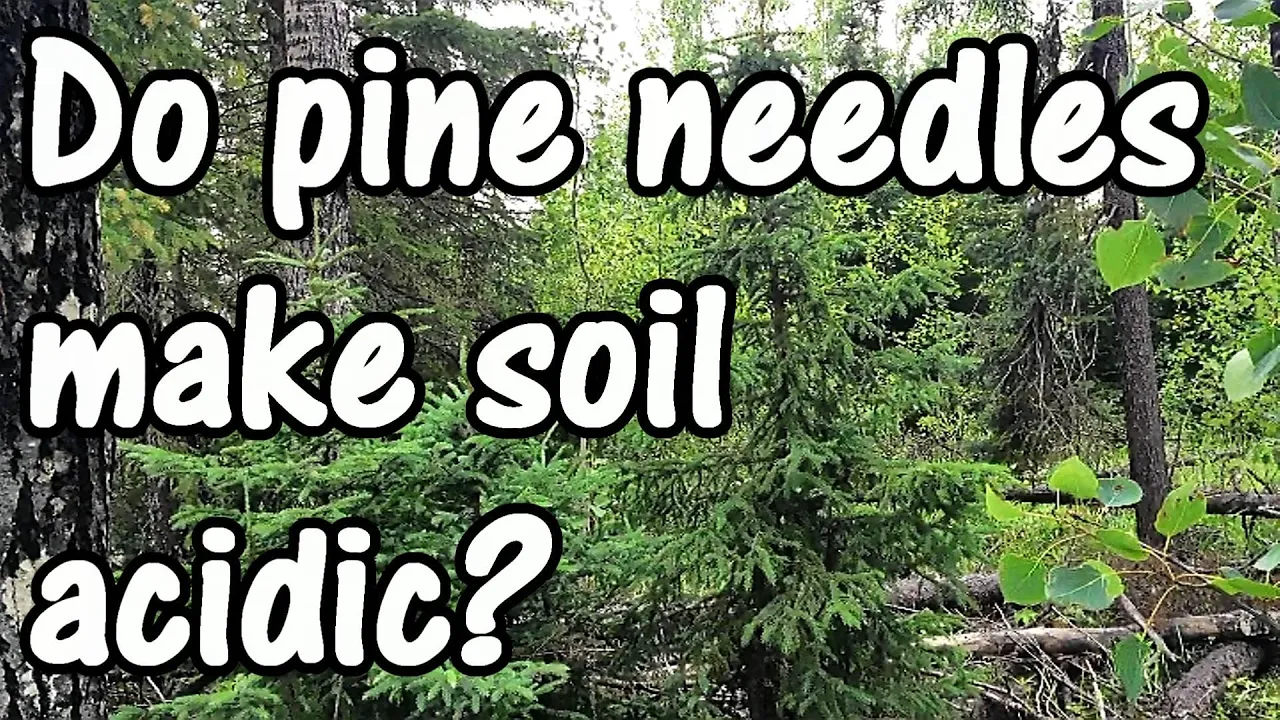
Boreal forest soils are acidic not because of pine needles, but due to environmental conditions. The dense canopy limits sunlight, reducing microbial activity and slowing decomposition. High precipitation causes water to move slowly through the soil column. As water leaches through the organic layer (A horizon), it removes buffering capacity from the parent material below, releasing acidic elements. This process makes the top organic material acidic over time.
Click to watch →

Carbon & decomposition - Part 4
363
Leaf litter decomposition rates vary dramatically due to chemical composition differences. Within a single tree species, variation can equal or exceed differences across entire plant families. Key chemical factors include: (1) Structural compounds like lignins and celluloses resist decay; (2) Tannins and lignans are complex recalcitrant molecules that slow decomposition; (3) Nutrient concentrations (nitrogen, phosphorus) speed decomposition; (4) Microbial toxicity from certain compounds slows colonization; (5) Leaf structure (toughness, waxy cuticle, deciduous vs. evergreen) influences decomposition rates. Higher carbon-to-nitrogen ratios in leaf litter generally correspond to slower decomposition rates, reflecting the stoichiometric balance between energy-rich structural materials and limiting nutrients required by decomposers.
Click to watch →
Prerequisite Knowledge
- Concept 01The scientific definition of a biome and how factors like latitude, precipitation, and temperature determine global ecological zones.
- Concept 02Basic plant taxonomy and physiology, specifically the fundamental differences between gymnosperms (conifers) and angiosperms (flowering/deciduous plants).
- Concept 03Fundamental ecological concepts, including adaptation, trophic levels, and how abiotic factors limit or support biotic communities.
- Concept 04The basics of soil science, specifically how cold climates and needle-leaf litter affect soil acidity and nutrient decomposition rates.
Subsequent Learning
- Step 01The role of boreal and temperate coniferous forests as massive global carbon sinks and their critical function in climate change mitigation.
- Step 02Disturbance ecology in coniferous systems, focusing on the ecological roles and management of wildfires and pest infestations, such as bark beetle outbreaks.
- Step 03The specific impacts of global warming on high-latitude biomes, including permafrost degradation and the northward shift of the taiga-tundra boundary.
- Step 04Sustainable forestry, silviculture practices, and the economic versus ecological trade-offs of timber harvesting in coniferous biomes.
Taiga
Wildlife
Snow Shape
Recap
Taiga
0:00Playing Section
- 1
Largest terrestrial biome with cold weather and moderate rainfall.
- 2
Named for dominant coniferous trees or evergreens.
The Albedo-Carbon Trade-off in High-Latitude Forests
While coniferous forests are traditionally valued as vital carbon sinks that help cool the planet, atmospheric science introduces a critical counterpoint: the albedo warming effect. In high-latitude boreal regions, the dark, dense evergreen canopy absorbs a high amount of solar radiation, lowering the surface albedo compared to reflective snow or lighter deciduous canopies. Research suggests this absorbed heat can offset, or even exceed, the cooling benefits provided by the forest's carbon sequestration. This challenges the simplified assumption that preserving or expanding coniferous forests is universally beneficial for climate mitigation, highlighting a complex ecological trade-off.
Deep Dive
The role of boreal and temperate coniferous forests as massive global carbon sinks and their critical function in climate change mitigation.
Rewilding Hogan Lovells: An interview with Tero Mustonen
162
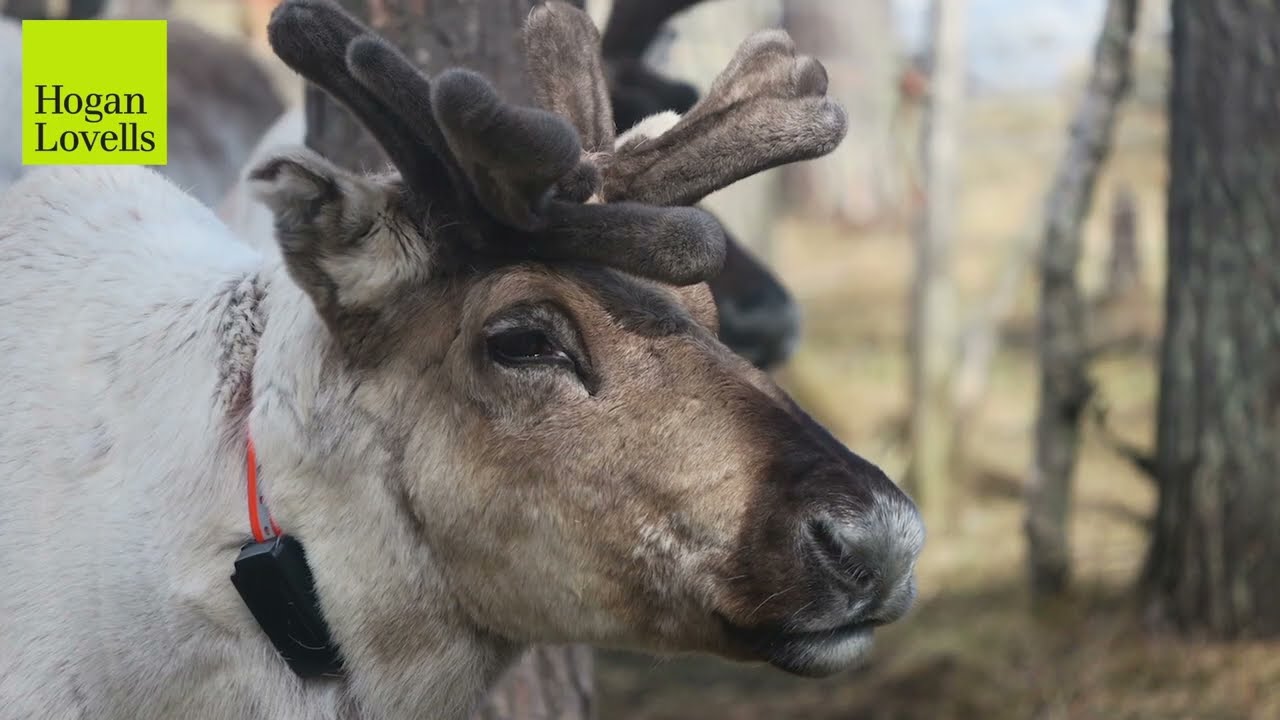
Boreal forests represent one of the last remaining natural forests globally and serve as critical frontlines in addressing climate change. While many associate 'lungs of the world' with Amazonia, Boreal forests and associated peatlands contain massive amounts of carbon stored in soil and old-growth forests. Protecting these ecosystems and implementing restoration efforts benefits regional indigenous peoples, such as the Sami in Europe, while simultaneously contributing to global climate change mitigation efforts.
Click to watch →

The true cost of oil | Garth Lenz | TEDxVictoria
235.3K
The boreal forest serves as the planet's most concentrated carbon sink, sequestering twice as much greenhouse gas per acre as tropical rainforests. This makes it absolutely critical for combating global warming and climate change. However, tar sands development destroys this carbon sink while simultaneously producing the world's highest-carbon-emission oil, effectively transforming one of Earth's greatest defenses against climate change into a major contributor to the problem.
Click to watch →
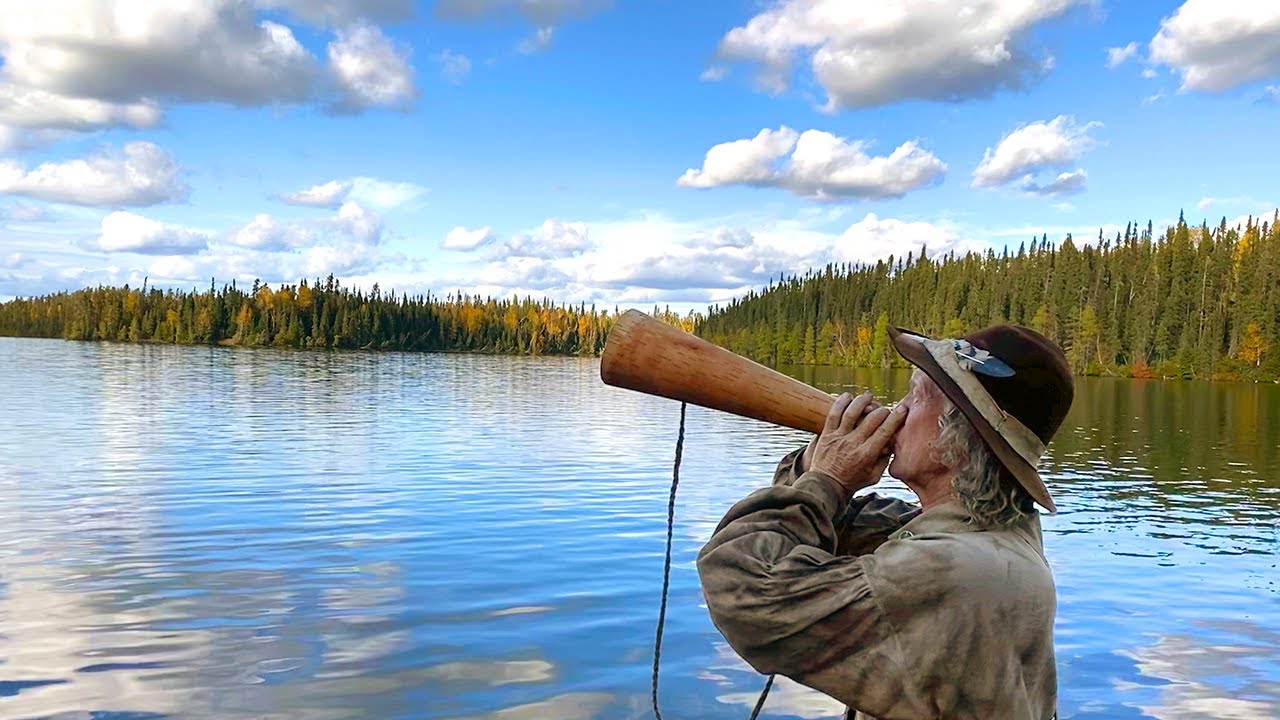
Hunting for Moose in Northwestern Ontario (circa 2021) | Canada | Wilderness | Boreal Forest
49K
The boreal forest is a critical carbon sink that helps regulate global climate. Without the boreal forest, humanity would face significantly worse climate conditions because this ecosystem absorbs substantial amounts of carbon dioxide from the atmosphere. The forest spans across Canada, Alaska, and Russia in a continuous band around the globe.
Click to watch →

Experimental forest shows impacts of climate change scenarios
11.6K
Boreal forests, the world's largest forest system spanning North America, Scandinavia, and Russia, serve as vital carbon sinks covering Earth's upper third. Despite comprising only 3% of land surface, peatlands within these forests store up to half of global soil carbon. However, rising temperatures cause these ecosystems to dry out, releasing stored carbon as greenhouse gases and accelerating climate change. This creates a dangerous feedback loop where warming leads to carbon release, which further increases warming—a cycle that could trigger irreversible tipping points transforming carbon sinks into carbon sources.
Click to watch →
![(IDN SUB) ※과학자들의 경고※ 지구 멸망?! "지구는 안 망해요, 인간이 망해요" [환경과학 특집 : 신박한 벙커]](https://i.ytimg.com/vi/NlcifJBHaI0/maxresdefault.jpg)
(IDN SUB) ※과학자들의 경고※ 지구 멸망?! "지구는 안 망해요, 인간이 망해요" [환경과학 특집 : 신박한 벙커]
371.6K
Northern forests (boreal forests) store approximately 40% of Earth's total carbon, making them critical carbon sinks. Climate change is threatening these forests through multiple mechanisms: increased temperatures enable invasive species like mountain pine beetles to spread, killing trees; drought conditions make forests more flammable; and fires release stored carbon back into the atmosphere. Coniferous forests are particularly vulnerable because they contain resin that ignites easily. This creates a dangerous feedback loop where climate change causes fires, which release carbon, which causes more climate change.
Click to watch →
Deep Dive
Disturbance ecology in coniferous systems, focusing on the ecological roles and management of wildfires and pest infestations, such as bark beetle outbreaks.

Dead Wood, Fuel Loads, and What the Science Really Says | Dr. Allan Carroll
193
Forests are dynamic ecosystems requiring natural disturbance for health, yet human intervention has increased vulnerability to catastrophic change. The mountain pine beetle epidemic (1999-2010s) affected 18 million hectares in western Canada—the largest biotic disturbance in modern history. Two factors drove this: climate change enabling beetle survival through milder winters, and fire suppression creating dense stands of mature pine. Research revealed three times more mature pine than would exist under natural fire regimes. This creates 'ecological echoes' where recovery allows similar problems to recur in 60-70 years. Sustainable forestry requires diversifying landscapes with mixed species and age classes rather than creating uniform monocultures vulnerable to pests, fire, and climate change.
Click to watch →
Лесной участок. Как сохранить деревья?!Инструментальная диагностика.
4.8K
Bark beetles are primarily forest sanitizers that target weakened trees, not healthy ones. Healthy trees have intact resin flow that kills beetles, while weakened trees cannot mount effective defenses. Preventive bark beetle treatments should be applied during construction or major ground disturbance and continued for at least 2 years afterward. Young forests (35-60 years old) are more resilient to construction disturbance than older forests (60+ years). To protect trees from construction damage, fencing should extend 10% beyond the tree's crown projection to account for the root system's extent. When living in forested areas, humans should adapt to forest rules rather than trying to change them, as trees that have grown for 50+ years have established relationships with groundwater and soil conditions.
Click to watch →

Markus Melin: Kuka söi puun? Kuka sitä on kaivertanut? (webinaari 17.2.2026)
195
Forest disturbance dynamics involve complex interactions between tree death and beetle populations. Primary bark beetles like the birch bark beetle kill healthy trees, creating conditions for secondary species. The birch bark beetle (Ips typographus) is Europe's most significant pest, capable of killing healthy spruce trees. It overwinters under bark or in snow, emerges when temperatures reach 18°C, and creates mating chambers under bark. Females lay eggs in galleries along the trunk, and larvae feed on phloem, creating visible feeding patterns. The beetle prefers trees with 20-30 cm bark thickness, attacking base or middle sections. Damage identification includes rapid bark loss, extensive galleries, and needle absence. The beetle carries symbiotic fungi that weaken trees and provide larval nutrition. Climate change benefits bark beetles through warmer temperatures and longer growing seasons, with the epidemic threshold moving northward. The spruce bark beetle (Ips amitinus) is Finland's most numerous bark beetle, widespread but causing less damage in northern regions. It attacks both spruce and pine, preferring mature trees, and causes upper canopy damage with needle browning. The spruce bark beetle creates distinctive star-shaped or fish-like gallery patterns radiating from central chambers. Pine bark beetles include the vertical bark beetle (Ips pini) and horizontal bark beetle (Ips acuminatus), distinguished by their gallery orientation.
Click to watch →
2025-02-27 Special topic: Spruce Budworm in BC — Dr. Allan Carroll
118
Forests require periodic disturbance for health and rejuvenation, encompassing natural events (fire, wind, landslides) and biotic agents (insects, diseases). Forest insects are categorized into two guilds: bark beetles causing mortality through phloem feeding, and defoliators causing growth reduction through foliage consumption. The mountain pine beetle devastated 18 million hectares of BC forests, illustrating bark beetle impact. Defoliator success depends critically on synchrony between larval emergence and budburst, as shoots develop rapidly and lignify within three weeks. Recent outbreak changes result from fire suppression creating dense understories that extend outbreak duration and severity, combined with climate warming affecting insects more than trees because insects are ectotherms. Trees require both temperature and photoperiod for budburst, creating differential responses that drive bidirectional range shifts.
Click to watch →
Taller Regional Cuidando la Salud y Sanidad de los bosques --SECCION 2
3.6K
Silviculture is applied ecology to forest vegetation regulation, manipulating growth, structure, composition, and density. Forest stand structure involves vertical strata and horizontal spatial arrangements. Forest succession progresses through stages: initiation (abundant resources, minimal competition), competition/exclusion (increasing resource competition, tree mortality), lower strata regeneration (canopy gaps enable understory growth), and old growth (mature state with high diversity). Natural disturbances include fires, windstorms, avalanches, volcanic activity, and pest epidemics. Bark beetles are the most important insect group in temperate forests, capable of killing hundreds of thousands to millions of trees. They have been present as natural disturbance agents for millions of years. Research demonstrates that stand density is strongly associated with bark beetle attack severity, with mortality increasing when basal area exceeds approximately 26 m²/ha. Bark beetle species exhibit strong preferences for specific tree diameter classes, with some attacking only young trees and others targeting mature trees. Different bark beetle species target different life stages of trees, with some attacking only young trees (up to 1.5-2 meters height) and others targeting mature or over-mature trees.
Click to watch →
Deep Dive
The specific impacts of global warming on high-latitude biomes, including permafrost degradation and the northward shift of the taiga-tundra boundary.

Розбір імітації НМТ з географії
816
Earthquake risk is highest along tectonic plate boundaries, particularly in the Pacific Ring of Fire. San Francisco faces significant seismic threat due to its location on this active zone. Permafrost distribution determines which countries can utilize natural cold storage for food preservation; Mongolia qualifies while northern capitals like Moscow do not. Global warming causes biome boundaries to shift poleward: arctic deserts shrink as permafrost thaws, transitioning to tundra, then taiga, and eventually forest-tundra, while tropical biomes may expand toward poles.
Click to watch →

Week 2 Lecture 2
424
The boreal forest (taiga) is the largest intact forested biome on Earth, encircling the northern hemisphere. It is characterized by long winters, short growing seasons, low mean annual temperatures, and extreme temperature ranges (from -30°C in winter to +20°C in summer). It has moderate annual precipitation (333mm) with about half coming as snow. The biome has low diversity with the same species repeating across North America and Eurasia. Major human influences include forest exploitation and climate change, which is warming high-latitude ecosystems 3-4 times faster than the global average. This leads to drying, increased lightning, more wildfires, expanded insect pest ranges (like mountain pine beetles), and permafrost thaw affecting the physical foundation. About 80% of the boreal biome is underlain by permafrost, and thaw destabilizes the landscape, causing trees to topple into wetlands (drunken forests). This releases stored carbon and threatens the boreal biome's function as a carbon sink. Tundra ecosystems have long, cold winters with continuous permafrost (thaw depth of 0.5-1m). They have poorly drained soils because precipitation has nowhere to go with limited vegetation and low transpiration. Soils are nutrient-poor due to cold temperatures limiting microbial activity. The mean annual temperature is less than zero (around -14°C), with very short growing seasons and precipitation mostly as snow. Vegetation consists of low-growing plants: grasses, lichens, shrubs, and forbs. Tundra has very slow decomposition, accumulating peat soils that store huge amounts of carbon. Human influences include airborne pollutants, oil and mineral extraction, legacy contamination sites, and climate change causing permafrost thaw, landslides, coastal erosion, and tundra greening.
Click to watch →
![Los ecosistemas del mundo 🌎 Geografía [CICLO FREE]](https://i.ytimg.com/vi/BygVEW9be9E/maxresdefault.jpg)
Los ecosistemas del mundo 🌎 Geografía [CICLO FREE]
23.2K
Taigas (boreal forests) are coniferous forests found at high latitudes (around 60° north), characterized by long winters and dominated by cone-bearing trees. They experience extreme temperature contrasts between seasons. Major threats include poaching (particularly for fur) and climate change. Tundras are regions above 60° characterized by permafrost (permanently frozen soil), which limits root growth and affects methane release. Human construction threatens permafrost stability. Both biomes support specialized wildlife adapted to extreme cold, including polar bears, arctic foxes, and caribou.
Click to watch →

Aula 06 - Biomas brasileiros e mundiais
142
The Tundra biome occurs above 60° latitude and in high-altitude mountain regions. It has very low average annual temperatures (around 5°C), low precipitation (340mm/year), and a short growing season (April-August). The permafrost (permanently frozen soil) extends 5-6 meters deep, with only the top 10-15cm thawing in summer. Vegetation is limited to grasses, mosses, and lichens, with no trees due to the permanently frozen soil. As global temperatures rise, permafrost thaws, releasing stored methane (a potent greenhouse gas 28 times more effective than CO2) and potentially releasing ancient pathogens frozen for thousands of years. The Boreal Forest or Taiga occurs around 60° latitude, slightly south of the Tundra, with average annual temperatures around 10°C and a longer growing season. It has low biodiversity, dominated by coniferous trees like pines and spruces that can survive temperatures down to -40°C.
Click to watch →

Gerald "JJ" Frost - The “Greening” of the Arctic Tundra Biome, 29 May 2020
229
Permafrost degradation affects water storage and movement in the landscape. In discontinuous permafrost areas, water can move laterally and percolate downward more easily, potentially creating drier conditions that affect vegetation. In continuous permafrost areas, water has fewer places to go, potentially creating wetter conditions. Permafrost behavior connects to global climate change through oceanic circulation, which powers the global ocean circulation pump. Additionally, permafrost stores vast amounts of carbon that could be mobilized as temperatures rise.
Click to watch →
Deep Dive
Sustainable forestry, silviculture practices, and the economic versus ecological trade-offs of timber harvesting in coniferous biomes.
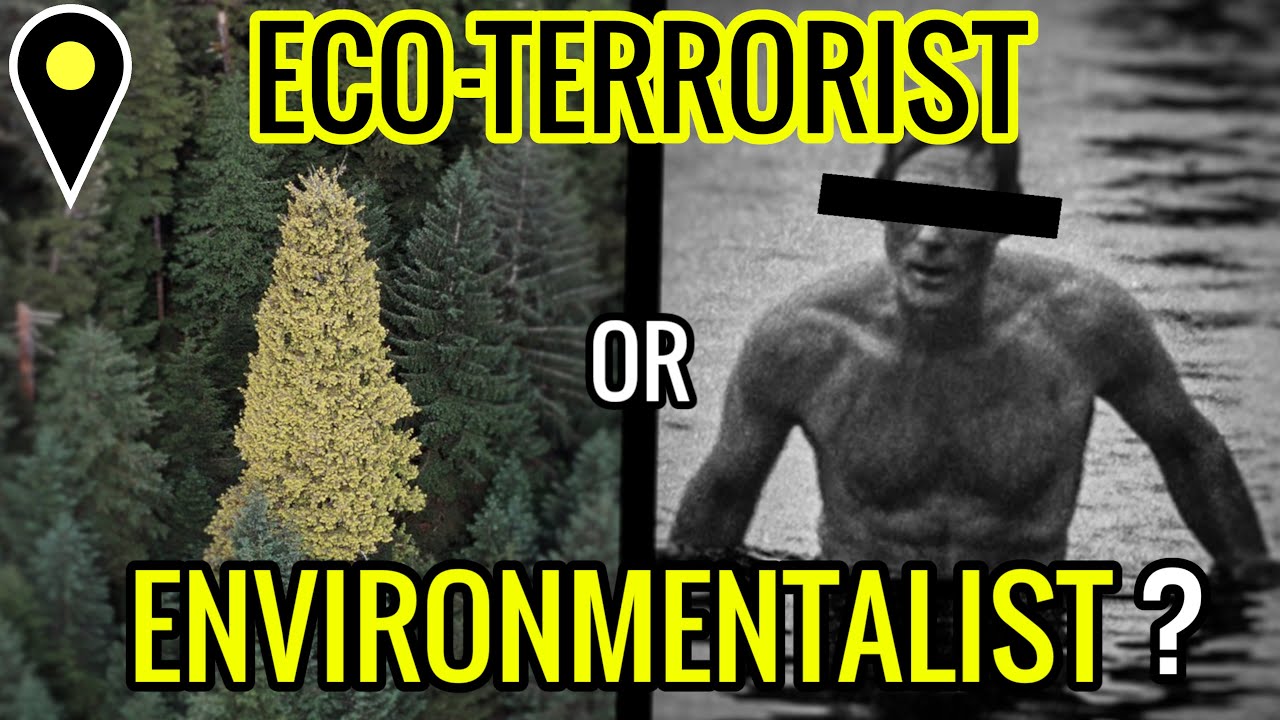
The Golden Spruce and the man who killed him
147.3K
Three primary methods of timber extraction exist with varying ecological impacts: selection cutting removes individual trees while maintaining forest structure; shelterwood cutting preserves seed-bearing trees for regeneration; and clear cutting removes entire sections, being most economically profitable but ecologically devastating. Between 1970-1998, clear cutting dominated 87% of BC's public land harvesting. The Baron River Valley case study (1981-1987) demonstrates how clear cutting responded to beetle infestations, removing 500 km² in just 7 years. These methods reflect fundamental trade-offs between economic efficiency and ecosystem sustainability.
Click to watch →

The REAL Reason Modern Lumber Is So Bad (Here's The Solution)
243K
Modern timber companies harvest trees when they reach prime growth stages because this maximizes immediate financial returns for shareholders. Trees are cut down when they are large enough to yield commercially viable lumber quantities, even though this timing coincides with maximum knot formation. The economic pressure for quick returns overrides the longer-term benefits of waiting for trees to produce higher-quality clear lumber. Younger trees have higher sapwood-to-heartwood ratios than older trees, and young sapwood is less stable than heartwood that has been buried deep inside trees for centuries. Modern trees grow faster and produce coarser-grained wood compared to slow-growing old-growth trees. High-quality old-growth characteristics are only renewable over centuries, creating a fundamental tension between immediate resource needs and long-term sustainability of premium wood products.
Click to watch →

“Your Logger Won’t Tell You This (It’s Killing Your White Oaks)”
530
Timber sales face economic constraints when properties contain many small-diameter undesirable trees (4-12 inch beech), as mills reject timber with excessive low-value material. This economic reality separates timber harvests from ecological management needs. Clear-cutting typically fails to regenerate oaks, producing instead fast-growing pioneers like poplar that shade out oak seedlings. Landowners must separately address midstory management through additional contracts or personal involvement, recognizing that marketable timber harvests and ecological sustainability require different approaches and resources.
Click to watch →

🌲7 Todsünden im Wald ☠️ - die Abrechnung! #wildaufwald
84.3K
Sustainable forest harvesting requires: (1) Leaving slash material to form humus and maintain soil nutrients; (2) Avoiding large clear-cuts that expose soil to direct sunlight, causing 10-20 years of regeneration delay; (3) Maintaining overstory shade to protect understory vegetation; (4) Building mixed forests with multiple tree species to reduce pest and disease risks. The economic gains from clear-cuts are often offset by long-term cultural costs.
Click to watch →

Ecological Silviculture for Restoration & Adaptation in Int. W. Conifer Ecosystems - Jan. 19, 2024
705
Ecological forestry differs fundamentally from traditional forestry by starting with ecological science as its foundation, with sustaining ecological integrity and biodiversity as overriding objectives rather than constraints. It is tethered to natural disturbance regimes, working with rather than against disturbance processes. Economically, it shifts focus from maximizing return on investment to emphasizing cash flows while prioritizing conservation values. Ecological silviculture applies these principles to specific ecosystems, beginning with understanding the disturbance regime and forest development model characteristic of each ecosystem type.
Click to watch →
Taiga
Wildlife
Snow Shape
Recap
Taiga
0:00- 1
Largest terrestrial biome with cold weather and moderate rainfall.
- 2
Named for dominant coniferous trees or evergreens.
The Albedo-Carbon Trade-off in High-Latitude Forests
While coniferous forests are traditionally valued as vital carbon sinks that help cool the planet, atmospheric science introduces a critical counterpoint: the albedo warming effect. In high-latitude boreal regions, the dark, dense evergreen canopy absorbs a high amount of solar radiation, lowering the surface albedo compared to reflective snow or lighter deciduous canopies. Research suggests this absorbed heat can offset, or even exceed, the cooling benefits provided by the forest's carbon sequestration. This challenges the simplified assumption that preserving or expanding coniferous forests is universally beneficial for climate mitigation, highlighting a complex ecological trade-off.
The scientific definition of a biome and how factors like latitude, precipitation, and temperature determine global ecological zones.
Basic plant taxonomy and physiology, specifically the fundamental differences between gymnosperms (conifers) and angiosperms (flowering/deciduous plants).
Fundamental ecological concepts, including adaptation, trophic levels, and how abiotic factors limit or support biotic communities.
The basics of soil science, specifically how cold climates and needle-leaf litter affect soil acidity and nutrient decomposition rates.
The role of boreal and temperate coniferous forests as massive global carbon sinks and their critical function in climate change mitigation.
Disturbance ecology in coniferous systems, focusing on the ecological roles and management of wildfires and pest infestations, such as bark beetle outbreaks.
The specific impacts of global warming on high-latitude biomes, including permafrost degradation and the northward shift of the taiga-tundra boundary.
Sustainable forestry, silviculture practices, and the economic versus ecological trade-offs of timber harvesting in coniferous biomes.
3.9K views25likes0:52@CK12Original Release: 2017-05-24
also known by the names of boreal forest and tigga the coniferous forest biome is the largest terrestrial biome and experiences moderate amounts of rainfall and cold weather it deres its name from the dominant population of coniferous trees or Evergreens it also houses a variety of animals as small as squirrels and hairs to as big as moose elk and grizzly bears because of the cold Winters precipitation is generally in the form of snow so the evergreen trees have developed this conical shape over time with downward sloping branches that prevent snow accumulation which could get too heavy and break the trees branches so to recap the coniferous forest biome is the largest terrestrial biome it houses a variety of species and organisms and it has very cold Winters and heavy snowfall
Up Next
6:01
Jack Pine Ecology: Fire Adaptations and Serotinous Cones | Michigan Forests
@BeLEAFItorNot
17K views•2019-06-26
50:12
Bacterial Communication: Quorum Sensing and Biofilm Formation Explained
@JHUAAP
12.6K views•2011-06-28

5:35
Enteric Nervous System Explained: The Gut's Brain | Neurobiology Lecture
@alumniu6029
438 views•2018-09-12

7:08
Bacteriophages: Earth's Deadliest Killers and Future Antibiotics
@kurzgesagt
34.6M views•2018-05-13
Related Study Plans & Knowledge Roadmaps
Structured learning paths in Biology
biology
RNAi: Biogenesis, RISC & Gene Silencing
01Molecular Biology Foundations: DNA to Protein
02Introduction to RNA Interference (RNAi)
03Molecular Biogenesis of miRNA and siRNA
+ 2 more learning modules
10h5 modules
Explore Roadmap
biology
Mycorrhizae: Signaling, Biophysics & Ecology
01Foundations of Mycorrhizal Symbiosis
02Molecular Signaling and Root Colonization
03Biophysics and Bioenergetics of Nutrient Exchange
+ 1 more learning modules
11h4 modules
Explore Roadmap
biology
Circadian Clocks: TTFL, SCN & Periphery
01Foundations of Molecular Biology & Gene Expression
02Introduction to Chronobiology and Actograms
03The Core TTFL: Molecular Architecture of the Clock
+ 3 more learning modules
14h6 modules
Explore Roadmap
biology
Population Genetics: Math, Drift & Selection
01Genetic & Probability Foundations
02The Hardy-Weinberg Principle and Baseline Models
03Mathematical Modeling of Natural Selection
+ 3 more learning modules
18h6 modules
Explore Roadmap