





![Enterprise Strategy & Project Execution with Balanced Scorecard [Enterprise Architecture Summit]](https://i.ytimg.com/vi/scsnEto-nUY/maxresdefault.jpg)

![Application Lifecycle Management [ALM] for Power Platform](https://i.ytimg.com/vi/tv83D85ags0/maxresdefault.jpg)








![[LIVE] 국회 행정안전위원회 전체회의 생중계/2026년 2월 9일(월)/KBS](https://i.ytimg.com/vi/5gHYYEcbd2c/maxresdefault.jpg)


Enterprise Architecture Management (EAM) provides a structured approach to post-merger integration by establishing common terminology, aligning business capabilities with application landscapes, and enabling transparent decision-making through tool-based reporting; ZF Group successfully integrated WABCO by using business capability maps and application inventory tools to check alignment against existing target architecture plans, identify redundant applications, and make informed retain-retire decisions across 27 new manufacturing locations and 14,000 employees.
Enterprise Architecture for Post-Merger Integration Success | Webinar
Added:Fundamentals of Enterprise Architecture (EA) and Enterprise Architecture Management (EAM) frameworks (such as TOGAF).
Basic concepts of Mergers and Acquisitions (M&A), specifically the operational and technical challenges of Post-Merger Integration (PMI).
The concept of Business Capability Mapping and how it serves as a bridge between business strategy and IT infrastructure.
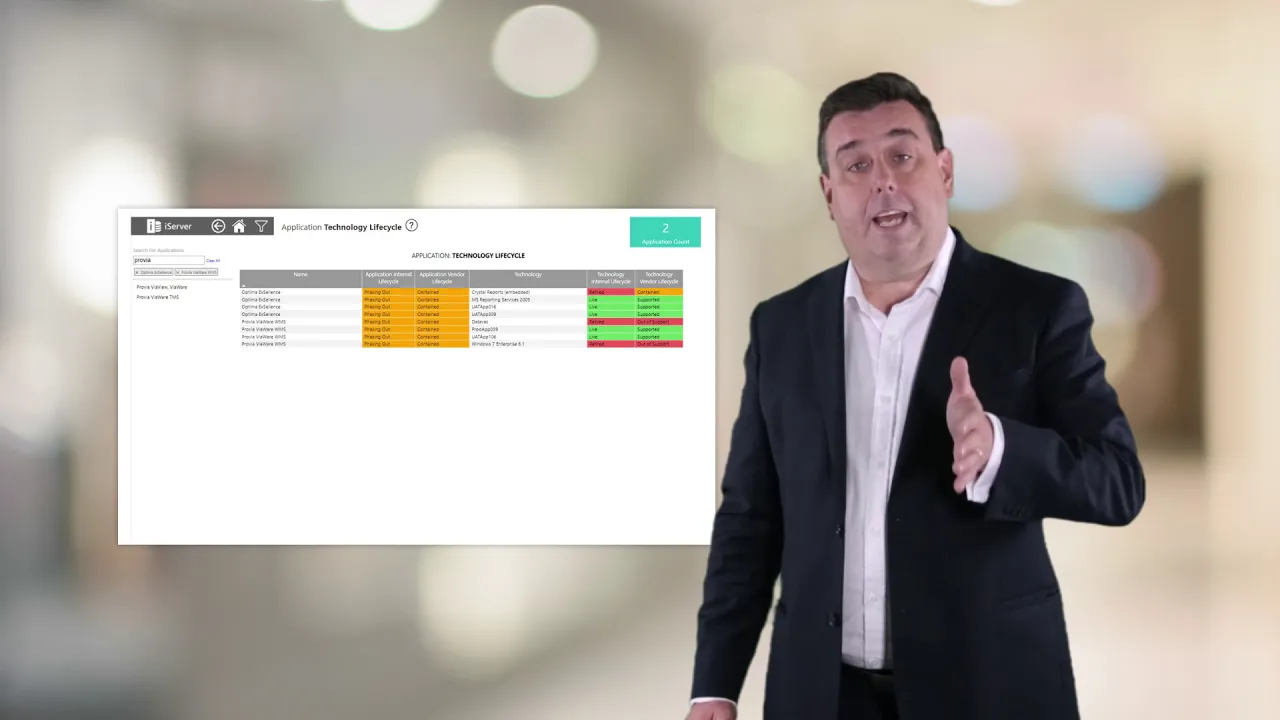
IT Portfolio Management principles, particularly application inventorying and lifecycle management.
Advanced application rationalization methodologies (evaluating system redundancies and defining migration/retirement paths).
Change management frameworks (e.g., ADKAR or Kotter's 8-Step Model) to address organizational culture shifts during IT integration.
Evaluating and selecting EAM software solutions (such as LeanIX, Bizzdesign, or Software AG Alfabet) for real-time reporting and visualization.
Establishing long-term EA governance structures to prevent technical debt accumulation after the initial integration phase.
1.6K views12likes34:20Original Release: 2021-03-29
okay i would say let's kick it off so hello and welcome to this linax webinar together with zf our today's topic is how eam supported post merger integrations at zf so yeah my name is christian hermann i'm a customer success manager at lenax doing this job now for more or less two and a half years and our today's guest is kai elsner who is an enterprise architect at cedar freight so welcome kai thank you christian thank you for having me here and also a warm welcome from my side and thank you for giving me the opportunity to share some content with you so today's topic is enterprise architecture supported post merger integrations at zf group um my name is kaijelsner i'm with zf since 2015 and we are using linux since a little bit more than one year january 2020 before we start with the topic i would like to share some key figures without with you who are we who is that f for the ones that don't know us and as the 2020 figures will be published as of next week i'm still publishing here the 2019 figures in 2019 we achieved sales of 36.5 billion euros with around about 150 000 employees we do have a global presence with 241 locations even before the merger with vapco and around about 160 production locations worldwide saddaf's mission is zero accidents and zero emissions and how are we going to achieve that with all our different technology domains like the vehicle motion control the integrated safety the automated driving and the electric mobility all supported by iot uh solutions and also digital products and so where do you find our products it's not just in passenger cars and trucks it's also in every other machine that moves my my favorite product is here the the wind power generator so it's really unbelievable you have on top of this wind turbine a 25 tons gearbox from zf and also an iot enabled predictive maintenance solution so i can can still not believe that you can put 25 tonnes on top of this wind turbine but it works so now coming to the merger situation last year zf bought vapco and this is the perfect match for us because together we will now mobilize the commercial vehicle intelligence so this is a golden opportunity to step up in the commercial vehicle area for the death so we are currently busy with the integration and vapco is going to be integrated or that has already happened as a division cvcs commercial vehicle control systems and with that integration we bring another 27 manufacturing locations and another 14 000 employees into the company and uh yeah that was also something that required enterprise architecture support so what was the initial situation when enterprise architecture team joined the integration project so we joined after the due diligence the post-merger integration had already started and then the board of management where the integration project reported to they came back with a question um how far is that all aligned with um existing epic target application plans in set f before the merger so what is going to change here they wanted to get that that clarified um and that turned out to end up on our end in enterprise architecture team to check against existing plans so we joined the project and the integration project was called verona project and the verona project had a planning approach they were organized in work streams um they were identifying the leading systems or applications um they were working per work stream towards some targets and business and some business targets and sub targets per work stream all defined by the business so these were their planning approaches they were thinking in work stream business targets or subtargets and talking about i.t systems or applications and um we from enterprise architecture side we always come with uh business capability and application thinking and to to also check against existing plans we we need clarify clarity on that topic so we had a little bit the challenge to somehow um come to common terminology and come to a common level of detail um so you can imagine that the applications identified here for the work streams were on a little bit different level of detail so in some work streams they have simply put sap as an key application in there so that is what i mean with we need to come to common level of detail across all work streams and also to have the possibility to check against existing plans what was the situation on the enterprise architecture toolbox site so what was in place here when we joined the project last year um lena x was pretty new for us we and we started in this project here in march leaner x was implemented in january was pretty empty at that time um business capabilities were already in the tool um all moved from powerpoint into the tool uh at that time we had zero users outside the central enterprise architecture team trained and onboarded to linux um the target application landscape documentation was still in powerpoint and excel here you can see just an empty excel as an example and the ss application landscape was also sitting in excel and sharepoint lists and and the previous enterprise architecture tool and with a little bit of outdated information so information spread across different tools what was then the idea how to how to proceed and how to support the project so we had the need to combine our planning frameworks to come to common understanding and common terminology so the project team the project integration project team they were thinking about work streams as i said and we had the need to come to capability views so we somehow had to identify the relevant capabilities here you can see a screenshot of our business capability map level one and two we also had a little bit the challenge to identify the right applications so we had plans at that time in powerpoint and excel uh talking about the to be application landscape where we are heading to um which was a little bit on a different level of detail than what the project team had in their in their powerpoint documentation here so that was all our challenge and um we immediately decided to go tool-based even if lena x was pretty pretty new at that time for us we thought that this is a golden opportunity to use it right away even if also we as an enterprise architecture team were not totally familiar with it was also new for us so we wanted to go tool-based and we were already in the situation that we had defined some approaches that we always go from a reporting perspective first so whenever we put data into linux we always ask ourselves what is the report that is required here which then drives the question what is the data that is required for the report so we went back to the integration project team and were talking to them about reports to align on reporting needs for them and also on reporting needs for us because we were asked to check something and that to check against existing plans so for that we also needed some reports so uh the first important report for us as well as for the integration project team is the business capability map which is now easy to see for everyone and um so we have clarity on that and can share that easily tool-based across the whole team across the whole company another key report also standard report is it was for us the application landscape report that we as a team and enterprise architecture as well as the project team gets clarity on which application has assigned to which business capability and supporting which business capability then the other very important report was the application metrics report which is a very flexible one and here that gave us a little bit more possibility so we agreed with the project team that having reports where you can show business capabilities on this access user groups and here on a very high level which one is it set f application which one is a division cvcs formerly webco application and then having all the applications here in the center so this kind of report would be very helpful a for us as enterprise architecture team but also helpful for the project team going away from excel power up and powerpoint into tool-based reporting and finally by having application matrix report which is flexible and can be adjusted we also agreed with the project team to offer a report that the project team can still proceed thinking and organizing themselves in their work streams and in their business targets so we put on this axis here the work stream structure like sales and and then the different uh business targets on the other access here the um business capabilities in the center then all the applications so that you as a project team can see okay here are my applications supporting this business target in the project scope and also these business capabilities and um yeah by presenting that from a reporting perspective first back to the project team that enabled at least better understanding on their side why they should put or put all the data into the tool before we jump into on to the next steps that how we have done that i need to share our high-level linux data model with you so for the ones that are also linux customers it's easy to understand i guess but there's still one additional fact sheet type we have added to our linux workspace it's called the context fact sheet here on the right hand side this is a little bit the dirty factory because you can assign every other fact sheet to that context fact sheet and we have that in place to create some department and domain specific or even project specific views and in this project in the integration phase we have used that to build the pro integration project structure with the work streams and the business targets we have done this as a context model this is a context and then assigned the relevant applications to that context so that is a little bit an adjusted linear x data model on our side so um then we went back to the different project work streams and have asked them to do following activities first of all please identify all relevant business capabilities that are in scope here for the integration for your work stream and luckily the project was organized in a four-in-a-box approach we had always four people heading each work stream and two i.t people one from the webco side runs them from the set-up side and also two business persons run from the webco side and another one from the setup side so we were really able to come here to common understanding and also identify the right needs so project structure was already well defined then we have asked them to tag the business capabilities with the project verona tag then categorize these business capabilities against our standardization and integration style what is what is that um so that is how what is the target operating model for set f in this business capability that is something we figure out with the business guys with the business leads so how independent may a plant in a specific country work in this specific business capability or how harmonized or even unified do we have to be in this capability by having common understanding on on that target operating model for a specific business capability you can better align than the number of applications and the single thing also the the possibility to look into harmonized data then we have asked you guys um to create the cdf applications in the inventory at that point in time as i said before we had zero applications in the tool we have started from scratch and just used the integration project here so please put it in and tag it with project the owner tag and also set a phone to application tag for the webco applications we were lucky lucky because uh vapco was a lena x customer before the merger we have now merged into a single linear x instance but it was quite easy to get the data out of the web cleaner x instance into that set of linearitex instance so these applications were already there and the relevant applications were then also tagged with the project veronatec then we have asked our colleagues to map the applications to the relevant business capabilities and finally map the applications to this special context fact sheet type to their work stream and their business target to enable than the matrix reports i initially showed and finally please double check identify gaps have you been able to assign an application to all identified capabilities have you also been able to assign to use all applications that were formally mentioned in the powerpoint based planning just double check that we haven't forgotten anything and yeah how was that done i mean um that was very very special and very um depending on the different work streams so some work streams were quite uh where were very easily able to do that on their own just after uh one hour's linear x onboarding sessions um other work streams really needed hands-on support from our team so depending on the different work streams and how they were able to do it um i really supported them also hands-on and were also part of their meetings with within their work stream but finally in a very short time because we require a little bit on the time pressure we got all the information and then also ask our colleagues to proceed with more details fill in application life cycle fill in the strategic classification and if that is an application that is where we already know that it's going to replace please also fill in the successor and what was then after having now all these data points what was now the final result that we could then use so finally we had all required data points to do our enterprise architecture check because we we now can look at it from a business capabilities perspective and we can because we have now that we can also go back and check against existing architecture target architecture plans so um how was that done here you can see we have used the inventory again then filtered for some context information for some specific work streams and for each and every work streams we have then created these saved searches and discussed it in meetings with the team and so here for example the first application the project team has already classified that as to be replaced we from enterprise architecture team looking into our existing plans also would have flagged that as red cannot be part of target so here we are aligned the next one the project team is saying this is uh or the application owner is saying this is a strategic application we as an enterprise architecture team are saying this is yellow from our perspective and yellow means this candidate for target but needs further clarification here we have to discuss and in this case we have to discuss because this is an um old um sap erp application and the target application should be an s4hana application so depending on the timeline when this is going to happen when this is going to be rolled out to to the webco side um we have to accept the fact that it's still a sub erp or can can wait for the s4hana so that's why it's yellow so by having all these applications and assignments to business capabilities we were able to do this check per application and then report back and have a basis for the discussion um and um here are the other reports so we as i said we have used also the application matrix reports and that was quite helpful for the project to a get also detailed feedback on the enterprise architecture check what are the red the yellow and the green applications from our perspective which application is owned by whom and what is which one is coming from the setup site which one is coming from the cvcs side here yes everything from the cvcs side is red but that was not the case everywhere um so in some areas we really had to dive deeper and understand which one to retain and which one to retire another benefit of having everything in the tool now is yeah you can now easily switch to different views and by like the strategic classification so every work stream on the post merger integration project can create now work stream specific reports and always see his latest and greatest application landscape assigned to business capabilities with the strategic classification which one is going to be replaced which one is the strategic one which one is coming from the cvcs side formerly vapco and which one is coming from the rest of the dev and also quite helpful um we now have a pretty good overall application landscape report where we can easily filter on the dark blue and the light blue which one is coming from formerly webco now cbcs which one comes coming from zf and from an overall perspective not just from a work stream perspective and interestingly that triggered a huge discussion or triggered awareness let's say no not discussion triggered a much better awareness of the interdependencies between the different m a project work streams in the beginning of the whole journey everyone was looking in his work stream looking at at his playground but by putting it into the tool and reporting it out of the tool you immediately see the dependencies which application is supporting various business capabilities across various business areas where you cannot do a retain retire decision for your workstream only so that was also quite helpful by having the information in the tool so this is what i wanted to share with you are there already questions in the q and a sections or would you like to raise questions please feel free feel feel free to answer questions now feel free to answer questions later i will share my contact details and i'm i'm also happy to learn from your side how you approach m a and uh how you do that tool based and how you have used linux so i'm happy for everyone who would like to share also with me his journey and his learnings yeah first of all thank you very much for those uh insights i guess this this is like really really interesting content that you shared here and i guess that a lot of like prospects and customers are highly interested like and specifically those merger acquisition scenarios and um so there's no question yet in the in the chat on the in the the section um ah okay the first one is uh coming in right now so the first question is are you guys using hierarchies in the application fact sheets yes yes we do we we have level level one to level four and as a very seldom exception also level 5 applications yes that is done and we always assign the lowest level application to the business capability perfect are there any further questions and also for everyone um here um you you have the possibility uh to to to just that like use this question and answer section um just uh type your message and we will do our very best to answer it i'm also having a look at the chat so okay next question is coming in so were there any iot related applications which dealt with issues of timing rate technical stake mismatch etc yeah maybe i can split that into different questions a tech stack mismatch starting with that one so i have shared just the the um application uh side of the m a journey with you we to have done a similar exercise on the technology side um mainly in the in the infrastructure area starting in the workplace area so we have also used uh linux and technical stacks to do a comparison between the the two two companies that are merging now now a single company and quickly thinking about iot related applications um not in the face of the uh initial phase of the of the merger so we have started supporting very early now in the initial phase where the immediate needs of the business are covered and yes there's also an iot platform coming from the webco from the cvcs site but that is for now not merging with any other iot related topics from this from the zdf side so that is parked for later and was not in scope right now thank you very much for this insight as well um okay another question is coming in [Laughter] um so the question is are you making use of id components if yes who maintains them and their relationships to apps and also um is the tecnopedia integration used for it yeah and technopedia integration not used because we are still on an older license model we don't have a license for that number one and number two um my past experience with data coming from technopedia was was not so good that i am willing to pay money for it so i have to check that again but um my previous experience that is not a lena x-based experience but i was aware of wikipedia already before so i didn't have to too good experience with that um yes we are using also i.t components um and there are at the moment two different ways of using it components on the one hand our infrastructure guys from it operations side they are using the it component landscape and signing id components to technical stacks completely to manage their technology landscape as we also manage our application landscape they manage their technology landscape i'm also supporting these guys um there is unfortunately at the moment not too much interdependency and relationship maintained in linear x between applications and id components for now these are mainly two silos helping the two different teams to to manage their their landscape only in some areas we can really drill down from business application to application to from business capability to application down to it component provider and technical stack for some applications that is maintained but that is a lower number that is at the moment not the standard and also not the highest pressure on us for that use case um maybe also like an answer given from my end of my customer experience um we typical start with like more or less all our customers like literally with the application landscape and relating applications then to the to the business side meaning to business capabilities processes and user groups and id components often follow them like a bit later and as you mentioned kai um that that you uh that you say like technopedia you not have like the very best experience it's also one of the reasons why we decided to also come up with like an own service for for for this kind of yeah like getting data automatically related to it components for several reasons but only also one main reason is if you maintain a complete service yourself um of course you have more freedom and and um like like probably a smoother and even better kind of integration so um also like something christopher addressing you here directly if you would like to have their further insights um also feel free to reach out uh to me personally on to lina x in general or maybe also already having contact so feel free to address those questions also outside of this webinar okay next question how was a common business capability map agreed in the first instance was it imposed by zf into the acquired company cbcs were there any new business capabilities created or added as a result of taking on board cbcs yes so um so the whole methodology working with business capabilities that was heavily used in set f already before the merger and it was not well known in in former webco now cbcs so we started with our business capability map and then adding to this in the discussion with the business guys from the coming in from the webcrm and what i can also say that taking this approach this business capability-based planning was quite helpful to start in at a certain level of detail before diving much deeper into uh compare process level and we have only done that going much deeper for the topics where we don't we where we cannot do an easy retain and retire decision so in some areas it's not so clear and in some areas it's very clear very easy to decide because there was already a strategic tool that's licensed it's rolled out globally in set f so it's quite easy to decide how to how to treat that now in the post-merger integration scenario in other areas it's not so easy to decide because sometimes there is different functionality covered on the with the application on the setup side and the application on the webco side and here we really need to dive deeper in on to process level what is missing and is that acceptable and so after having done that exercise that i showed to you the project team is now doing really 360 degree analysis looking at it from all perspective from cost perspective from skills perspective uh going down to process level but starting as business capability level was helpful yeah i'll maybe also hear like an additional comment from my hand as um like i said this is not the the first and only customer that i've had as a customer who's done a merchant acquisition consideration or where i was also kind of involved um we often see that there's a yeah that the project team really has a look on the business capabilities from company a and company b and that they somehow try to find an aligned business capability map and we need to say like okay maybe the naming differs and so we can migrate like those business capabilities and the ones that the like the company who buys the others already has um usually we not really see that there's like a huge project of uh switching the one or the other companies because typically where we see merchant acquisition scenarios like the business capabilities are already quite similar maybe a different name maybe the one company has it a bit more detailed um so it's usually quite easy to find like one common picture then and works more or less like pretty smoothly i would say good um yeah we already have another question good good that's good yeah i like the discussion here um are the business applications running on in-house infrastructure or was cloud-based migration a part of the exercise yeah that was a combination so um may what we mainly had is in-house on-premise infrastructure a lot of software as a service on both sides and also applications being hosted at third-party hosting providers there were not too many applications for the current scope of the integration um that are let's say azure or aws applications relying on platform as a service offering from these providers so it was mainly software as a service and third-party hosting and on-prem yeah thank you very much okay there's no further question in the pipeline right now so um i just uh once again i use the opportunity um write your question into the into the q a session um we are happy to answer further questions otherwise if you might come up with follow-up question afterwards um feel free to reach out and we we are happy also to to answer your questions offline okay okay yeah so it seems that there's no question anymore so kai once again thank you very much for yeah for sharing the presentation to answer all the questions was a very valid and insightful session i really really liked the lot um also thank you everyone for joining this session um i hope you received some great insights and as mentioned feel free to reach out to us feel free to contact kai yeah thank you everyone and then have a great yeah depending on your time zone great day or great evening whatsoever and everyone please stay healthy and safe so then i would say we close the session thank you thank you for having me here and thanks for listening and come back with any questions afterwards if you like sure okay bye bye everyone bye
Up Next

14:33
QuickBooks vs NetSuite: Choosing the Right ERP System
@thirdstageconsultinggroup8228
3.9K views•2022-02-09

12:54
Triumph of Orthodoxy Icon: Byzantine Art & History Explained
@BenCallan
2.1K views•2024-08-06

9:49
FastAPI vs Flask vs Django: Choosing the Right Python Web Framework
@TechWithTim
302.5K views•2024-05-26

1:42
Game of Thrones Opening Credits: A Cinematic Analysis
@gameofthrones
46.3M views•2011-04-18
Related Study Plans & Knowledge Roadmaps
Structured learning paths in General & Interdisciplinary Studies
general-studies
Elevator Engineering: History, Physics & Cities
01From Hoists to Safety Brakes: The Dawn of Vertical Lift
02Hydraulic vs. Traction: The Engineering Physics of Elevators
03Modern Speed, Safety, and Algorithms
+ 2 more learning modules
12h5 modules
Explore Roadmap
general-studies
Rubber: Material Science, History & Geopolitics
01Origins of Natural Rubber & Mesoamerican History
02The Chemistry of Natural Rubber & Vulcanization
03The Geopolitics of the Rubber Boom & Colonization
+ 2 more learning modules
12h5 modules
Explore Roadmap
general-studies
Containerization: Evolution, Logistics & Trade
01Ancient Trade & Bulk Cargo: Amphorae to Barrels
02The Industrial Revolution & Cardboard Packaging
03The Containerization Revolution: Malcom McLean
+ 2 more learning modules
12h5 modules
Explore Roadmap
general-studies
Textile Tech: Evolution, Labor & Global Impact
01Pre-Industrial Textiles: Handloom & Cottage Industry
02Mechanization: The Spinning Jenny to the Power Loom
03The Factory System & Global Labor Transformation
+ 2 more learning modules
10h5 modules
Explore Roadmap