
























Planned obsolescence is a business strategy where products are intentionally designed to break down or become obsolete quickly, encouraging customers to purchase new versions; however, this approach can cause truly great products to be lost in the constant rush of innovation, as demonstrated by the contrast between disposable modern electronics and the single-purpose, heirloom-quality devices that once defined excellent craftsmanship.
Planned Obsolescence vs. Heirloom Electronics: The Last Game Boy
Added:The concept of Planned Obsolescence: Understanding the business and design strategy of deliberately limiting a product's lifespan to encourage replacement.
The Right to Repair Movement: Familiarity with the advocacy, legal battles, and consumer rights associated with repairing personal electronics.
Basic Handheld Gaming History: An understanding of the original Nintendo Game Boy's legacy, hardware design, and cultural impact.
E-Waste and Environmental Sustainability: The ecological impact of rapidly discarded electronics and the challenges of recycling complex hardware.
Circular Economy and Sustainable Product Design: Exploring how engineers and industrial designers create products meant for disassembly and longevity.
The Retro-Modding and Hardware Preservation Community: Investigating how enthusiast communities keep vintage hardware functional through custom parts and modern upgrades.
Open-Source Hardware vs. Proprietary Ecosystems: Comparing repairable, modular tech (like Framework Laptops) with highly integrated, locked-down consumer devices.
Legislative Frameworks for Electronics: Analyzing global policies (like EU consumer laws) that mandate standardized parts and user-replaceable batteries.
942.4K views41.5Klikes11:57Original Release: 2025-07-10
Bringing real results to real people.
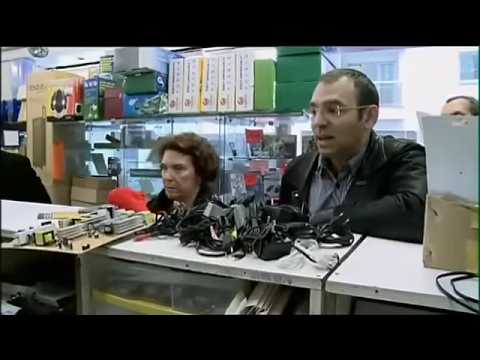
They'll have a product complain and feel like you're getting in, well, nowhere with the company. And you might learn something from my next two guests. They were given such a runaround by Apple Computer when their iPod battery went good. They made this film, put on the web, and expose what they call iPod's dirty secret. This was 21 years ago. My first viral video.
So, we're going to make a movie. We're going to put it on the internet.
See, my iPod battery died. And when I went to Apple to get a new battery, they said, "Buy a new iPod."
Just when the warranty was off. That seemed ridiculous. So, my brother Van and I made a video about it and it caused a bit of a stir.
Thank you both.
And this this was when I first learned the term planned obsolescence, a business strategy where products are designed to break down or become obsolete quickly so that customers are encouraged to buy new products.
Just feel right about owning a Zenith.
At Zenith, the quality goes in before the name goes on. Another example of quality first by Filco.
See, back in the day, products were built to last.
The new quazar is built to last.
And then at some point, most everything became disposable.
Now, at 7, hundreds of local families with one thing in common, big troubles with their refrigerators. There's a cynical take on this, which is that big moneyhungry corporations go out of their way and make their products fail, so customers have to buy more and more. And then there's a more practical take, which is that technology innovates faster and faster, and new products are just trying to keep up with innovation.
And then there's the reality, which is probably somewhere in between.
[Music] Now, regardless of whether this is some corporate conspiracy to make money or just an honest attempt to ship the latest innovation, one truth remains. As companies race to deliver newer and better stuff, sometimes really awesome, perfect products get lost in the shuffle.
[Music] [Music] This is a fun story.
I'm a big retro gamer. Nintendo, Sega Genesis.
I'm a '90s kid.
That was my childhood.
I bet I'm much better than him and Zelda.
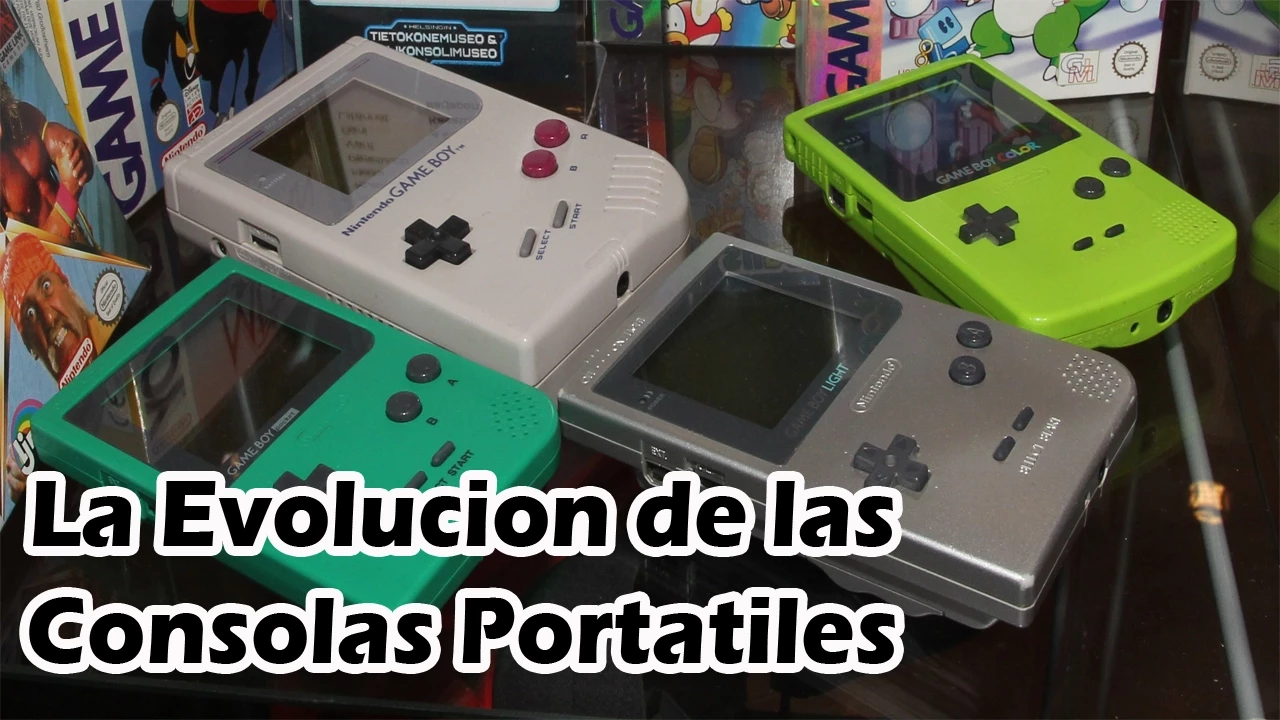
Game Boy. Game Boy was always my favorite.
[Music] And recently, I've been into these retro handhelds. They're like 50 bucks and they play most every game.
So, when I heard that Palmer Lucky, the tech billionaire turned defense contractor, was building a $200 Game Boy, I was skeptical.
Huh.
That was definitely a bad business decision for Mod Rep. Why? Because hear me out. 50 bucks for this mini Game Boy emulator thing with every system and every game and every feature and every everything or $200 for a new oldfashioned Game Boy that has only one feature.
I don't get it.
So, I called him.
Yo, Palmer, baby, tell me what's up with this uh game boy.
Uh just kidding. I uh I don't have his number. I don't know him. Uh in fact, this your call.
This is a fake number. But I did talk to him on the phone. I had like a friend of a friend who sort of knows him works the I was connected with him and I did talk to him on the phone and I was like why I have this plastic thing that is made in China like why would and man did he have the right answers and then he invited me out to his house.
Yeah, this is my figurine collection.
This is my rim wall. Uh, and this is this is everything else. I also collect a lot of the uh licensed Playboy collection uh figurines which are which are pretty great. Have you always been into this stuff?
Oh, yeah, dude. I I grew up as a super hardcore turbo nerd that liked video games and anime and uh I I never never was never forced to was never forced to abandon my hobbies because I got a wife who who who likes them. So, lucky me.
What's all this in your kitchen?
Oh, man. Well, honestly, I just opened up a bunch of packages. This is a this is a there's there's a company that has a as far as I can tell the patent on building um seamless gloves. So, they have they kind of do a continuous textile weaving process before they coat them. Does your wife ever get mad that her that the kitchen counter is covered with all of your hobby stuff?
Uh, not as long as I get it cleaned off before she needs to use it.
What's going on here?
I I just bought an ultrasonic welder that I'm using for a dry suit that I'm building. So, I've got to tape all of the seams for a diving dry suit. It's a It's a new type of driving suit that nobody's ever really done before. I won't get into the details cuz I'm keeping it to myself for now.
What's this hologram thing? It's a It's a really nifty display uh where you get a quasi volumetric view. Like this is one of my favorite views coming out.
See, it has has this lens on it. So, it's actually baking in that characteristic. I've had one of the larger ones on my desk for many years where I have my uh my chatbot waifuss just up on the screen to hang out with me and I just got their new one.
And this is all more tinkering stuff. Uh are you ever not tinkering on stuff?
I'm I'm I'm always tinkering on stuff.
So, what's special about this? Talk me through the Well, the chromatic is in a phrase the ultimate Game Boy. It's what would happen if you tried to make something that was a hardware compatible clone of the Game Boy with absolutely no cost limits. So for example, the display face is made of lab grown sapphire crystal.
The shell instead of plastic is made of a magnesium aluminum alloy. Uh the plastics even for the buttons in the D-pad are PBT plastic usually used in higherend uh mechanical keyboards and mice.
Why why' you decide to put double A batteries in there?
I I think double A batteries I think we're probably going to have them in the year 2100. No problem.
And you can still recharge them is kind of the magic. Correct. So, yeah, the cool thing about the Chromatic is we've we've built this really interesting system where you can use uh primary cells, non-rechargeables, or if you put rechargeable batteries in it, you can charge them using the USBC port. What it really is is a kind of the opposite of what most electronics are designed around, which is planned obsolescence.
The it's going to expire, it's going to become outdated, and then you're going to buy the next version. This is more like an heirloom piece. The idea is not that this is the next Game Boy, it's that it's the last Game Boy is how I would put it. There's never going to be something in that category of product that is better than this.
Let me translate that.
[Music] The opposite of what most electronics are designed around, which is planned obsolescence. It's going to expire. It's going to become outdated. Not that this is the next Game Boy. It's that it's the last Game Boy.
In a world where electronics move along on a freight train of outdatedness and exploration, Mod Retro is the brick wall planned obsolescence smashes into.
I think I got it.
Nice.
See, I too see myself as a super hardcore turbo nerd. I love really awesome, perfect products that went away not because they weren't great, but because they were swept away in an endless title wave of innovation and planned obsolescence.
And this this was the apex predator of gadgets when I was a kid. So why would it be any less fun three decades later? Because it was made obsolete by something like this do everything all-in-one disposable modern thing.
[Music] There's a certain romance to a singlepurpose device. They don't do everything. They just do one thing really well.
It's it's that same philosophy that says, "Yeah, I can watch an endless scroll of mindless videos on my phone, but I find greater value in sitting down and watching one thing."
Thank you.
And to build a whole company behind that philosophy, that's a little crazy. It's the kind of crazy that only a tech billionaire prodigy would think to do.
This is called the Chromatic. Palmer's company is called Mod Retro. And the big plan for that company is to seek out lost products and rebuild them to last.
Yeah. And look, I' I'd say there there there's a world where what we're doing with Mod Retro is aligned with my principles of how I want the world to work and how I think the electronics industry should work and nobody cares.
And and and and me and you are just a bunch of nutters who who find this all stuff very interesting. And it turns out there's like a you hundred people in the world who give a Uh and that would that would dis be disappointing, but at least I would at least I'd feel good about uh you know, having having took a swing in it. You know, you got to tilt it windmills sometimes.
Mod Retro Mod Retro headquarters here. I don't know when the last I don't know if ever I've been so excited about a company that I sought it out the way I did Mod Retro, but I came all the way out here and I I did ask for a job.
They said no. They offered me something that's closer to an internship in that I will be getting no salary, but I do get something a little bit better.
I get my own business card.
Look, Casey Neistat, mod retro, chief storyteller.
[Music] [Music] This is fun.
Up Next

8:18
Aerith Voice Actress Patreon Tiers: A Detailed Analysis
@The_Mammal_Man
224.4K views•2024-09-12

66:41
Web3 Social Decentralization: Farcaster Co-Founder on Crypto Social Networks
@levychain
1.5K views•2022-10-18

15:23
Decoy Effect: How Pricing Psychology Influences Consumer Spending
@bobinvestsUS
90K views•2026-01-05

17:30
The Planned Obsolescence of Light Bulbs and Tech
@veritasium
25.3M views•2021-03-26
Related Study Plans & Knowledge Roadmaps
Structured learning paths in Business
business
CPG Retail Strategy: Pitching & Trade Spend
01Foundations of the CPG and Grocery Ecosystem
02Retail Math and Designing the Pitch
03Securing Shelf Space & Category Reviews
+ 2 more learning modules
12h5 modules
Explore Roadmap
business
Pop-Up Retail: Strategy, Design & Execution
01Introduction to Pop-Up Retail & Strategic Goal Setting
02Budgeting, Site Selection, and Legal Essentials
03Experiential Retail Design & Visual Merchandising
+ 2 more learning modules
15h5 modules
Explore Roadmap
business
Reg CF: Startup Funding, Marketing & Launch
01Introduction to Equity Crowdfunding & Reg CF
02Platform Selection & Legal Preparation
03Crafting High-Converting Campaign Assets
+ 2 more learning modules
14h5 modules
Explore Roadmap
business
Productized Services: Scaling Solo Freelance
01Foundations of Productized Services
02Packaging and Scope Definition
03Pricing and Subscription Models
+ 2 more learning modules
15h5 modules
Explore Roadmap